Amiens – traveling & eating

Naturally we’re having a lot of good meals and quite a few blog posts share those details. Some we have researched and made a reservation prior to leaving home. Then, you occasionally need to eat someplace and hope for the best.

Man! Got to tell you. We made two awesome stops traveling around the Amiens country-side that blew us away. It’s not that it was gourmet eating but basic brassiere dining. Then the last restaurant in the post occurred our last night in Amiens. We wanted to eat inside due to the chilly temps. The place we chose – we were the first ones there – not always a good sign. However, we were quite happy with our dinner that night as you’ll read below. Let’s get started.

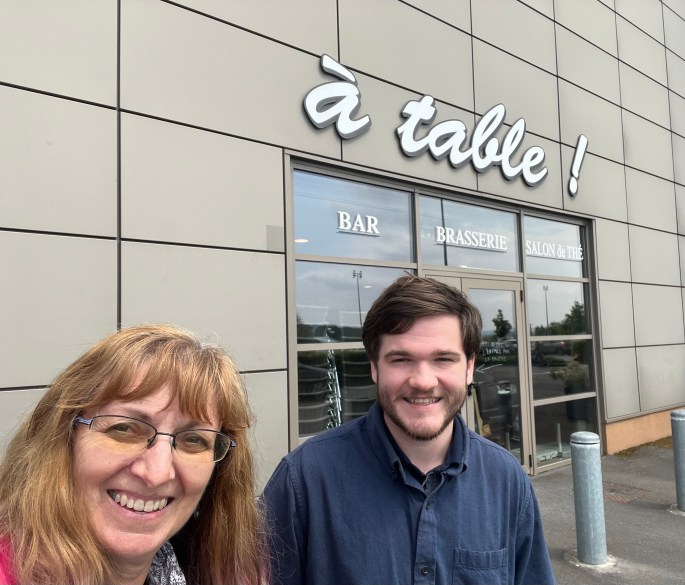
A’table!

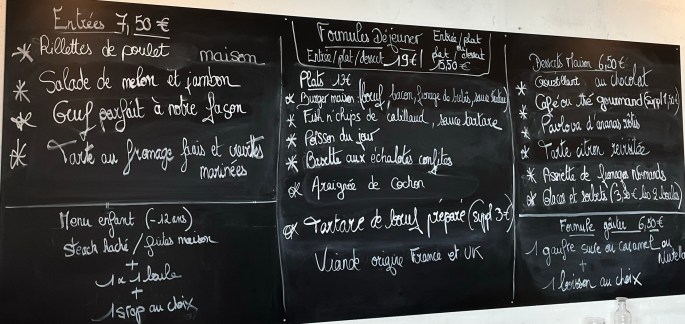
Here is a glance at their menu – on the wall. Thats it – but it was enough.

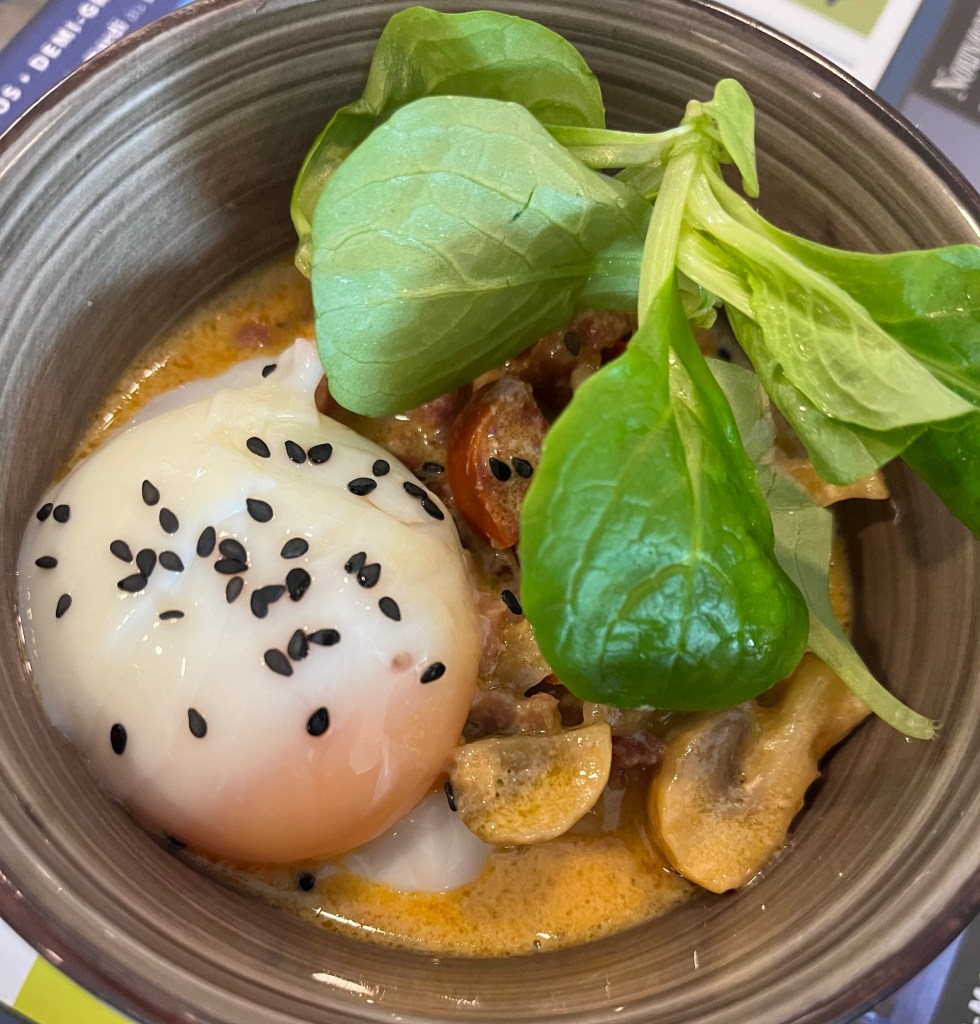
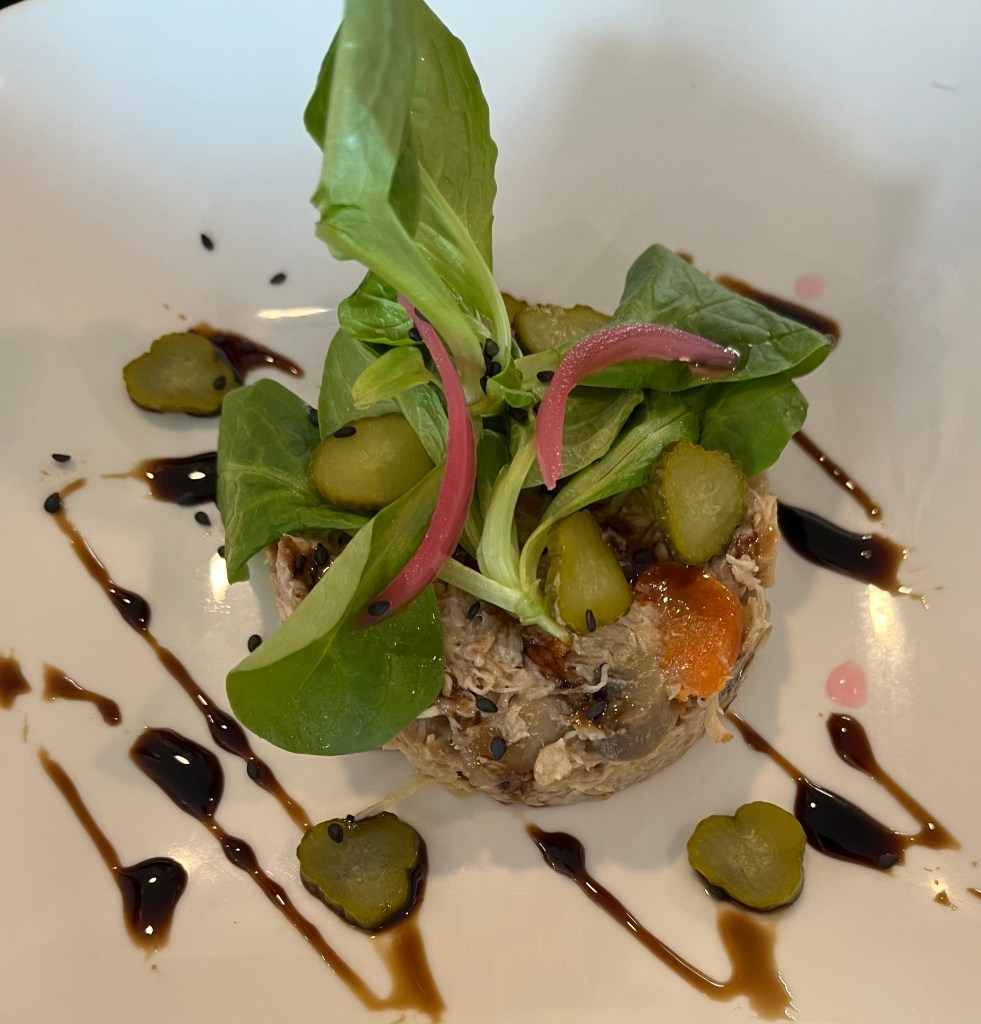
Some starters were ordered: Oeuf parfait (perfect egg) and rillettes de poulet (shredded chicken).

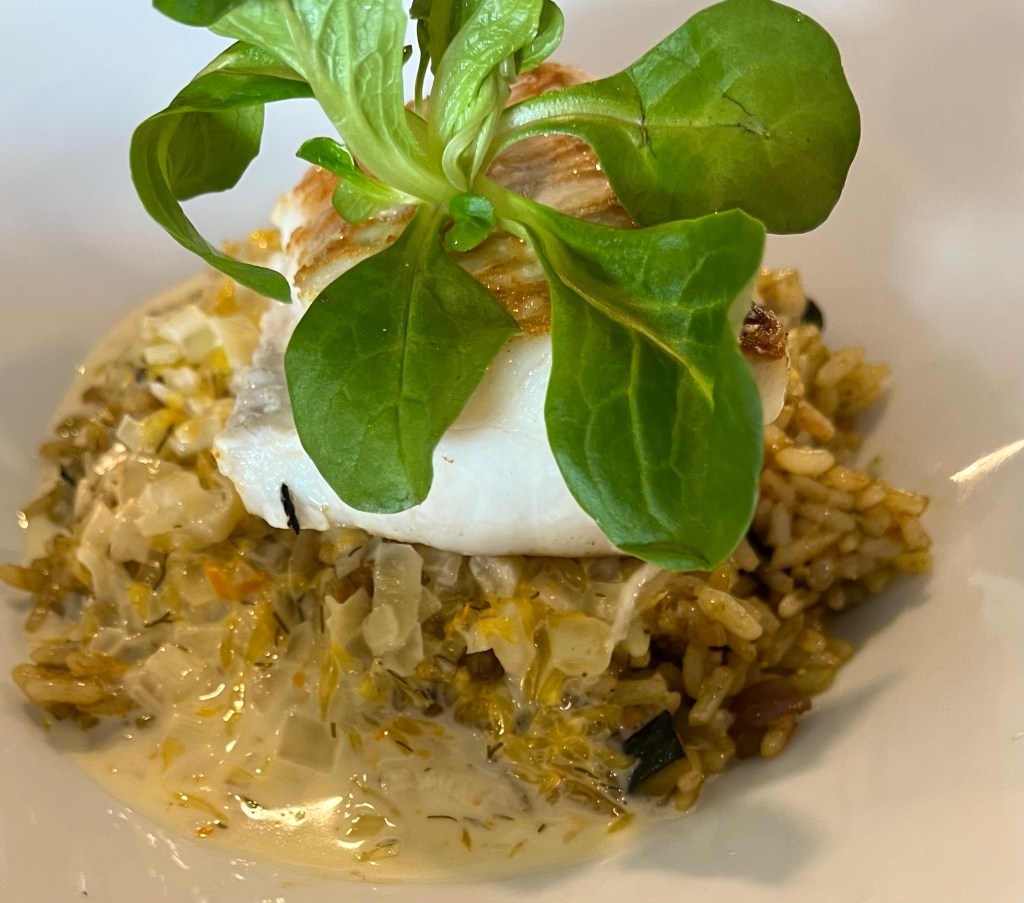
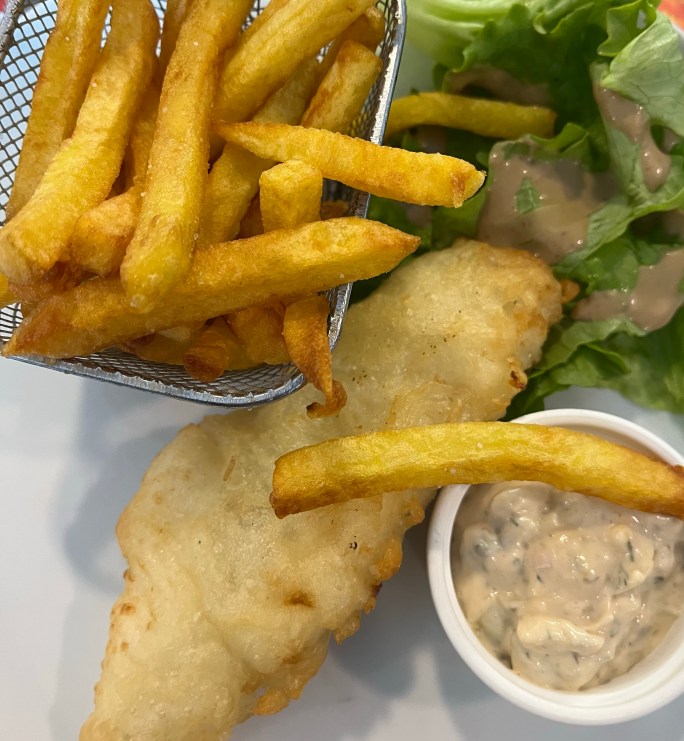
Fish of the day, beef tartare and fish & chips were our entree’s

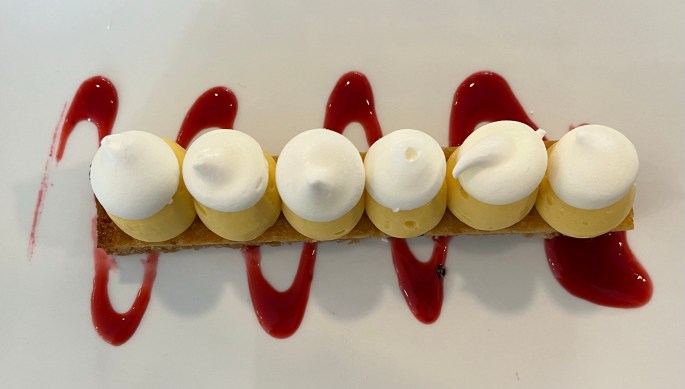
I ordered the tarte citron – perfect for the four of us. I got half of the dessert and they each got one dollop. 🙂

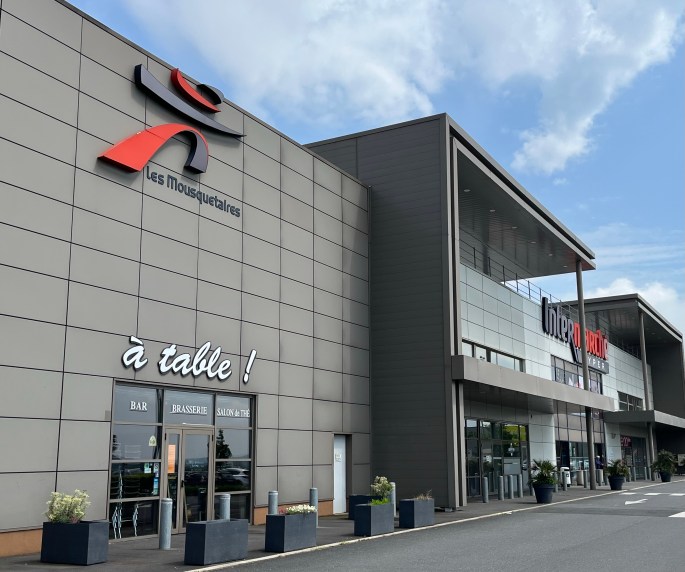
Why was this place so special? We were getting hungry, googled nearby restaurants and this one was rated highly. We pulled in…………………….

That’s when we noticed it was in with a grocery store! No matter, the place was full, we were hungry and got one of the last free tables. We would stop in again if in that region. Now that’s saying something.

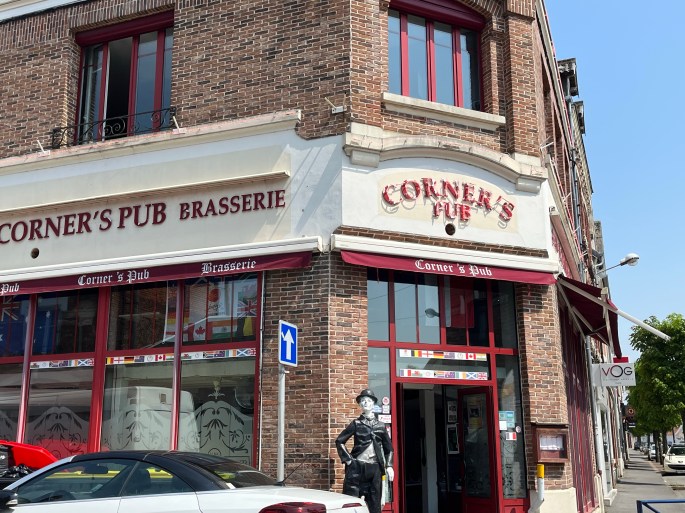
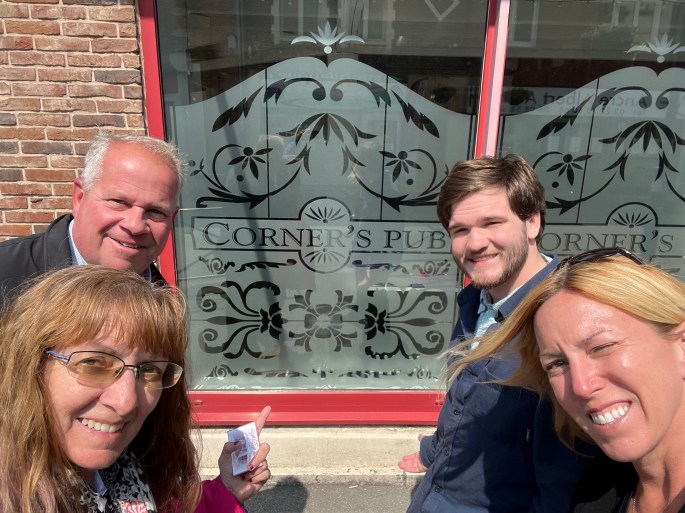
Corner’s Pub

Driving through another little town, same scenario. Getting hungry, googled local open restaurants (kind of tough on a Sunday) and found this place.

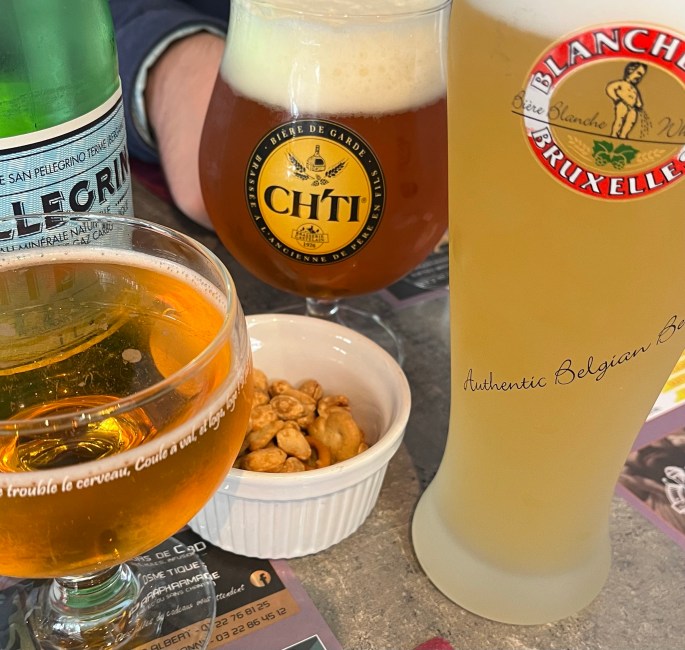
Drinks for everyone – except Eric since he’s driving. BTW – Connor is legal drinking age in Europe. That’s kind of fun, for him and for us.

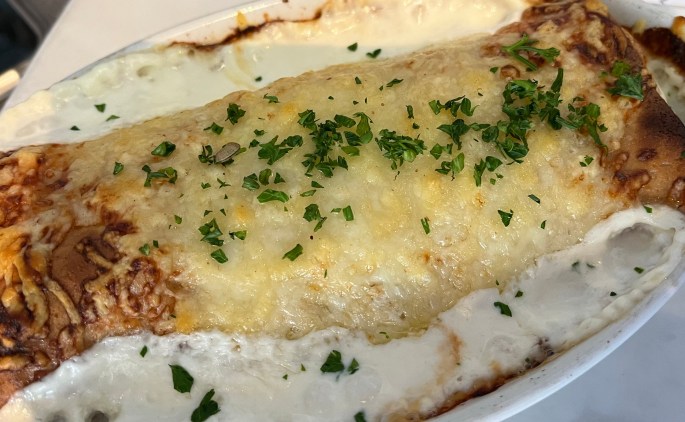
Eric heard about this specialty in the region – ficelle picardie, a crepe with ham, mushrooms, and shallots covered with a mornay sauce. Didn’t look like much when it arrived, but we were using whatever we could find to get every last morsel out of the dish.

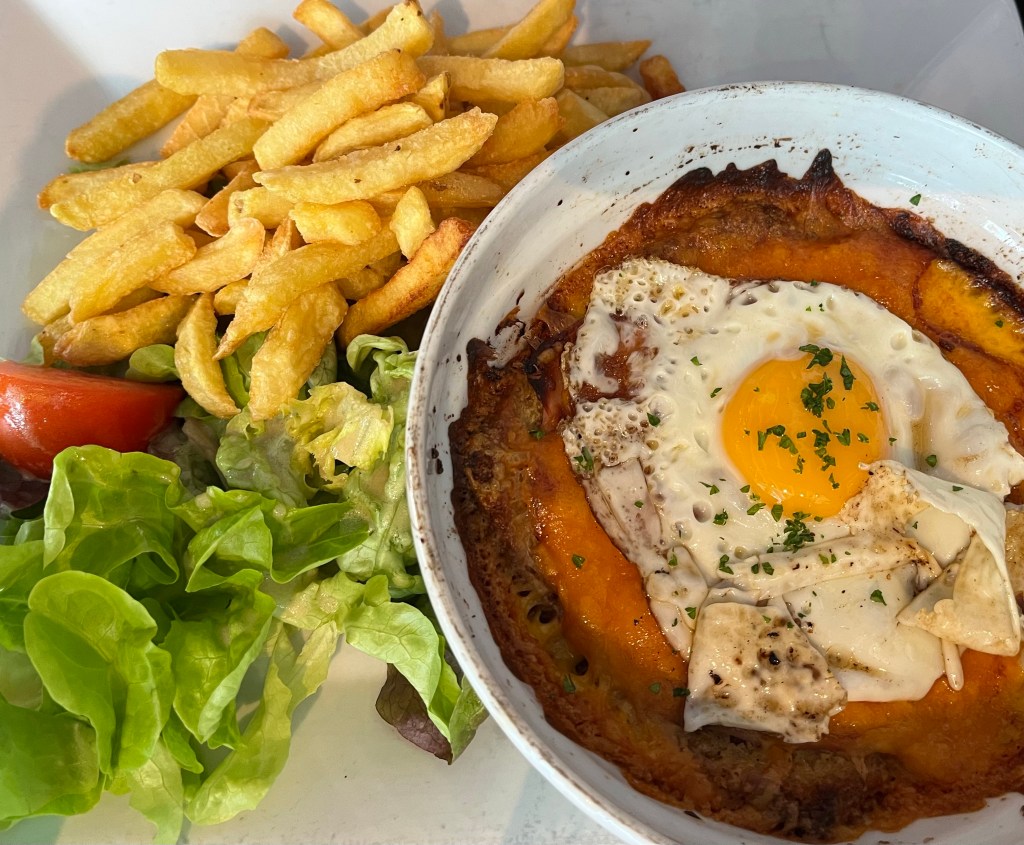
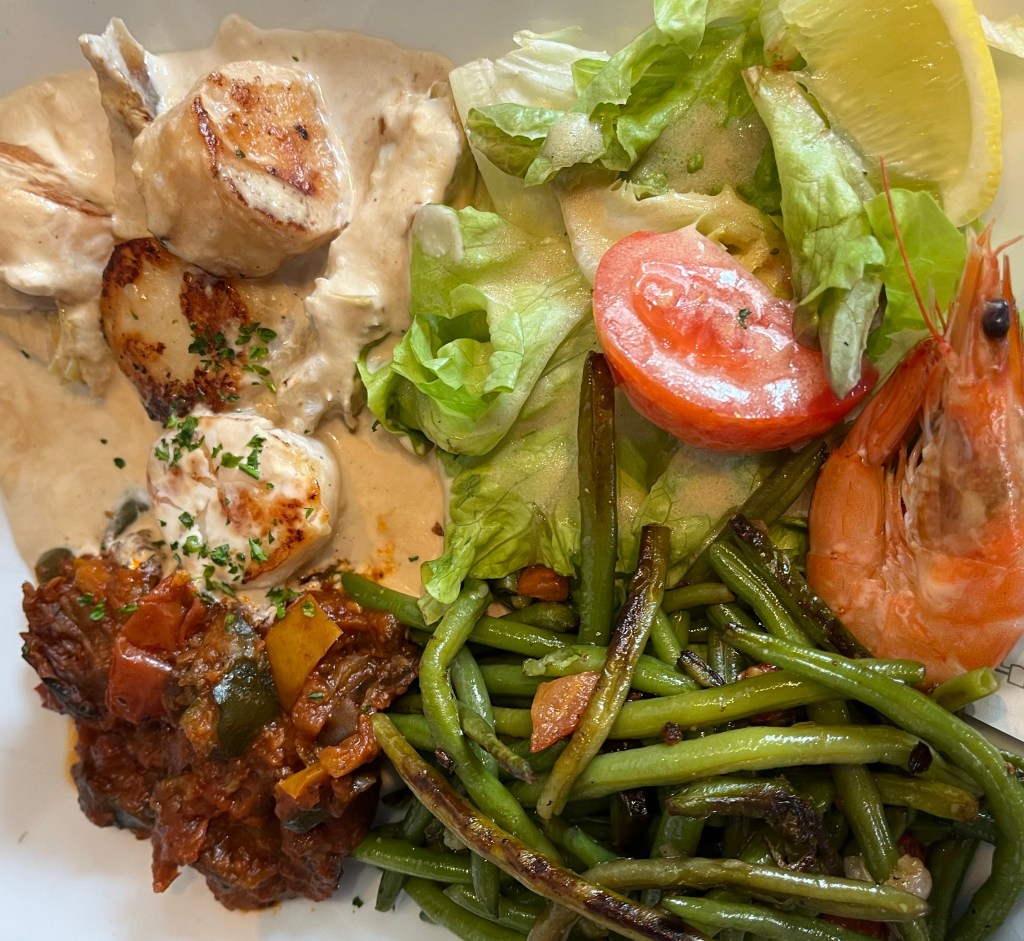
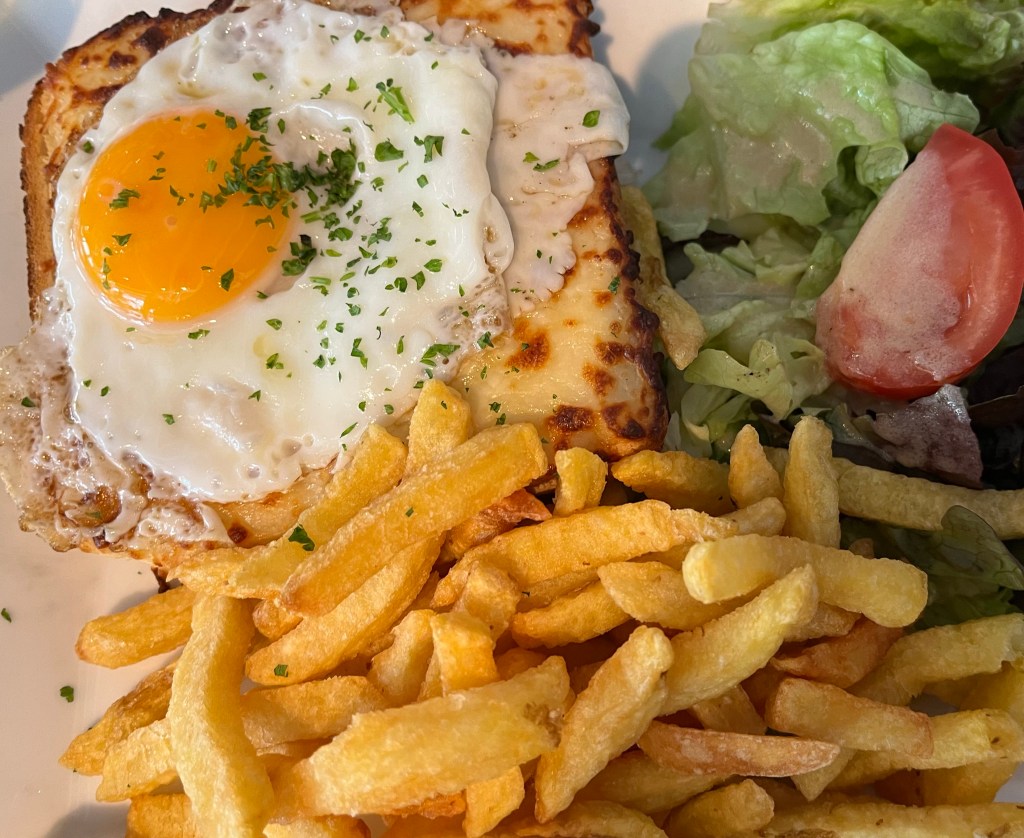
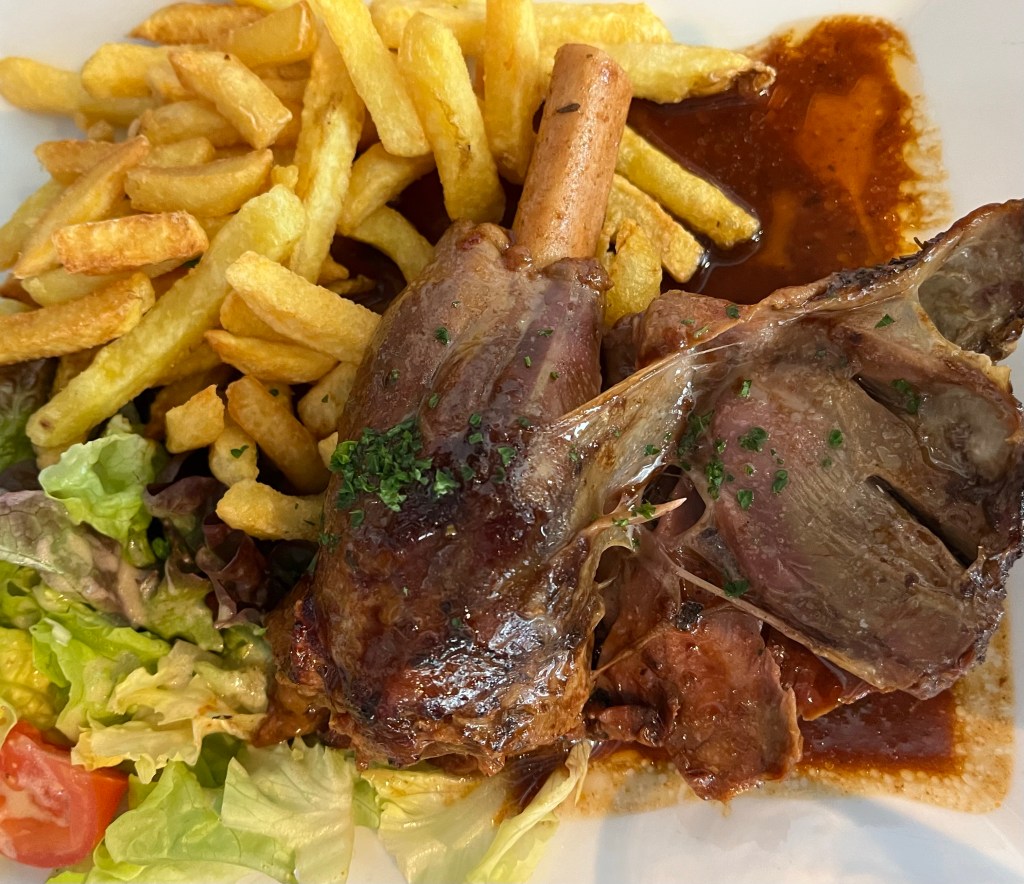
Meal selections were scotch rarebit w/ frites, scallop salad, croque madame and lamb shank.

Connor was the c.l.e.a.r. winner with the lamb, saying it was his best meal in France thus far.

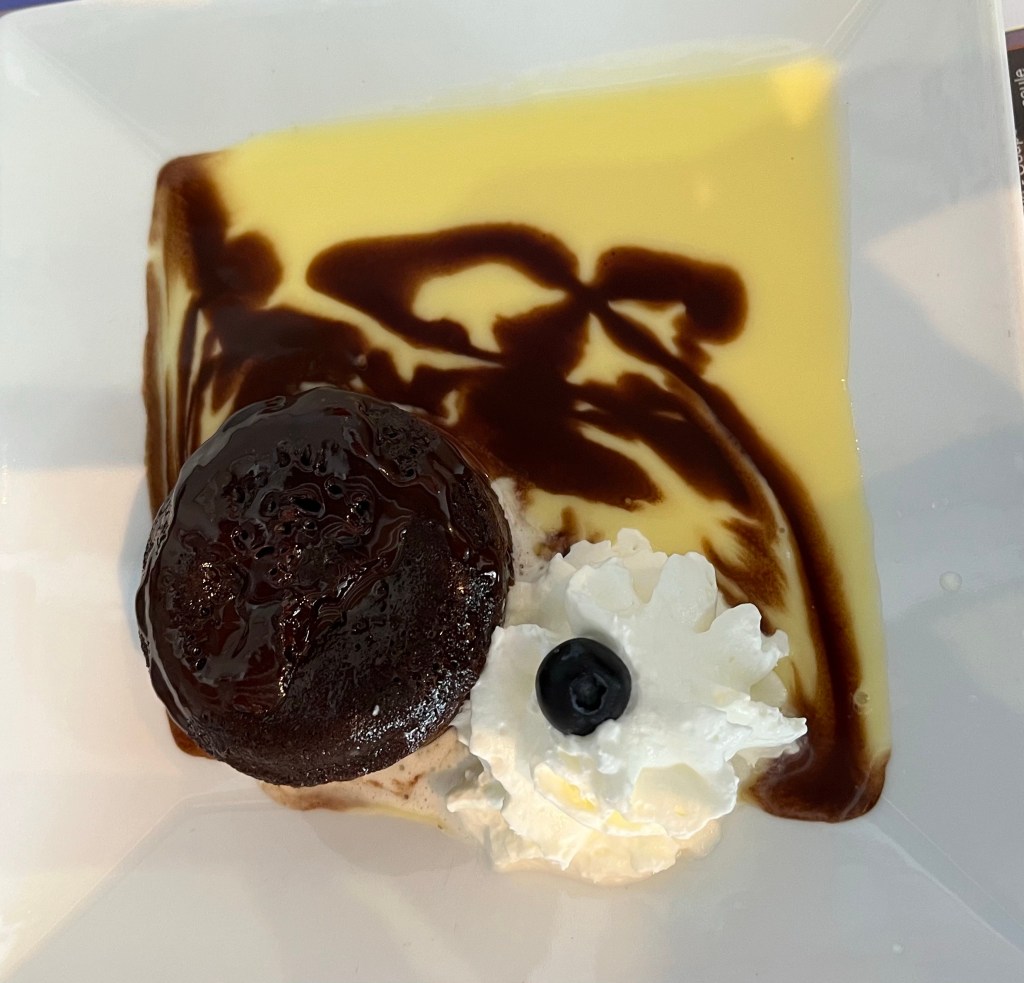
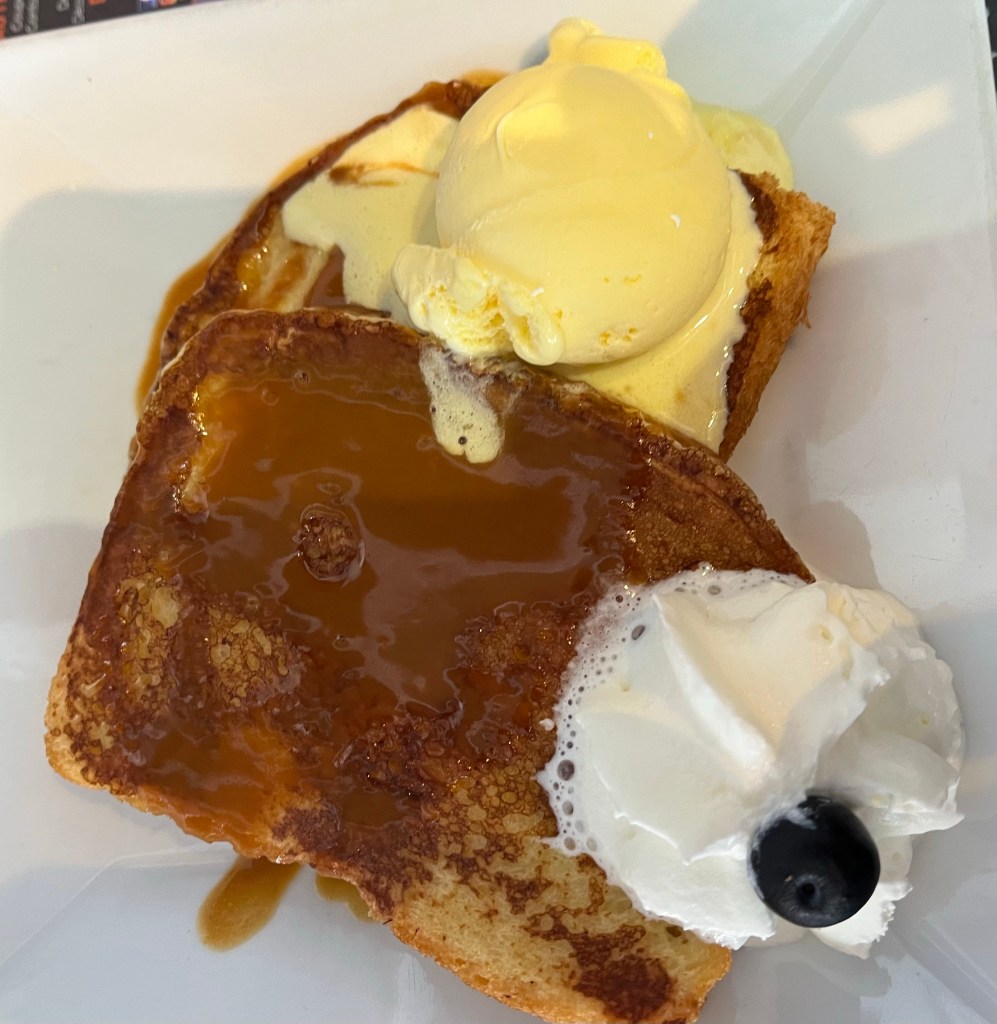
Naturally desserts were ordered, why not.

The owner was a hoot, greeting everyone at the door, shaking our hands and asking where we were from. It was clear he knew most of the people in his restaurant and yes, the food was REALLY good.

Les Boissons

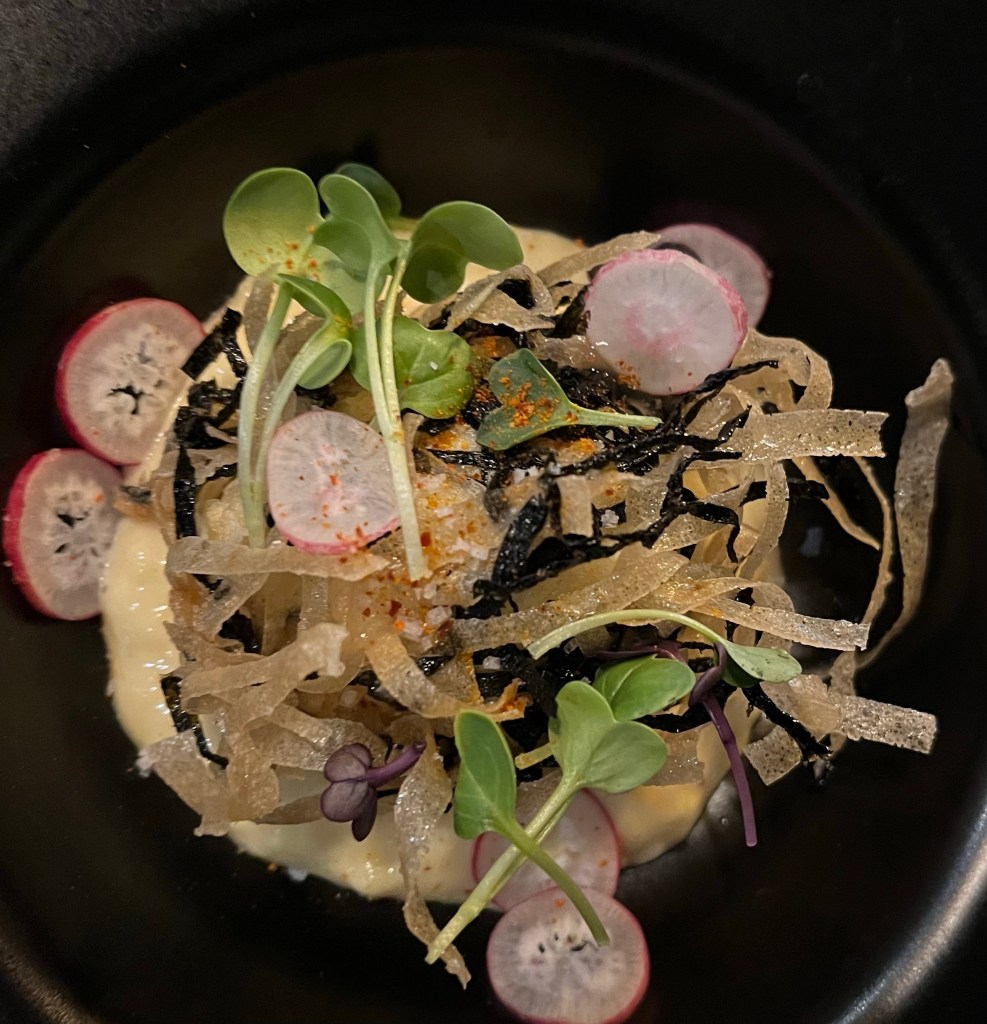
As I mentioned at first, we were the first ones in the door and wasn’t even sure they were serving food or only drinks. Starters were a salad and white asparagus.

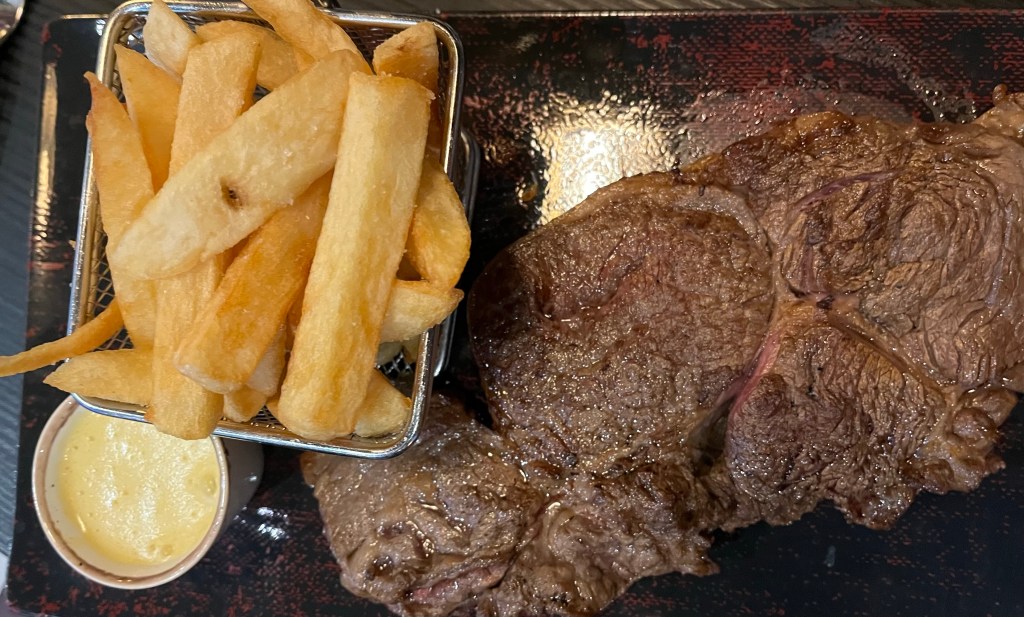
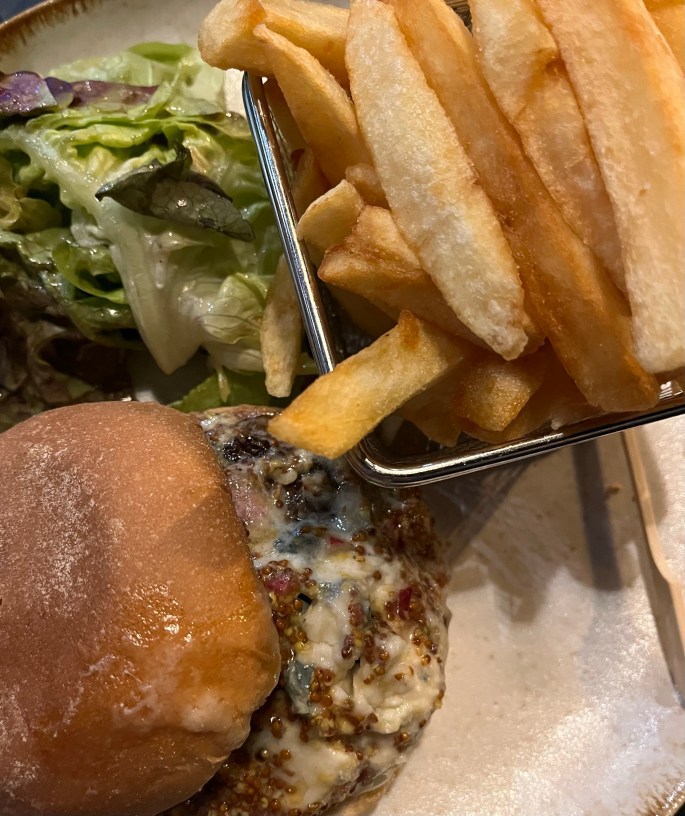
Main courses were braised veal, steak and frites and burger w/ Roquefort cheese and frites.

The burger was awesome (and my order). 🙂

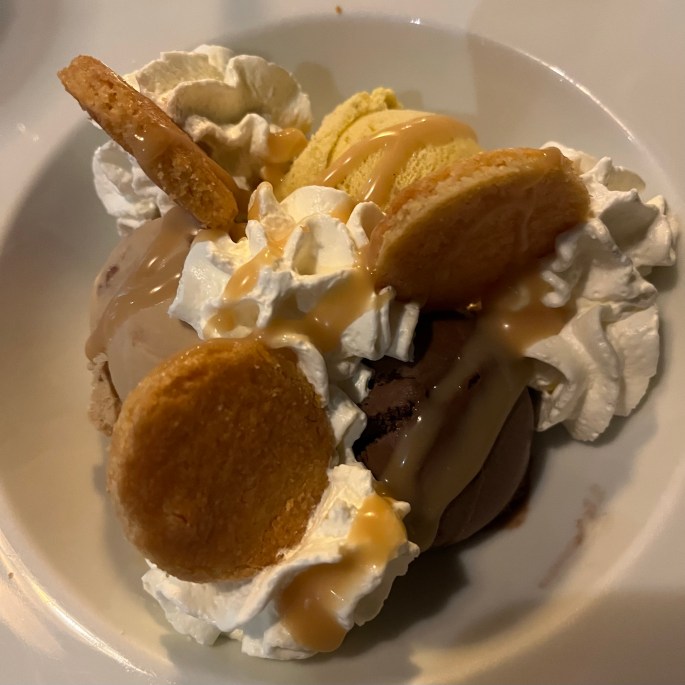
No meal is complete with desserts and three scoops of various ice creams was great: vanilla, chocolate and salted caramel, with crunchy cookies, whipped cream and drizzle of caramel. Yum!
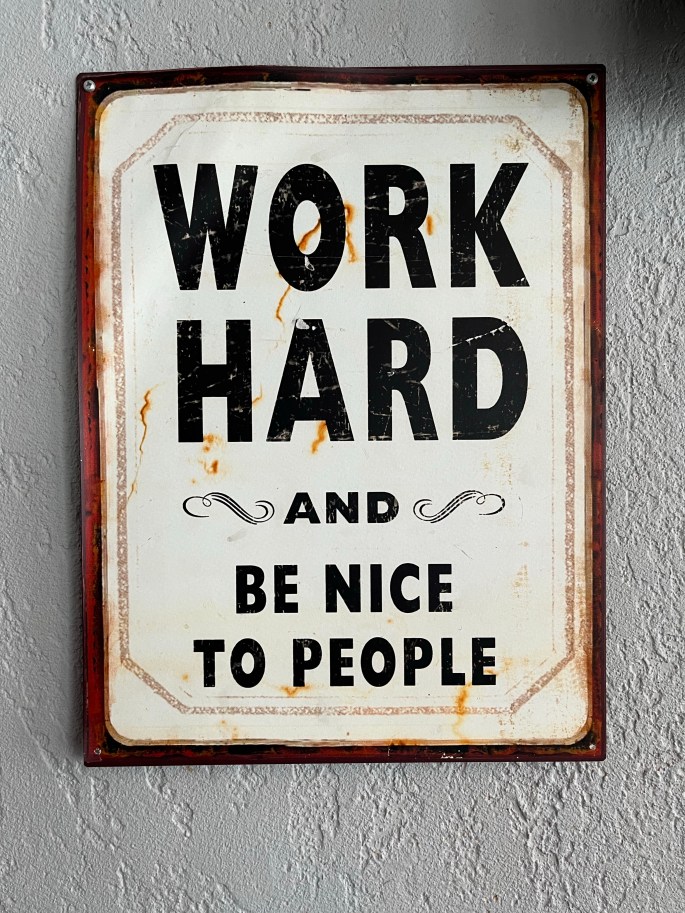
I’m closing with a sign we found in one of the restaurants named above. It seems fitting and if we all could accomplish this, maybe just maybe we would be in a better place.

Ginny

Amiens

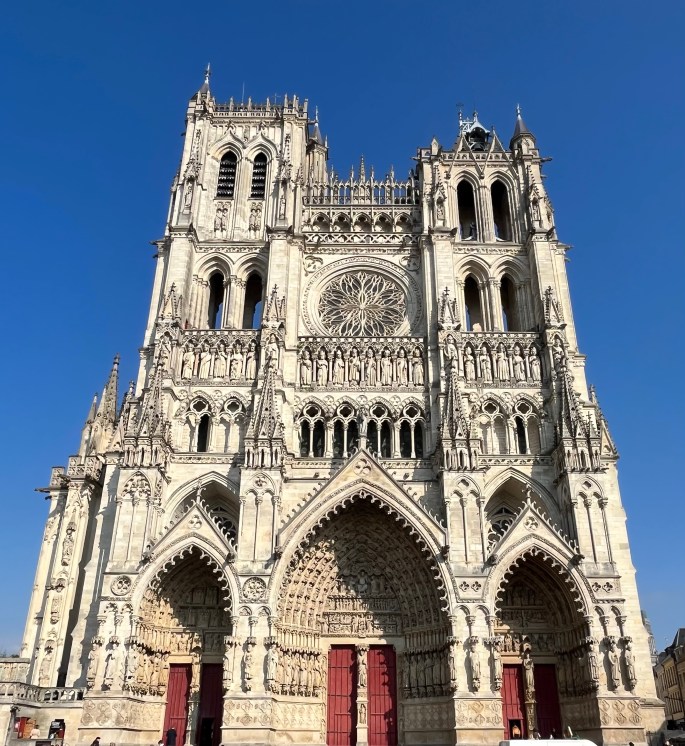
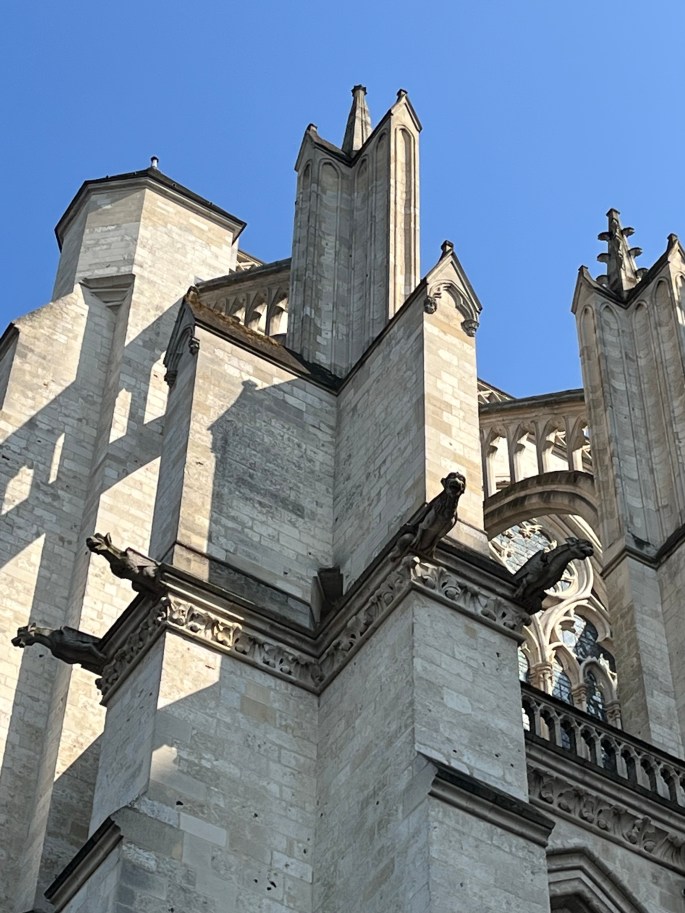
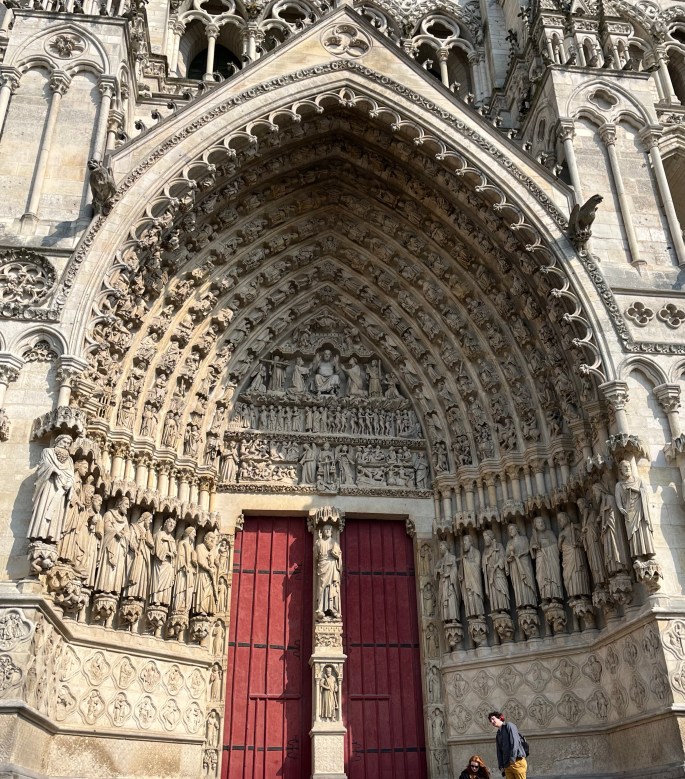
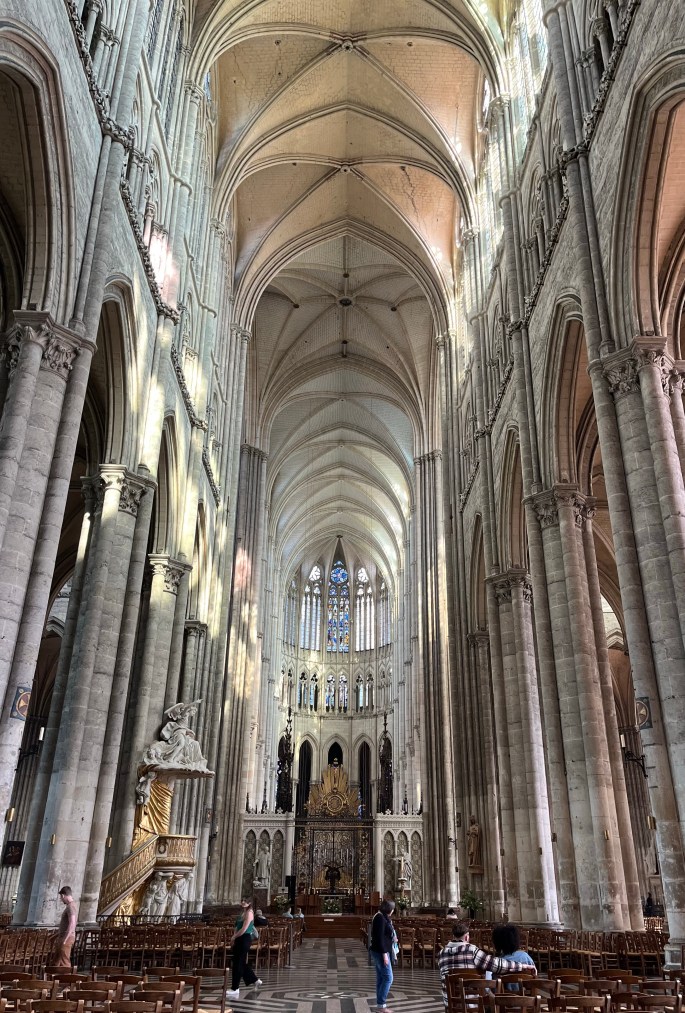
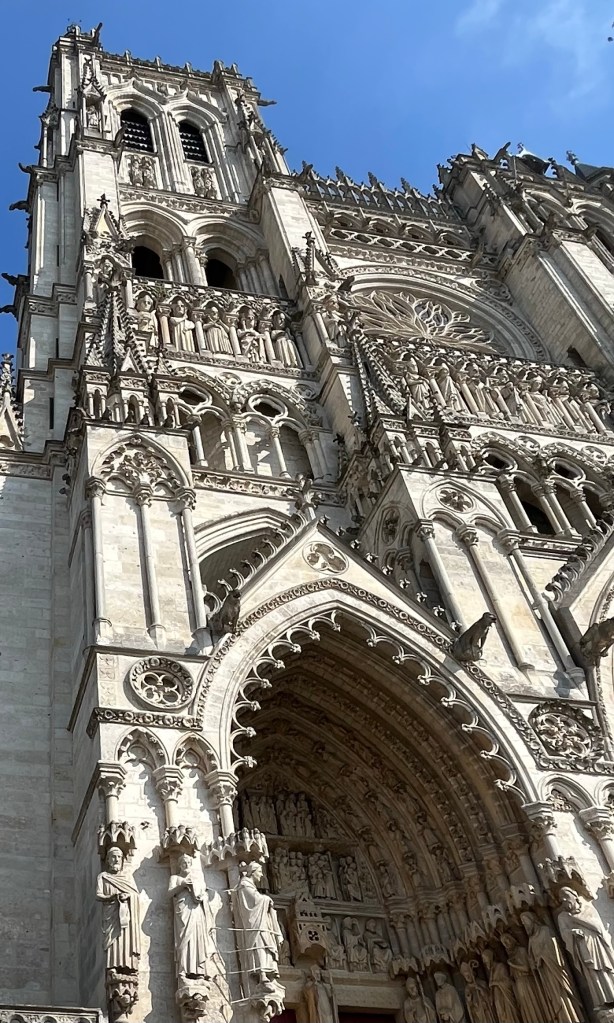
Yes, that is one large cathedral. In fact, the largest in France. I read that two of Paris’s Notre Dame cathedrals could fit inside. Yikes. Visiting the cathedral wasn’t the only reason for making it to Amiens, it was a central jumping off point for WWI sites – which was our plan.
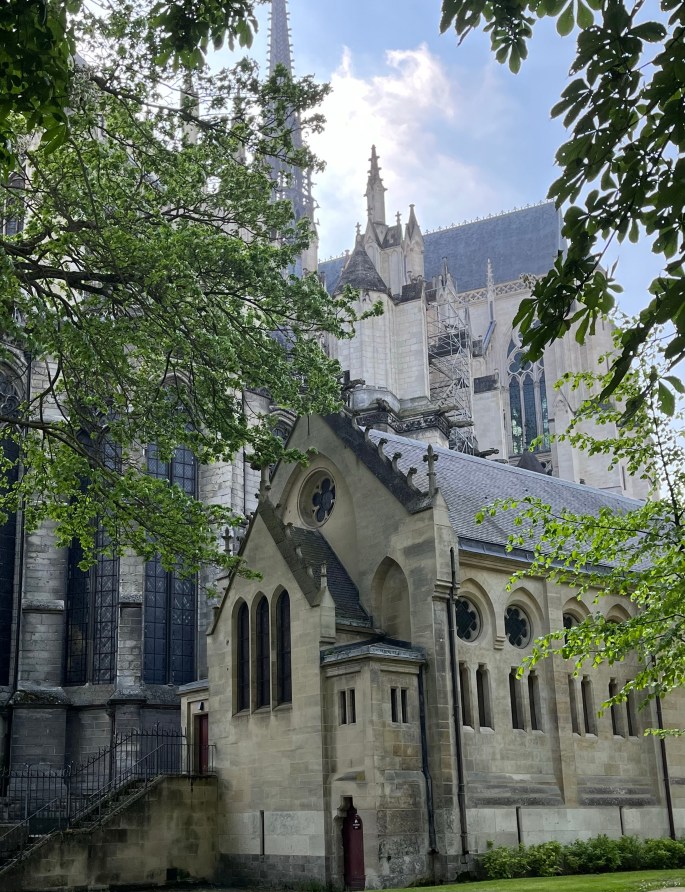
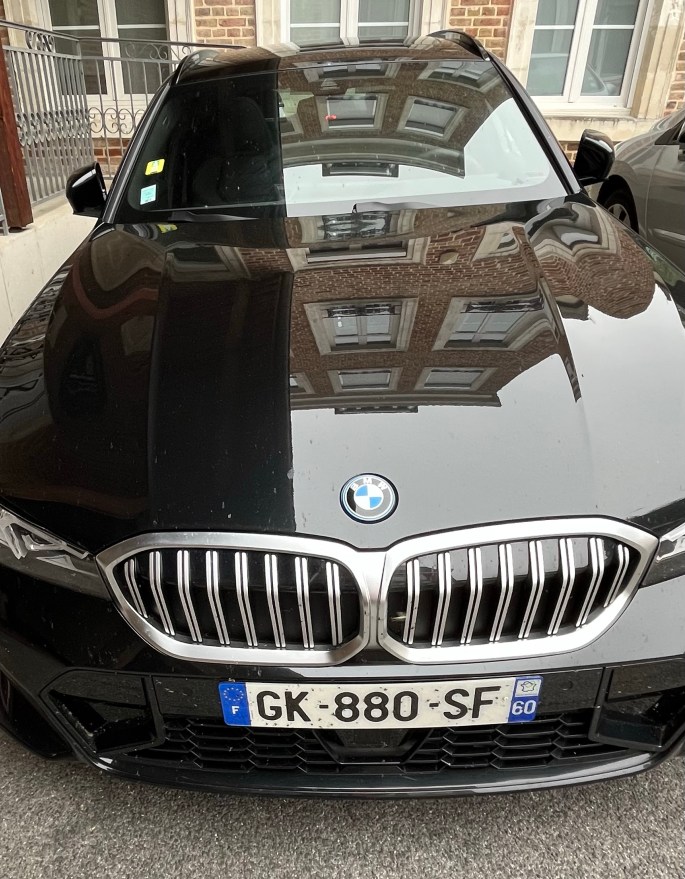
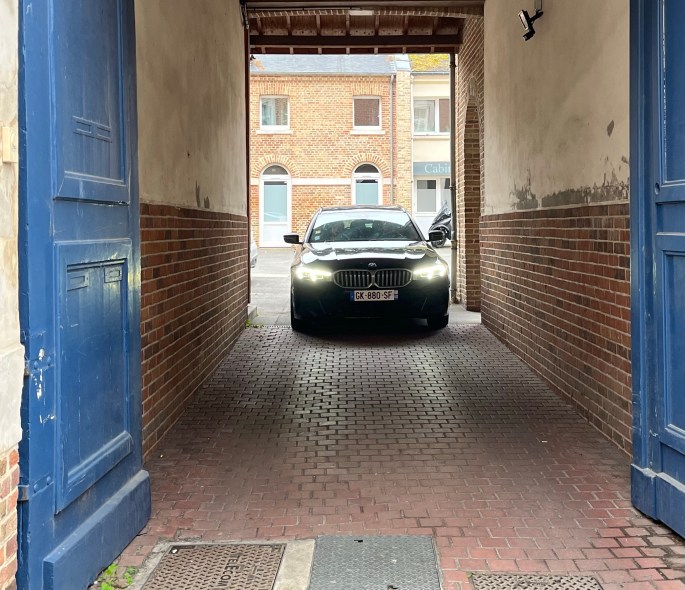
Before that, let’s talk our accommodations. Another AirBNB with a teeny, tiny parking spot for Eric to squeeze into. We have a BMW rental – no Eric, we don’t need one – and while a fun vehicle to drive, bigger than most vehicles on the road and subsequent parking in France.

Getting in and out was a lot of fun, for me at least. Ha! I was directing his pathway before hopping in.

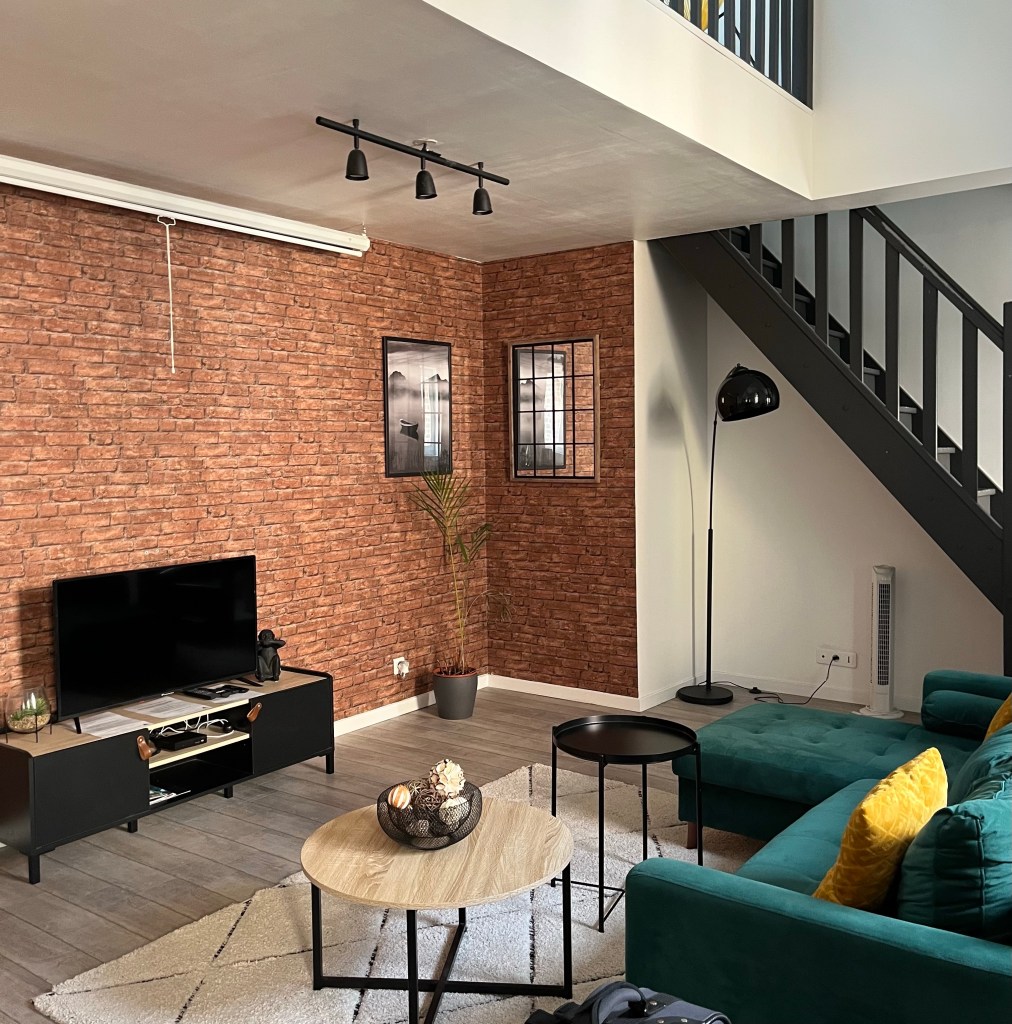
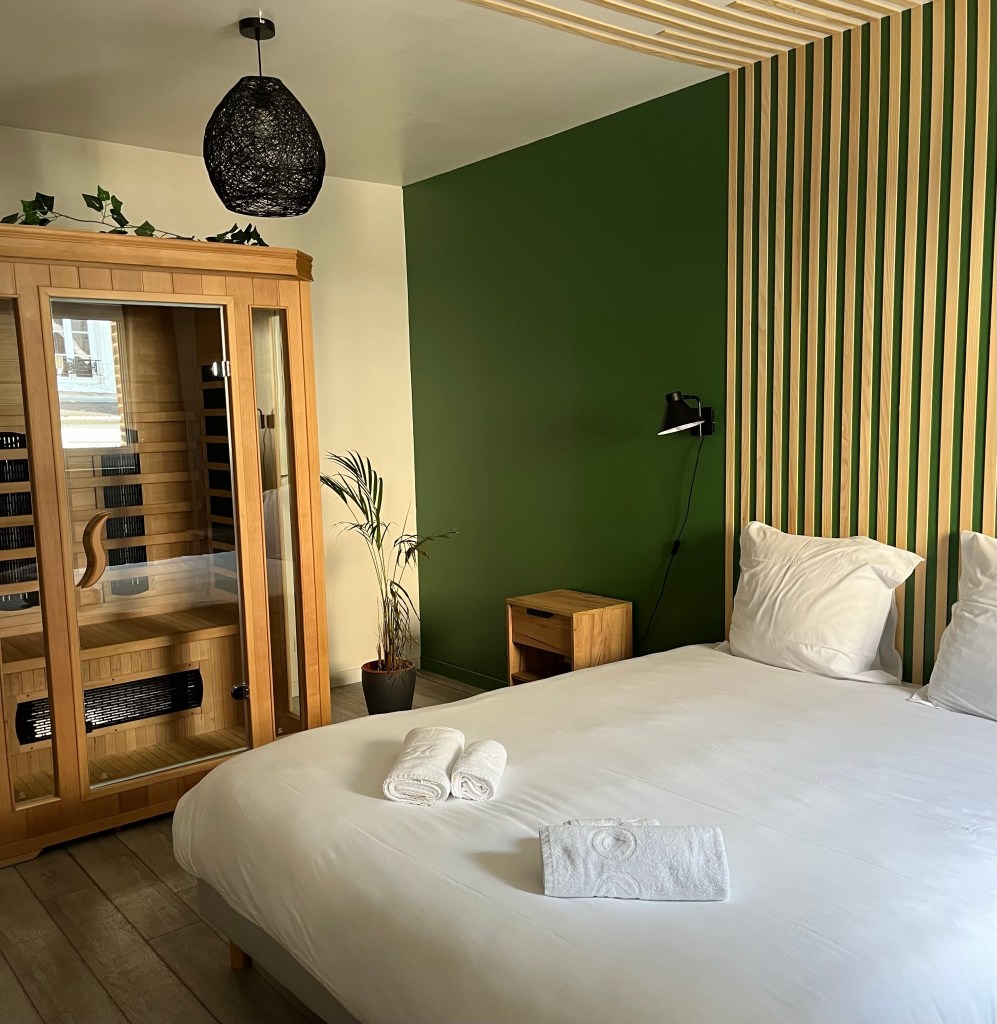
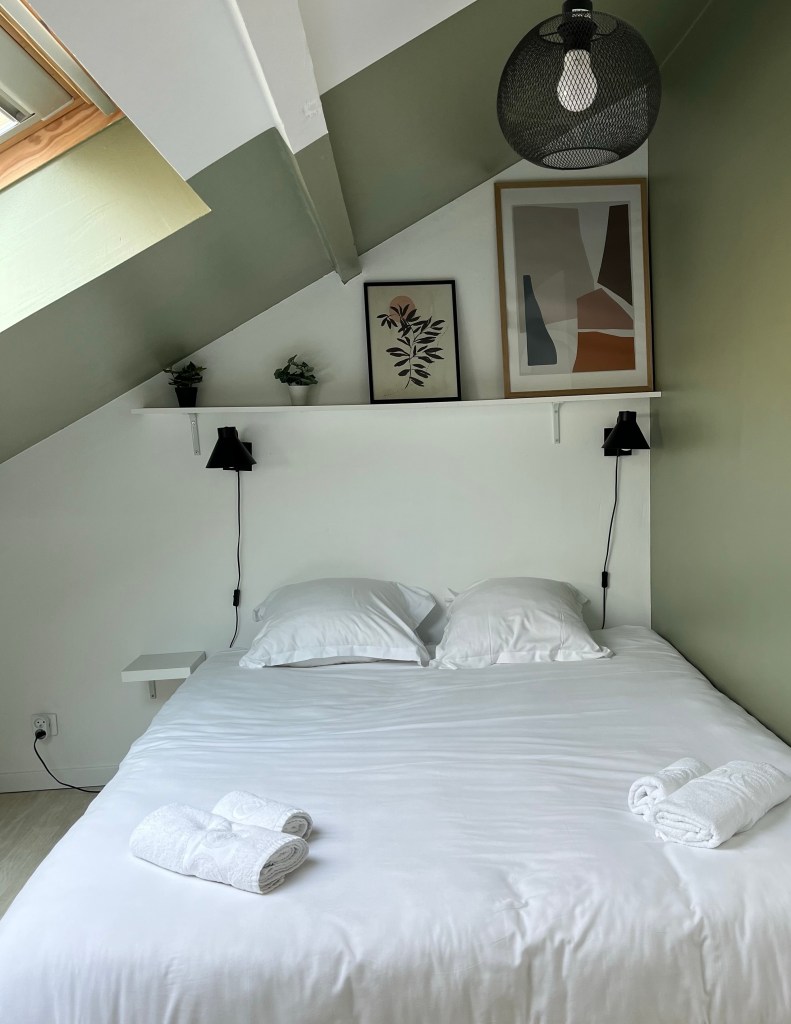
We didn’t plan on staying in Amiens for very long, so we found a place in the city center – we were good. A bedroom for each, decent kitchen and one bathroom – you had to plan your routines around each other.

Back to the cathedral…….

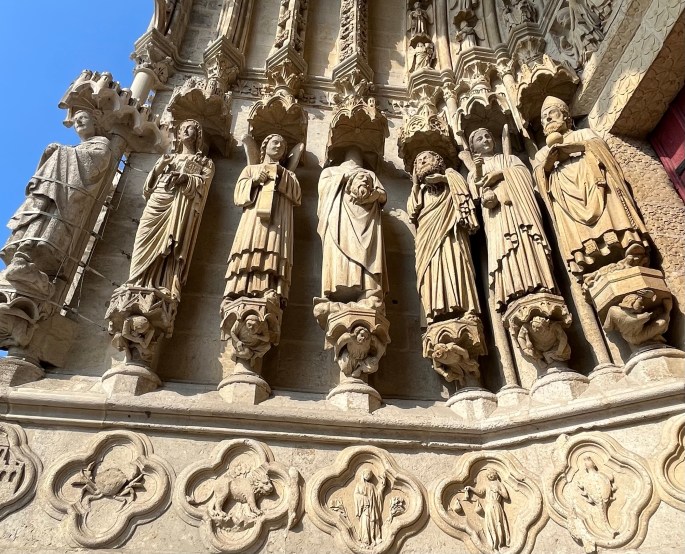
It was built almost entirely between 1220 and 1270, a remarkably short period of time for a Gothic cathedral, giving it an unusual unity of style. The details are just so amazing!

The builders were trying to maximize the internal dimension in order to reach for the heavens and bring in more light.

The initial impetus for the building came from the installation of the reputed head of John The Baptist. A sumptuous reliquary with the face of the Saint was made to house the skull. The skull and reliquary were lost during the revolution, but a 19th century replica was made and is displayed.

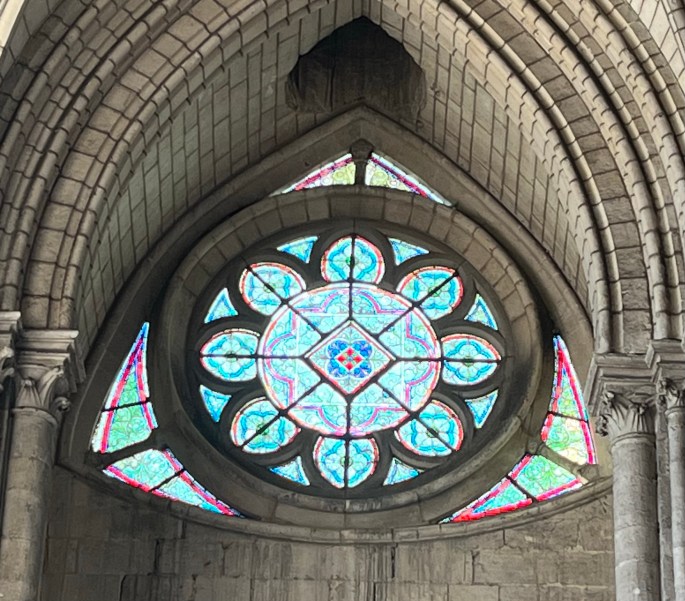
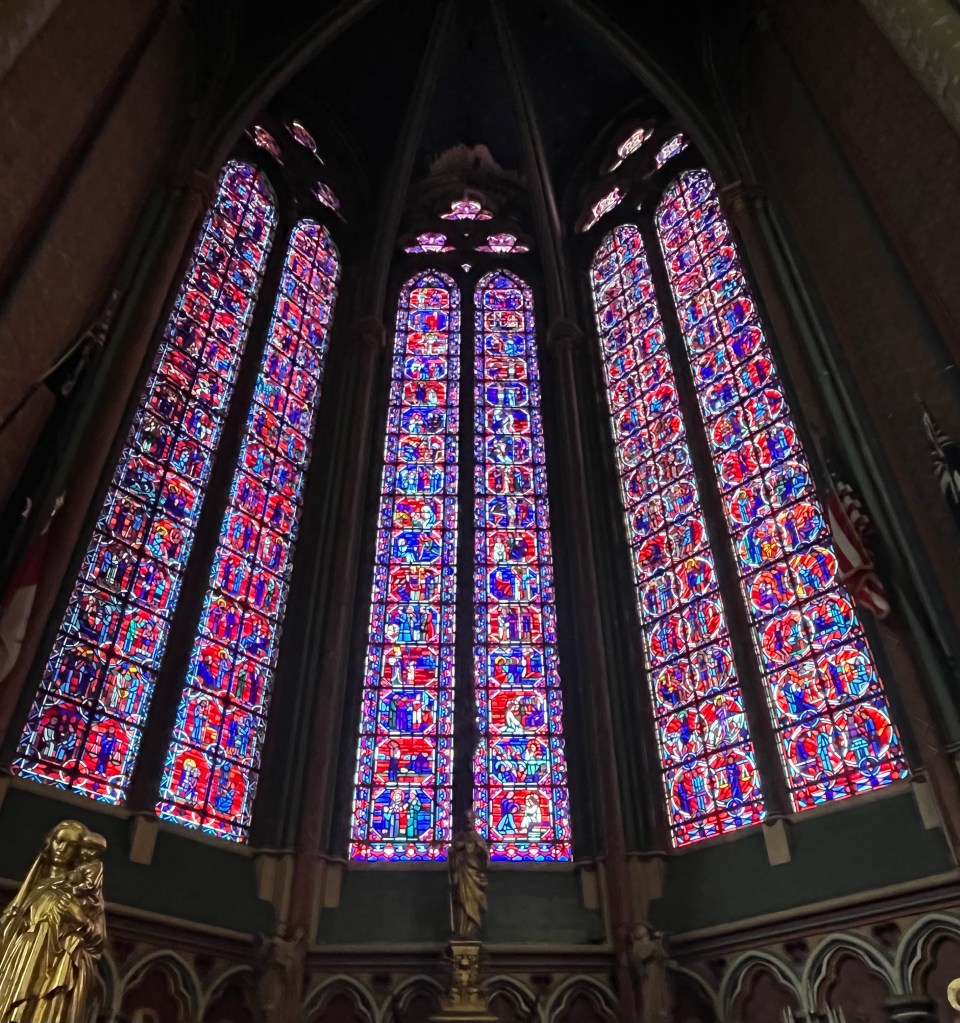
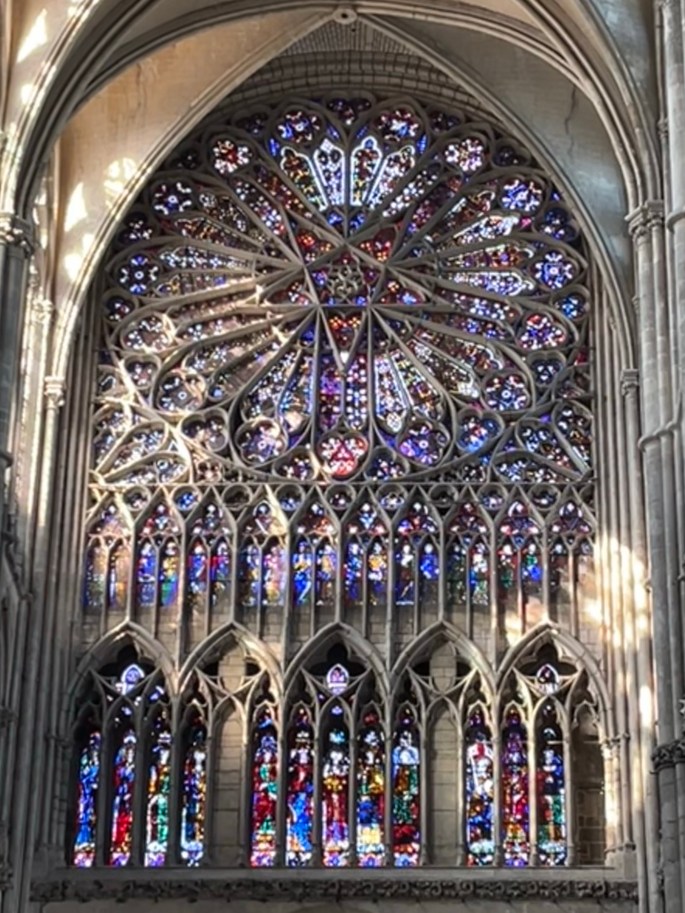
The cathedral was fought over during both World Wars and suffered significant damage and was repeatedly occupied by both sides. Some of the stained glass is from the original construction. Others were created in the more recent centuries. The rose windows were amongst the oldest.

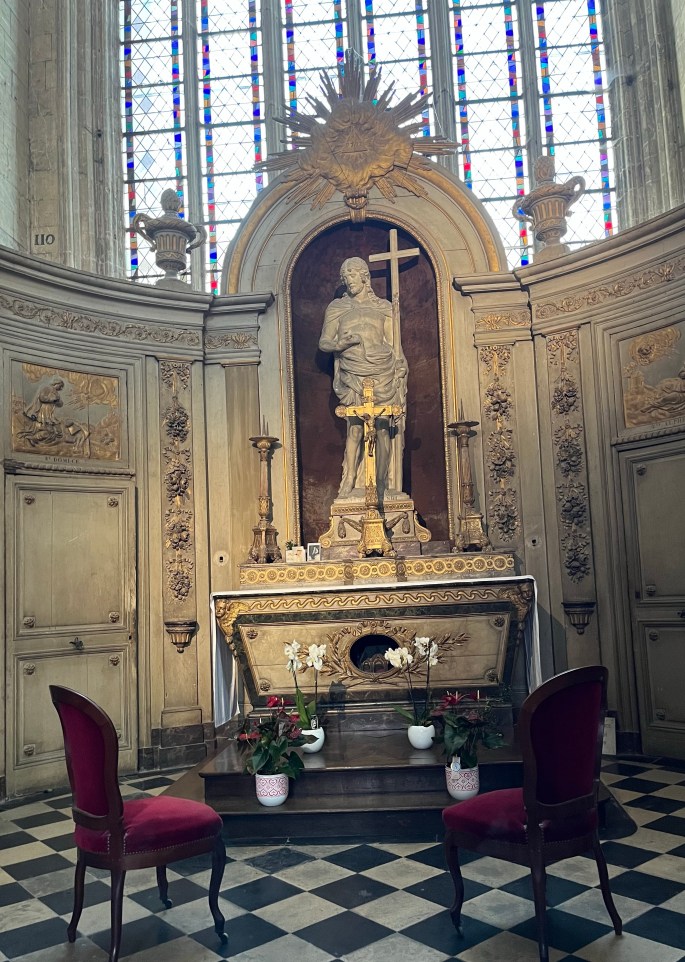
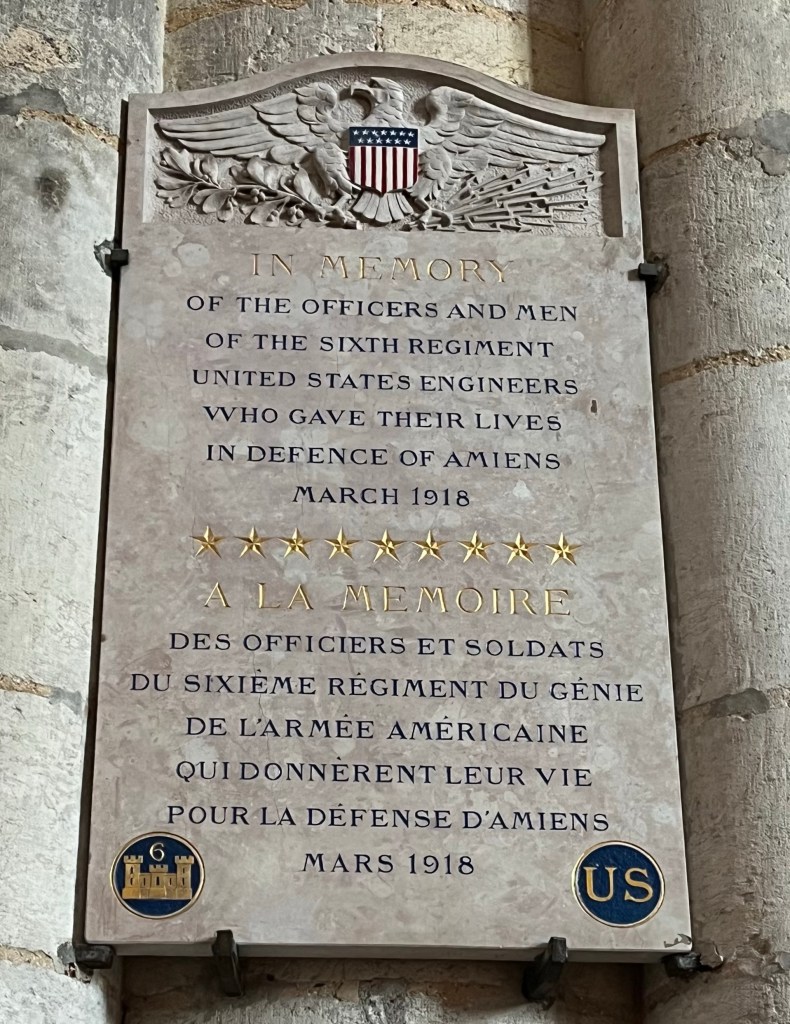
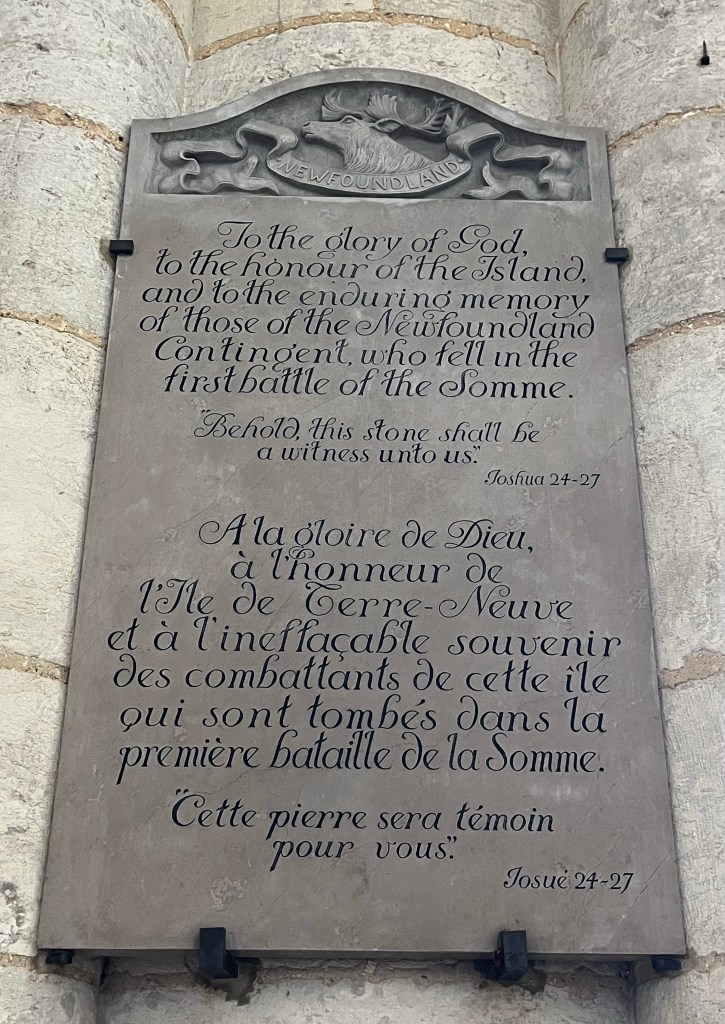
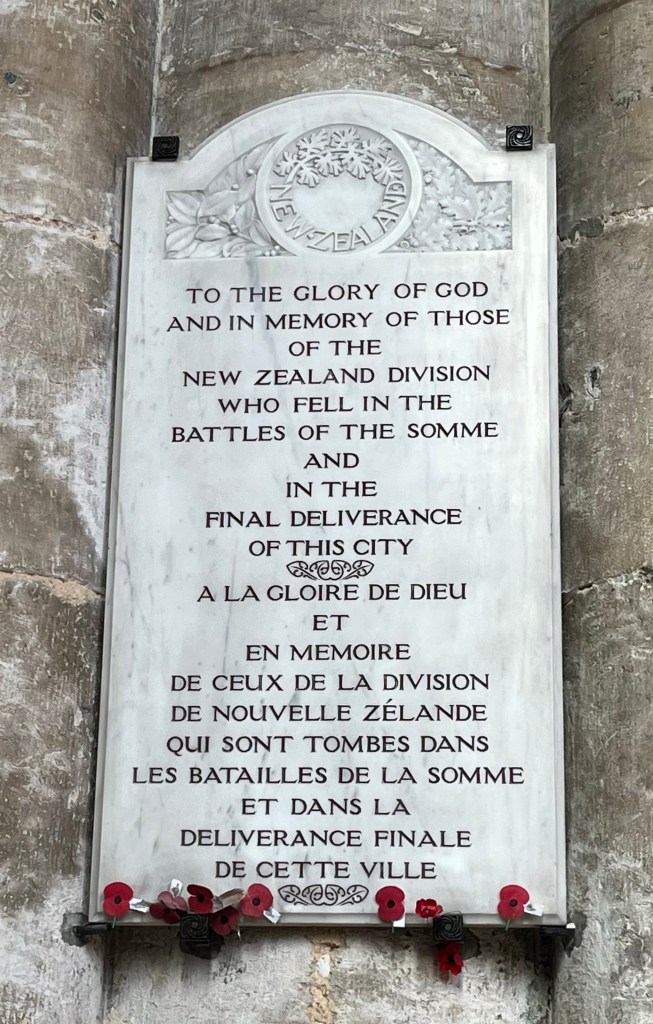
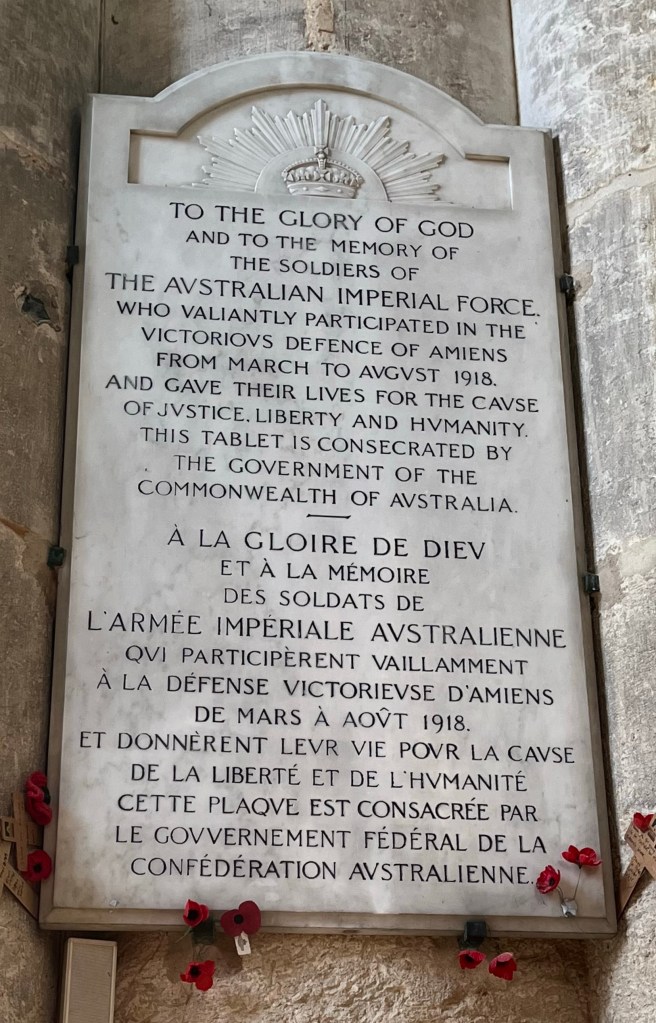
There are a number of memorials along the columns recognizing those countries that fought for and around Amiens.

Stopping over at Amiens really upped our knowledge around WWI and some coming posts will be sharing our stops.

Ginny

BTW – also read that Amiens hosts the largest Christmas market in Northern France. Who knows…….we may be back.

Mont St. Michel

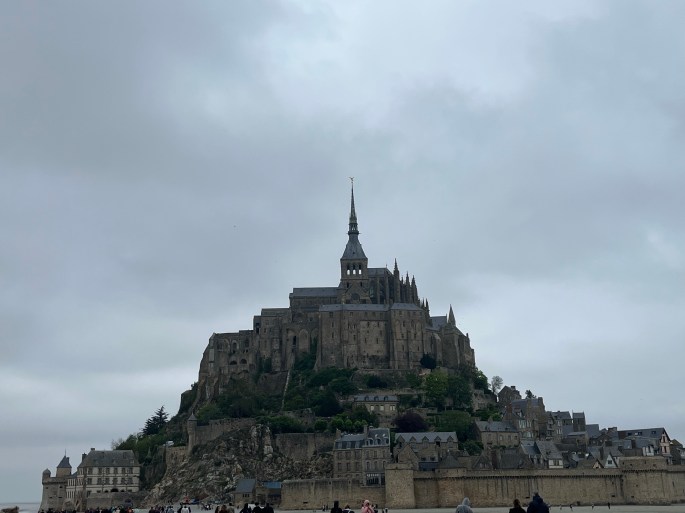
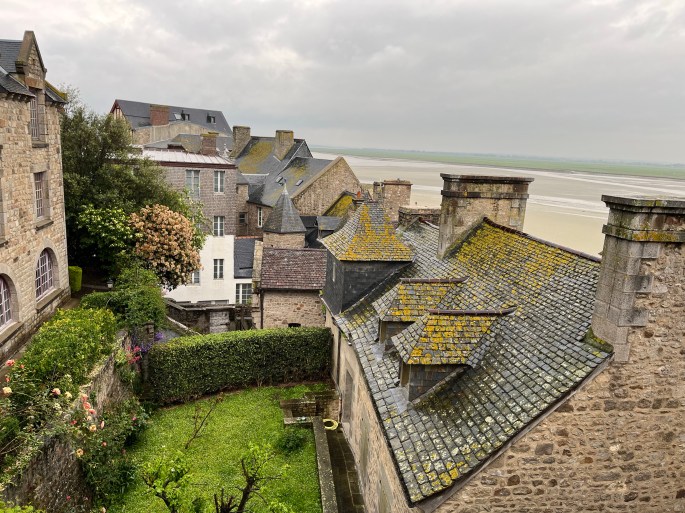
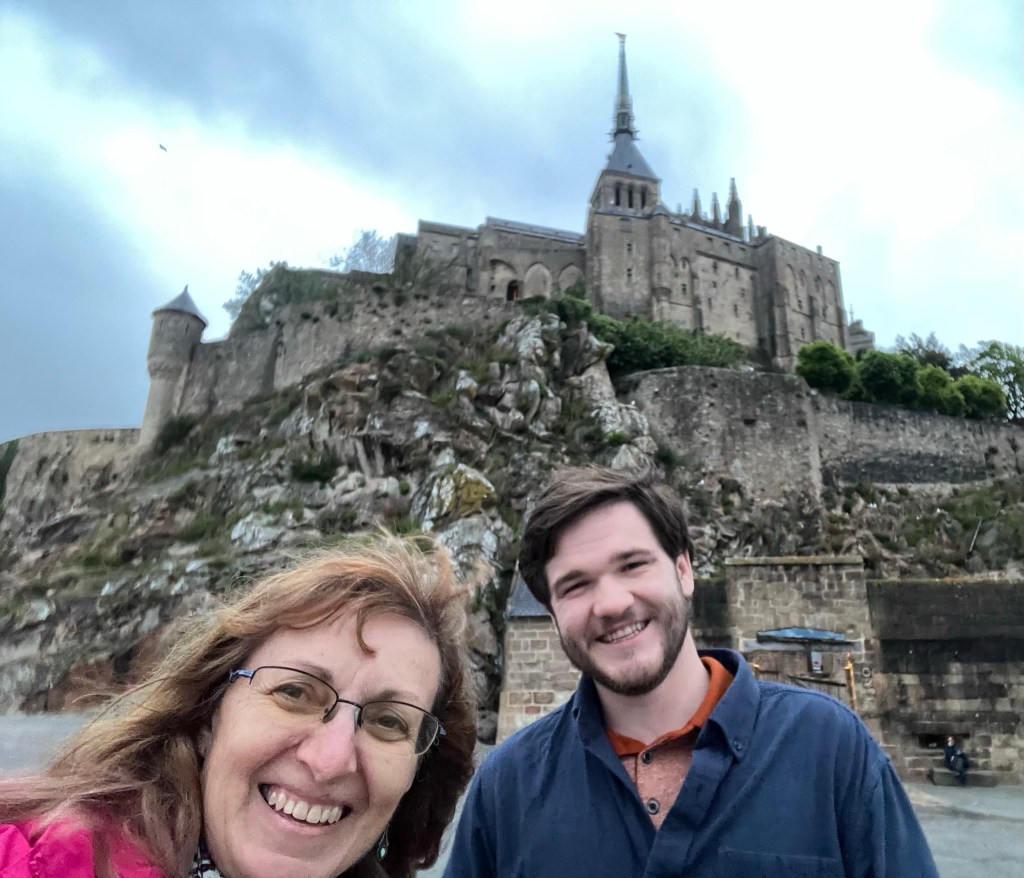
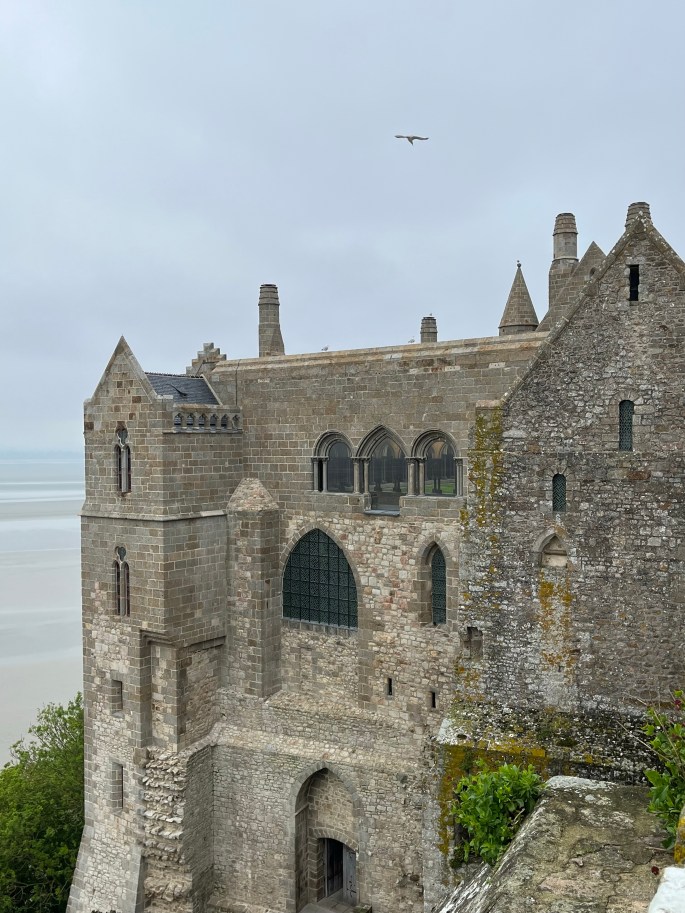
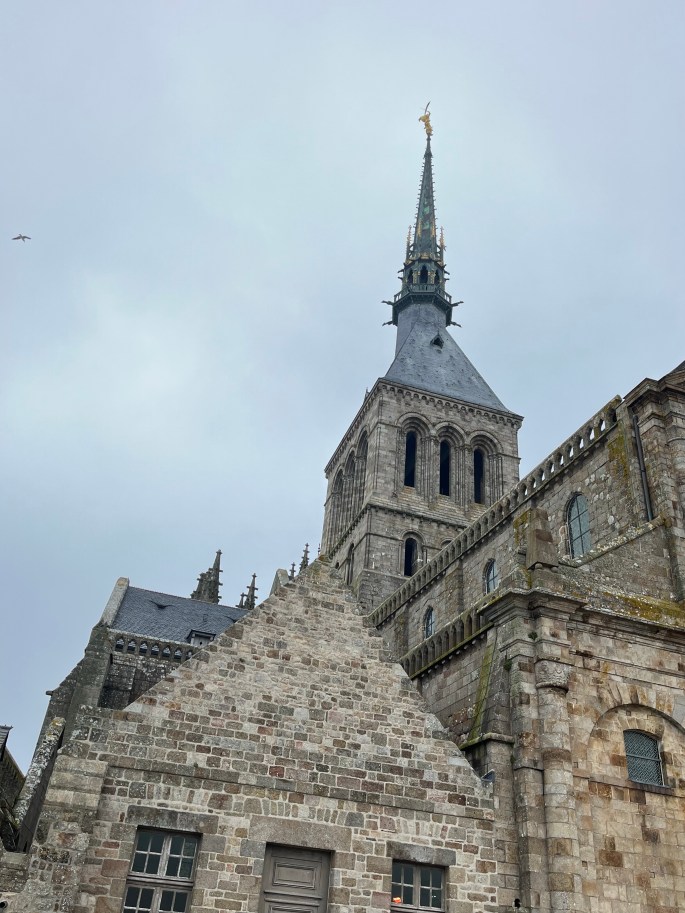
A tidal island located 1 km off the coast and surrounded by saltmarsh meadows there stands an 8th century monastery. The archangel St Michael came to the dream of St Aubert, Bishop of Avranches, directing him to build on the rock outcropping. The architecture of the village and fortifications is a mixture of stone and timber framework wrapped around what nature created.

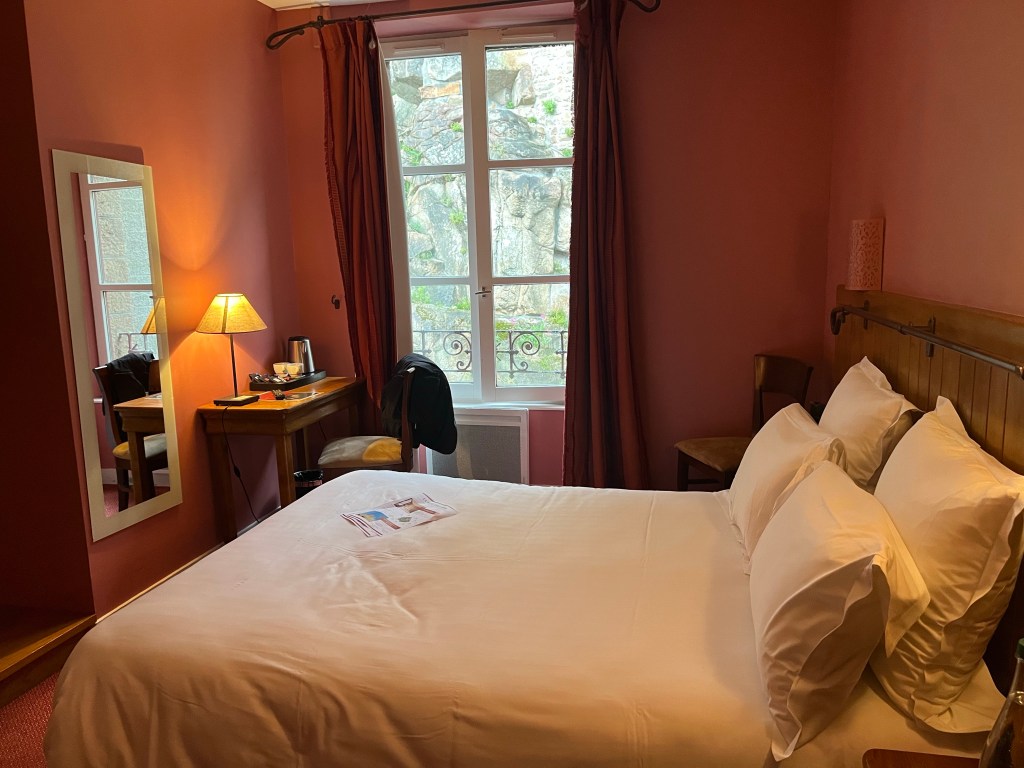
Not many people are aware there are a few hotel rooms available for guests to stay on the island. Years ago I discovered that info in a Rick Steve’s travel book and we made it happen – twice for Eric and I when you include this trip.

The rooms are different shapes and sizes depending upon where they were carved out of the existing buildings.

Our dinner plans upon arrival involved a charcuterie platter we gathered prior to stepping onto the island. It was our first order of business, along with wine and cidre.

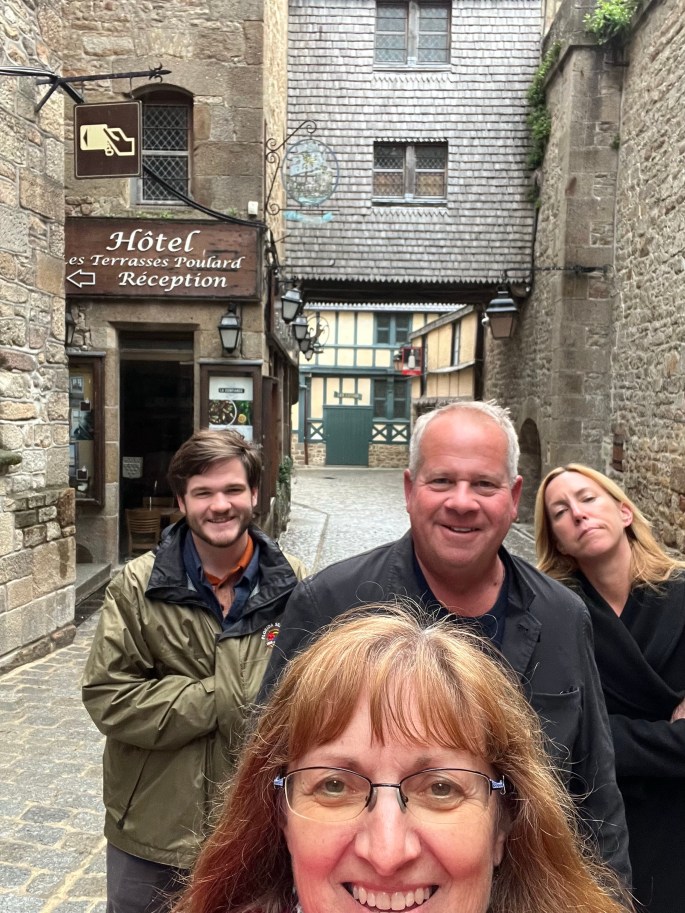
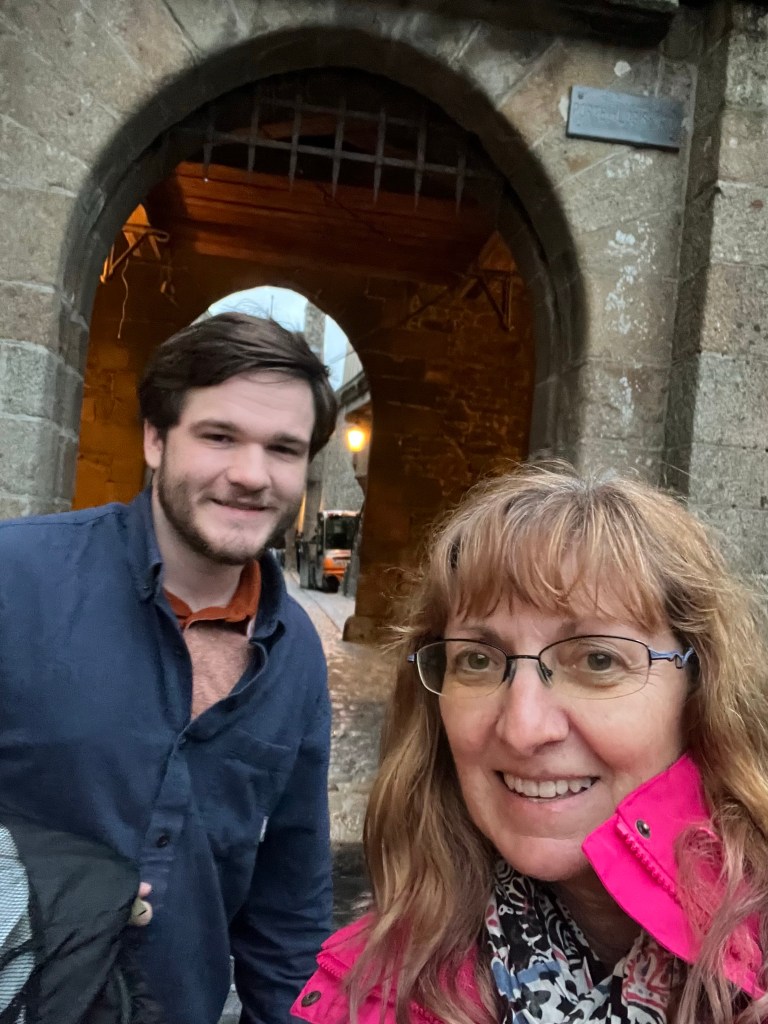
Immediately after we started exploring the mostly deserted streets of Mont St. Michel.
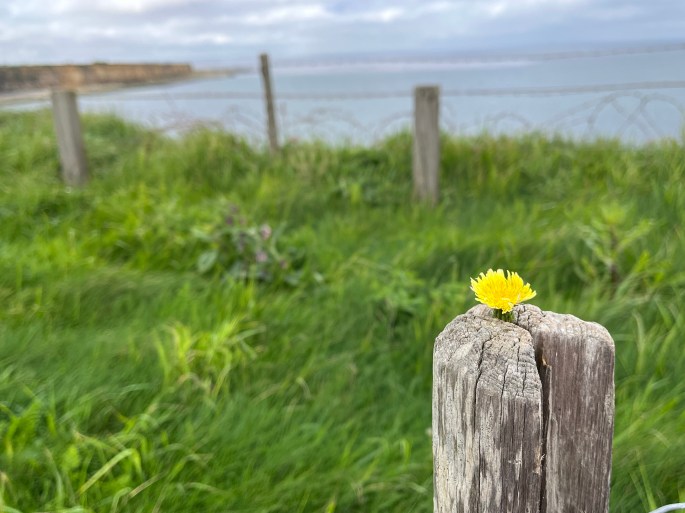
The night of our arrival rain started right after we parked and made for a damp walk and exploration. No matter, we still trekked thought a number of passages and stairways. BTW – this shot was at taken at 9pm.

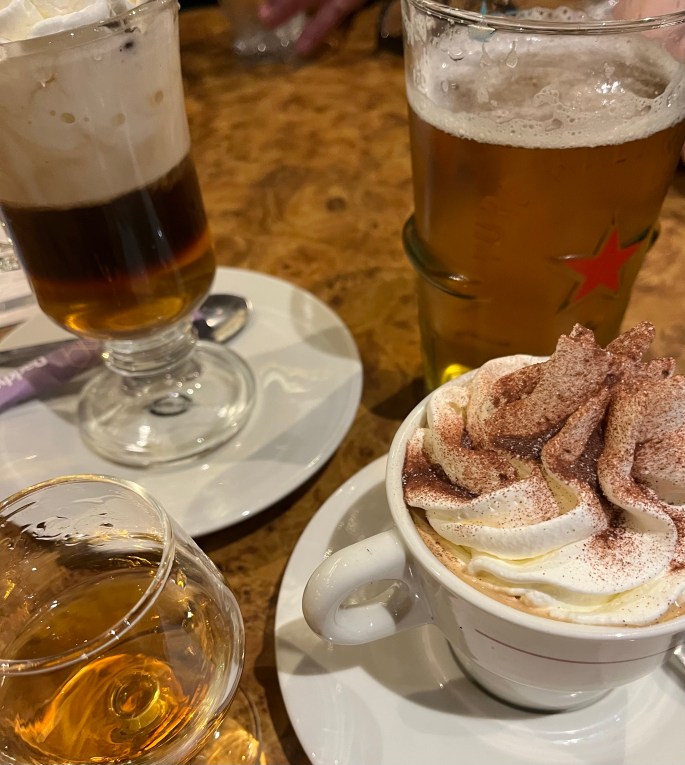
Since this is off season, choices are limited but we found a bar that was still serving and warmed up with various beverages.

Connor and I started exploring again and got a few photos before heading back to our individual rooms. These shots were taken close to 10pm. Now I understand why most living accommodations around here have the metal roll-down shutters.

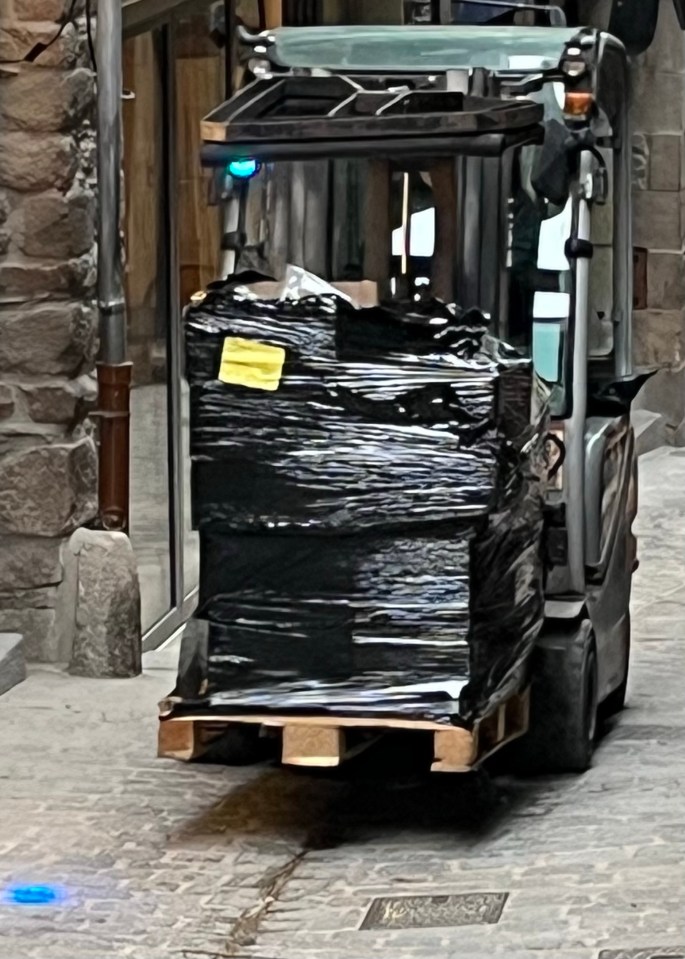
Deliveries and trash are conveyed by these vehicles – waking us up the next morning.

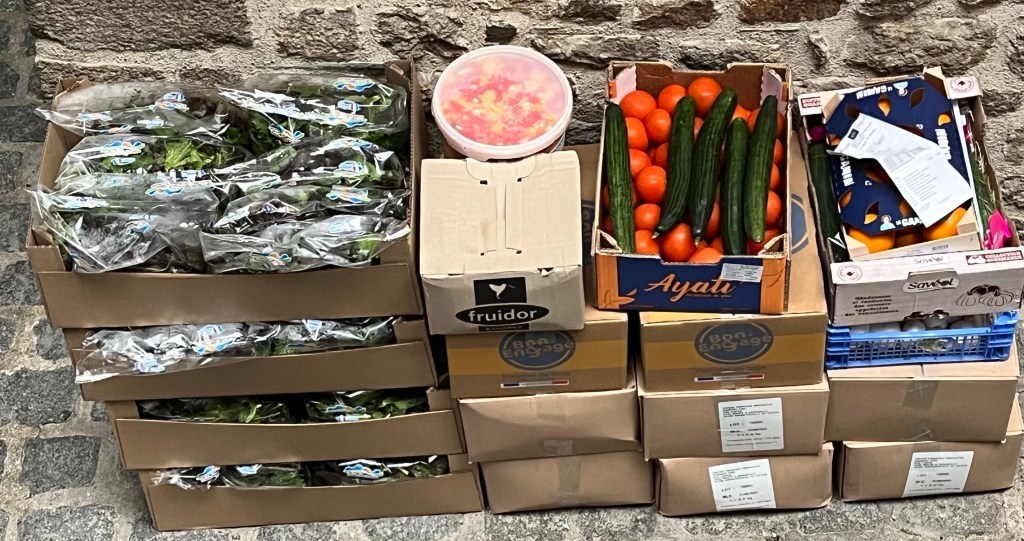
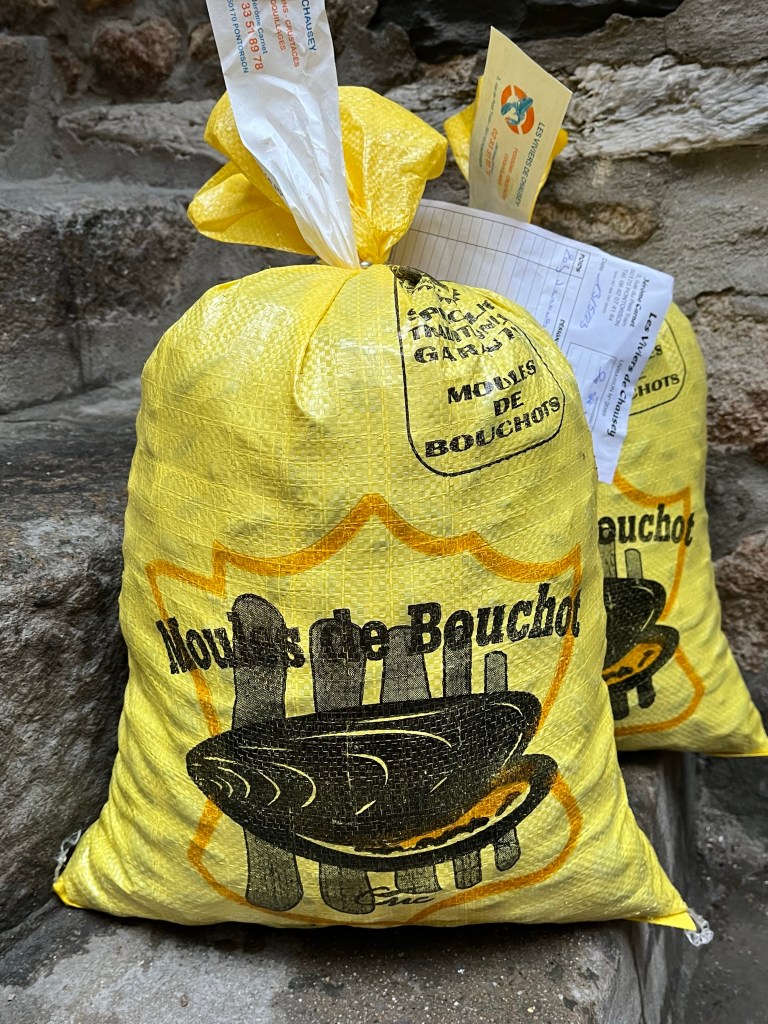
Fresh veggies and mussels are seen below they had been delivered that morning.

Then we saw this runner – Adrienne! She’s kept up with her morning run, no matter what country we’ve visited.

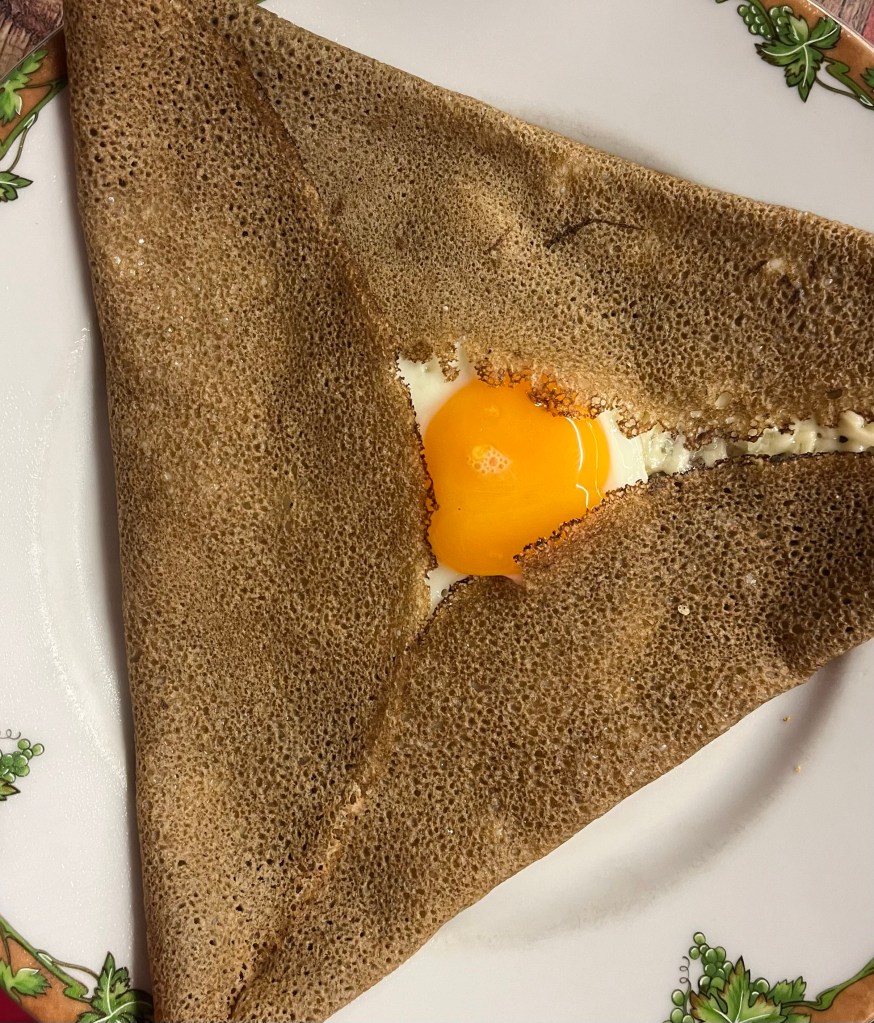
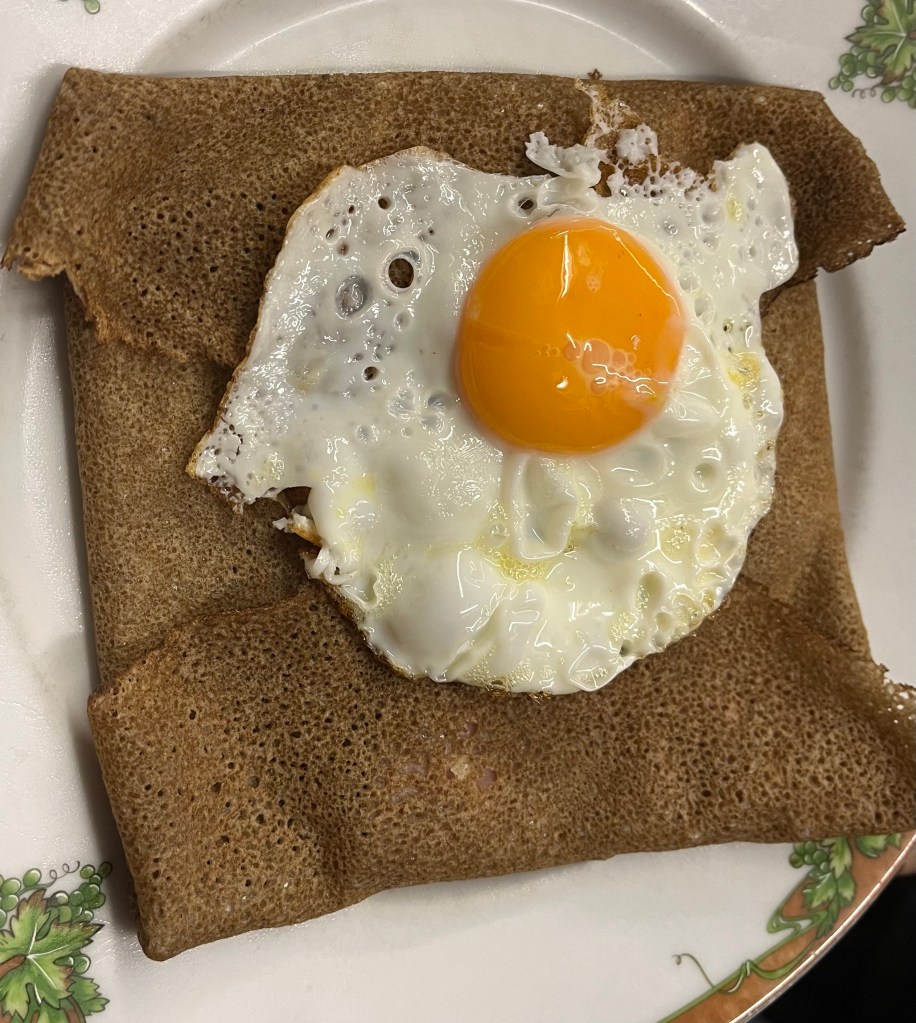
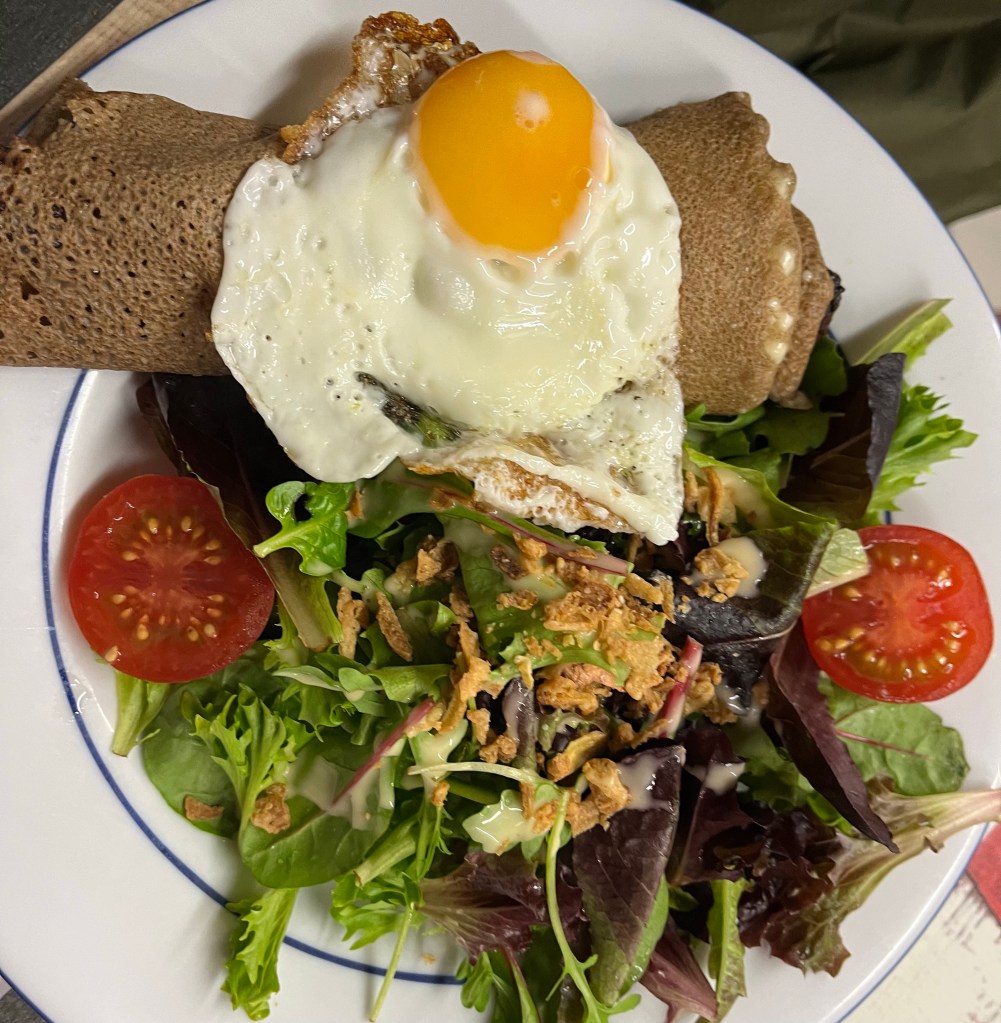
Speaking of food and deliveries…………….we found a place open early and had savory breakfast galettes. Connor won with his selection on the far right: sausage wrapped in the galette, fried egg and a (most delicious – according to Connor!) salad. Eric totally loved the coffee here – having at least 4 cups that morning.

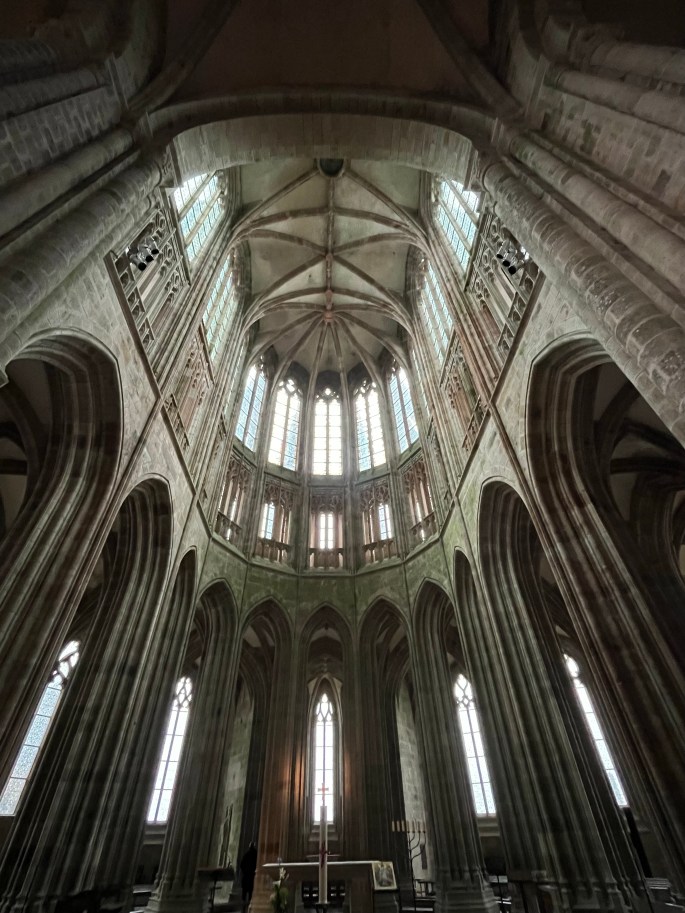
Fortified with food in our bellies, it was time to take the stairs – lots and lots and lots – to go into the Abby.

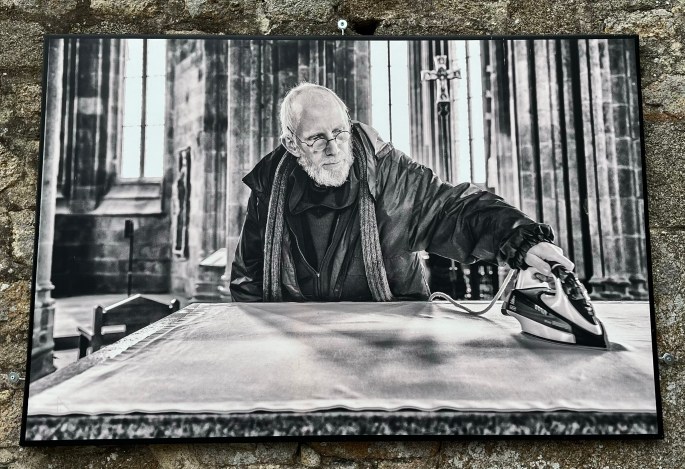
Had to chuckle with this photo describing monastery life………

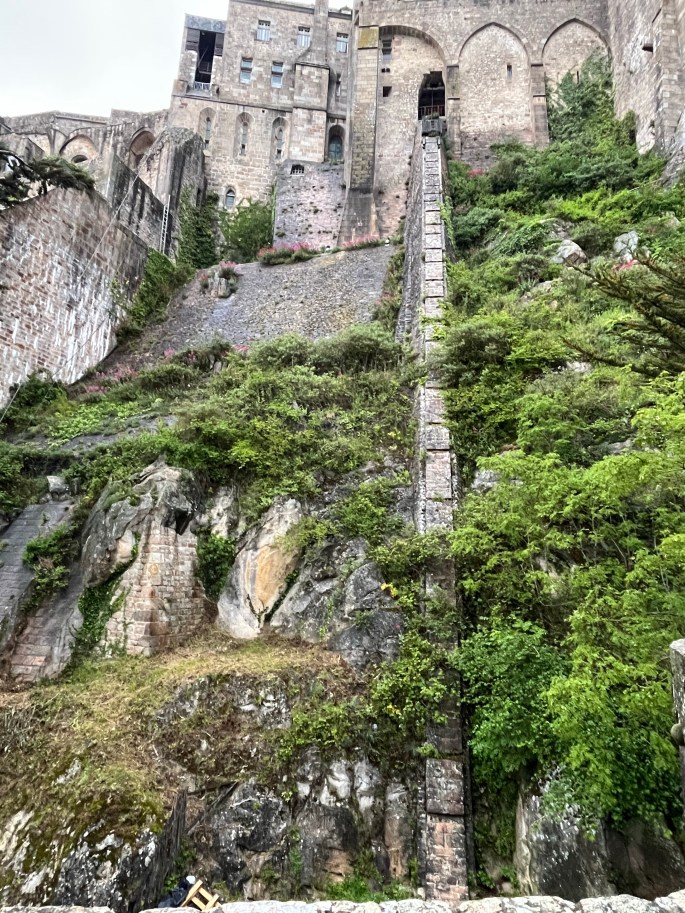
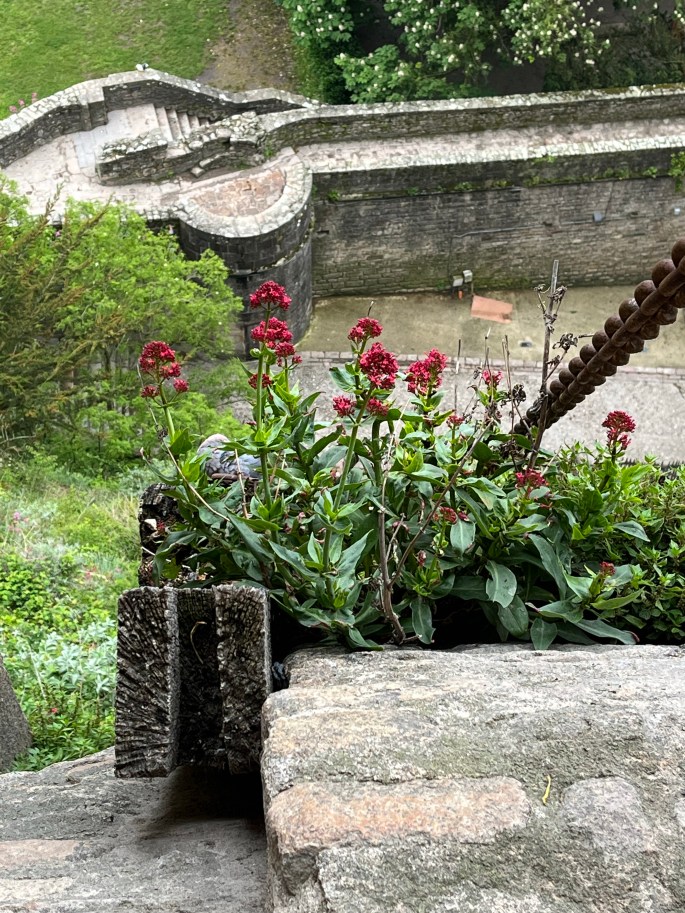
We made it to the top and before going into the building grabbed these photos.

Like most older buildings and monuments, it was going under a bit of refurbishment, so the pathway and access was modified.

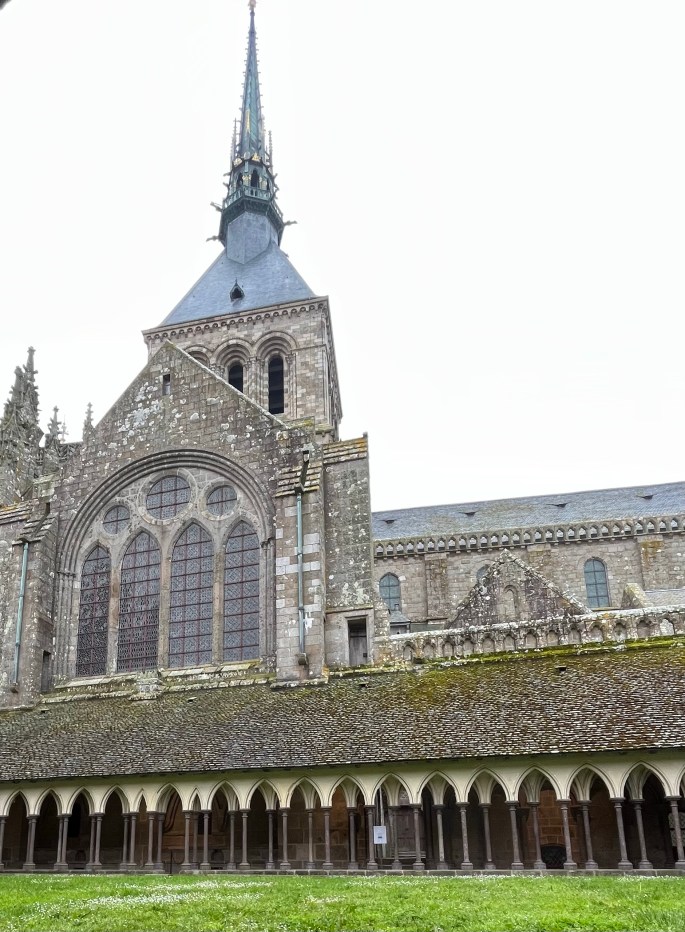
After leaving the main sanctuary we walked into this peaceful cloister.

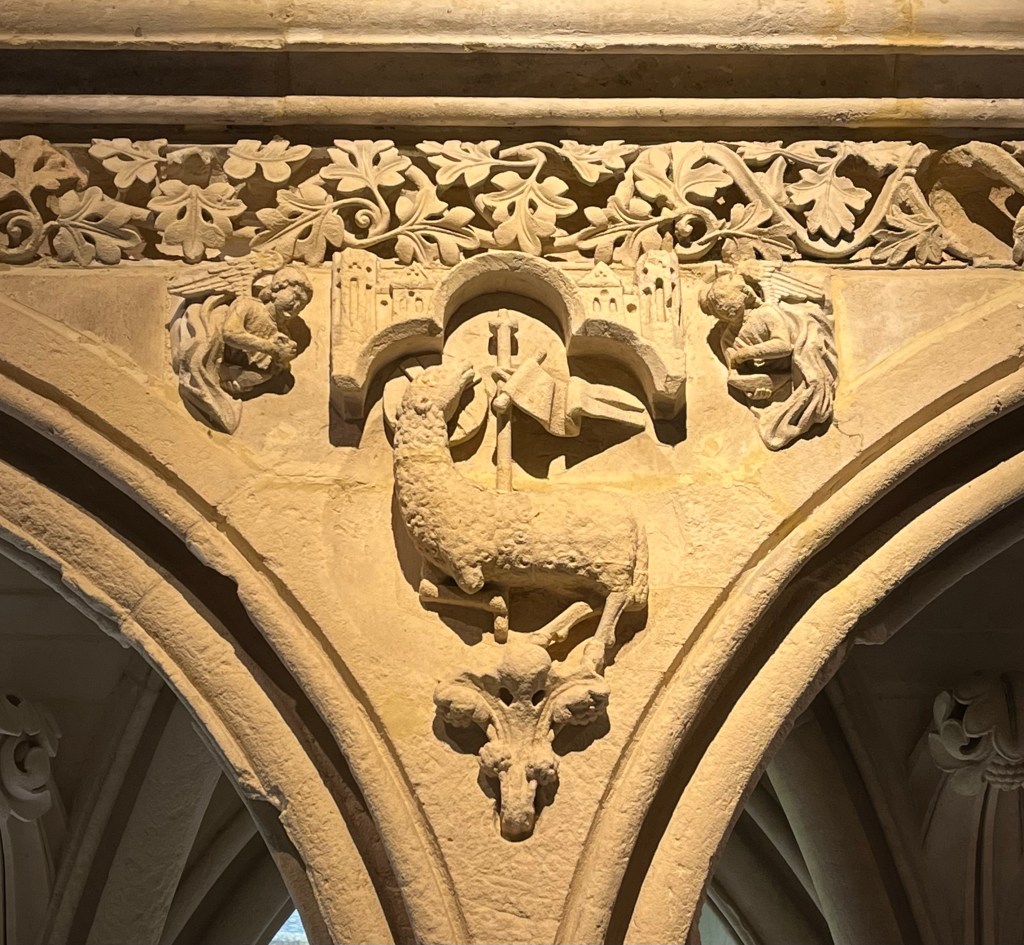
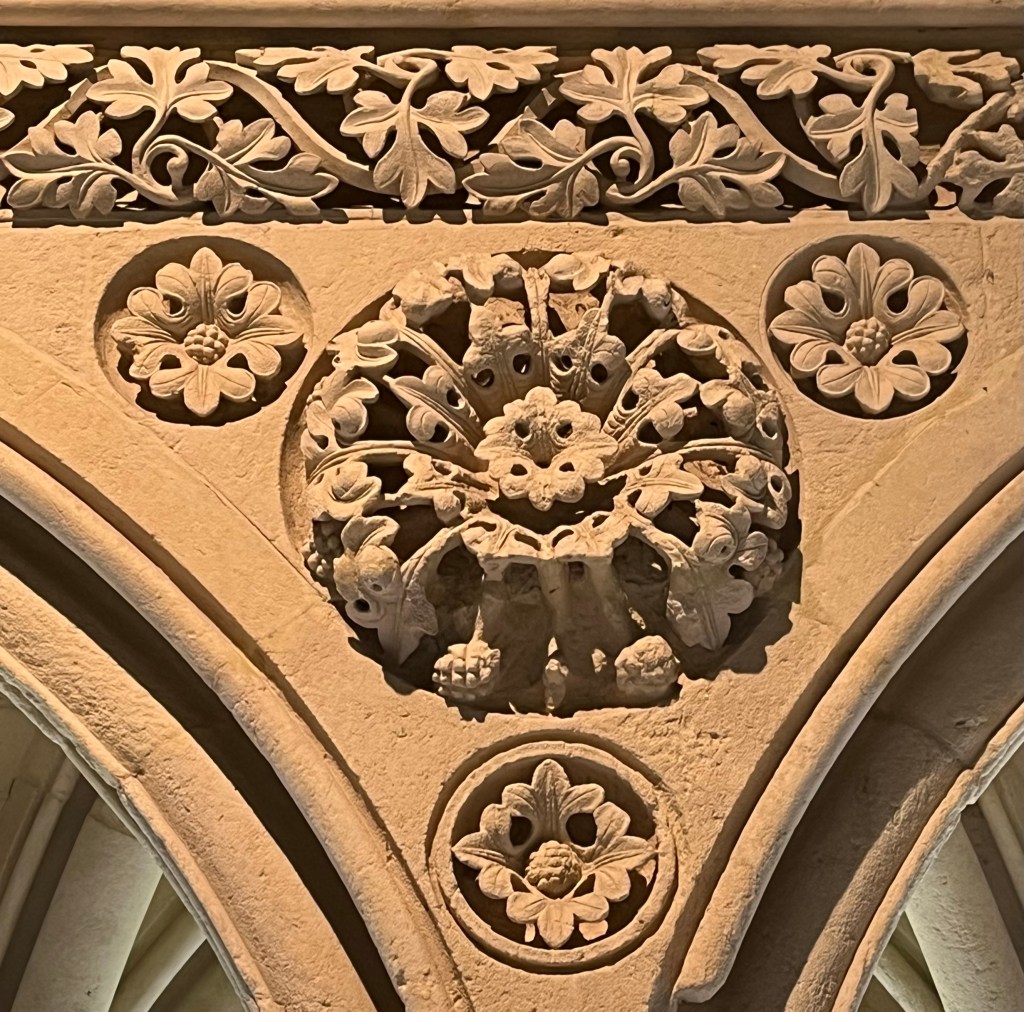
Looking around, there were intricate details most walked right past.

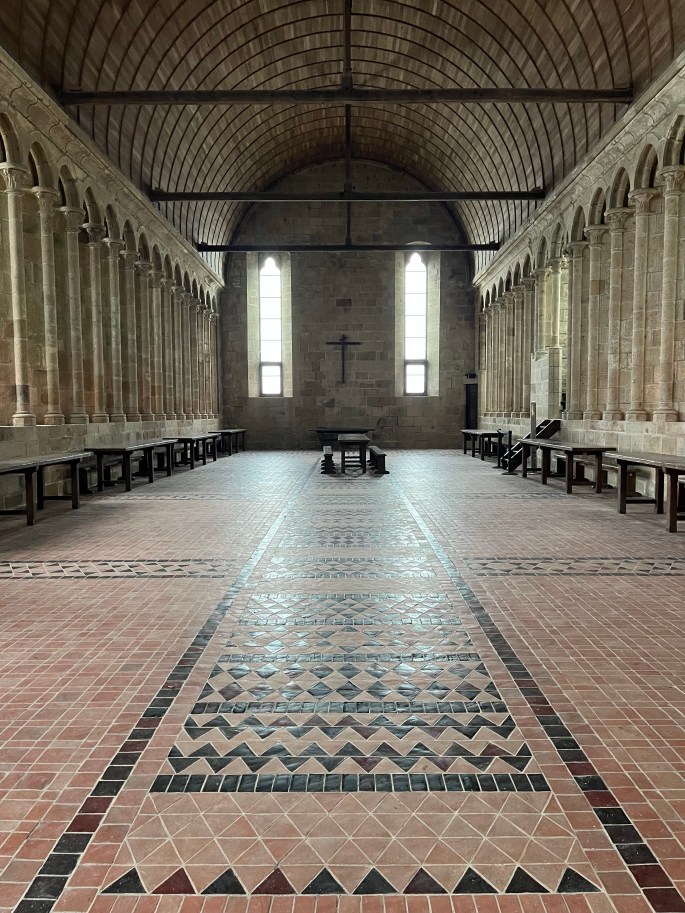
Next stop was the eating hall. Enjoyed by all in silence except for the one monk chosen to read scripture while the others ate.

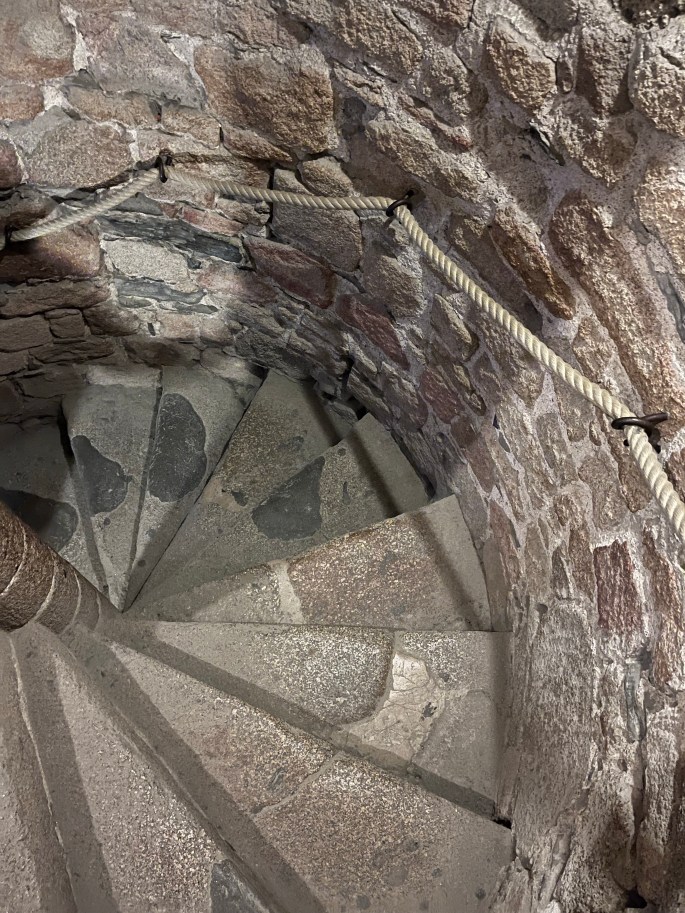
Going down a set of stairs……

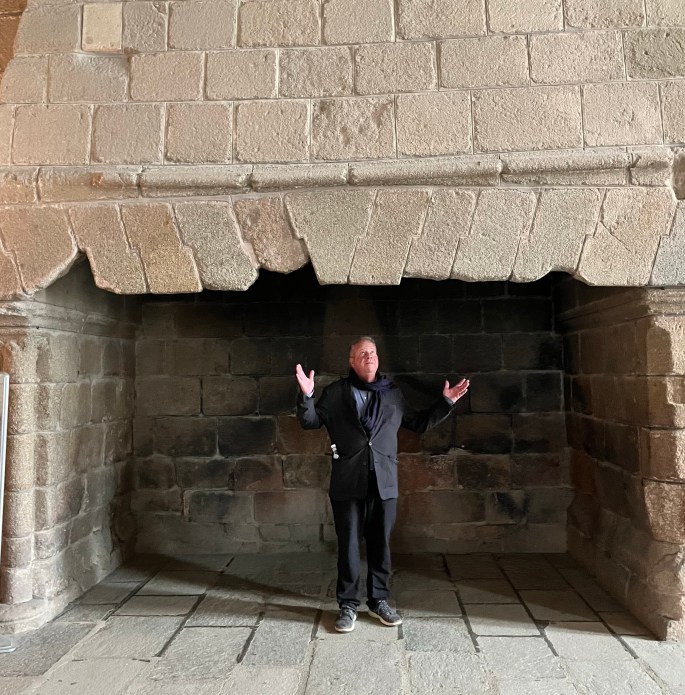
…………you came upon the cooking area. Now that’s a big fireplace.

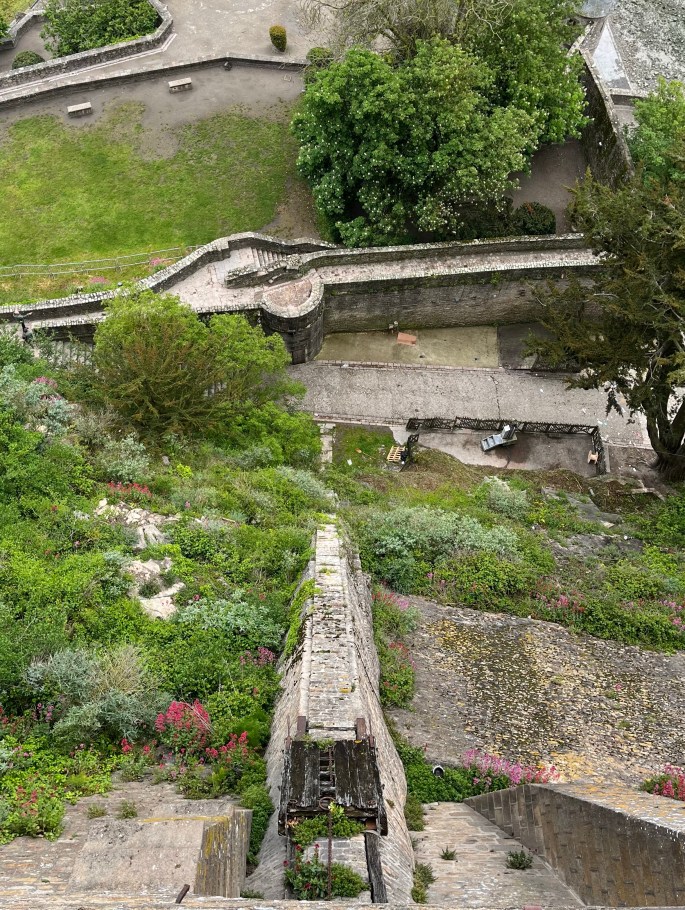
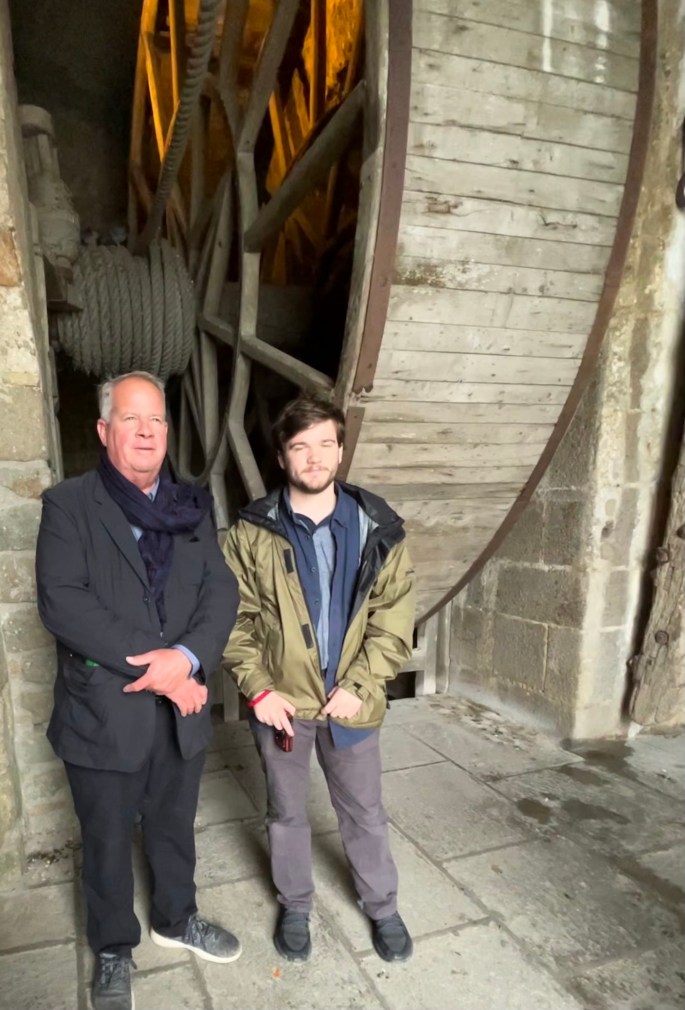
What goes up, must come down – through this pulley system – back in the day.

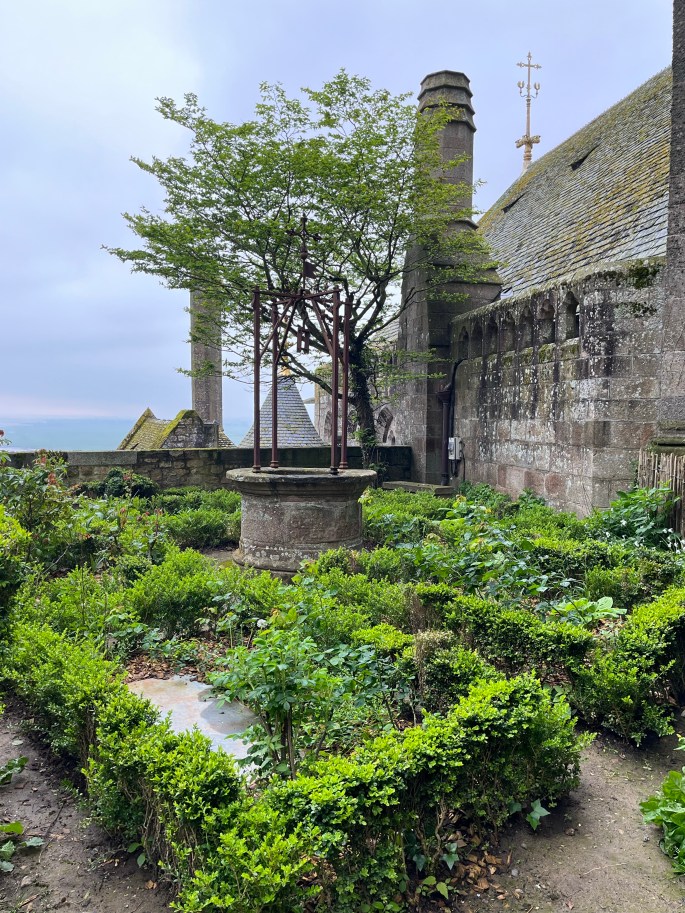
All too soon, we were exiting the abbey, but I found this small rose garden tucked into a corner.

Our Mont St. Michel adventure was over and time for the next leg of our journey.

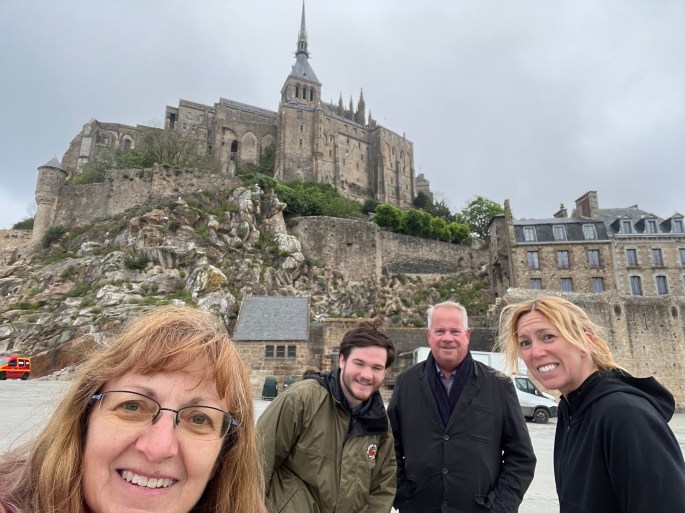
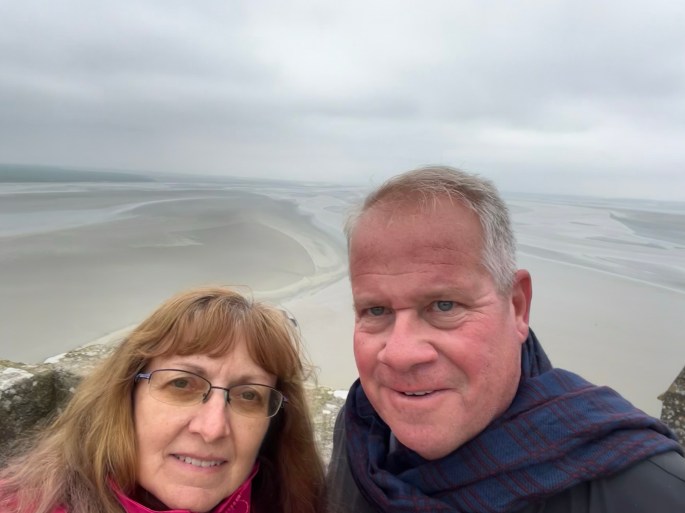
But wait, one more photo is needed!!!!!!! Yep, that’s right. we took an NBC mug shot and will be sending it in to NBC.

Don’t know there will be a third night on the island, but I have enjoyed all of my visits.

Ginny

Two stories of Heroism on D-Day

There are hundreds of stories concerning D-Day and a number of movies that continue the storytelling, but we visited some sites that stayed with me. There are so many memorials and monuments that it’s hard to go very far without coming across another one. Many of the small villages we drove through had their own memorials they created and continue to maintain – not on any list or website, but past actions were still honored. Here are my two.

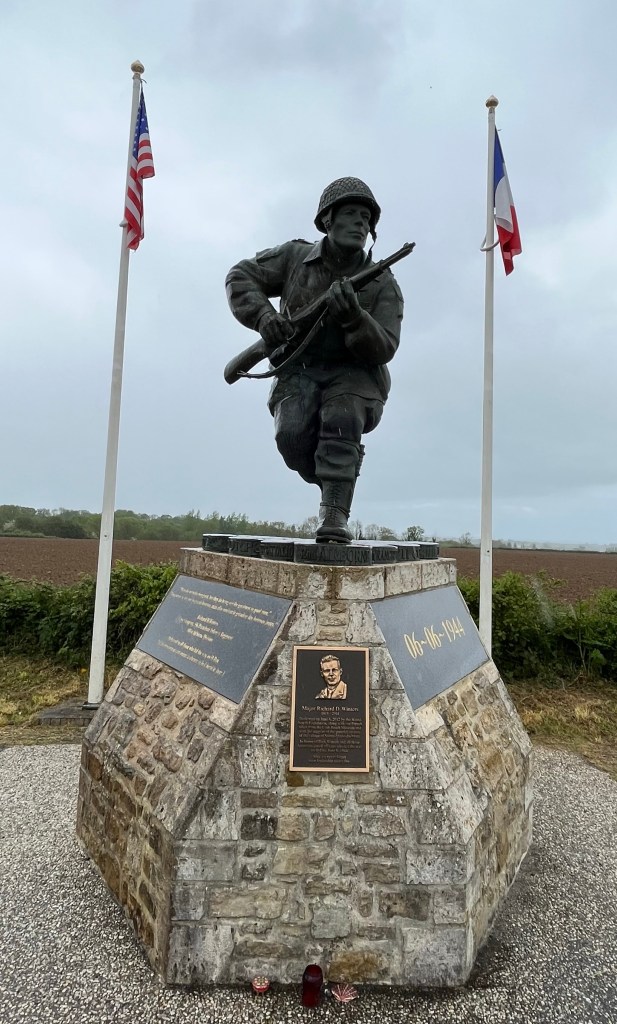
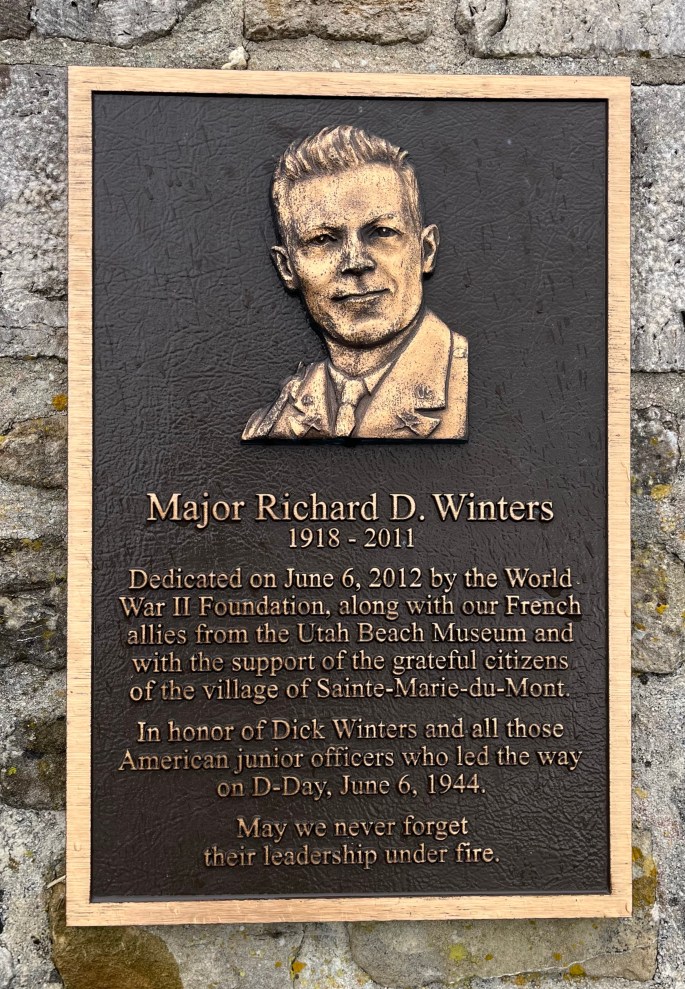
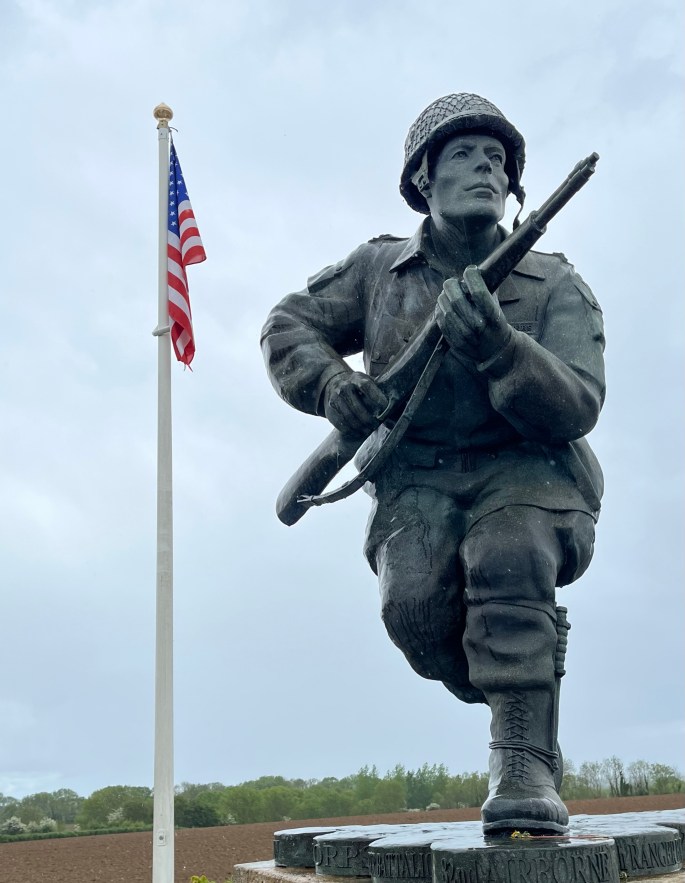
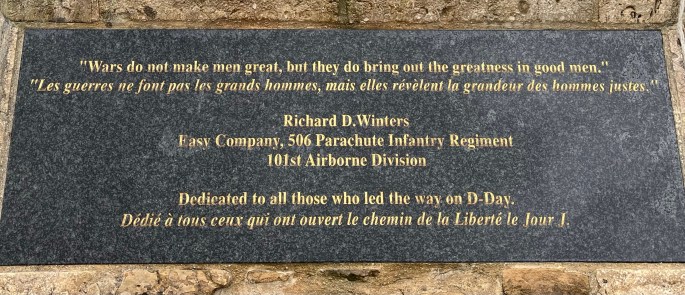
Richard D. Winters

He parachuted with the 101st Division during the Normandy invasion and lost his gun during the drop. Regardless he gathered the men together and therein learned he was the highest remaining officer and at that point took command.

He led an attack with formidable efficiency to neutralize the enemy guns and also got his hands on a map detailing the location of German weapons. He was also well-liked by his men, sometimes at the cost of his career and commander. A few stories exist where his commanders felt threatened and tried to get him removed and/or demoted.

For the remainder of the war, he rose in rank and was a part of numerous battles. General Omar Bradley presented him the Distinguished Service Cross for his actions. Stories persist of his actions during the war that demonstrated his leadership, fearlessness and efficient planning that his men relied upon and subsequently followed him.

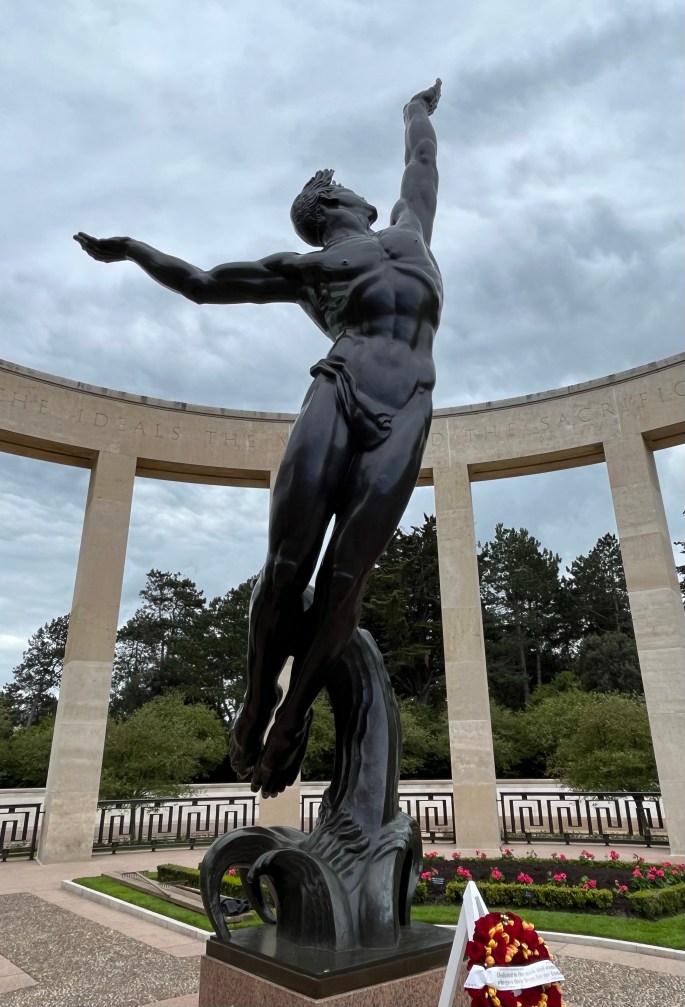
His Command considered him indispensable to his men and kept him in Europe to supervise the demobilization of his men. He agreed to his likeness for the statue, but insisted it be dedicated to all the men who landed on D-Day, not to any one person.

Pont-Du-Hoc

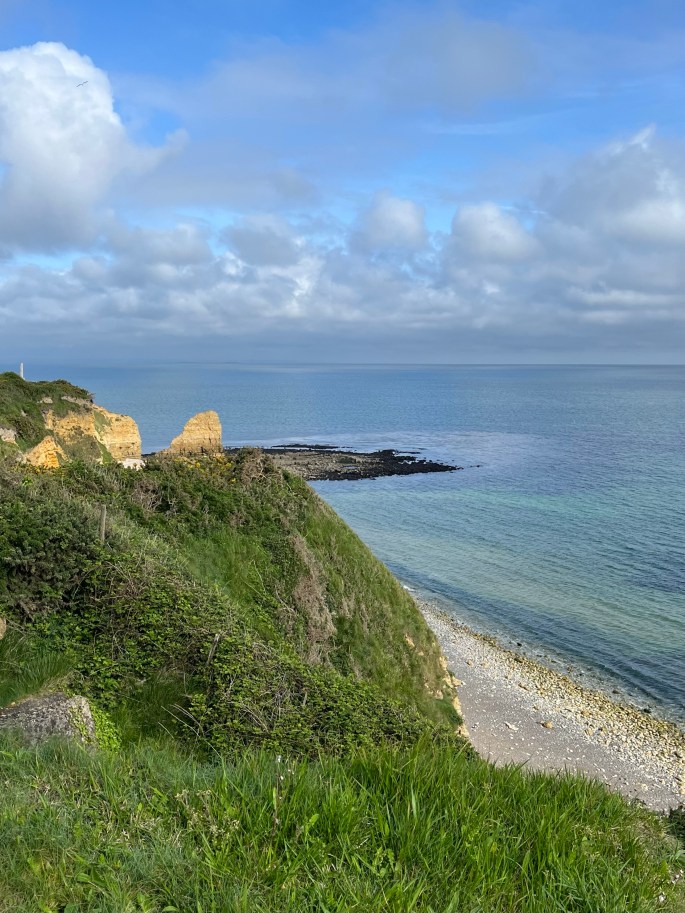
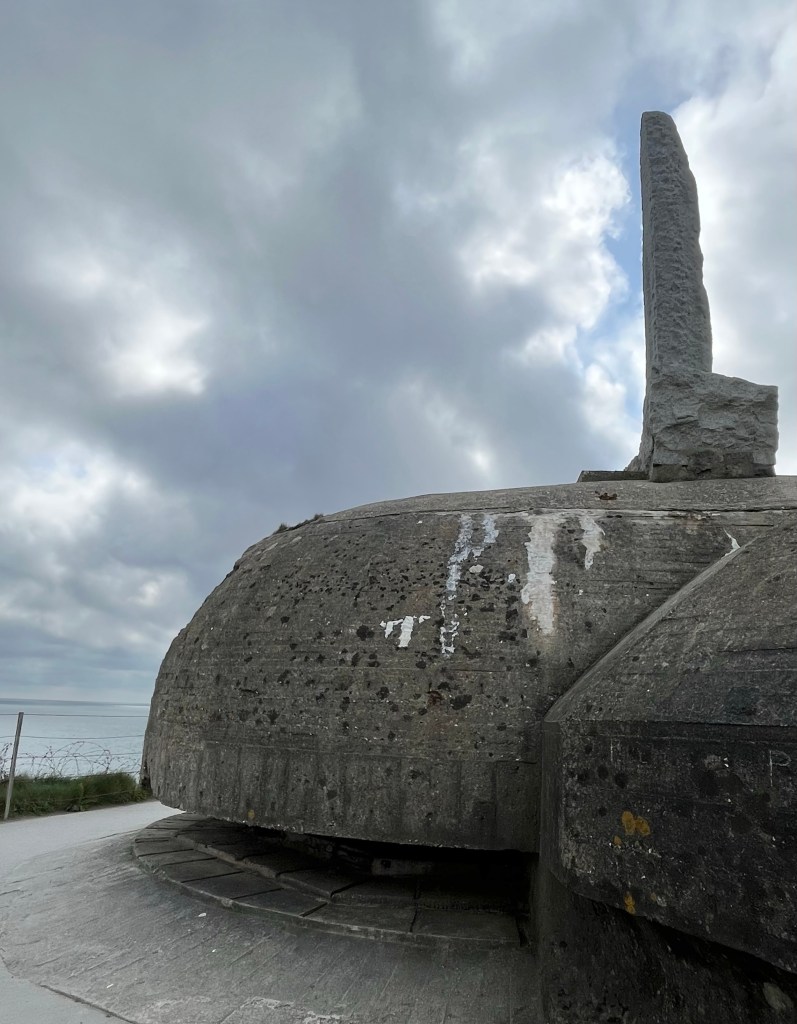
The small actions at these 85+ft cliffs were given the name of Pont-du-Hoc and conducted by the US Rangers.

This area was fortified by the Germans and reconnaissance indicated heavy artillery pieces with a range that would threaten the two landing beaches. It was considered essential to knock them out of service as soon as possible.

The Rangers were founded one year earlier and truly had baptism by fire with the invasion of Normandy.

Earlier reconnaissance indicated a large German fortification with guns that had a range threatening the two landing beaches. It was deemed essential to knock these out of service as soon as possible. Before landing the Allied bombers made three waves of runs, dropping 500lb bombs that later discovered were insufficient for piercing the shelters. Here’s a short video of the serenity in existence during our visit, which was abruptly interrupted that morning.

Their objective was to land on the beach, climb the cliffs and destroy the German artillery, firing a flare at 7am upon completion. I wasn’t surprised to read that navigation errors, strong current and smoke along with the loss of one of the landing craft delayed their operation more than 40 minutes. Hence no flare or reinforcements.

Upon reaching the top it was discovered there were only dummy guns. Two rangers went on a reconnaissance and upon seeing skid marks in the mud discovered the new location and neutralized the guns. The rangers hunkered down overnight but reached a critical point. The western flank was overrun, and 20 rangers stayed behind so 50 comrades could escape – and the 20 were captured by the Germans.

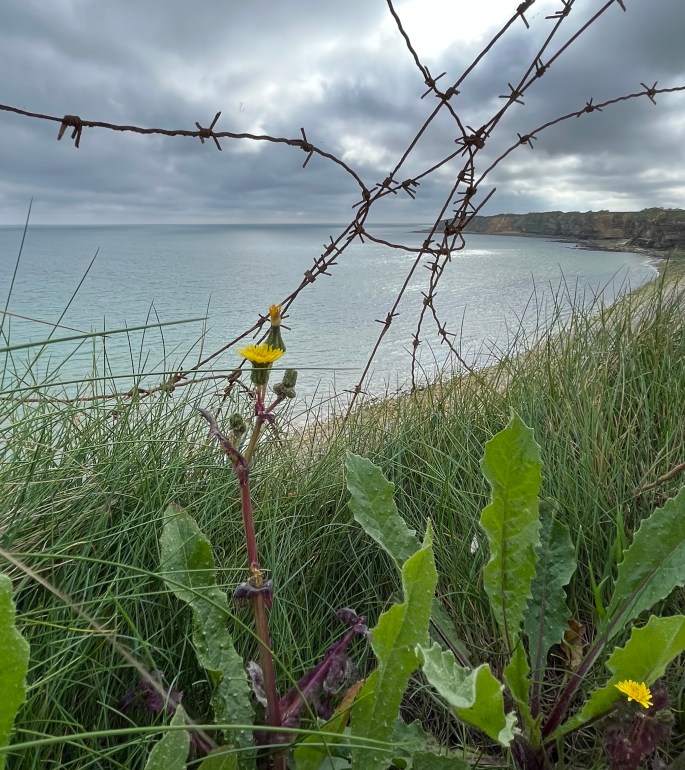
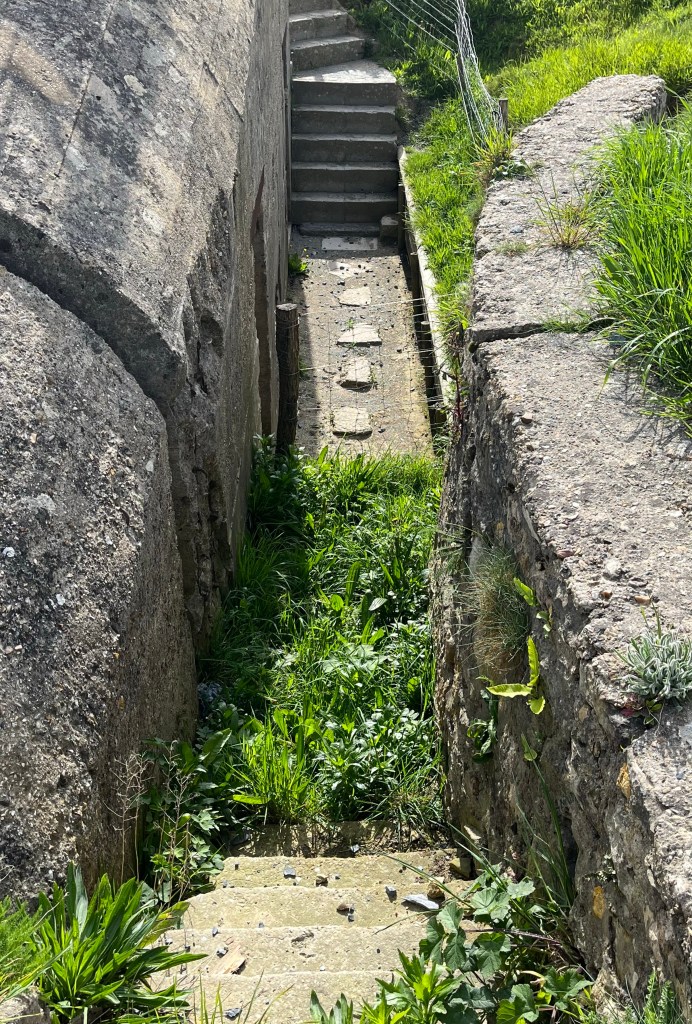
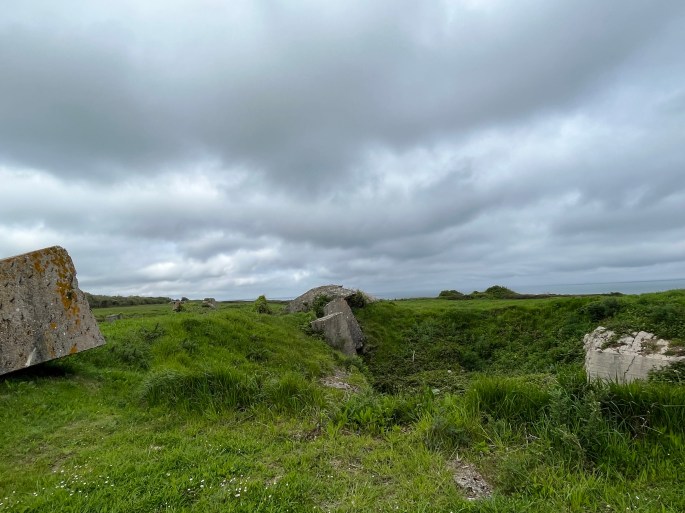
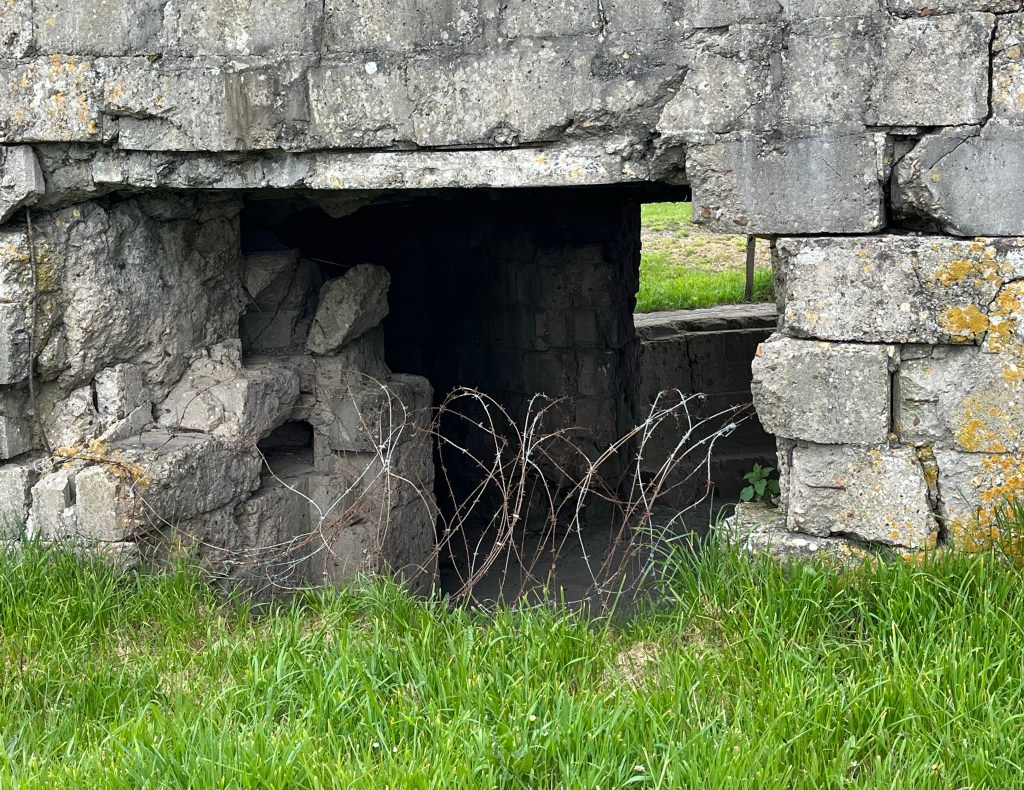
What the bombs didn’t destroy, time and weather took its toll on the location as seen below.

The area is littered with concrete pieces across the landscape.

225 Rangers began this mission and afterwards 90 were able to continue the invasion after the landing.

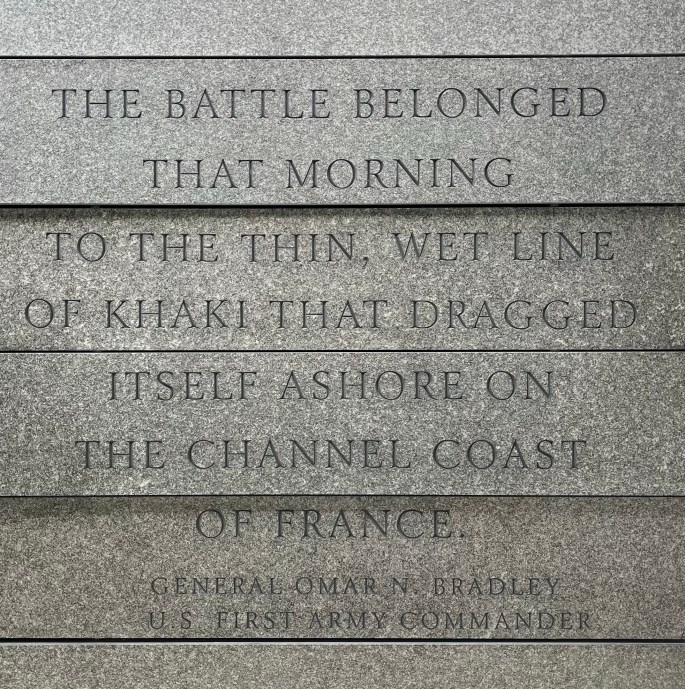
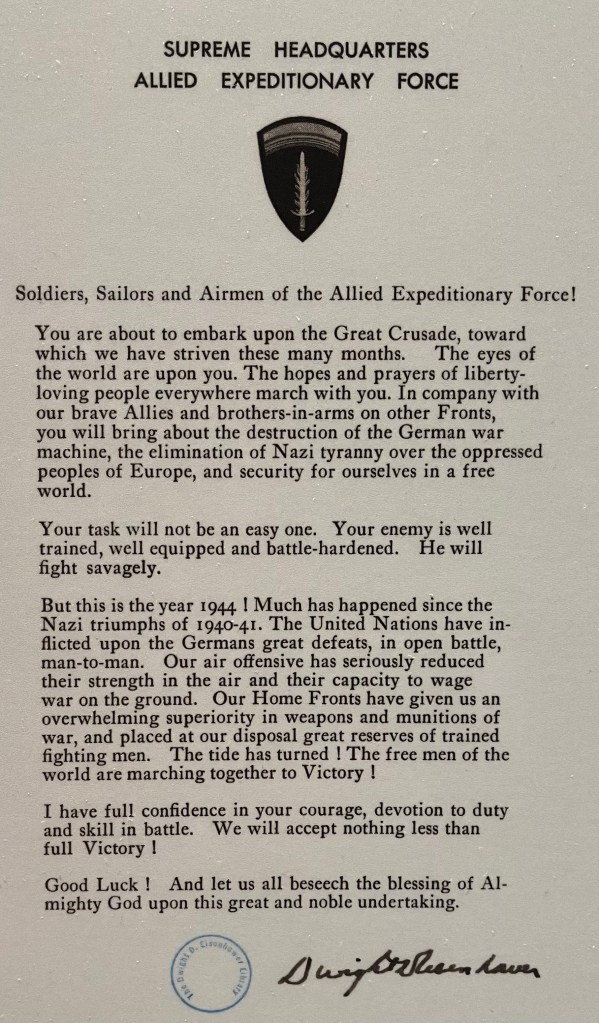
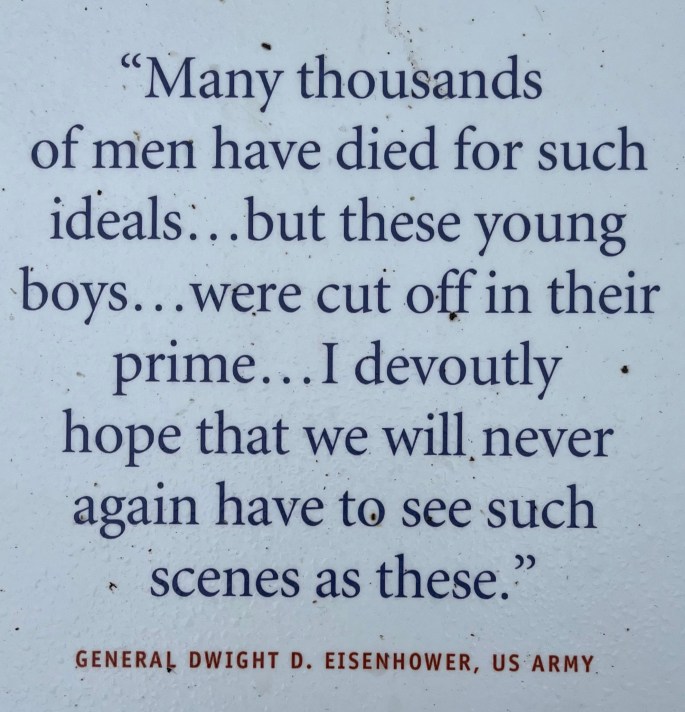
I found this quote in the visitor center and thought it was fitting.

Ginny

D-Day Invasion Beaches

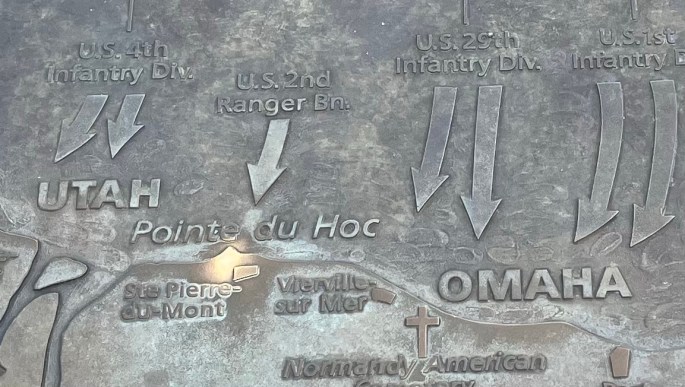
A number off years ago when we visited Northern France, we stopped at four of the five landing beaches. It was all totally unplanned but regardless it left me wanting to finish the quest. This time we did finish. Here’s a shot of the landing spots.

Utah Beach

The westernmost of the five code-named landing beaches in Normandy, undertaken by the United States. Forces landing on Utah cleared the immediate area in less than an hour and penetrated 6 miles inland by the close of D-Day.

This was something I didn’t expect to see…………..

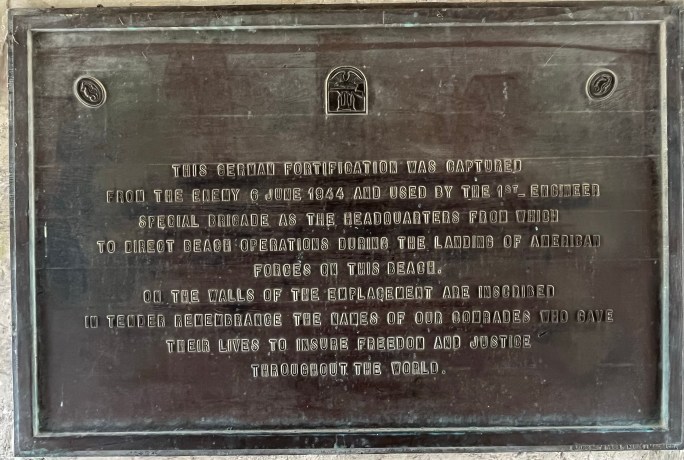
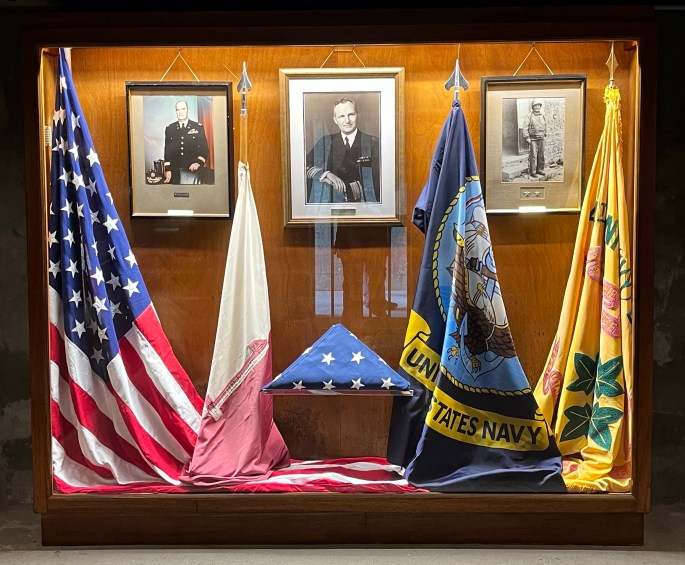
We came upon this monument and inside the fortification we found this.

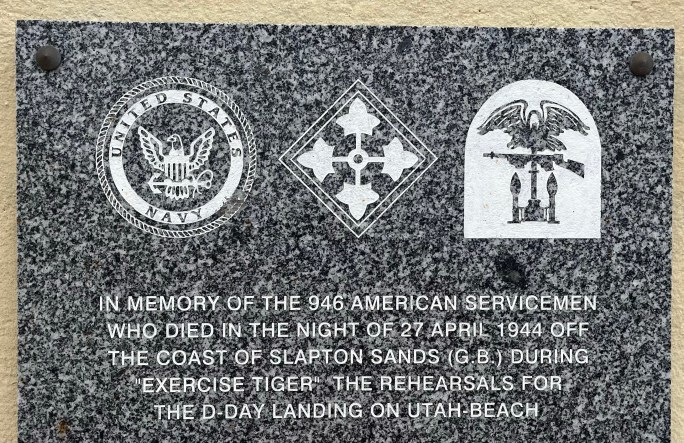
Interesting enough, we also came across this plaque in the same area. It was one of a series of large-scale rehearsals for the D-Day invasion. Because of the impending invasion of Normandy, the incident was under the strictest secrecy at the time and only minimally reported afterwards.

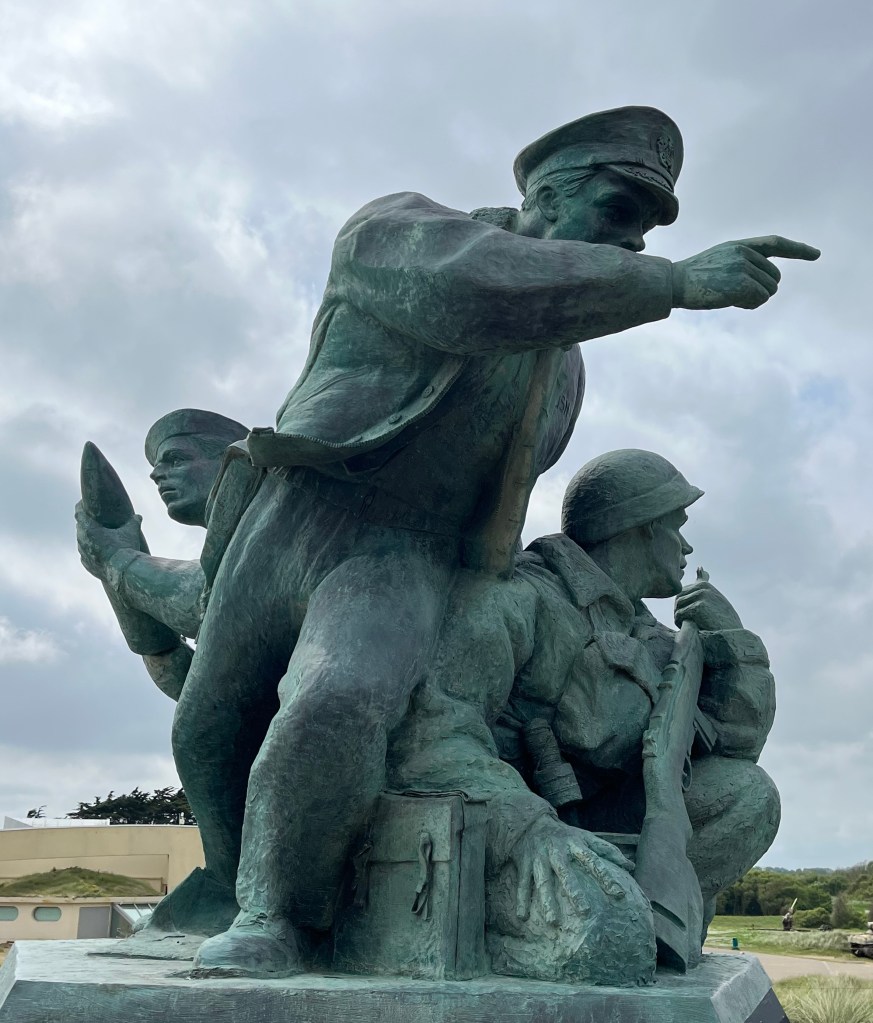
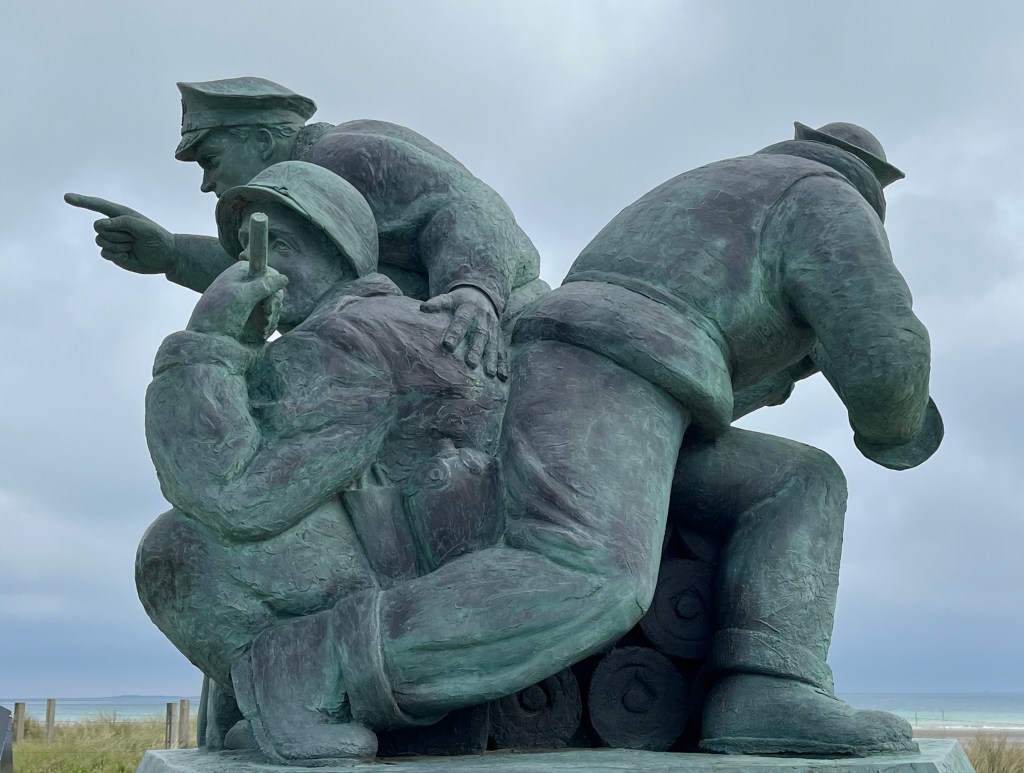
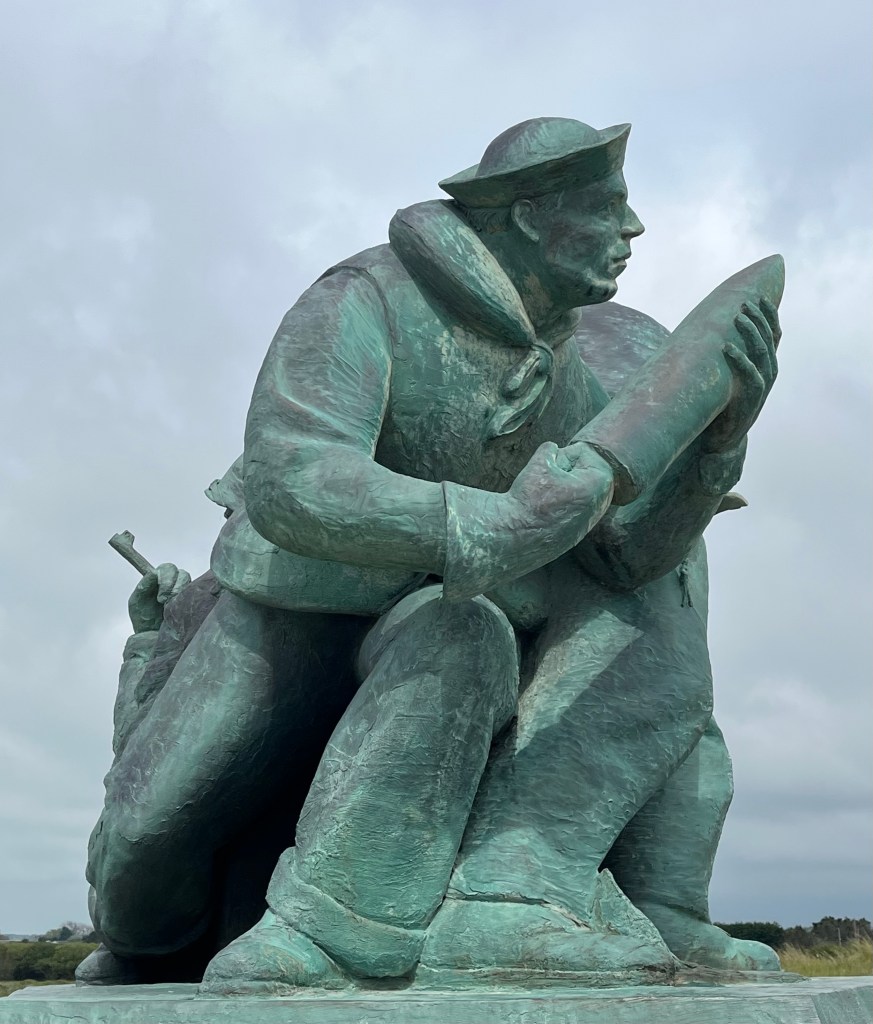
Another monument was part of this space, having three figures:

~the officer is standing and represents leadership and planning & intelligence for the operation.

~The sailor on his knees represents the naval combat demolition units and those sailors who fought ashore with very high causalities.

~The third sailor is loading a gun for the shore bombardment.

Omaha Beach

The primary U.S. objective was to secure a beachhead 5 miles deep, linking up with the British landings. Ultimately, the foothold at the end of the day was 1.6 miles. Very little went as planned as difficulties during navigation caused most of the landing craft to miss their targets throughout the day.

Defenses were unexpectedly strong and inflicted substantial casualties on the US troops. Ten landing craft were swamped by rough seas and seasickness was prevalent among the troops waiting offshore.

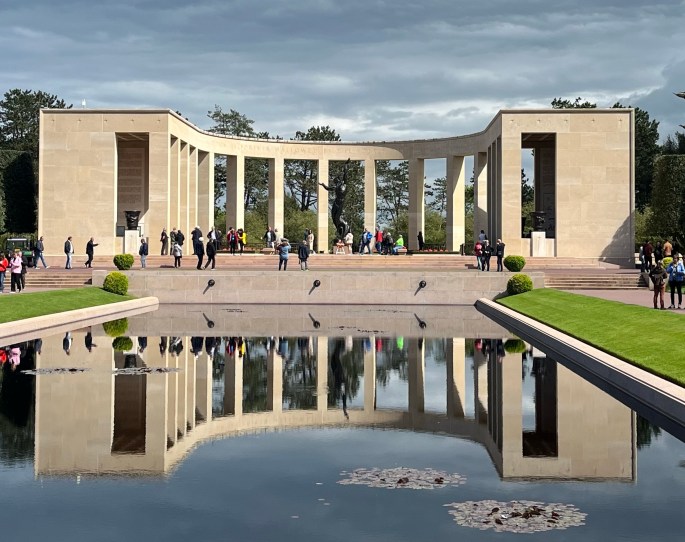
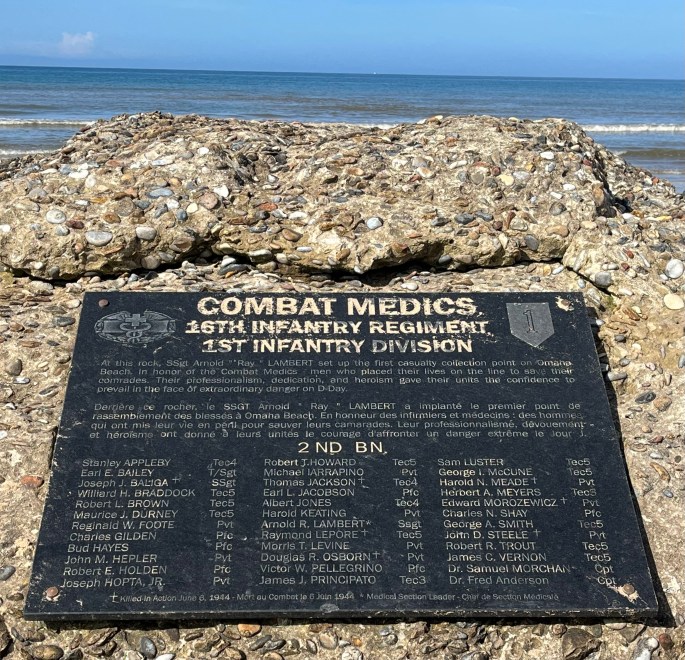
Causalities were most severe among the troops landing at either end of Omaha. Most companies were at best disorganized, leaderless and pinned down with no hope of carrying out their assault missions. This monument was created to recognize the bravery of the medics as they dodged bullets running to injured soldiers along the beachfront – having no way to protect themselves.

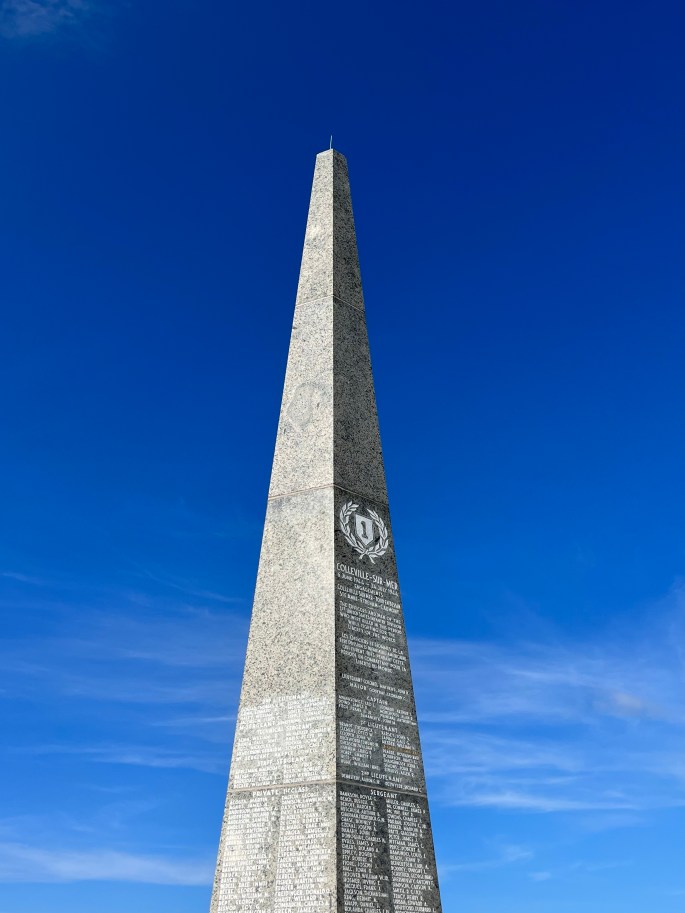
On the bluff was a memorial to the Big Red One infantryman as they encountered beach obstacles and fierce enemy fire which stopped their advance at the water’s edge.

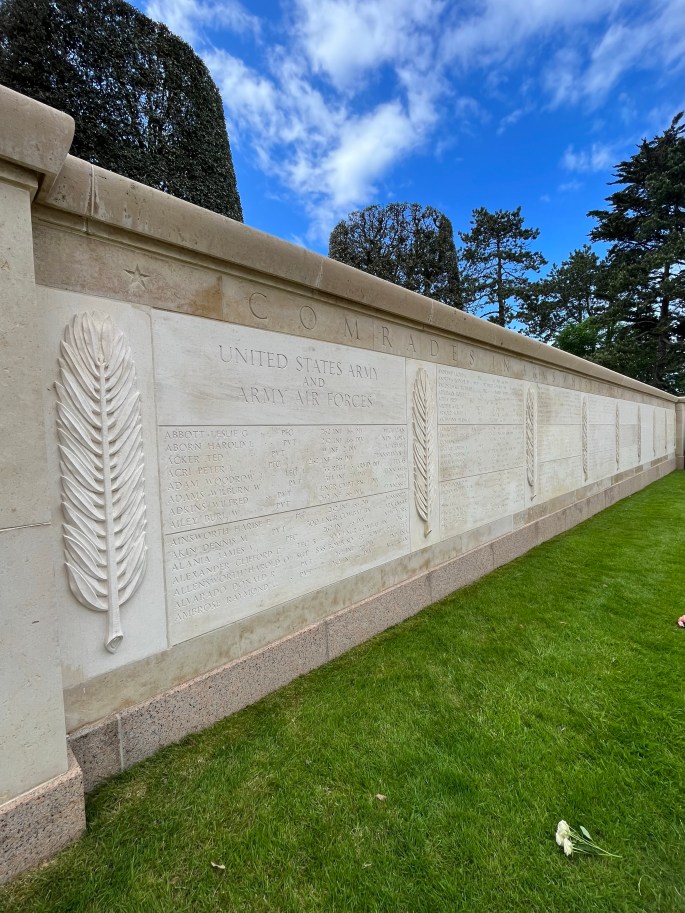
The names on the monument remind us of the heavy cost of that victory. Their motto – ‘No Mission Too Difficult, No Sacrifice Too Great, Duty First’.

Gold Beach

The objective for the British troops were to secure a beachhead, move west to capture Arromanches and establish contact with the American forces, capture Bayeux and the Port-en-Bessin, linking up with the Canadian forces at Juno. Extremely choppy seas, navigation errors, strong current and a quicker incoming tide impacted the operation – which was still not on point as desired. Bayeux was not captured until the following day.

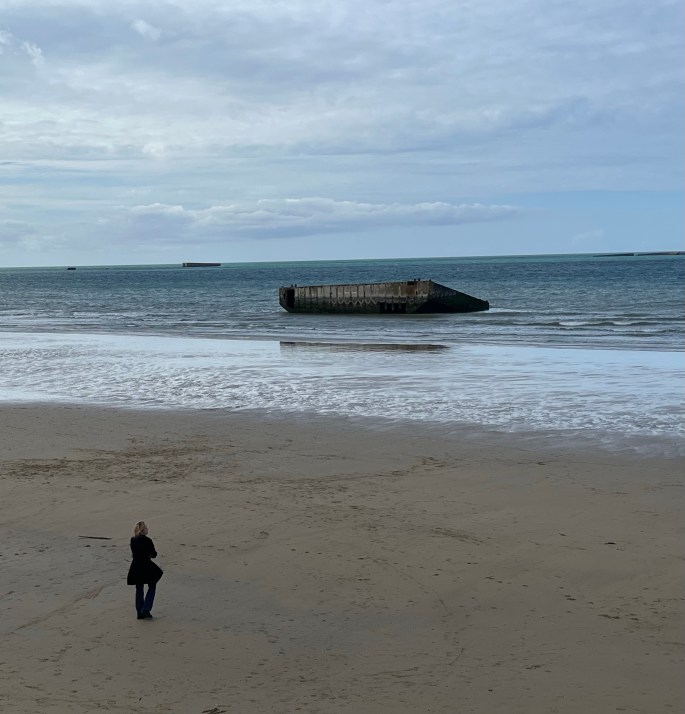
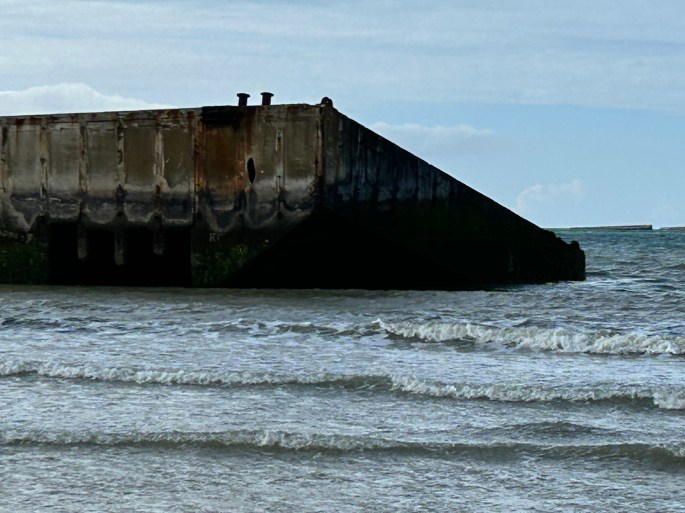
Above, Adrienne is walking to one of the remaining ‘Mulberrys’. Gold Beach was to be one of the Mulberry Harbors that was brought across the Channel on D+1 to facilitate rapid off-loading of cargo onto the beaches after the Allied invasion. The other two figures below are Connor and Eric. An entire post could be dedicated just to the creation, building and execution of the Mulberry harbor.

Both harbors were fully functional when a large NE storm blew in on 6/19/44. The harbors had been designed with summer weather conditions in mind and the storm was the worst to hit Normandy in 40 years. Damage was so heavy on the other one, it was abandoned. Designed to last for only three months, the remaining one saw heavy use for eight months.

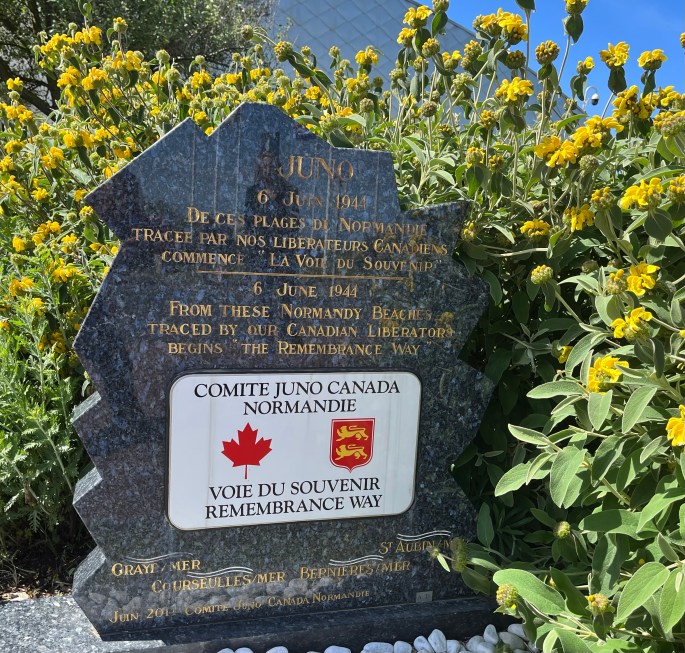
Juno Beach

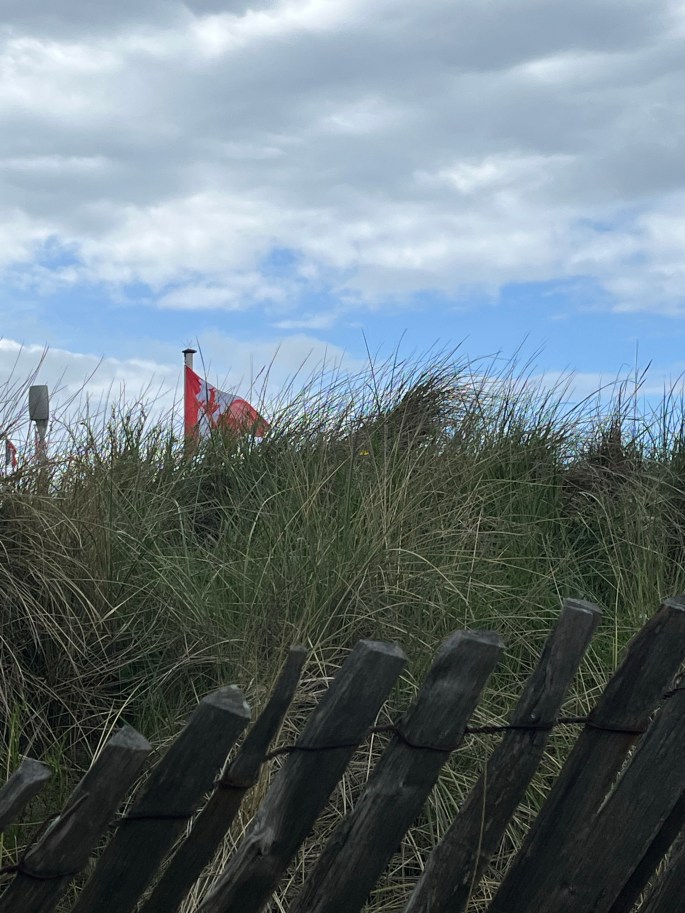
The Canadian objective was to cut the Caen-Bayeux road, seize an airport west of Caen and form a link between the two British beaches on either flank.

Despite the failure to capture any of the final D-Day objectives, the assault was generally considered – alongside Utah – the most strategically successful of the D-Day landings.

While there are disputes concerning reasons why objectives were not met, weather, timing and congestion on the beach are popular theories.

Sword Beach

The easternmost landing site was the responsibility of the British Army. They were to assault the beaches, and seize the historic Norman city of Caen. Strong resistance, heavy fire and congestion on the beach as more men, vehices and equipment arrived complicated matters.

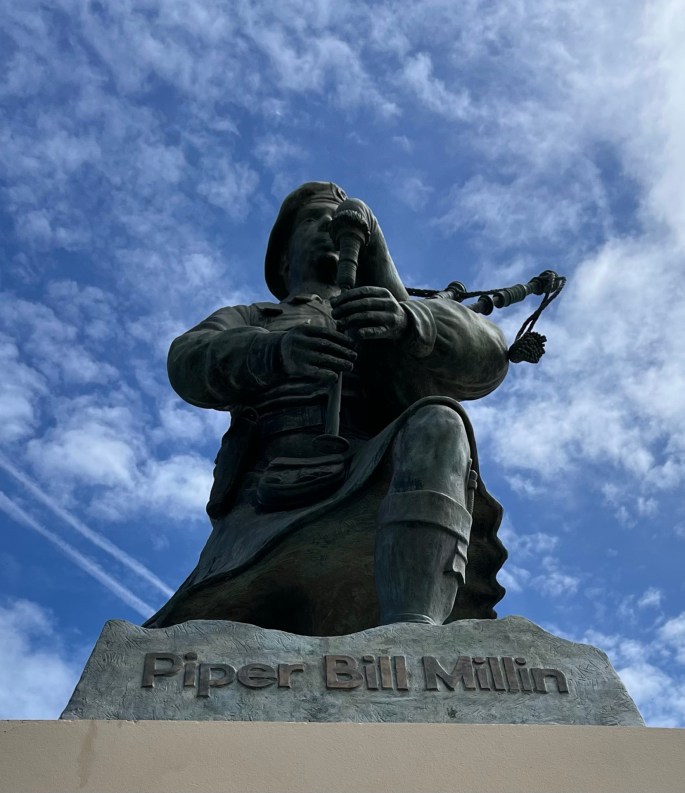
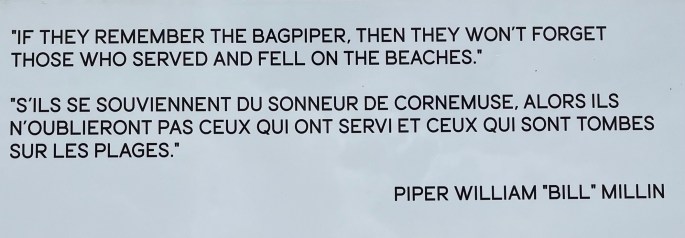
The British and Canadiens were able to link up the following day and continue the drive to Caen. At this site was a sculpture of a bagpiper.

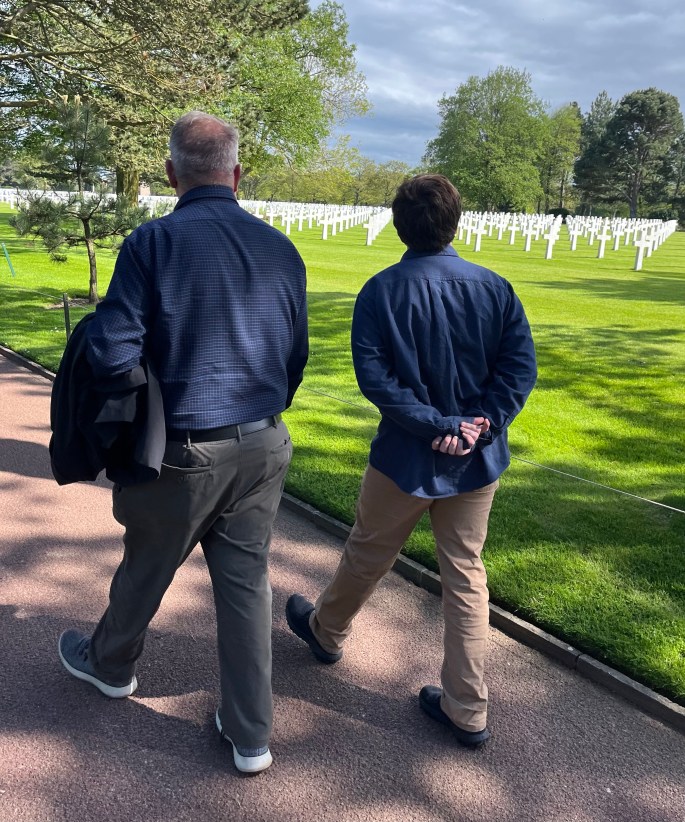
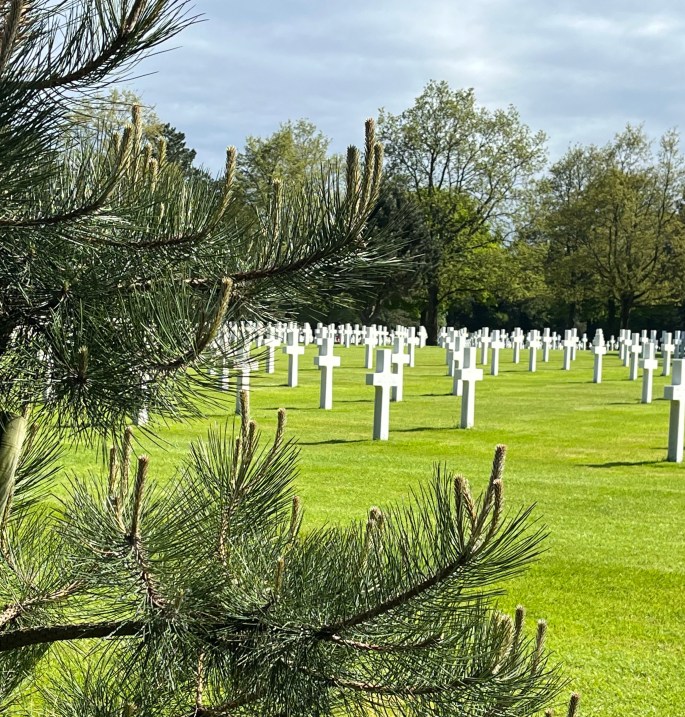
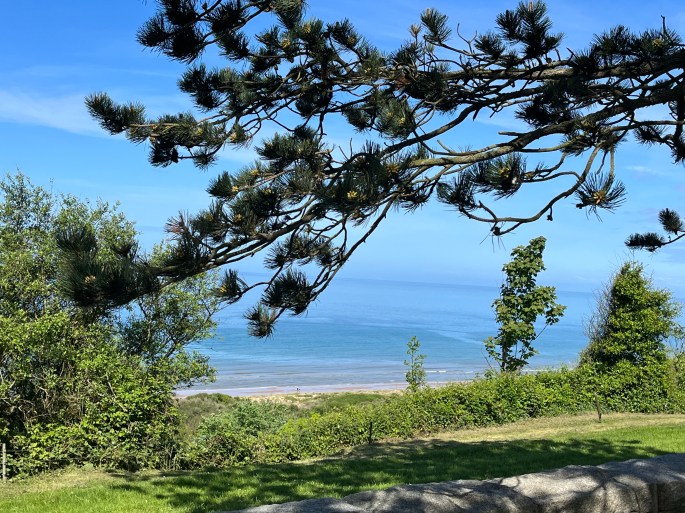
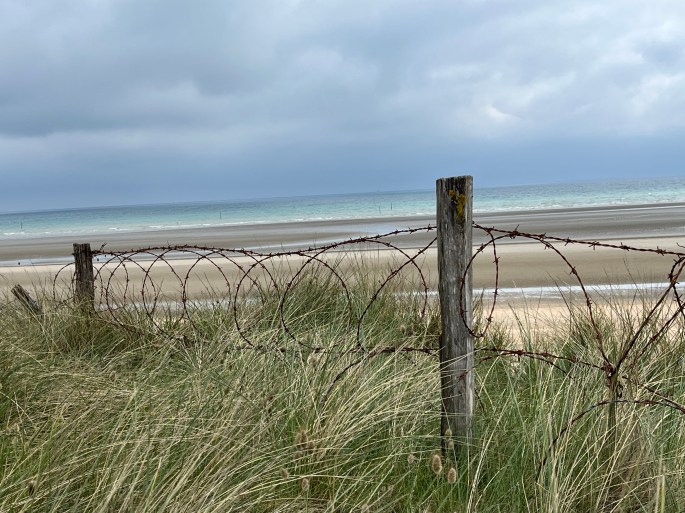
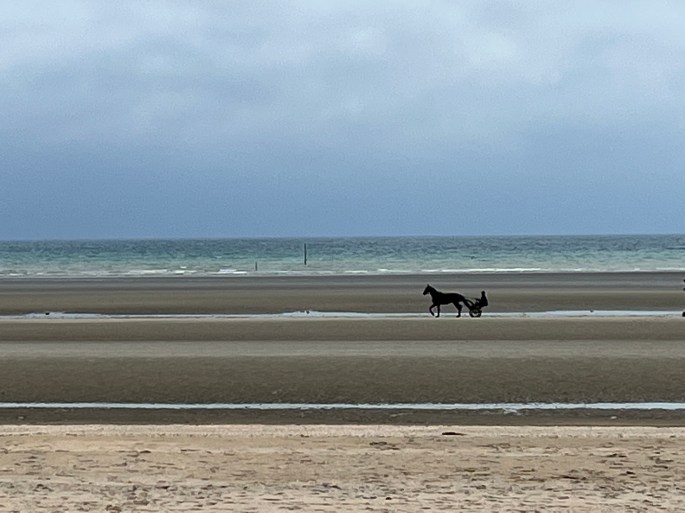
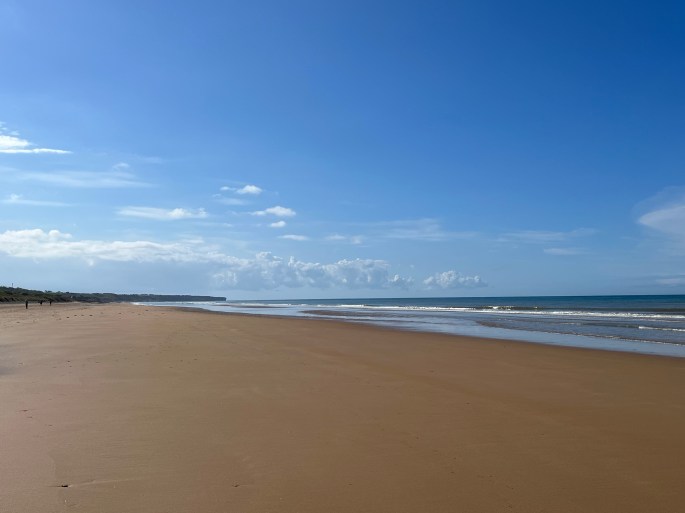
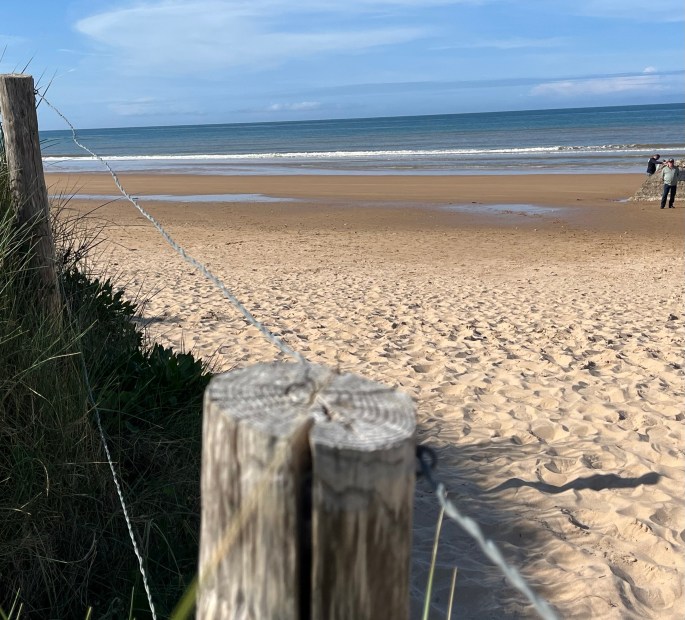
My quest was accomplished during this trip. The beaches were so quiet, peaceful and treated with respect for any others we came across – so different from that day in June 1944.

Ginny

Sainte-Mere-Eglise

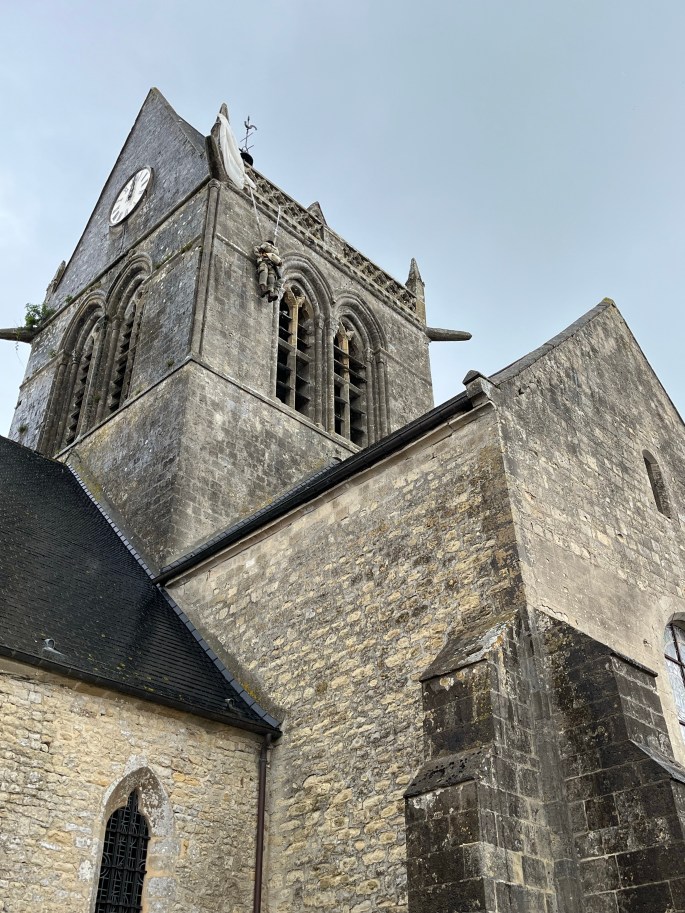
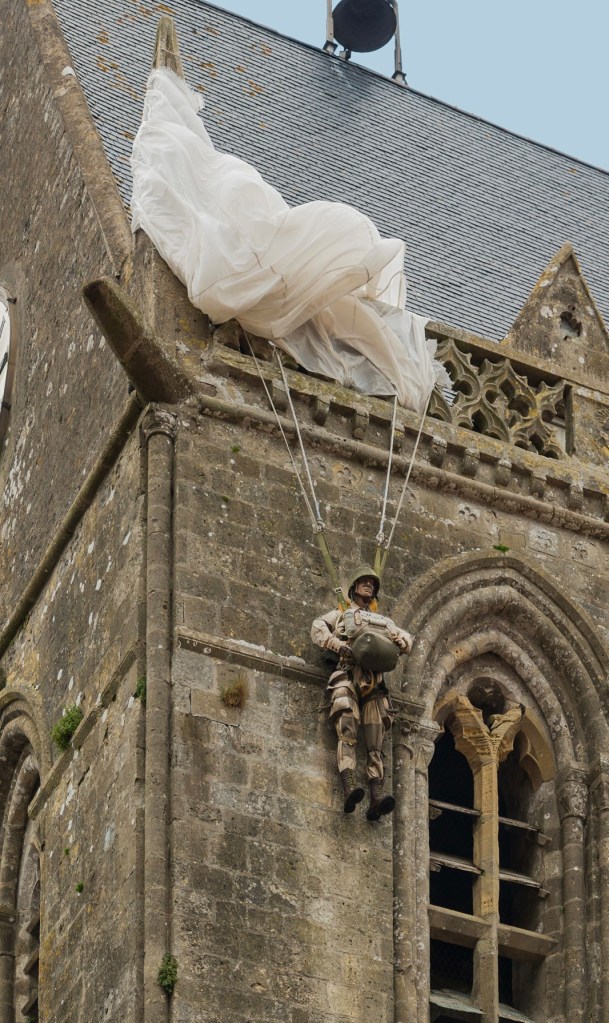
The story that captivates a number of Americans involves the one where paratrooper John Steele’s chute snags on the belfry of the town’s church 6/6/44. To this day, there exists a likeness to highlight the story in the town.

Some buildings in town caught fire that night, illuminating the sky and making easy targets of the descending men resulting in heavy casualties. John Smith hung on the belfry for two hours, pretending to be dead until the Germans took him prisoner. He later escaped and rejoined his division when they attached the village. The village has capitalized on this story made more famous when the incident was portrayed in the movie The Longest Day.

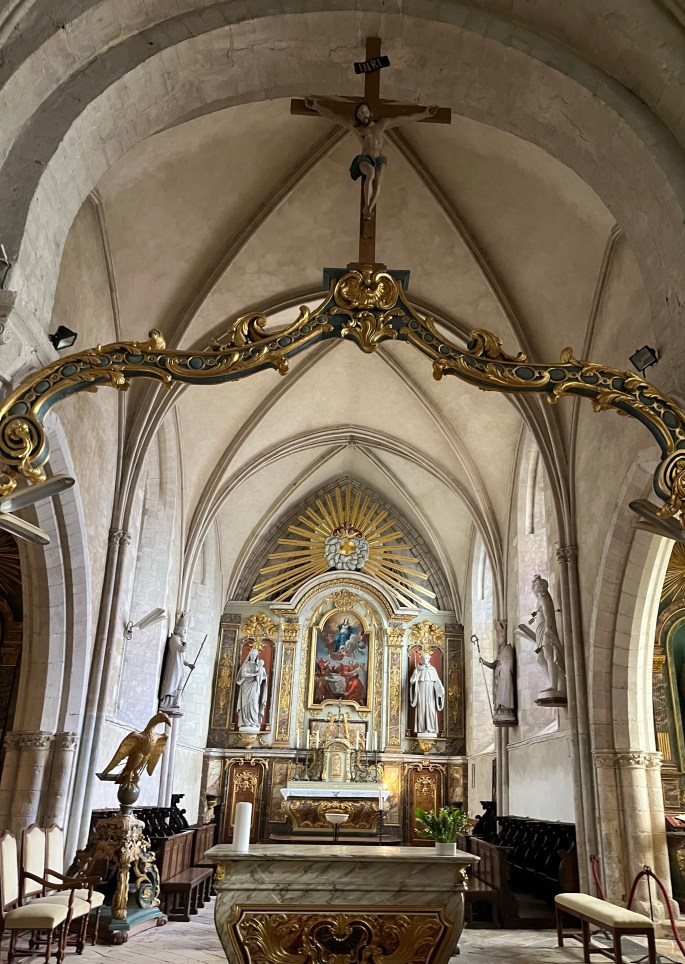
The church was open for any wishing to look inside. Quite a pretty church with a number of ornamentations spread throughout. The day we visited we had to dodge rain showers and the church became a refuge for different reasons. It’s still a working church to this day. I saw a priest coming from behind the alter and an organ lesson occurring while we were inside.

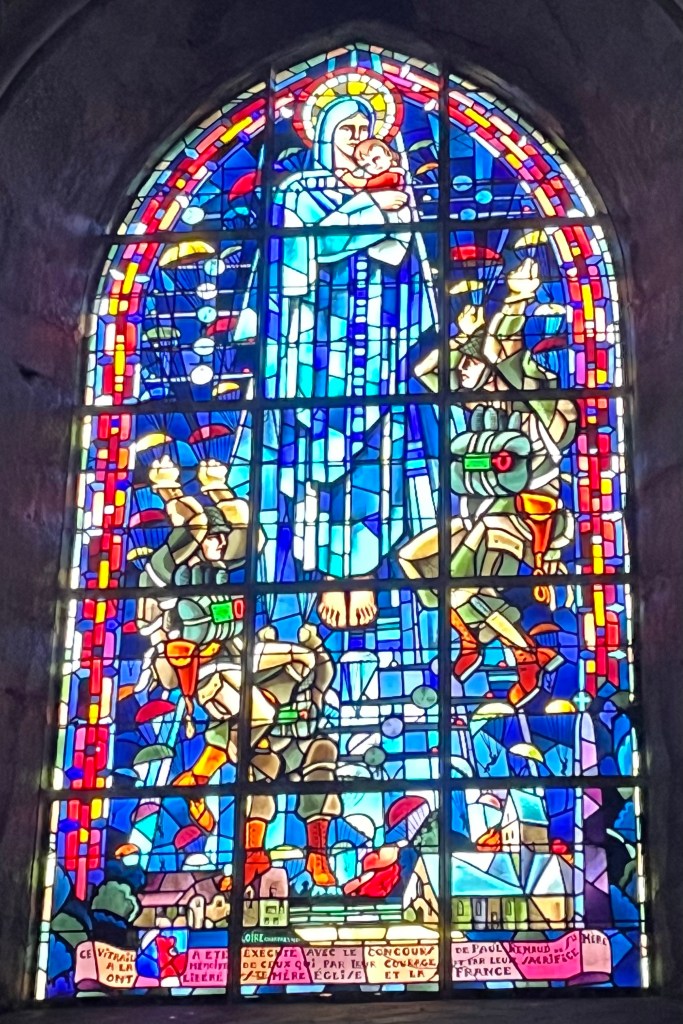
As with most European churches, they had several stained-glass windows. One of the stained-glass windows was dedicated to the paratroopers and their likeness was part of the design when it had been replaced after the fighting.

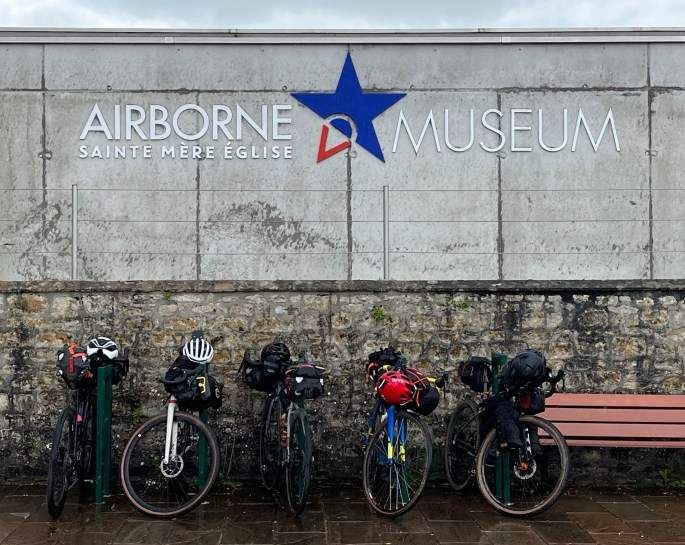
We also visited the Airborne Museum – quite interesting. They had a number of buildings or ‘stops’ within a fenced in area dedicated to these divisions. I thought it was ironic these bicycles were parked in front of the sign.

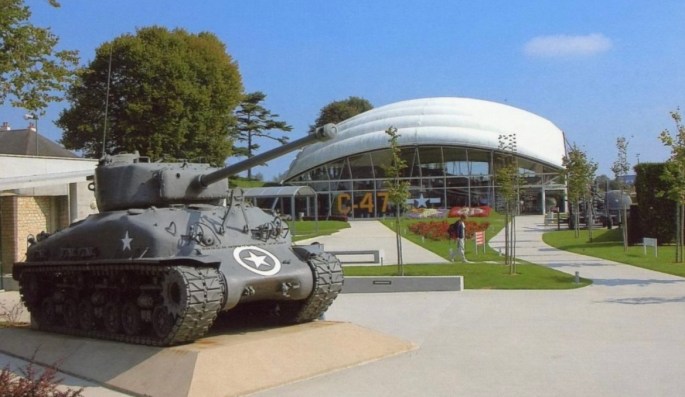
One of the first war machines seen was this tank. The white building behind that showcased other operations.

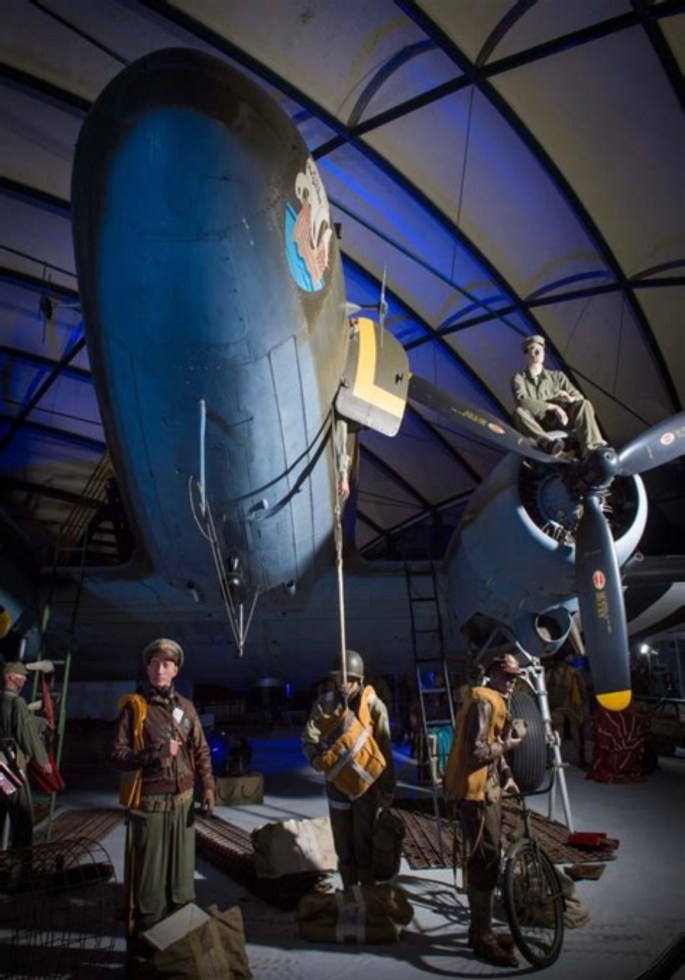
Here is one of the displays seen inside the white-roofed building.

Another building labeled ‘Neptune’ had an excellent montage of events. Upon entering, you were thrust into a dark hallway which led you to the inside of one of the gliders. Recordings and rumbling vibrations truly got you into their mindset while waiting to hit their target. Afterwards you’re walking over a night-time version of the city as seen from the glider. This building was my favorite stop of the area. There was much more after walking through the glider – no photos.

My last shot is a bit hokey. There was a display for photo spots and yes, I got a shot. I couldn’t convince anyone else to step into the spot.

There are a number of monuments and stories that abound in this town. You could spend an entire day here wandering through the village. It was enjoyable even thought it was a repeat for myself and Eric. It was one of the first towns liberated during the invasion.

Ginny

Pegasus Bridge

The bridges over the Caen canal and River Orne were the first objectives of the Normandy invasion. They were strategically important as they were the only crossings of the waterways between Caen and the sea.

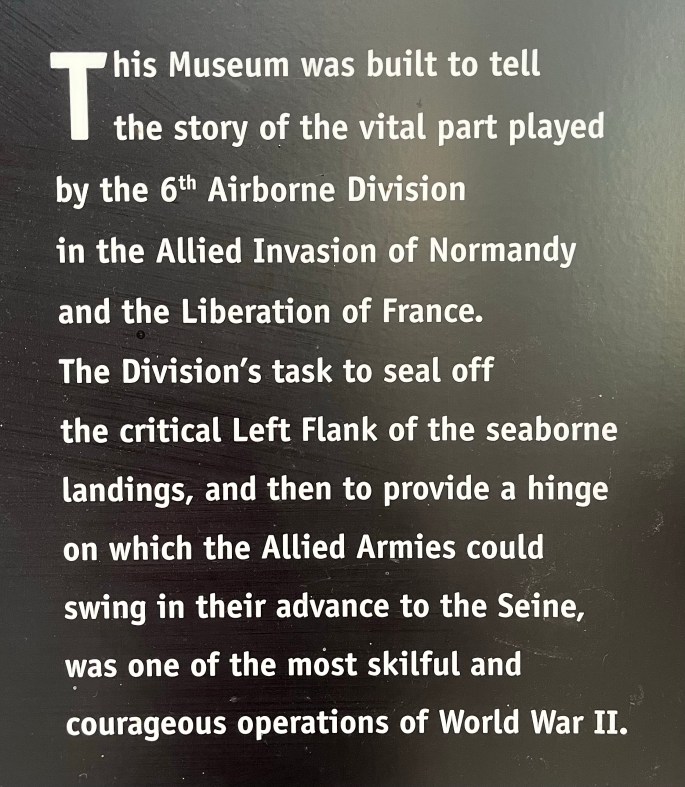
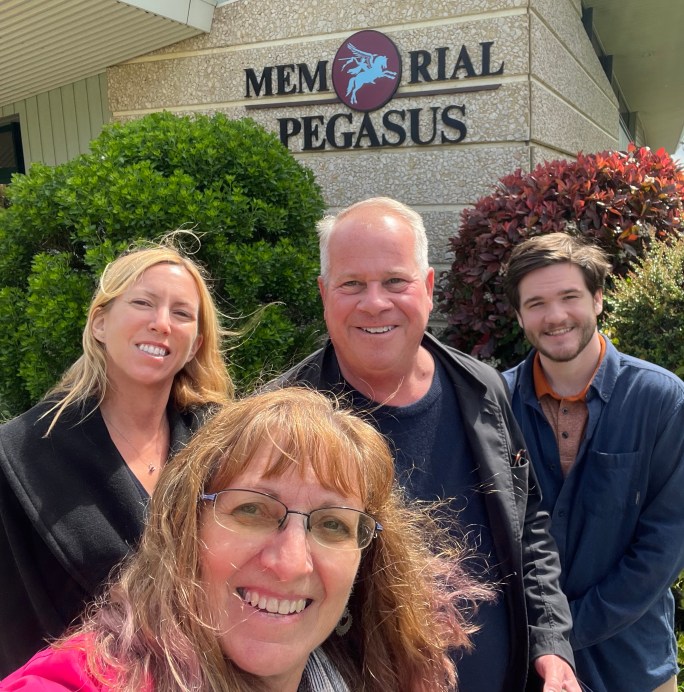
Their capture by gliderborne assault was achieved brilliantly in the first 30 minutes of the D-Day invasion by D Company Group, 2nd Battalion. A number of years ago we came across the museum and wanted to stop by again.

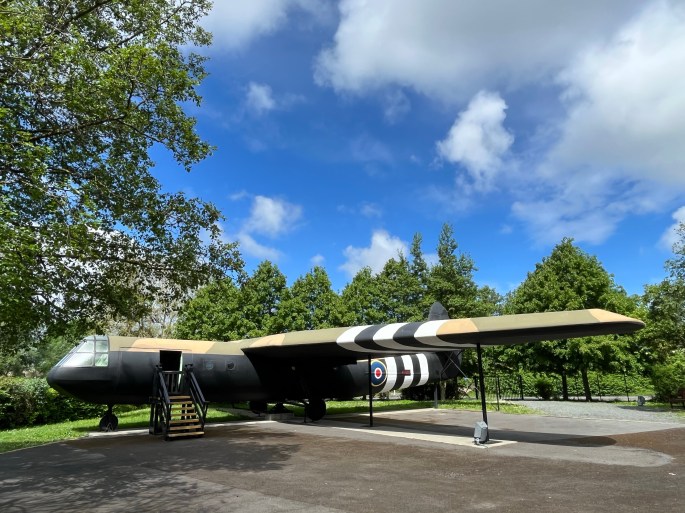
Six Horsa gliders carrying the assault troops were cast off from tug aircraft over the coast, six miles from their targets. Three gliders landed with great precision and courage very close to the canal bridge. Below is a Horsa glider replica found on the grounds of the museum. Today, no Horse glider remains intact. A group of French aeronautical enthusiasts were commissioned to build this copy. The material and method of construction were those used during the war.

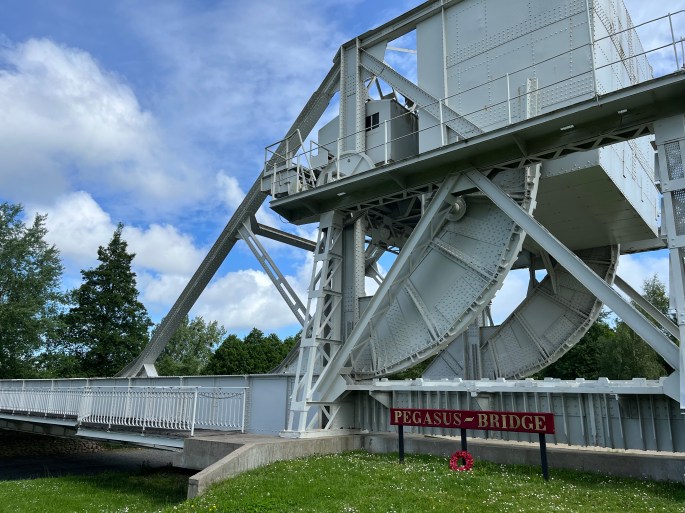
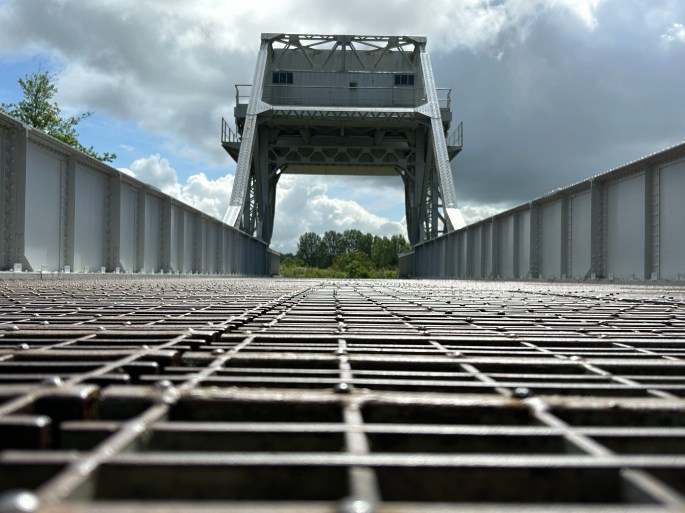
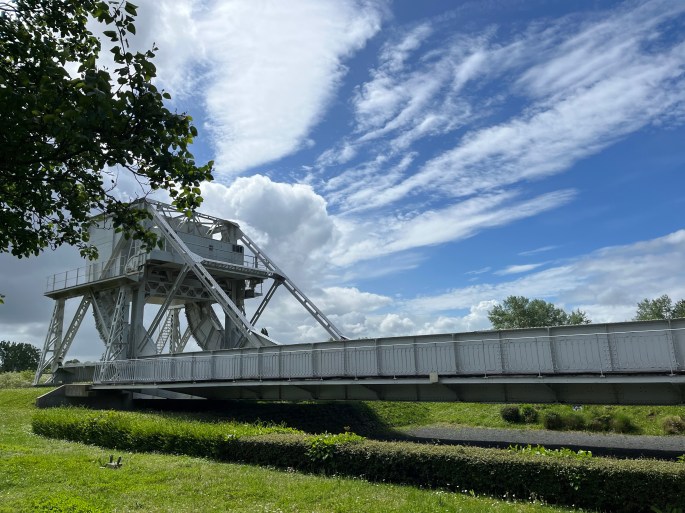
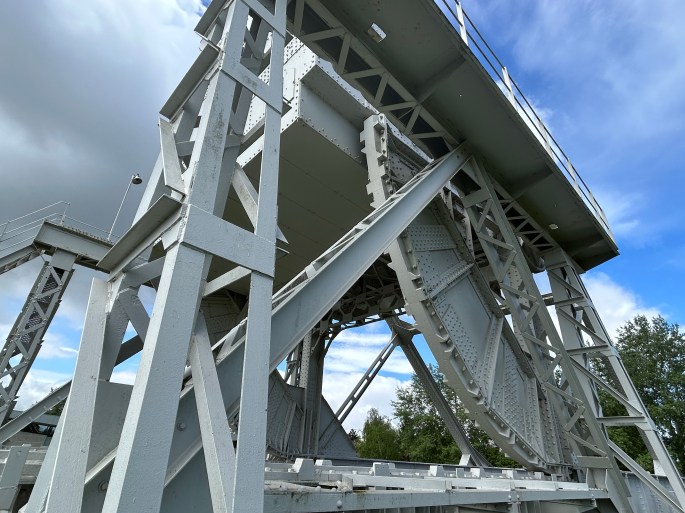
The pilots were later said to have performed one of the finest feats of airmanship of the war. The bridge featured below was the actual bridge captured.

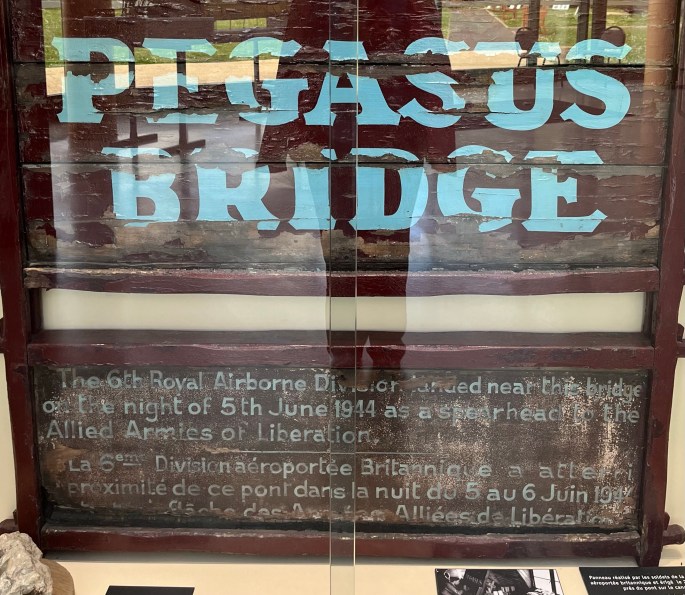
It was moved onto the museum grounds upon the roadway being upgraded and the original bridge replaced.

The troops were soon hard-pressed to counterattack from the west but managed to hold them off until reinforced as planned.

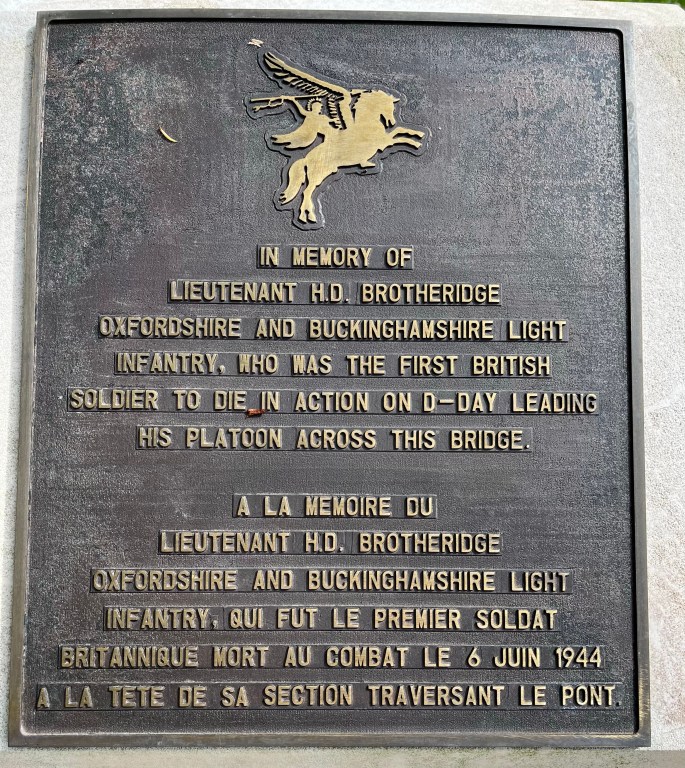
There is a tribute on the grounds indicating the first British soldier to die on D-Day.

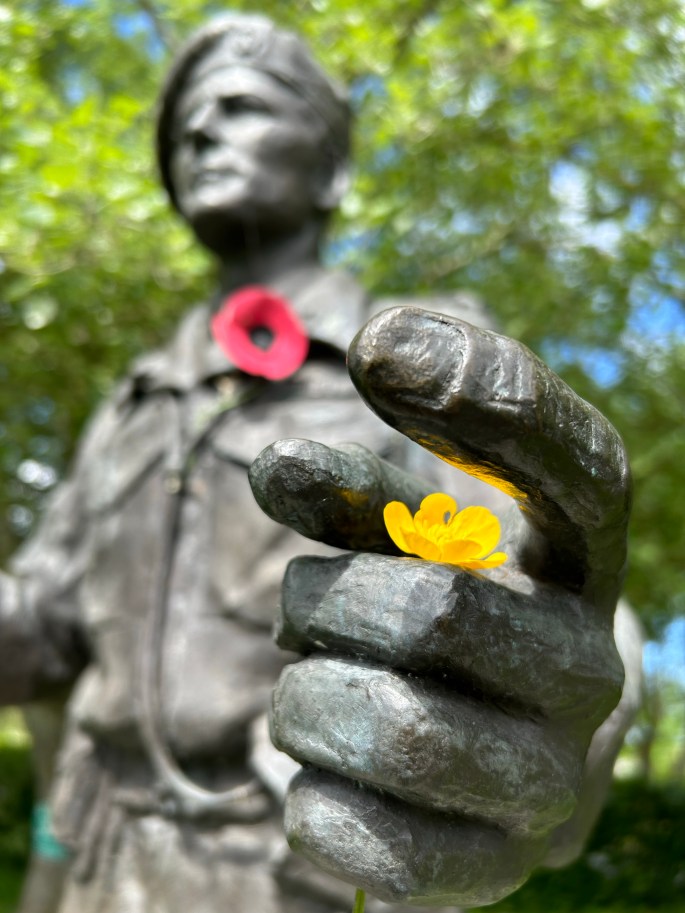
A plaque and statue honor his sacrifice.

Inside the museum are a number of vignettes of individual Brits that really brings this story to life. A short film shares additional info and footage. This museum is a must visit for those in the area, really bringing recognition to some of individual components of D-Day. I’m glad we could fit it into our most recent Normandy visit.

Ginny

Highlights from Port-en-Bessin

It could be dicey, staying in a small town, but it was a central spot to visit the number of places on our list. It was a good decision. No surprise, it’s a fishing community and most of the restaurants feature freshly caught seafood.

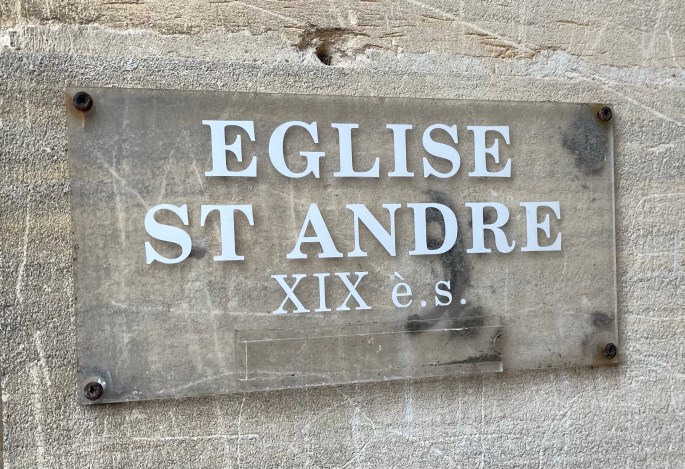
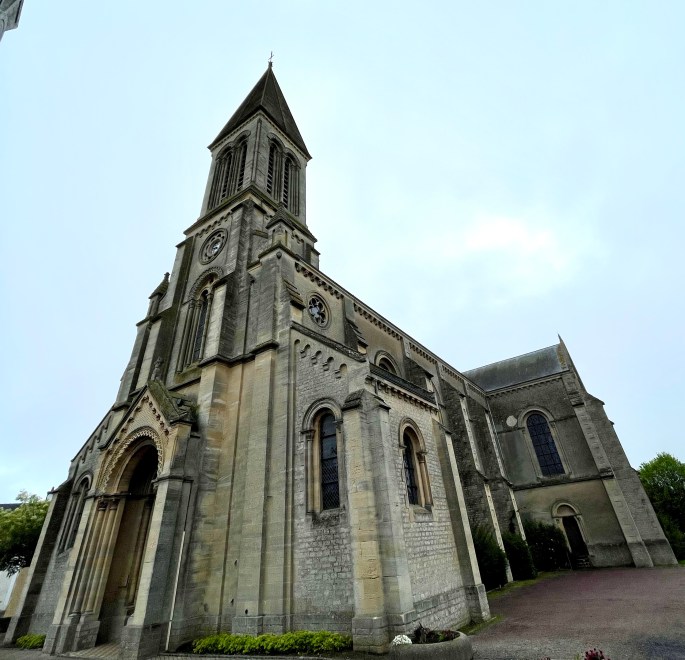
When Adrienne goes on her morning run, she’s been able to get the lay of the land and find local landmarks. One day we visited their local church, Eglise St. Andrea.

Built in the late 1800s, it was dedicated to men of the sea.

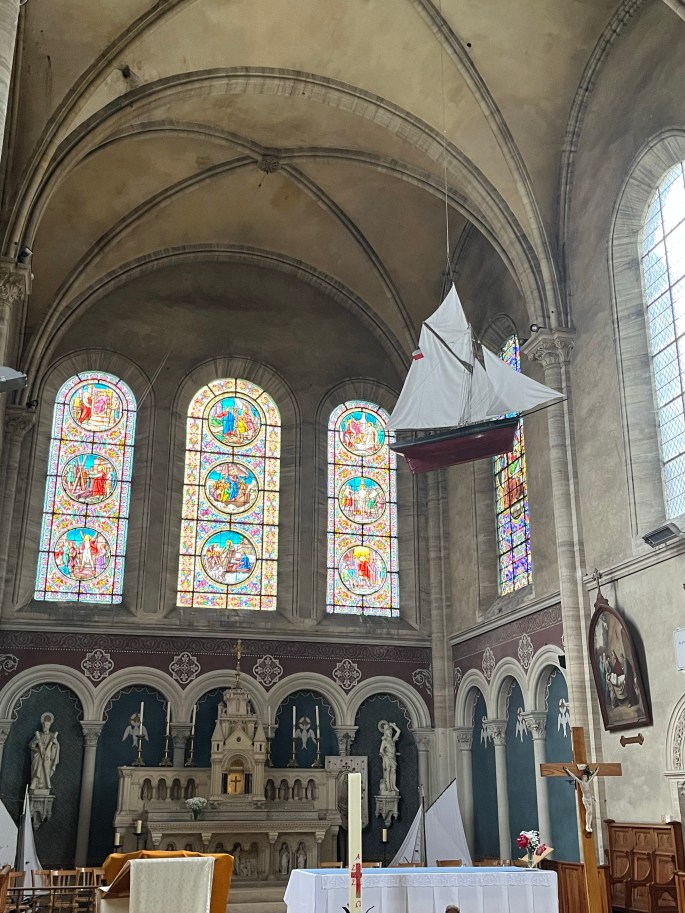
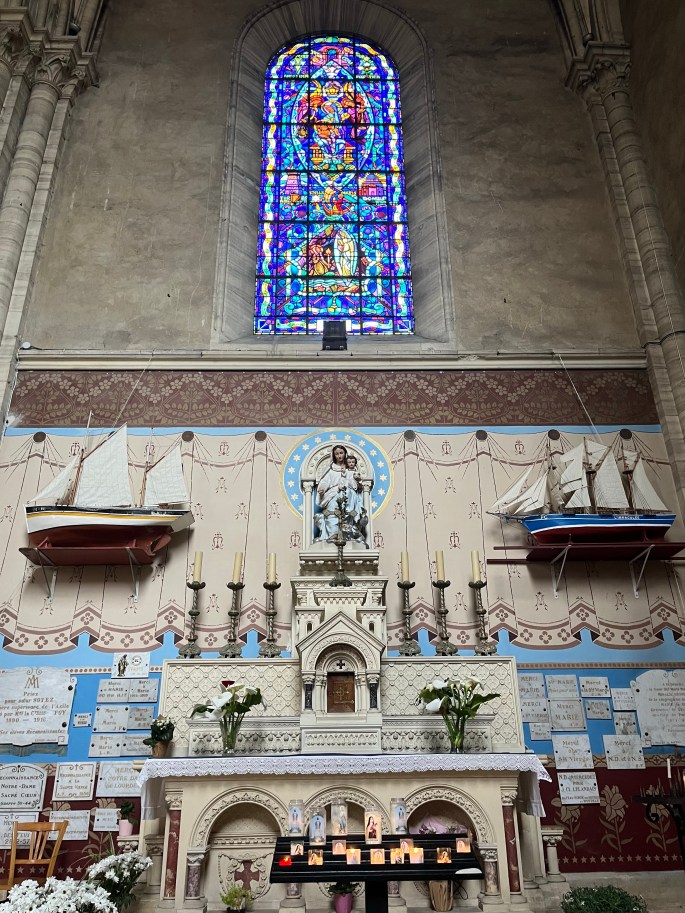
Inside are many ship models and sailer tributes.

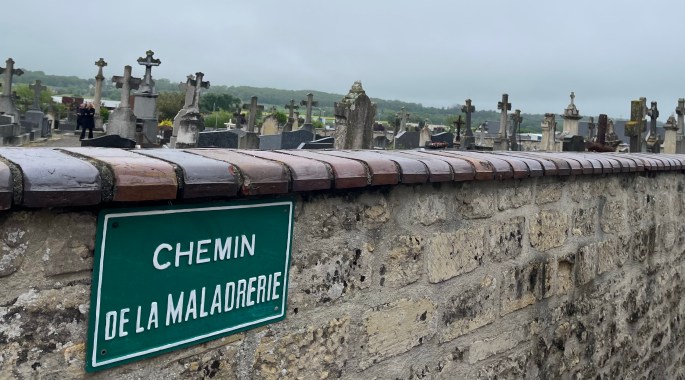
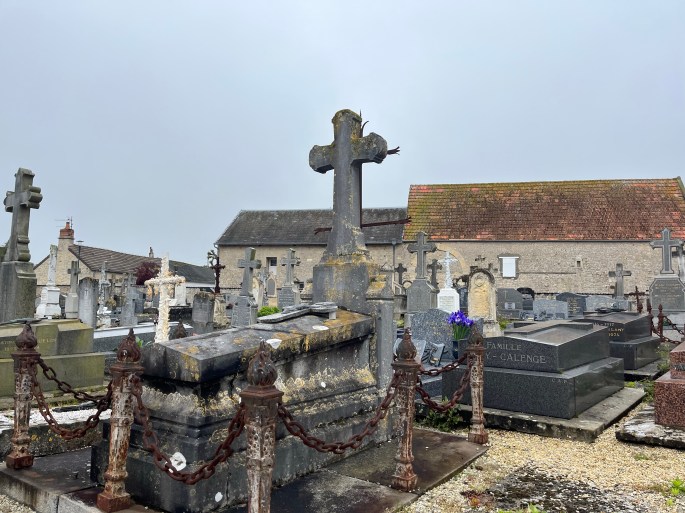
Half block away was their local cemetery.

It was multi-level and the upper level had the oldest grave markers.

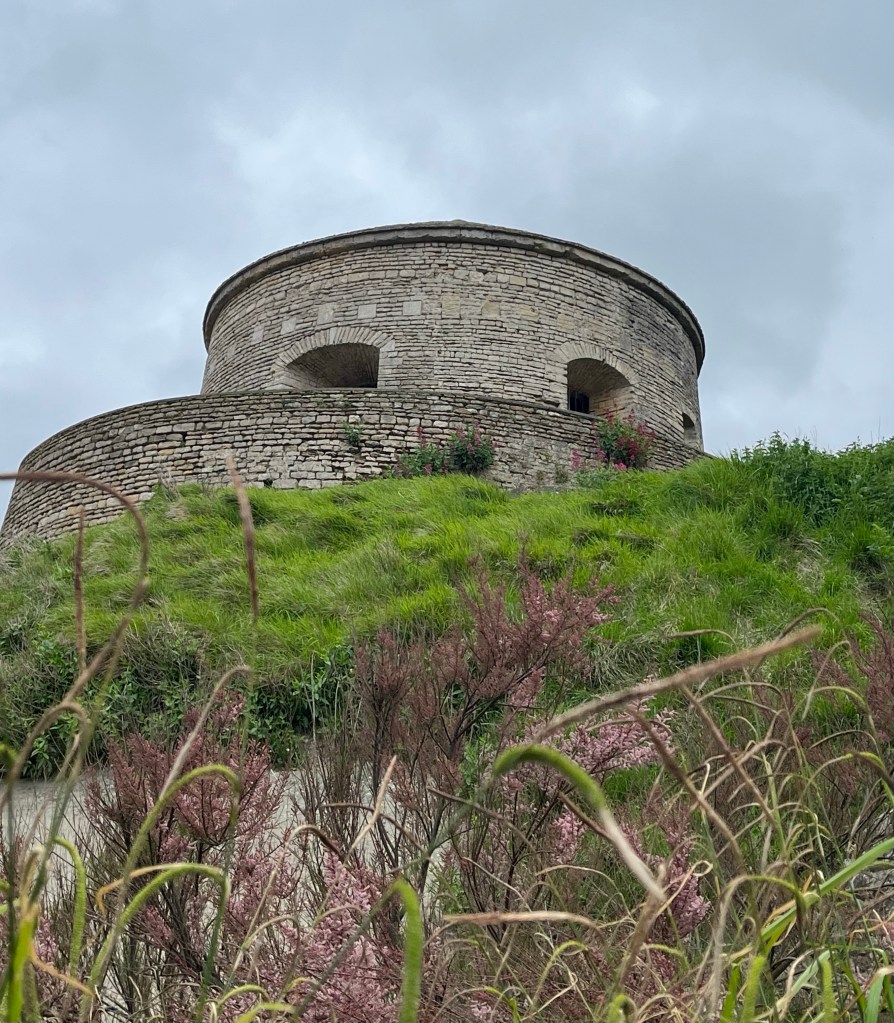
Behind our rental was this structure, a fortification by Vauban, a French military engineer who worked under Louis XIV in the 1700s and considered the greatest engineer of his time. What you can’t see in my photos are the barricades preventing anyone from visiting. The structure was considered unsafe for visitation.

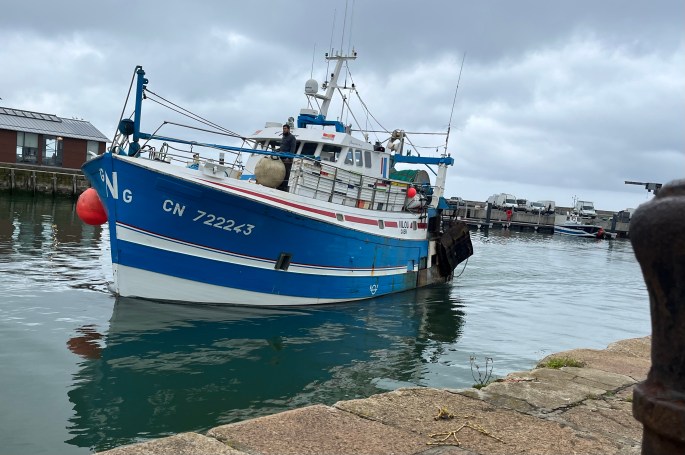
Walking to nearby restaurants, we traveled over this swing bridge. I finally got to see it in action! Coming in was this fishing boat.

Followed by this shipping vessel leaving the port.

BTW – the real truth……………..we were stranded on the wrong side of the water. We had a lunch reservation and we had to wait until the boat traffic cleared. Which gave me a chance to see the swing bridge in action.

Did you notice the dog at the very end of the video? We decided it was the town mutt. We saw him periodically throughout our visit and he was obviously very comfortable with the swing bridge.

I won’t take credit for the next photo – its Adrienne’s shot.

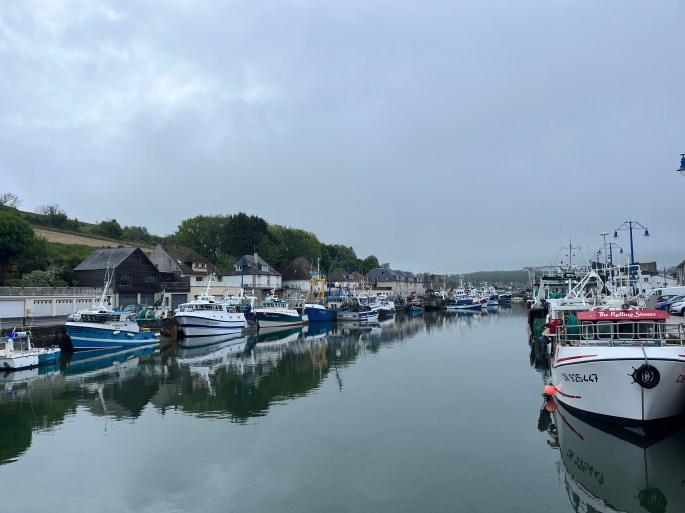
Port-en-Bessin was a great jumping off point for our adventures in Northern France. Here’s one last photo from our veranda.

Ginny

Fabulous meals in (northern) France

No surprise, Eric found some great places to eat and made reservations before we departed the states. Not all meals had been planned, but several of his selections were ‘Michelin recommended’ and not the type to show up at their door and ask for a table.

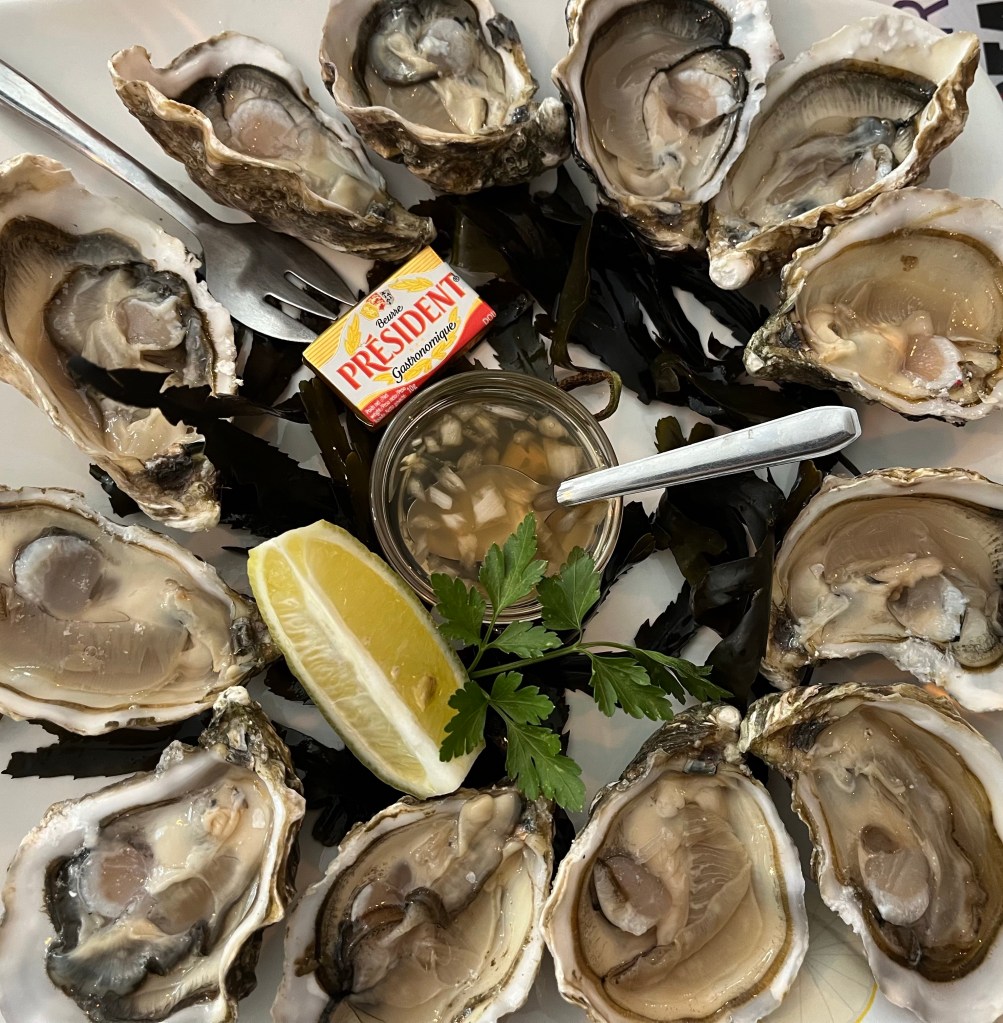
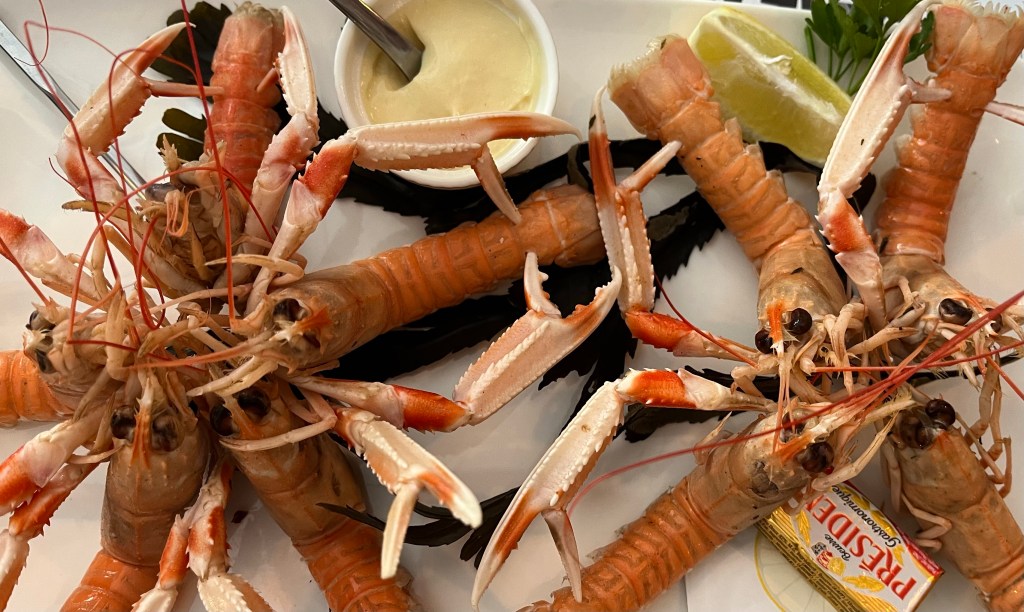
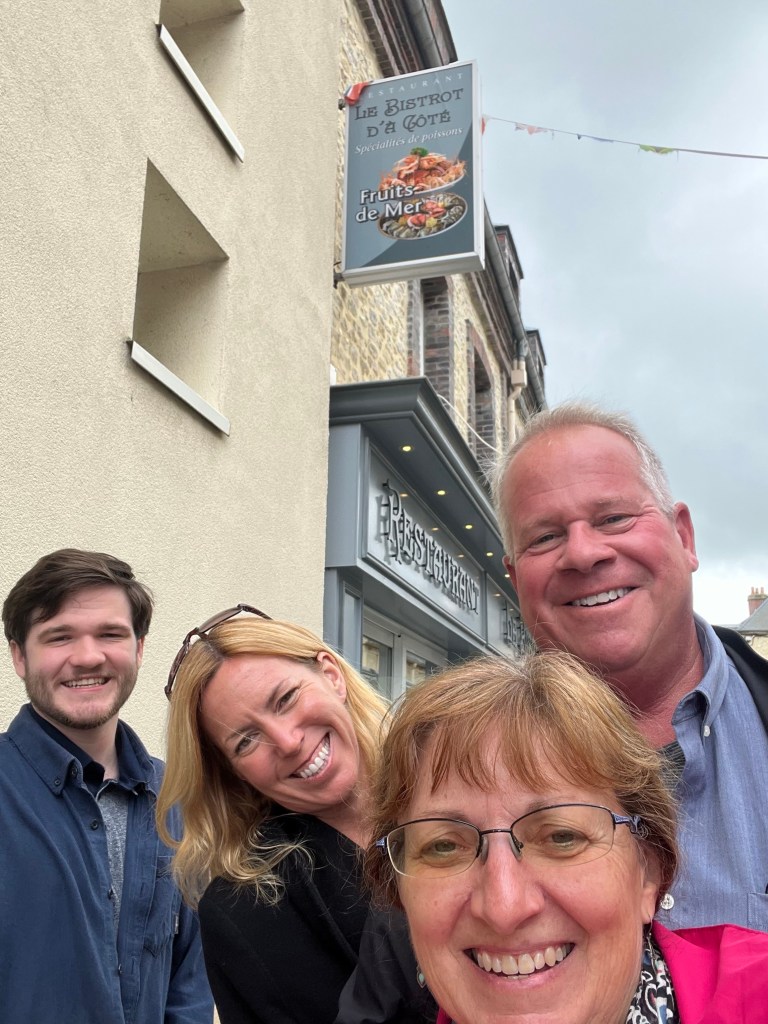
Several options were within walking distance. One lunch was at Le Bisttrot da Cote. Wine, oysters and langosteens started the meal.

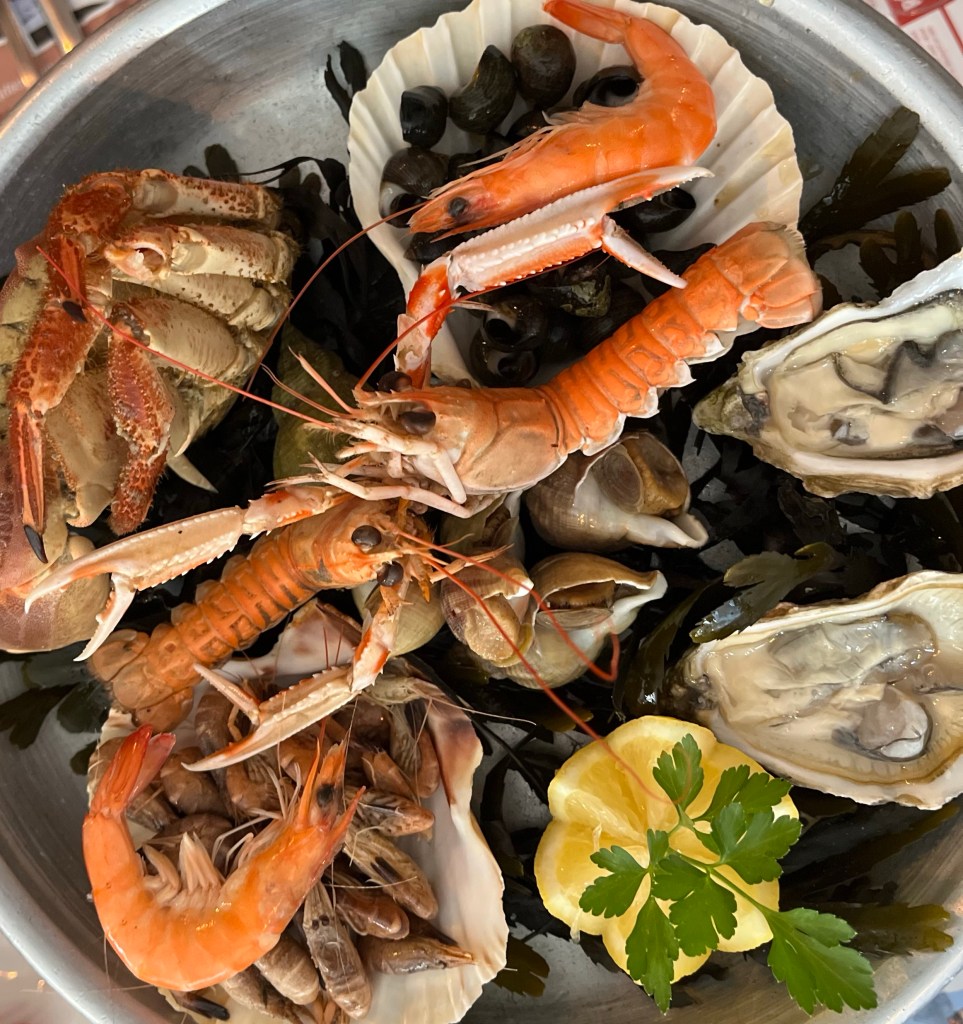
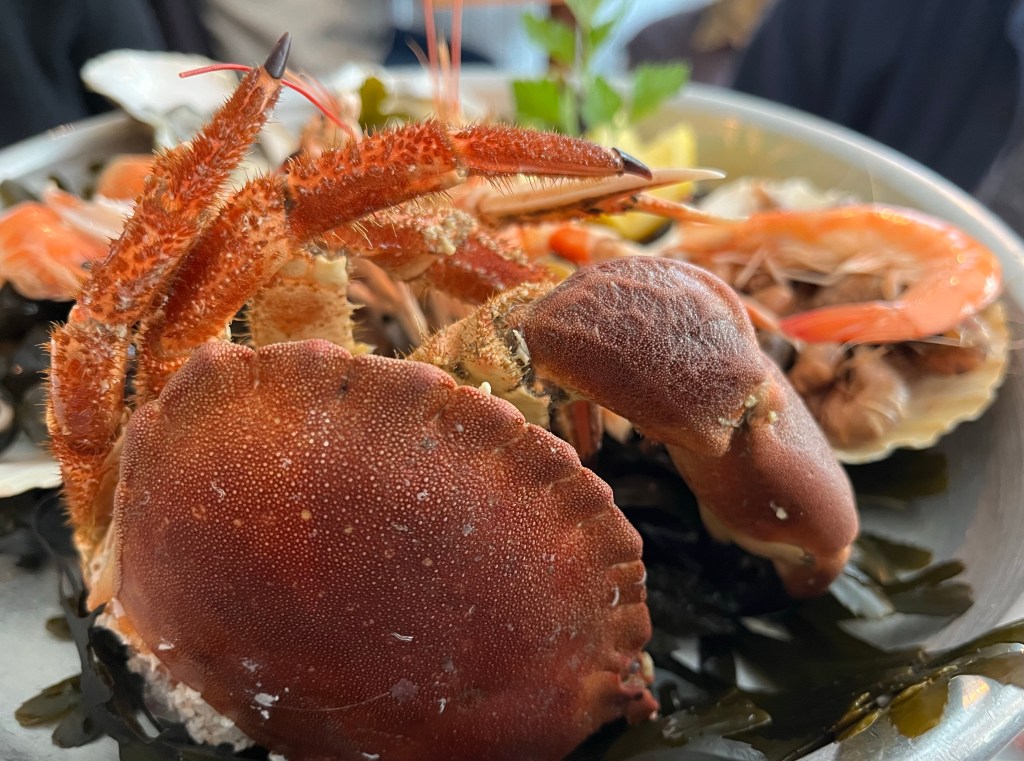
Eric ordered the first of his seafood tower meals – basically a large selection of protein from the sea.

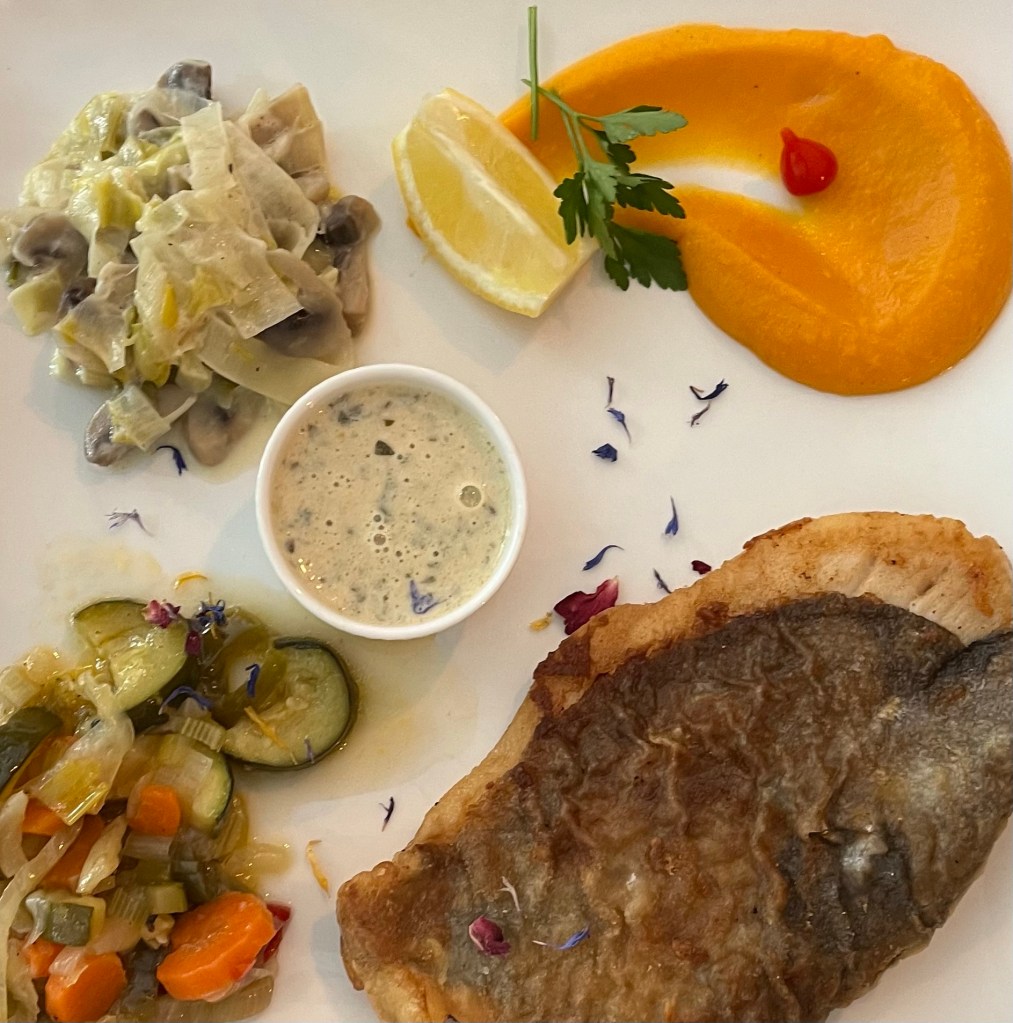
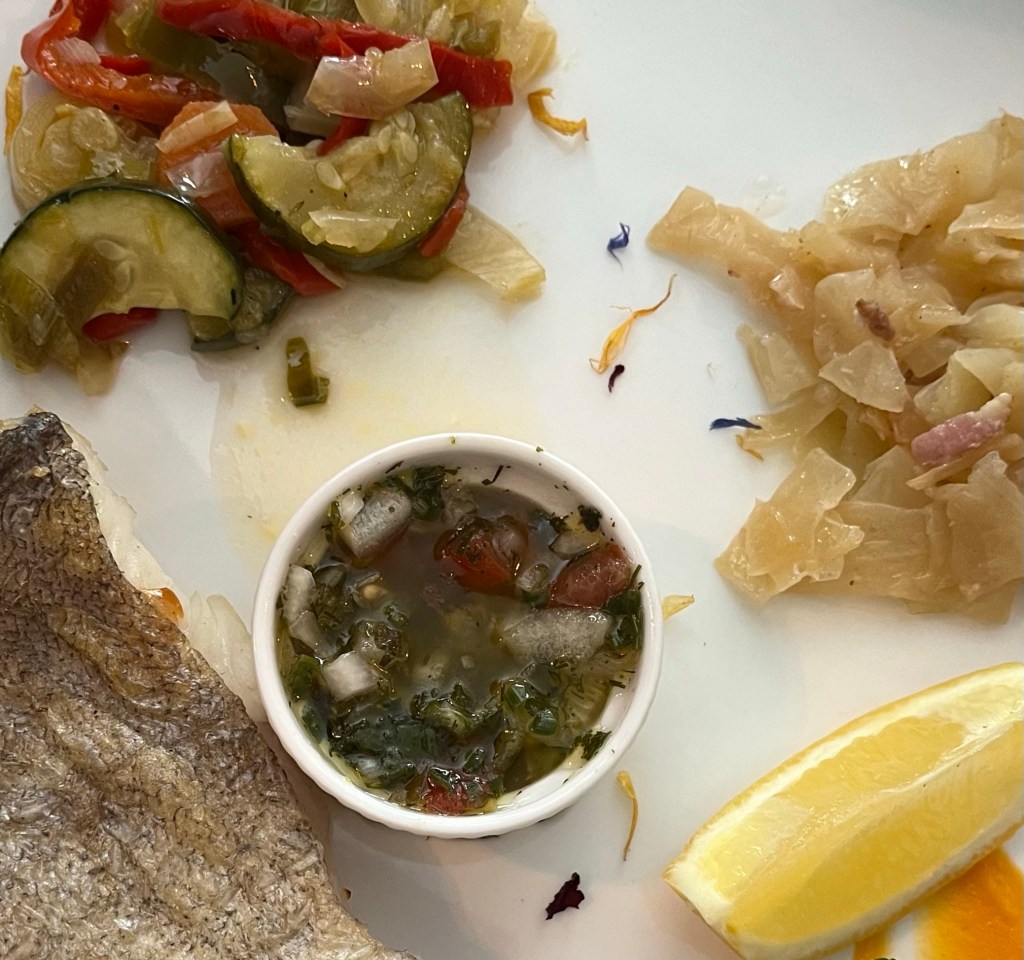
Local fish were the selections of Connor and ADrienne.

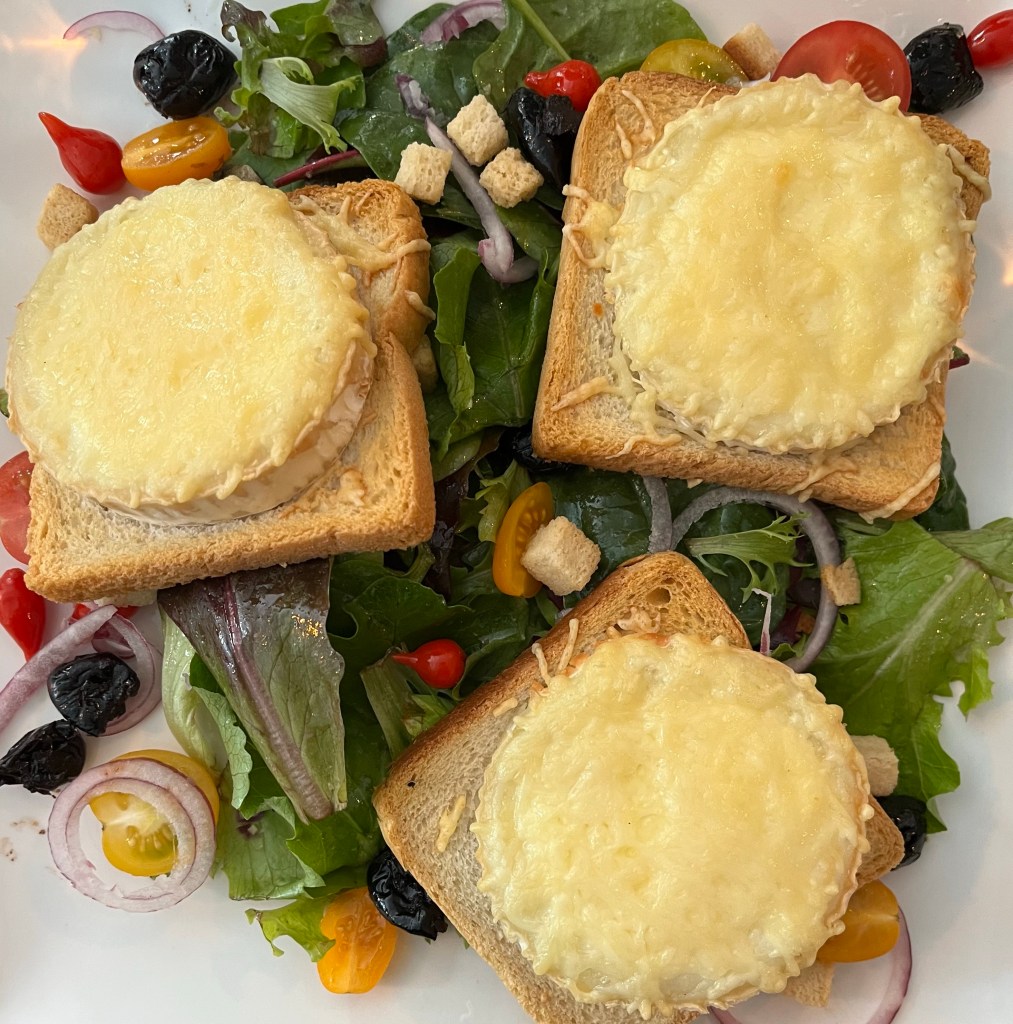
While not glamorous, the goat cheese salad sounded great to me.

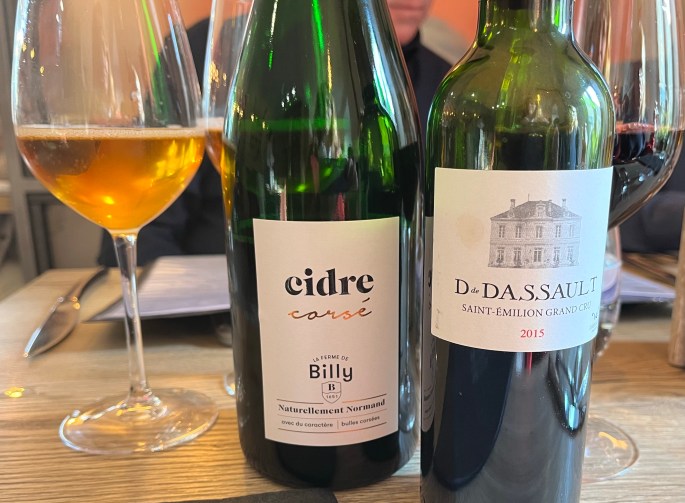
One evening Connor had a craving for ‘frites’ which dictated our restaurant selection – not a bad thing. Le Table des 2 Marcel made it happen. Local cider and red wine were the drinks of choice.

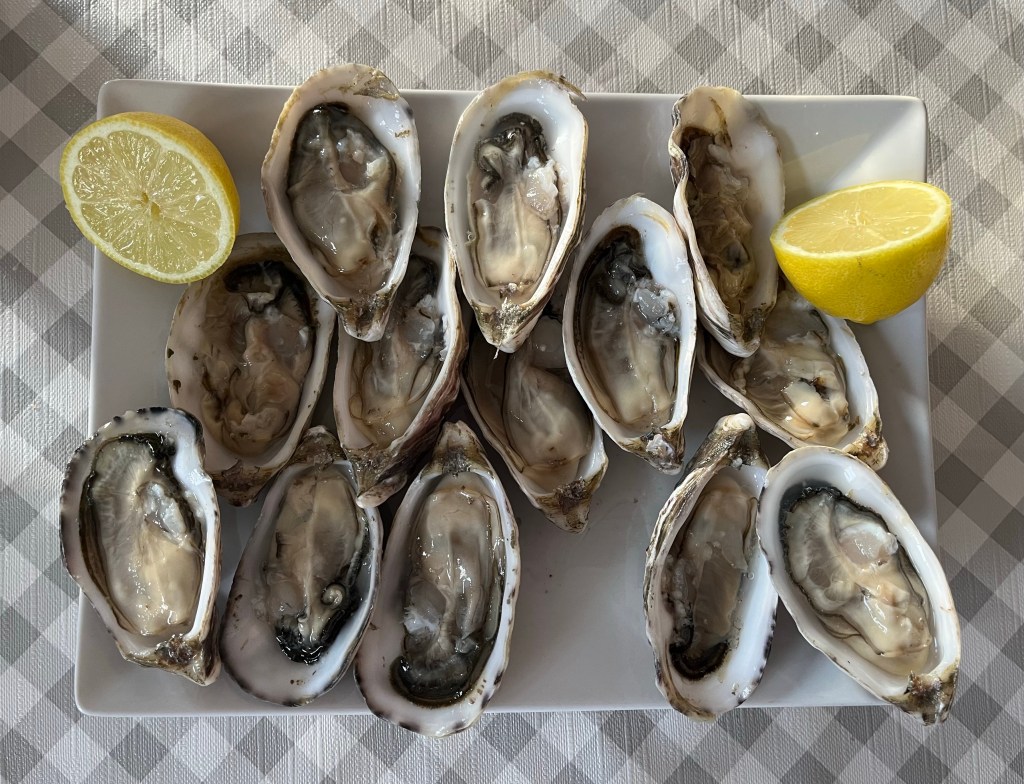
Another round of oysters were ordered for the table.

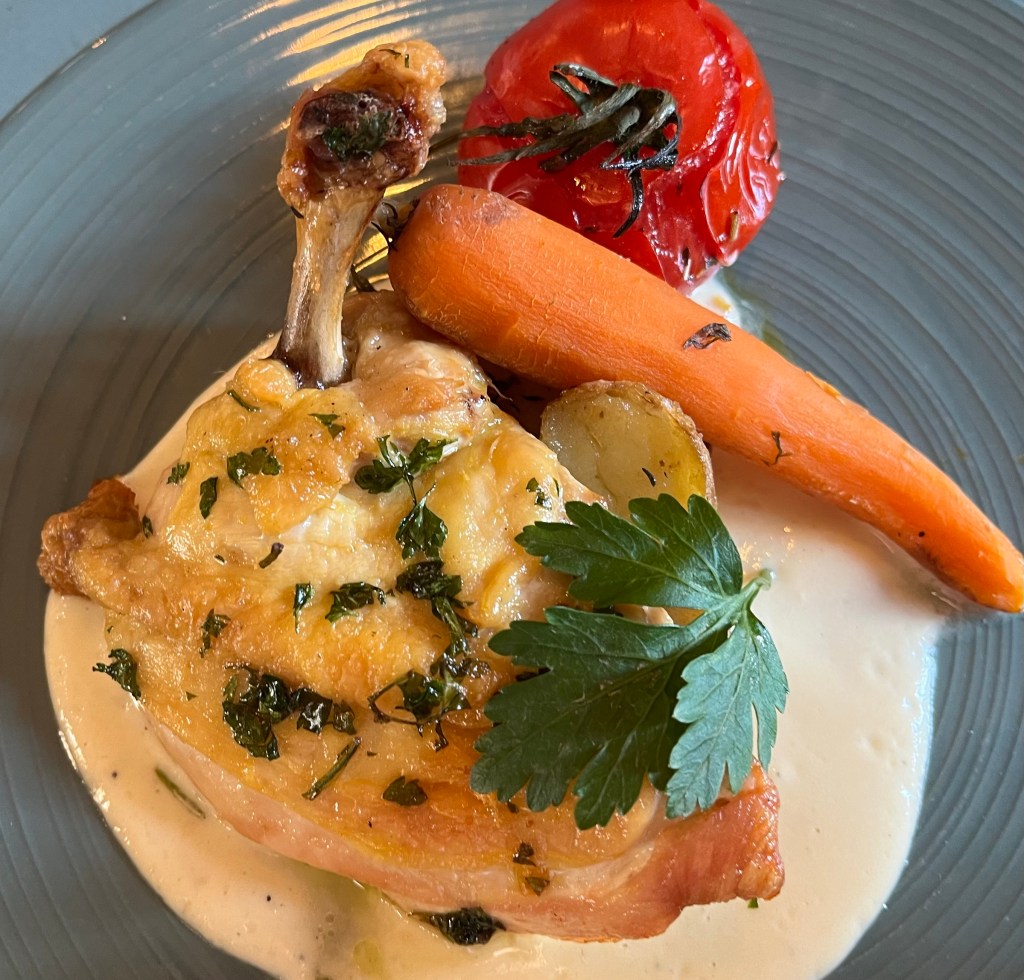
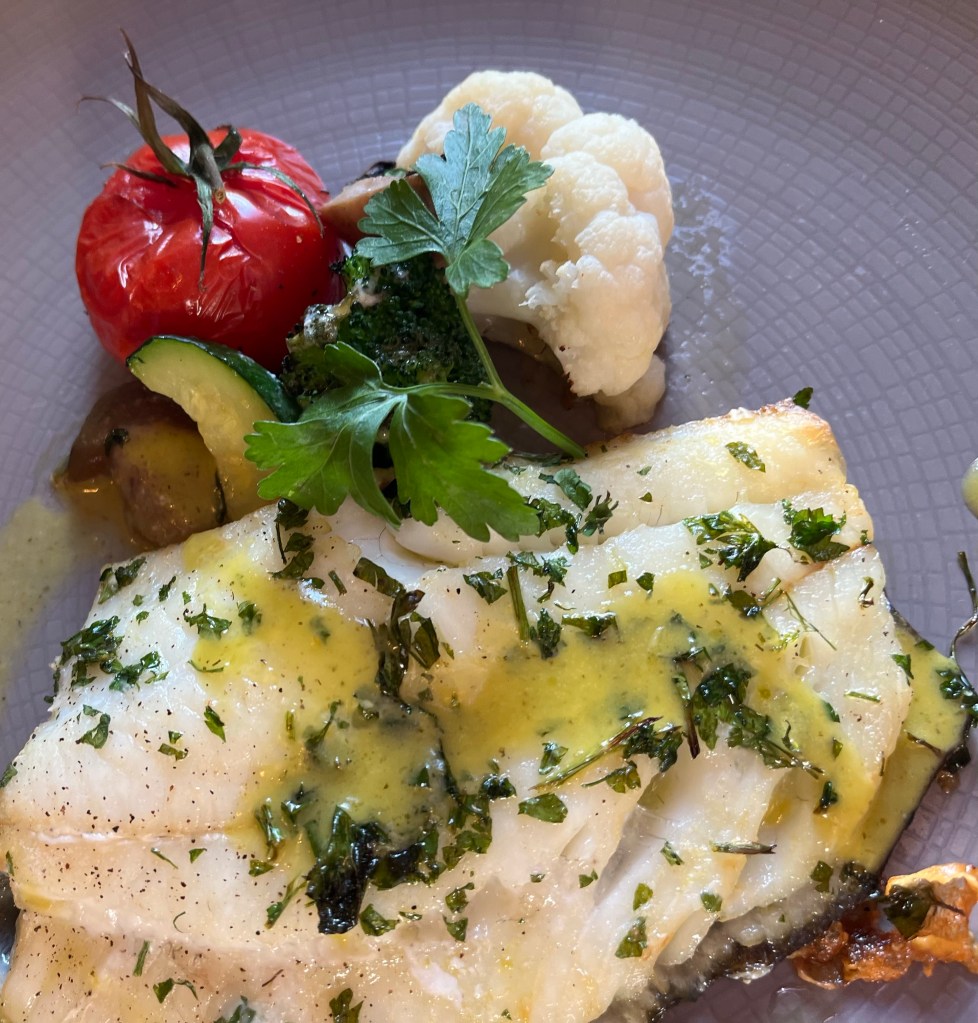
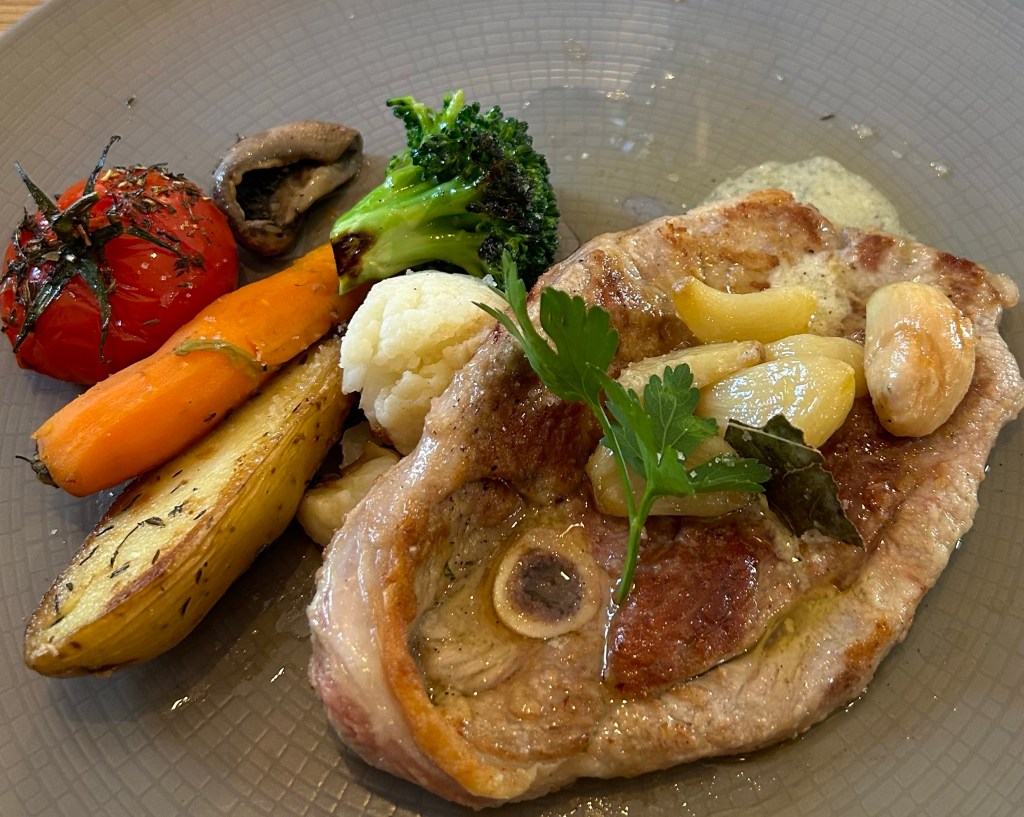
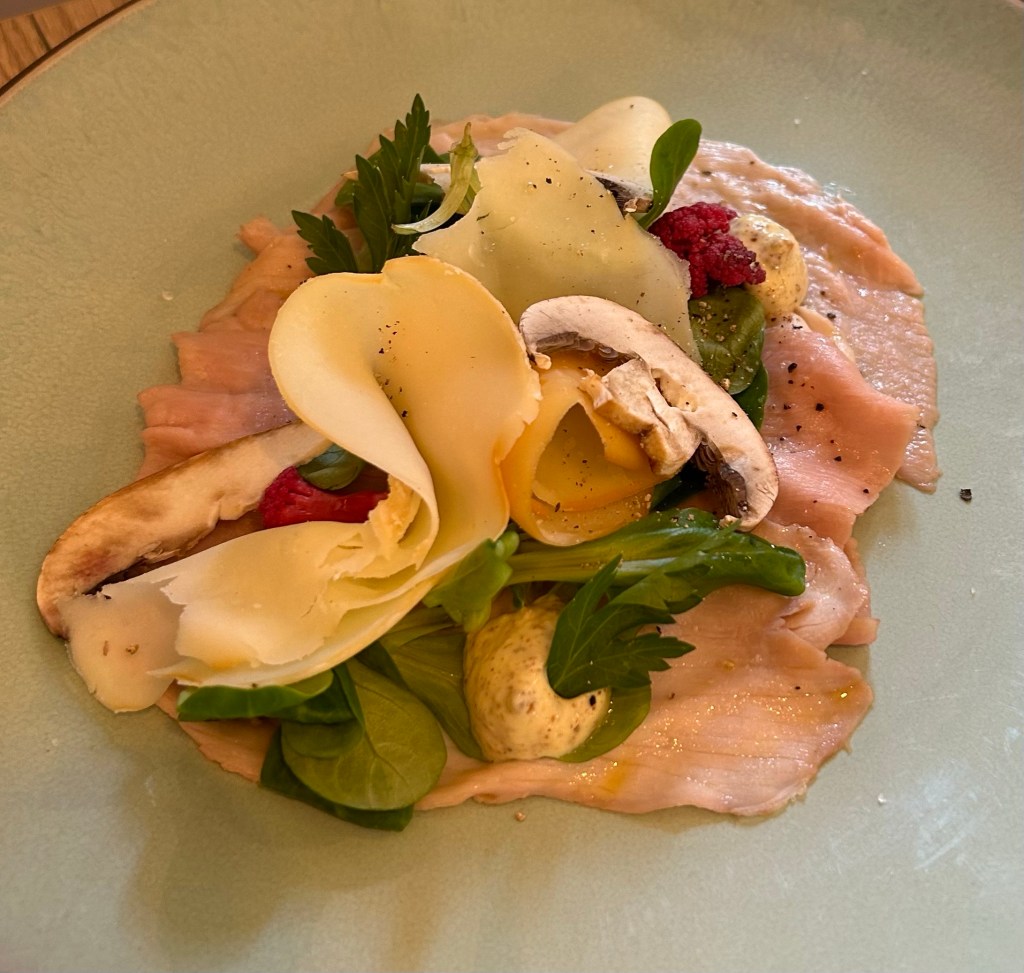
Our selections were: Chicken Supreme (mine), Turbot (Adrienne), Lamb (Eric) and Veal Capaccio (Connor).

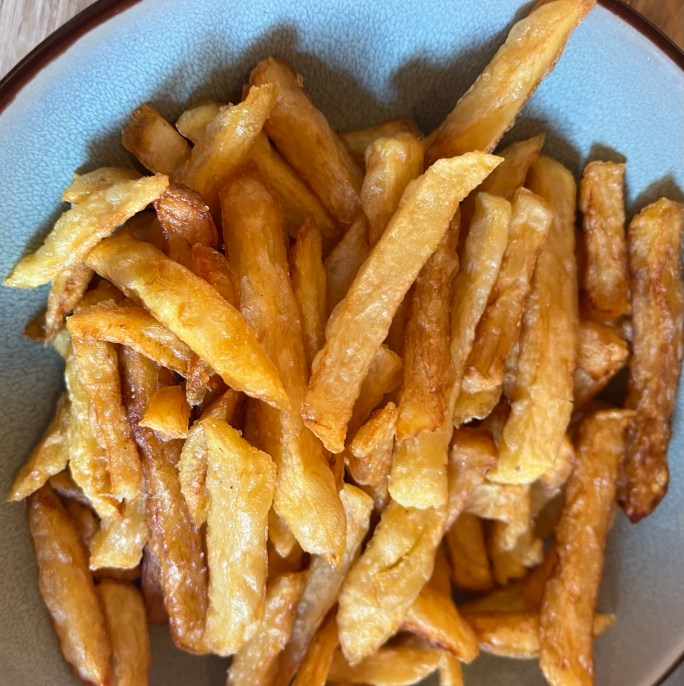
What about the frites? Yep, we ordered 2 plates for the table. Not a single one was left at the end of the meal. Now that’s why we’re all smiles!

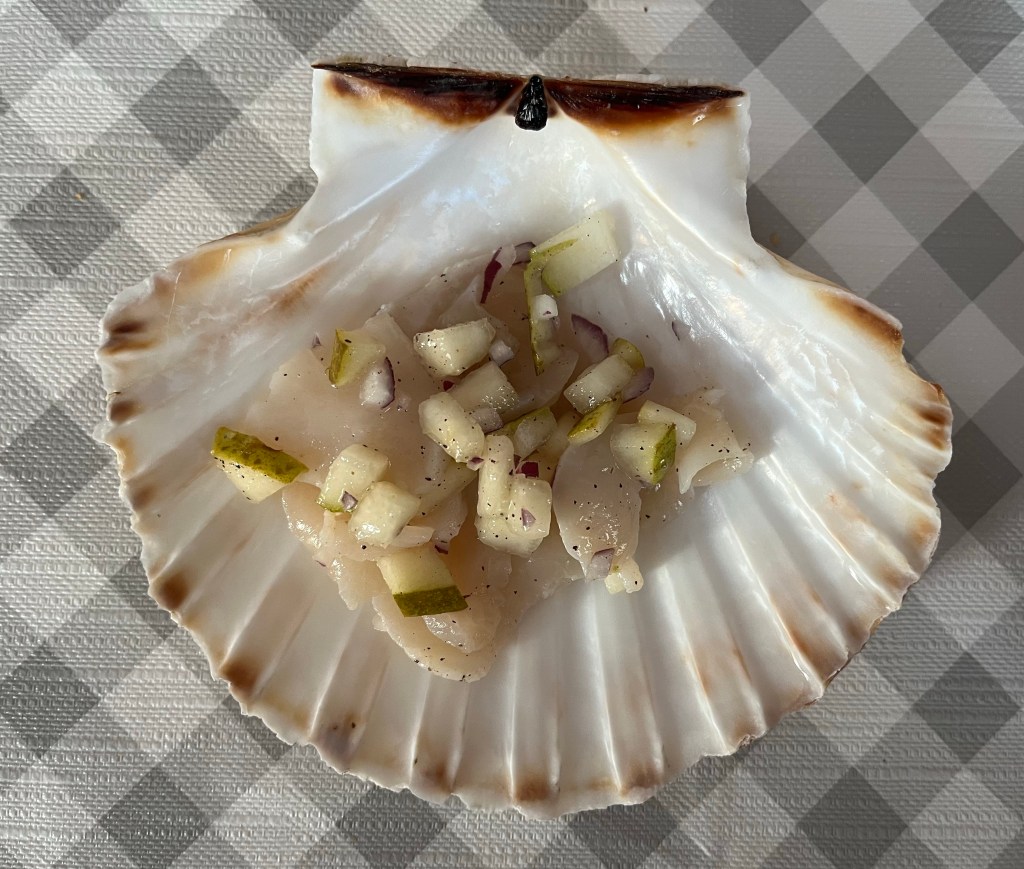
Other fresh seafood meals were created in-house, literally, in our house. Eric walked to the seafood market half a block away and picked up oysters and scallops, prepped with lemon juice, shallots and pears – excellent. Not a recipe he had prepared before, but sometimes those are the best kind. He pulled together what we could find at the grocery store nearby. I can tell you the scallops were a definite hit.

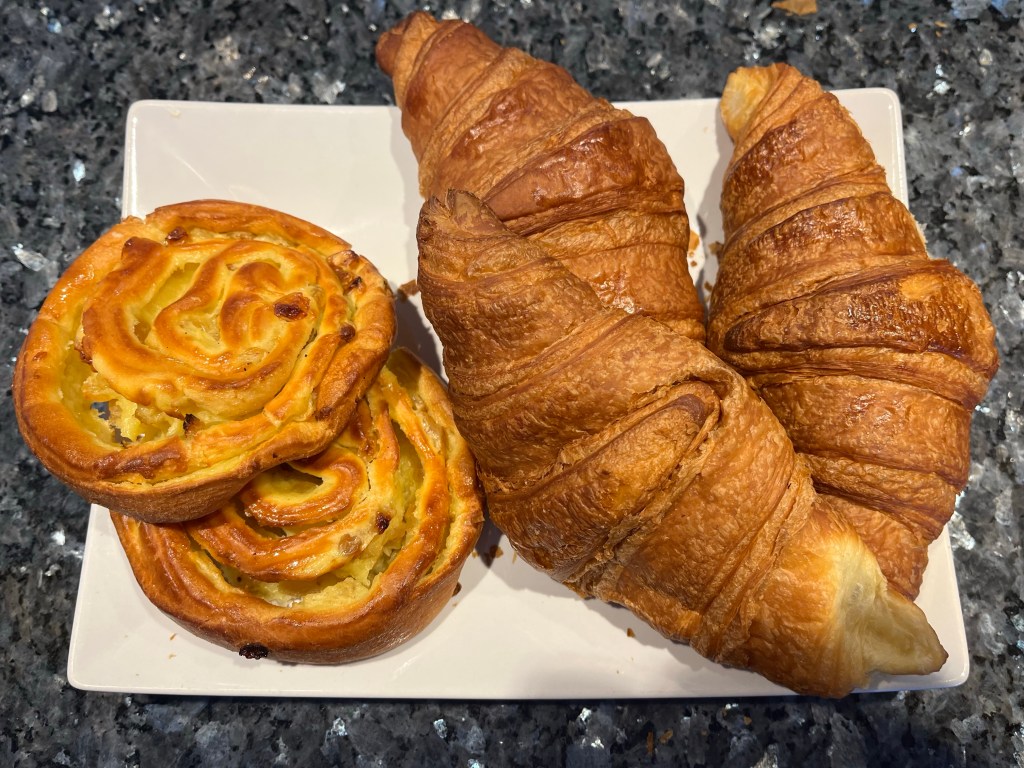
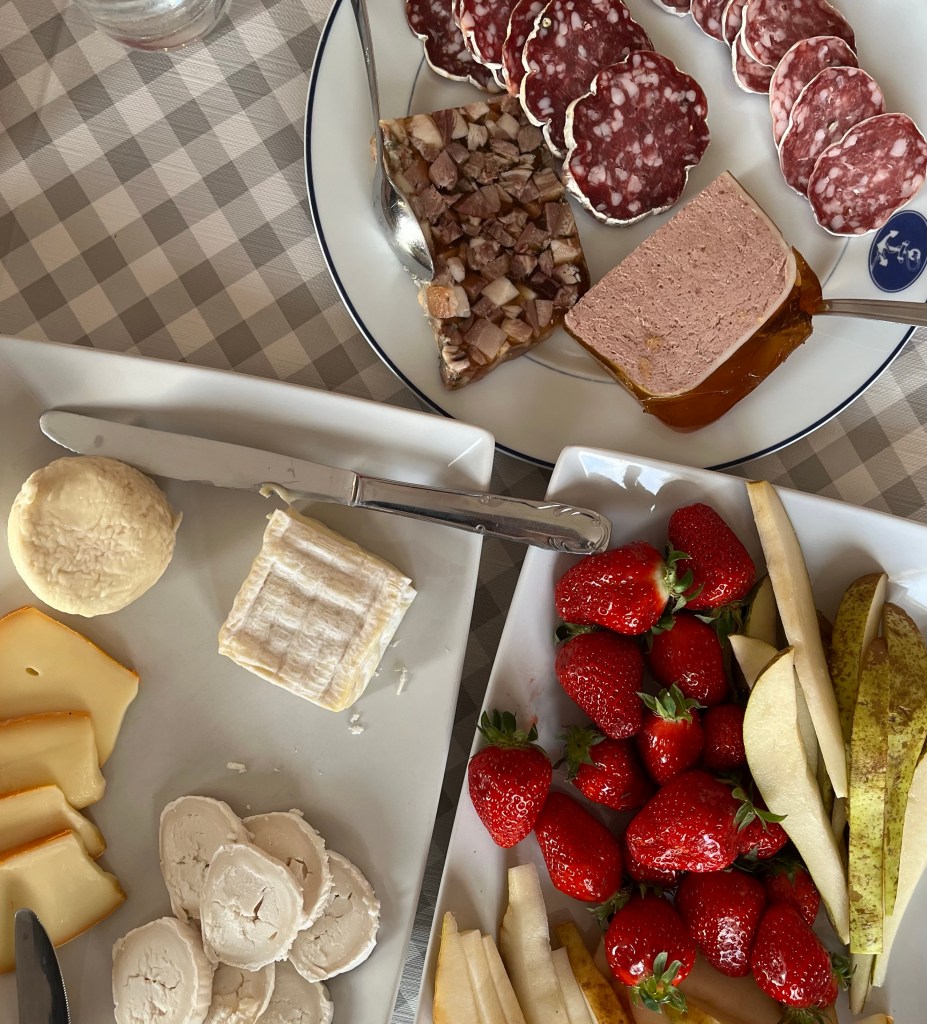
A walk to the boulangerie and nearby market for local cheeses, fruit, dried meat and pate were other hits for our in-house meals.

Two more to go for this post………………….

The next one may have spoiled me for oysters. I have never, and I mean n.e.v.e.r tasted oysters this good. But I’m getting ahead of myself. Our plan was to stop at all of the D-Day beaches, so Eric and Connor found restaurants nearby our travels throughout the week. The Restaurant de L’ile was one of their choices and another ‘Michelin recommended’ spot.

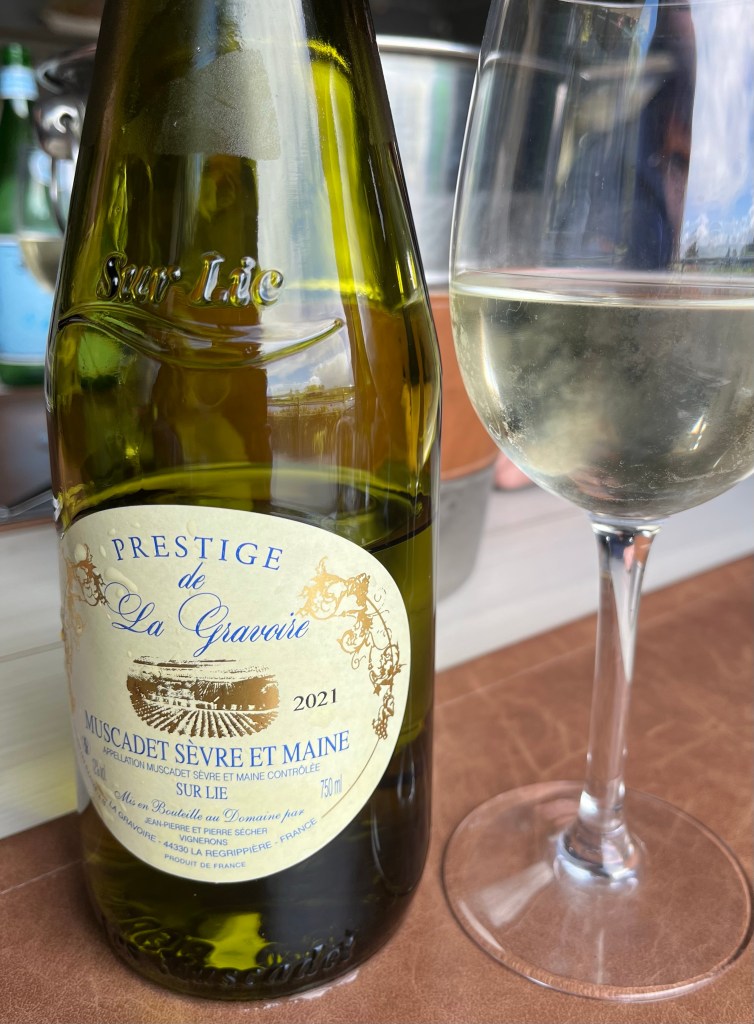
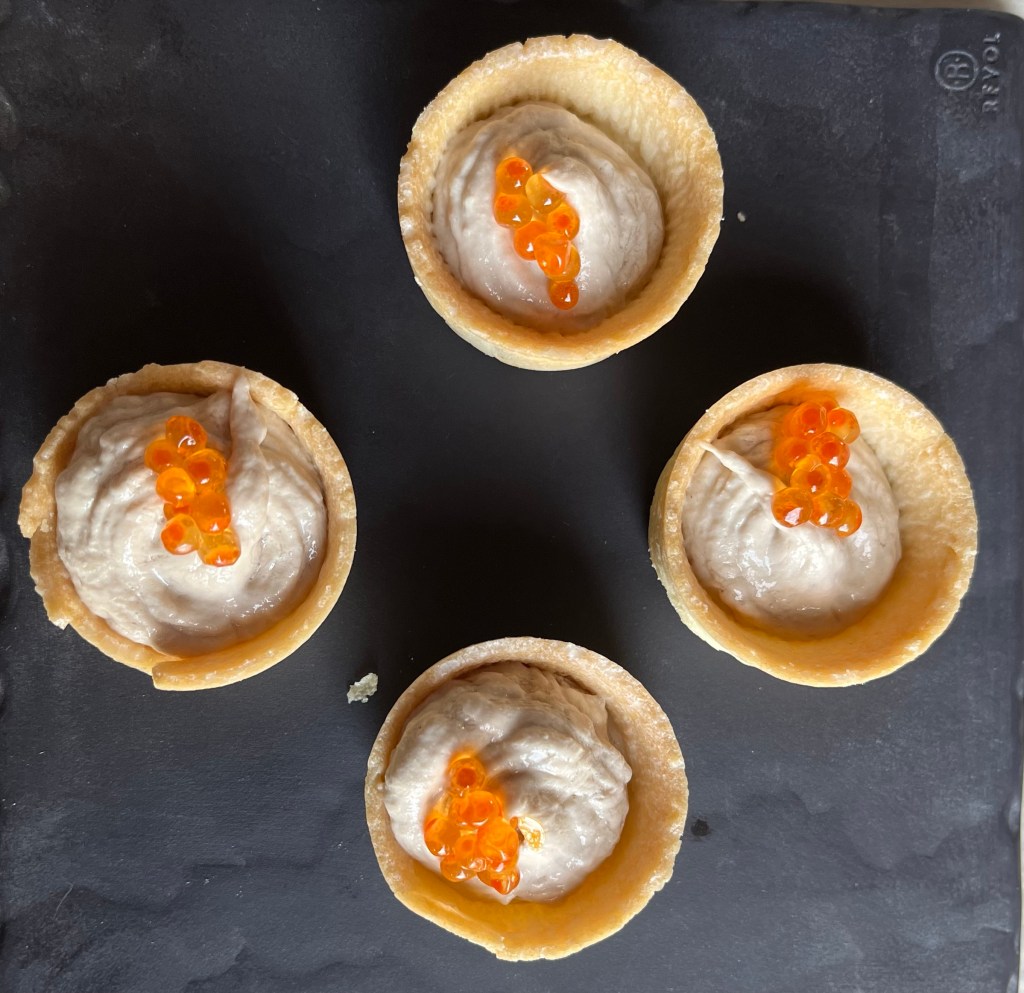
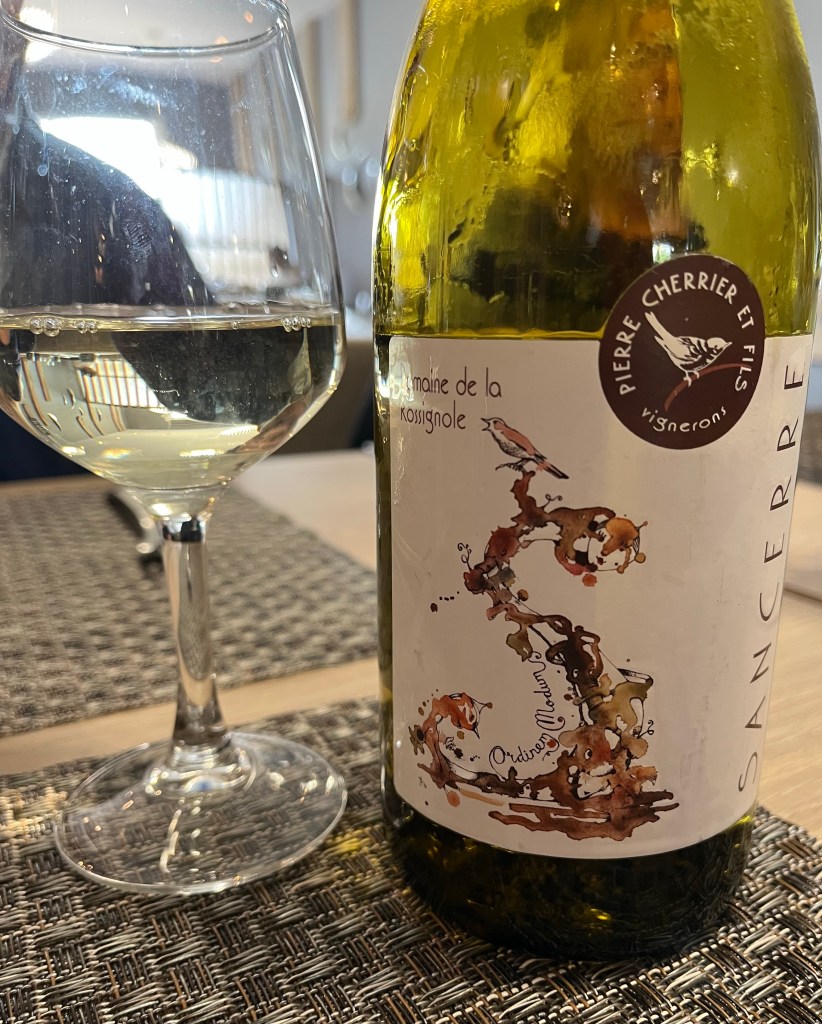
Wine and amuse bouche started the meal. Tuna mousse, topped with golden cavier in a french pastry arrived before we ordered.

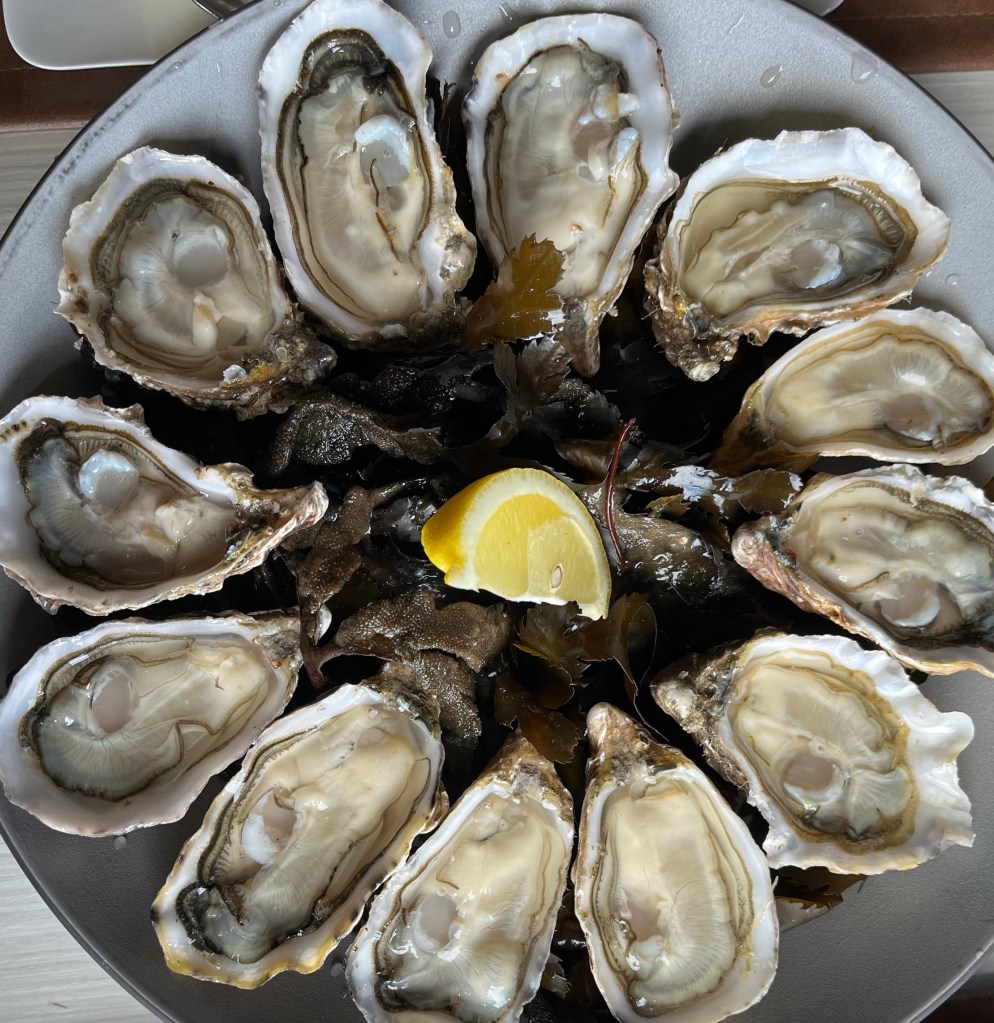
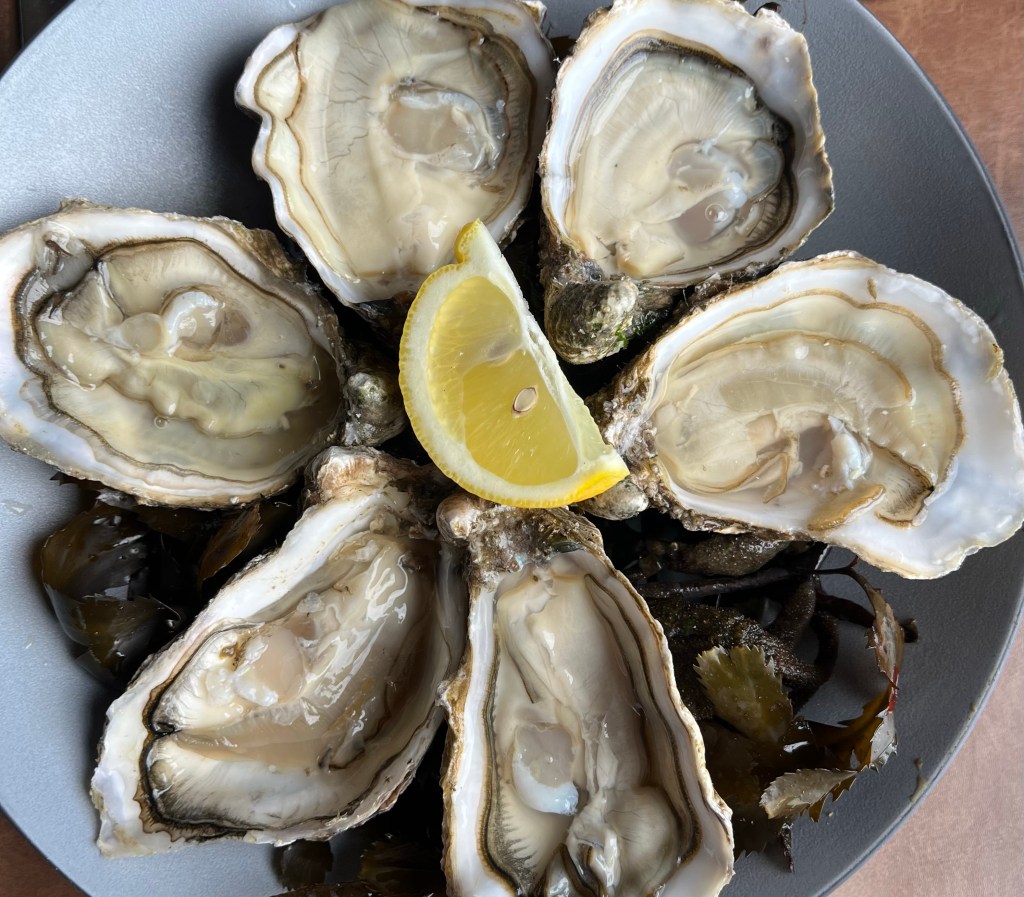
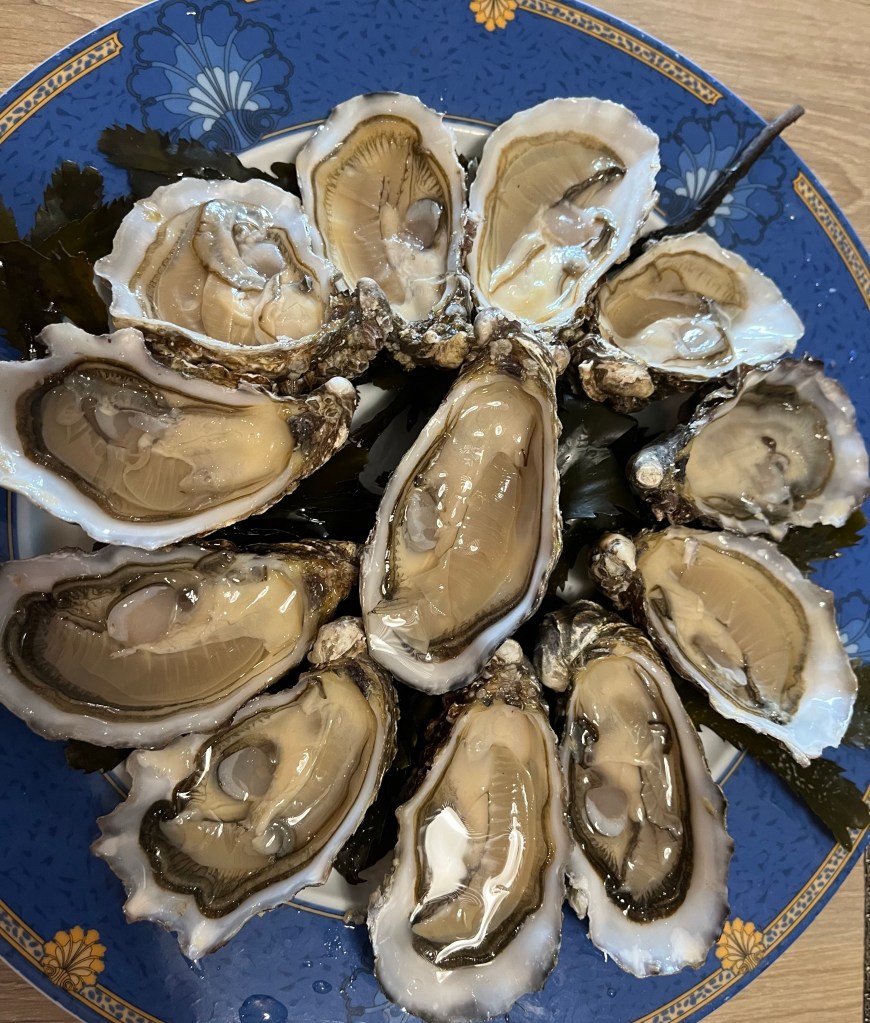
No surprise, oysters were part of this meal and OMG! Perfect size for me (small), nice texture, super salty and could also be topped with lemon or mignonette. ‘Ginny-size’ was on the left. These oysters may have spoiled me for all other bi-valves. YES, they were that good.

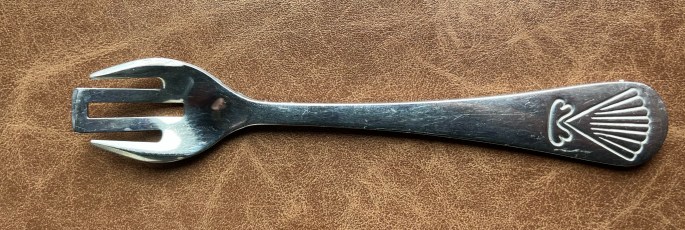
Man! loved these oyster spoons.

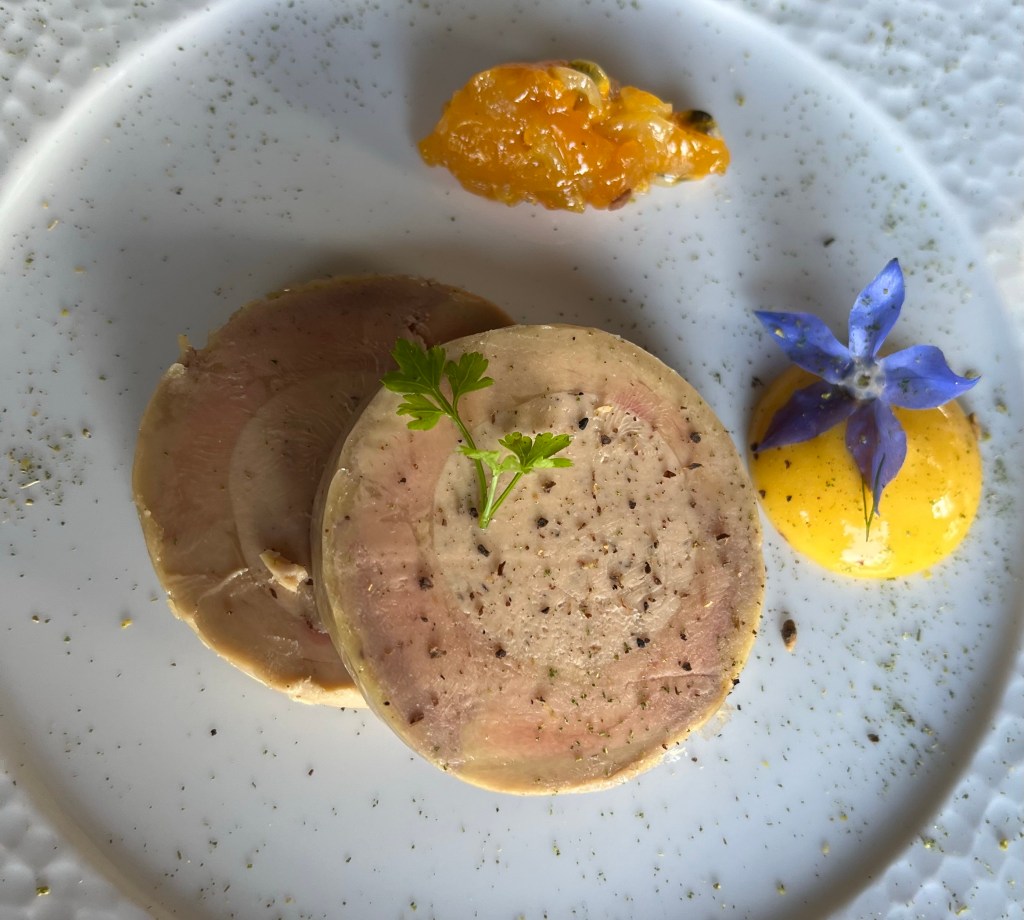
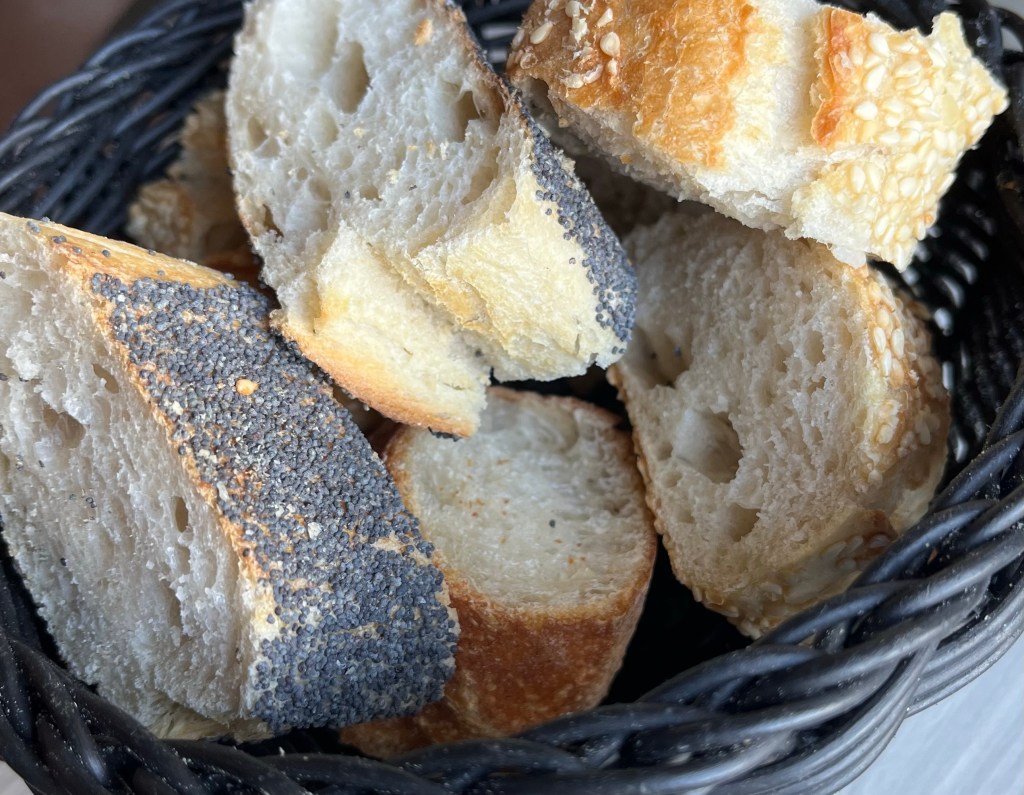
Eric enjoyed his choice of Fois gras and we all loved the bread. Might have been several baskets (or more) brought to the table. The little lavender flowers were also edible.

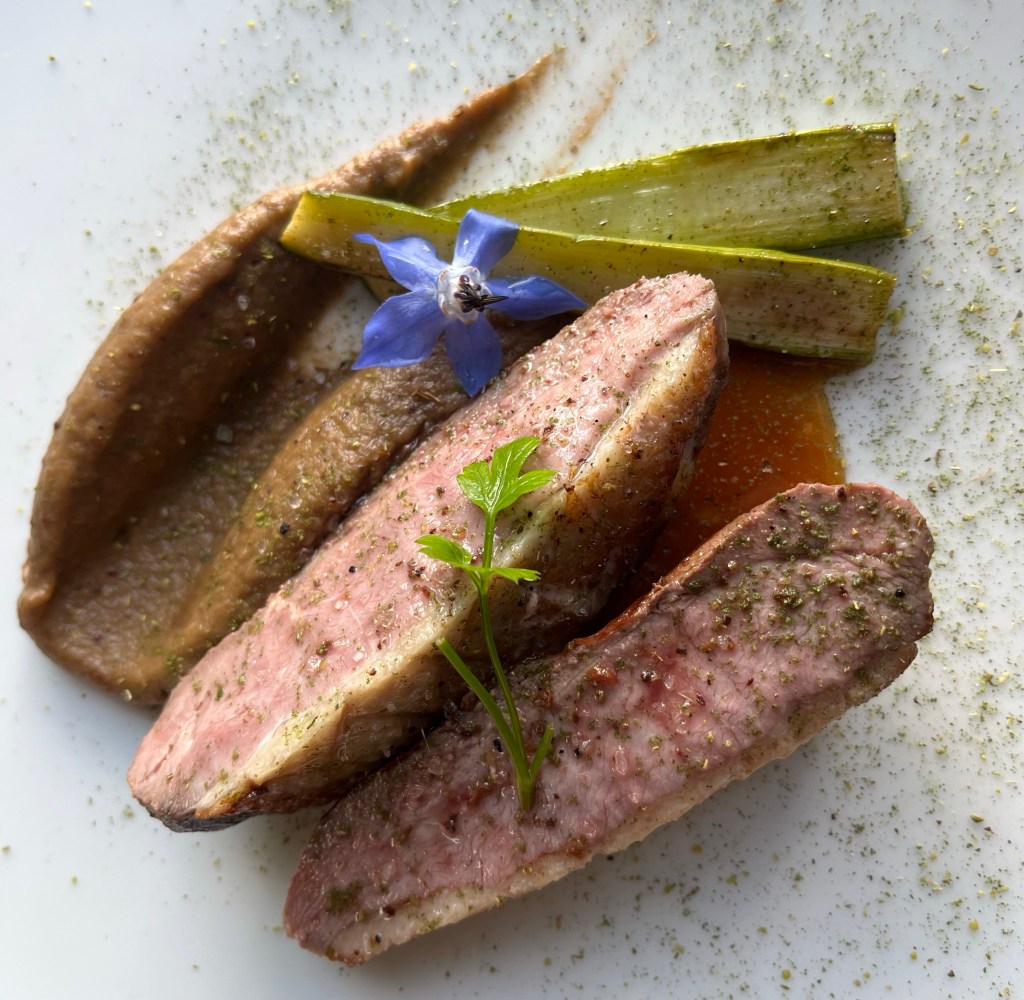
Adrienne selected a local fish while Connor and I had duck. All were satisfied with their choices.

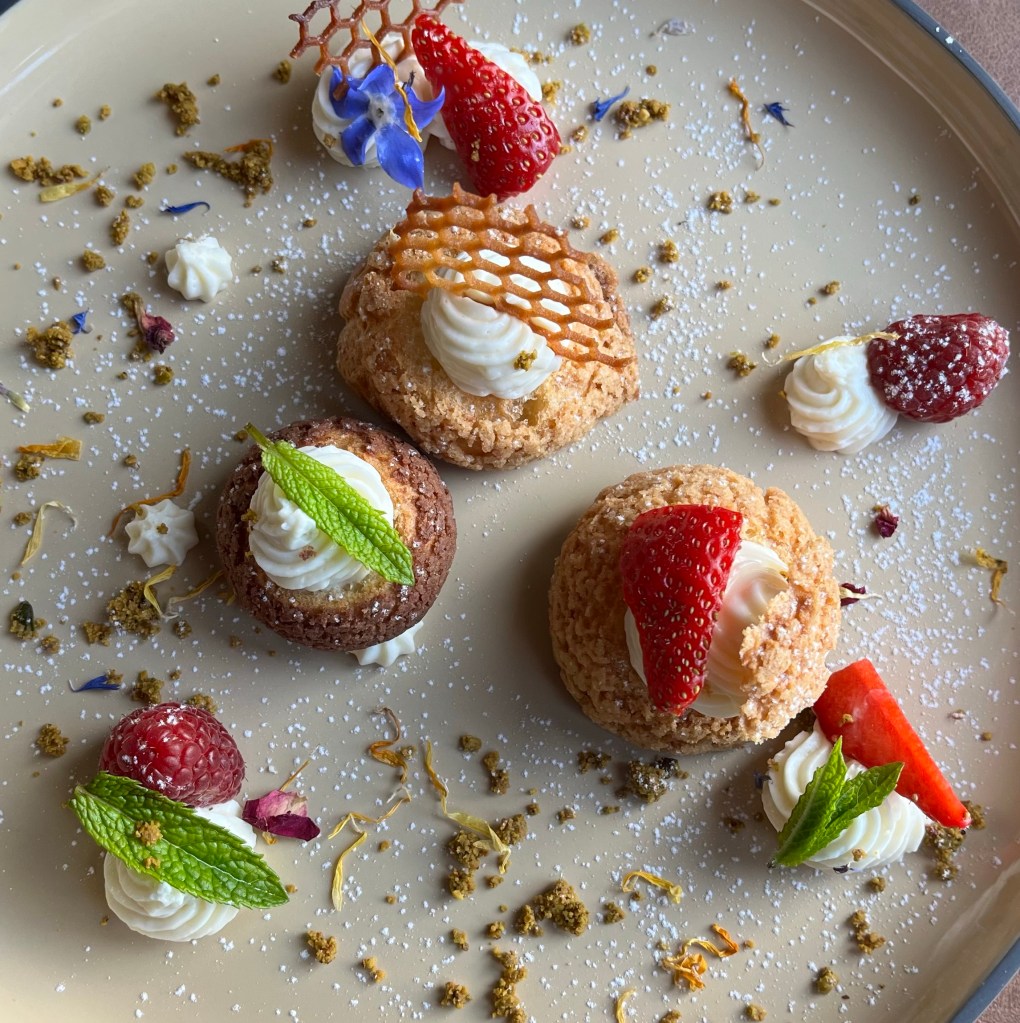
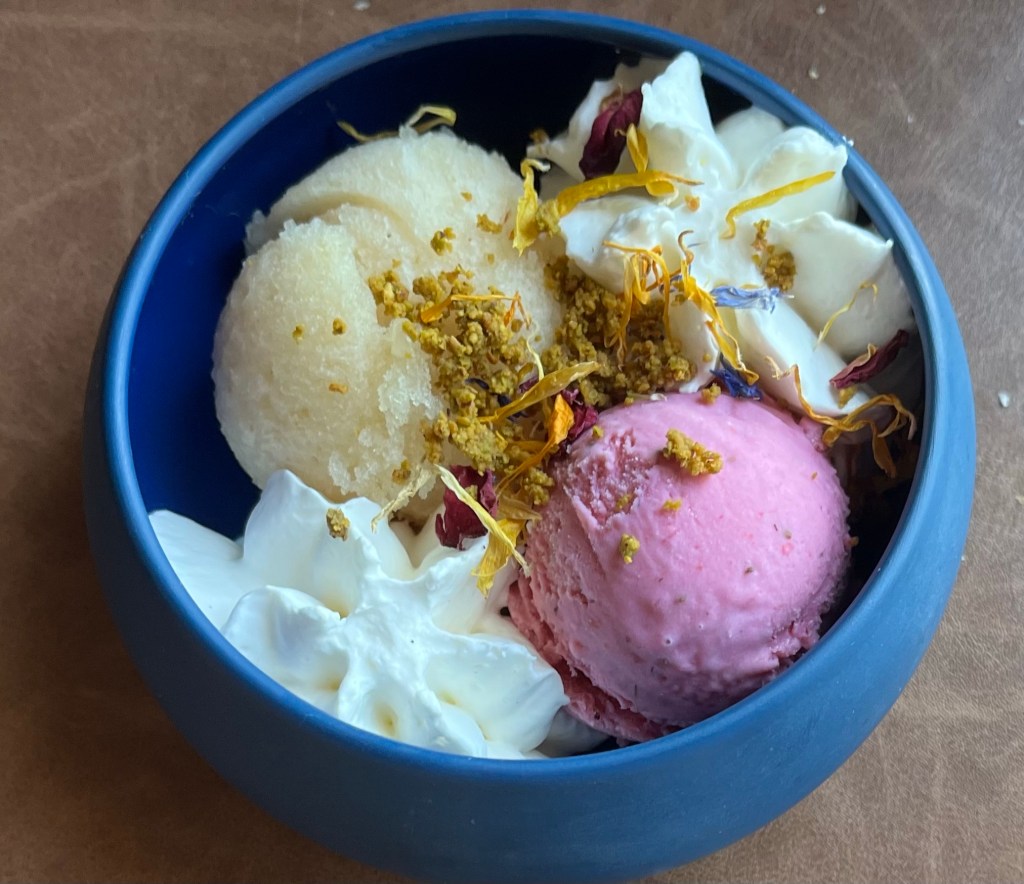
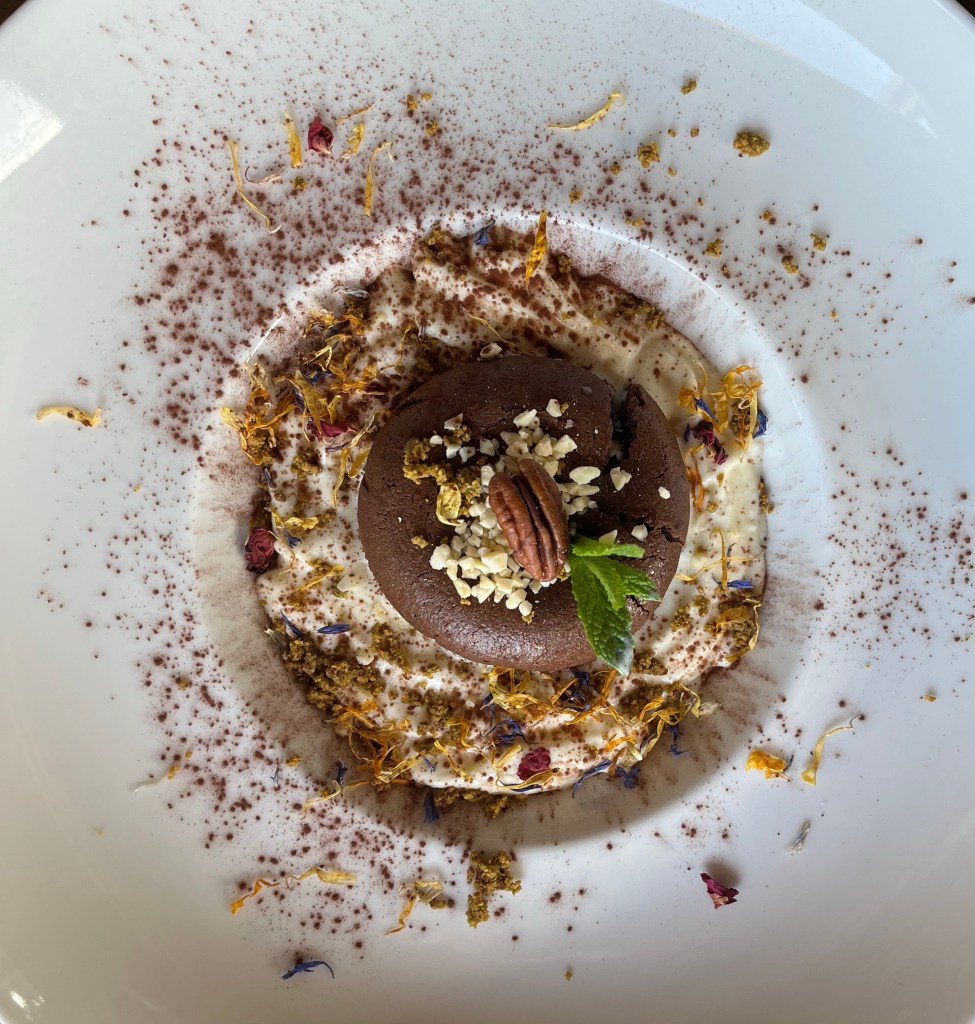
Then came the desserts – another true winner. Three sweet selections chosen to end the meal: Puff pastries, sorbet (passion fruit and strawberry) and chocolate molten-lava cake.

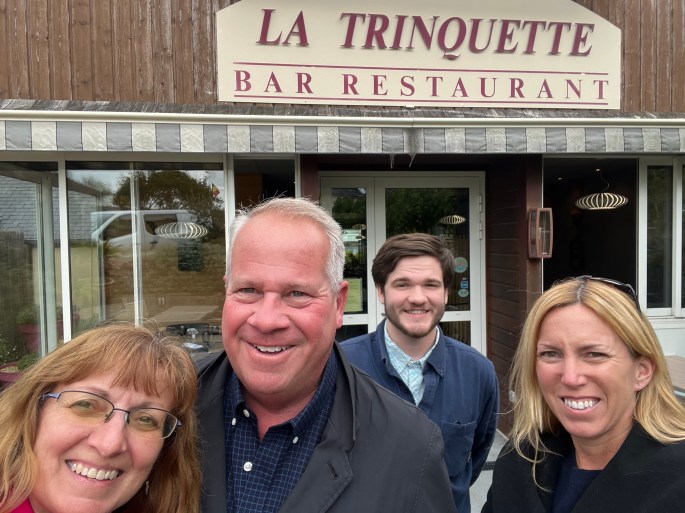
Last restaurant for this post ……….. La Trinquette Bar Restaurant with once again, wine and oysters. These were just as good as the ones from the restaurant above.

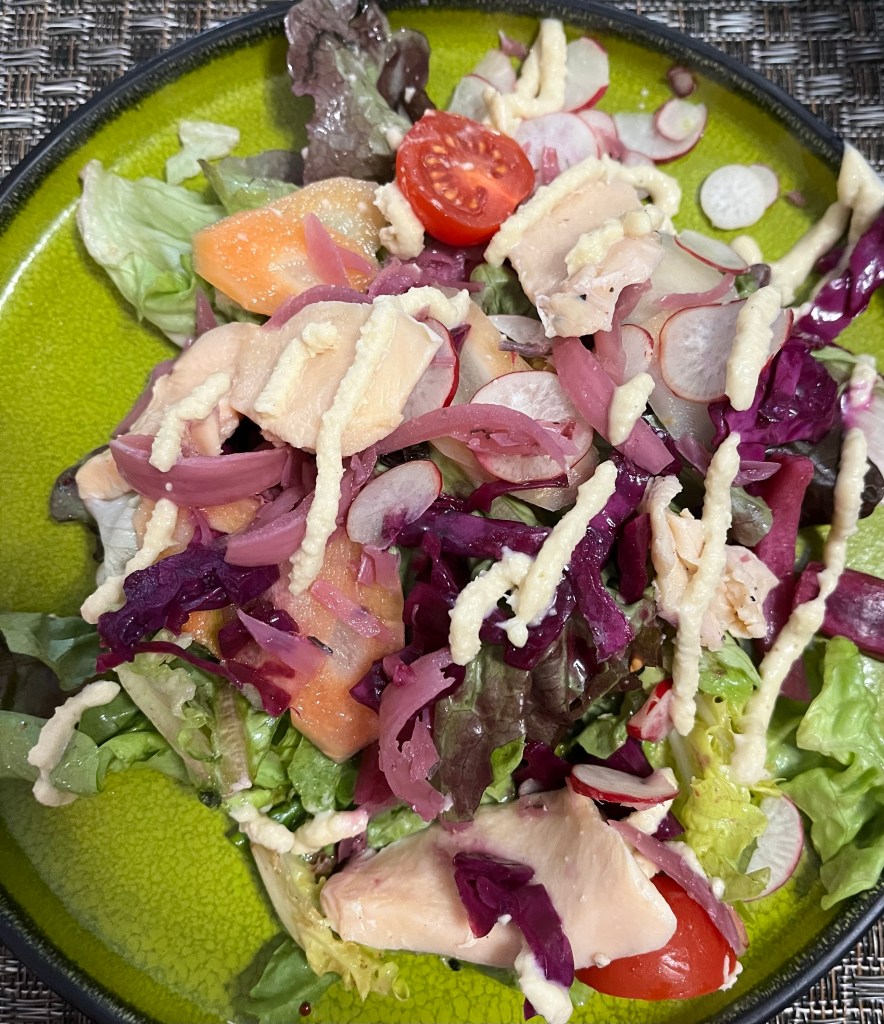
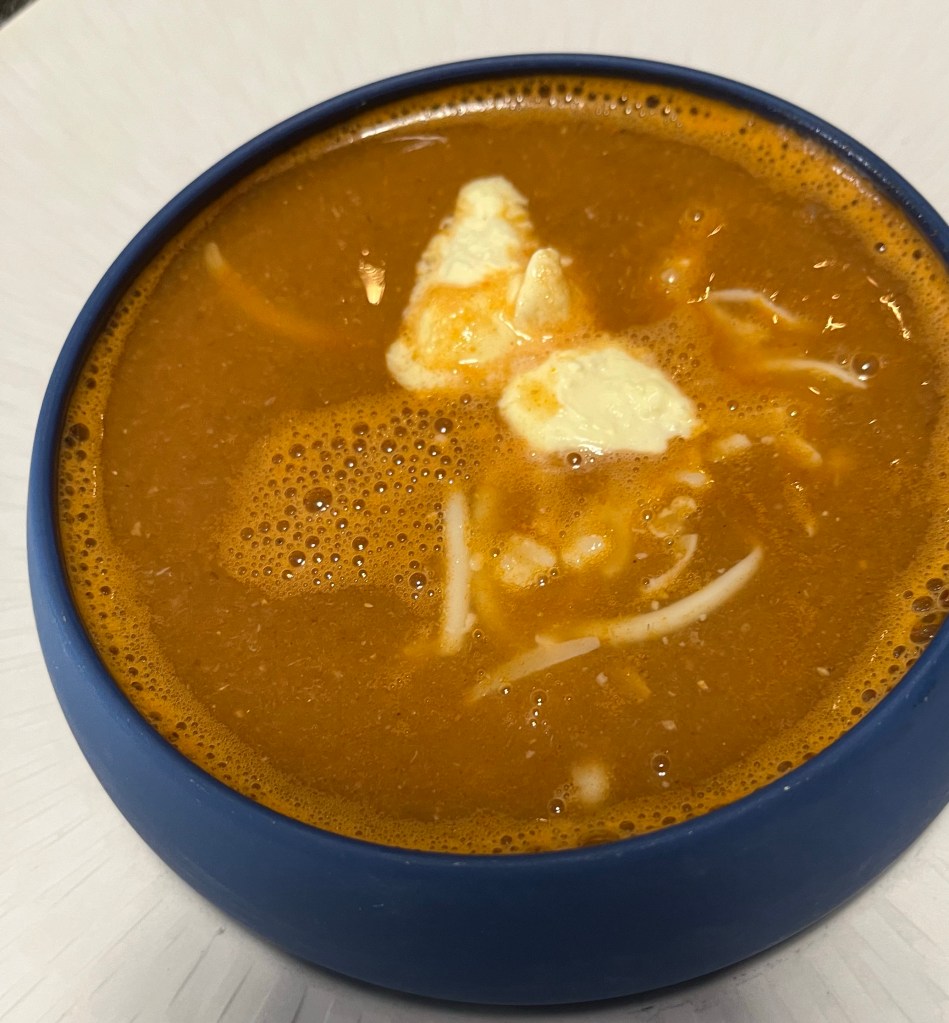
I had a very tasty Cesar salad and they selected the fish soup – they loved it. It came with a few bowls of ‘add-ins’ as they so desired: gruyere cheese, garlic butter and toasted bread points. Everyone was happy.

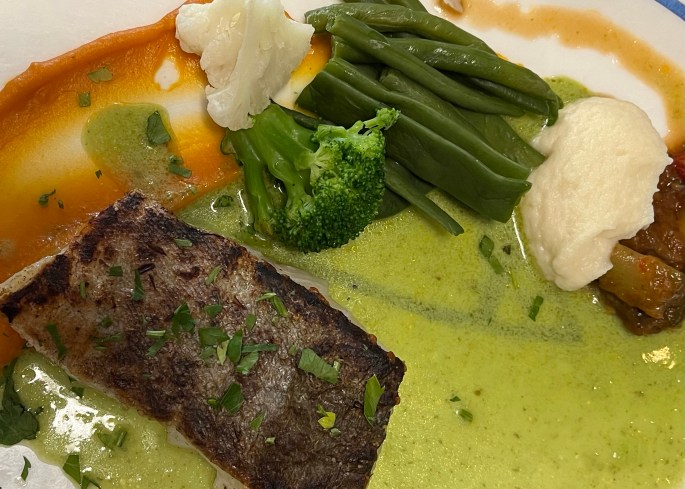
Everyone had the fish selection.

Three of us had the most fabulous trio of caramel treats (caramel cream, caramel macaroon and caramel ice cream. Eric selected a cheese plate – we won, just saying.

More posts to come as we traveled through northern France.

Ginny

Longues-sur-Mer & Bayeux

Having a rental car gave us more freedom to sight-see while it expanded our adventures. One trip involved German pillboxes and 11th century propaganda. Let’s start wih the Germans.

This was part of the German defense along the Atlantic coastline. Their guns had an effective range up to 14+ miles. BTW – that’s Adrienne in the photo below.

Some of the pillboxes still had their gunnery.

Connor and I walked to the edge of the coast, finding other ammunition spots still in the fields.

One lookout point was still intact.

From there the coastline was easily seen.

Afterwards it was on to Bayeux and the Bayeux Tapestry – a short distance away. Bayeux was located four miles from the coast of the English Channel and founded in the 1st century BC. It was destroyed a number of times through the years and re-built by various peoples.

No photos were allowed of the actual Tapestry, and they had a very organized viewing process. Audio guides (available in a multitude of languages) were part of the entrance fee and automatically started upon entering the display. There was no stopping, pausing or going backward on the audio guides. Everyone kept moving forward through designated stopping points.

To this day, some mystery continues.

One can’t visit the Tapestry without stopping at the Bayeux Cathedral – it could be seen from most everywhere in the city. This was left virtually untouched from Allied bombing due to the German forces defending Caen, further away. Bayeux was the first city of the Battle of Normandy that was liberated.

The site is an ancient one and was once occupied by Roman sanctuaries. The present cathedral was consecrated in July 1077. Following serious damage in the 12th century, the cathedral was rebuilt in Gothic style.

This photo gives some perspective. Those are massive doors.

Quite a bit of the stained glass was still in place.

Entry was in the back of the cathedral.

We kept moving towards the center of the cathedral.

One of the architectural features intrigued me.

More stained glass was at the very back.

A crypt and treasury was still in place and after a short flight of stairs onewas able to imagine the history that took place.

There was just enough light to take a photo.

Had to chuckle when I saw scaffolding. Usually seen on the outside, this time work was being done in multiple places – both inside and out.

One group shot before leaving Bayeux, taken along the southside of the building.

So far………the group has been patient with my photo requests. Not sure how long that will last, but I’ll keep going.

Ginny