Since we had a car, we wanted to go outside of the city. One of the cities we visited was Saint Malo situated along the coastline. Saint-Malo was founded in the 1st century BC, a short distance south of its current location in Brittany. The first settlement, in what is now St-Servan, was built by Celtic tribesmen in order to control the entrance to the Rance River for economic and military purposes. Due to its strategic location, was extensively fortified over the centuries.
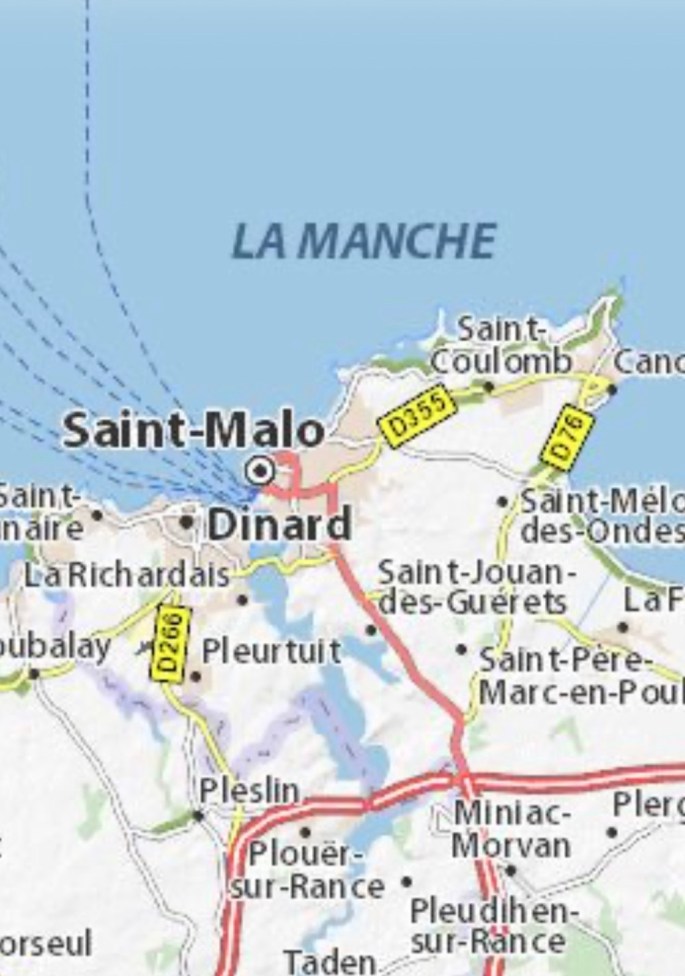
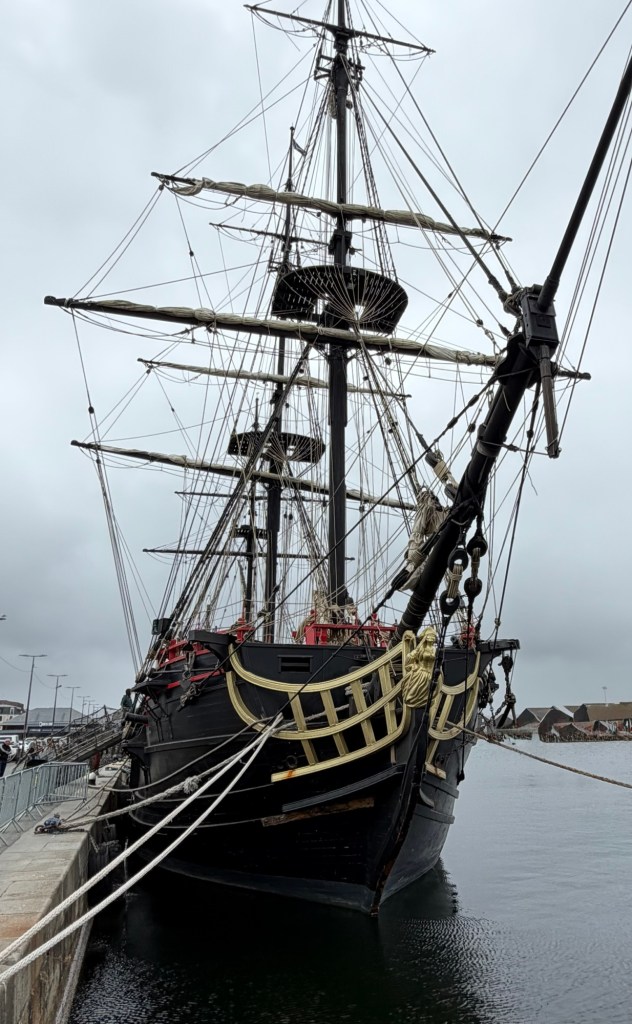
Saint-Malo was once an island but had been joined to the mainland by a causeway and a road. It was heavily destroyed in WWII, but the city was rebuilt with extraordinary care, keeping the historic street pattern and the sense of a fortified “island city” that defines Saint-Malo’s character today. The city played into the piracy theme with a number of ‘pirate’ ships in the marina. Several could be boarded and explored in their harbor.
There were citizens living there but also a number of accommodations for hotel guests were available. We saw guests dragging their suitcases through the cobblestone streets.
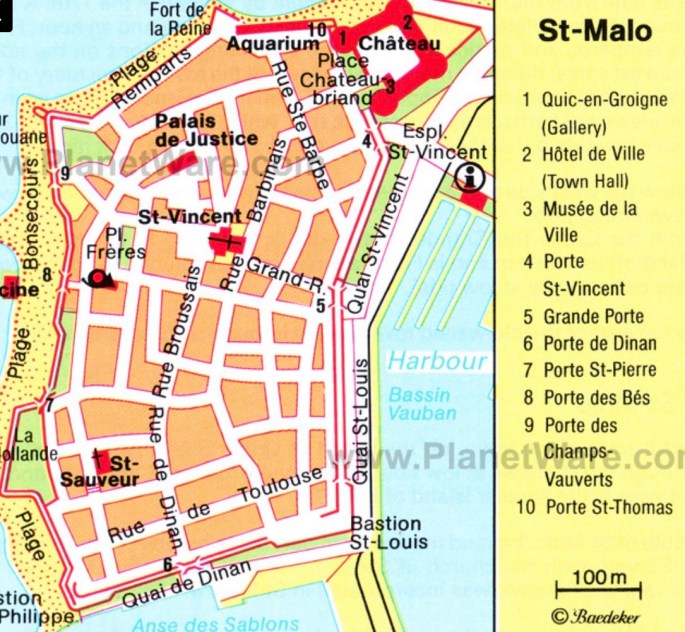
Eric found a free lot – great. We parked then walked and walked and walked. And remember………….this also meant we would be walking back to said ‘free’ parking lot. Let’s just say, early on this sojourn I swore to myself to be involved in future parking decisions. If we can afford to fly to Europe, we can pay for parking – just saying.
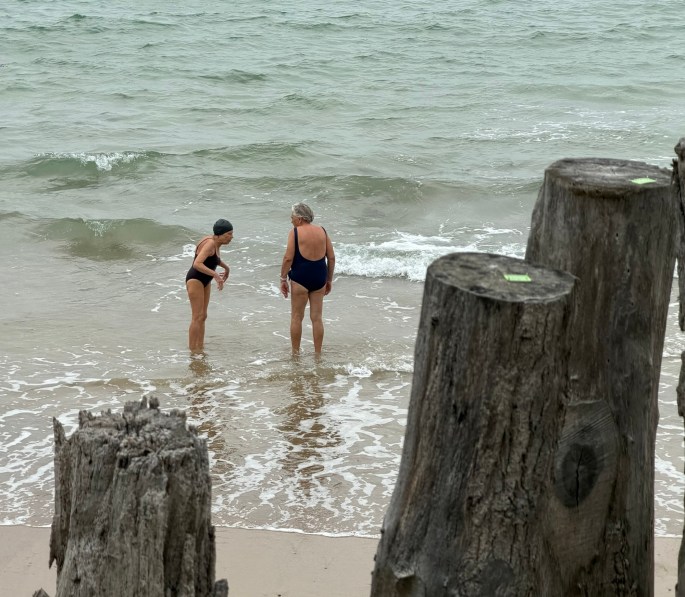
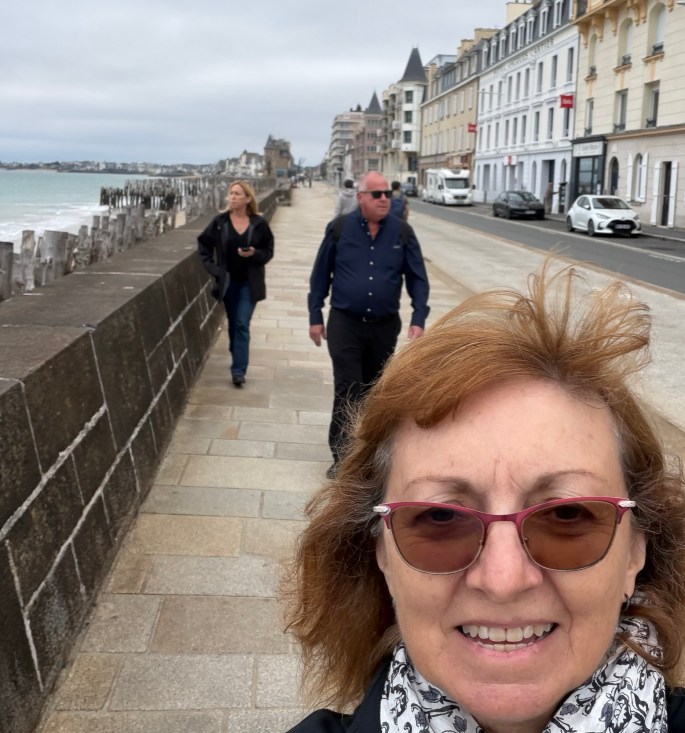
We found the city wall and then saw these ladies in the water. No thank you. I don’t know what the temperature of the water was, but you can see in our coming photos, we were bundled up. This was probably our coolest day the entire trip.
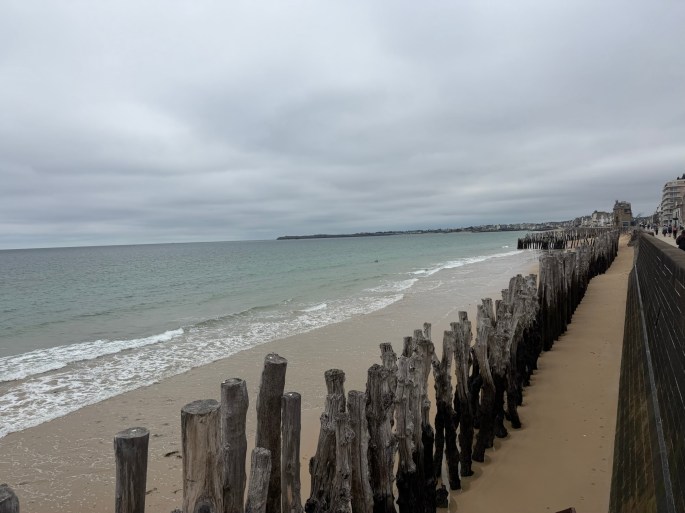
The wooden posts were another layer of protection along the city wall.
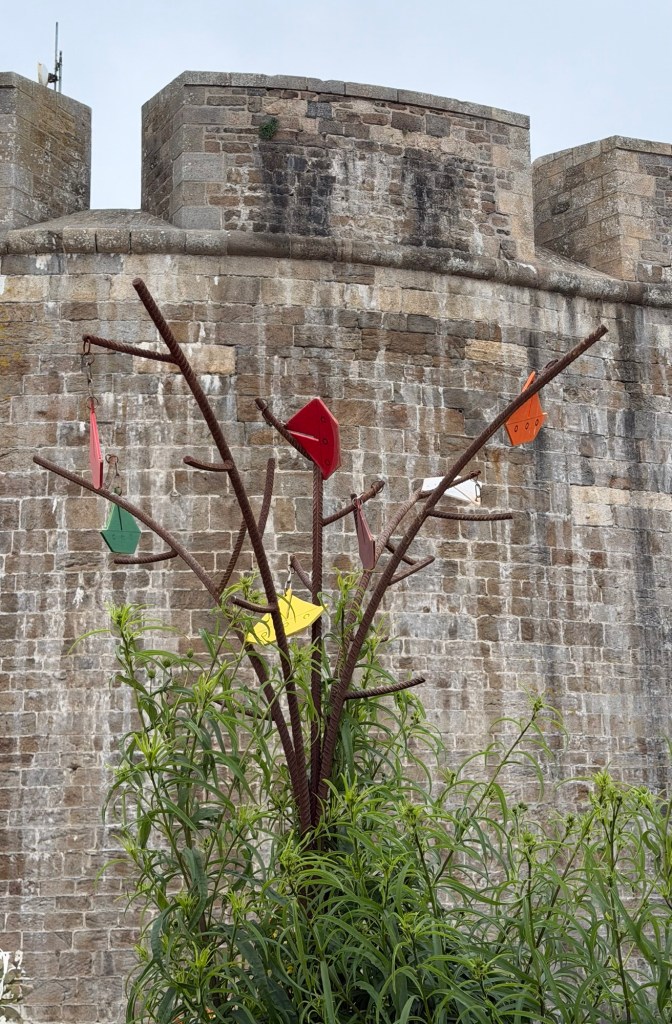
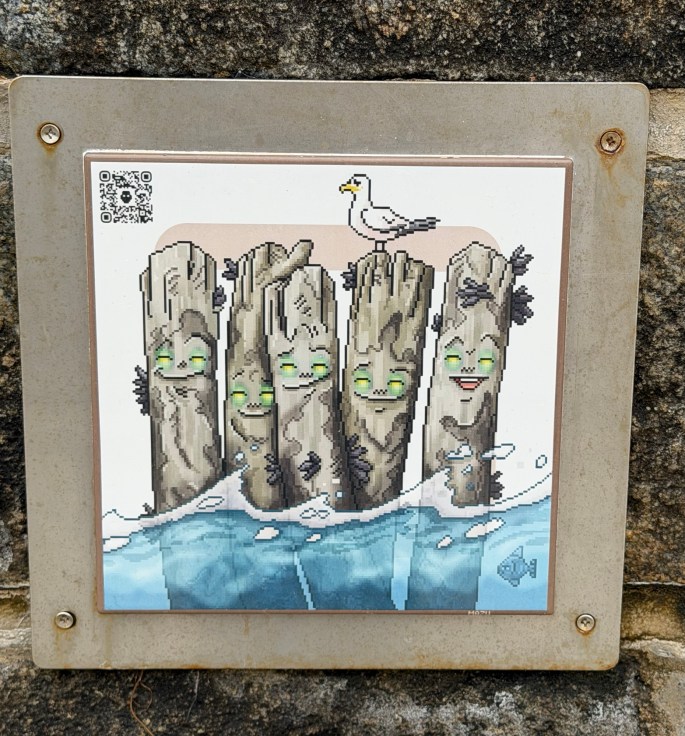
Someone was having a bit of fun and I found this along the seawall.
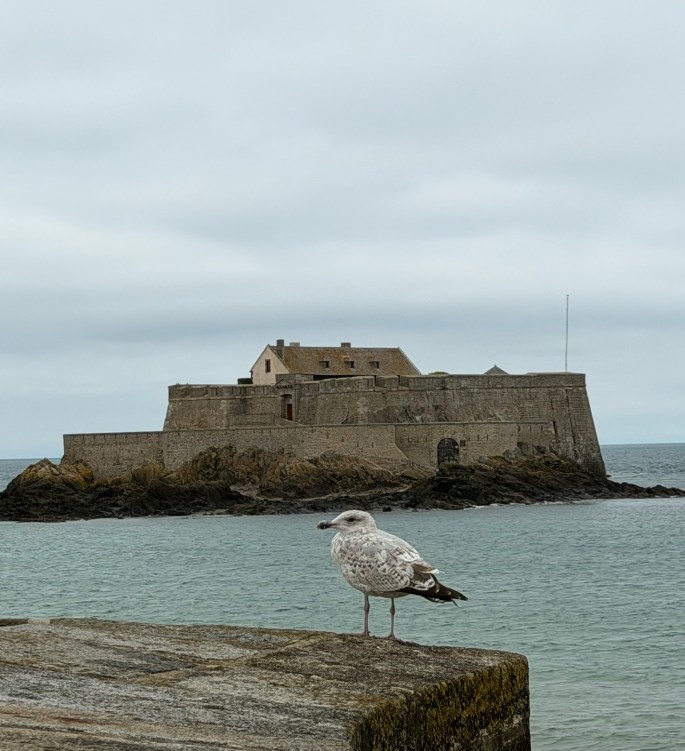
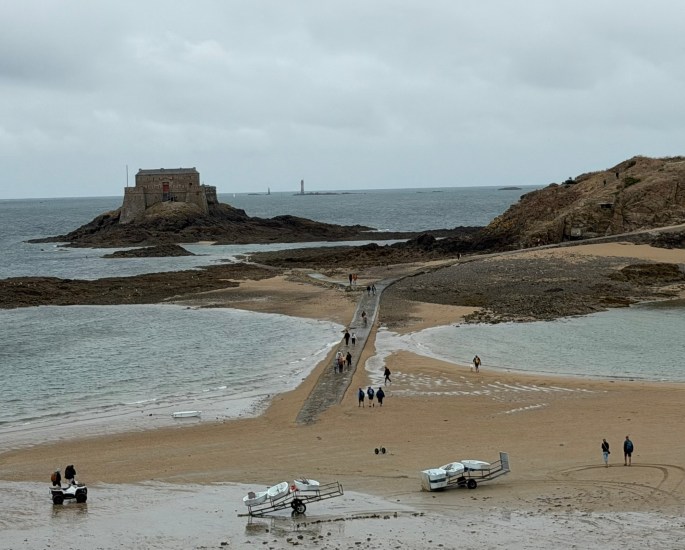
The tide was in when we arrived and footpath to these rocks seen in the background of my photo were underwater.
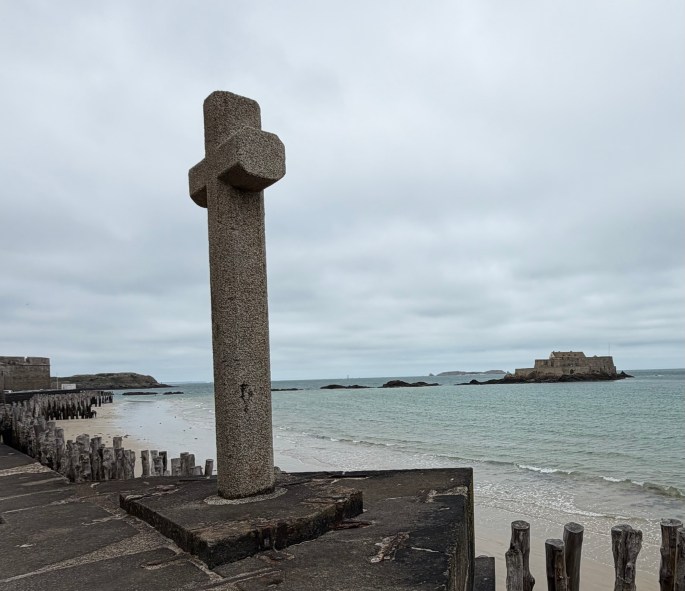
There was a special feature this city was known for. We needed to walk into the old city and find their beach.
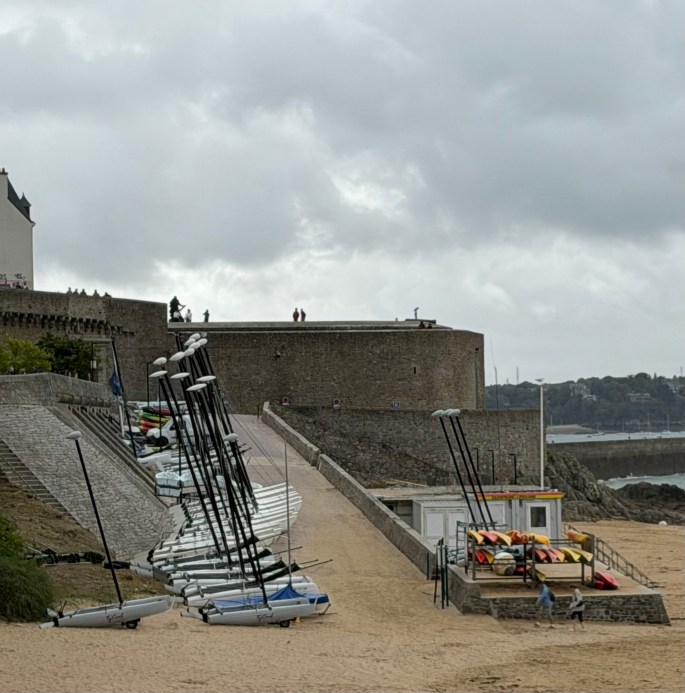
Notice that square, walled in area?
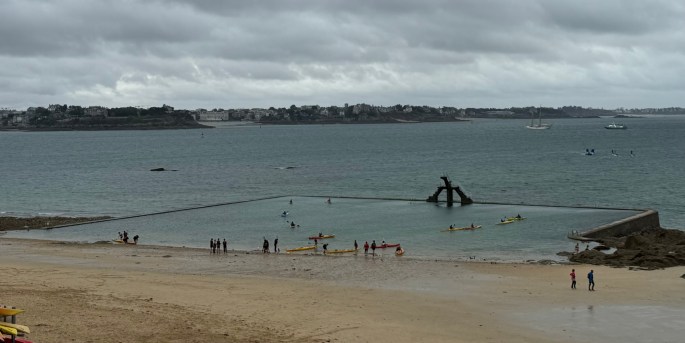
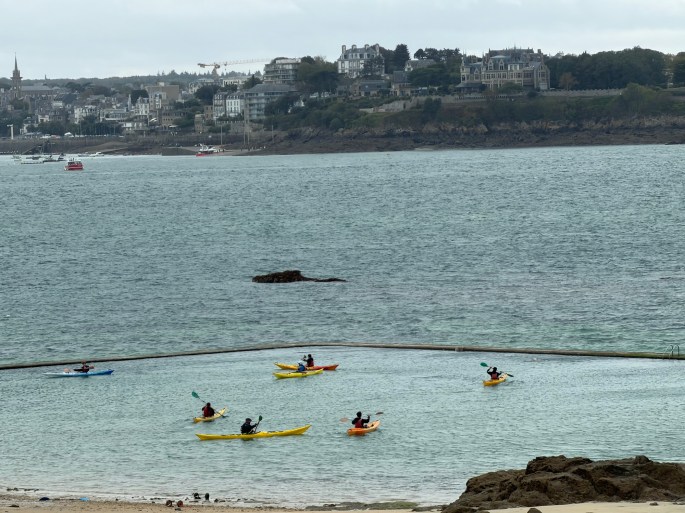
Yep, this is a tidal pool filled with seawater once the tide goes out. This day there were kayakers enjoying the space.
Also found a church, but not the one I was expecting. I was looking for St. Malo Church. I put it in the map app and it said it was miles away? What? What did I do wrong? Absolutely nothing. The St. Malo Church was in Dinan.
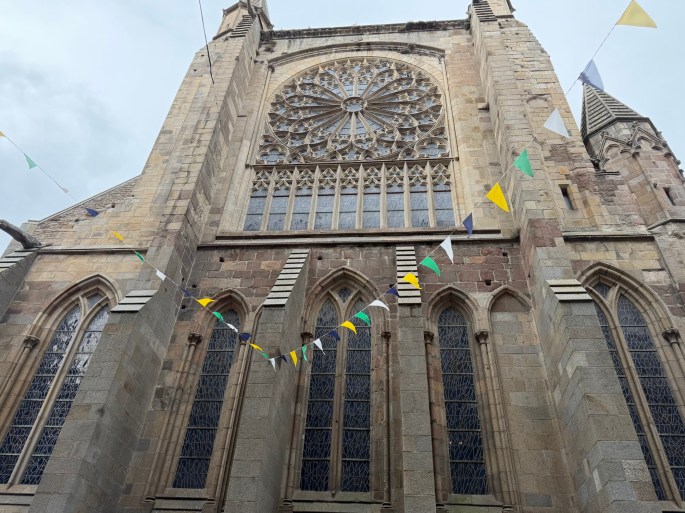
Saint-Vincent Cathedral of Saint-Malo is a historic Roman Catholic cathedral located in the walled city of Saint-Malo, Brittany, France. The cathedral’s origins date back to the 12th century, and it has undergone several reconstructions due to damage from wars and natural disasters.
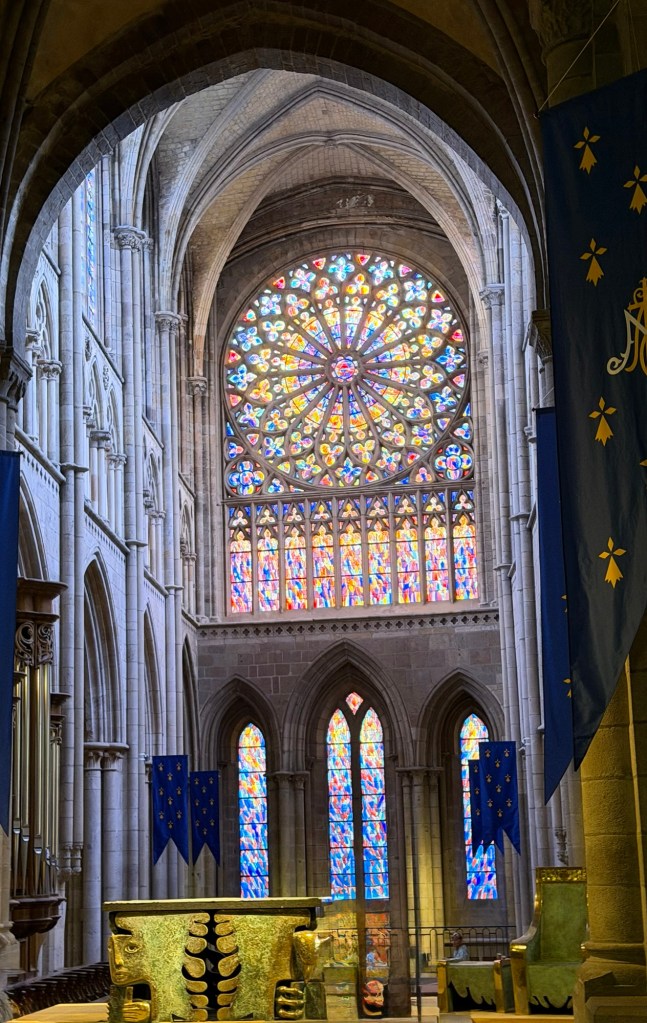
The Great Rose window was designed in 1968 by architect Raymond Cornon. It replaced an earlier rose window destroyed in 1693 during an English attack on the cathedral.
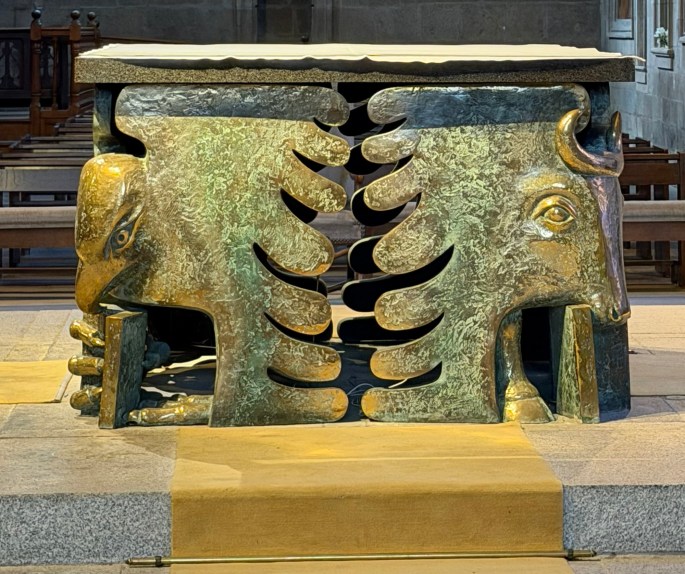
But then I noticed the altar. A little research found this information.
The bronze altar in the cathedral was consecrated in 1991. The theme of the altar is the tetramorph or the four Evangelists appearing in animal form. The four Evangelists are winged; the wing is an ancient symbol of divinity with each representing the virtues required for Christian salvation. The lion of St. Mark represents courage, resurrection, and royalty. The ox is an ancient Christian symbol of redemption and life through sacrifice. The eagle of John represents the sky, heavens, and the human spirit. Matthew’s emblem is a man. My photo shows the eagle and the ox.
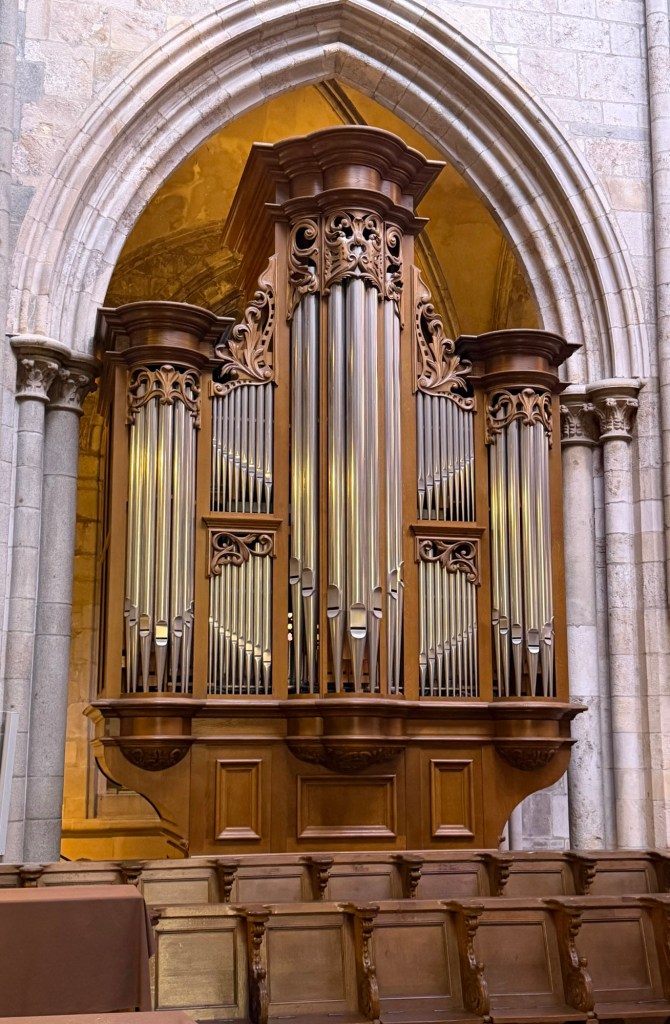
The choir and organ was on the main floor of the cathedral.
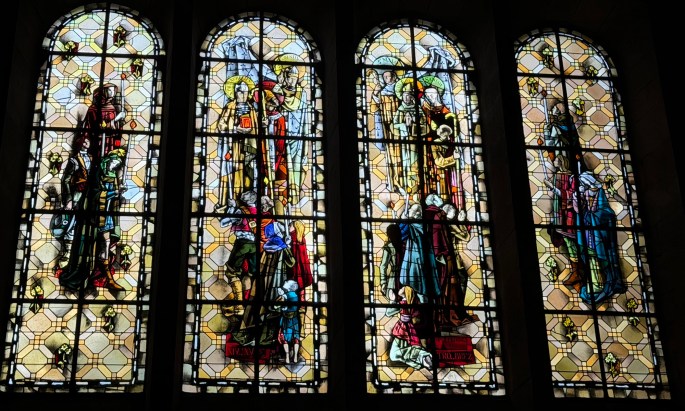
The stained-glass windows of Saint-Malo Cathedral depict scenes from the history of the city, the cathedral, and the saints associated with Brittany. This window shows 7 of the Breton saints. There was a lot of storytelling going on within their windows.
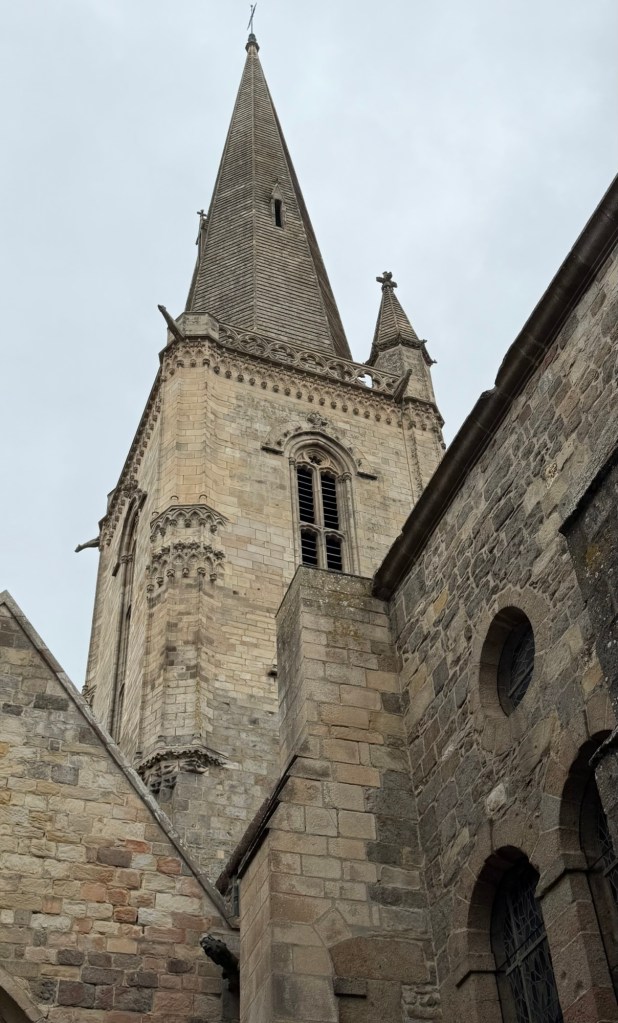
We were on our way out when we visited the church and I was able to capture a few outside photos. Much more interesting than my first photo of the church front.
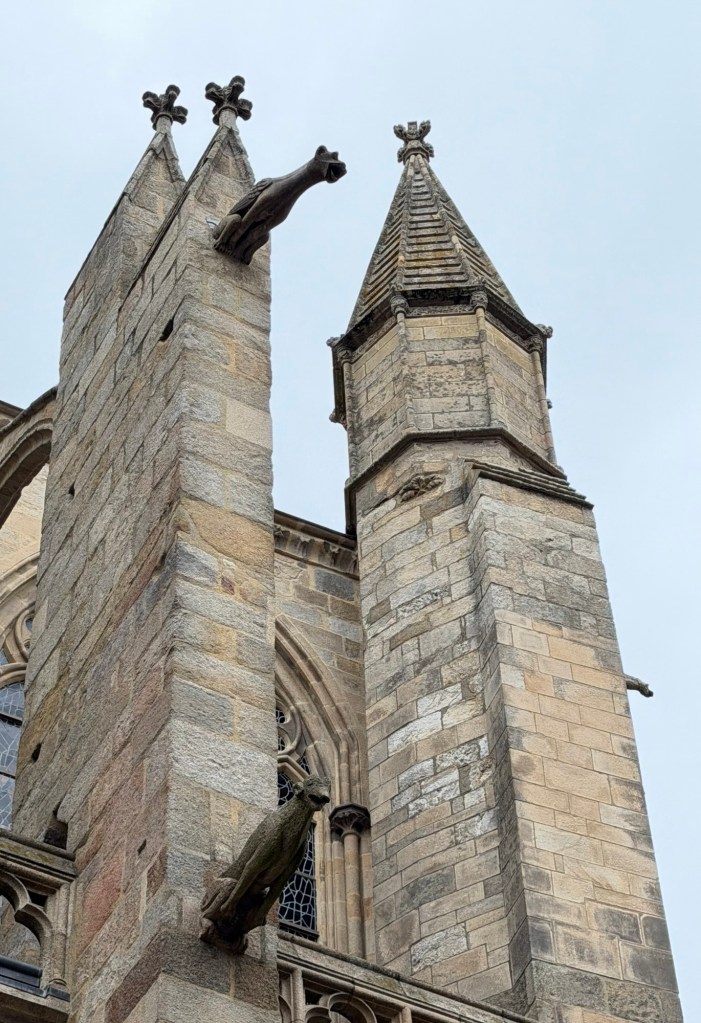
Don’t know where Adrienne went, but I found Eric.
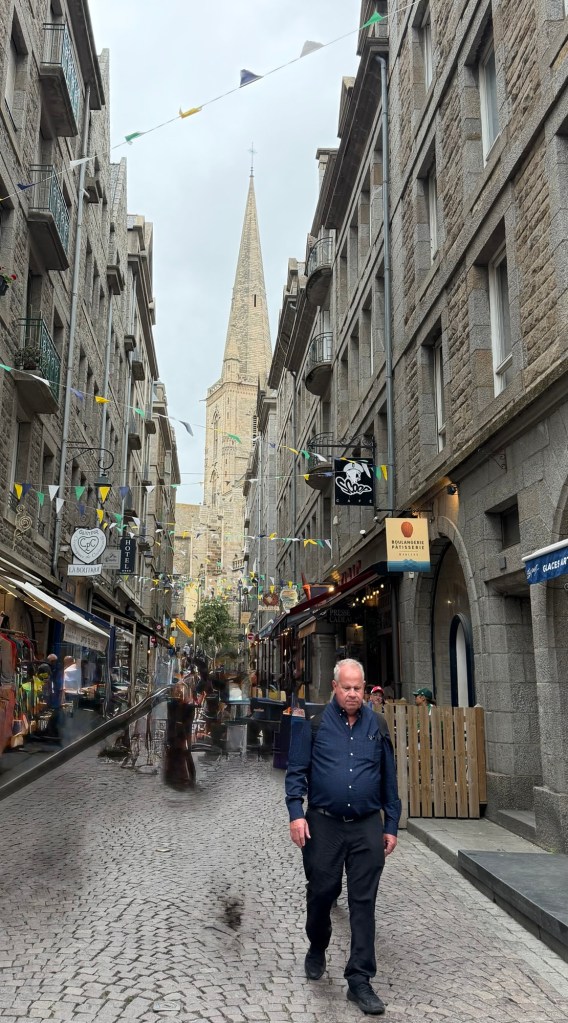
But wait! Would I have a blog post without food? No, indeed. Since this is also a port town, there was a highly rated seafood restaurant at their Ferry departure station.
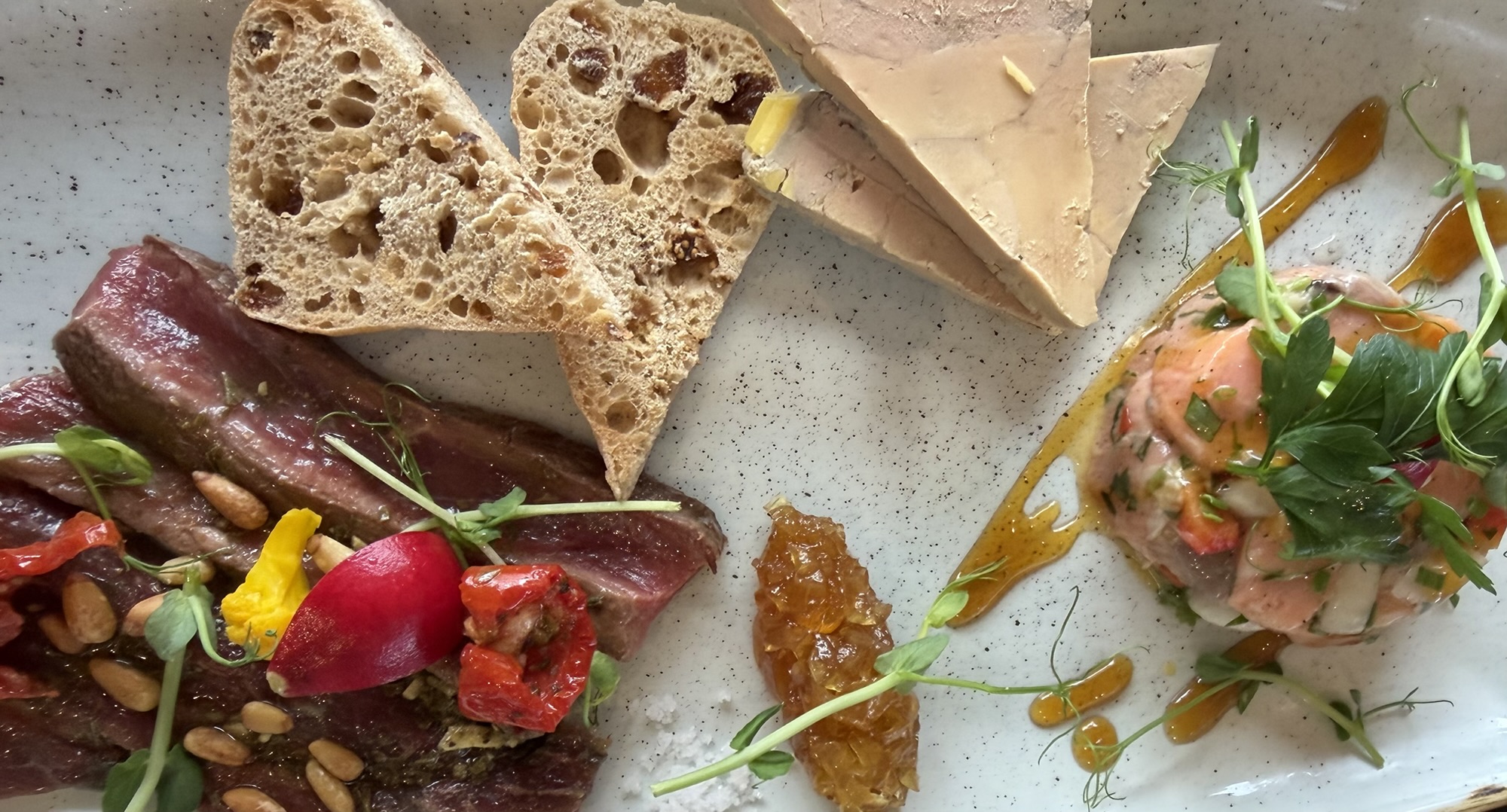
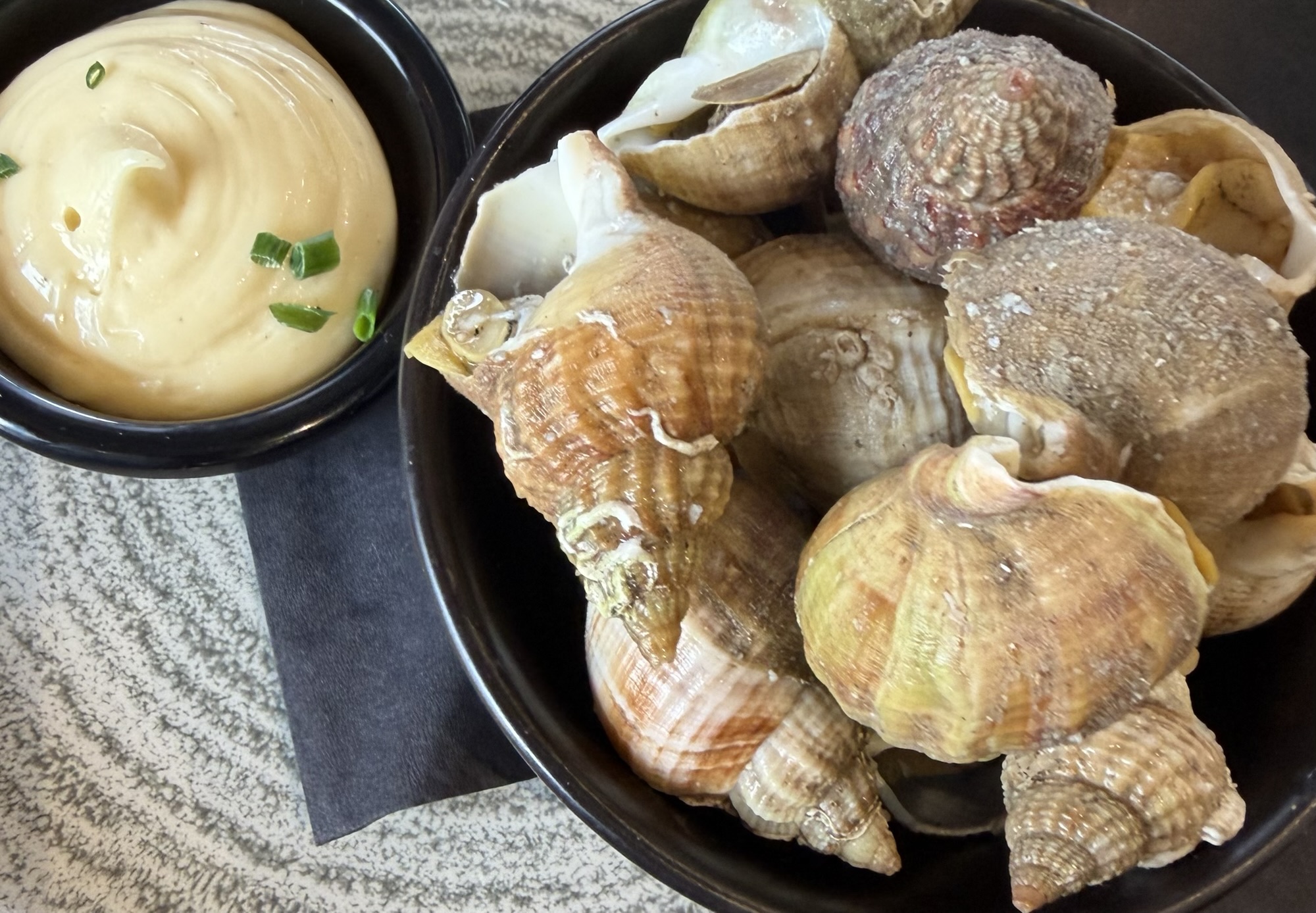
We shared these starters. The seafood in the right photo? Those are Adrienne’s new favorite seafood: bulots. They are large edible sea snails, commonly known as whelks in the US. They thrive in the temperate, nutrient-rich coastal water with Brittany being the most well-known region for harvesting them.
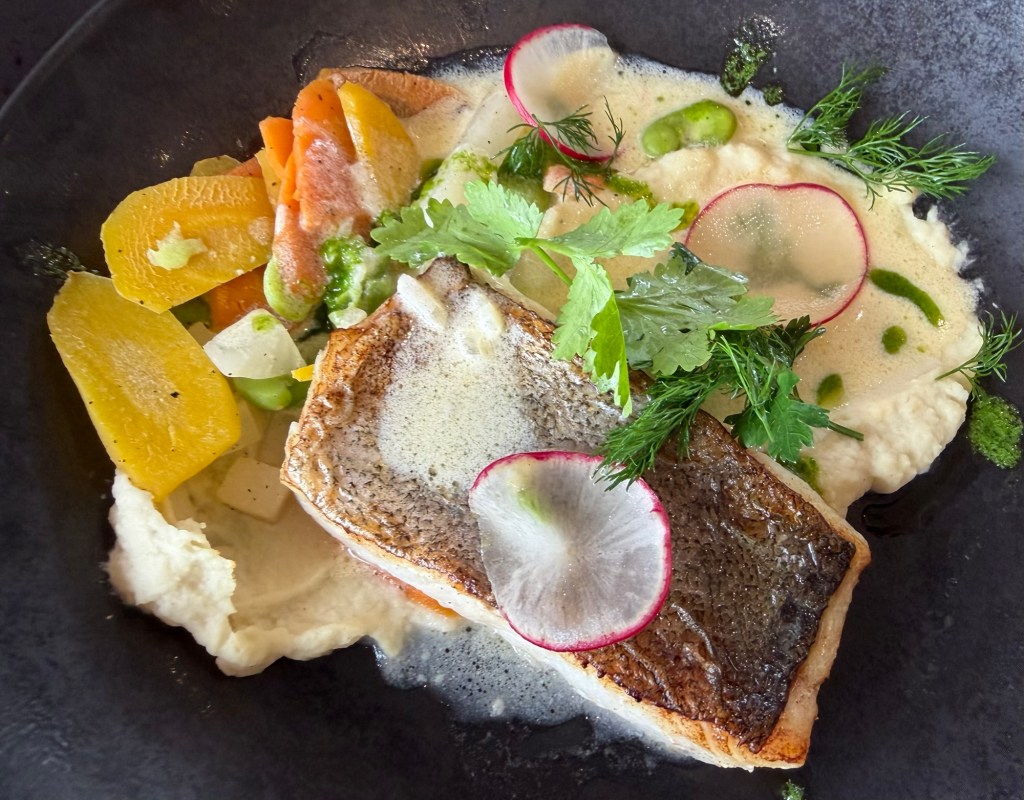
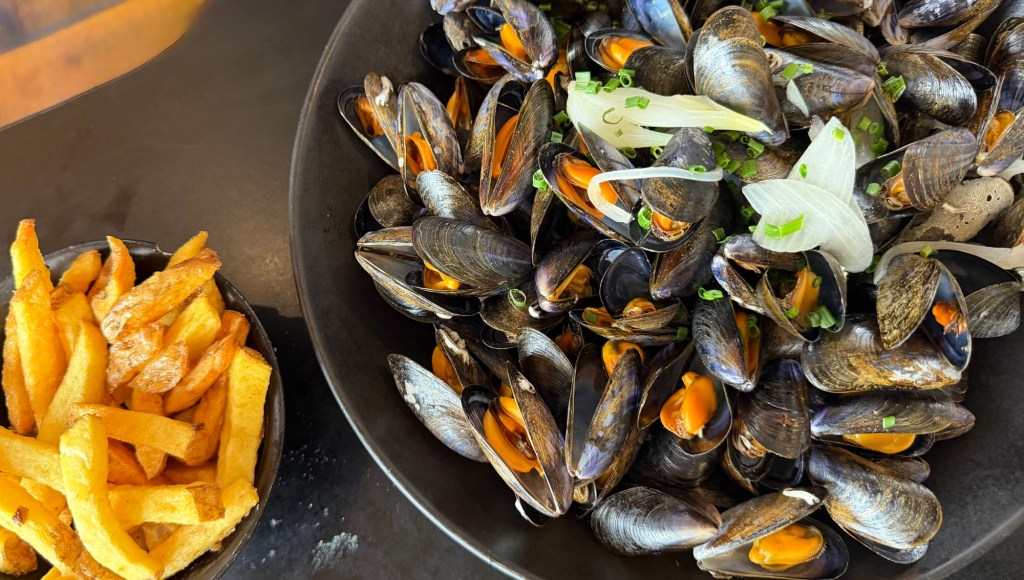
The girls chose a mild, local fish called Hake for our meal while Eric ordered the mussels & frites. More carrots for Adrienne! Eric ordered his mussels ‘Moules a la Mariniere‘ style. They were steamed in a broth of white wine, shallots, garlic and herbs.
Walking (and walking and walking) back to our parked car, we could see a difference in the tide. These footpaths that were under water when we arrived were now available for exploring.
We were glad we explored St. Malo and got out of the city.