
The city was first mentioned in 1040. It is situated on the banks of the River Rance. In the 12th & 13th centuries, the Lords of Dinan governed a rich and dynamic town which led to Dinan’s prosperity in the late Middle Ages. The town developed on a hill overlooking the Rance River, a naturally defensive location that allowed control over trade routes and access to central Brittany. The town was besieged by the Normans in the 11th century, an event depicted on the Bayeux Tapestry (I put that historical tidbit in just for Eric).
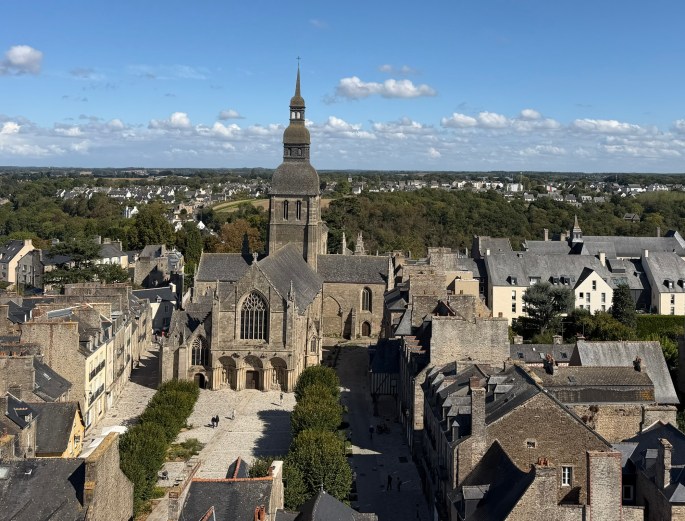
Dinan retains a medieval core with cobbled streets, half-timbered houses, and significant monuments. The town became a market and small-industries center, while preserving its medieval architecture, making it a popular tourist destination. Dinan’s history reflects a blend of strategic military importance, religious influence, and commercial activity, with its well-preserved medieval architecture offering a window into over a millennium of Breton history.
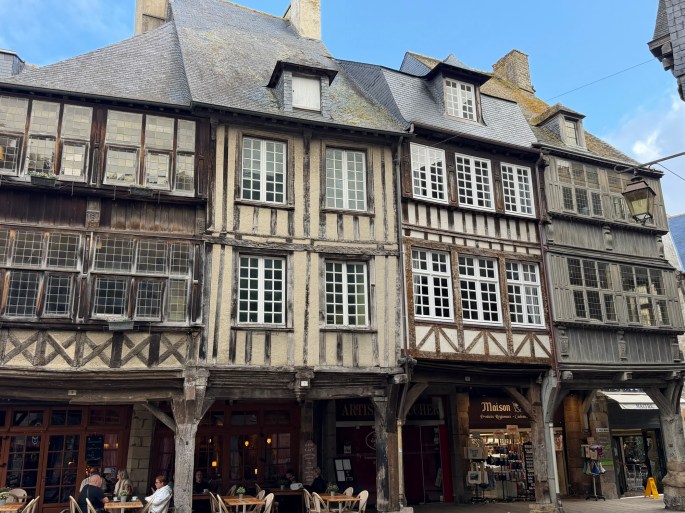
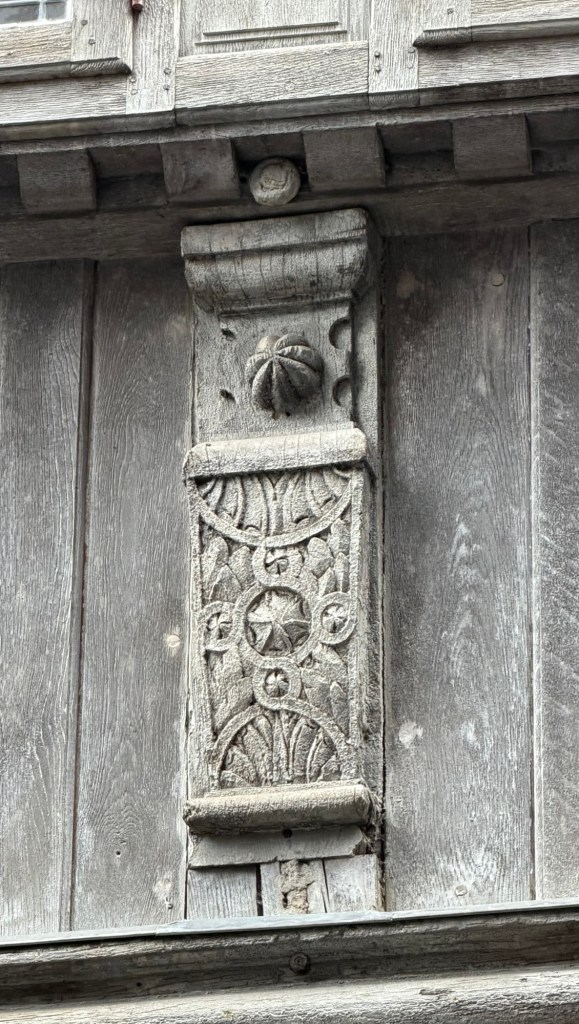
Loved finding some of these details on the houses.
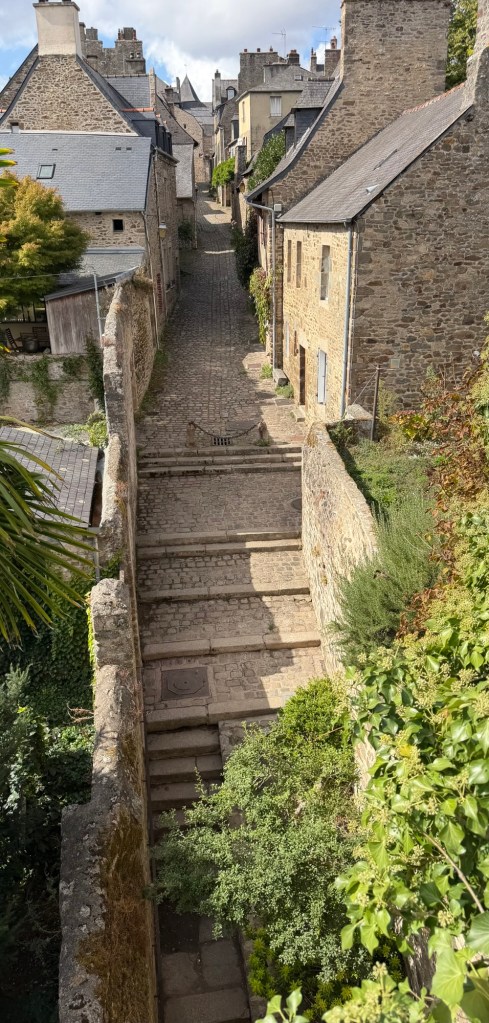
Now it’s time to walk down one of their famous streets – La rue du Jerzual. This street links the port to the upper part of the city and was until the late 18th century the main axis to cross the city in spite of its steep slope.
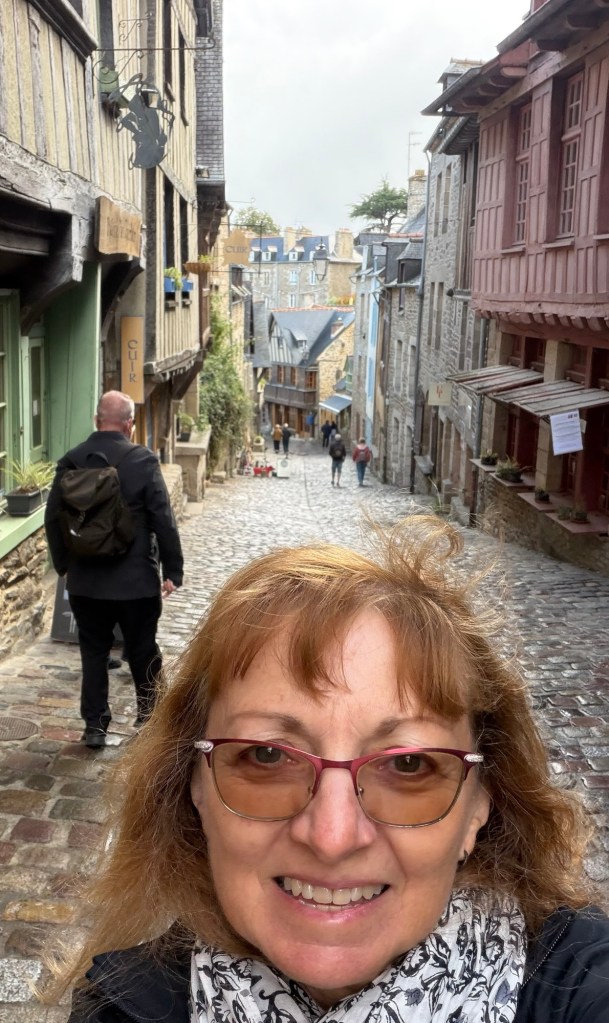
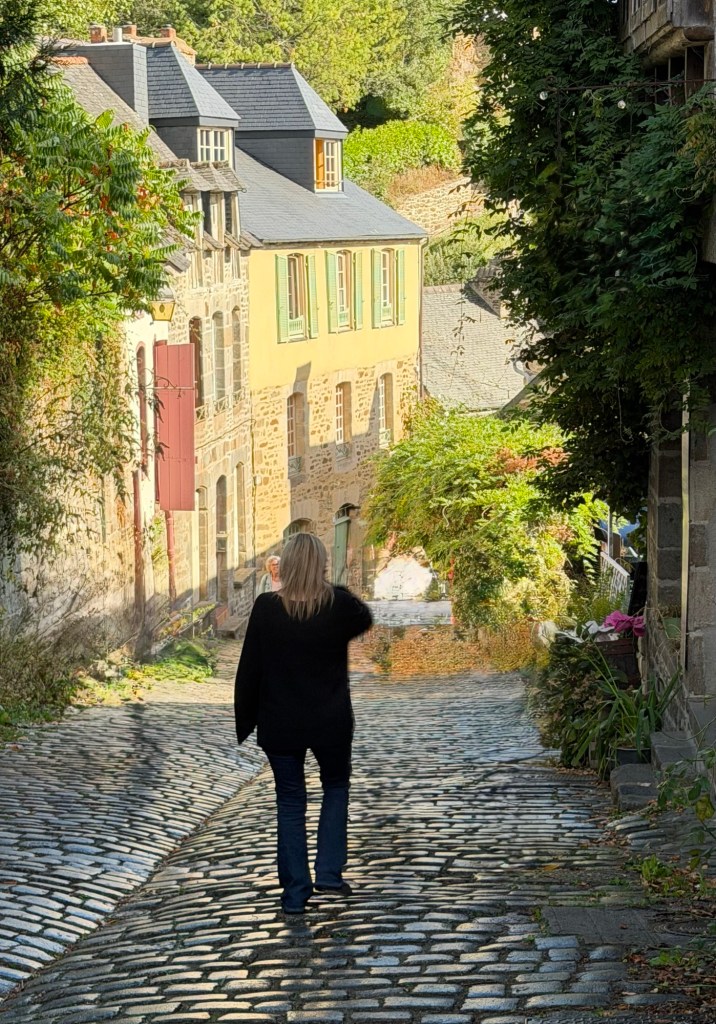
The route was steeper than the photos indicate – especially when the cobblestones were wet. After I took the photo of Eric, I noticed the figures up above on the house.
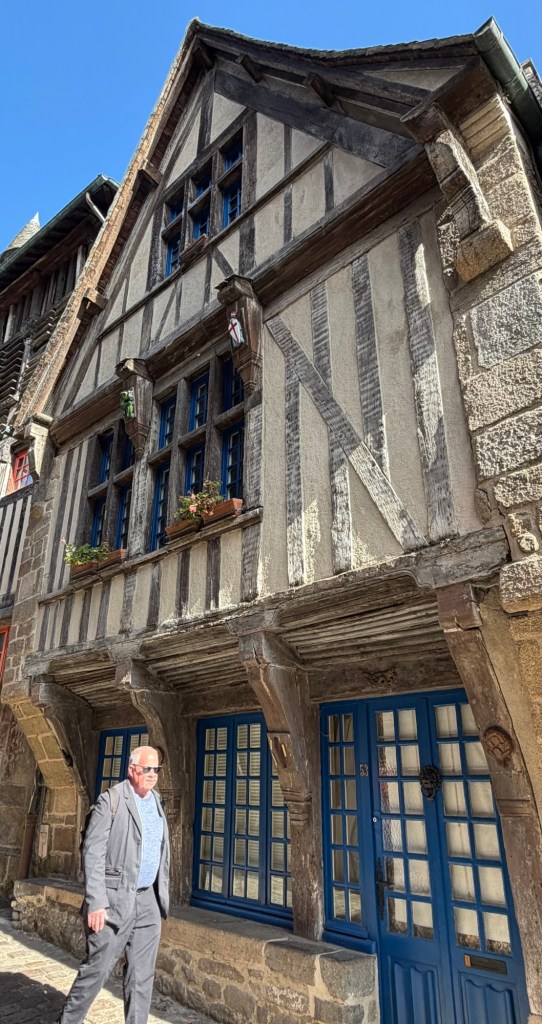
How cute! Most people don’t even see them.
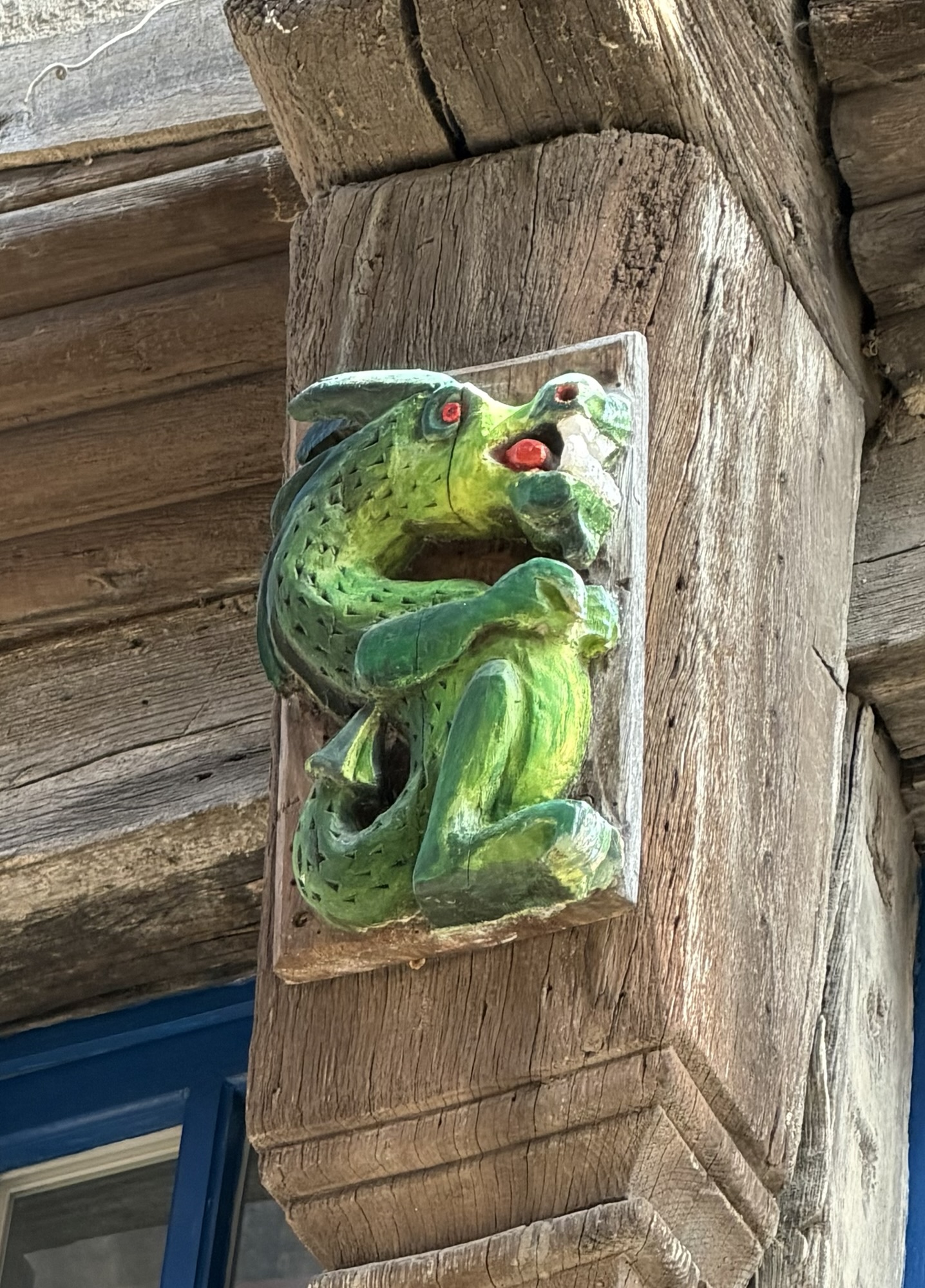
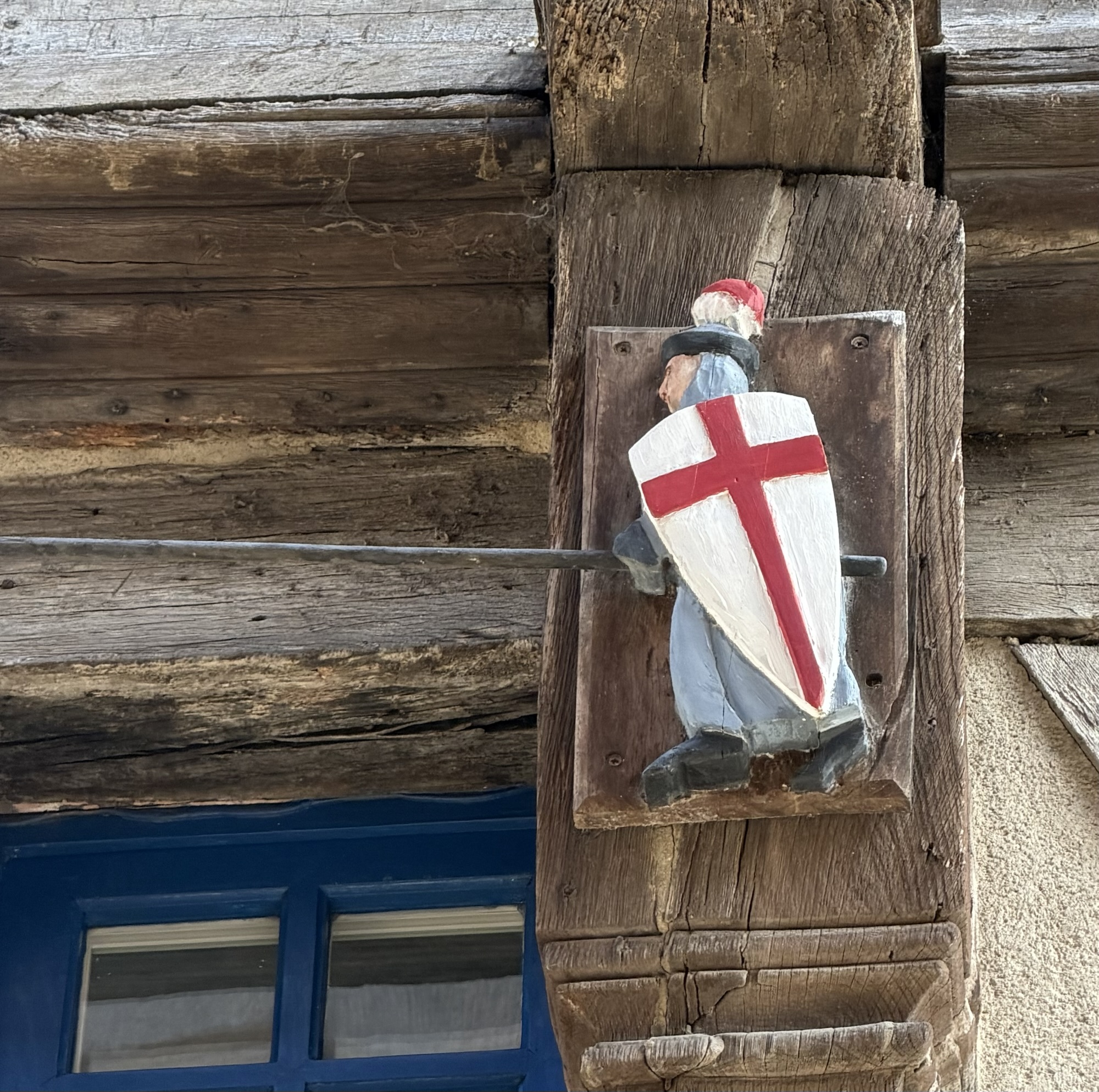
We made it to the bottom with no broken bones and discovered the port.
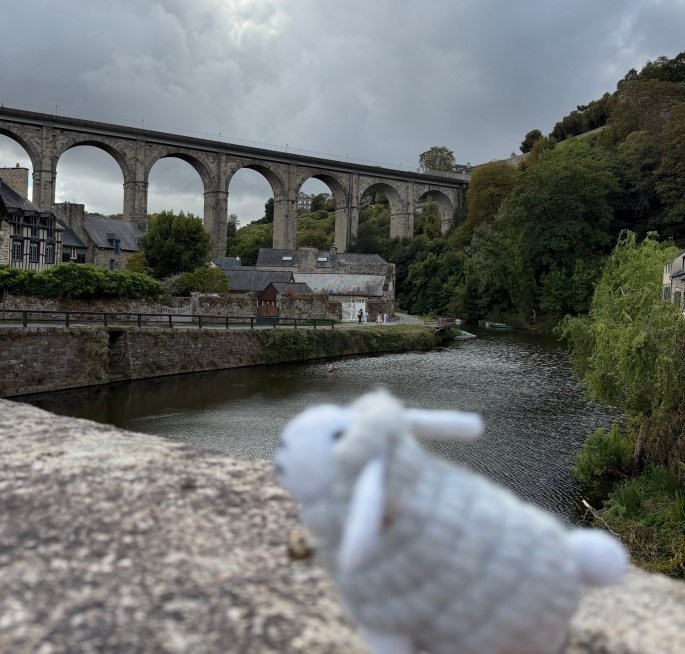
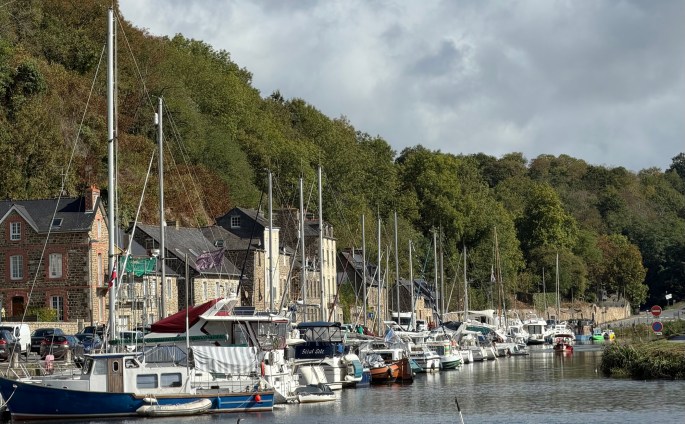
We needed some nourishment after that feat and found just the place.

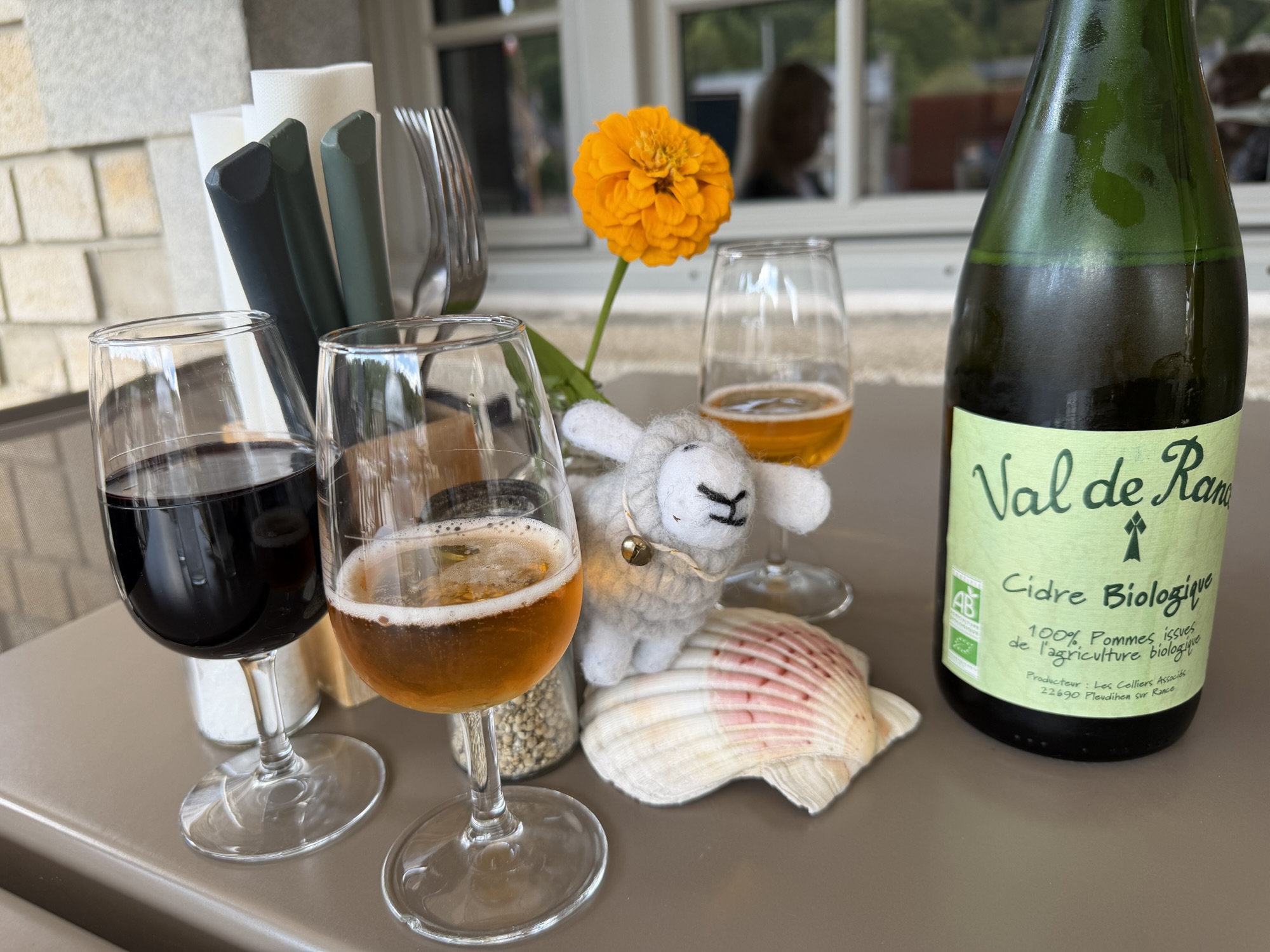
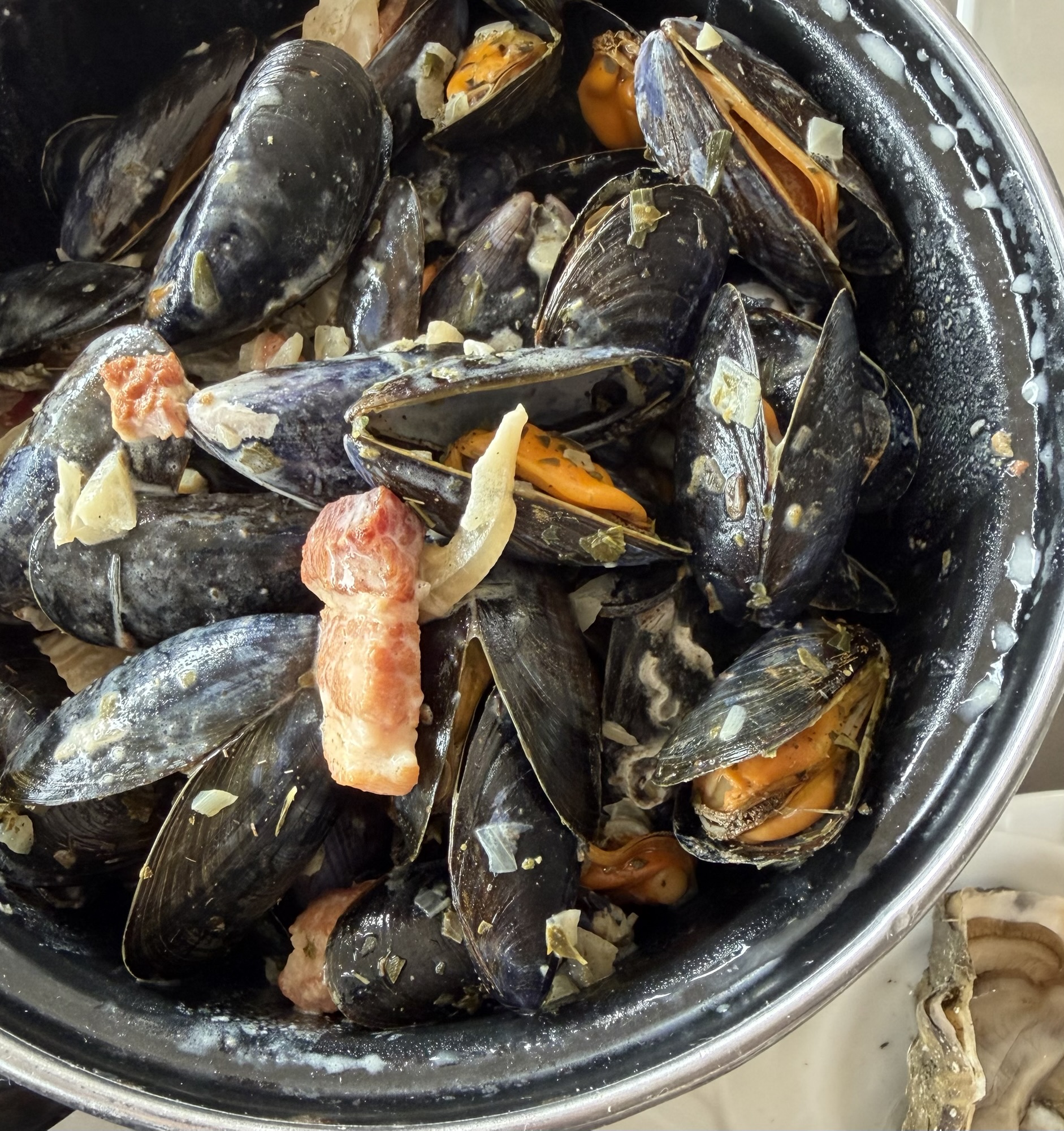
We continiue to share giving us a chance to order and taste a multitude of items.
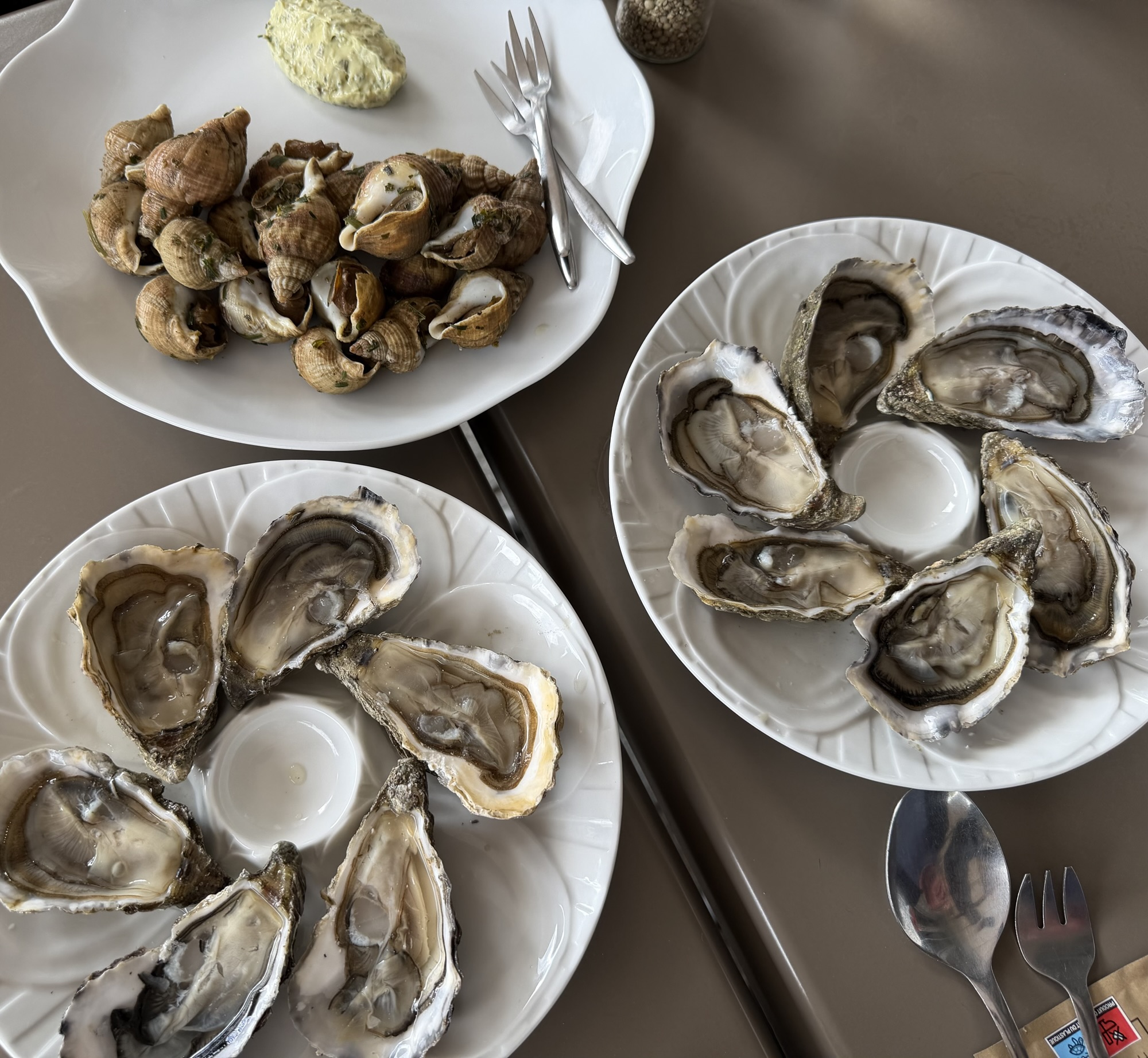
Clockwise starting upper left: Eggs Mayonnaise, mussels, frites and Bulots & oysters.


Now it was time to walk back up.
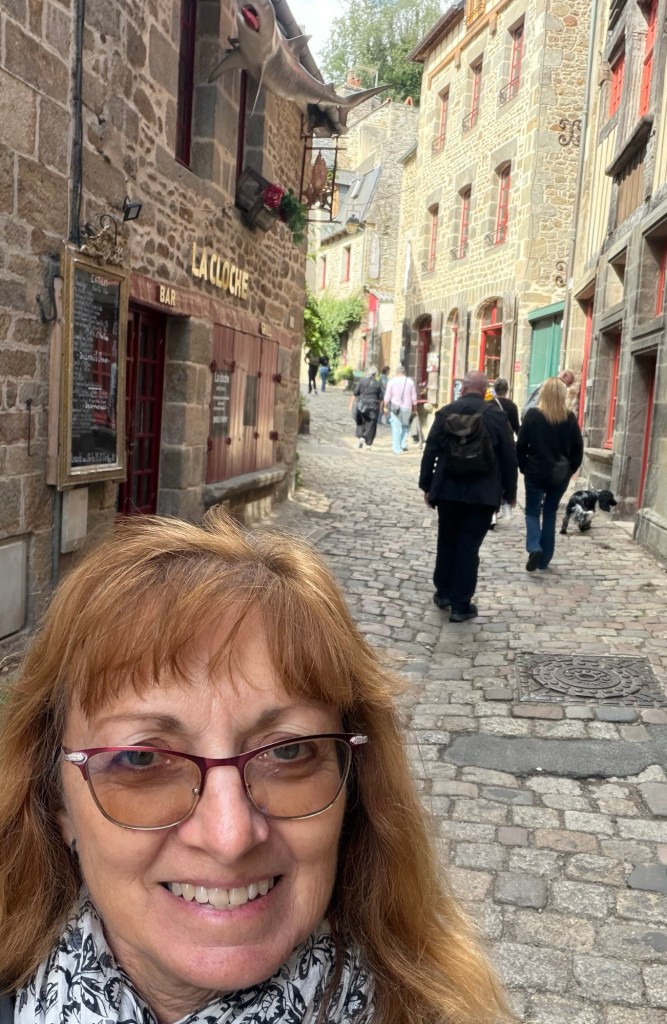
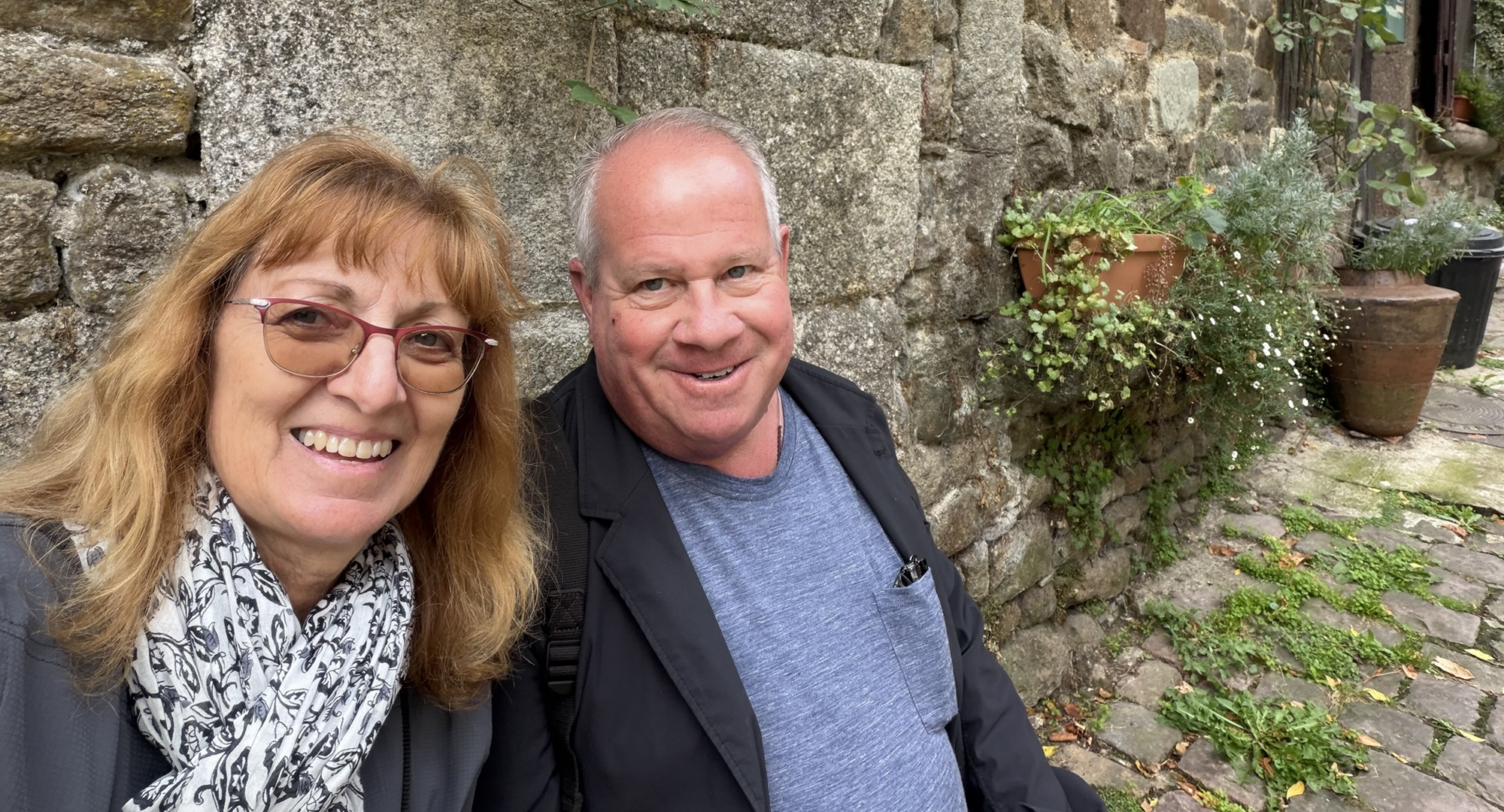
There may have been a few stops along the way………….with the (stone) benches provided.

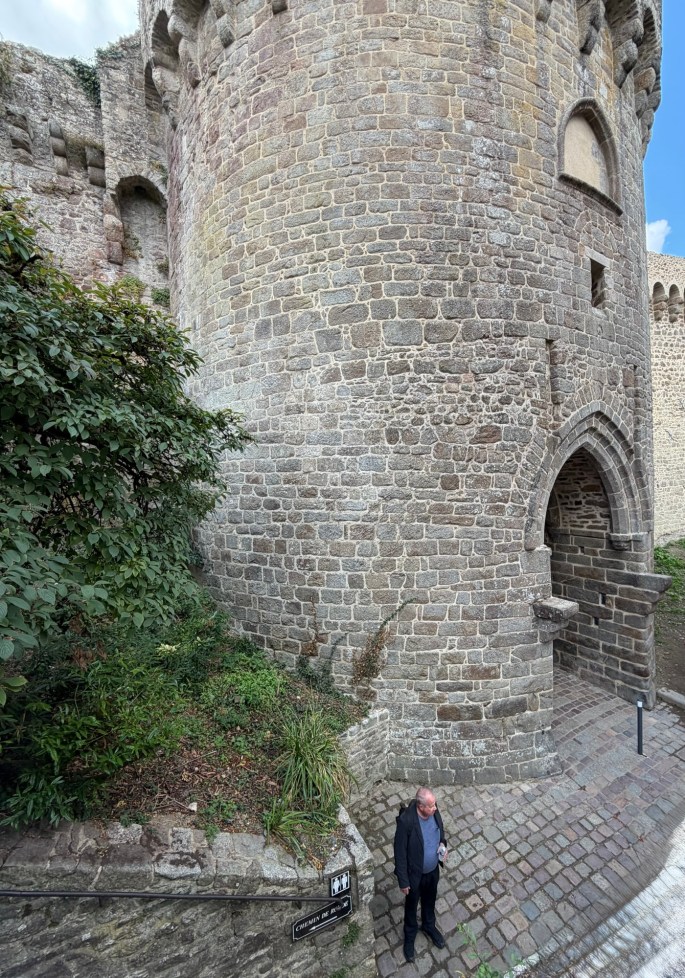
Halfway up we came to the Jerzual Gate. The current gatehouse was built in the first part of the 14th century. It is a single tower 15 m high, defending access to the town from the port and at one point was reinforced with a drawbridge.
We were up on another section of the ramparts, seeing a rooftop view of the city.
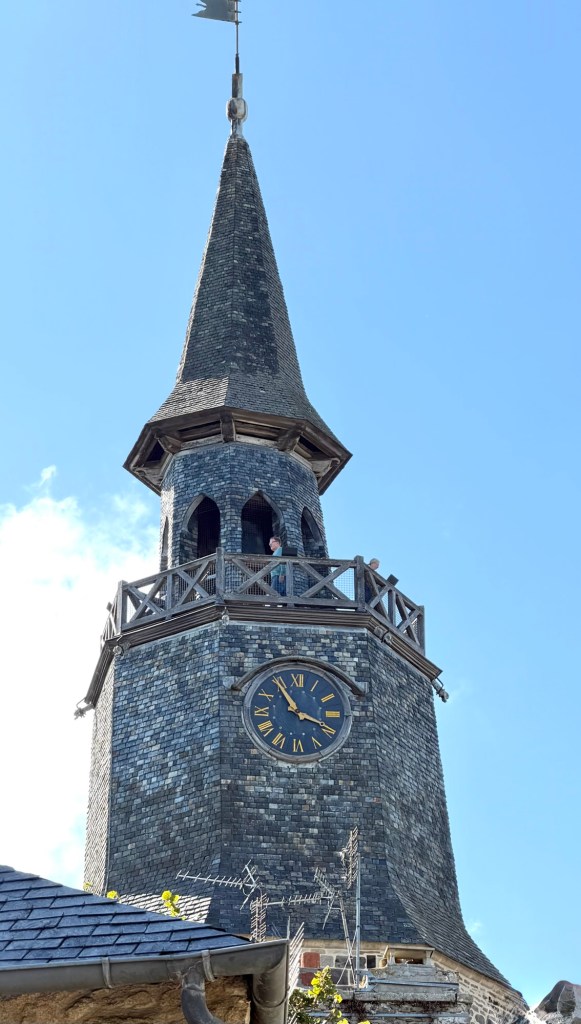
Not satisfied with walking the steep streetrs of Dinan, two of us walked up the stairs to their clock tower with a height of 43 meters.
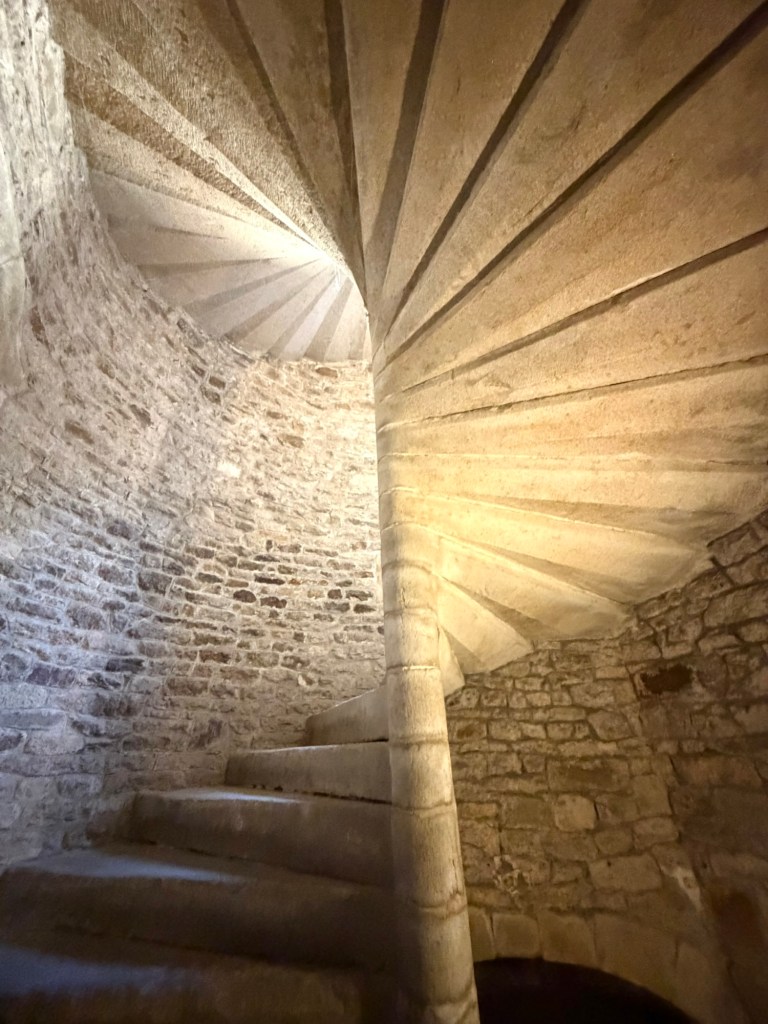
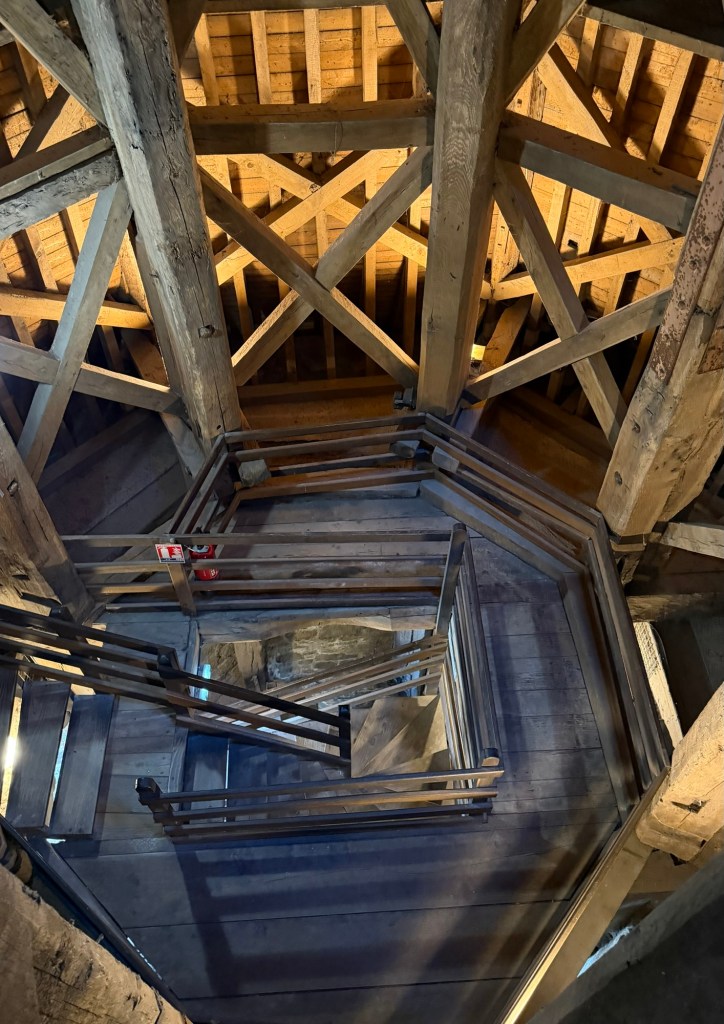
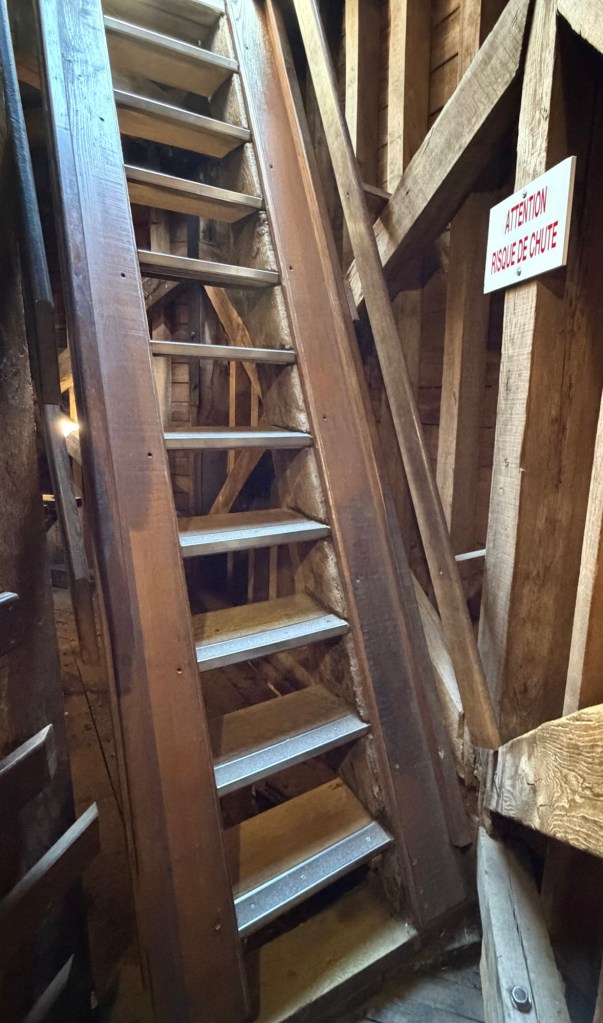
It was a process: circle stone steps, wooden landings & steps and then the final part – a steep ladder. Yikes! Let’s just say it was not fun coming down the ladder.
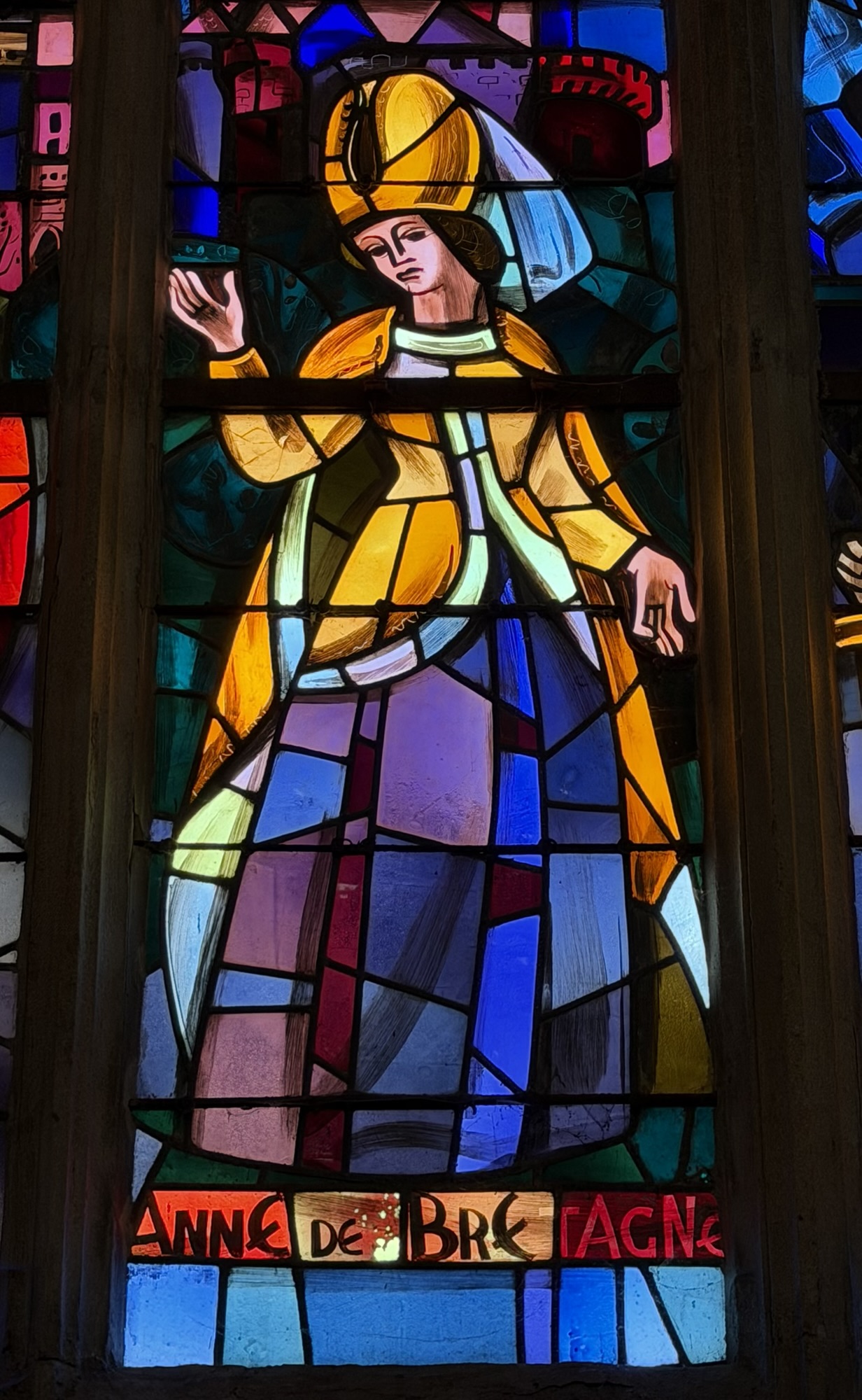
Nearby was the Basilica Saint Sauveur.
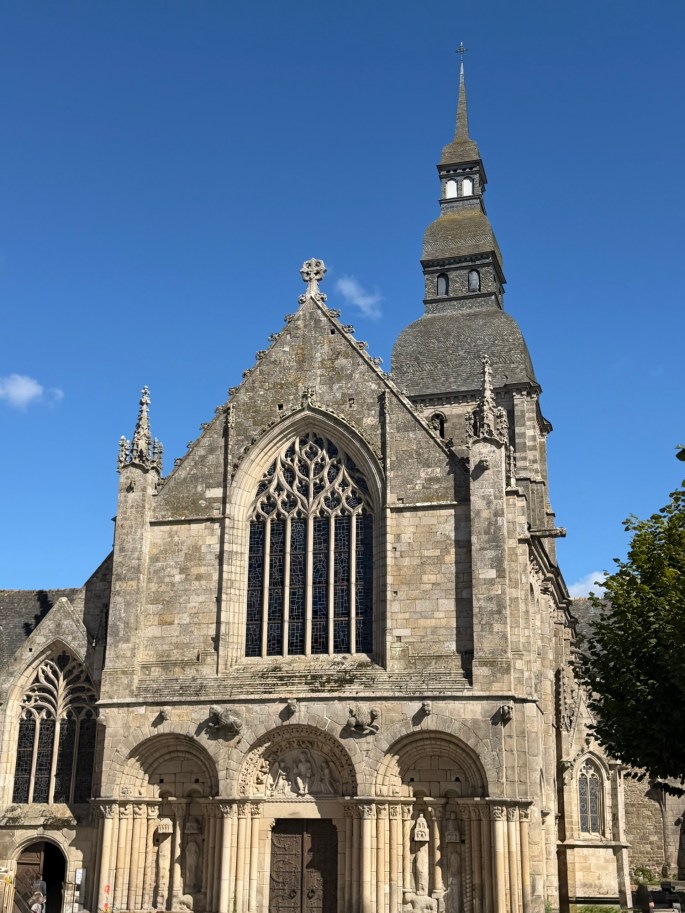
Legend has is that the lord of Dinan founded the priory in 1112 upon his return from the Holy Land. As the story goes, the knight was taken prisoner during the First Crusade and vowed to build a church in honor of St. Sauveur and the Holy Trinity if he ever returned home. No surviving documentation confirmed this tale, but it makes for a charming story.
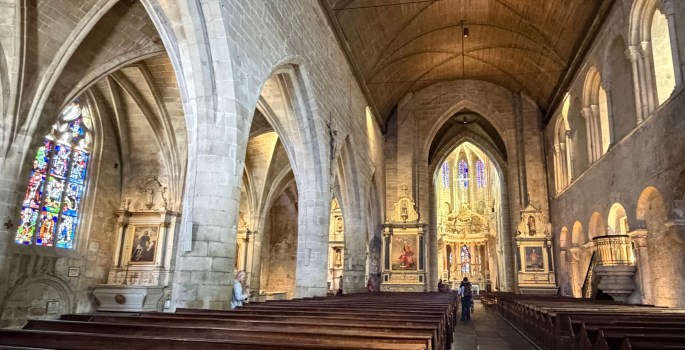
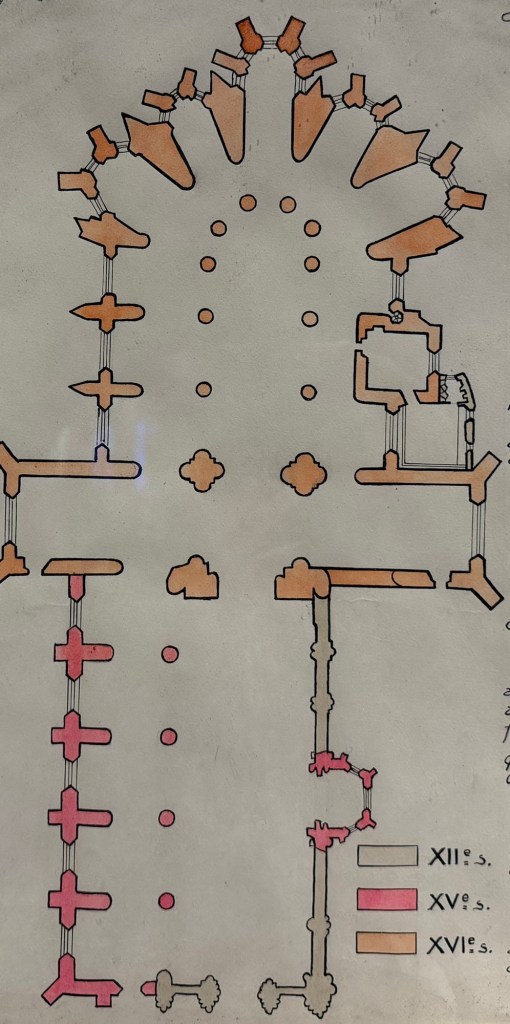
It may be hard to see in the photo above, but this church only had chapels on one side. which can be seen below in the floor plan.
I’ve been trying to get this post ready for days. I’m done now. Still more to come.

