
We were driving five+ hours and jumping off the ring road with Grundarfjordur being the night’s destination. This drive gave us the opportunity to see a variety of landscapes. This post was about transitions.
Let’s talk trees.
My previous post talked about how the land was deforested 1000+ years ago. When the Vikings arrived 25-40% of the land was forested. At the beginning of the 20th century .5% of Iceland was covered by trees. In 1907 the Icelandic Forestry Service was established. While trees had been planted it was in the 1950s the first large scale tree planting occurred, with mainly native birch. The hope is that 12% of Iceland will be forested by 2100.
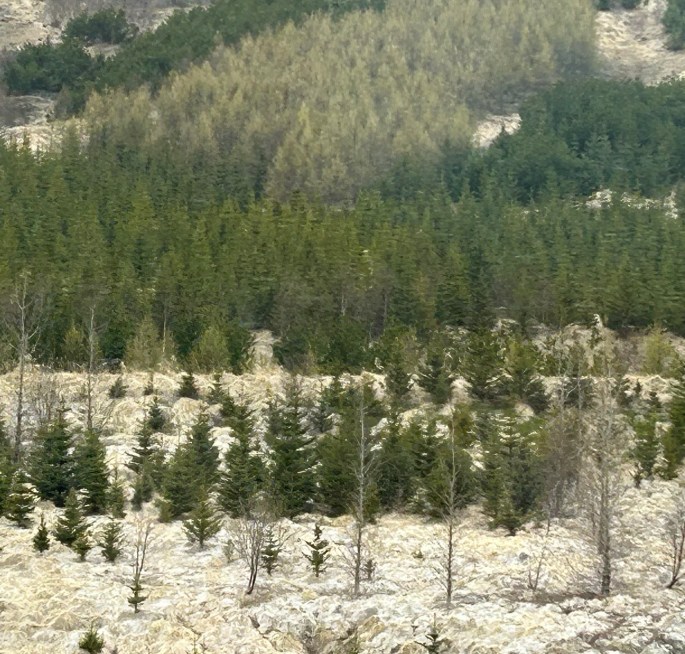
They were planting poplars, Englemore spruce and Alaskan willows. Plant growth has been slow due to low nitrogen in the soil and the cooler growing temperatures. Millions of seedlings are planted yearly.
Let’s talk farmland.
The North has extensive areas of green acres supporting crop and livestock farming. Today farming is practiced by 5% of the population with sheep and cattle being the two most farm raised.
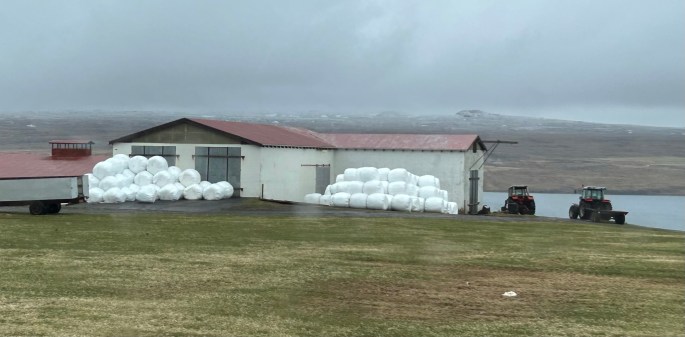
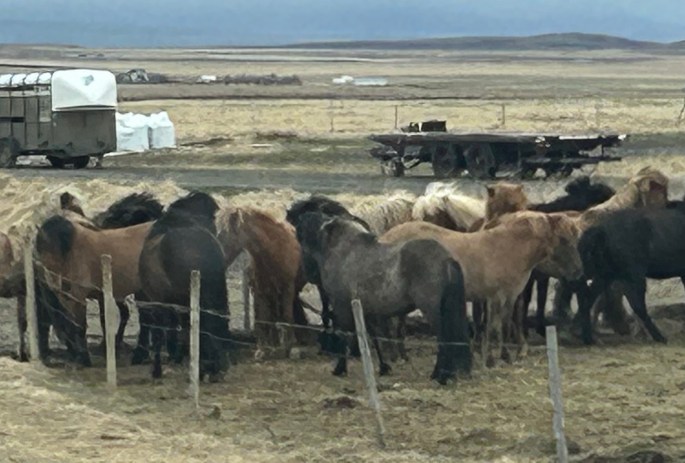
Economic actives include animal breeding, offering accommodations and activities for tourists. The second offering someone might question – accommodations. Really? Really. A number of properties and farmland had small individual tiny houses for guest to rent. Riding horses, especially along a beach is a popular activity. Icelandic horses are a pure breed and garner world-wide interest. Once a horse leaves Iceland, they are not allowed back for fear of spreading disease.
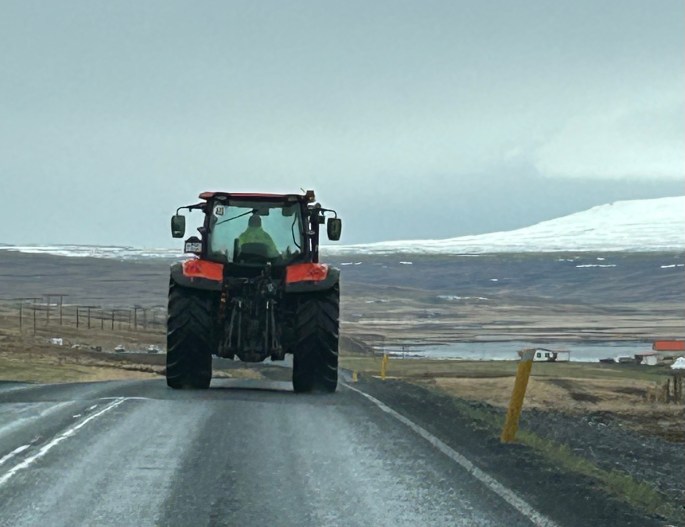
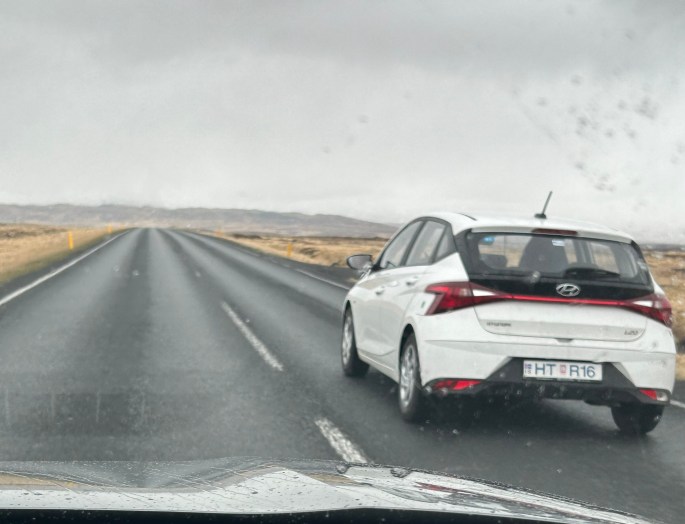
You’ve got to keep your eyes on the road. Never know what you may be following.
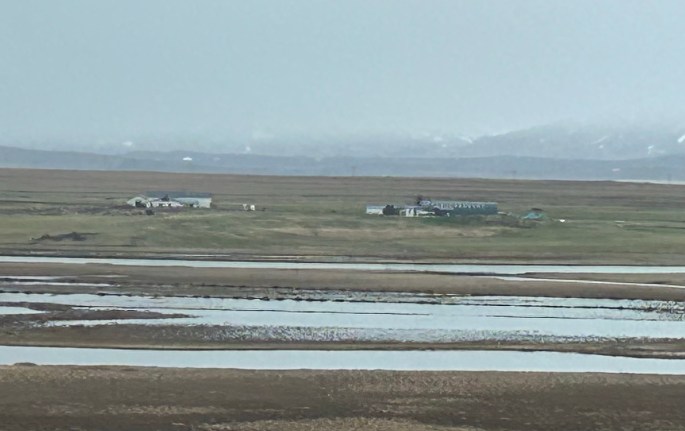
The production of meat, dairy and eggs is sufficient for the country’s needs. Meaning Iceland does not have to import these goods. Despite a seemingly uncultivable environment, Iceland grows over half of its own vegetable produce, all with 100% green renewable energy. Crops such as potatoes, rhubarb, turnips, radishes, carrots, cabbage, kale and cauliflower to name a few. Subtropical crops such as tomatoes, cucumbers, pepper and bananas (yes, bananas) are grown in greenhouses.
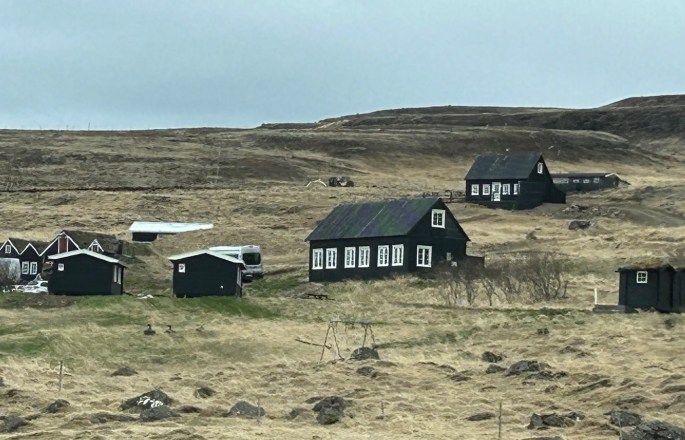
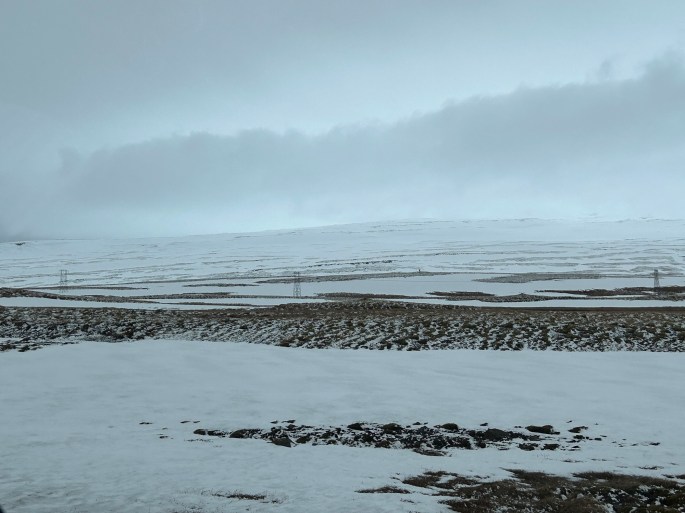
Let’s talk stark beauty.
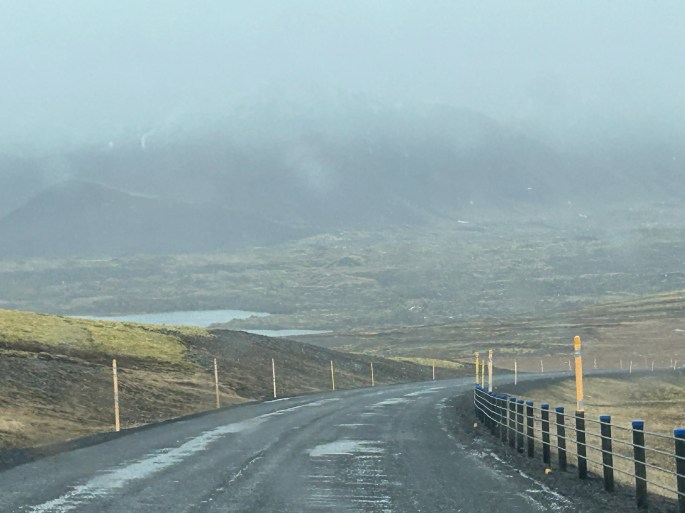
While not ‘pretty’ in a traditional sense, the landscape can change in a blink of an eye.
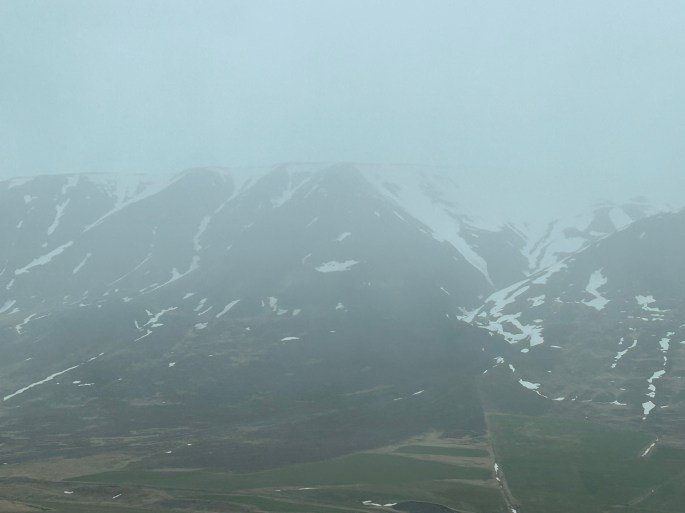
Eric was a little worried about the weather, but up to now there were no issues.
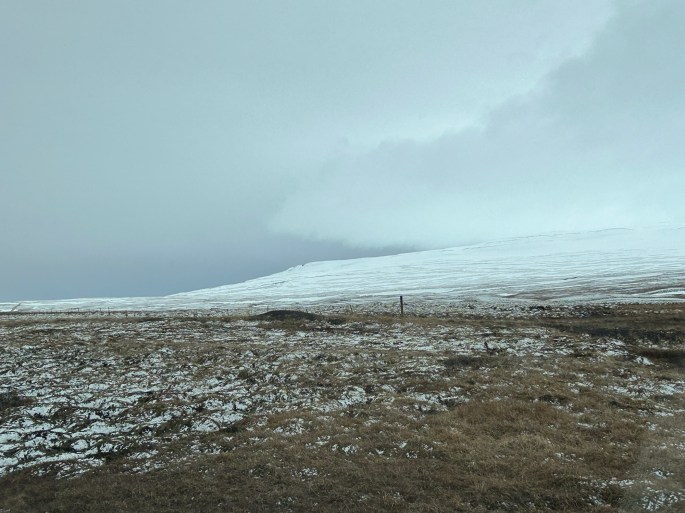
Occasionally you would come upon a car – and pass them.
We were driving between ranges, meandering along route 1. A few guidebooks called this boring and a few suggested driving this first and save the ‘best’ (south Iceland) until last. I like our route and direction.
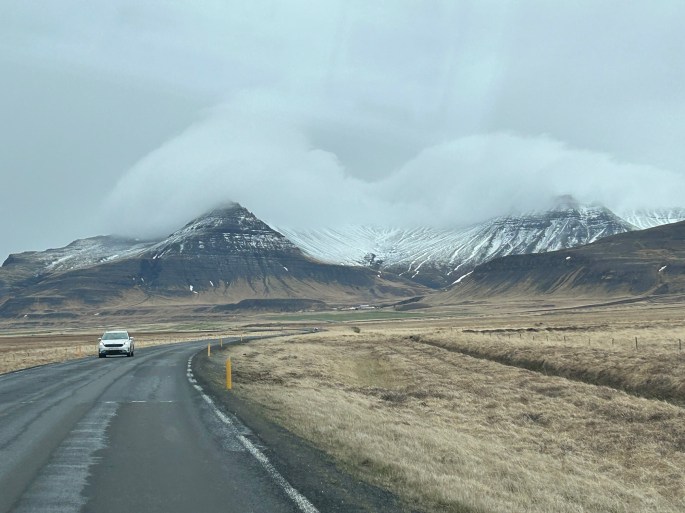
The weather can change quickly.
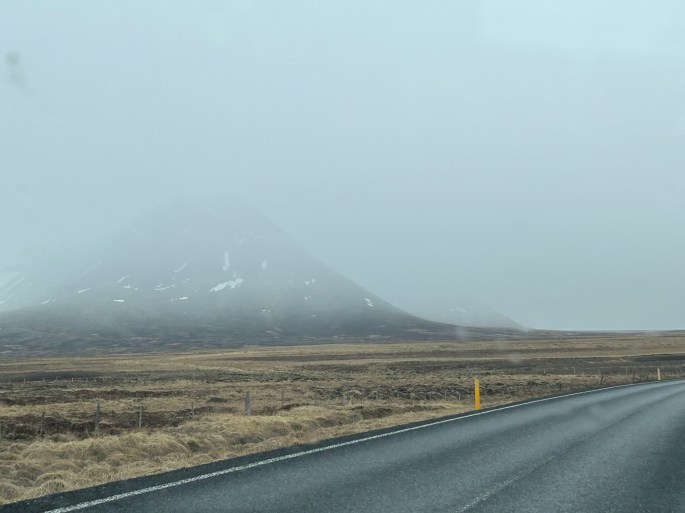
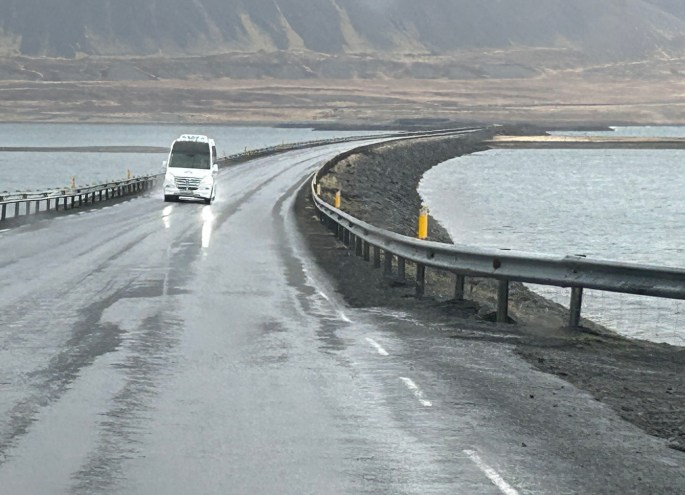
When we turned off the ring road, we ran into rain and WIND. BTW – your insurance doesn’t cover car damage caused by blowing sand nor door damage if you lose control of the door when opening it. We kept a tight handle on the doors. The other we couldn’t control. Yes, it is that windy. And rainy. And windy with more rain.
No lie, this vehicle HAD to be having a tricky drive. I would not want to be in a vehicle this tall.
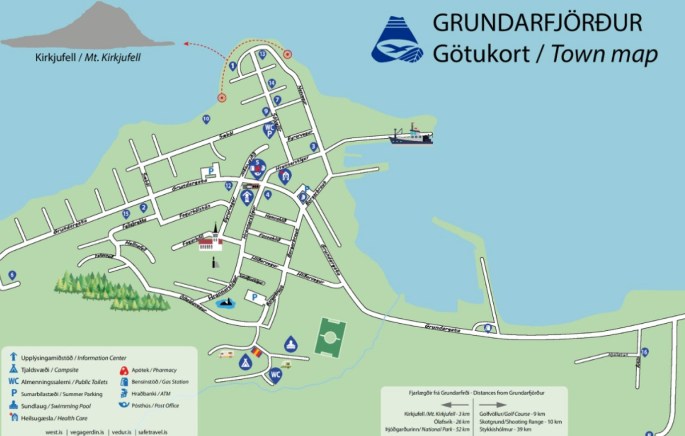
It was still gray, raining and extremely windy as we drove into our destination. Small town, majestic views, but I will save that for the next post. There was a reason we strayed off the ring road for one of the last legs of our Icelandic journey.
 Darden Travels