France 2025 – post 3

Strasbourg Cathedral commands attention. Let’s start with a bit of history…….

A Roman settlement existed on this site since about 12 BC. It became a major trading center for wine, grain, and later for textiles and luxury products. The first cathedral was built on the present site about 550–575. The current structure was built between 1180 and 1439.
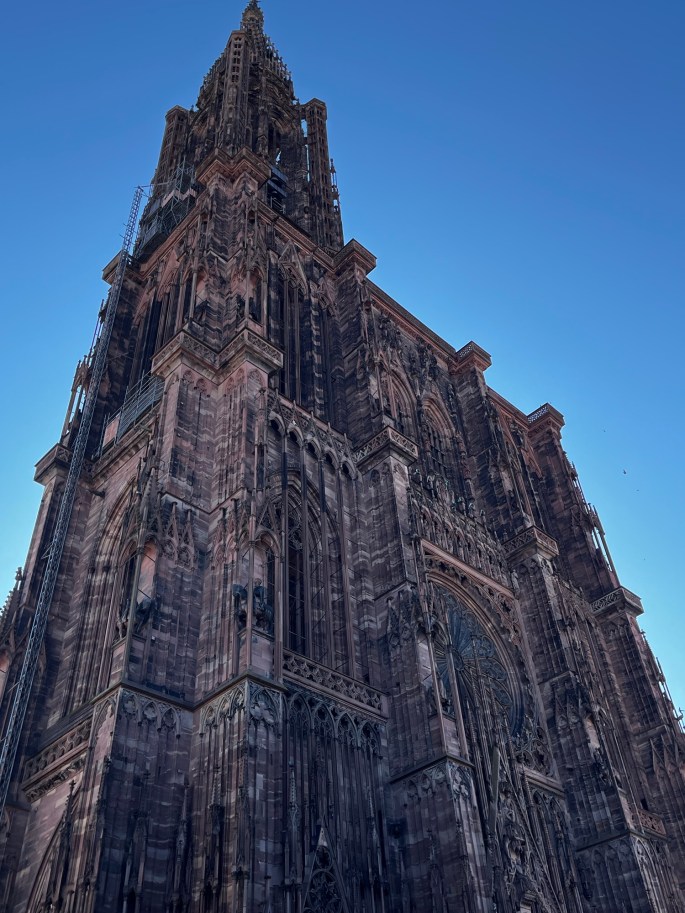
The original design had two spires, but the second was never built.

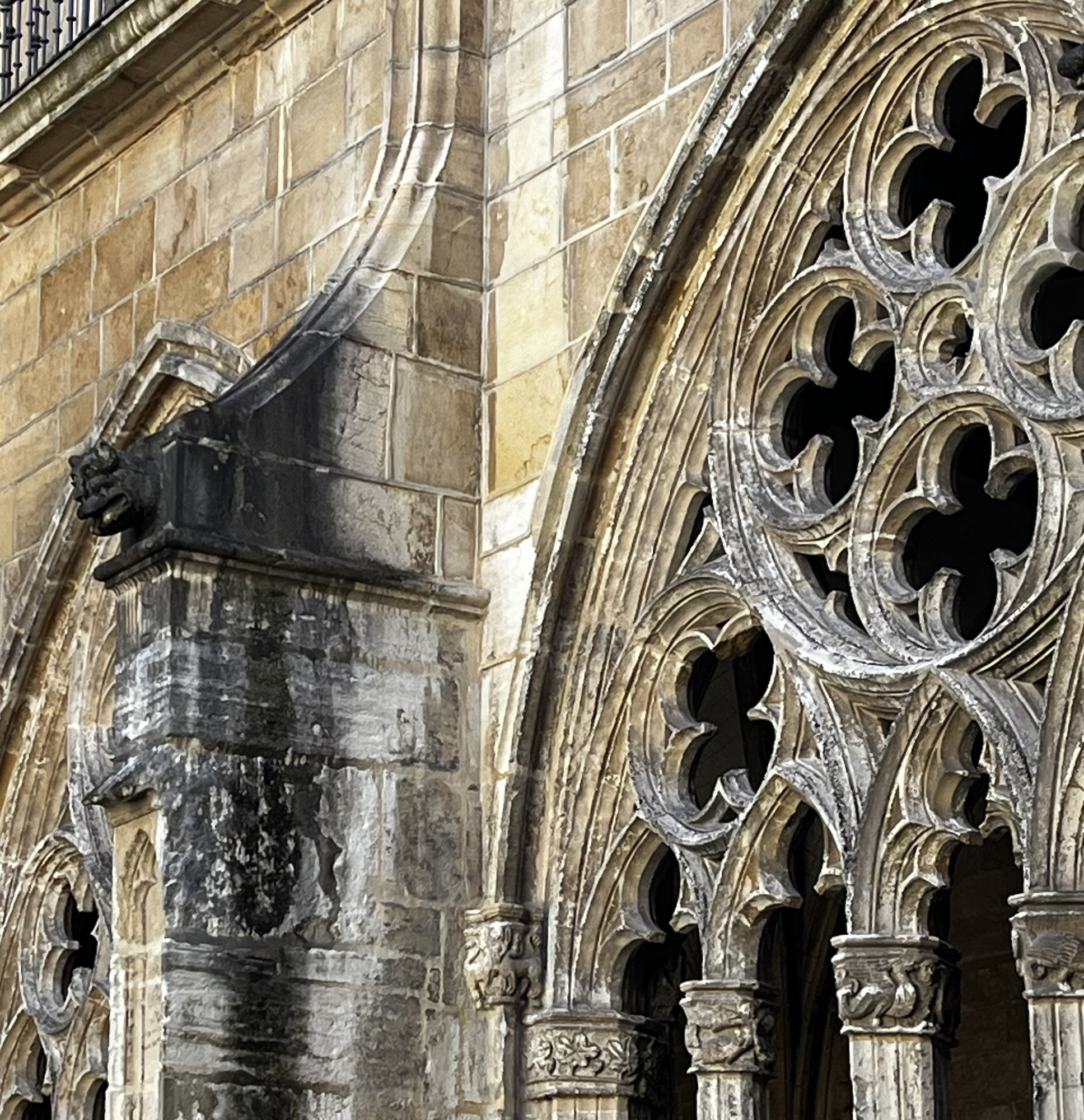
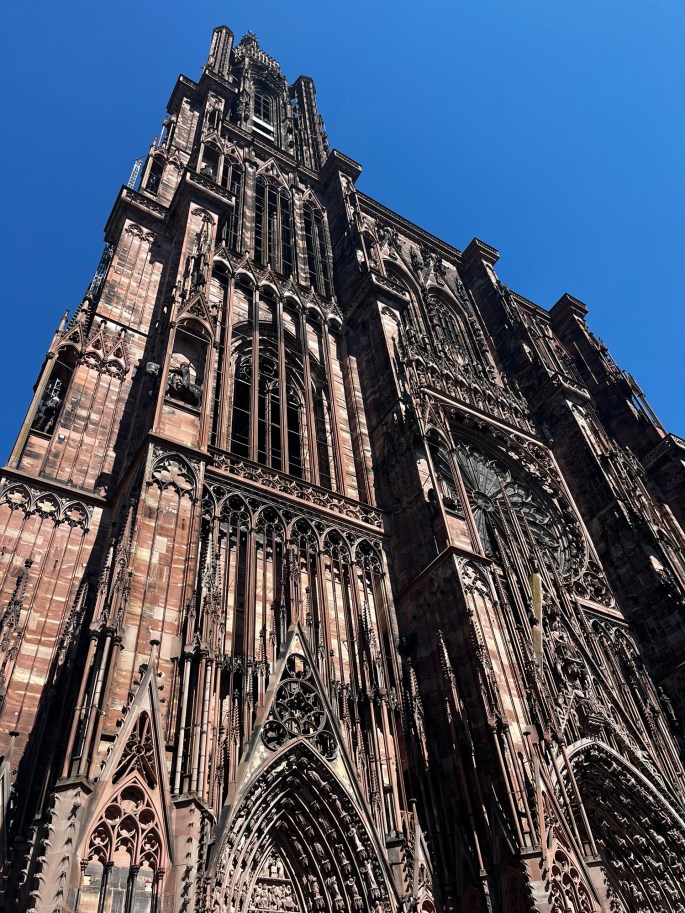
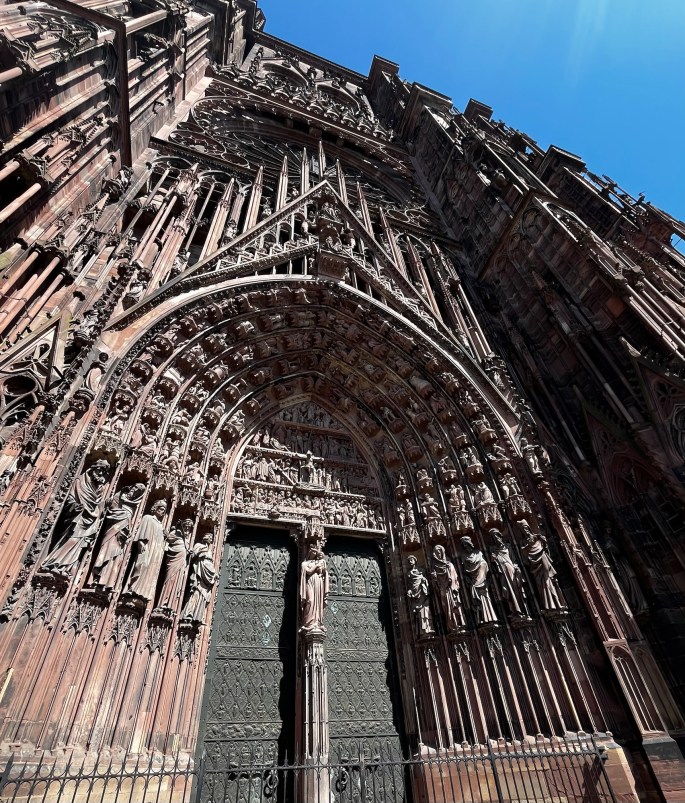
It is a blend of different styles of mediaeval architecture. Building started with the late Romanesque choir and transept, superseded by French and German Gothic from the 13th century onwards. The western front, with its bold design and stone lacework, is an outstanding example of the skills of the Cathedral masons.

The tower showcases the excellence of mediaeval engineering and remained the highest building in Europe until the 19th century standing at 466′. Today it is the 6th tallest church in the world and the tallest structure built entirely in the Middle Ages.
Wooden roof beams were prone to fire and were part of the construction. The church was repaired after each fire but at times work was interrupted by wars and political causes.
As with most cathedrals, stories were told a variety of ways. The stained glass windows were a key part of the storytelling. The various colors of glass used added to the grandeur seen inside the building. During WWII the stained glass from this cathedral was removed in 74 cases and stored in a German salt mine.

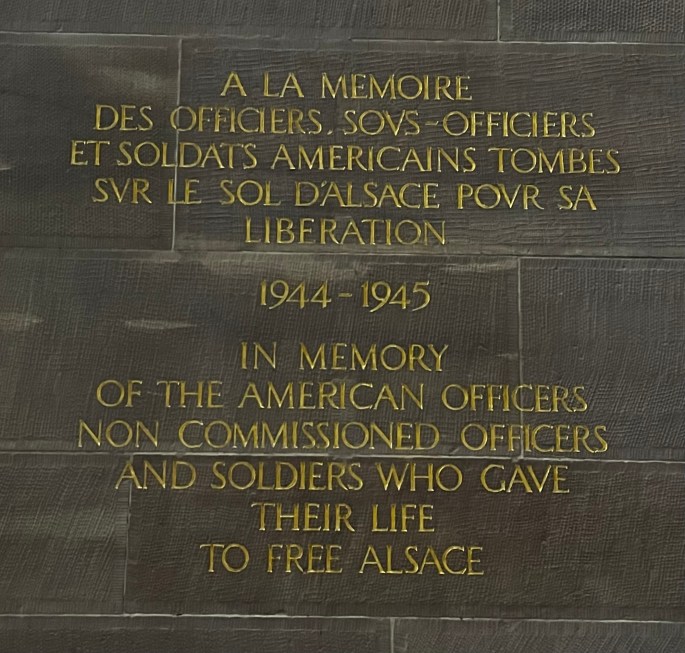
After the war the cases of stained glass were returned by the U.S. military. BTW – the cathedral was hit by British and American bombs in 1944 with repairs completed in the early 1990s.
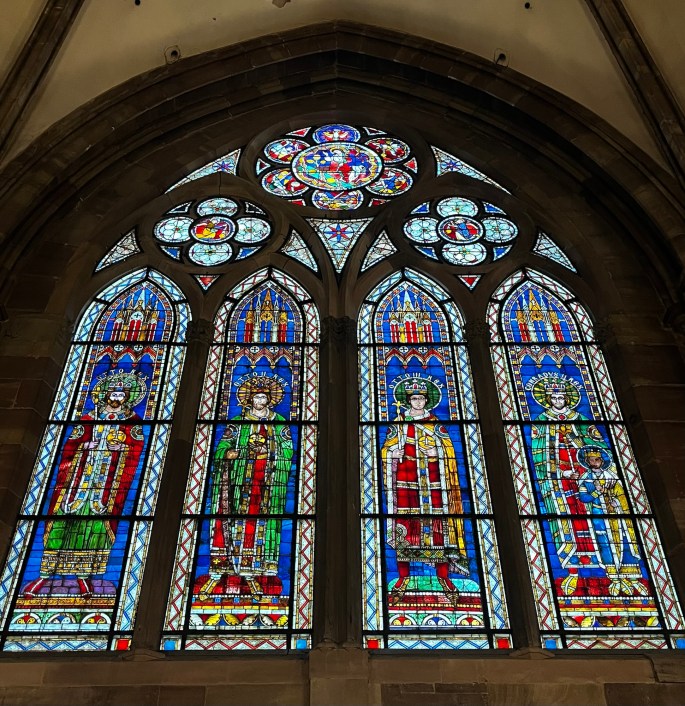
The five lower bays on the north side contain some of the oldest stained glass of the cathedral, installed in the old Romanesque cathedral in about 1180. The windows are devoted to nine Emperors of the Holy Roman Empire. Each holds a scepter in his right hand and an orb in the left hand, symbols of their responsibility as both sovereigns and religious figures.  In the 13th century some rebuilding occurred and the windows were reinstalled in random locations. In 1877 an architect placed the windows back in their original arrangement.
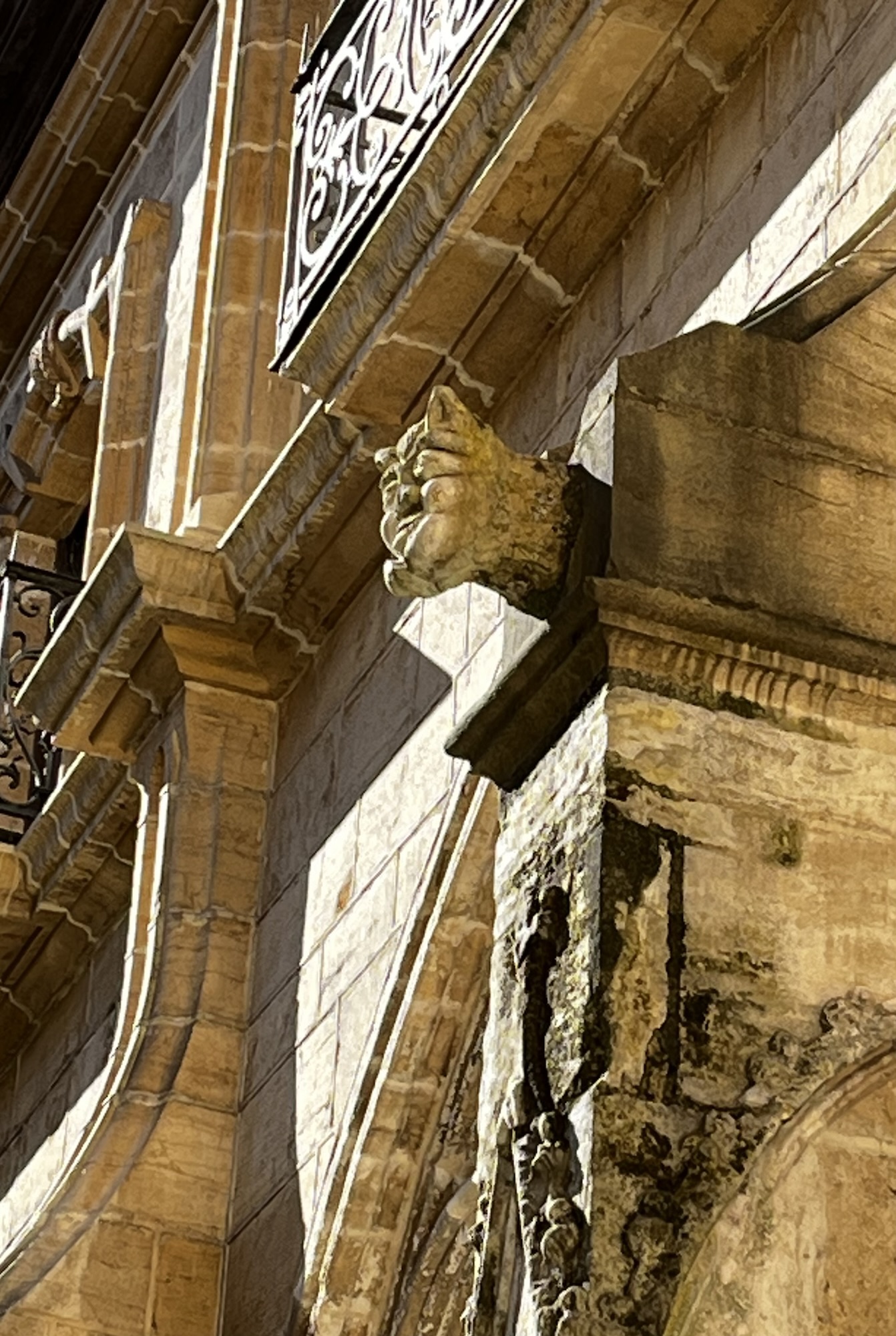
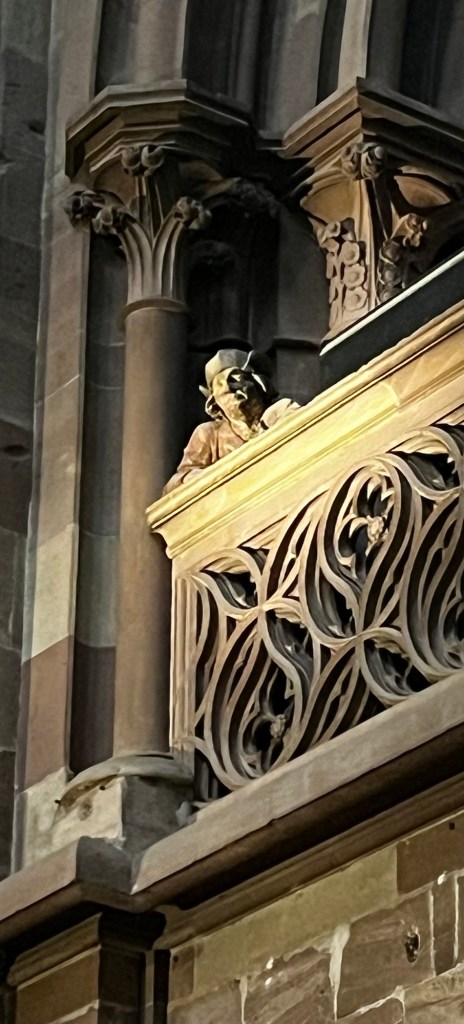
I couldn’t resist this shot. This ‘individual’ was looking down on those inside the church – watching them.
I noticed a few tourists looking at the railing to a pulpit. There was a famed preacher with the cathedral who died 1510. A sculpture of his dog was placed on the steps of the pulpit where he once preached, mourning the loss of his master.  

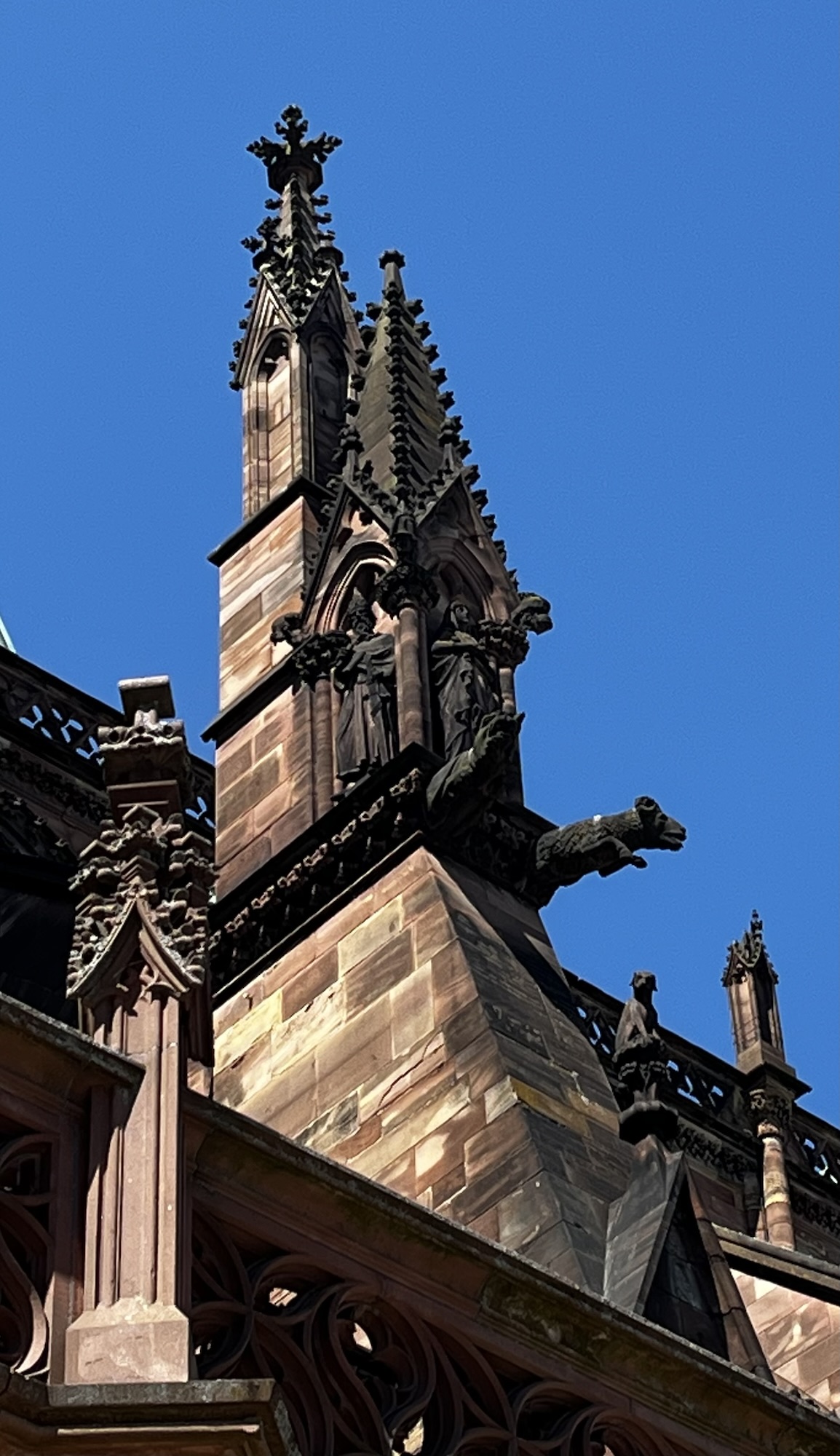
One note l discovered while researching talked about the sculptures for this cathedral. The Strasbourg sculptures clearly show emotions – prophets look severe, the Virgins serene and the Virtues look noble.
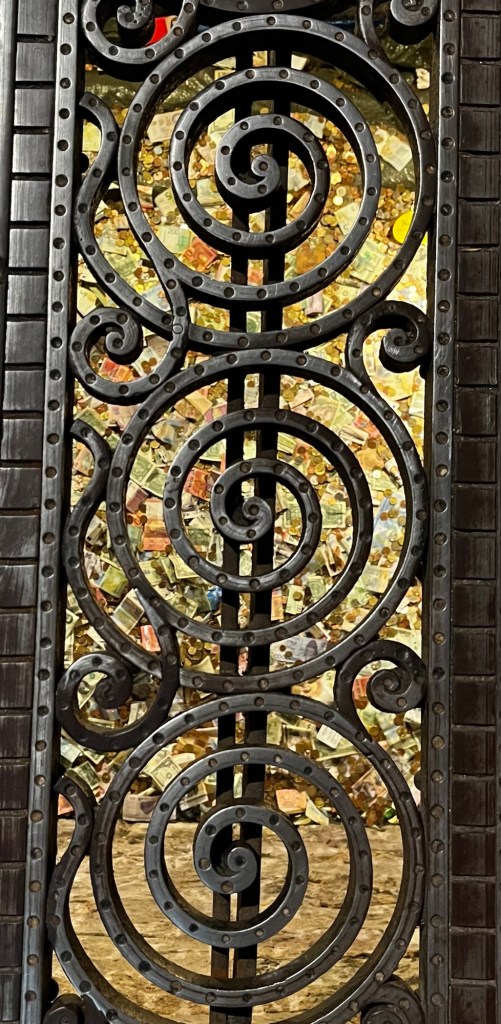
There was grating on the floor and I saw someone dropping something. Upon closer inspection, individuals were dropping coins or bills through the grate. My photo only shows a small portion – probably a 10th of the full size.
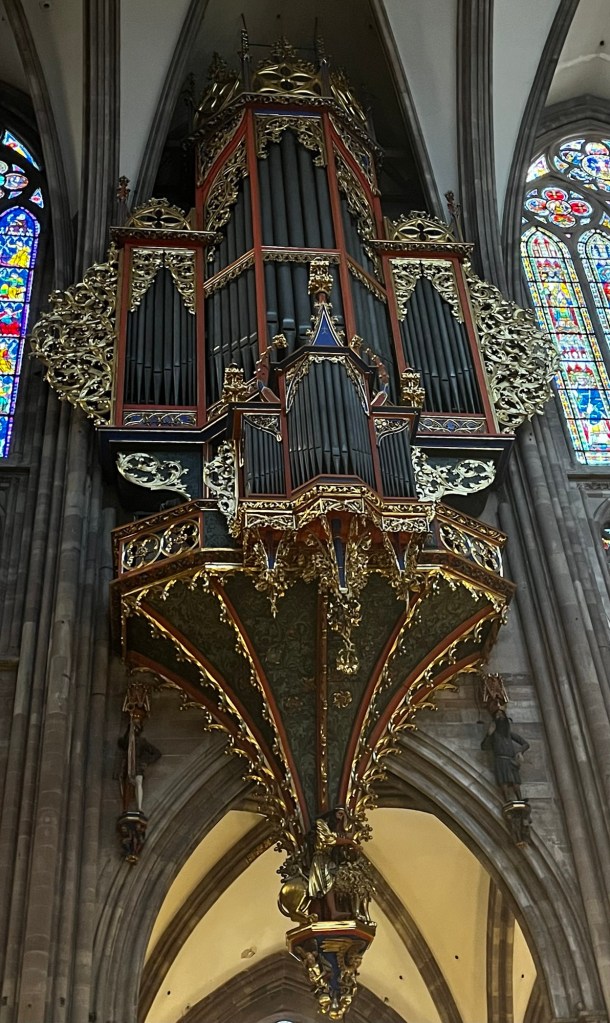
Existence of the organ was recorded beginning in 1260. It was hoisted to its current position in 1327. While very difficult to see in my photo, the bottom of the organ contains a figure of Samson opening the jaws of a lion.  The figure has moving parts. I could find nothing else about ‘how’ or ‘when’ said parts moved. A mystery to me.
The current astronomical clock is one of the most famous features of the cathedral and the third one.  The first clock was installed 1352. When it stopped working the entire structure was dismantled in 1572. A second clock was completed in 1574 and was remarkable both for its complexity as an astronomical device and for the range and richness of its decorations and accessories. This second clock stopped working around 1788 and stood still until 1838.
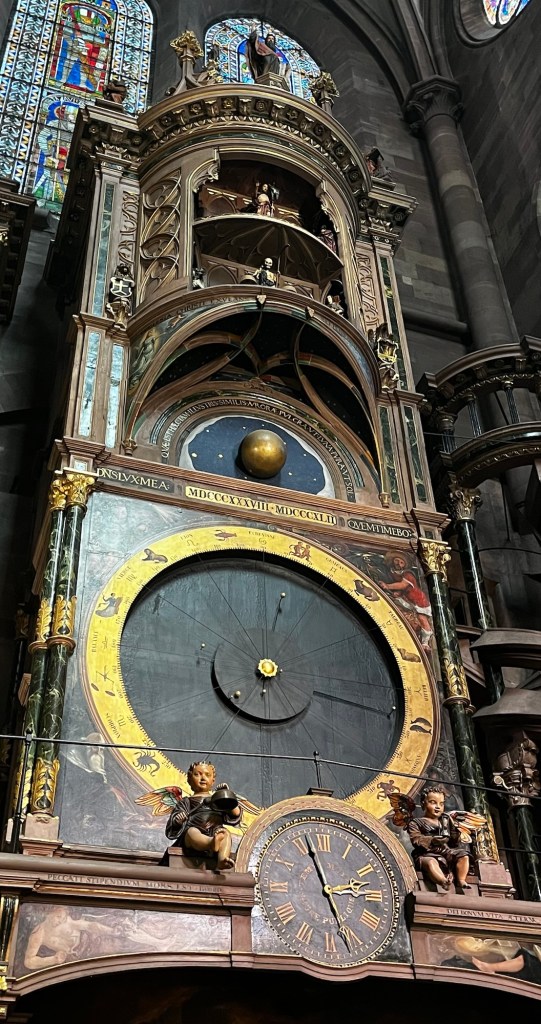
The current clock is approximately 59′ tall and shows much more than the official time; it also indicates solar time, the day of the week (each represented by a god of mythology), the month, the year, the sign of the zodiac, the phase of the moon and the position of several planets.  A crowd was gathered and seemed to be waiting for ‘something’ to happen. It did. At the very top of my video, you can see the moving parts.

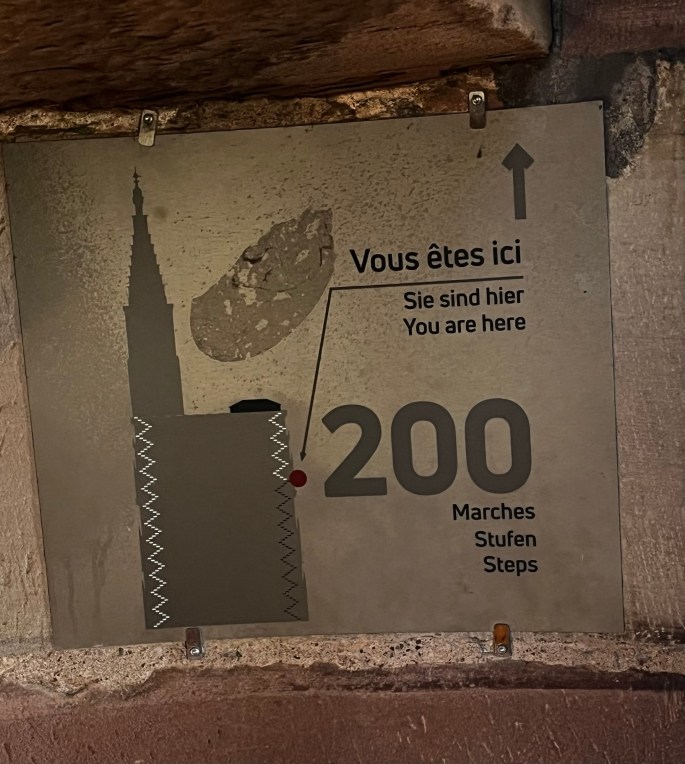
330 – what does that mean? That’s the number of steps until you reach the observation desk. Naturally, we (some) go that distance. Here we go.
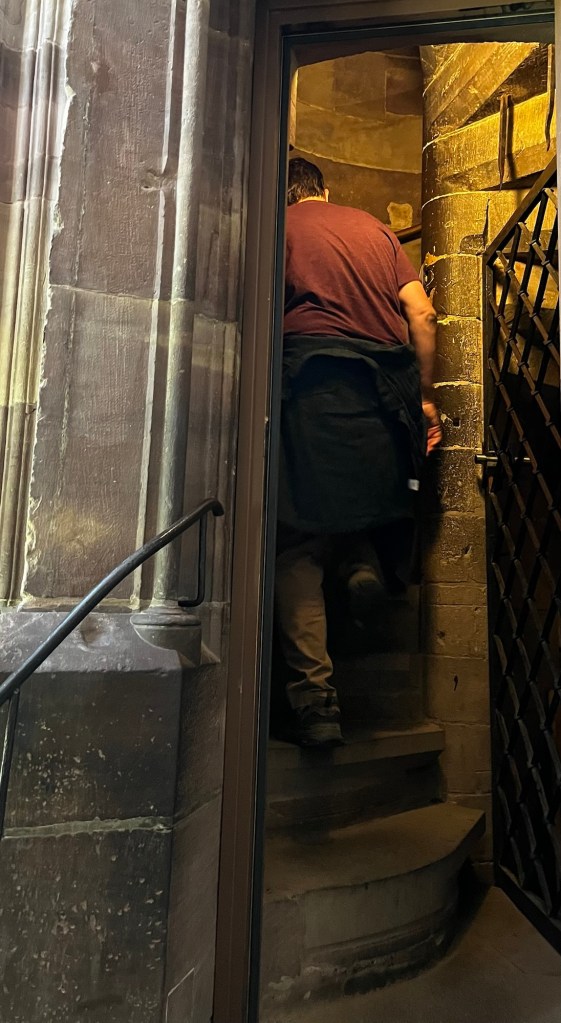
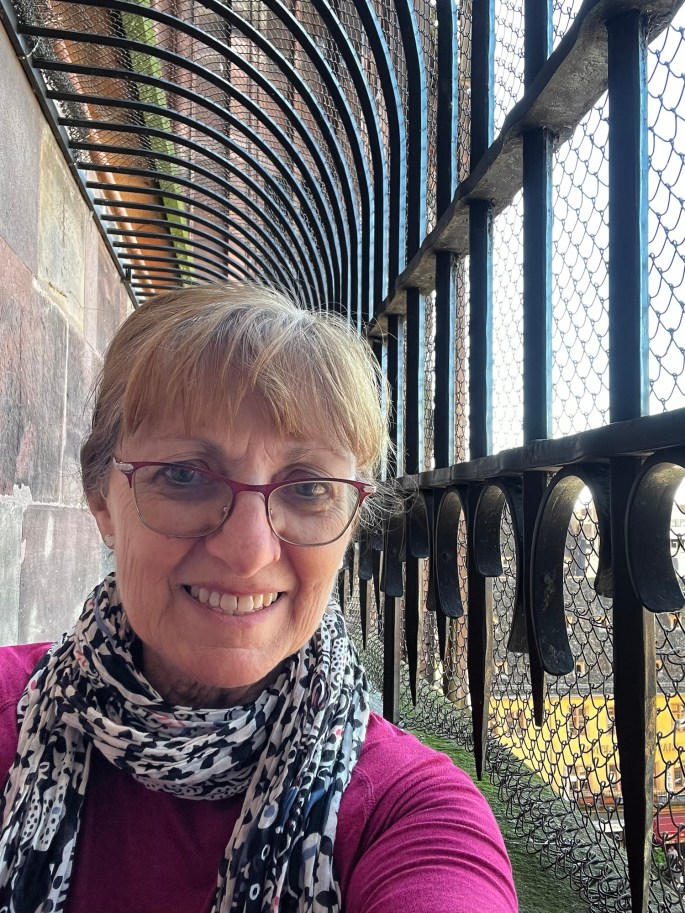
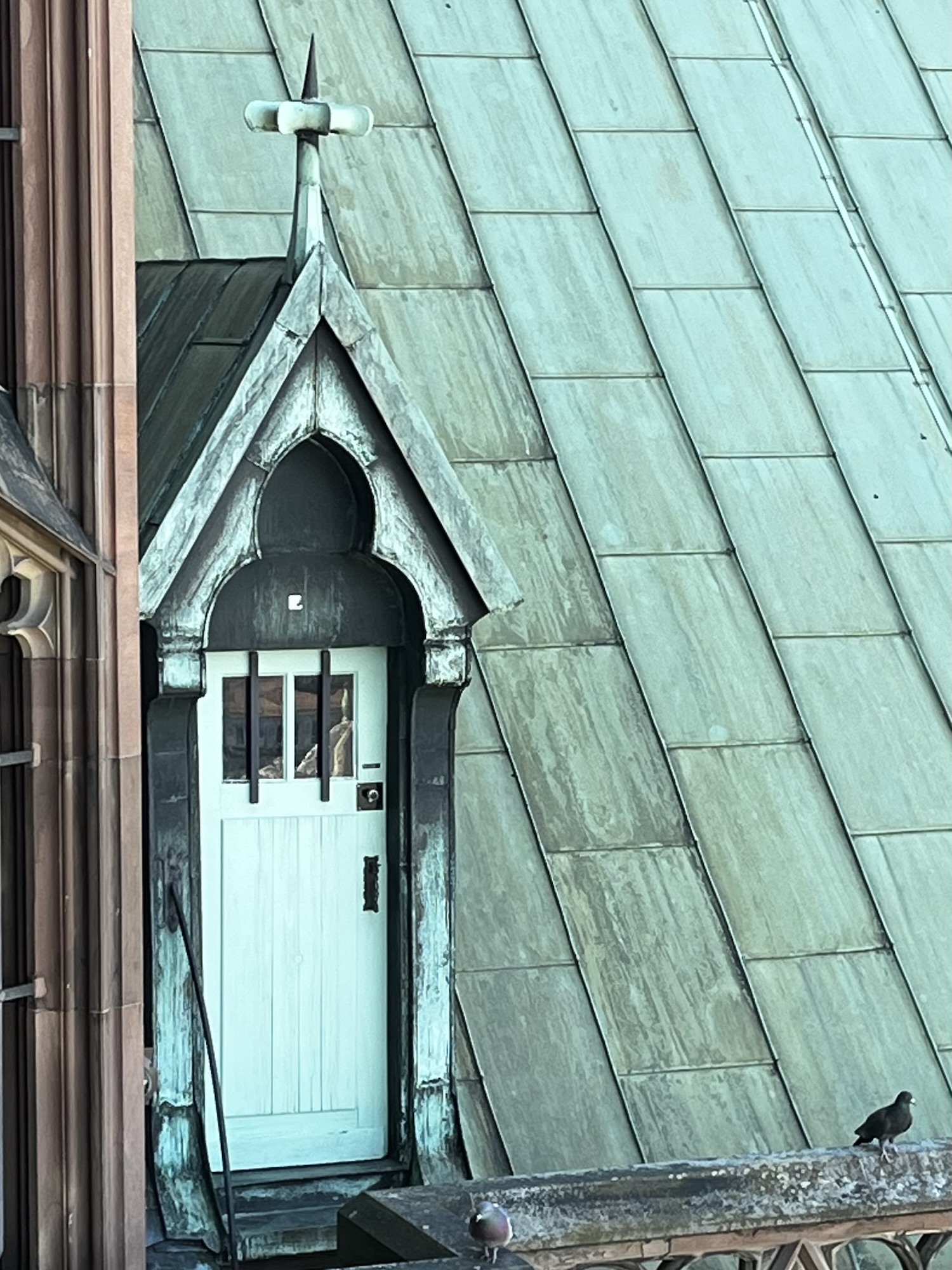
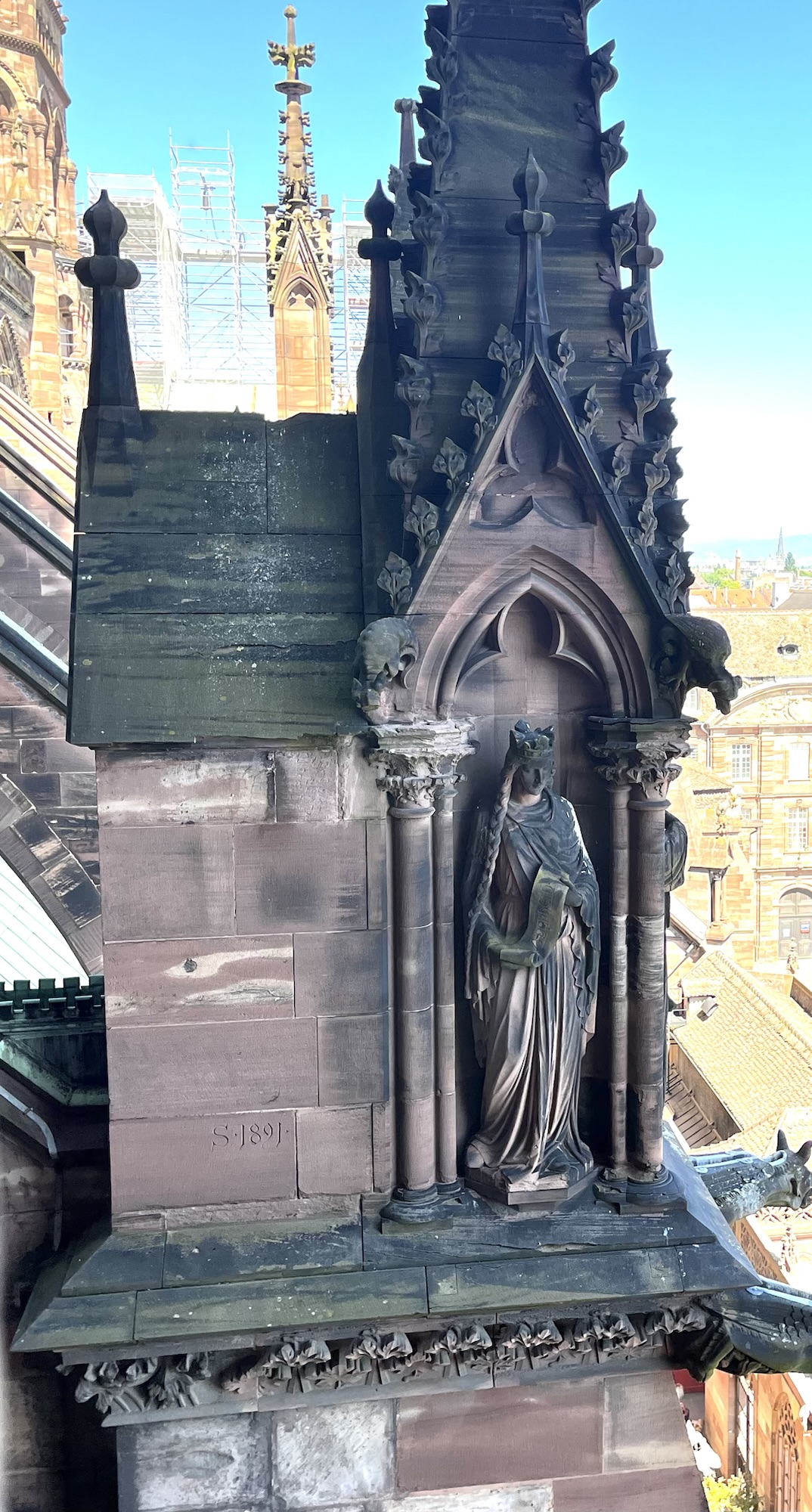
Got some interesting photos along the way.
Wasn’t sure if this sign was good news or not, ha!
Made it!!!! Yep, only three of us.
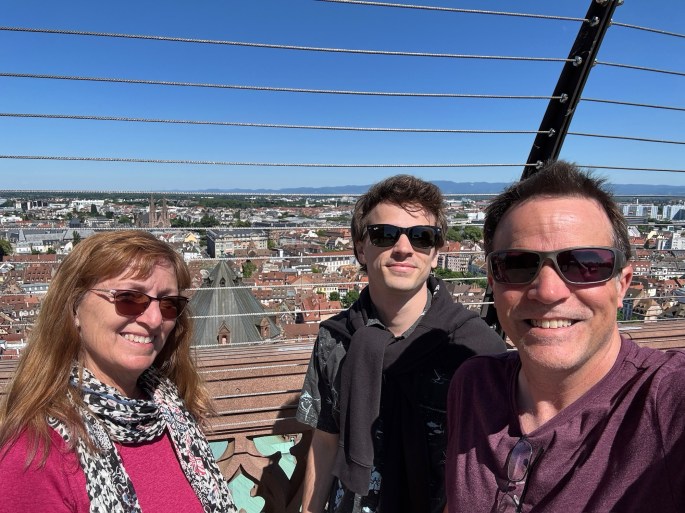
You can see 30 kilometers from the observation desk. Yikes!
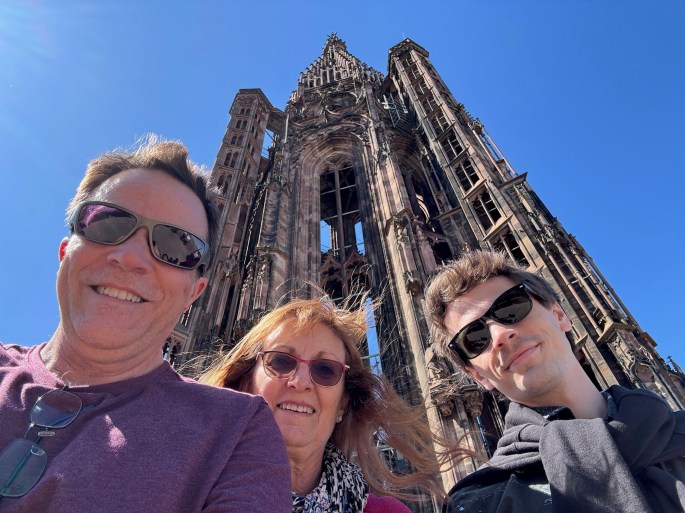
And now the journey begins downward.
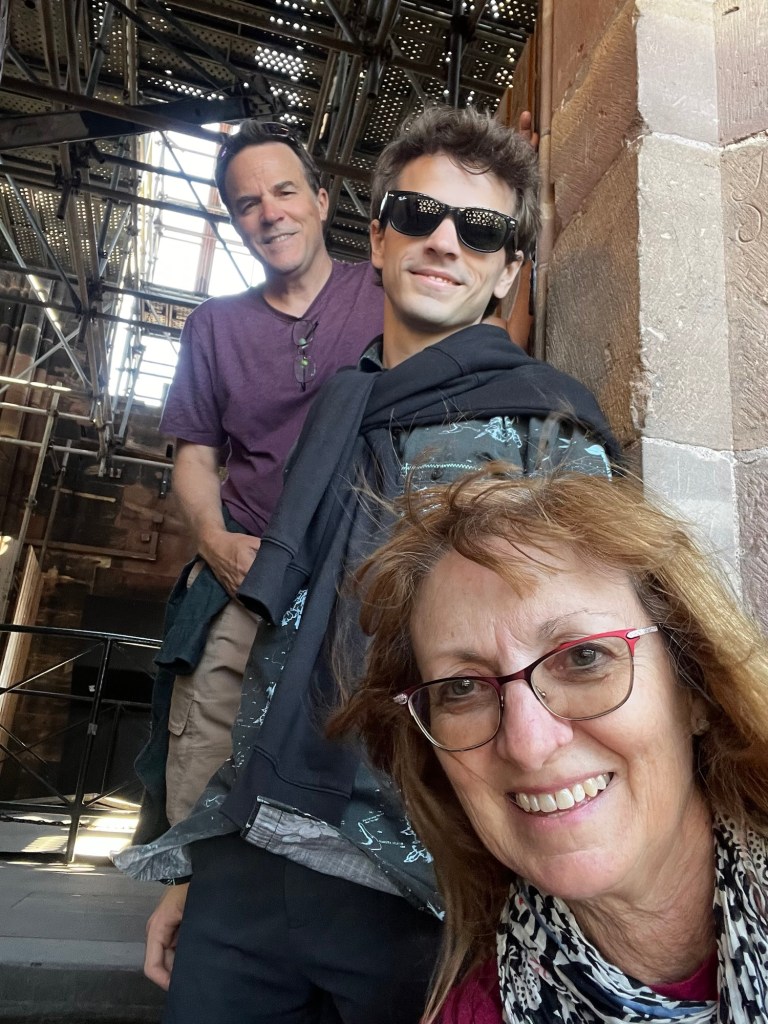
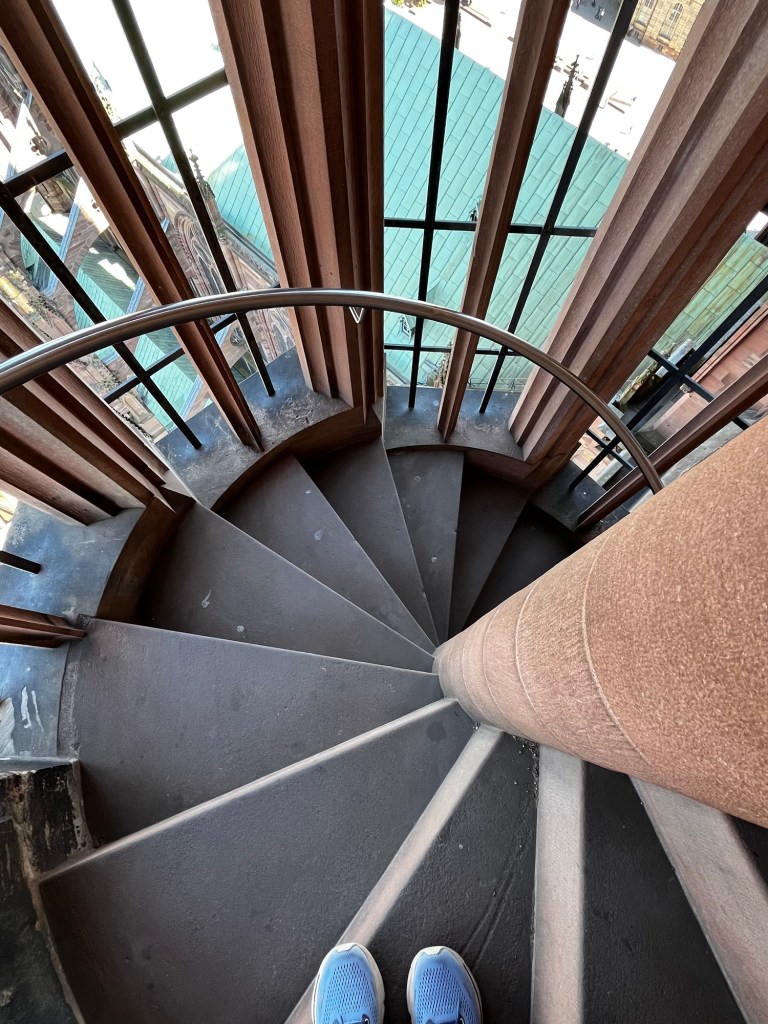
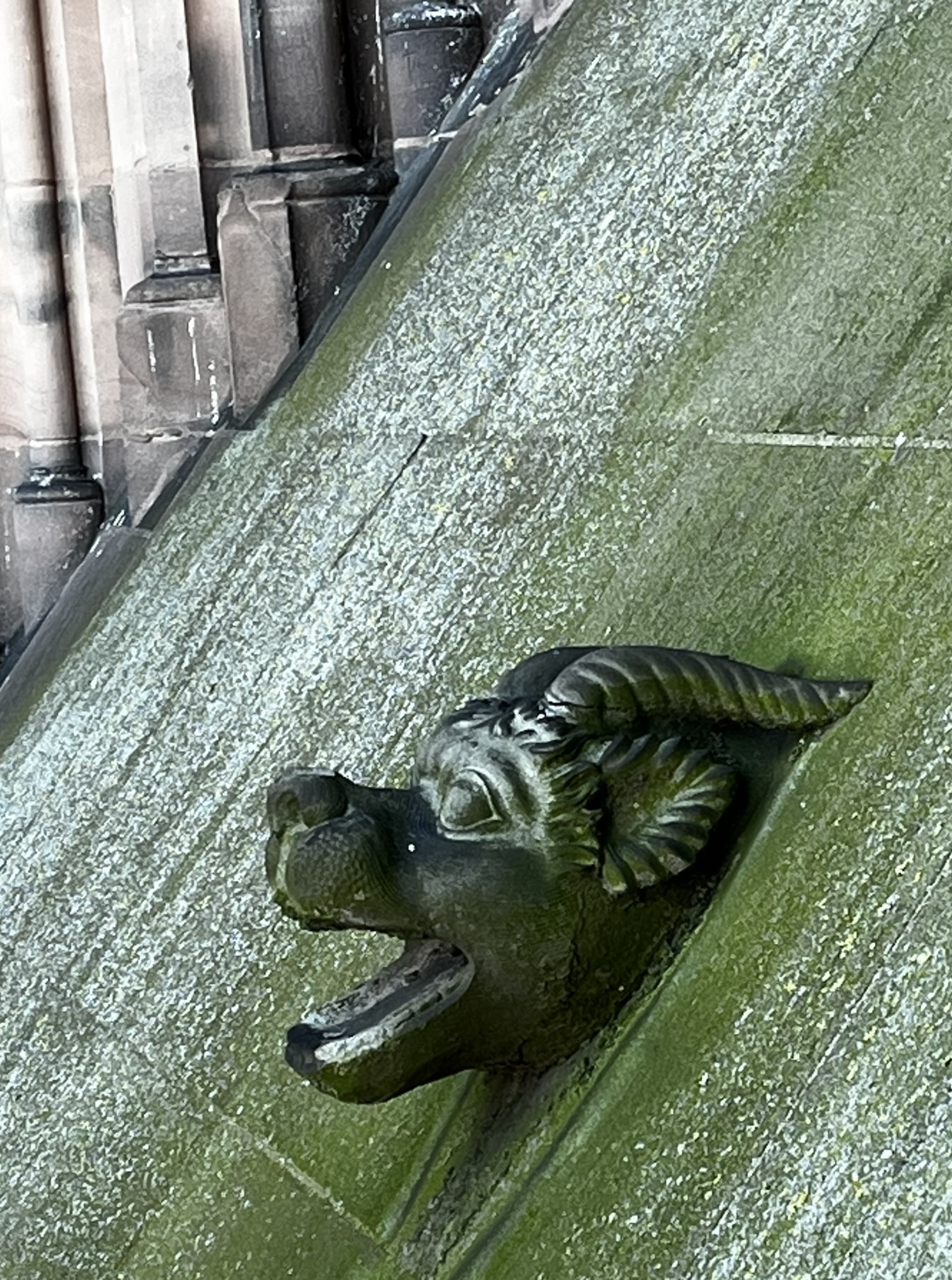
Also, a chance for more interesting shots.
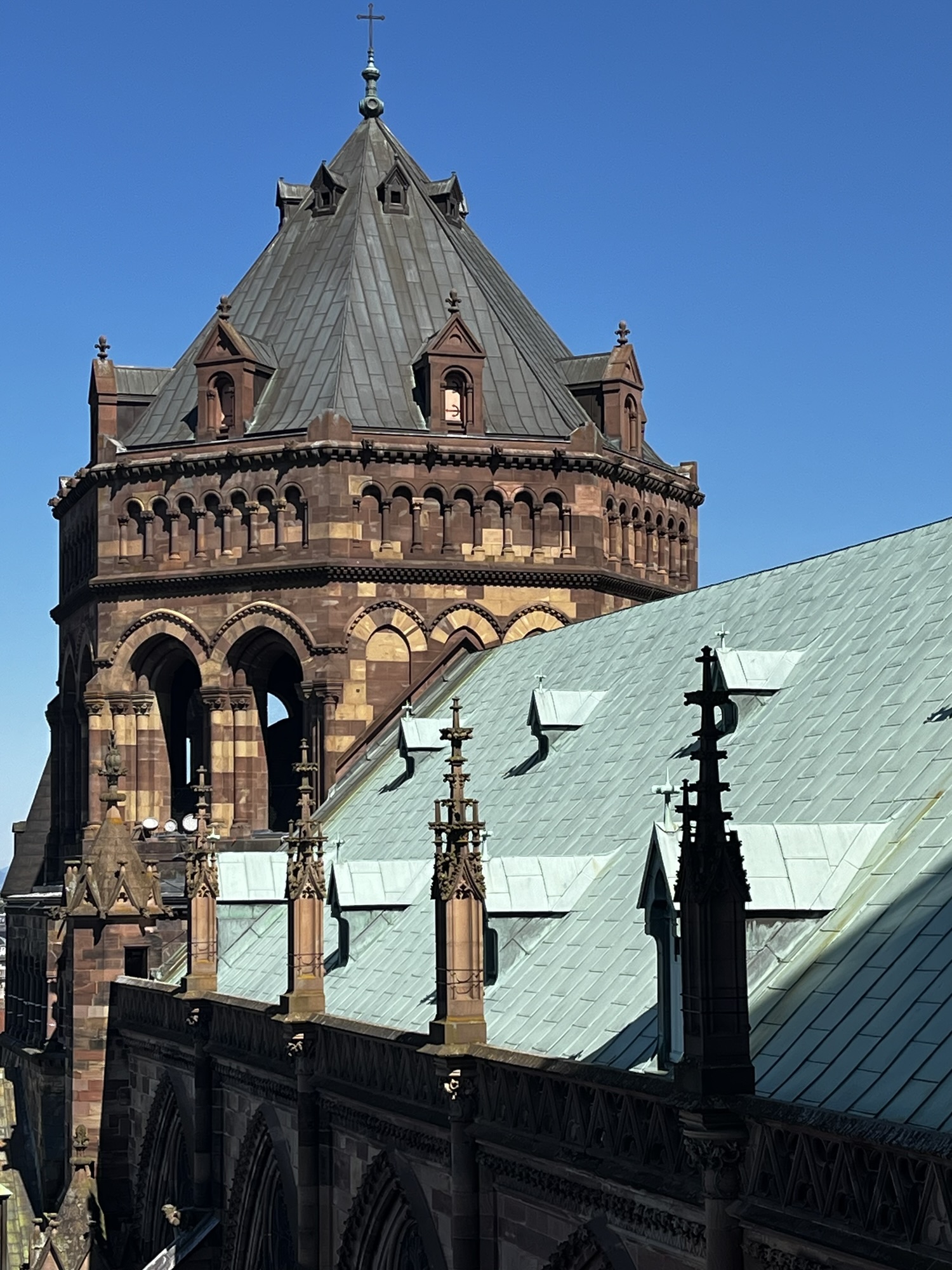
Reunited with the missing member of the group. 🙂
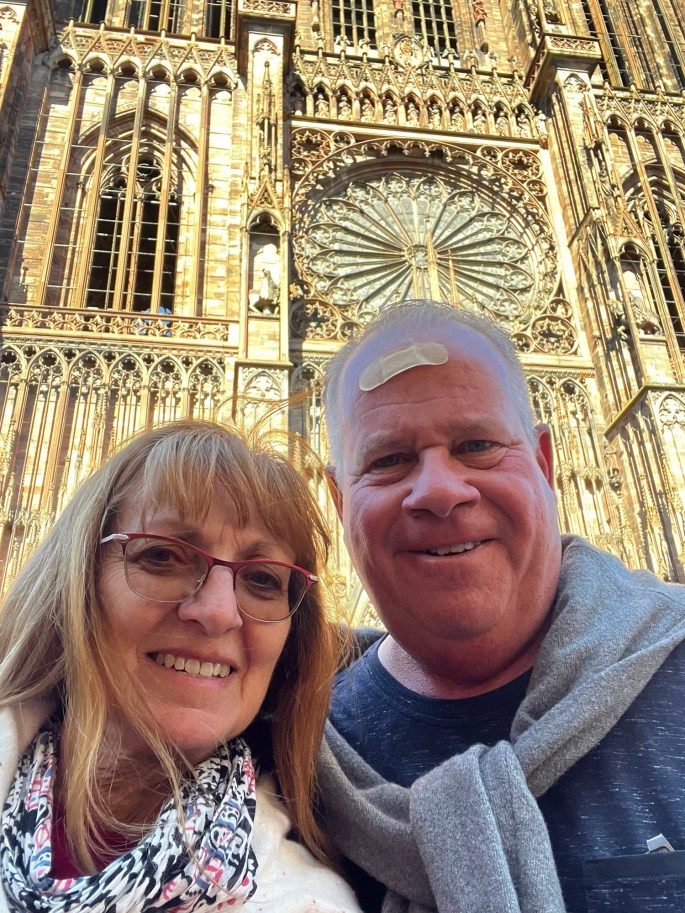
Ginny

Oviedo 2025 – post 2

We finally made it to Oviedo. But why this city?

It is the capital city of the Principality of Asturias. The Kingdom of Asturias began in 720 after a revolt against the Muslims that had taken control over most of this peninsula. Economically, Oviedo was a poor region and largely ignored by the Muslims. Two monks in 761 founded the city to construct a small church. In the late 780s the Kings started settling in Oviedo and thus began to shape the city architecturally. Wars, uprisings and fires occurred which continued to plague further development. In the 12th – 16th centuries, Oviedo saw true development of the medieval city of which the outlines are still preserved today. Whew! That’s enough history. Let’s talk our experience.

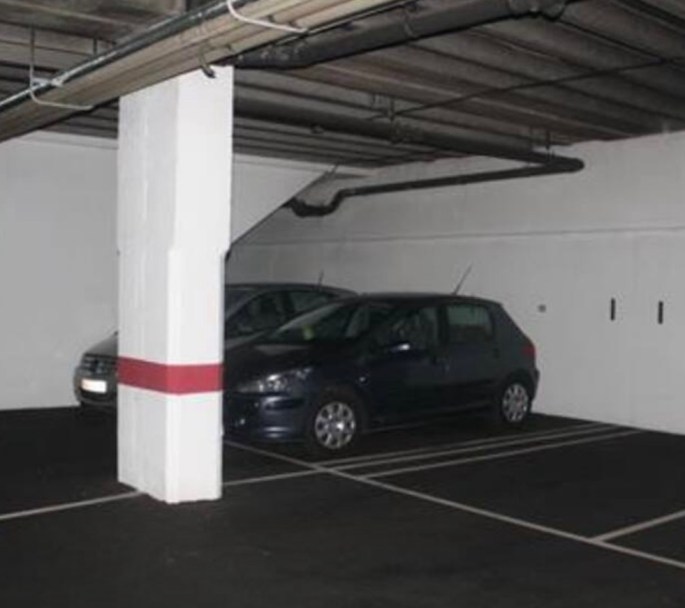
Eric found a nice AirBNB in the heart of the city, easy walking to see the sites and it came with a parking garage & designated parking spot.

Our problem? Understanding the host’s (very detailed) directions. She sent me a PDF file, which I read, but didn’t connect all of the details and photos. Her file was 100% accurate, we just had trouble understanding it. Full honesty……………if I had gone onto the AirBNB site and looked at her photos, our frustration would have been much lower. Let’s just say this lady has the patience of a Saint. I ended up calling her and she stayed on the phone with me all the way through the process until we could park the car. She walked me down to the garage via her apartment, walked to the designated parking spot, then walked me out of the garage entrance (virtually). It was a bear. Thrown in a garage fob that had sketchy connection, and it made the job a bit harder. Had to be 30+ minutes (which Eric and Adrienne swears it was an hour) that I was on the phone with her.

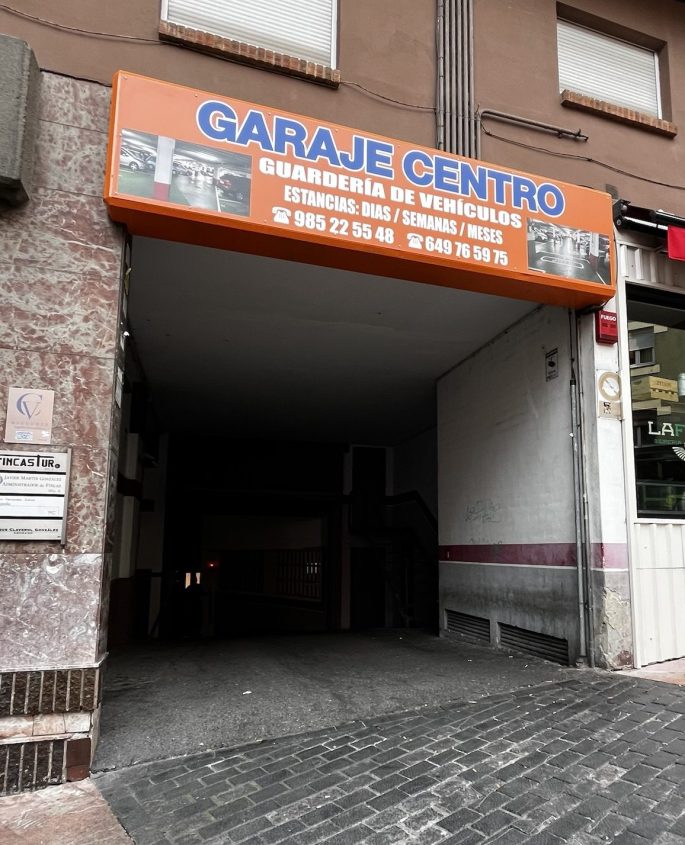
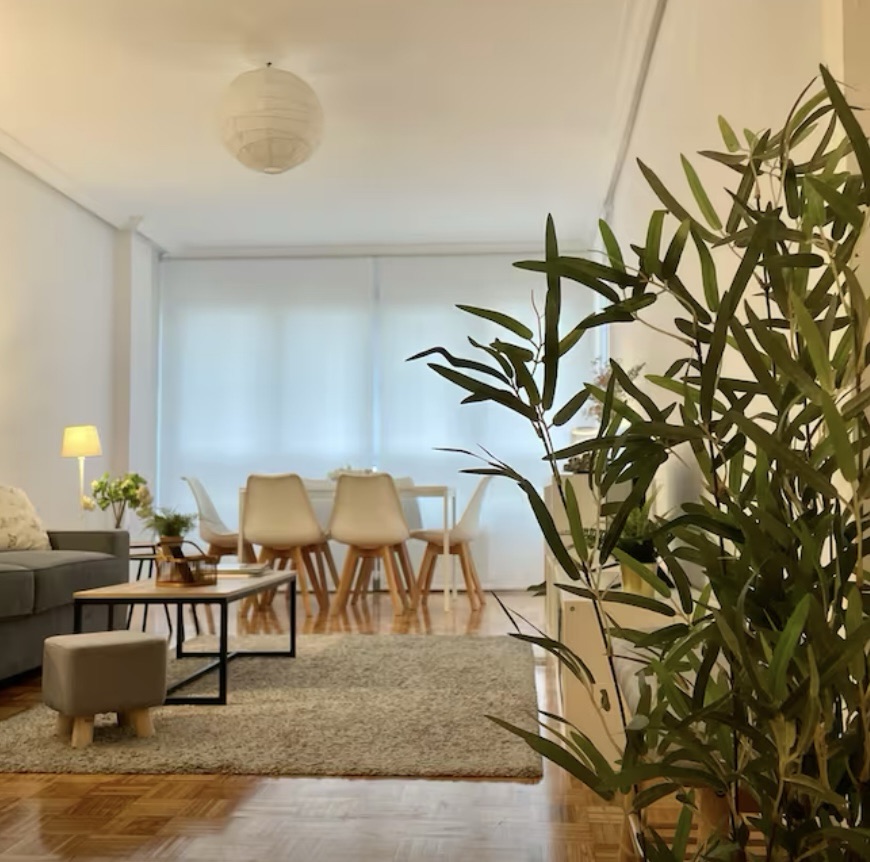
This photo I found on the AirBNB site – after we got home. We couldn’t even get to this point, which led us to the upstairs apartment, which had a key box, to get inside the apartment, to get the keys we needed for the garage to park the car.

The parking spot was a bonus, a little tight for Eric and our rental car, but doable with Adrienne and myself giving guidance.

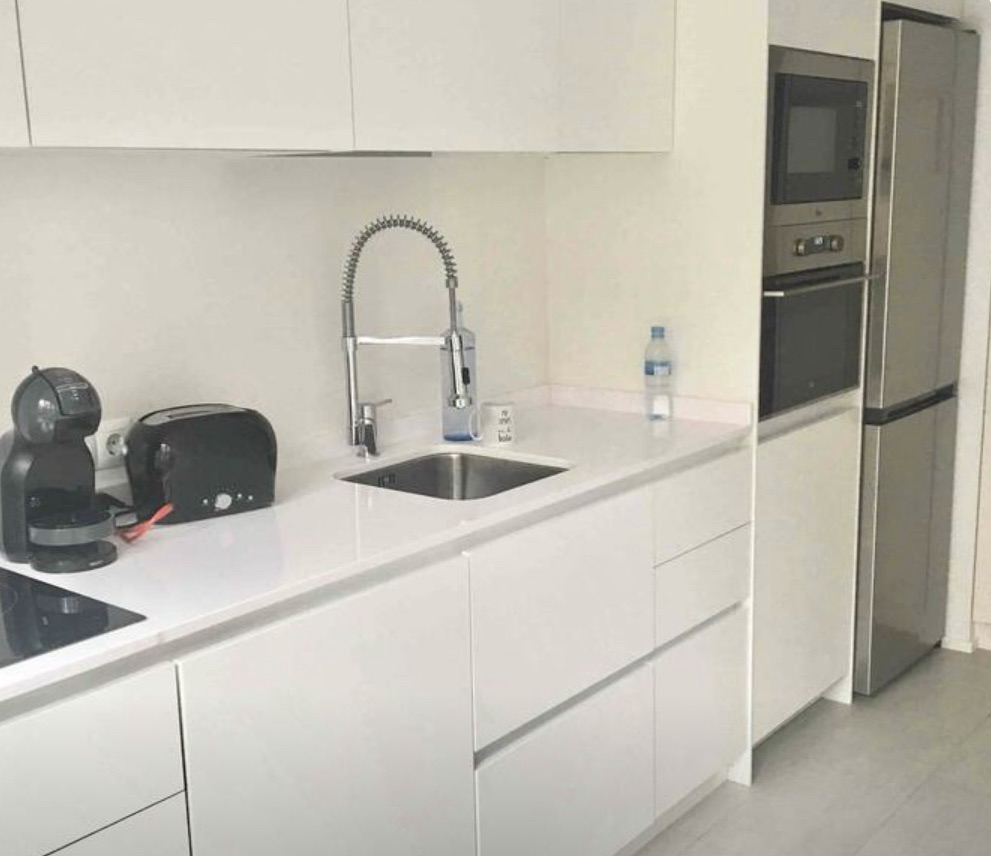
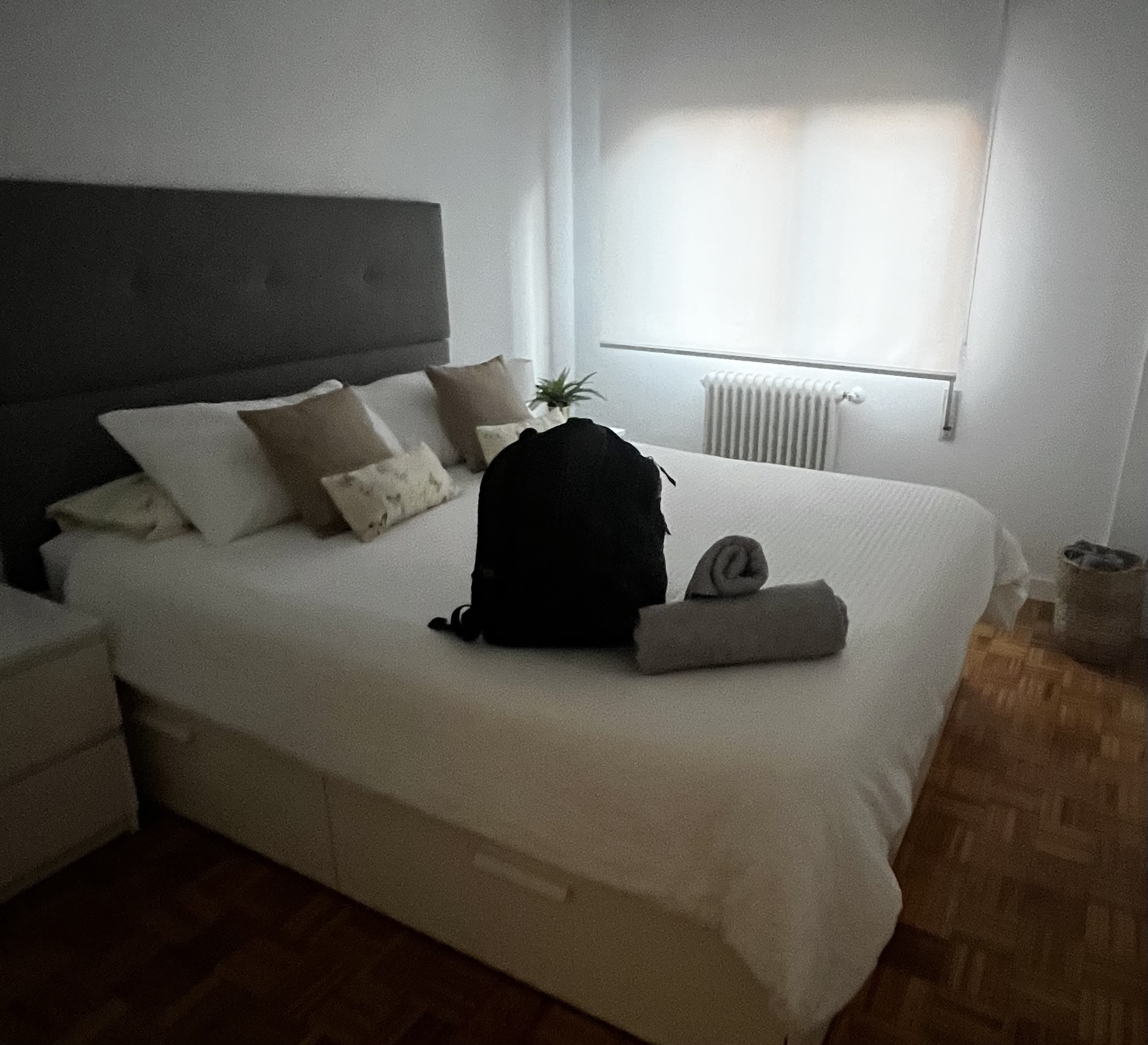
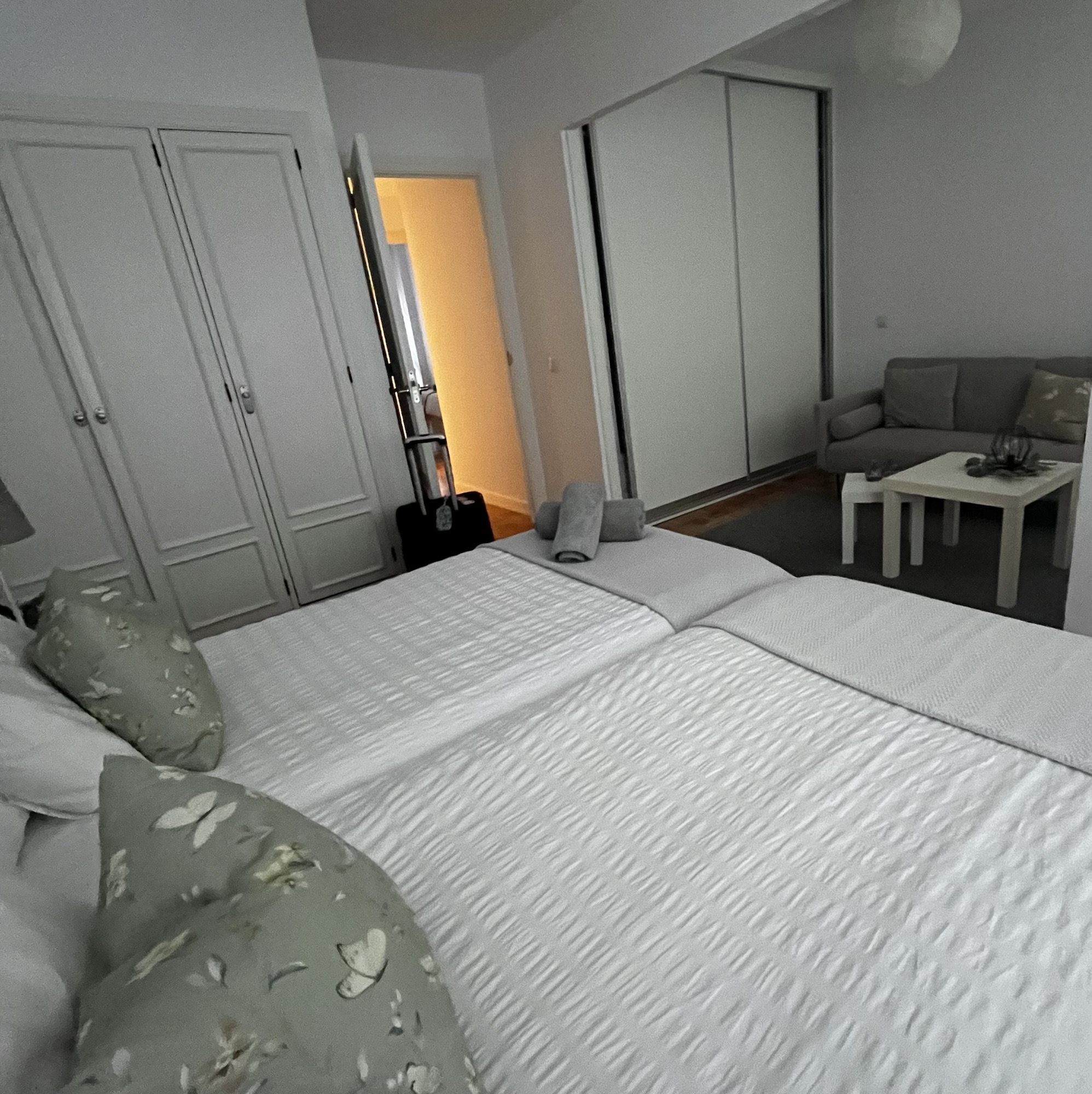
Here’s a few shots inside the apartment.

Cider is king here and Eric was excitedly looking forward to it. We had tried some earlier in the trip and there is not one bit of sweetness to the drink, very, very dry. Not going to be something that I indulged.

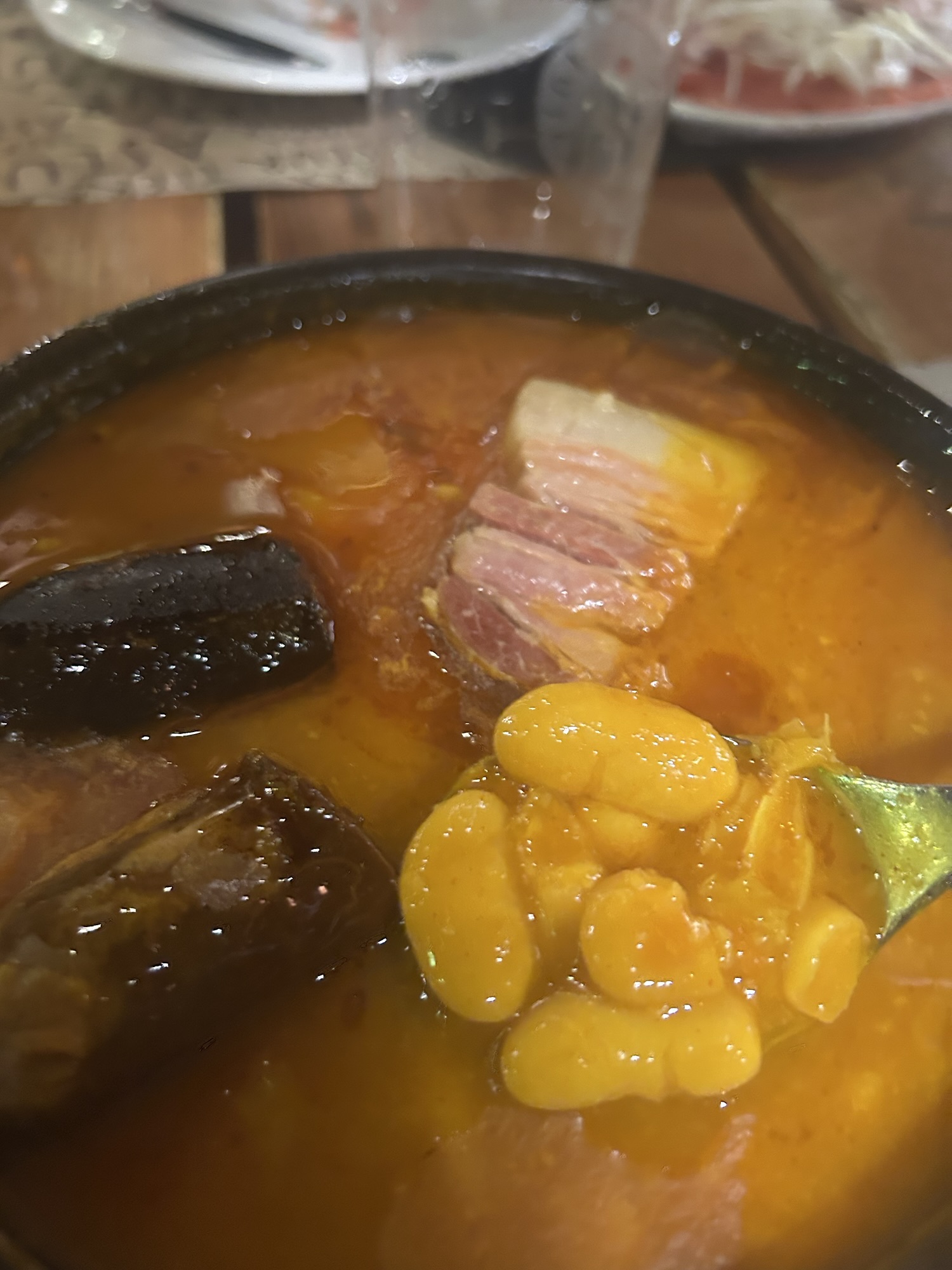
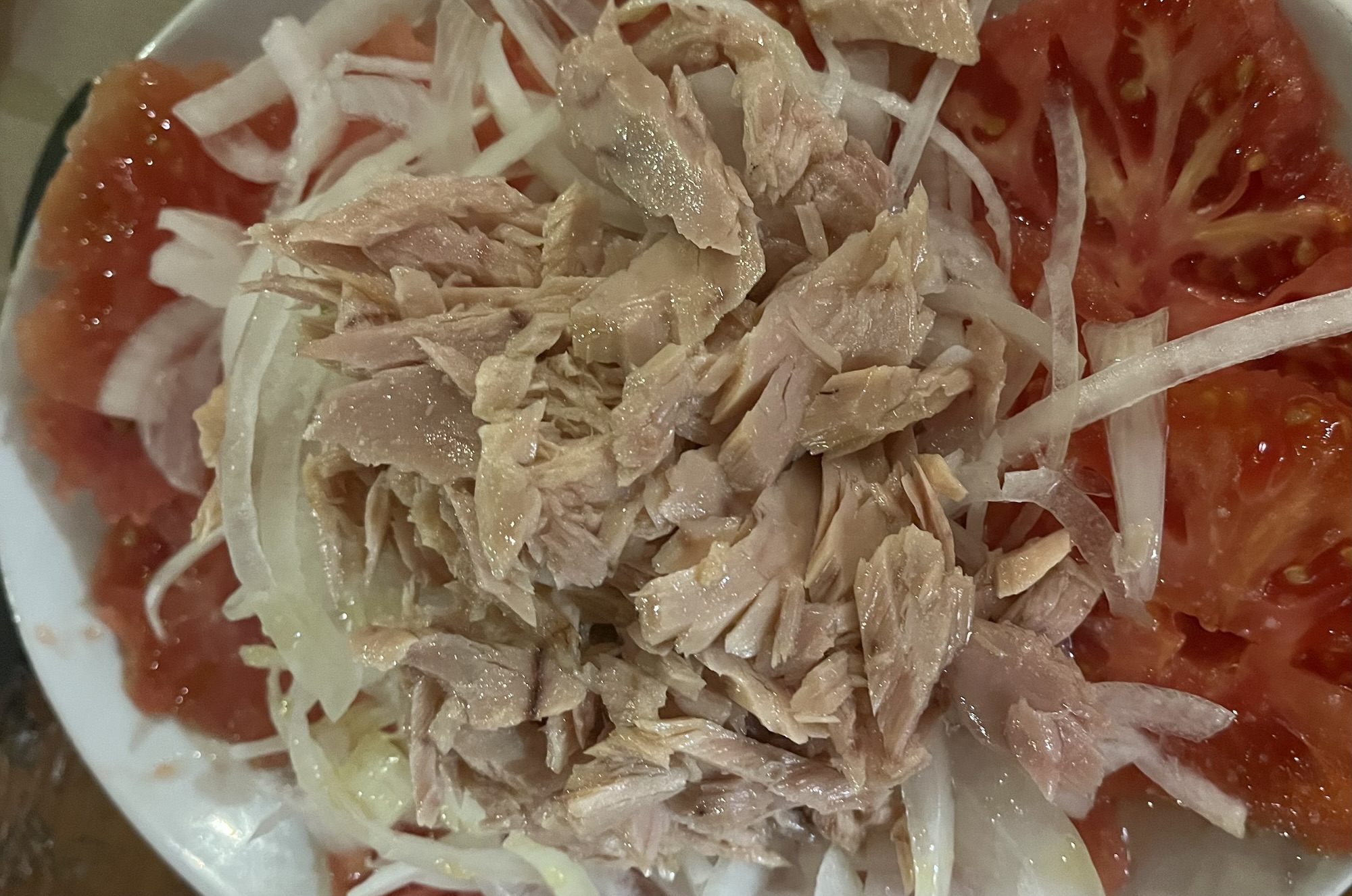
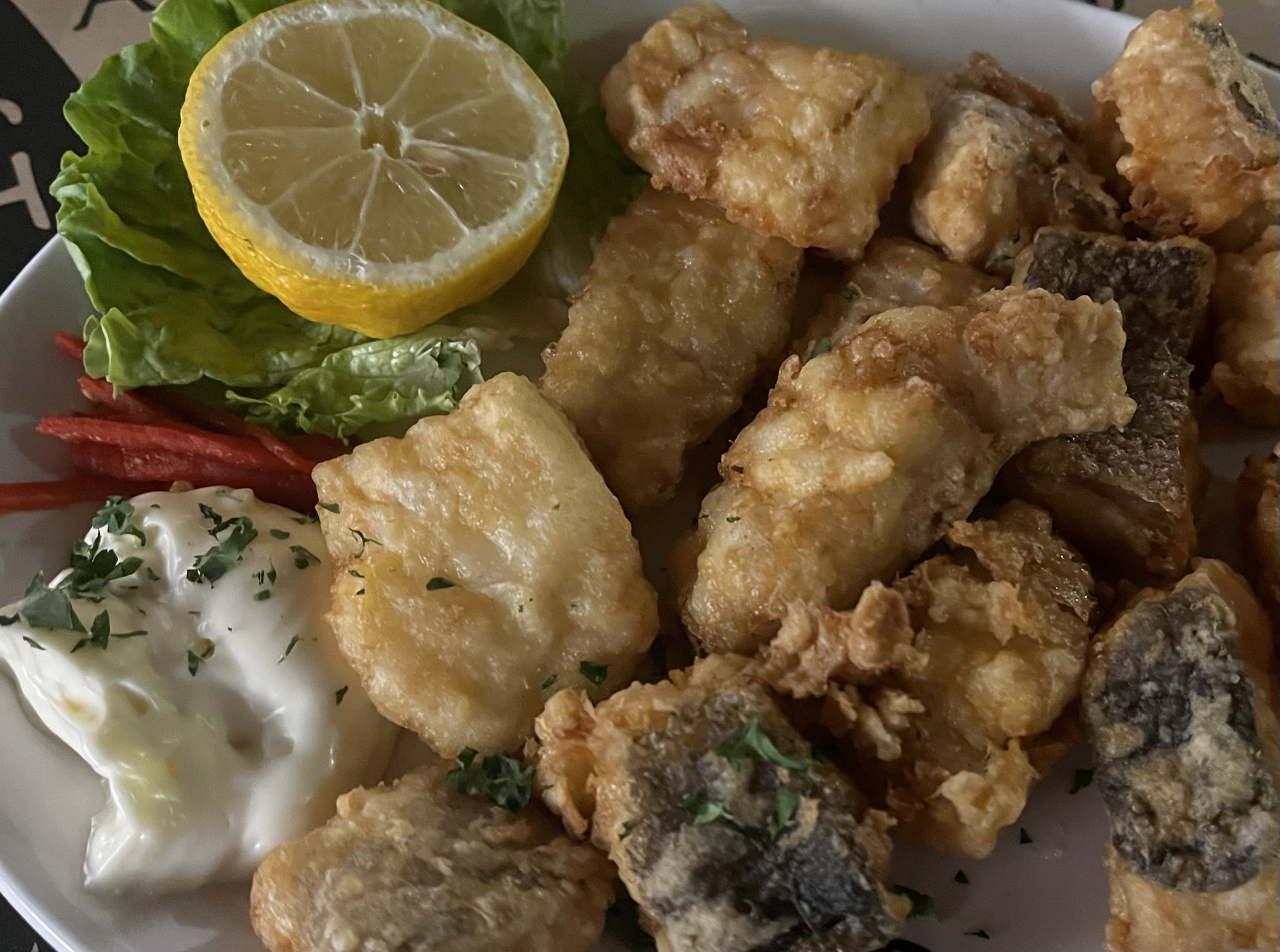
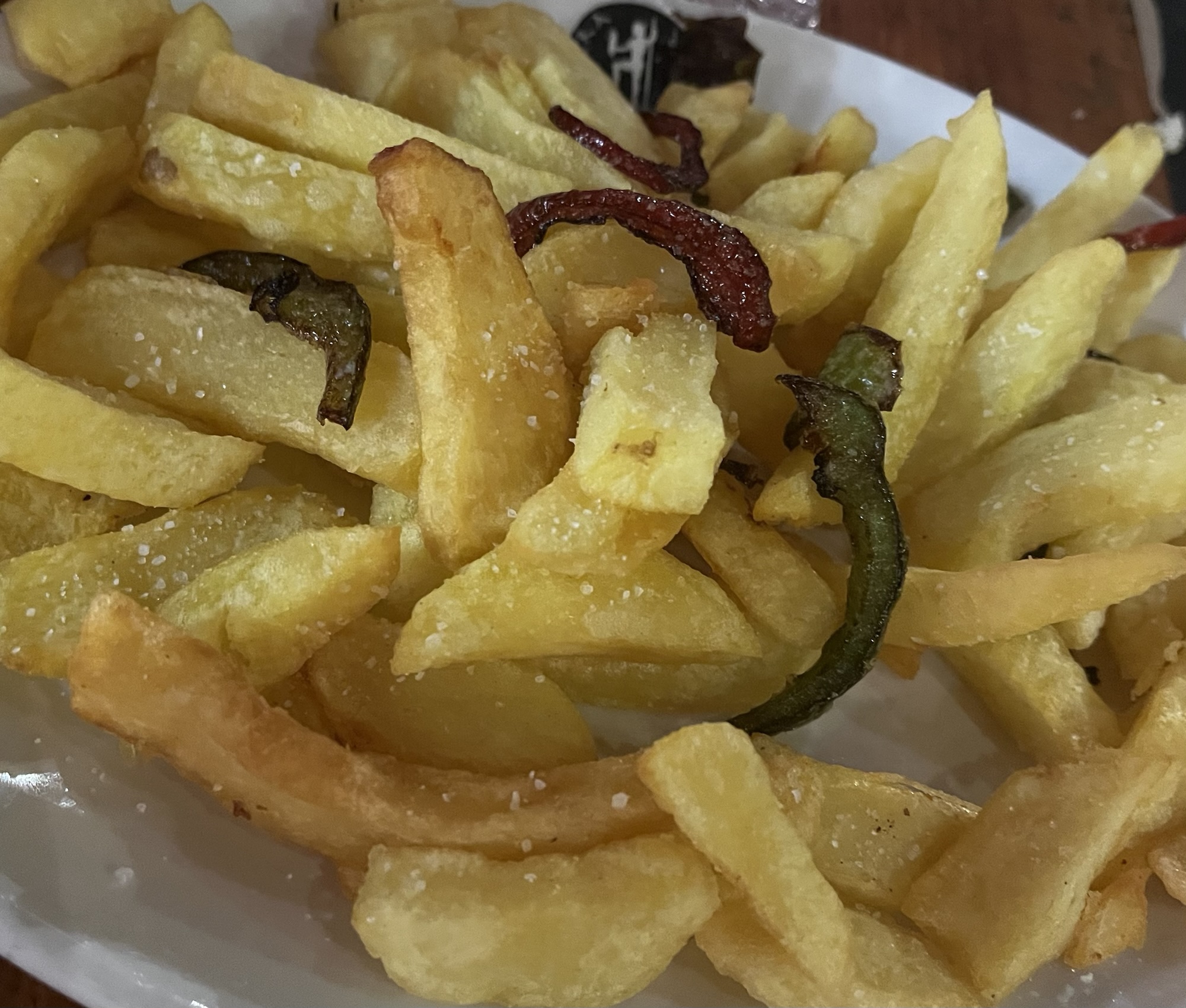
Even though we had that a.w.e.s.o.m.e meal for lunch, we still need some calories before going to bed. A number of restaurants were available 50 feet from the garage and we picked one. Eric tried their hearty bean dish, Adrienne wanted a tomato salad and I went with fish and frites. We were all satisfied with our selections.

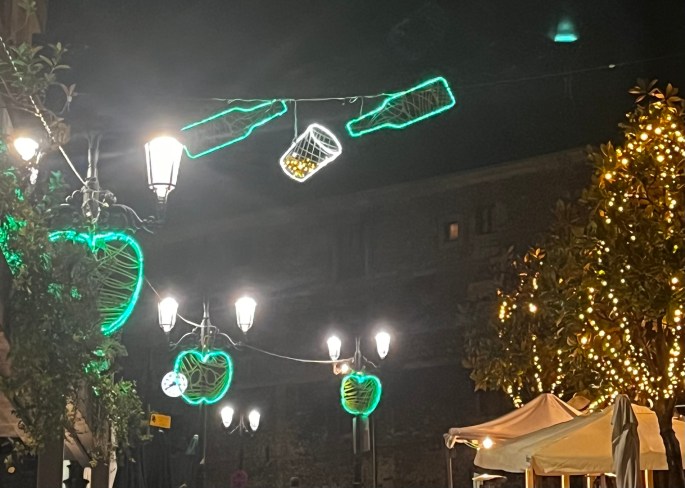
It was dark when we left the restaurant to walk the long trek to our apartment (not) but it gave us a chance to see the pedestrian street in its glory.

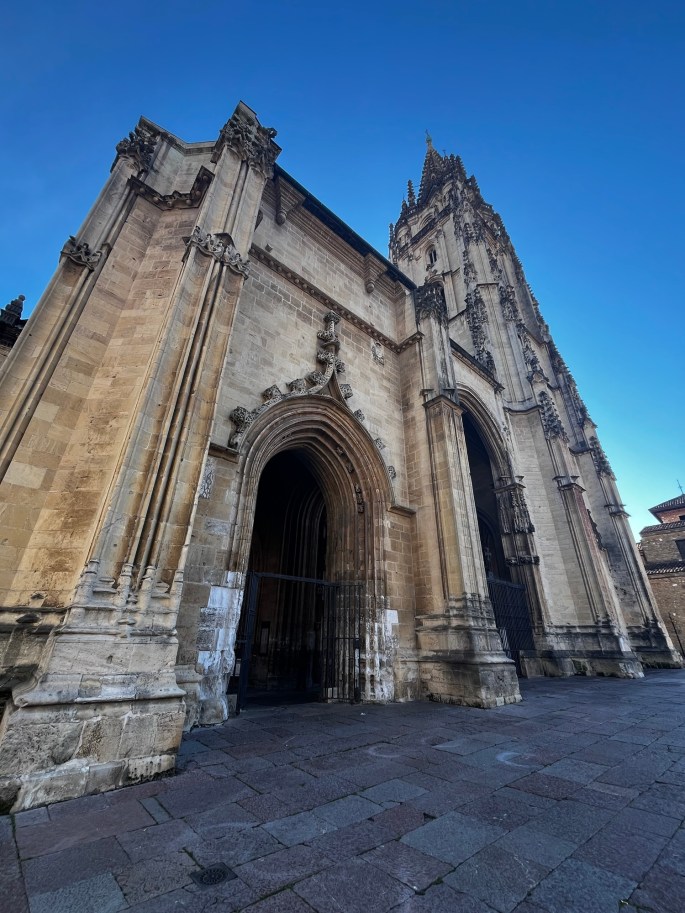
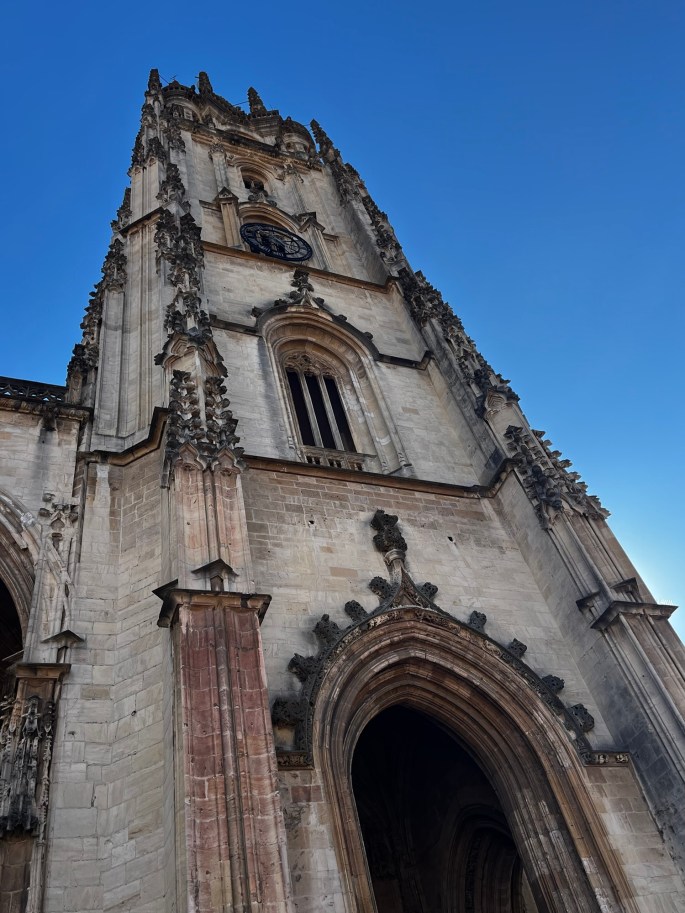
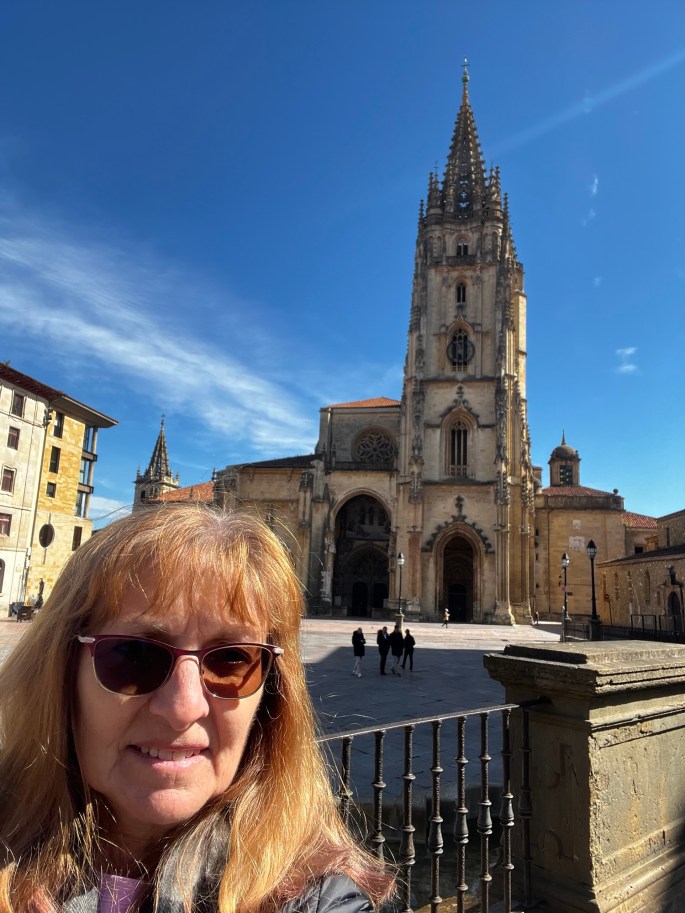
What to do when in a historic city center after eating some breakfast? Visit their church: the Cathedral of San Salvador of Oviedo. It was founded in 781 A.D. by the King of Asturias

Originally there was plans to build twin towers, but the ended up with only one. It was not lack of funding that made this decision, but in the 1500s it was a popular solution.

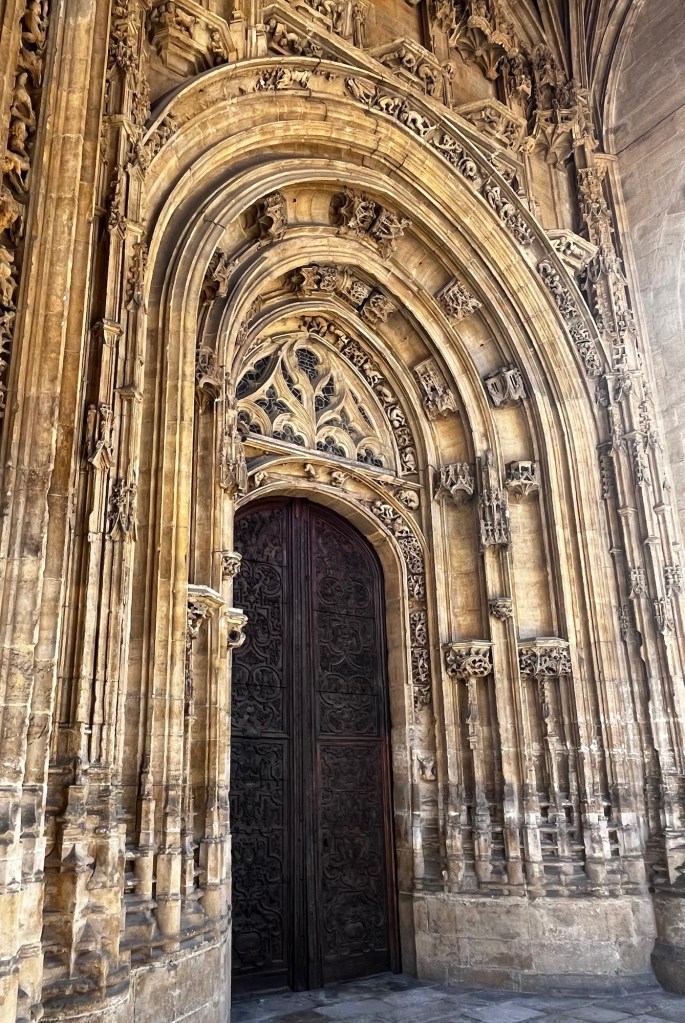
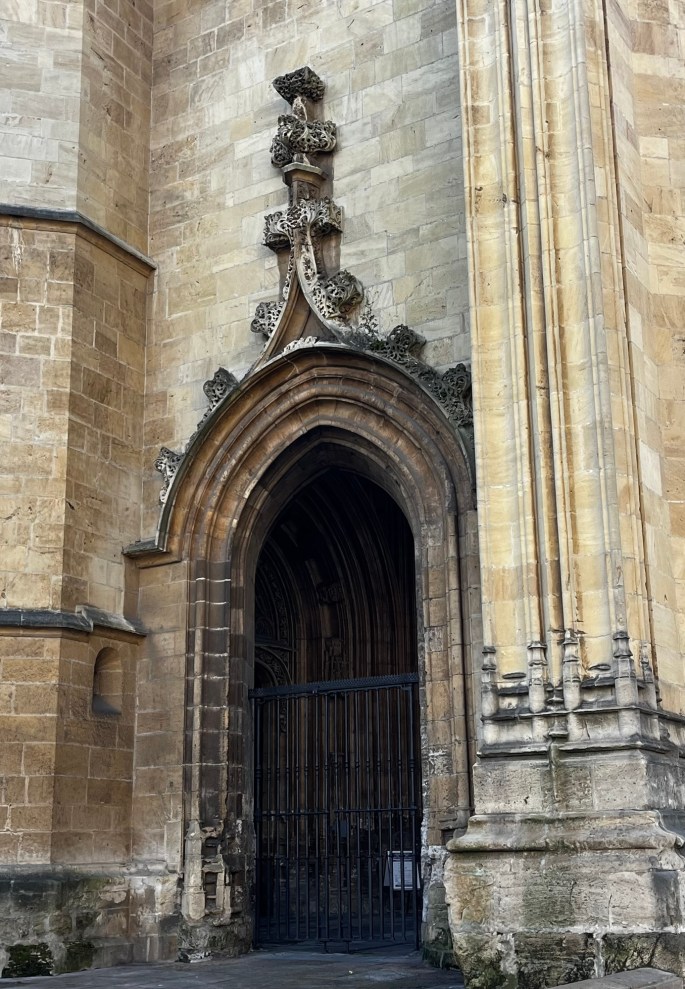
The entry is imposing, as it’s meant to be.

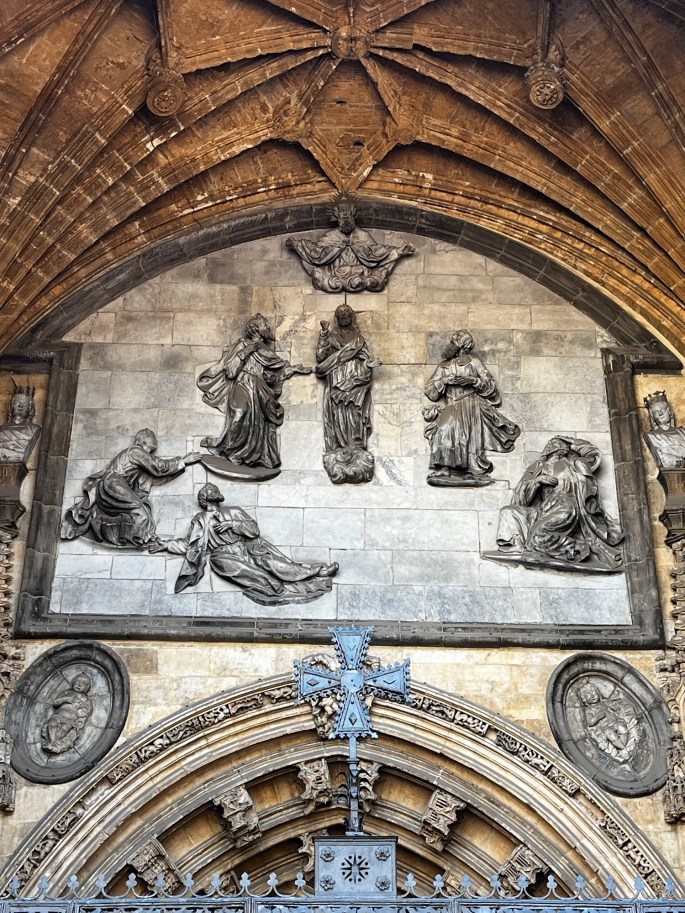
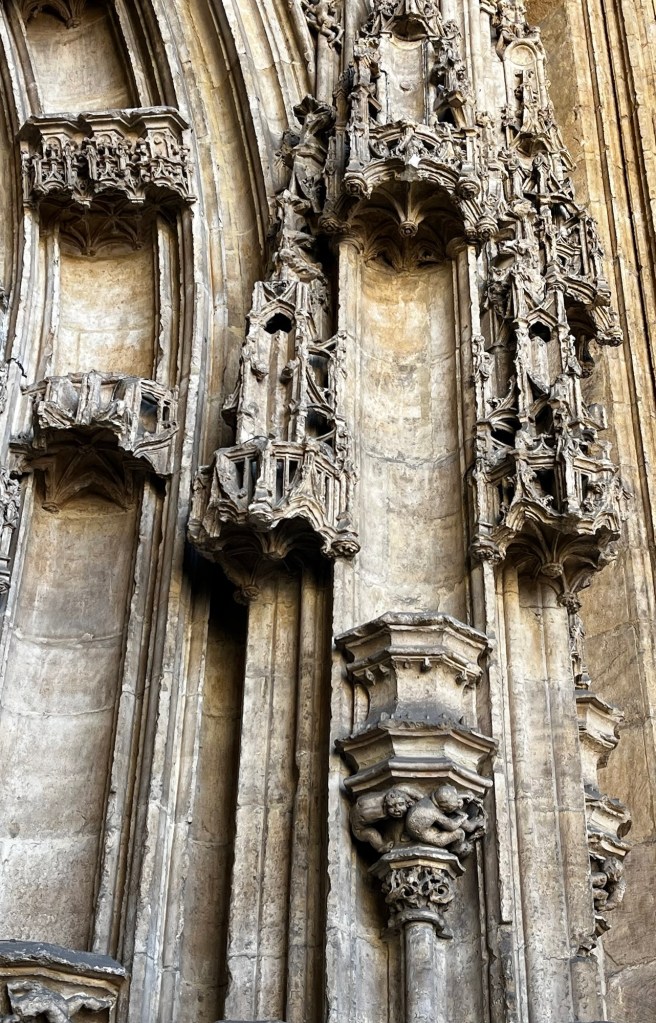
Topped by this scene.

Let’s go inside. It was somewhat surprising there was an entrance fee of 10 euro. Most churches are free. They have a great brochure, numbered with specific stops and after scanning the QR code info was shared in a concise and informative manner – not long winded. We agreed afterwards, it was worth the 10 euro.

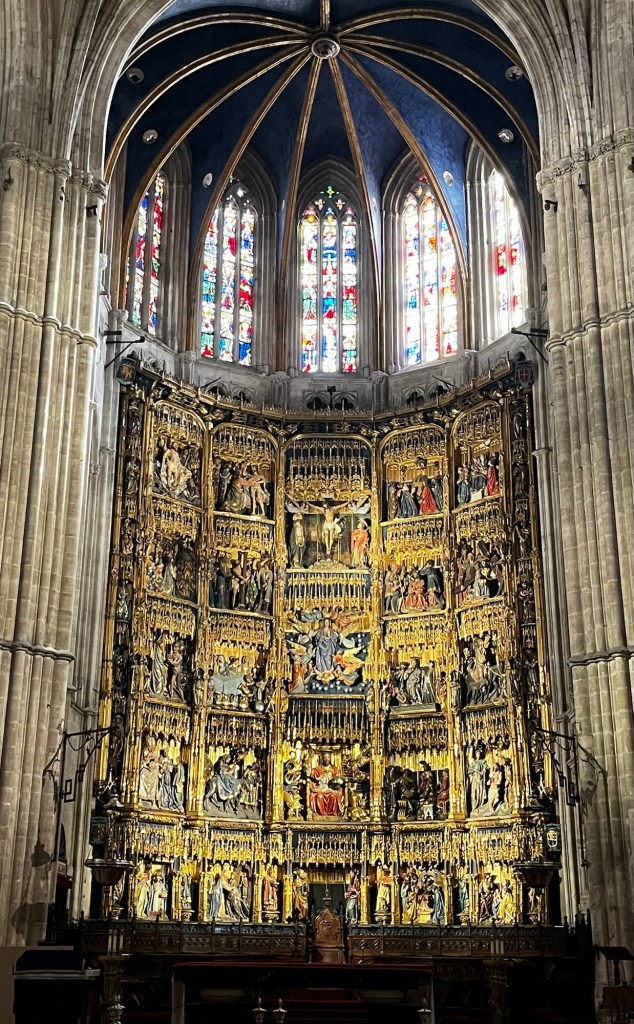
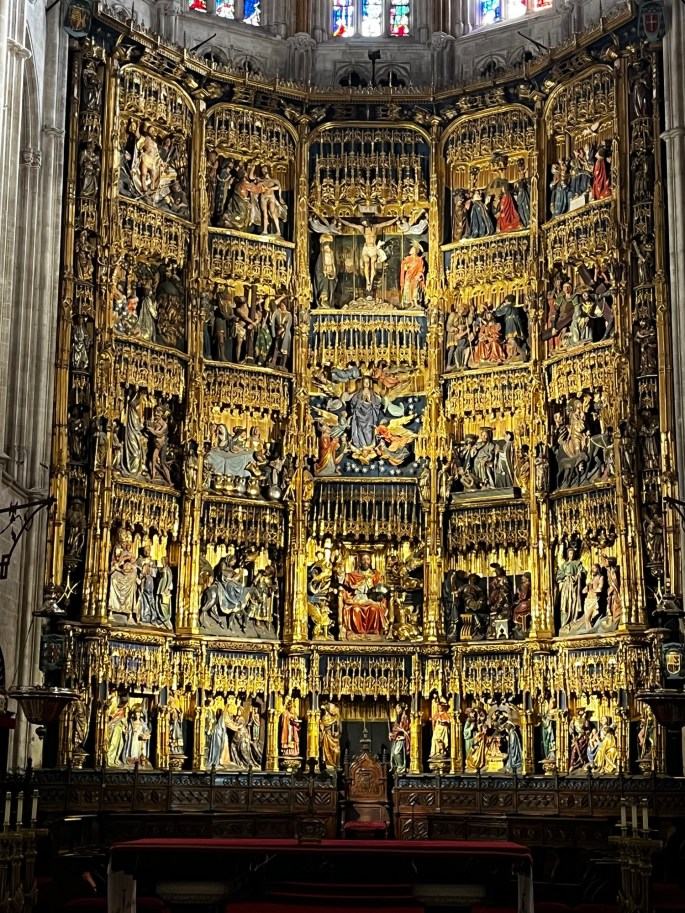
Those golden panels…were created in the 1500s by a Flemish artist. The facade is made of chestnut but the sculptures within are walnut, that has been gilded. They tell the story of Jesus and Mary in 23 scenes, starting at the bottom left. The central panel is dedicated to Christ the Savior.

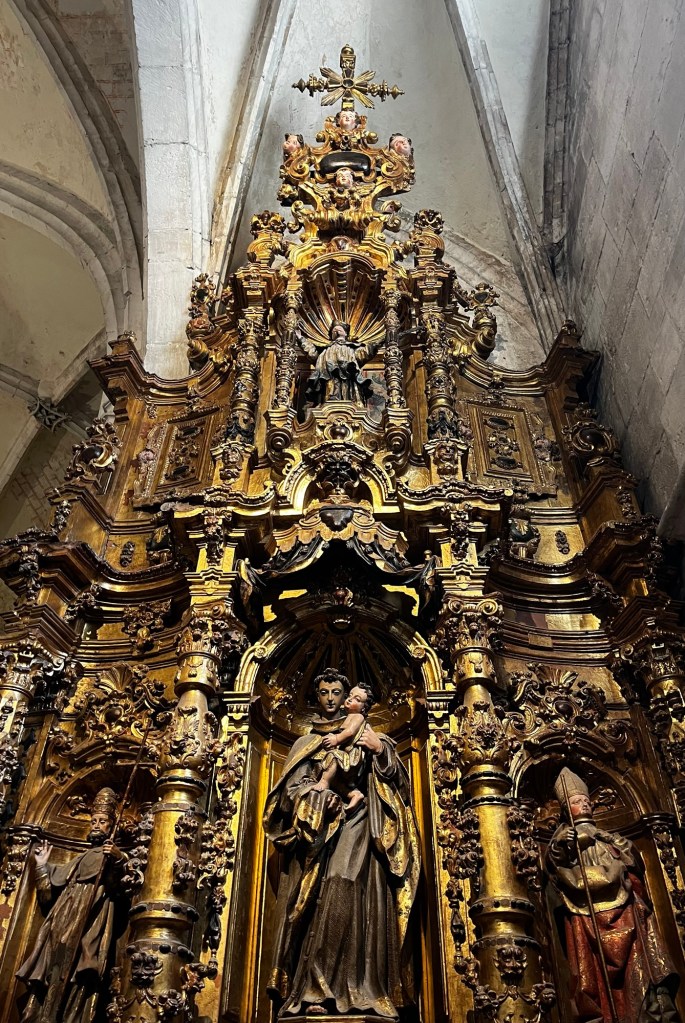
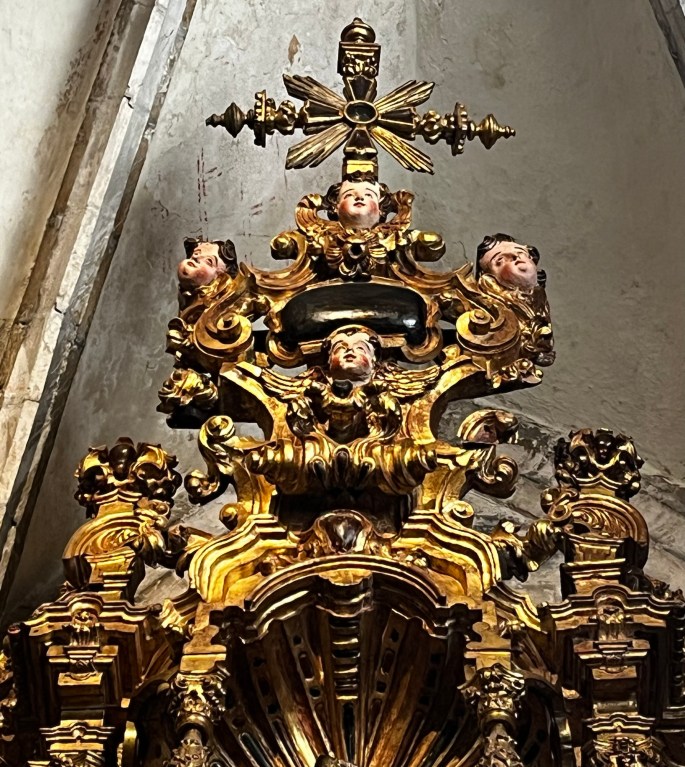
There are a number of side chapels, but this one had some unusual artwork as part of the alter.

I’m sure these faces are there for an important message, but………a tad bit creepy.

Next we were directed upstairs to the most holy chamber. It is considered the most important surviving structure and the only thing remaining of the original medieval structure. It was built during the 9th century as a palace chapel for King Alfonso II of Asturias and the church of San Salvador of Oviedo. Apart from acting as royal chapel, the Holy Chamber was built to house the jewels and relics of the cathedral of San Salvador in Oviedo, a function it continues to have 1200 years later.  The photo below is the entrance for the two rooms.

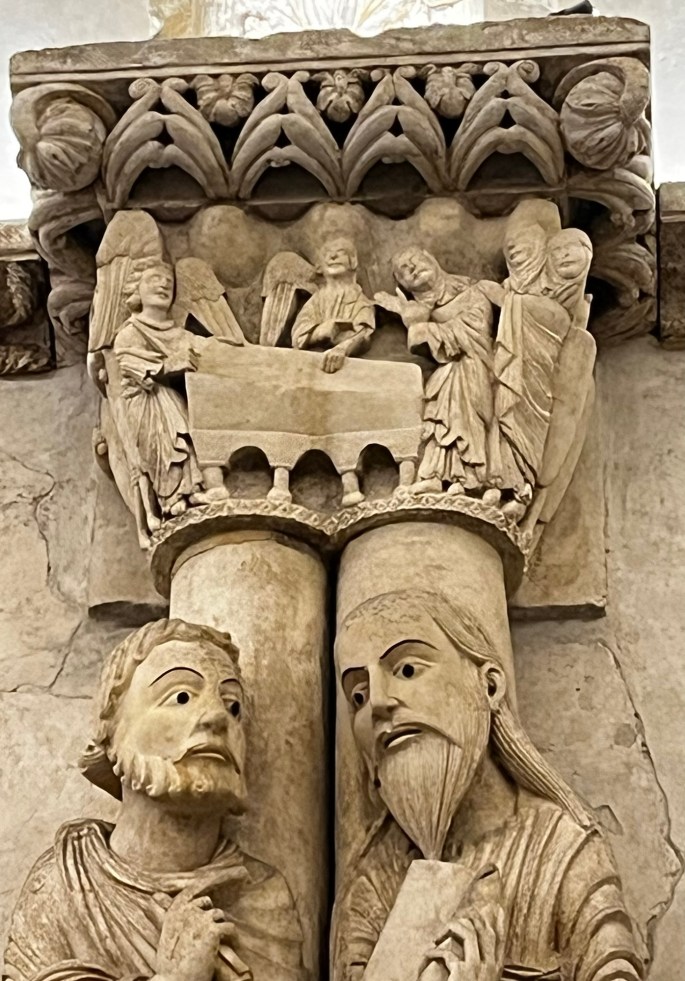
The first room has four columns with well-preserved sculptures. Each column has two apostles positioned to talk with each other.

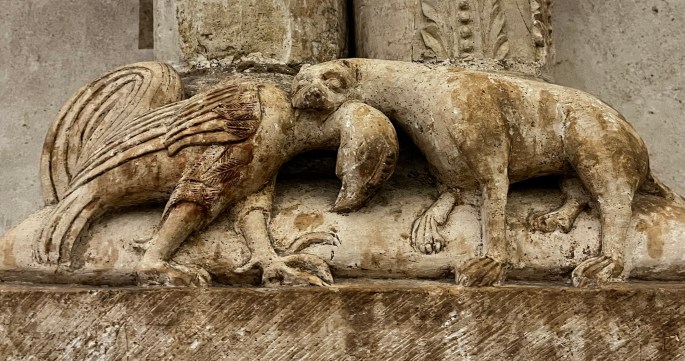
There are a number of interesting details at the bottom, all of which are different. Here’s an example.

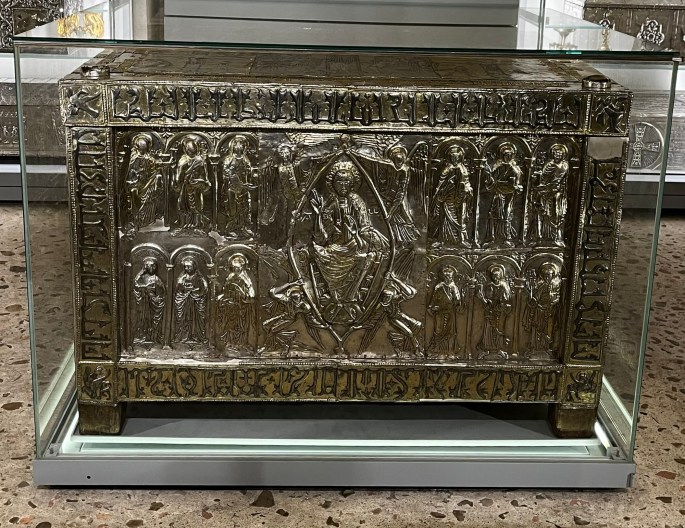
It was built as a relics’ room to keep the different treasures brought from Jerusalem to Africa, and finally deposited at Oviedo.

The Shroud of Oviedo is the most notable relic of Christ’s passion kept in the Arca Santa reliquary. The bloodstained cloth or sudarium (Latin for sweat cloth) is reputed to be the cloth wrapped around the head of Jesus Christ after he died and left in the tomb folded to the side at his resurrection.

Additional internet research also indicated the following items are inside: a piece of the True Cross, pieces from the Crown of Thorns and the Holy Sepulchre and some bread from the Last Supper to name just a few.

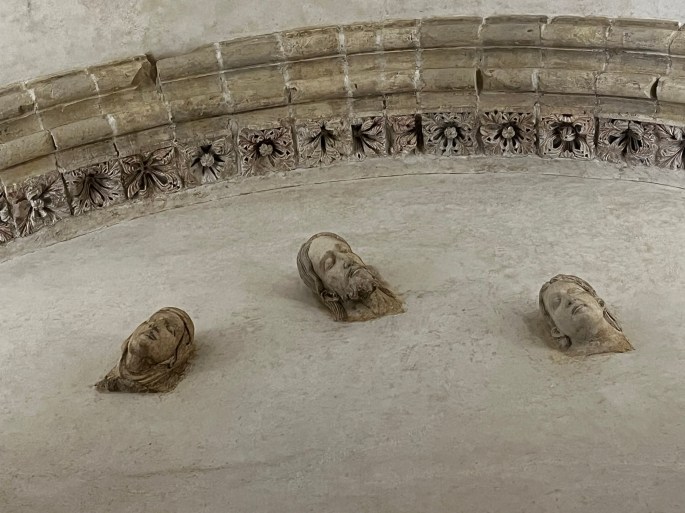
Exciting the Holy Chamber, I noticed these sculptures on the wall above the doorway. They were part of a painting on the wall that was richly colored. Their faces are the only thing that remains.

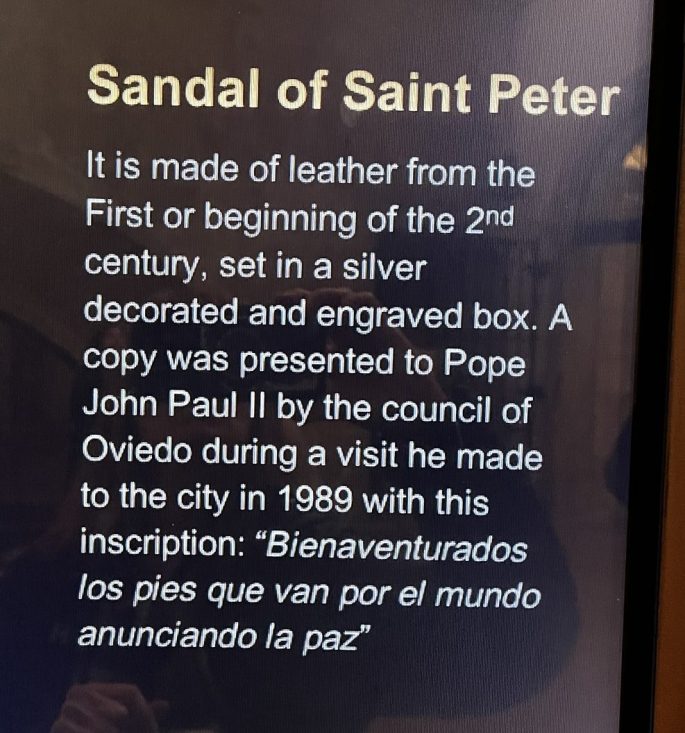
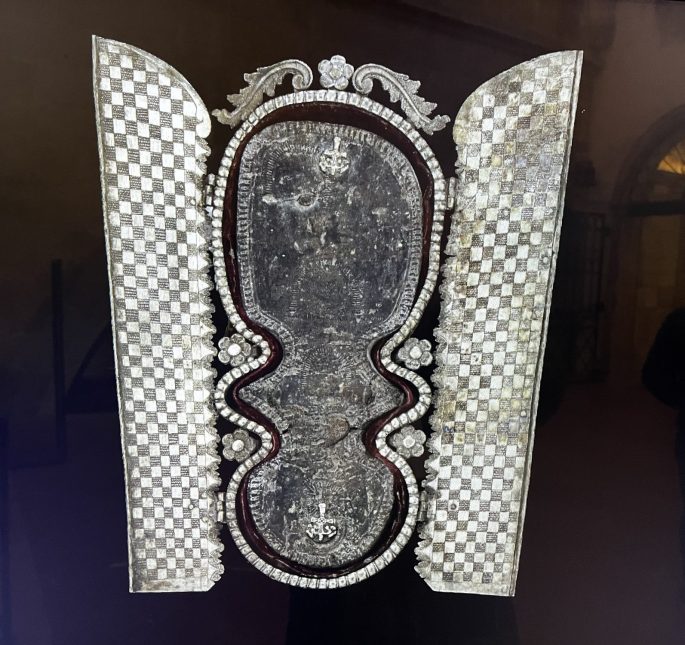
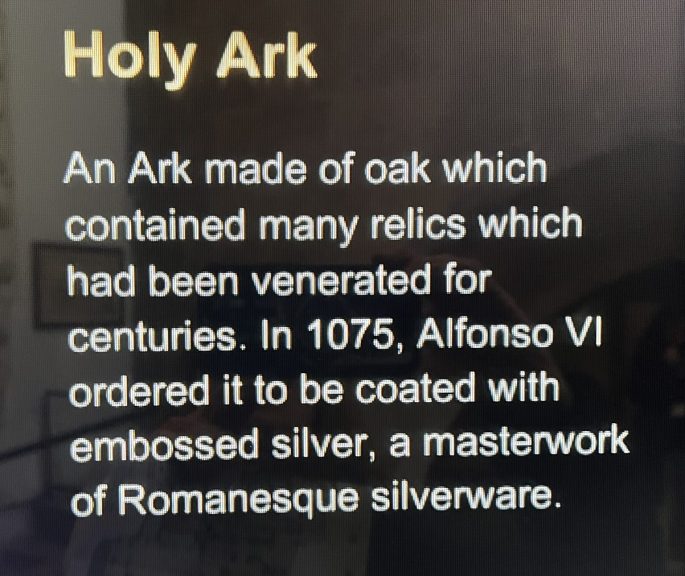
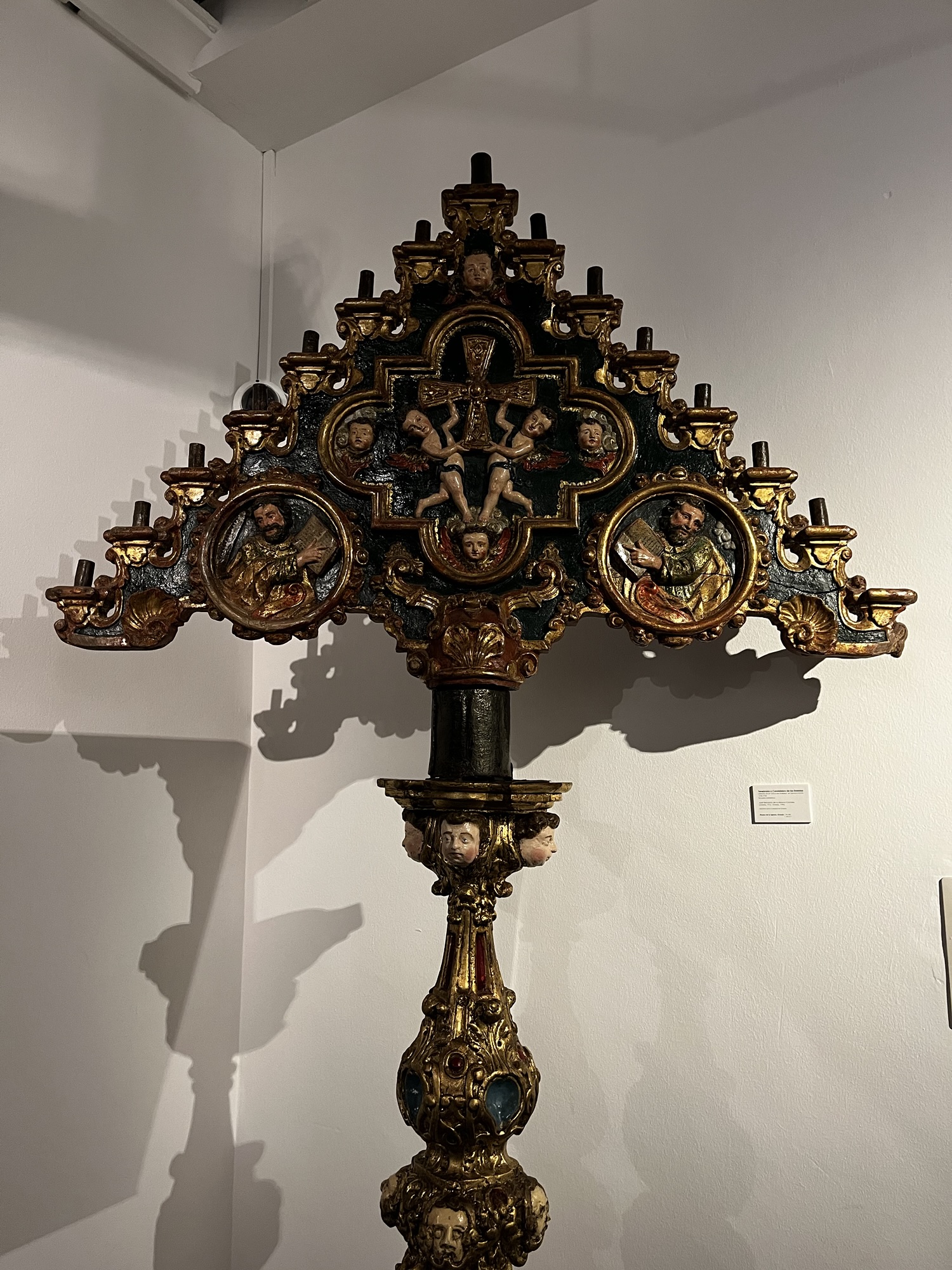
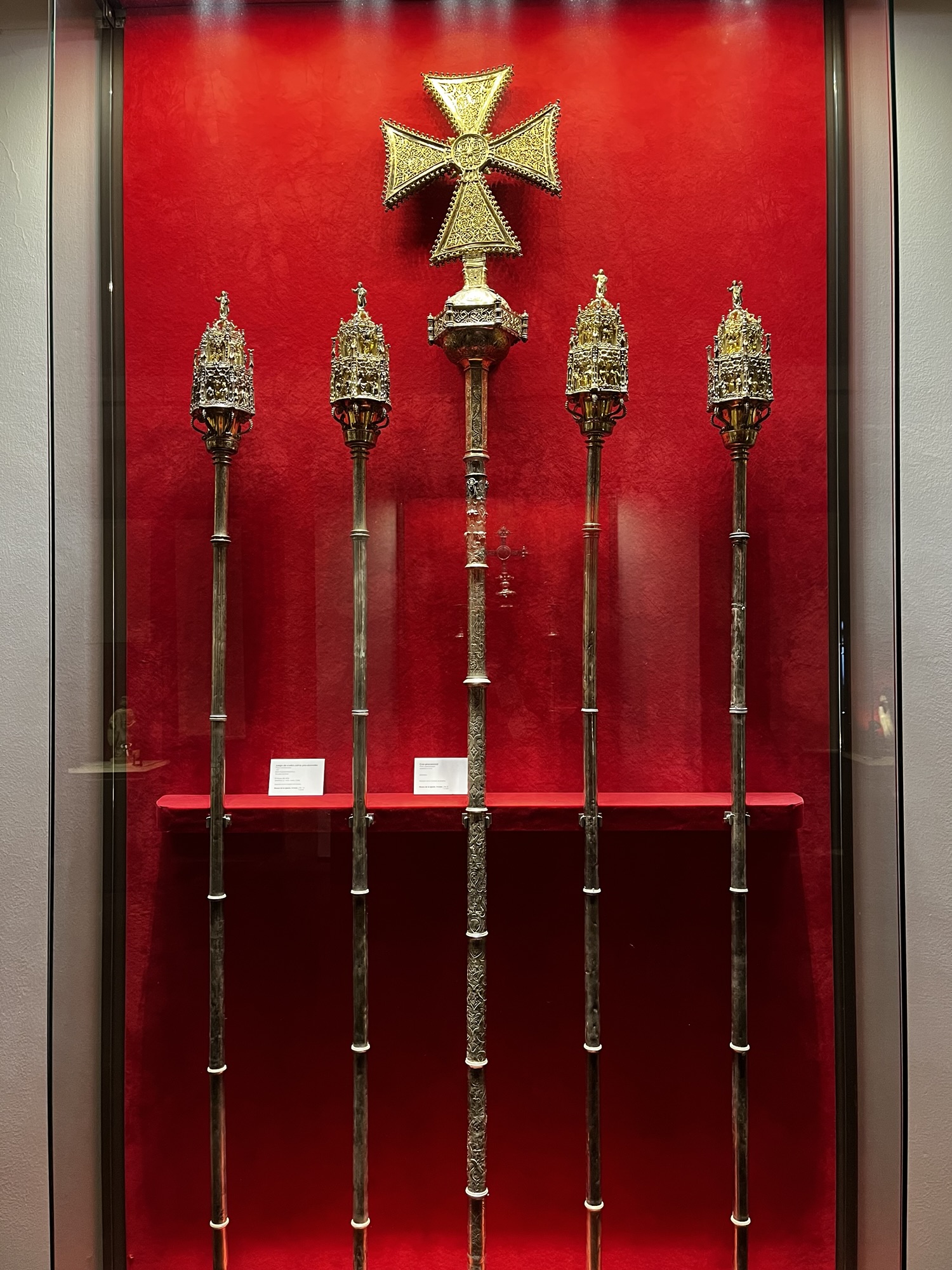
Following the tour route it took us another flight of stairs where there were five rooms for a museum. These articles have been curated, collected, donated and purchased for historical value. Here are a few things seen.

Going back downstairs, we discovered this courtyard. There was an ancient olive tree that had stood the test of time.

A burial crypt was also seen in this courtyard.

A cloister existed for meditation.

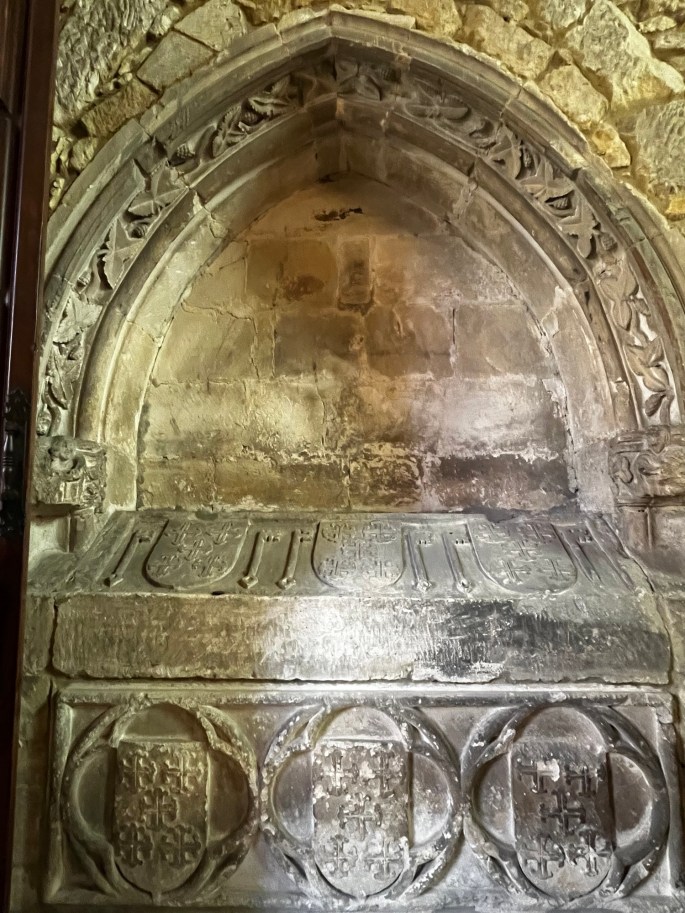
Along with some of the oldest crypts.

Upon exiting the cathedral this archway is placed on an angle for a specific reason. It led pilgrims to the Hospital of St. John, which no longer exists.

These alcoves on the outside were deliberately left empty. These are to be a reflection of the spaces that we ourselves must fill up with our life’s work.

One last photo of the cathedral. The tower has a bell made in 1219 and is the oldest bell still actively used in Europe.

It’s time for a break in writing and a break from our church tours. This cathedral was the majority of our morning, so very interesting, so very old and so very well presented.

San Sebastian 2025 – post 2

Basilica of Saint Mary of the Chorus

Walking into this basilica was bearing witness to 800 years of history. It is one of the most ancient sites in the city. Various temples have been erected here since the 12th century. The current building was finished in 1774 during a period of prosperity.

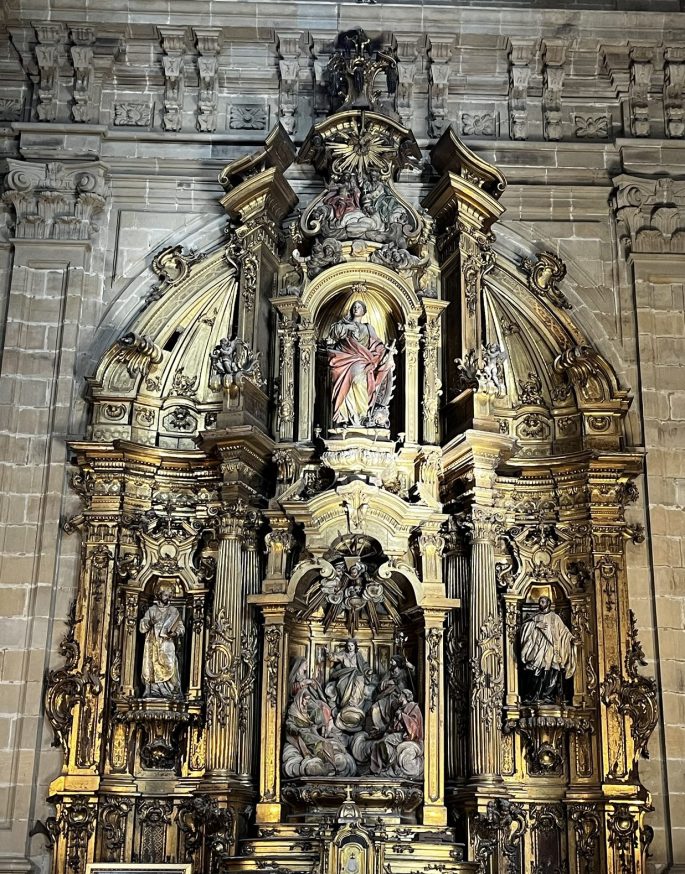
The high altar grabs your attention upon entry.

The painting at the top of the above photo is saint Sebastian. This one was installed in 1819 after the previous painting vanished in 1813.

The selection of saints on the alter were all martyrs, aimed at exalting the sacrifice of one’s own life in the name of religious beliefs. Yikes!

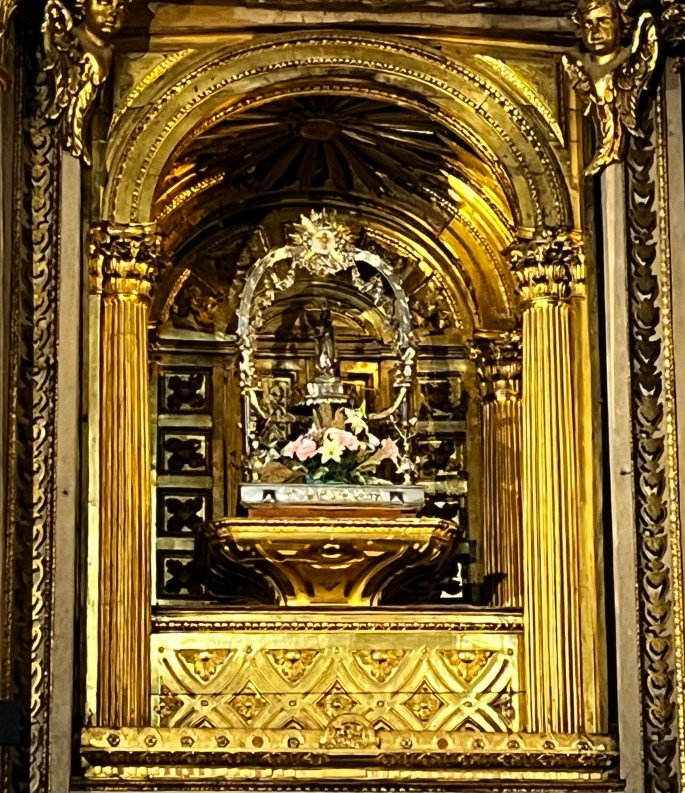
The gold centerpiece is the ‘Lady of the Chorus Virgin’ that attracts the biggest devotion. This icon has not ways been located in the high alter, but in the chorus of the church. It has been here the last 250 years, but the iconography seems to track it back to the 16th century Italy. There is a festival in September devoted to her.

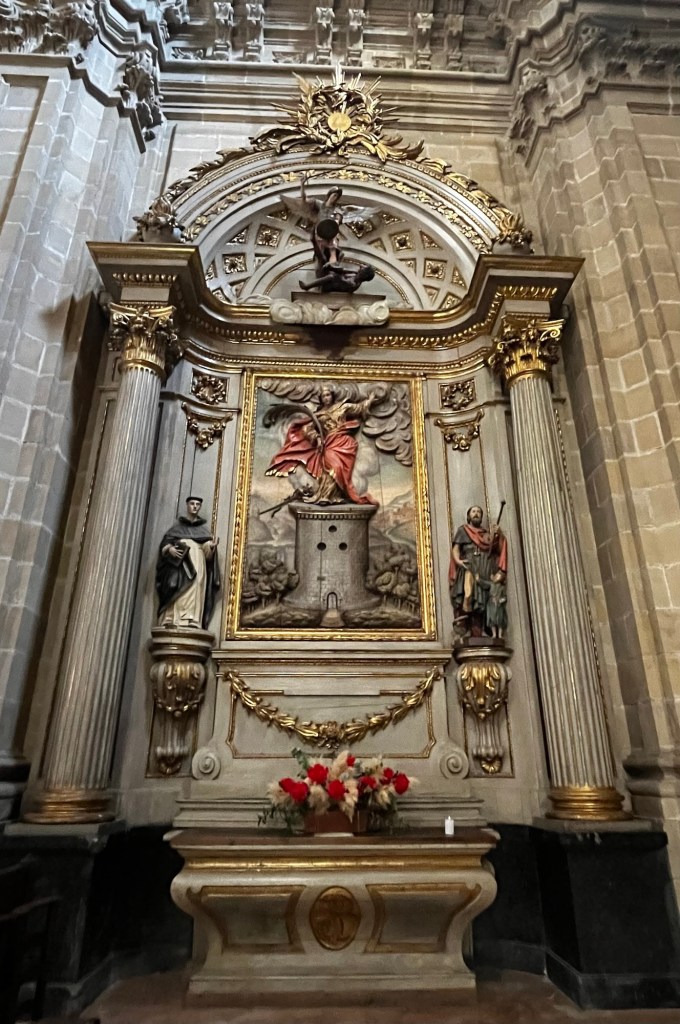
Twin altars flank the high alter. The one pictured below is Saint Barbara which is the patron saint of the artillery.

Three additional alters were in this basicilica, with identical architectural design but accomodate different saints and what they are associated with. Some are associated with the sea, , merchants & tailors and fishermen.

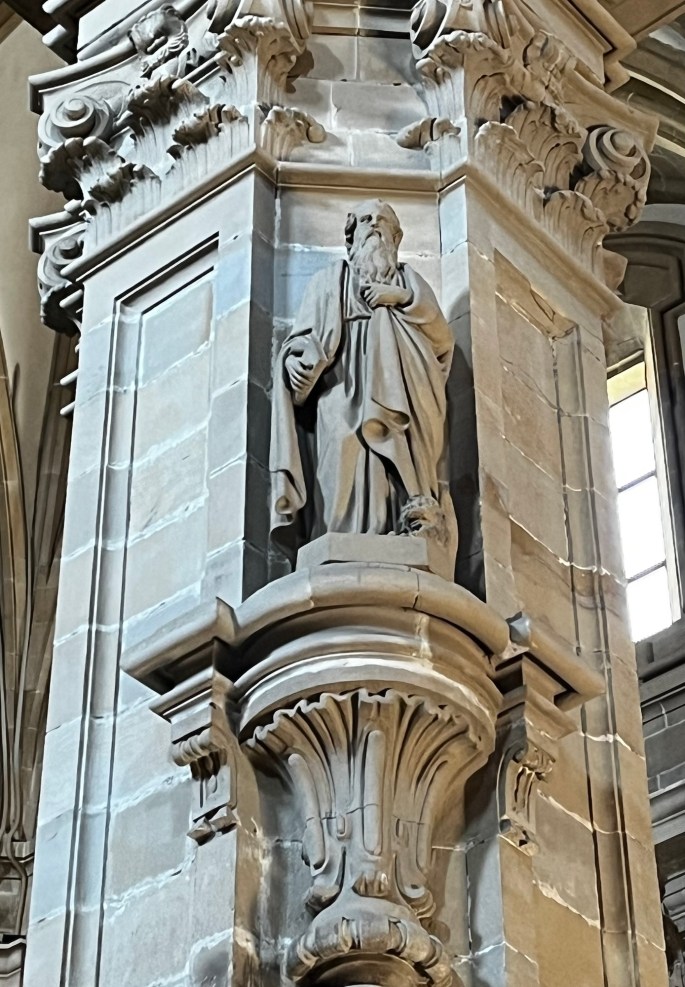
All the detailing just astounds me. Especially when you hear when these things were made and the hardship those not of nobility existed within. Even looking up high, figures are carved into the pillars. Someone was always looking at you when you attended church.

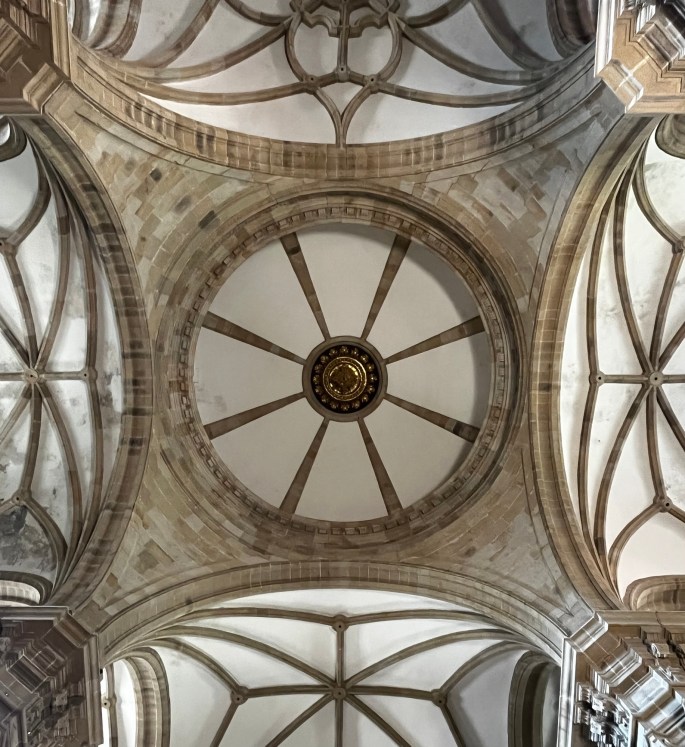
Speaking of looking up, captured a photo of the ceiling. The design is stunning but thinking back to other ‘fine’ ceilings we have seen on this trip, they are somewhat plain.

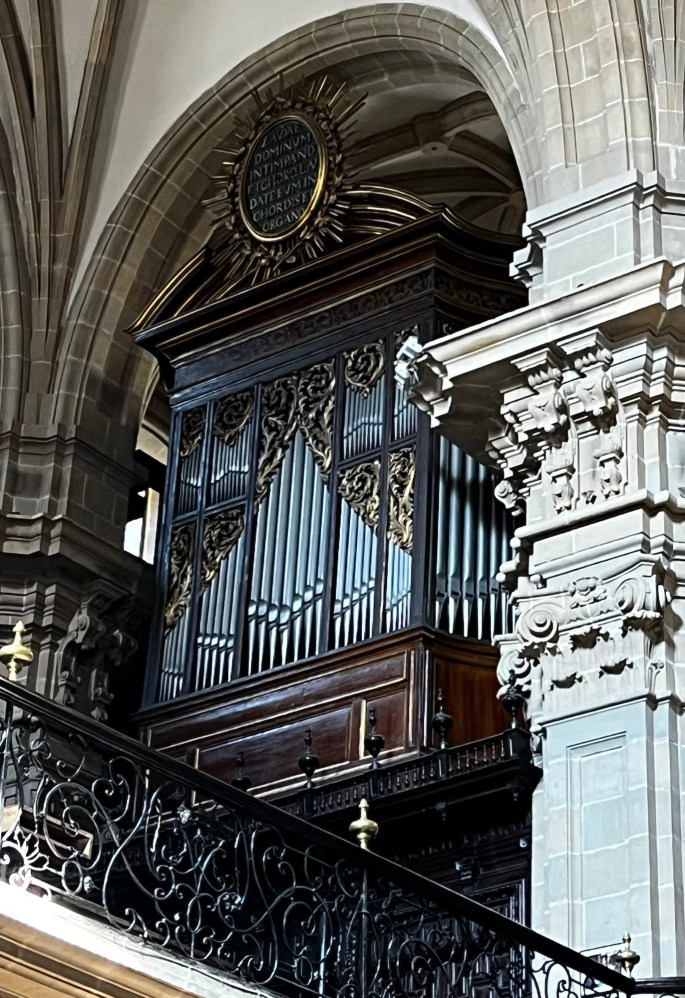
We could only see a portion of the organ as they are in the midst of collecting funds for restoration. An organ existed prior to 1860, but no information had been found. The City Countil found renewed energy in the mid-1800s to fund this one.

They created a museum next to the sanctuary and it was open. They have collected items in the surrounding communities that were utilized in the past. Some were in better shape than others as they had been put to daily use in their houses and barns. It was an interesting collection.

I would have enjoyed listening to their organ, but the next time would be on their Sunday service at 11:30am – the day of our departure. Concerts are held regularly, and the music creates a ‘magical’ atmosphere inside the temple.

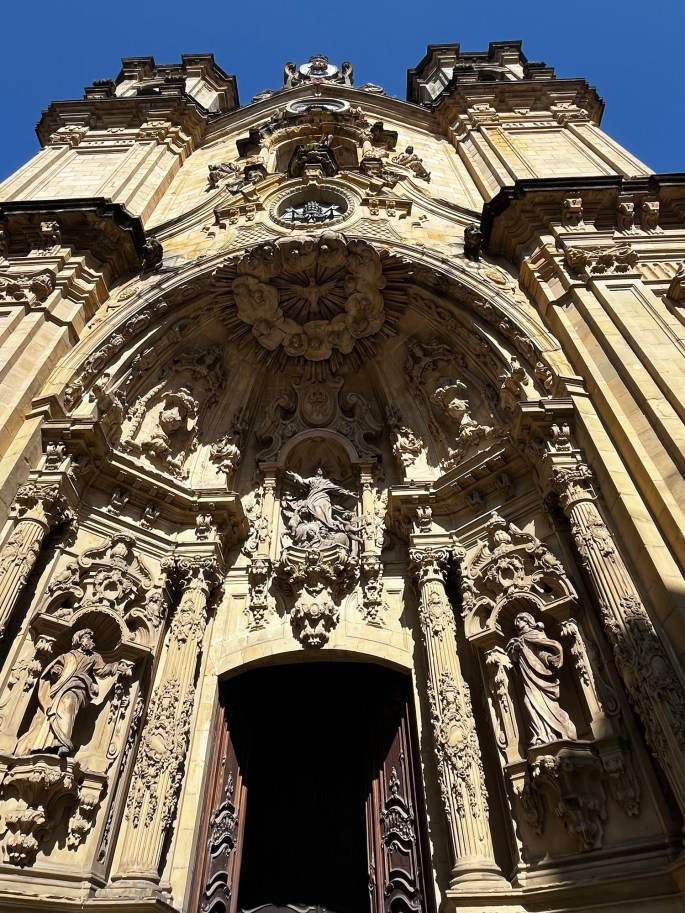
I really enjoyed walking and looking through this building and reading about all of the symbolism. My last photo is another of the facade. It has prolific decoration and marked theatrics as opposed to the simplicity and minimal ornamentation spread throughout the rest of the outside facade.

The center glorifies the Lady of the Chorus, flanked by her parents as she in turn looks up to the Heaven.

And above it all, is a statue of Saint Sebastian.

If you ever make it to this city…………..take a moment, step inside and soak in the ambience, history and symbolism.

Madrid 2025 – post 4

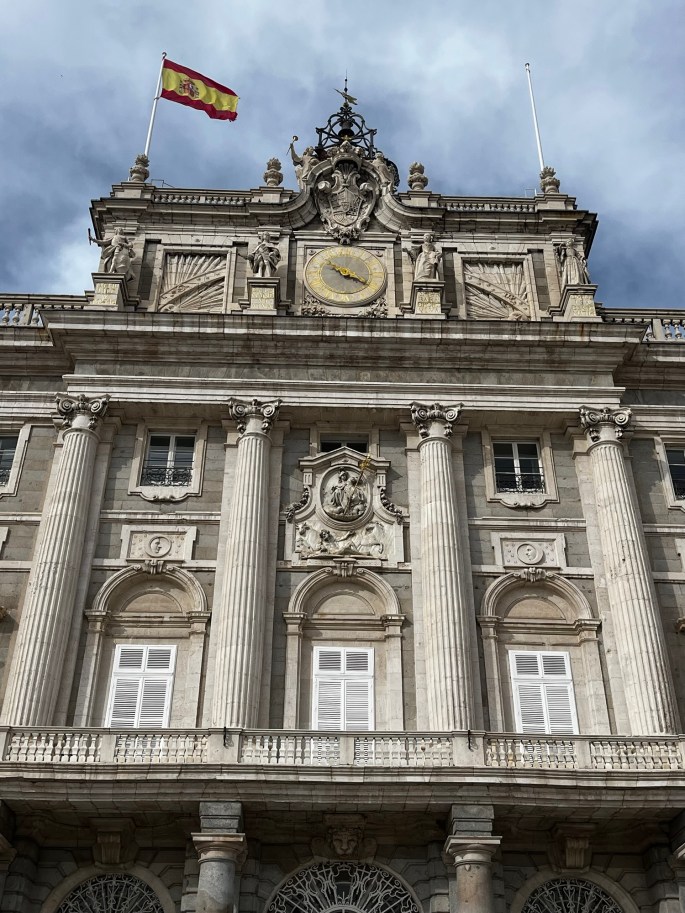
We did some historic sites while in Madrid. One such site was the Royal Palace of Madrid.

It is the official royal residence of the Spanish royal family, although now only used for state ceremonies. The palace has 1,450,000 sq foot of floor space and contains 3418 rooms, making it the largest royal palace in Europe. Versailles is bigger, if you count the gardens.

If the Spanish king is in the building, a second flag would be flown.

The palace is on the site of a by-gone Muslin era fortress constructed in the 9th century. While there had been a number of expansions and alterations through the years, the palace burned down in 1734. A new palace was built from scratch on the same site beginning in 1738.

The grand staircase is composed of a single piece of San Augustin marble and upon reaching tyhe top stair, turning around you are greeted with this imposing site.

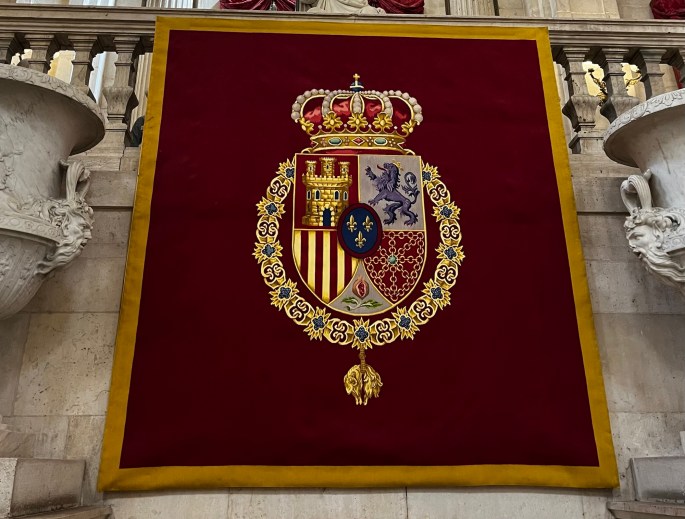
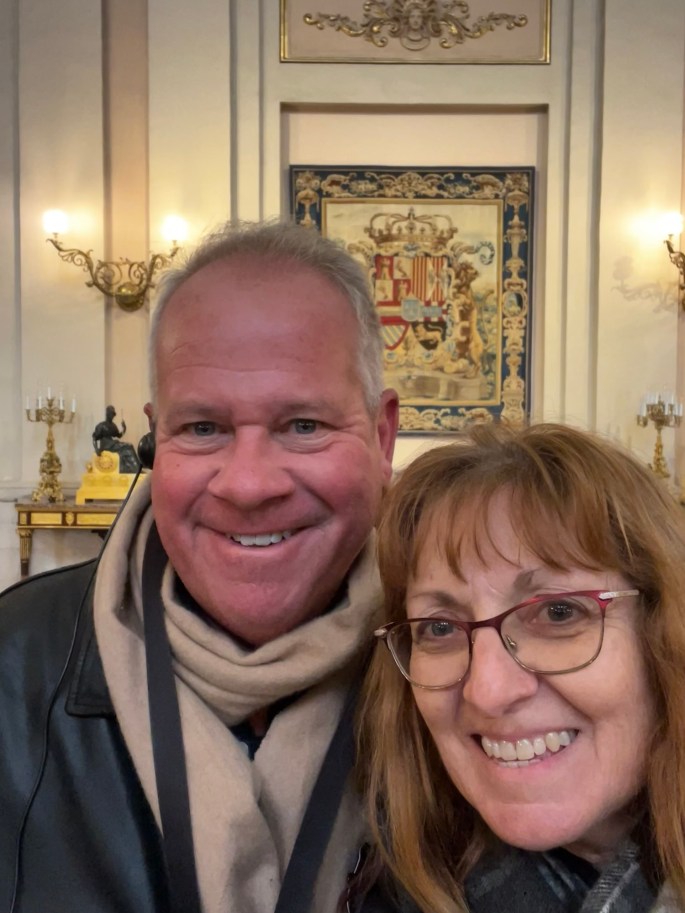
A close-up of their coat of arms…..

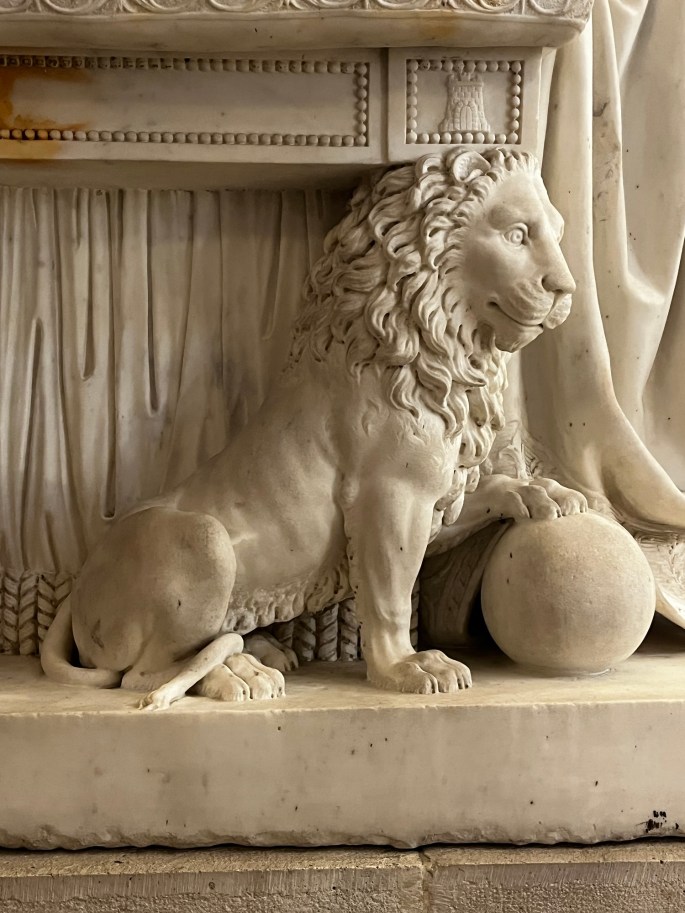
Carved lions guard the statue on both sides.

The frescos on the wall above the grand staircase depicts Religion protected by Spain. Everyone room had fantastic murals on the ceilings. It really was almost too much to take in. One could not absorb the beauty of the palace.

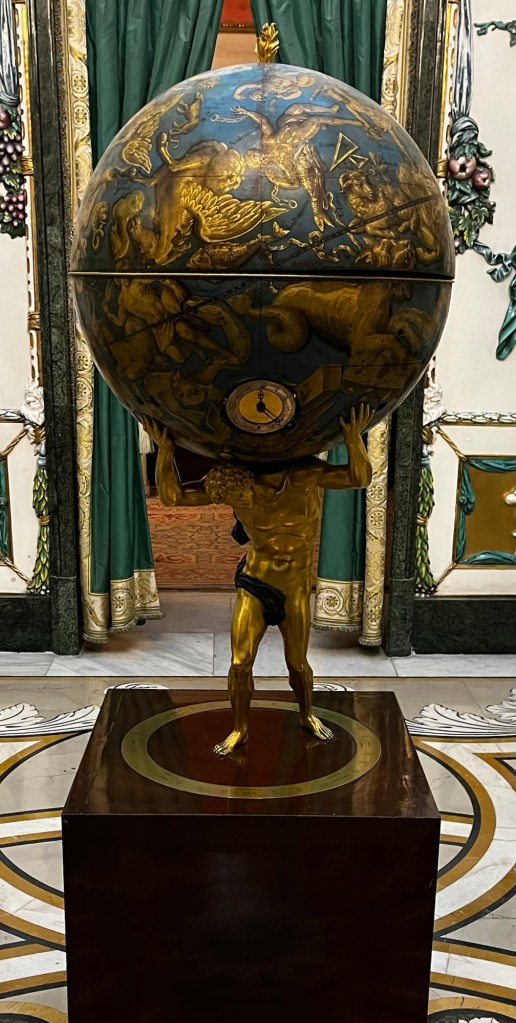
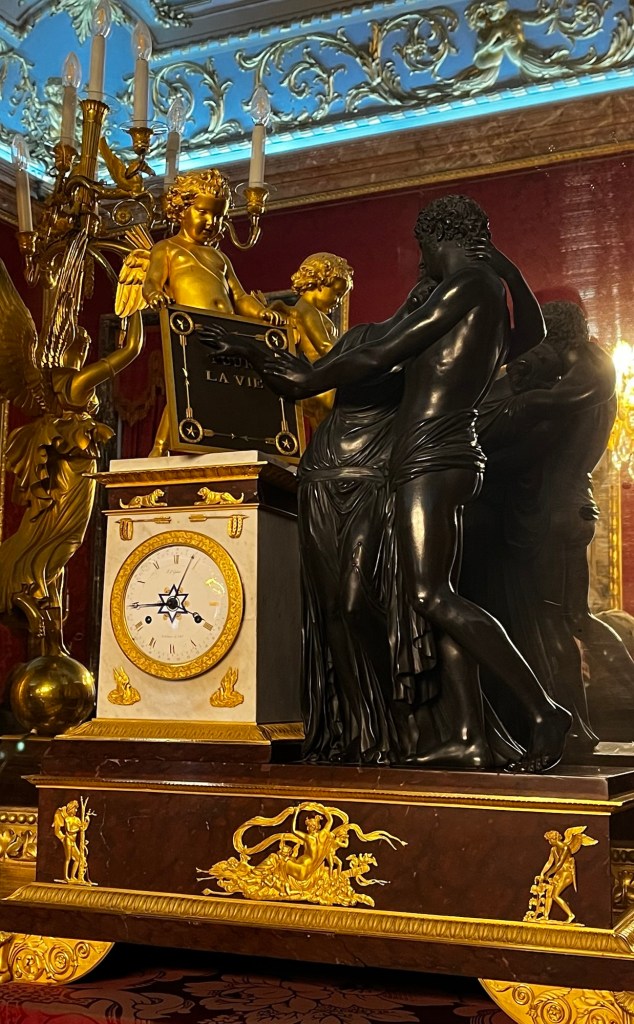
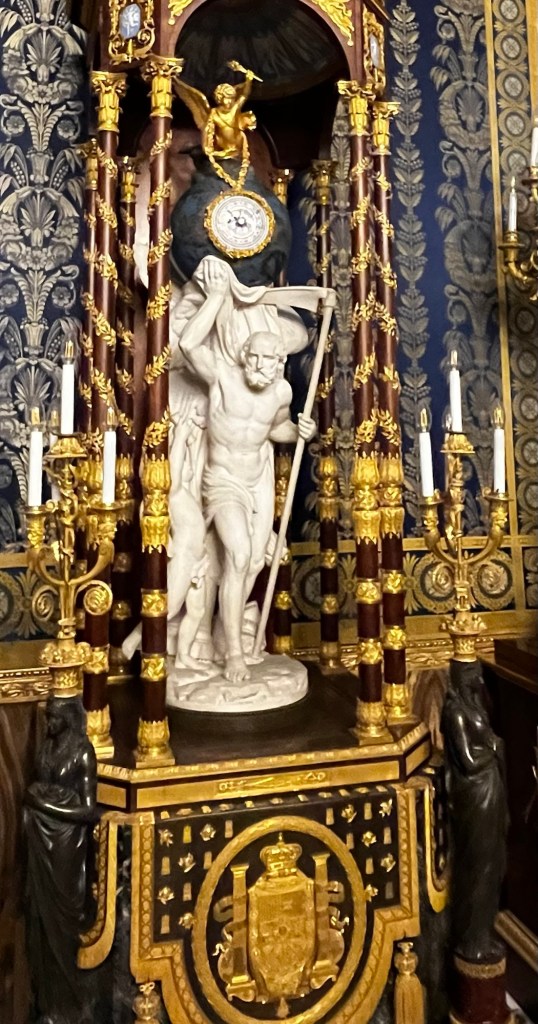
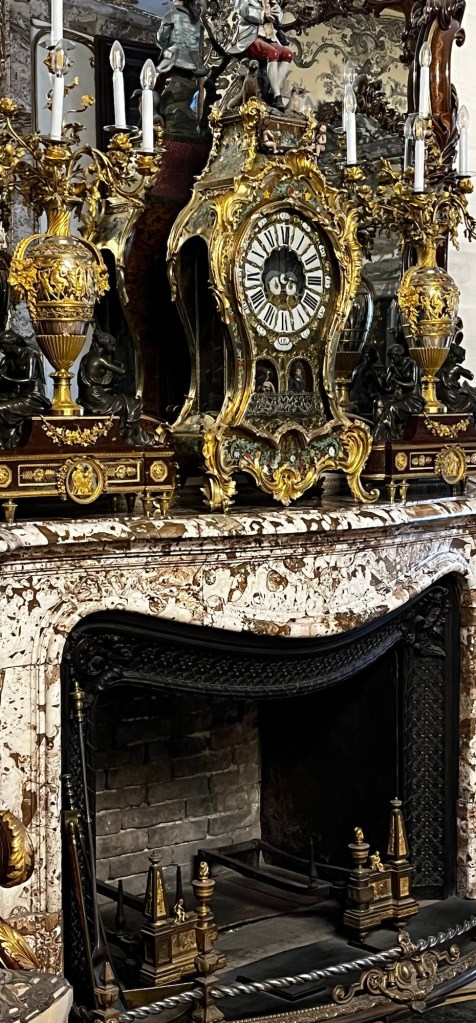
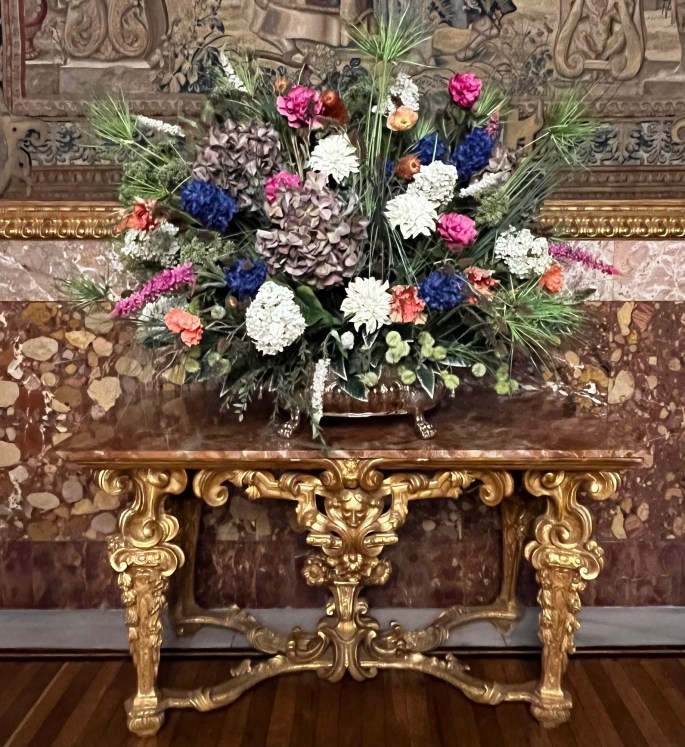
There is so much opulence that after a while the only difference is the overriding color in each room. We saw the King’s chambers, then the queen’s chambers. Clocks were a thing to be collected so I included a gallery of (some) of the numerous clocks we encountered.

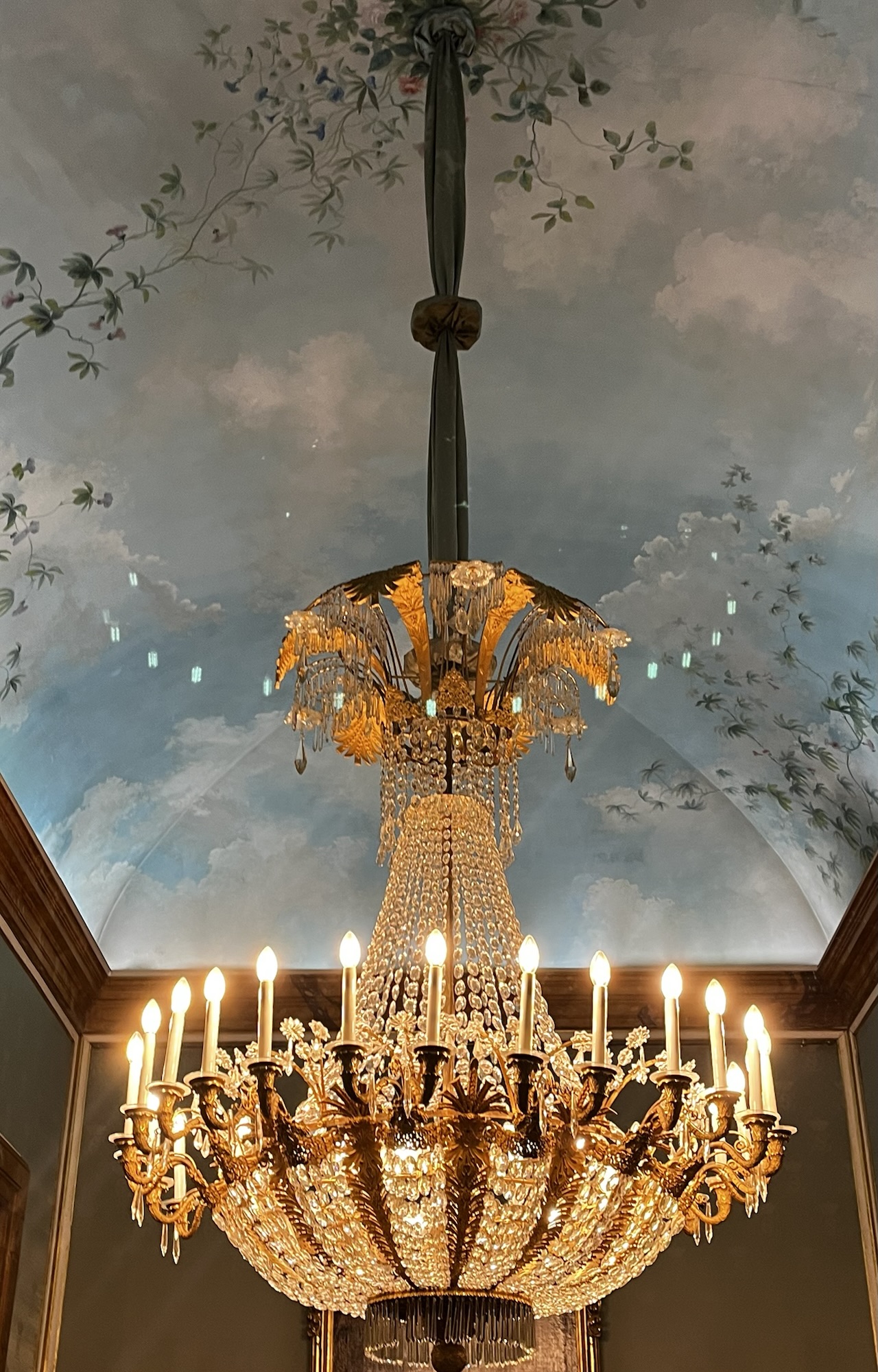
The chandeliers were amazing, some rooms having more than one. Here’s a small gallery.

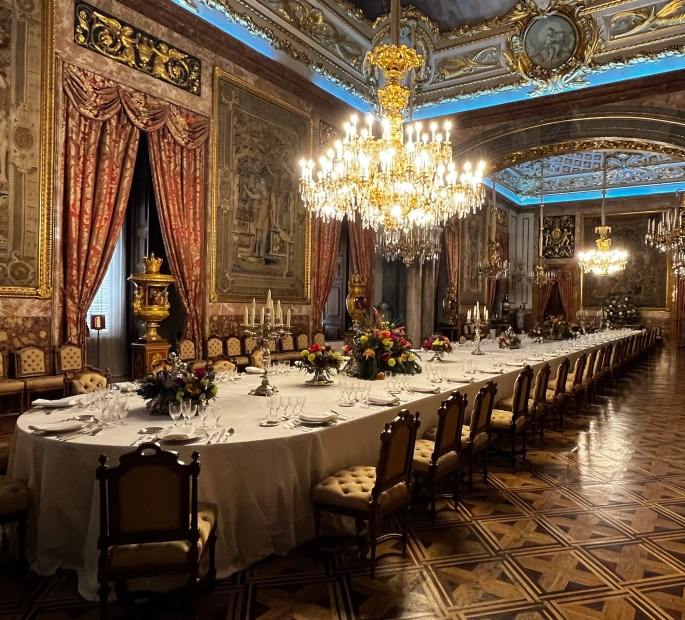
The banquet room was also imposing.

Which led us to their ‘pantry’ highlighting some of their porcelain and silver serving pieces.

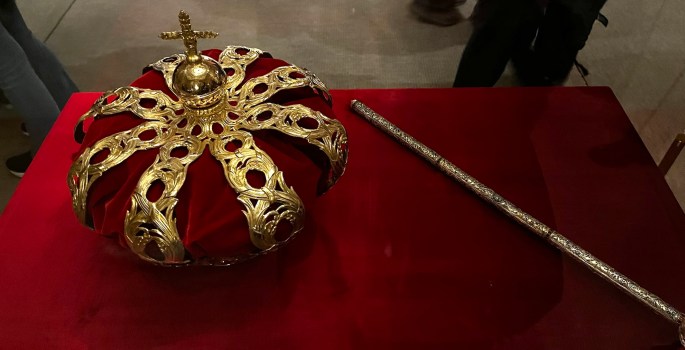
The throne room and jewel room were equally imposing.

We enjoyed the tour, especially the part where we got to ‘skip’ the line with our tour guide.

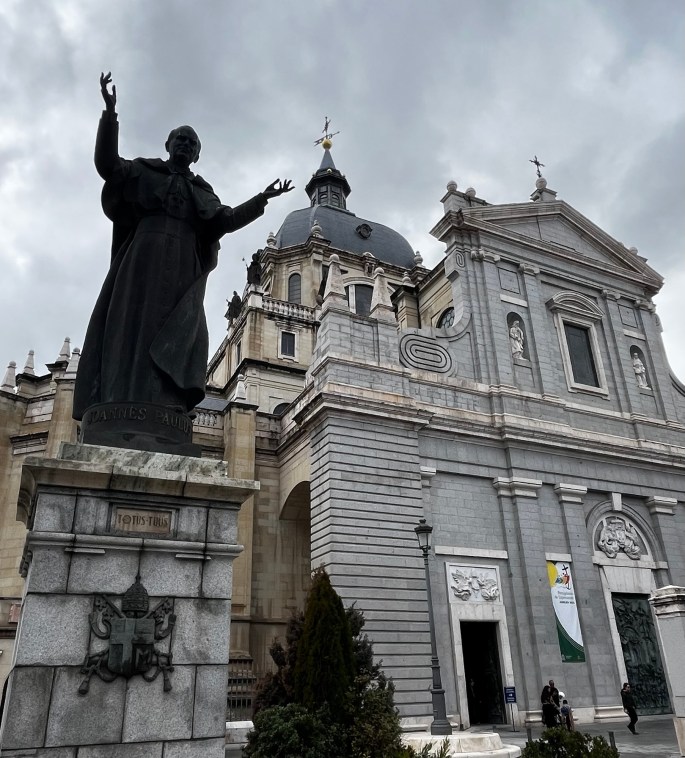
Next door is the Almudena Cathedral, I mean, literally right next door from the Royal Palace. It is the Catholic cathedral in Madrid and the seat of the archdiocese of Madrid. It seems to have been built on the site of a medieval mosque that was destroyed in 1083. The statue is a moument to Pope John Paul II.

These doors were extremely tall. Hard to see that in my photo, but maybe you can guess the scale from the photo above.

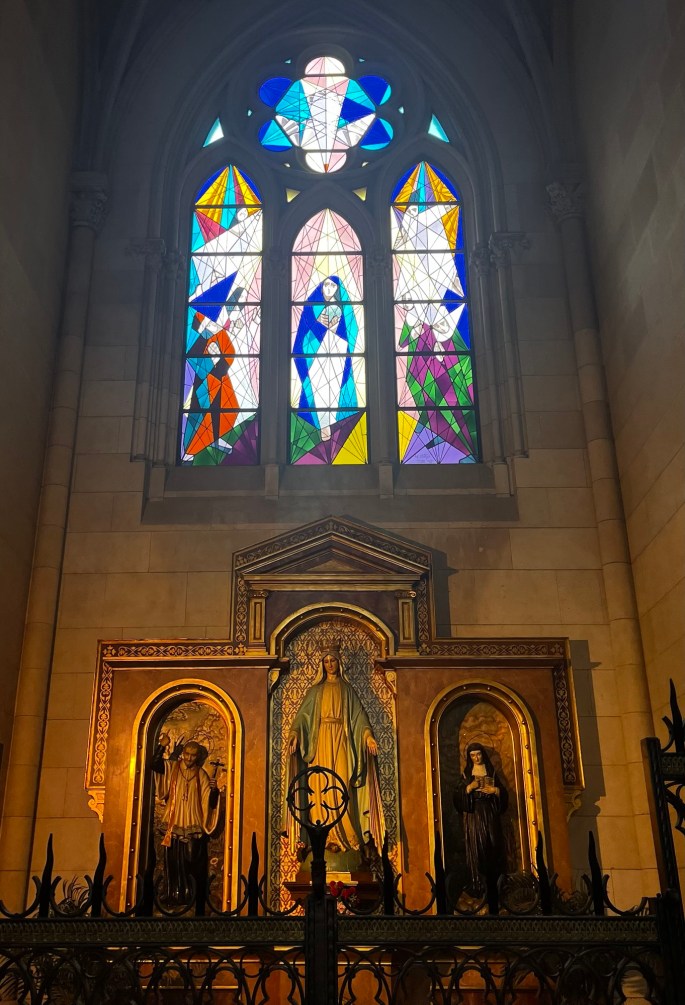
It was started in 1883 but not completed until 1993 so it is a ‘newer’ church, with some modern touches. This was evident in the stained glass windows.

While no service was occurring, there was someone playing their organ. The organ was installed in 1999 after being made in Barcelona.

Since that doesn’t happen very often, I included a short video – which also gives a wider perspective of this modern church.

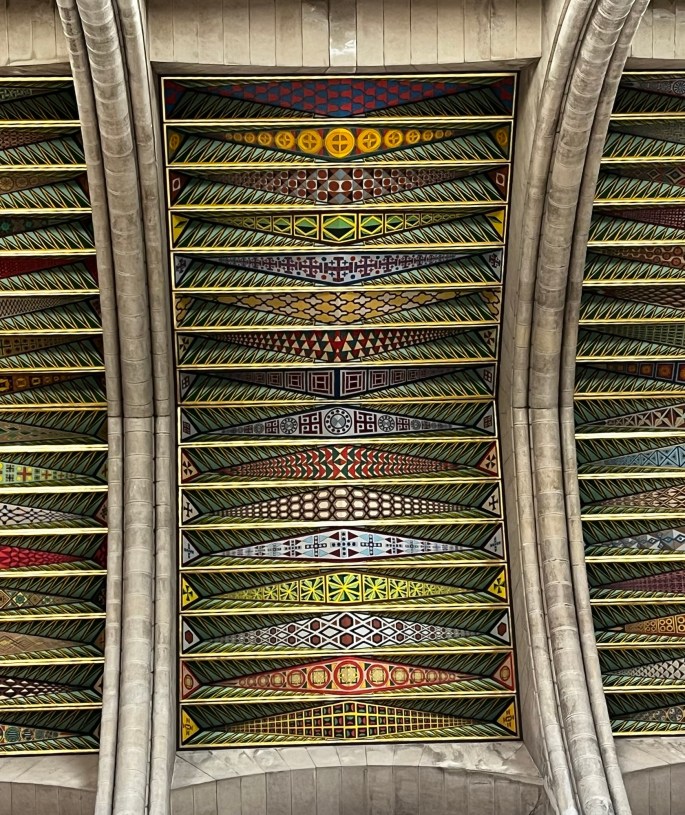
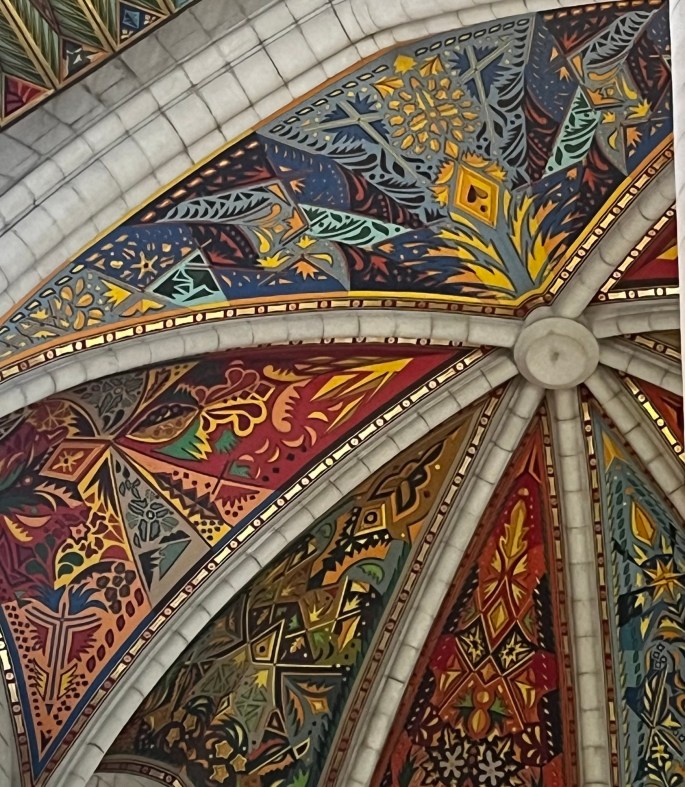
I totally loved the ceilings, they were so colorful and unexpected but inspired by Moorish designs. Here is the nave and the area above the pulpit.

Such amazing colors.

The Cathedral Crypt can be accessed via the Cathedral or a door along the side of the building, which is how we entered.

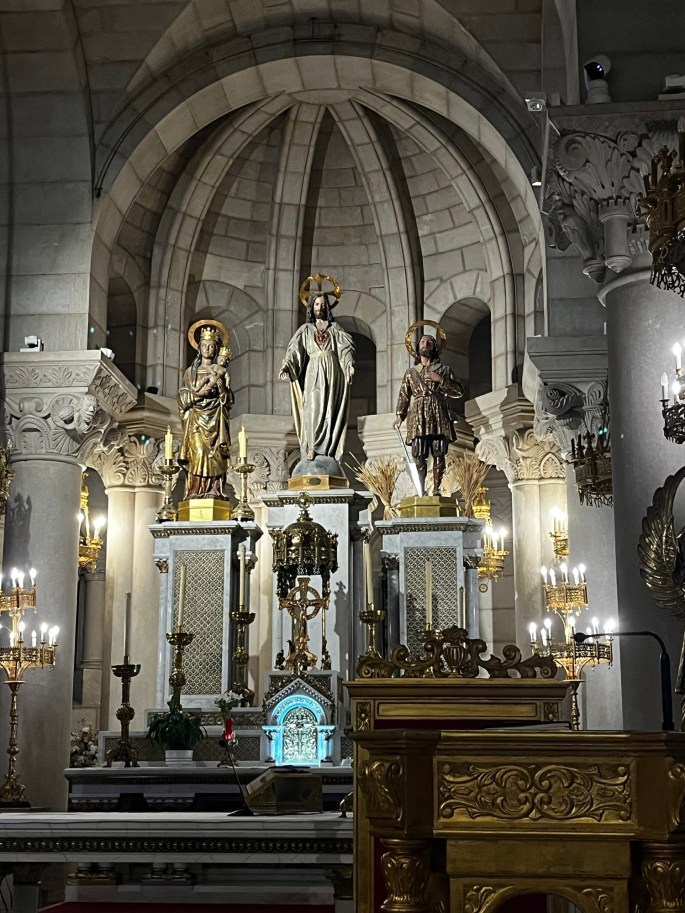
It is the largest crypt in Spain and completed in 1911. The chapels inside contain the tombs of important 19th century families.

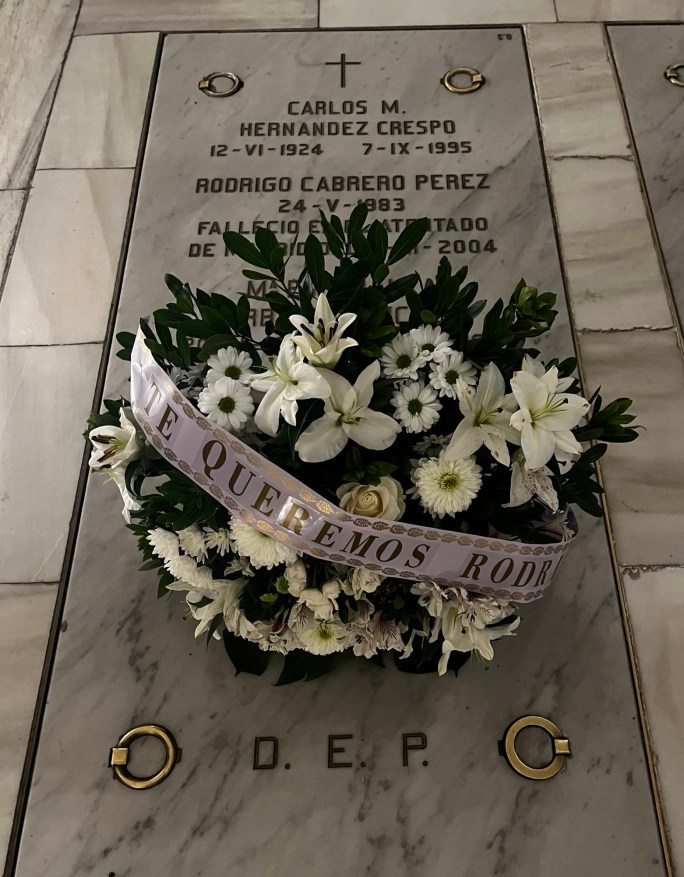
This was the first time we have seen flowers on the crypts. Once you look at the dates, then you truly realize this was much younger than most other crypts we have visited in Europe. For those, no family members are around to place flowers.

Some visitors feel the crypt is more beautiful than the cathedral and in some respects more well decorated. There are five naves and 20 chapels. The number of columns with trees, plants and flowers was amazing.

Typically, I enjoy the really old churches, cathedrals and basilicas more than the modern ones, but exploring both of these buildings was a nice juxtaposition of architedture.

We need more food!