Bologna Porticoes and San Lucas

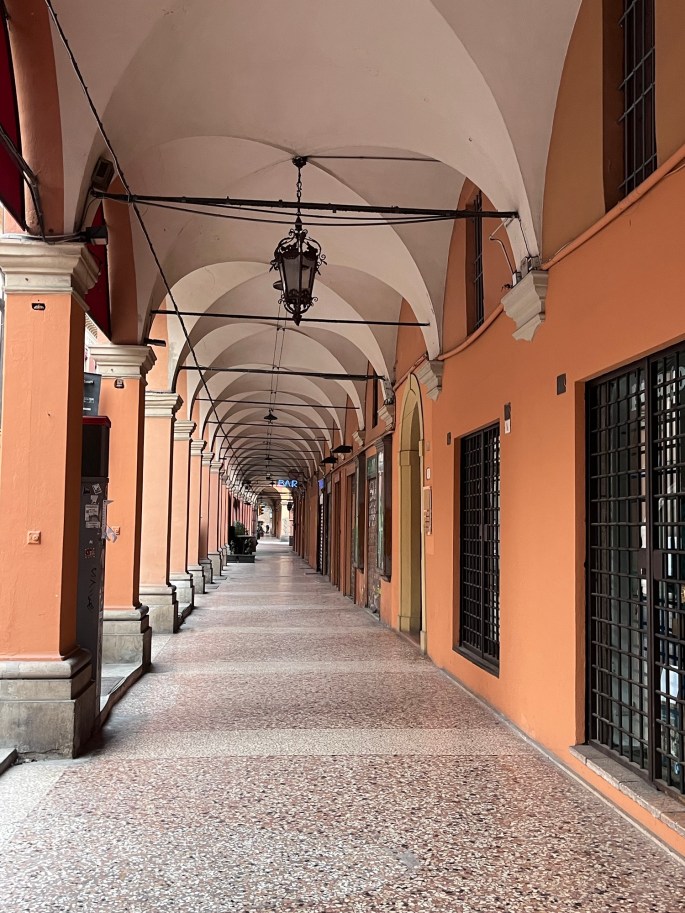
Portico defineda porch leading to the entrance of a building, or extended as a colonnade with a roof structure over a walkway, supported by columns. This idea was widely used in ancient Greece and has influenced many cultures.

Okay – got that out of the way. Why talk about porticoes? They are everywhere in the city center.
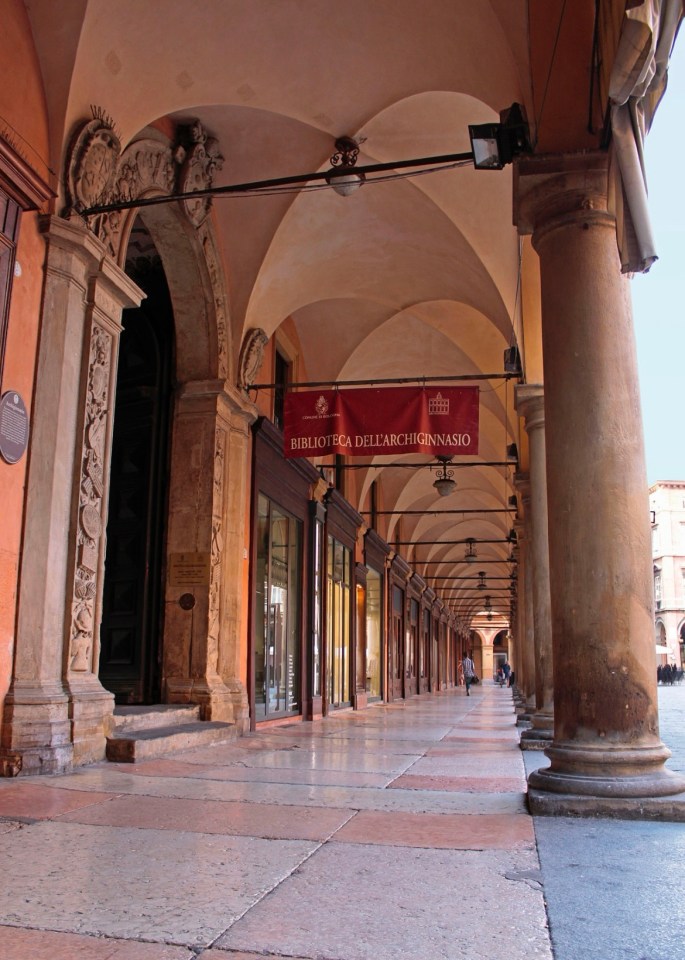
They are part of the culture and architectural heritage of Bologna. No other city in the world has as many. They were built to increase living spaces, with the added benefit of a covering in possible inclement weather or the hot Italian sun.

Within the historic center they cover 24 miles. If you include outside of the medieval city walls now you’re talking 33 miles. The first evidence dates to 1041 and were originally wooden. In the mid 1500s brick or stone took over construction.
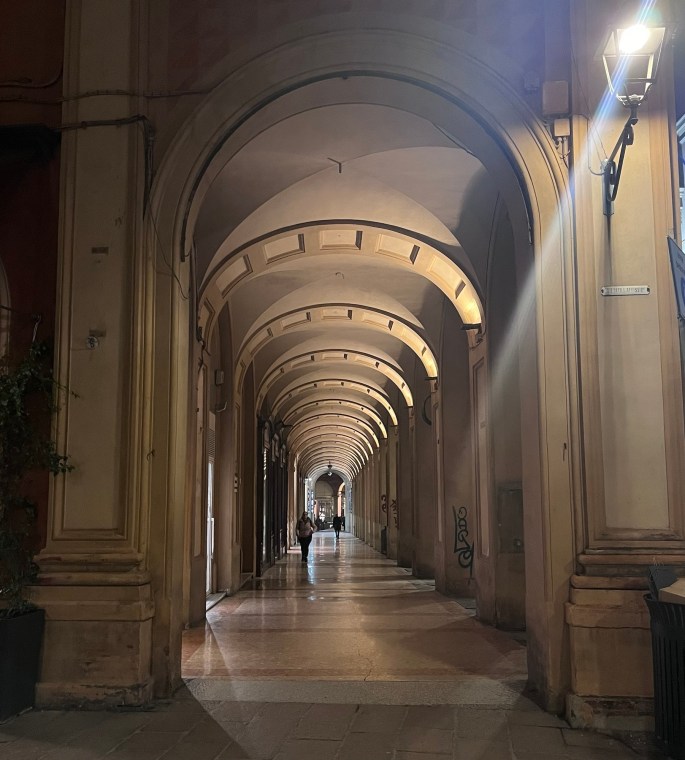
A portico featured prominently for one of our ‘walks’. The Sanctuary of Madonna di San Luca is a symbol of Bologna and sited atop a forested hill. The church is the most important sanctuary in the civil and religious history of the city.
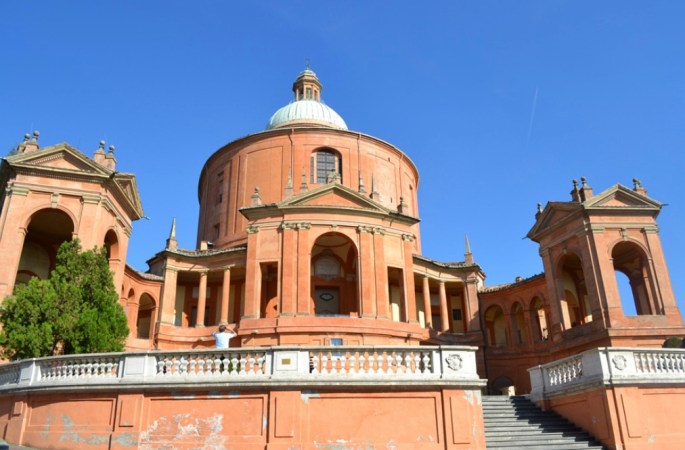
I had read about it before embarking on our travels and thought the ‘walk’ would be a good memory. Little did I know……….

One of our last free mornings, we started the journey – early. Yep, we’re still walking through Bologna to get to the climb – no one is around.
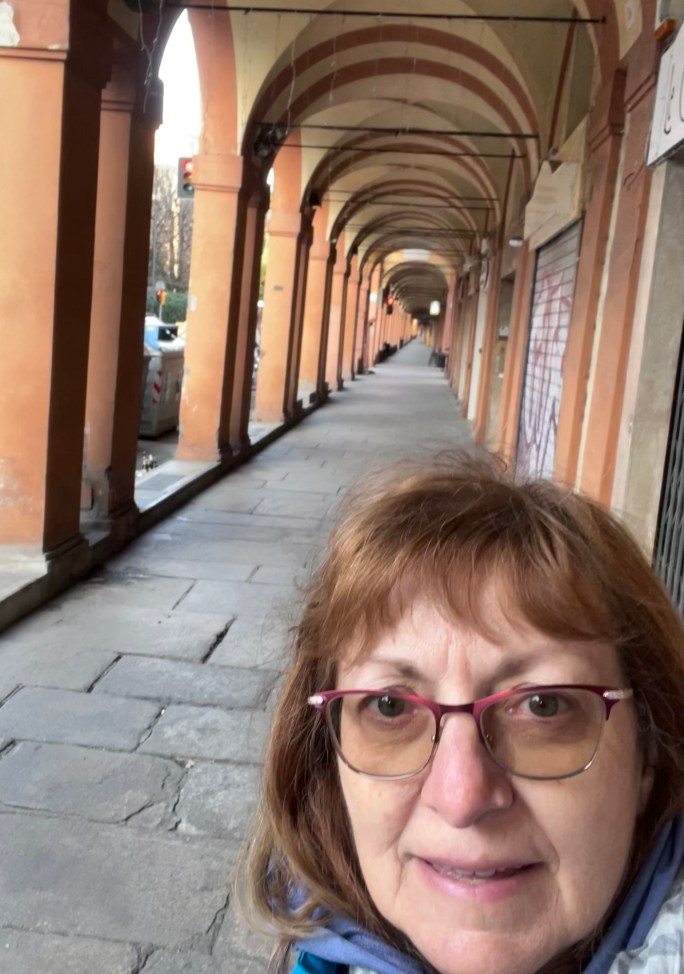
Walked through one of the city gates before the true start of our trek.
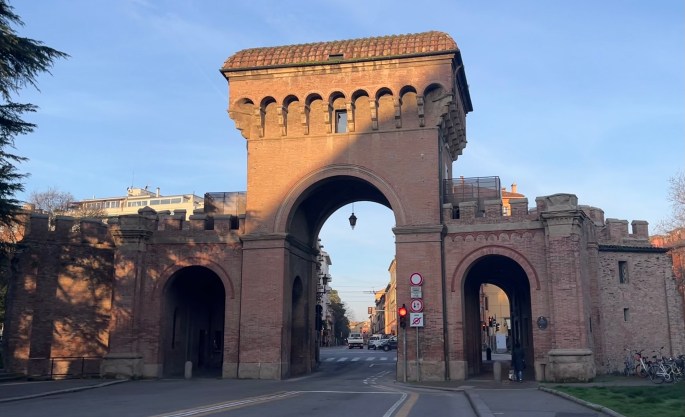
This was created so that traffic didn’t interfere with the journey to the top. In my mind, it signaled the beginning.
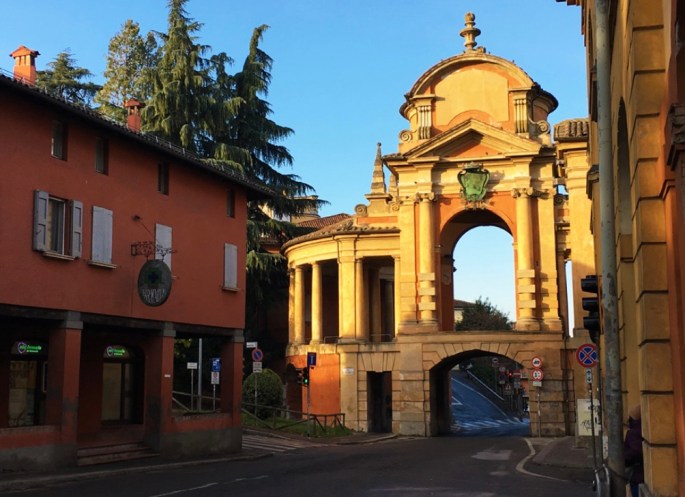
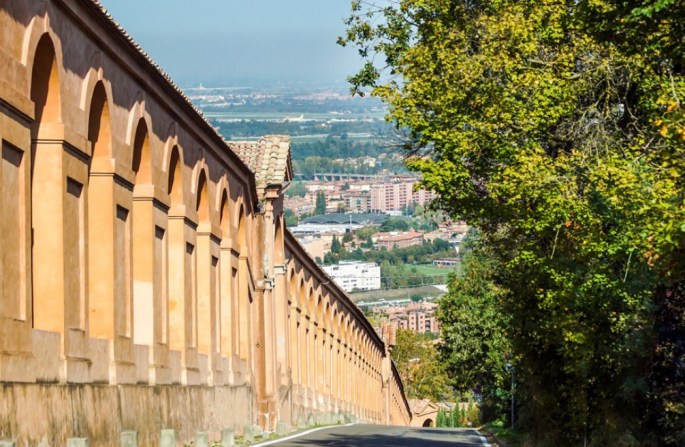
This portico has +600 archways and is the longest in the world at 3.8 km and 666 arches.
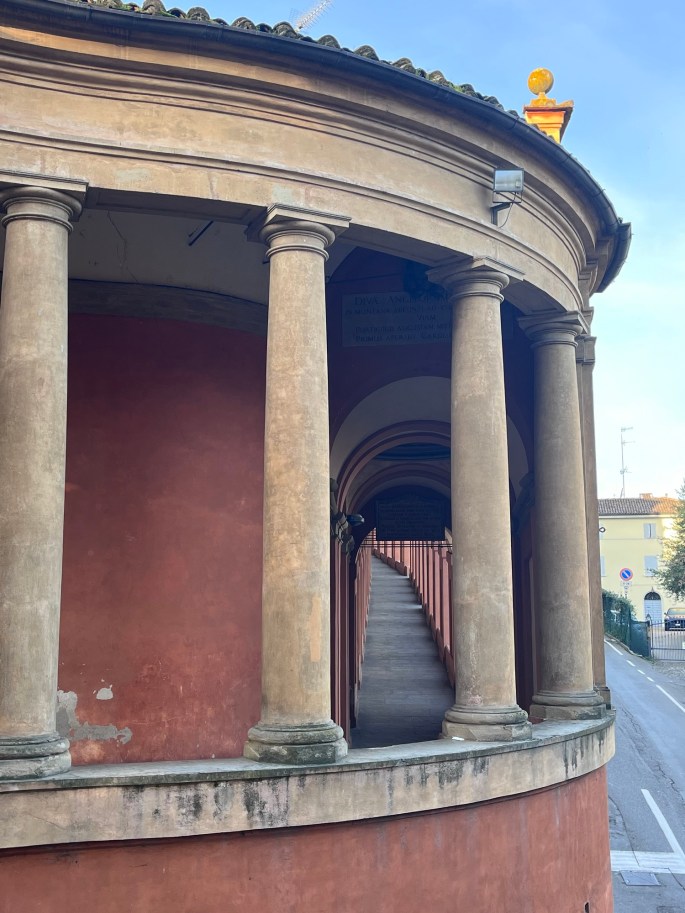
Walking to the church on top was considered a pilgrimage that started in the 12th century. More on that in a minute. We walk. Yes, that is Adrienne ahead of me.

And walk.
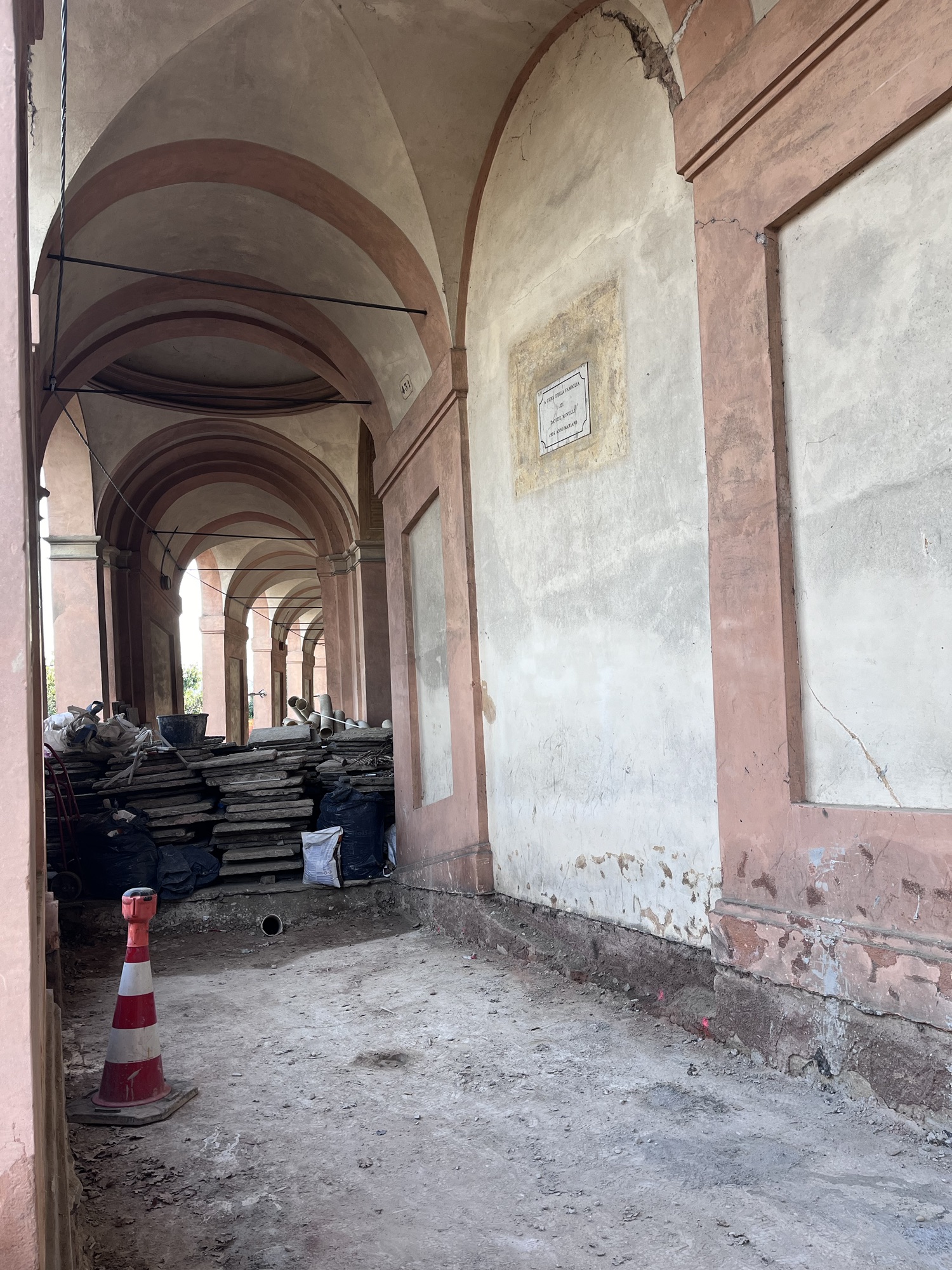
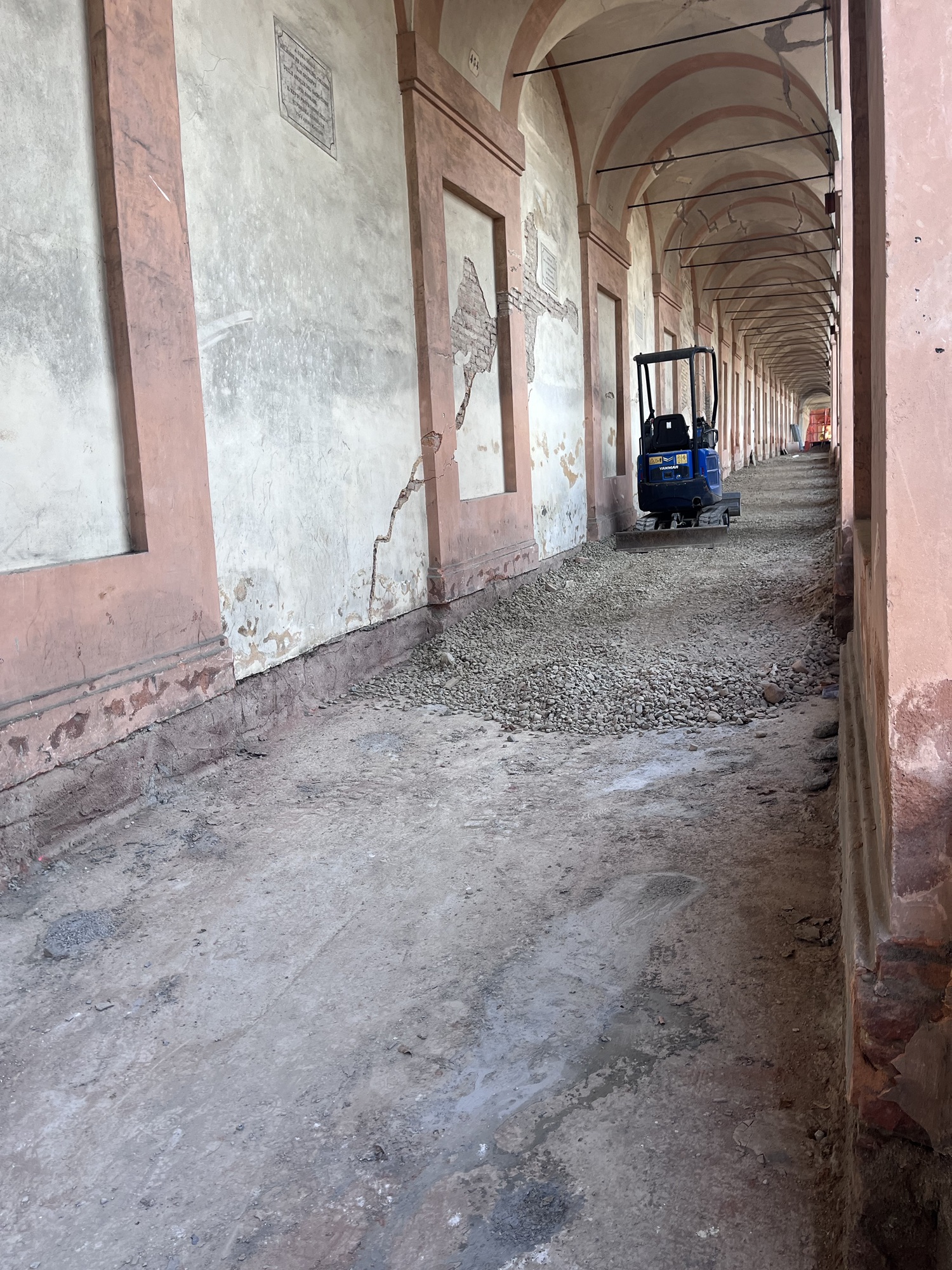
Add in a little construction – now I know why the pathway is so smooth.
And walk more.
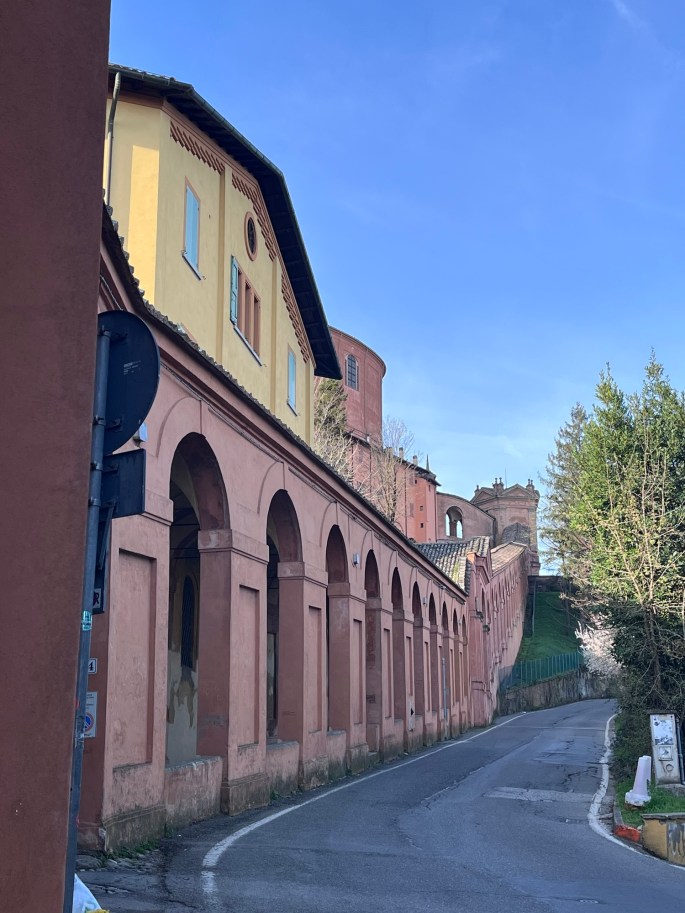
What I don’t have a photo of is the stairs, stairs and more stairs that continue forever. And yes, the last bit of the journey before reaching the top, is more stairs. She’s an athlete, I am not. The joke for the remainder of the trip was ‘She tried to kill me’ with the climb. My legs hurt right now as I’m typing this post. I’m not lying – it was tough. Towards the end, my stopping to catch my breath…….and rest my legs……….was getting tiresome.

Telling my story to friends when I got home about walking to the top, apparently, it’s a ‘thing’ for those that know Bologna. Even now in today’s age, it is considered a pilgrimage to make it to the top. Okay, it WAS worth it.
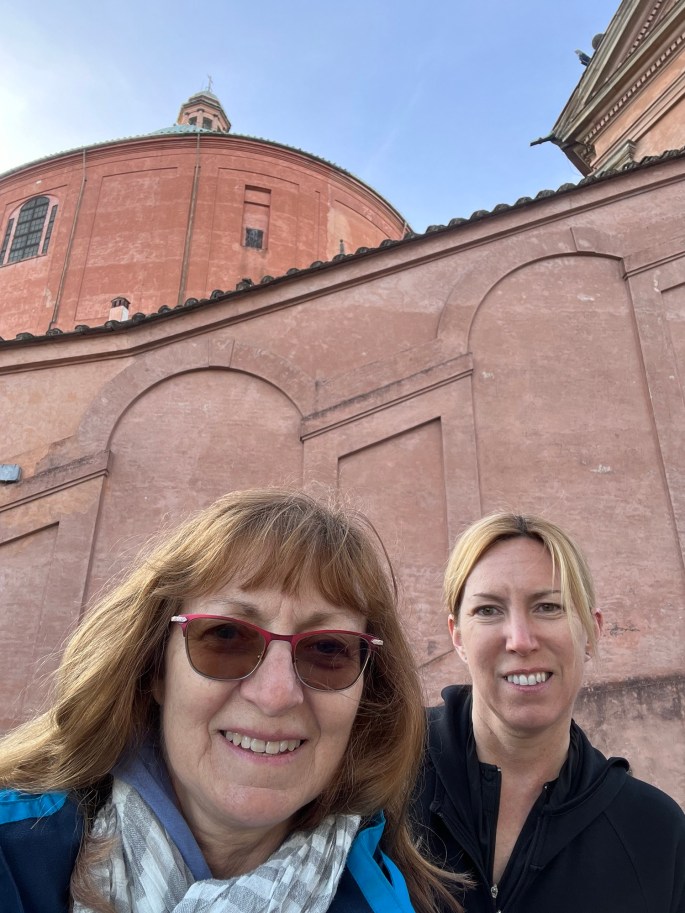
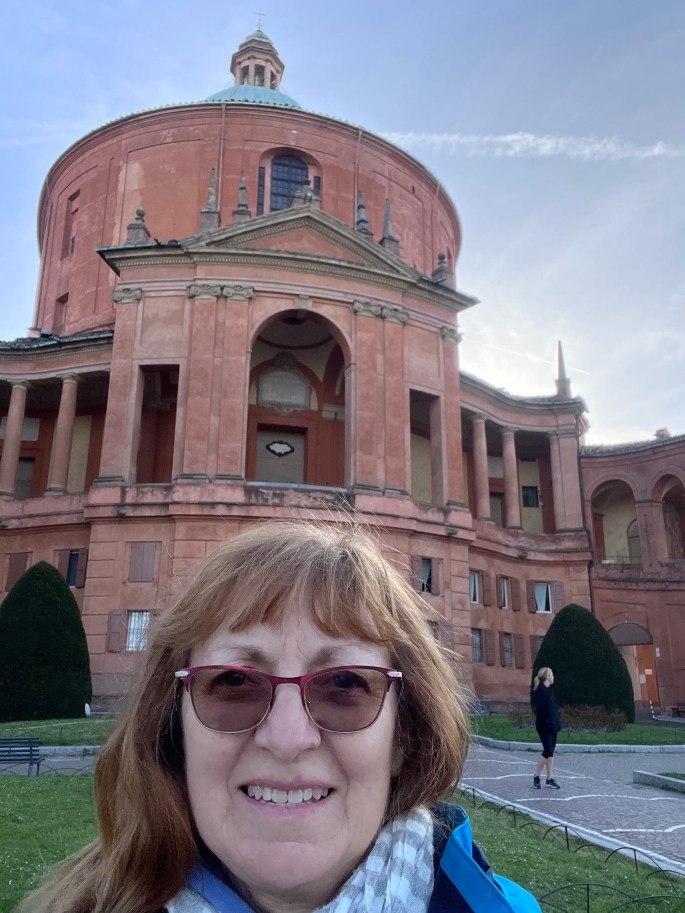
The round part of the building was open when we arrived and the only space available for us to explore. Why was this church here? A church as a chapel has existed on this hill for about 1000 years. The current building was built in the 18th century to replace the 15th century construction.
Inside nuns were reciting their prayers.
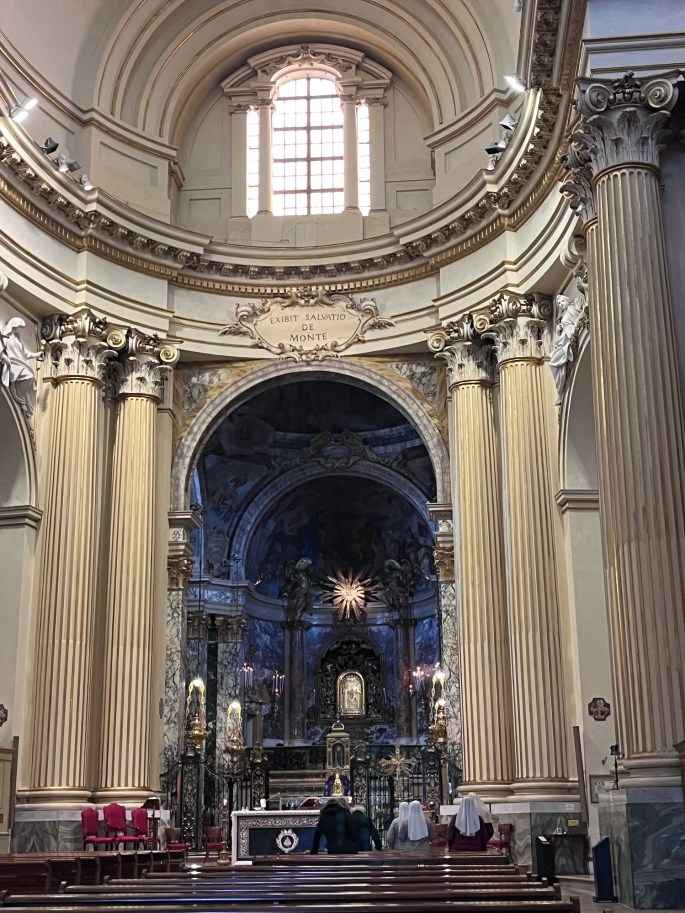
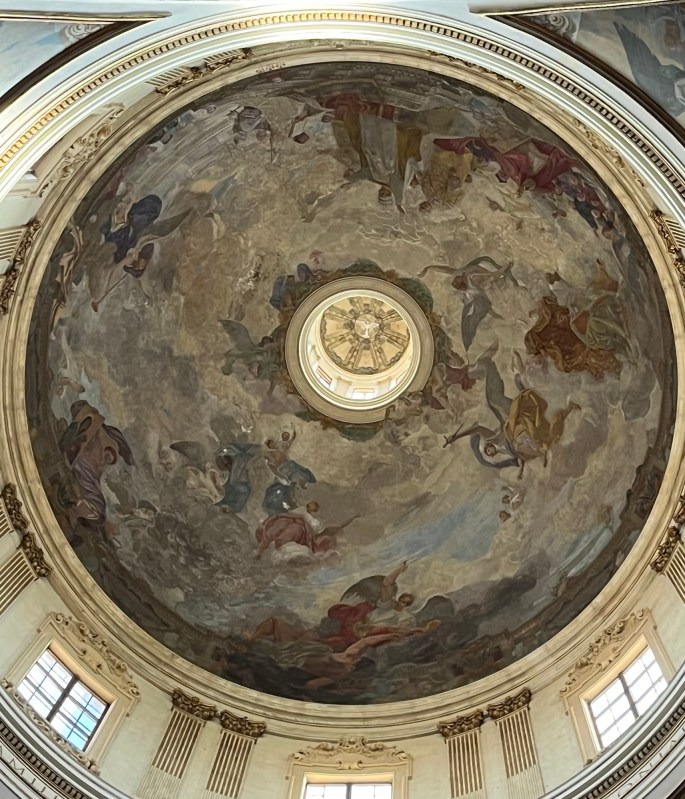
The dome………
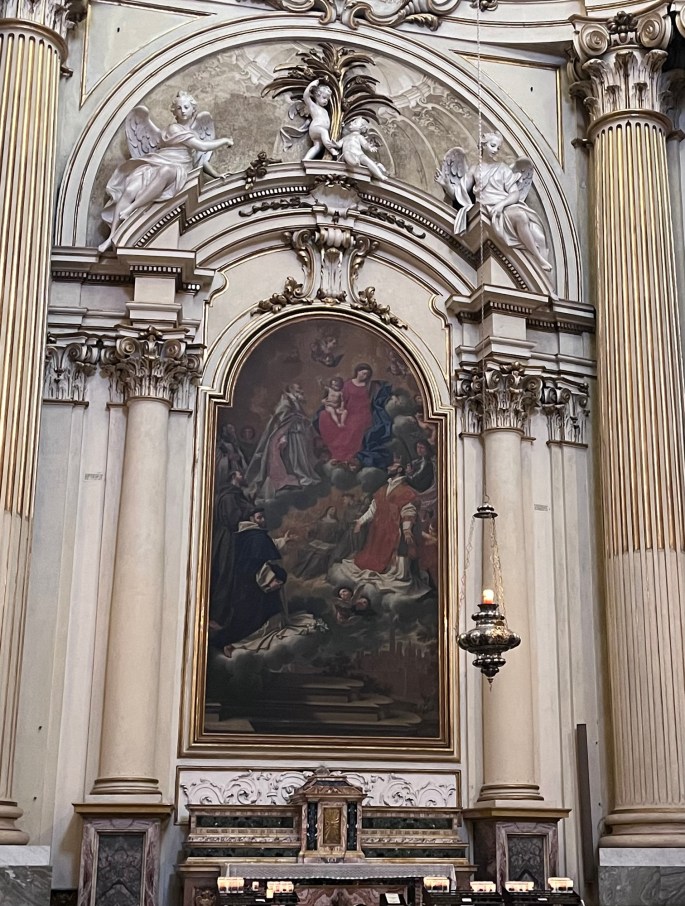
A side chapel…….
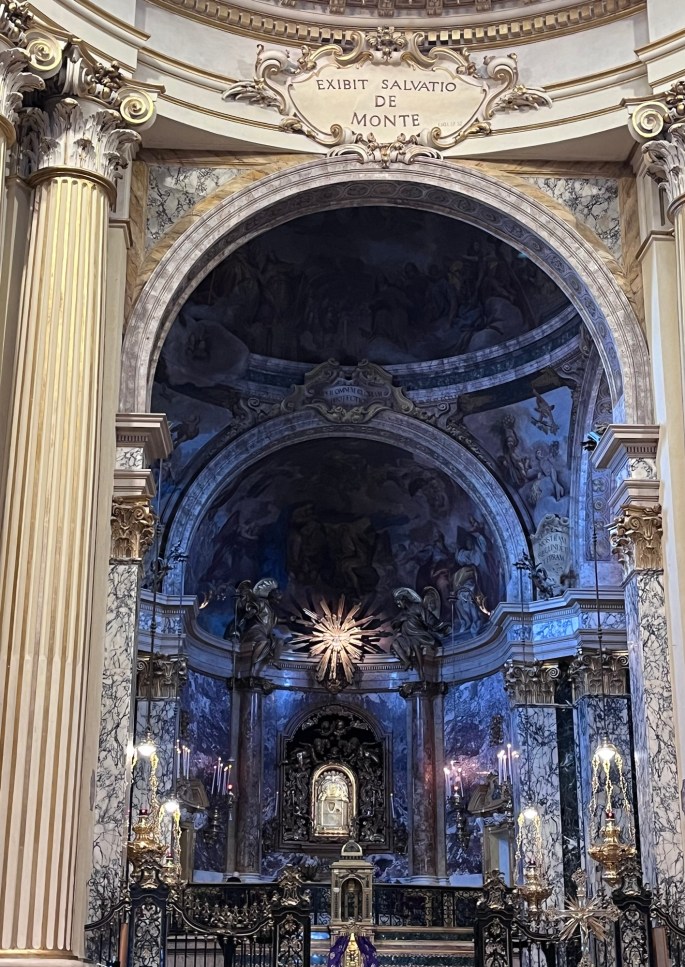
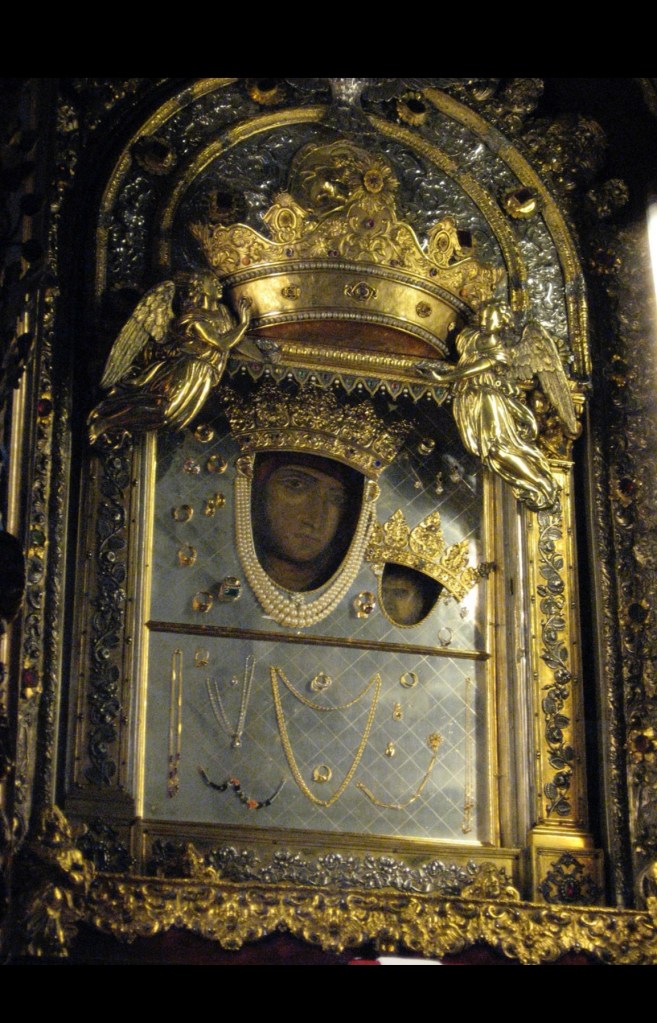
Tradition holds that in the 12th century, a pilgrim from the Byzantine Empire came to Bologna with an icon of the Virgin of Madonna and child, from a temple in Constantinople. A pilgrimage occurs during Ascension week.
Another bonus was the view of the Italian countryside.

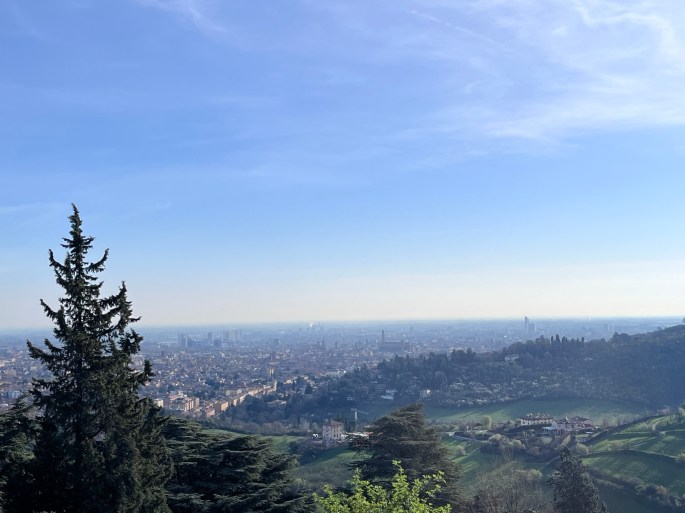
Along with a hilltop view of Bologna.
It was time to go back down to the city to tell my husband ‘She tried to kill me’.

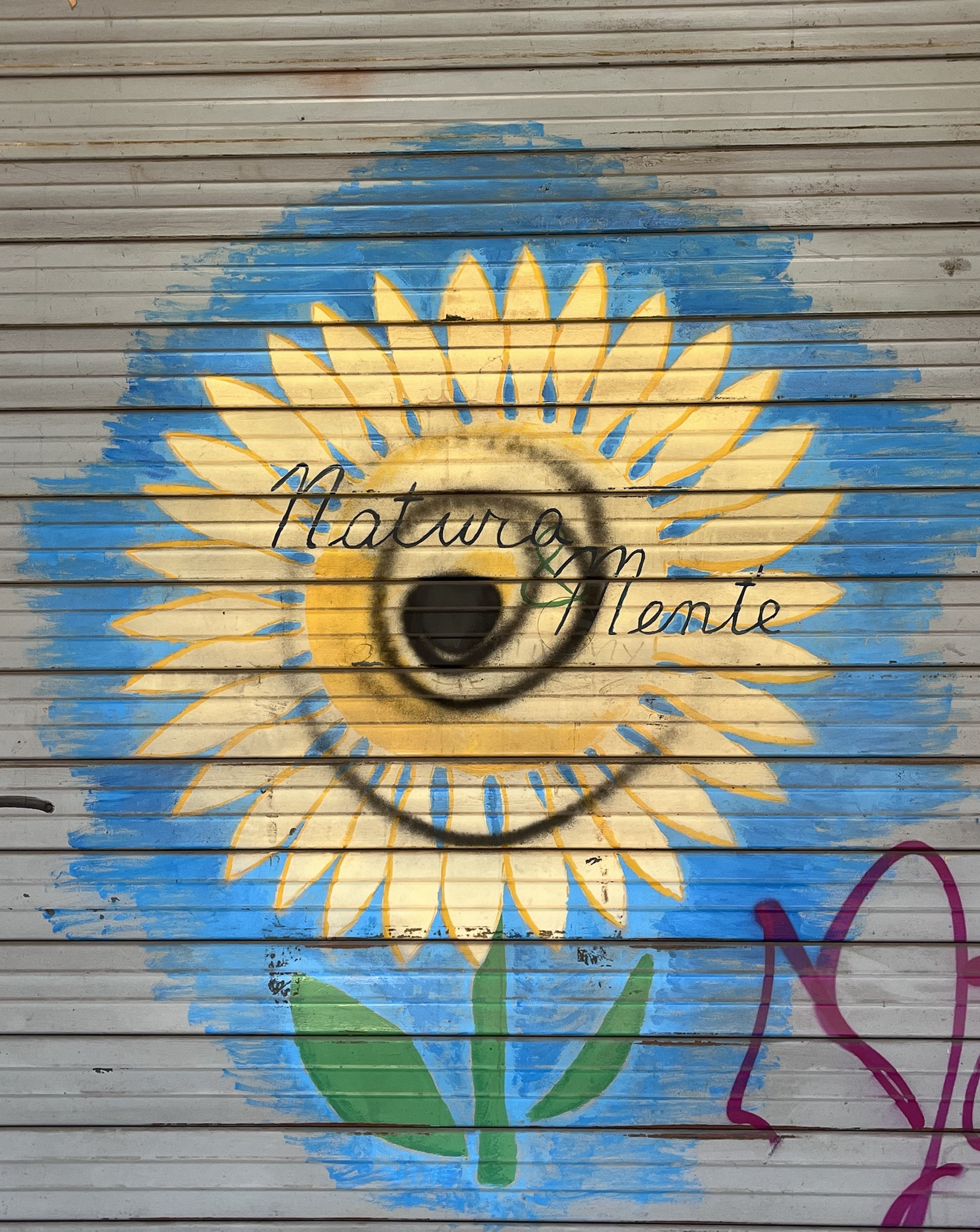
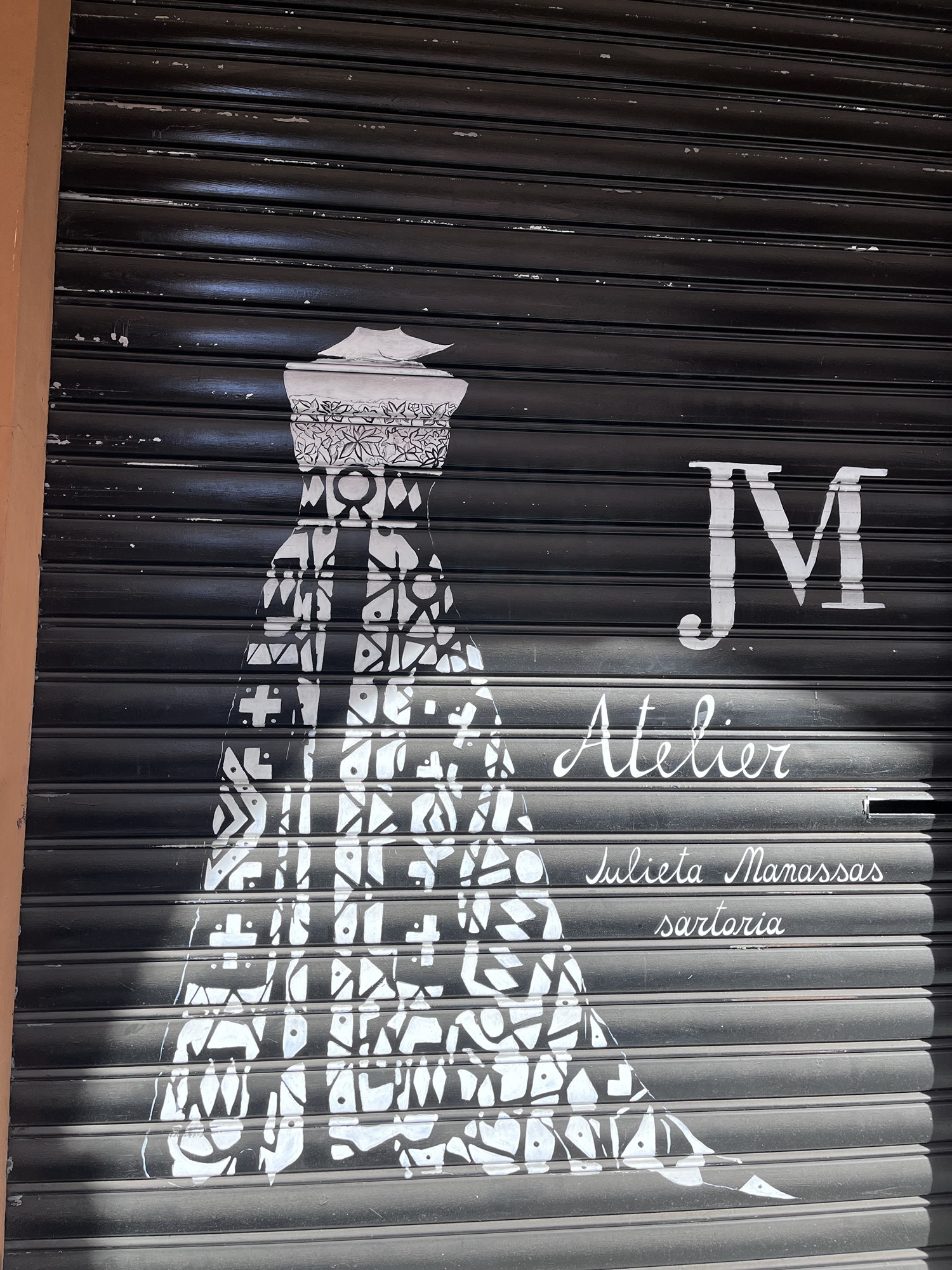
As we retraced our steps, a number of the shop fronts were not open but they chose an additional way to advertise their business on the metal grating covering their storefront. Cute.
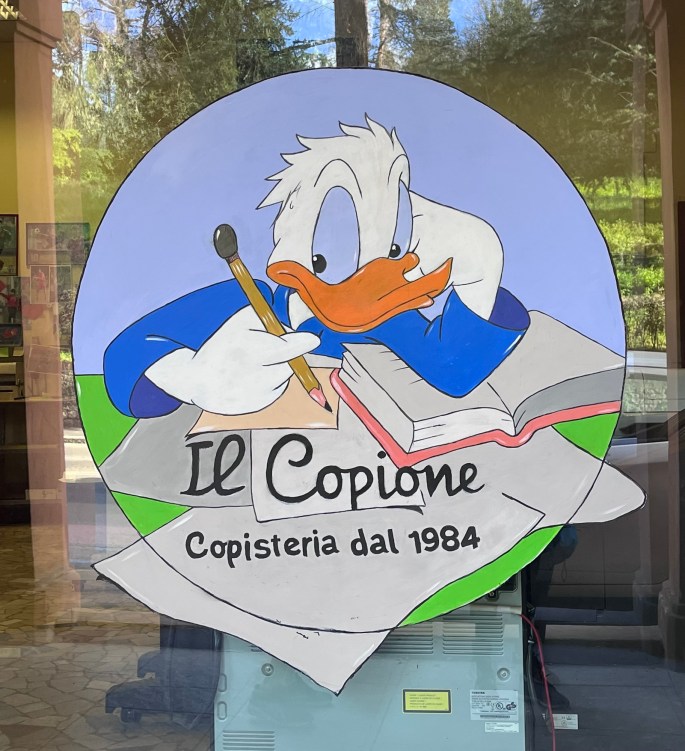
We both chuckled when we walked past this business. It wasn’t the first time, nor the last time we saw a bit of Disney.
Oh yeah, whose idea was it to go up – mine, as Adrienne continued to remind me.
Bologna Agro-tour – Part 1

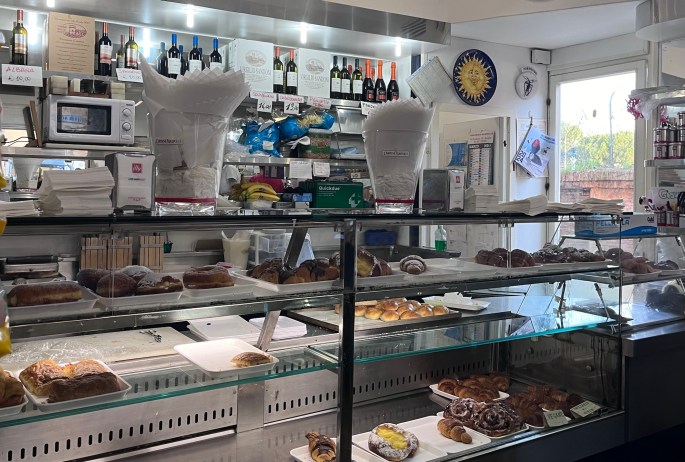
This was a tour we booked at the last minute and was our last full day in Bologna and our chance to get out of the city. But first, we made a stop at one of the oldest pastry & coffee shops in Bologna. I could find it again………….but never got the name nor a photo of the outside. We ordered our beverage of choice and a pastry while Ricardo prepped us for the day’s activities.

First stop on today’s tour – cheese – and we headed to Modera.

We got picked up fairly early (7 am) to ensure we saw (most) of the cheese-making process for Parmasean. We missed two steps, the curdling of the milk and subsequent separation. Use your imagination from the photos below. Curdling occurs naturally if cows’ milk is left open in a warm environment to air.

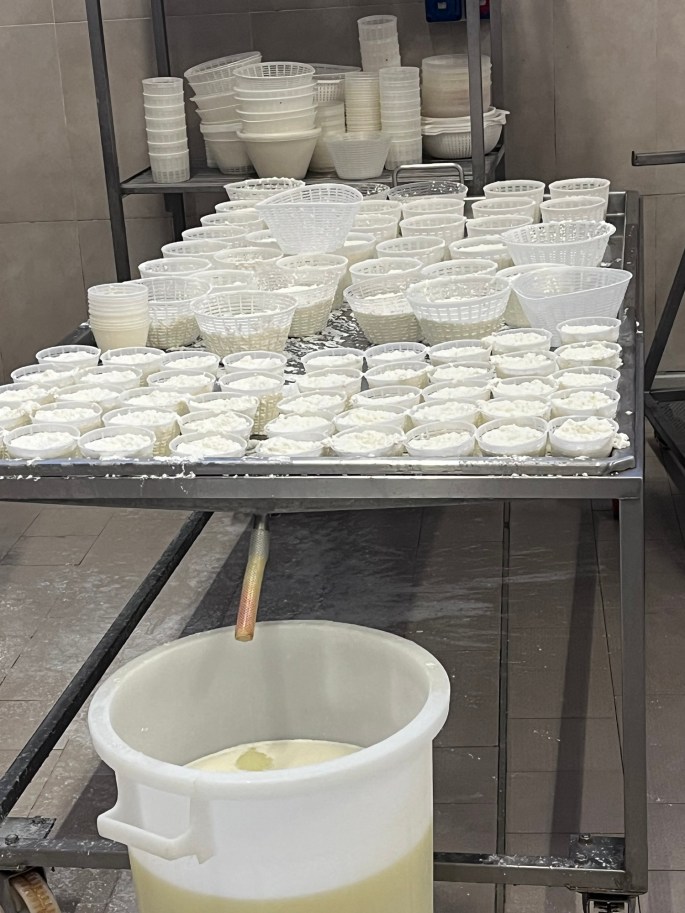
Curdled milk poured into the tables.

Separation of the curdling gives you this delicious Ricotta. I’ll state this right now………this is not a post about cheese-making, listing all of the sciences and steps involved. If you need that – google it.

Separated product becomes fresh Ricotta.

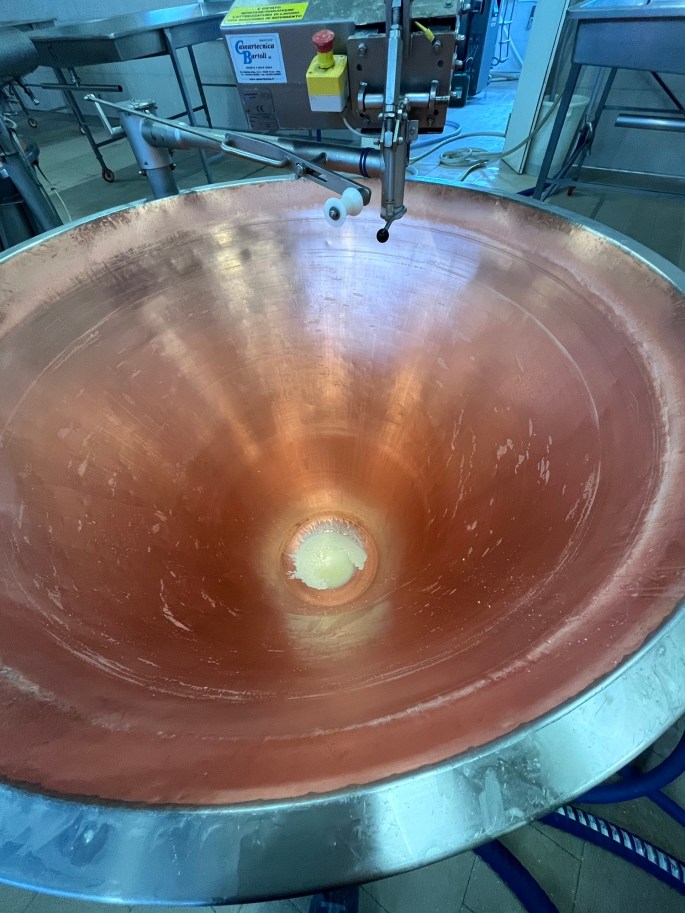
Milk product is placed into these heated copper bowls.

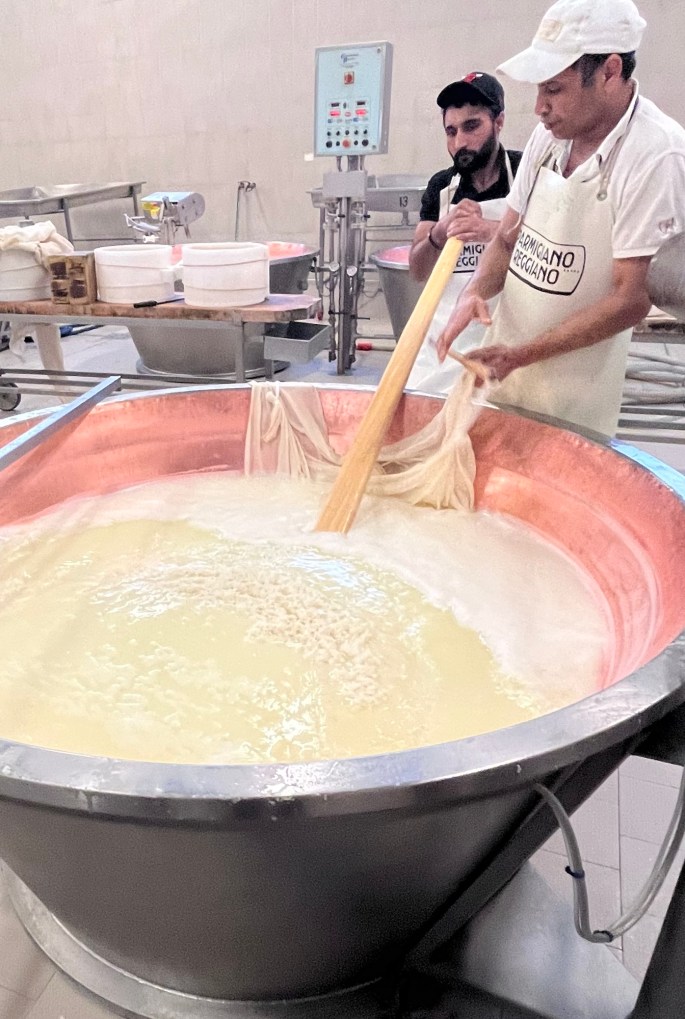
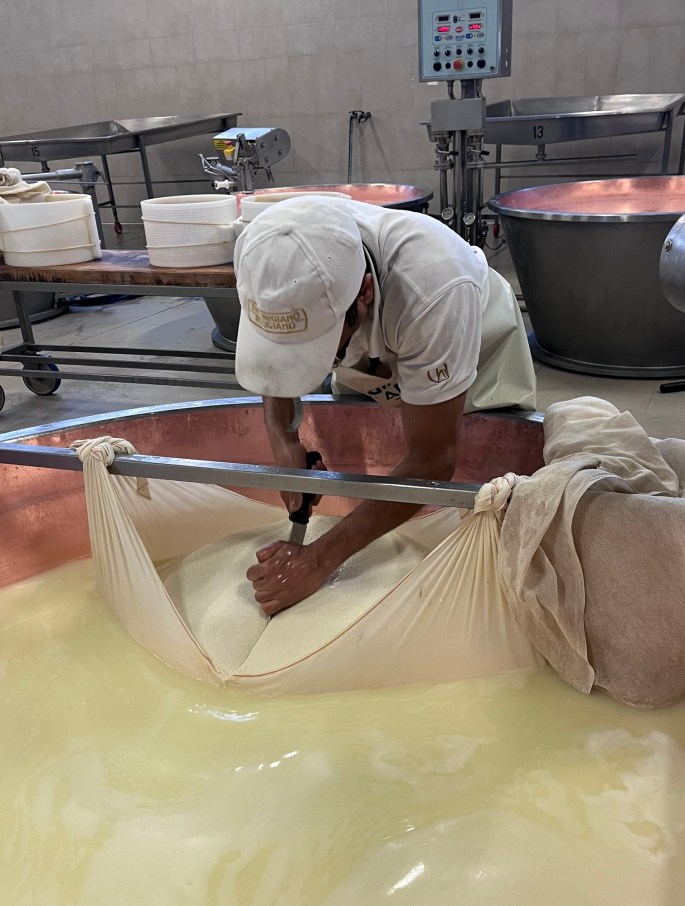
This is when we arrived. The solid matter comes together and at this point the gentleman was loosening that which was at the bottom of the pot.

The pictures below show more of the next few steps.

The cheese master was involved in the next steps, a culmination of 10 years work. If he makes a mistake, two rounds of cheese are lost.

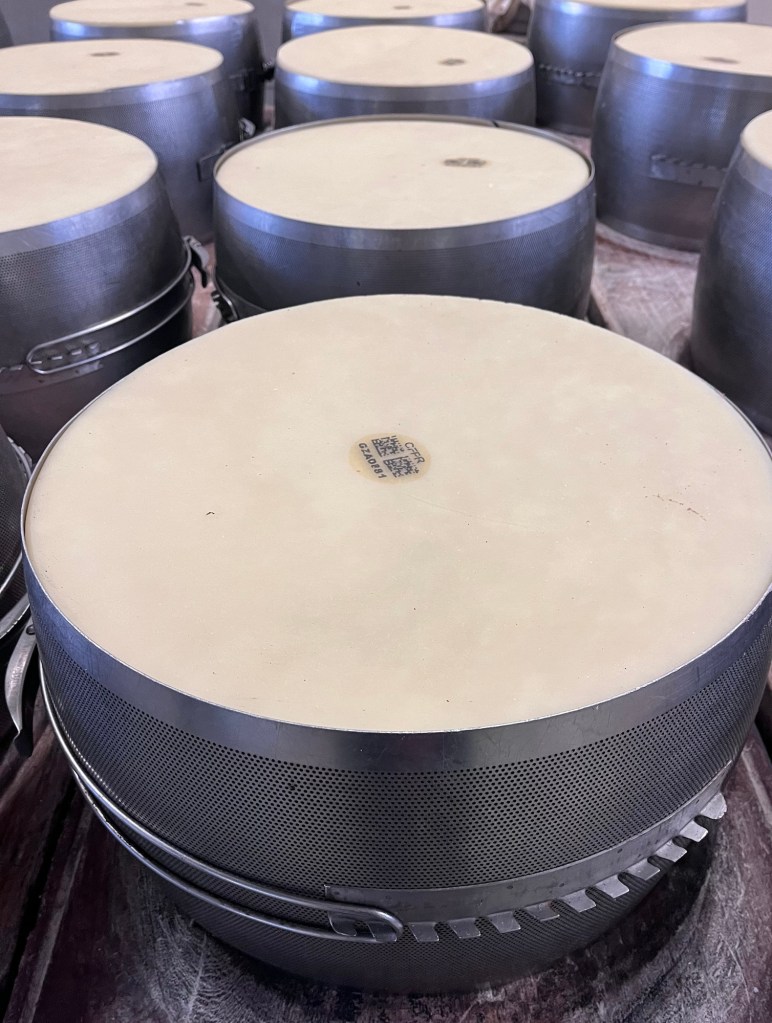
A hydraulic lift assisted with putting these into the cheese molds.

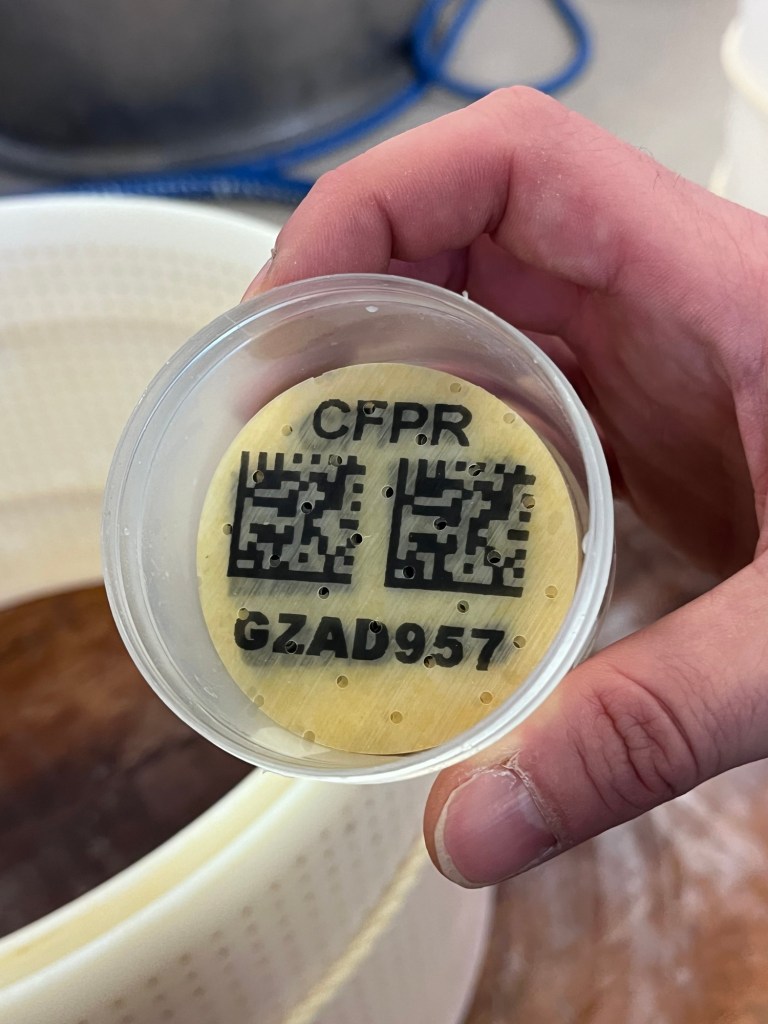
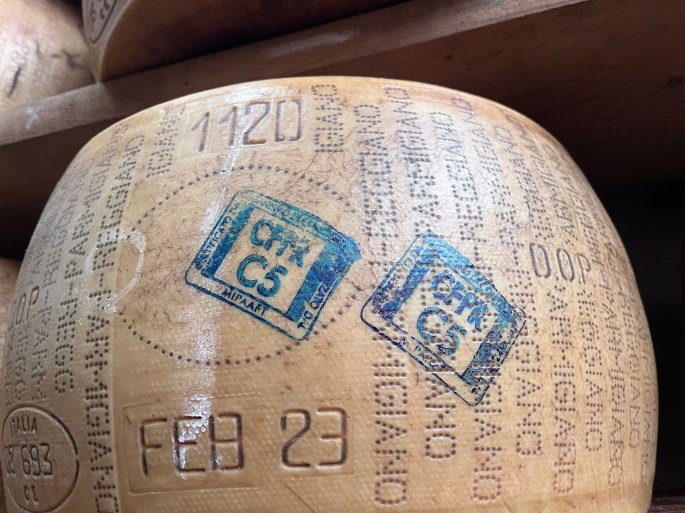
The cheese was stamped and strict records are kept to track this until sold to the consumer.

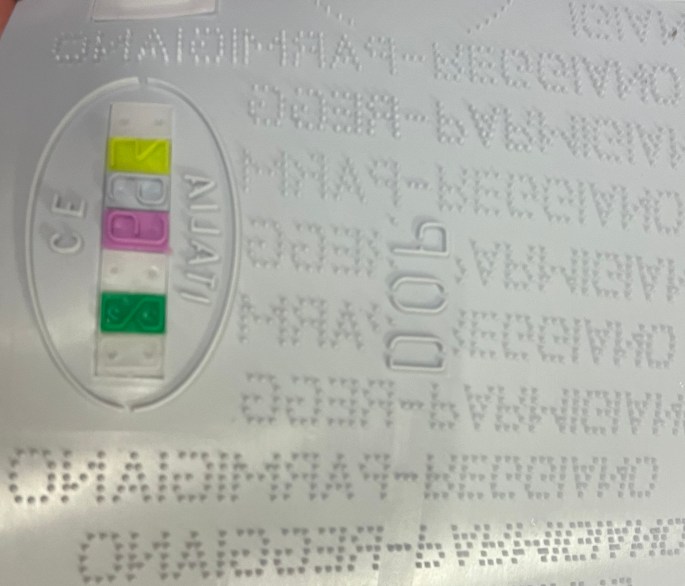
This mold ultimately indicates this is Parmesan cheese and other important info.

They are soaked in salted water before drying and then put into the warehouse next door.

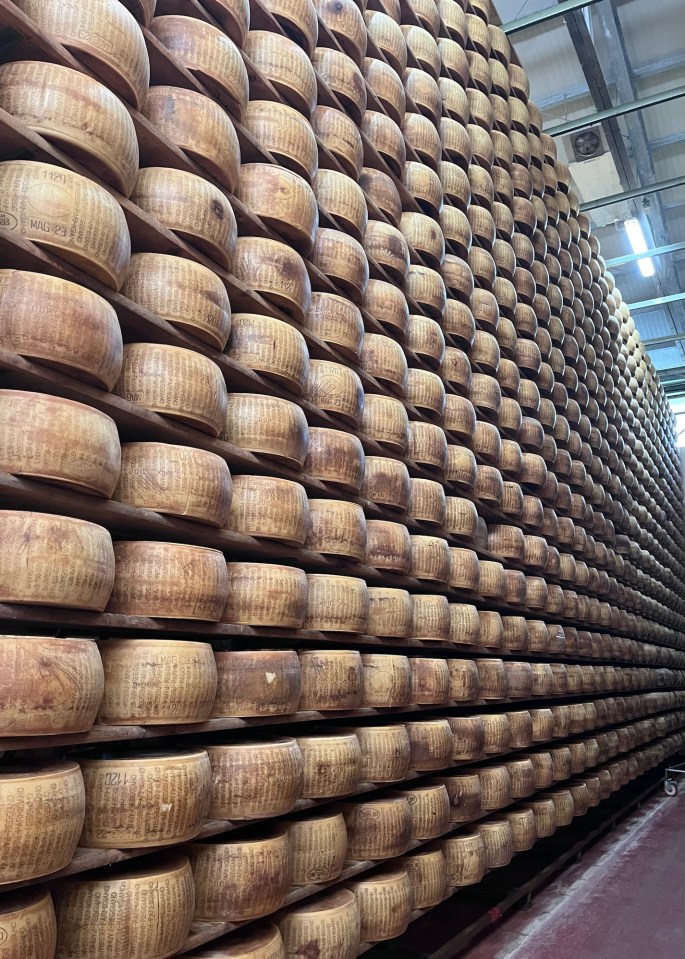
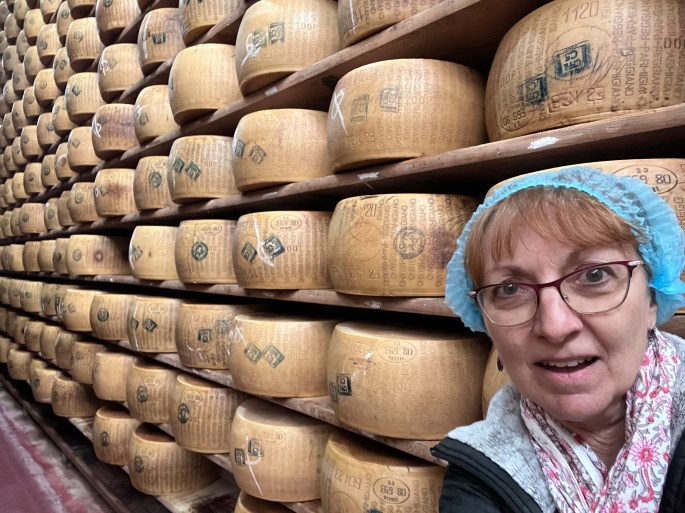
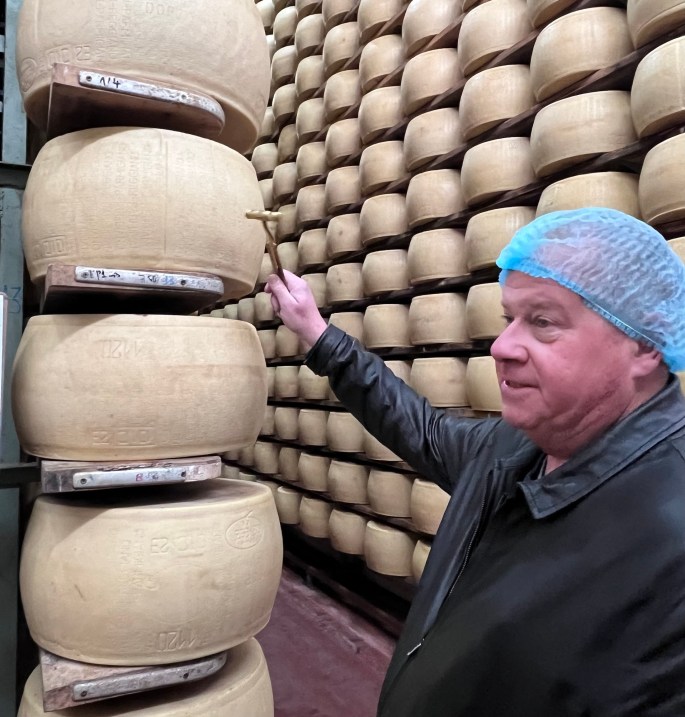
And what a sight to see – amazing!

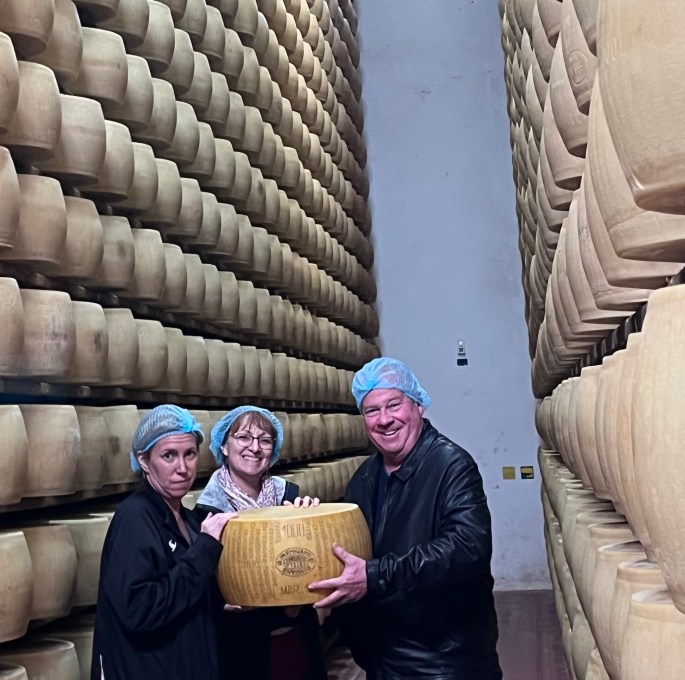
I don’t think I can fit one of these into my suitcase – but I’d like to try.

Inspections occur periodically and the wheels are stamped at that time.
So we asked how the mold impressions seem to darken during the process. The answer……..cheese dust. Huh? We got lucky and the machine that ‘brushes’ the cheese was at the very end of the row.

Split the video because the ‘brushing’ went on for quite a while. But then the cheese, goes back into its original space, turned upside down.
Another step is tapping the cheese round as part of the inspections.

Before leaving the drying warehouse, we captured one photo. There is a.l.o.t. of cheese here.

But you know………………..there is one step that needs to occur before all of this starts.

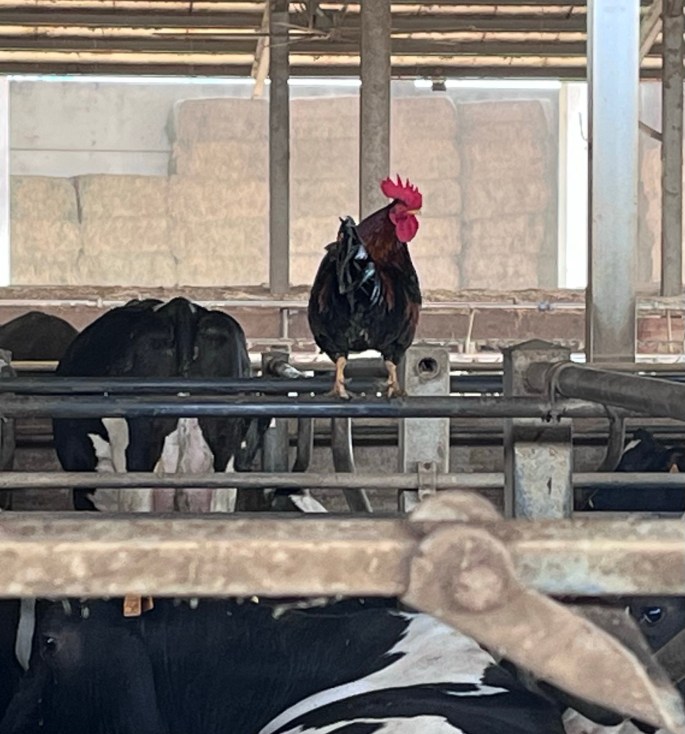
This rooster wanted to prove they ruled the area.

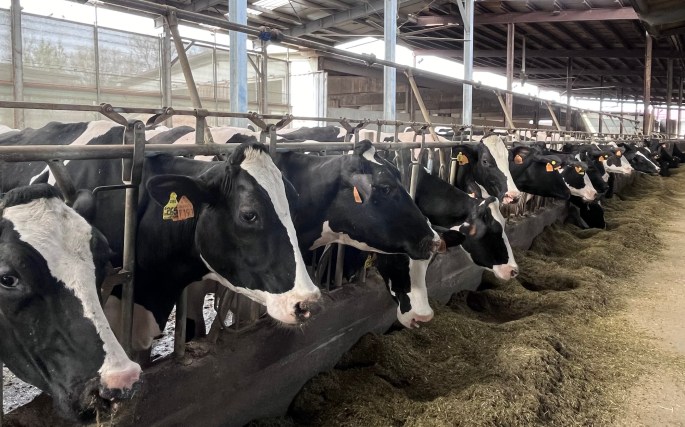
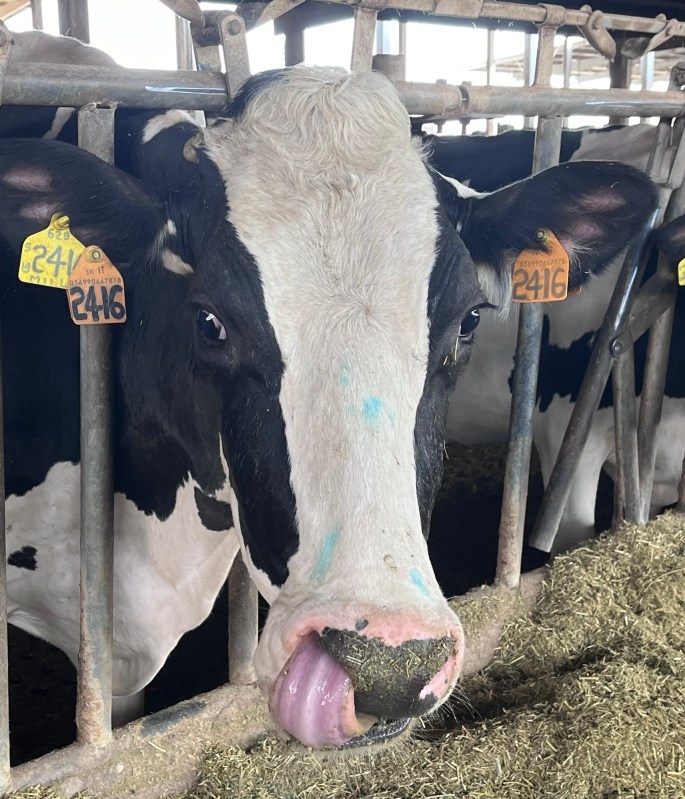
One cow wanted to be the center of my attention.

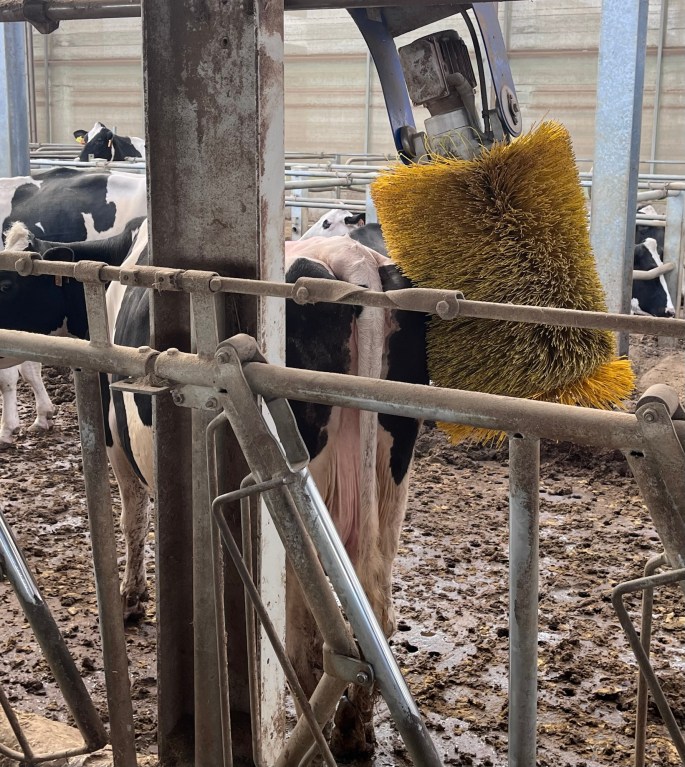
We walked past this contraption and what was happening? If you have an itch you can’t reach, come to the brush and it does the job (and keeps things clean and cows happy).

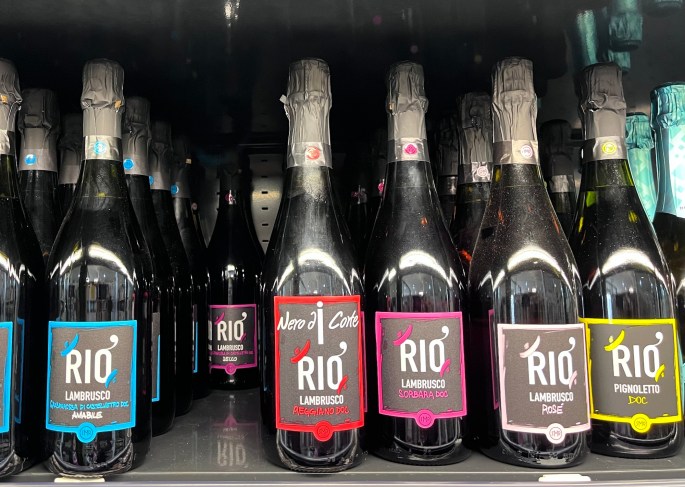
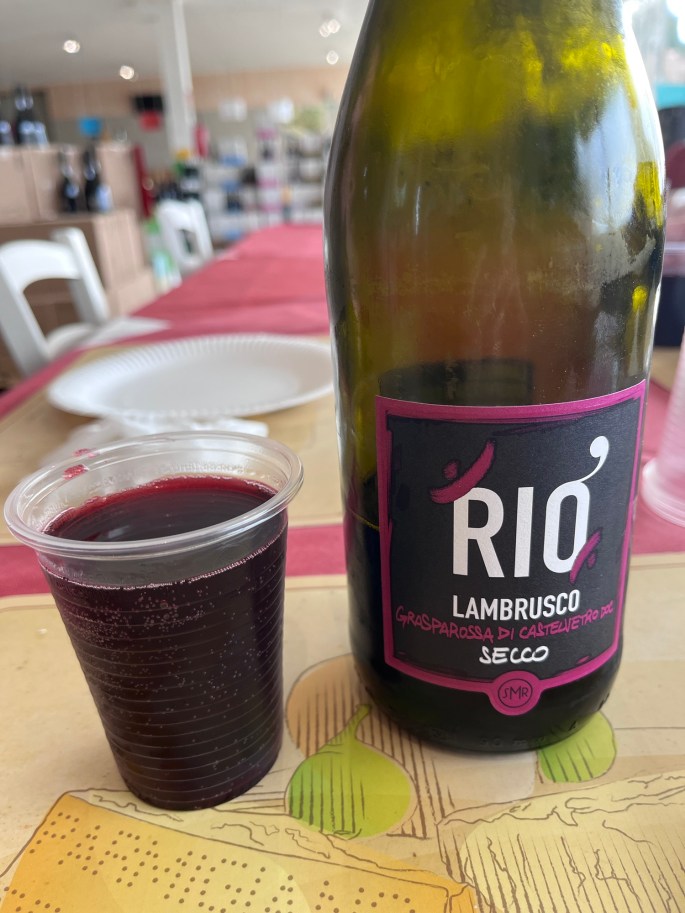
Remove the hairnets and the booties and it was time to taste their goodies. The front part of this building was a market where many locals stop in. I mentioned Labrusca in one of my earlier posts – love it. Finally, a red wine with a bit of ‘sparkle’ that was a dry wine. Who knew there were so many options. Not me!

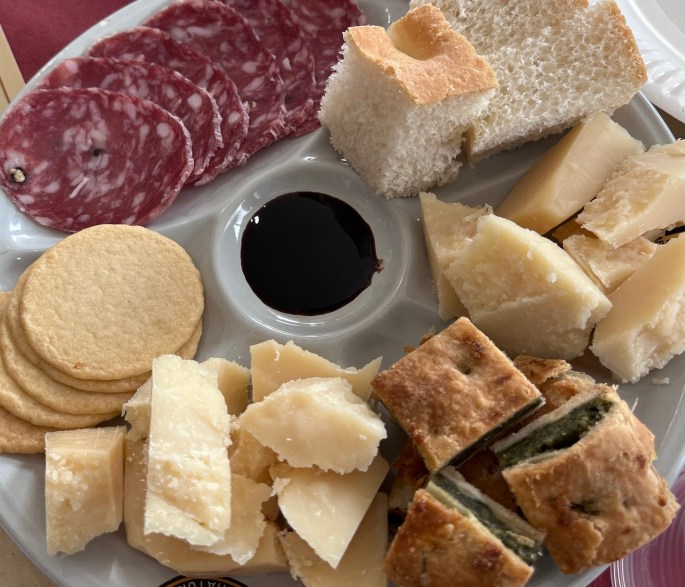
All the products were either made here (cheese) or sold in their market. Perfect timing for a snack during the tour.

Those round ‘crackers’ seen below – parmesan cheese crisps – delicious!

I originally was going to have 1 post for the tour, but after I started writing, I’d rather break it down into manageable bites – more coming soon.

Basilica di San Petronio – Bologna

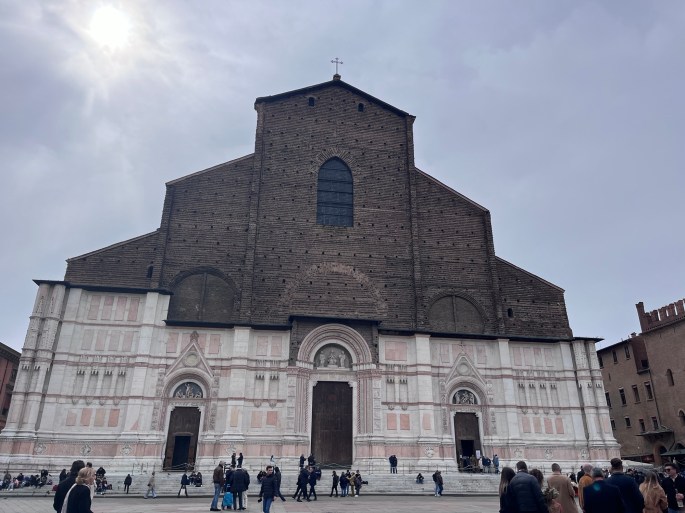
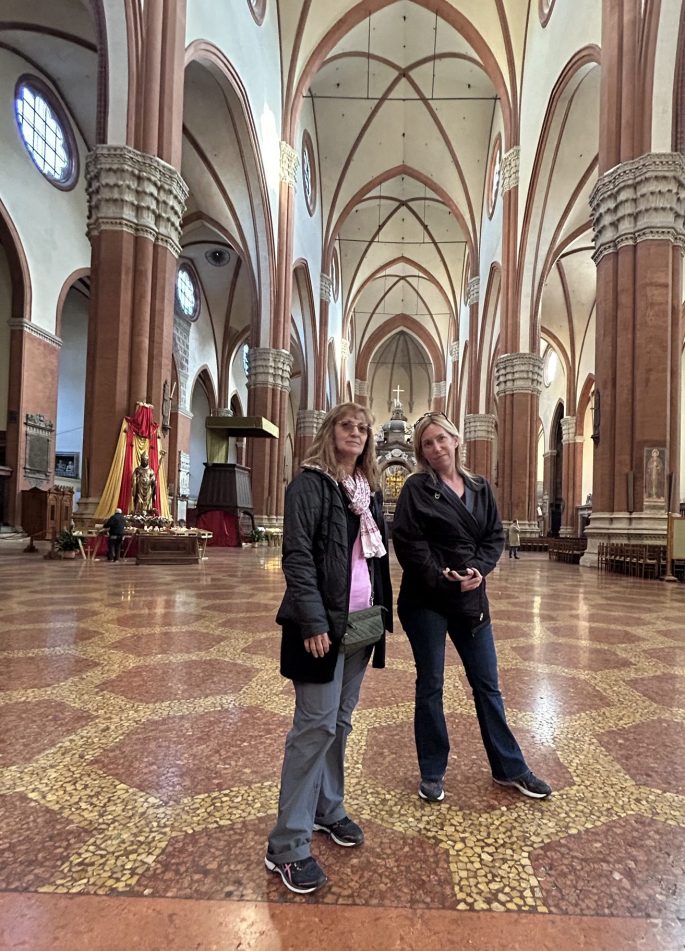
The Basilica is dedicated to the patron saint for the city, Saint Petronius who was bishop of Bologna in the 5th century. Its commanding presence dominates Piazza Maggiore which at various times of day is filled with tourists or students – it’s a huge gathering spot. We stopped inside within hours of arriving in Bologna – it draws you in.

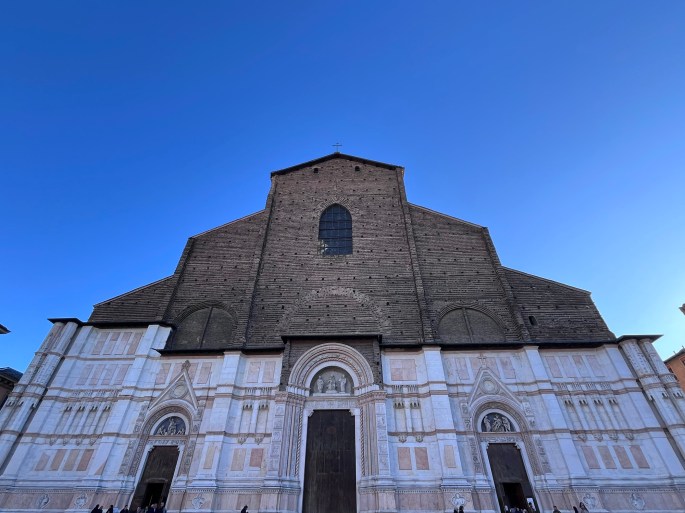
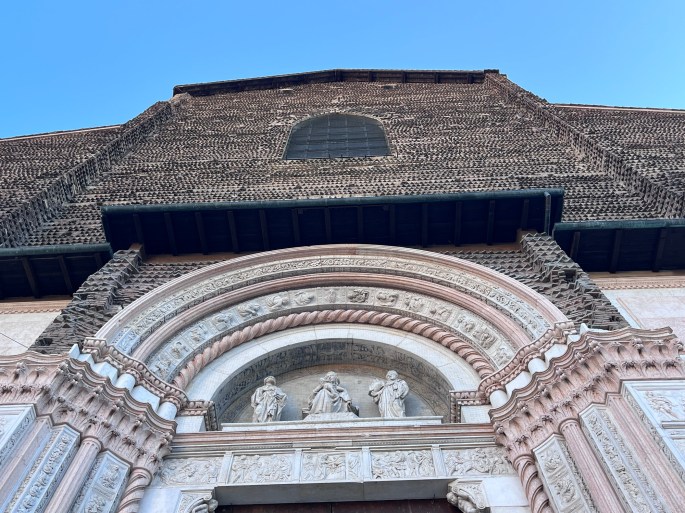
A very imposing building, even with the facade incomplete. I think it adds to the charm. The lower part of the building is covered in marble, while the upper part of the building was exposed brick. Construction started in 1390 but ultimately money ran out.

It is considered the 10th largest church in the world by volume being 132 meters long, 66 meters wide and 47 meters tall and the largest church built of brick.

Let’s go inside.

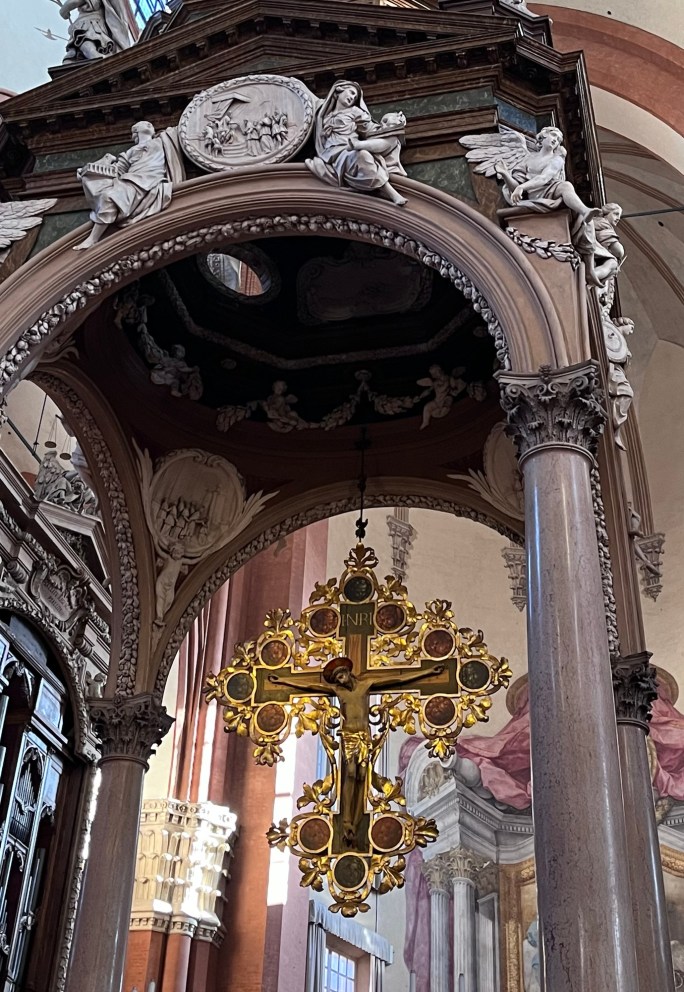
At the alter was a 15th century ornate wooden crucifix, which the maker is unknown.

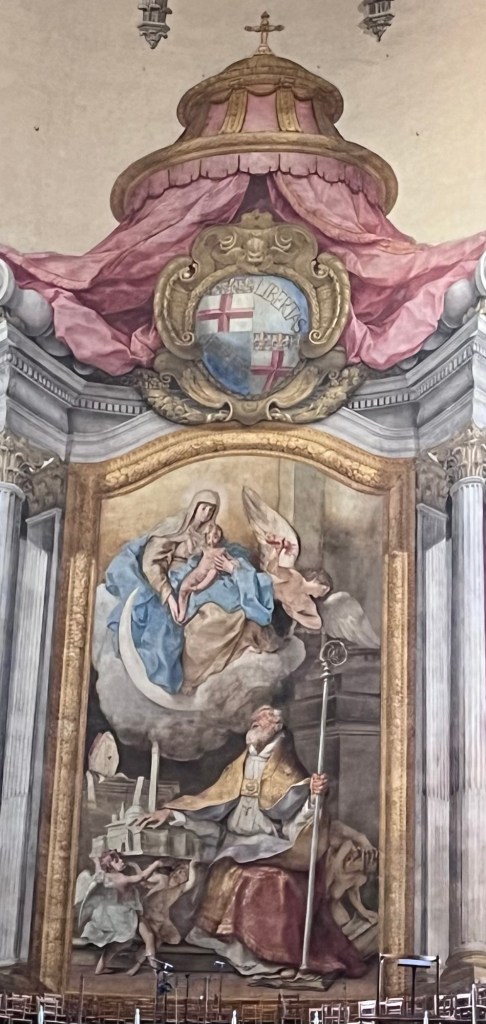
Behind that is a fresco with the Madonna and St. Petronio.

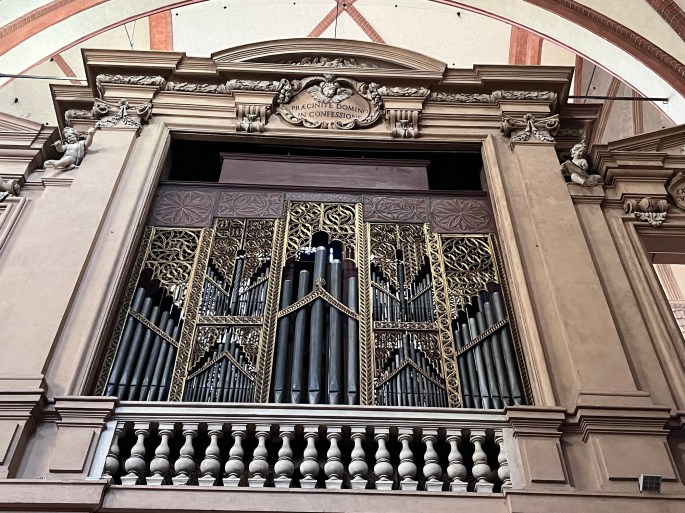
Two organs are part of the church with both being in good condition. I included a shot of one.

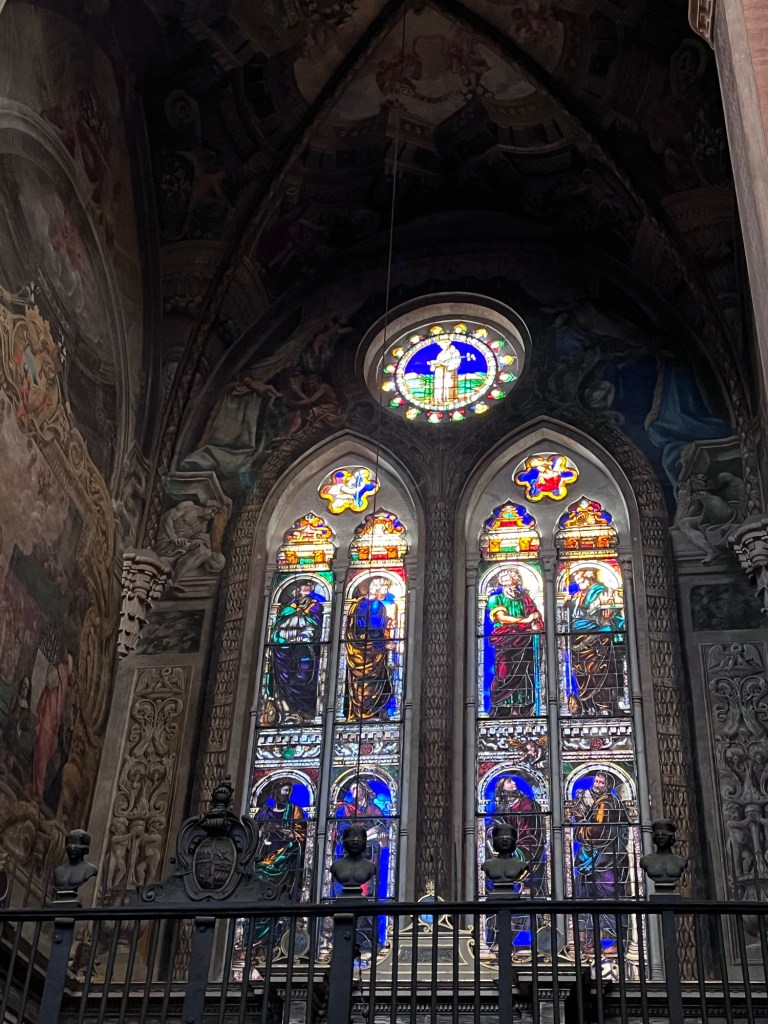
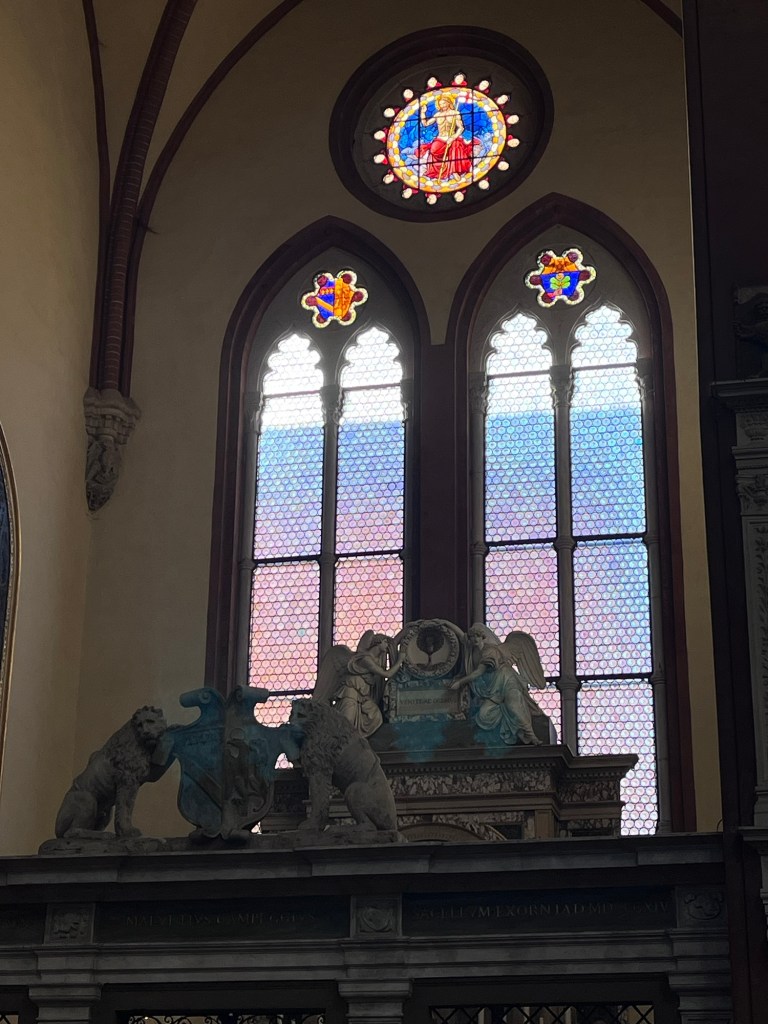
There were some windows with varying degrees of stained glass. These were part of the 22 chapels along the sides of the basilica.

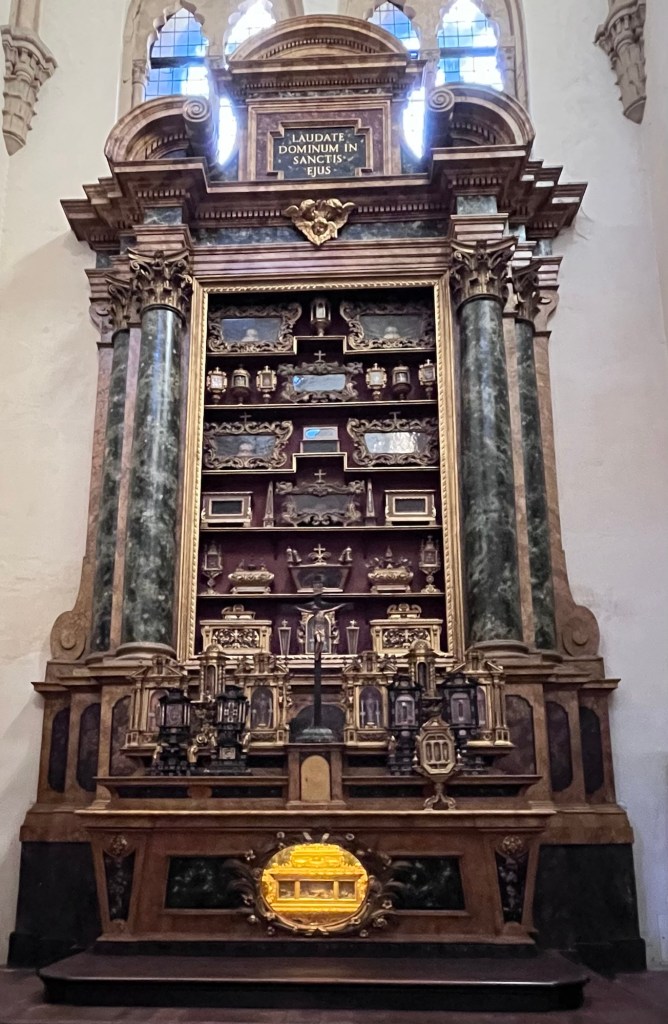
As we started seeing several years ago, relics were a major part of church business and this one was no different. One chapel was dedicated to relics and I believe the area highlighted in the gold window near the bottom were relics from St. Petronius.

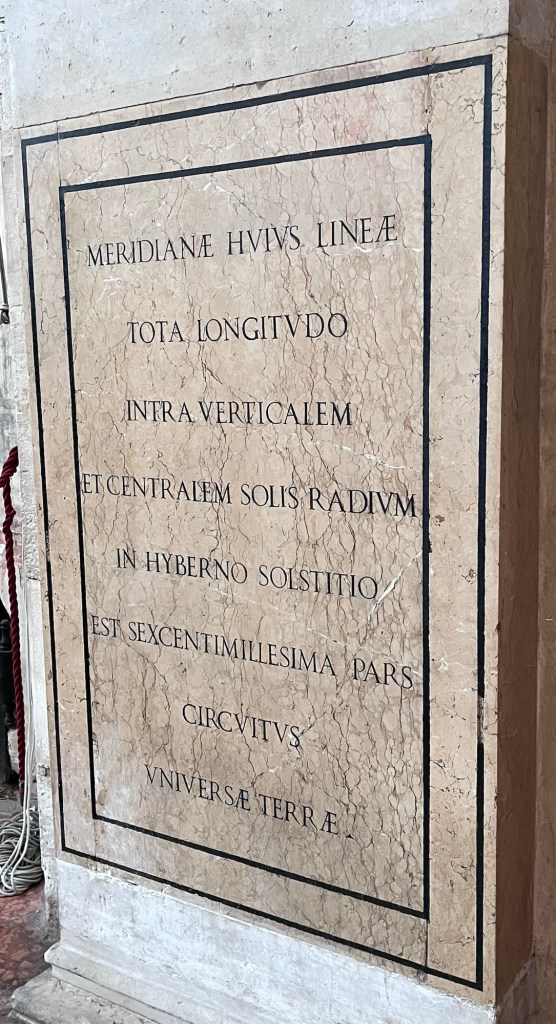
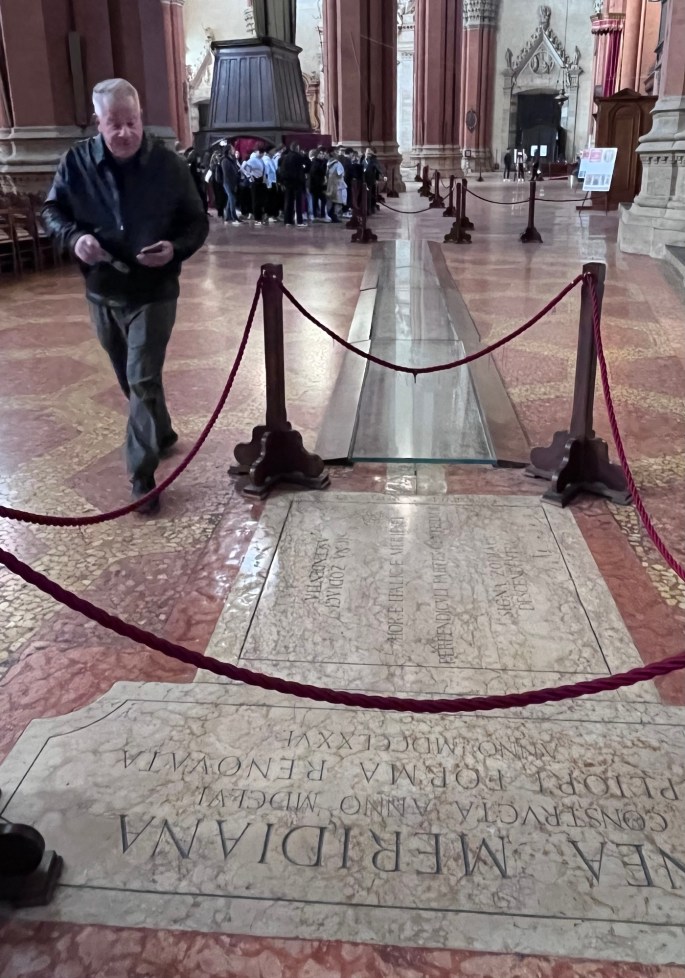
Ever curious, Eric noticed an unusual roped off area inside the church.

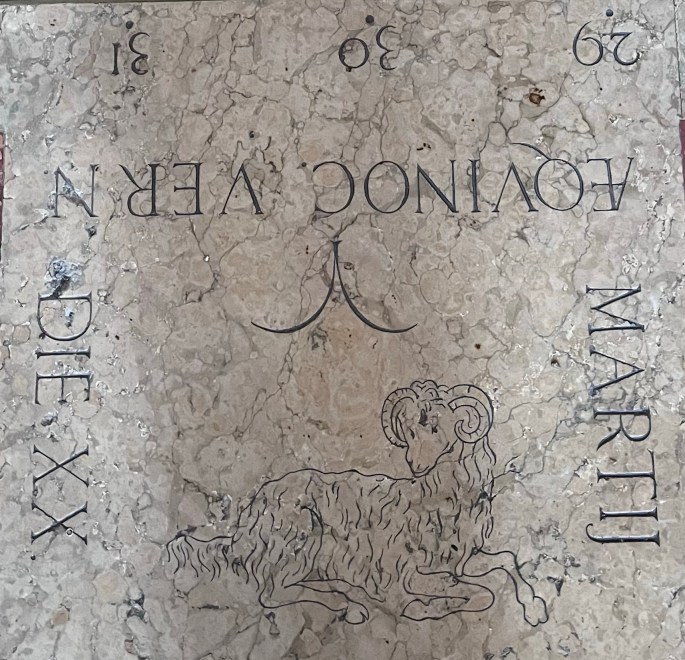
The church hosts a marking in the form of a meridian line inlaid in the paving of the left aisle in 1655; it was calculated and designed by the astronomer Giovanni Domenico Cassini, who was teaching astronomy at the University. The stanchions and plexiglass are trying to preserve the markings carved into the marble.

A meridian line does not indicate the time: instead, with its length of 66.8 metres (219 ft) it is one of the largest astronomical instruments in the world, allowing measurements that were for the time uniquely precise. It tells you the day of the year.

The sun light, entering through a 1.066-inch hole placed at a 88.8 ft height in the church wall, projects an elliptical image of the sun, which at local noon falls exactly on the meridian line and every day is different as to position and size.  Again, this is so amazing, this was happening in the mid-1600s.

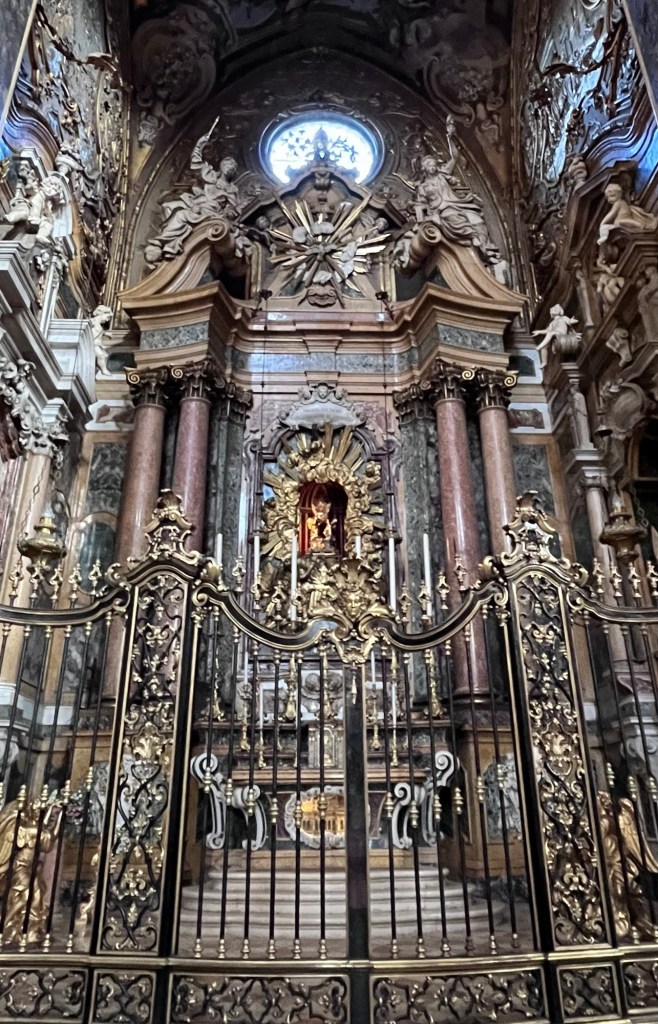
As we were exiting, this last side chapel was awe-inspiring. It was filled with so many things. I’m sure you could look at it daily and find something new each time.
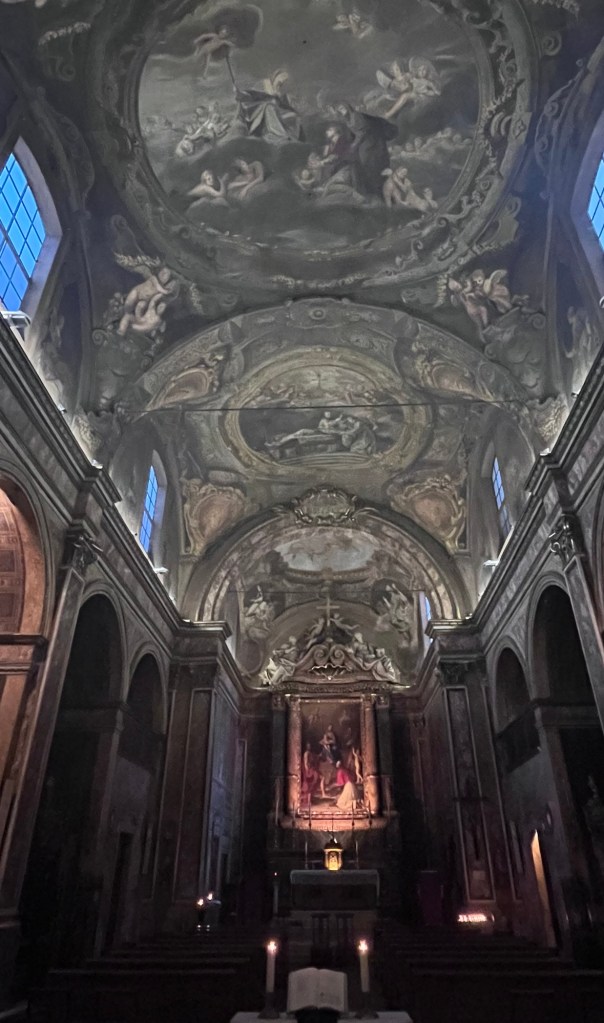
While the Basilica di San Petronia is larger than life, we walked by this other building and on one of our last days we stepped inside. This greeted us. So much beauty. I think I whispered ‘wow’ out loud, along with the other two. It was a shock to the senses. So solemn and quiet yet a bustling pedestrian zone was right outside its doors.
Walking to the altar, here is a closer shot of the fresco. We were the only ones inside the building. I’m guessing this is John the Baptist. Why?

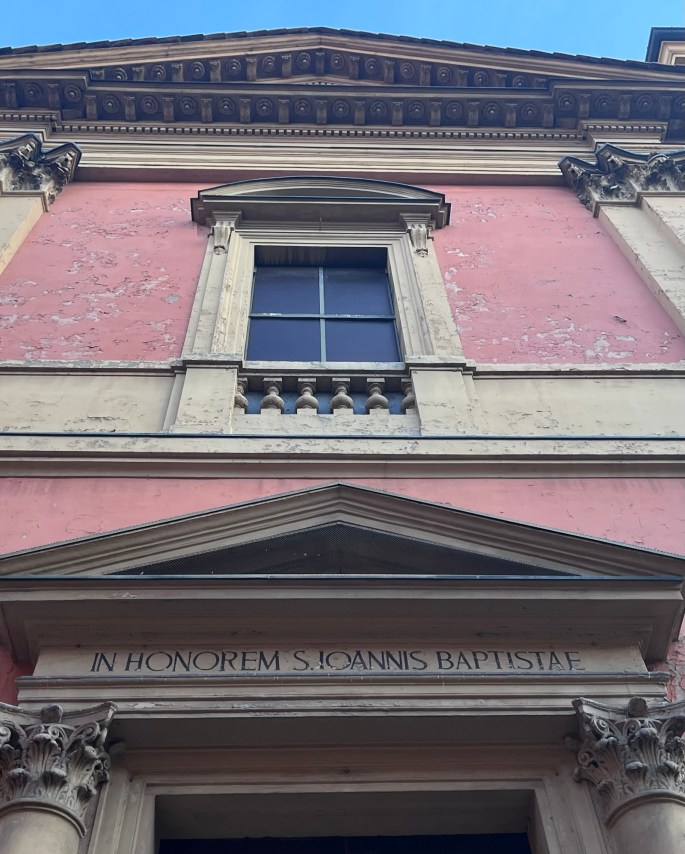
This was the entrance into the church. I assumed it was the name of the church. No, I can’t find the name, no matter how much I tried searching the internet and looking at internet maps.

These are the hidden gems you find when traveling.

Bologna Food Tour

This is something very common for us – booking a food tour, especially when we stop at a new city for us. Why?

~you’re talking with a local that is typically passionate about their city.

~able to get local recommendations tailored to your wants.

~find those ‘hidden’ gems that aren’t in a guide book.

Eric does a LOT of research prior to our trips and reads LOTS of reviews for said tours. Occasionally we’ve gone back to revisit places that was on the tour because we enjoyed it so much. Now, we’ve also gone a bit crazy and done too many food tours (Lyon, France) during one visit – we learned.

This was our tour for Bologna.

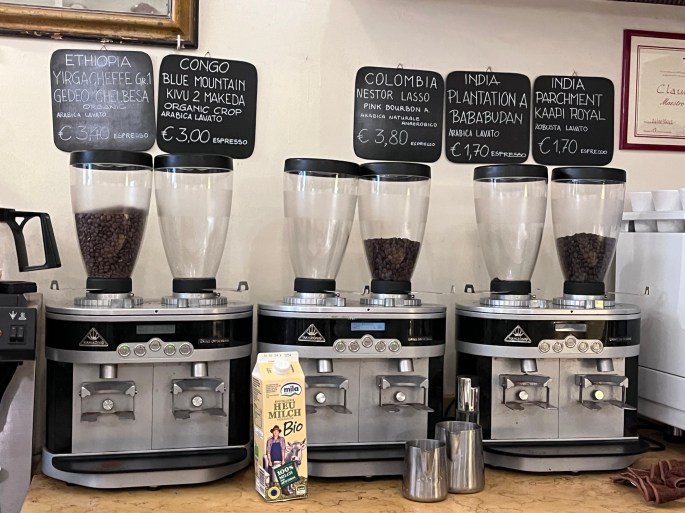
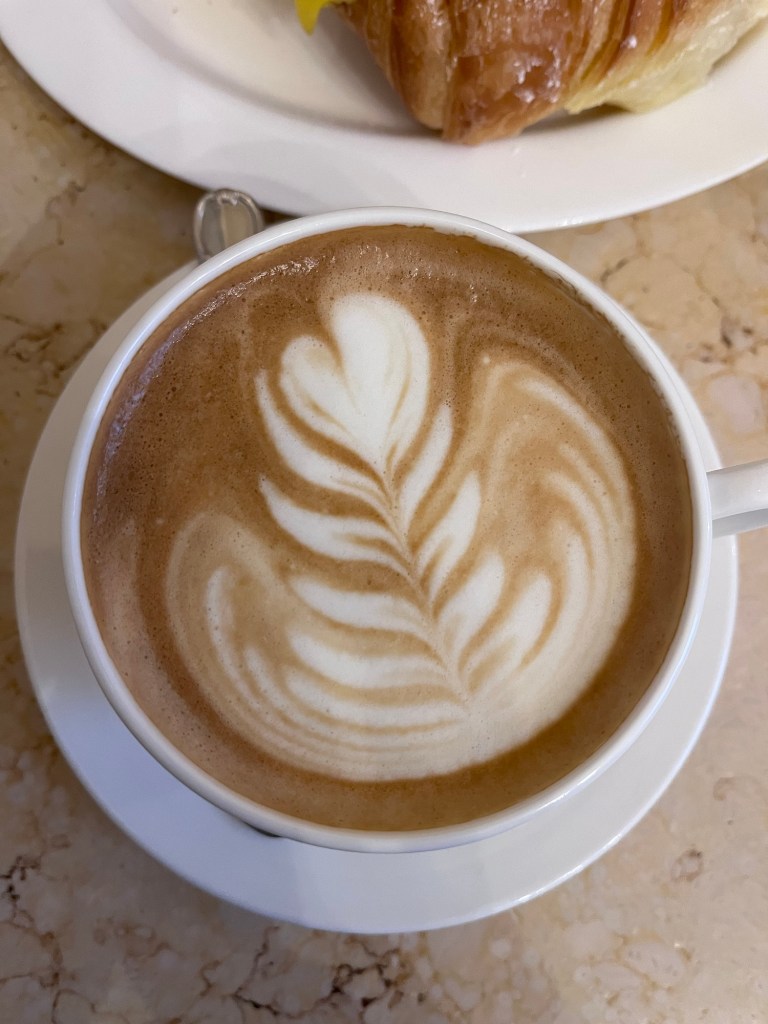
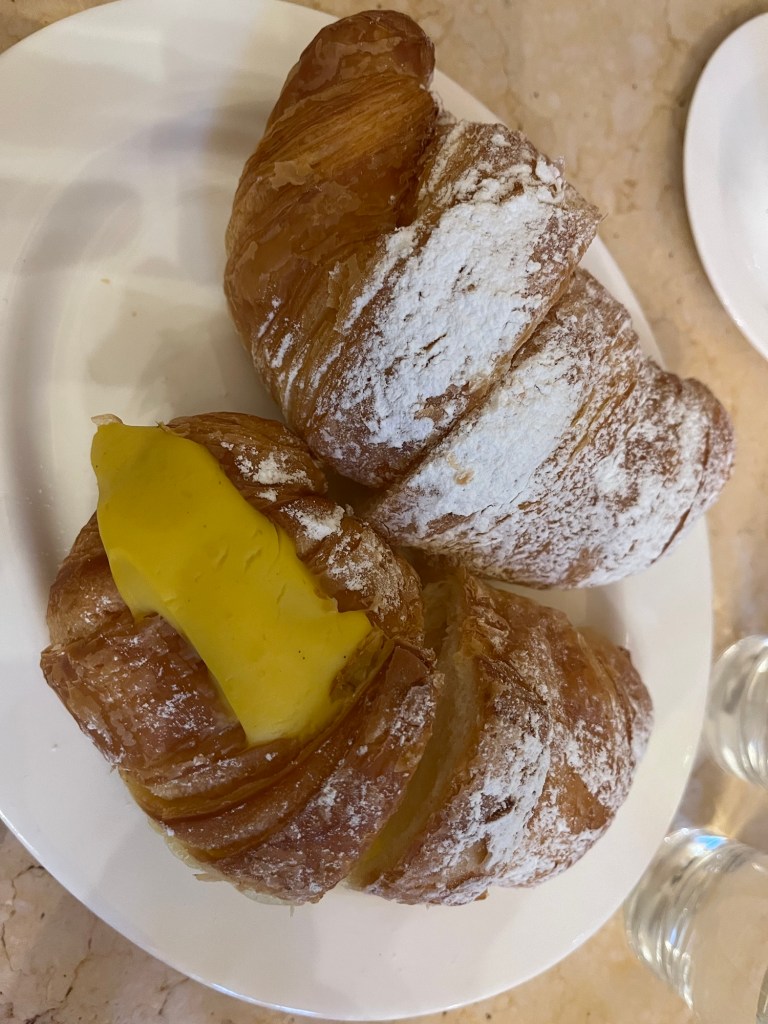
What better way to start than with coffee and croissant. This is one of the only places in Bologna that roasts their own coffee beans.

Options for croissants were plain or creme.

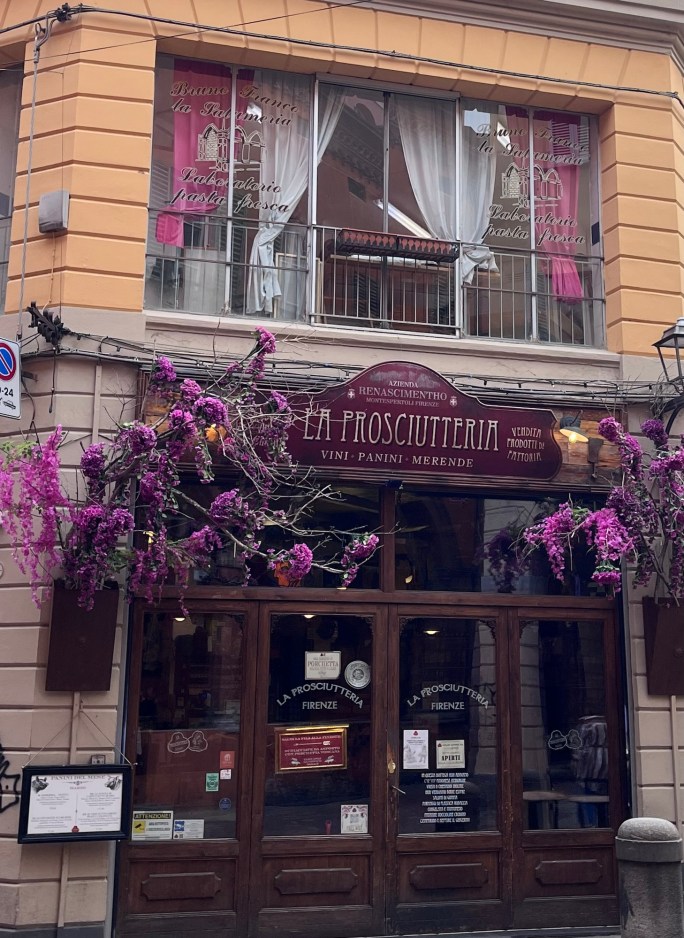
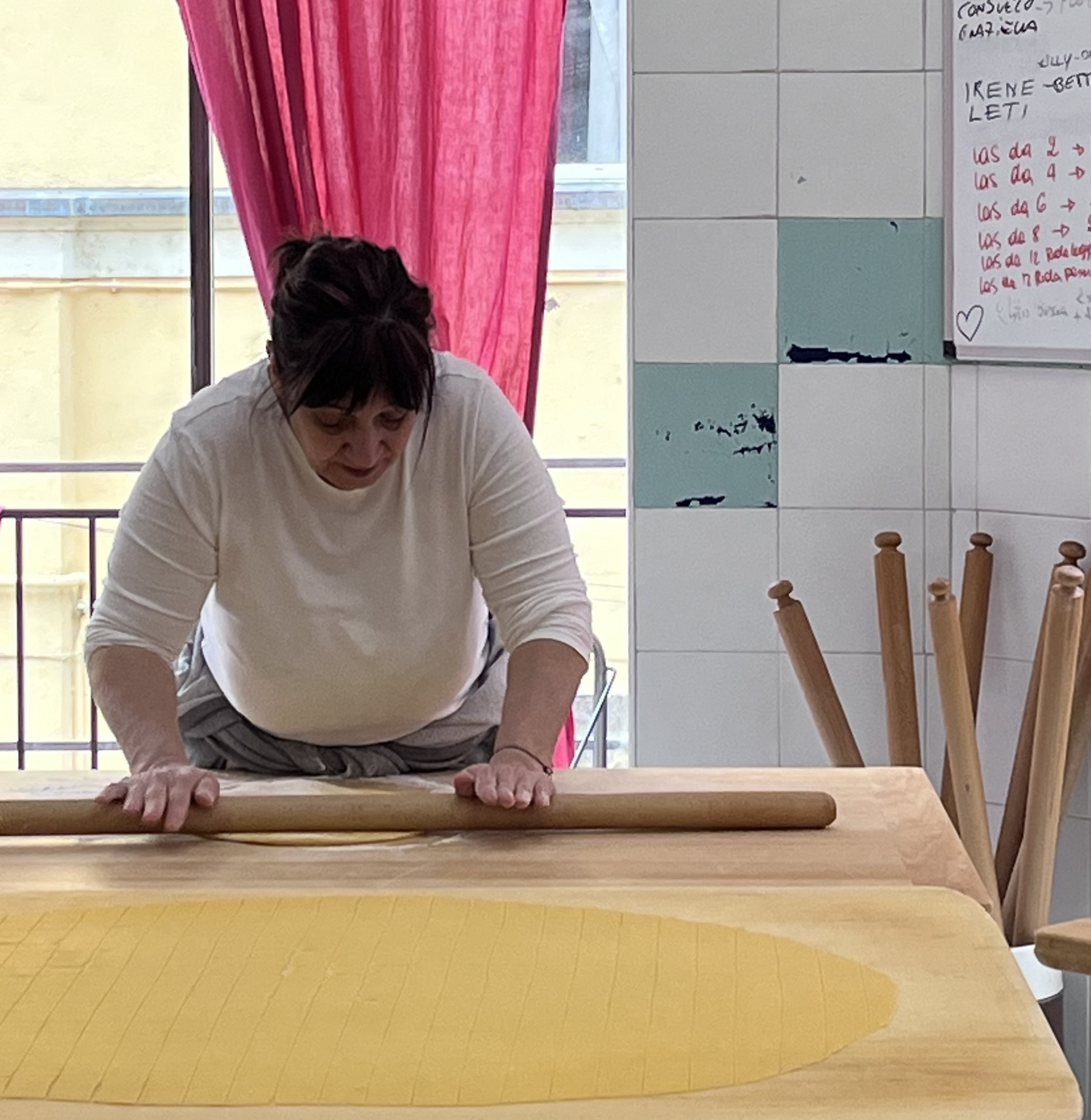
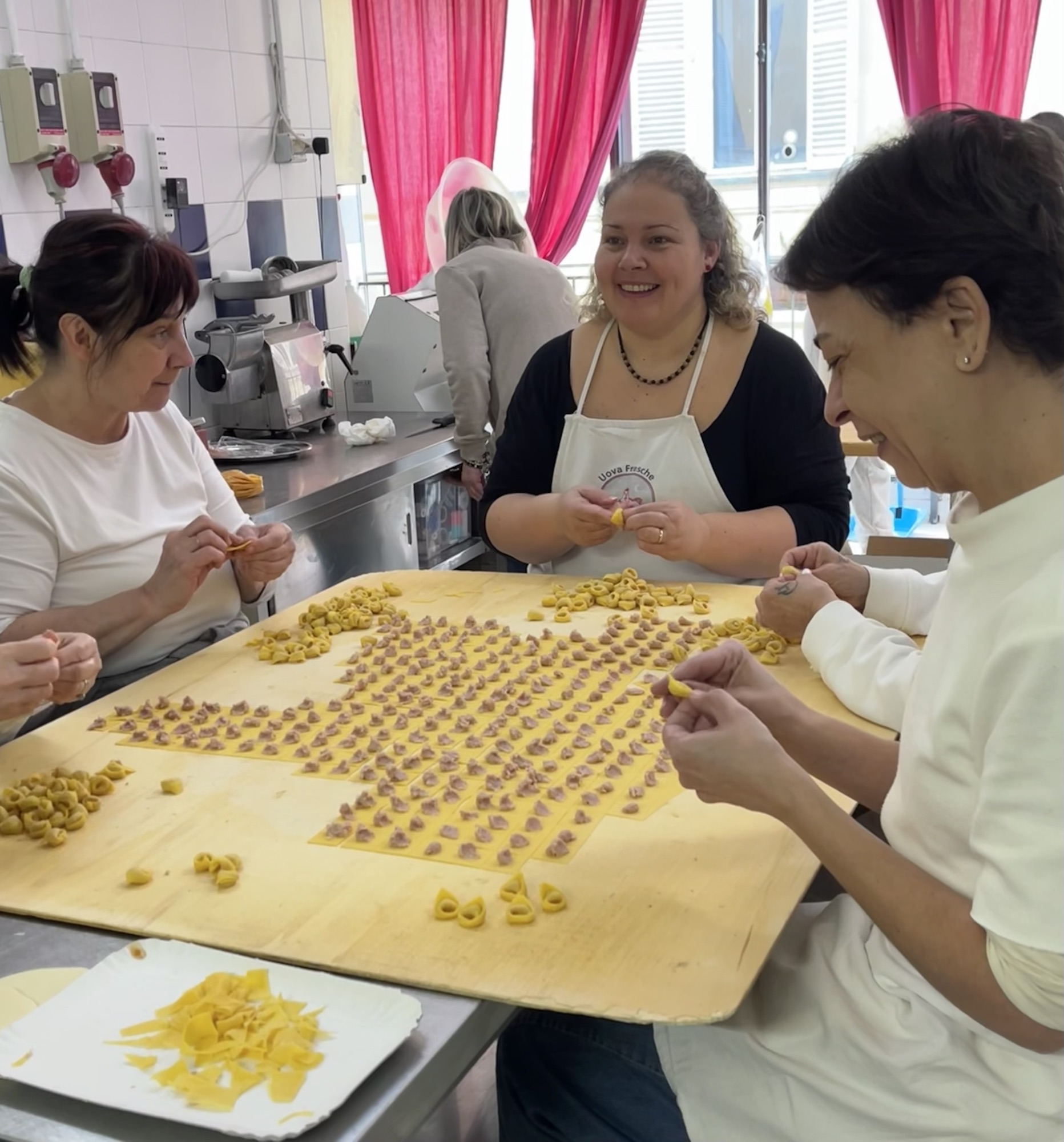
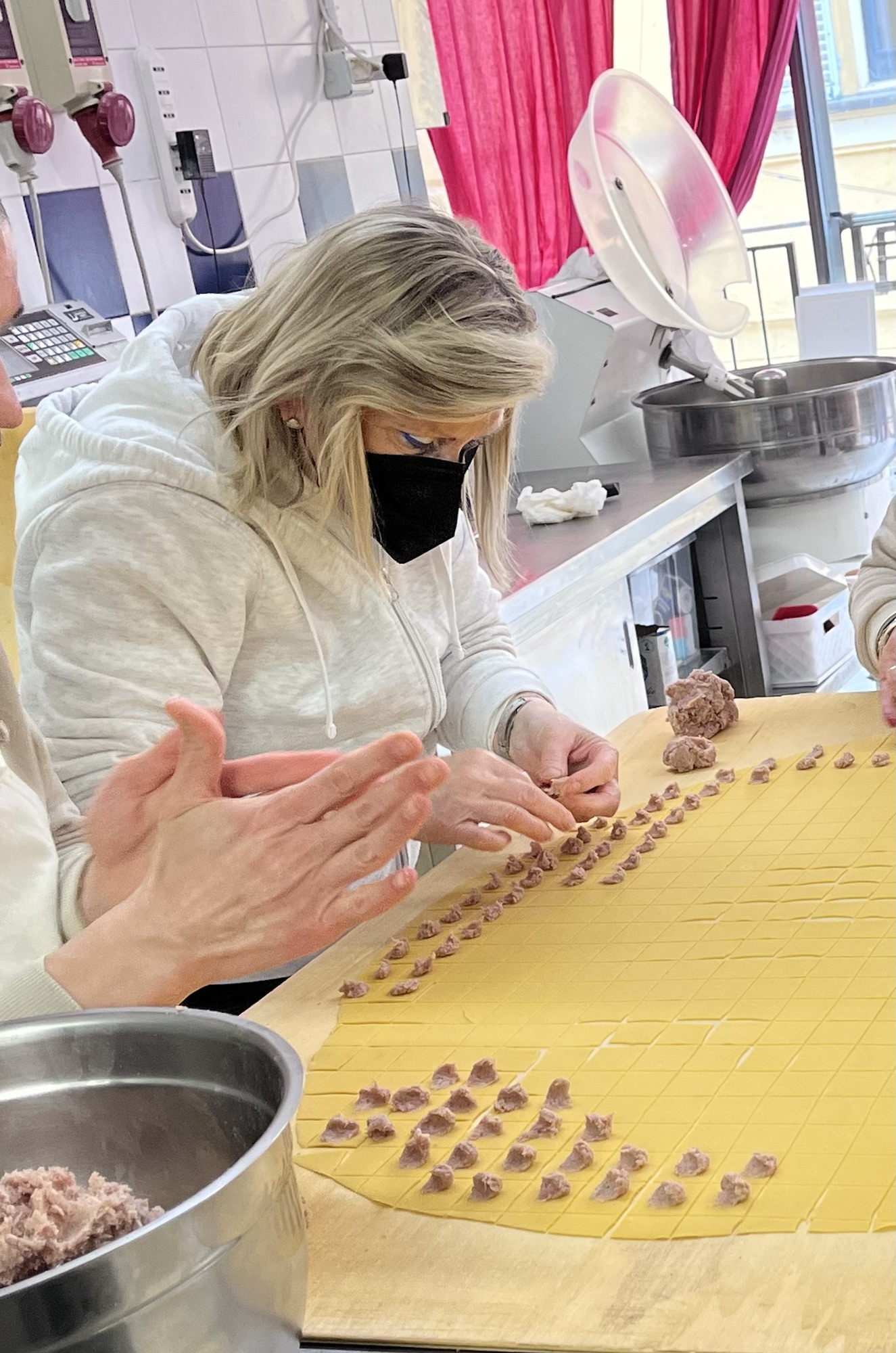
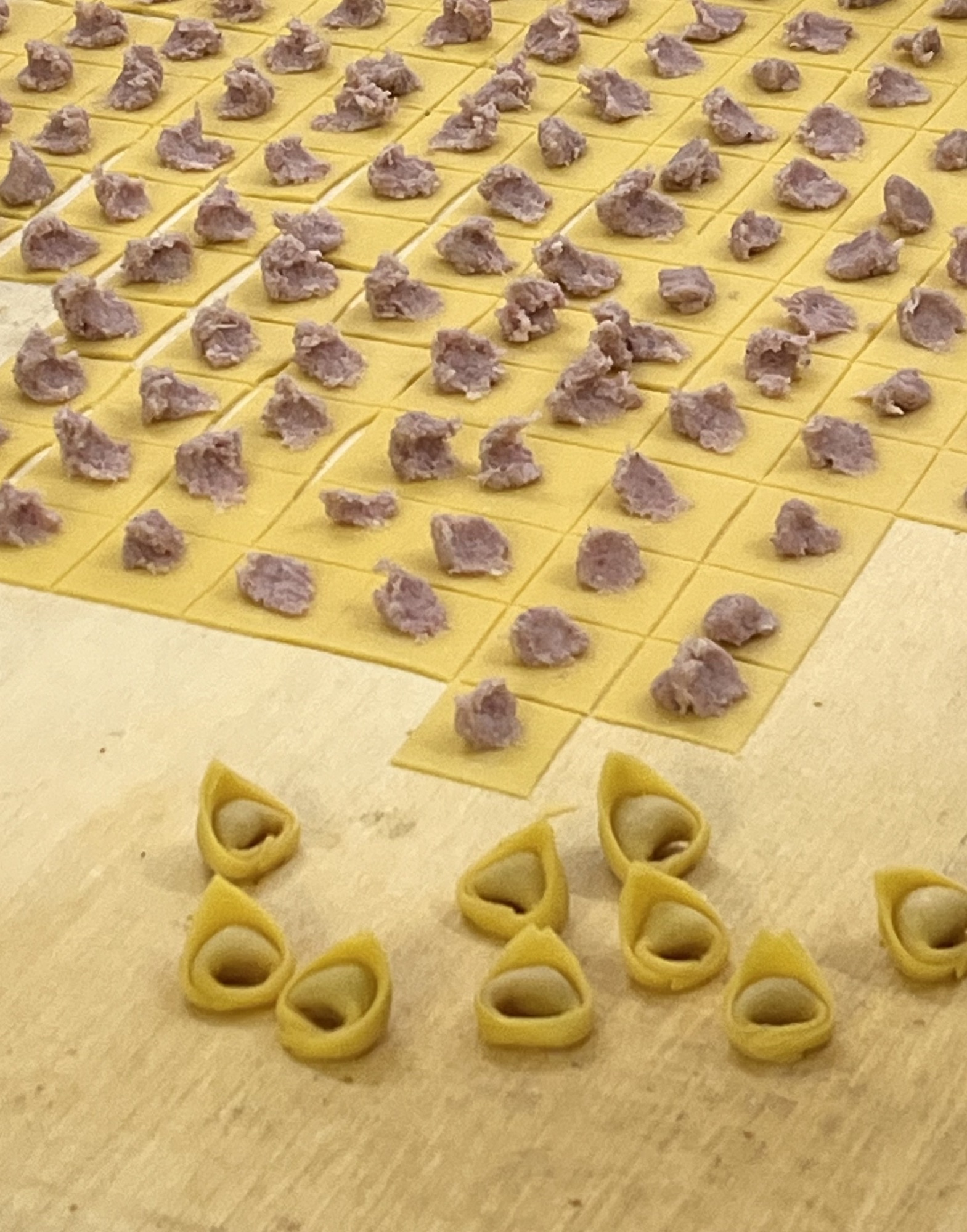
Next up – pasta factory. Upstairs was where the pasta was being created.

At this time of the year, only one table occupied for pasta. At other times of the year, every available space in this room is full of pasta-making.

Enough of looking, let’s get some food! Eric and Adrienne were drooling at what was inside.

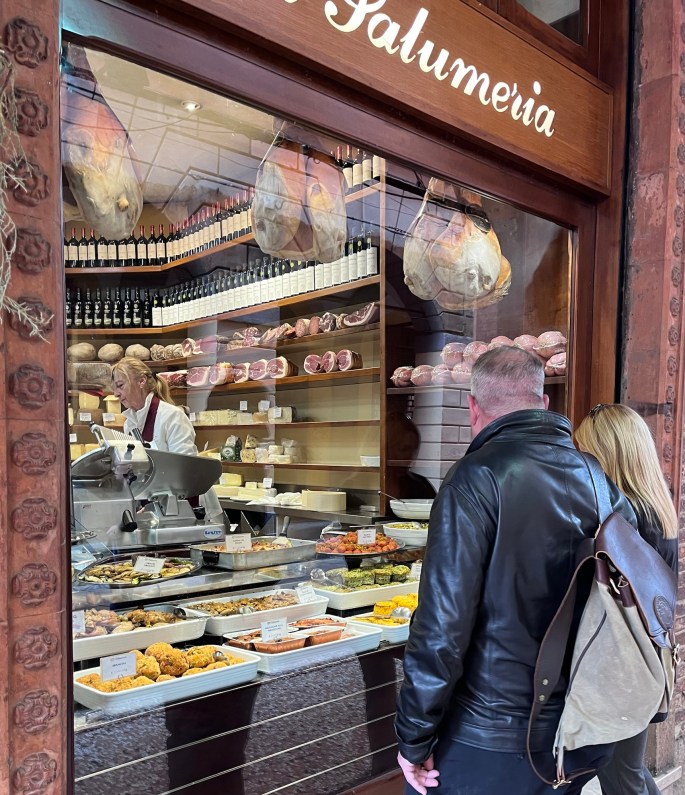
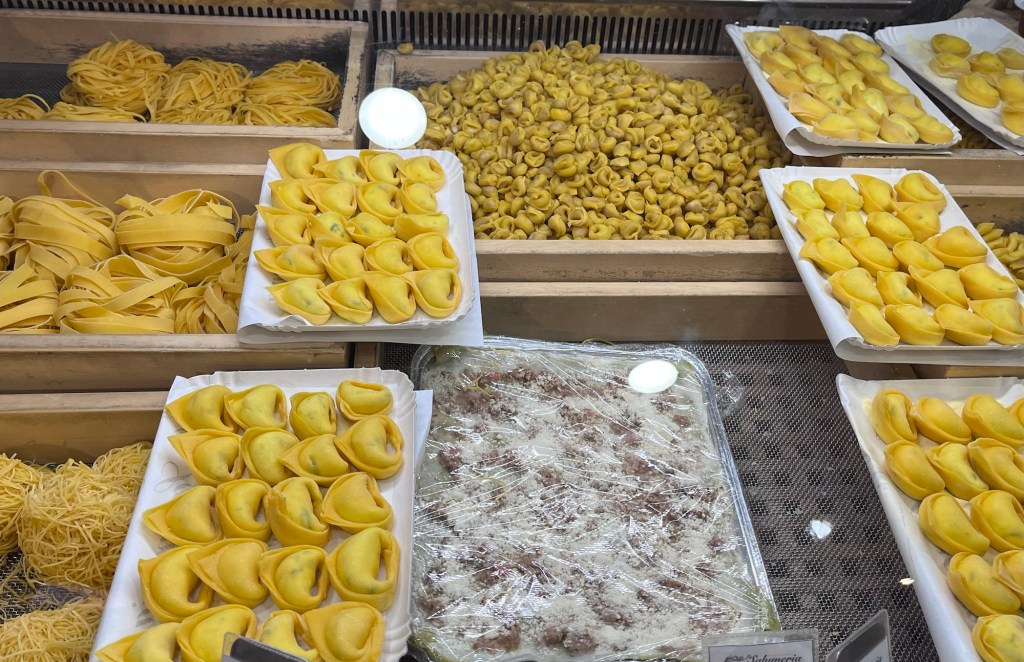
Part of this business was prepared food but the other side was fresh pasta for sale.

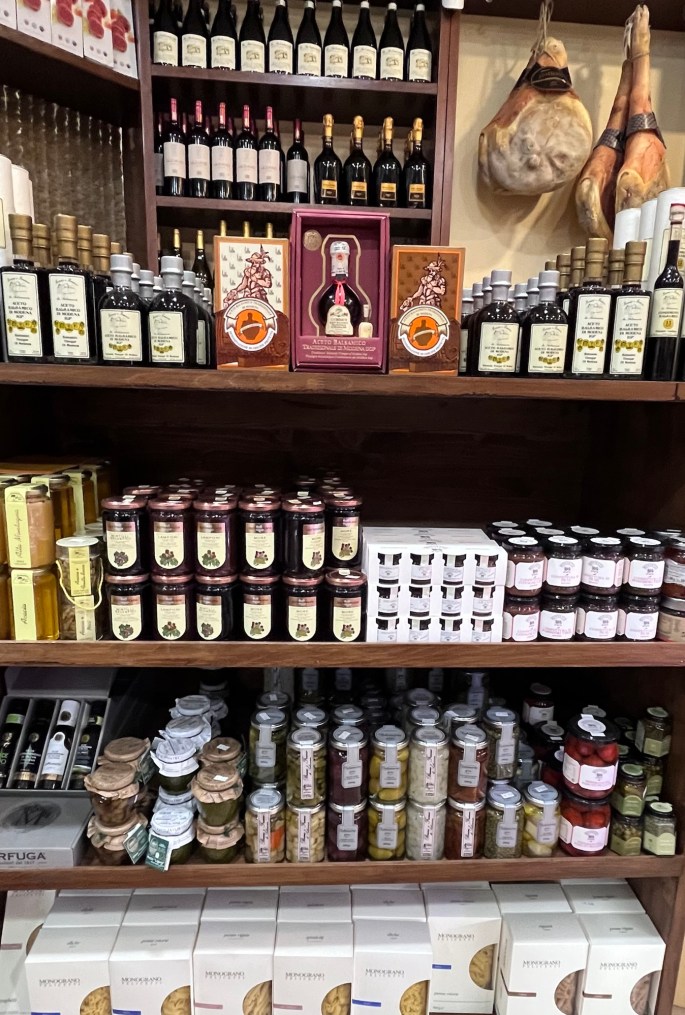
They had lots of goodies for sale. Yes, a few of them made the trip to Florida.

What did we pick up from this location? This delectable platter.

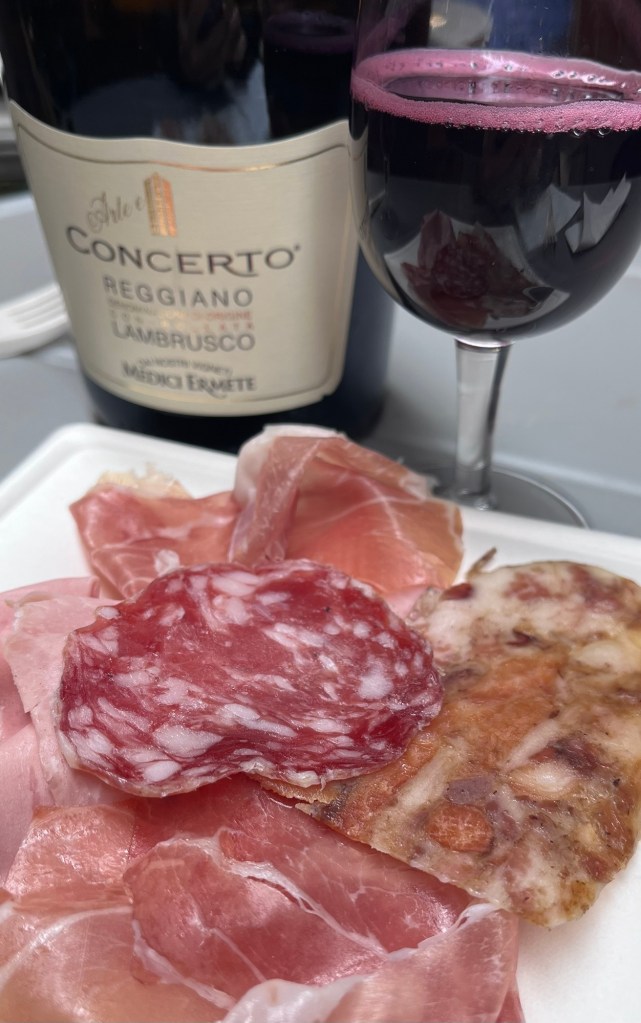
This is also where I was introduced to a dry Lambrusco – delicious!

A glass of that along with a plate of meats – I was happy.

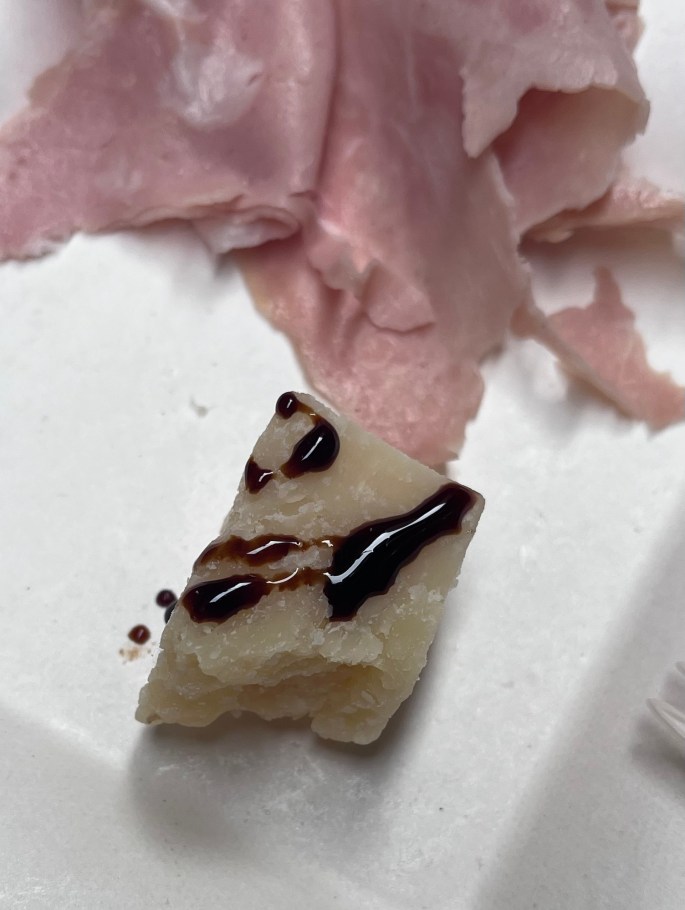
Parmesan cheese with a drizzle of balsamic vinegar – perfect.

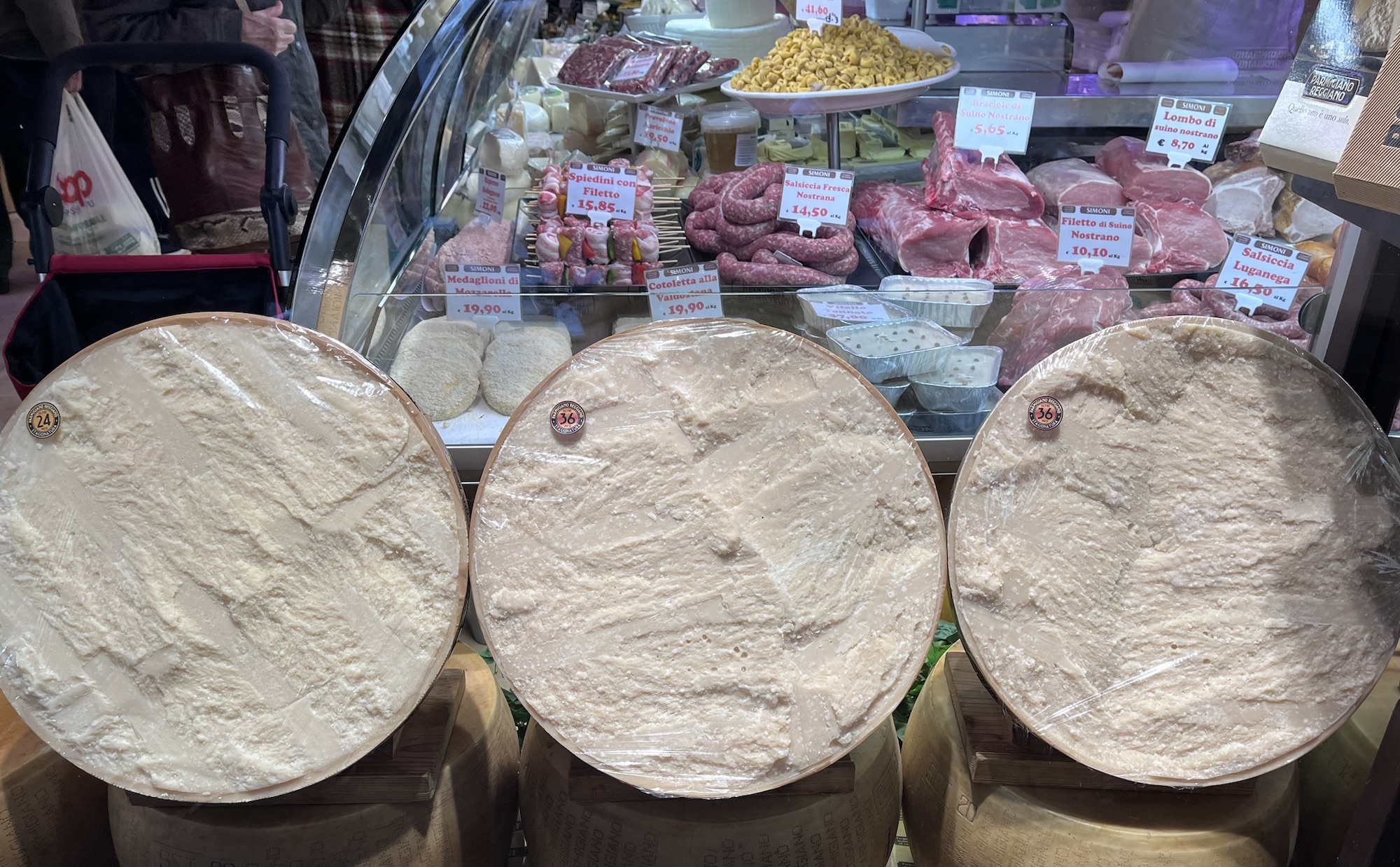
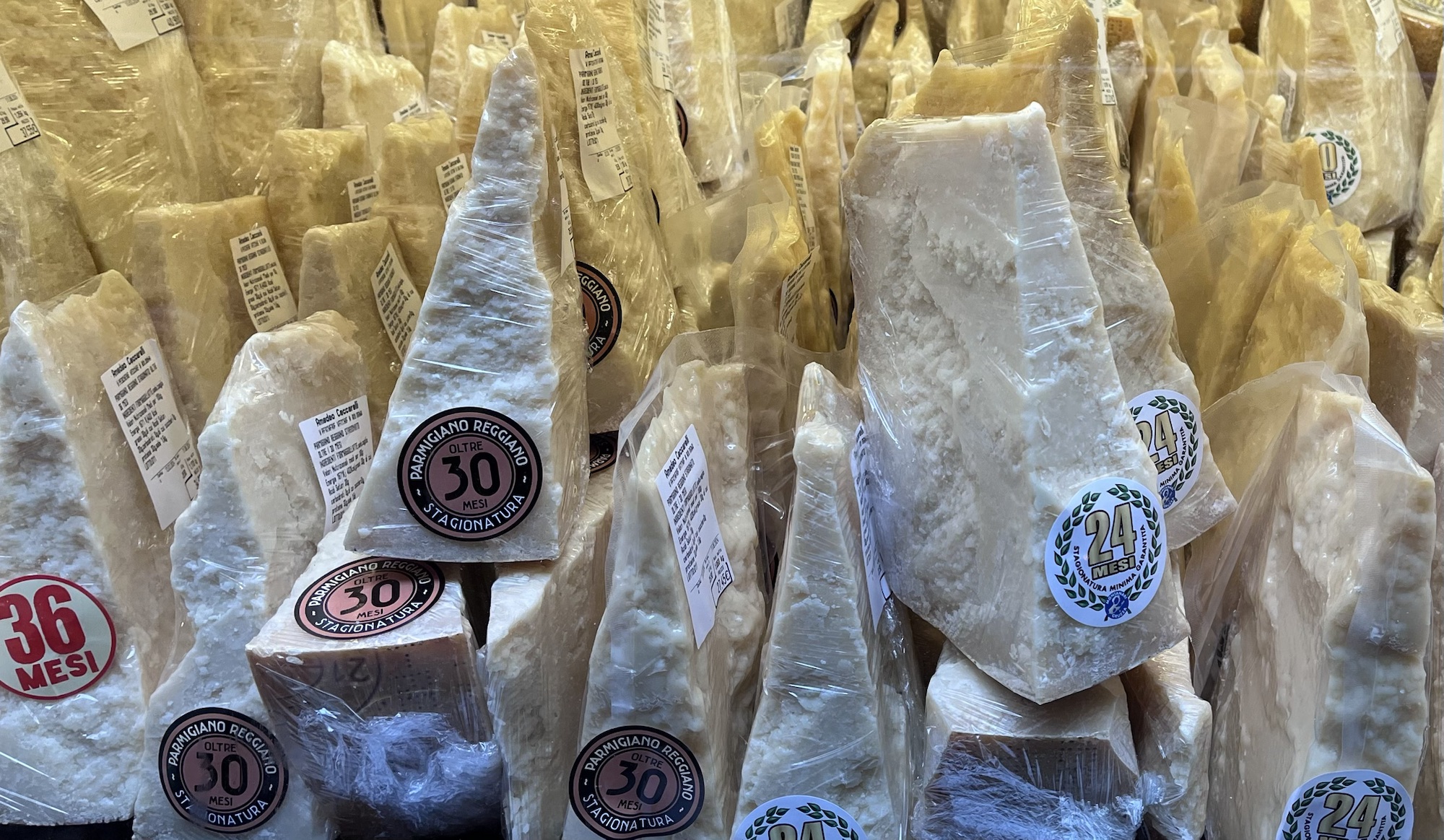
before sitting down to each these goodies, we walked through tight alleyways that were full of open-air markets. Notice those cheeses? The stickers (numbers) indicate how many months they have aged. They go up past what I captured in my photo.

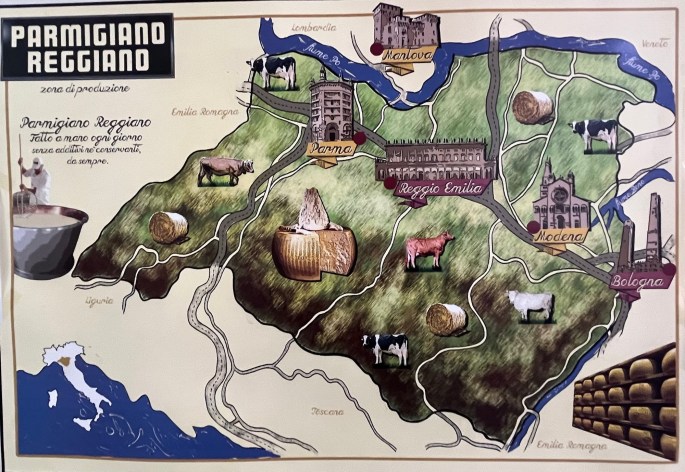
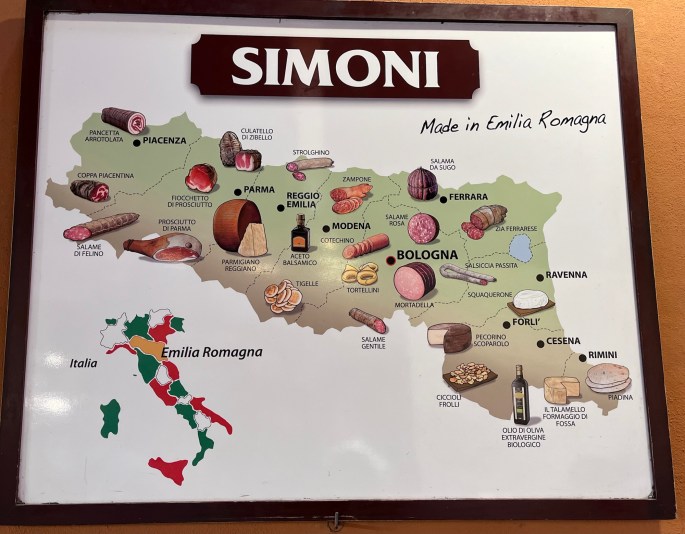
This was also a great place to find this map and see where some of these culinary gifts come from.

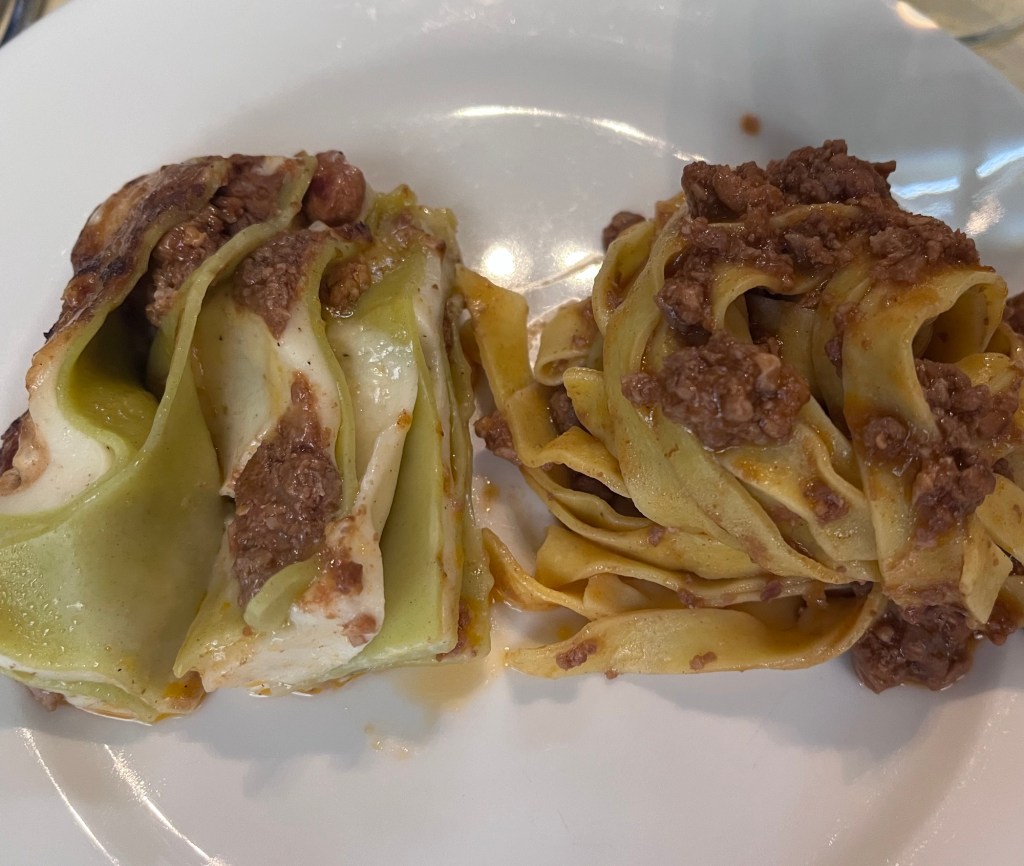
It was f.i.n.a.l.l.y time to eat some of that pasta we saw being made earlier.

What better way than to close with some gelato? Sorry, no photos.

We had a great tour and enjoyed the introduction to Bologna.

Florence to Bologna

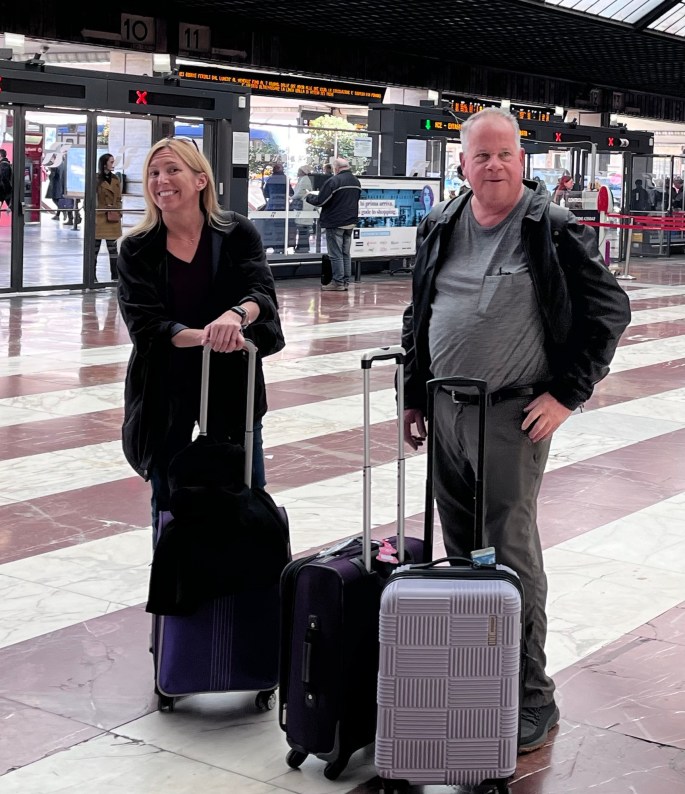
All to soon, it was time to continue on our Italian journey. Look at these two seasoned train travelers. They’re keeping an eye on the platform departure board as I wandered off.

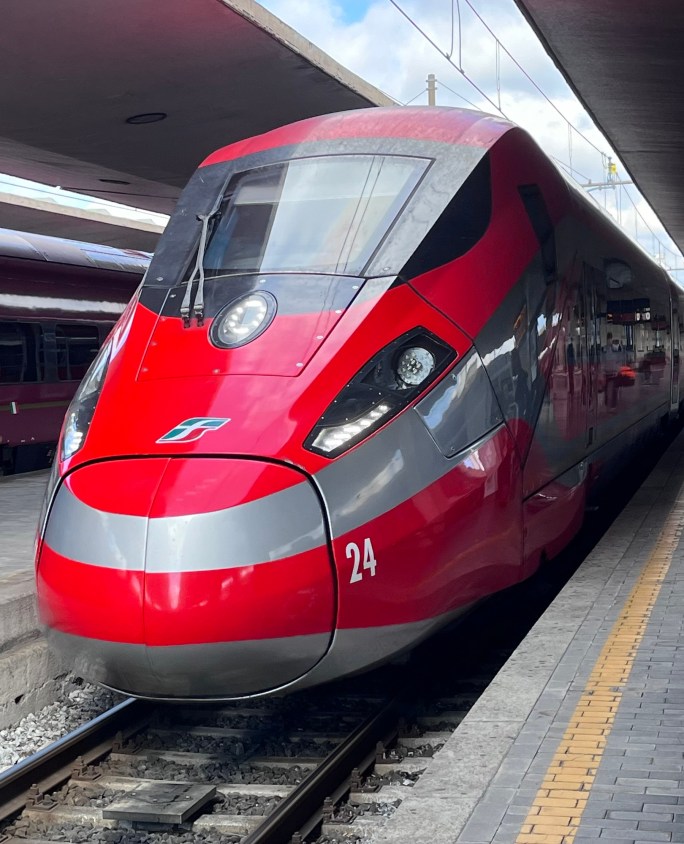
We were waiting for this.

Bologna. Why go to Bologna?

~it is the 7th most populous city in Italy

~also nick-named the ‘Fat City’ – rich cuisine, the ‘Red City’ – red tiled rooftops and the ‘Learned City’ – oldest university.

~speaking of which…..the University of Bologna has the longest continuous university operation in the world, established in 1088. That is not a typo.

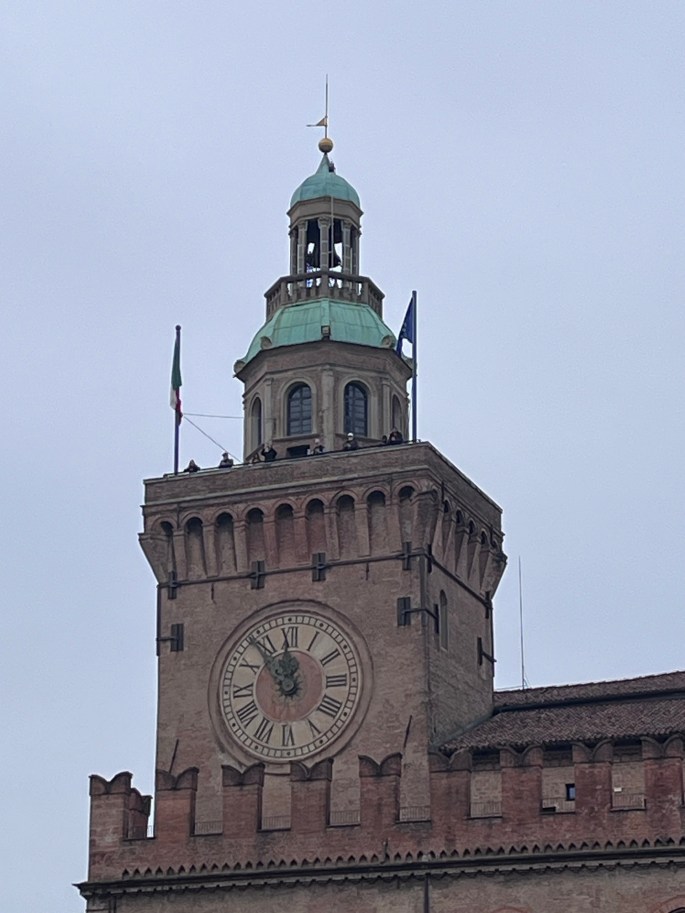
Famous for its towers, churches and lengthy porticoes, Bologna has a well-preserved historical centre. The first two photos are part of the main historical centre square.

A main reason for visiting……………not many Americans have it on their traveling plans. It reigns as the gastronomic capital of Italy – definitely a great spot for 3 foodies. They have gifted the world with Parmigiana Reggiano, tortellini, mortadella, Parma ham and balsamic vinegar to new a few things.

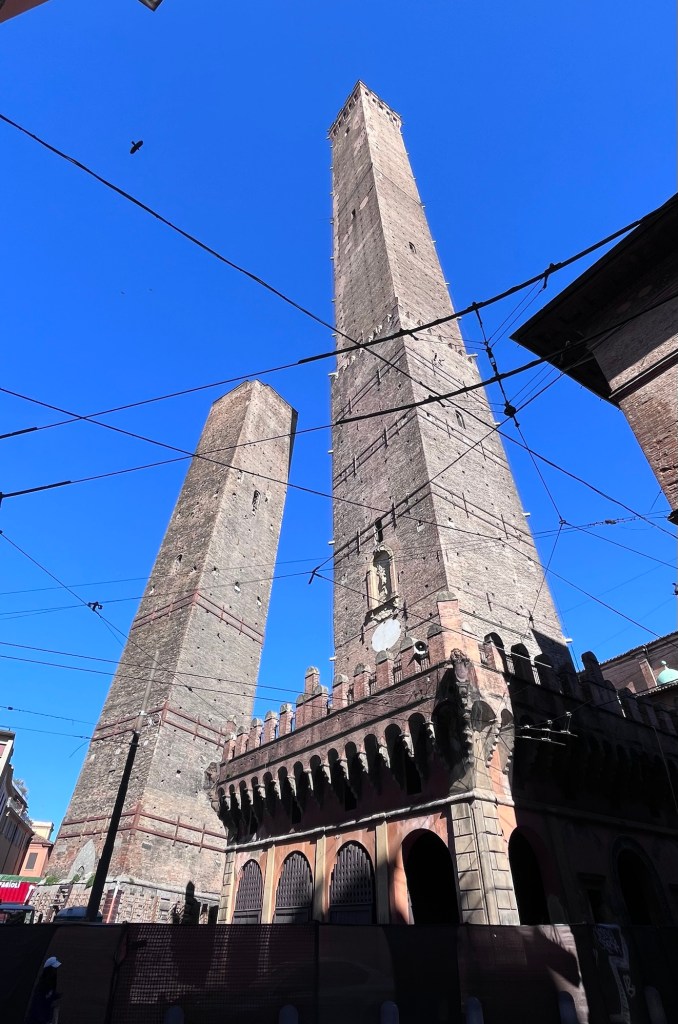
These two towers are symbols of Bologna with construction begun 1109-1119. It is assumed their construction was a competition between two families to prove who was more powerful. Basically, they are so old, very little was known about them. One of the towers is learning so much, it was permanently closed off in 2023 and a metal barrier is being constructed if it does collapse.

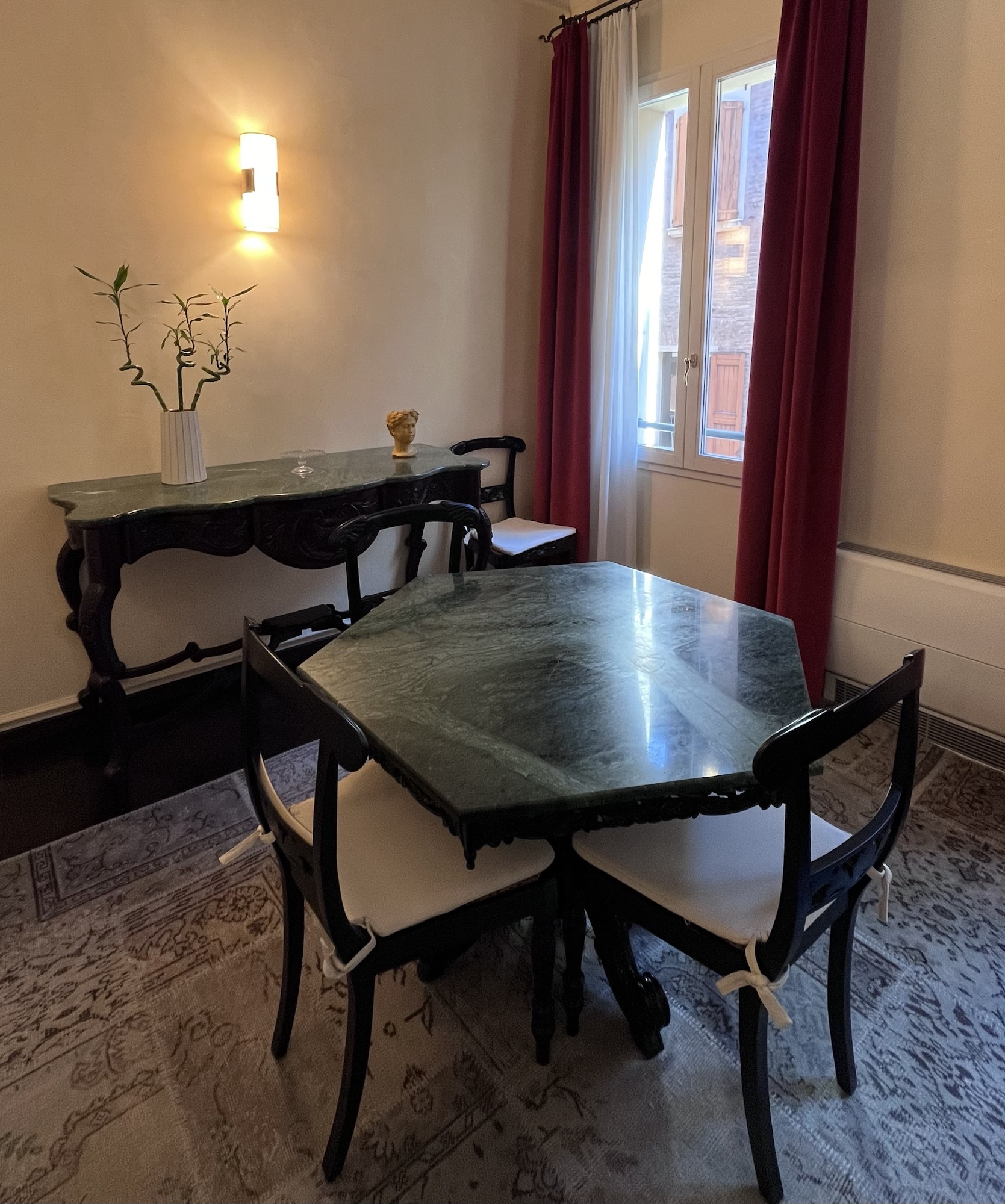
We grabbed a quick bite before our apartment was ready. Its location was ideal being one block away from the church in the first photo.

After dropping off the luggage we started walking.

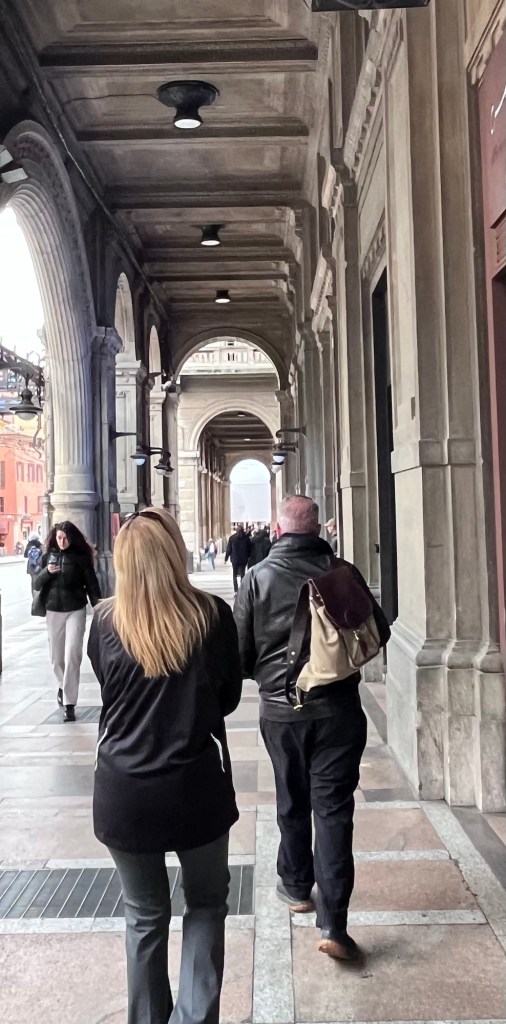
Porticoes – a structure consisting of a roof supported by columns at regular intervals, typically attached as a porch to a building.

This city is known for them, and we came across them quickly. I fell in love with them. 🙂

We all chuckled when we walked past this.

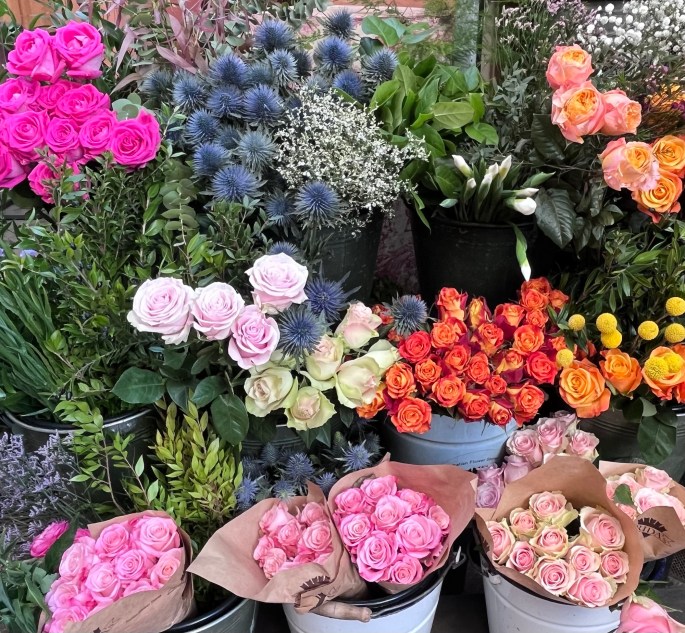
Naturally I needed to include a photo of a flower stall we walked by.

Too early for dinner we stopped for some refreshment along the historical centre square.

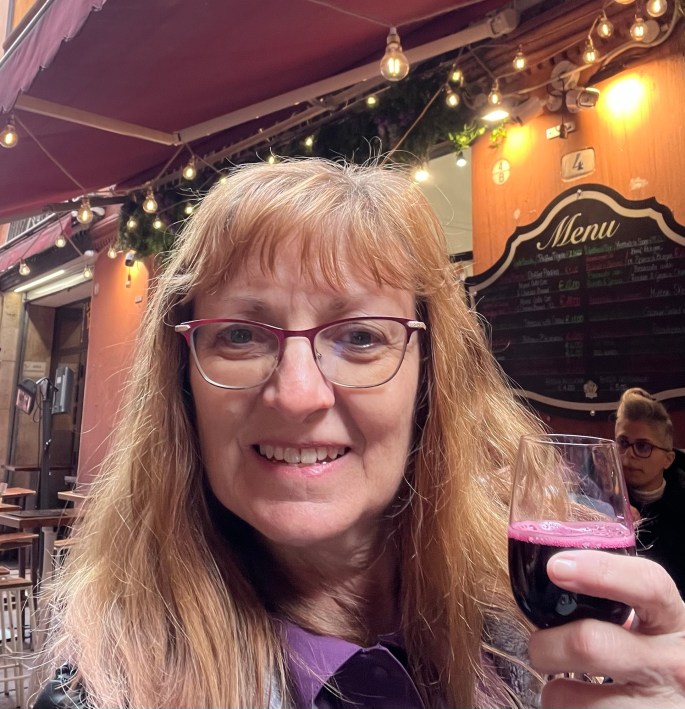
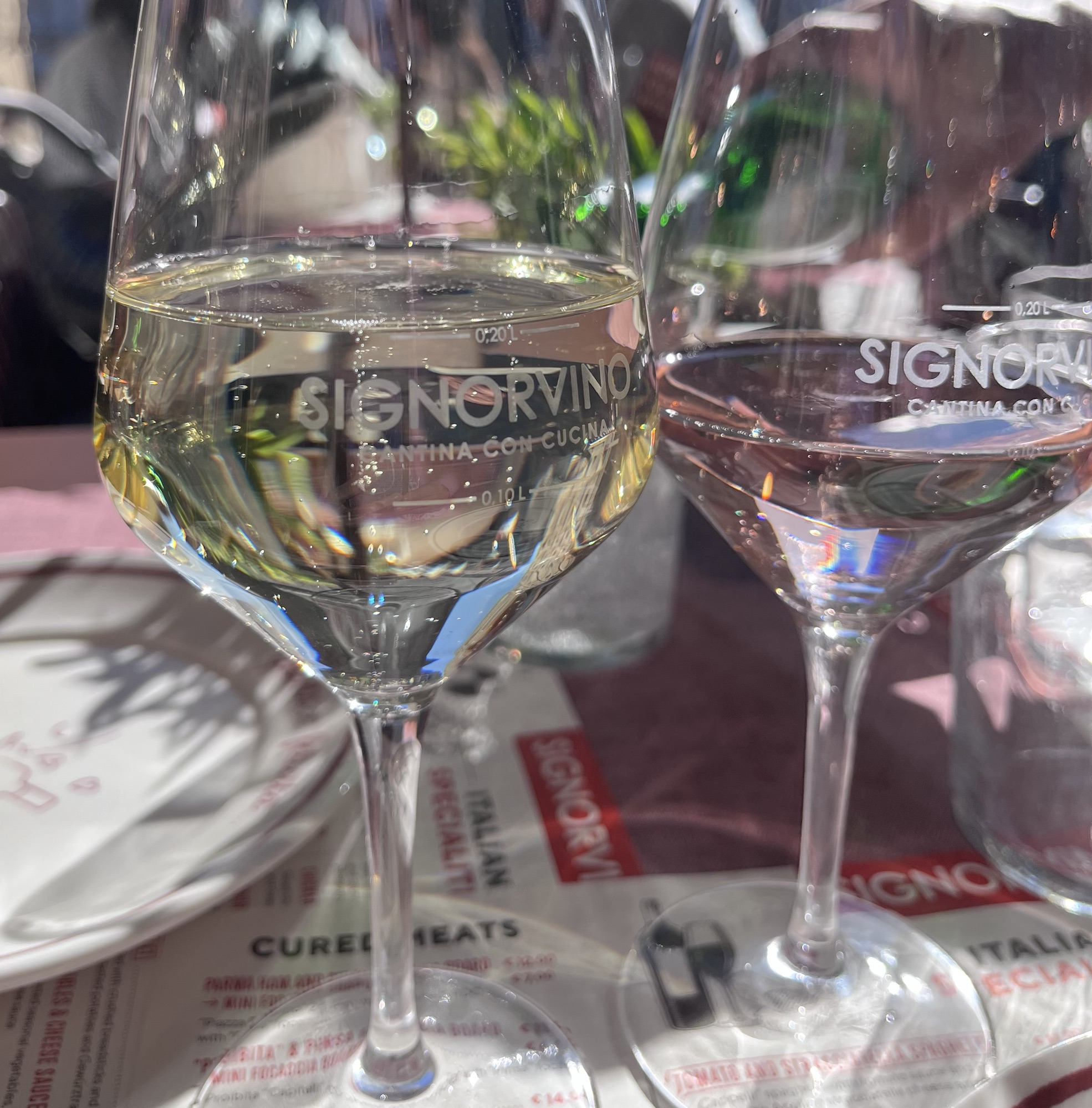
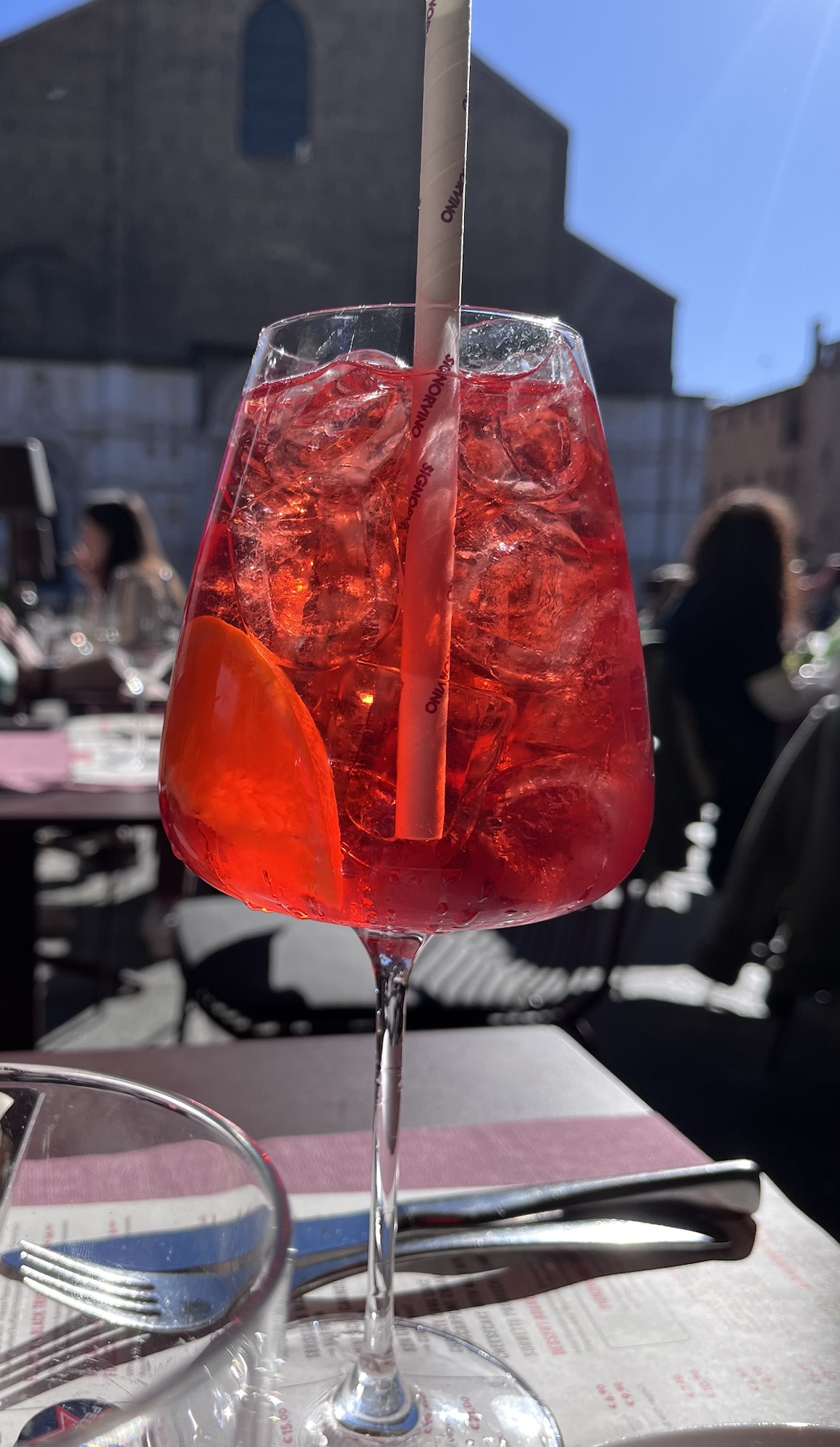
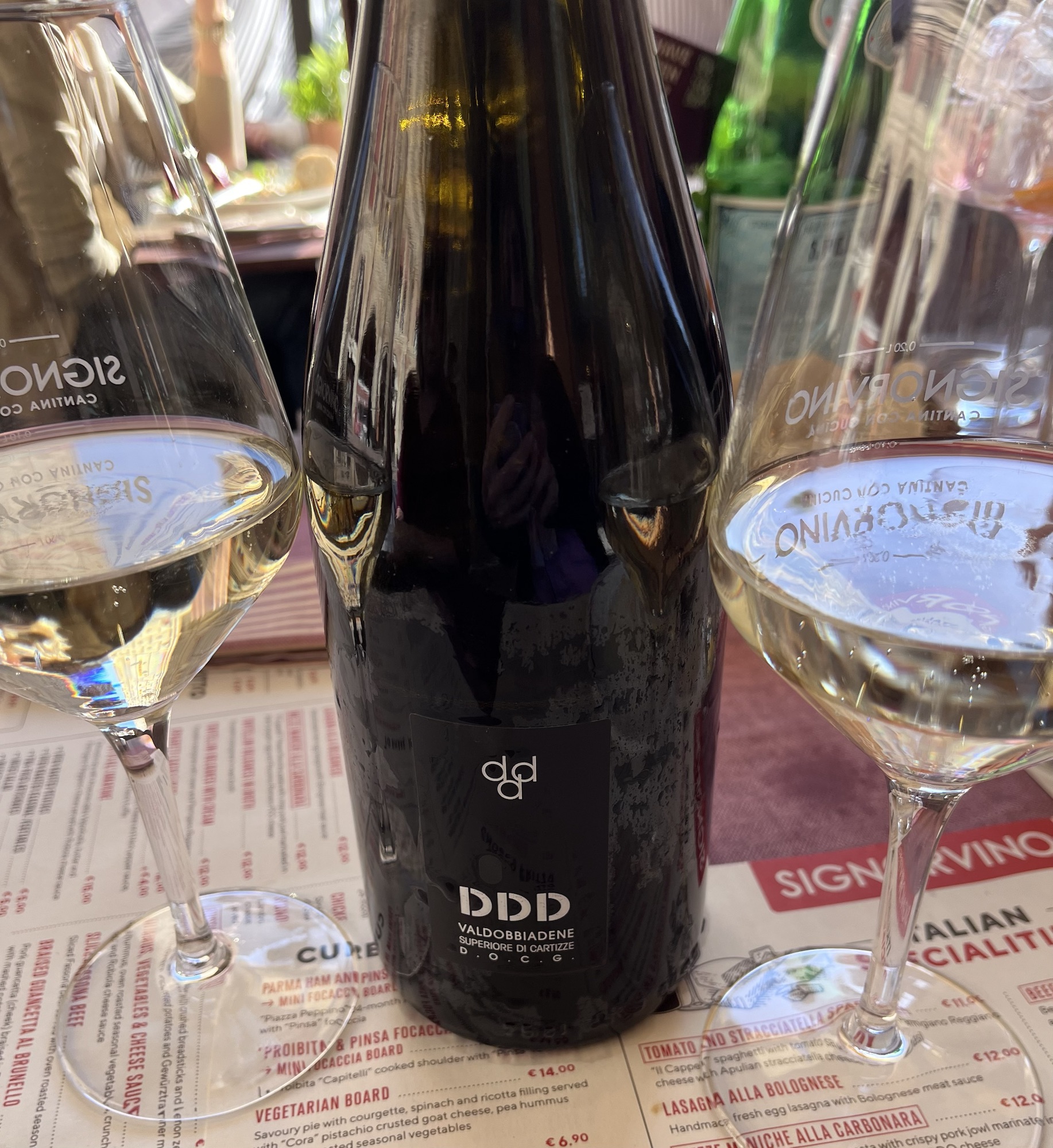
There were a variety of liquids imbibed. The middle drink was Eric’s choice, a Campari Spritz – a combination of prosecco, bitter liqueur and soda water. Yeah, ugh. I tried it – no thank you. The other two photos below are sparking local wines.

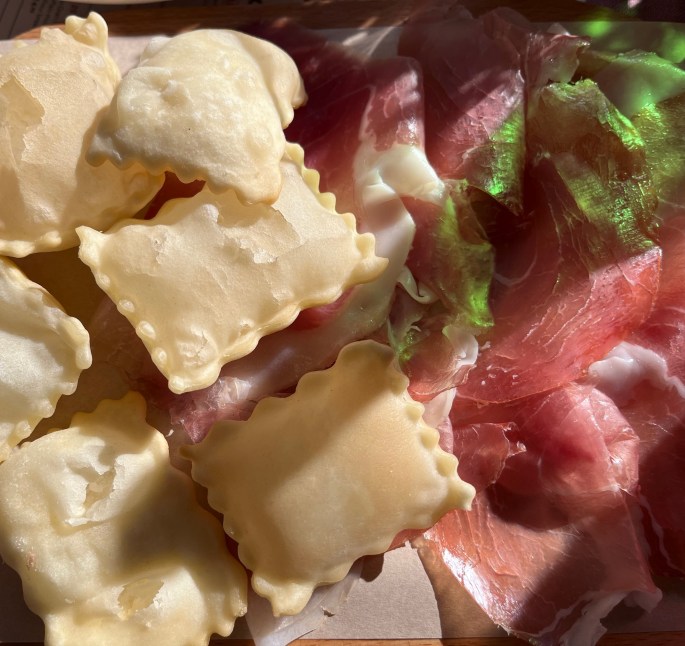
We needed a little something to hold us over until dinner and we ordered this. O.M.G. Those squares are fried gnocchi and the ham……cutatello, a rare small salumi made from the choicest section of the pigs thigh muscle.

As I was typing this post, I looked up cutatello ham. We should have brought some home and tried to get it through customs. Since 2017 it has been sold in America at Italian specialty stores and even a shop on Amazon. Check it out. Be prepared for stick shock!

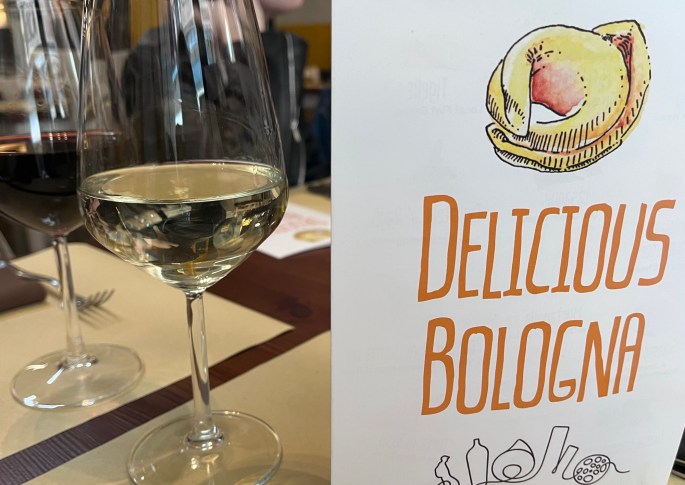
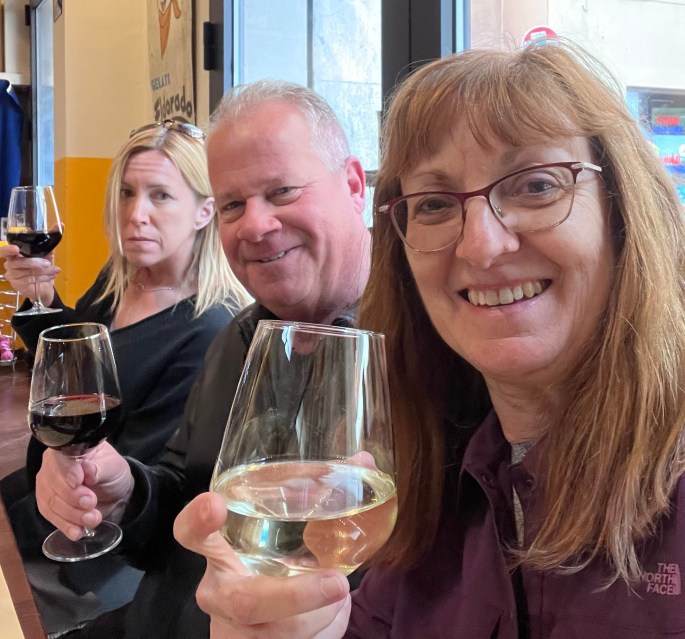
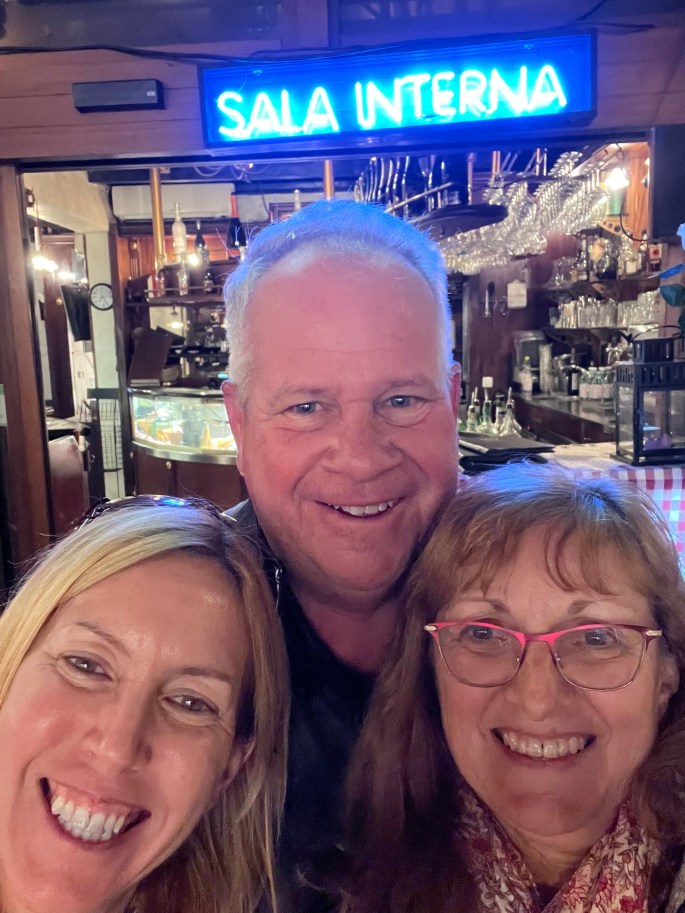
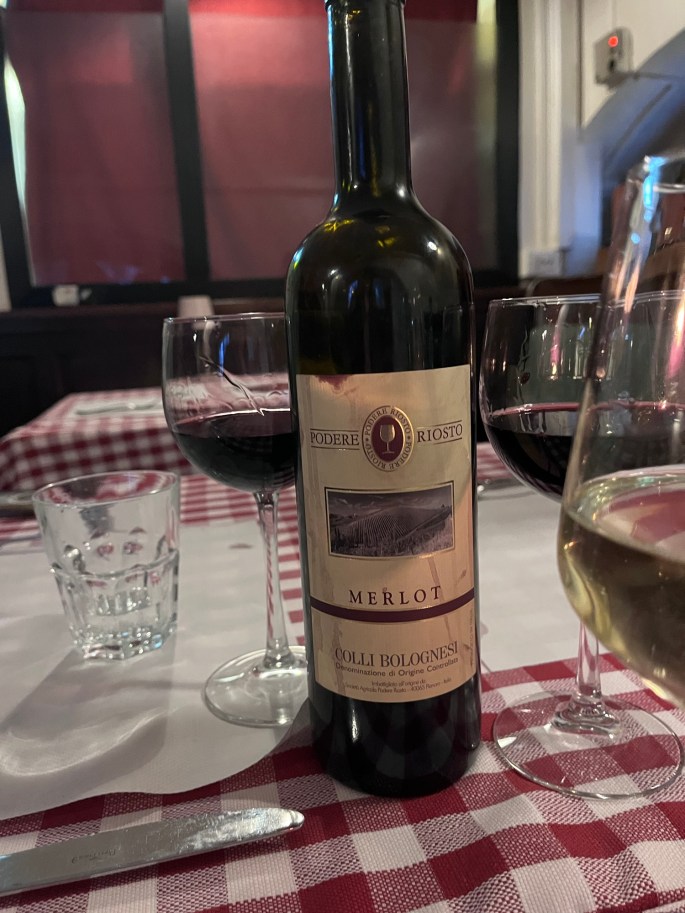
We eventually wandered off for dinner at Sala Interna. Nothing special, but it was open, had seating and comfort food. Yes, we started with wine – white for me, red for the other two.

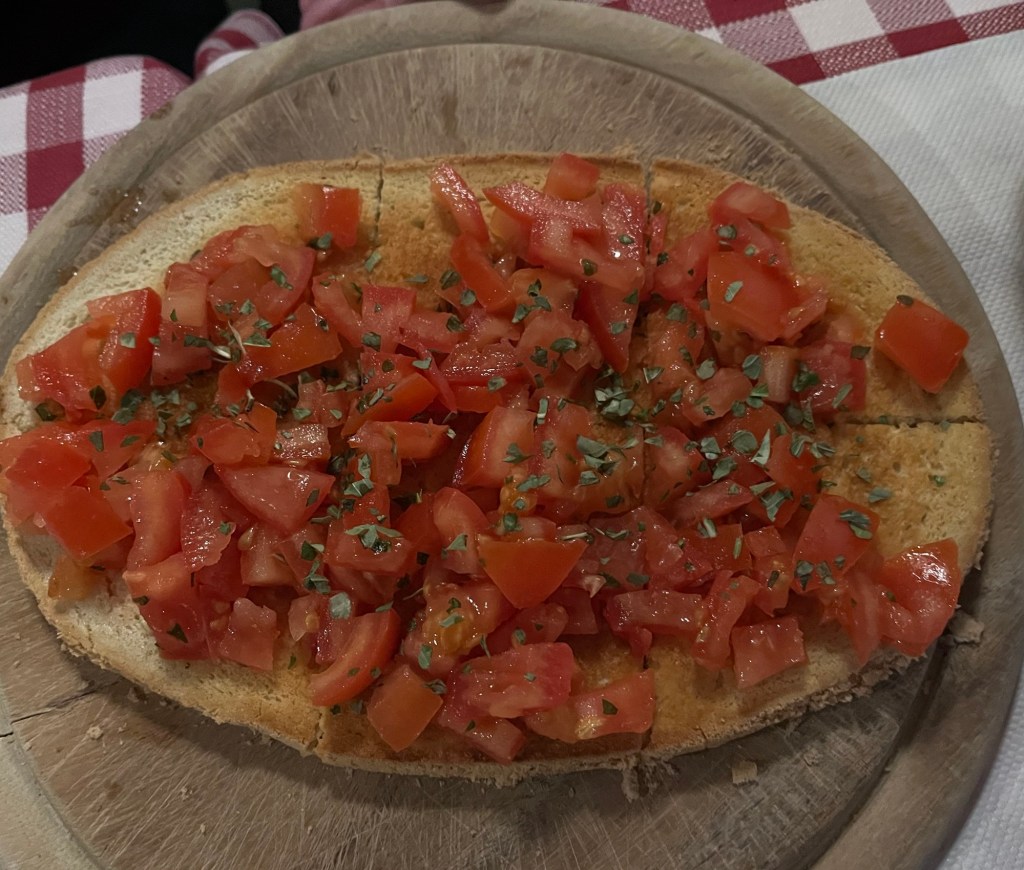
Two starters were ordered, bruschetta and lard bruschetta, they arrived waaaaaaay bigger than we expected. Did we need both of them? Not really. Did I try the one with Lard? Yes, Double Yuck. 😦

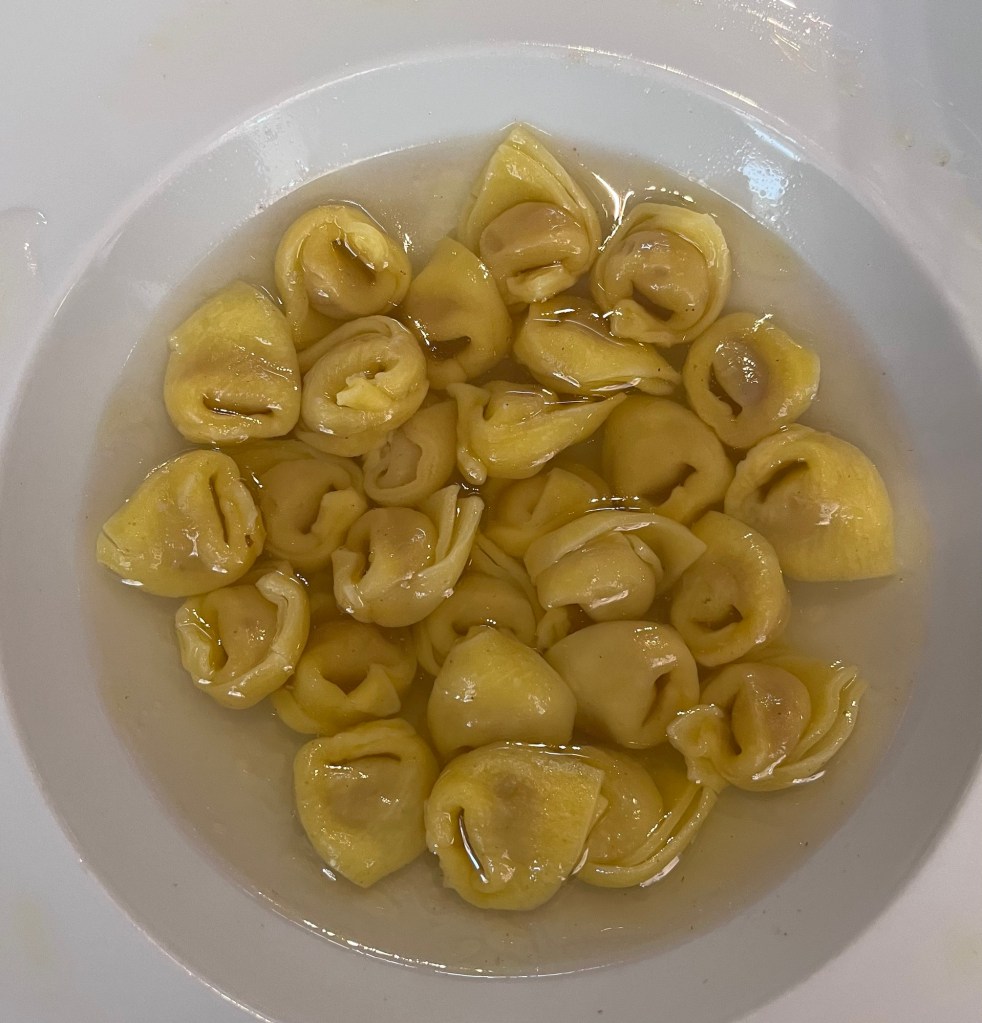
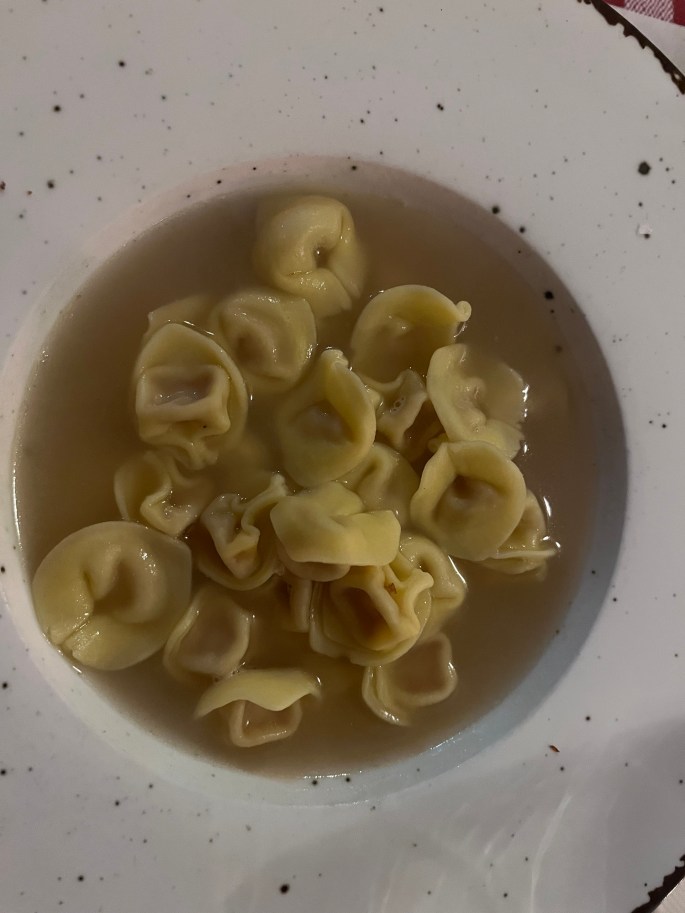
I had the traditional tortellini in broth – simple, but delicious. It was perfect that evening. When the sun started to set, it got chilly quickly. This was hot and filling.

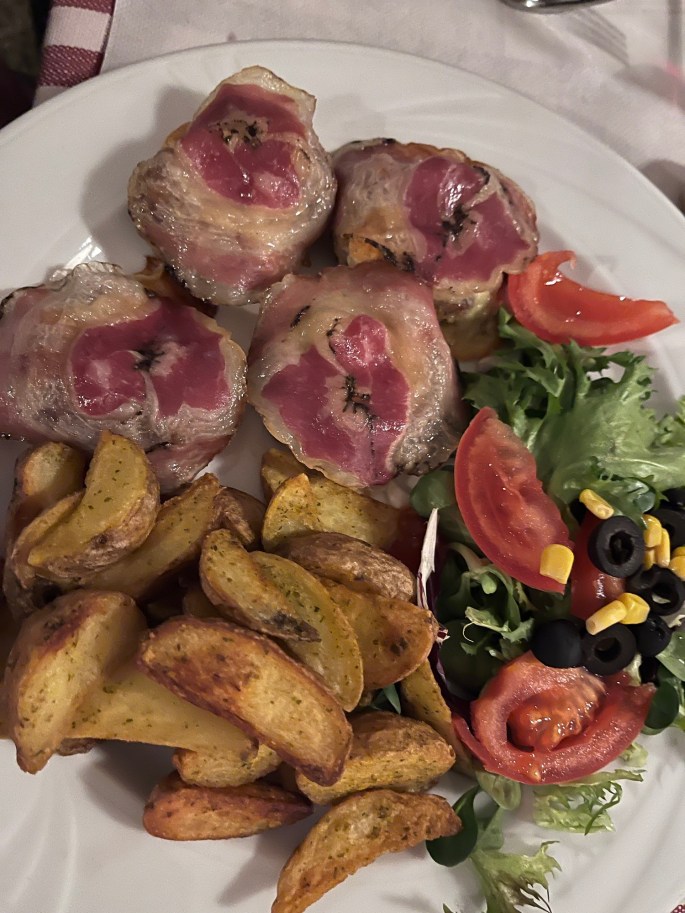
Eric had this entre – ham-topped meatballs, fries and an unusual salad. Ummm.

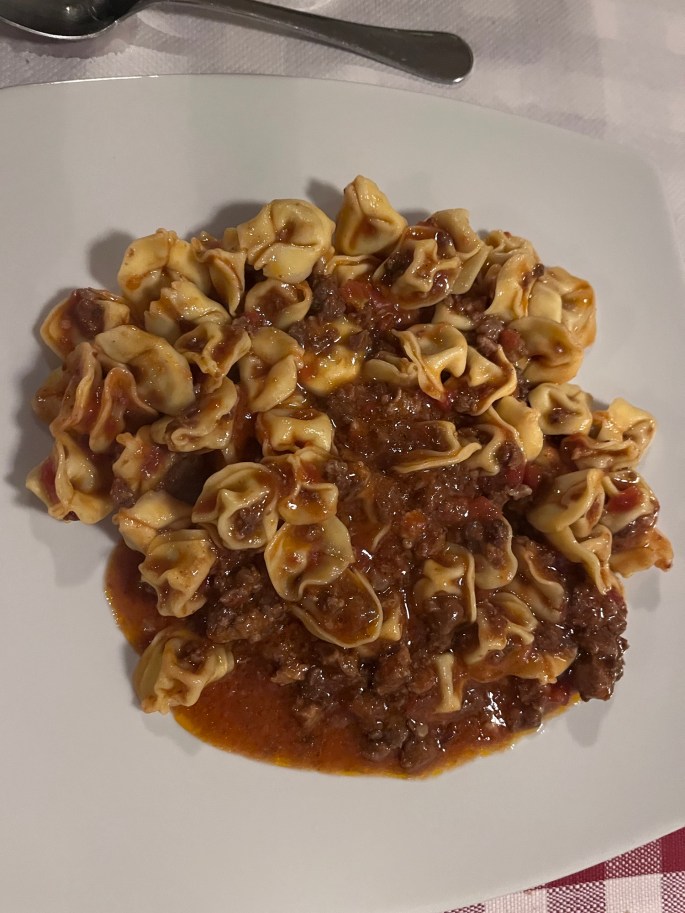
Tortellini with Bolognese sauce was Adrienne’s choice. Yes, that recipe originated here. It is a slowly cooked meat-based sauce, with characteristic sofrito (onion, celery & carrots), white wine, milk and a small amount of tomato paste or sauce. Mighty tasty.

It was a full day, a day of travel and a day of wandering. Tomorrow is our Bologna food tour – always a great way to start our time in a city.