
Basilica of Saint Mary of the Chorus
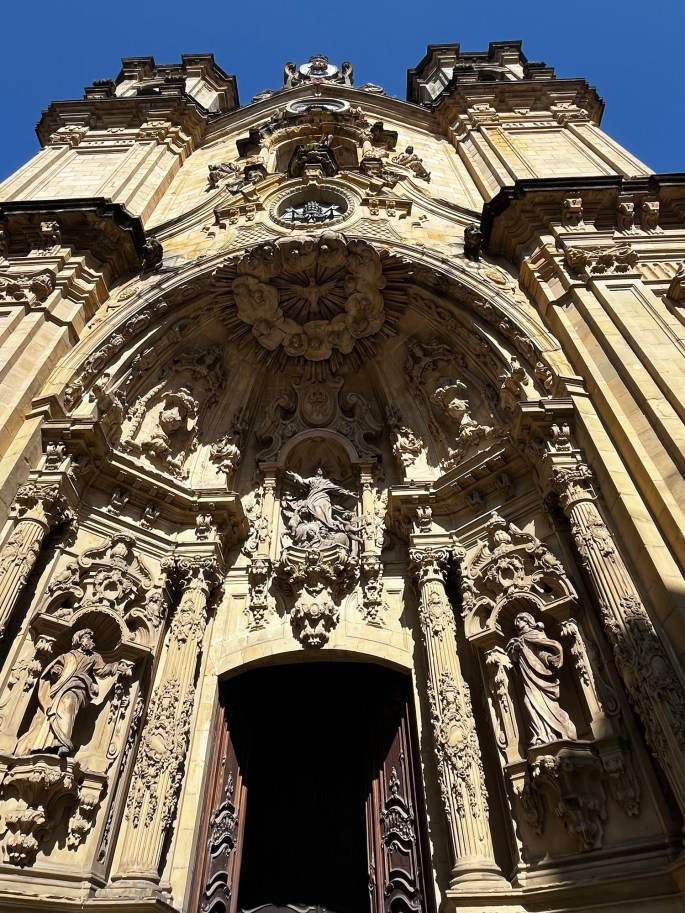
Walking into this basilica was bearing witness to 800 years of history. It is one of the most ancient sites in the city. Various temples have been erected here since the 12th century. The current building was finished in 1774 during a period of prosperity.
The high altar grabs your attention upon entry.

The painting at the top of the above photo is saint Sebastian. This one was installed in 1819 after the previous painting vanished in 1813.
The selection of saints on the alter were all martyrs, aimed at exalting the sacrifice of one’s own life in the name of religious beliefs. Yikes!
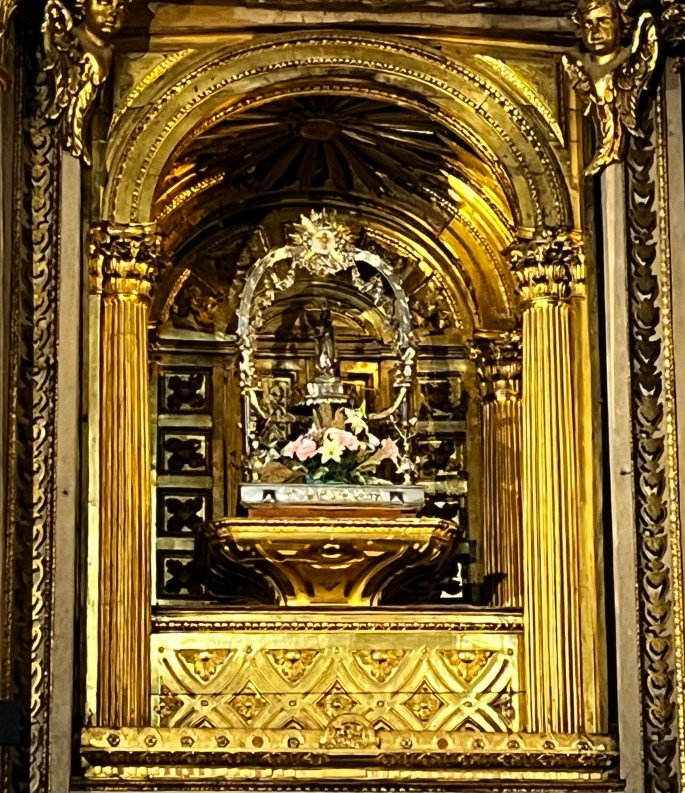
The gold centerpiece is the ‘Lady of the Chorus Virgin’ that attracts the biggest devotion. This icon has not ways been located in the high alter, but in the chorus of the church. It has been here the last 250 years, but the iconography seems to track it back to the 16th century Italy. There is a festival in September devoted to her.
Twin altars flank the high alter. The one pictured below is Saint Barbara which is the patron saint of the artillery.
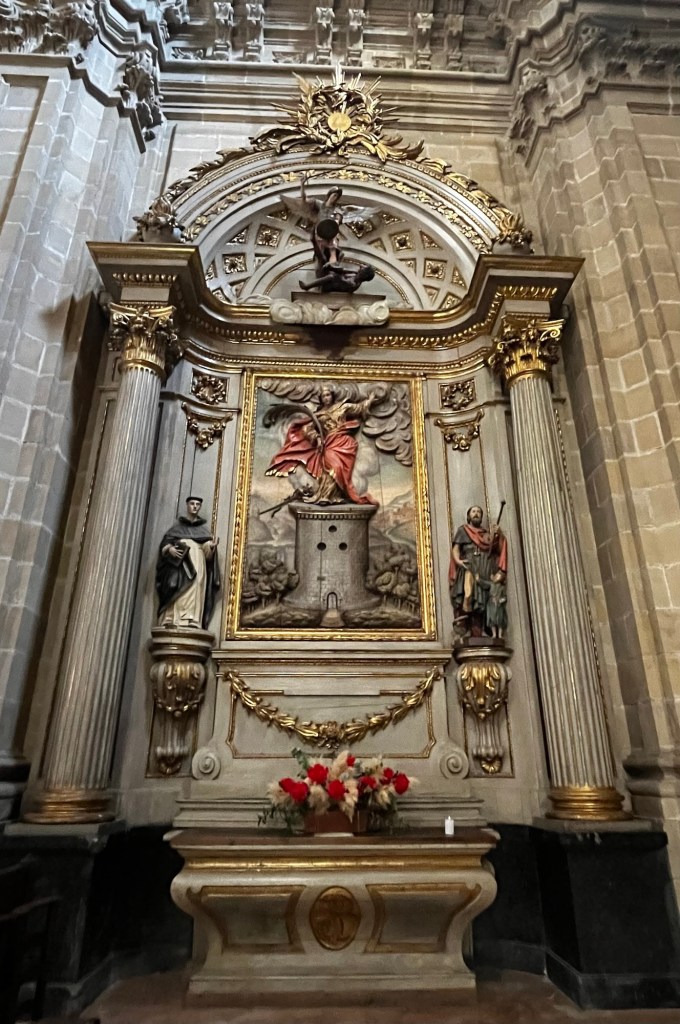
Three additional alters were in this basicilica, with identical architectural design but accomodate different saints and what they are associated with. Some are associated with the sea, , merchants & tailors and fishermen.
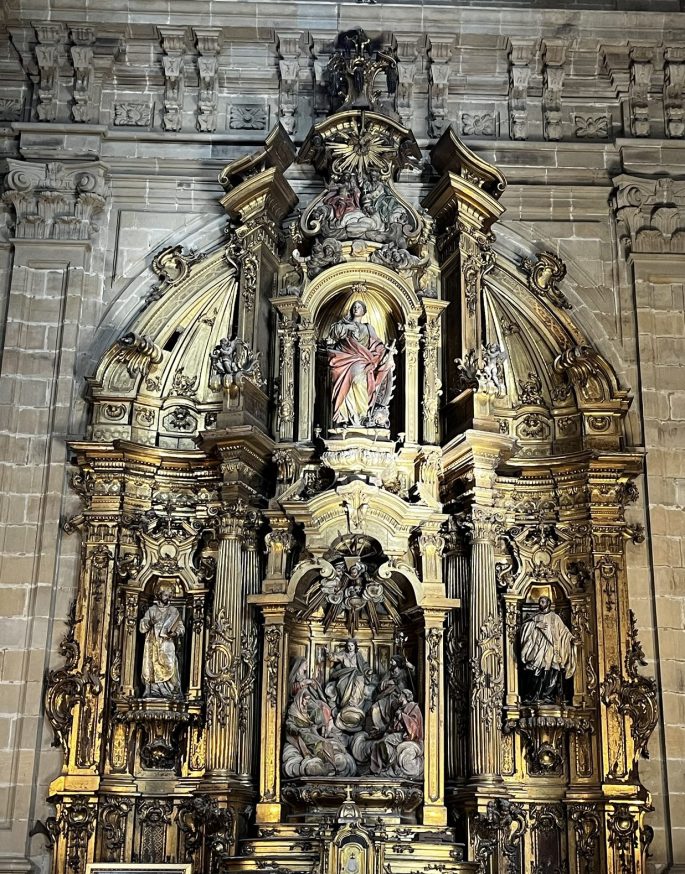
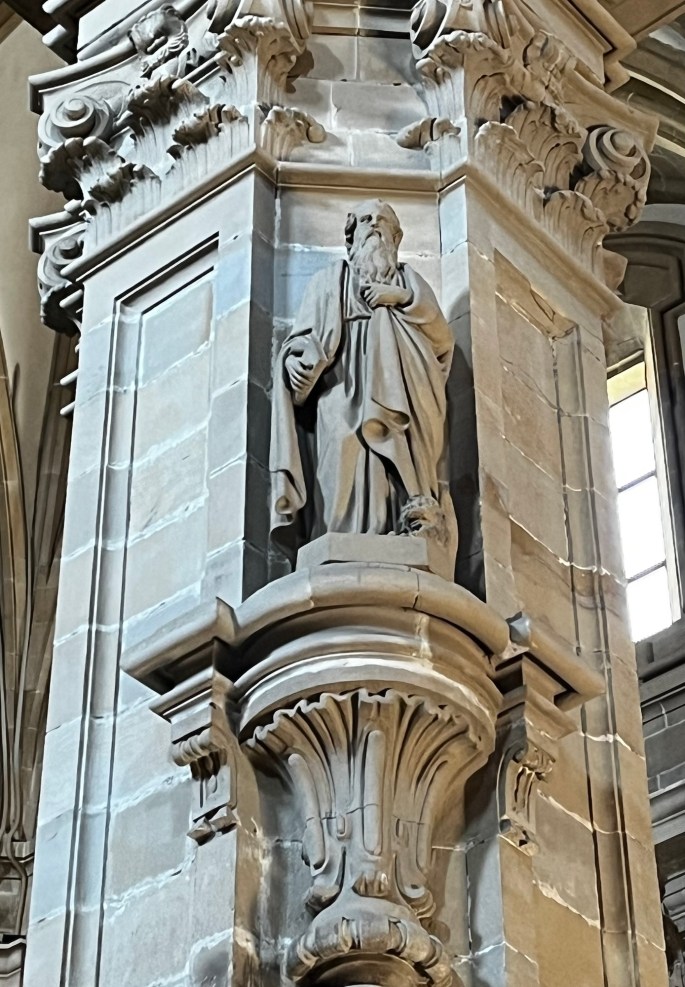
All the detailing just astounds me. Especially when you hear when these things were made and the hardship those not of nobility existed within. Even looking up high, figures are carved into the pillars. Someone was always looking at you when you attended church.
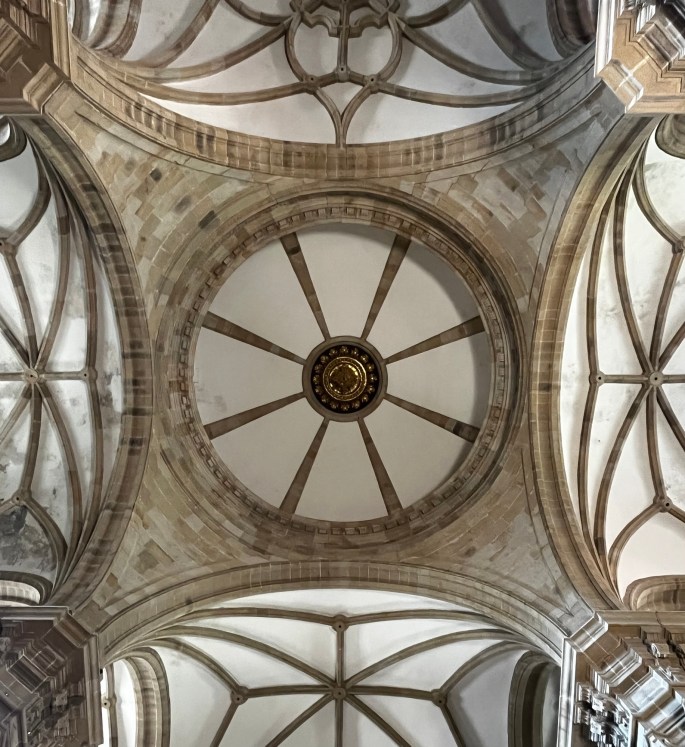
Speaking of looking up, captured a photo of the ceiling. The design is stunning but thinking back to other ‘fine’ ceilings we have seen on this trip, they are somewhat plain.
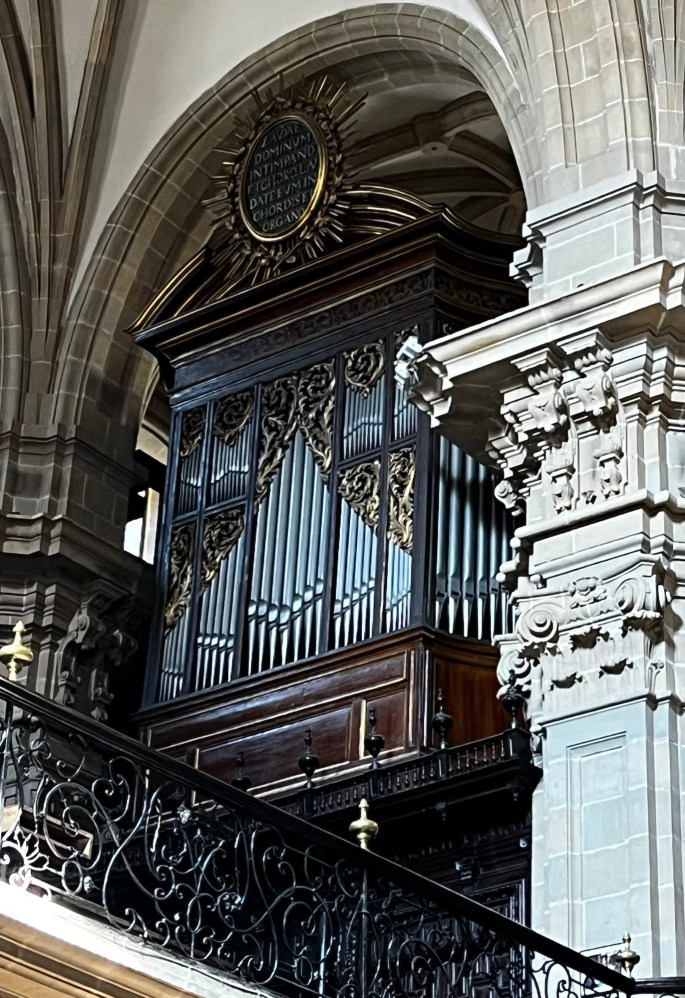
We could only see a portion of the organ as they are in the midst of collecting funds for restoration. An organ existed prior to 1860, but no information had been found. The City Countil found renewed energy in the mid-1800s to fund this one.
They created a museum next to the sanctuary and it was open. They have collected items in the surrounding communities that were utilized in the past. Some were in better shape than others as they had been put to daily use in their houses and barns. It was an interesting collection.
I would have enjoyed listening to their organ, but the next time would be on their Sunday service at 11:30am – the day of our departure. Concerts are held regularly, and the music creates a ‘magical’ atmosphere inside the temple.
I really enjoyed walking and looking through this building and reading about all of the symbolism. My last photo is another of the facade. It has prolific decoration and marked theatrics as opposed to the simplicity and minimal ornamentation spread throughout the rest of the outside facade.
The center glorifies the Lady of the Chorus, flanked by her parents as she in turn looks up to the Heaven.

And above it all, is a statue of Saint Sebastian.
If you ever make it to this city…………..take a moment, step inside and soak in the ambience, history and symbolism.
 Darden Travels