
The Basilica is dedicated to the patron saint for the city, Saint Petronius who was bishop of Bologna in the 5th century. Its commanding presence dominates Piazza Maggiore which at various times of day is filled with tourists or students – it’s a huge gathering spot. We stopped inside within hours of arriving in Bologna – it draws you in.
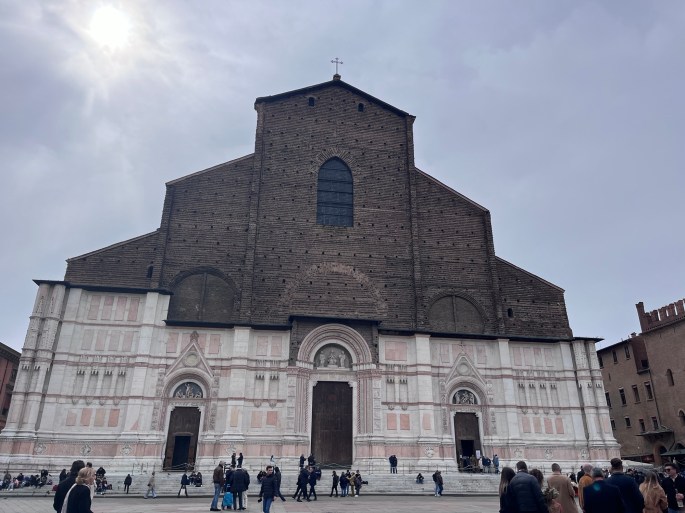
A very imposing building, even with the facade incomplete. I think it adds to the charm. The lower part of the building is covered in marble, while the upper part of the building was exposed brick. Construction started in 1390 but ultimately money ran out.
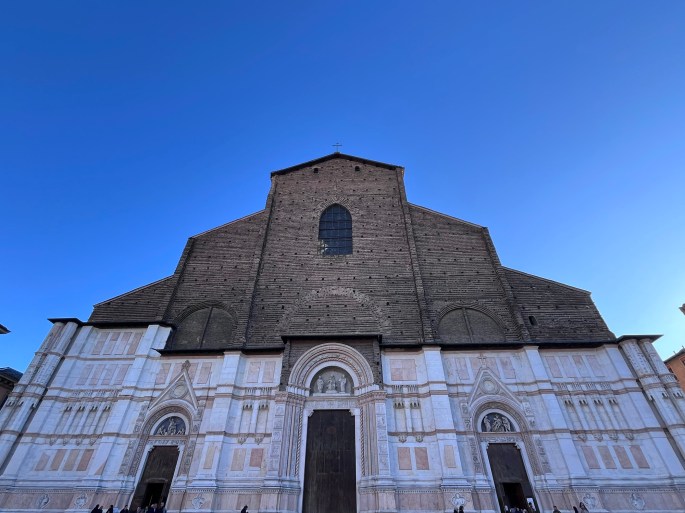
It is considered the 10th largest church in the world by volume being 132 meters long, 66 meters wide and 47 meters tall and the largest church built of brick.
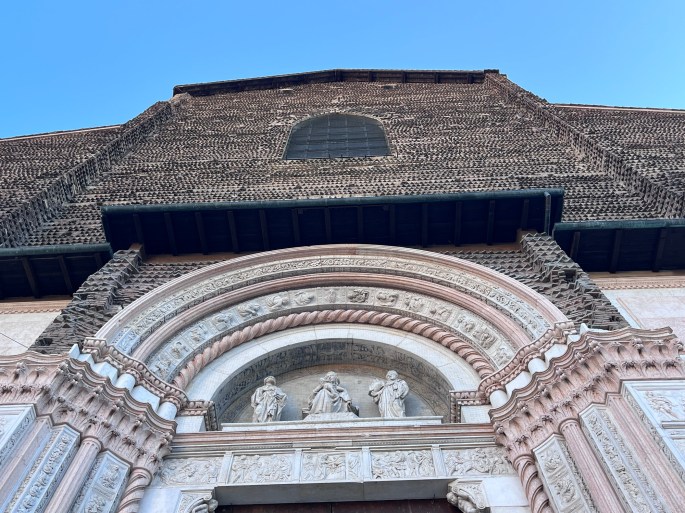
Let’s go inside.
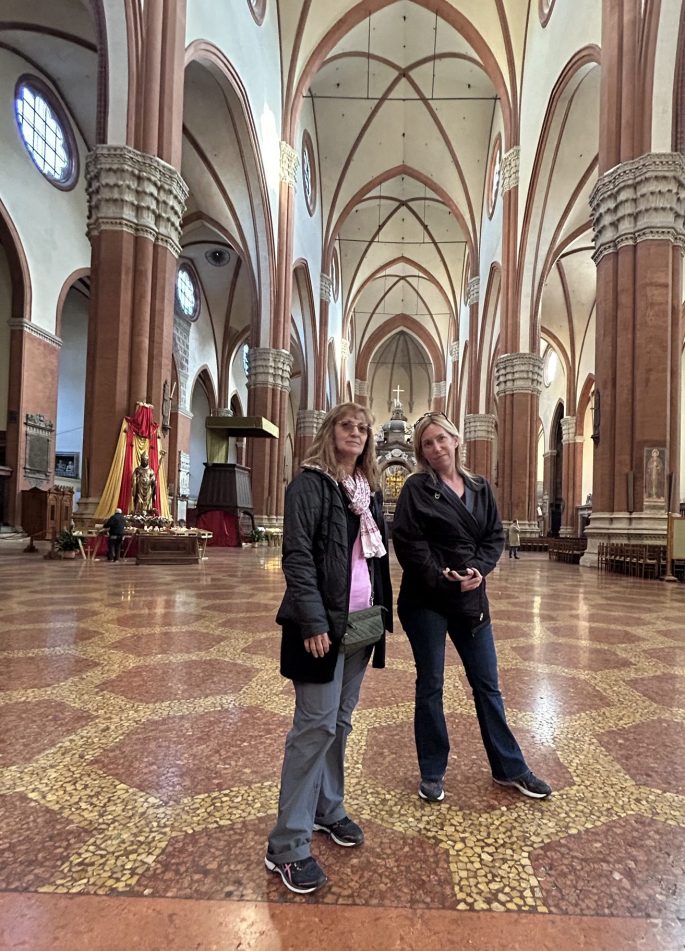
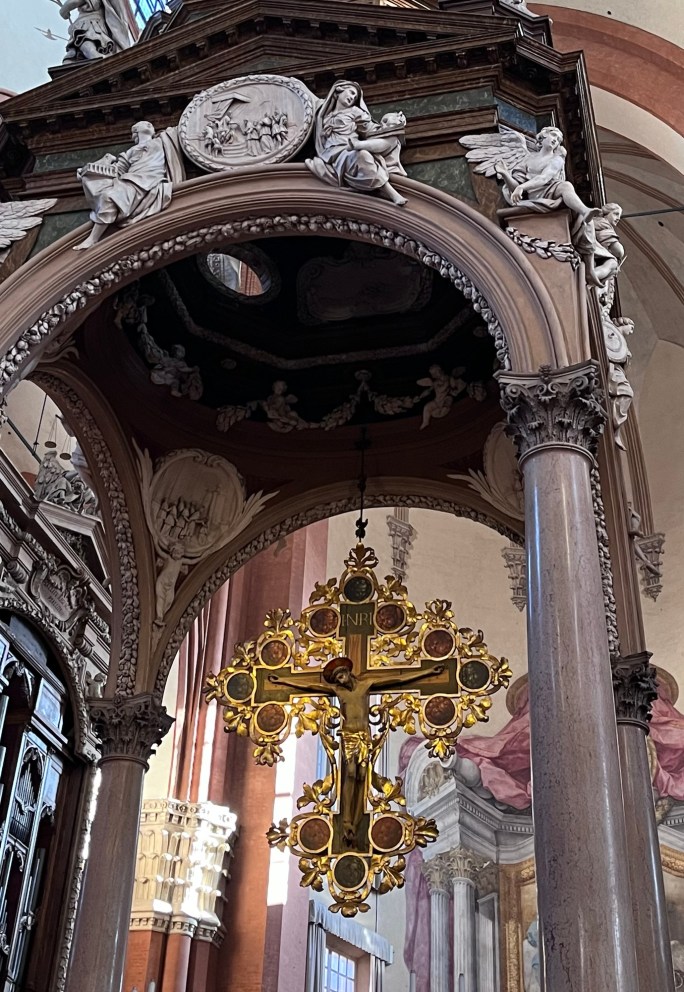
At the alter was a 15th century ornate wooden crucifix, which the maker is unknown.
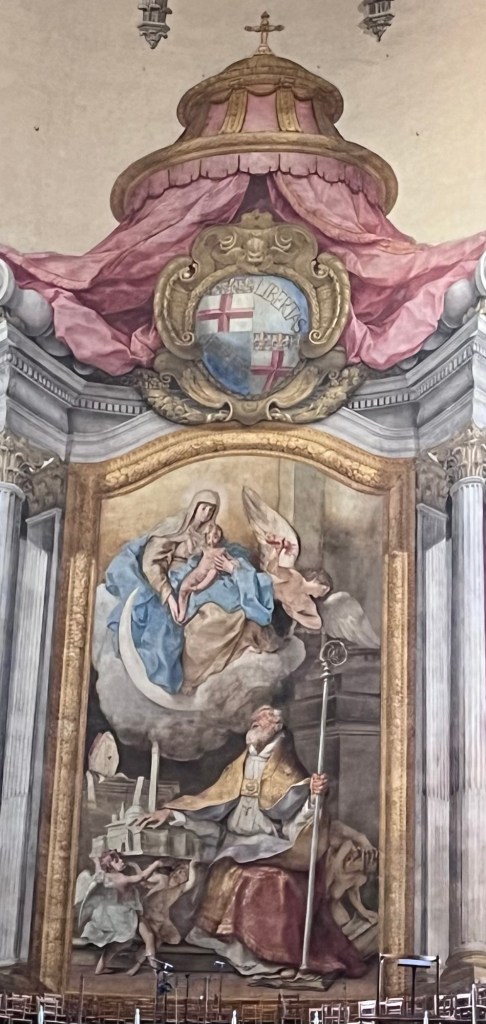
Behind that is a fresco with the Madonna and St. Petronio.
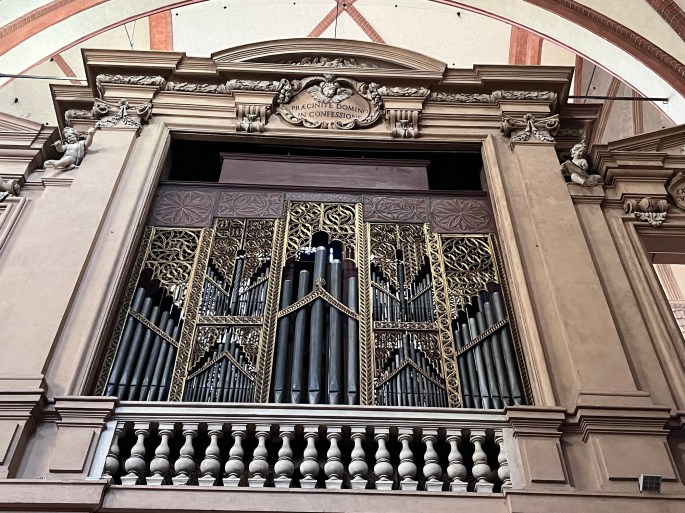
Two organs are part of the church with both being in good condition. I included a shot of one.
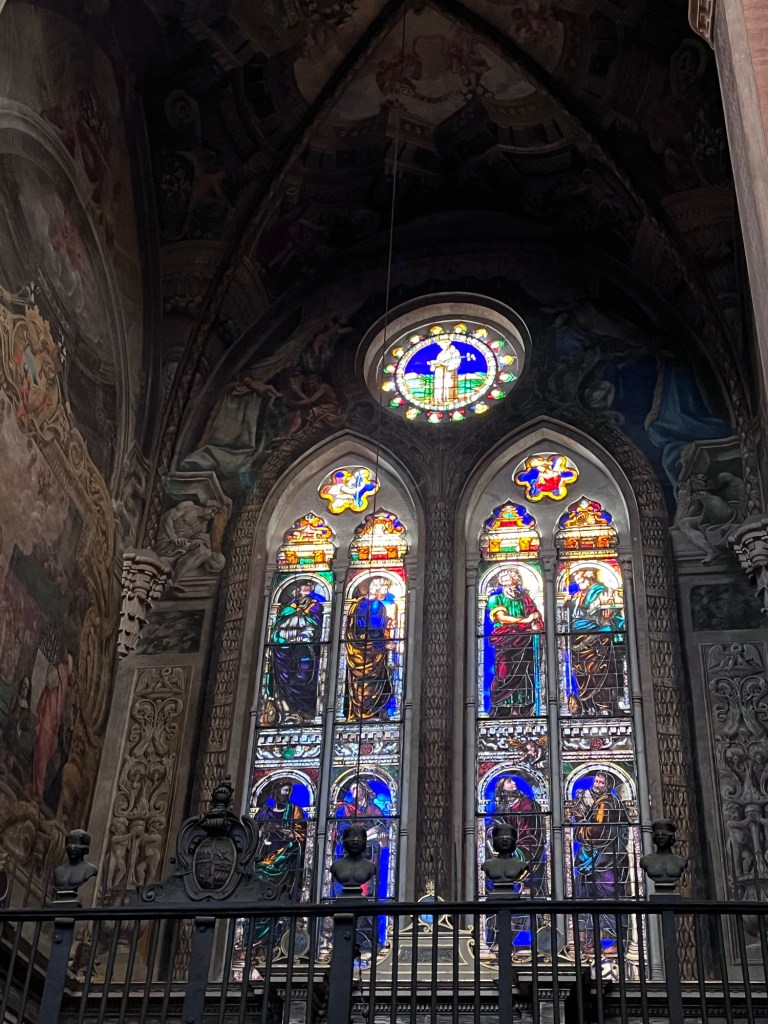
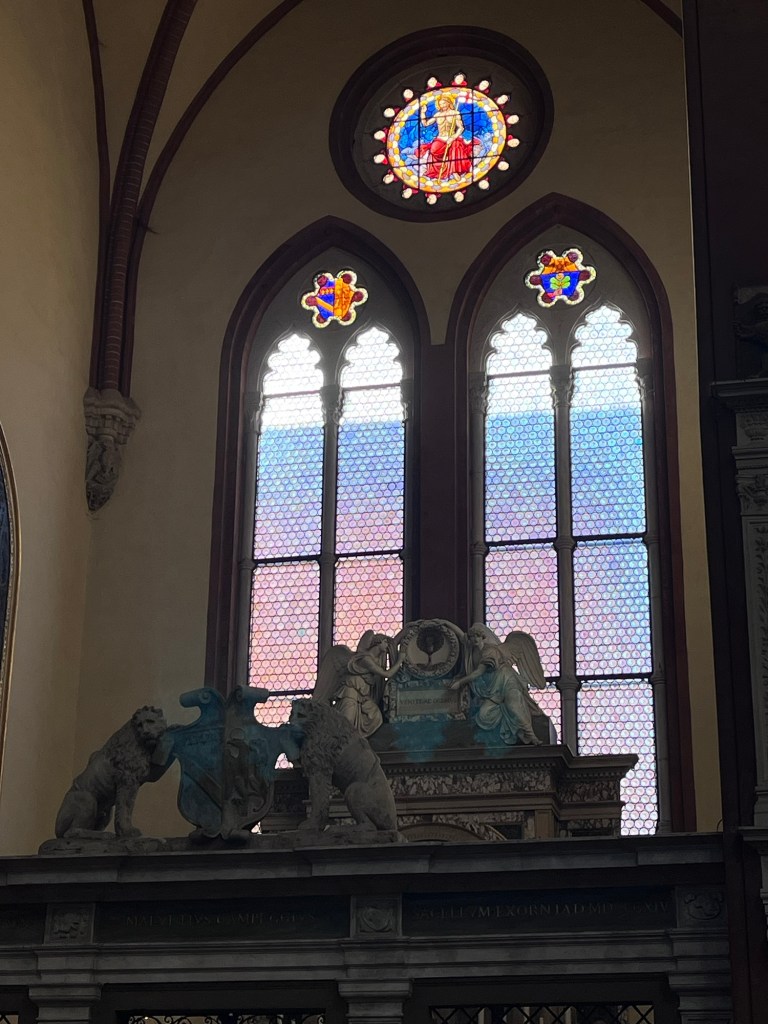
There were some windows with varying degrees of stained glass. These were part of the 22 chapels along the sides of the basilica.
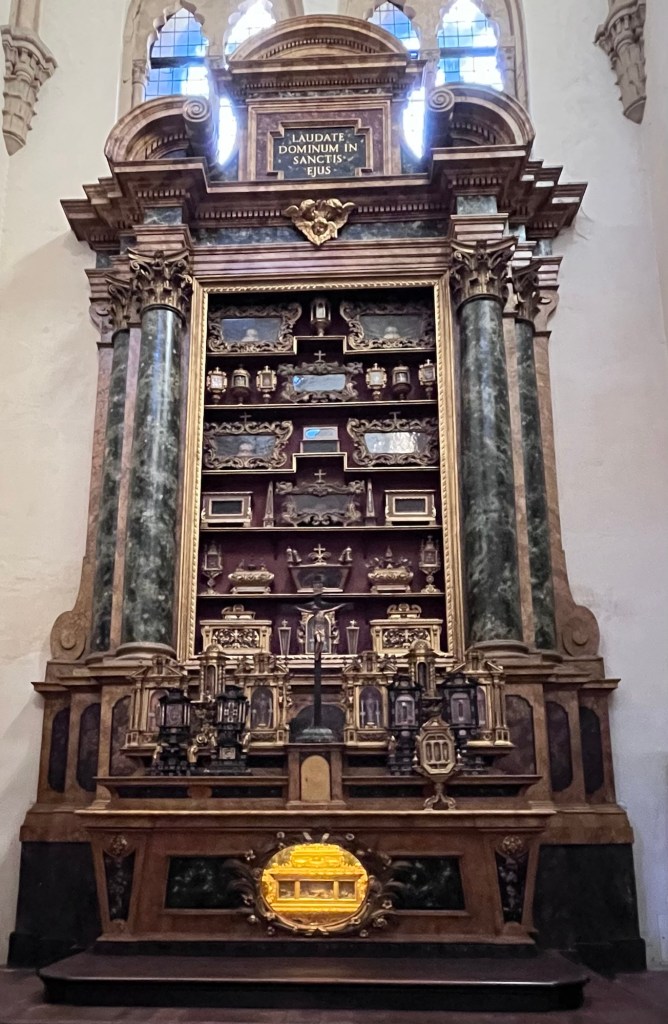
As we started seeing several years ago, relics were a major part of church business and this one was no different. One chapel was dedicated to relics and I believe the area highlighted in the gold window near the bottom were relics from St. Petronius.
Ever curious, Eric noticed an unusual roped off area inside the church.
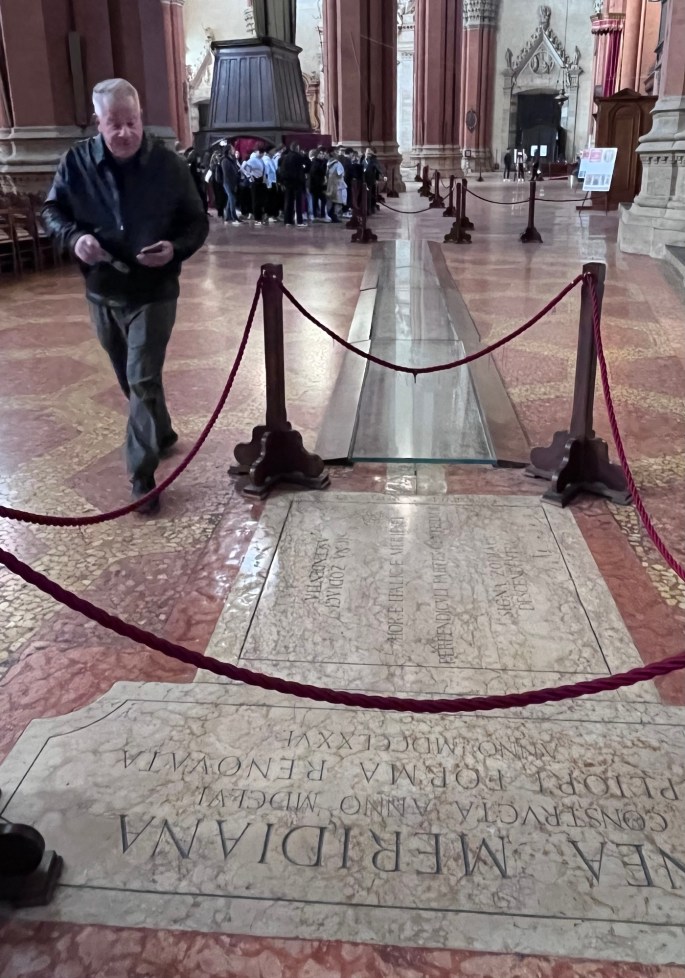
The church hosts a marking in the form of a meridian line inlaid in the paving of the left aisle in 1655; it was calculated and designed by the astronomer Giovanni Domenico Cassini, who was teaching astronomy at the University. The stanchions and plexiglass are trying to preserve the markings carved into the marble.
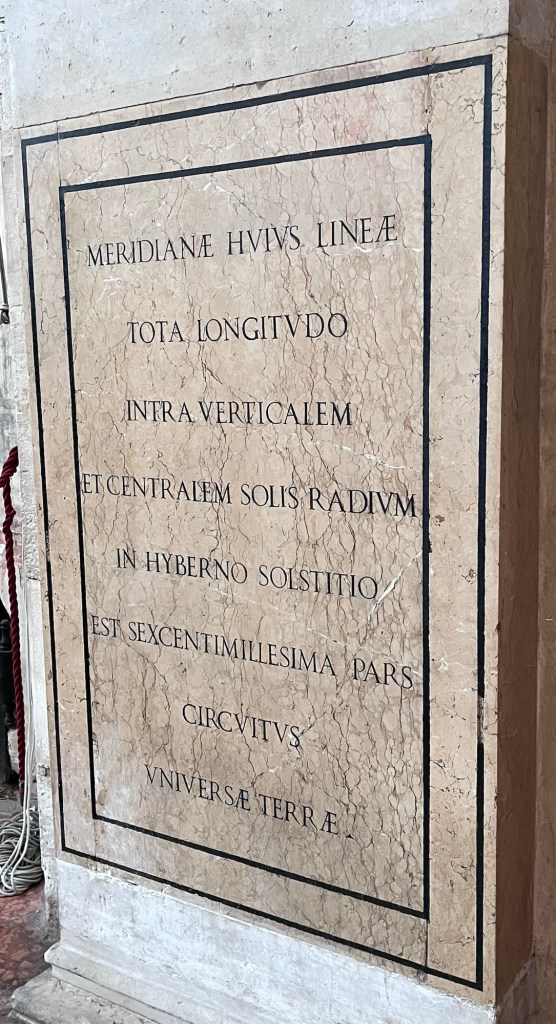
A meridian line does not indicate the time: instead, with its length of 66.8 metres (219 ft) it is one of the largest astronomical instruments in the world, allowing measurements that were for the time uniquely precise. It tells you the day of the year.
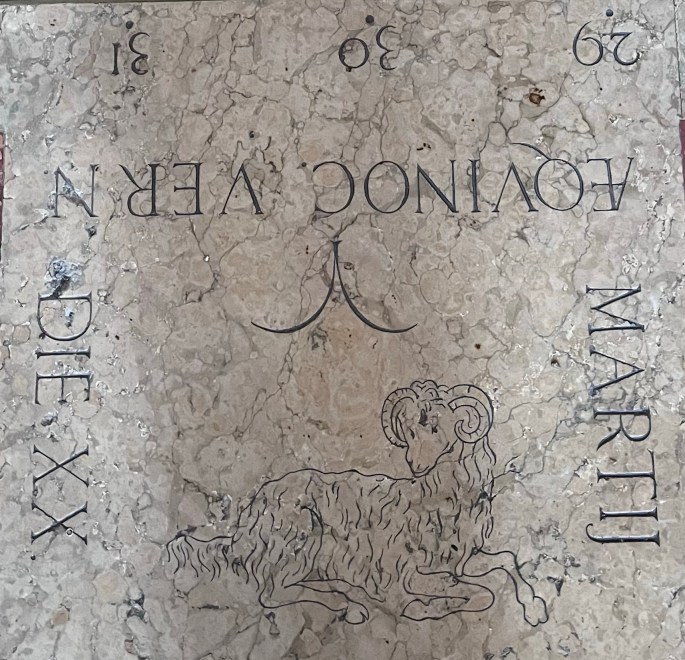
The sun light, entering through a 1.066-inch hole placed at a 88.8 ft height in the church wall, projects an elliptical image of the sun, which at local noon falls exactly on the meridian line and every day is different as to position and size. Again, this is so amazing, this was happening in the mid-1600s.
As we were exiting, this last side chapel was awe-inspiring. It was filled with so many things. I’m sure you could look at it daily and find something new each time.
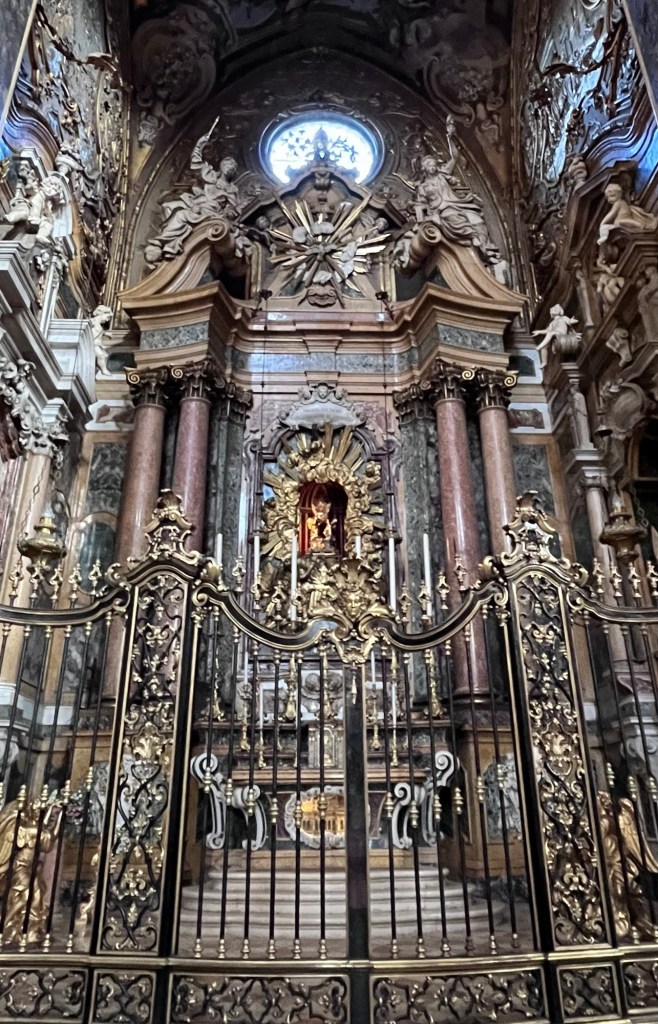
While the Basilica di San Petronia is larger than life, we walked by this other building and on one of our last days we stepped inside. This greeted us. So much beauty. I think I whispered ‘wow’ out loud, along with the other two. It was a shock to the senses. So solemn and quiet yet a bustling pedestrian zone was right outside its doors.
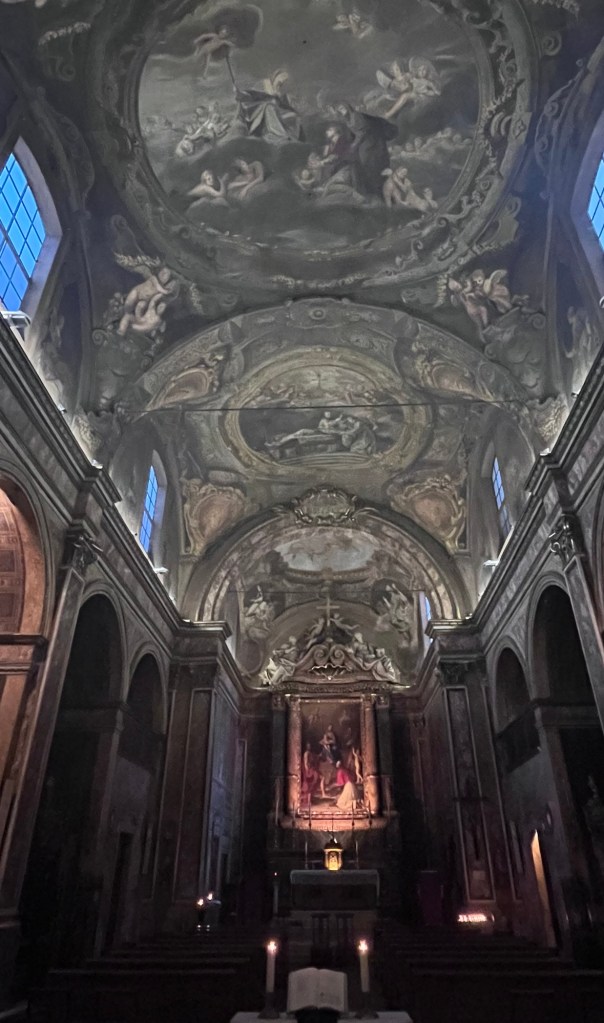
Walking to the altar, here is a closer shot of the fresco. We were the only ones inside the building. I’m guessing this is John the Baptist. Why?

This was the entrance into the church. I assumed it was the name of the church. No, I can’t find the name, no matter how much I tried searching the internet and looking at internet maps.
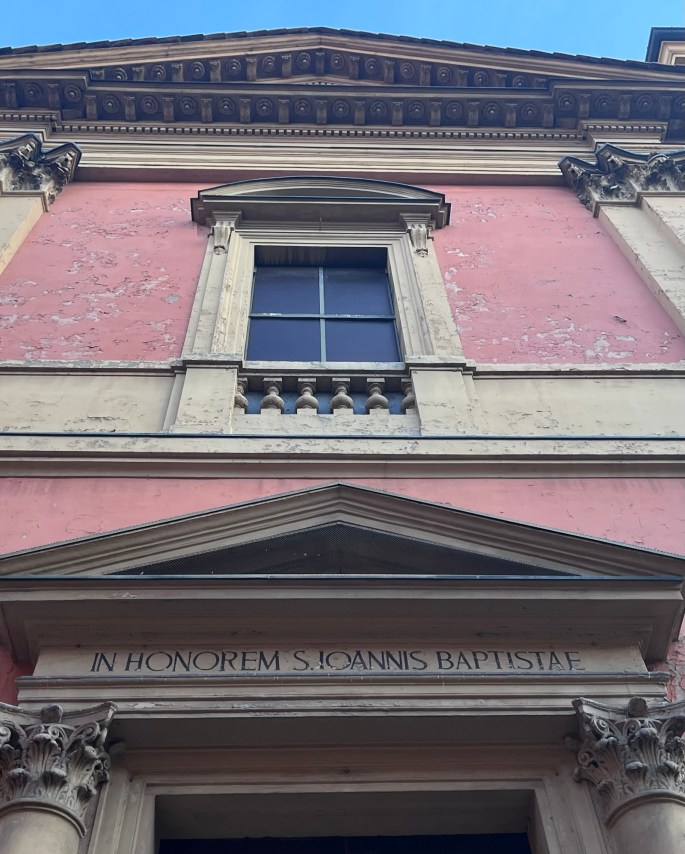
These are the hidden gems you find when traveling.
 Darden Travels