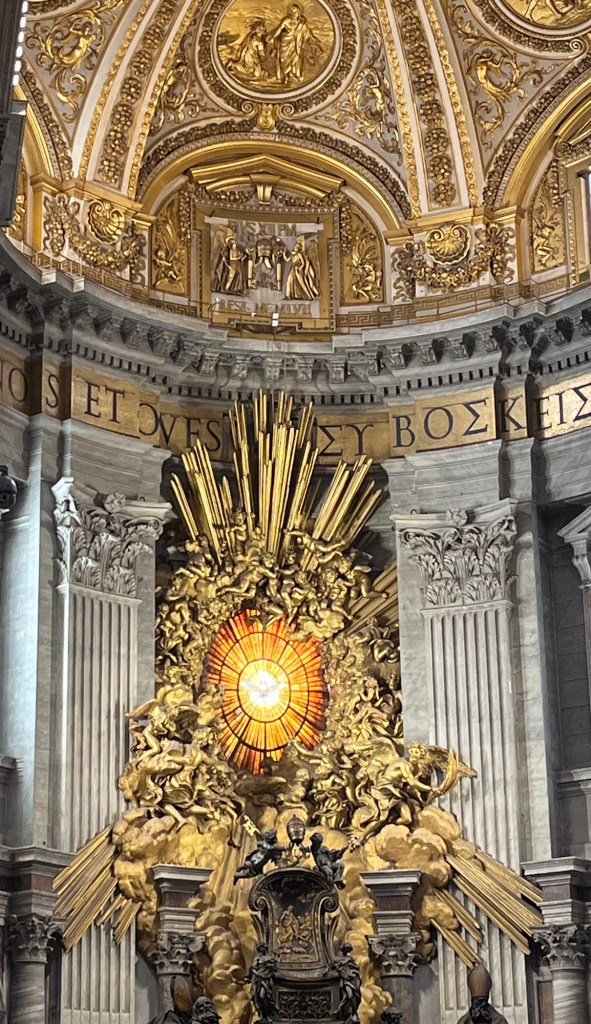
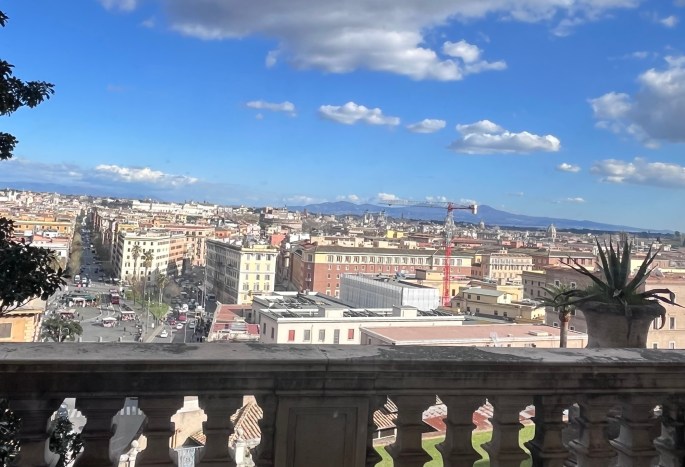
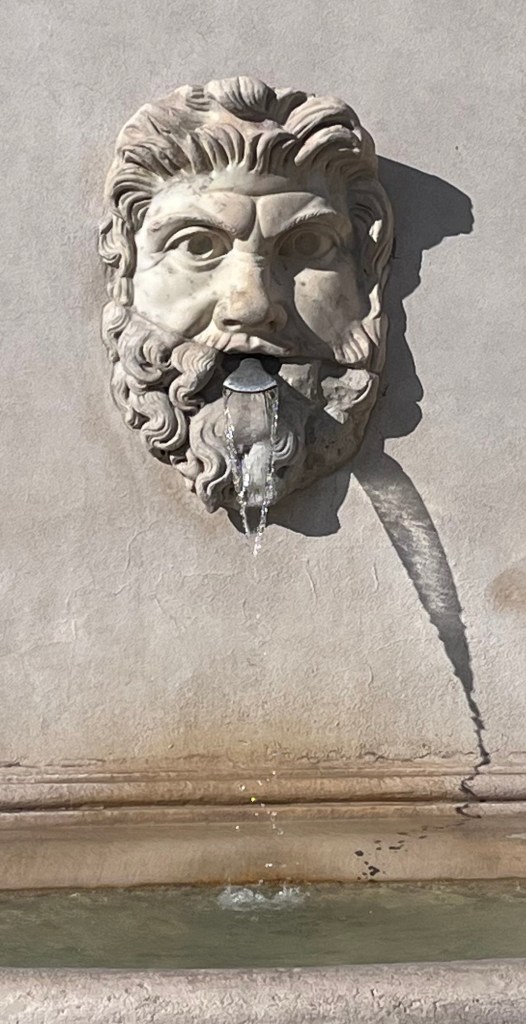
Basilica di San Petronio – Bologna

The Basilica is dedicated to the patron saint for the city, Saint Petronius who was bishop of Bologna in the 5th century. Its commanding presence dominates Piazza Maggiore which at various times of day is filled with tourists or students – it’s a huge gathering spot. We stopped inside within hours of arriving in Bologna – it draws you in.
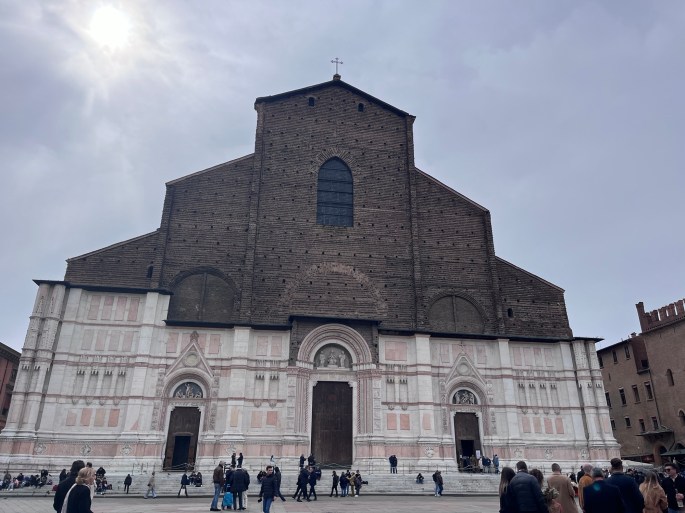
A very imposing building, even with the facade incomplete. I think it adds to the charm. The lower part of the building is covered in marble, while the upper part of the building was exposed brick. Construction started in 1390 but ultimately money ran out.
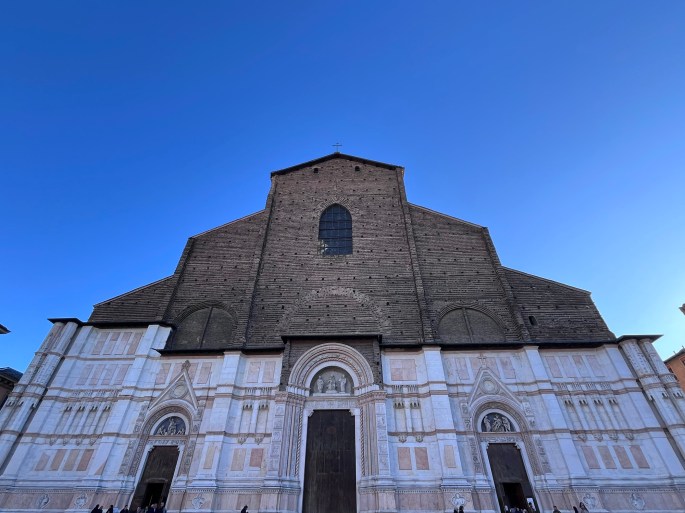
It is considered the 10th largest church in the world by volume being 132 meters long, 66 meters wide and 47 meters tall and the largest church built of brick.
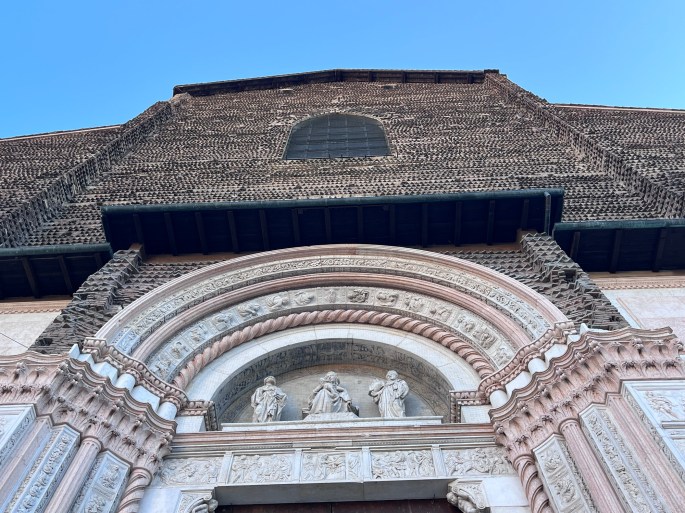
Let’s go inside.
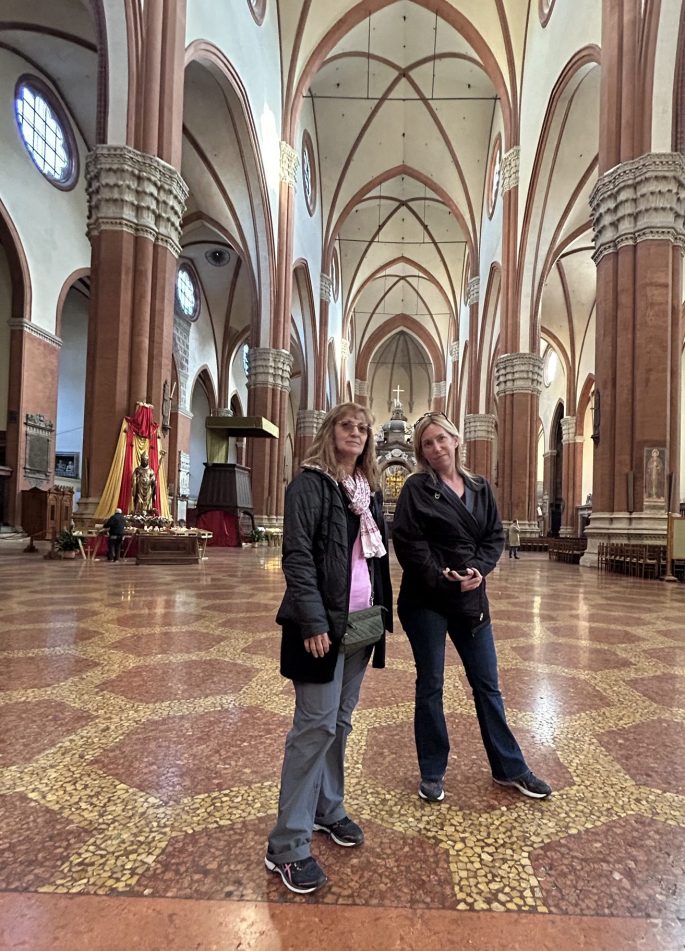
At the alter was a 15th century ornate wooden crucifix, which the maker is unknown.
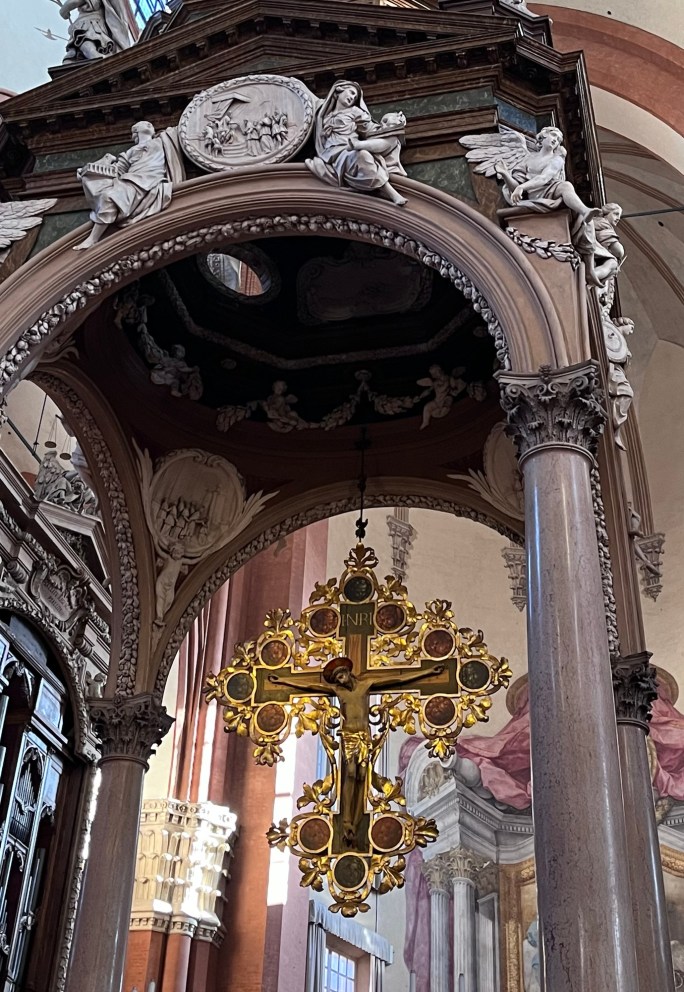
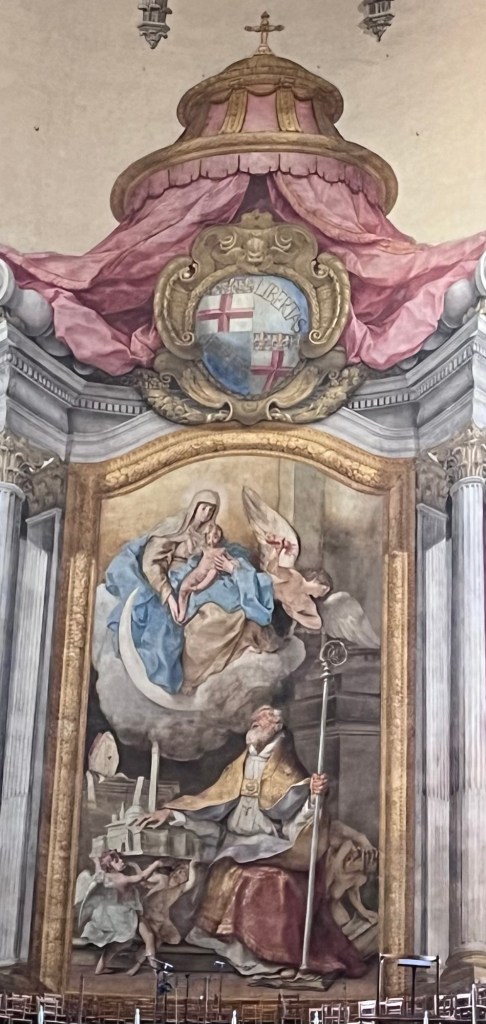
Behind that is a fresco with the Madonna and St. Petronio.
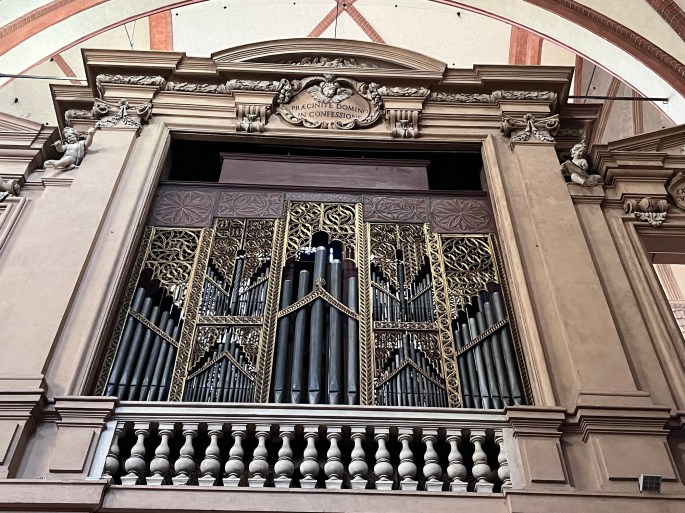
Two organs are part of the church with both being in good condition. I included a shot of one.
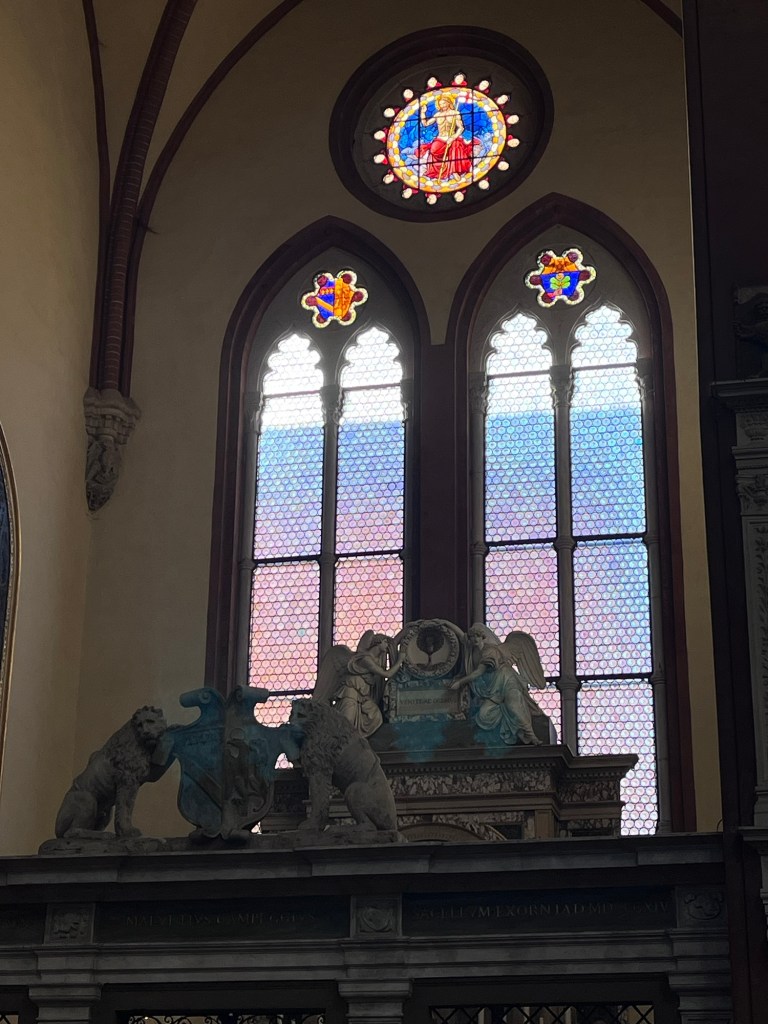
There were some windows with varying degrees of stained glass. These were part of the 22 chapels along the sides of the basilica.
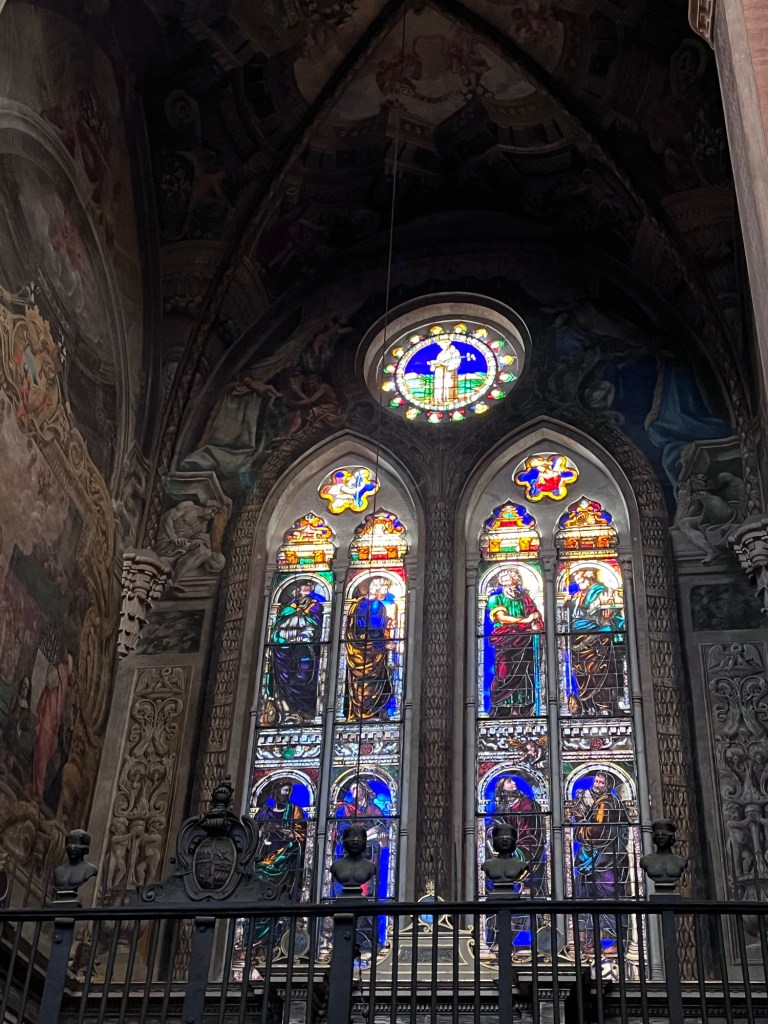
As we started seeing several years ago, relics were a major part of church business and this one was no different. One chapel was dedicated to relics and I believe the area highlighted in the gold window near the bottom were relics from St. Petronius.
Ever curious, Eric noticed an unusual roped off area inside the church.
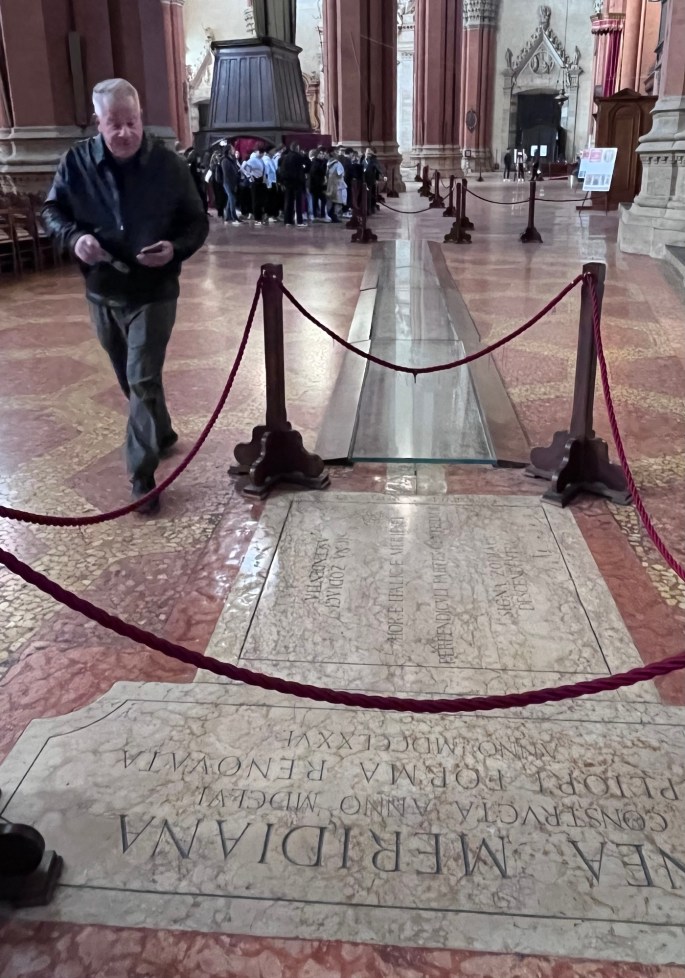
The church hosts a marking in the form of a meridian line inlaid in the paving of the left aisle in 1655; it was calculated and designed by the astronomer Giovanni Domenico Cassini, who was teaching astronomy at the University. The stanchions and plexiglass are trying to preserve the markings carved into the marble.
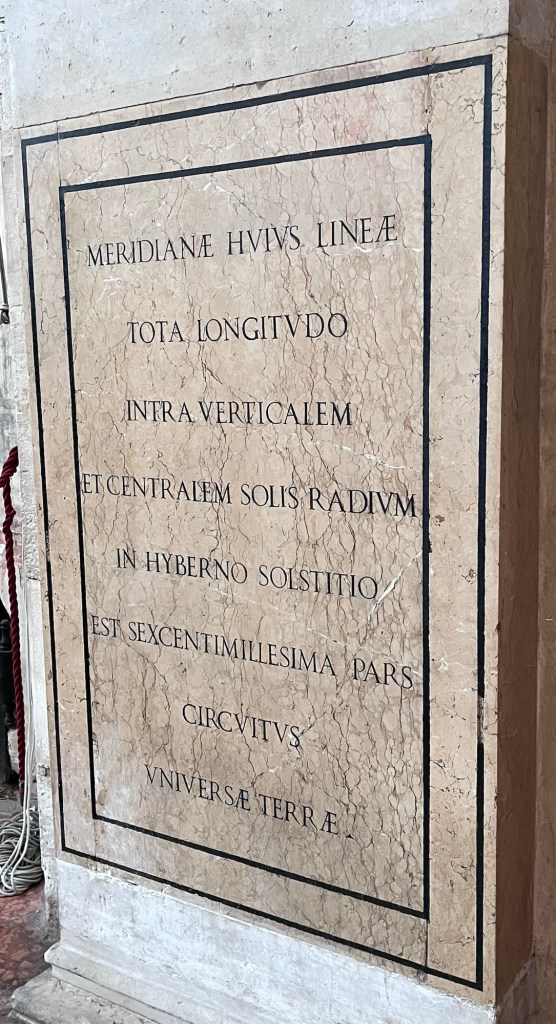
A meridian line does not indicate the time: instead, with its length of 66.8 metres (219 ft) it is one of the largest astronomical instruments in the world, allowing measurements that were for the time uniquely precise. It tells you the day of the year.
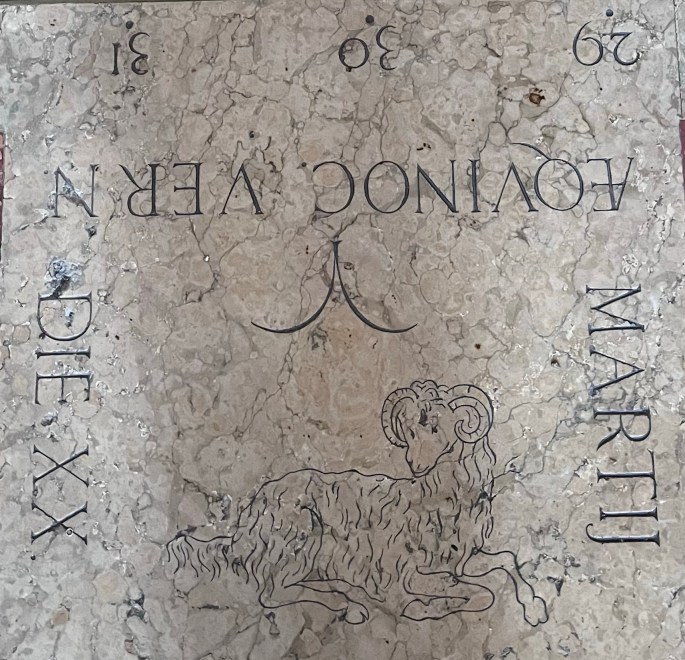
The sun light, entering through a 1.066-inch hole placed at a 88.8 ft height in the church wall, projects an elliptical image of the sun, which at local noon falls exactly on the meridian line and every day is different as to position and size.  Again, this is so amazing, this was happening in the mid-1600s.

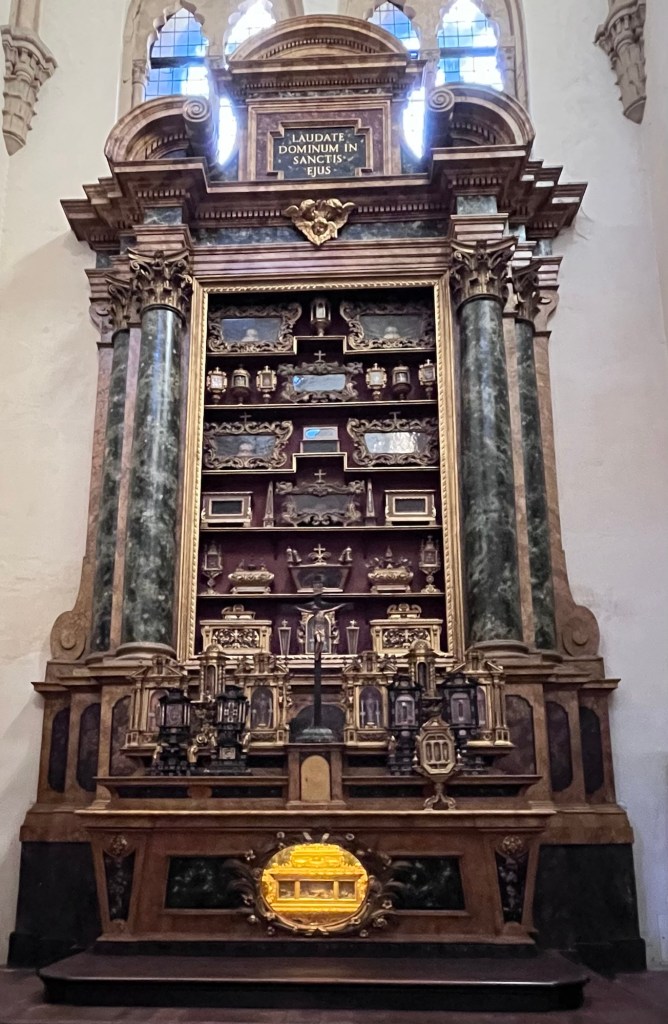
As we were exiting, this last side chapel was awe-inspiring. It was filled with so many things. I’m sure you could look at it daily and find something new each time.
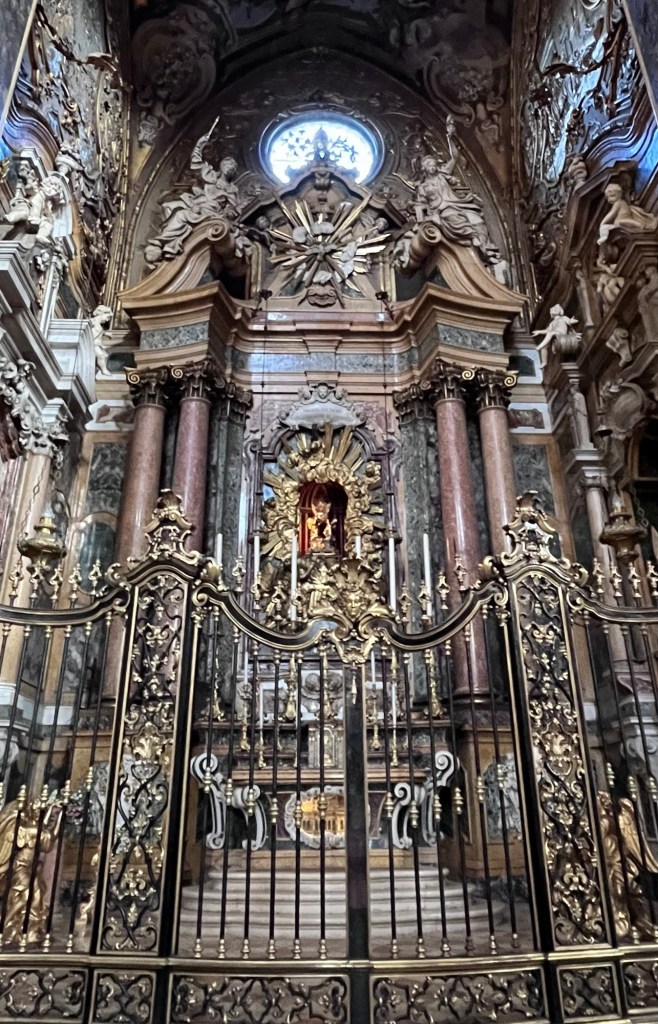
While the Basilica di San Petronia is larger than life, we walked by this other building and on one of our last days we stepped inside. This greeted us. So much beauty. I think I whispered ‘wow’ out loud, along with the other two. It was a shock to the senses. So solemn and quiet yet a bustling pedestrian zone was right outside its doors.
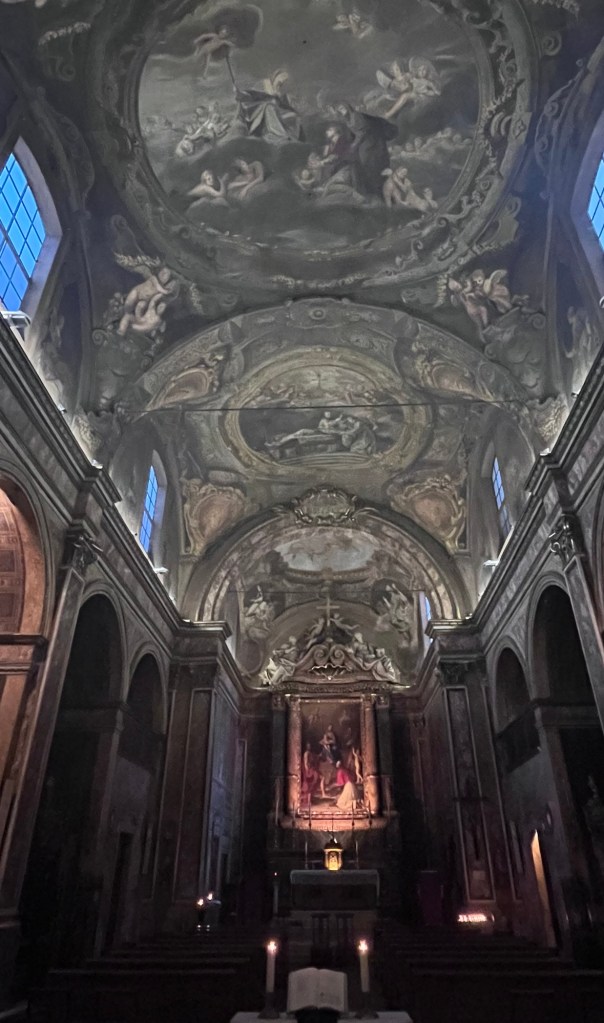
Walking to the altar, here is a closer shot of the fresco. We were the only ones inside the building. I’m guessing this is John the Baptist. Why?

This was the entrance into the church. I assumed it was the name of the church. No, I can’t find the name, no matter how much I tried searching the internet and looking at internet maps.
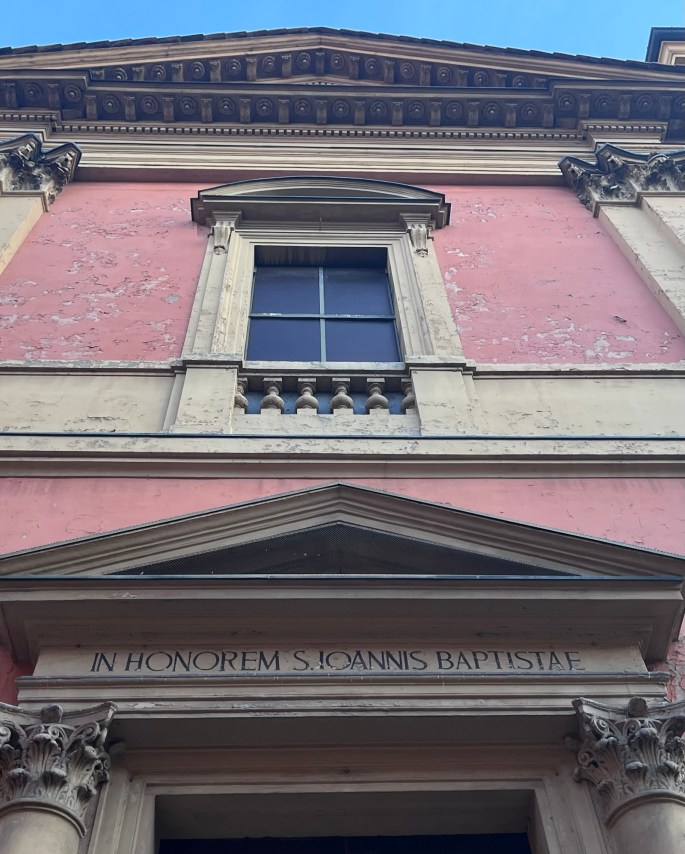
These are the hidden gems you find when traveling.
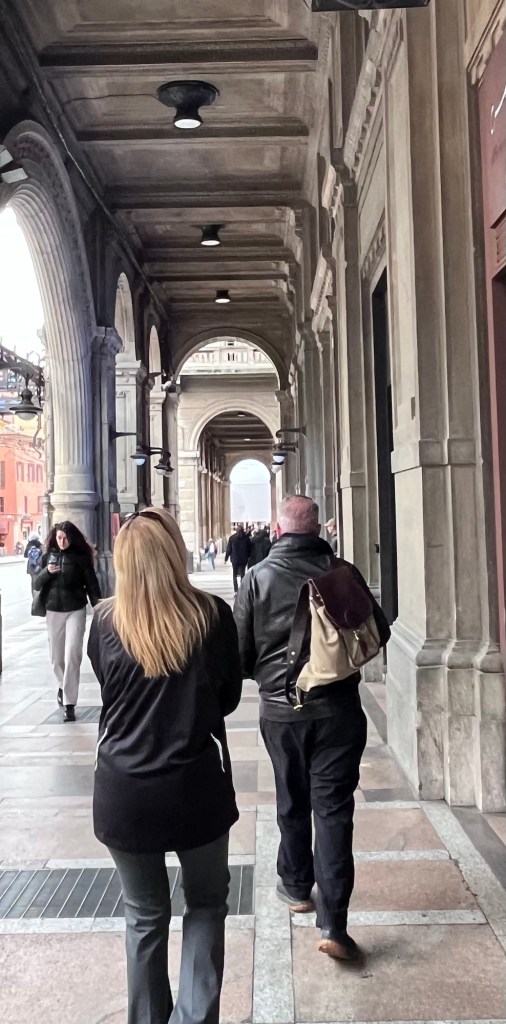
Bologna Food Tour

This is something very common for us – booking a food tour, especially when we stop at a new city for us. Why?

~you’re talking with a local that is typically passionate about their city.

~able to get local recommendations tailored to your wants.

~find those ‘hidden’ gems that aren’t in a guide book.

Eric does a LOT of research prior to our trips and reads LOTS of reviews for said tours. Occasionally we’ve gone back to revisit places that was on the tour because we enjoyed it so much. Now, we’ve also gone a bit crazy and done too many food tours (Lyon, France) during one visit – we learned.

This was our tour for Bologna.

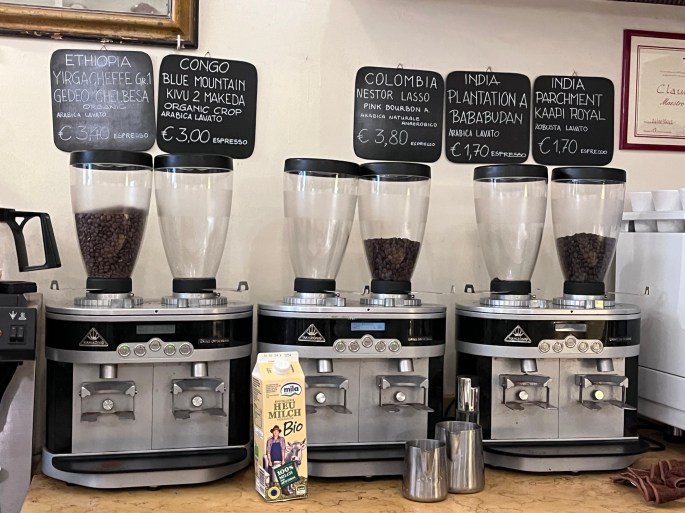
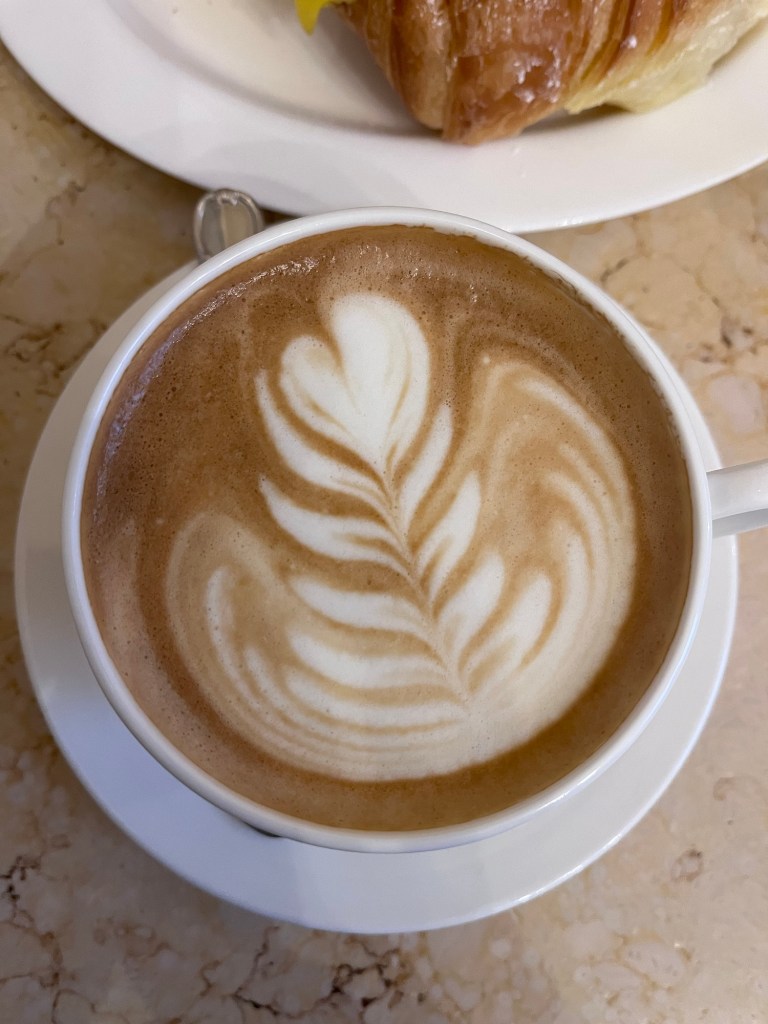
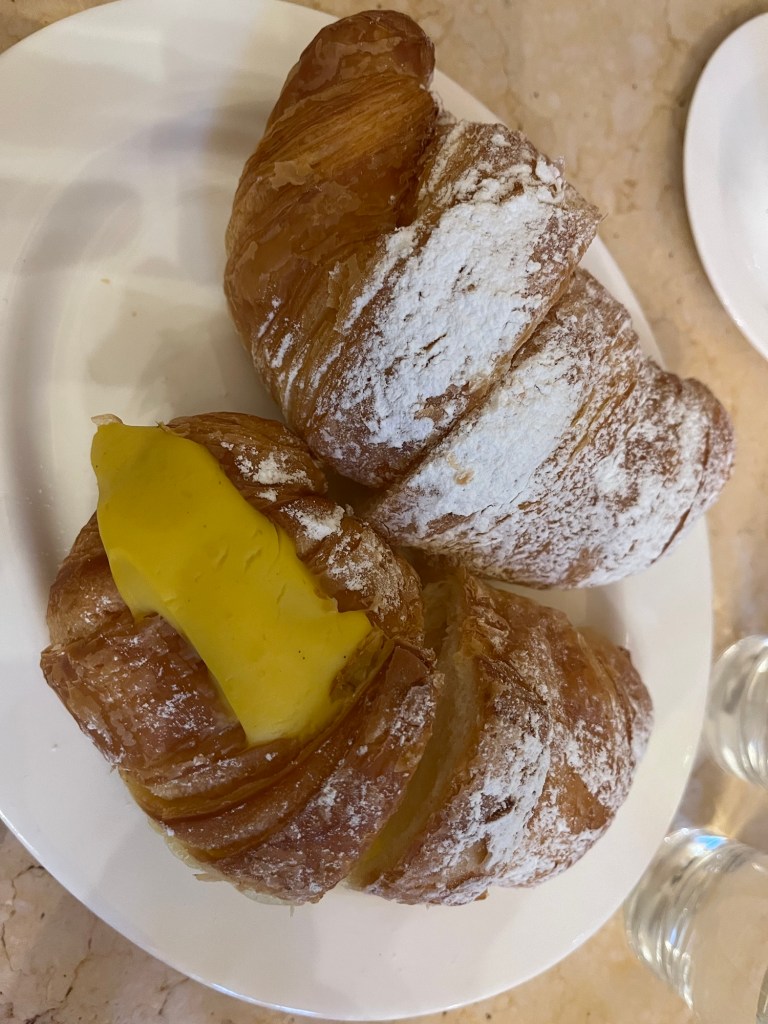
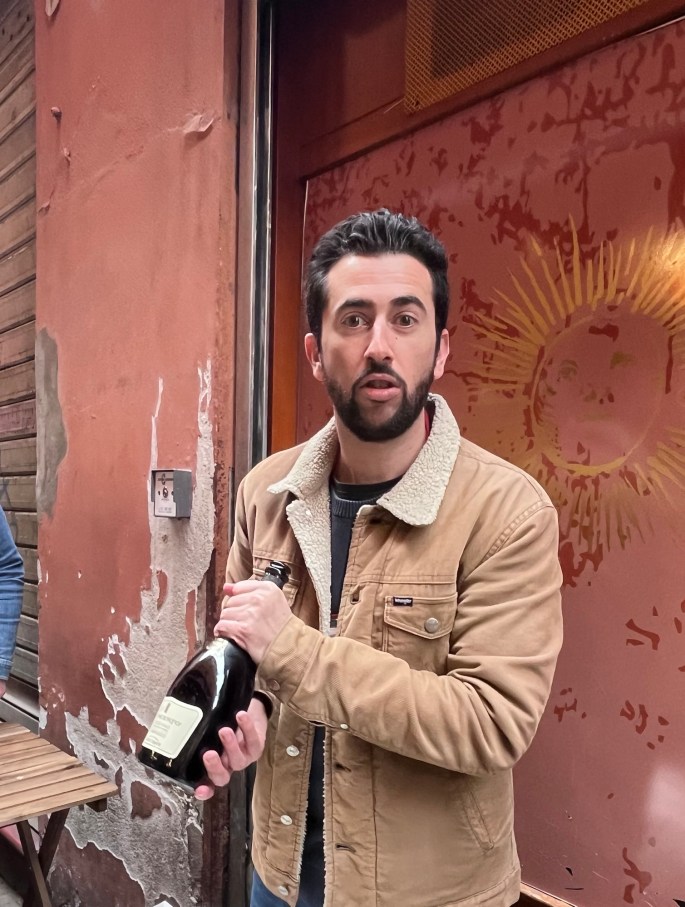
What better way to start than with coffee and croissant. This is one of the only places in Bologna that roasts their own coffee beans.

Options for croissants were plain or creme.

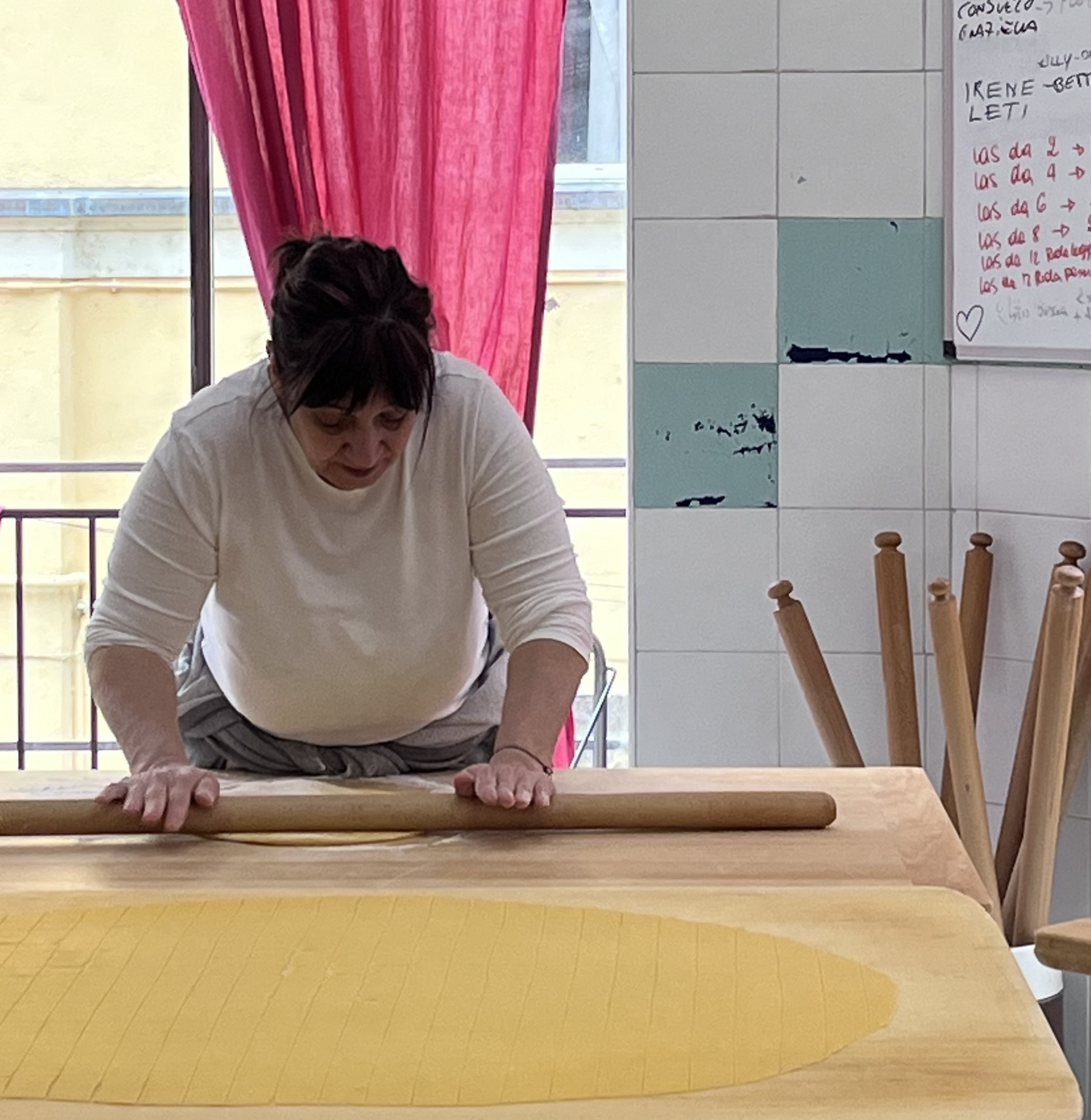
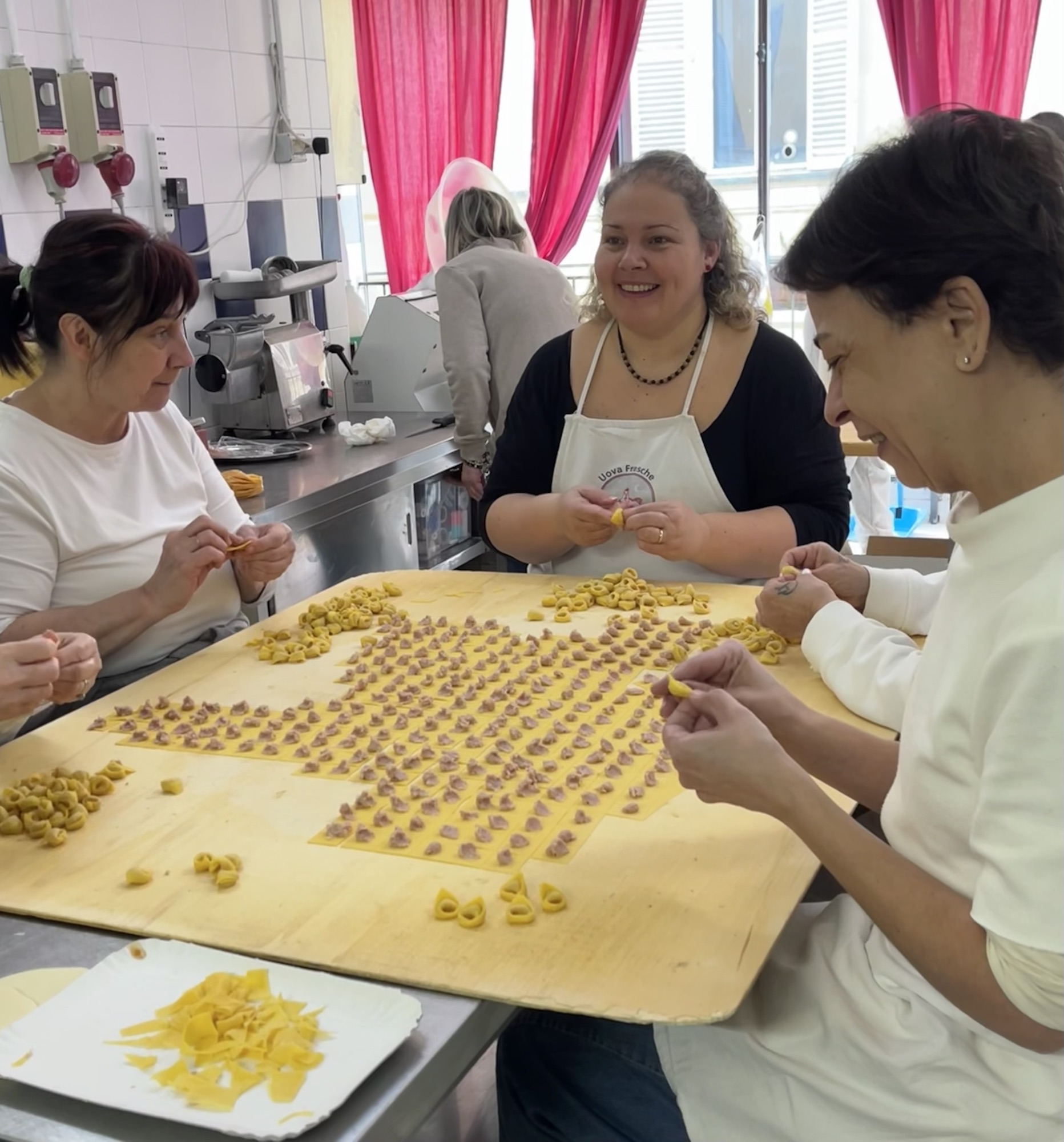
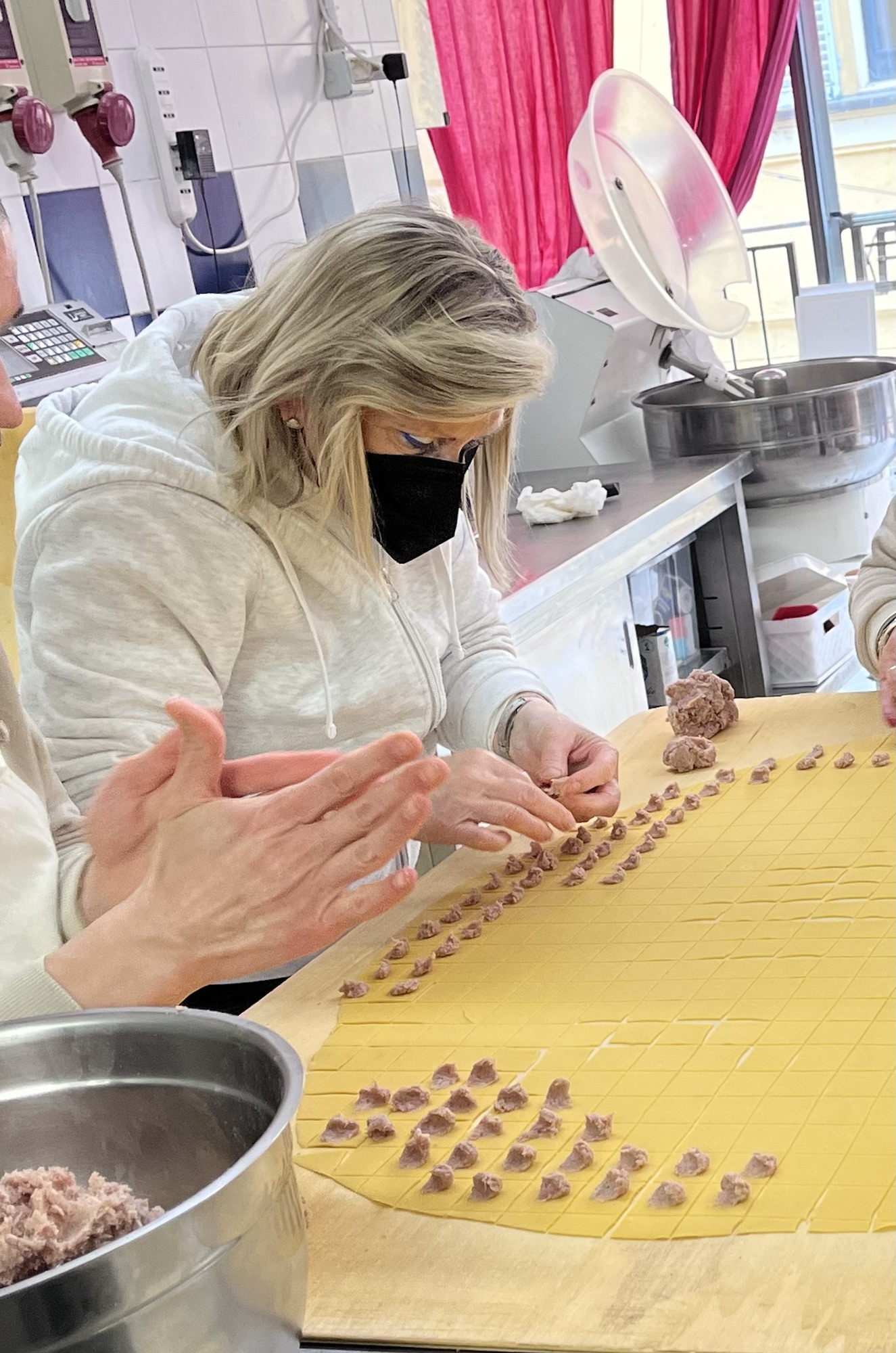
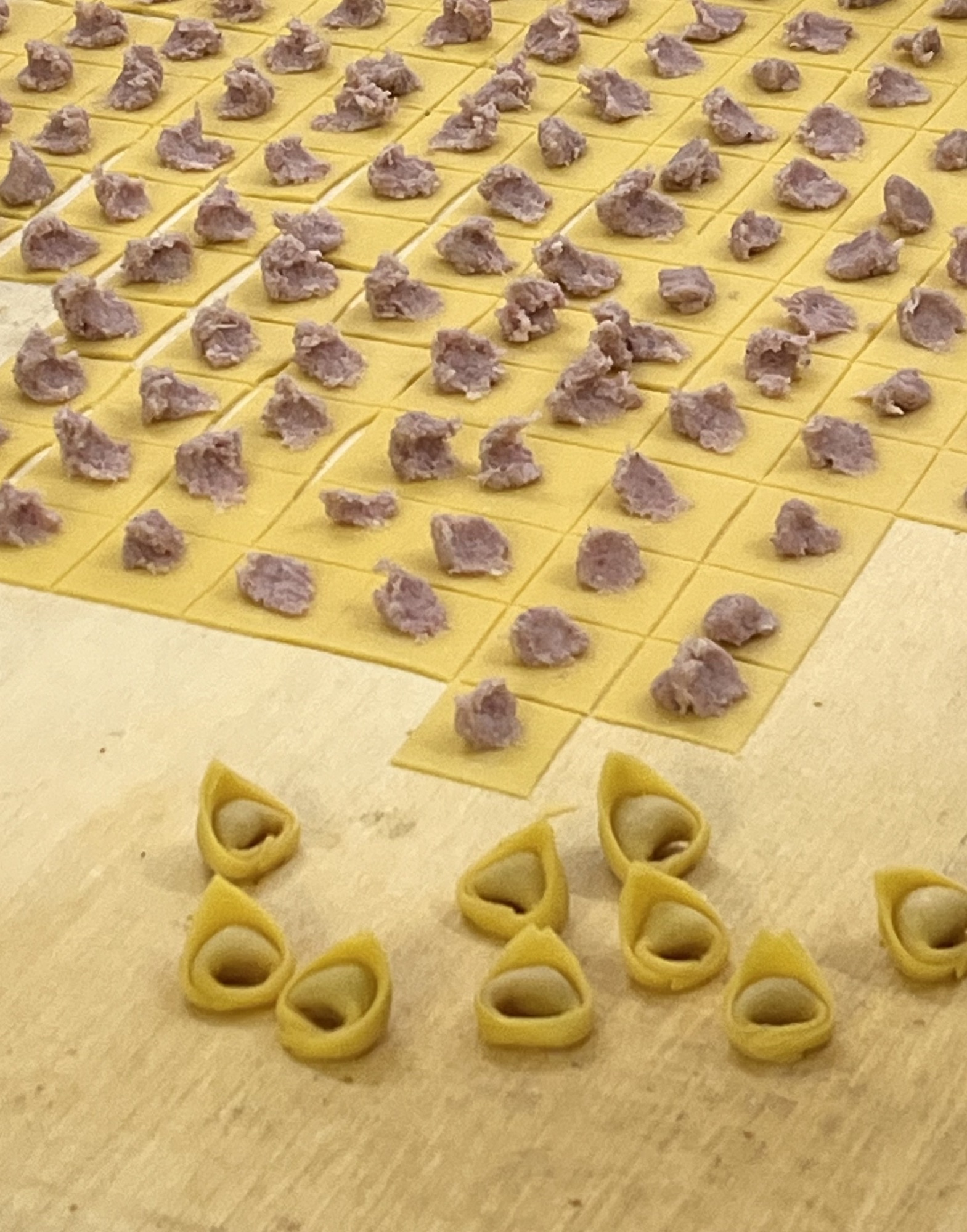
Next up – pasta factory. Upstairs was where the pasta was being created.

At this time of the year, only one table occupied for pasta. At other times of the year, every available space in this room is full of pasta-making.

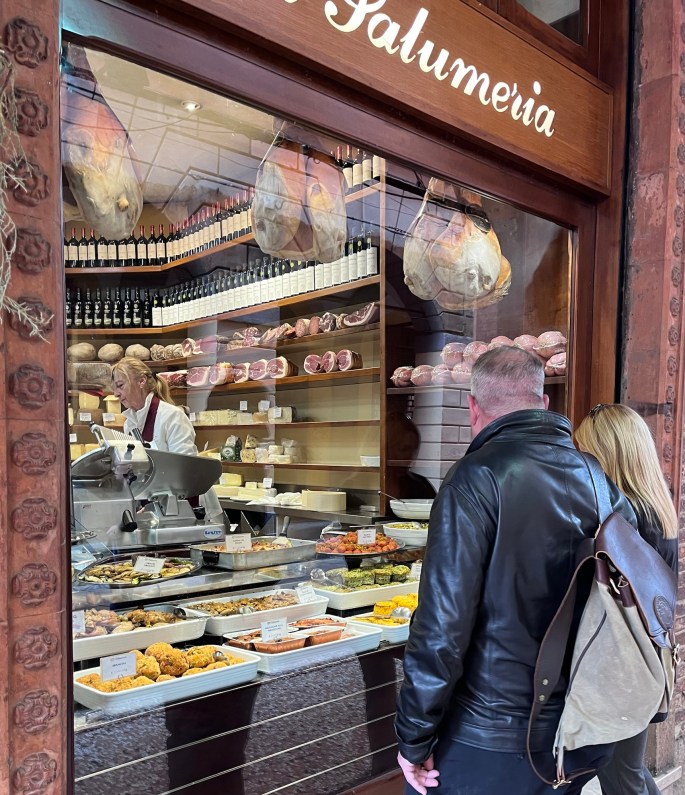
Enough of looking, let’s get some food! Eric and Adrienne were drooling at what was inside.

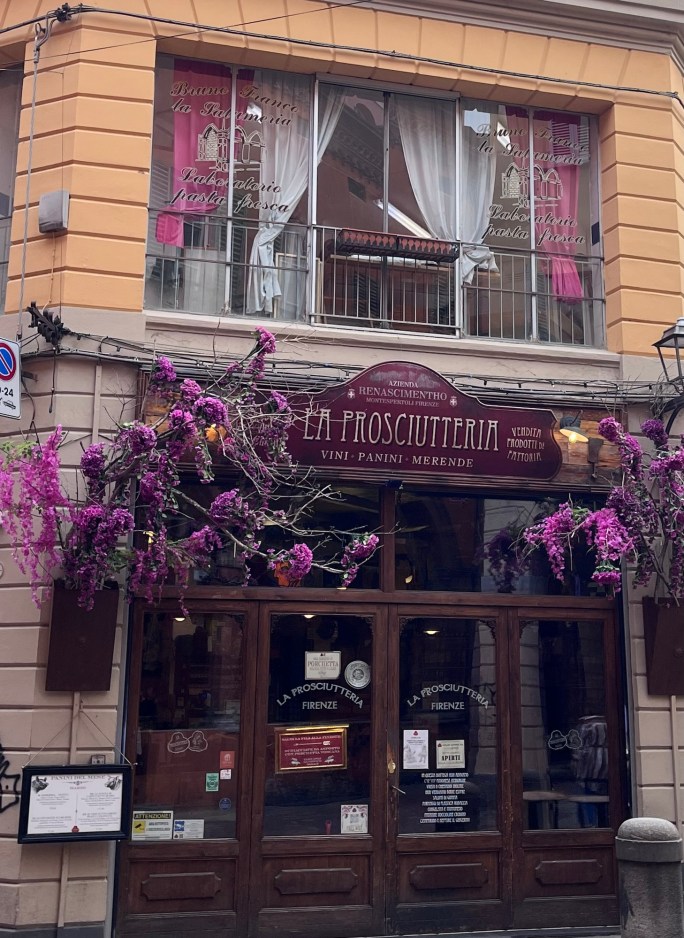
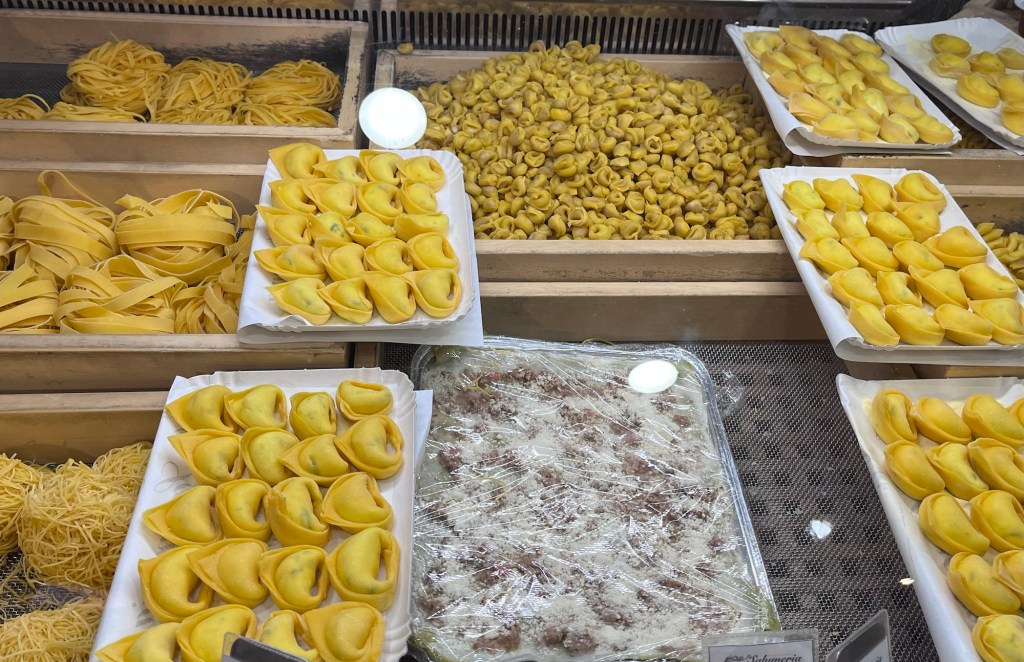
Part of this business was prepared food but the other side was fresh pasta for sale.

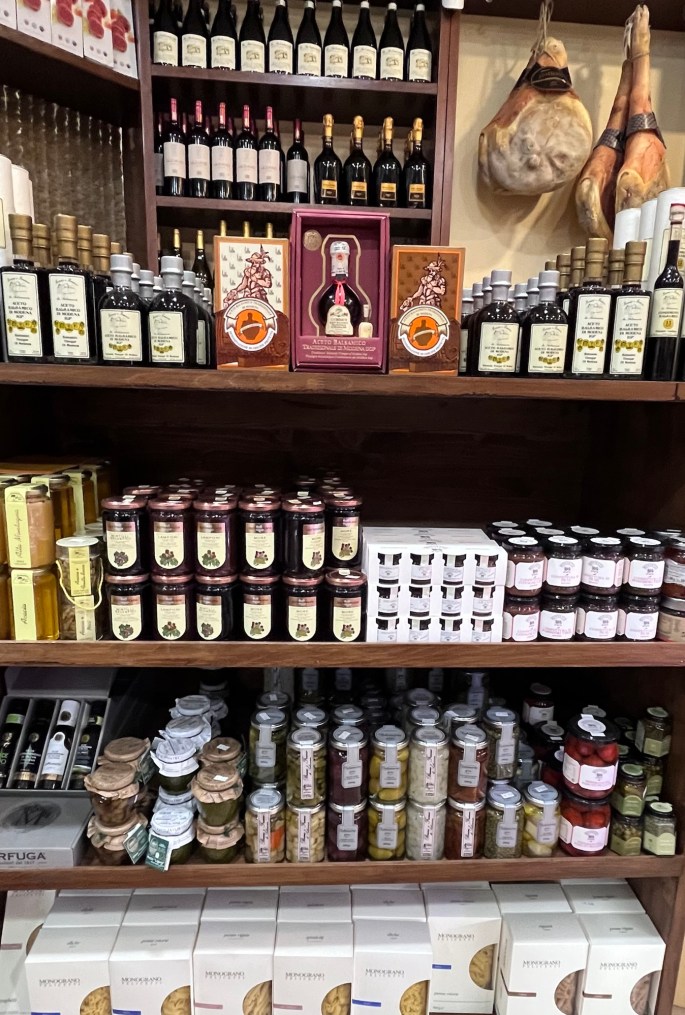
They had lots of goodies for sale. Yes, a few of them made the trip to Florida.

What did we pick up from this location? This delectable platter.

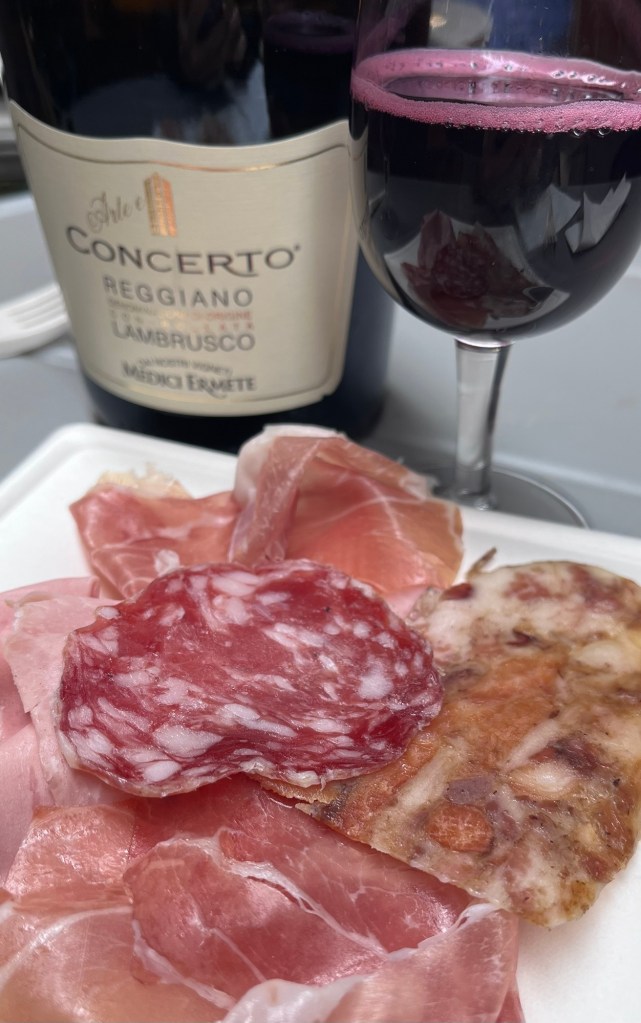
This is also where I was introduced to a dry Lambrusco – delicious!

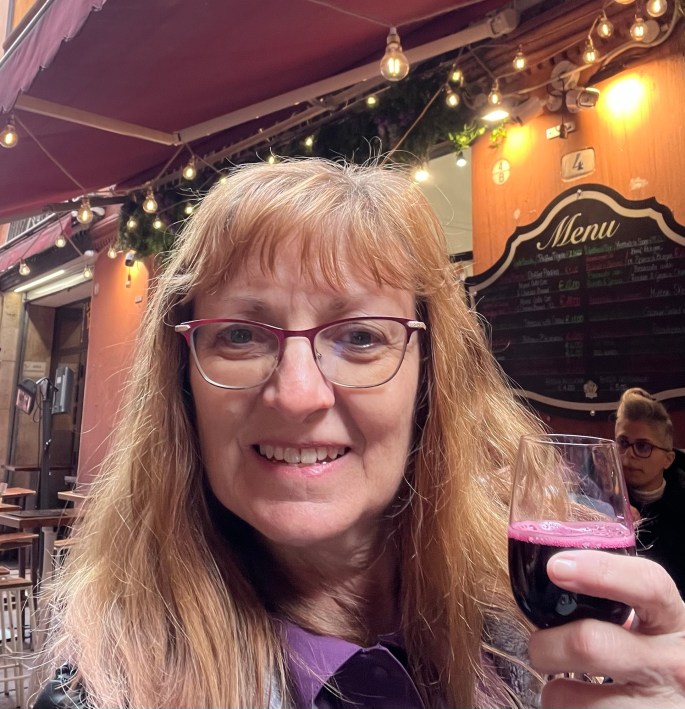
A glass of that along with a plate of meats – I was happy.

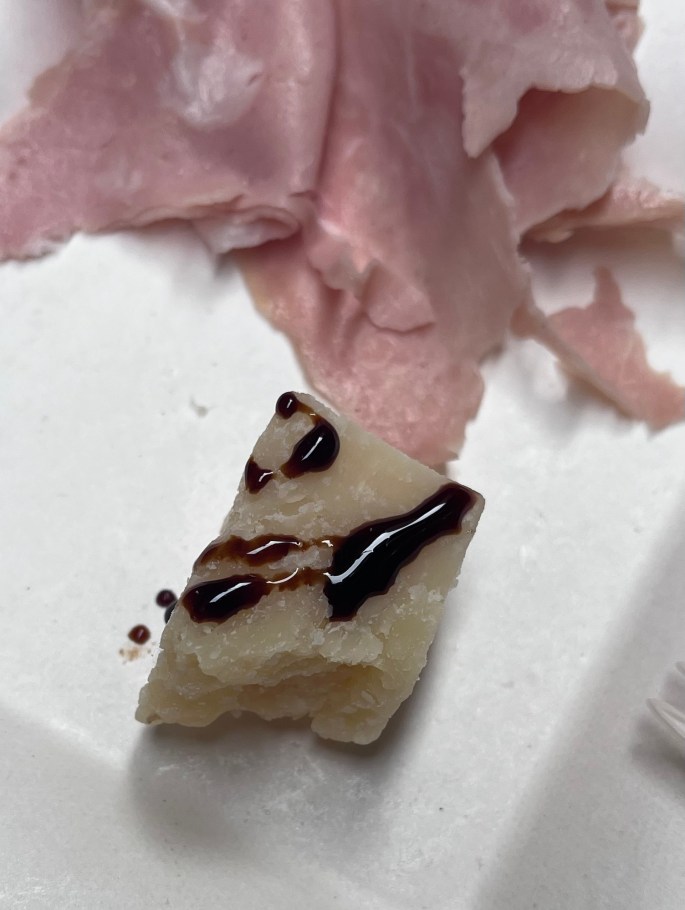
Parmesan cheese with a drizzle of balsamic vinegar – perfect.

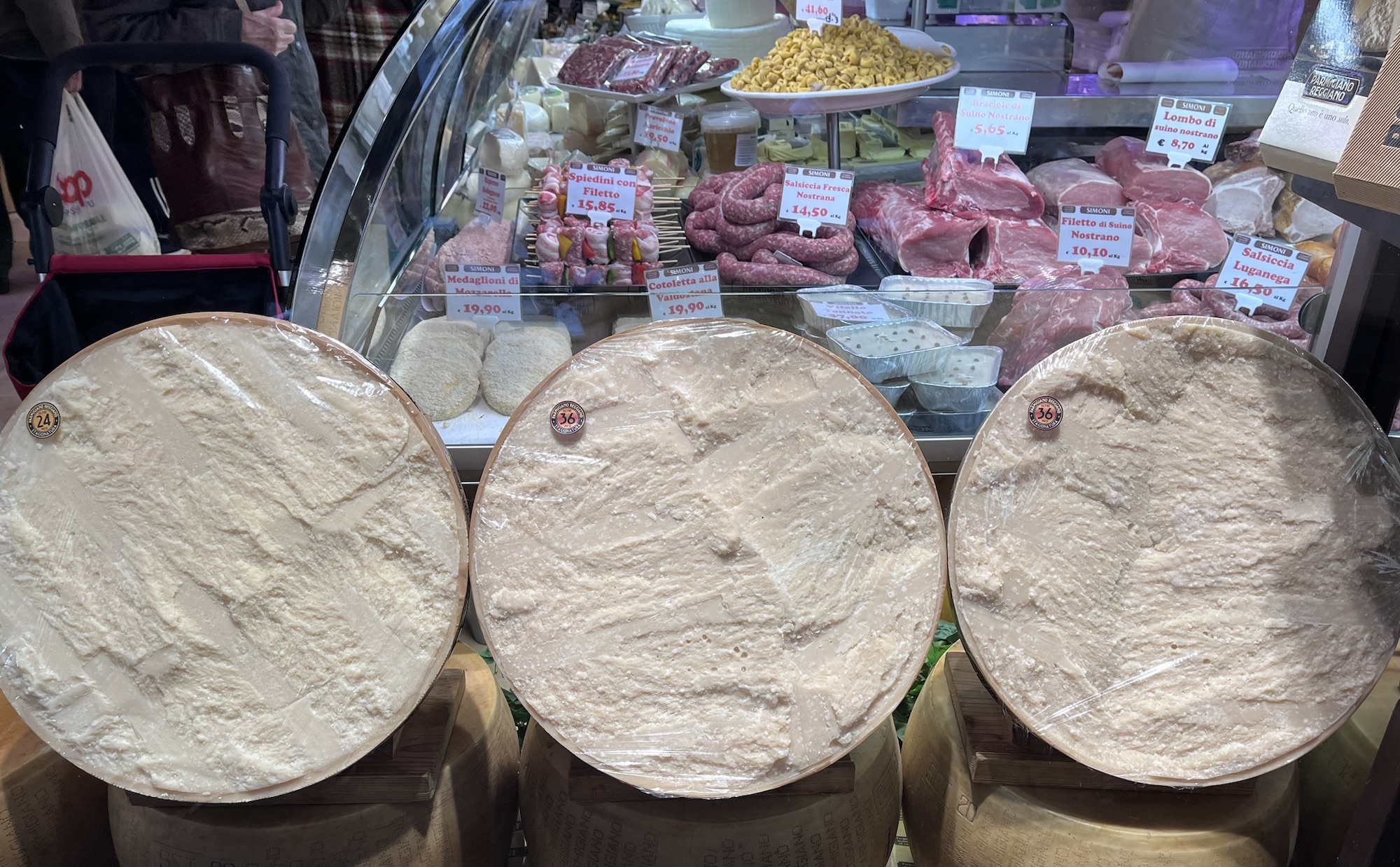
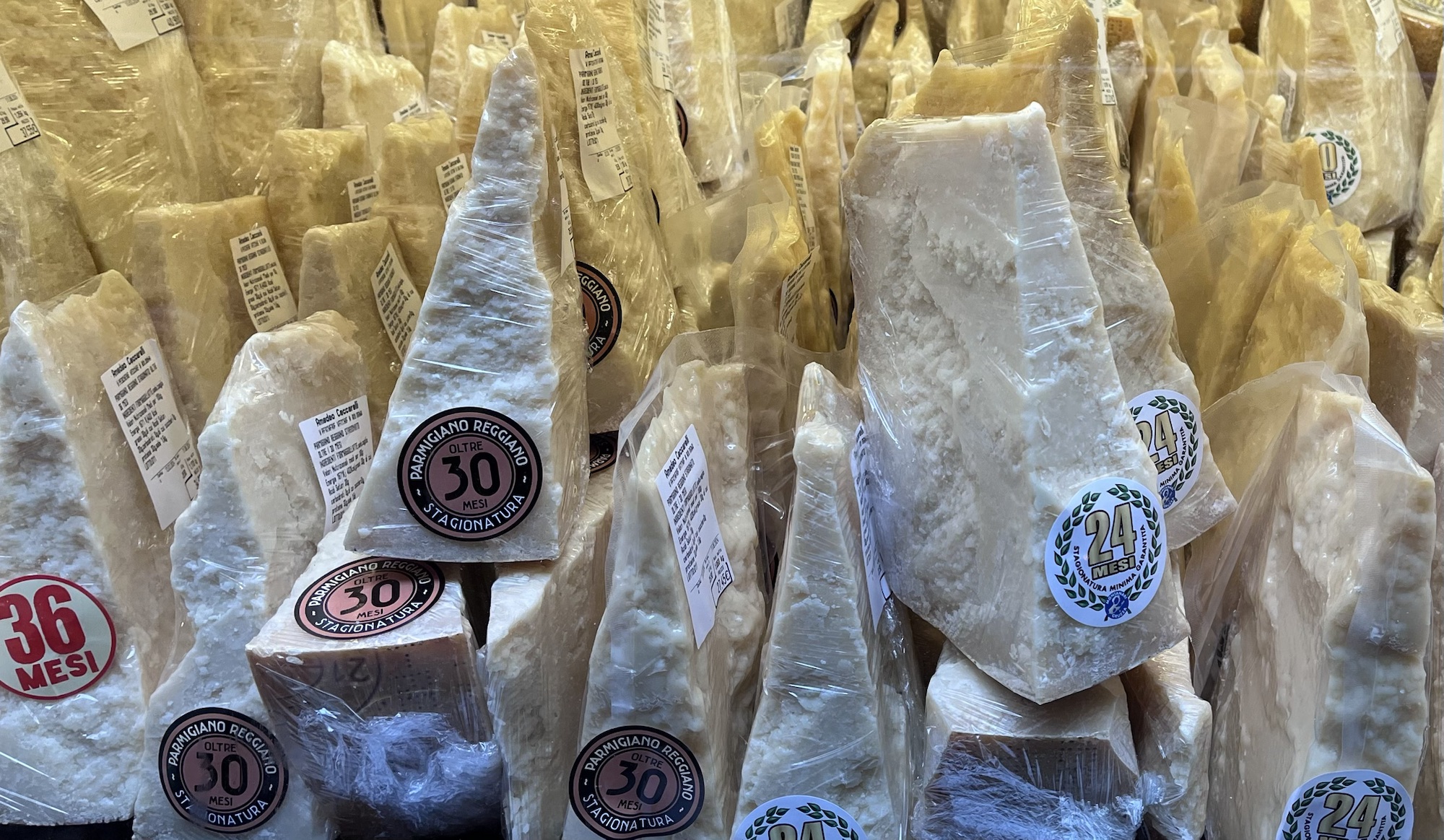
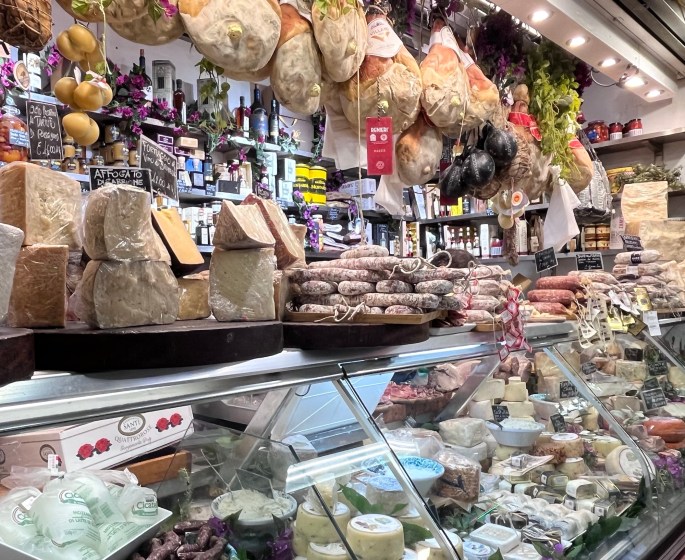
before sitting down to each these goodies, we walked through tight alleyways that were full of open-air markets. Notice those cheeses? The stickers (numbers) indicate how many months they have aged. They go up past what I captured in my photo.

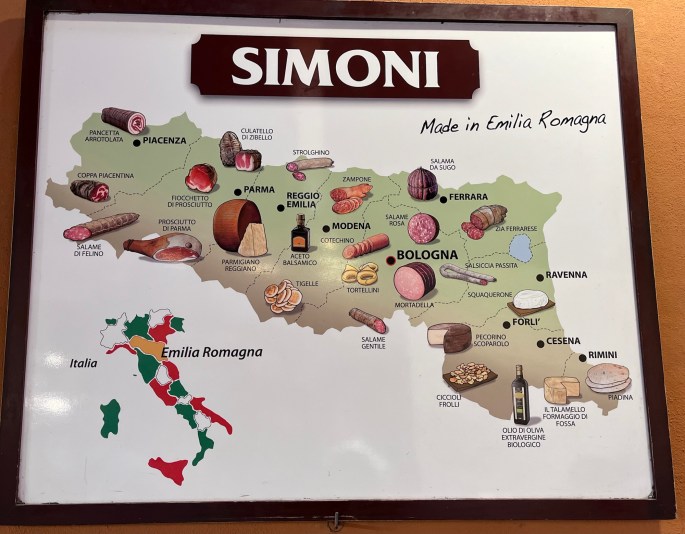
This was also a great place to find this map and see where some of these culinary gifts come from.

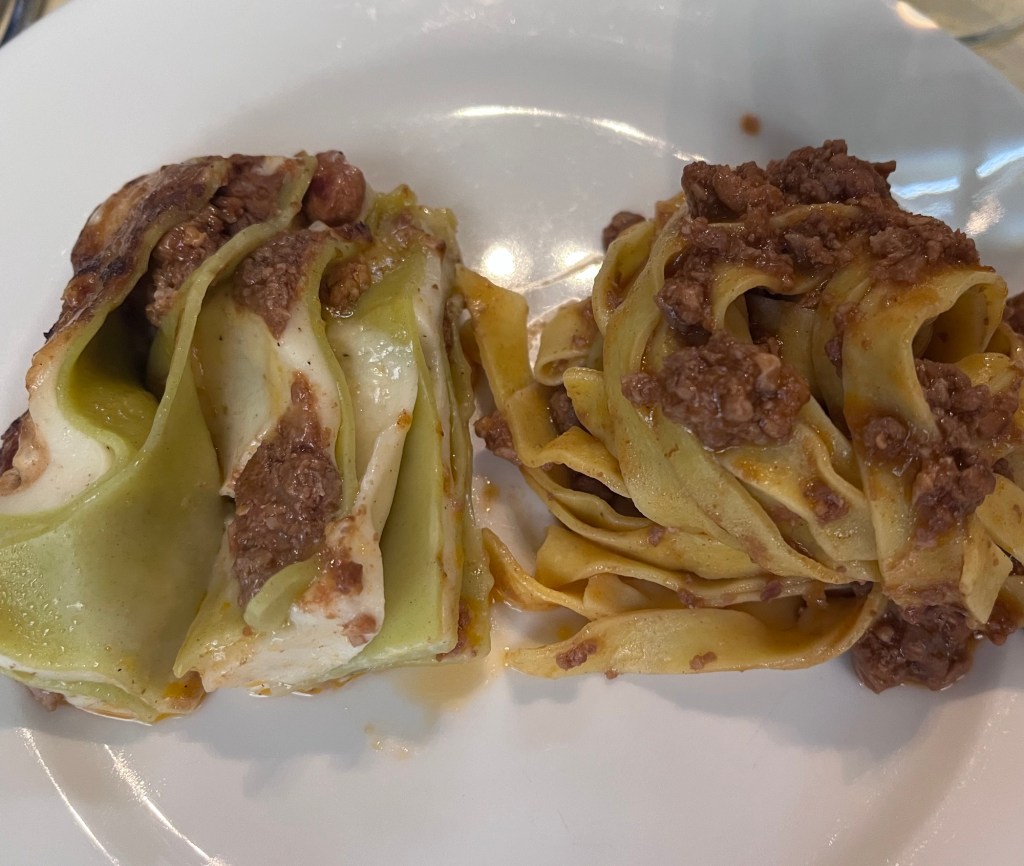
It was f.i.n.a.l.l.y time to eat some of that pasta we saw being made earlier.

What better way than to close with some gelato? Sorry, no photos.

We had a great tour and enjoyed the introduction to Bologna.

Florence to Bologna

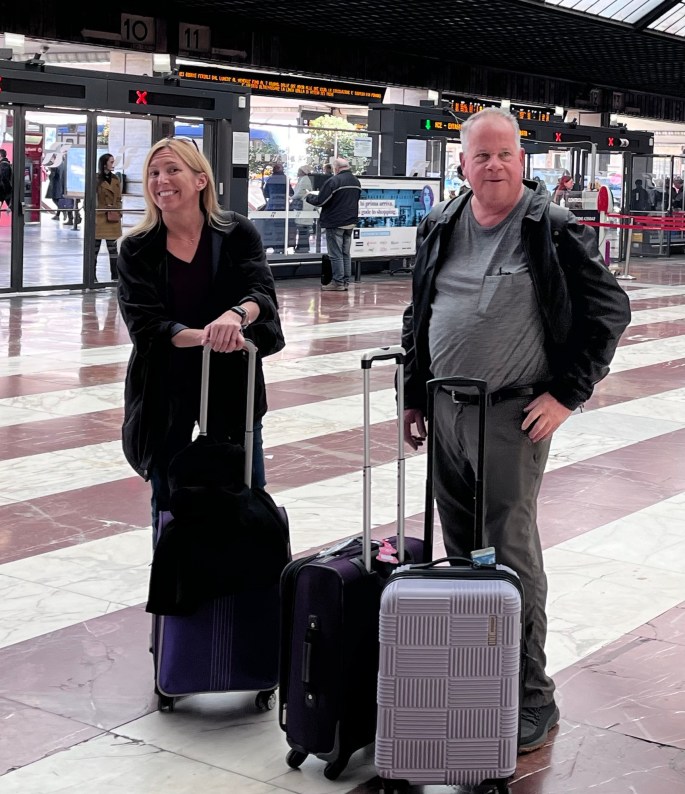
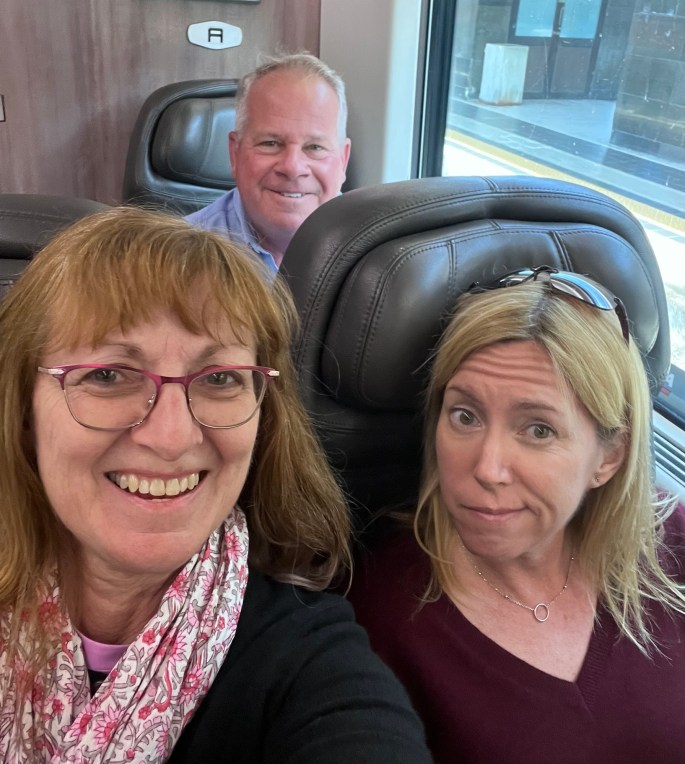
All to soon, it was time to continue on our Italian journey. Look at these two seasoned train travelers. They’re keeping an eye on the platform departure board as I wandered off.

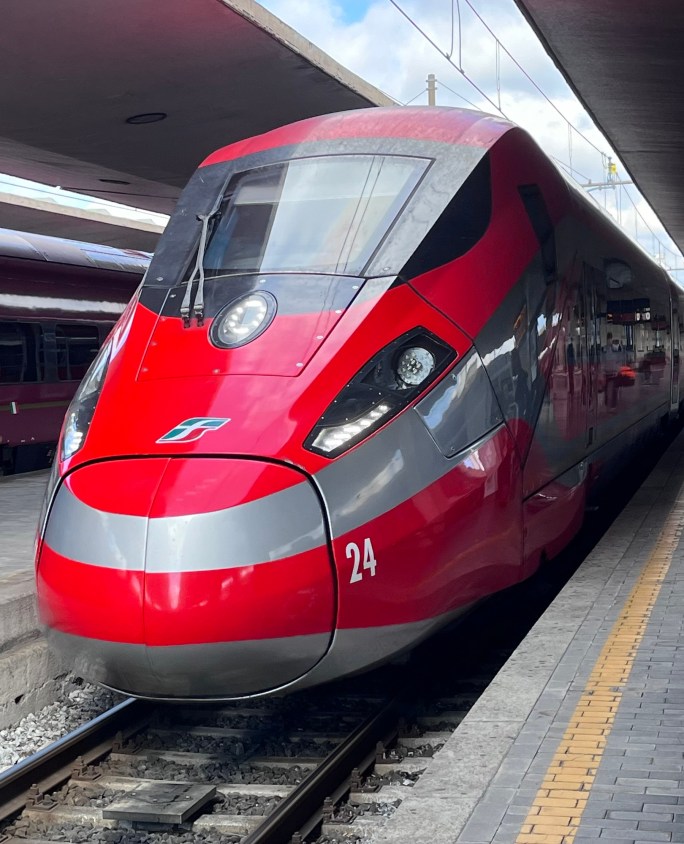
We were waiting for this.

Bologna. Why go to Bologna?

~it is the 7th most populous city in Italy

~also nick-named the ‘Fat City’ – rich cuisine, the ‘Red City’ – red tiled rooftops and the ‘Learned City’ – oldest university.

~speaking of which…..the University of Bologna has the longest continuous university operation in the world, established in 1088. That is not a typo.

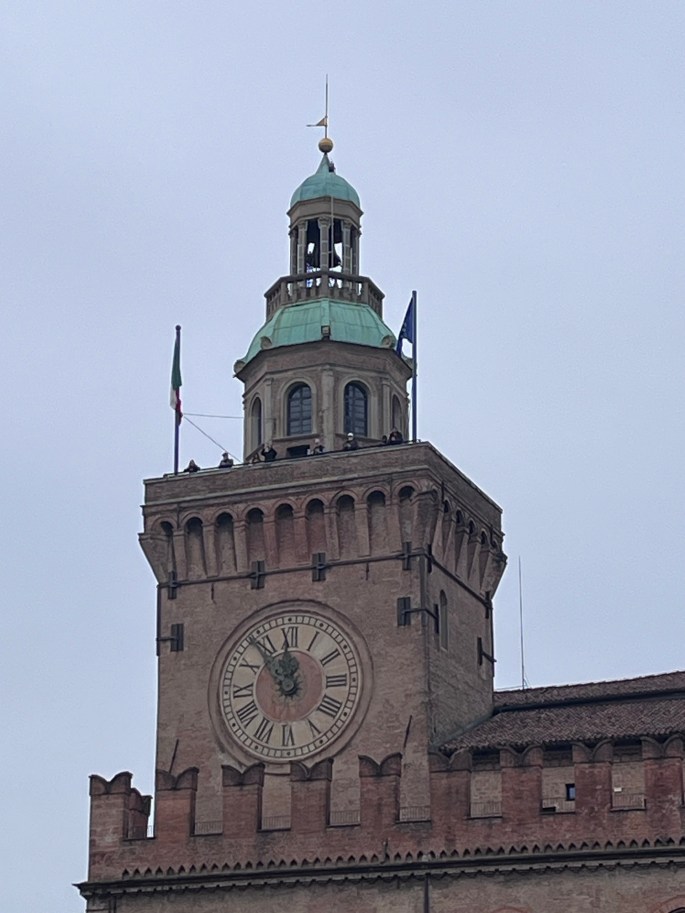
Famous for its towers, churches and lengthy porticoes, Bologna has a well-preserved historical centre. The first two photos are part of the main historical centre square.

A main reason for visiting……………not many Americans have it on their traveling plans. It reigns as the gastronomic capital of Italy – definitely a great spot for 3 foodies. They have gifted the world with Parmigiana Reggiano, tortellini, mortadella, Parma ham and balsamic vinegar to new a few things.

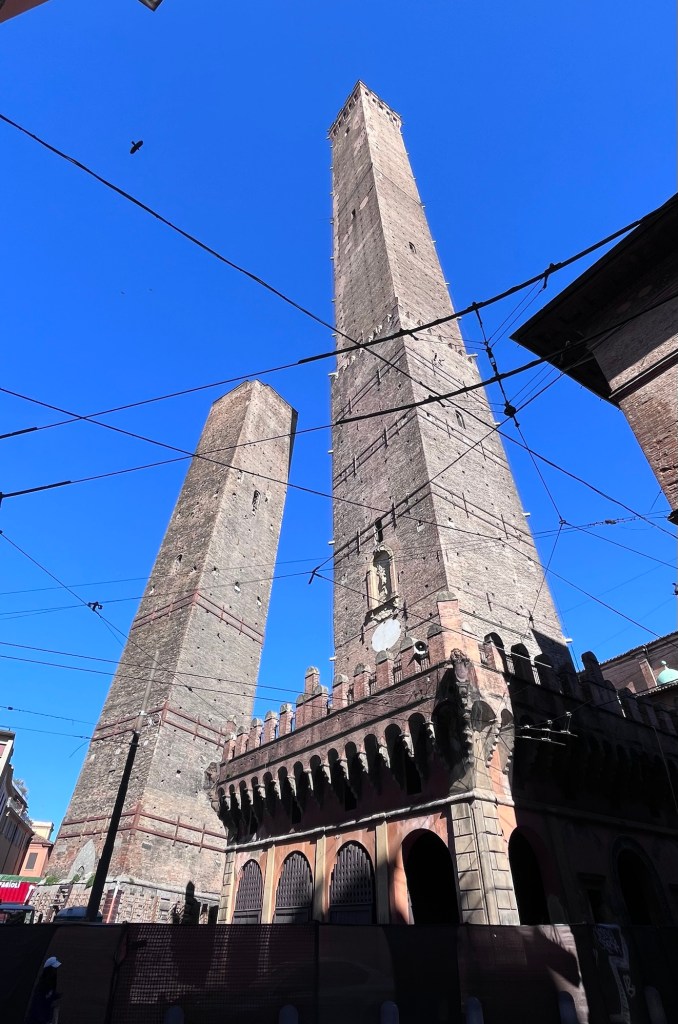
These two towers are symbols of Bologna with construction begun 1109-1119. It is assumed their construction was a competition between two families to prove who was more powerful. Basically, they are so old, very little was known about them. One of the towers is learning so much, it was permanently closed off in 2023 and a metal barrier is being constructed if it does collapse.

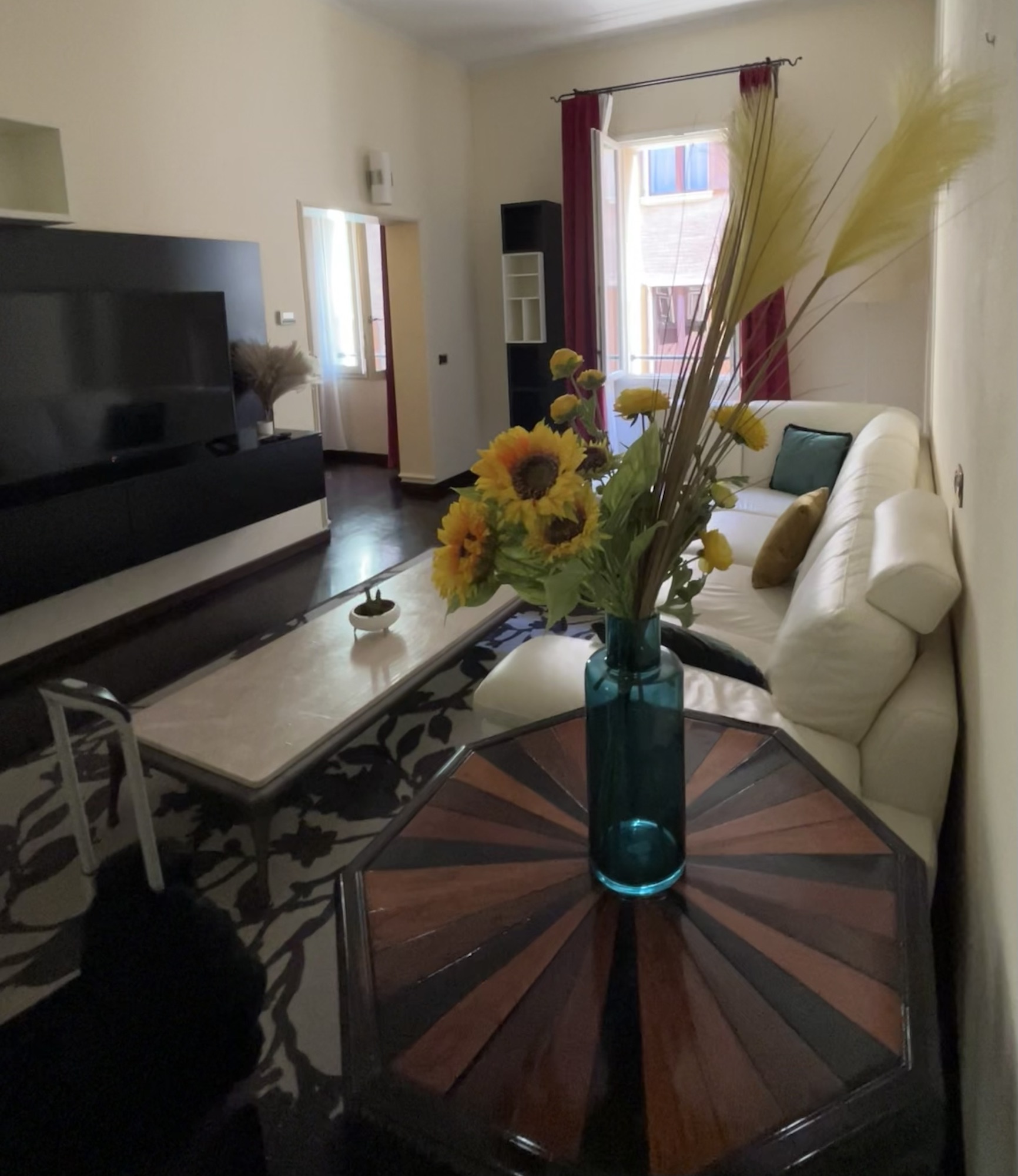
We grabbed a quick bite before our apartment was ready. Its location was ideal being one block away from the church in the first photo.

After dropping off the luggage we started walking.

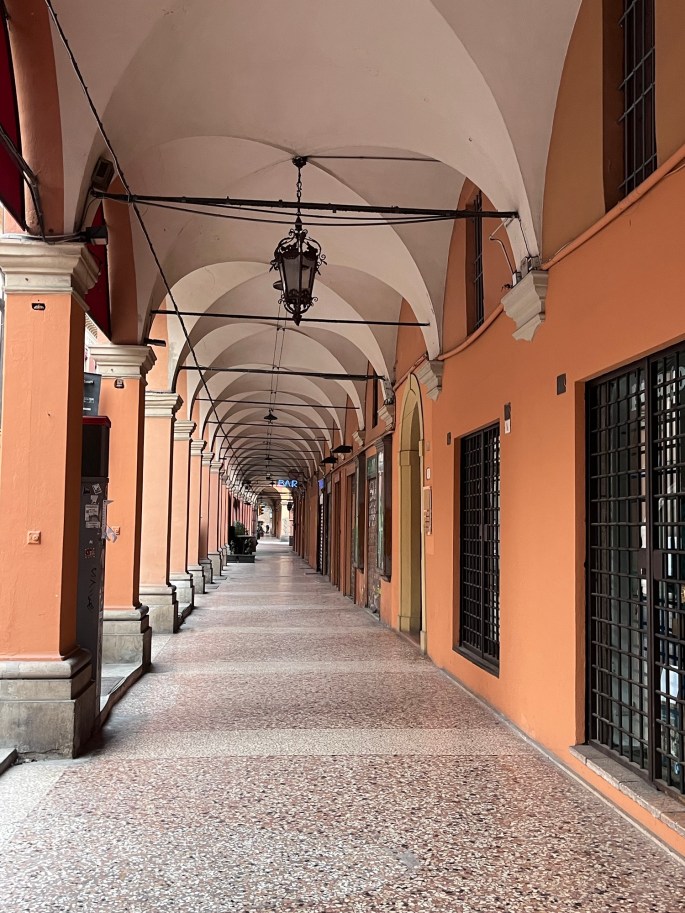
Porticoes – a structure consisting of a roof supported by columns at regular intervals, typically attached as a porch to a building.

This city is known for them, and we came across them quickly. I fell in love with them. 🙂

We all chuckled when we walked past this.

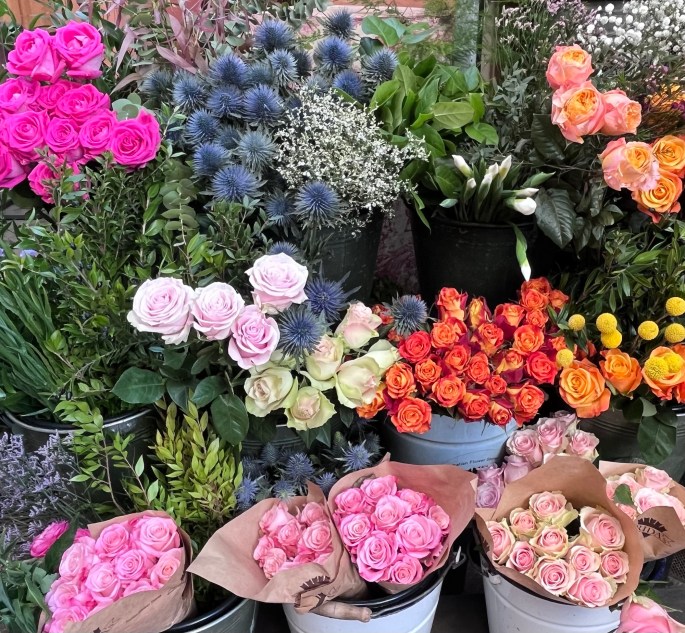
Naturally I needed to include a photo of a flower stall we walked by.

Too early for dinner we stopped for some refreshment along the historical centre square.

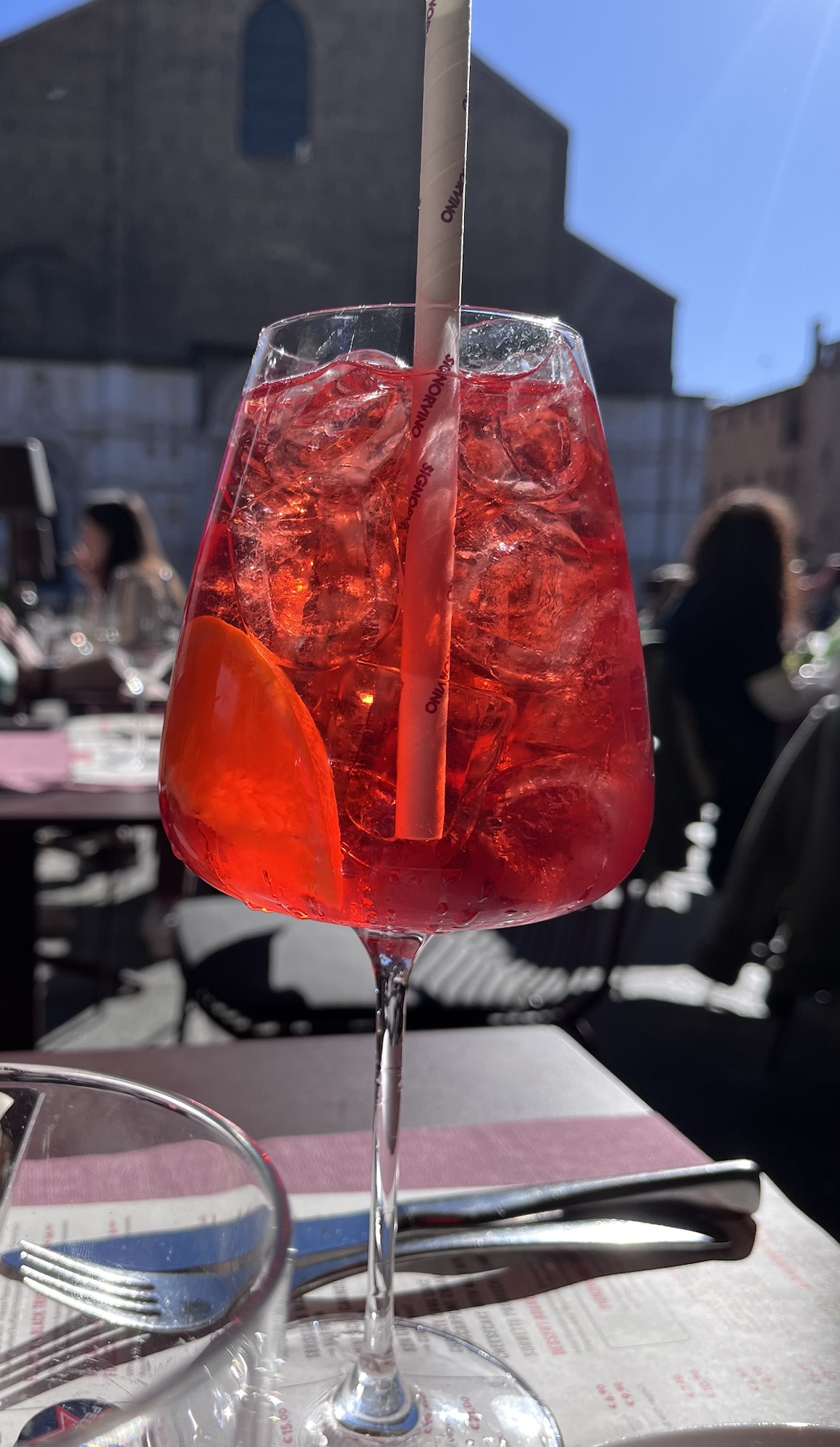
There were a variety of liquids imbibed. The middle drink was Eric’s choice, a Campari Spritz – a combination of prosecco, bitter liqueur and soda water. Yeah, ugh. I tried it – no thank you. The other two photos below are sparking local wines.

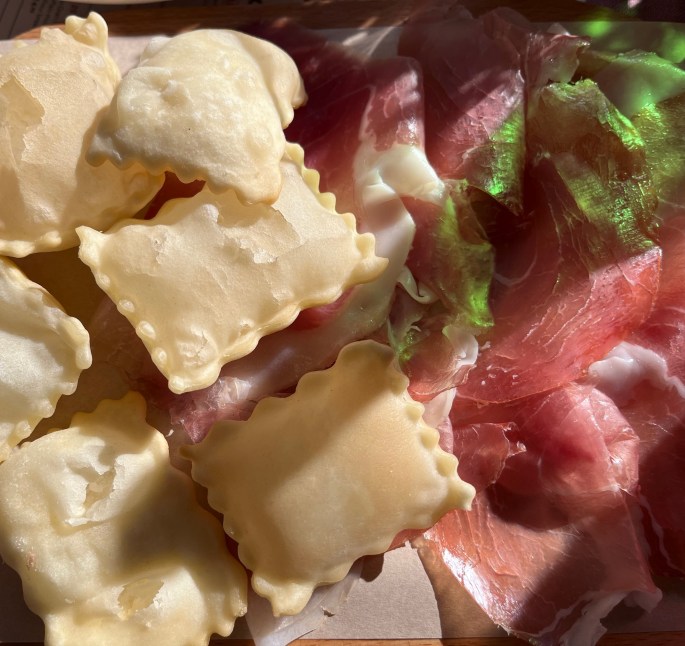
We needed a little something to hold us over until dinner and we ordered this. O.M.G. Those squares are fried gnocchi and the ham……cutatello, a rare small salumi made from the choicest section of the pigs thigh muscle.

As I was typing this post, I looked up cutatello ham. We should have brought some home and tried to get it through customs. Since 2017 it has been sold in America at Italian specialty stores and even a shop on Amazon. Check it out. Be prepared for stick shock!

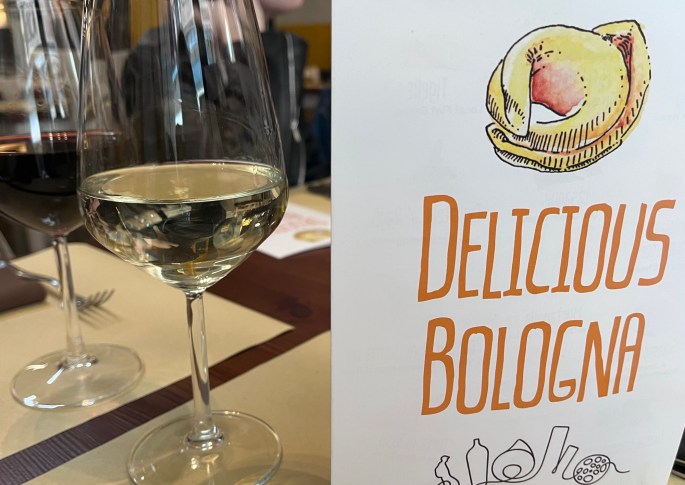
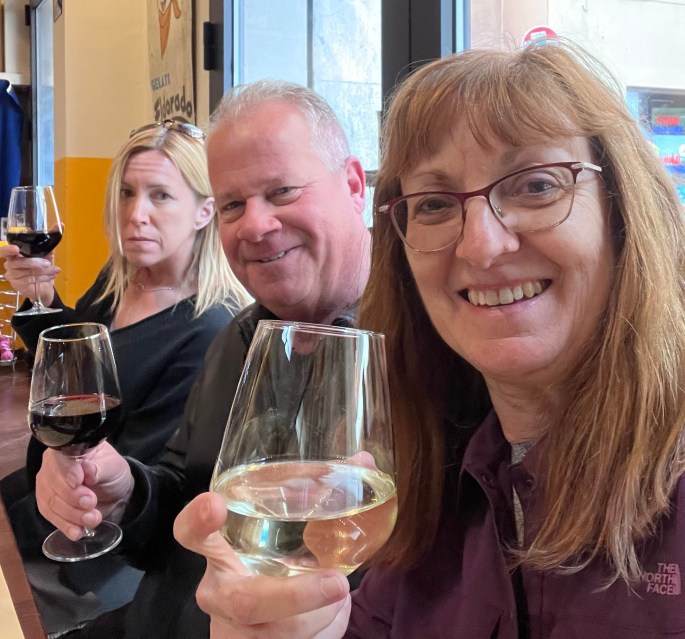
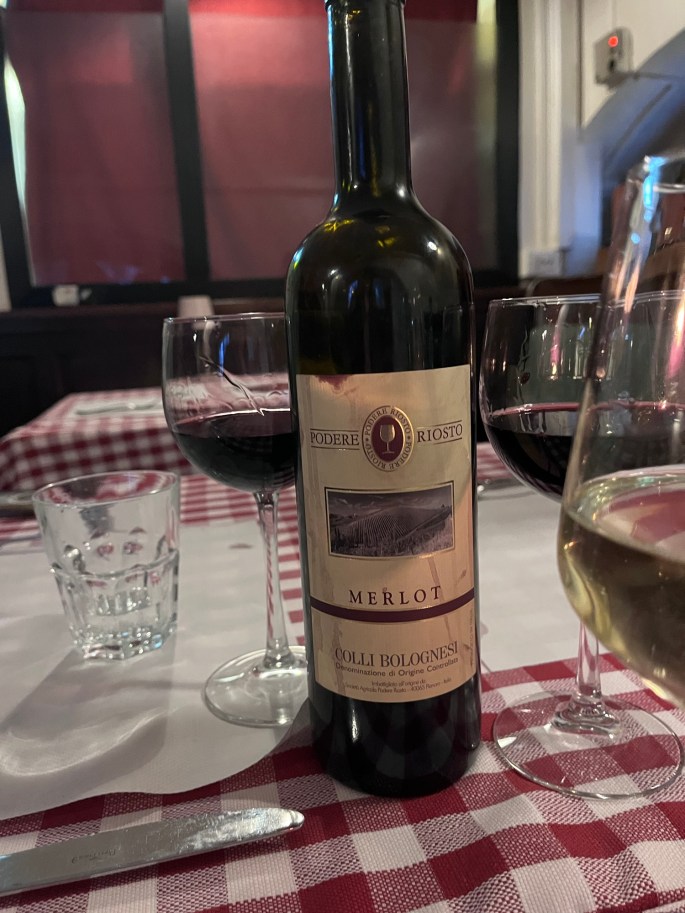
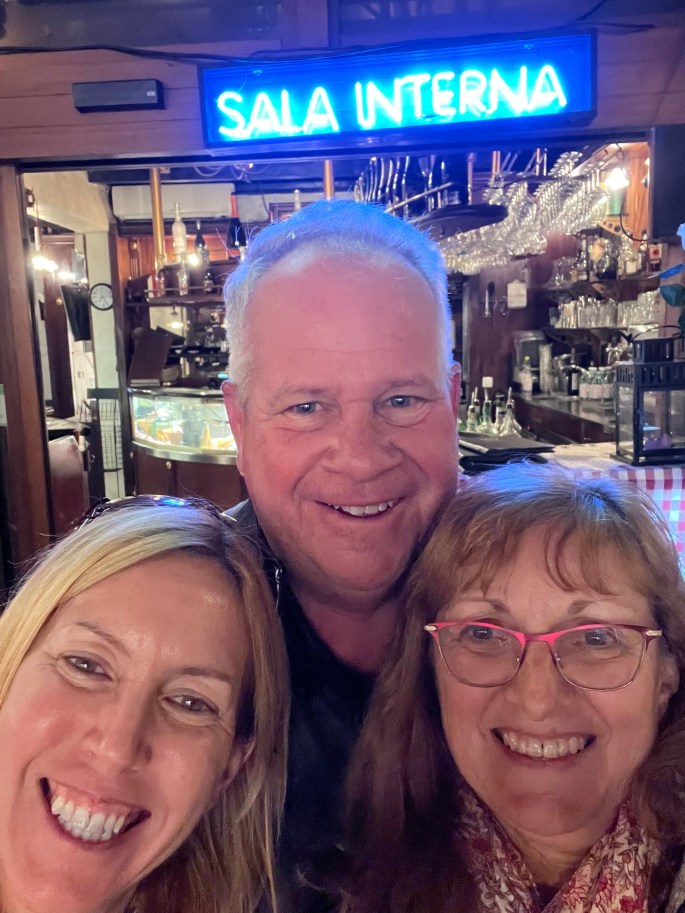
We eventually wandered off for dinner at Sala Interna. Nothing special, but it was open, had seating and comfort food. Yes, we started with wine – white for me, red for the other two.

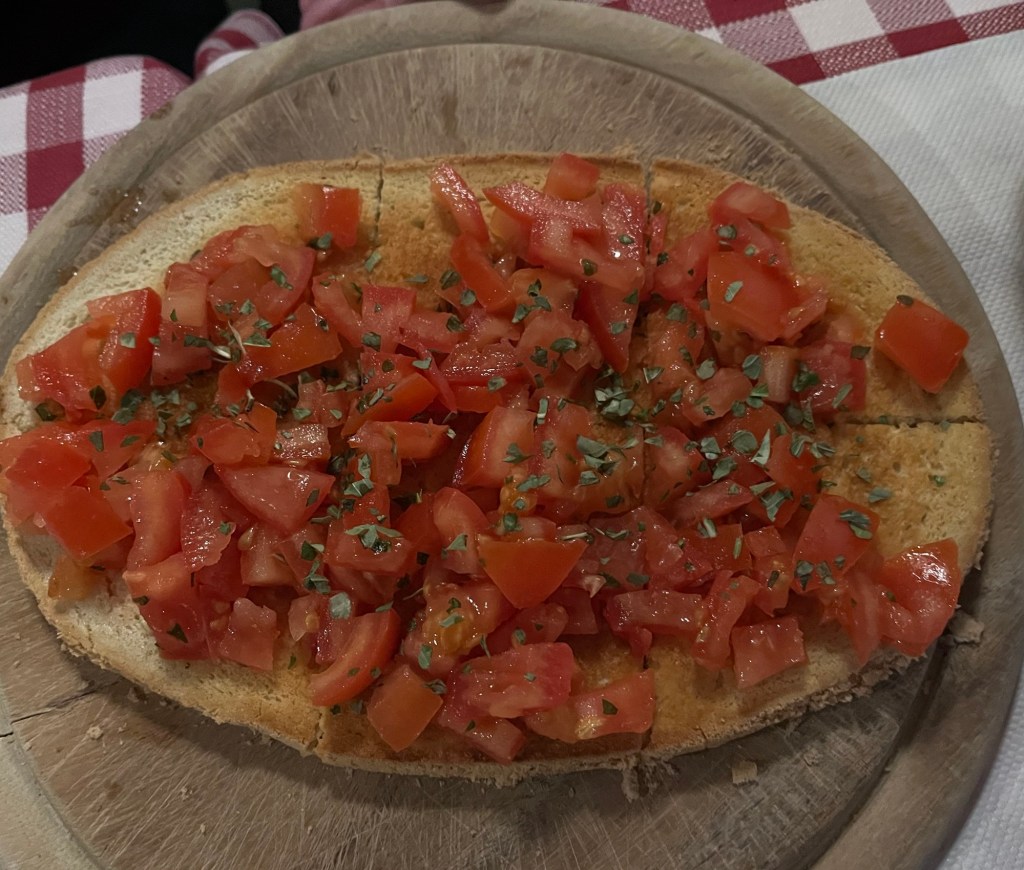
Two starters were ordered, bruschetta and lard bruschetta, they arrived waaaaaaay bigger than we expected. Did we need both of them? Not really. Did I try the one with Lard? Yes, Double Yuck. 😦

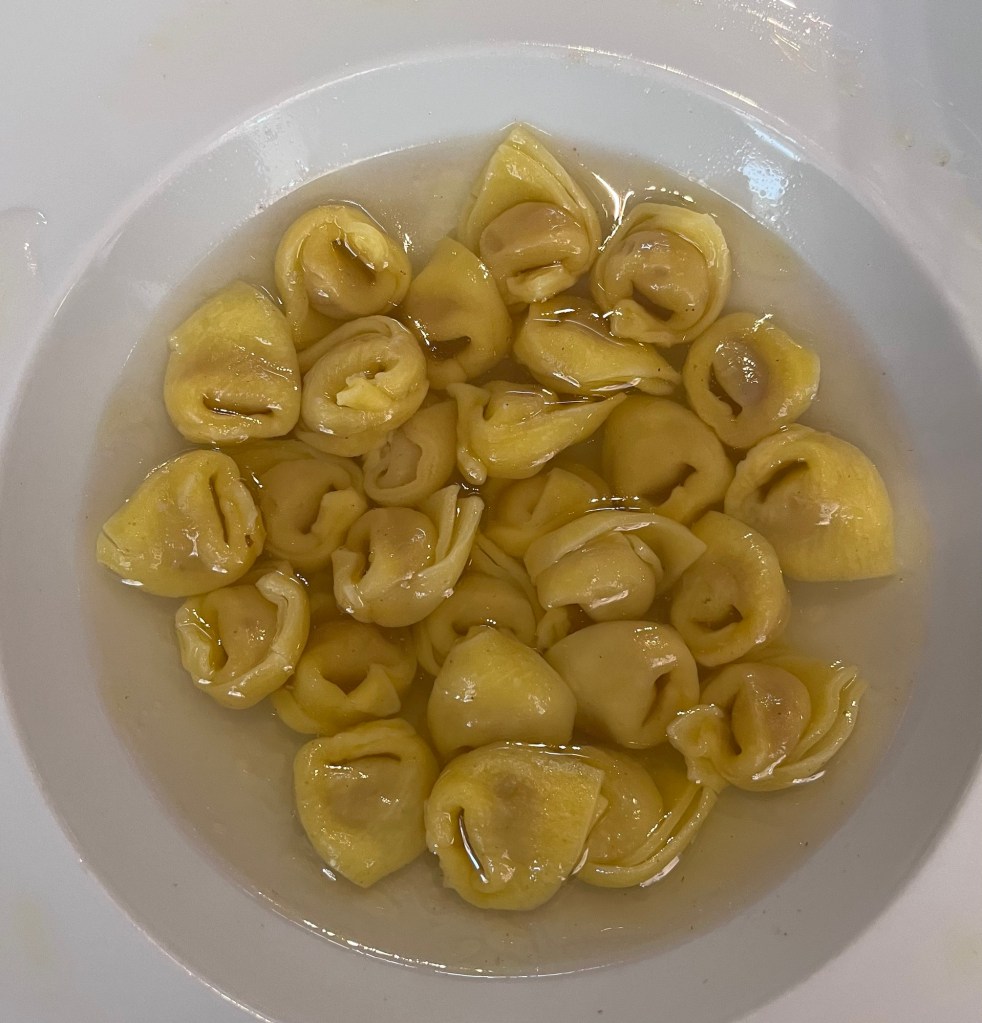
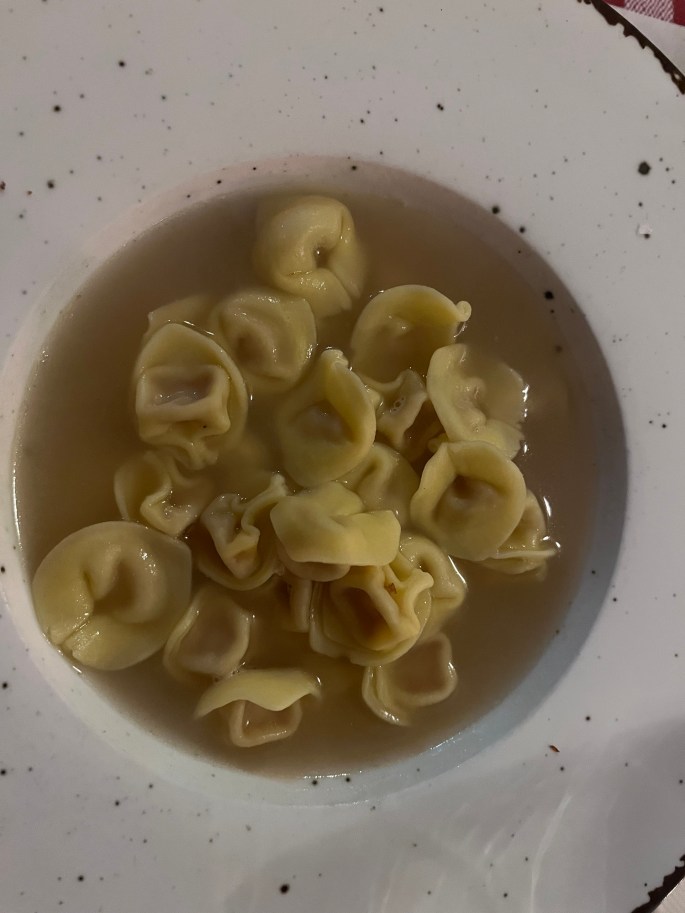
I had the traditional tortellini in broth – simple, but delicious. It was perfect that evening. When the sun started to set, it got chilly quickly. This was hot and filling.
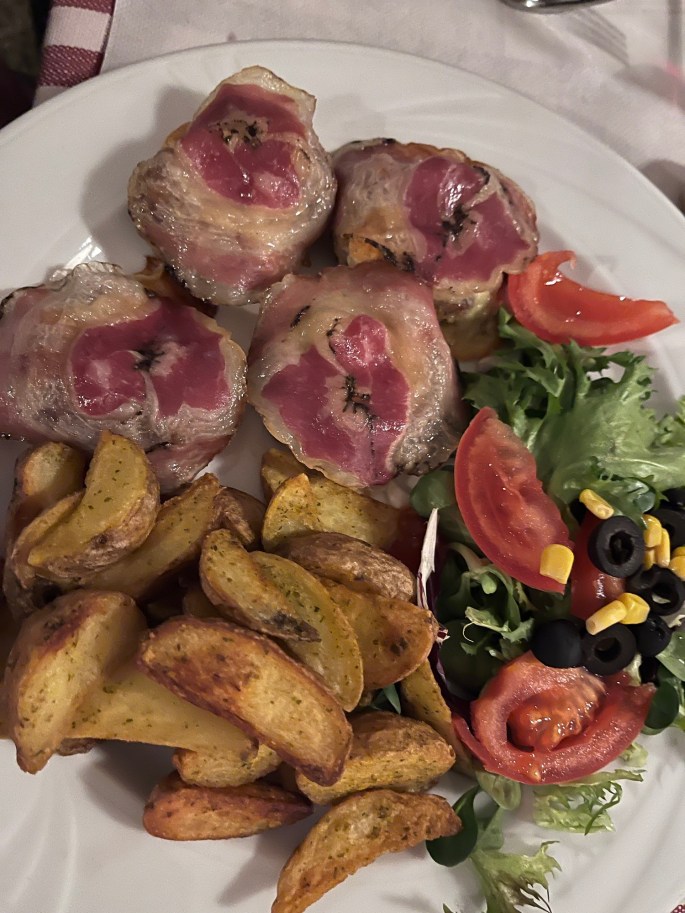
Eric had this entre – ham-topped meatballs, fries and an unusual salad. Ummm.

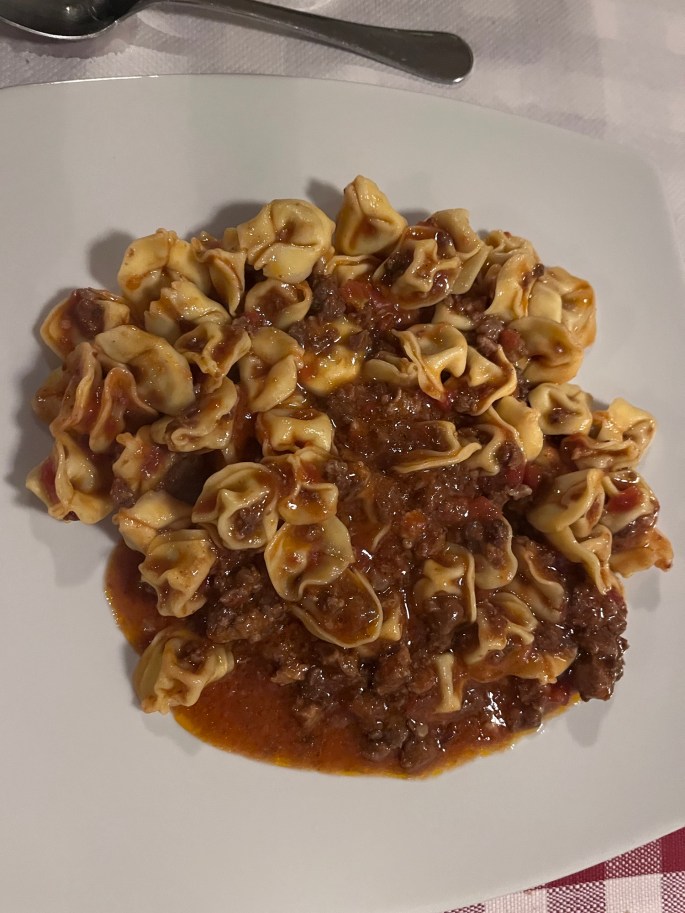
Tortellini with Bolognese sauce was Adrienne’s choice. Yes, that recipe originated here. It is a slowly cooked meat-based sauce, with characteristic sofrito (onion, celery & carrots), white wine, milk and a small amount of tomato paste or sauce. Mighty tasty.

It was a full day, a day of travel and a day of wandering. Tomorrow is our Bologna food tour – always a great way to start our time in a city.
Florence Eats

We had several meals that were special, two of which needed reservations prior to our arrival. Truly, it was the first thing asked when we arrived. But let’s get to our meals.

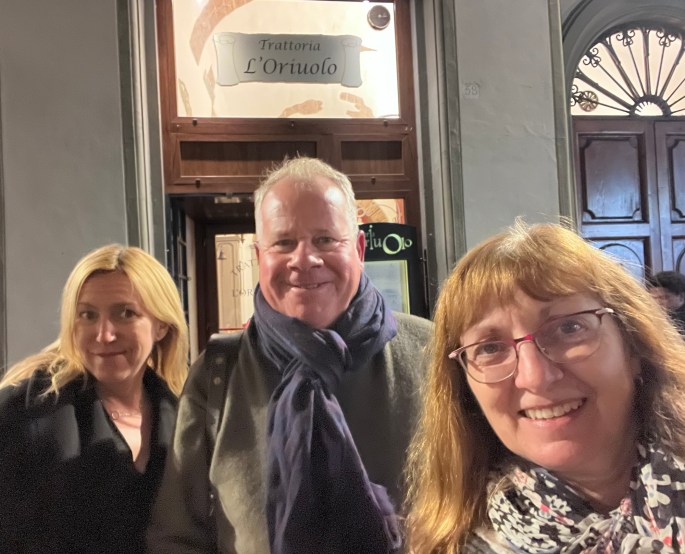
The first one I’m going to talk about is Trattoria L’Oriuolo.

Their mission is traditional flavor with a Tuscan touch. The restaurant prepares classic recipes of Florentine cuisine and of the peasant tradition. Simple ingredients once considered poor are being rediscovered as genuine, rich and traditional and culture. But enough words, lets see the food.

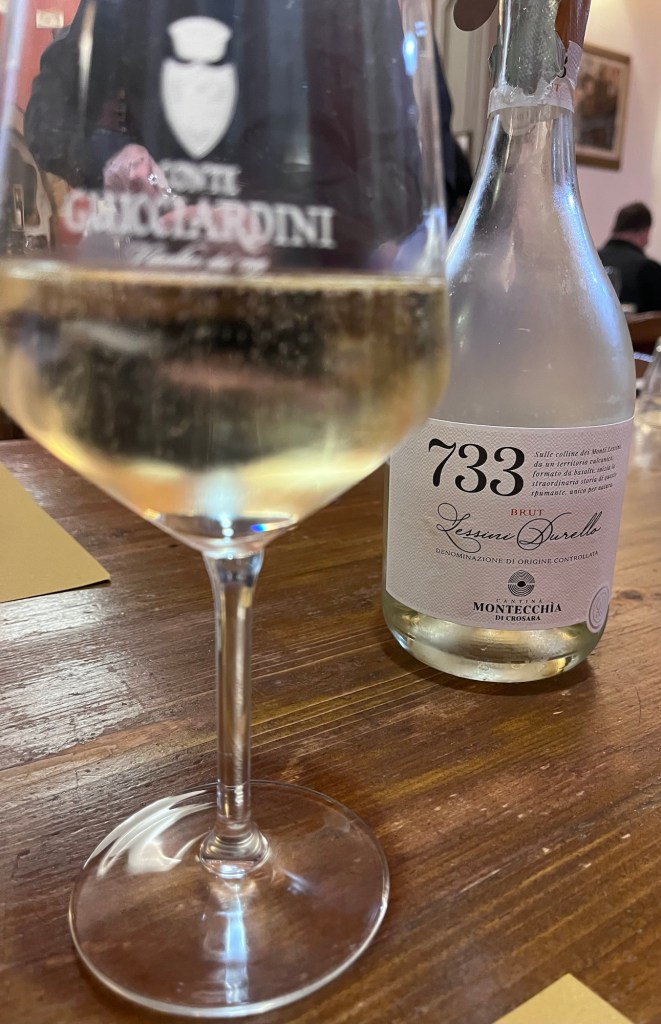
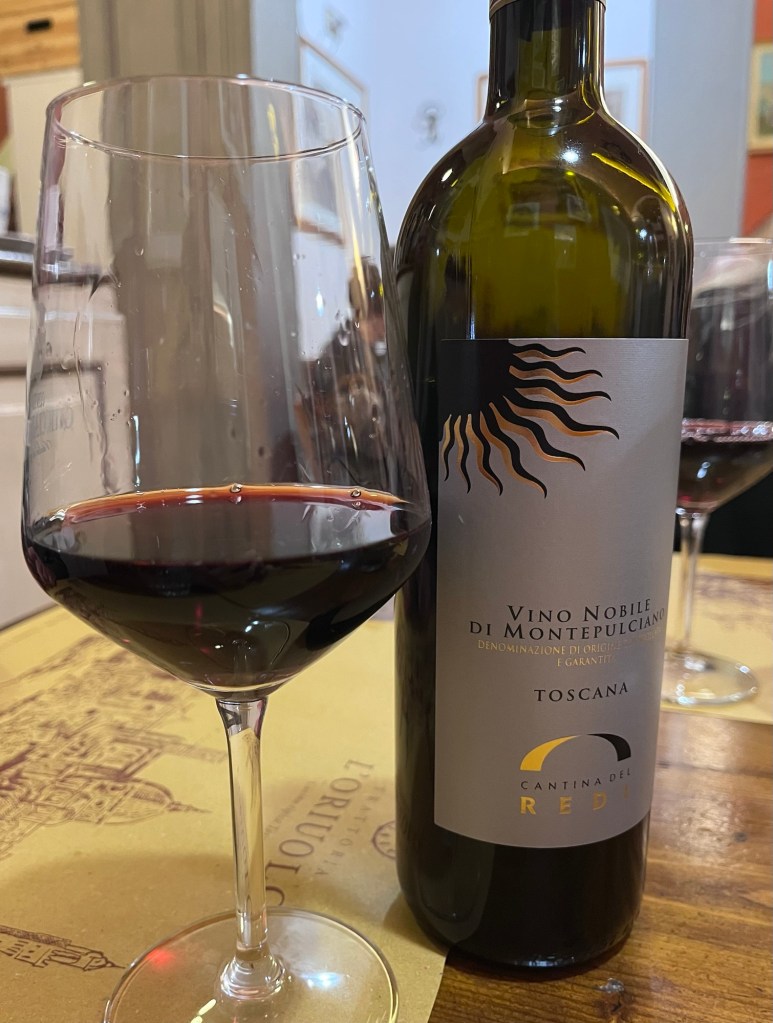
For a number of months, I’ve been drinking white wine that has bubbles or considered sparkling. I’m not talking about champagne, but there are other sparkling wines but in Italy, Proseco is theirs and I had a glass with my meal. Eric and Adrienne shared a bottle of red wine.
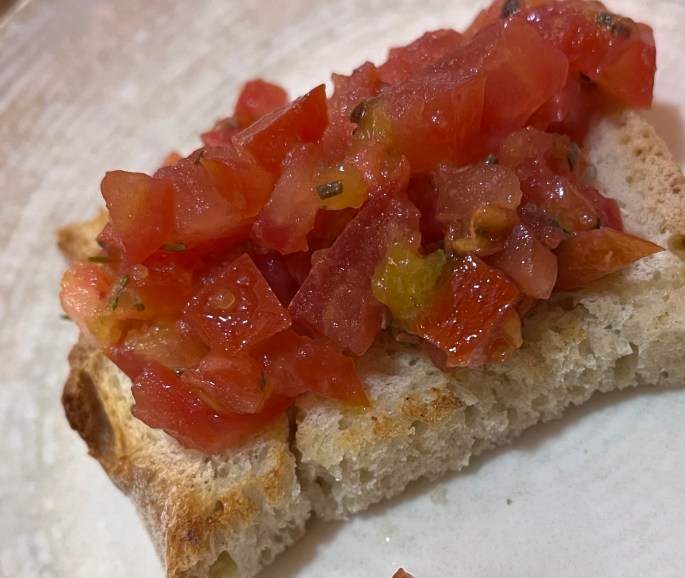
We had bruschetta as a starter and we talked………..why is this the first time we’ve ordered it during our trip? It’s simple, tasty and cleanses the palate. I see more in our future!

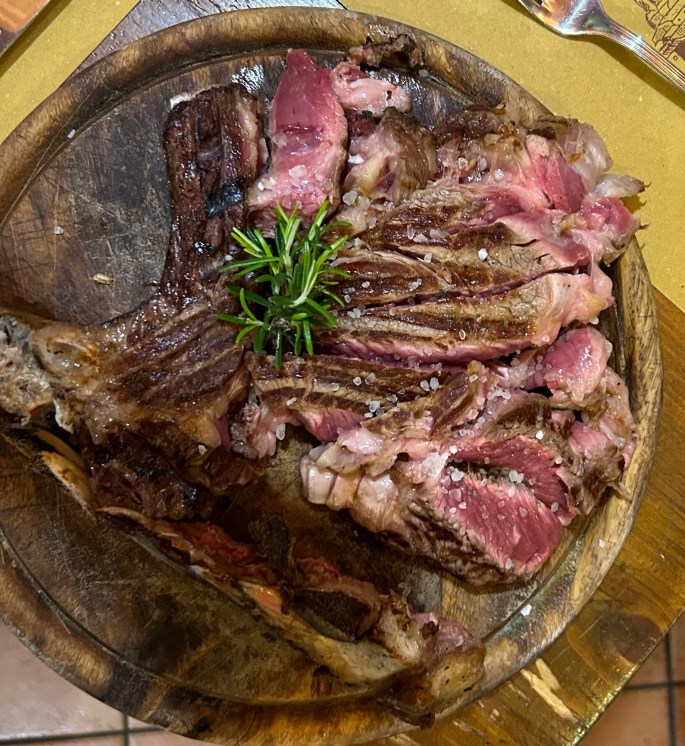
There was one reason for selecting this restaurant: Bistecca alla fiorentina, steak Floratine-style. What does that mean? It is a loin steak on the bone cooked on a grill until rare. The meat is aged for at least two weeks in cold rooms and must be at room temperature at the time of cooking. Eric had been thinking and drooling about this experience ever since our trip was being planned. Once you order the Floratine steak, it is brought out to the table with a scale and the weight will determine what price you are paying. Once you agree to the cut and weight, it goes back into the kitchen.
The unseasoned meat is turned once, cooking it about 3-5 minutes per side. Finally, it is cooked ‘standing’ on the side of the bone for 5-7 minutes until the traces of juice disappear from the bone. Then it comes to the table.

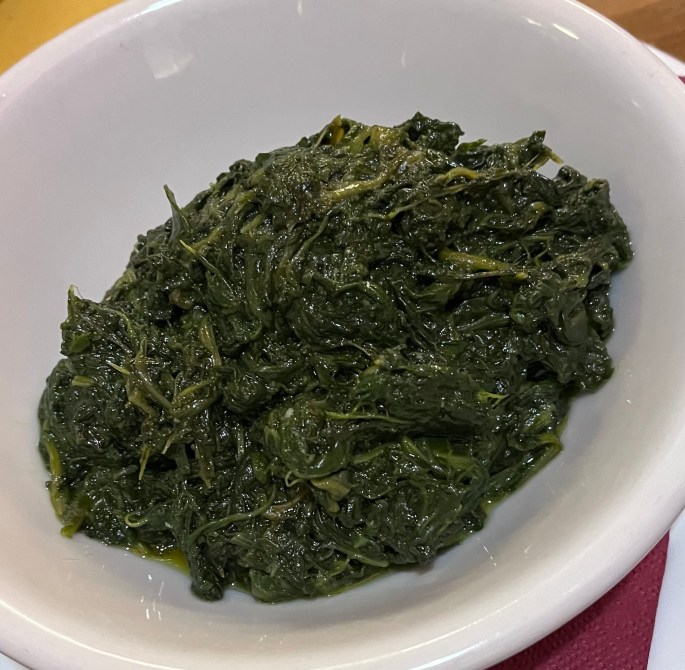
They also ordered a side dish of greens.

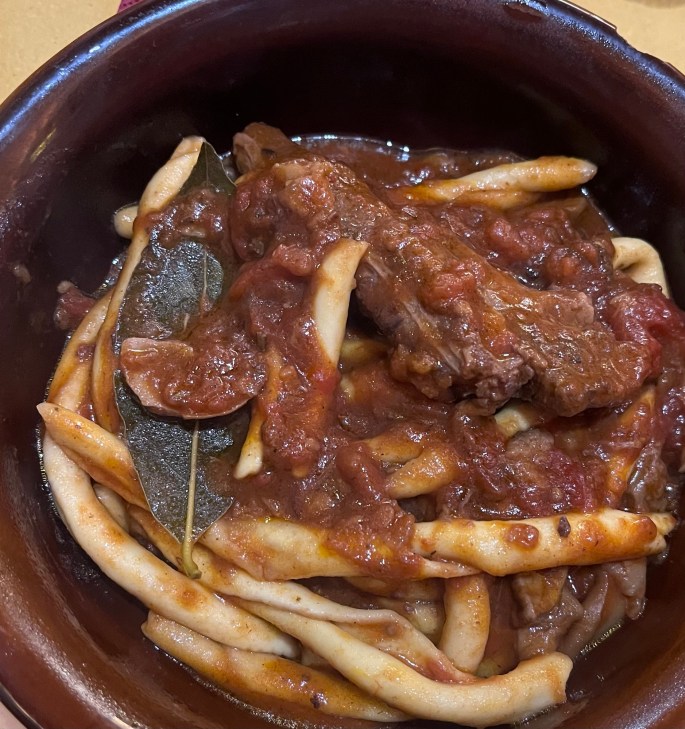
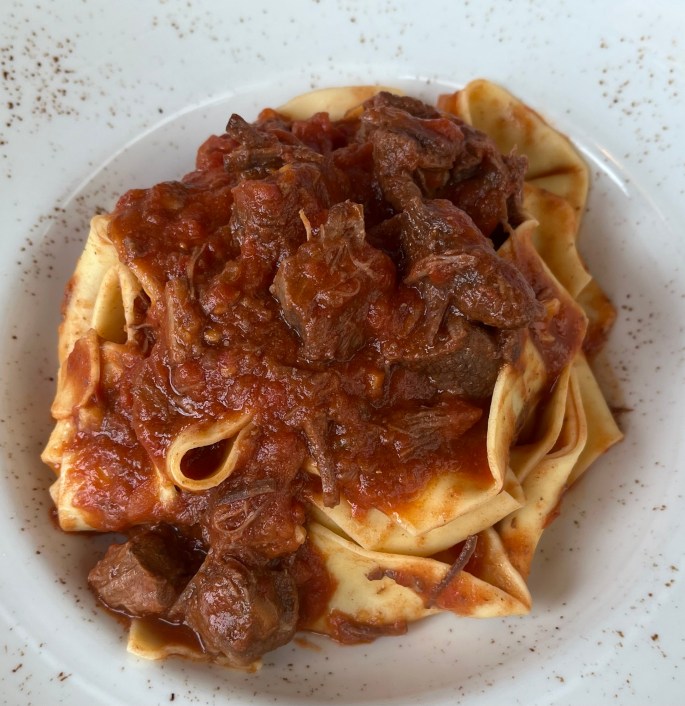
They both loved it. It’s not my thing. Instead I ordered this pasta with beef short ribs. I LOVED my choice. The pasta was cooked perfectly with a bit of chew, the meat was tender and the sauce spot on.

We had NO room for dessert. Surprised?

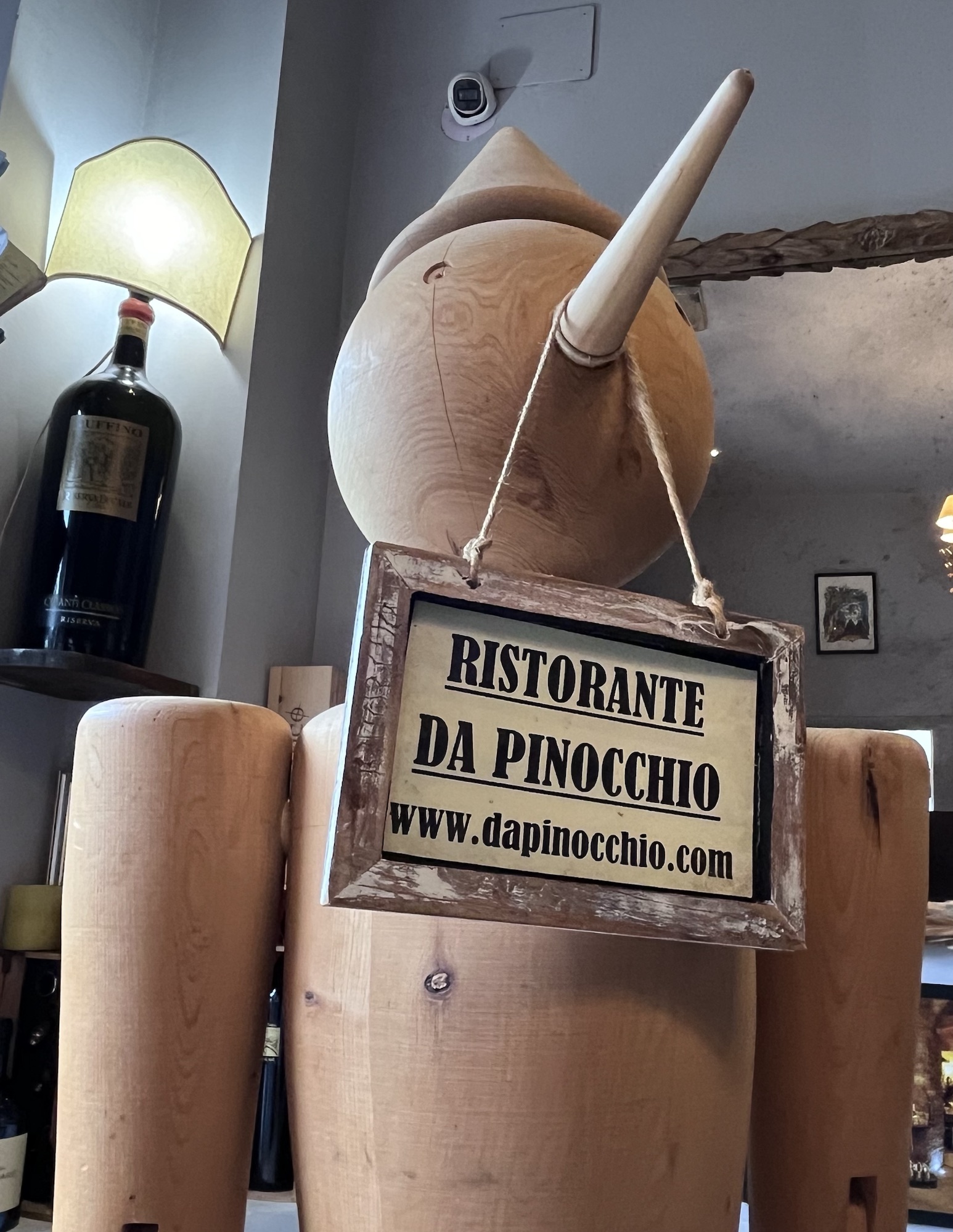
One day for lunch, we stopped at Da Pinocchio.

It is in the heart of the historic district and their menu is typical of Tuscan dishes. Several locations in Florence had this type of seating. Great for when the weather is dicey. You’re outside, but then again, you’re not exposed.

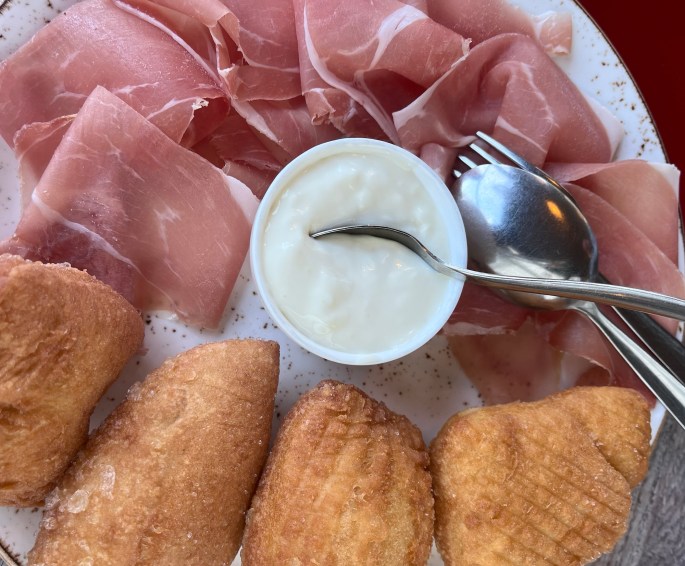
The dish below was something recommended we look for while in Florence, one of their specialties as a starter. Come on…….hot, fried dough, spreadable cheese and prosciutto. What’s not to like?

For our meals, Eric went traditional, pasta with meat sauce.

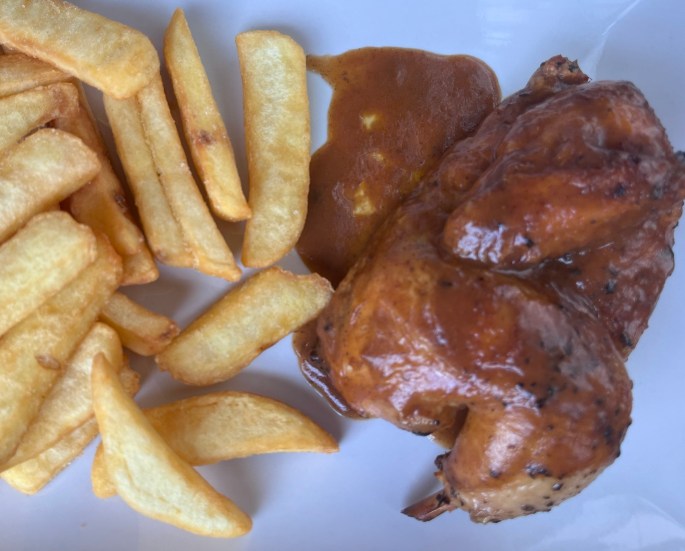
On that day they had a special with chicken (half of a cockerel, young male chicken, less than 1 year), accompanied by fries – my choice.

Adrienne – she needed a salad with a protein added

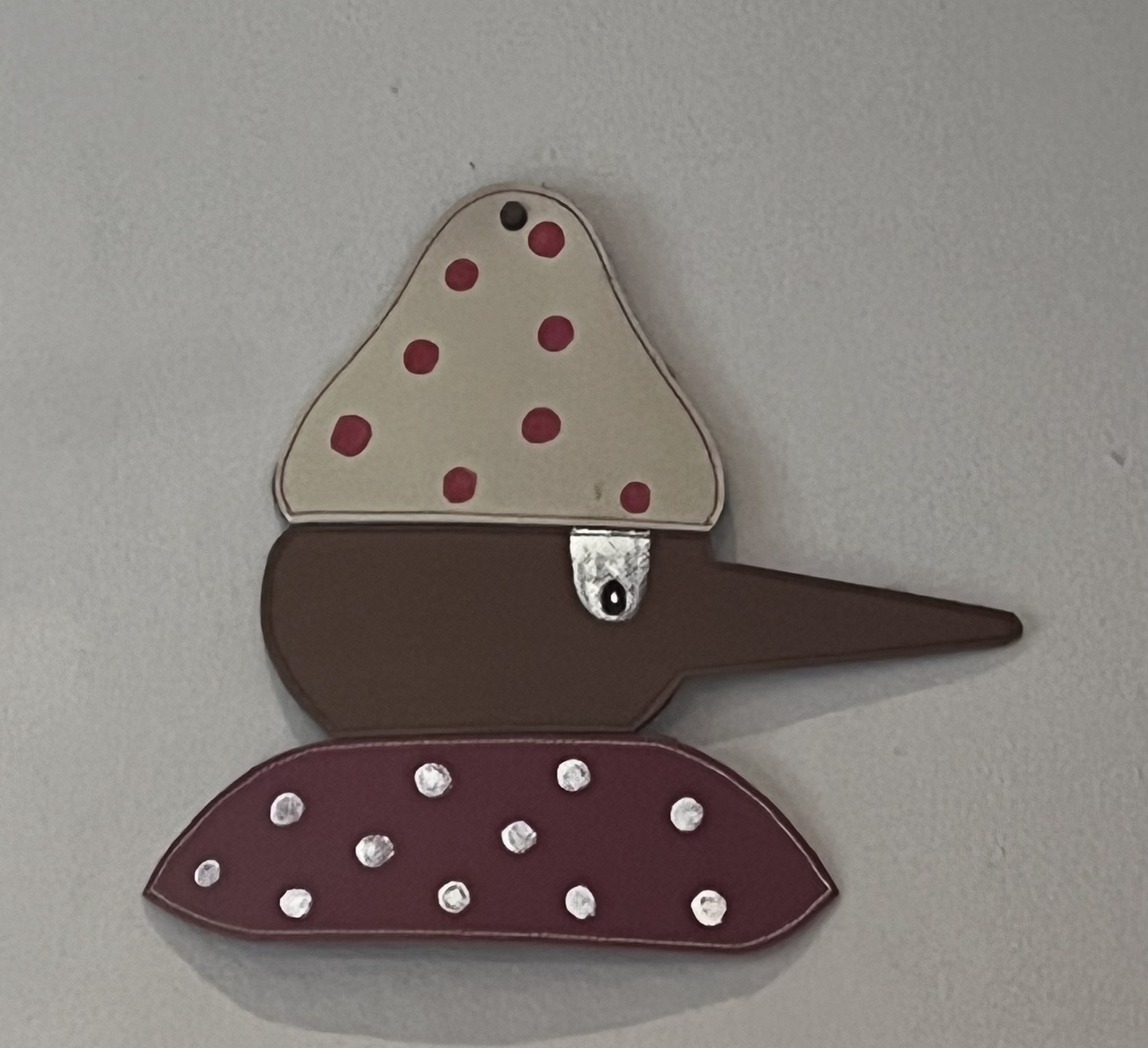
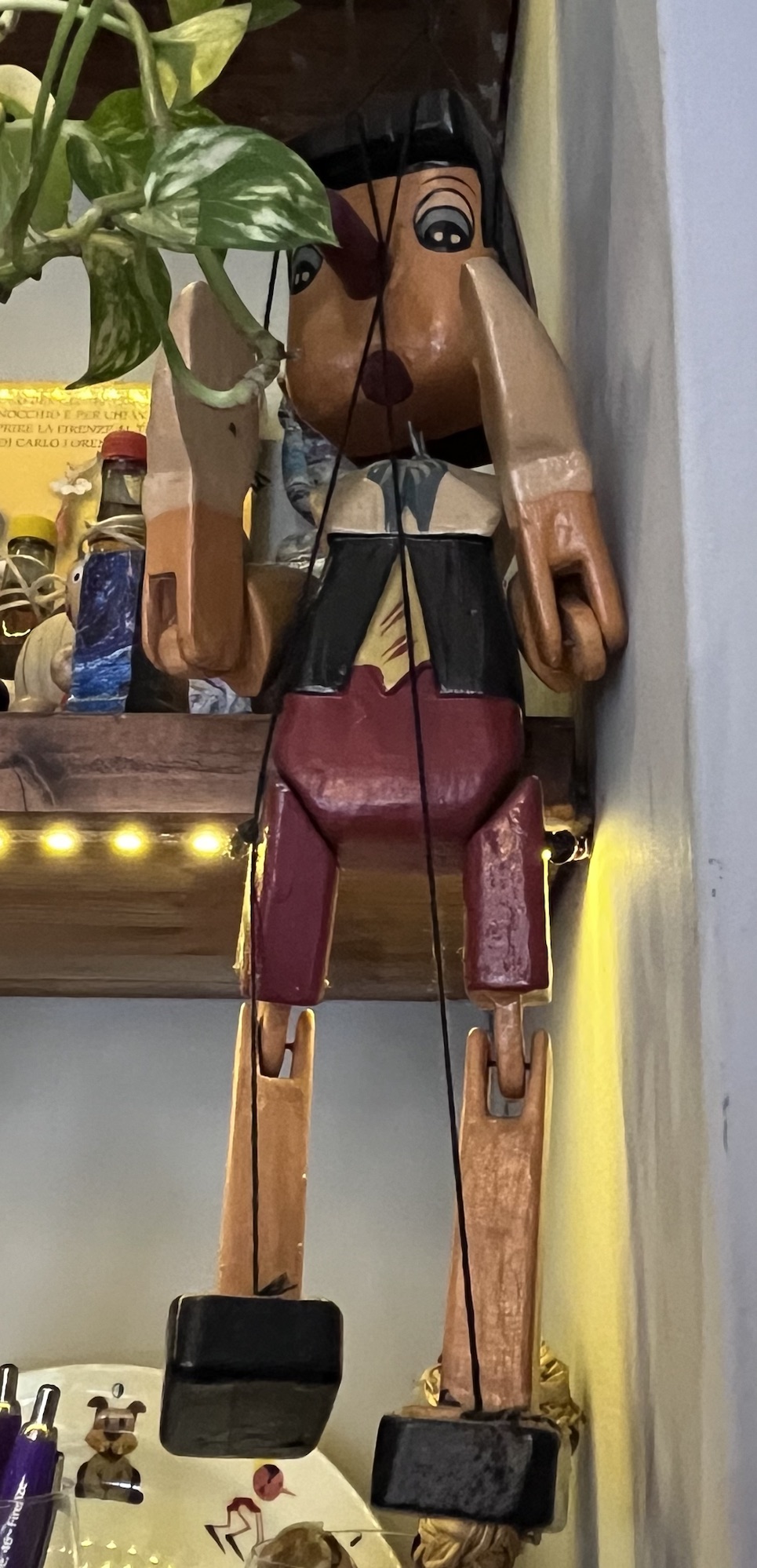
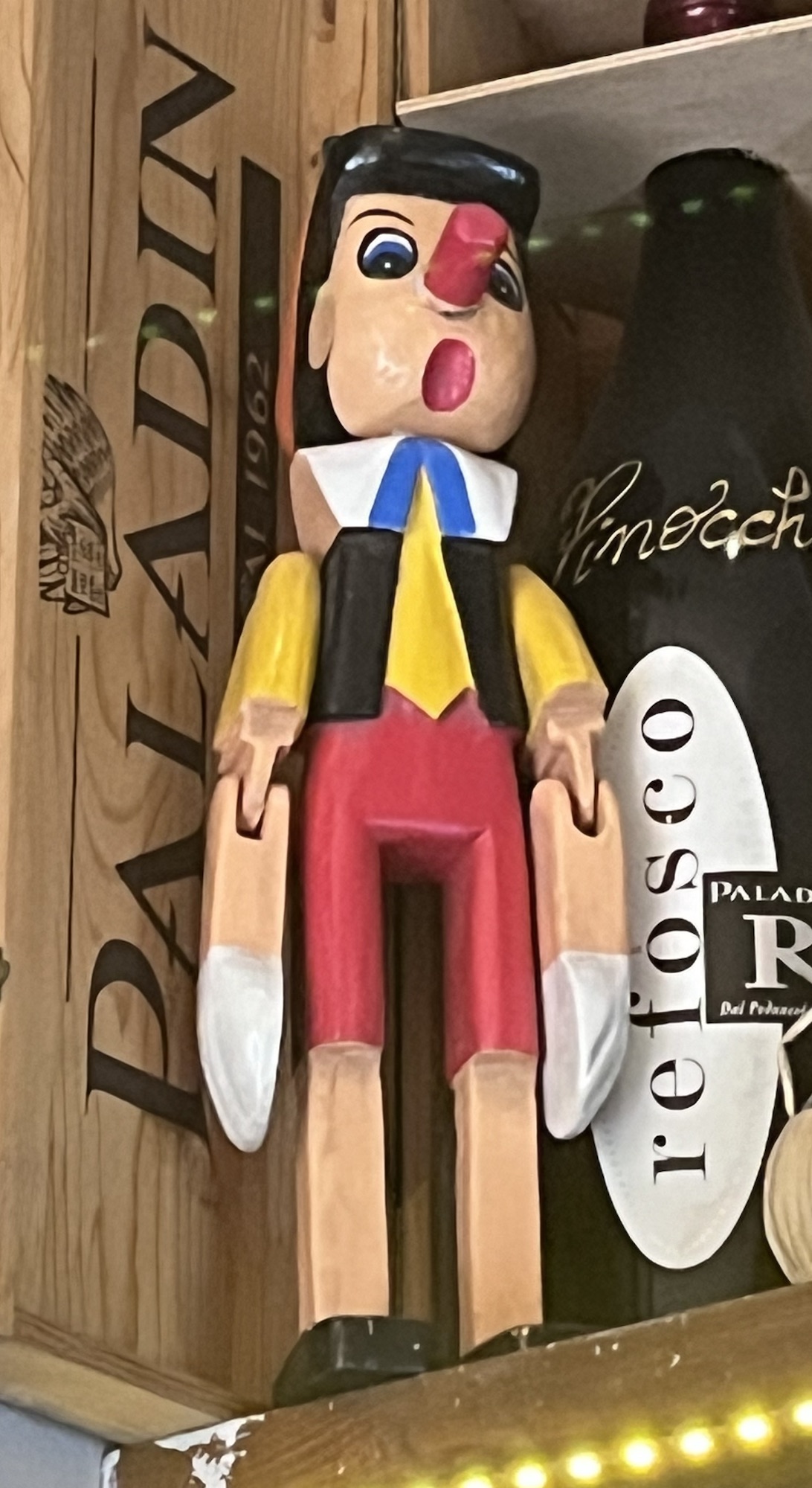
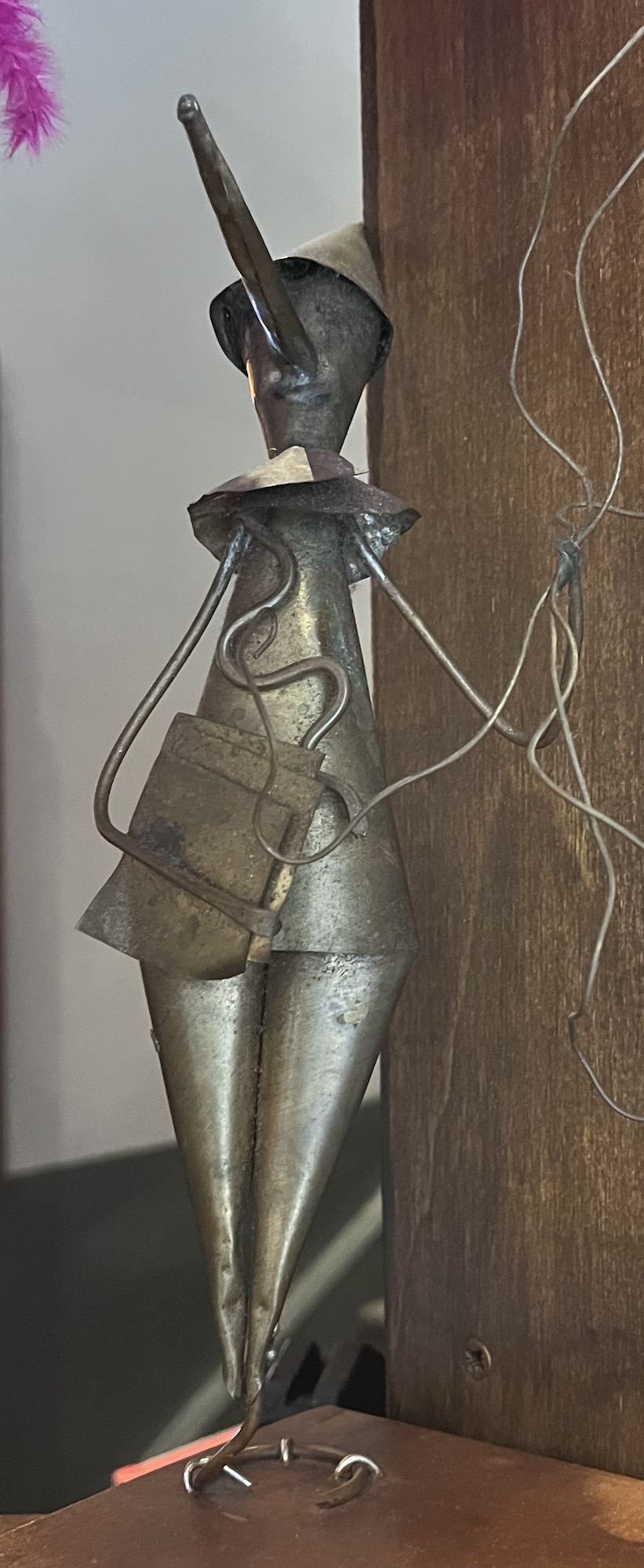
We were stuffed – no desserts with this meal. However……..there were a number of Pinocchios inside and they were begging to be included in my post.

Our last reservation in Florence was for La Giostra.

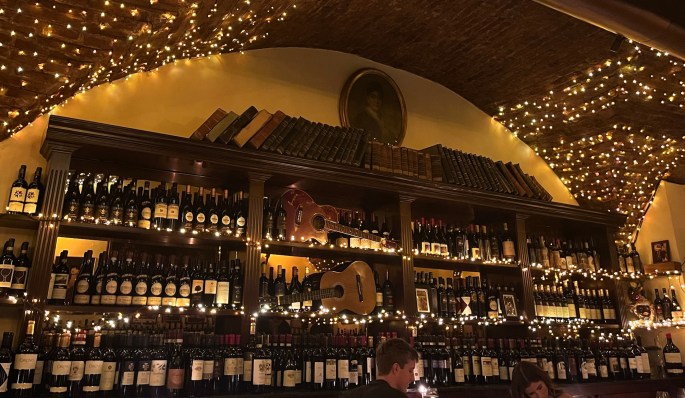
Their brick arches of the sixteenth century and the historiate walls where the horses of a nearby carousel once rested, now houses 16 tables where new stories begin every night. More than 25 years ago this family came together to share their family traditions and ancient recipes with the people of Florence. Obviously, you needed a reservation when only 16 tables exist. Luckily we had one.

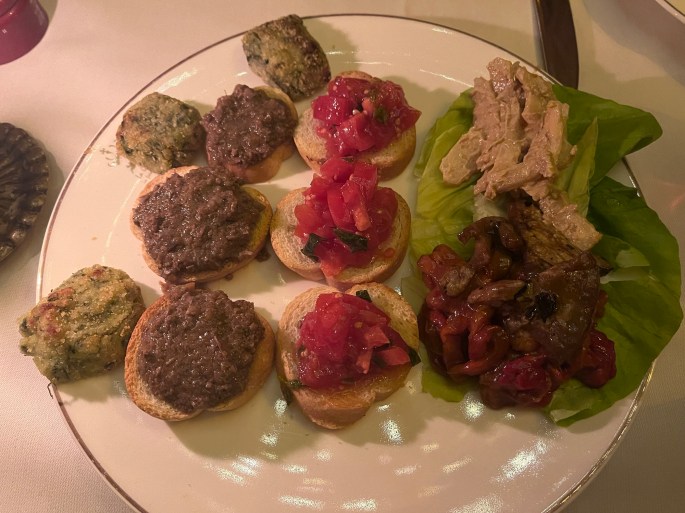
By this point, it was evident that if we wanted dessert we were going to have to forgo a starter. So when this showed up at our table, we said ‘No, we didn’t order this’. She explained that everyone received this. There is bruschetta on the plate but when we asked what the other items were……..we couldn’t fathom their Italian explanation. No matter, we ate them all and we were happy.

This was the second time they ordered the Floratine steak – and were very happy with what came to the table. A few veggies were part of the platter.

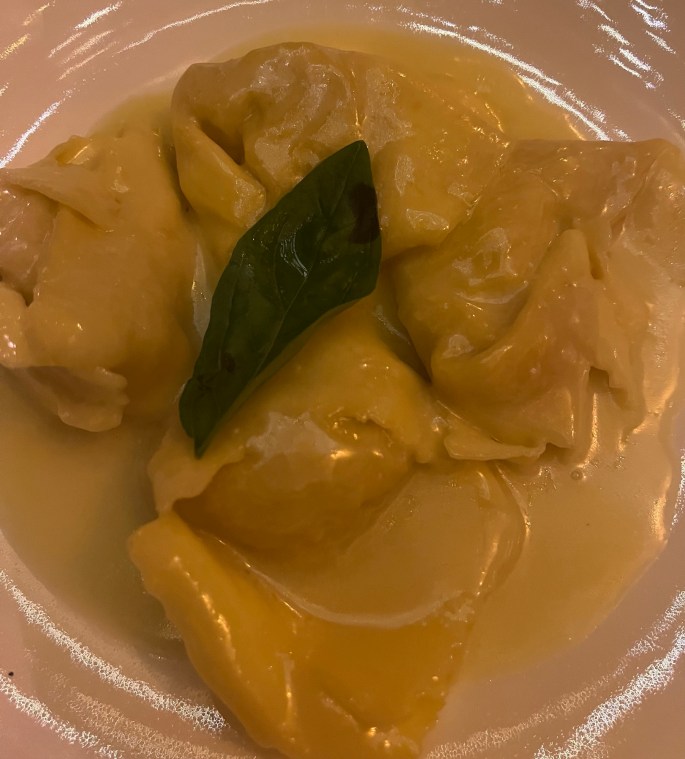
I ordered one of their dishes they are known for – Ravioli fatti a mano con Peccorino di fossa e Pere Williams. Or, homemade ravioli filled with Peccorino cheese and William pears. There were other ravioli fillings but I went with a local dish.

I’ll be honest – not my favorite filling. I ate most of the ravioli and Eric shared pieces of his steak that were cooked more to my liking. But hey – that’s what going to new areas and ordering new things is about. Hopefully there are more ‘wins’ in the positive column.
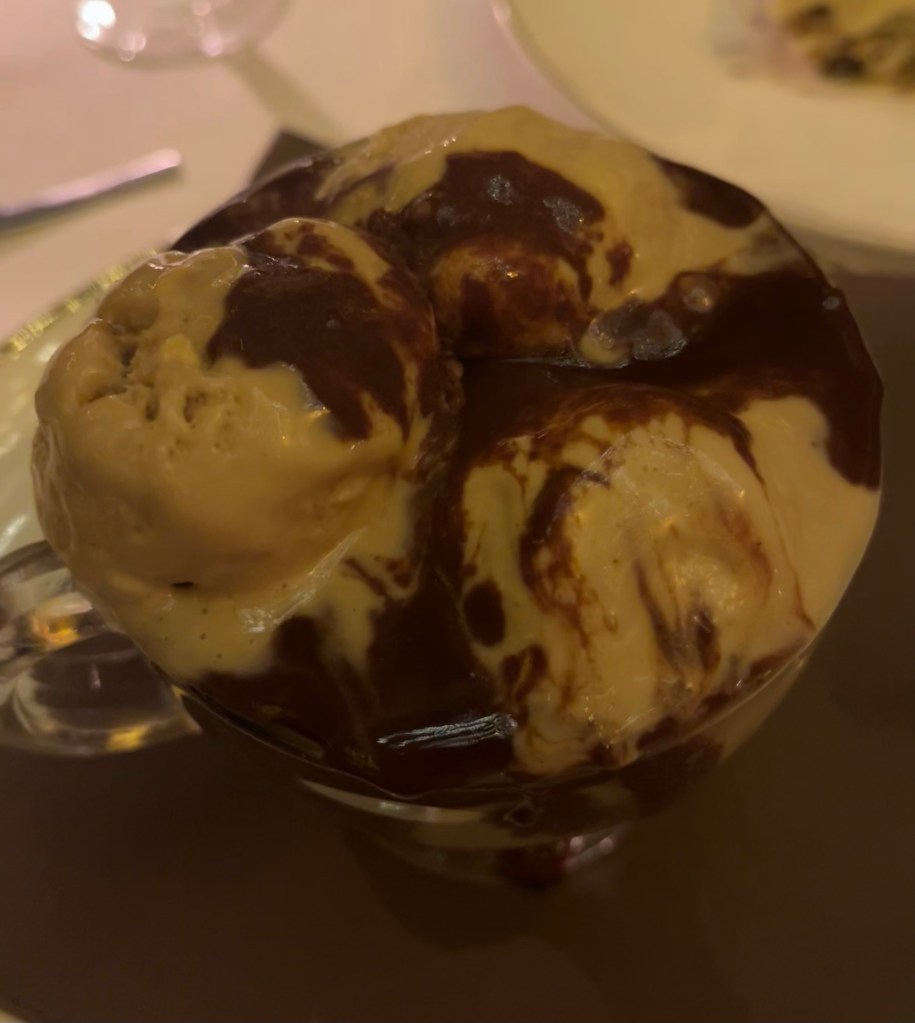
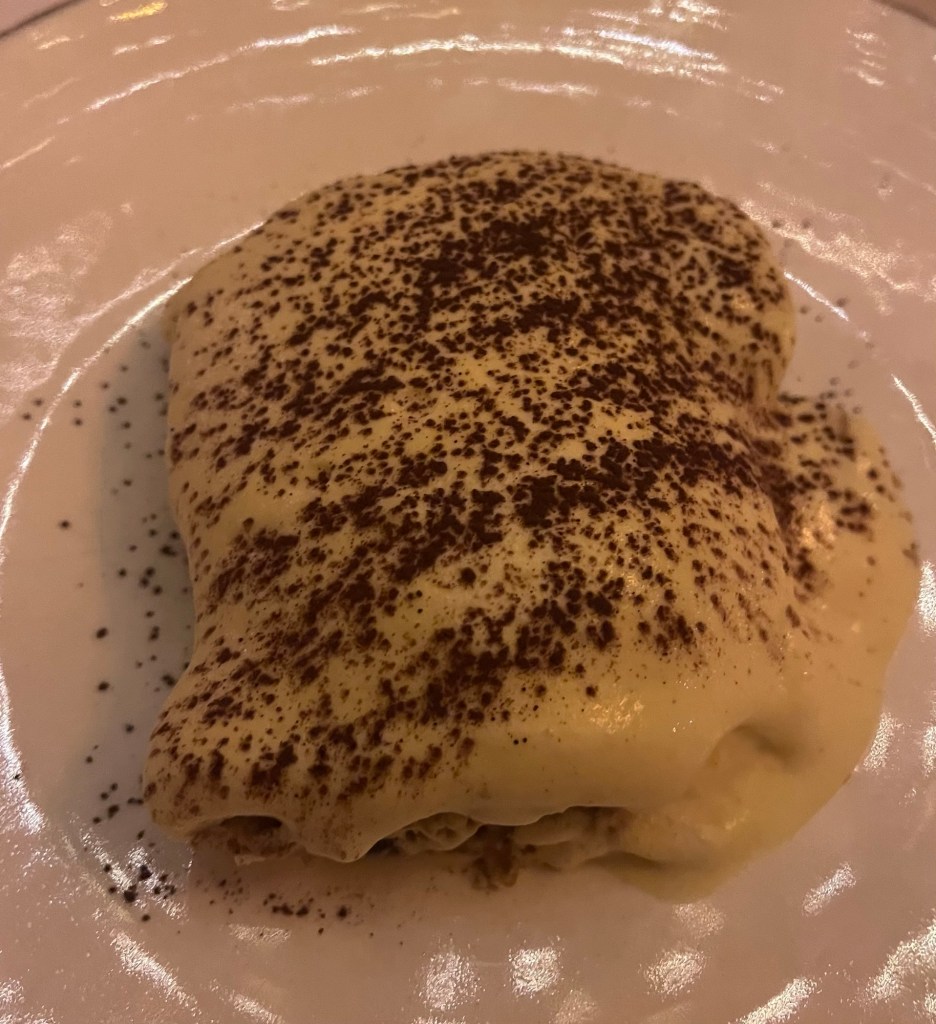
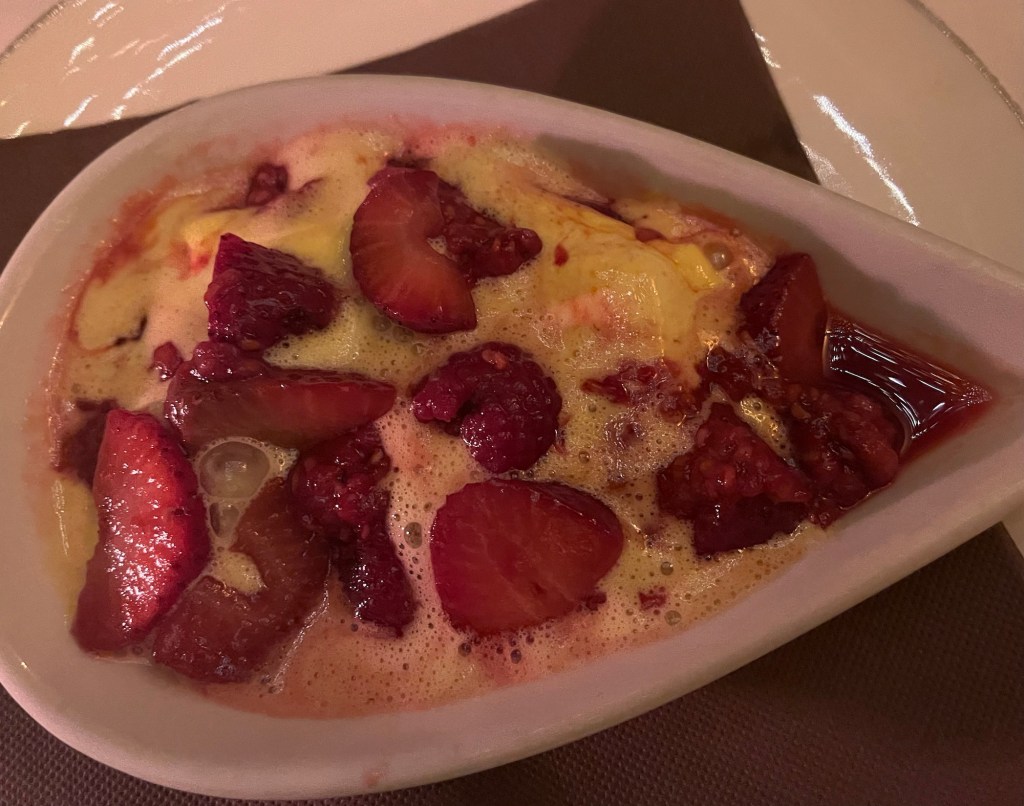
Desserts? Yep we each ordered one.

We really enjoyed our time and experience at this restaurant and would definitely recommend anyone planning a visit to Florence – book this place!

San Lorenzo Marketplace

Technically speaking…………..this is considered two markets. There are a number of outside market stalls dating back to the Middle Ages. At that time, the market was located outside of the city walls but as the city continued to grow, it was moved inside the city and became more organized. We didn’t spend a great deal of time in this section. It seemed to be mostly about leather goods and we were here for the food.

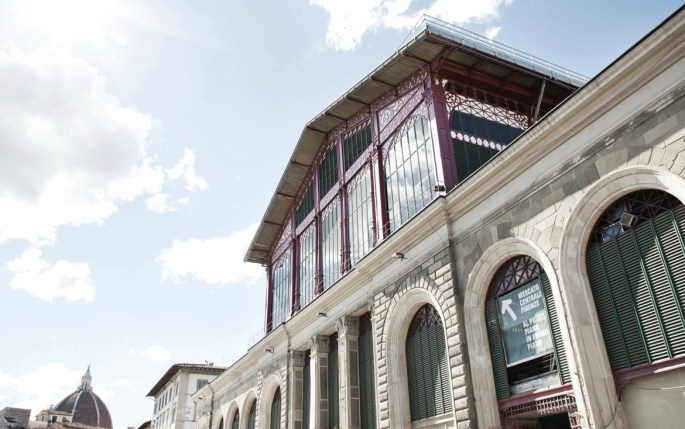
In the early 20th century, the market underwent a major renovation, which saw the construction of the covered market hall that still stands today. The renovation helped to modernize the market and improve the shopping experience for visitors. The cast iron and glass structure recalls European architecture, most notably Parisan. But enough of the history, let’s get inside!

Always love the shops that feature local products. So many things to look at.

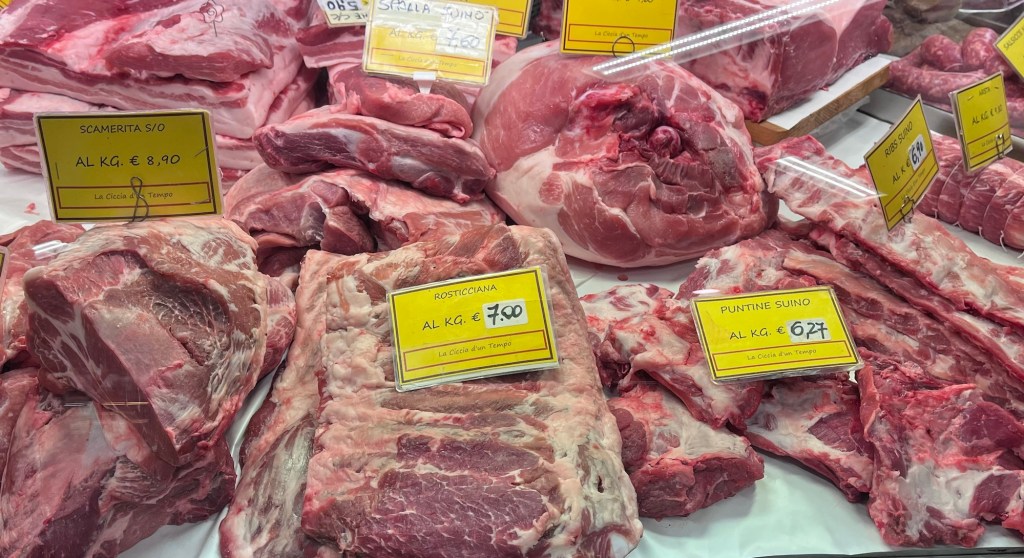
Some specialize strictly in meat.

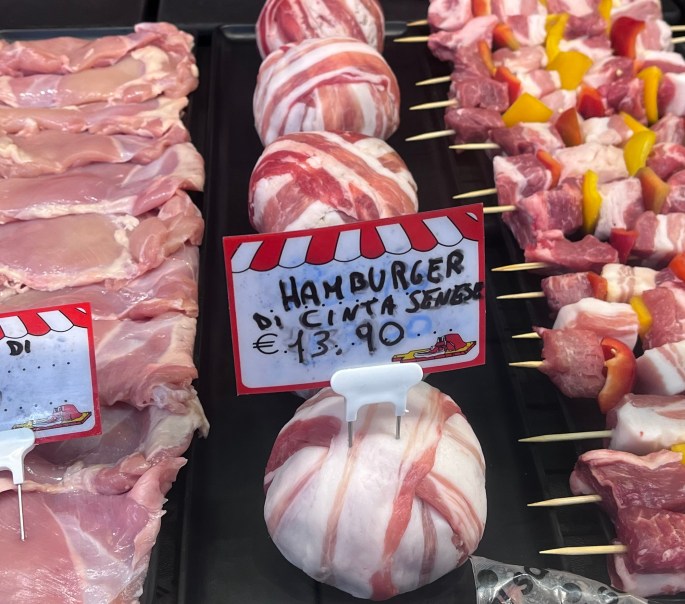
If you want your meat to be prepped – here you go.

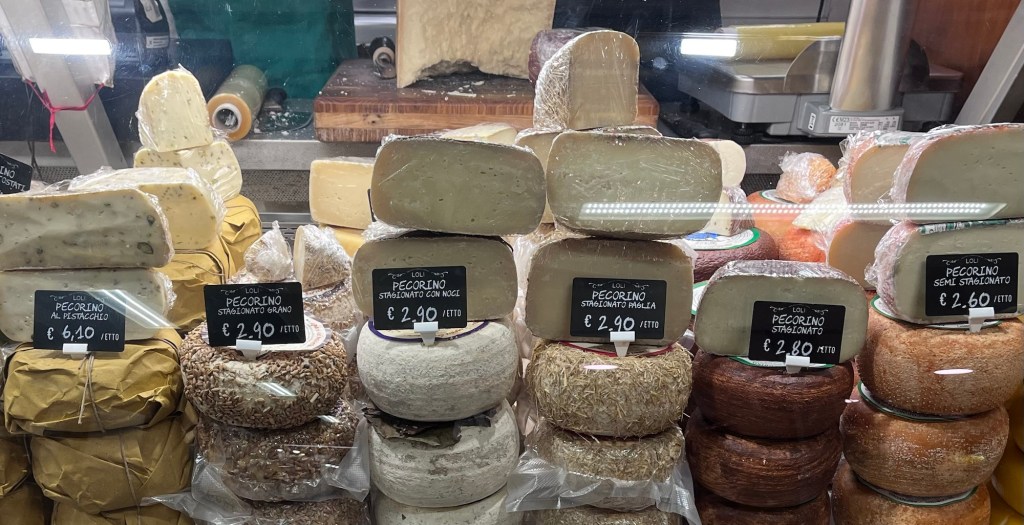
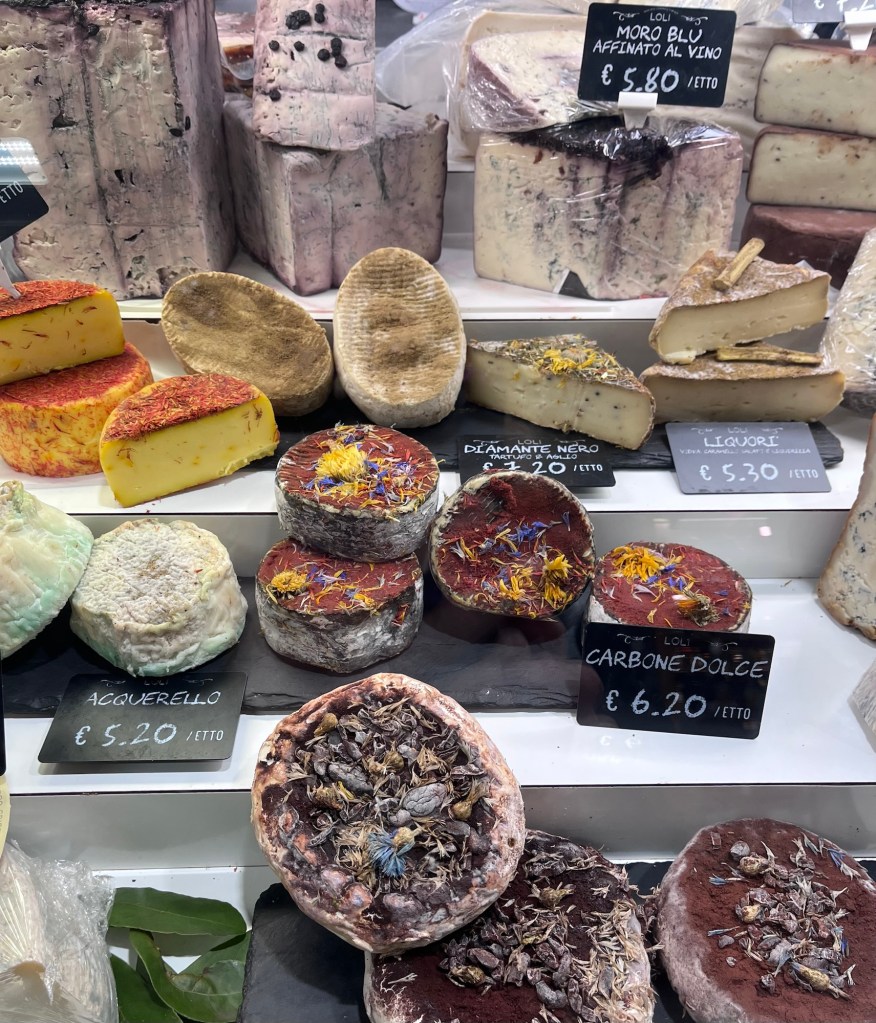
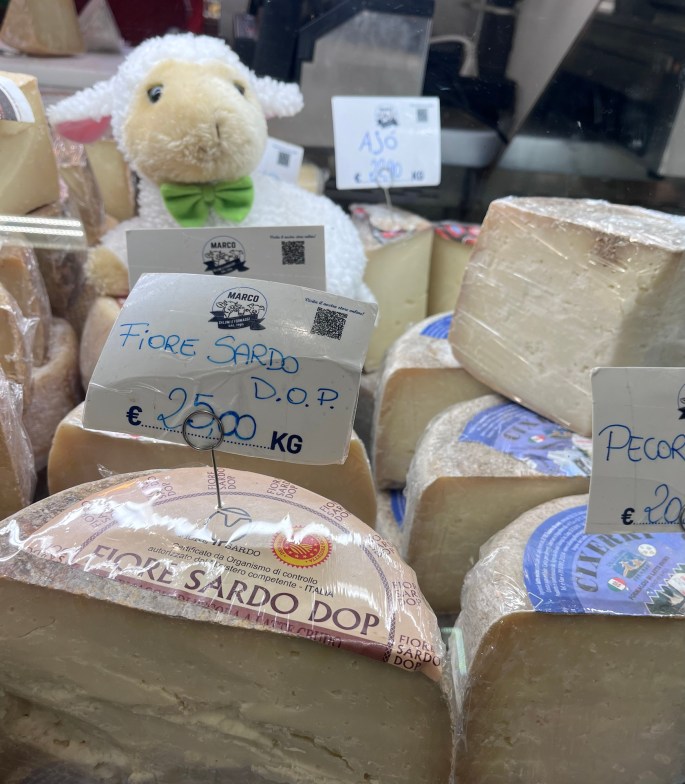
Then you have the cheese mongers. I mean, come on, where can you find cheeses like these in the states?

Couldn’t resist this shot with the baby sheep highlighting the milk used.

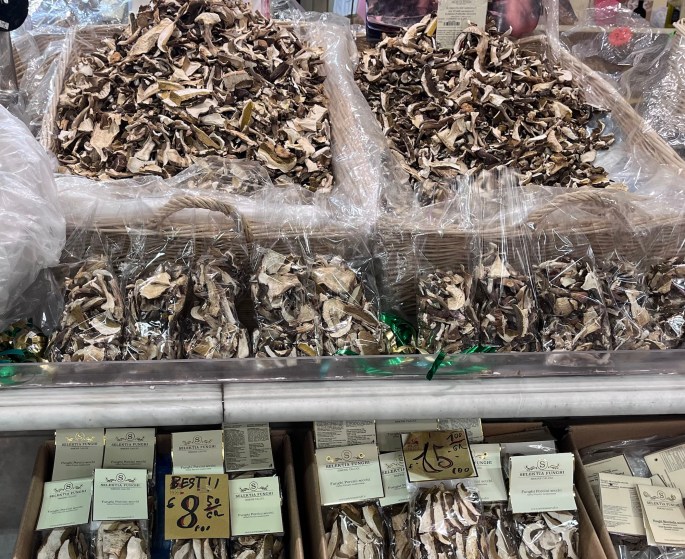
Mushrooms – N.E.V.E.R seen this many shrooms in one place. This shot was only a small portion of the food stall.

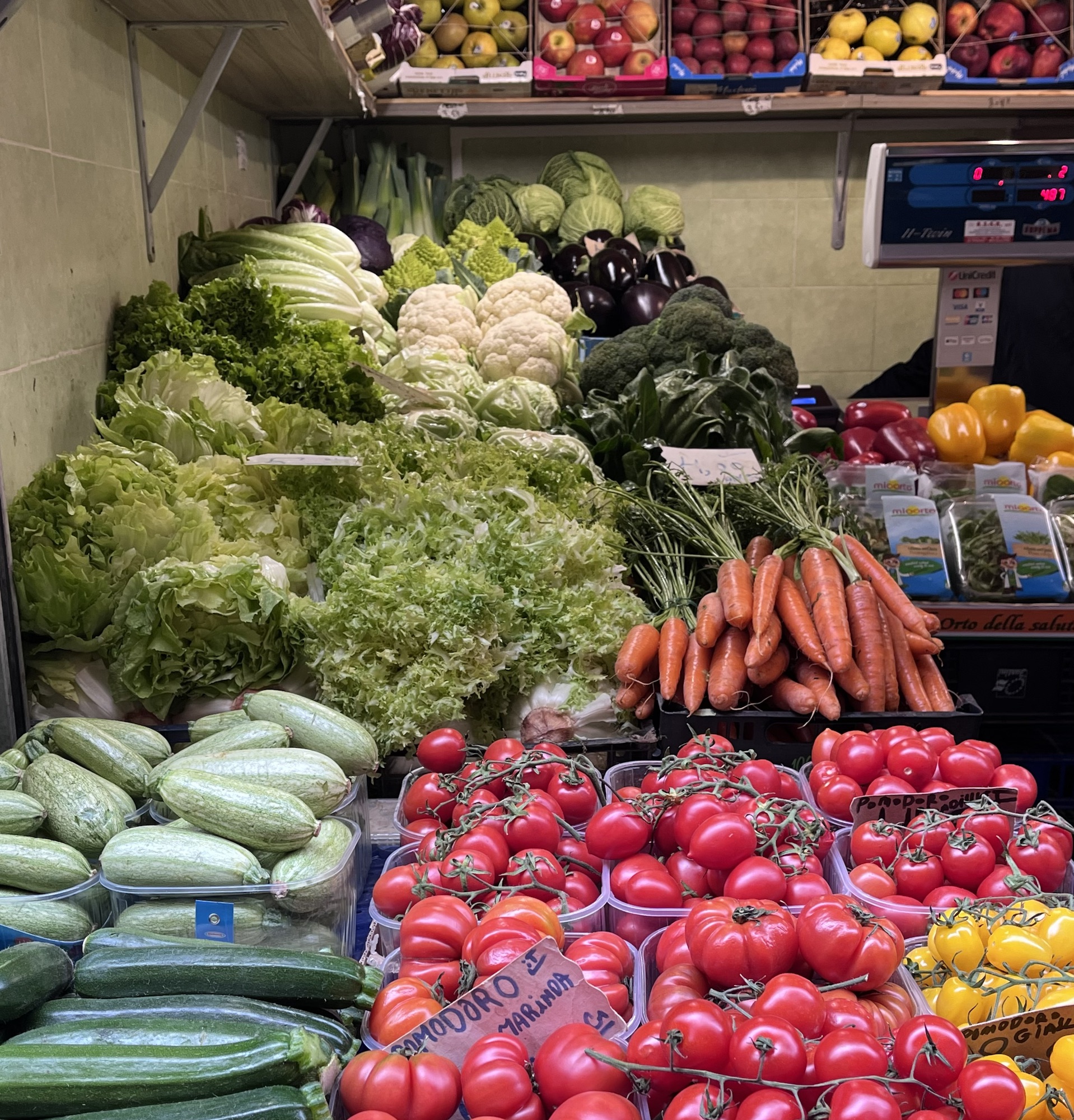
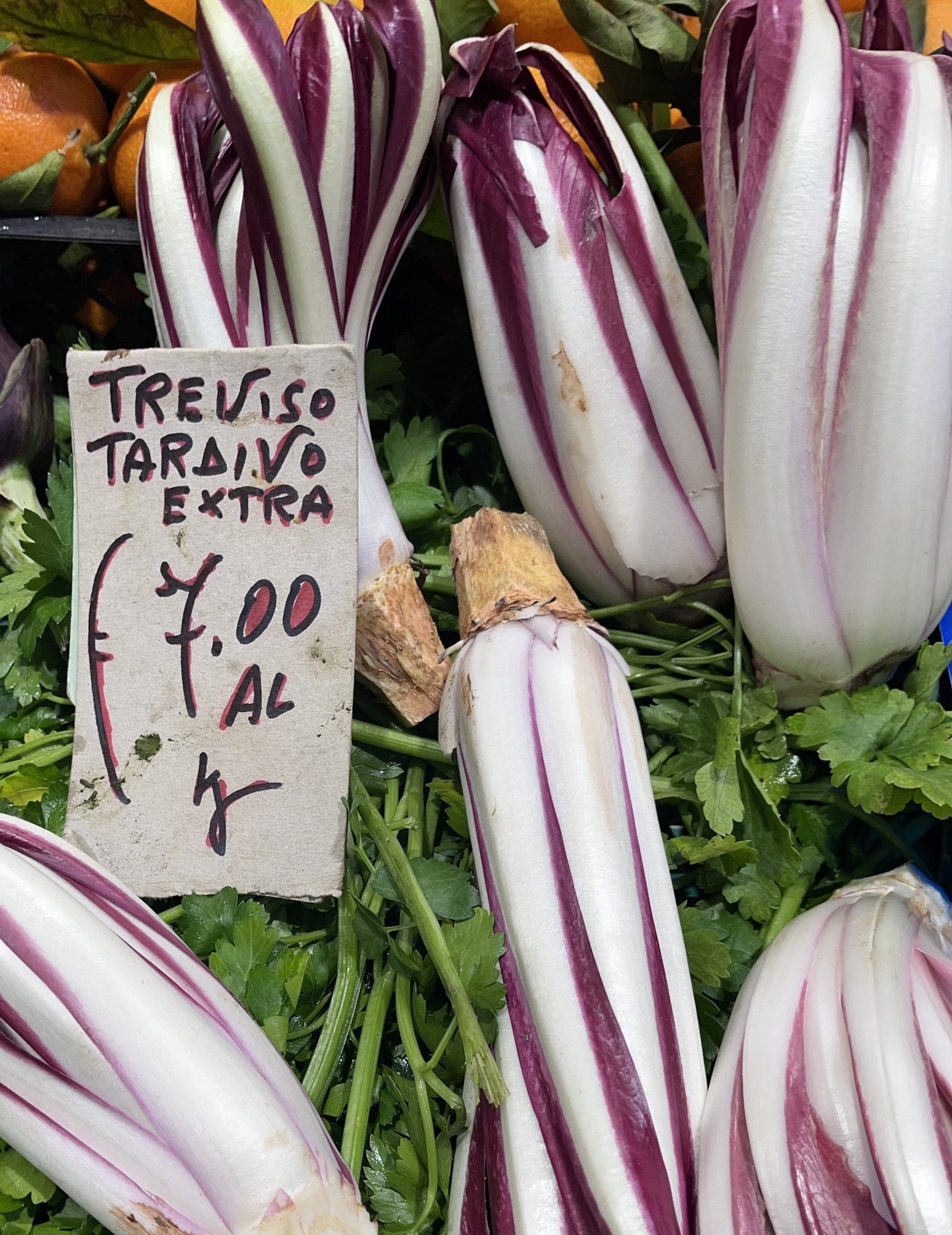
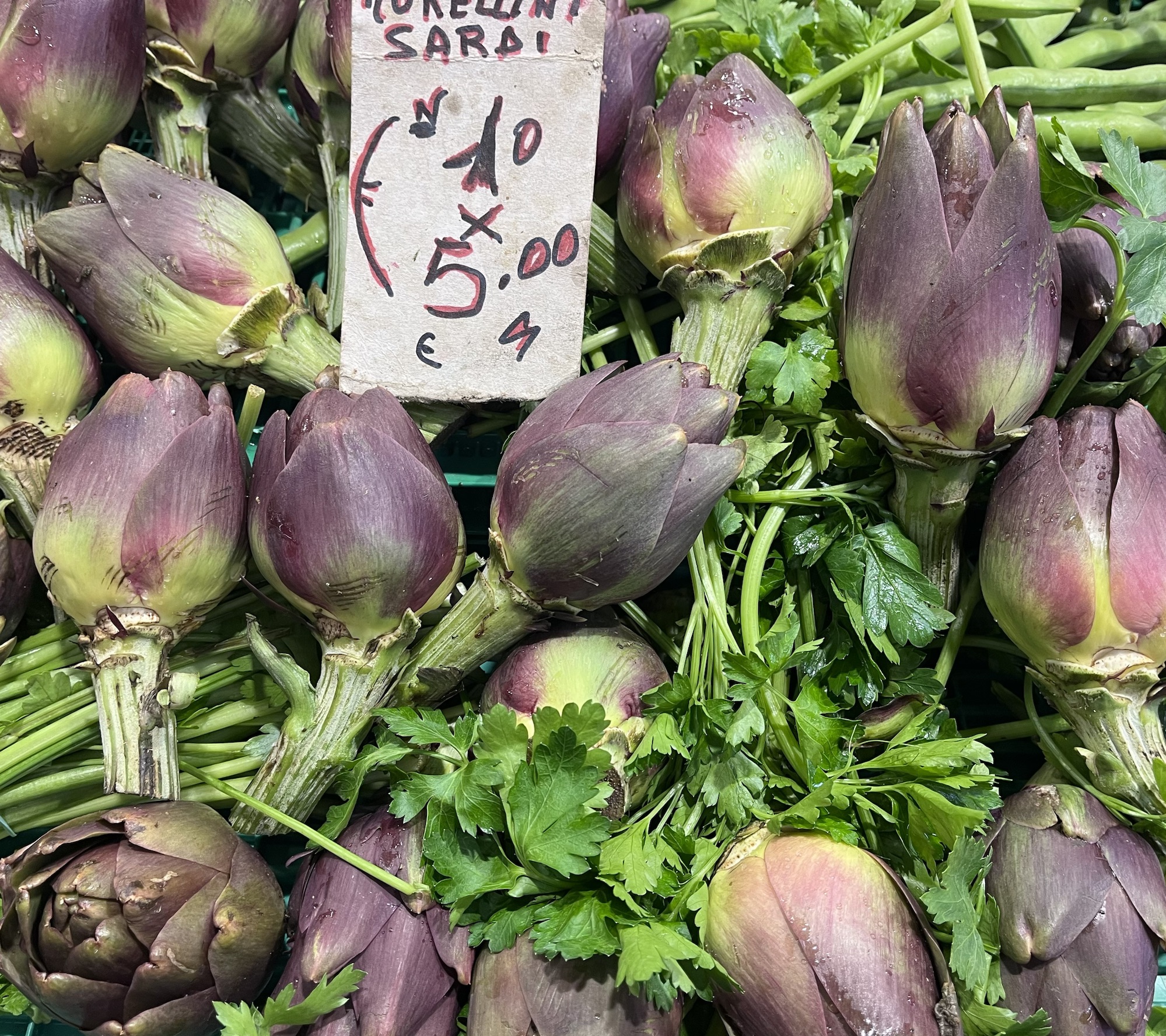
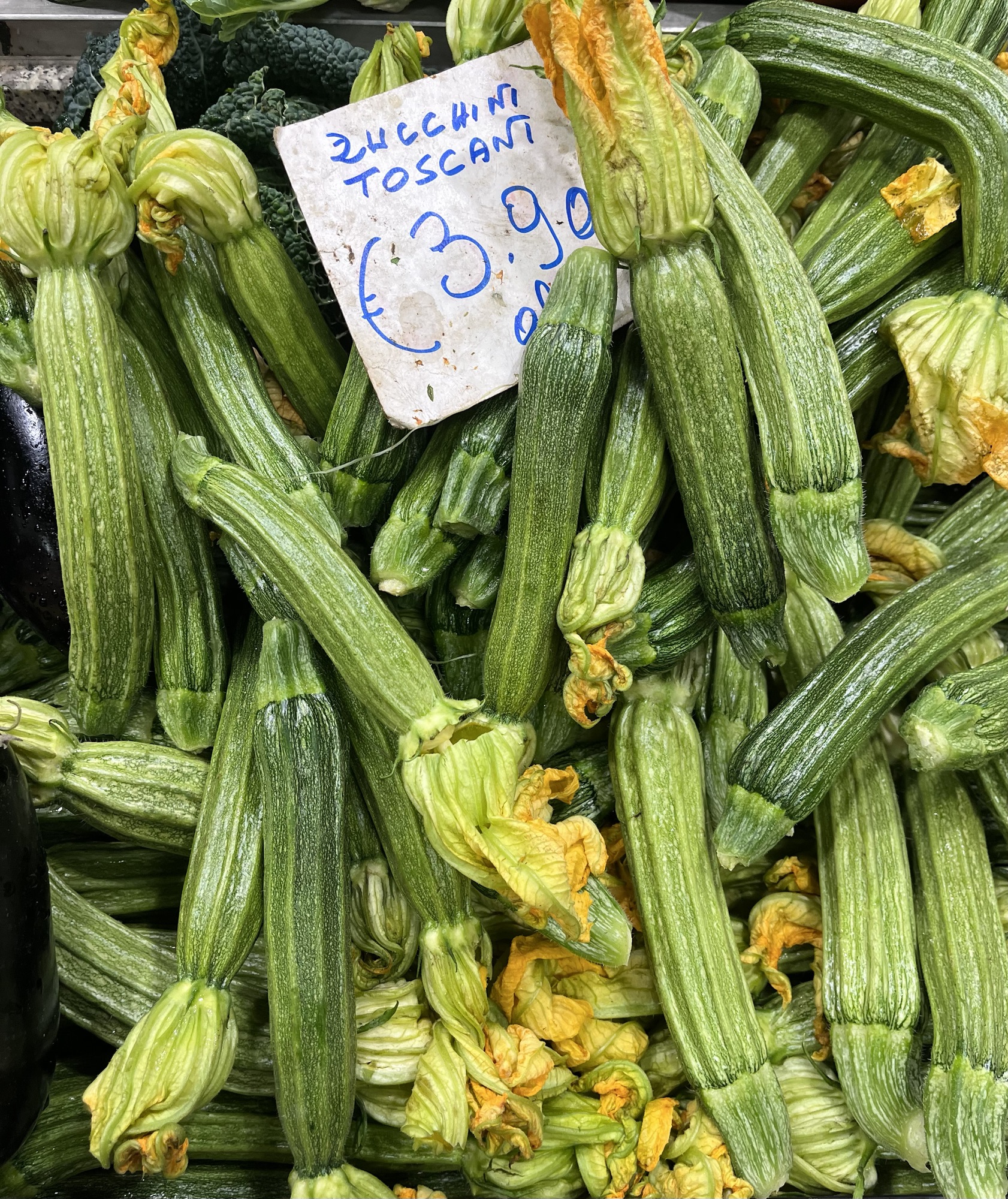
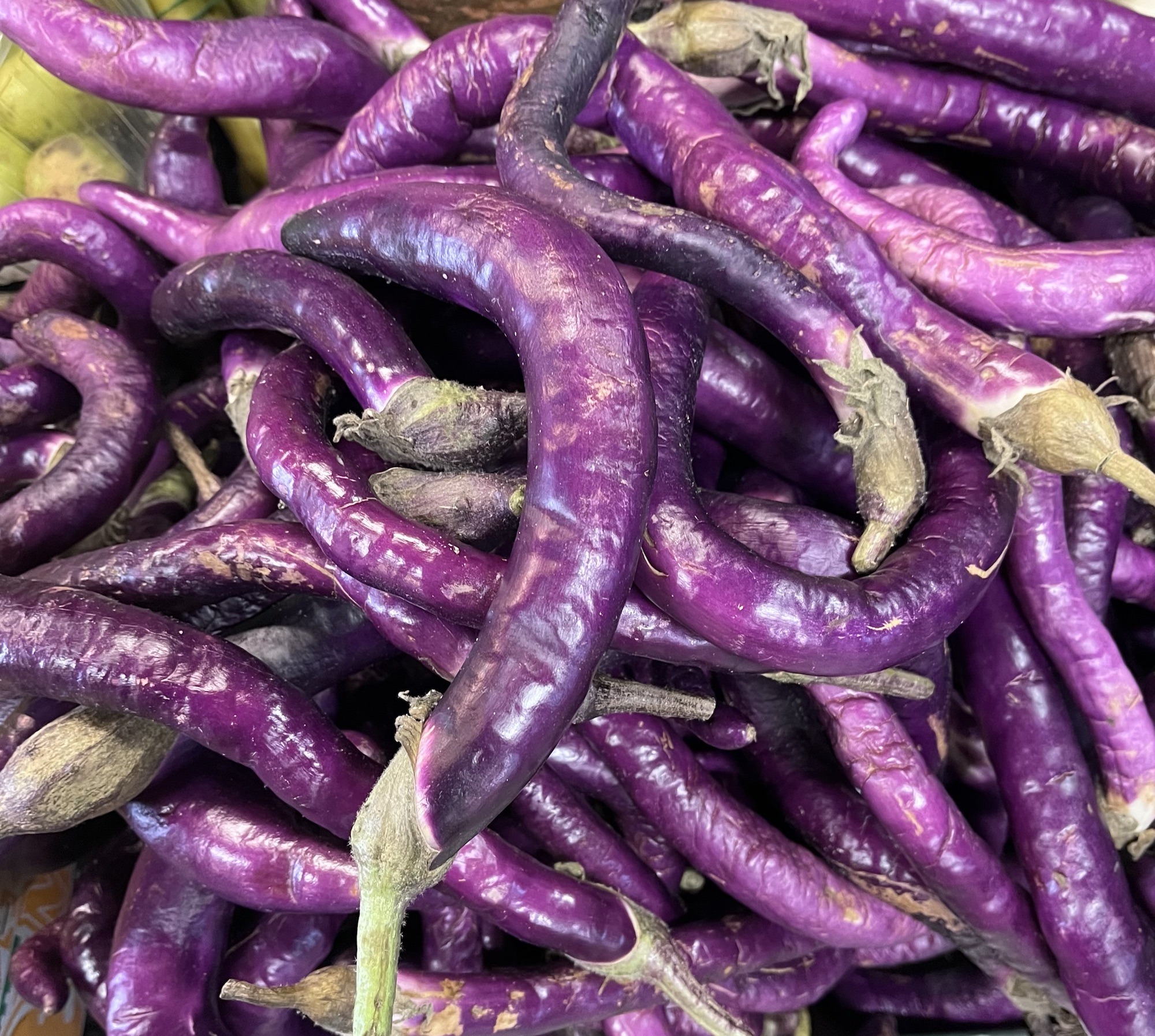
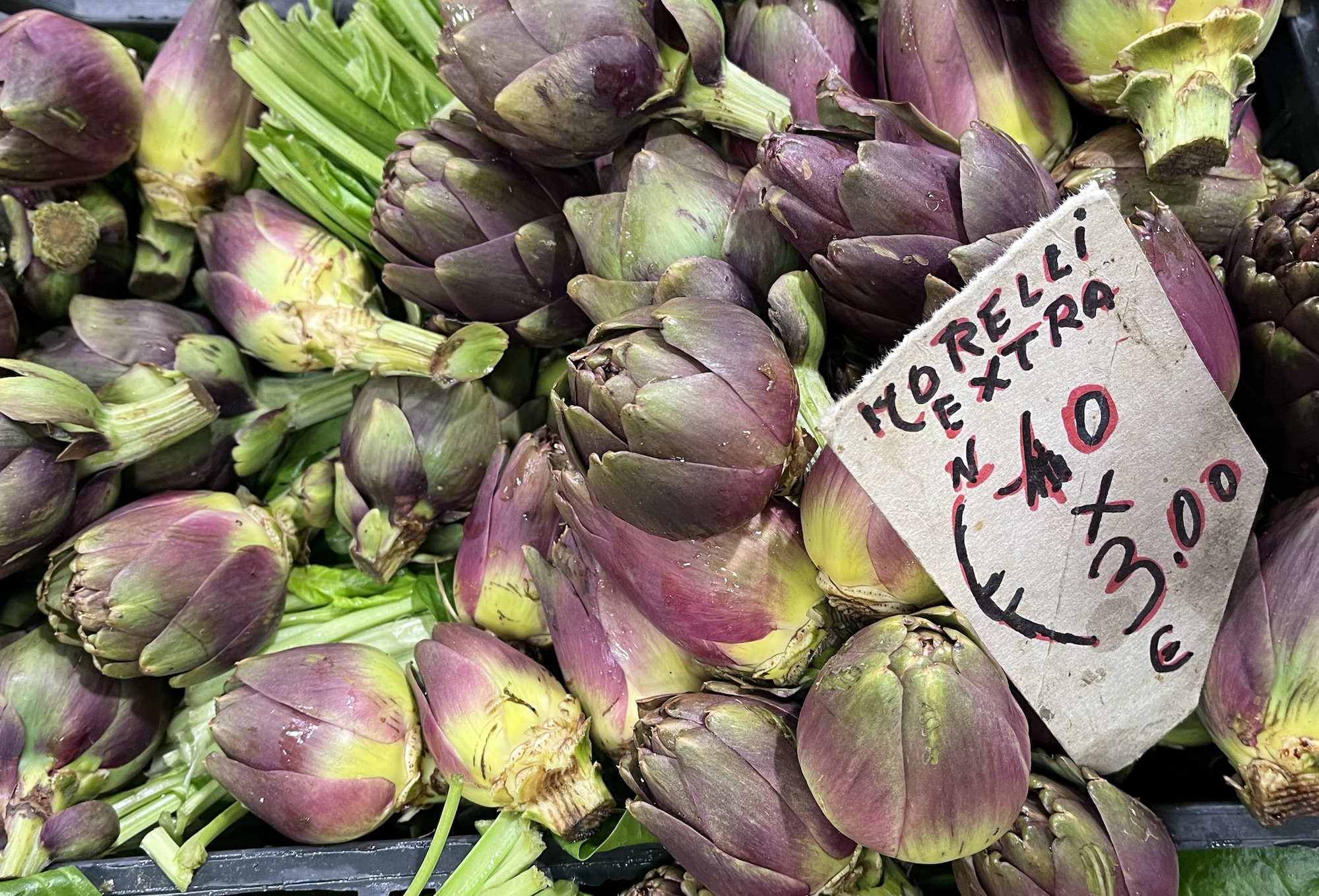
And the veggies. LOVE their veggies. Artichokes were in season and numerous times we found 3 sizes of this veggie and priced accordingly.

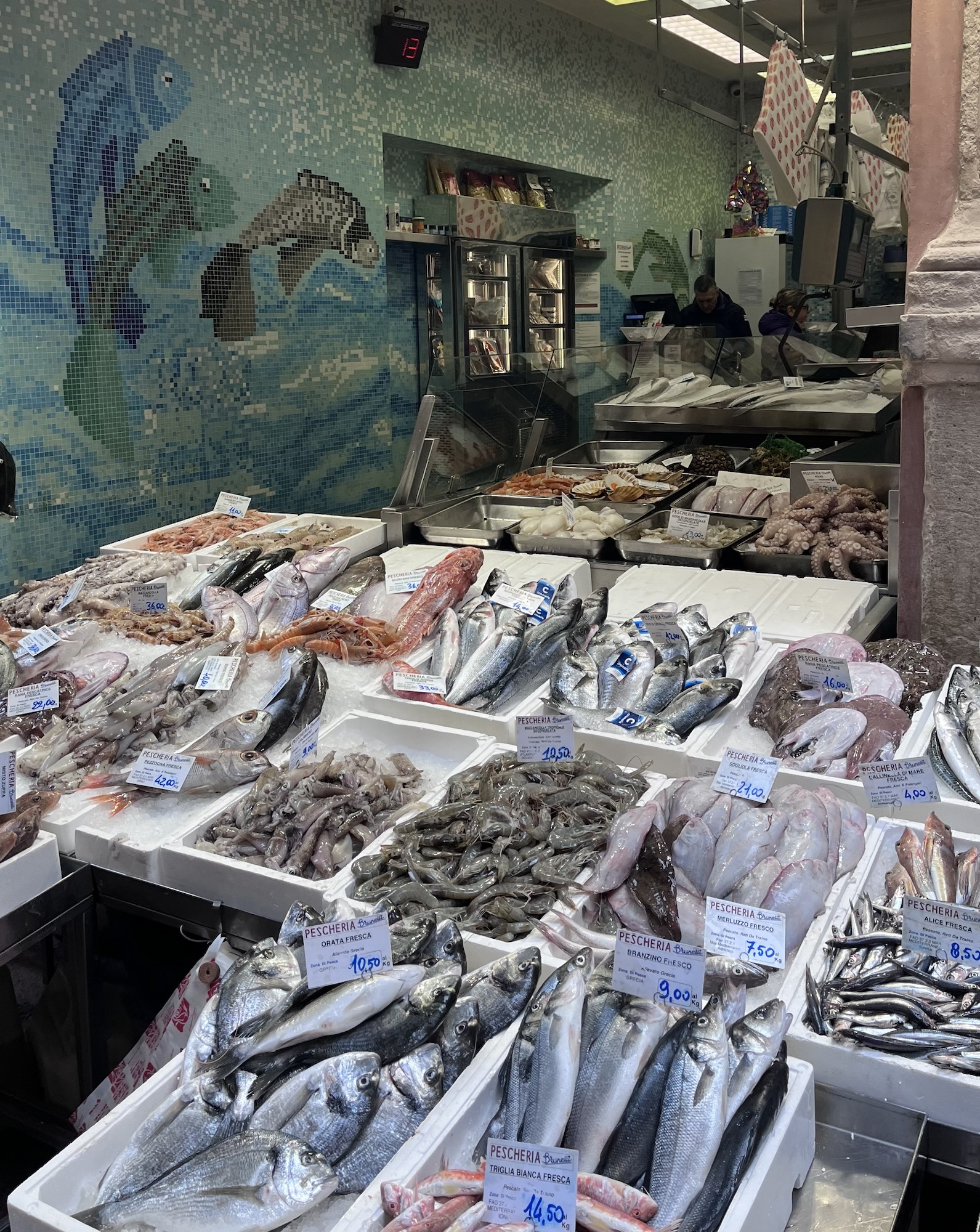
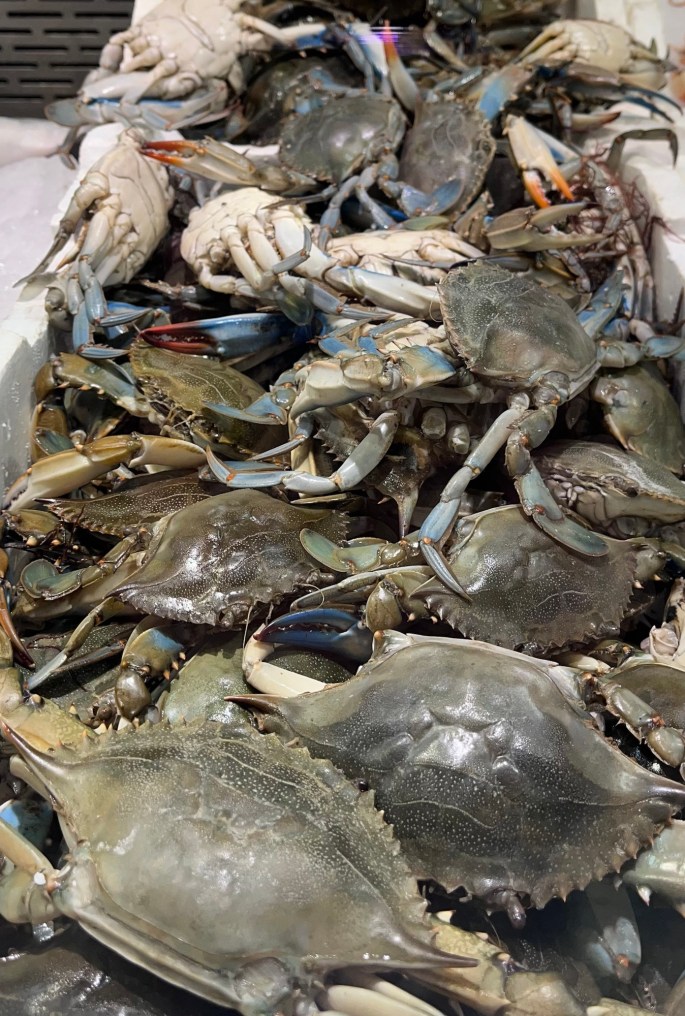
Almost forgot about the seafood. Indeed, I only captured one photo. Being so far inland, seafood was still available but nothing really unusual was seen.

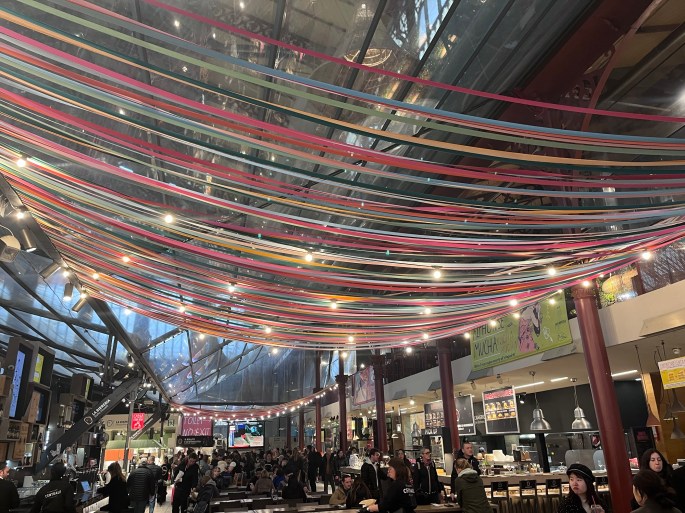
Renovated in 2014 the upstairs area is a foodie’s delight. This new floor of the market is not only a hub for food but also for Italian culture and history.  Many of the specialty items represent a different method of production, dating back in time, calling upon old Italian cultural traditions. 

There’s plenty of seating, a team of workers clear and clean the tables and the stalls work together with an electronic system when your orders are ready to be picked up.

Let me share a few of the food stalls:

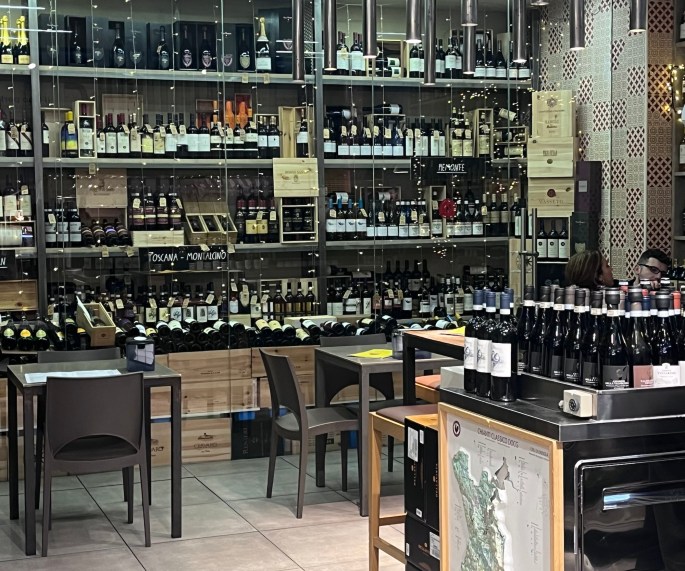
Wine, wine and more wine.

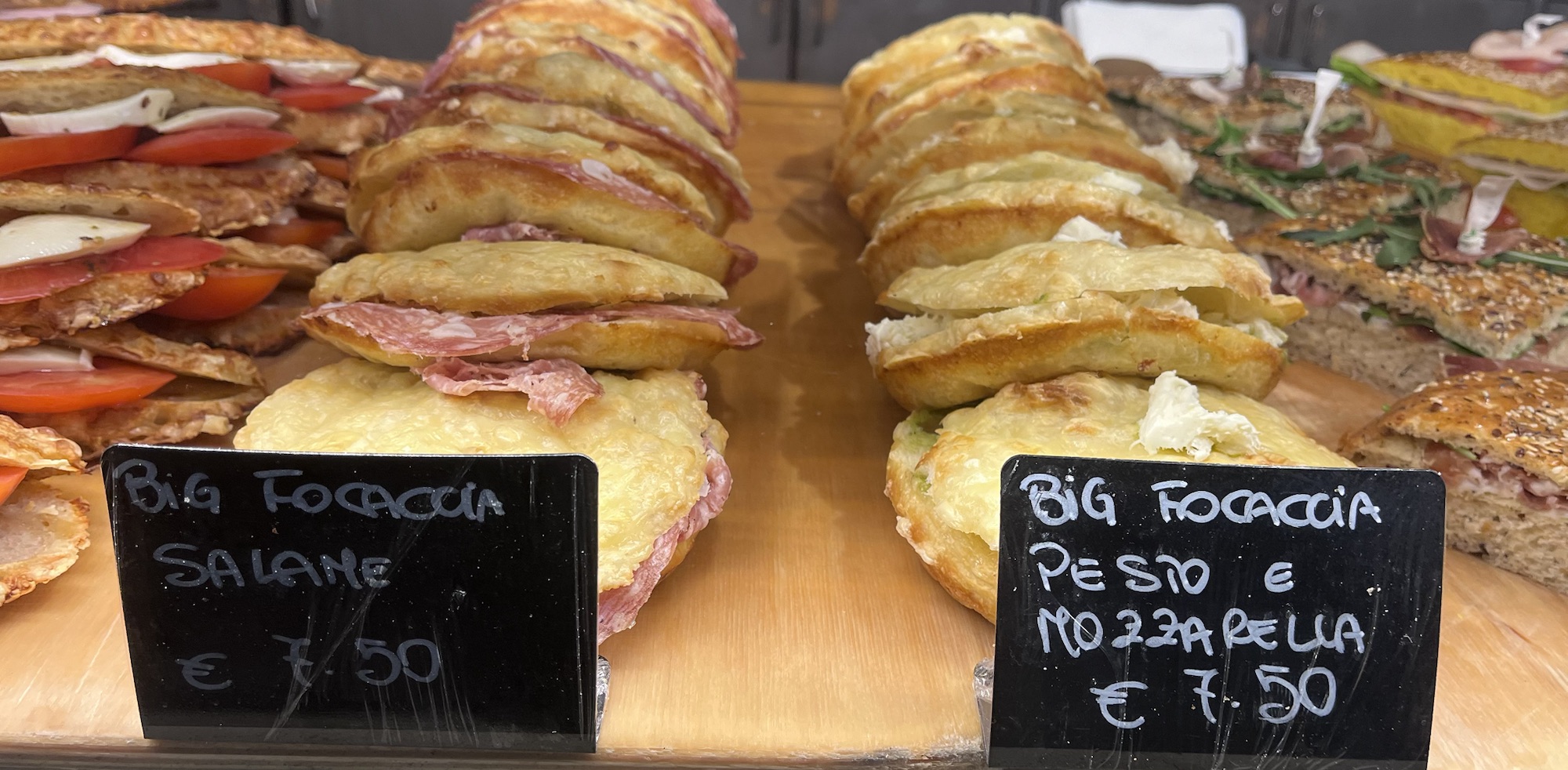
Pick your focaccia topped-bread which could be grilled or reheated.
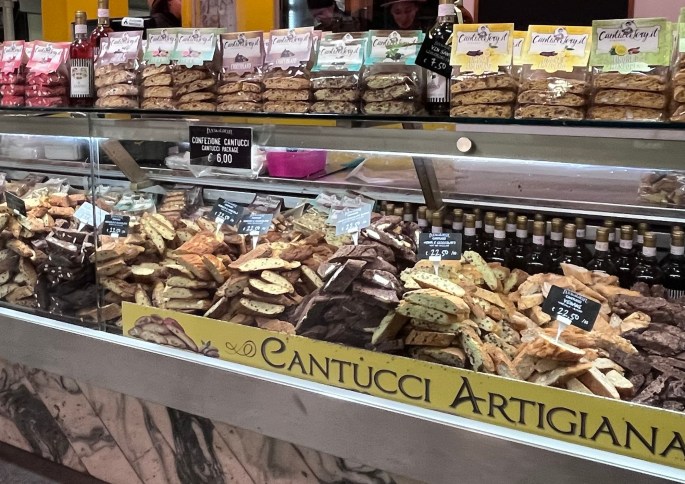
Pick-up pre-packaged biscotti or select your own.

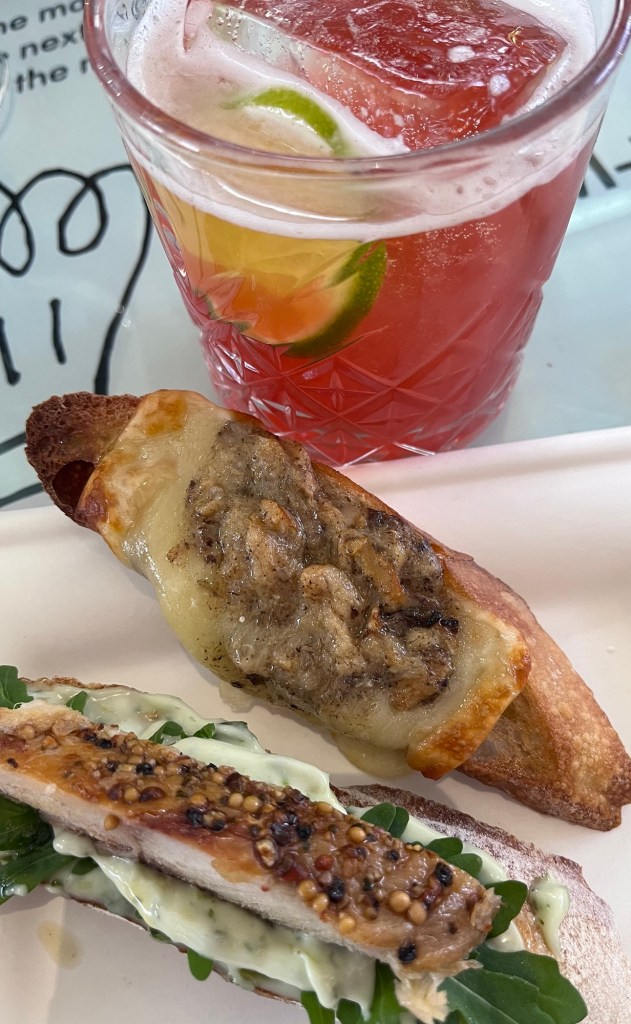
What did we eat?

Medley of fried seafood and fries.

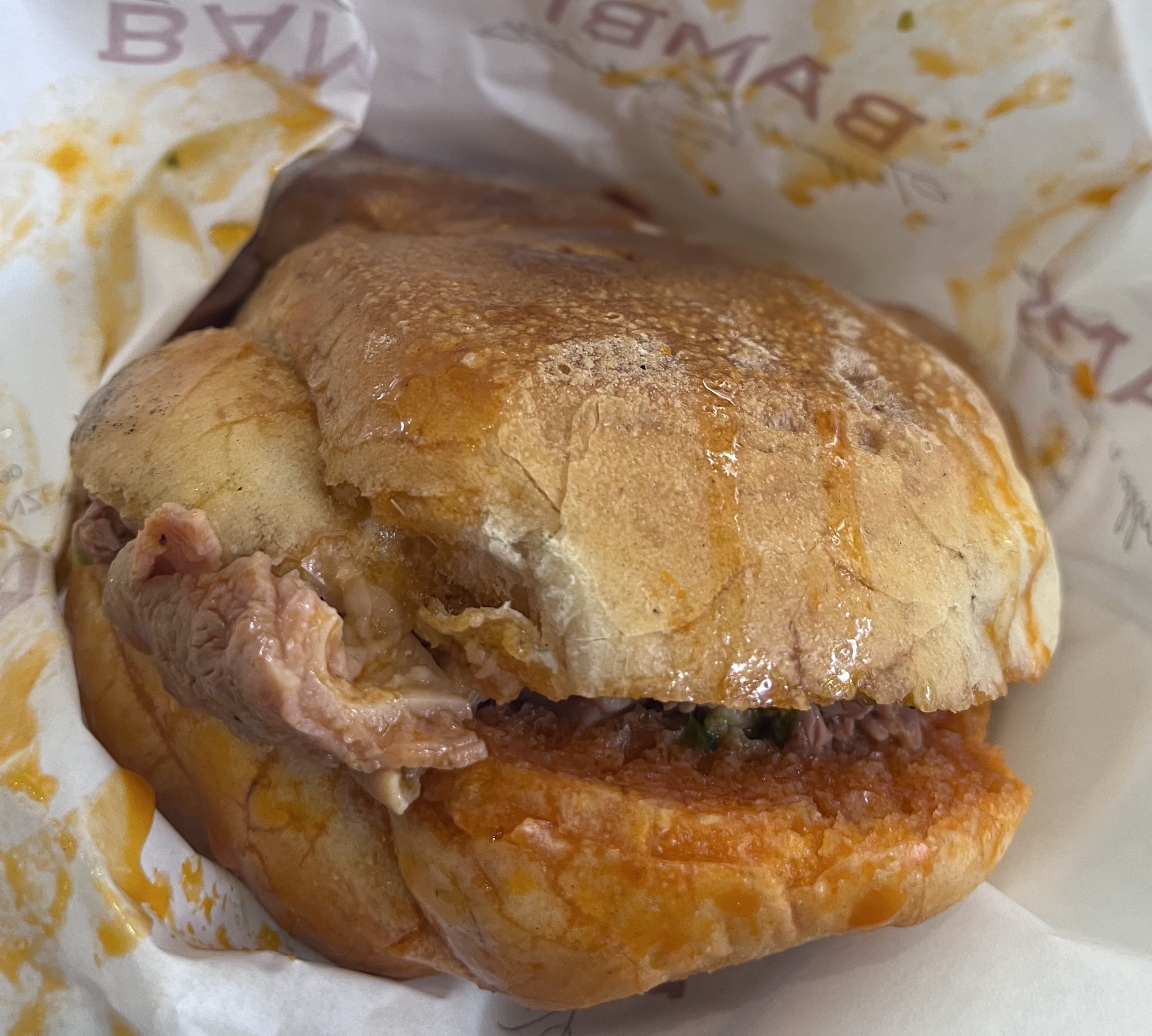
Sometimes you just wanted a sandwich. Okay, it was me that wanted a sandwich.

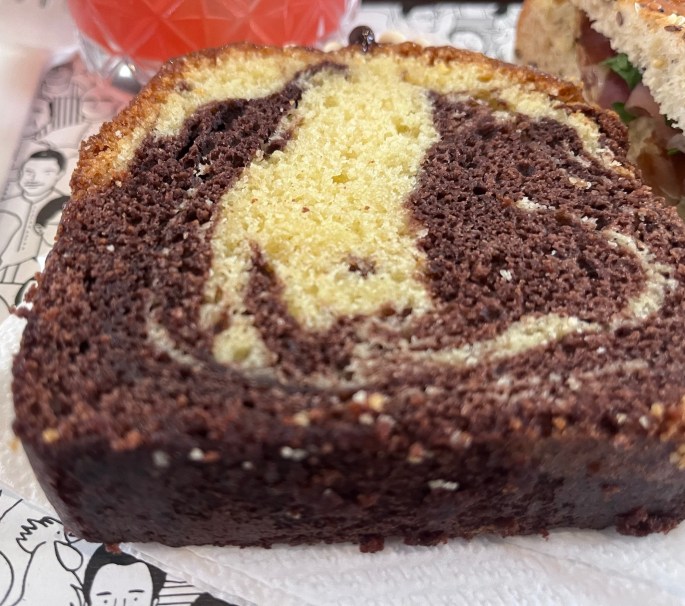
And let’s not forget desserts. One time I got this cake, slightly warmed up. It was very good.

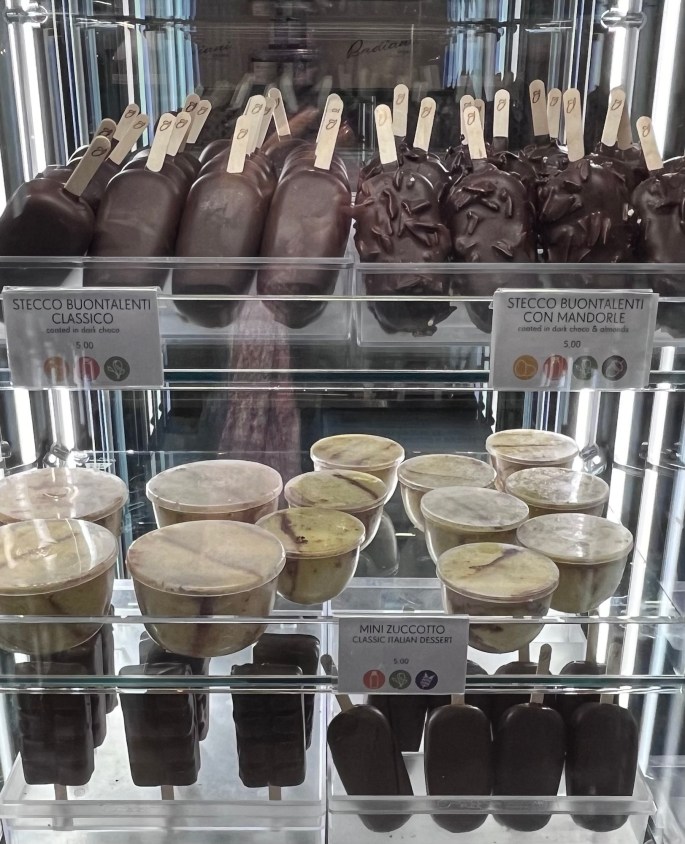
I chose the ice cream bar on a different day, with sliced almonds – excellent!

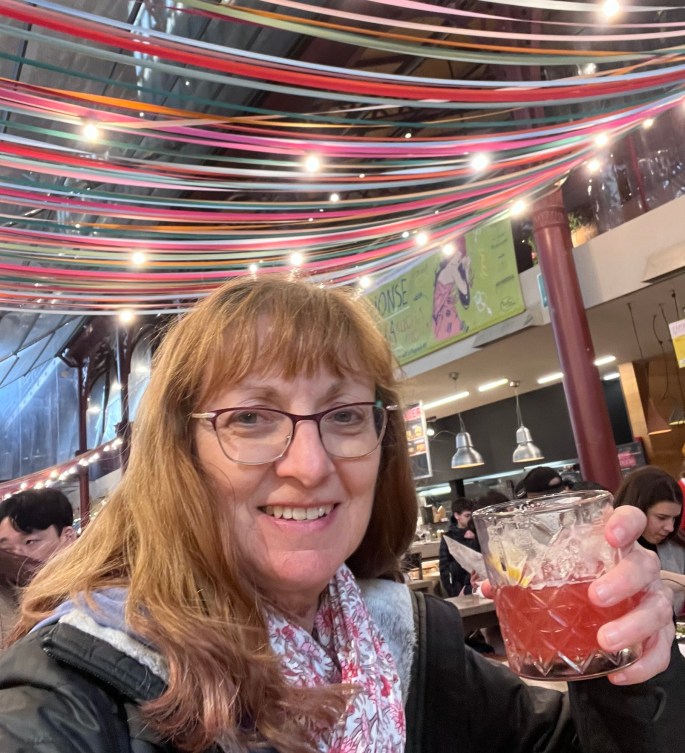
This turned into our ‘lunch’ choice a number of days. We could each pick up what our heart desired at that particular moment, to eat or drink. 🙂

They are actively working on incentives for locals to shop and eat at the marketplace. Things such as a discount card, discounted or free parking and special cooking events. I know one thing……….if we lived in Florence, we would be coming back – repeatedly.

Pizza & Gelato Class in the Florence Hills

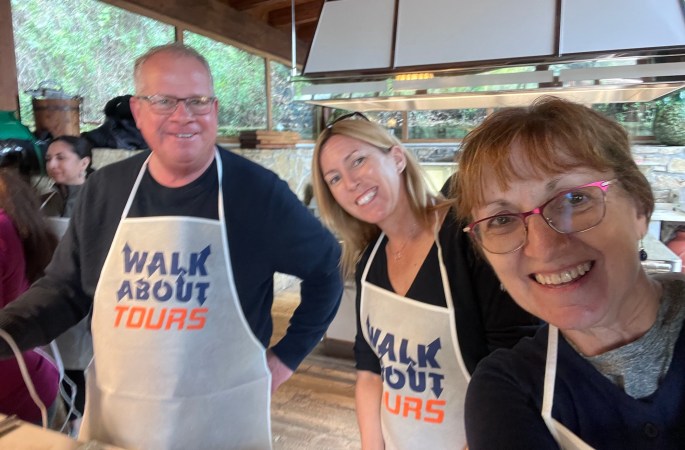
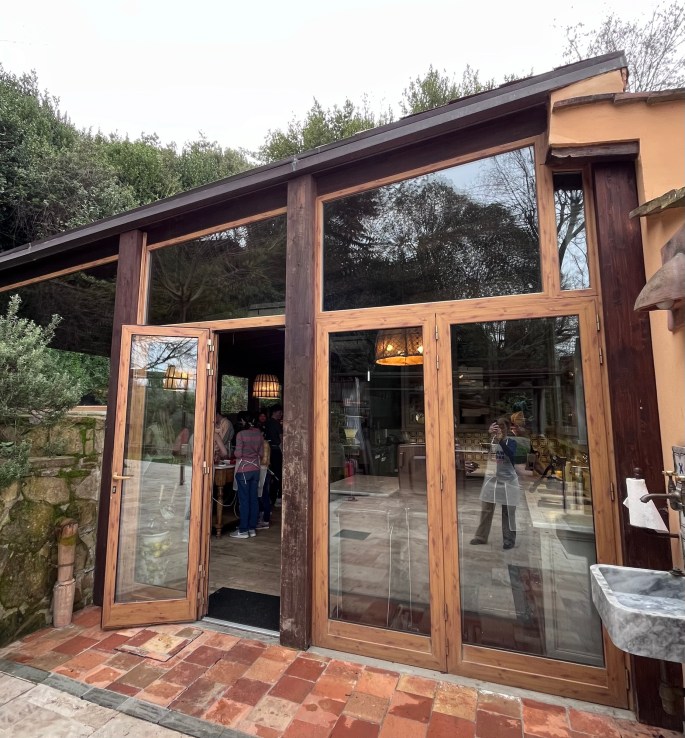
This sounded like it could be a fun time – and it was. We’ve booked a few classes in the past and always had an excellent time. Yes, we learned something, but it was more about talking to others and drinking while trying to cook. This started with a short bus ride out of the city, into the hills of Florence where we were greeted by one of the hosts.

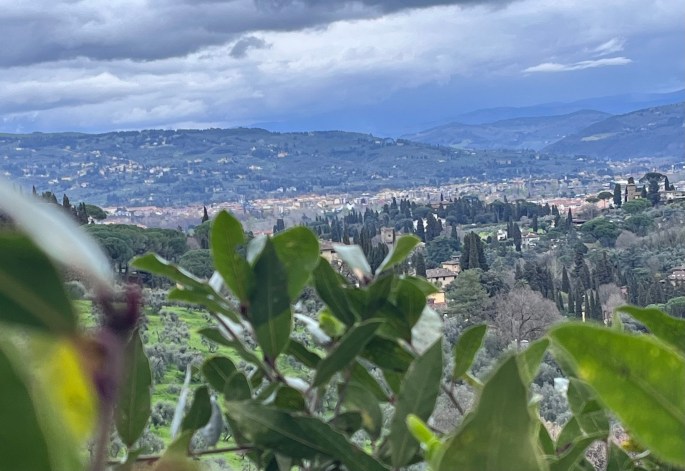
Walking to the site gave me a first chance to see the Florence countryside.

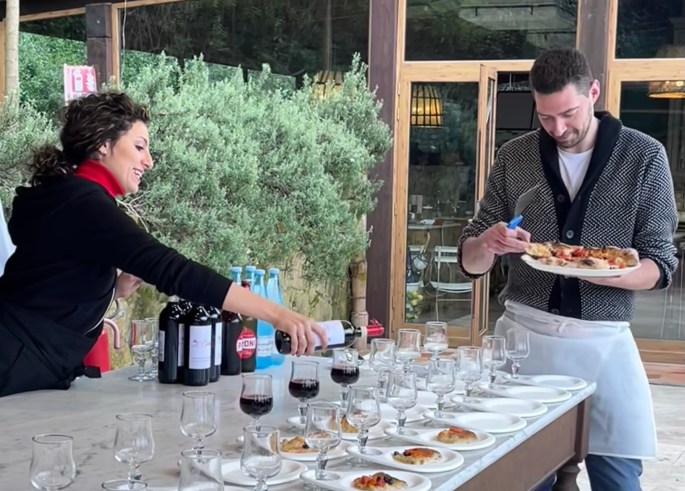
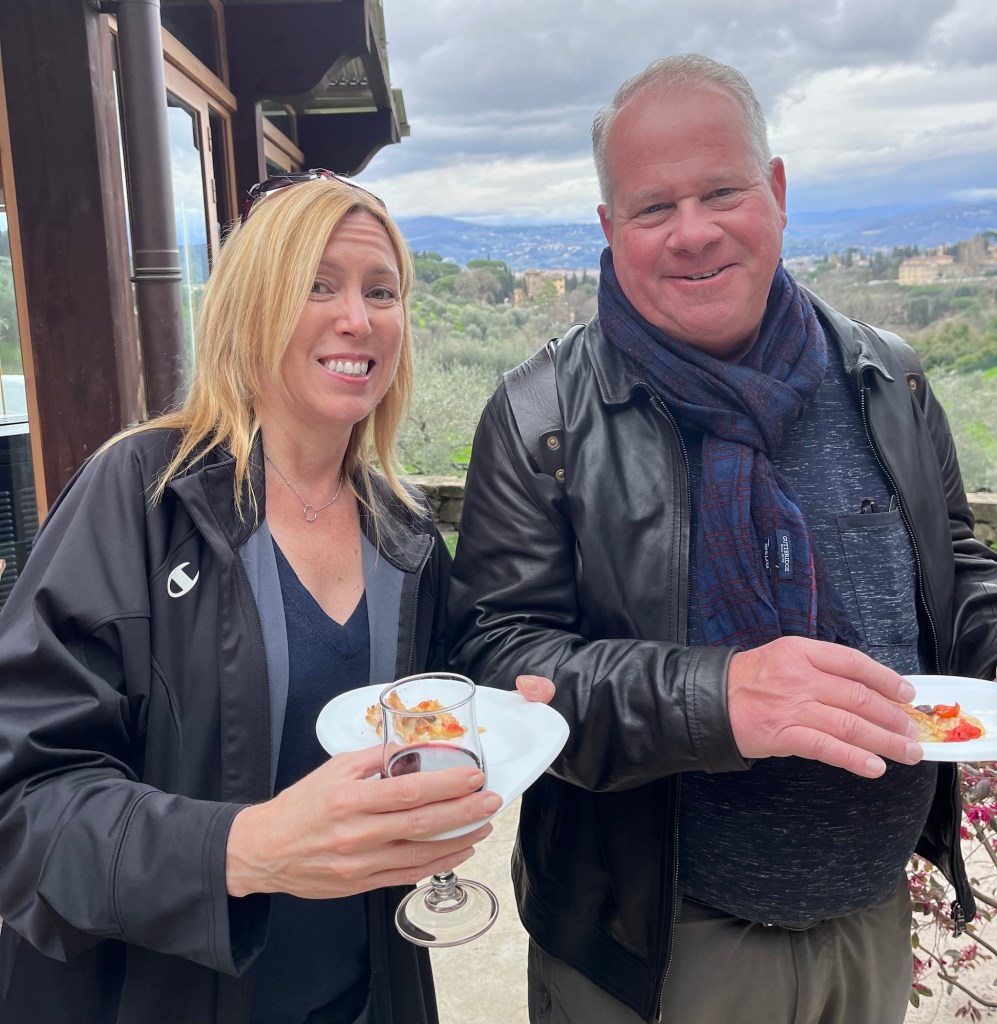
Before starting the class there was a bit of tasting involved – loved it!

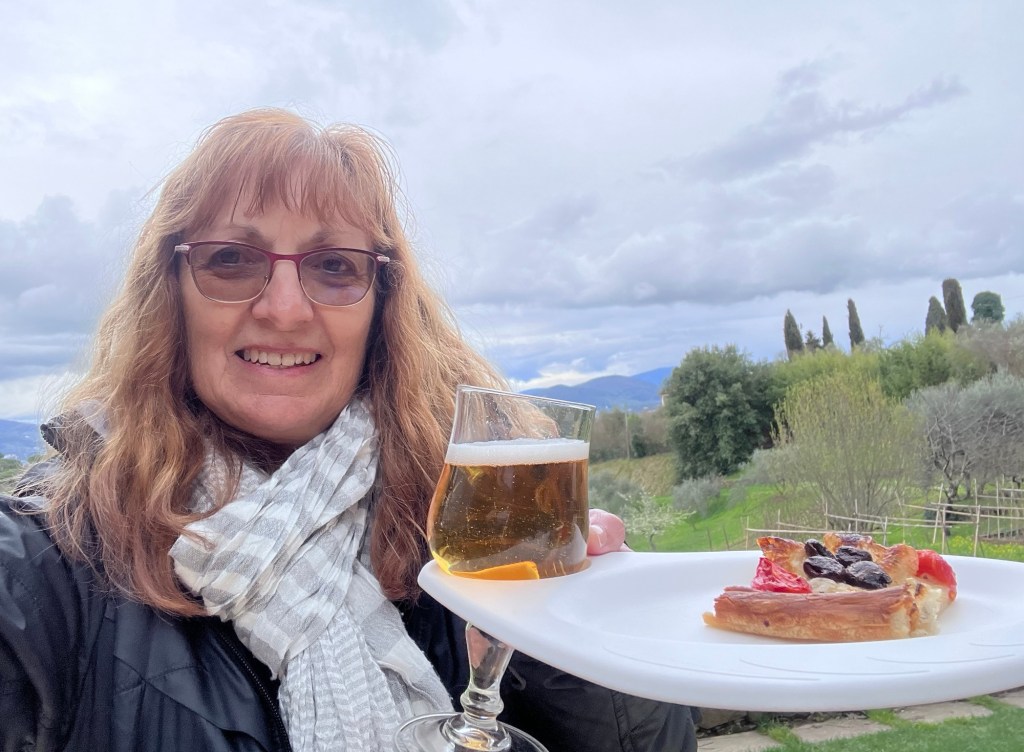
This was a great way to start our evening. Most had wine, I chose a local beer. I brought others to my side before the evening was over.
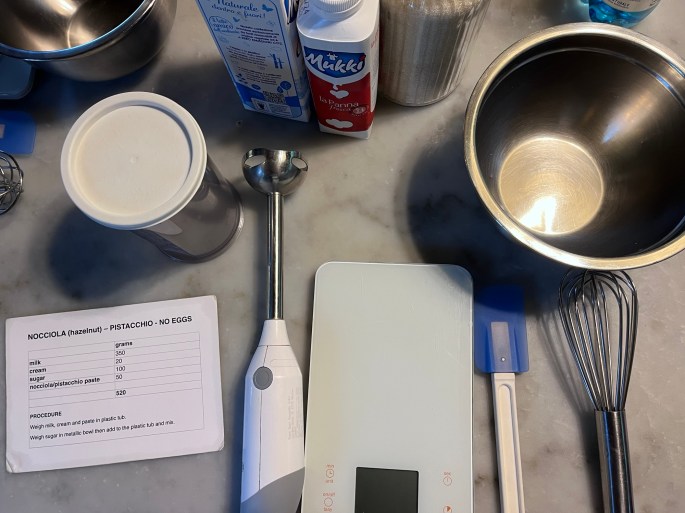
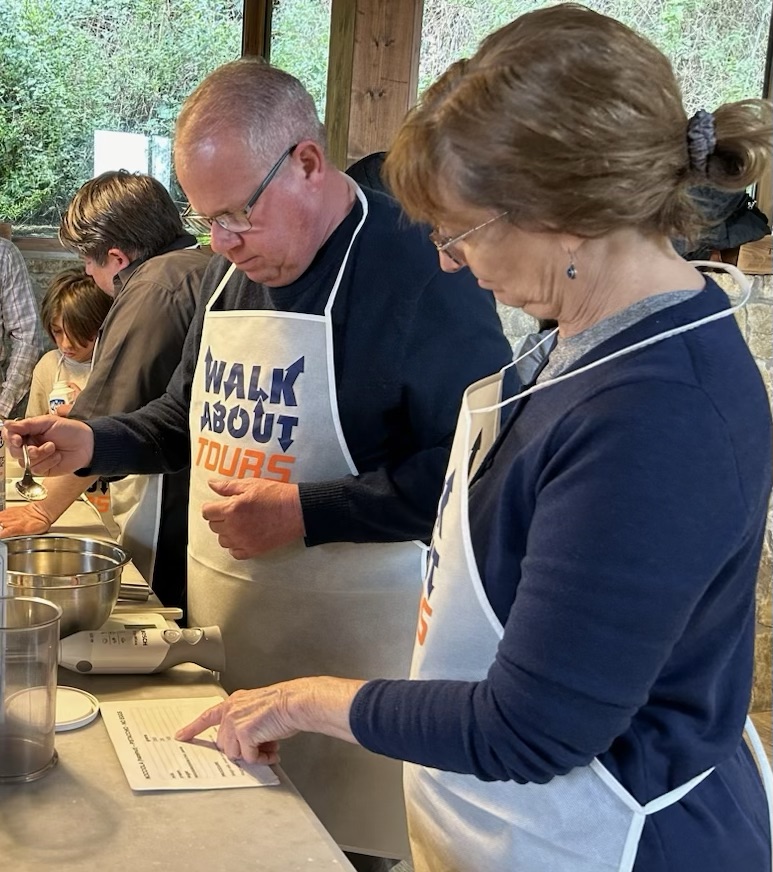
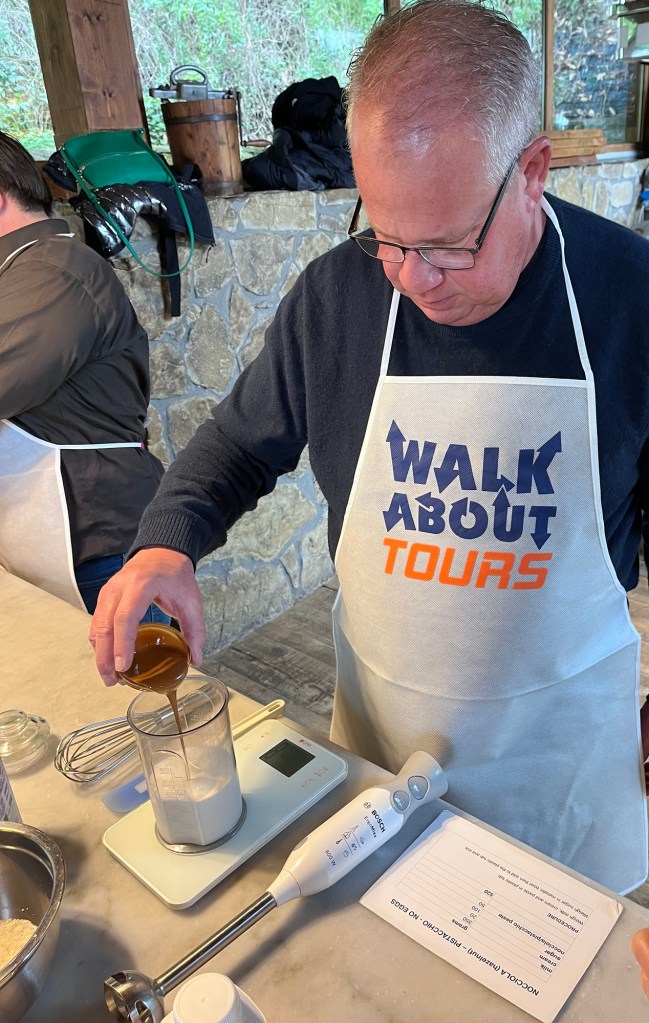
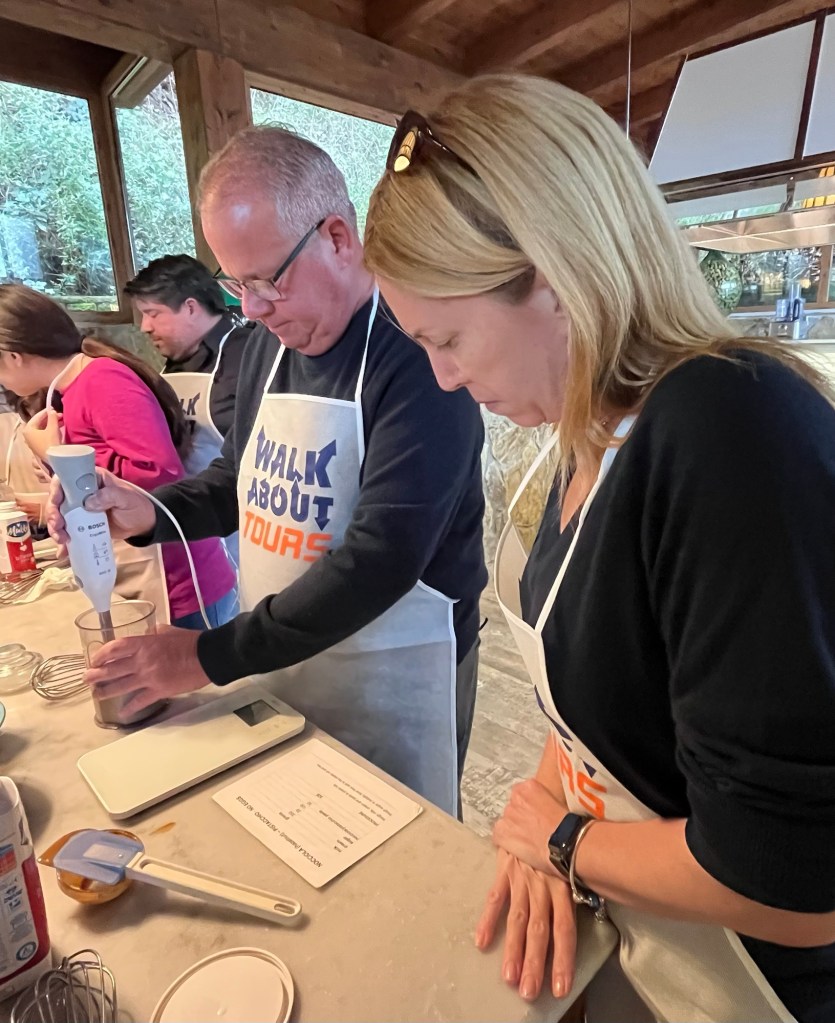
Since the gelato was going to be a longer session, we got it going first, each picking out the flavor we wanted to create. Ultimately, we would be tasing everyone’s gelato.

Hard at work creating our hazelnut gelato.

Before starting the pizza-making we had a bit of time to wander the grounds for a few photos.

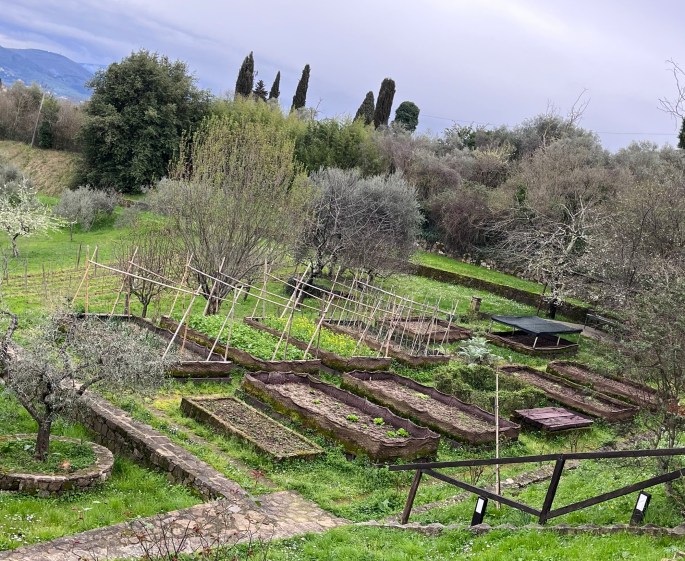
Gardens on property

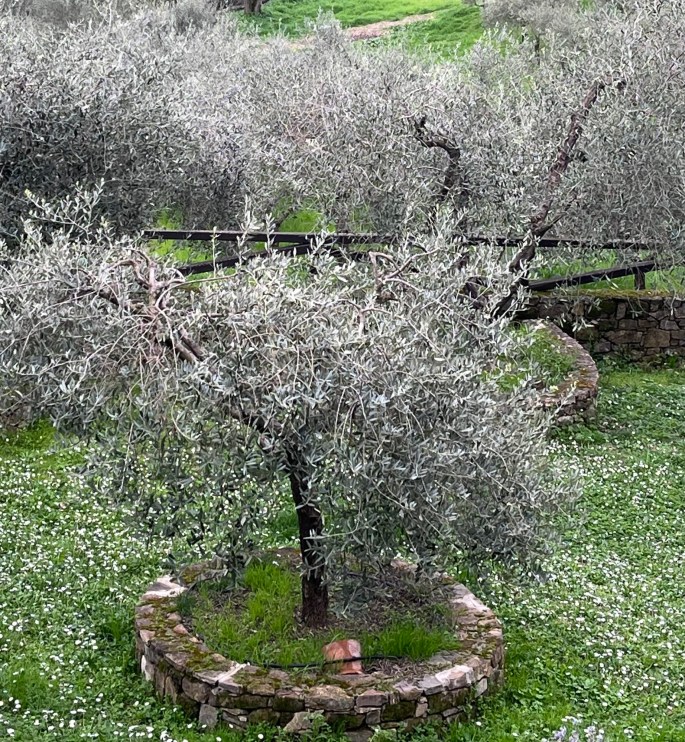
Olive trees

The making of the gelato was in this building.
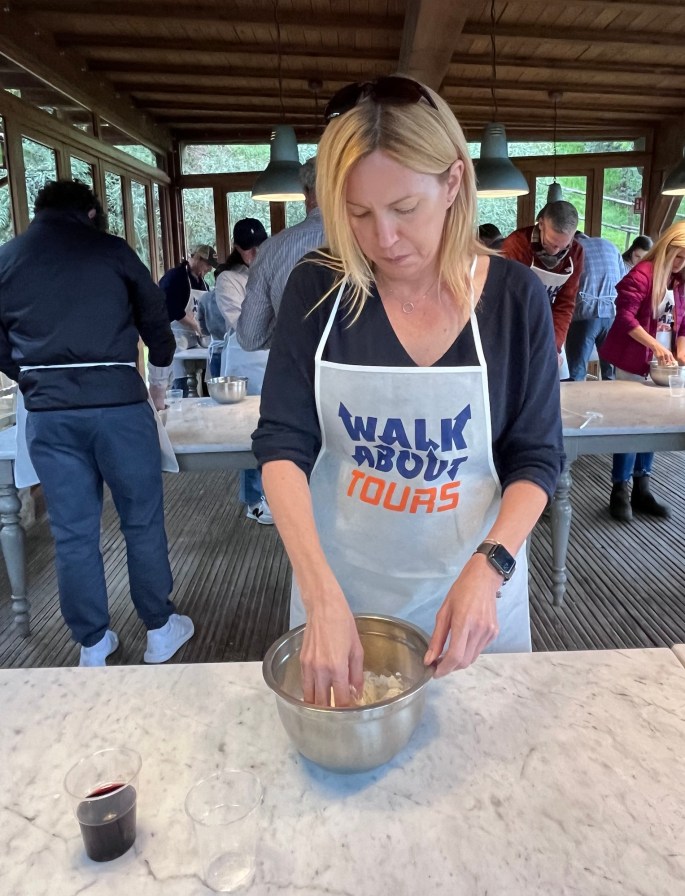
Next on the agenda was making our pizza dough. Everyone had to participate. First step was mixing the dough.
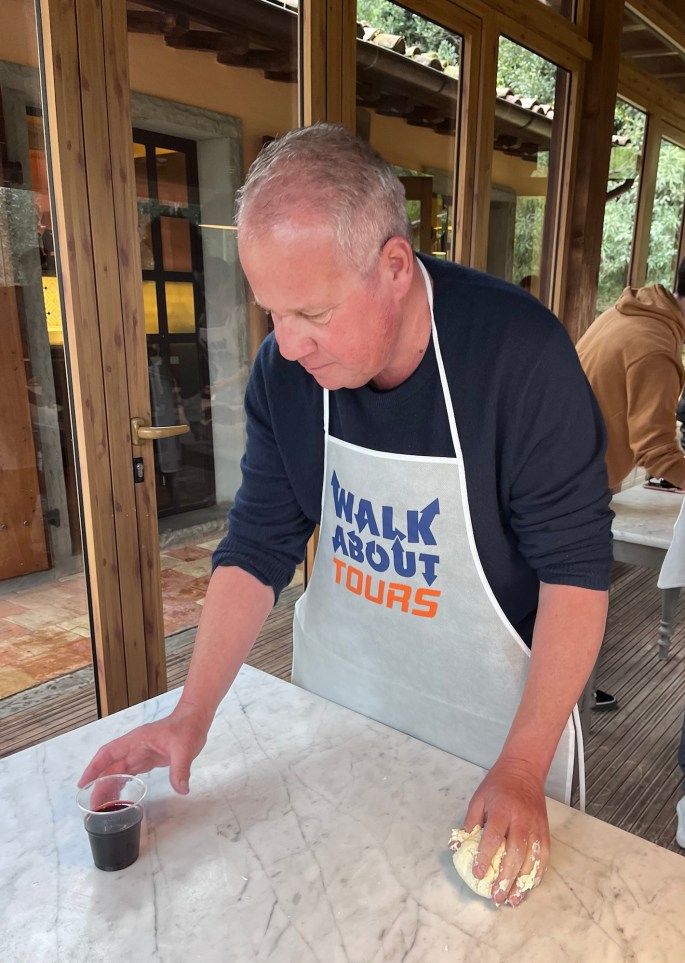
Then roll your dough to get the right consistency and work it without over-flouring it. That’s the trick!

One of the last steps for the dough was to ‘relax’ the dough by slapping it onto the work area.

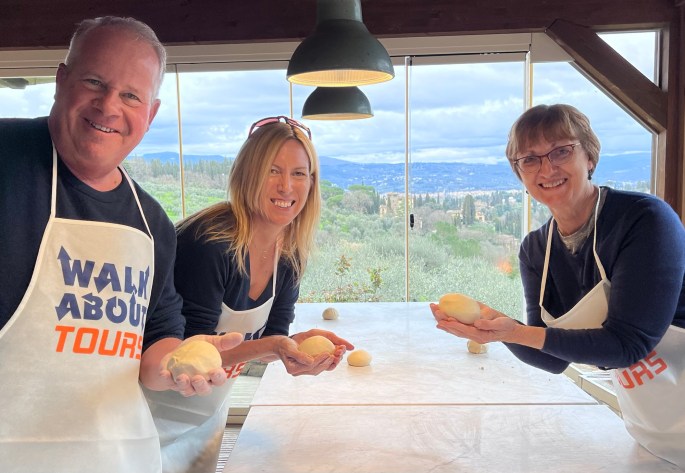
A few more techniques were shown so that our ball of dough was a smooth ball.

We worked in small groups at the pizza workstations and everyone ‘learned’ how to toss their pizzas. Some where better than others. Adrienne had the ‘knack’ – must be her Italian blood.

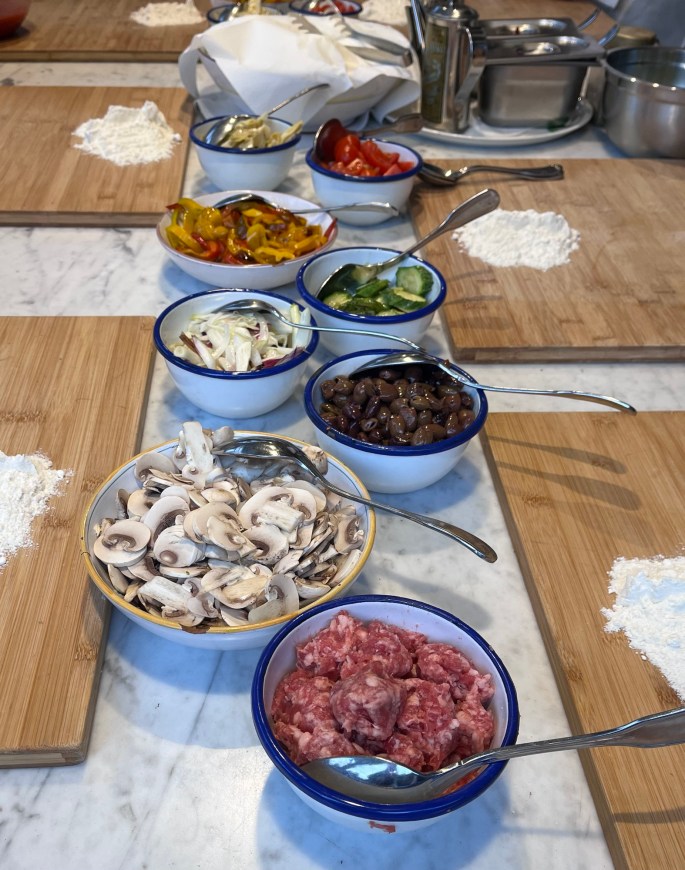
A multitude of toppings were available for our individual pizzas.

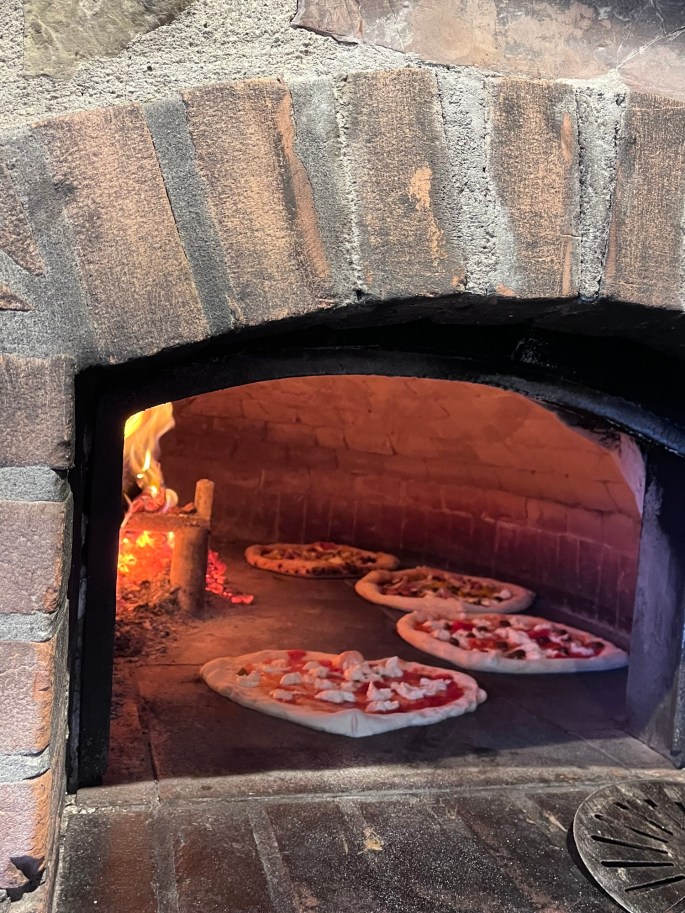
One of the instructors popped them into the wood oven.

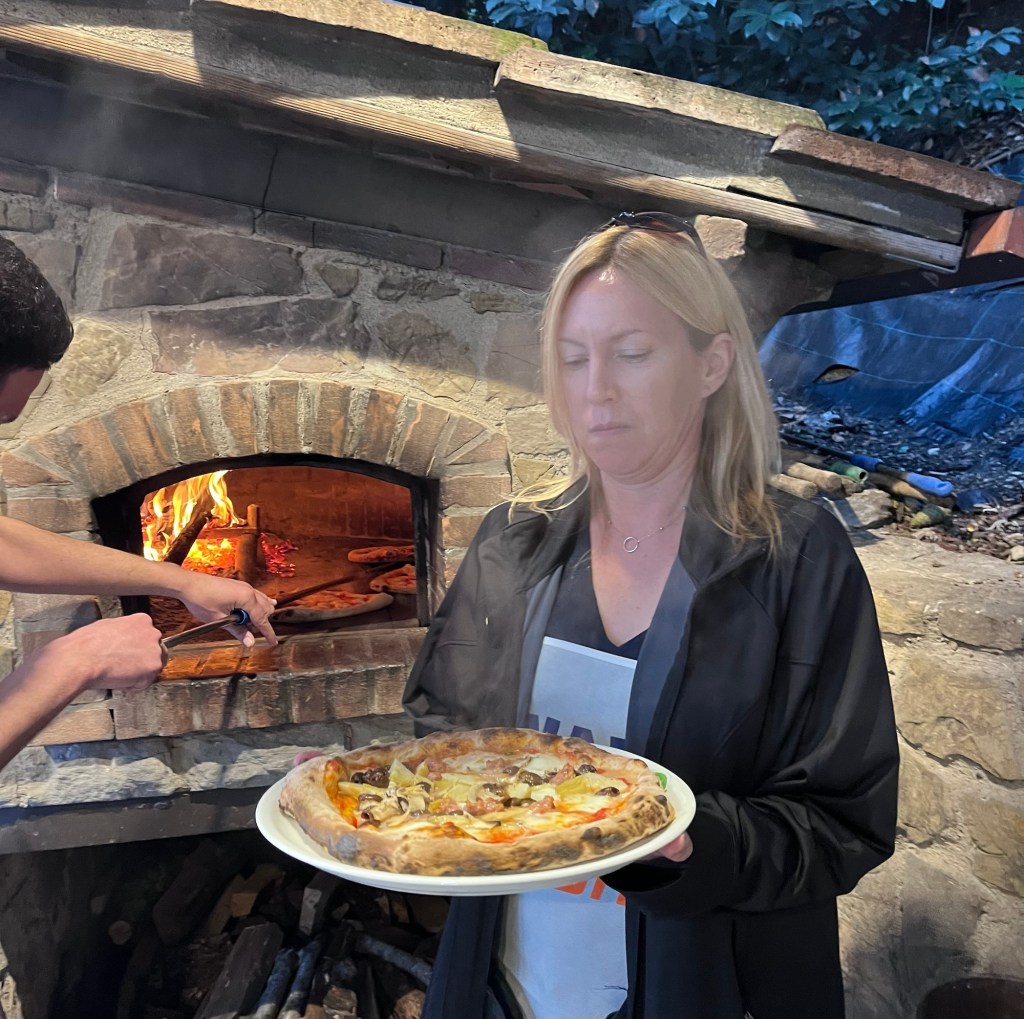
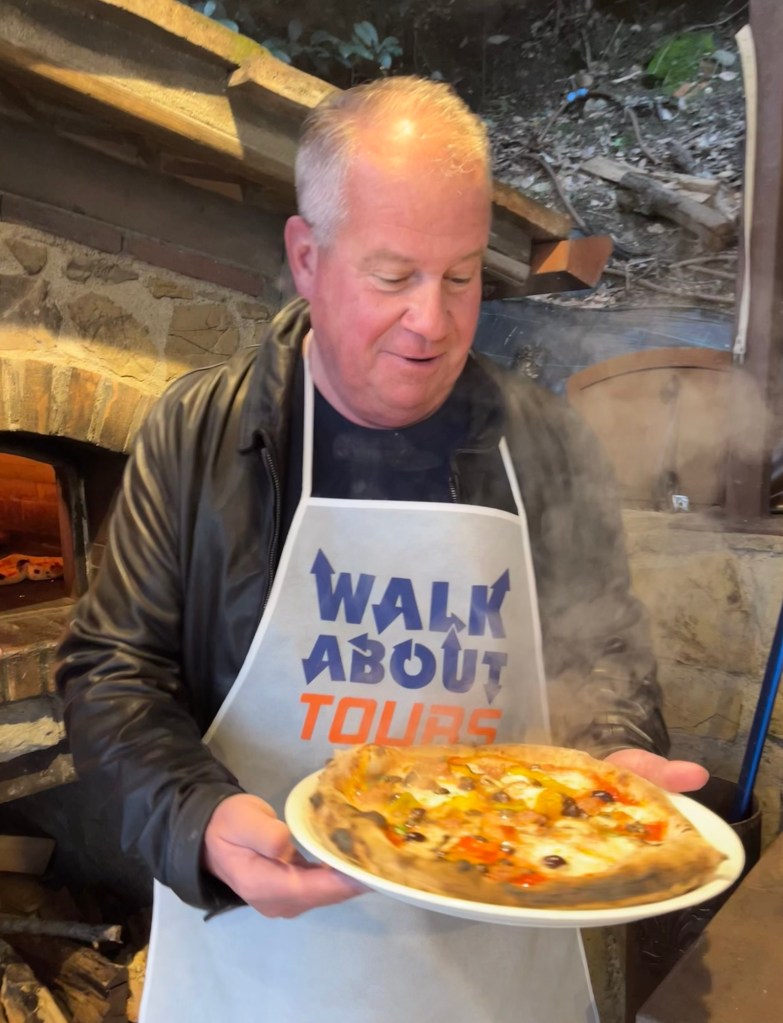
And within a few minutes our pizzas were ready.

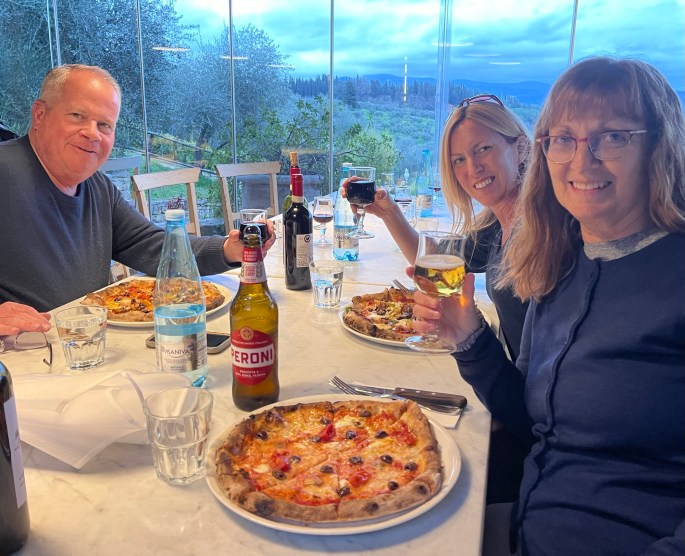
What better way to eat pizza than overlooking the hills of Florence.

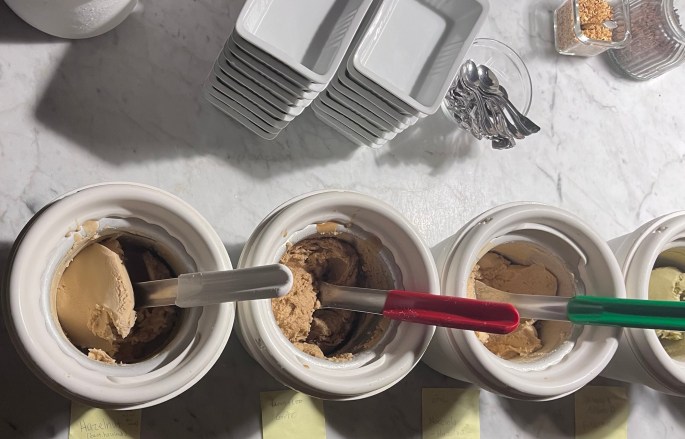
But wait – we weren’t done it. Our gelato was the final part of the evening. There were at least 8 bowls of ice cream for us to sample – delicious.

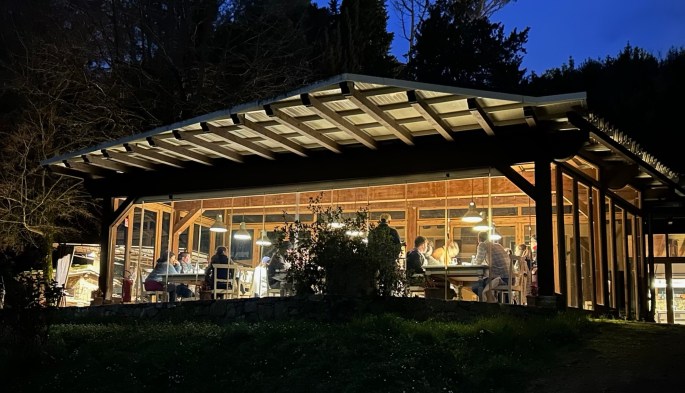
By the time we were finished, the sun had set and our space was more magical.

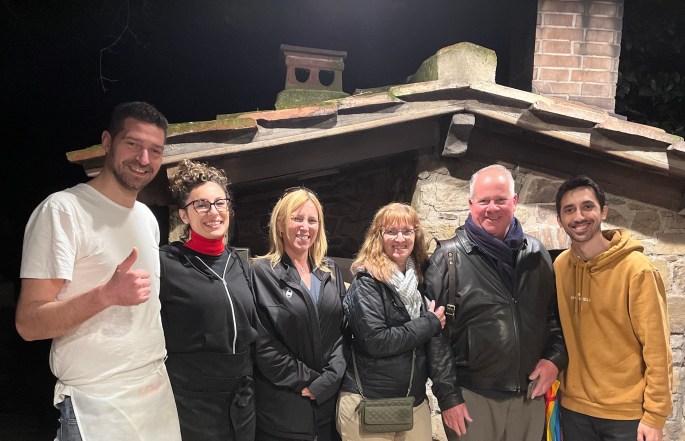
For this event, there were three individuals that taught the sessions.

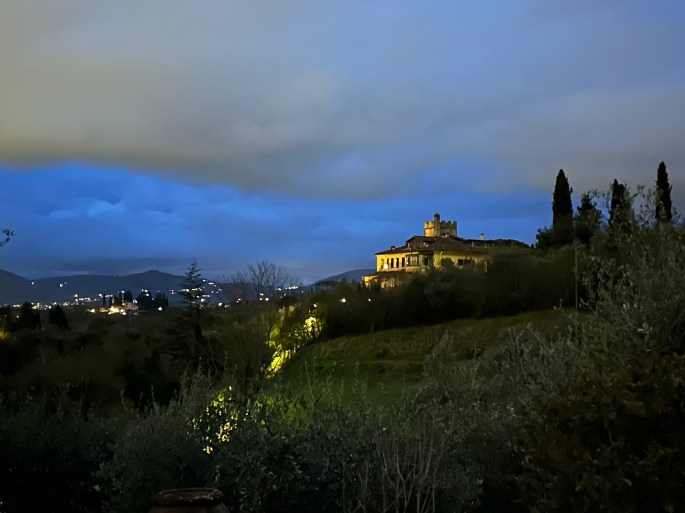
Here is one last look as nightfall came to the hills of Florence.

Michelangelo’s work of Sculptures

Michelangelo di Lodovico Buonarroti Simoni  was an Italian sculptor, painter, architect, and poet of the High Renaissance. Born in the Republic of Florence, his work was inspired by models from classical antiquity and had a lasting influence on Western art. Michelangelo’s creative abilities and mastery in a range of artistic arenas define him as an archetypal Renaissance man. Michelangelo achieved fame early with the statue of David being one of his best-known works, sculpted before the age of thirty. 

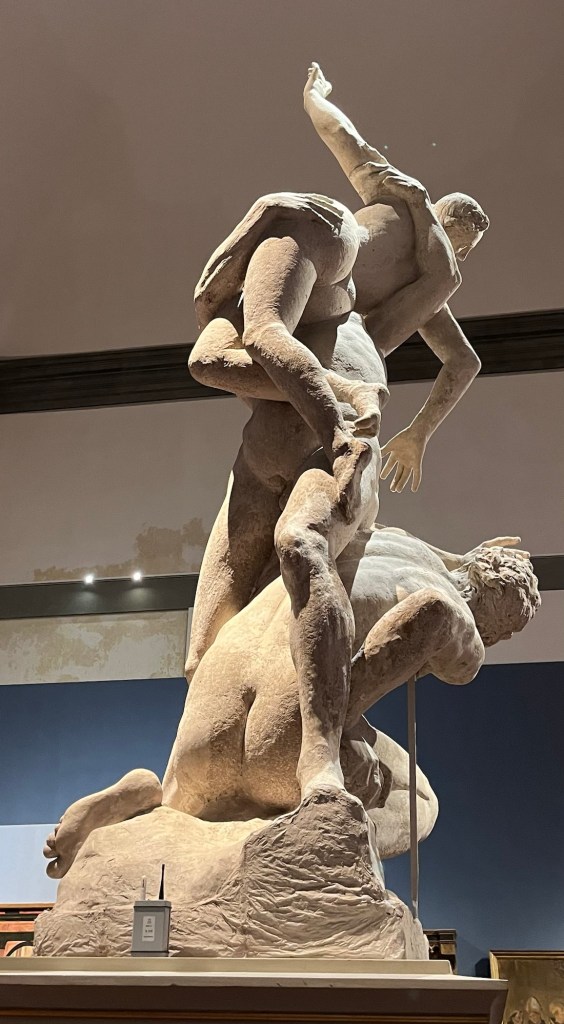
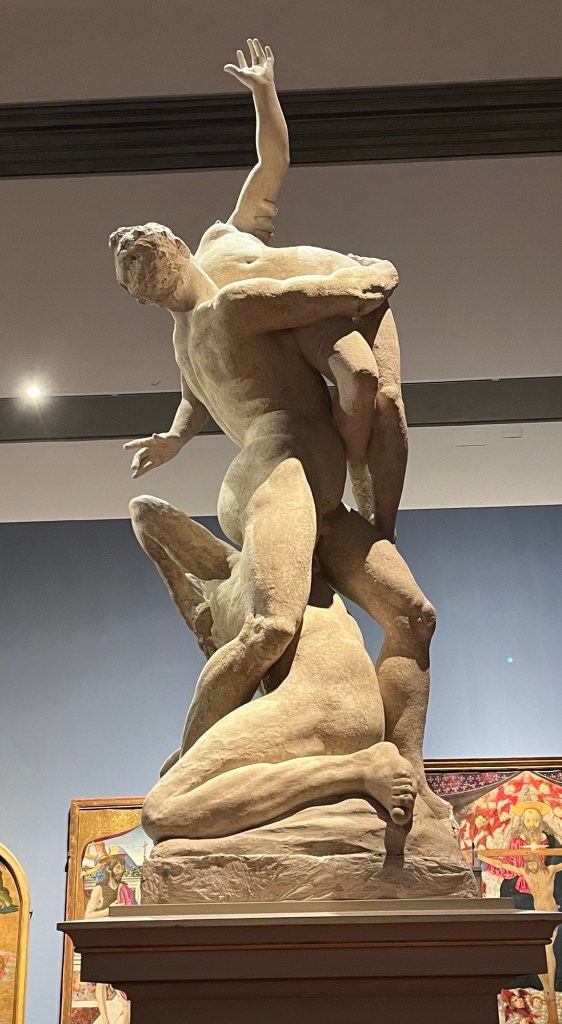
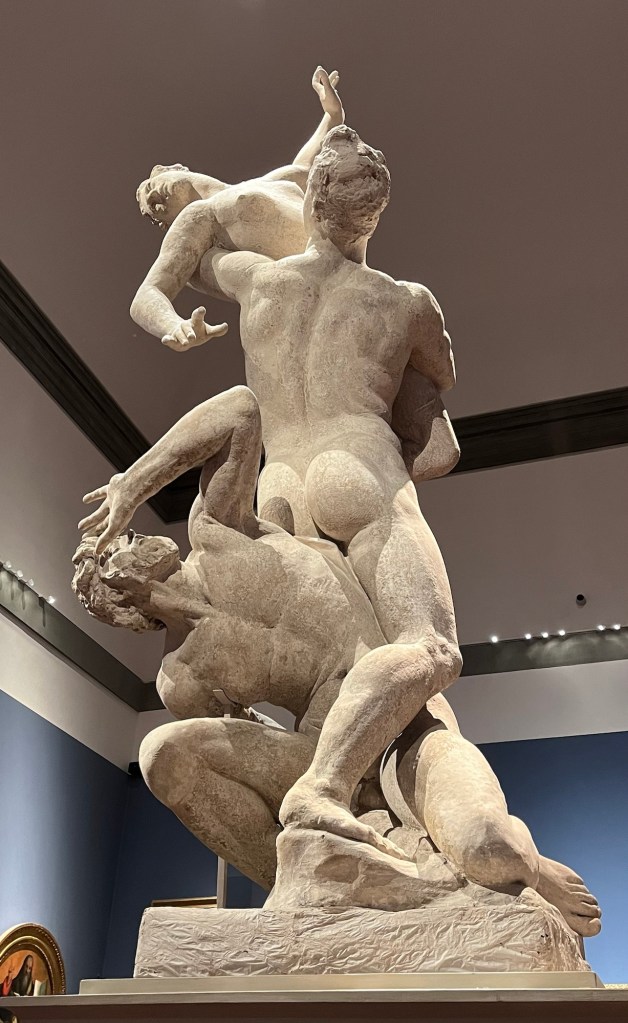
Booking this tour was one of the expected highights of our time in Florence. Going into the Galleria dell-Accademia The Rape of the Sabine Women was the first thing seen. Our guide walked around the statue to show the different perspectives.

The story goes the abduction of Sabine women occurred in the early history of Rome shortly after its founding in the mid-8th century BC and was perpetrated by Romulus and his predominantly male followers.  With Rome growing at such a steady rate in comparison to its neighbors, Romulus became concerned with maintaining the city’s strength. His main concern was that with few women inhabitants there would be no chance of sustaining the city’s population, without which Rome might not last longer than a generation.

The Romans then set out into the surrounding regions in search of wives to establish families with but were unsuccessful. The Sabines feared the emergence of a rival society and refused to allow their women to marry the Romans. Consequently, the Romans devised a plan to abduct the Sabine women during an upcoming festival.

The story was part of the founding mythology of Rome and historically disputed.

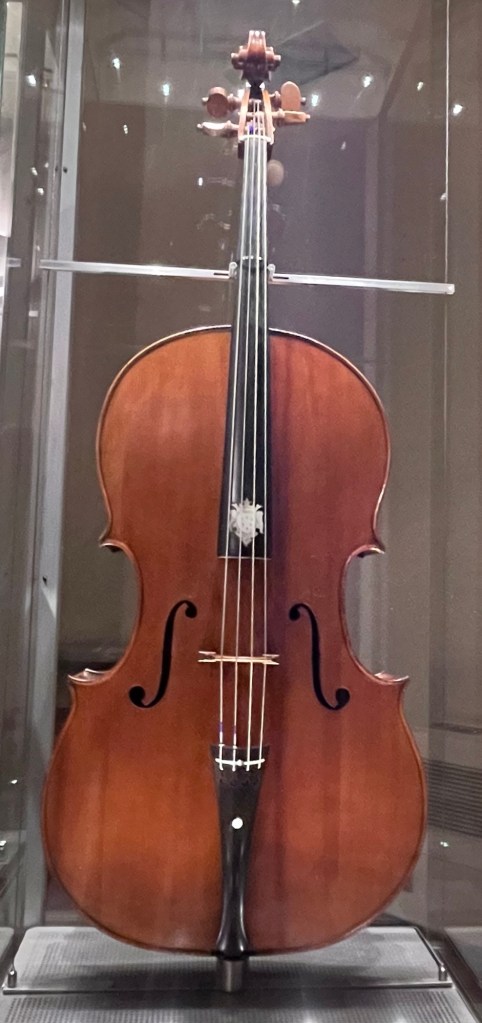
The next room was dedicated to some musical instruments from the collection of the Medici family. Their medallion seen under the strings indicates this was made for the Medicis.

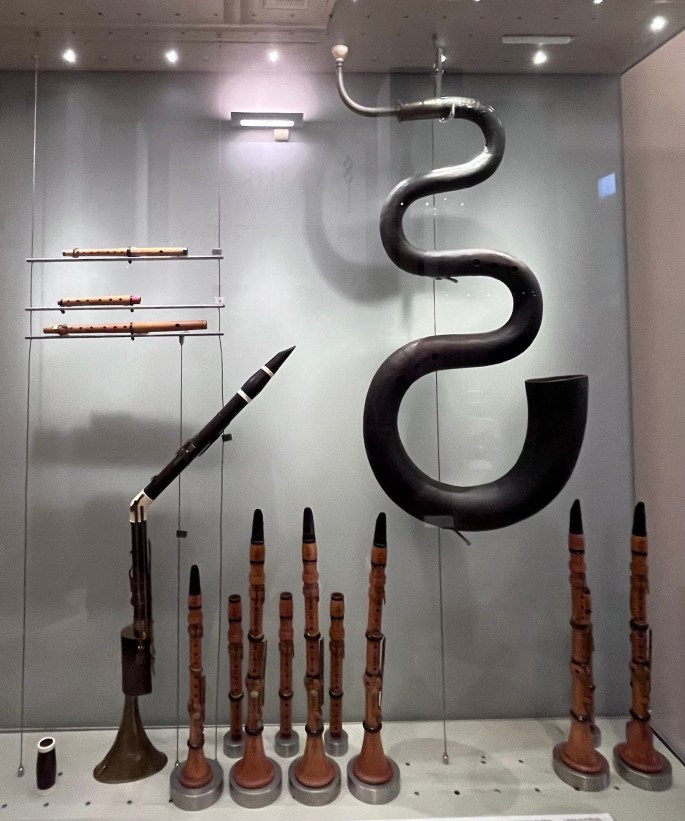
There was one display with musical instruments that no longer exist. Interesting. Hmmm I wonder why……

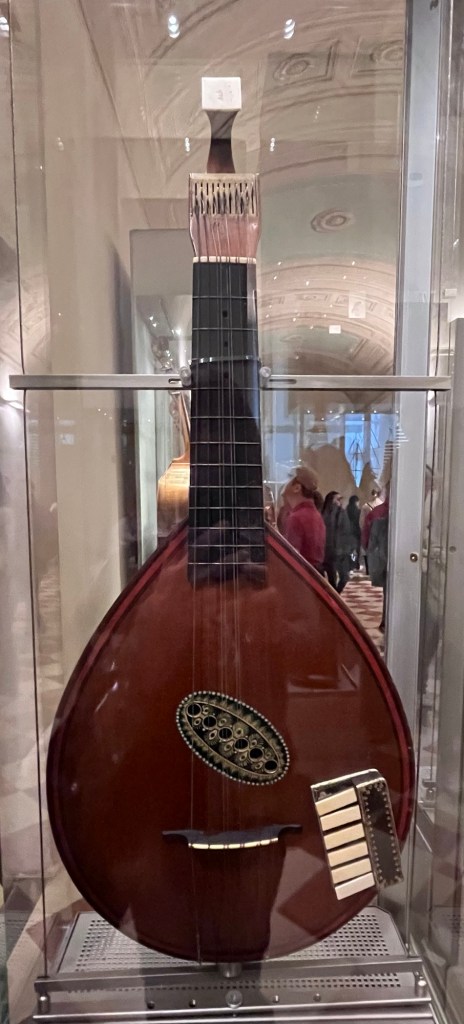
Here they tried to combine two instruments together – notice the piano keys? This was another idea that didn’t take off.

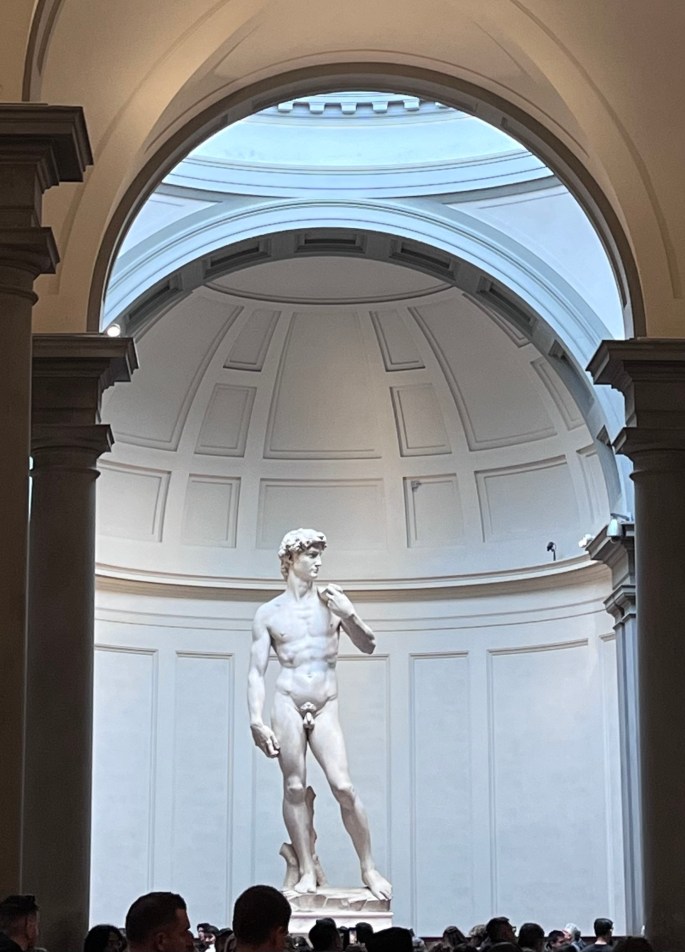
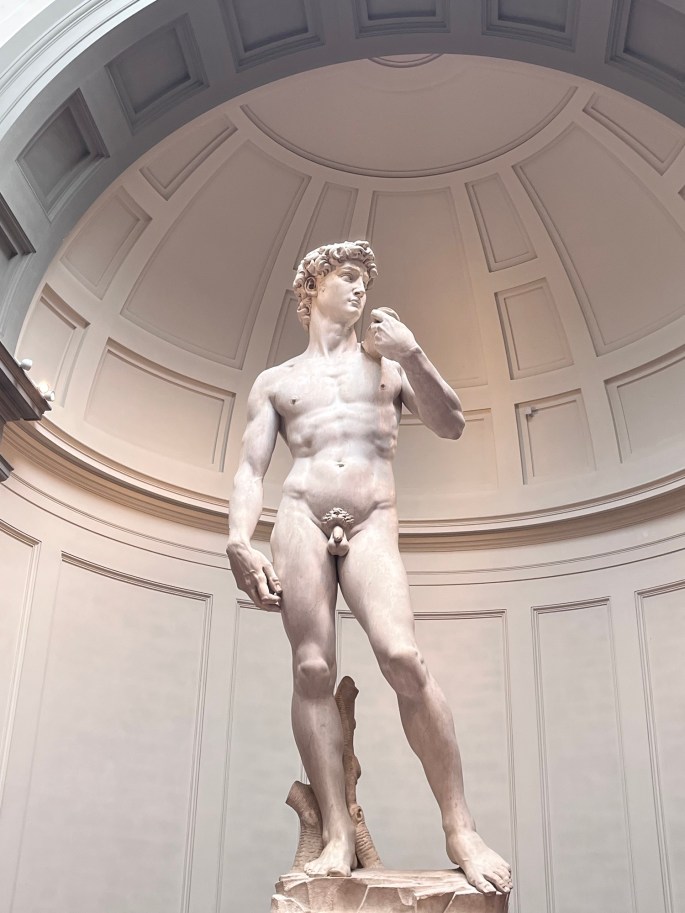
We walked through a few more rooms before walking into the main reason for booking the ‘skip the line’ tour. With a height of 17 ft, the David was the first colossal marble statue made in the early modern period following classical antiquity, a precedent for the 16th century and beyond.

Michelangelo developed his love of marble when his family returned to Florence. At the death of his mother when he was six years old, he lived with a nanny and her husband, a stonecutter, in the town of Settignano, where his father owned a marble quarry and a small farm.

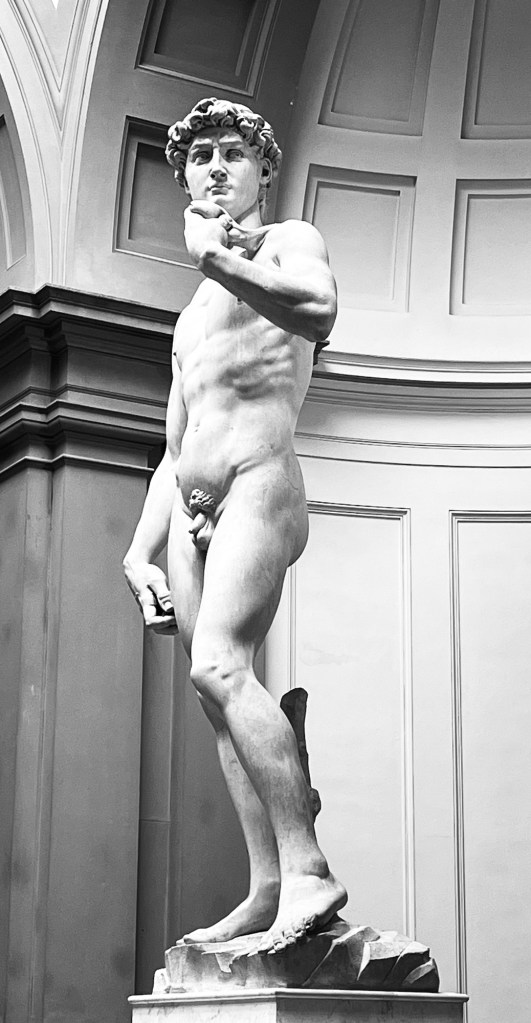
The pose of Michelangelo’s David is unlike that of earlier Renaissance depictions of David. David is depicted before his battle with Goliath. Rather than being shown victorious over a foe much larger than he, David looks wary as he sizes up the giant Goliath before the battle has actually taken place. His brow is drawn, his neck tense, and the veins bulge out of his lowered right hand. 

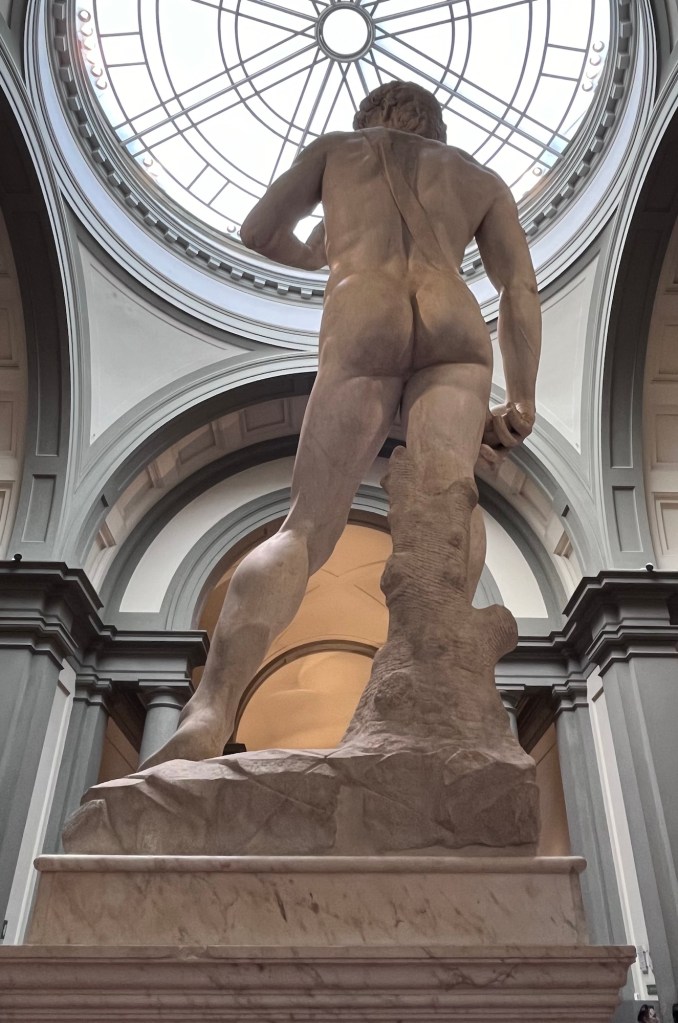
Visitors can walk around the statue but not sure most take a photo from this angle.

The massive block of white marble that was to become the David, was of bianco ordinario grade stone, rather than the superior statuario. It came from the old Roman Fantiscritti quarry at the centre of the Carrara marble basins. He was not the first sculptor to attempt this project but the third. In August 1501, Michelangelo was given the official contract to undertake this task.

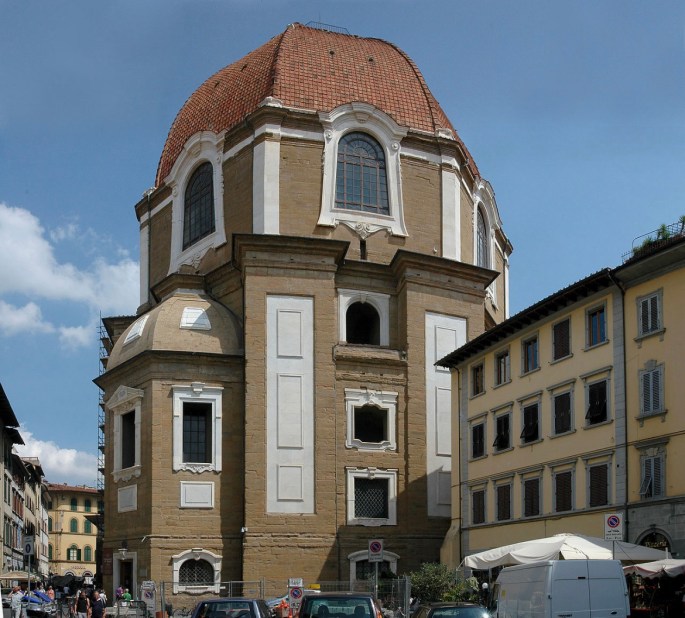
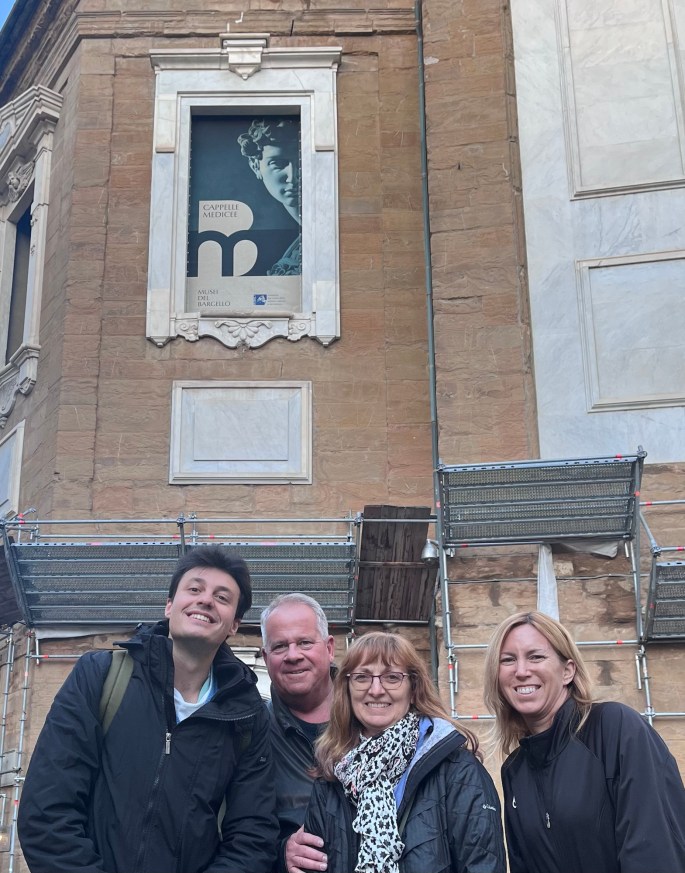
But we didn’t stop with Michelangelo’s David. Another afternoon we met the same tour guide from earlier in the week, Guido, and learned much, much more about the Medecis than expected. He had a great passion for art which encouraged us to book this particular tour. He called the Medeci Chapel a ‘hidden gem’. He was right.

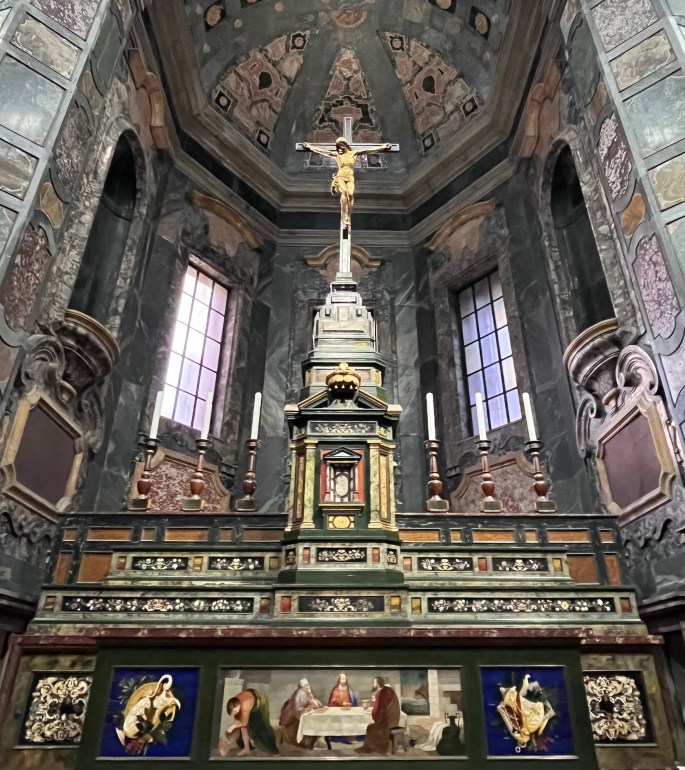
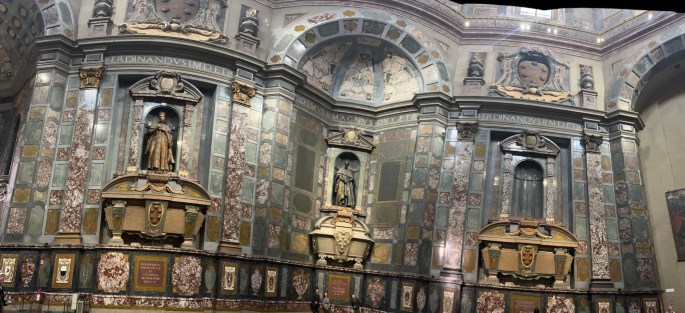
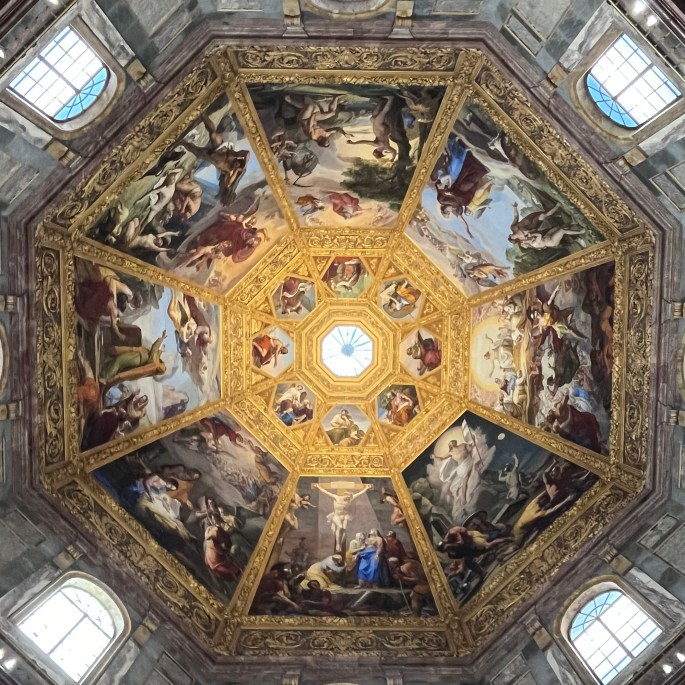
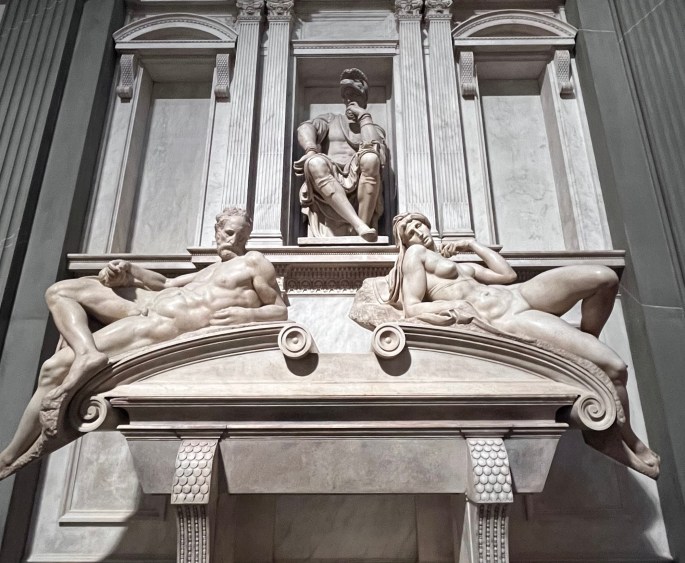
The Sagrestia Nuova or New Sacristy, also known simply as the Medici Chapel, was intended as a mausoleum or mortuary chapel for members of the Medici family.  Constructed in 1520 it was designed by Michaelangelo.

After a fairly extensive explanation of the Medici family tree, we went upstairs and was instantly WOWed!

First photo was from left to right upon entering the chapel.

Second photo was the center of the chapel.

This photo was continuing the circumference of the room after the alter.

You might notice the empty spaces where statues were originally intended? Money was available for the two statues, then ran out. Let’s not forget the dome.

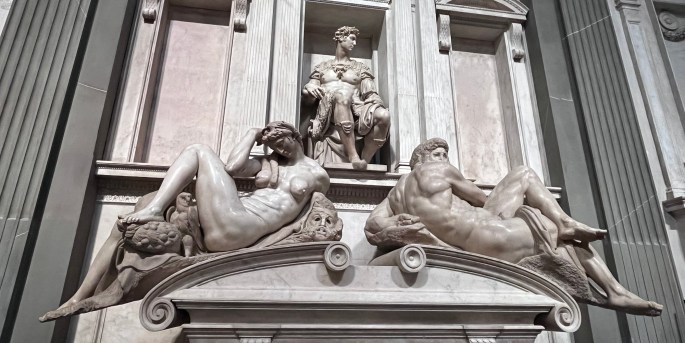
While this was truly awe-inspiring, a short passageway led to an enclave of more statues by Michaelangelo.

Tomb of Giuliano de’ Medici with ‘Night’ (the female) and ‘Day’ (the male).

Tomb of Lorenzo de’Medici with ‘Dusk (the male) and ‘Dawn’ (the female).

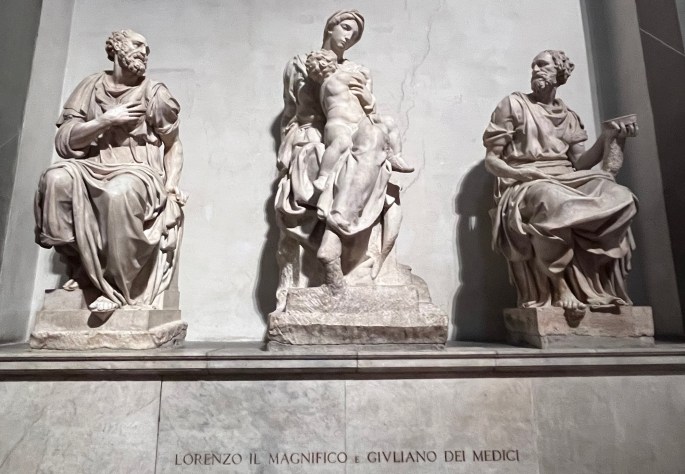
The center sculpture is called ‘Madonna and the child’ and completed by Michelangelo with the other two completed by those that worked with him.

This definitely was one of Florence’s Hidden Gems and glad that we stopped in.

The Duomo of Florence

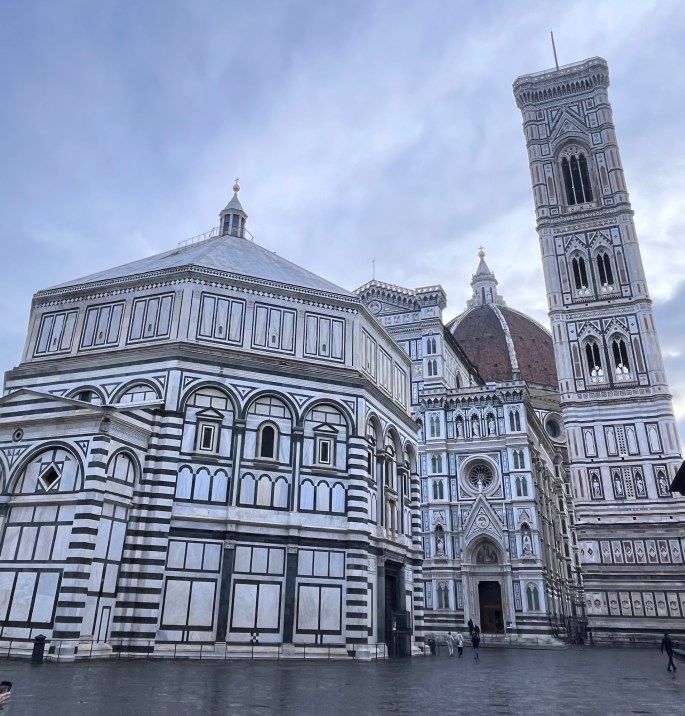
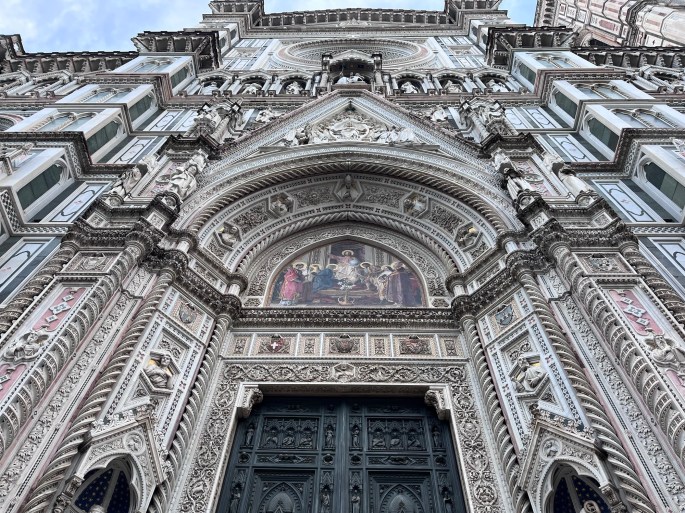
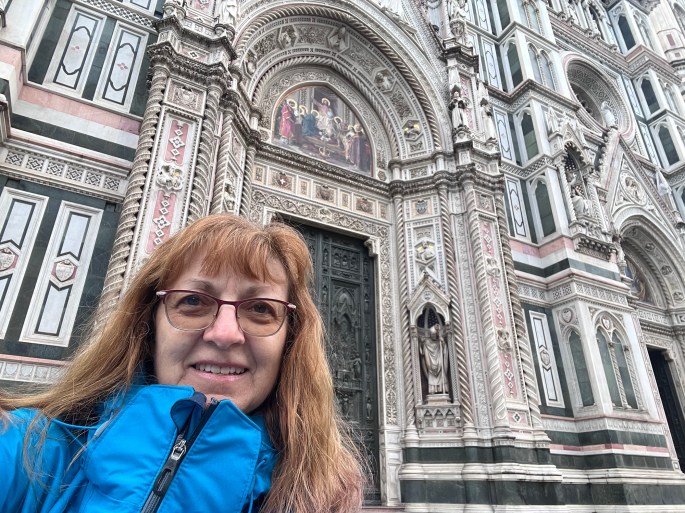
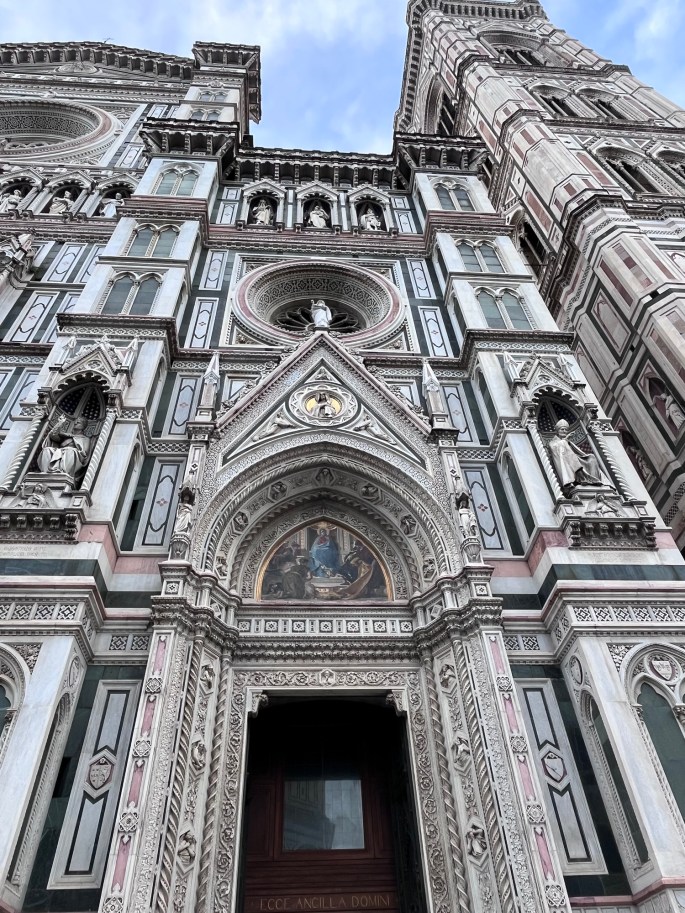
Formally called the Cathedrale di Santa Maria del Fiore, it is one of Italy’s largest churches. Gothic-style construction began in 1296 and was completed 1436. Here is a shot of the complex that hosts three buildings to include the church, the baptistry and the tower.

Adrienne and I got up early to walk a number of times for several reasons – both equally important. We wanted to get photos without dodging the multitudes of tourists and also walk off the abundance of indulgent calories we had partaken on the trip.

The first building on the site was built 393 AD and had since undergone a number of repairs but was crumbling with age. It was no longer able to serve the growing population of the city. The city council approved the new design two years before construction started for these structures.

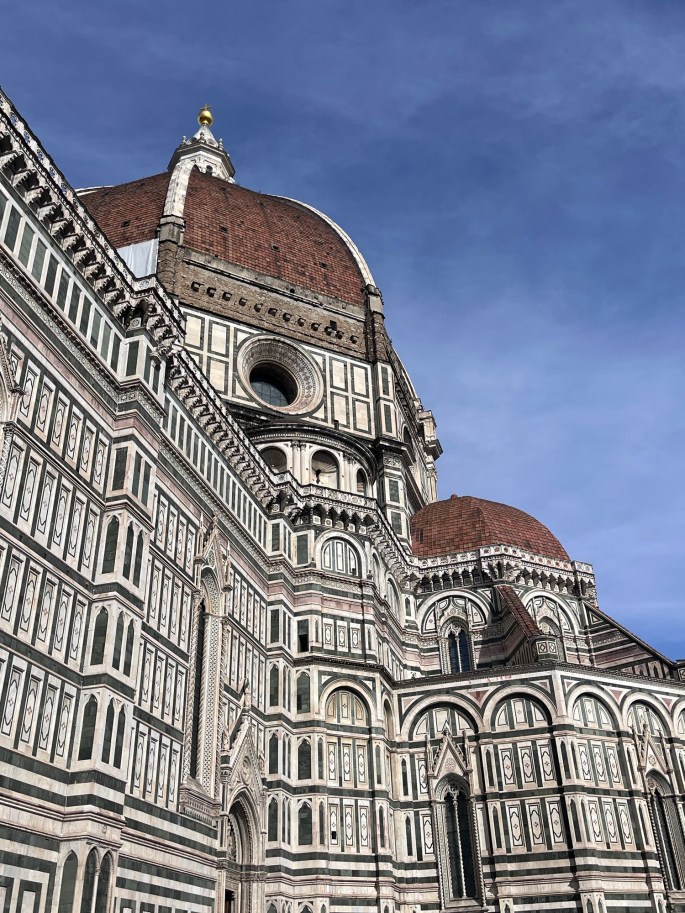
The exterior is covered with marble panels in green, pink and white. It truly was magnicifant.

It is the largest brick dome ever constructed and the fifth largest dome in the world. It called for an octagonal dome higher and wider than any that had ever been built, with no external buttresses to keep it from spreading and falling under its own weight.

The use of buttresses was forbidden in Florence, as the style was favored by central Italy’s traditional enemies to the north.

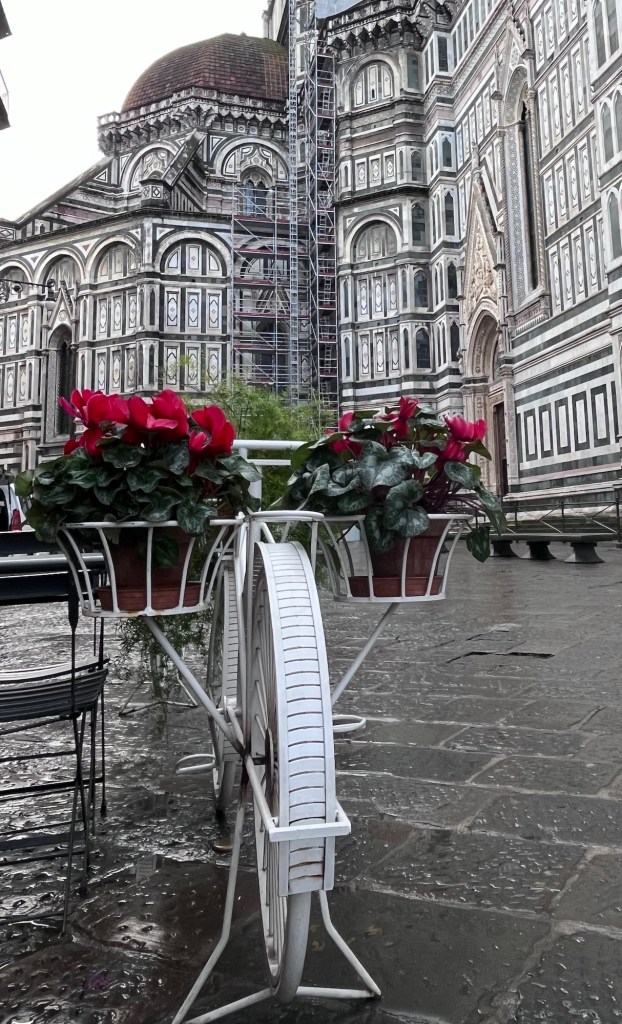
Had a chance to pull in some flowers for one of my photos 🙂 from this outside cafe.

There was so much to see and I had waaaaay too many photos to curate. I tried to include some of my better ones.

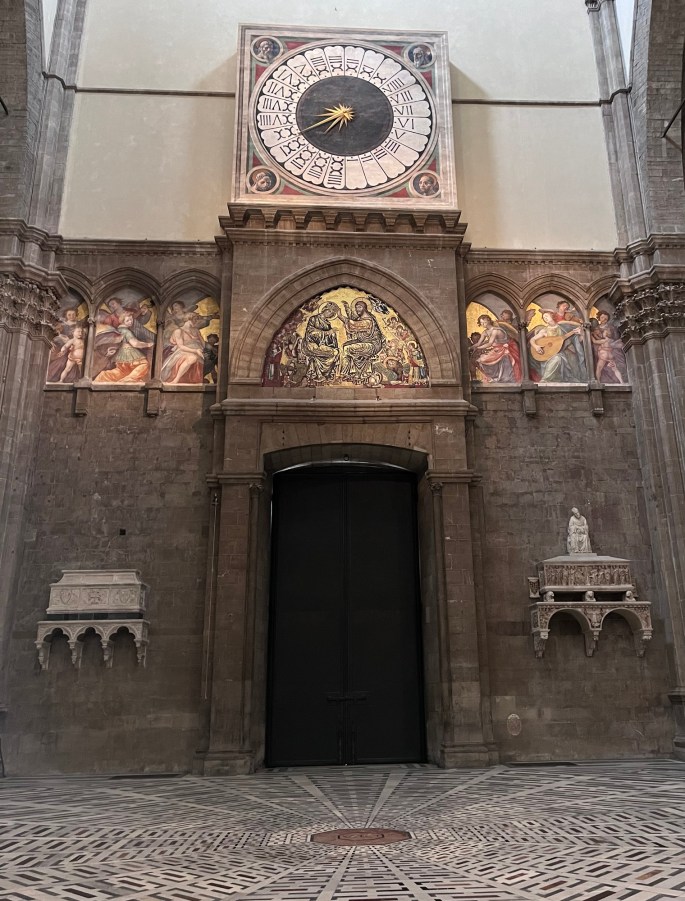
We did go inside later when Eric joined us. While it was very nice inside, the grandeur seen outside seemed to overshadow the interior. The relative bareness of the church corresponds with the austerity of religious life.

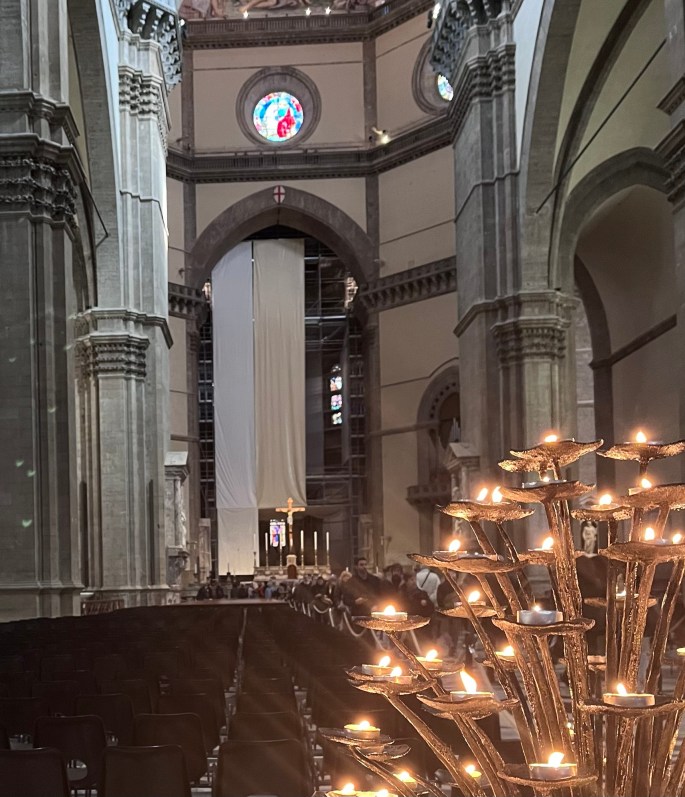
This shot is from the back of the church, looking towards the alter.

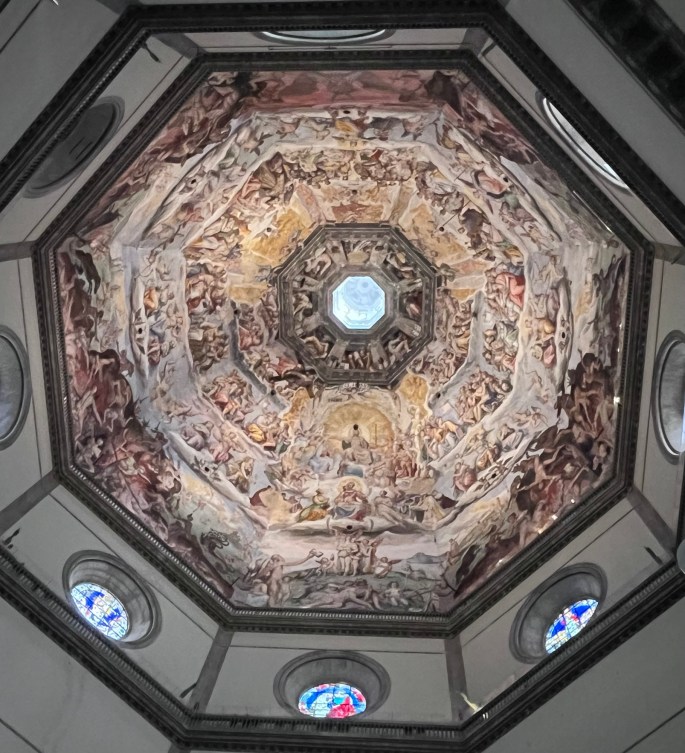
Here’s an inside shot of the brick dome.

One last shot……..

The churches were meant to cause awe amongst the people if not instill a fear of god through story-telling. This was accomplished in Florence.

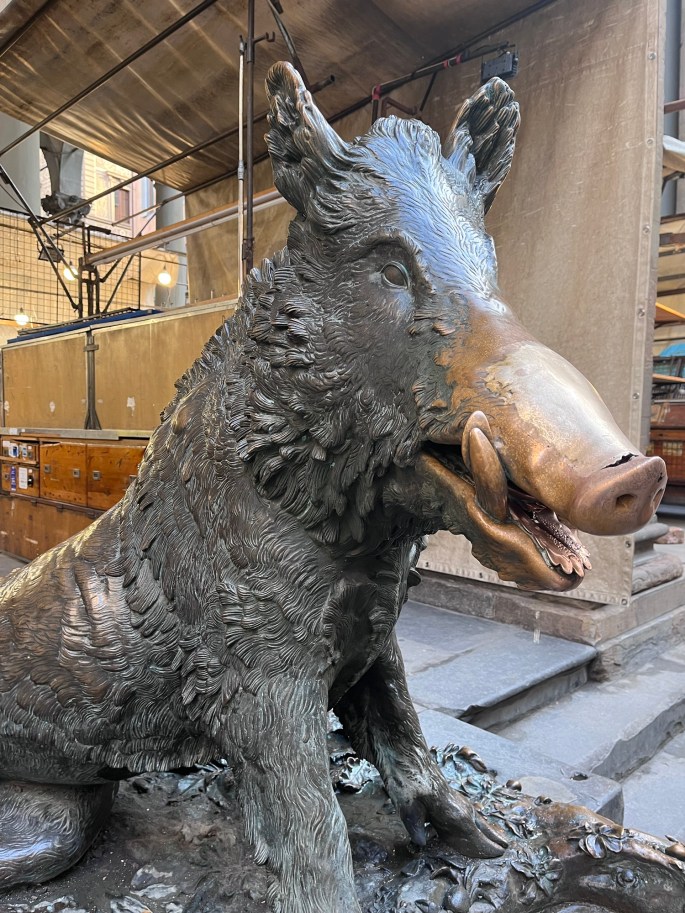
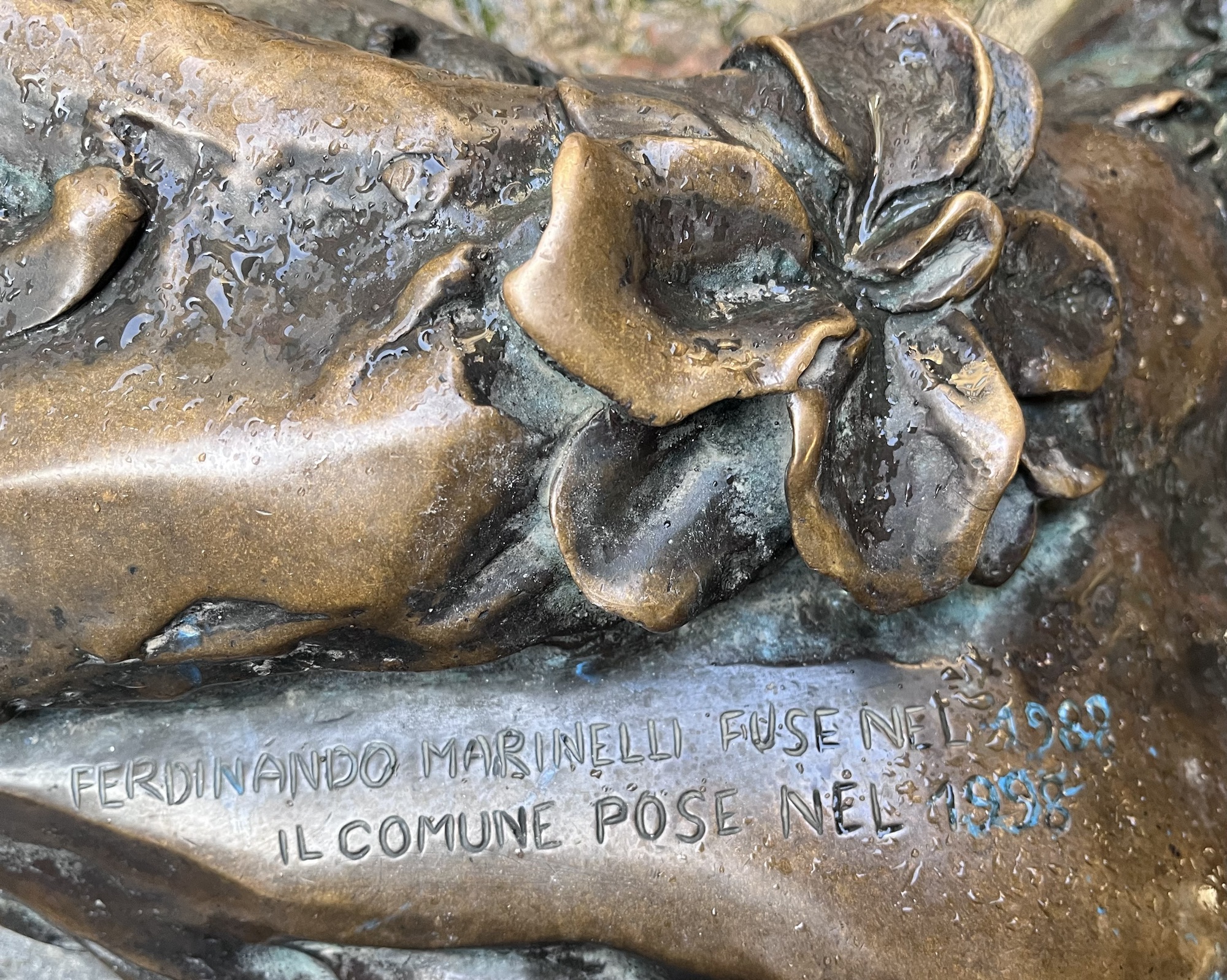
One morning during our early walks we came across this ‘charming’ sight. What? A pig? Local legend states that touching the snout will ensure another visit to the city. By the looks of this pig’s snout – they will be having a lot of repeat visitors. And yes, we also touched the statue. Adrienne and I will be back!

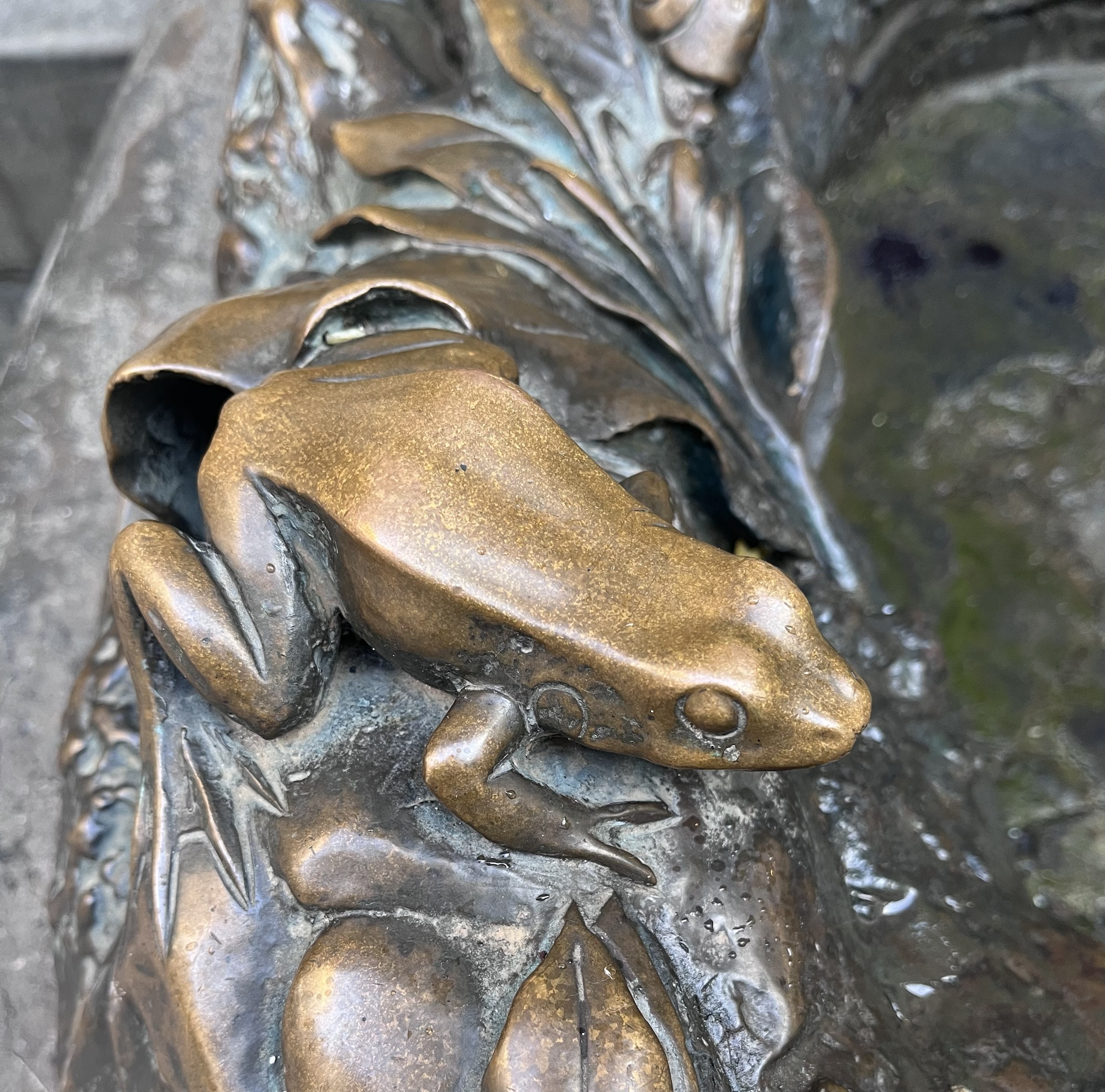
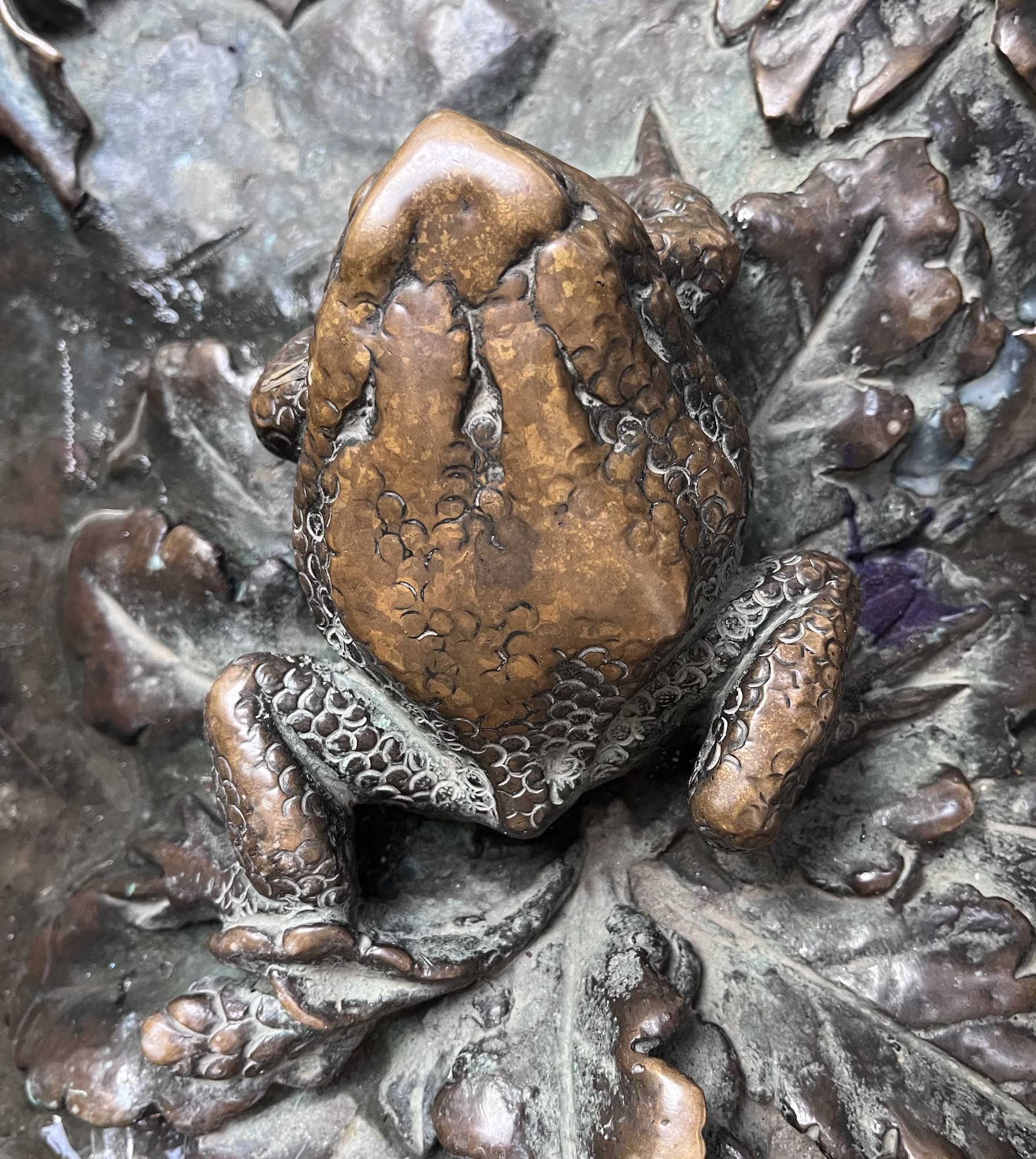
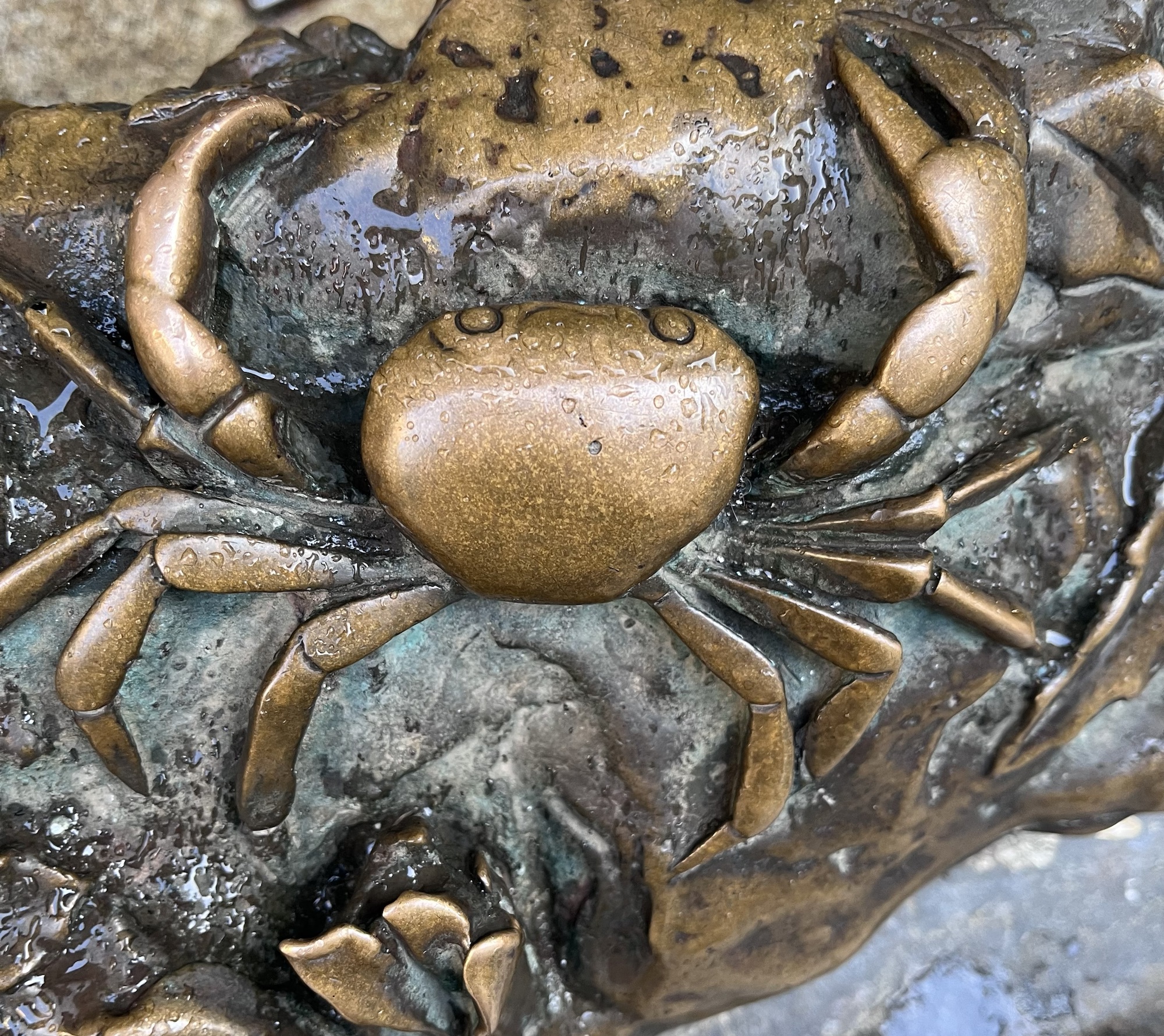
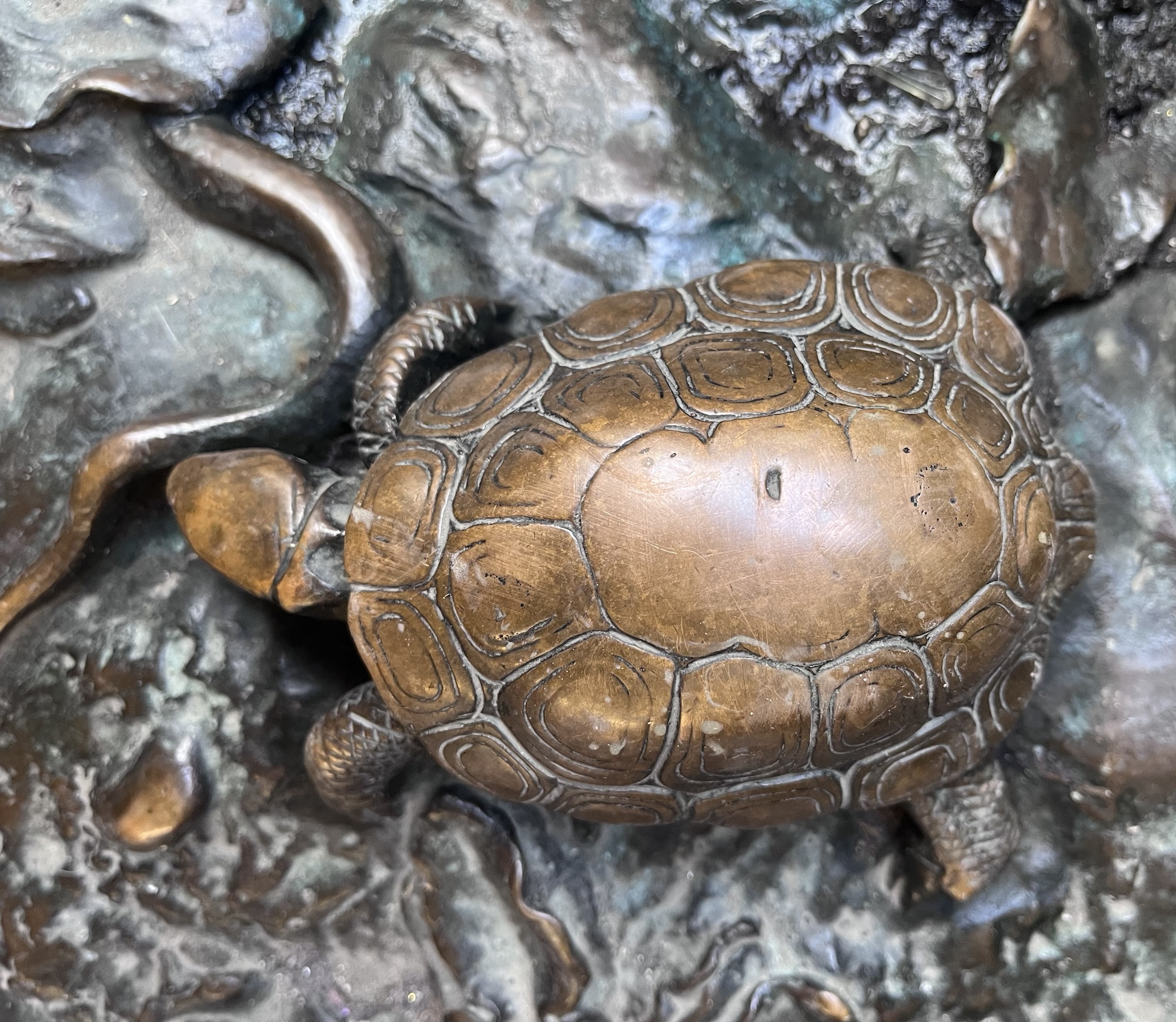
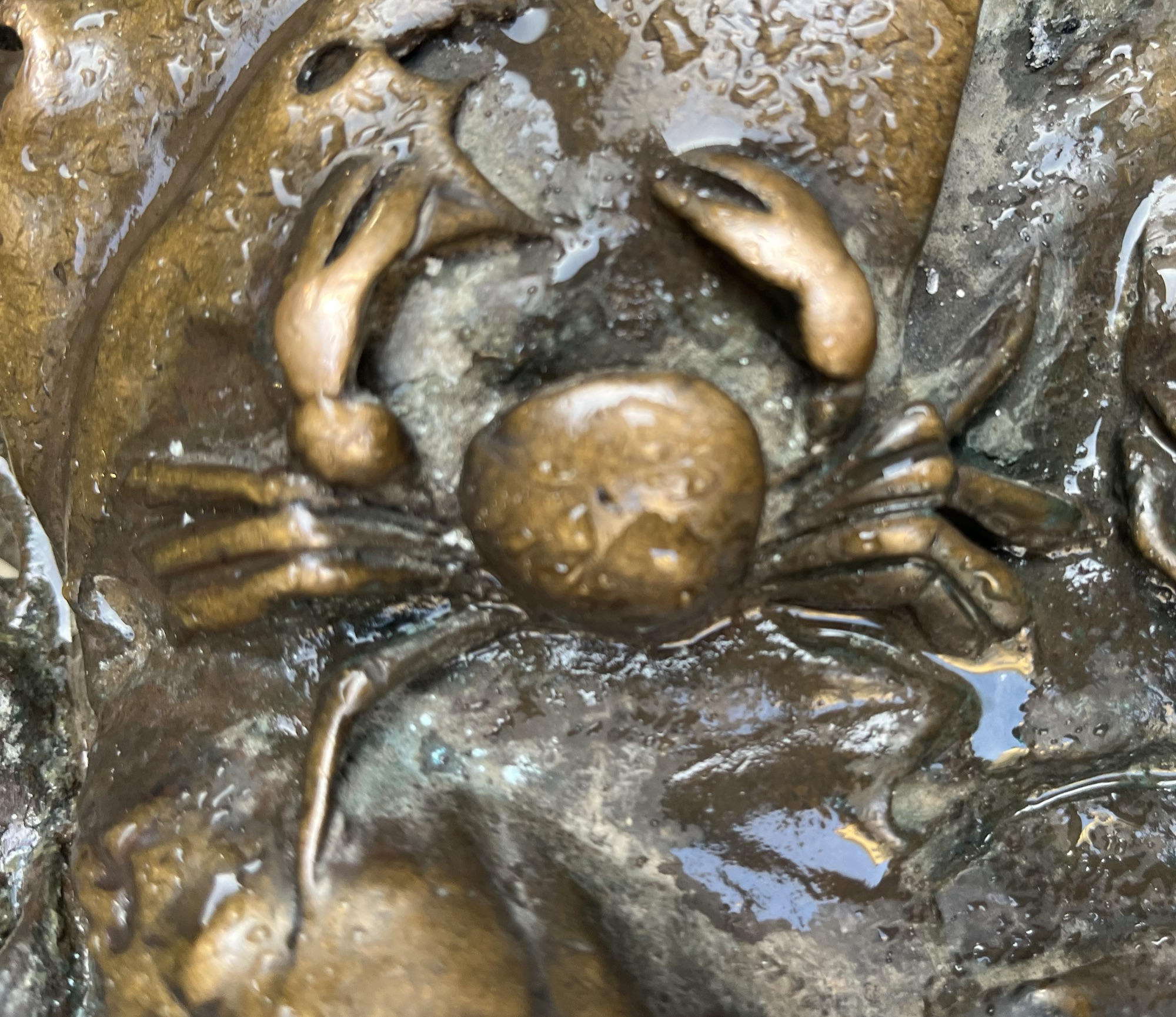
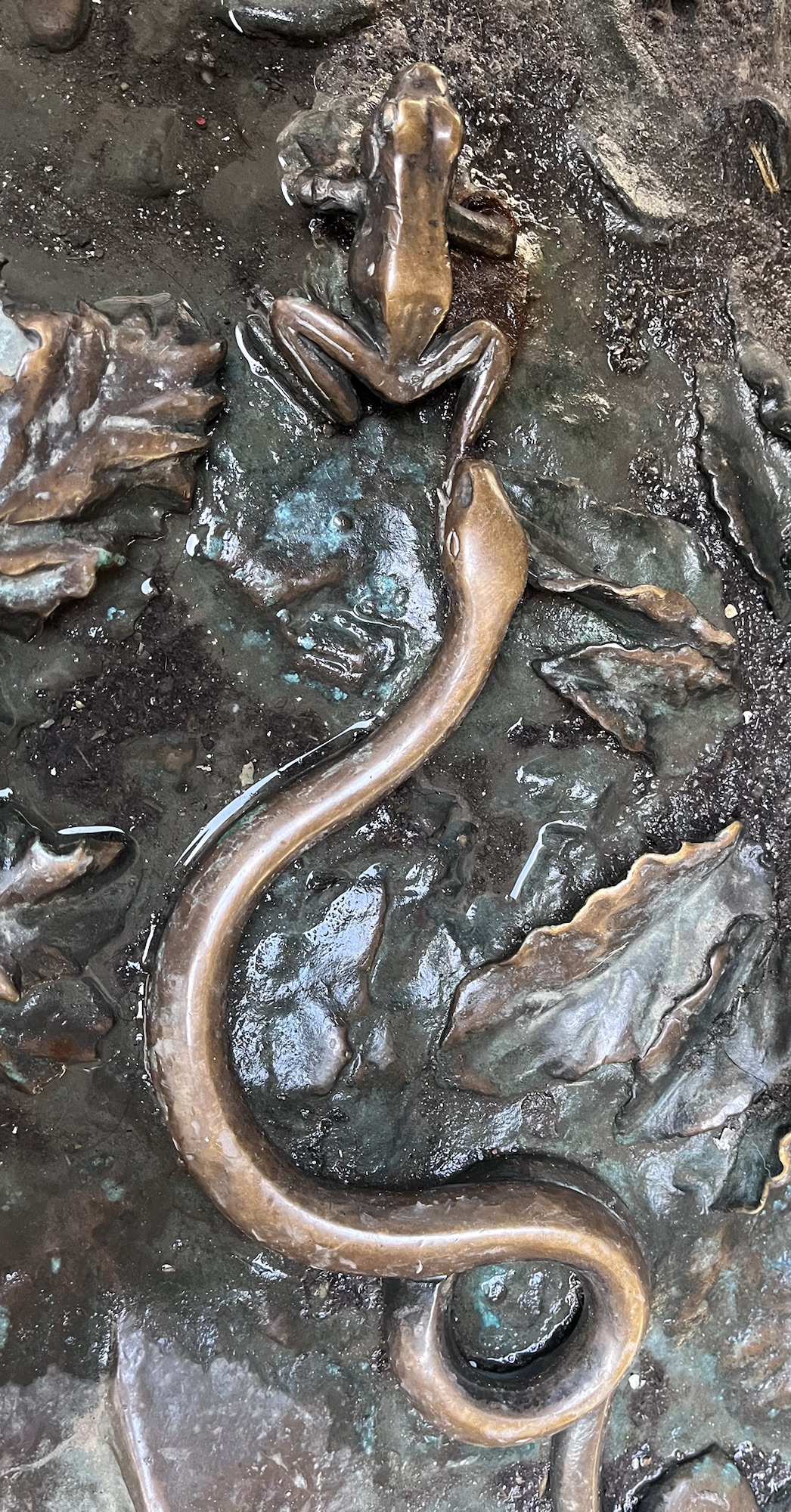
Most are so involved with touching the snout, I don’t believe they notice all of the other ‘critters’ in this sculpture. The more I circled it, the more I found. This is only a small sampling.

While TOTALLY different in materials and design both were interesting artwork found in the city called the birthplace of Renaissance.

Rome to Florence

All too soon, it was time to leave Rome and head towards our next stop – Florence, via train.

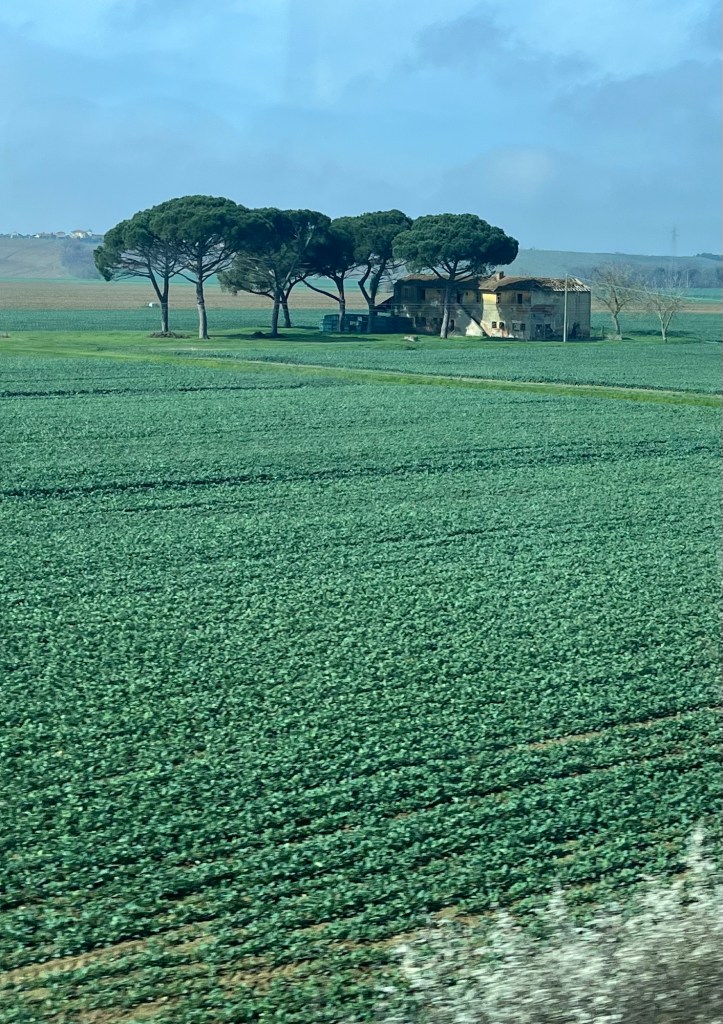
A few shots of the Italian countryside along our fast-paced journey.

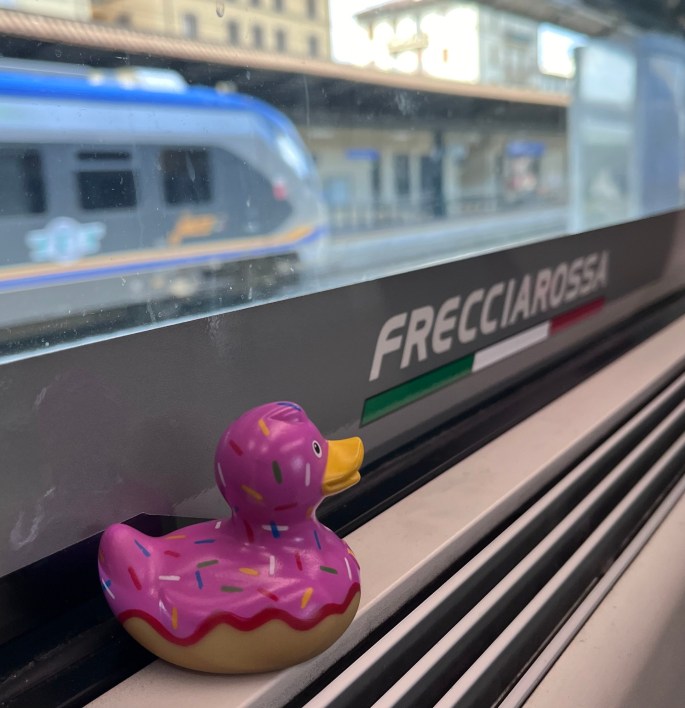
Adrienne brought along a little something extra and it has continued to bring smiles. I found a (very) different item in Rome. It makes me smile whenever it shows up in my photos.

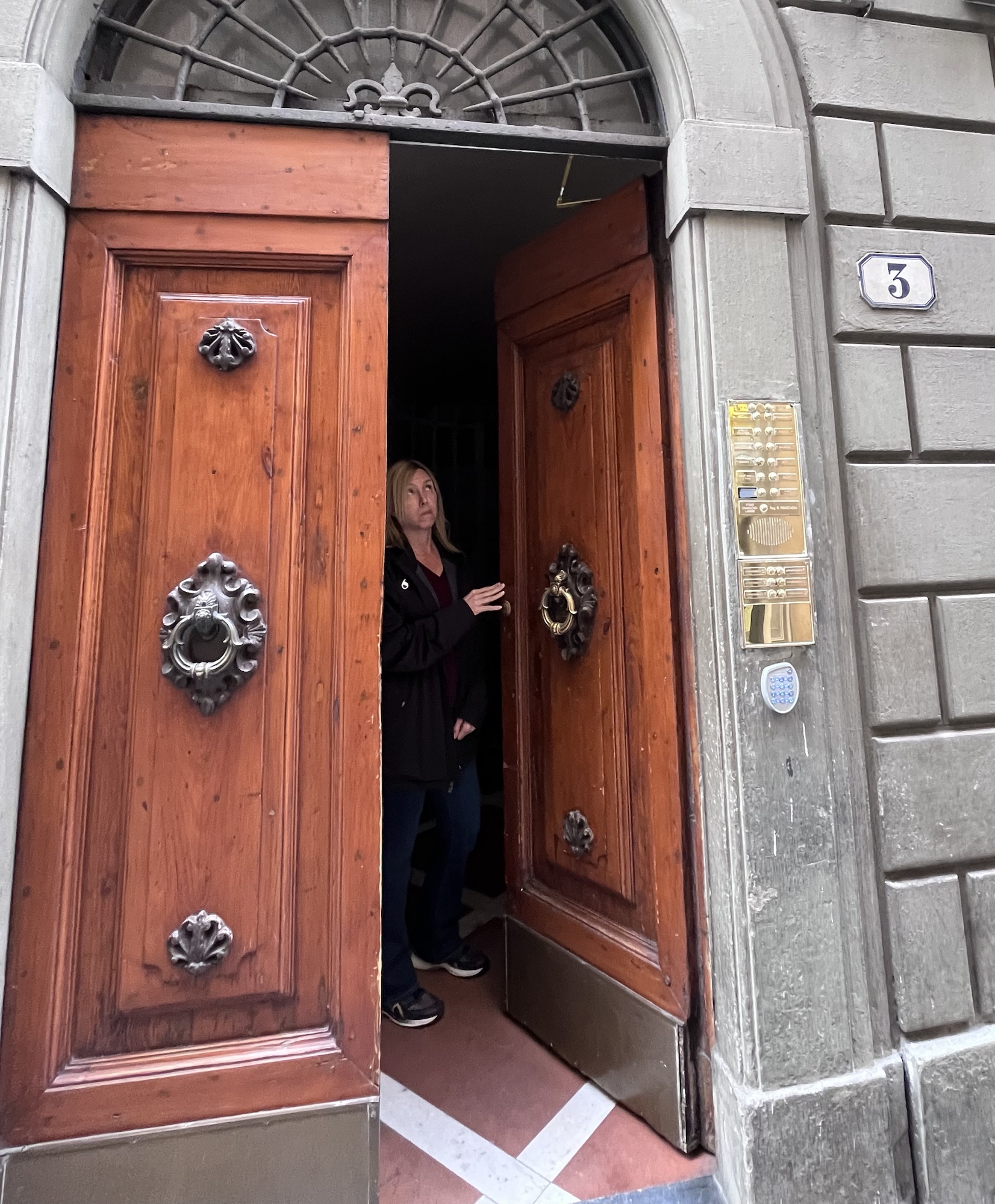
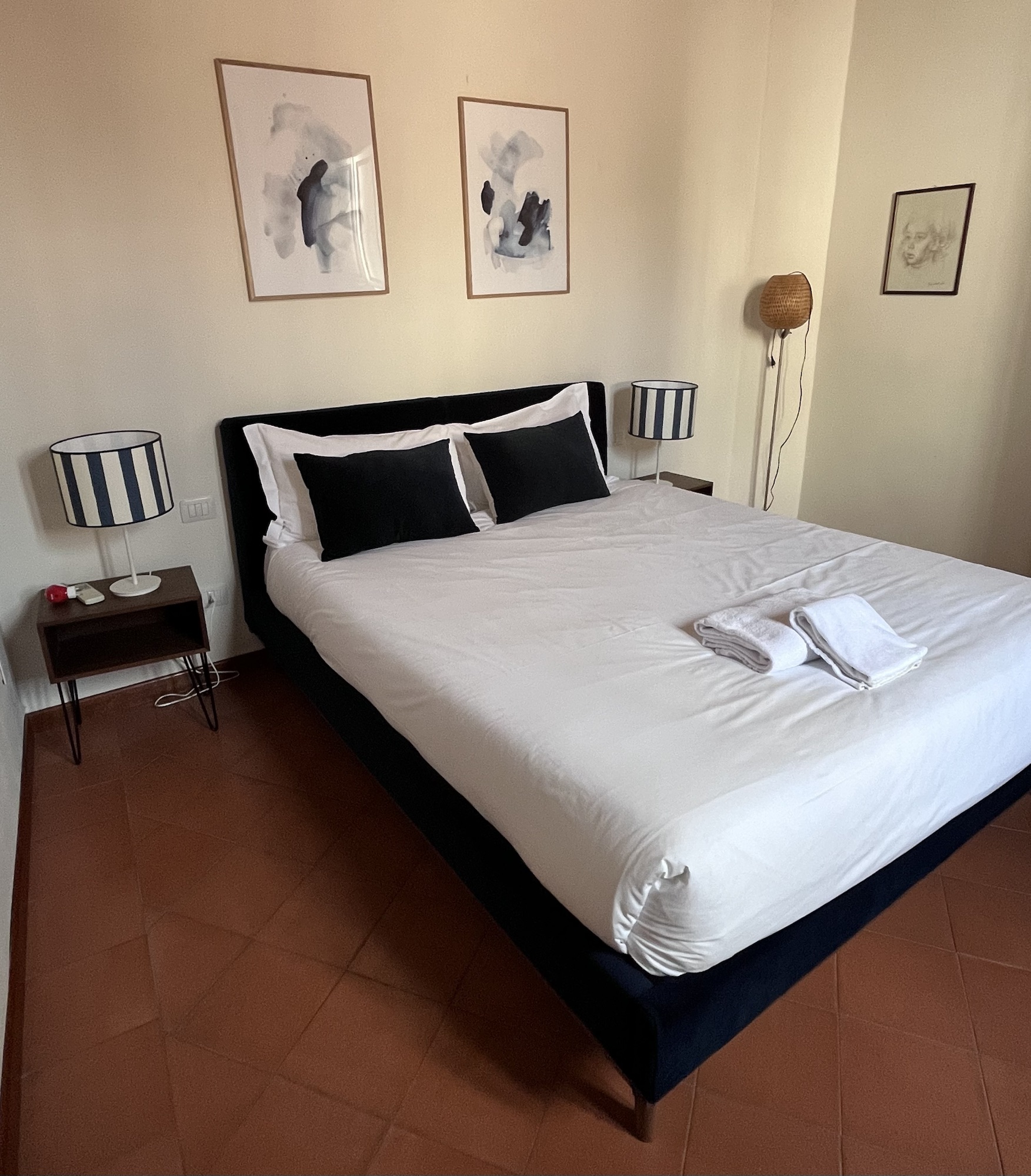
Our next apartment was another AirBNB rental.

Our first order of business was lunch. Our chosen destination was a local market located in the historic San Lorenzo marketplace, which opened in the spring of 2014 to celebrate the 140th anniversary of the iron & glass architectural building by a Florence designer. So sorry – that was quite a long run-on sentence.

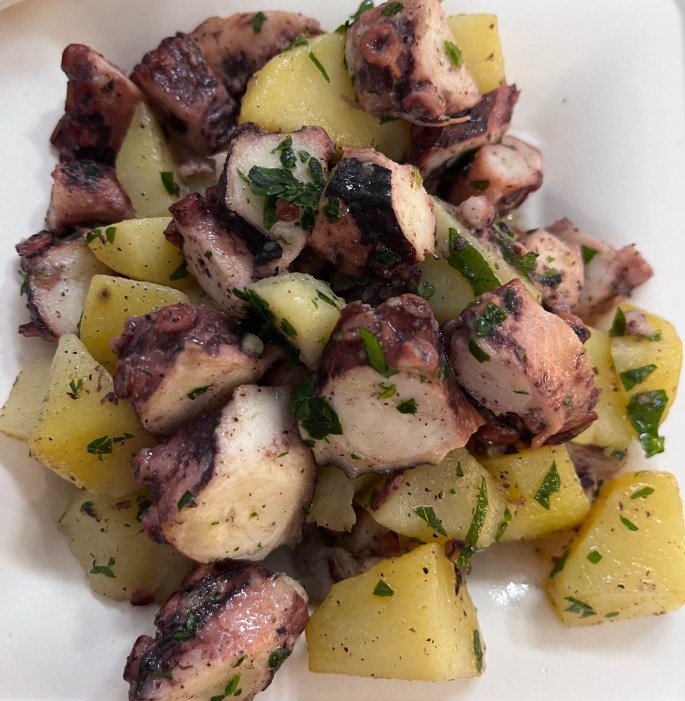
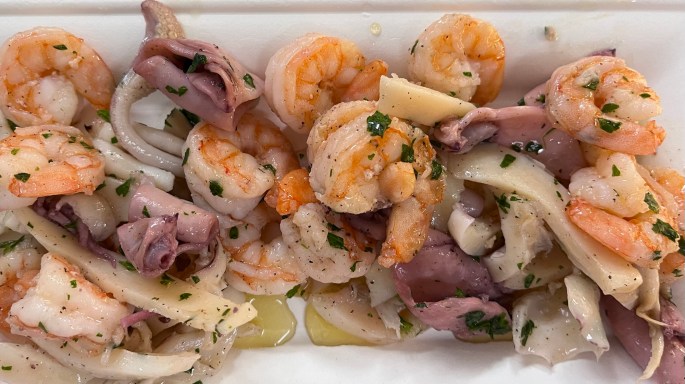
The good thing about eating in a food market……………we can each chose our own type of food. Eric was hankering for seafood and picked up these dishes.

octopus & potatoes

seafood medley of shrimp, calamari & cuttlefish

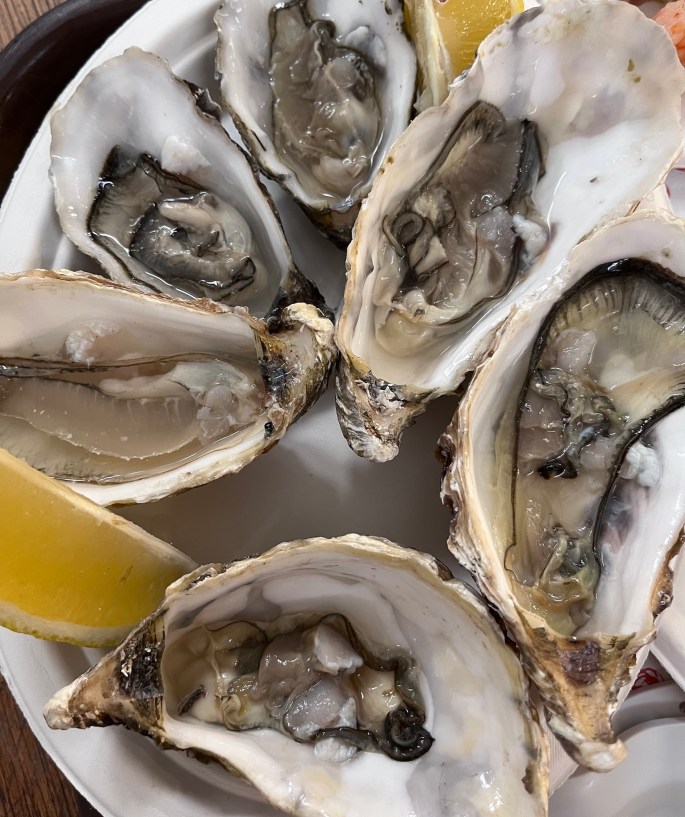
Naturally a few oysters were purchased by Eric. I tried one – still not as good as the ones I tasted in the north of France last year.

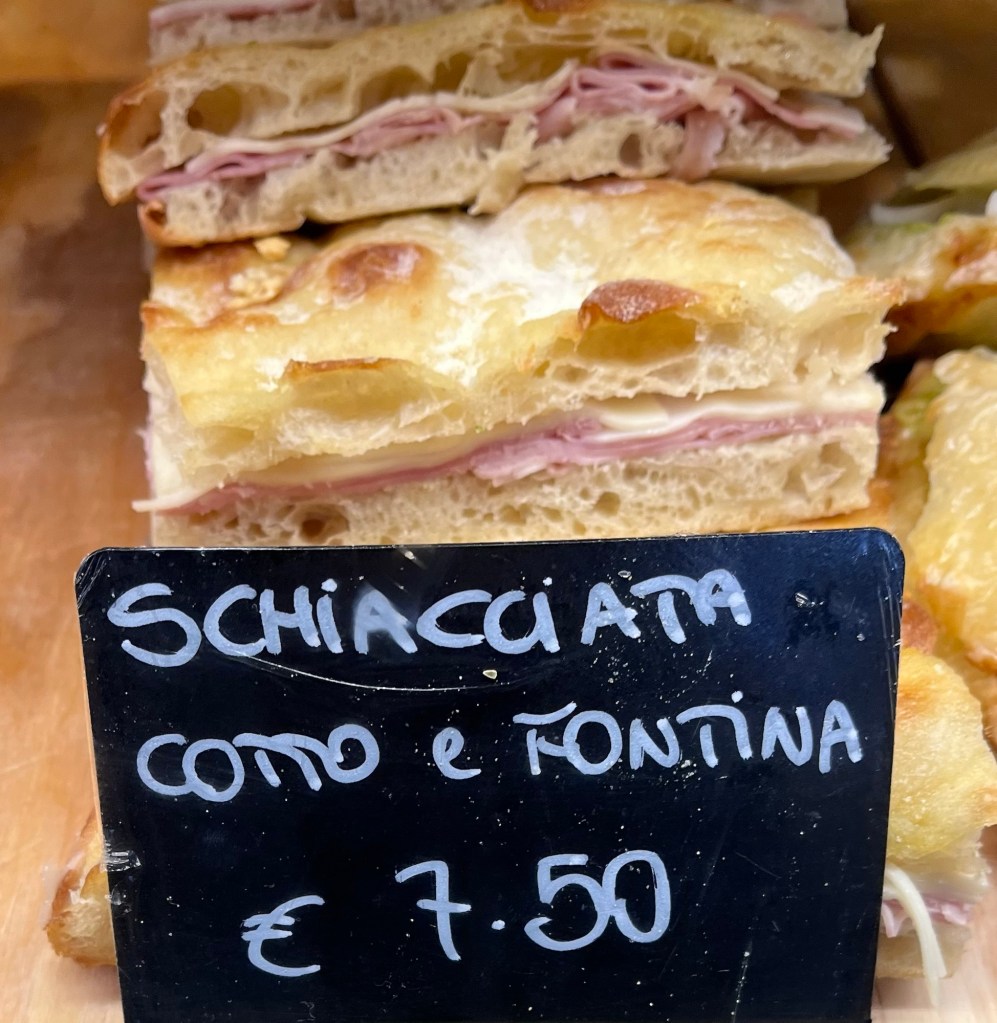
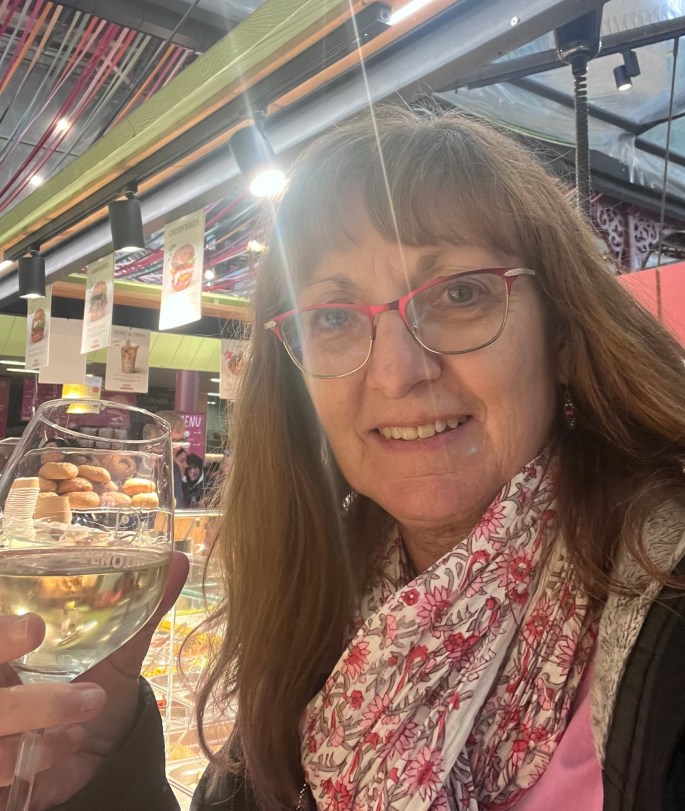
I felt like a sandwich, accompanied with wine. I only expected to eat half of it. Nope, it was all gone when my wine was finished. The focaccia bread for my sandwich – absolutely delicious!

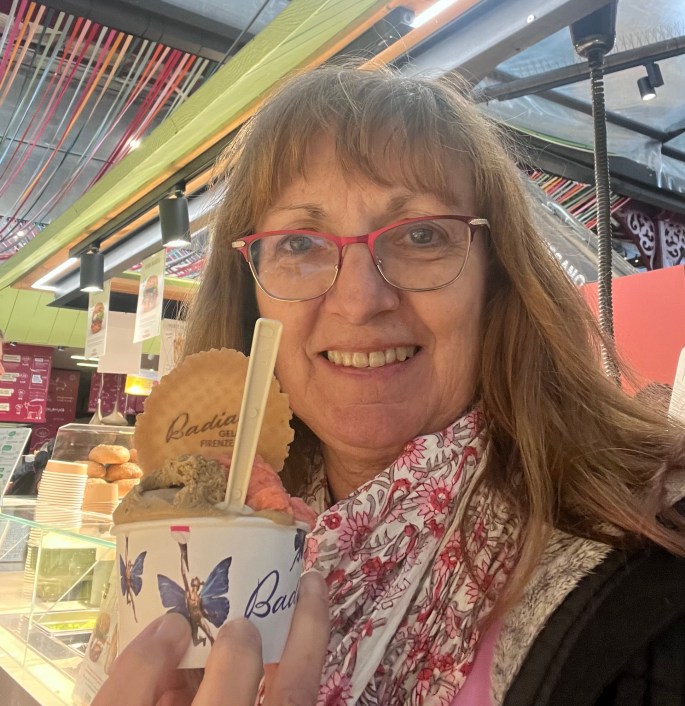
Topped it off with some gelato – which filled in the cracks. Coffee and strawberry were my flavors of choice.

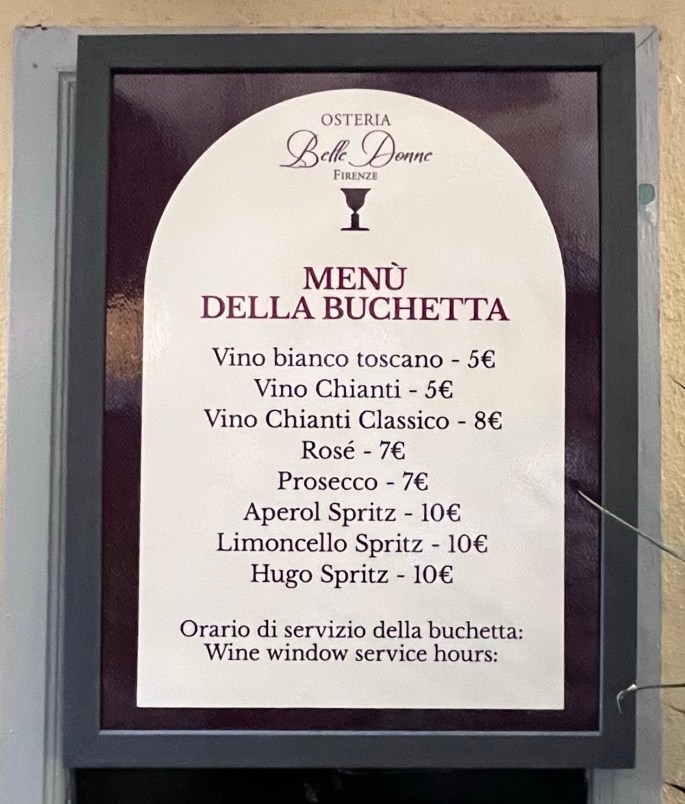
After a short nap (I needed one!) we went in search of a ‘wine window’. What was that? exactly like what is sounds.

The tradition of wine windows dates back to the 16th century when aristocratic families were granted permission to sell the wine they produced in the countryside to consumers directly from their houses, without any middlemen or taxes. Cosimo de Medici, a clever banker and lord of Florence, was the mastermind behind this new sales practice.  The window below was fairly close to us.

The true genius of these wine windows came to light during the plague that hit Florence in the 17th century. With the city in the throes of a deadly epidemic, the wine windows proved an ingenious architectural solution that allowed commerce to continue without risking further contagion.

Wine windows were in use until the 1920s. But – as we are all well aware – , history repeated itself in 2020 with the onset of the most recent pandemic. Many savvy restaurateurs and bar owners were able to weather the storm by serving customers through these windows. It’s a fun way to drink some wine.

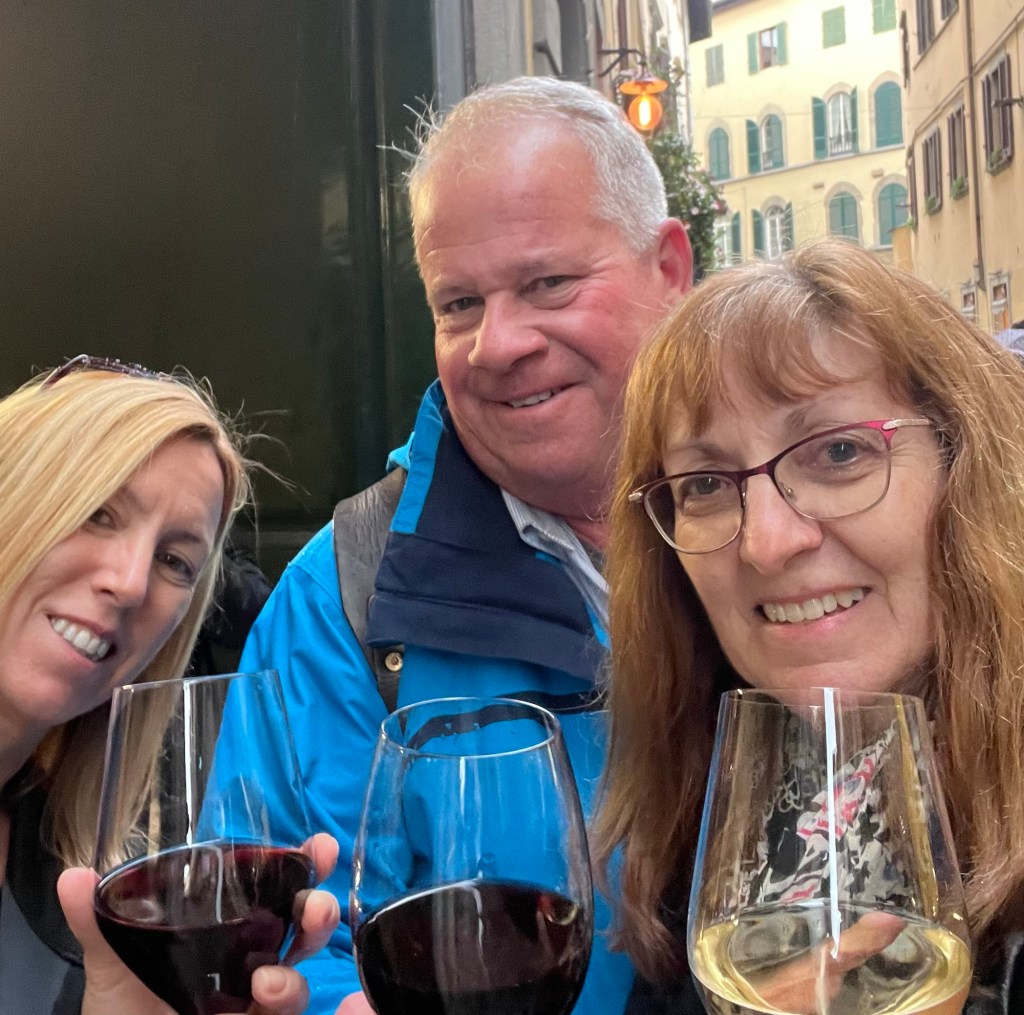
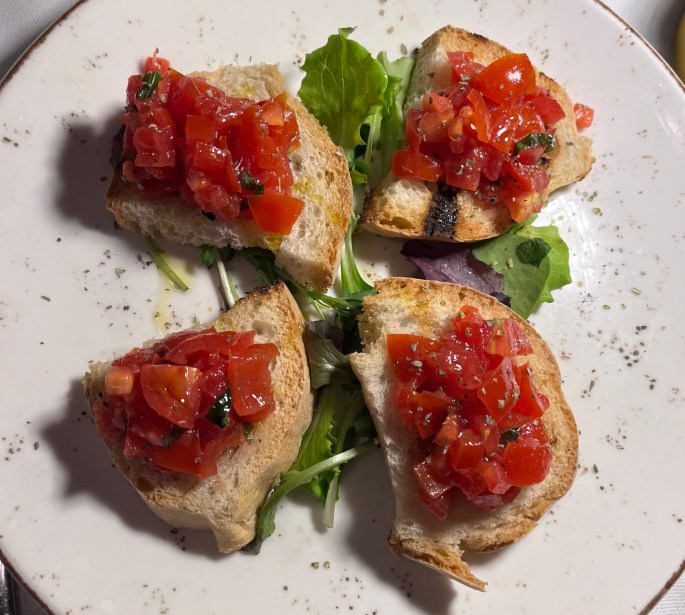
The full experience continued when we went inside in for dinner at Osteria Belle Donne. The kitchen offers traditional Tuscan and Italian dishes prepared with genuine and seasonal raw materials cooked according to ancient recipes. We started with a simple but very tasteful bruschetta – excellent way to clean your palate. We had bruschetta several times, but I believe this was the best of the best.

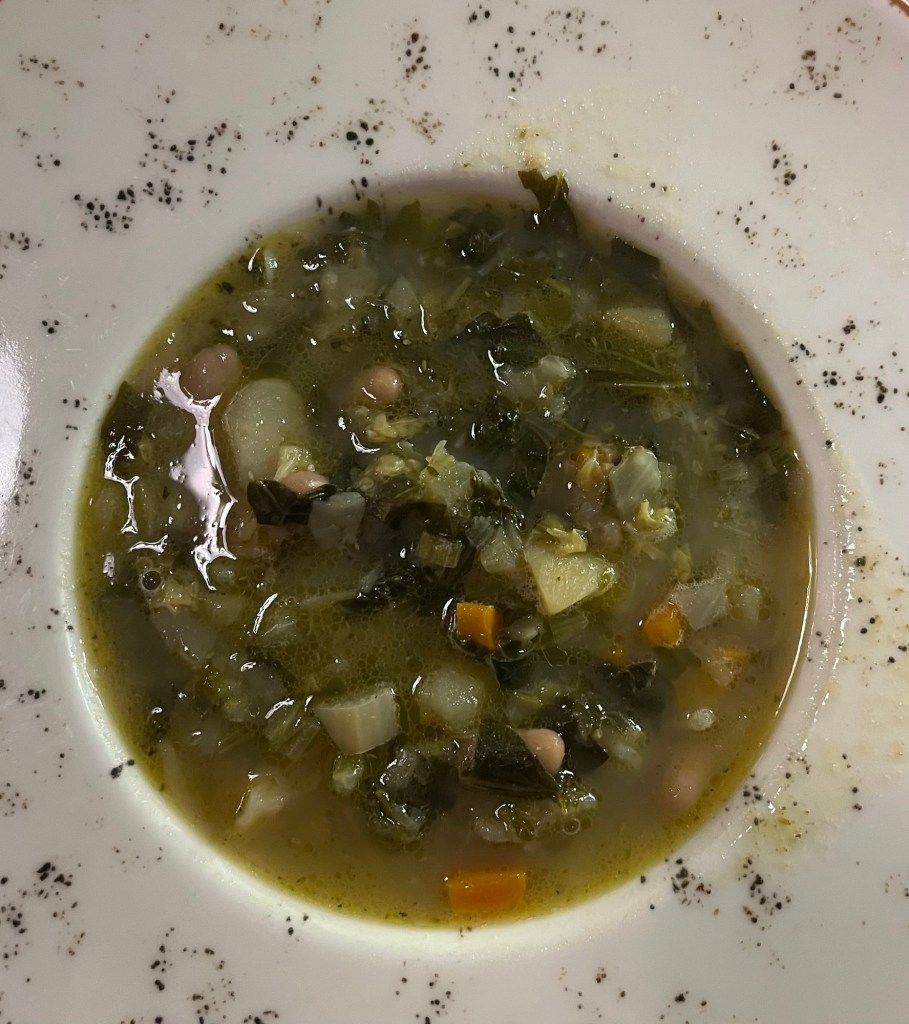
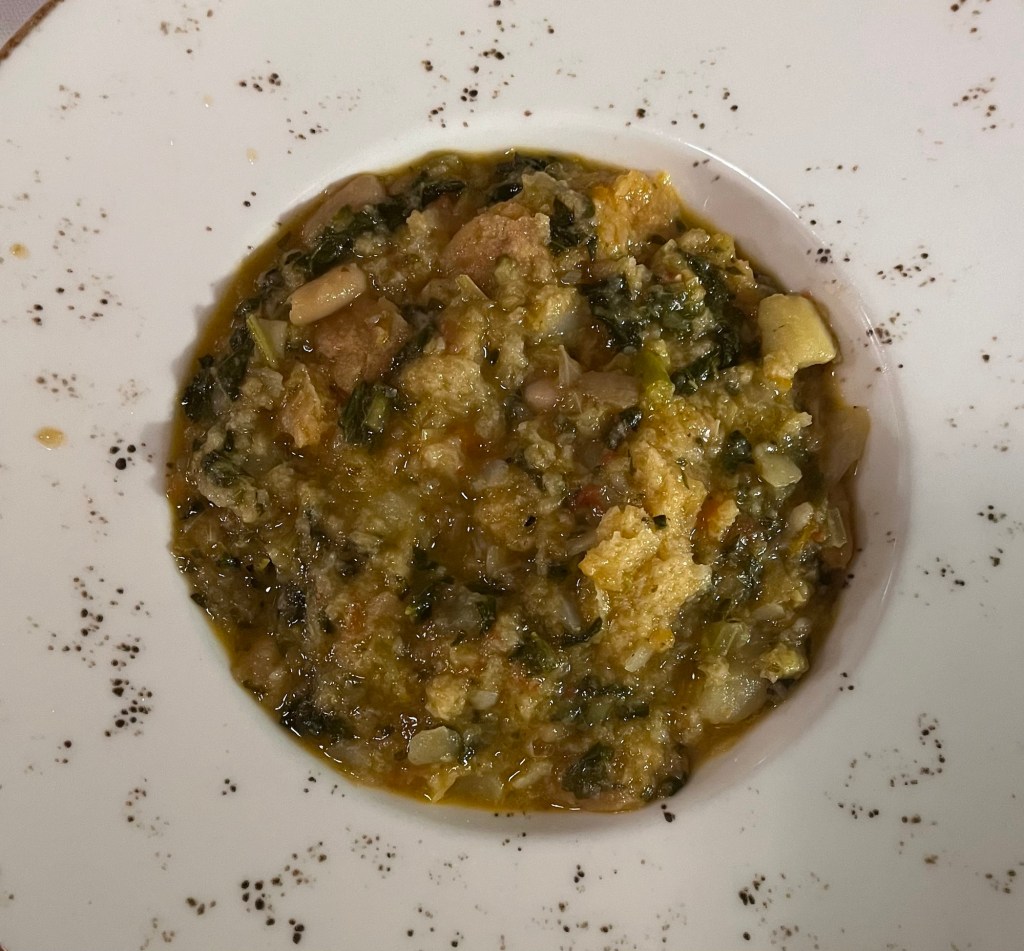
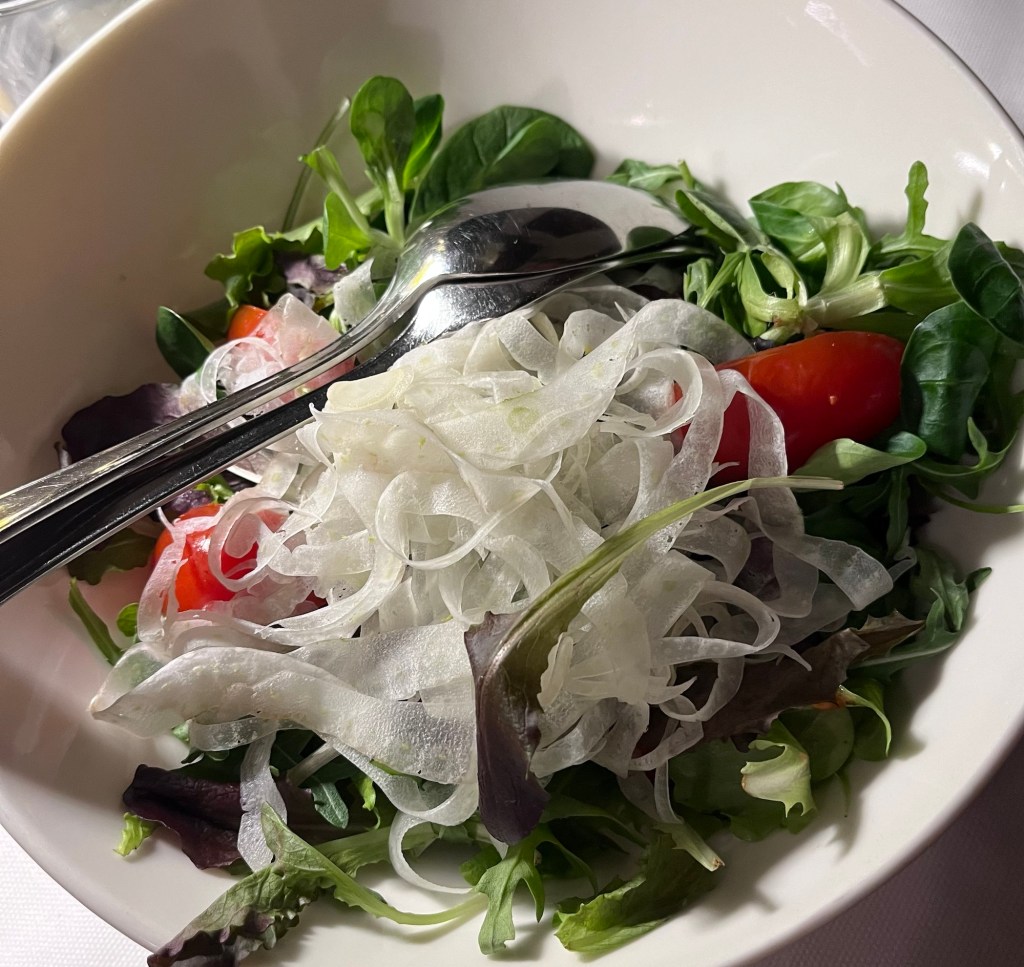
It was a nice evening for soup, soup and salad.

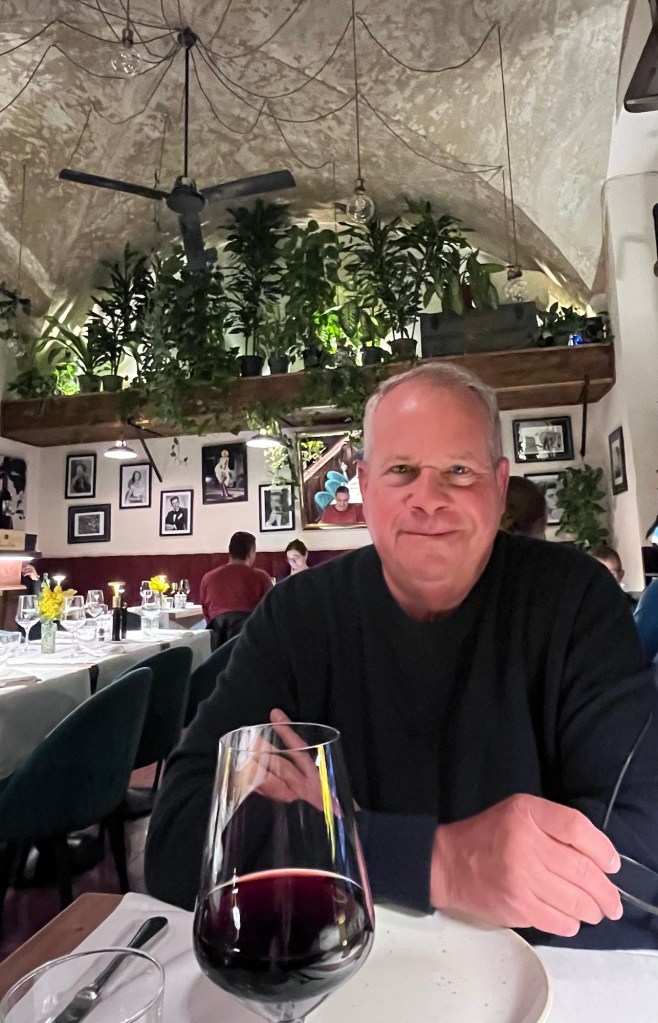
Loved the interior of the restaurant. An interesting ceiling, lined with plants and lights added to the ambience.

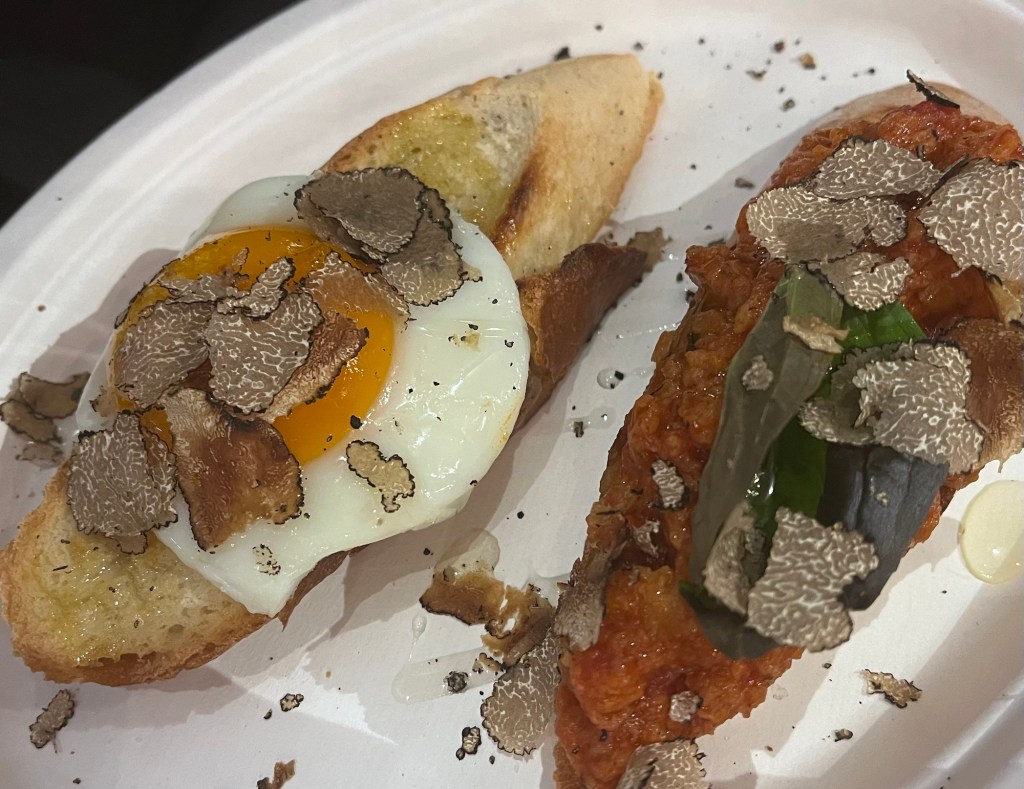
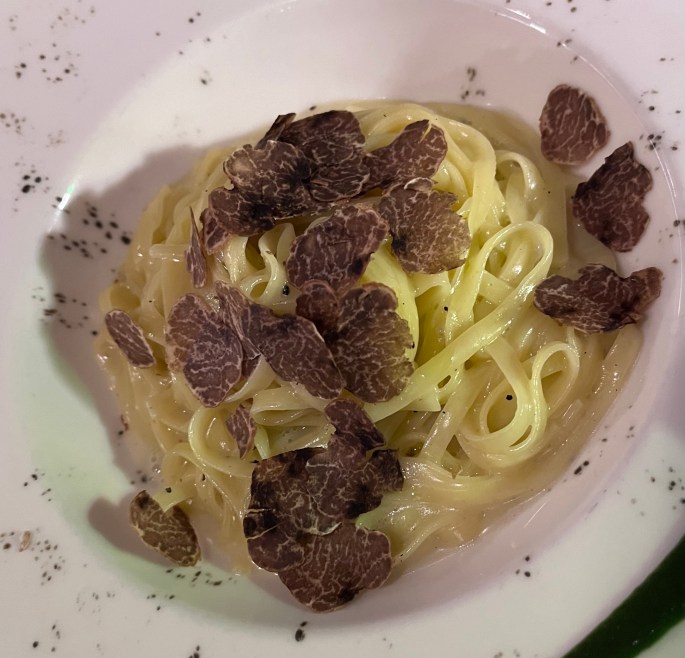
Eric needed more than soup and got the pasta with fresh truffles.

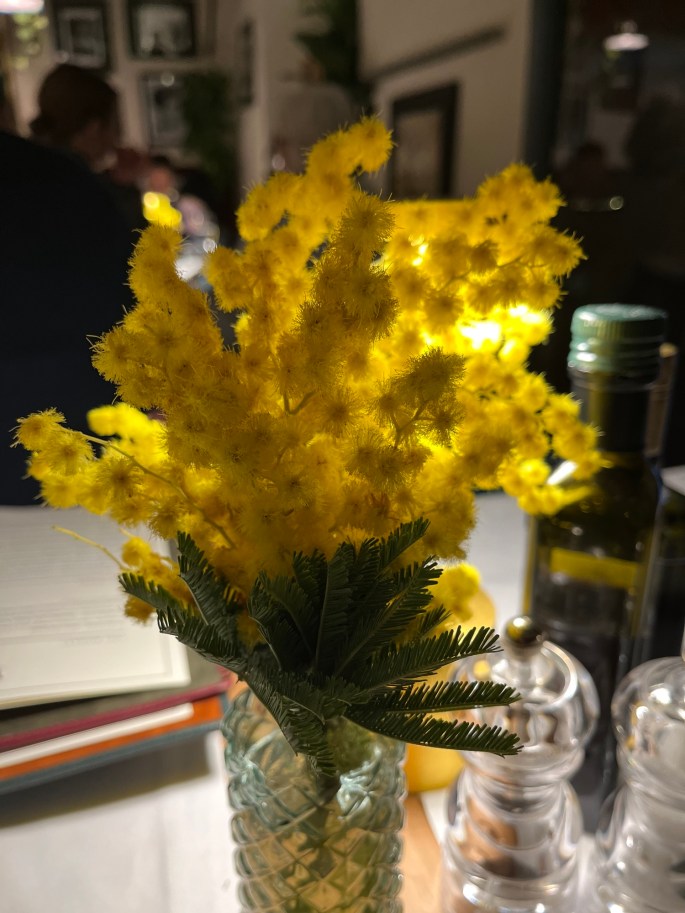
Notice the yellow flower on the table? They were very prevalent on our day of travel and were seen everywhere. Why? The yellow mimosa became the symbol of International Women’s Day in Italy and we were in Italy when celebrated. 🙂

Rome History – part 4, The Vatican

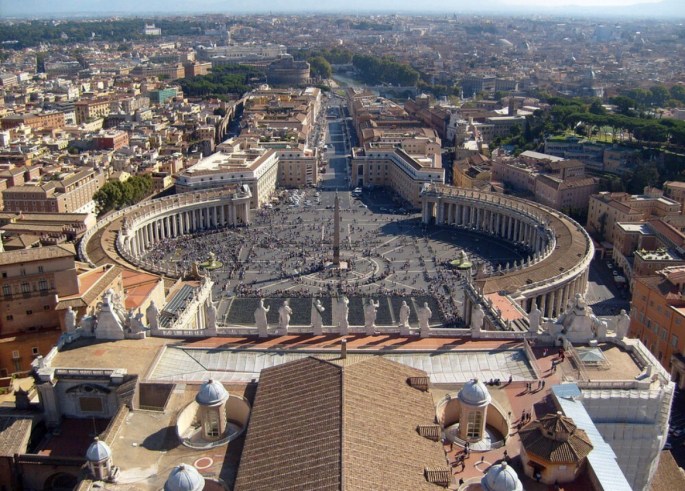
Vatican City – a landlocked independent country gaining independence from Italy in 1929. At 121 acres it is the smallest state in the world by area and population.

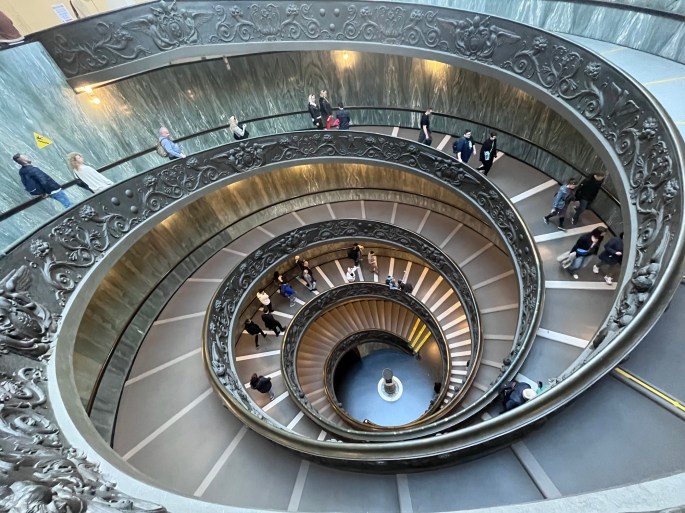
After stepping across the ‘boundary’ into this country, we came across the double-helix staircase. Eric assumed we were going down the staircase – no. You can see him in the blue shirt and backpack. He had to hurry back up to join the tour.

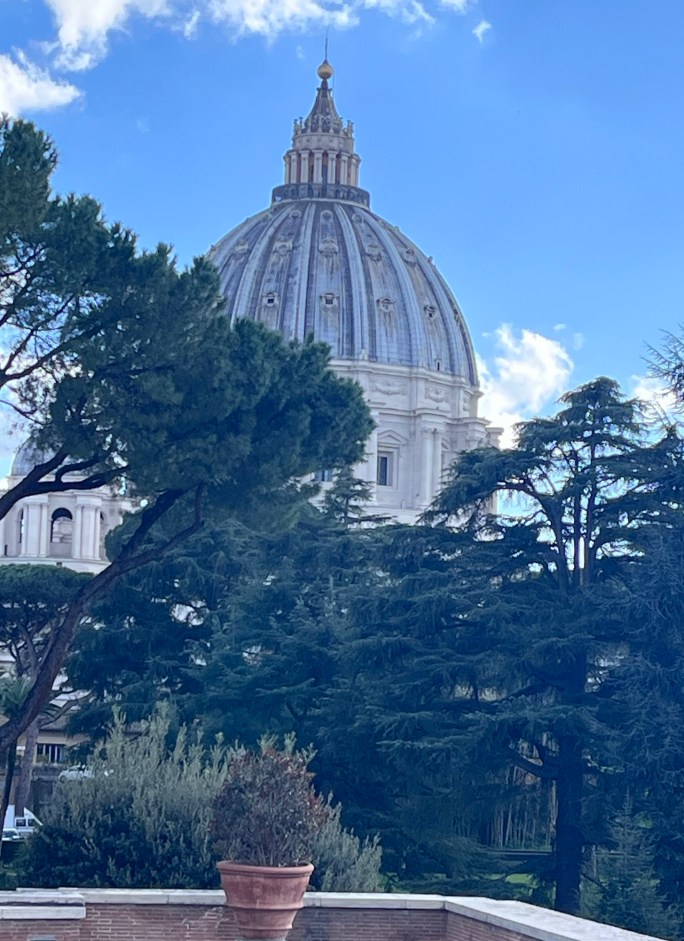
We stopped at this balcony to get a photo of St. Peter’s dome before exploring the treasures of the Vatican.

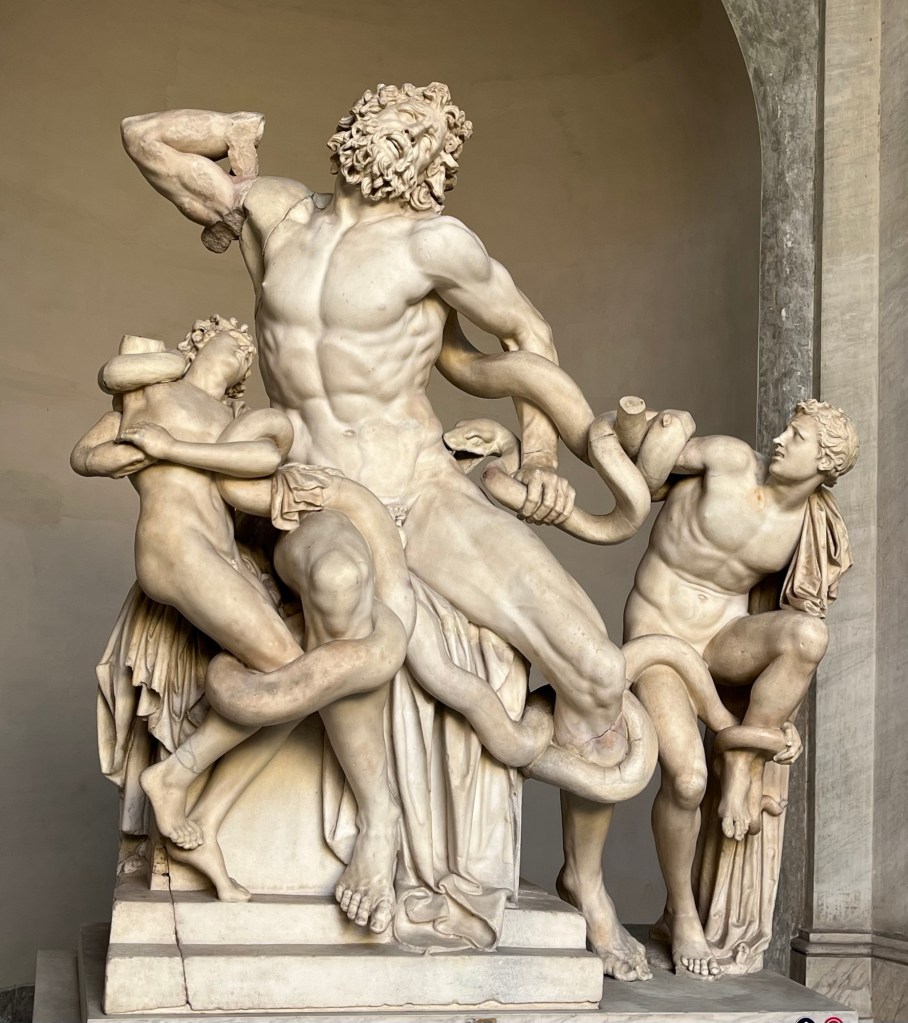
Our first little portico we stopped at had these statues.

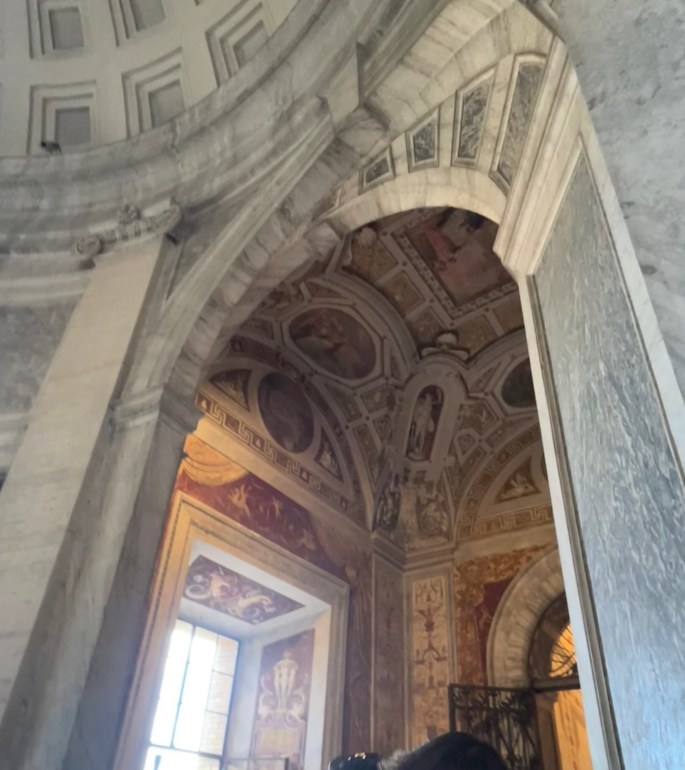
This twisted archway was different and interesting.

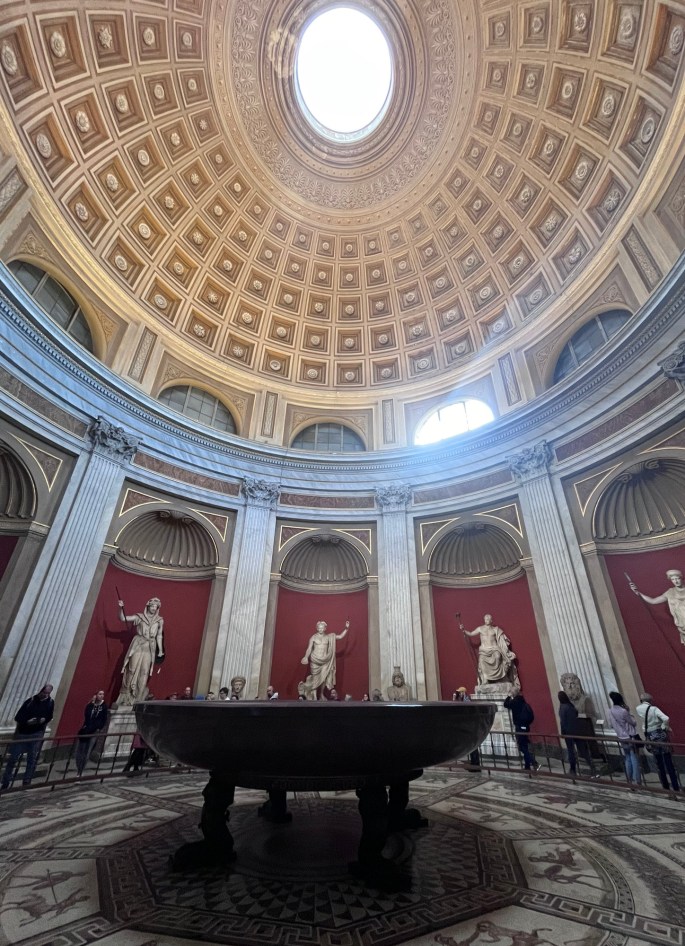
Leading us to this rotunda of statues, with the dome reminiscent of the Pantheon in Rome.

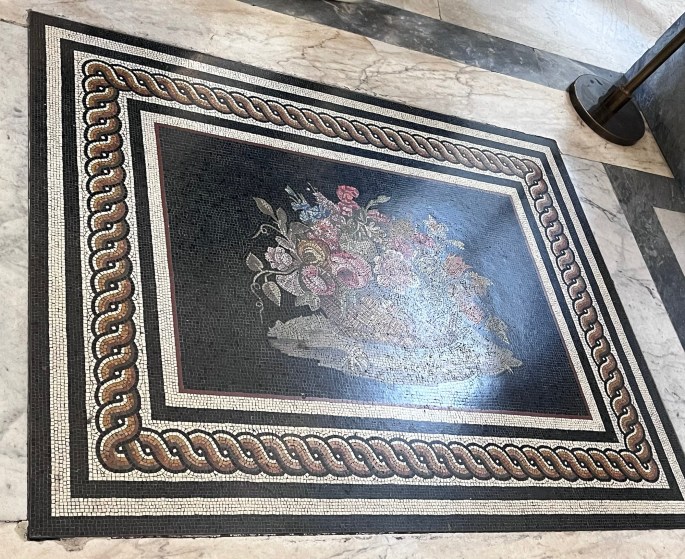
Everyone is always looking up but artwork also abounds on the floor – like this floral mosaic.

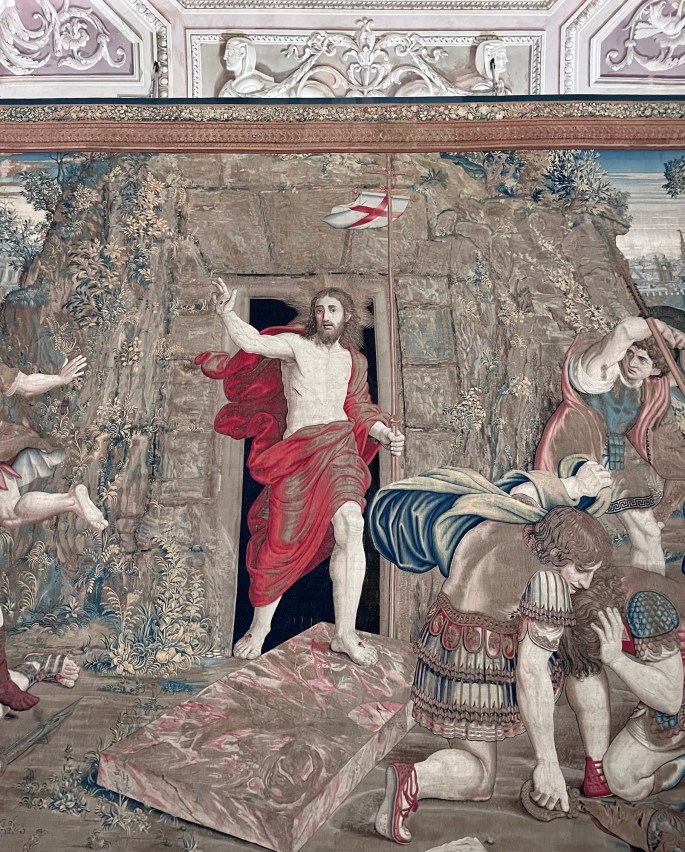
One hallway was dedicated to tapestries.

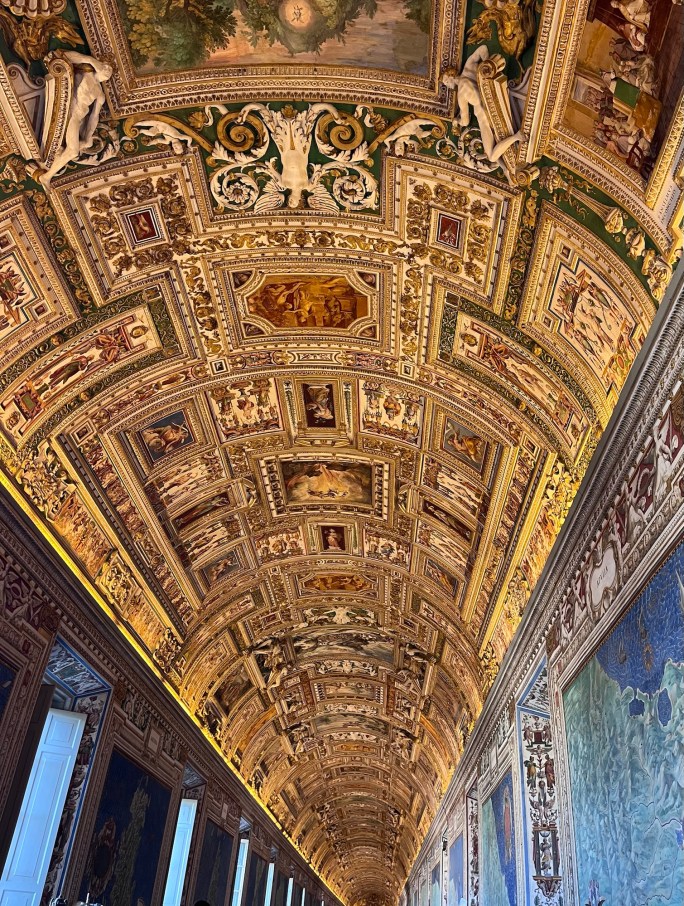
Right before we walked through the map room.

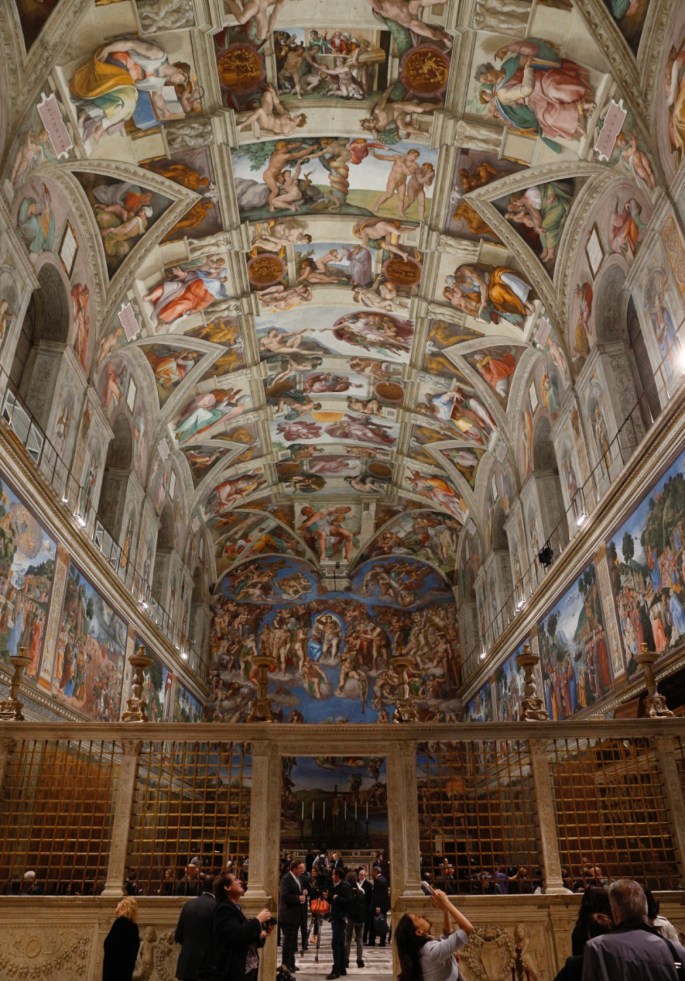
No photos are allowed within the Sistine Chapel. I searched on the internet and found this shot which I liked. A lot of story-telling going on and our tour guide educated us on the different panels before walking through. While we were there, prayers were given in several languages, making it a bit more realistic and special. The fame of the Sistine Chapel lies mainly in the frescoes that decorate the interior.

One of the functions of the Sistine Chapel is as a venue for the election of each successive pope in a conclave of the College of Cardinals. On the occasion of a conclave, a chimney is installed in the roof of the chapel, from which smoke arises as a signal. If white smoke, which is created by burning the ballots of the election, appears, a new Pope has been elected. If no candidate receives the required two-thirds vote, the cardinals send up black smoke—created by burning the ballots along with wet straw and chemical additives—it means that no successful election has yet occurred.

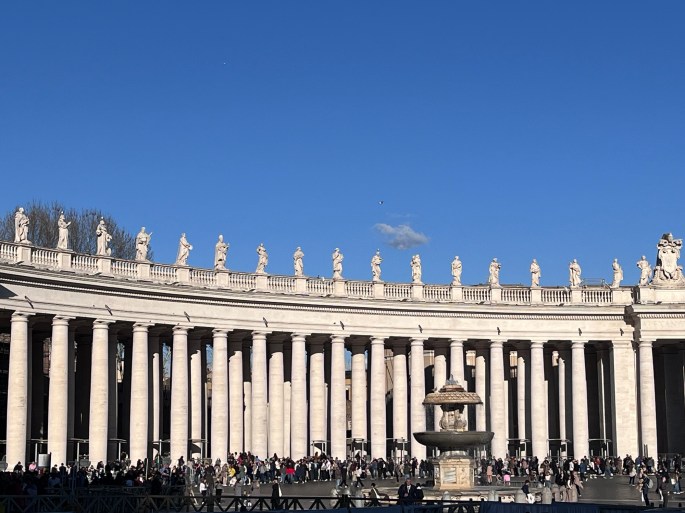
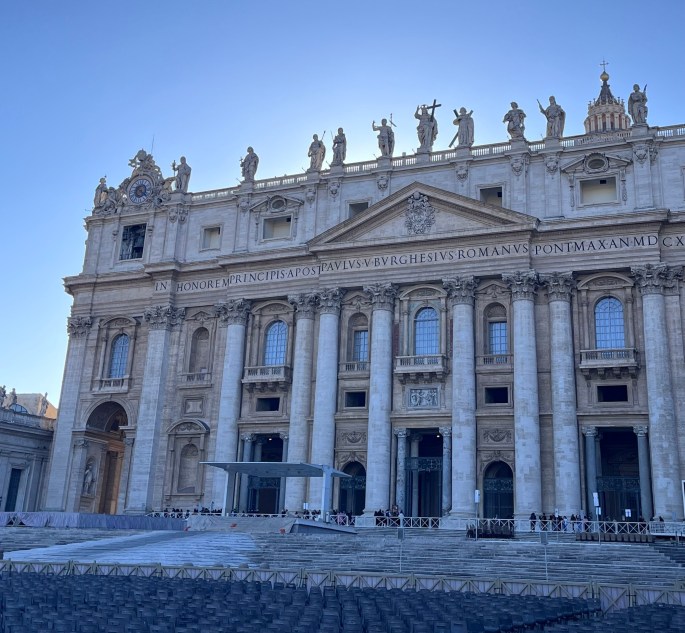
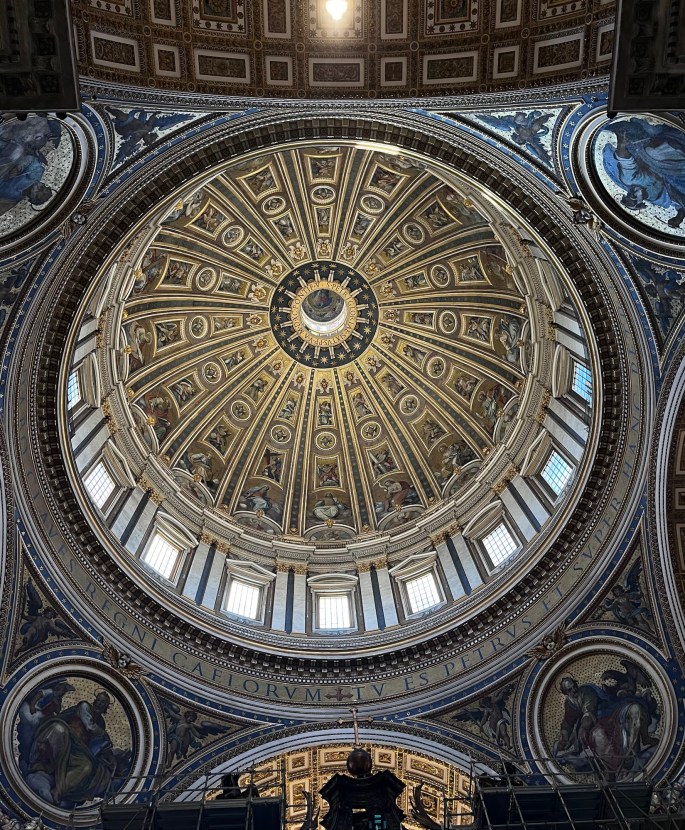
The last part of our tour was St Peter’s Basilica.  It is one of the most renowned works of Italian Renaissance architecture and the largest church in the world by interior measure.

The dome was closed for touring, but I could get a shot without showing (much) of the scaffolding.

Most of the alter was also blocked but I could squeeze in a tiny photo from the side.

St. Peter’s is regarded as one of the holiest Catholic shrines. It has been described as “holding a unique position in the Christian world” and as “the greatest of all churches of Christendom. There is sooooooo much to this place. It was one of our last activities in Rome and took me quite a while to go through the large number of photos I took.

A view of Rome from Vatican City