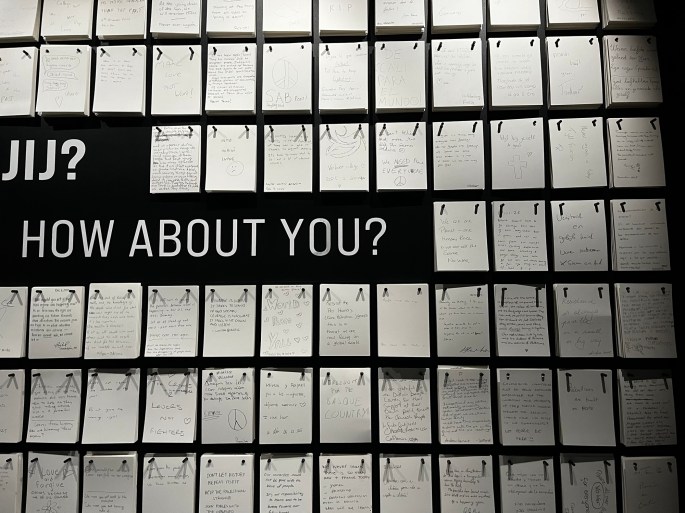
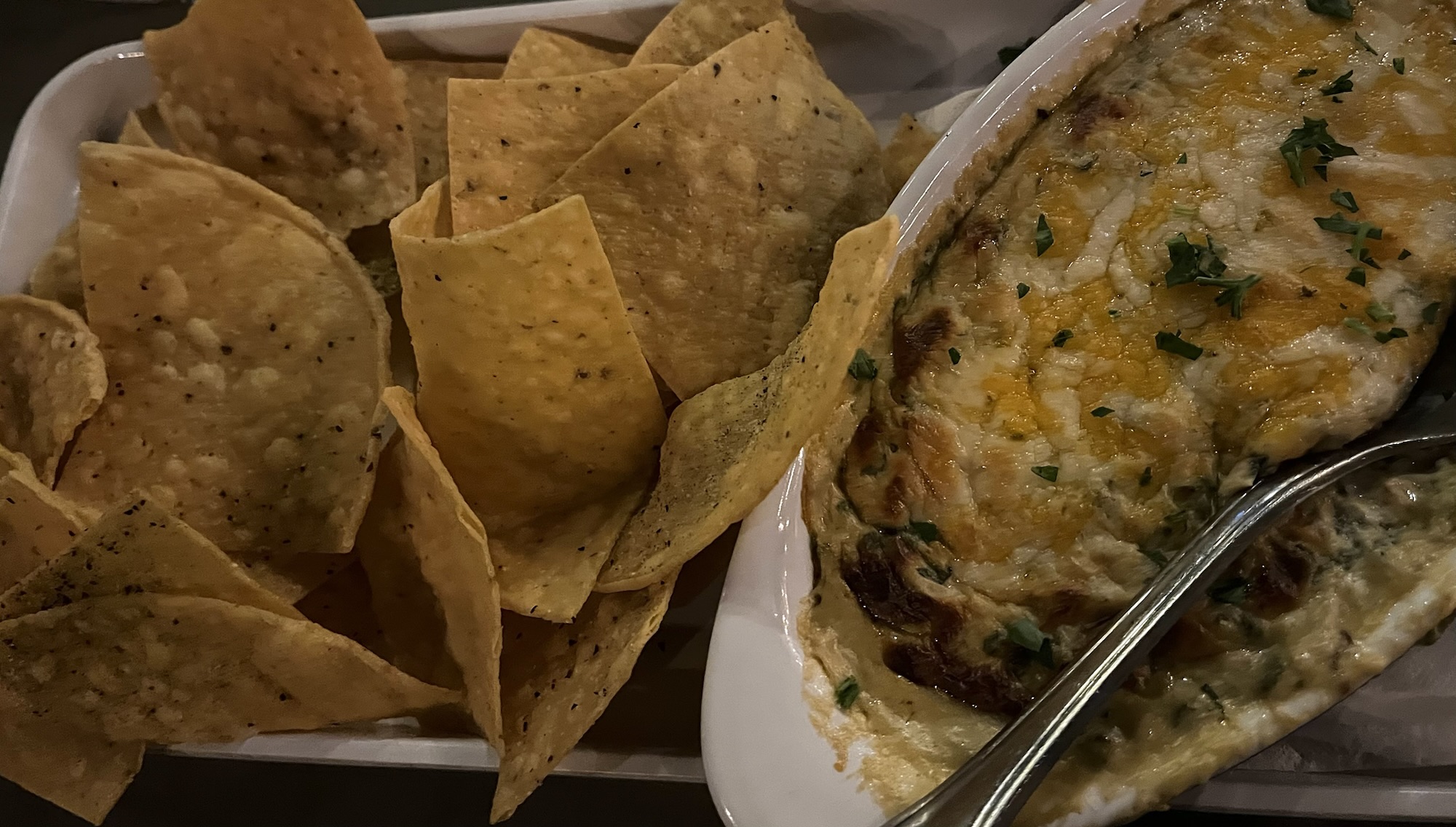
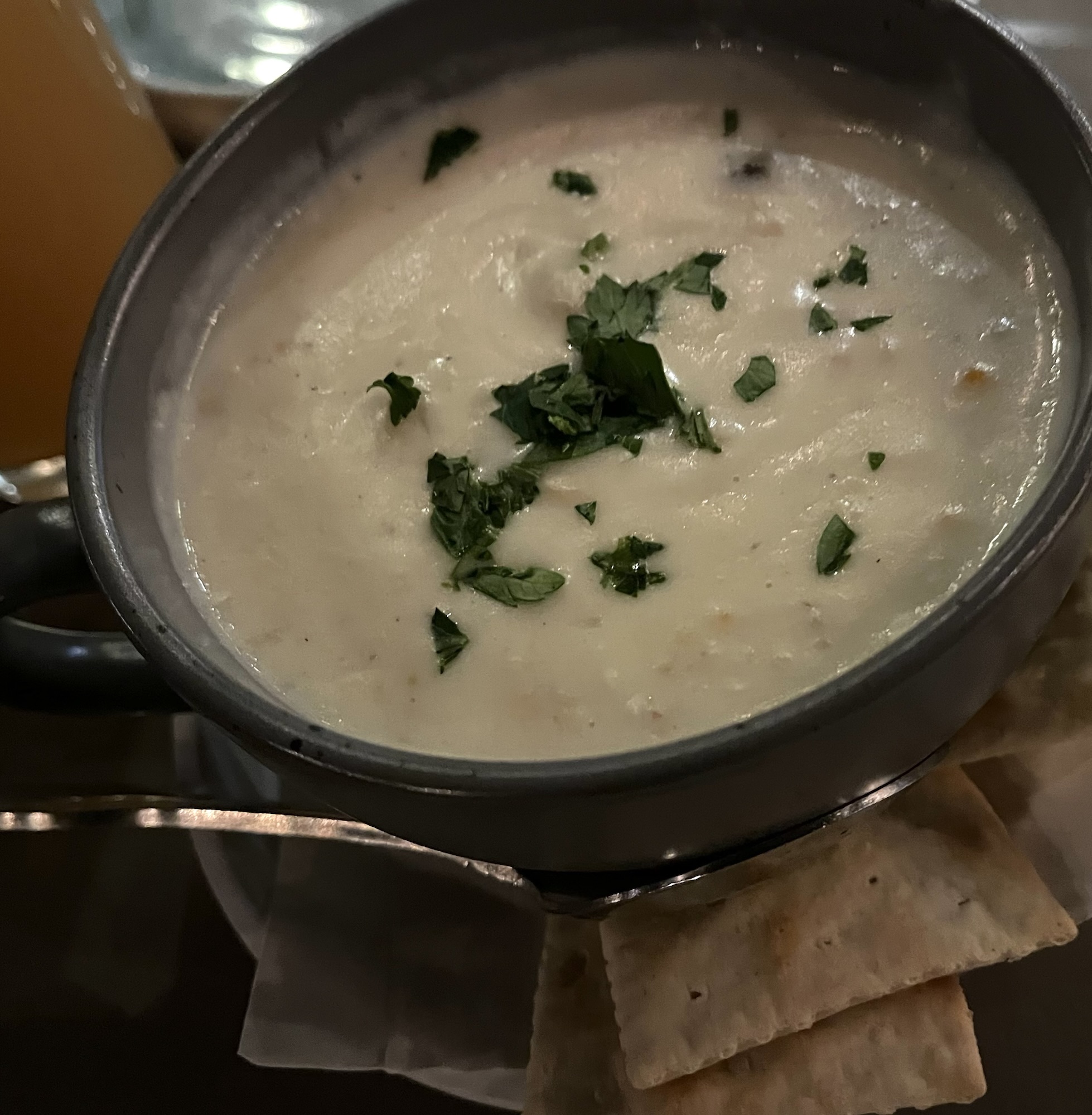
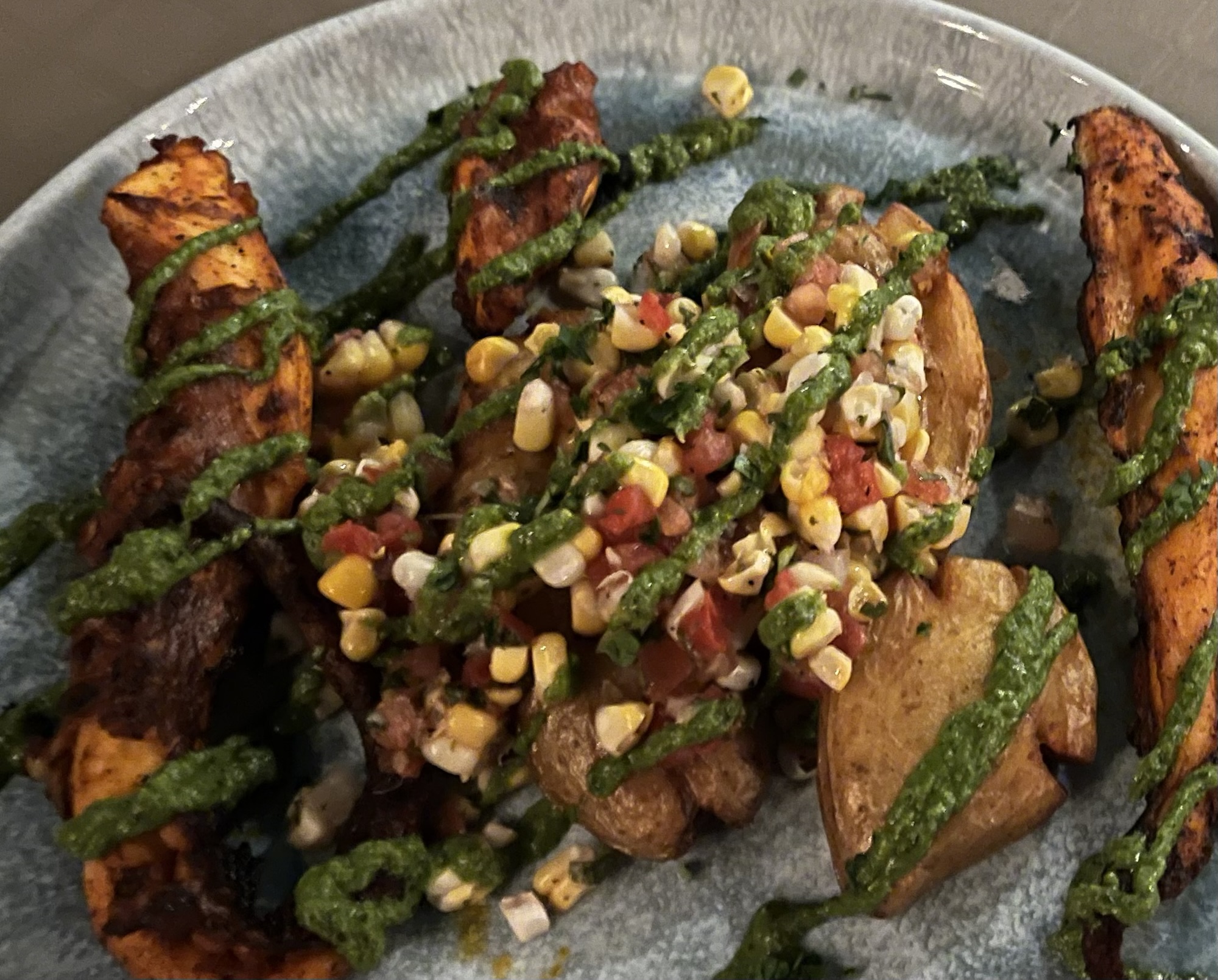
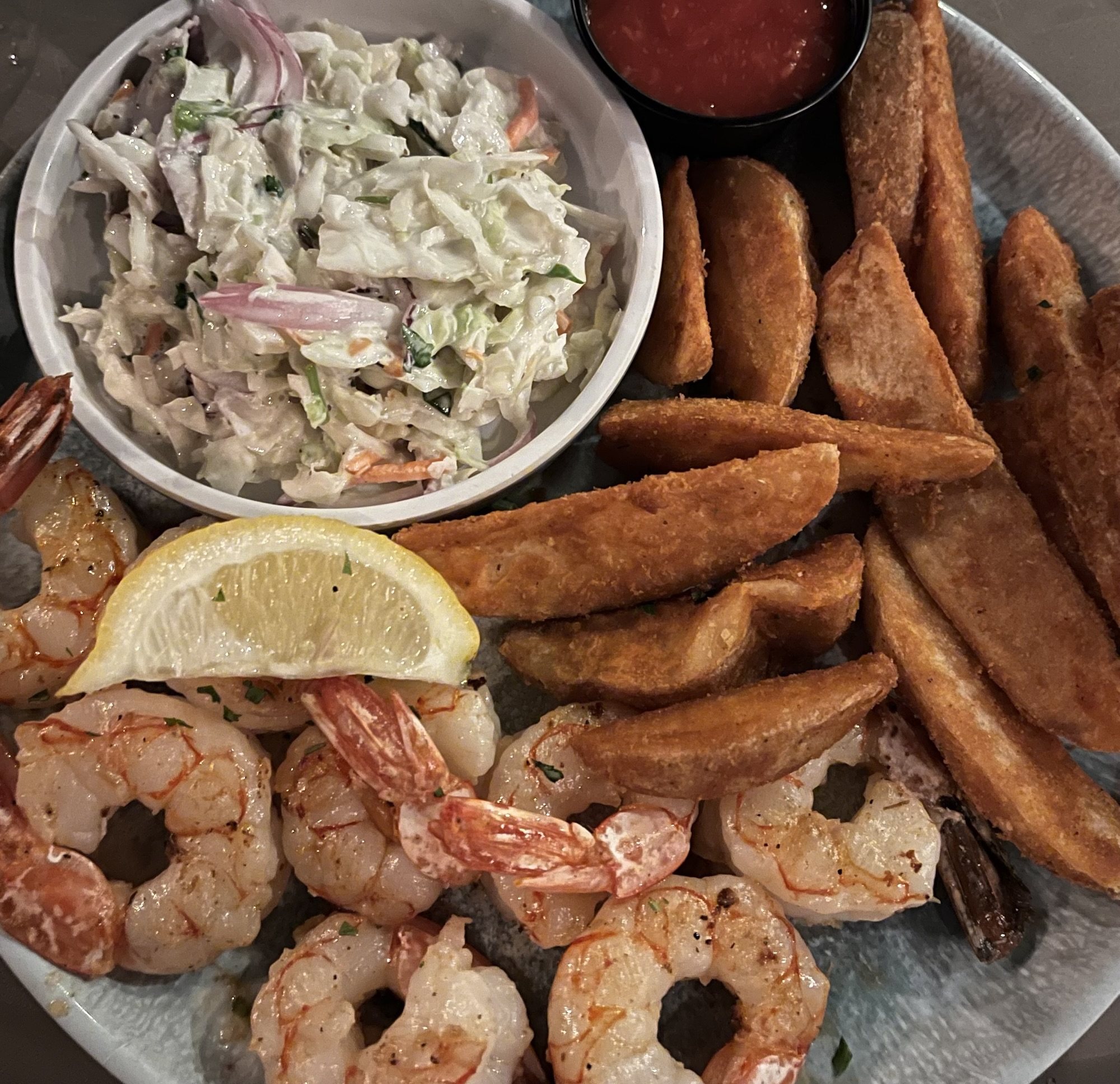
How often do you walk or run?
Every morning on my treadmill. Love to get moving in the morning.
How often do you walk or run?
Every morning on my treadmill. Love to get moving in the morning.
Final photos and experiences in Strasbourg before heading to Paris.
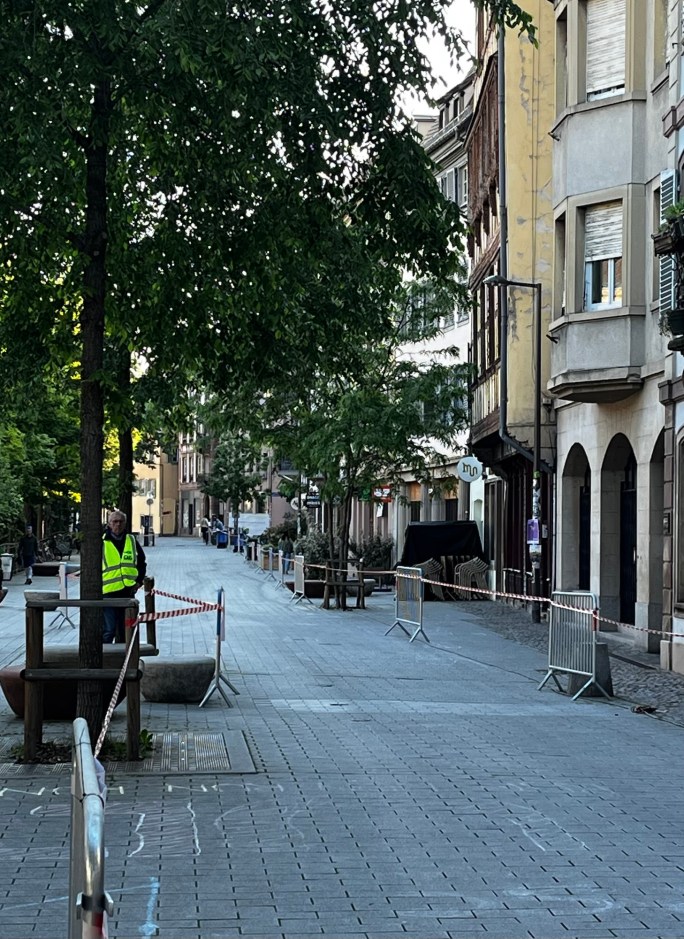
One morning Rich and I got up before the others to walk the streets early morning. There was something going on……………..

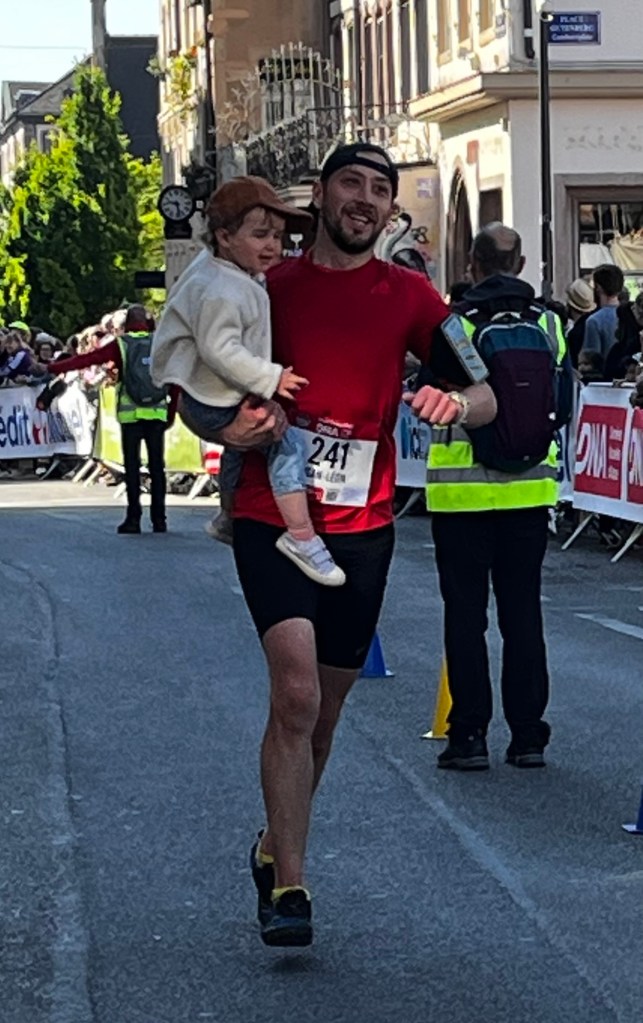
We discovered there were multiple races occuring simultaneously, various lenghts and ages. We made the way to the finish line and this gentleman picked up his daughter about 20 feet before the finish line – very cute.

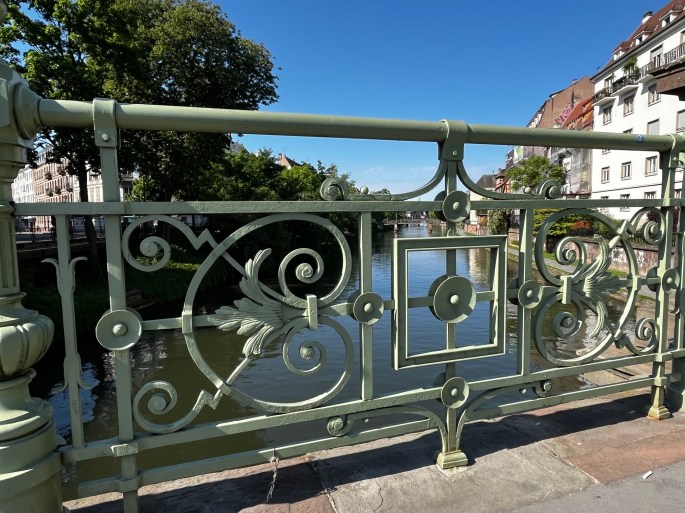
Walking the historic center, I curated a number of photos. A number of bridges exist for walking or driving. It seemed like all those we crossed had ironwork, nice.

I really don’t like the locks, but I see them everywhere – even in Iceland. Really? Really!

A few city or neighborhood parks were sprinkled throughout the downtown area.


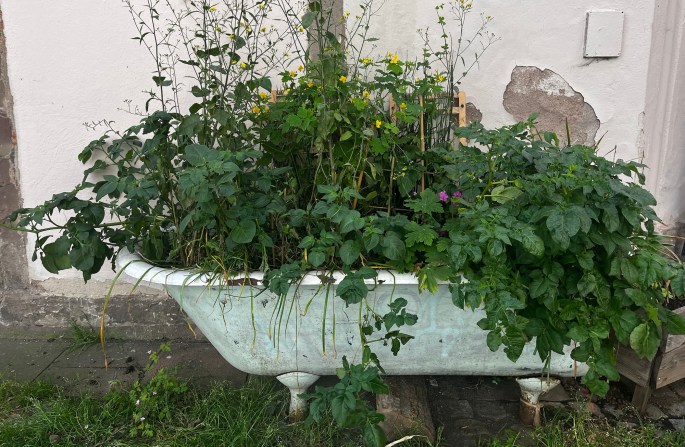
Another use for a tub. This one had a few vegetable plants along with herbs sprinkled amongst the flowers.

One afternoon several of us walked to the University’s botanical garden.

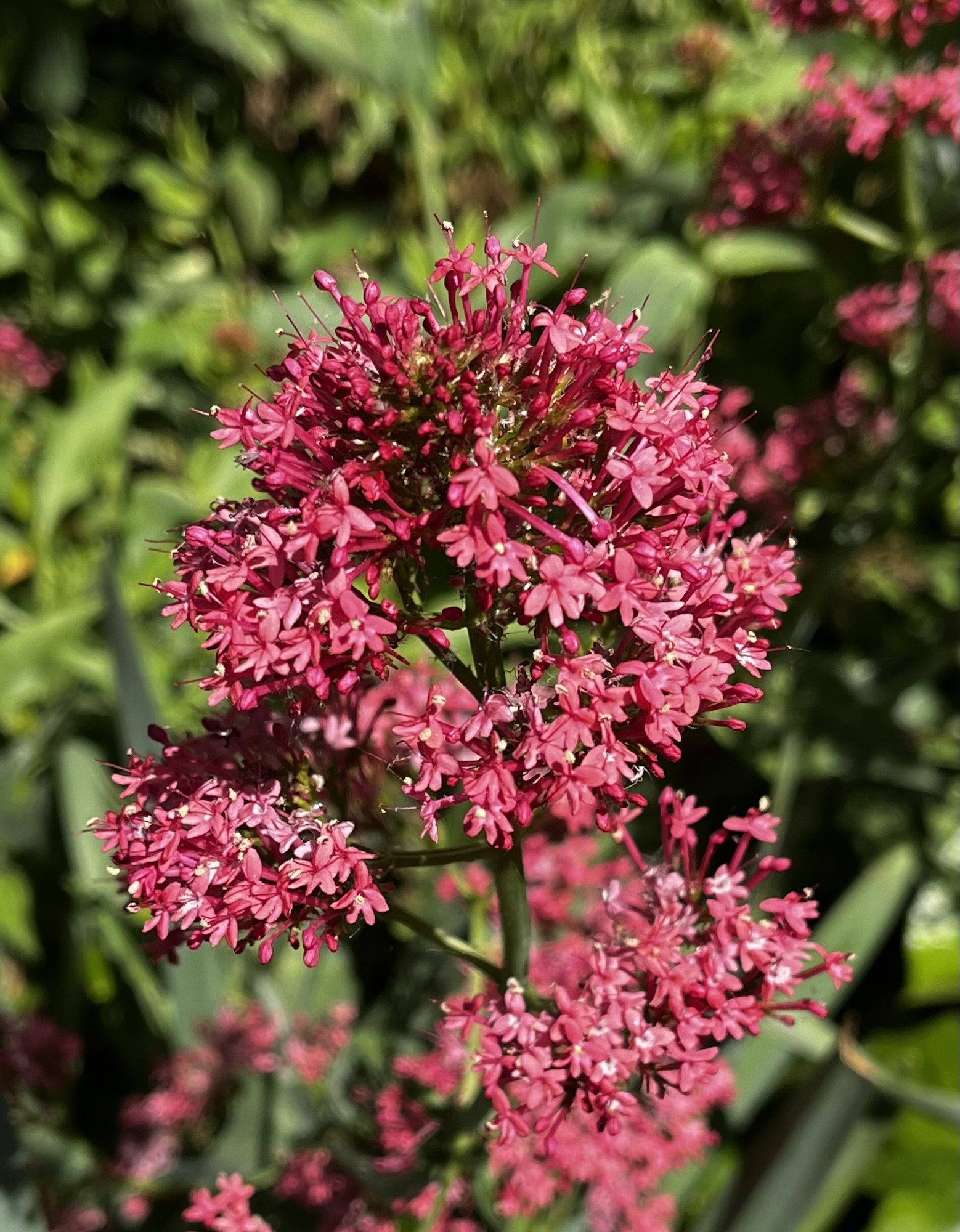
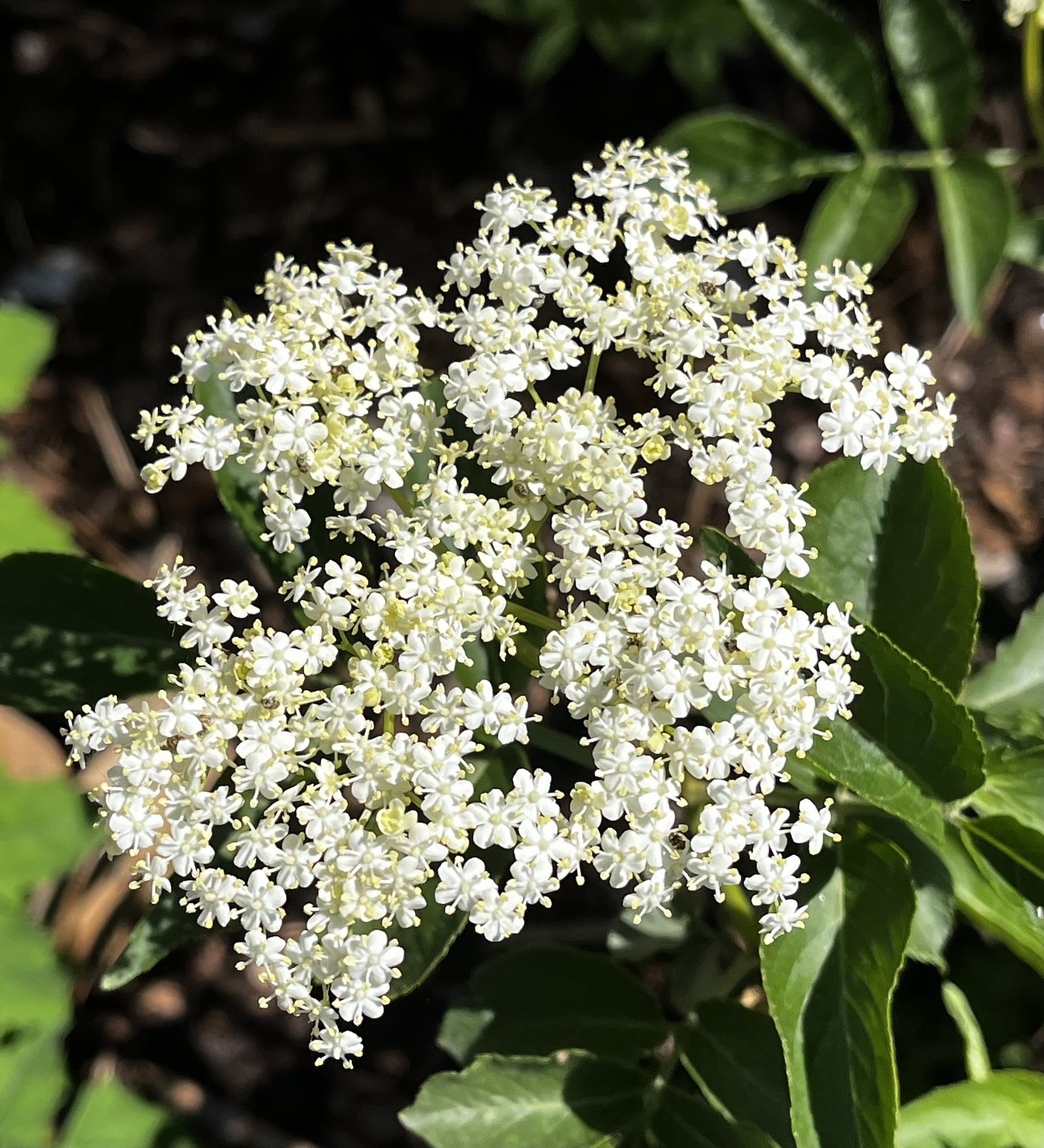
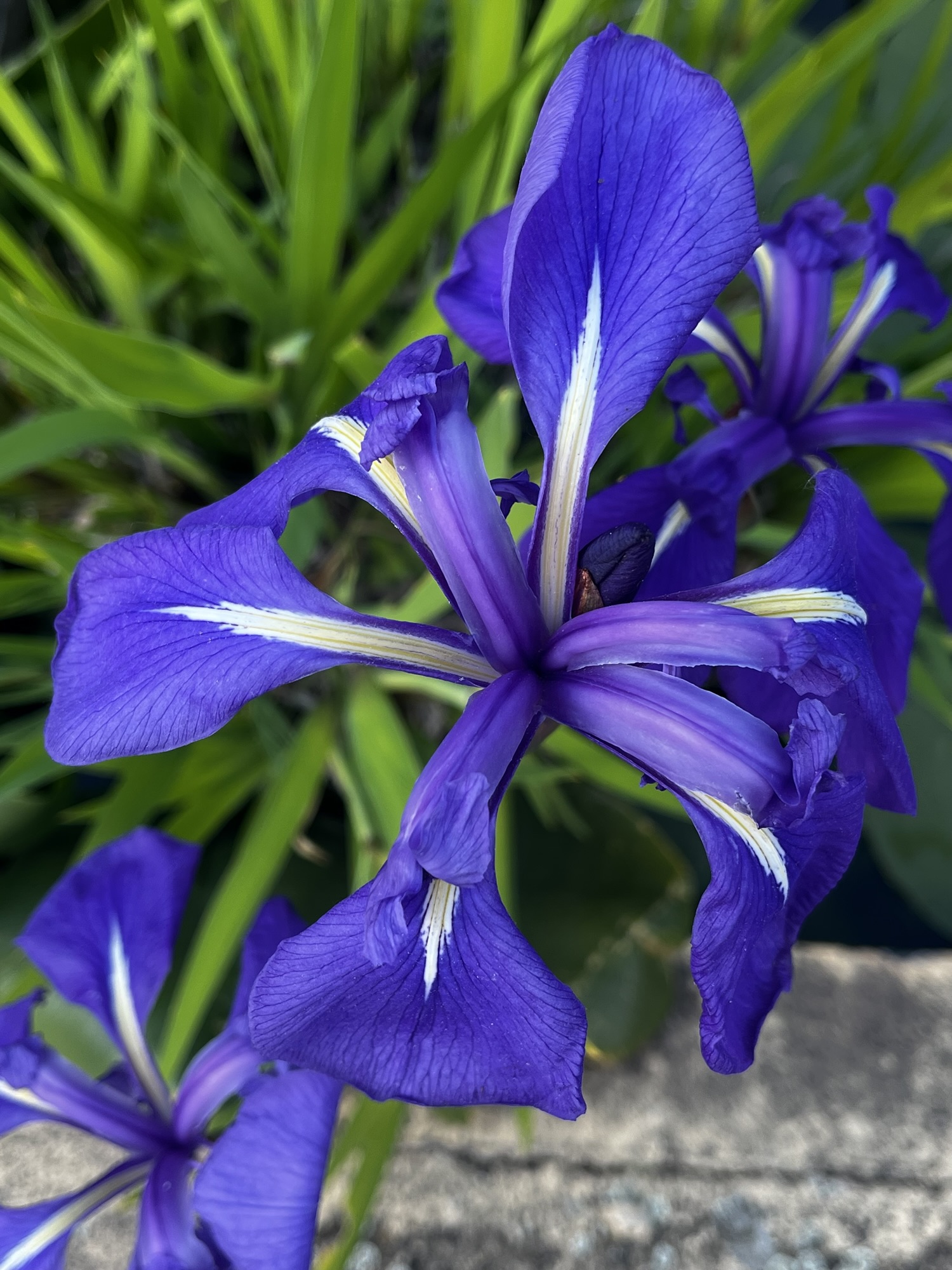
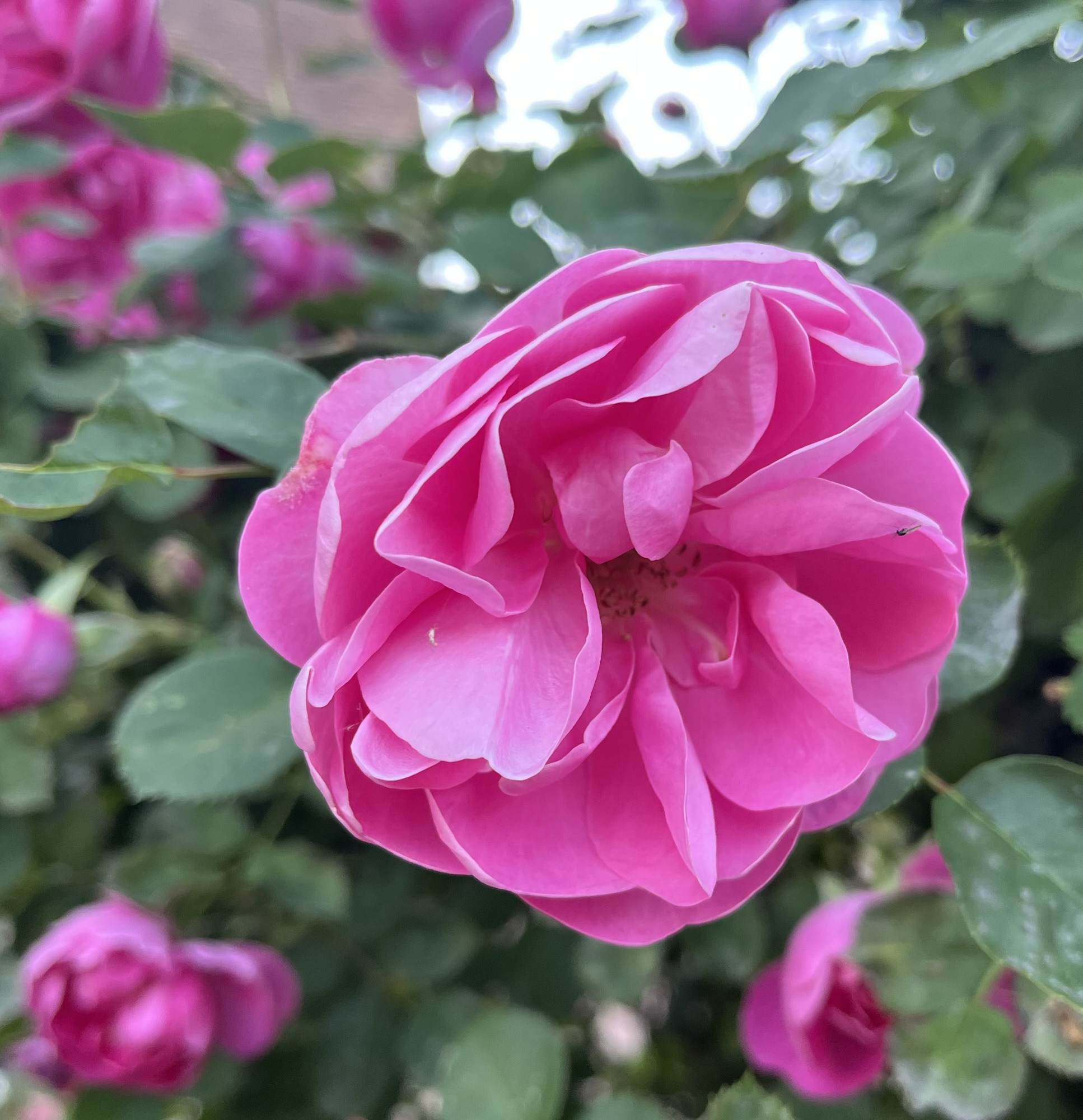
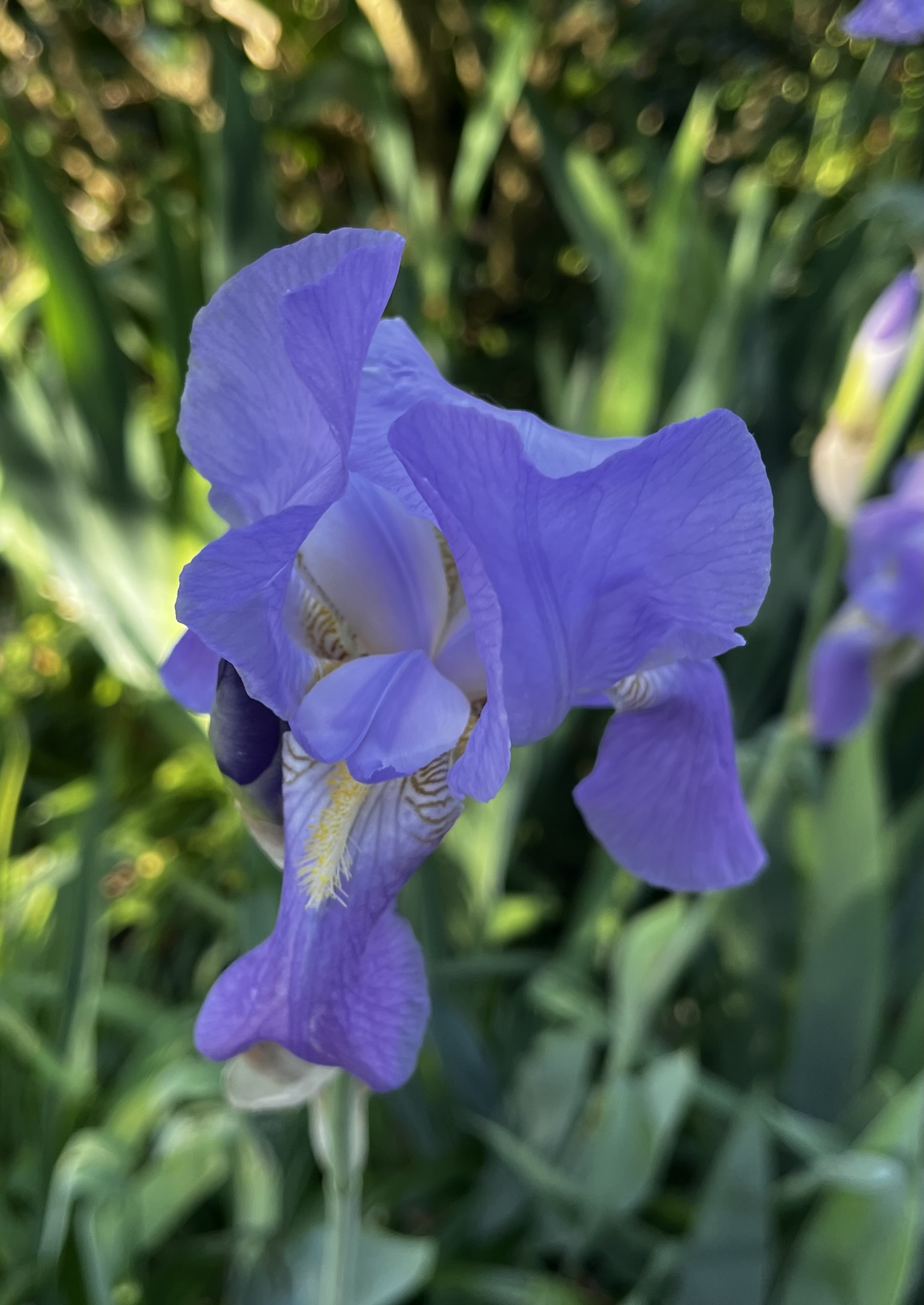
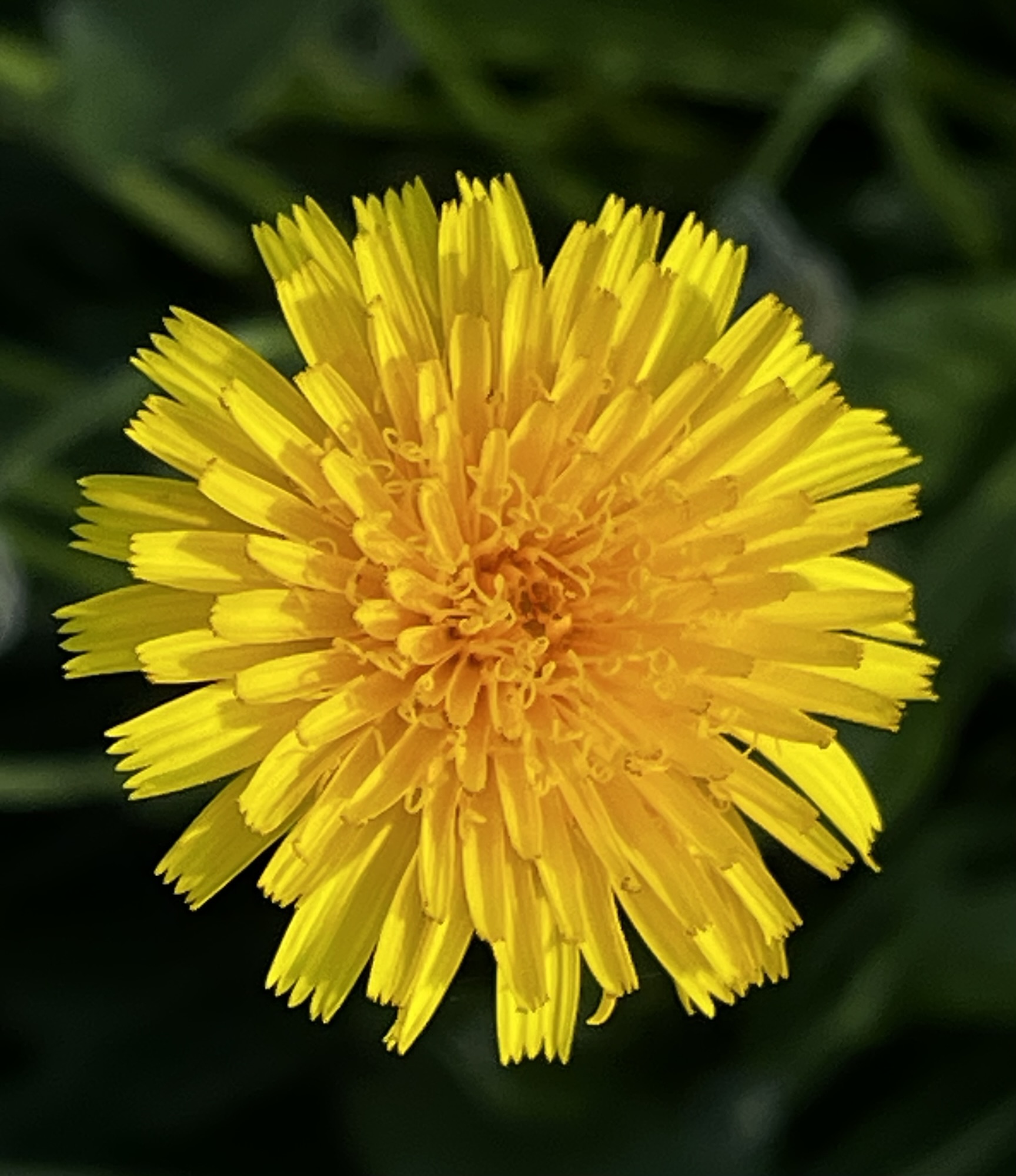
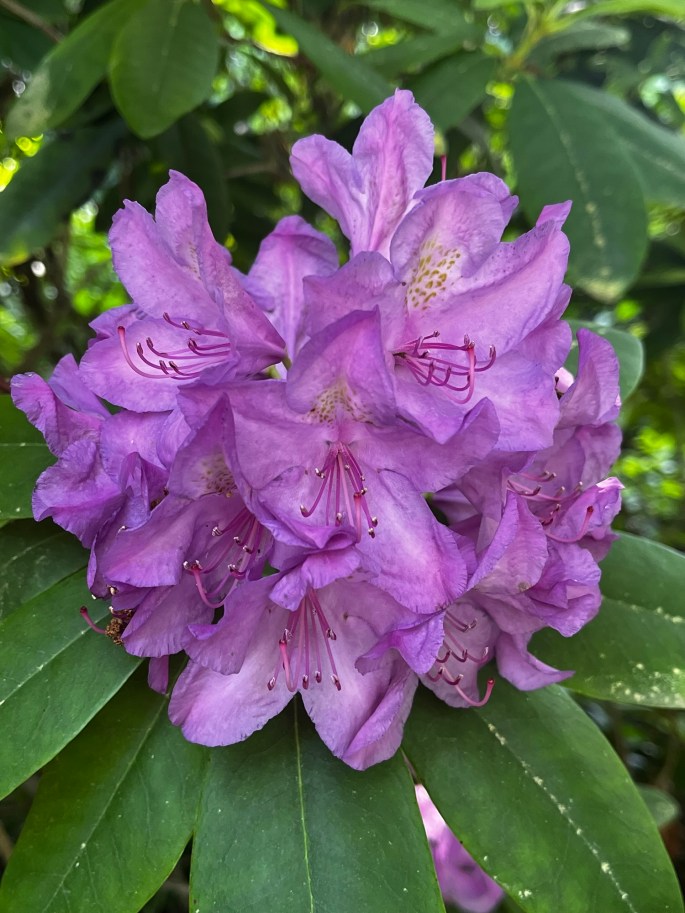
Some of the flowers were similar to those seen at home.


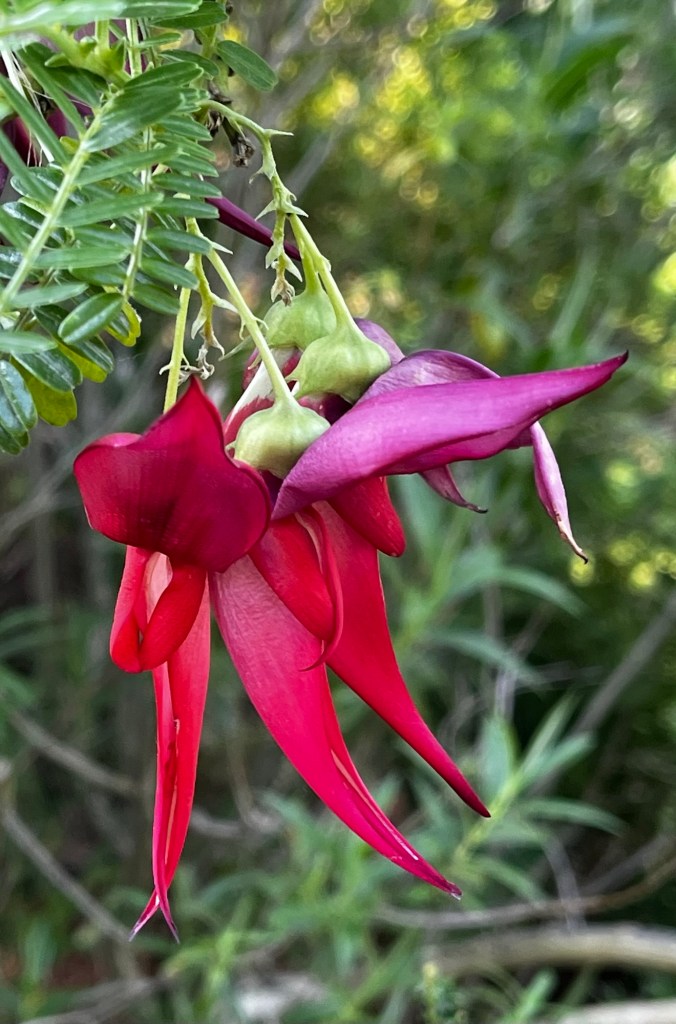
And one I didn’t know……………

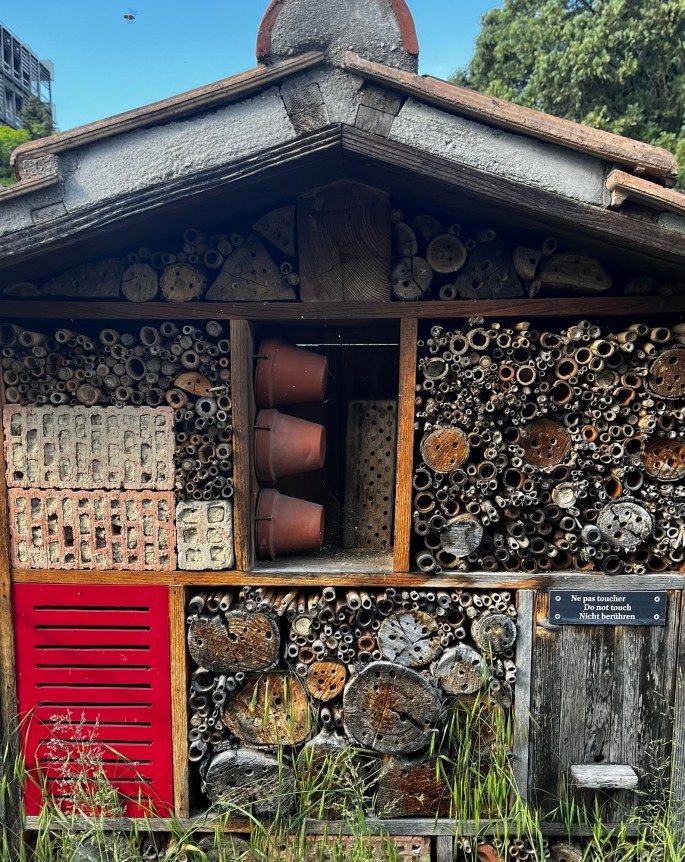
I r.e.a.l.l.y liked this insect house we came across in the garden. Hon? Can I have one of these? Can you build me one?

All too soon, our time was up in this city.

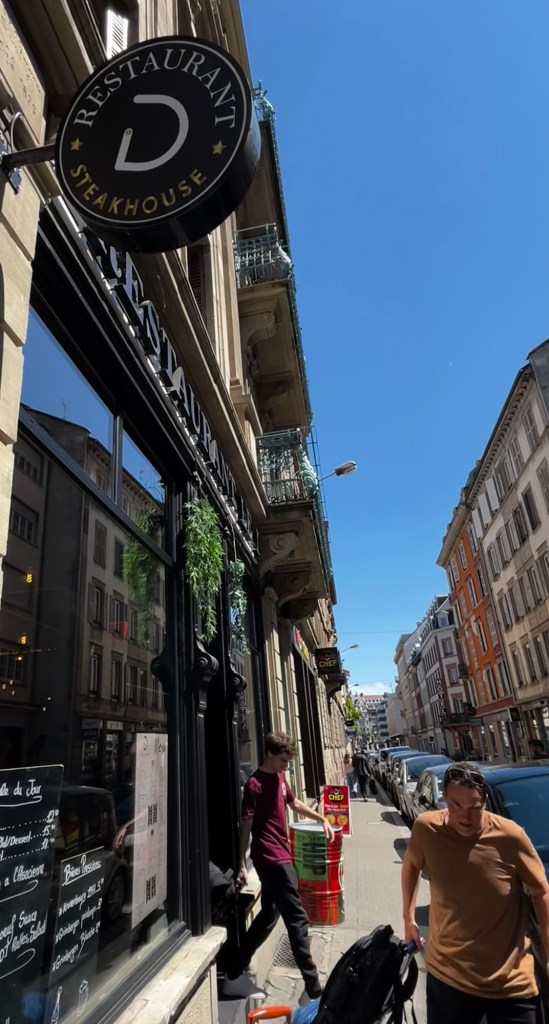
We grabbed a ride to the train station before looking to eat somewhere. This place was 1 block away – serving really good food, Restaurant D Steakhouse. I’m sure there are bad restaurants serving bad food somewhere (chains maybe?) but no complaints for the meals thus far.

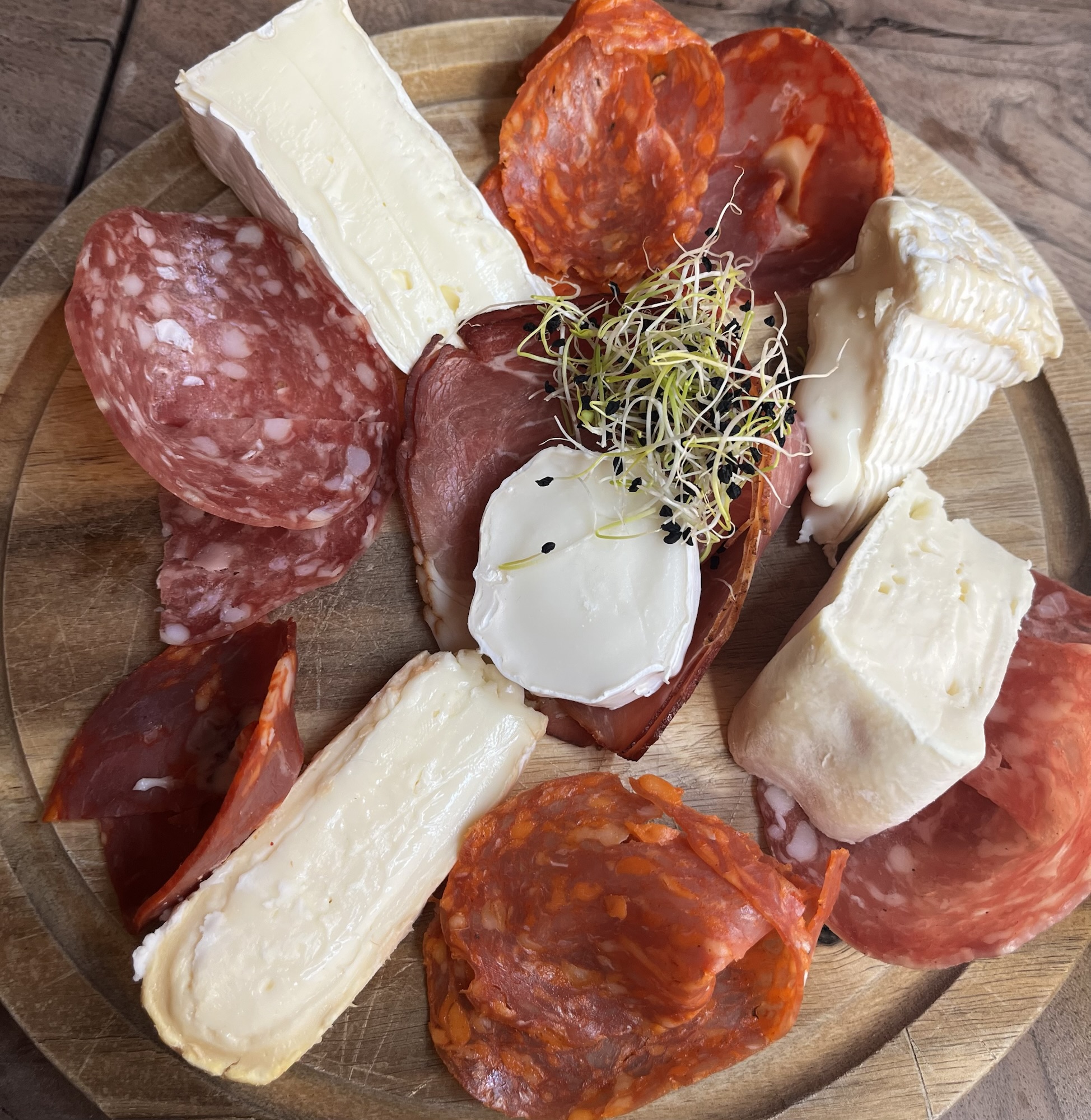
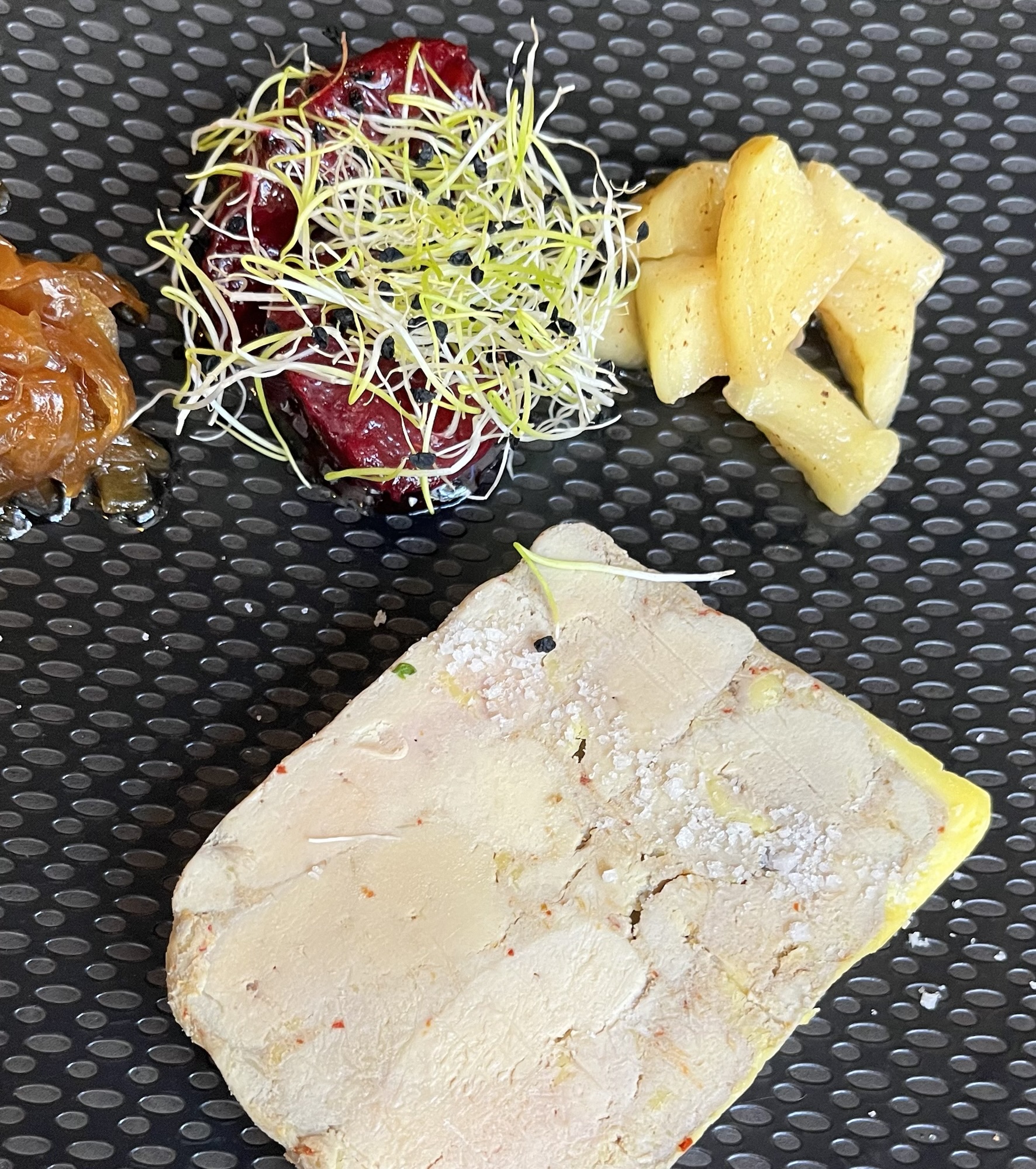
A meat & cheese plate and duck foie gras were the starters we shared.


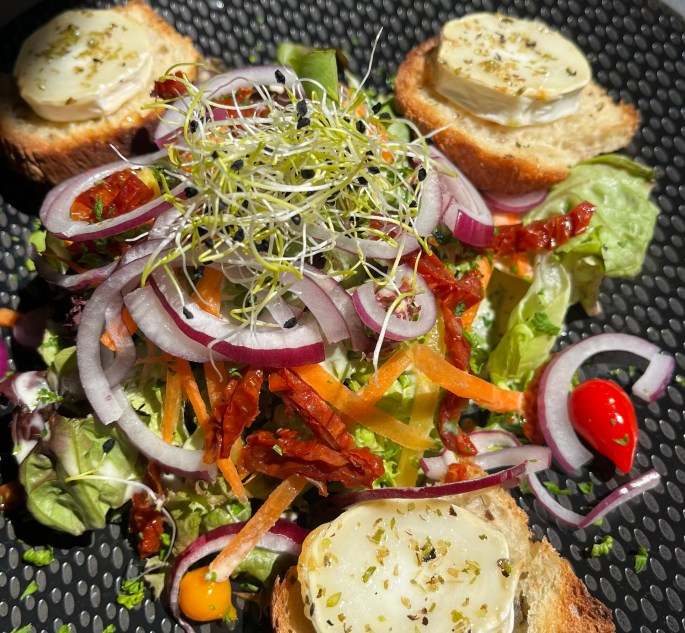
A nice goat cheese salad was all that I needed.

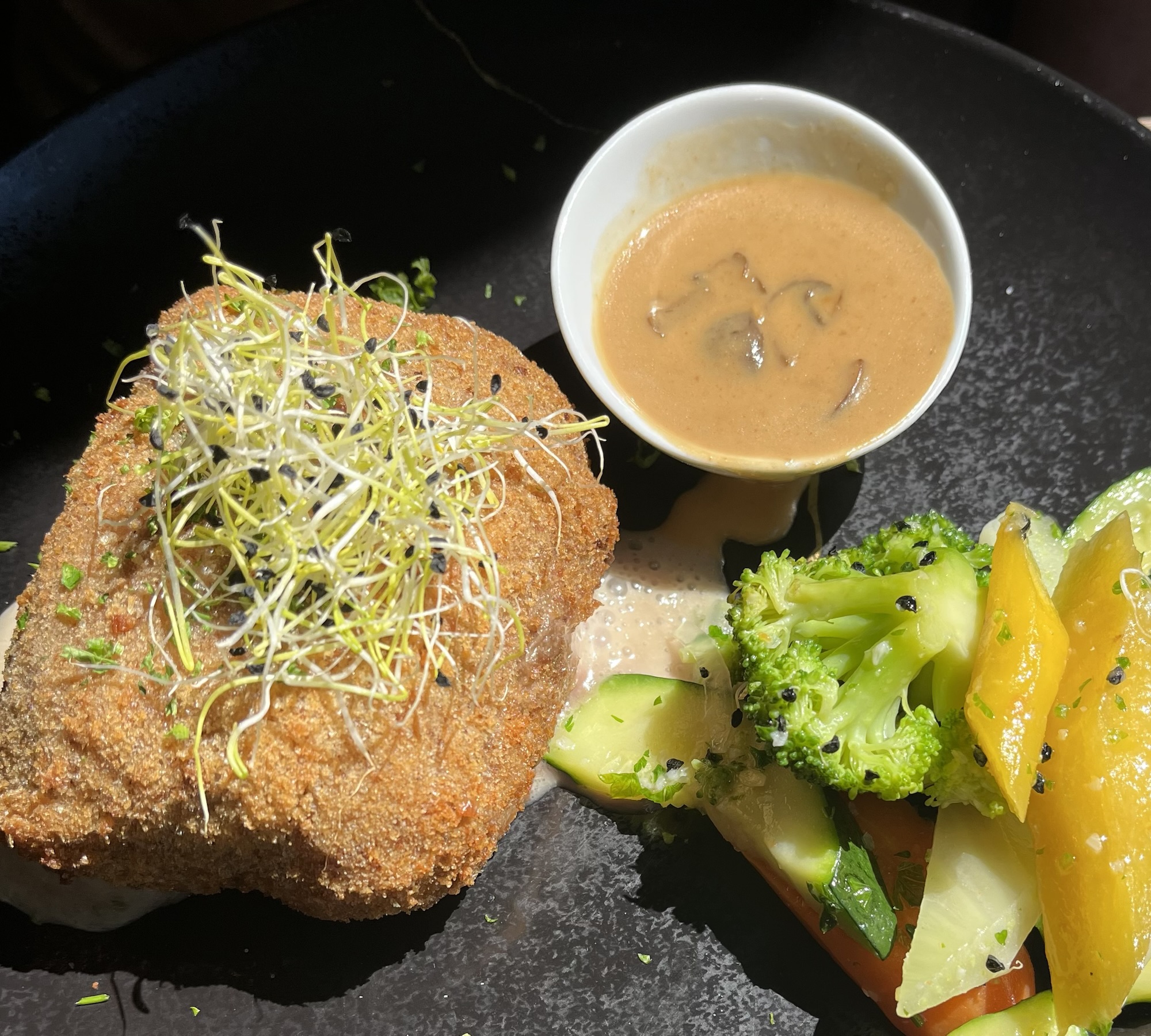
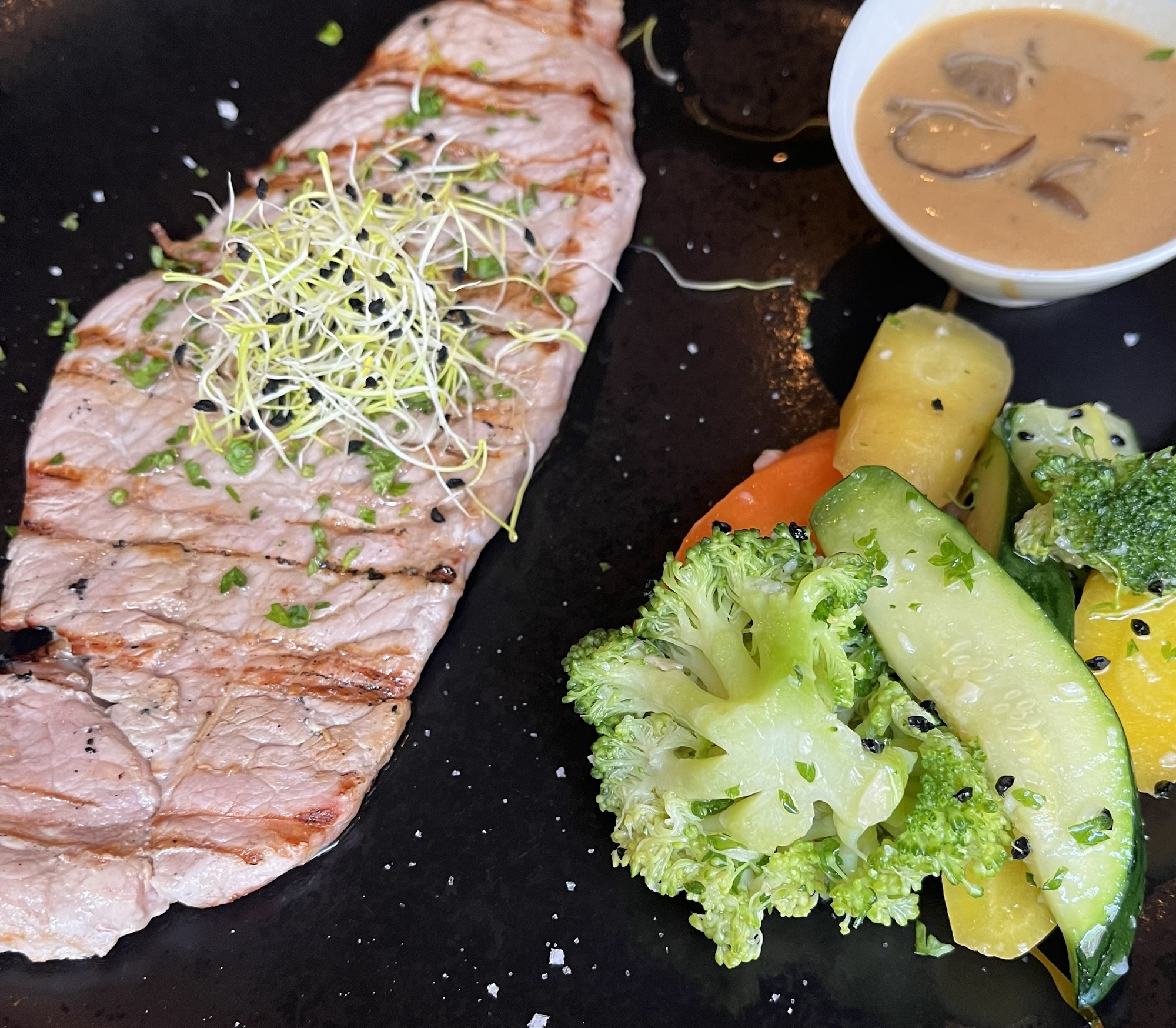
Veal cordon bleu (left) along with veal scallops (right).


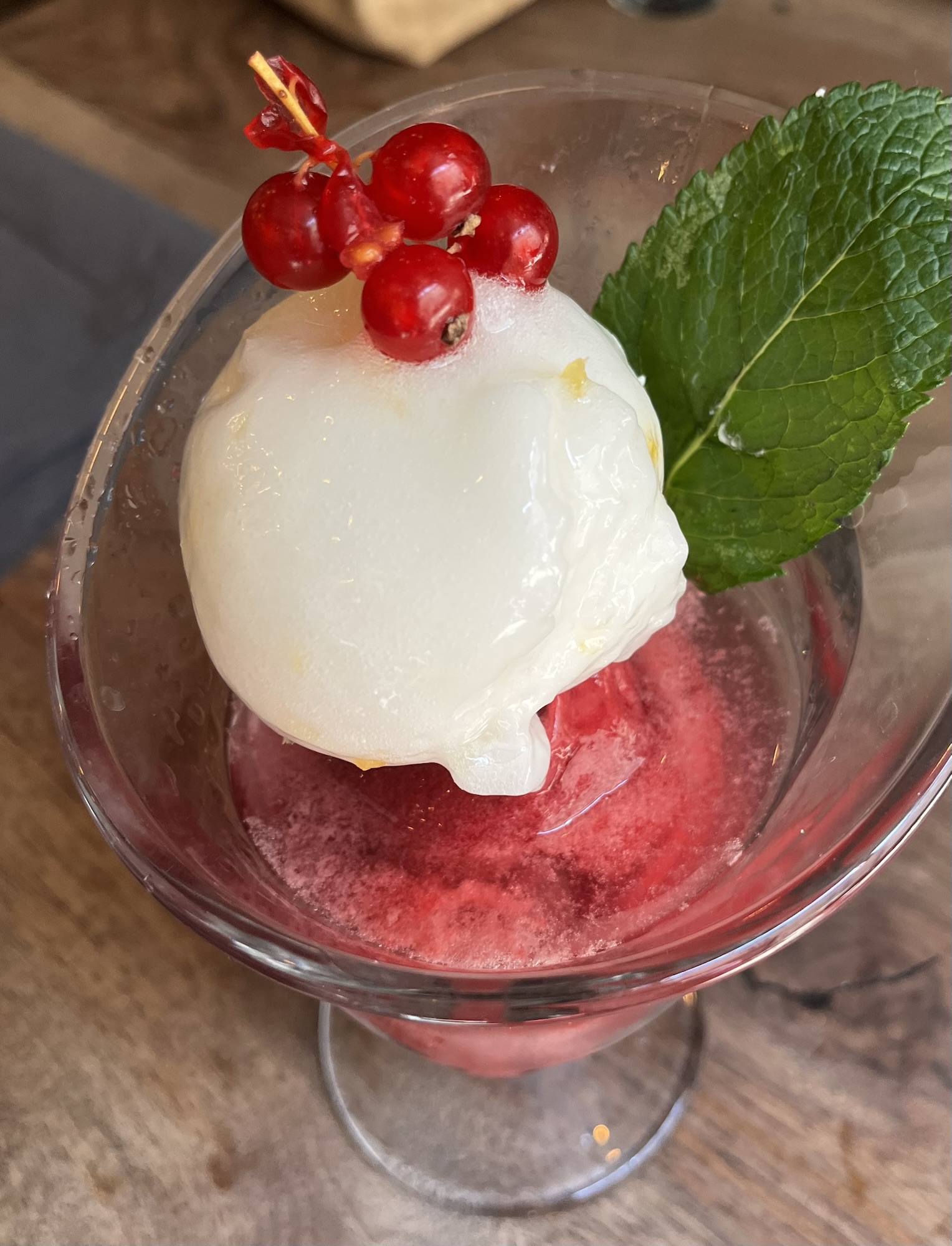
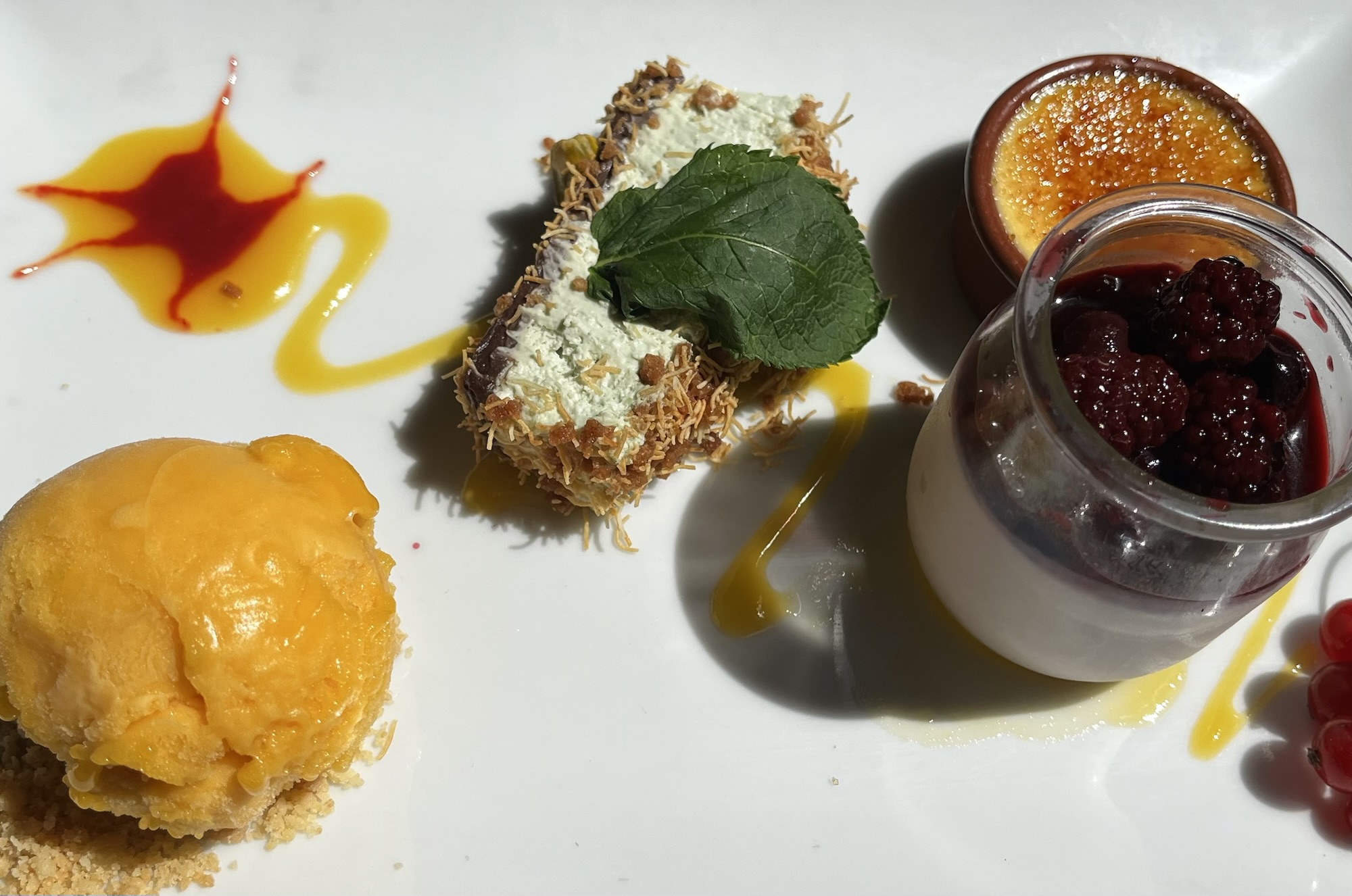
What is a meal without desserts?


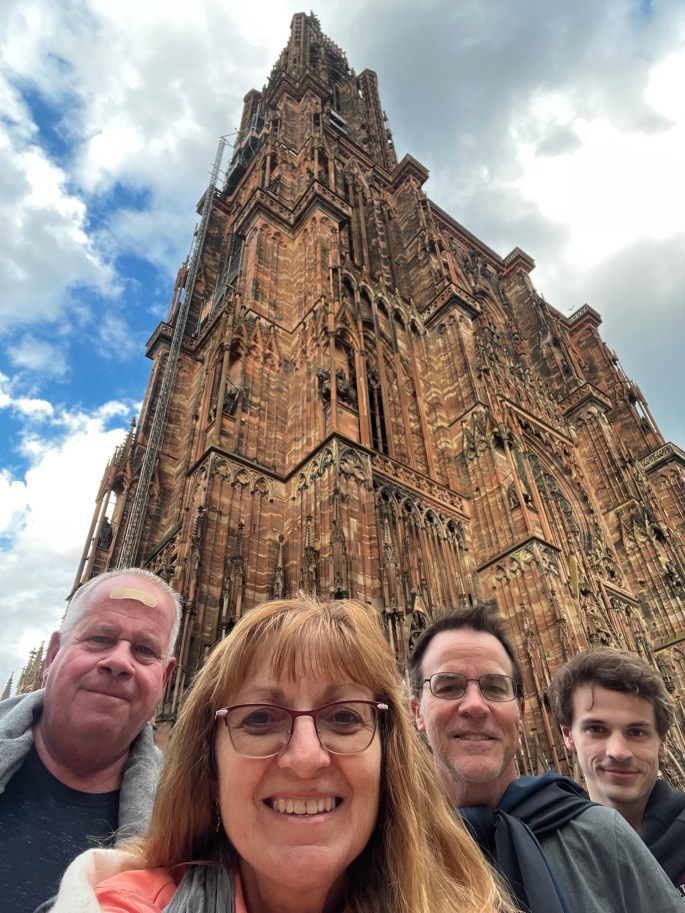
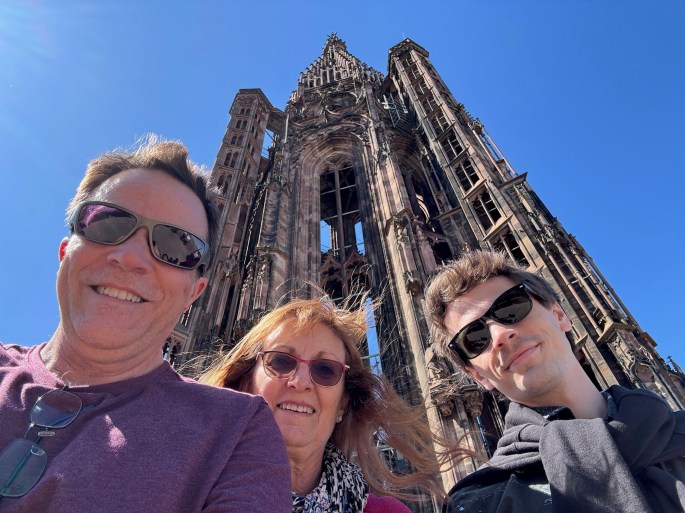
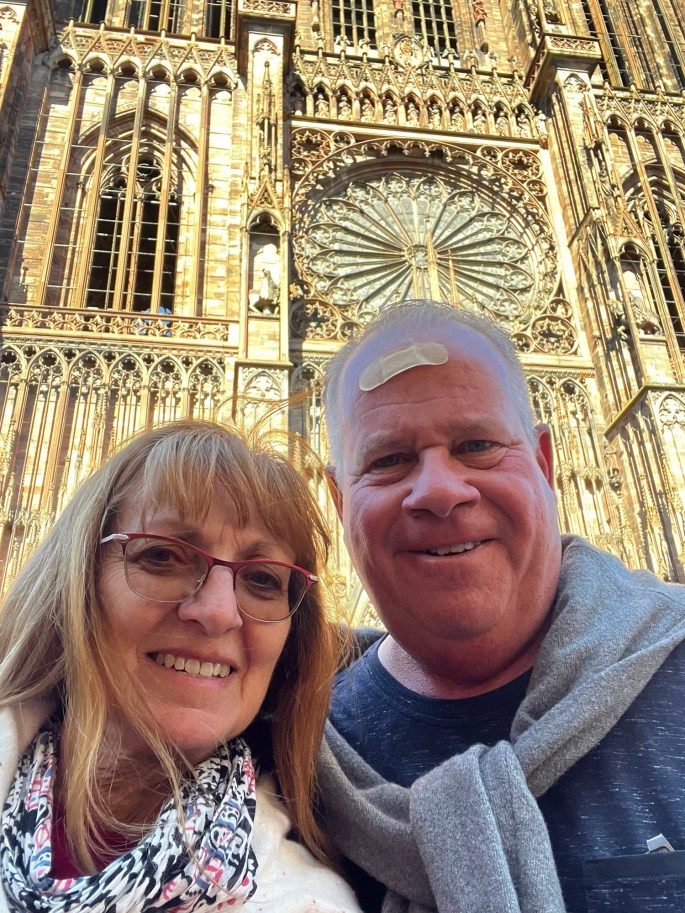
We enjoyed our time in this lovely city. Eric and I visited with friends in 2005 and I remember very little of that time. This visit was an excellent experience. Who knows, maybe we will be back. One last group photo in front of the cathedral.

Let’s get on the train and head to Paris!


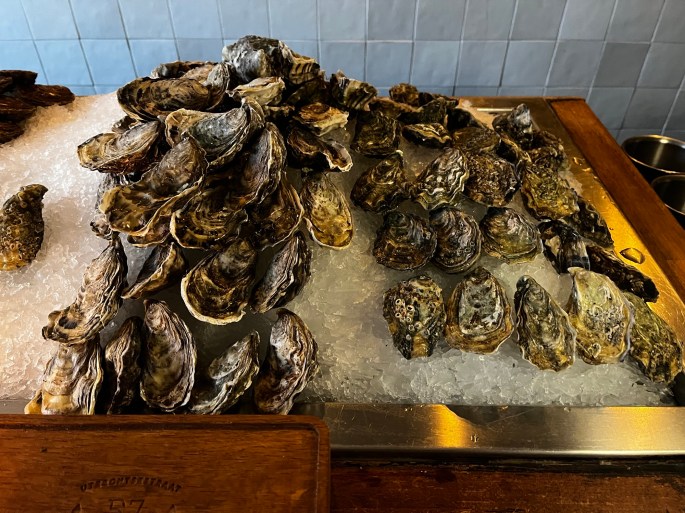
Food glorious food! We had several more meals that were memorable. Let’s start with another food tour this time in Strasbourg!
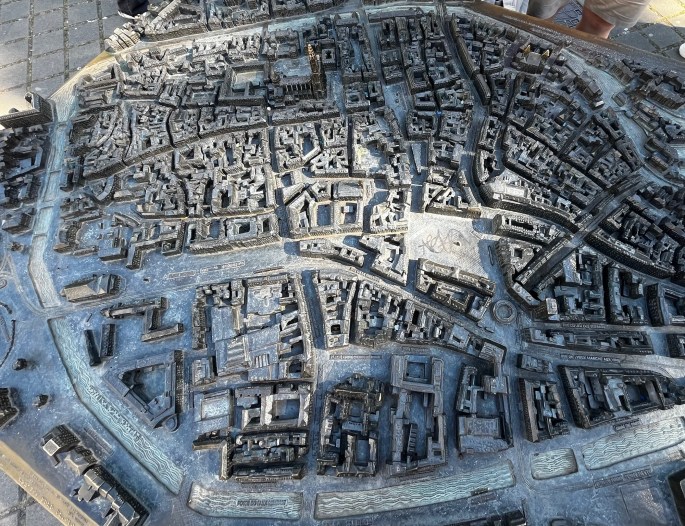
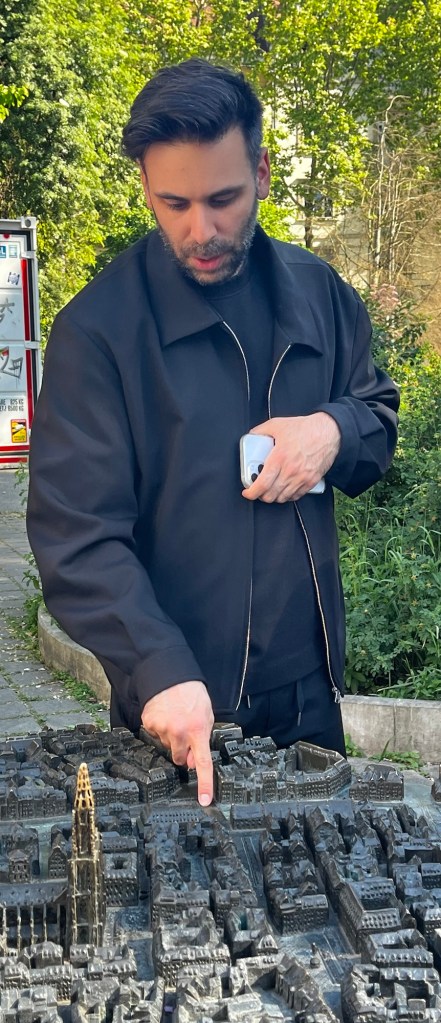
Our meeting spot was a bronze display of the historic city center in a nearby park.


Our guide shared details using the bronze map giving us an idea of our walking path and the stops we were going to make. The cathedral can easily be seen below.

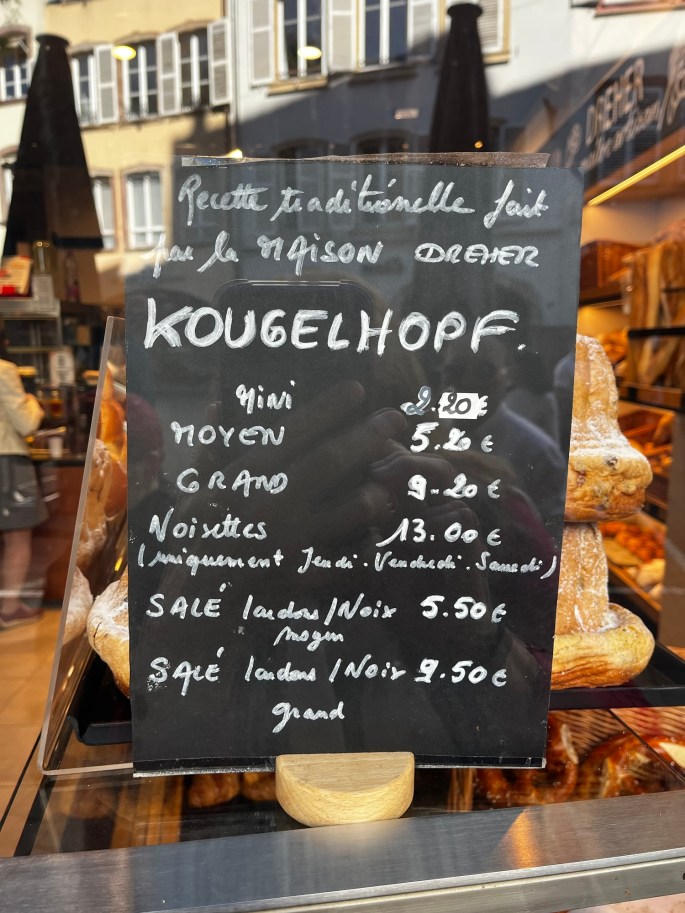
Before our first ‘official’ eating spot, we had to make a slight detour and pick-up. This tasty treat – kougelhopf – was being shared at the very end of the tour. But to be sure the bakery still had some available, an order was placed earlier for us to pick up. They have a unique shape (and baking instrument), somewhat similar to a bundt pan. You can see part of one behind the sign below.

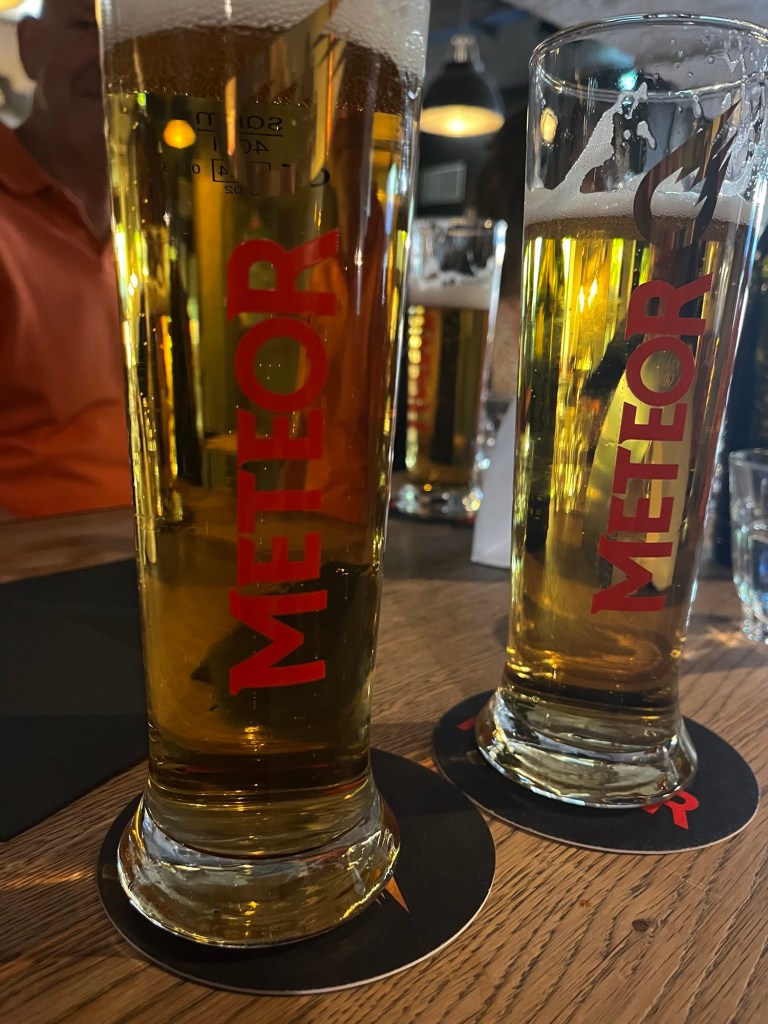
Our first stop was the Meteor Brewery – an independent, family-run brewery since 1640.

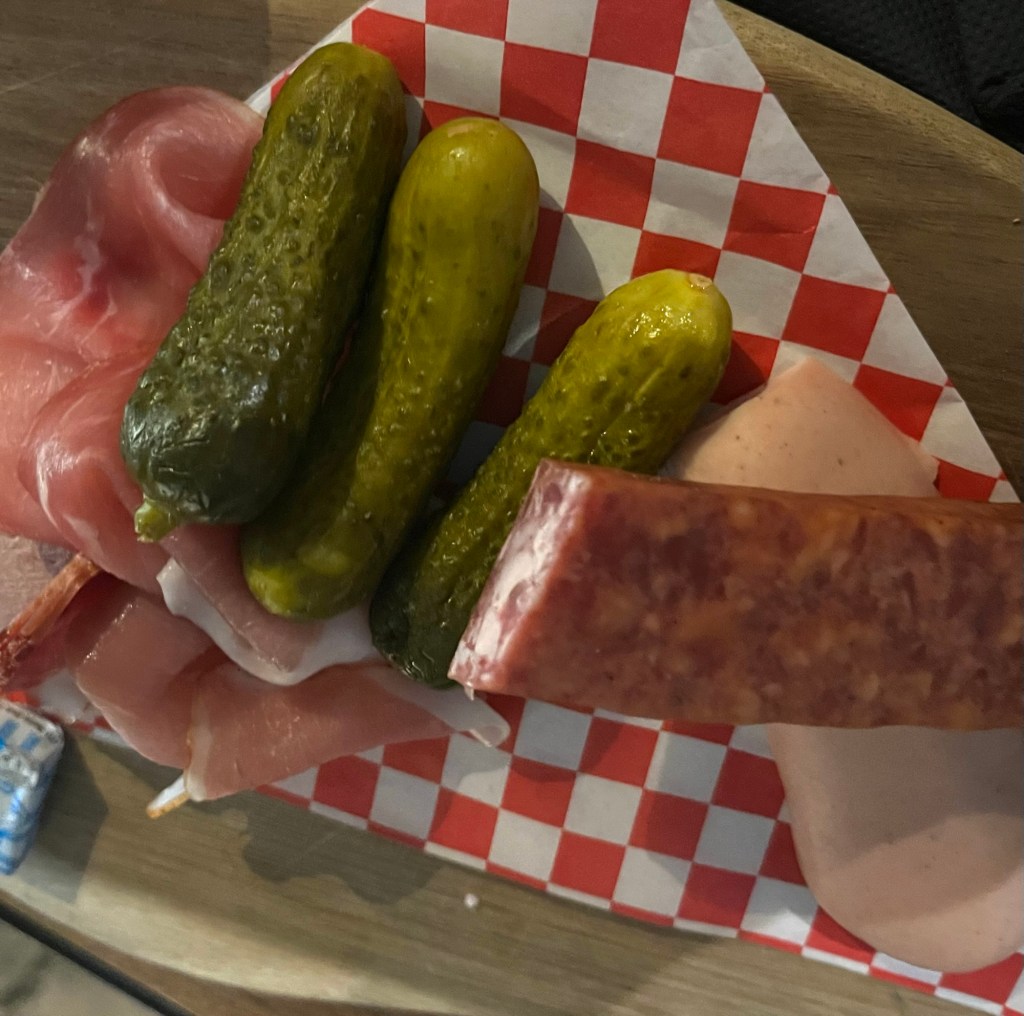
The beer was easy drinking and served with local sausages, meats and cheese.


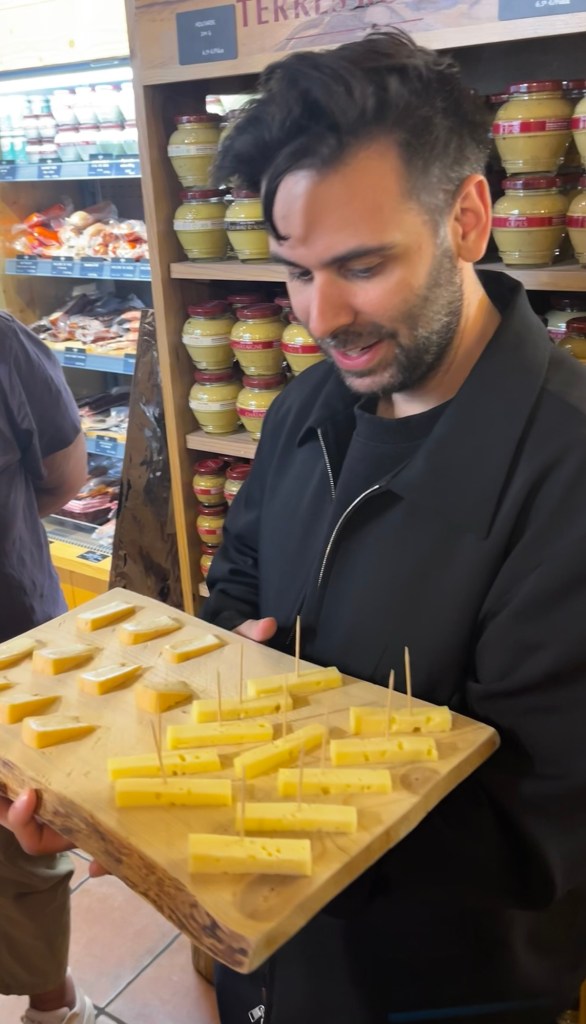
Next up – a bit of cheese.

Yes, one of those were a local Munster cheese.

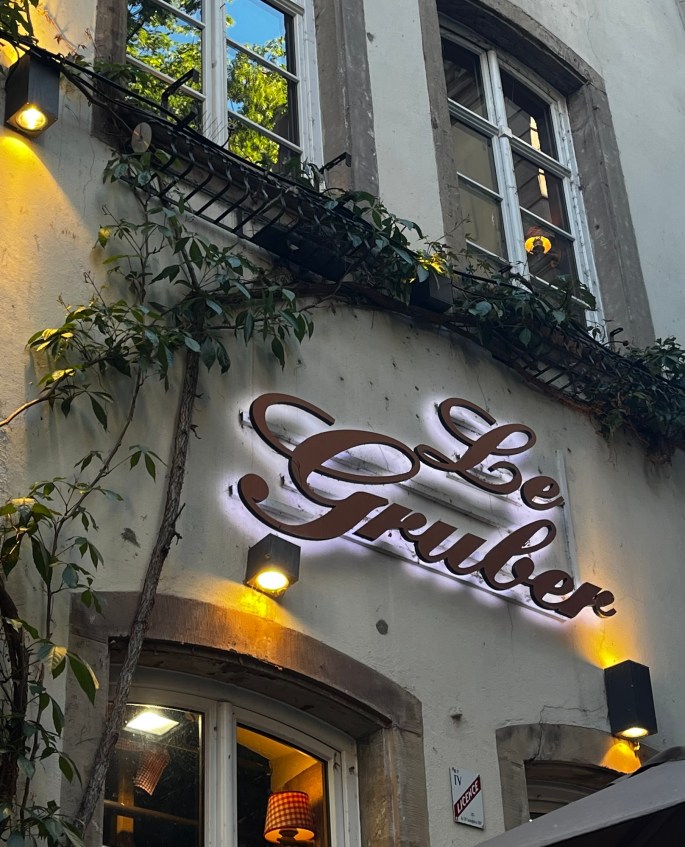
Time for a sit-down break at the next stop at Le Gruber. Most of their patrons were sitting outside, yes, the weather was that nice. We went inside since our group was larger.

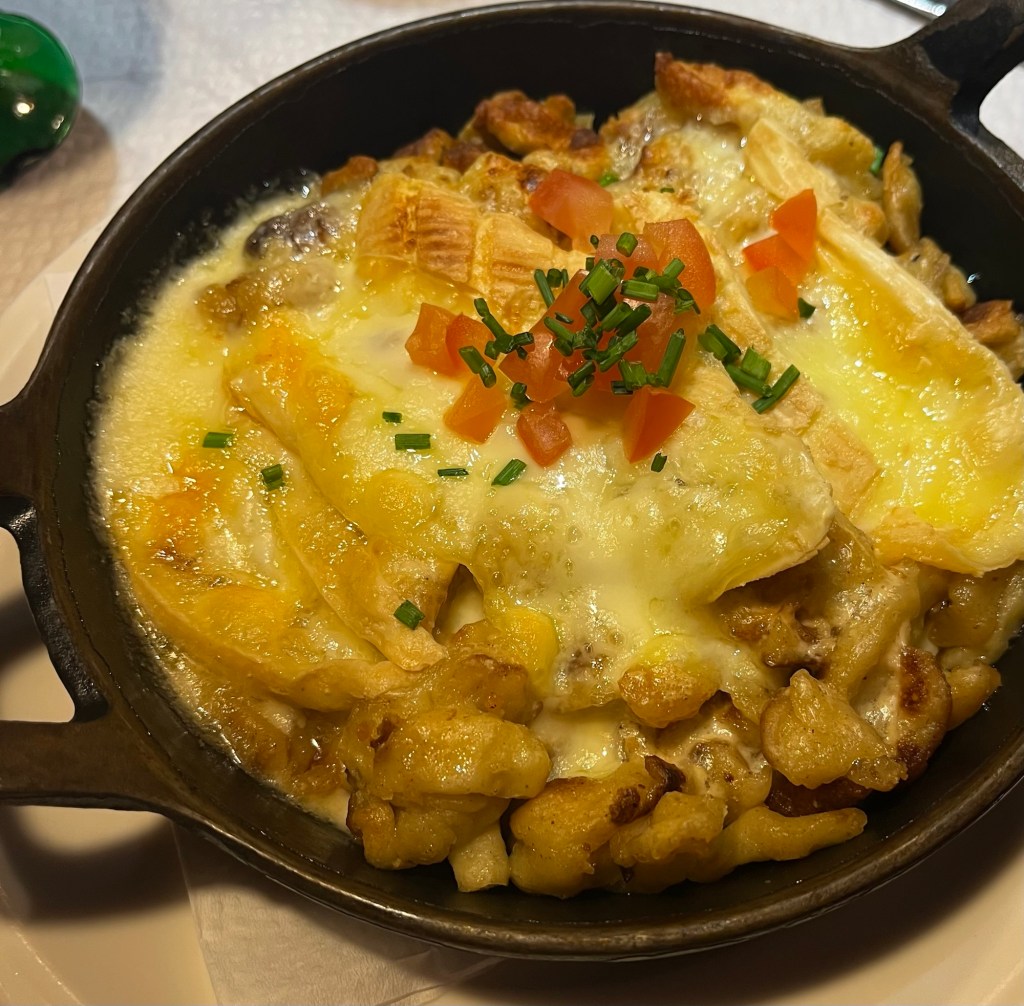
Choices were meat or vegetarian. We got one of each to share. 🙂


The last stop on our food tour was a ‘dessert’ tarte flambe.
Remember that first stop we made to pick up the ‘kougelhopf’? Yeah, we were too full and we each were given a mini kougelhopf to eat at our leisure. Thank goodness.
We had walked past this restaurant a number of times as we traversed the area. One day we stopped for lunch – delicious! Another fine choice for eating.

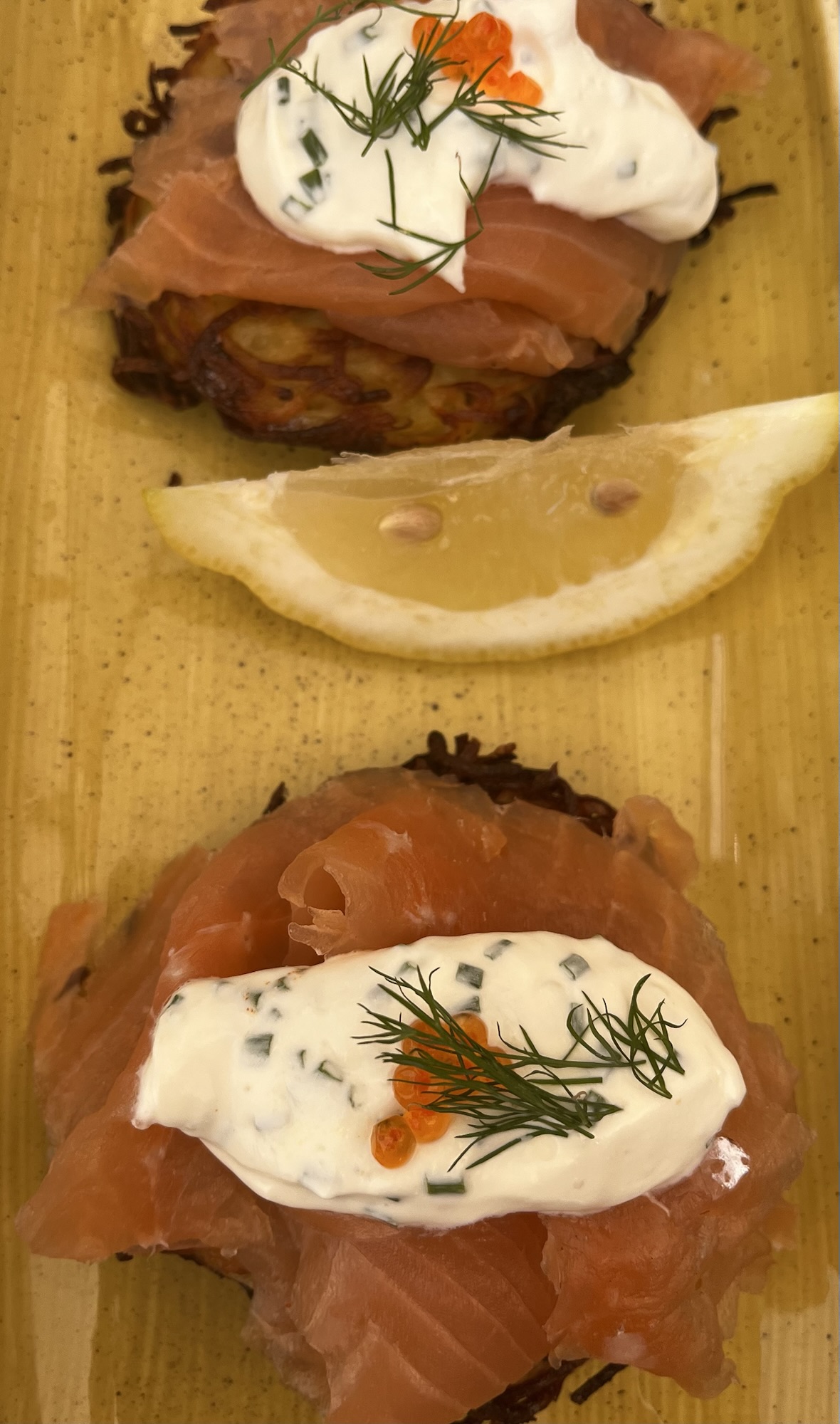
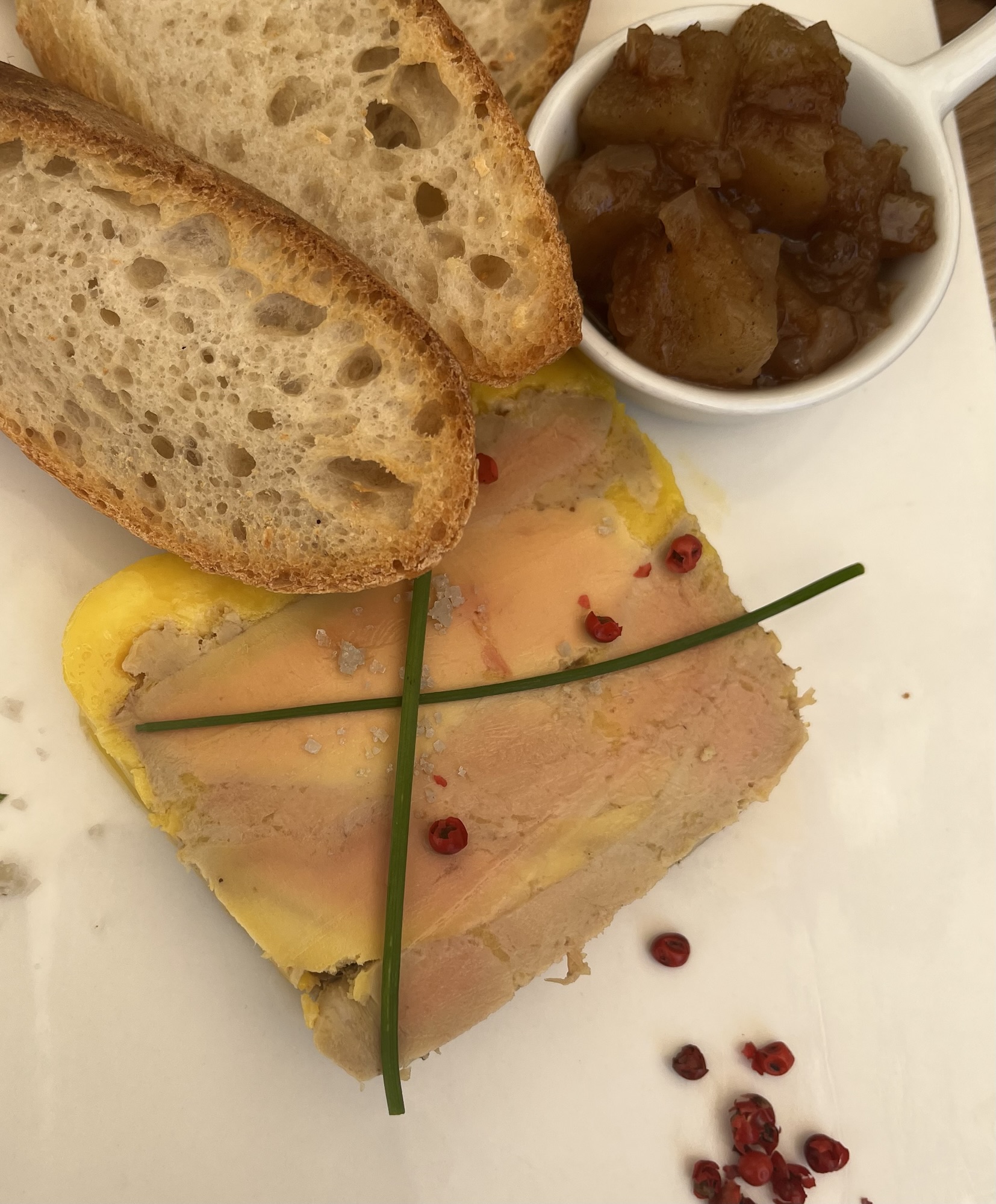
Two rooms and an outside terrace (of course, that’s where we sat) gave this restaurant a capacity of almost 50. It was a privileged gastronomic experience. The salmon with creme-fresh (left photo) and the duck foie gras (right photo) was a heavenly way to start the experience.


All of the main courses were well chosen:
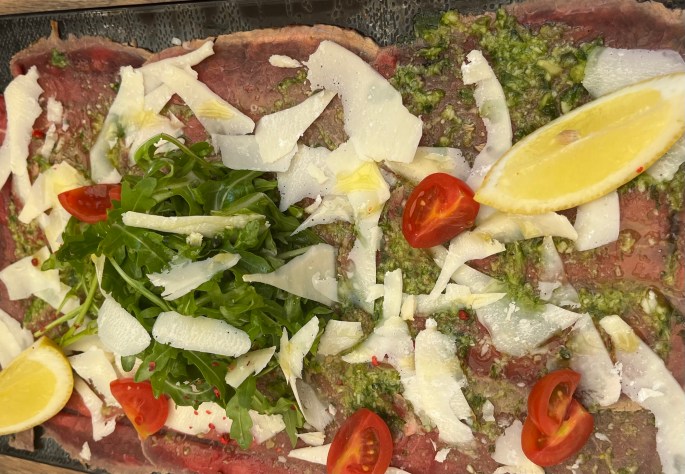
Beef Carpaccio with pesto and Parmigano Regioano.

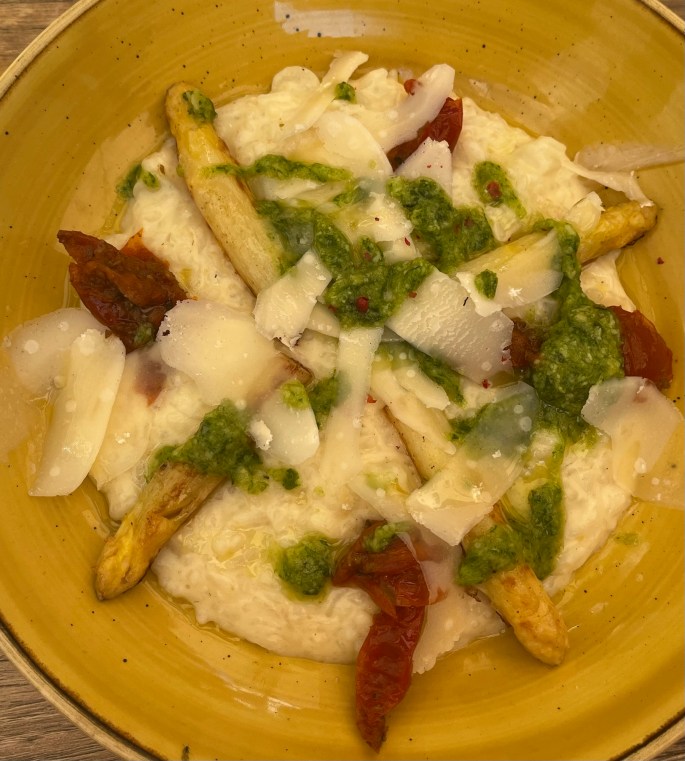
I chose the creamy risotto with spring vegetables (white asparagus). It was the creamiest!

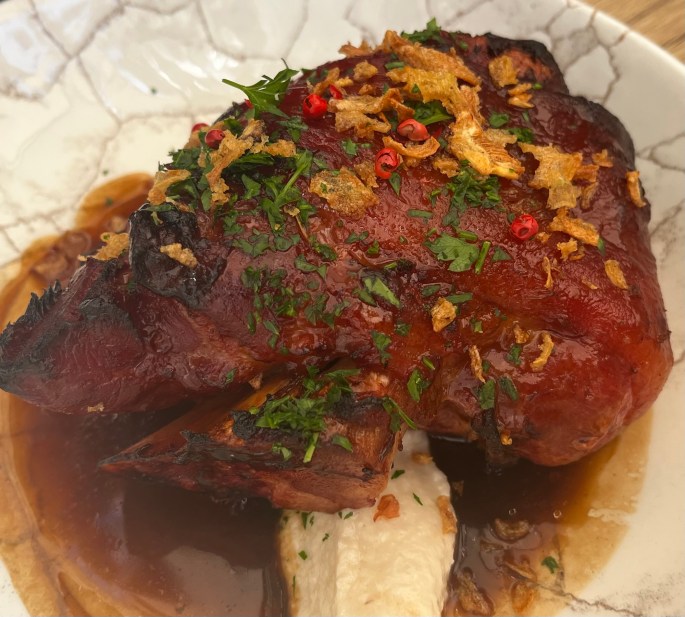
Pork shank braised in beer & honey.

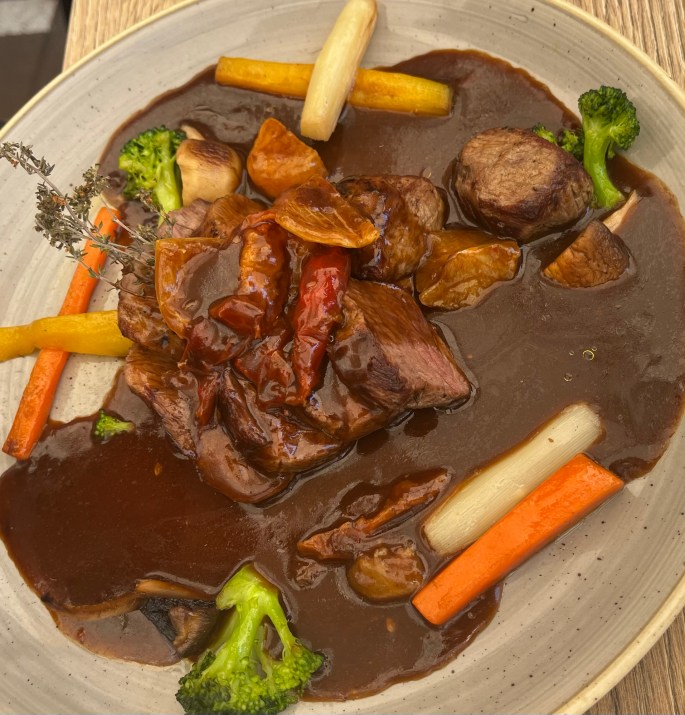
Steak with tiger sauce and mixed vegetables.

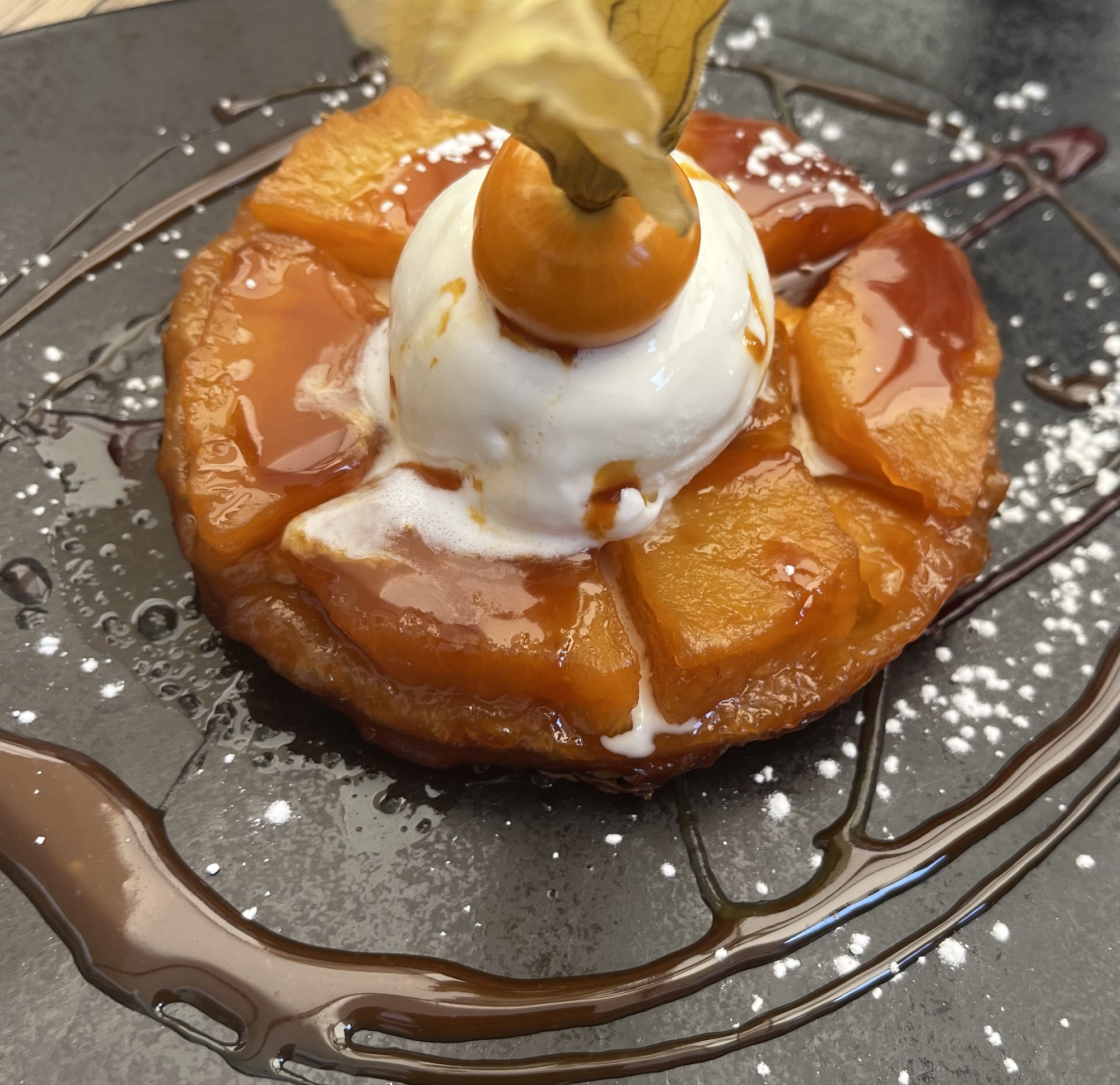
Delicious desserts.


Excellent eating!

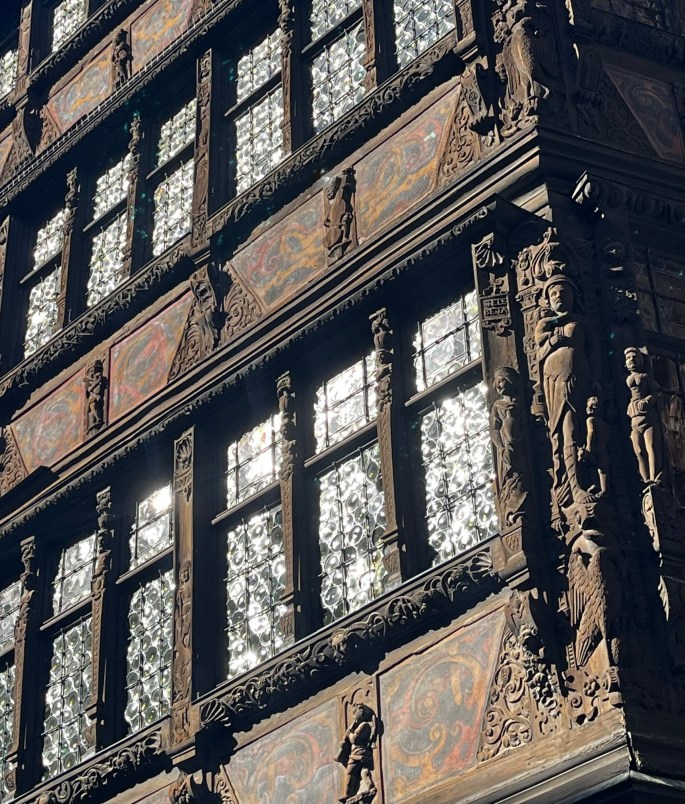
While the restaurant noted above was a great lunch spot, we made reservations for one of the oldest establishments in Strausborg for our last evening of dining…….Maison Kammerzell.

Written by numerous journalists around the world as one of the 1000 places to see in your life. Located at the foot of the Strasbourg Cathedral, it symbolizes the Renaissance art of the city. The wood sculptures, murals and the 75 windows with stained glass in a cul-de-boteille fashion, exalt the virtues combining medieval nobility and ancient culture.

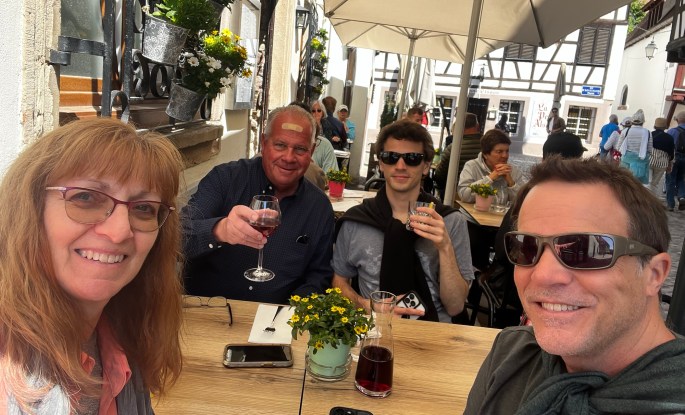
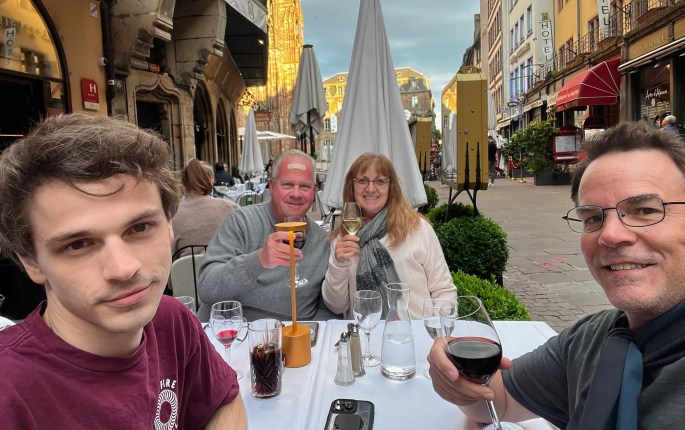
A quick shot before the feasting began.

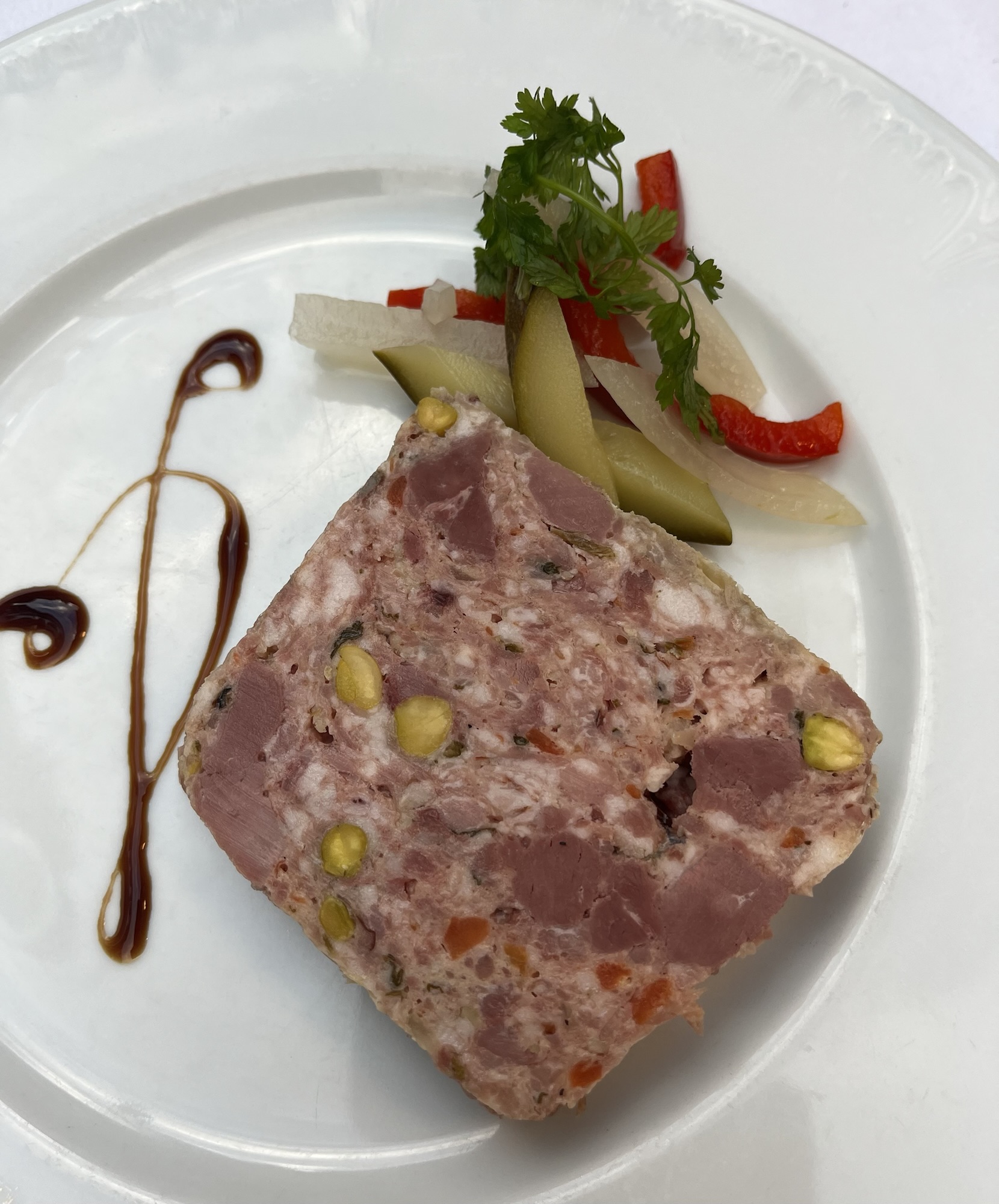
The duck terrine with hazelnuts and snails in Alsatian style started our dining. Seems like every meal has foie gras or a terrine – what living.


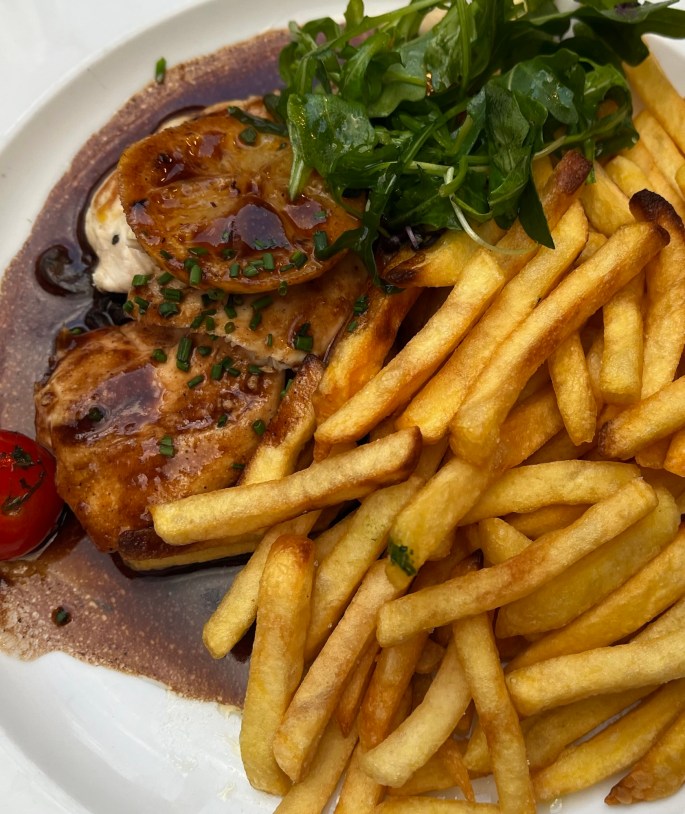
My chicken supreme marinated with lemon and ginger (and don’t forget the frites) was some of the best chicken I’ve eaten.

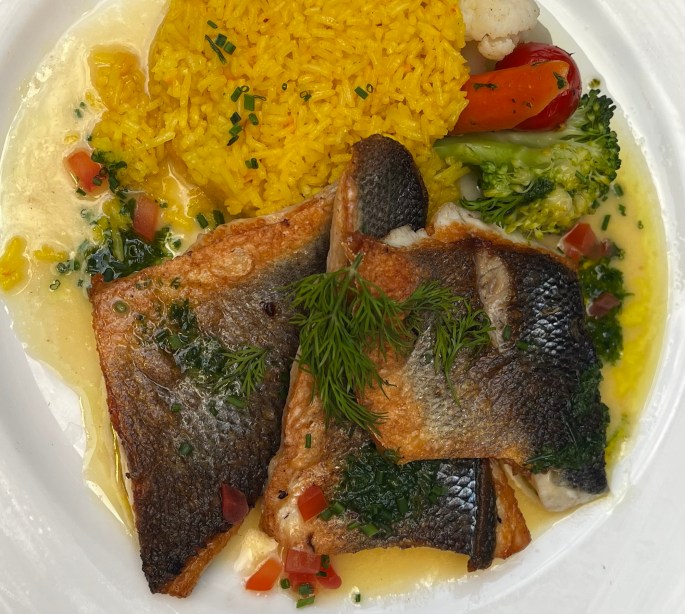
Pan-fried sea bass fillet with saffron rice and veggies.

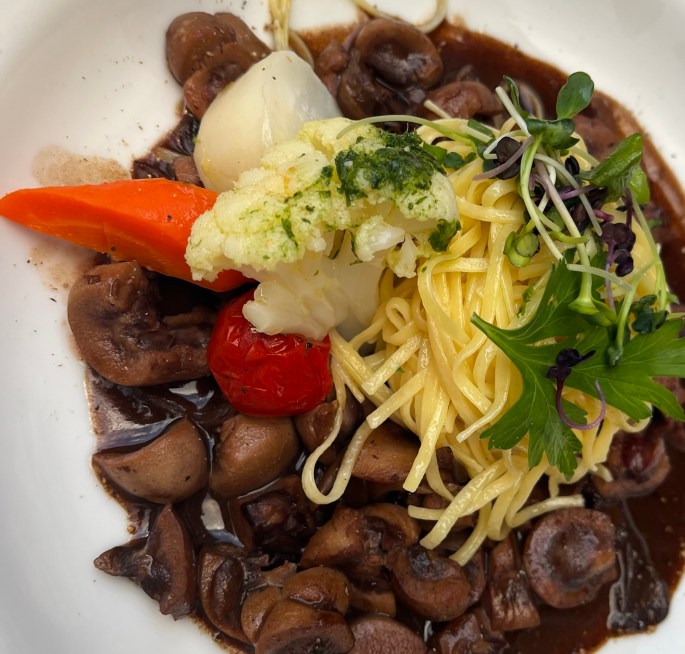
Veal kidneys and mushrooms, pasta and more mixed veggies.

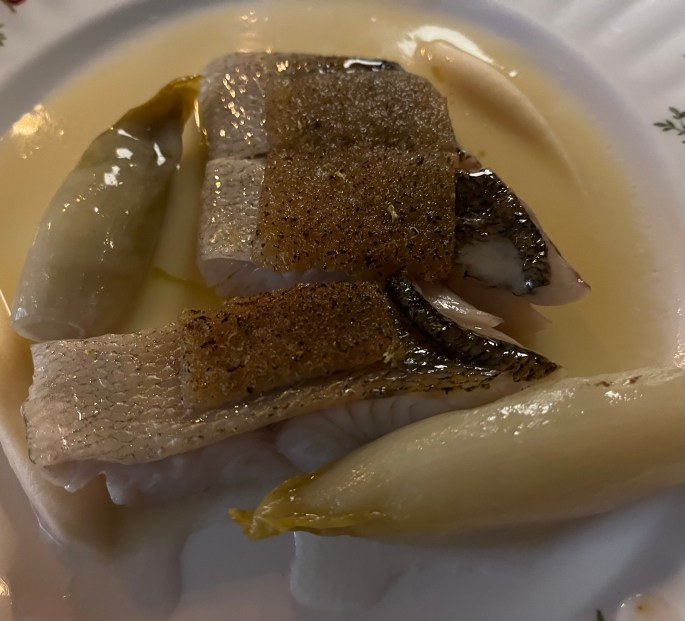
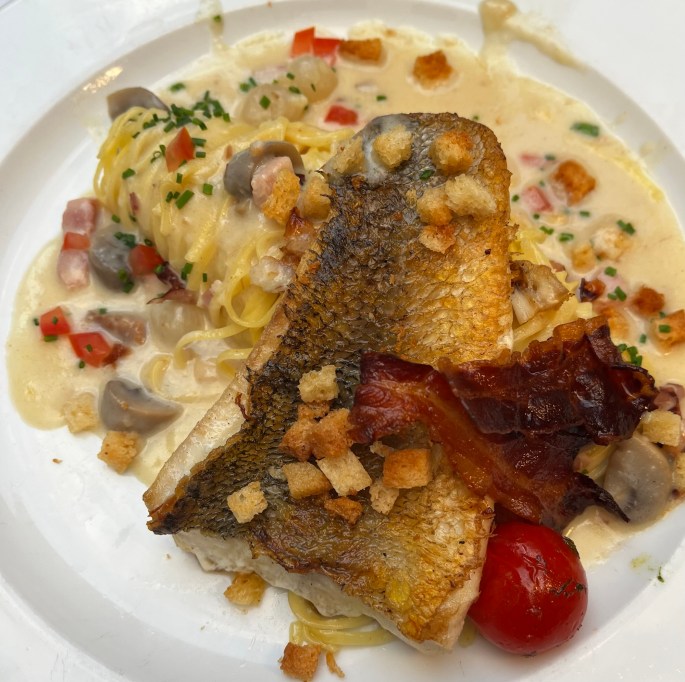
The last meal selection was Pike perch fillet, ‘Matelote’ style, a Riesling sauce, tagliatelle and crispy bacon – of course it needed the bacon. 🙂

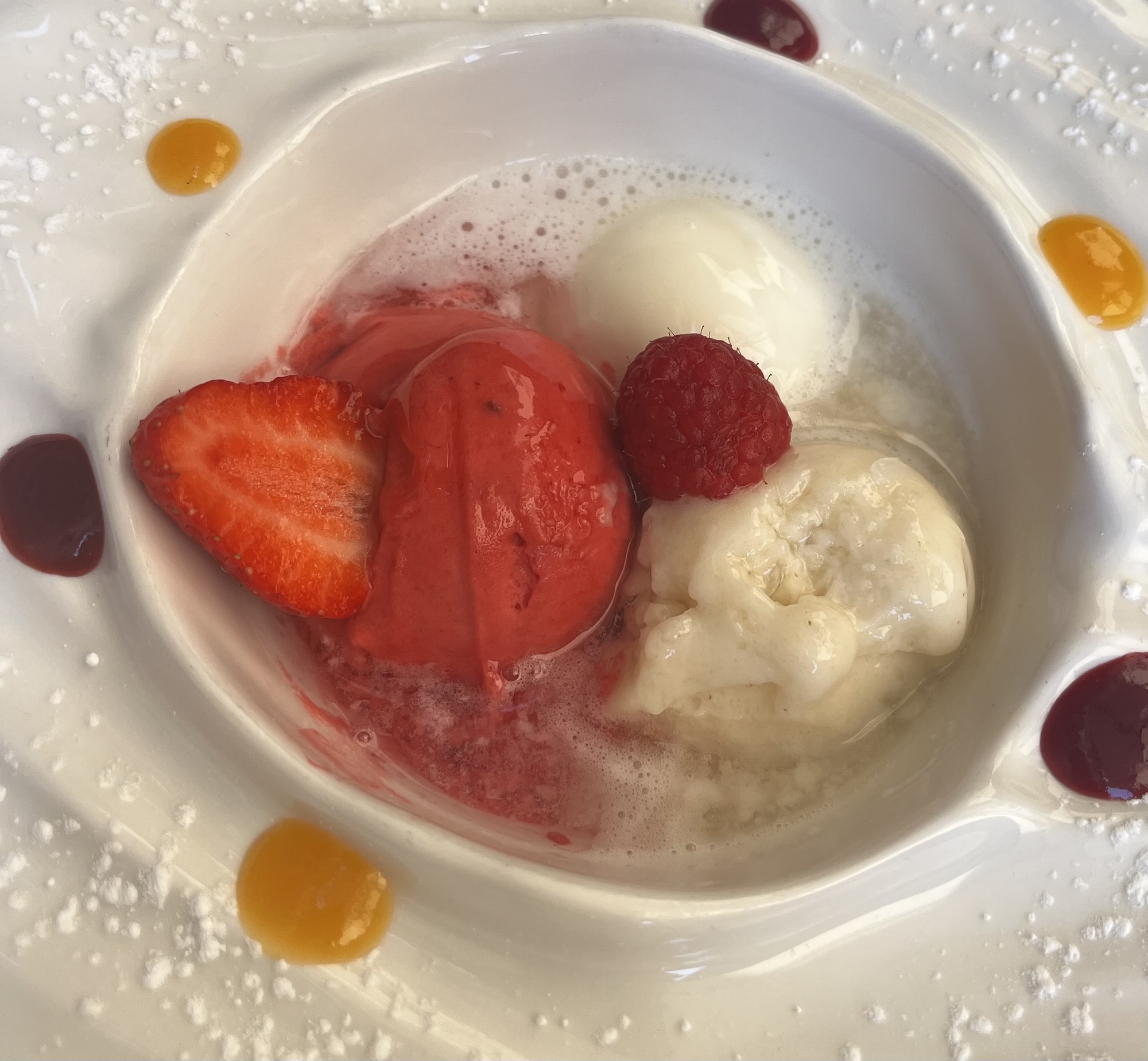
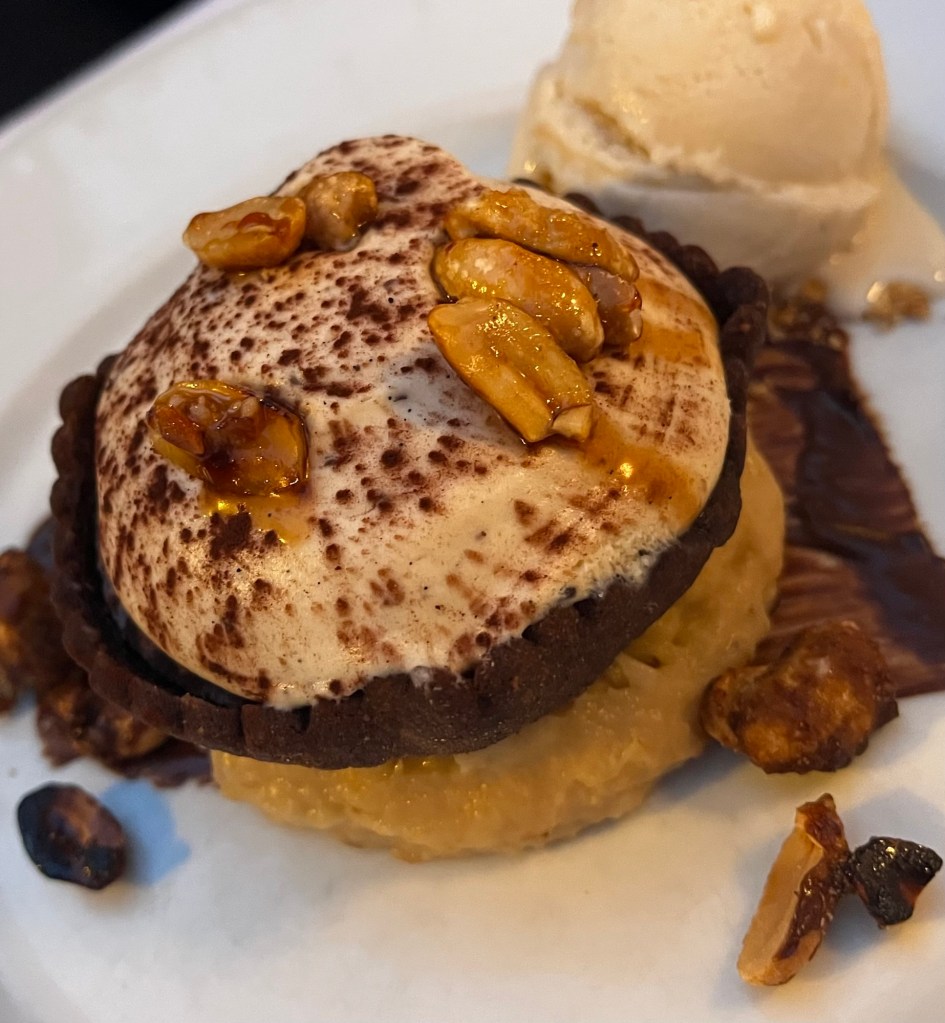
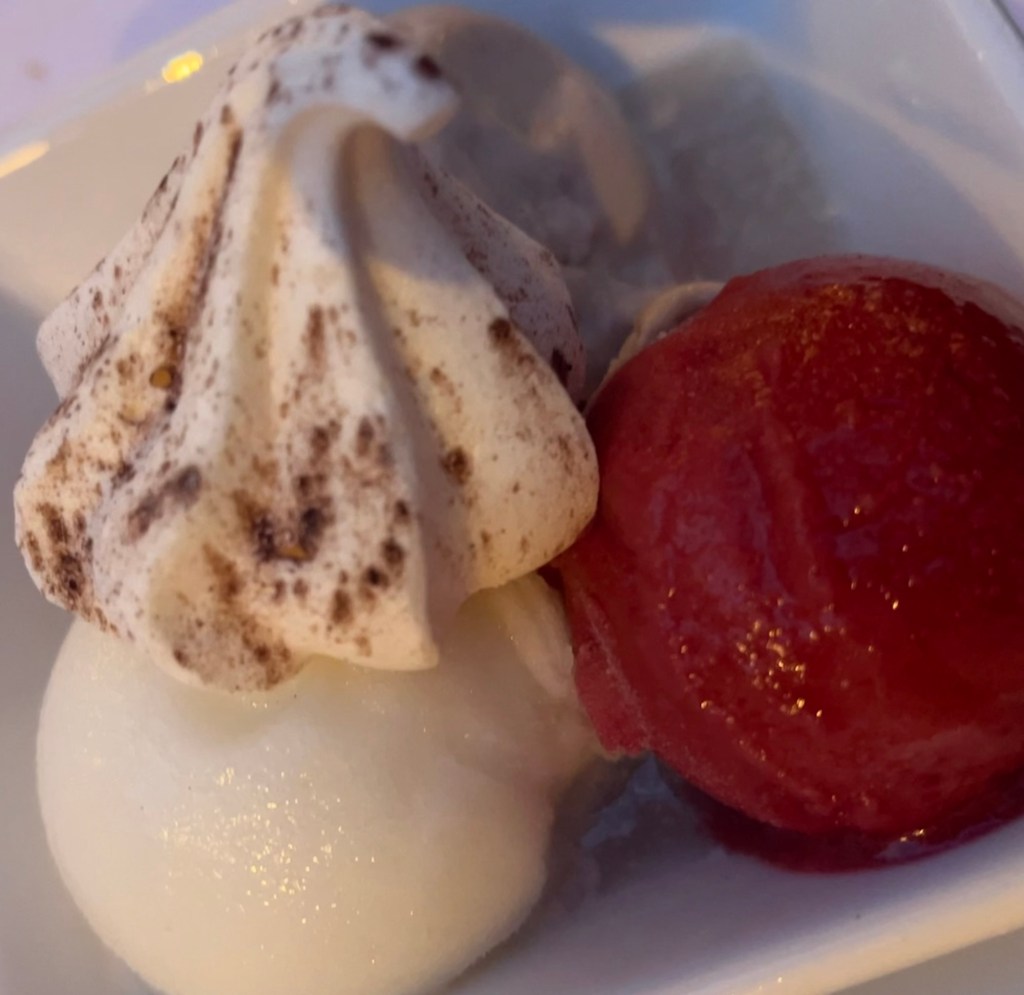
Desserts were no less fabulous: chocolate & banana tart (left) ice cream & sorbet (right).


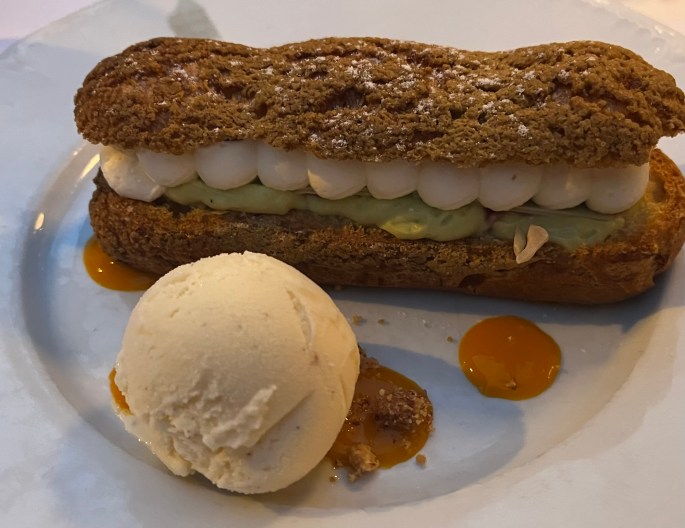
Pistachio biscuit, w/ yogurt mouse and yogurt sorbet.

We would definitely eat at this restaurant if we ever make it back to the city – yes, it is that good. Then right around the corner……………..

One last post for Strasbourg and then headed to Paris.
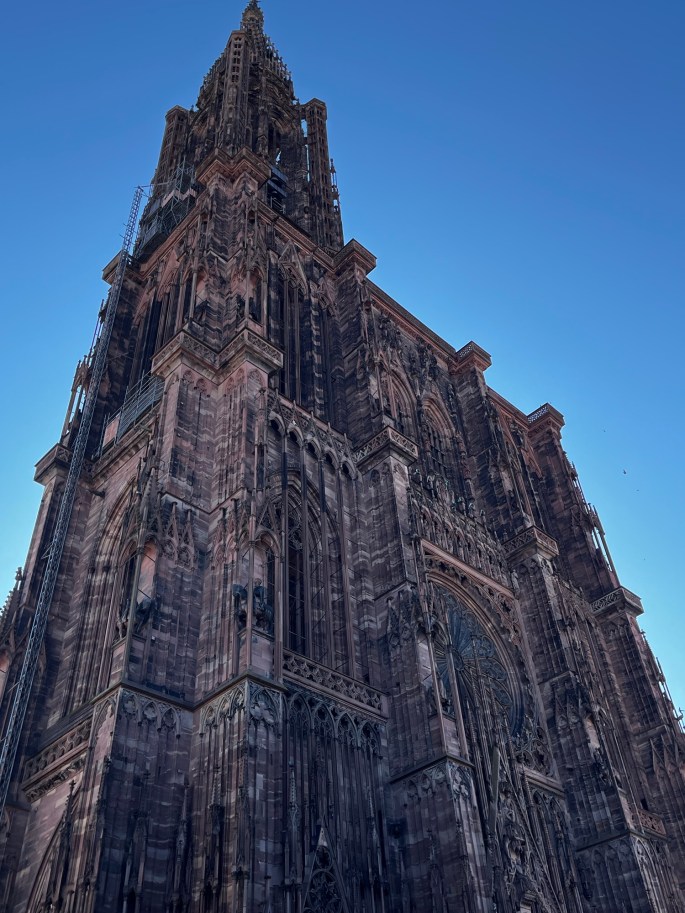
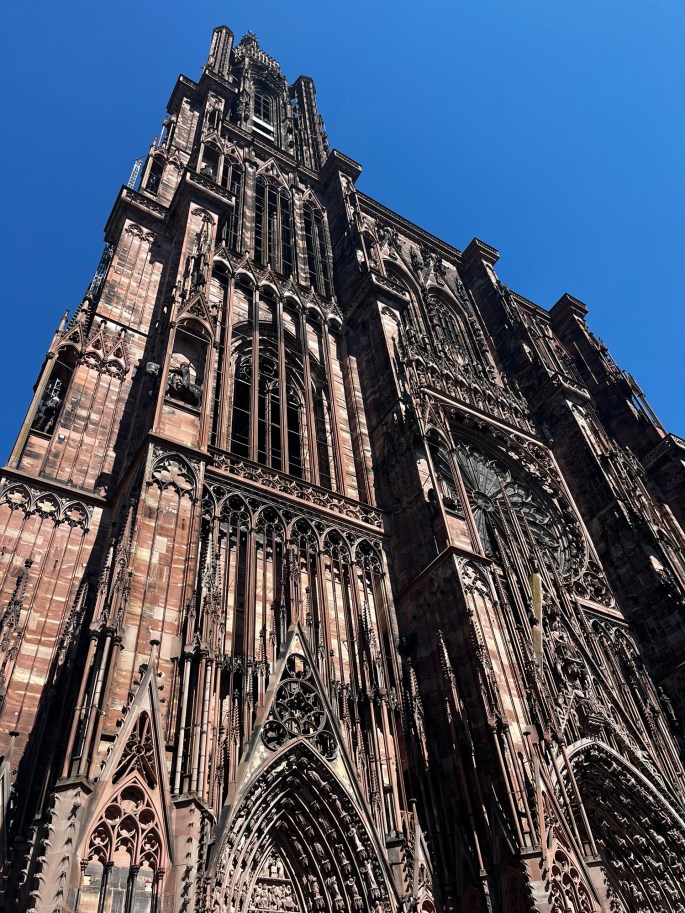
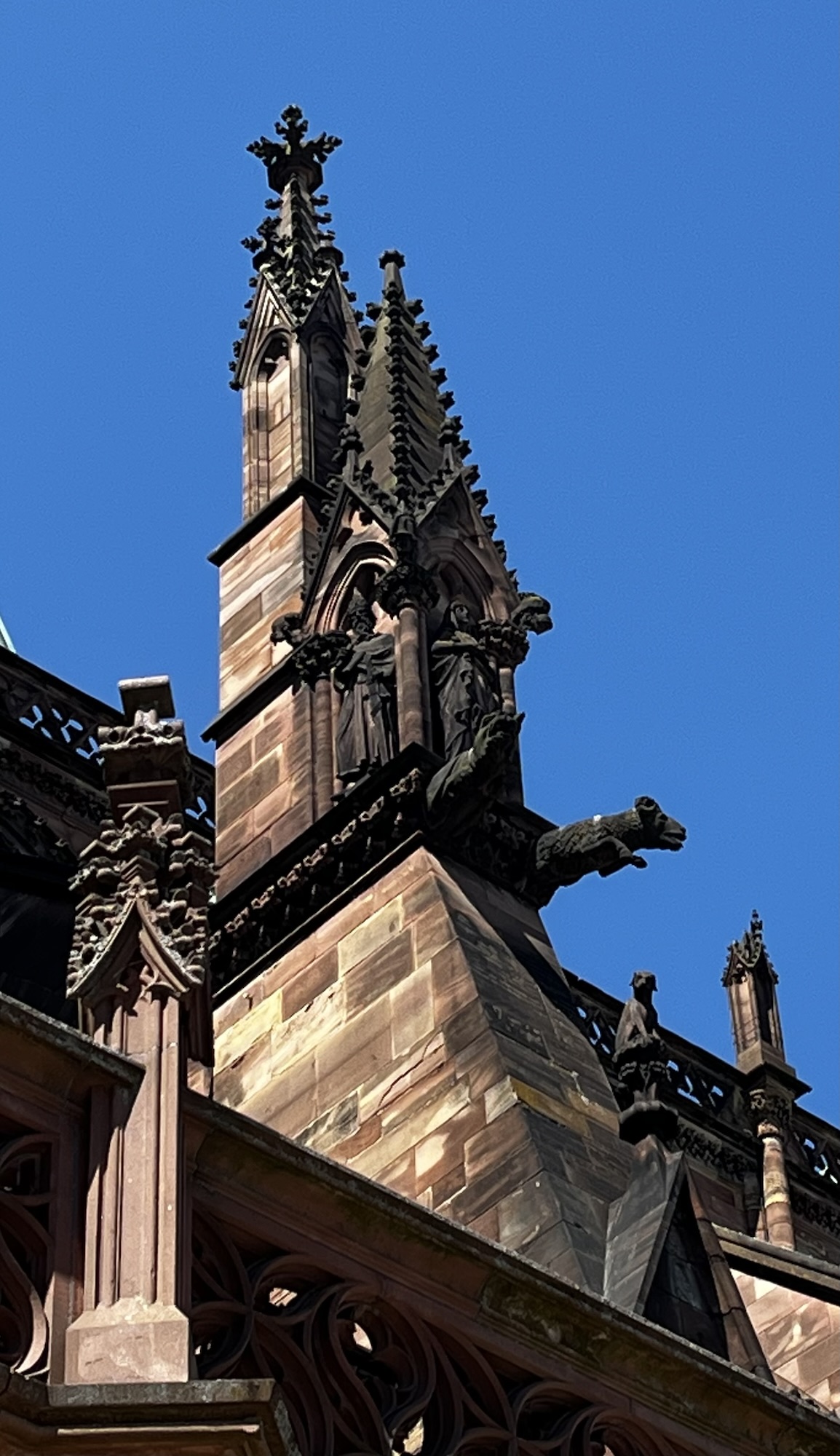
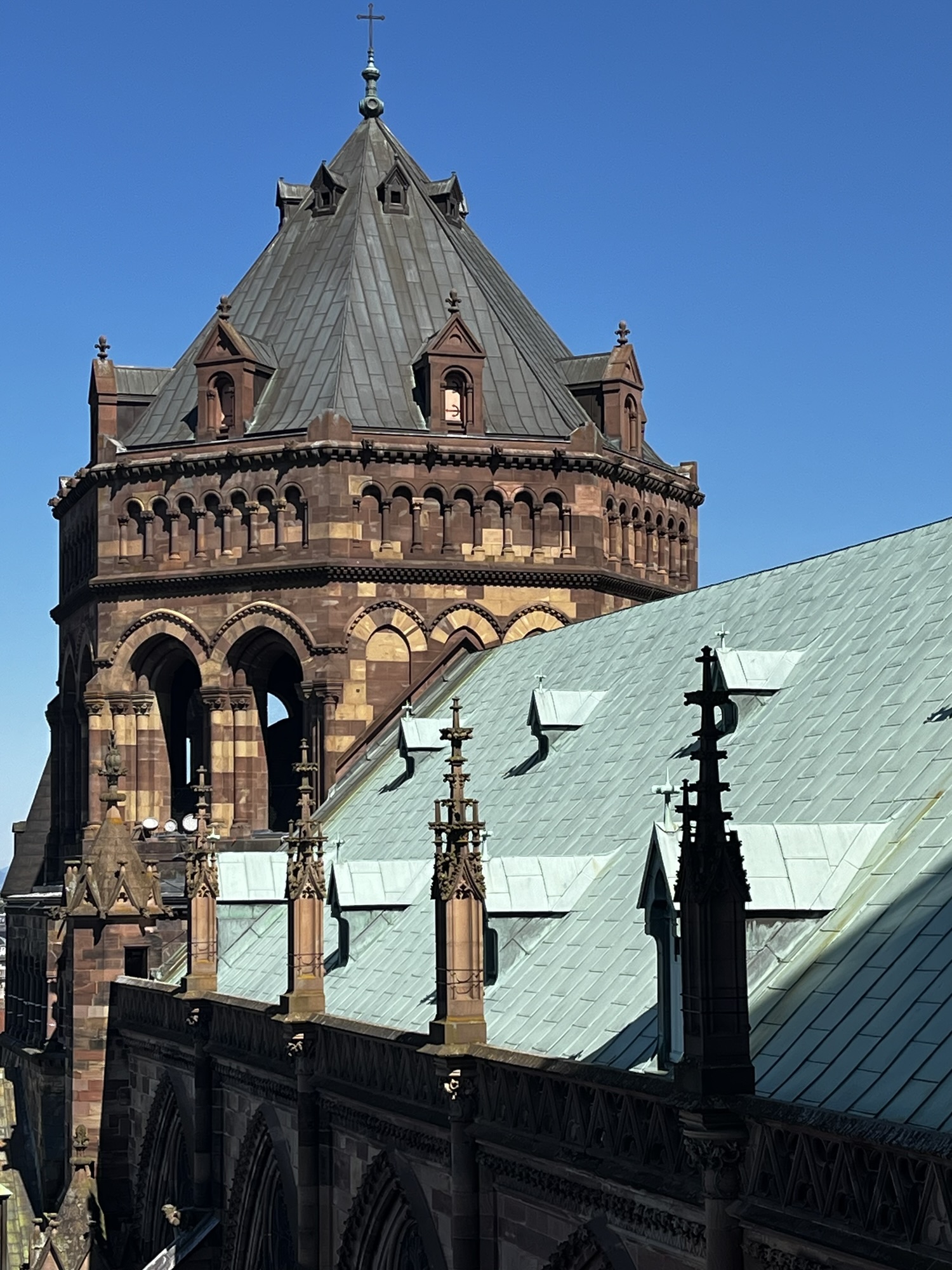
Strasbourg Cathedral commands attention. Let’s start with a bit of history…….
A Roman settlement existed on this site since about 12 BC. It became a major trading center for wine, grain, and later for textiles and luxury products. The first cathedral was built on the present site about 550–575. The current structure was built between 1180 and 1439.

The original design had two spires, but the second was never built.

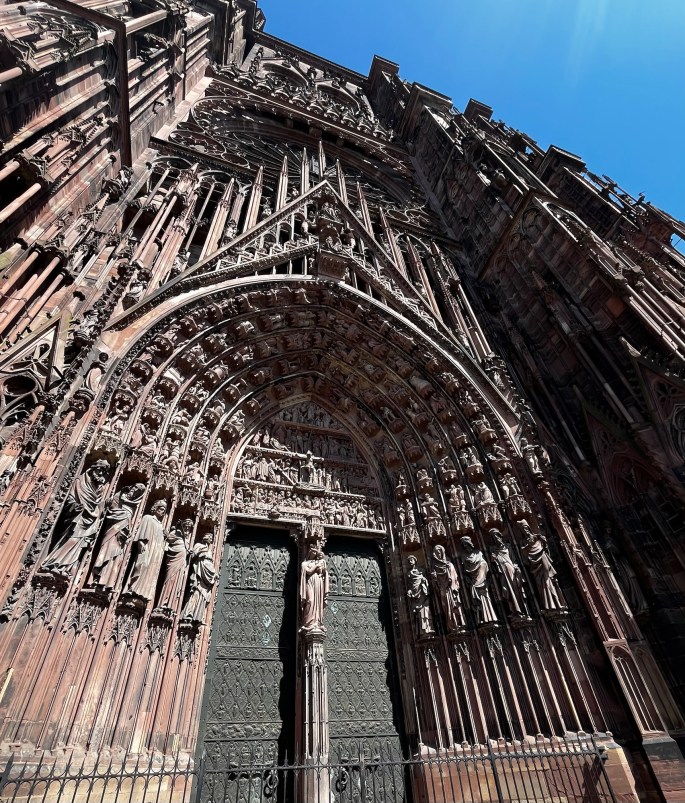
It is a blend of different styles of mediaeval architecture. Building started with the late Romanesque choir and transept, superseded by French and German Gothic from the 13th century onwards. The western front, with its bold design and stone lacework, is an outstanding example of the skills of the Cathedral masons.

The tower showcases the excellence of mediaeval engineering and remained the highest building in Europe until the 19th century standing at 466′. Today it is the 6th tallest church in the world and the tallest structure built entirely in the Middle Ages.

Wooden roof beams were prone to fire and were part of the construction. The church was repaired after each fire but at times work was interrupted by wars and political causes.

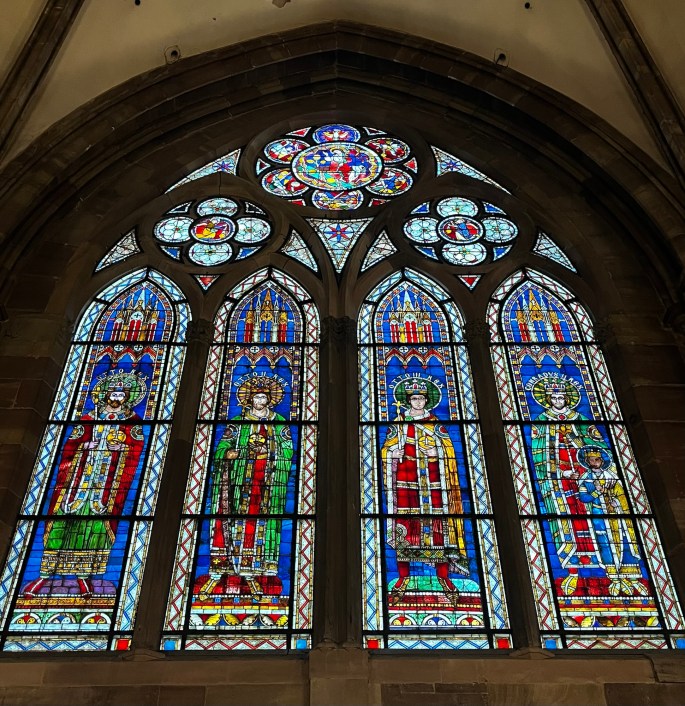
As with most cathedrals, stories were told a variety of ways. The stained glass windows were a key part of the storytelling. The various colors of glass used added to the grandeur seen inside the building. During WWII the stained glass from this cathedral was removed in 74 cases and stored in a German salt mine.

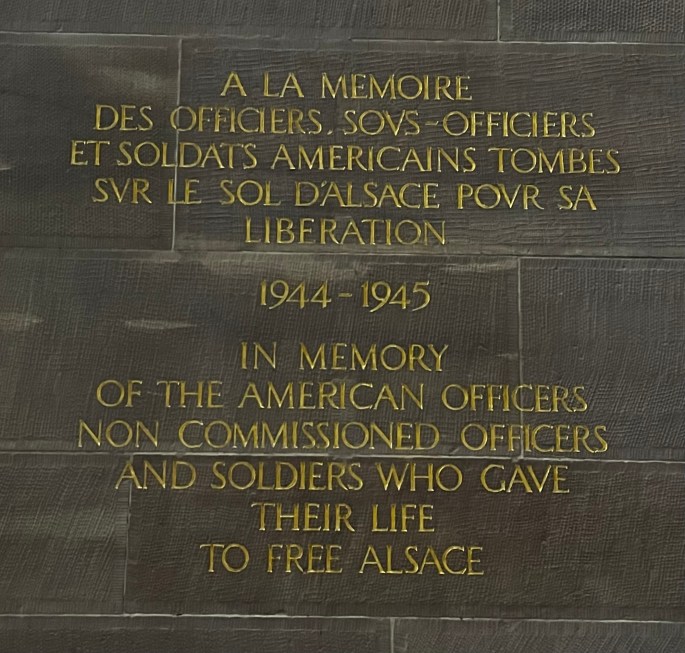
After the war the cases of stained glass were returned by the U.S. military. BTW – the cathedral was hit by British and American bombs in 1944 with repairs completed in the early 1990s.

The five lower bays on the north side contain some of the oldest stained glass of the cathedral, installed in the old Romanesque cathedral in about 1180. The windows are devoted to nine Emperors of the Holy Roman Empire. Each holds a scepter in his right hand and an orb in the left hand, symbols of their responsibility as both sovereigns and religious figures. In the 13th century some rebuilding occurred and the windows were reinstalled in random locations. In 1877 an architect placed the windows back in their original arrangement.

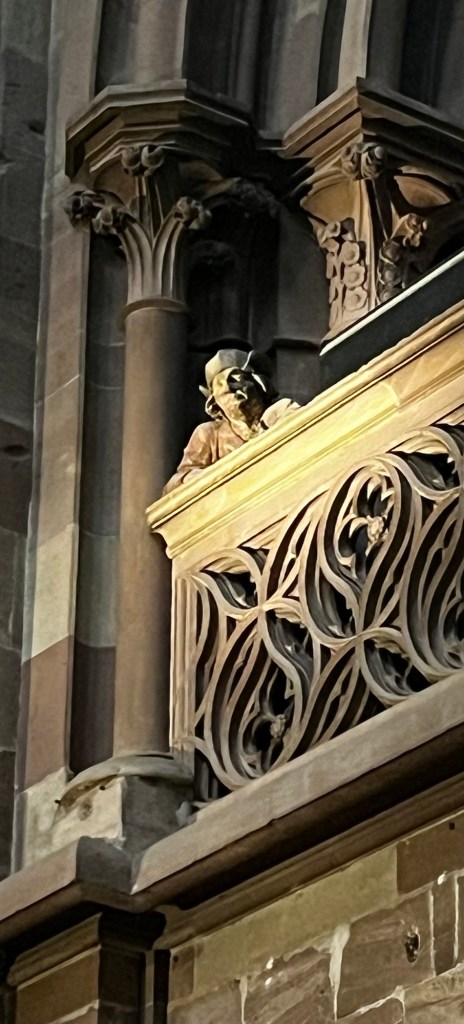
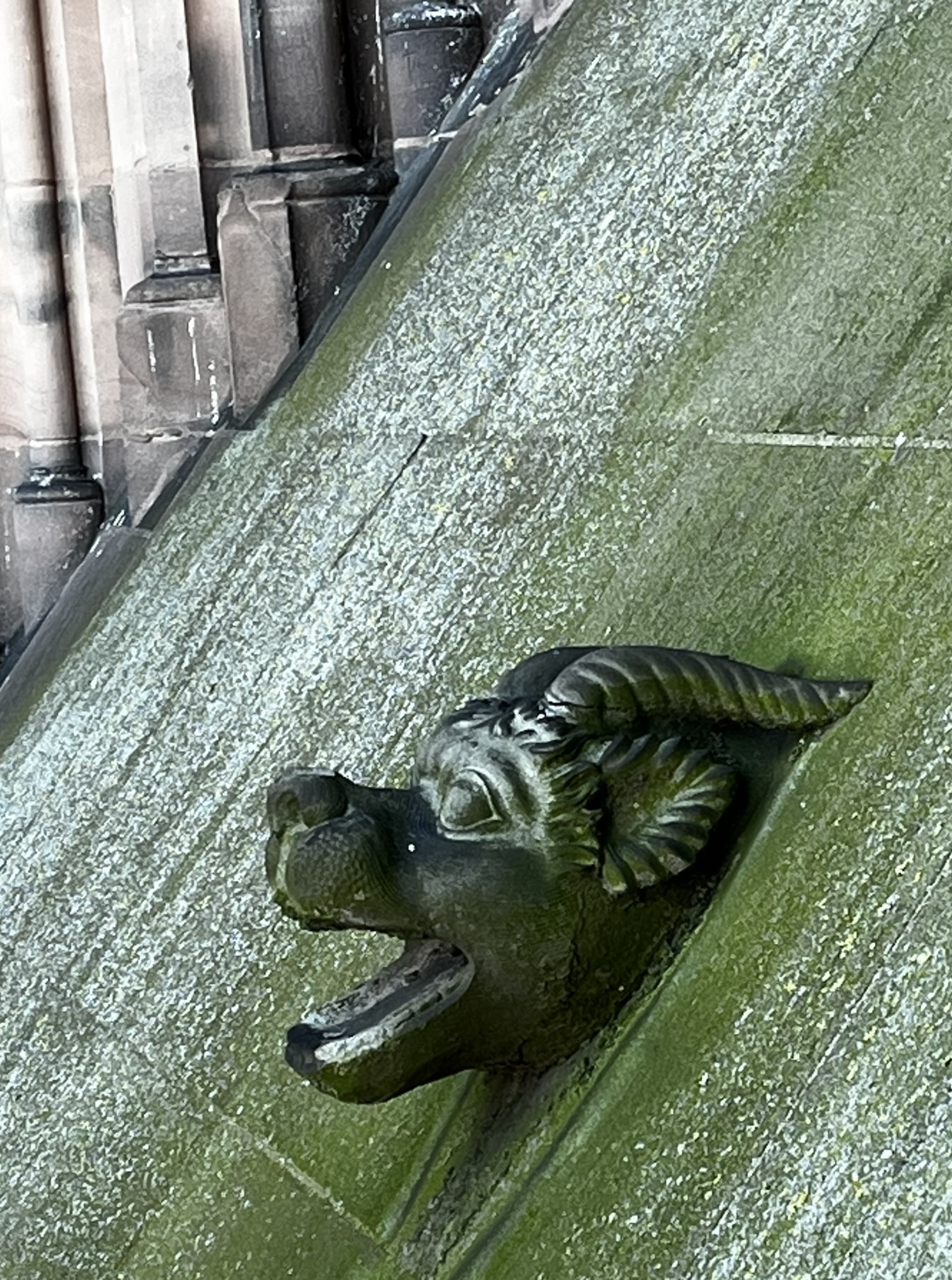
I couldn’t resist this shot. This ‘individual’ was looking down on those inside the church – watching them.

I noticed a few tourists looking at the railing to a pulpit. There was a famed preacher with the cathedral who died 1510. A sculpture of his dog was placed on the steps of the pulpit where he once preached, mourning the loss of his master.

One note l discovered while researching talked about the sculptures for this cathedral. The Strasbourg sculptures clearly show emotions – prophets look severe, the Virgins serene and the Virtues look noble.

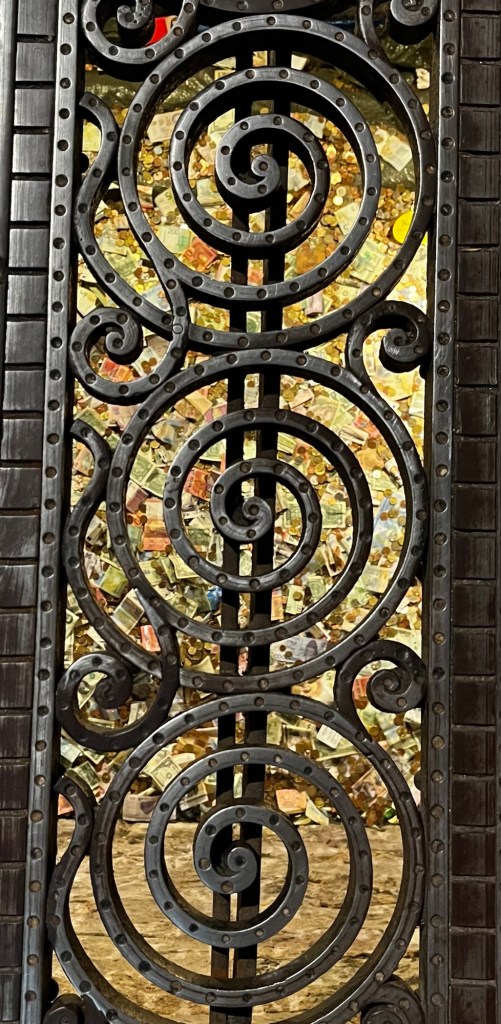
There was grating on the floor and I saw someone dropping something. Upon closer inspection, individuals were dropping coins or bills through the grate. My photo only shows a small portion – probably a 10th of the full size.

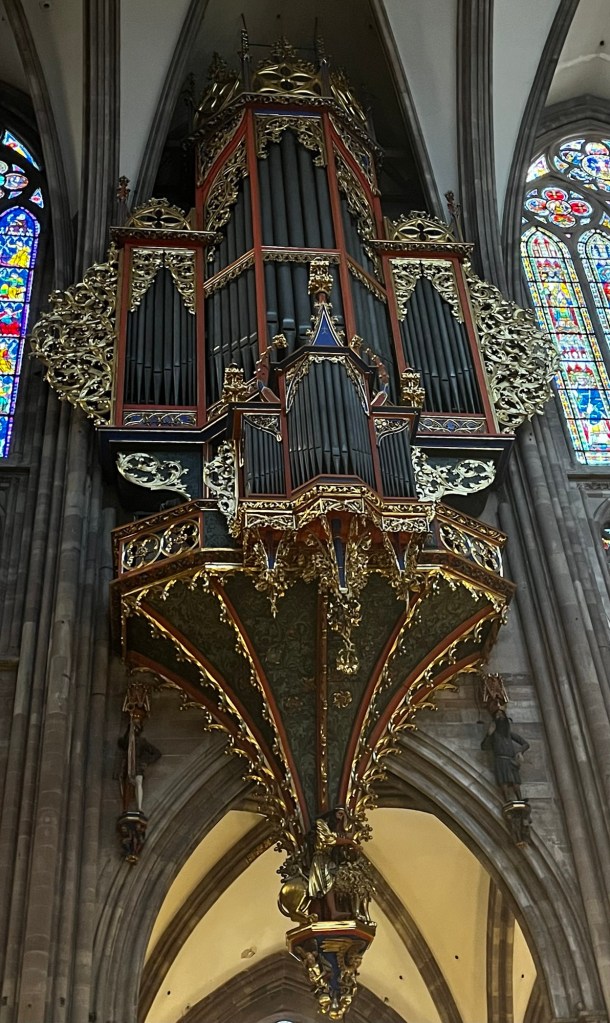
Existence of the organ was recorded beginning in 1260. It was hoisted to its current position in 1327. While very difficult to see in my photo, the bottom of the organ contains a figure of Samson opening the jaws of a lion. The figure has moving parts. I could find nothing else about ‘how’ or ‘when’ said parts moved. A mystery to me.

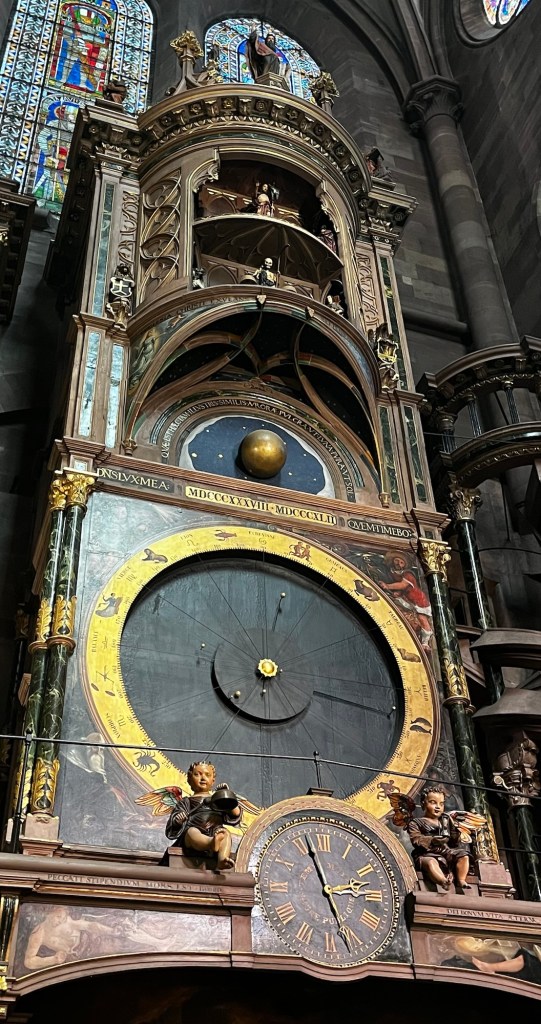
The current astronomical clock is one of the most famous features of the cathedral and the third one. The first clock was installed 1352. When it stopped working the entire structure was dismantled in 1572. A second clock was completed in 1574 and was remarkable both for its complexity as an astronomical device and for the range and richness of its decorations and accessories. This second clock stopped working around 1788 and stood still until 1838.

The current clock is approximately 59′ tall and shows much more than the official time; it also indicates solar time, the day of the week (each represented by a god of mythology), the month, the year, the sign of the zodiac, the phase of the moon and the position of several planets. A crowd was gathered and seemed to be waiting for ‘something’ to happen. It did. At the very top of my video, you can see the moving parts.
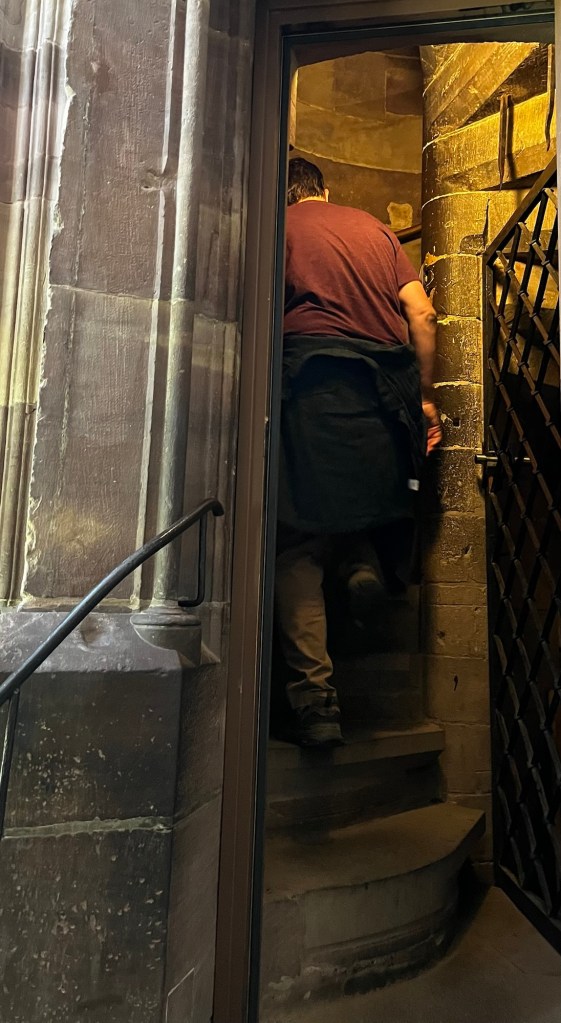
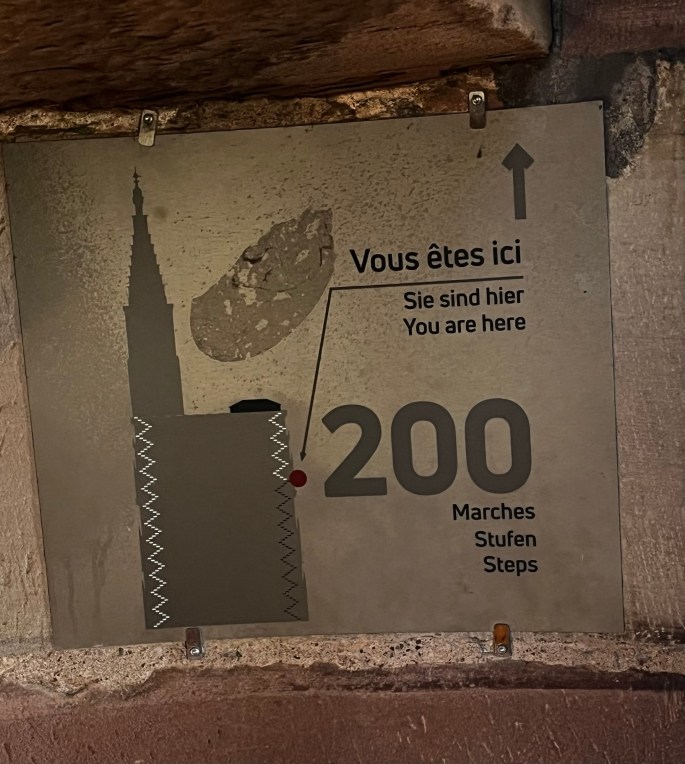
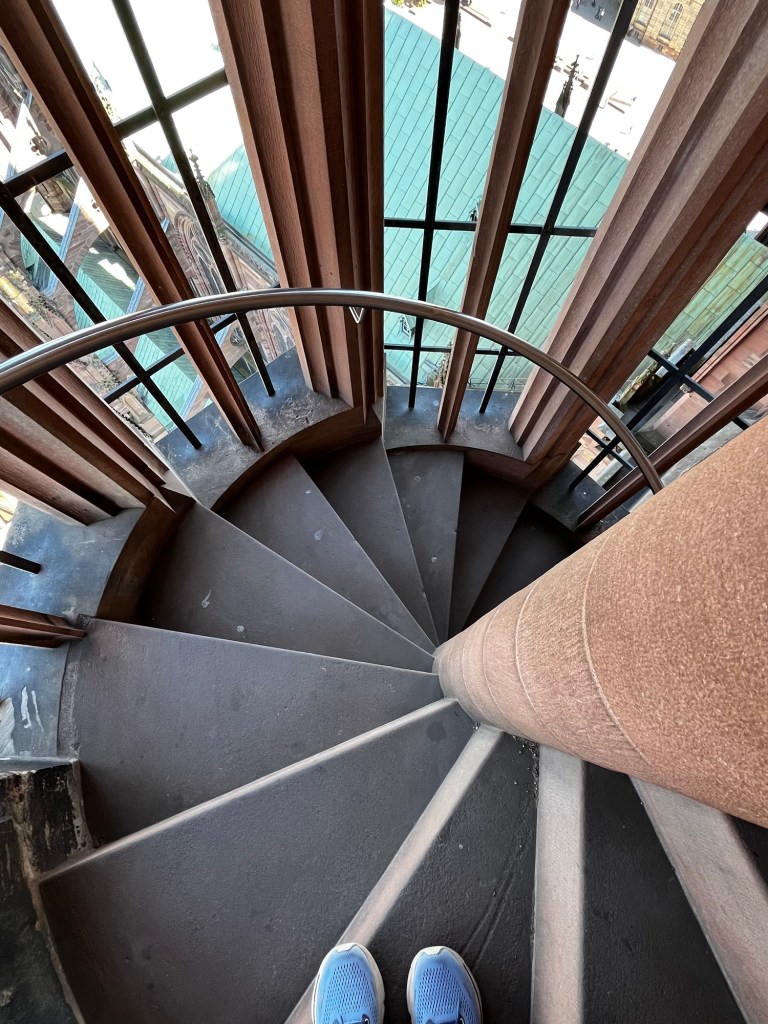
330 – what does that mean? That’s the number of steps until you reach the observation desk. Naturally, we (some) go that distance. Here we go.


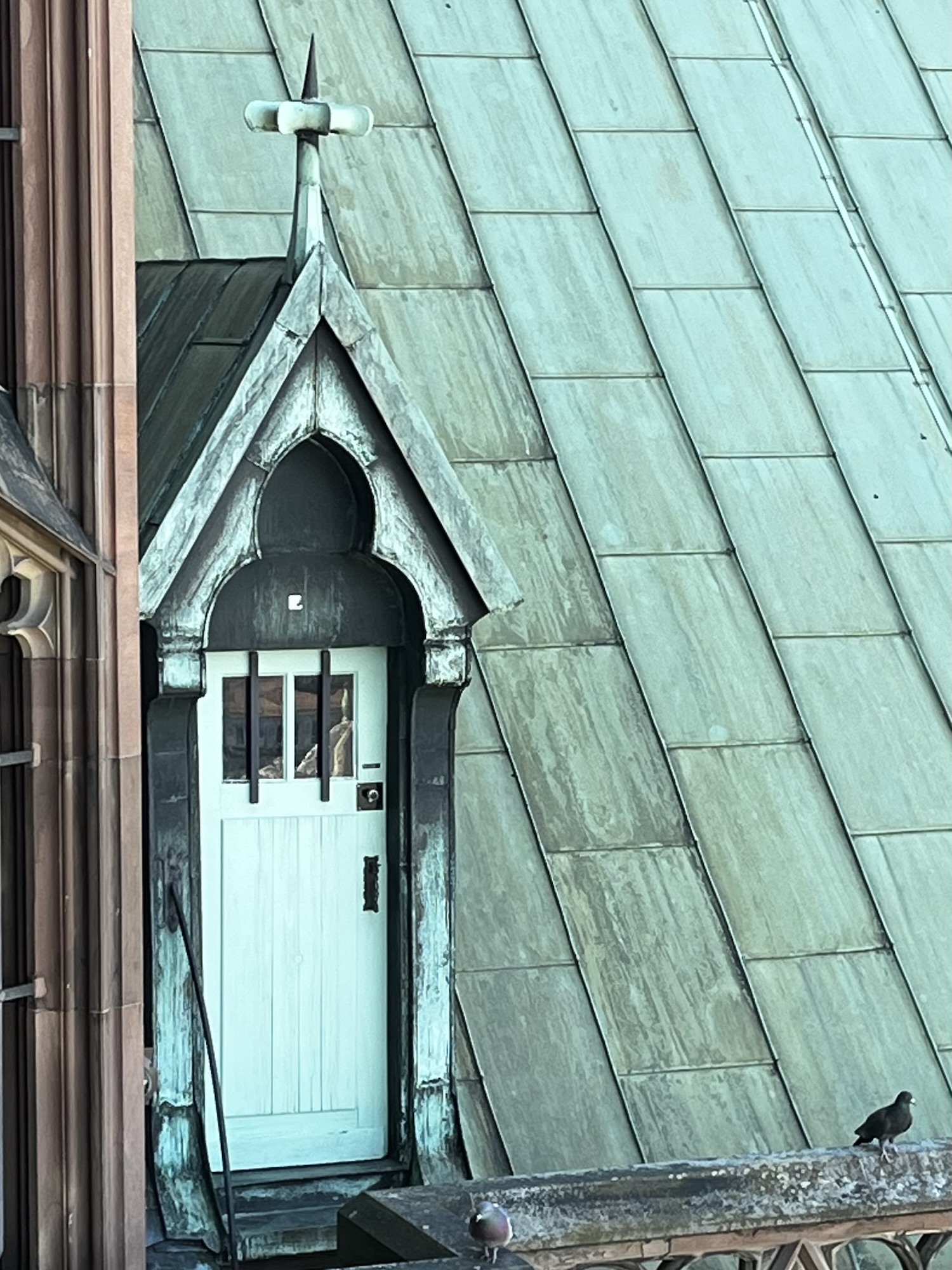
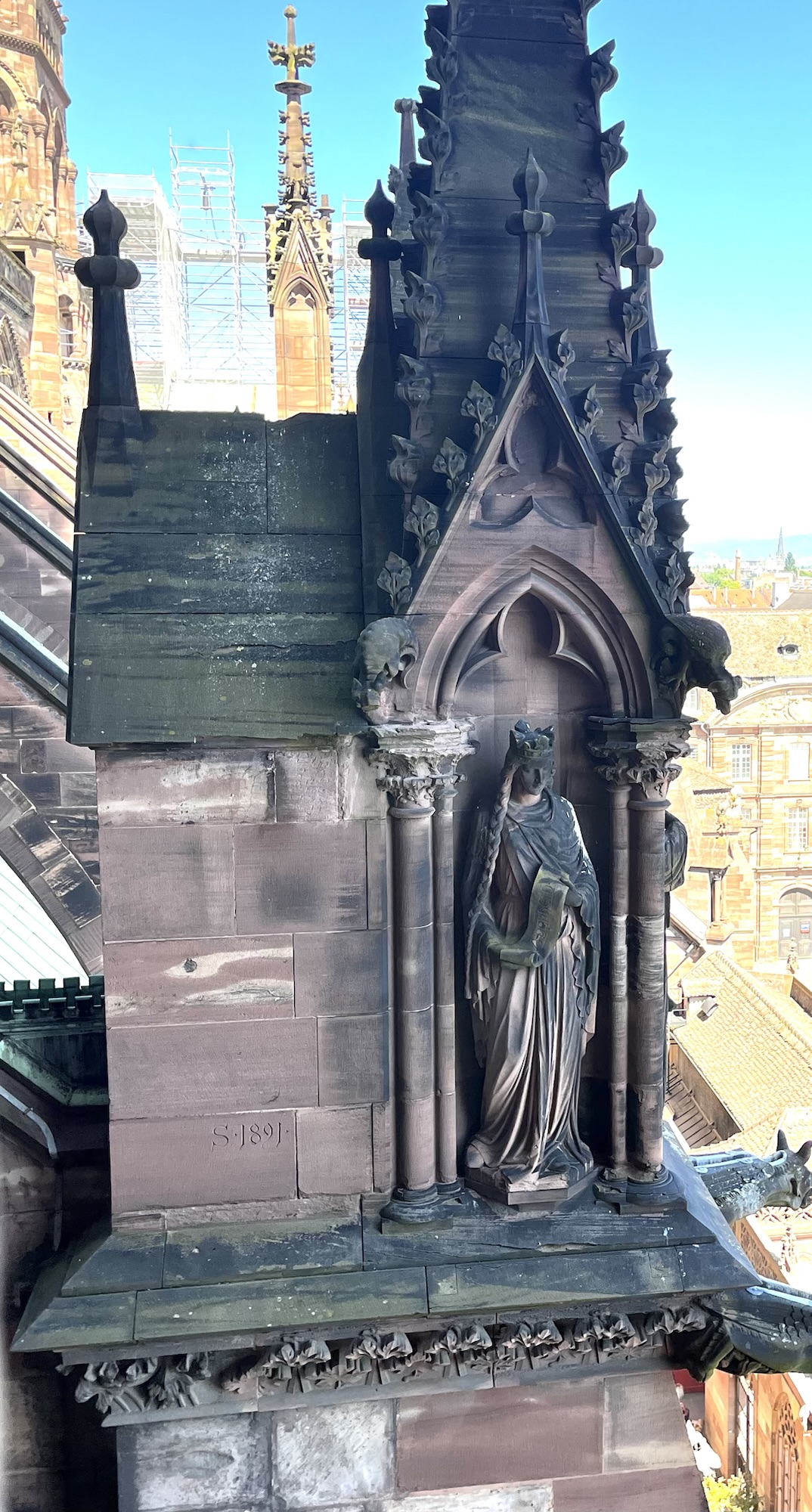
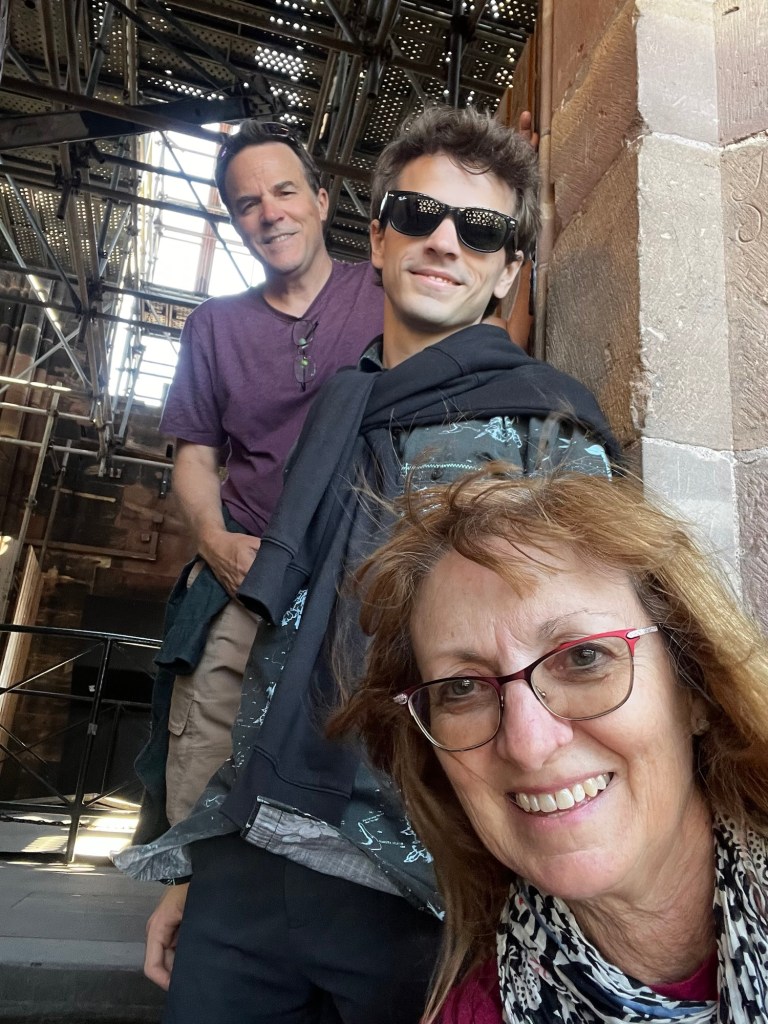
Got some interesting photos along the way.


Wasn’t sure if this sign was good news or not, ha!

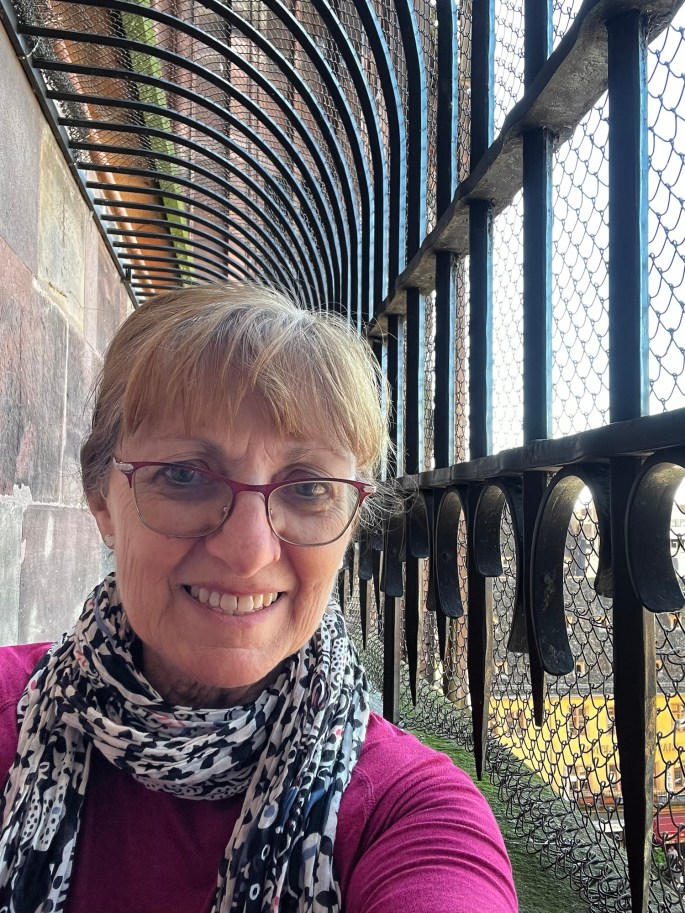
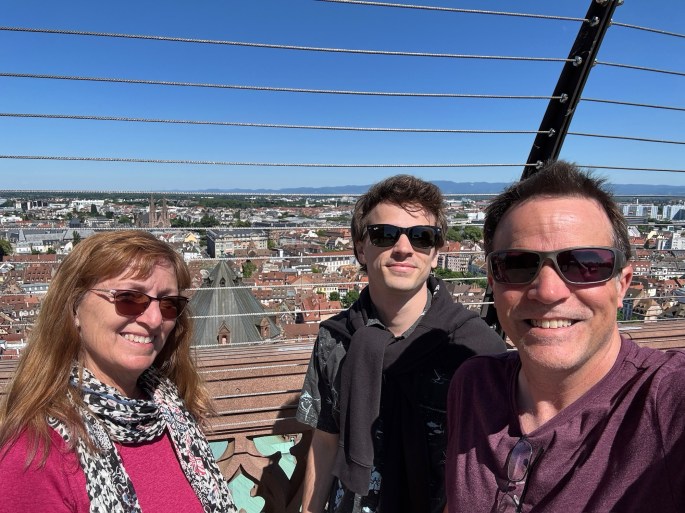
Made it!!!! Yep, only three of us.

You can see 30 kilometers from the observation desk. Yikes!

And now the journey begins downward.


Also, a chance for more interesting shots.


Reunited with the missing member of the group. 🙂

Strausbourg Dining:
Our first night of dining was absolutely amazing. Rich found a tapas bar that specialized in regional food and this was one of the top rated: Restaurant les Chauvins. They welcome you in a modern and warm setting in preparation for discovery of the flavors of Alsace. Their mission is for their diners to rediscover the authentic taste of fresh quality products, including organic farming and the know-how of local producers. The owners make it a point of honor to work with fresh products grown on Alsatian terroir.

Days into our trip and we were still talking about some of the food from that night. The first thing to arrive was ‘tarte flammbee traditionnelle’, a lovely thin-crusted item with a special cheese base, thinly-sliced onions and bacon pieces. Truly, it is the only thing I remember from our trip in 2005.

Next three items to arrive were: foie gras de canard (duck), aslacian pork and mini-burgers.


We still wanted more food: white asparagus, rolled meat & herbs rolled in egg pasta and hot dog aslacian.


This item was liked the least: escargot in mushroom cap.

Desserts? But of course. Eric ordered ice cream……..raspberry and citrus flavors, with sparkling white aslacian wine poured into the glass. It was pretty good.

However……………..this is the dessert we talked about the remainder of our time in France: Kougelhopf pain perdu with ice cream and a v.e.r.y tasty sauce. Most similar to French Toast – only better.

The kougelhopf was a local specialty of the Alsace region. It is a yeast brioche cake with raisins and almonds although googling recipes found a multitude of fruit and/or nuts that could also be added. I am going to make this at home! Don’t think I’ve mentioned yet, but at the point this photo was taken, I had been up 32+ hours. Yikes – I’m too old for this.

Walking through the historic area, one gets hungry. Lunch was at Au Petit Bois Vert, outside on the terrace around the foot of the oldest tree in Strasbourg.

While not a tapas place, we continued to share and taste each other’s selections. Never going to be a bad meal when sitting next to water – just saying.

No surprise, I got another tarte flambe with plenty to share.

All shared the homemade duck foie gras and the assorted venison meat & cheese platter.


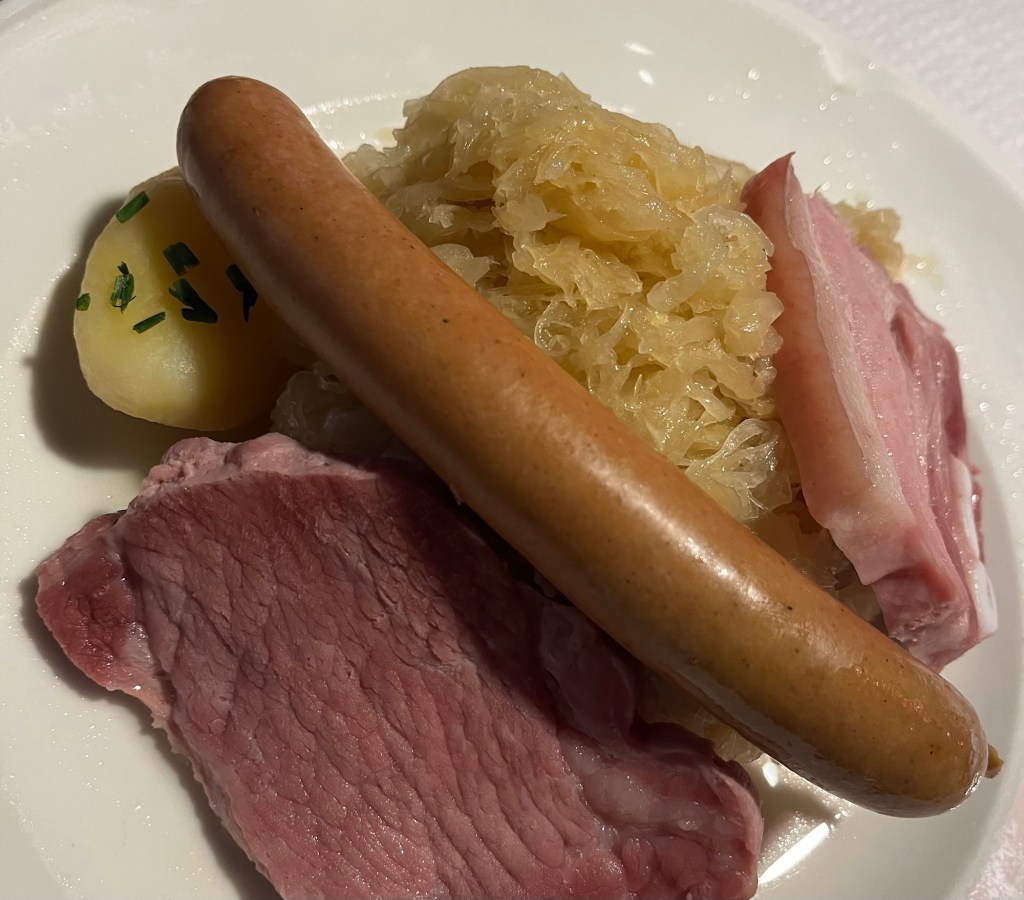
Eric chose the traditional choucroute garnie (sausages, pork and sauerkraut).

While Rich and Hunter had the ‘wild game (boar) from Alsace. The presentation wasn’t exactly what they were expecting, but enjoyed their selection.

The guys all got dessert with Eric choosing raspberry glace (ice cream) and cafe gourmand for the other two.


So far so good our first few days in Strasbourg. Next up, Strasbourg Cathedral.


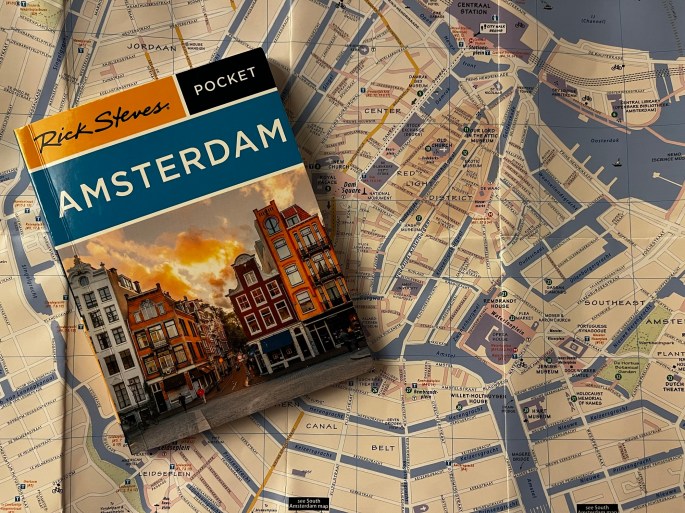
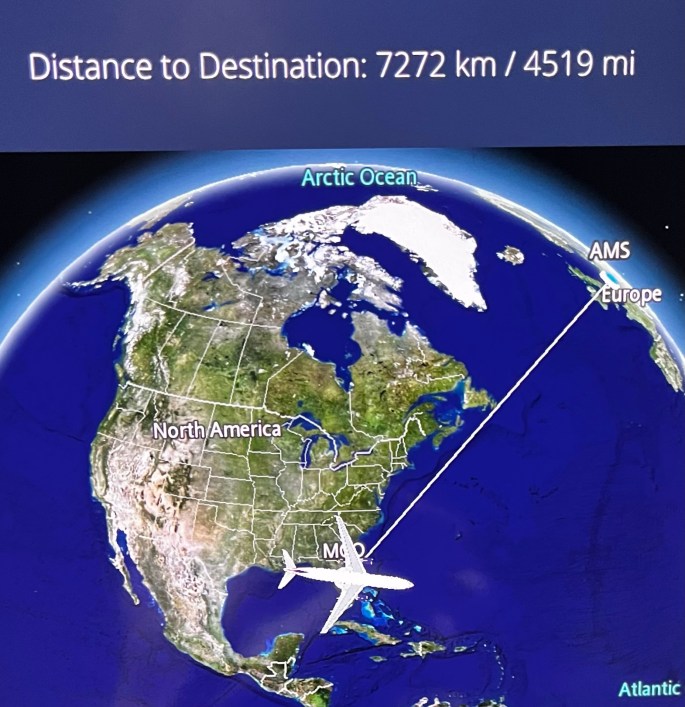
Headed back to Europe but notice something in my first few photos?


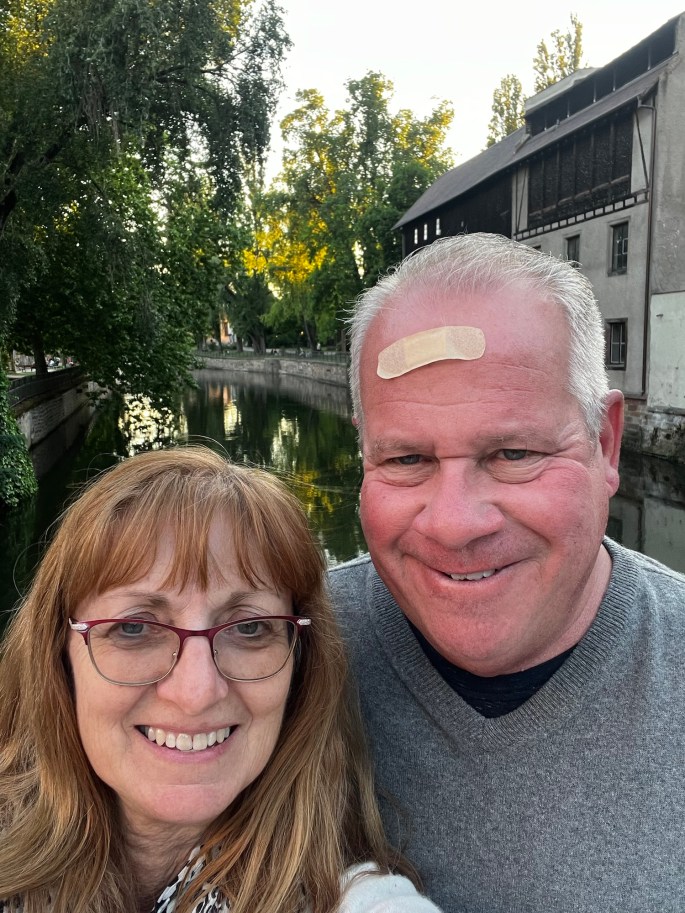
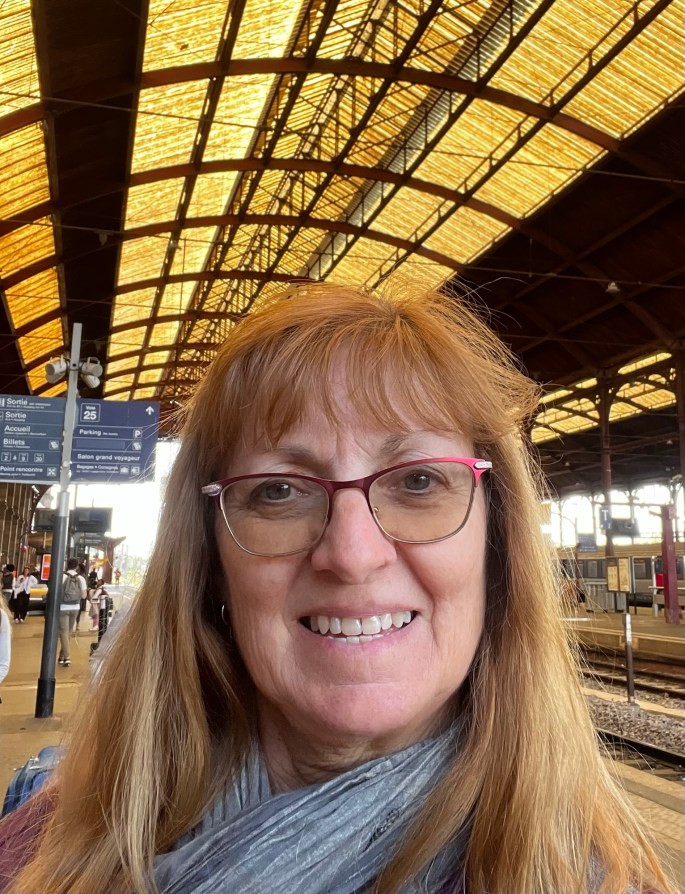
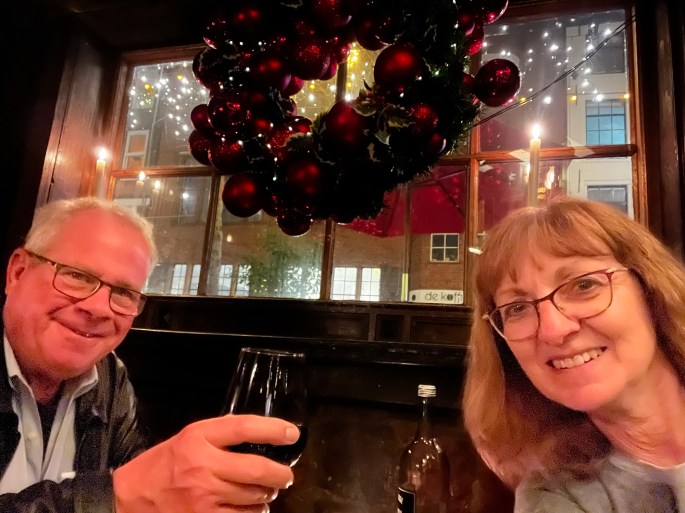
Even though I’m smiling………………I’m solo. Where is Eric? Six days earlier he flew out with Hunter and Rich to see the beaches of Normandy.

I headed to Paris after a stop in Atlanta before flying overseas.

I did see the sunrise since I had a window seat. Almost, but not quite, was worth the 8+ hour wait until they arrived at the train station – where I was waiting. There were a few hours that were dicey while I was waiting at the airport/train station.

I gave a lot of thought to acquiring a room at the hotel airport and sleeping. A lot of thought……..
Train tickets were purchased before leaving the states. We had to wait 15-20 minutes before departure to know the line it was arriving on . Then it was a mad dash to get our tickets scanned, go downstairs to the tracks, find the corresponding letter for our car and seats, before settling in on the train.

Here’s a nice view of the French country-side on our way to Strasbourg. Why Strasbourg? Eric and I had been here 2005 with friends and truthfully don’t remember much of that experience. It was my first trip to Europe and our friends planned the entire trip.

Strasbourg is one of the de facto four main capitals of the European Union (alongside Brussels, Luxembourg and Frankfort). It was first mentioned in 12 BC as a Roman camp. It had a history of German and French rule. French in 1681, German in 1871, French in 1918 (after WW1), German in 1940 and French in 1944.

We got to our AirBNB easily enough. We were met by a friend of the host and he carried up my suitcase. Going up two flights, some of which were twisty was a feat in itself.

These places are always interesting. They squeeze in bedrooms, toilets and showers separate from the original floor plan. Upon entering, the path takes you through our bedroom (top left photo) before entering the living space and kitchen. Rich and Hunter were upstairs after traversing another tight stairway, then being careful to not hit your head on a wooden beam or slanted ceiling.


The city was known for its medieval cityscape of Rhineland black and white timber-framed buildings. We went exploring once suitcases were dropped.


The weather was beautiful during our visit. When possible, we walked along the waterways. The guys were in the background of my shot below.

Three bridges along with four fortified towers were built between 1230 and 1250 on the branches of the Ill River, to defend Strasbourg against attacks.

A quick photo from atop our vantage point before heading into ‘La Petite France’.

The Petite France district is one of the most picturesque and touristic districts of Strasbourg. The canals of the Ill de Strasbourg were built and developed from the tenth century onwards and mainly used for the defense of the city as well as for its river and craft commercial activities. They were improved, extended and strengthened during the Middle Ages.
Records indicate some type of bridge dated back to 1197. It was reconstructed in 1841and is supported by a single cast-iron arch, formed of four arch ribs. It is one of the oldest cast-iron bridges still standing in France.

We followed this boat and saw it go through one of their locks.


More excitement is coming – food and the Strasbourg Cathedral. Stay tuned.
Concluding our 2025 Spain trip was sad, but looking back over these photos – we had some great times, saw interesting sites and undoubtedly had awesome food experiences. Let’s wrap this up!
One of our stops was at Point Zero in Madrid, found in one of their most famous spaces – Puerta del Sol, in front of the Government of Madrid Community. The ‘point zero’ tradition comes from the Roman Empire, dating back to the time of Augustus, the first emperor of Rome. Remember ‘All roads lead to Rome’. And I discovered it almost matches the authentic center of this country.

Let’s talk some food. One afternoon we stopped in this establishment for a ‘light snack’. Sangria went nicely with the cheese & bread they brought us.

Even something that ‘mundane’ just tasted better in Spain.

Naturally a meat platter, an egg tortilla and a salad were thrown in for good measure.


We made another visit to Mercado de San Miguel. Yes, it might be filled with tourists but it was definitely worth going back for one last visit. We wandered until we found a spot where 2 or maybe 3 can sit then one goes off to bring back food.

Most of the photos below are easily identifiable. The top left was octopus – delicious!


Eric had anxiously been awaiting his dining experience in Posada de Villa Madrid.

Back in the seventeenth century there was only one Flour Mill in Madrid, which became in 1642 the first Posada de la Corte, under the protection of the Arab walls, where food and lodging were given to all travelers who arrived in Madrid. It was in 1980 when it was rescued (from disrepair) after 2 years of meticulous restoration, by an individual from Madrid to ensure the tradition continued. We were there when it opened at 7pm for our reservation.

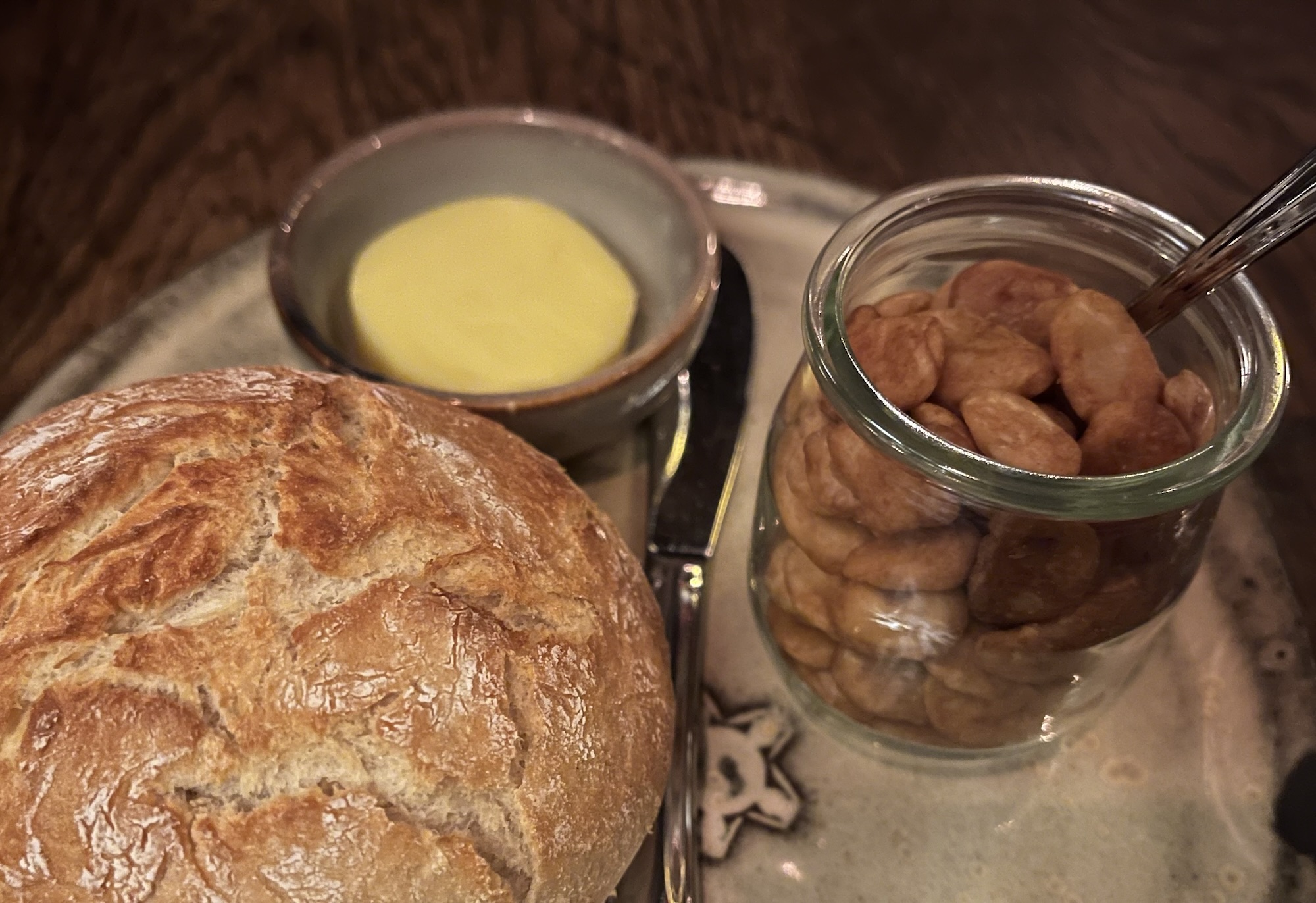
Bread and olives started our feast.

Then the reason Eric made these reservations………………….Quarter lamb roasted in a wood oven – shared by him and Adrienne.

I ordered chicken and truth be told, all three of us could have eaten off of the lamb that evening. Their kitchen offered a cuisine prepared with dishes belonging to Castilian and Madrid gastronomy.

There were some ‘sides’ that came with the meal, but totally not necessary. What we did need…….was dessert. ha!


After eating, these Floratine cookies were brought with the check – like we needed more food. BTW – no crumb was left.

I have one more eating experience to share – cava street crawl. Although looking back at our photos, I don’t think we drank any cava. Ha!
This was our first stop. Pitchers of sangria were already made. They added some juice and ice and they were ready to serve.


This next place was s.u.p.e.r crowded. We squeezed into a spot along the bar. Really, we ‘made’ a spot for us to stand.


This third stop had an interesting twist. The hostess led us down some stairs so I assumed we would have horrible service. Not so much. Why was that? In one of the photos below – a doorbell when you needed something or someone.


It quit raining and it started getting thick. Both with people and with cars. There were people living above all the restaurants streetside. Yikes!

Last stop – we were getting full.


One last look of Cava Street before we left to crash at our rental. The colorful umbrellas drew your attention.

You may have noticed Eric was sporting a new look. Eric felt a new wool hat was needed. Once he saw the bronze plaque indicating a 100+ years existence in front of this store – he was sold, a blue wool hat was purchased.

Our last night we were able to see one of their iconic emblems fully lit. Read one of my earlier posts for why this advertisement continues to exist. 🙂

We enjoyed Spain – central and northern Spain. Food was great and expenses were not totally outrageous and our AirBNBs were well situated. We hope to be back and explore the southern parts of Spain.
Adios!
Heading back to Madrid required driving over this terrain. It wasn’t for the faint of heart. Especially when we got a wind alert and the rain we encountered was crystalizing. Yep, just like snow.

This didn’t happen to us, but it definitely looked like a mess. Bottom center was one of the workers.

Drove through a number of tunnels going through the mountains and not over them. Hard to see in my photo below, but not all of them had a concrete ceiling – just a net attached to the ceiling of mountain rock.

Within an hour of reaching Madrid we started looking for lunch options. Adrienne found this place – another winner in a somewhat small unassuming town.

Started with wine and some (home-made) potato chips? Yep, we were given them several times throughout this trip.


We continued with tapas, sharing each of the plates.


Just enough room left for three desserts to share.


Another winner for lunchtime.

Back to the Madrid airport, drop off the rental then catch a taxi to our next AirBNB. Nice place in the heart of the historic center. We did have to walk up two flights of stairs to get to our place. Man – those suitcases are getting h.e.a.v.y!
Getting access was very easy and different than most others. Halfway down the street was a small holding room for luggage, packages and also keys. We had been given the code to enter and the code for our key box – easy peasy.


We had a nice view from one of the balconies.

Our favorite Madrid tapas location………just around the corner. We became ‘regulars’.


Lest you think all we do was eat…………….we added some ‘culture’ to our visit. The Museo del Prado is the main Spanish art museum in Madrid. It houses collections of European art, dating from the 12th century to the early 20th century, based on the former Spanish royal collection, and the single best collection of Spanish art. The numerous works by Francisco Goya – the single most extensively represented artist – were some of the highlights of the collection. The collection currently comprises around 8,200 drawings, 7,600 paintings, 4,800 prints, and 1,000 sculptures.

No photos allowed inside the Prada, but we could take one outside……..

It was a journey. If I didn’t mention it yet………..we had a lot of rain, I’m talking a lot of rain. Drenching, soaking through your clothes kind of rain. Adrienne packed an umbrella, but we had to make a double purchase. BTW – so cheap, they stayed in Spain in our last rental for the next inhabitants.


Another day we visited Museo Arqueologico Nacional.

The museum was founded in 1867 as a depository for numismatic, archaeological, ethnographical and decorative art collections of the Spanish monarchs. Its current collection is based on pieces from the Iberian Peninsula, from Prehistory to Early-Modern Age. Visitors enter the building at basement level, and pass to the prehistory section. We you move up through the building, artifacts become closer to our current time on earth.
It really was an interesting museum. Eric enjoyed the Prado Museum, I enjoyed this one more. They had really great displays, interactive, video and narrative and as mentioned above, this was based on the Iberian Peninsula – not something I had ever studied. We spent too much time on the Pre-history section where you first entered.
Culling through my photos, there were way too many and not nearly as interesting as actually being there. One thing that stuck out as we moved upward in the museum (and upward in ages) were their rooms of mosaics. These things were massive. A great many had been framed & supported and placed on walls. The photo below was one of them.

One last photo outside in the museum garden.

What is a blogging trip without some flowers?


Let’s eat! We had a variety of food during our short stay.

This restaurant was known for their Cachopo – what? Start with Asturian Beef fillet, spread a mixture of cream cheese and a local cheese, coat it with cornmeal and egg and finally fry it at the perfect temperature.

This was big enough to feed all three of us, especially when you start with a (local) cheese platter.

As you might have noticed in the name, cider was a part of their experience. Those green bottles were everywhere!

Another stop was………………..

This was repeated several times during our stay. Of course it was VERY convenient to our rental which probably should be mentioned. 🙂 We usually arrived before they ‘officially’ started serving and they still seated us and brought something to nosh on while we waited. Eric was sold on their cider. Me, not so much. There was not a hint of sweetness to the drink. There’s no carbonation therefore holding the bottle high and a little was poured from a distance, adds something. Someone was continually stopping by to refill the glass. And yes, they don’t look at the glass when they are pouring.
Here’s a collection of the dishes we ordered. Some savory, some hearty and some sweets.


And then this short video of sizzling steak that Adrienne and Eric shared one evening.
Oviedo really was a charming town. They had a large pedestrian area nearby, great for people watching and checking out statues. Yes, they have lots and lots of statues, 100+. In the 1990s the city council initiated this open-air museum, most of which were created by local artists. It could be a scavenger hunt! We ran into a few as we strolled. Apparently there’s one for Woody Allen and it was one of the most popular. Nope, we didn’t see it nor hunt for it.

Below was the ‘Monumento a la Concordia’ a bronze sculpture of 7 figures in Carbayon Square.

‘La Pensadora’ The Thinker.

And of course, The unavoidable ‘Culis Monumentalibus’ a pair of buttocks.

Before leaving this part of Spain, we did a short road trip to Aviles – a well-preserved medieval city with one of the best-preserved Historic Centers. The nearby port played a significant role in its transformation over the centuries. The center was full of narrow streets and charming squares.

Just off the square seen above was this (dry) fountain.

Loved their faces. I’m sure there was a story………………

When these trees leaf out, it would be a great place to sit and people-watch.

Eating was part of this adventure – of course.

Since 1890 this establishment had a goal ensuring the essence of a traditional cider house continued to exist but also the dishes of traditional Asturian cuisine were served. The name came from the first family that owned it and it was managed by the family until 1954. it was again run by the family in 2005 and one of the two owners was there during our visit. Lucky for us since he helped with the language and also describing the dishes we ordered.

We started with a tasting sampler and fried sardines. The sampler I snacked on, the fried sardines – not so much.


Adrienne couldn’t resist the octopus with potatoes.

I ended up with the scrambled eggs with mushrooms and (some of the best ever) prawns.

Eric ordered a local whole fish on the recommendation of the owner. He enjoyed it.

Eric topped off his meal with rice pudding. We were too full to partake of any dessert.

This was a nice, unexpected side trip that we all enjoyed.

We finally made it to Oviedo. But why this city?
It is the capital city of the Principality of Asturias. The Kingdom of Asturias began in 720 after a revolt against the Muslims that had taken control over most of this peninsula. Economically, Oviedo was a poor region and largely ignored by the Muslims. Two monks in 761 founded the city to construct a small church. In the late 780s the Kings started settling in Oviedo and thus began to shape the city architecturally. Wars, uprisings and fires occurred which continued to plague further development. In the 12th – 16th centuries, Oviedo saw true development of the medieval city of which the outlines are still preserved today. Whew! That’s enough history. Let’s talk our experience.
Eric found a nice AirBNB in the heart of the city, easy walking to see the sites and it came with a parking garage & designated parking spot.

Our problem? Understanding the host’s (very detailed) directions. She sent me a PDF file, which I read, but didn’t connect all of the details and photos. Her file was 100% accurate, we just had trouble understanding it. Full honesty……………if I had gone onto the AirBNB site and looked at her photos, our frustration would have been much lower. Let’s just say this lady has the patience of a Saint. I ended up calling her and she stayed on the phone with me all the way through the process until we could park the car. She walked me down to the garage via her apartment, walked to the designated parking spot, then walked me out of the garage entrance (virtually). It was a bear. Thrown in a garage fob that had sketchy connection, and it made the job a bit harder. Had to be 30+ minutes (which Eric and Adrienne swears it was an hour) that I was on the phone with her.
This photo I found on the AirBNB site – after we got home. We couldn’t even get to this point, which led us to the upstairs apartment, which had a key box, to get inside the apartment, to get the keys we needed for the garage to park the car.

The parking spot was a bonus, a little tight for Eric and our rental car, but doable with Adrienne and myself giving guidance.

Here’s a few shots inside the apartment.


Cider is king here and Eric was excitedly looking forward to it. We had tried some earlier in the trip and there is not one bit of sweetness to the drink, very, very dry. Not going to be something that I indulged.

Even though we had that a.w.e.s.o.m.e meal for lunch, we still need some calories before going to bed. A number of restaurants were available 50 feet from the garage and we picked one. Eric tried their hearty bean dish, Adrienne wanted a tomato salad and I went with fish and frites. We were all satisfied with our selections.


It was dark when we left the restaurant to walk the long trek to our apartment (not) but it gave us a chance to see the pedestrian street in its glory.

What to do when in a historic city center after eating some breakfast? Visit their church: the Cathedral of San Salvador of Oviedo. It was founded in 781 A.D. by the King of Asturias
Originally there was plans to build twin towers, but the ended up with only one. It was not lack of funding that made this decision, but in the 1500s it was a popular solution.

The entry is imposing, as it’s meant to be.

Topped by this scene.

Let’s go inside. It was somewhat surprising there was an entrance fee of 10 euro. Most churches are free. They have a great brochure, numbered with specific stops and after scanning the QR code info was shared in a concise and informative manner – not long winded. We agreed afterwards, it was worth the 10 euro.

Those golden panels…were created in the 1500s by a Flemish artist. The facade is made of chestnut but the sculptures within are walnut, that has been gilded. They tell the story of Jesus and Mary in 23 scenes, starting at the bottom left. The central panel is dedicated to Christ the Savior.

There are a number of side chapels, but this one had some unusual artwork as part of the alter.

I’m sure these faces are there for an important message, but………a tad bit creepy.

Next we were directed upstairs to the most holy chamber. It is considered the most important surviving structure and the only thing remaining of the original medieval structure. It was built during the 9th century as a palace chapel for King Alfonso II of Asturias and the church of San Salvador of Oviedo. Apart from acting as royal chapel, the Holy Chamber was built to house the jewels and relics of the cathedral of San Salvador in Oviedo, a function it continues to have 1200 years later. The photo below is the entrance for the two rooms.
The first room has four columns with well-preserved sculptures. Each column has two apostles positioned to talk with each other.

There are a number of interesting details at the bottom, all of which are different. Here’s an example.

It was built as a relics’ room to keep the different treasures brought from Jerusalem to Africa, and finally deposited at Oviedo.


The Shroud of Oviedo is the most notable relic of Christ’s passion kept in the Arca Santa reliquary. The bloodstained cloth or sudarium (Latin for sweat cloth) is reputed to be the cloth wrapped around the head of Jesus Christ after he died and left in the tomb folded to the side at his resurrection.
Additional internet research also indicated the following items are inside: a piece of the True Cross, pieces from the Crown of Thorns and the Holy Sepulchre and some bread from the Last Supper to name just a few.
Exciting the Holy Chamber, I noticed these sculptures on the wall above the doorway. They were part of a painting on the wall that was richly colored. Their faces are the only thing that remains.

Following the tour route it took us another flight of stairs where there were five rooms for a museum. These articles have been curated, collected, donated and purchased for historical value. Here are a few things seen.


Going back downstairs, we discovered this courtyard. There was an ancient olive tree that had stood the test of time.

A burial crypt was also seen in this courtyard.


A cloister existed for meditation.


Along with some of the oldest crypts.

Upon exiting the cathedral this archway is placed on an angle for a specific reason. It led pilgrims to the Hospital of St. John, which no longer exists.

These alcoves on the outside were deliberately left empty. These are to be a reflection of the spaces that we ourselves must fill up with our life’s work.

One last photo of the cathedral. The tower has a bell made in 1219 and is the oldest bell still actively used in Europe.

It’s time for a break in writing and a break from our church tours. This cathedral was the majority of our morning, so very interesting, so very old and so very well presented.