The idea was to spend some intense, well-planned & organized days in Niagara Falls, Canada and relax in Toronto – basically minimal to no plans. And we had g.r.ea.t weather for our time in Canada! There was supposed to be a number of days with rain, but literally it only rained the day we left. So what did we do? We walked, ate, drank and repeat for several days.
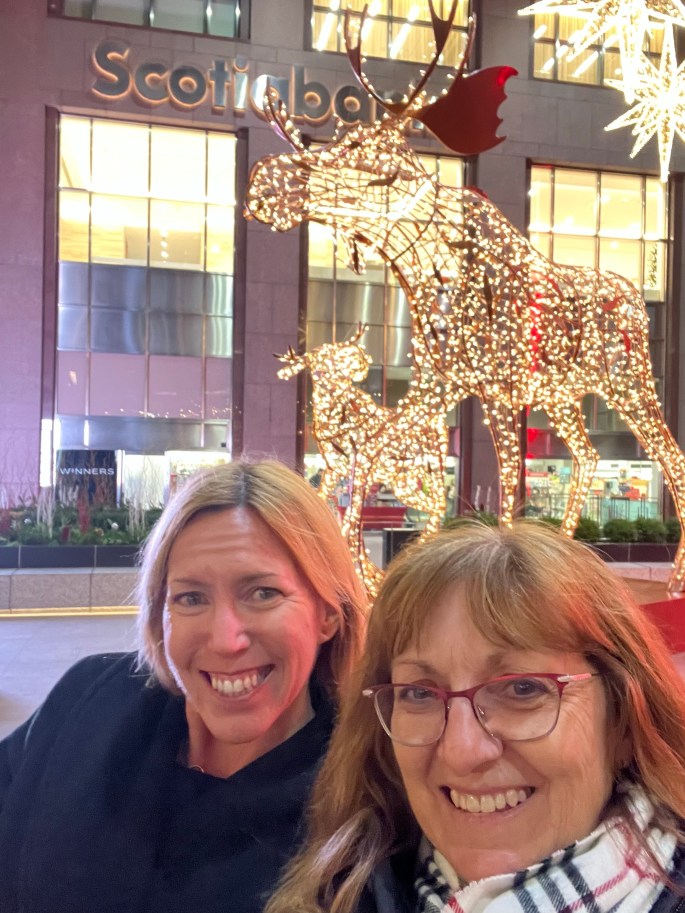
The fun thing about countries that don’t celebrate the US Thanksgiving holiday……….they are already prepping for Christmas! Toronto was no exception. Our first night we first ran into this holiday moose. Well not literally…
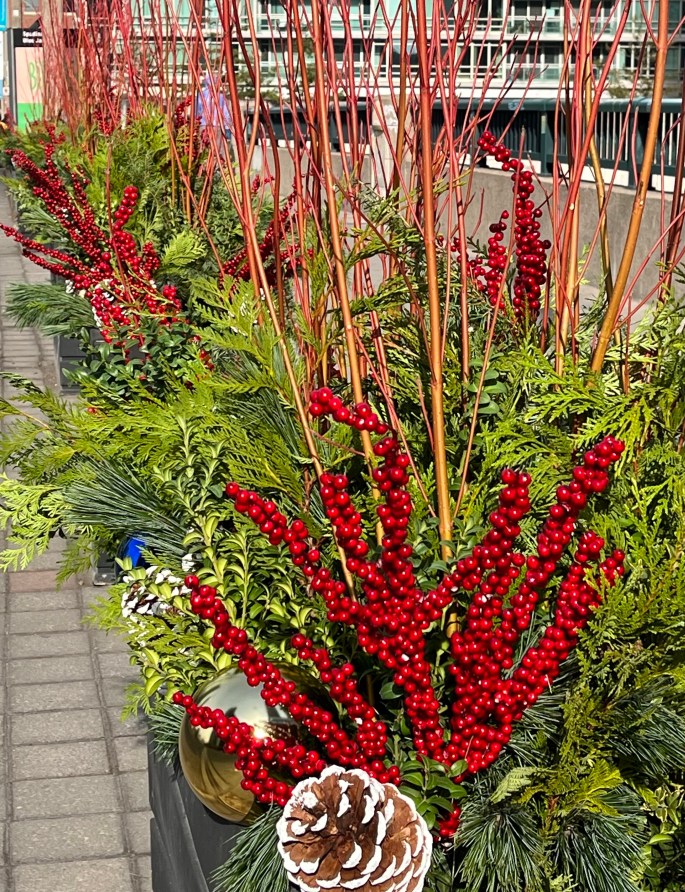
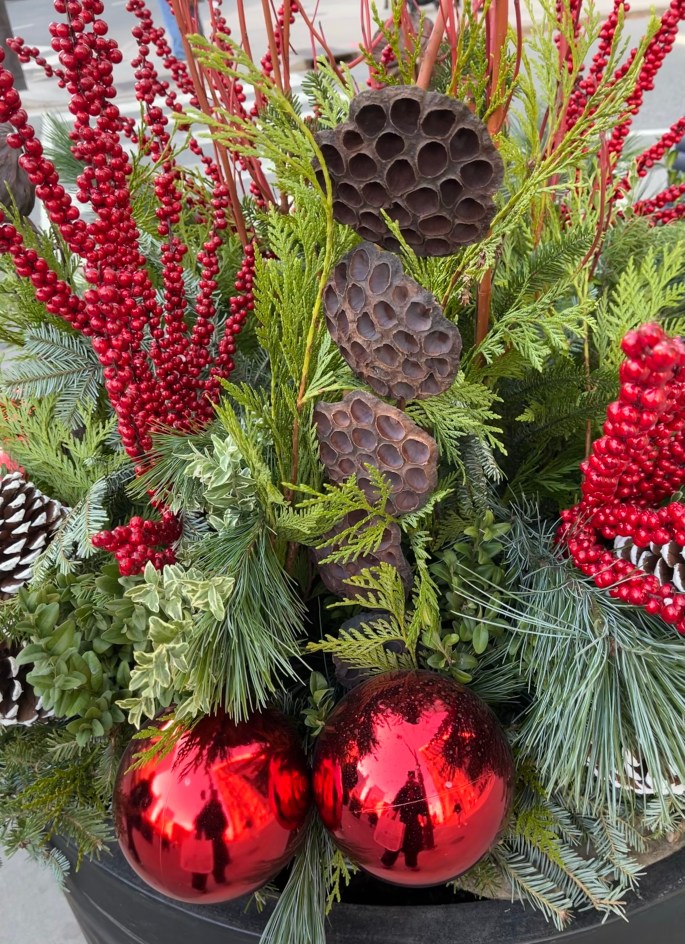
Holiday decorations were popping up around the town with a number of city planters turning into bits of holiday color.
Loved seeing the dried lotus pods in these planters.
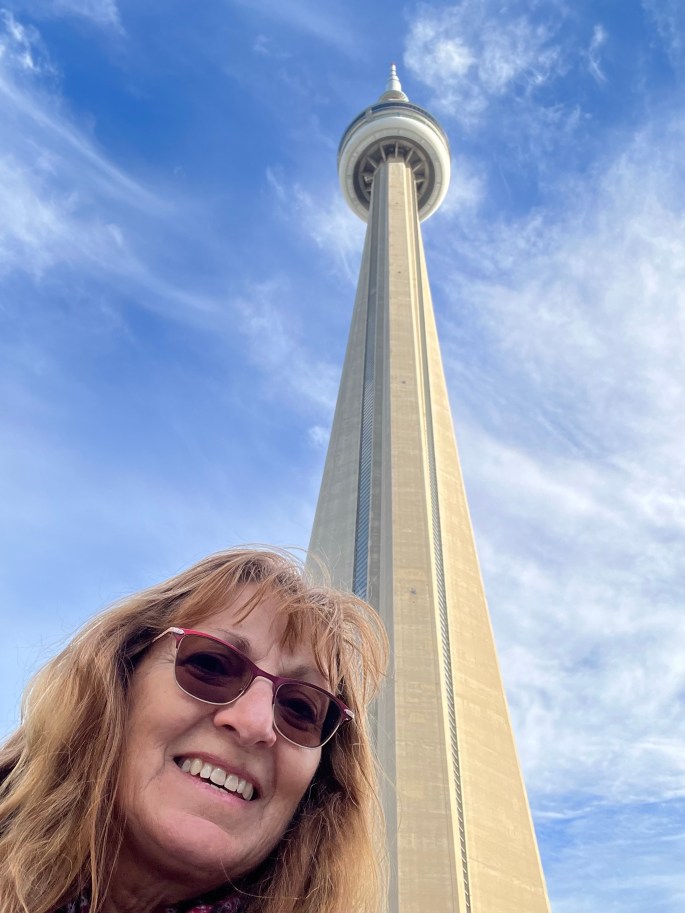
No visit would be complete without a shot of their space needle, the CN Tower. We didn’t go up but got a quick shot as we walked past. As you can see, we had wonderful blue skies during our visit.
We were on our way to the Toronto harbor, part of Lake Ontario and I tried to get Adrienne out on a canoe or kayak – no such luck.
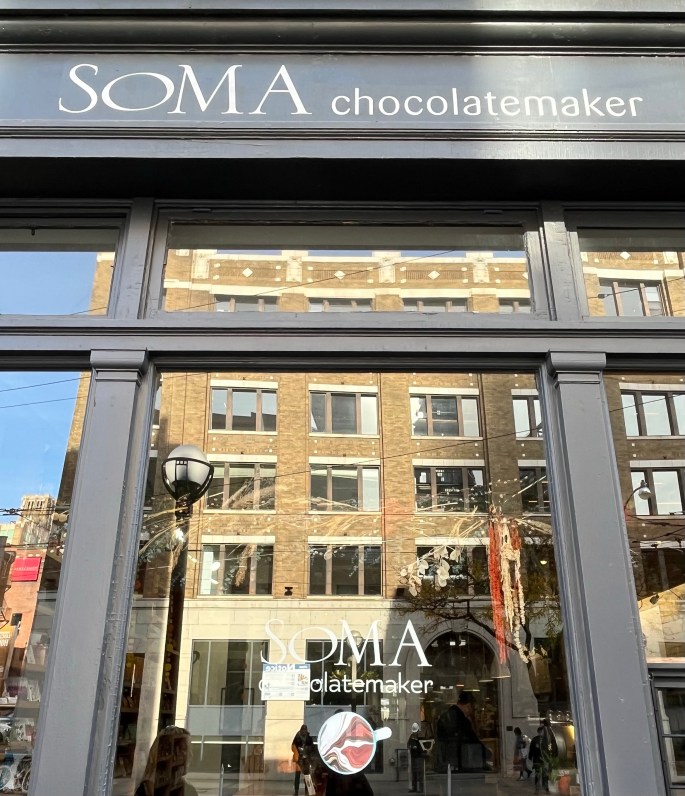
We were fairly close to a top-rated Toronto Chocolate company, SOMA Chocolatemaker, and we stopped for a taste and WOW – it was some of the best chocolate that I’ve tasted. I could have bought one of everything they had! My backpack was several pounds heavier after leaving – just saying.
No trip would be complete without stopping at a Tim Hortons. What is a Tim Hortons?
Founded in 1964 by Canadian hockey player, Tim Horton and a partner, it is now a multi-national coffee house and restaurant – Canada’s largest quick-service place. They have +5400 restaurants in 15 countries and are based in Toronto.
That was a quick overview of our initial exposure to the city but more is coming. Stay tuned.
While each of my posts have included shots of the Falls, we needed more. Hence we booked 4-hour Niagara Falls Tour. It had several components.
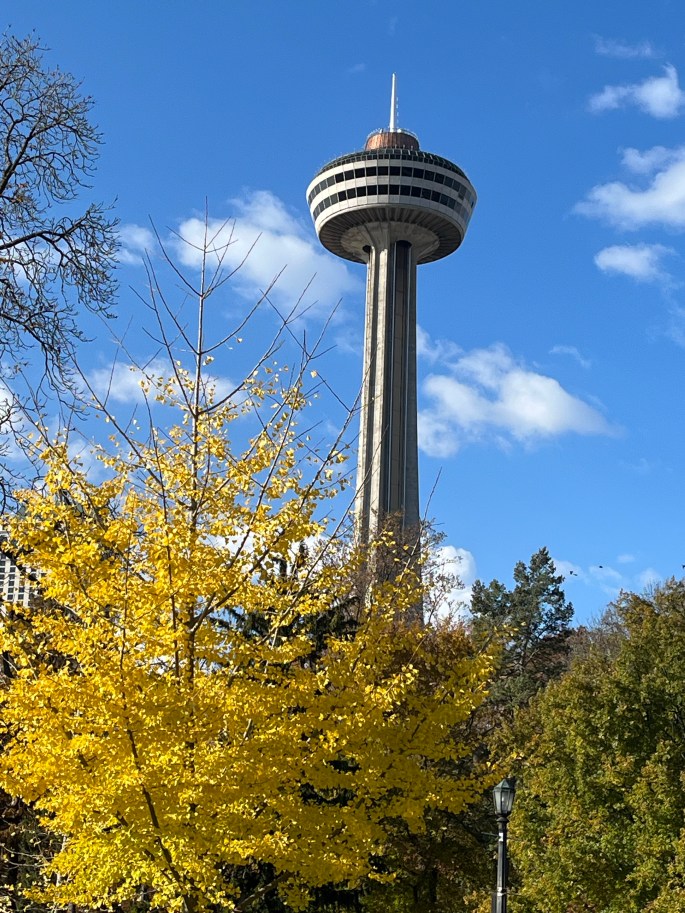
First up – the Skylon Tower. It opened in 1965 and the elevators carry passengers to the top of the tower in 52 seconds. It stands at 520 ft from street level and required approval from both the Canadian and the United States air transport authorities due to its proximity of the international border.
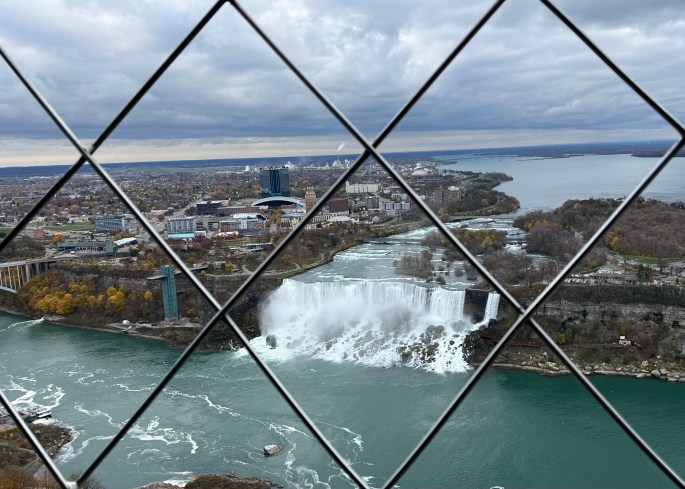
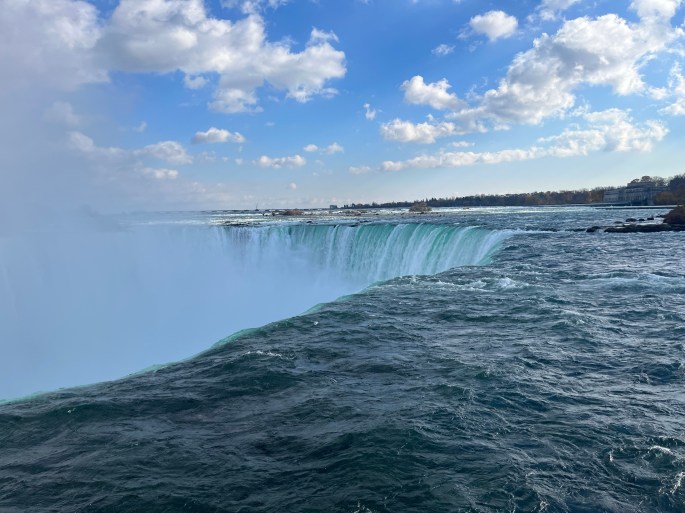
Great 360 view of this area. Here you had the Canadian Falls:
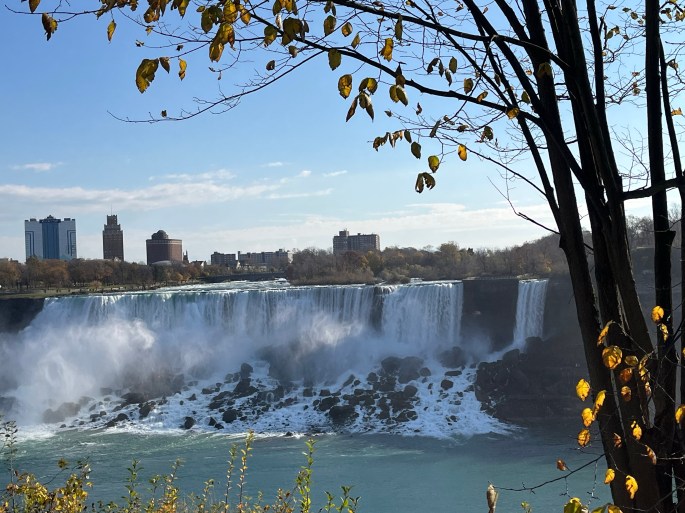
And then the American Falls. The small falls at the right of the photo were the Bridal Falls – manmade.
It’s time to go behind the falls!
But before we got to the spot above, there were tunnels and a few facts.
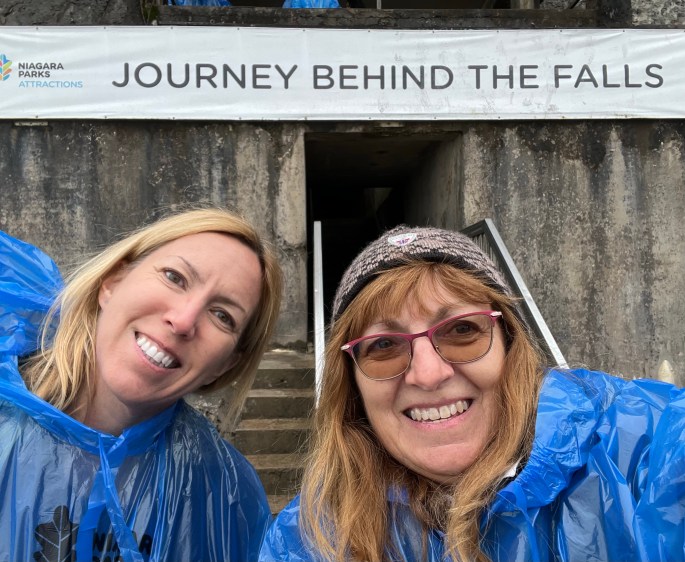
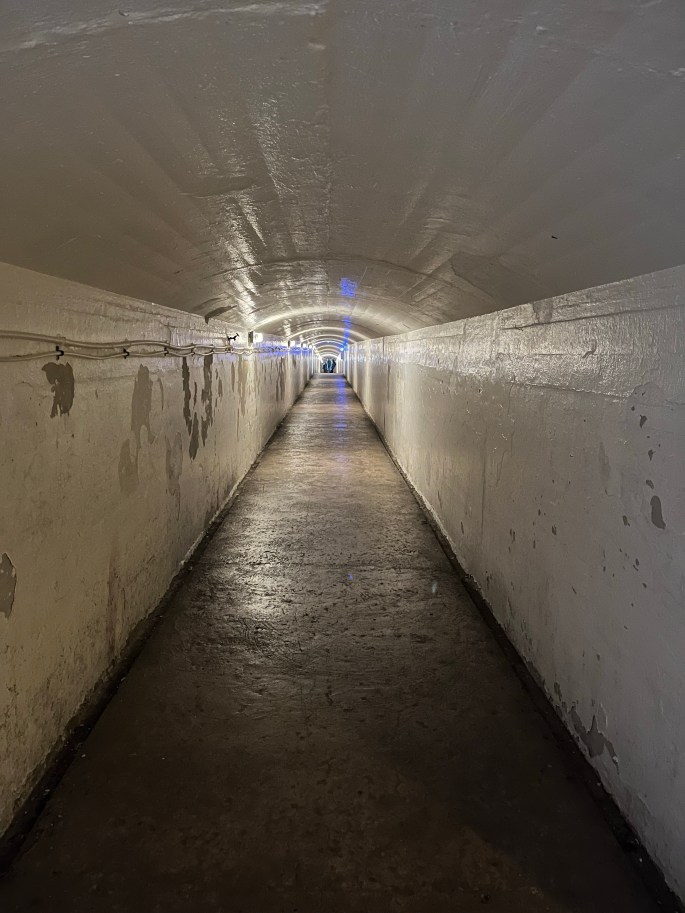
The first tunnel, giving us a chance to put on our tour ponchos was long and damp.
With a shorter tunnel towards the water.
To get a feel of the power, included this short video.
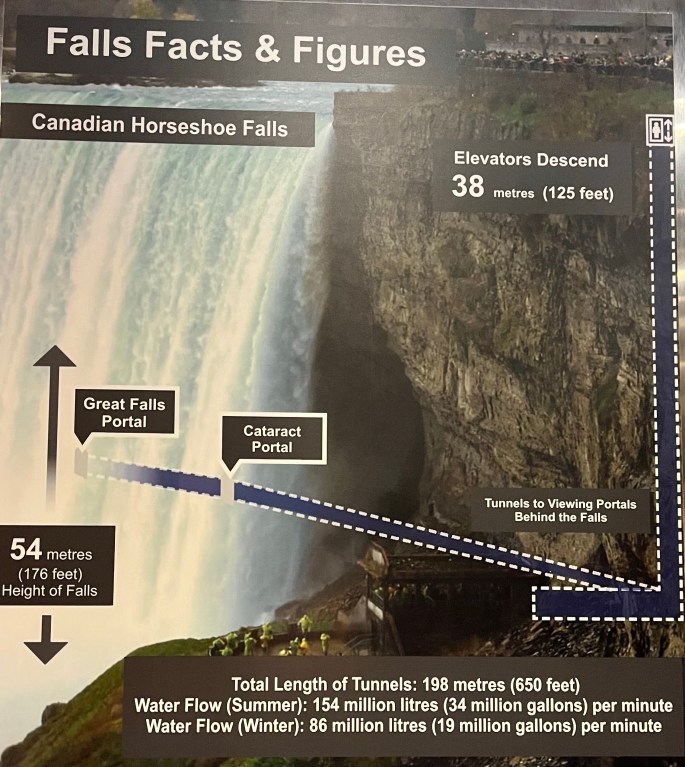
This poster in the hallway gave us an ideal where we were in relation to the falling water.
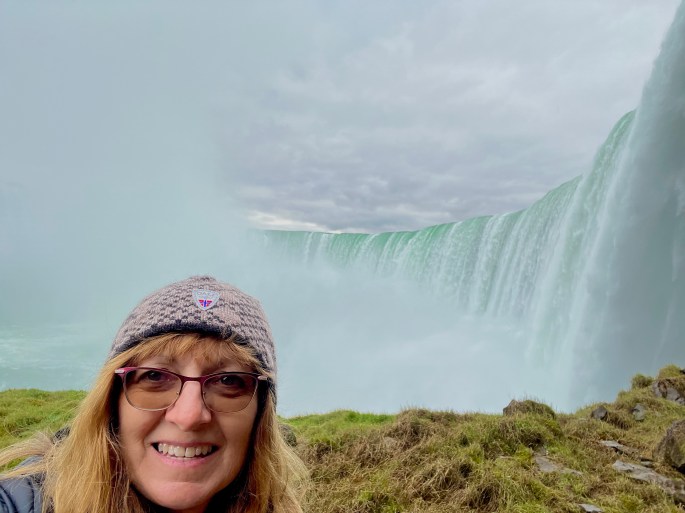
Ultimately, there was another spot we traversed to and popped out for close up shots of the Falls. I took waaaaaay too many photos but finally settled on this one.
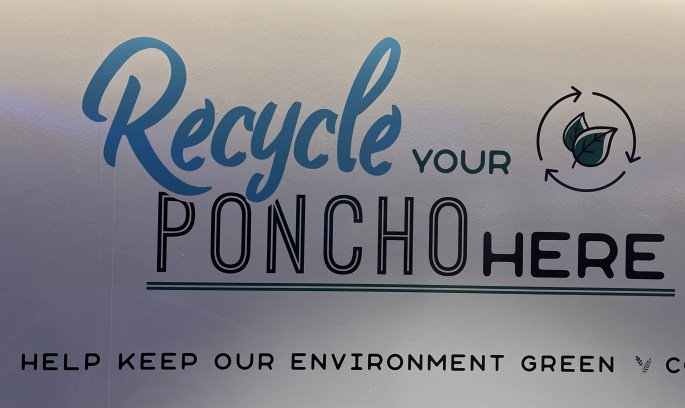
Time to head up to the top for our next stop. But first, need to recycle the blue ponchos.
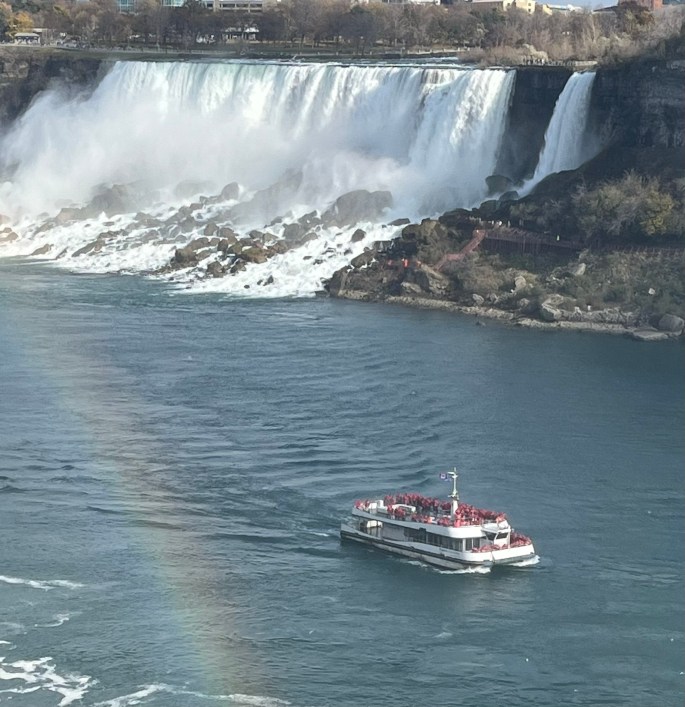
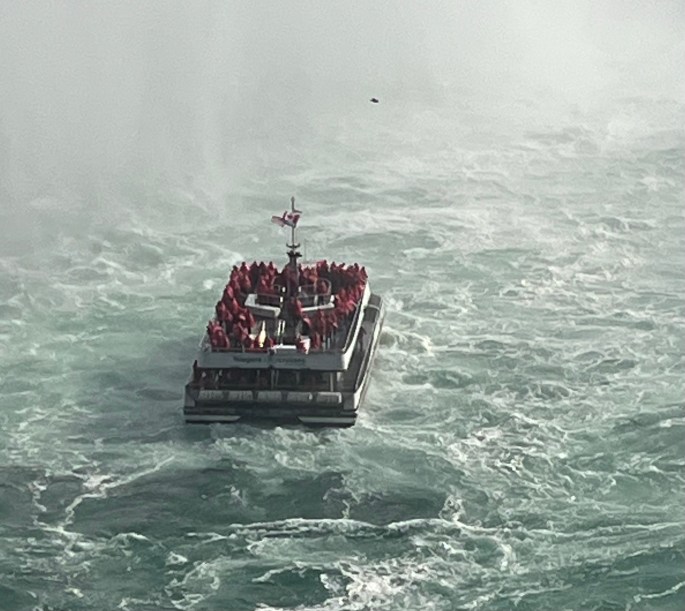
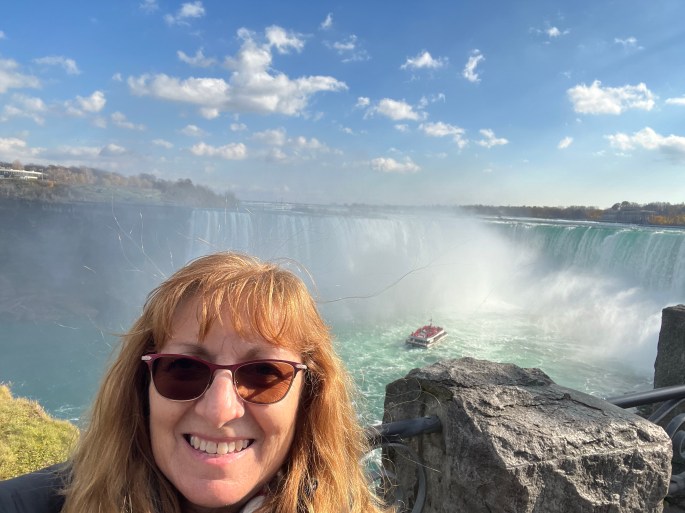
So what was next – a boat ride, the Canadian boat, The Hornblower. This Canadian subsidiary of Hornblower Cruises & Events operates out of 19 different ports and our boat had been in service since 2013. Enough of the boring facts, let’s get on the boat!
I got lucky several times and a rainbow was part of this shot.
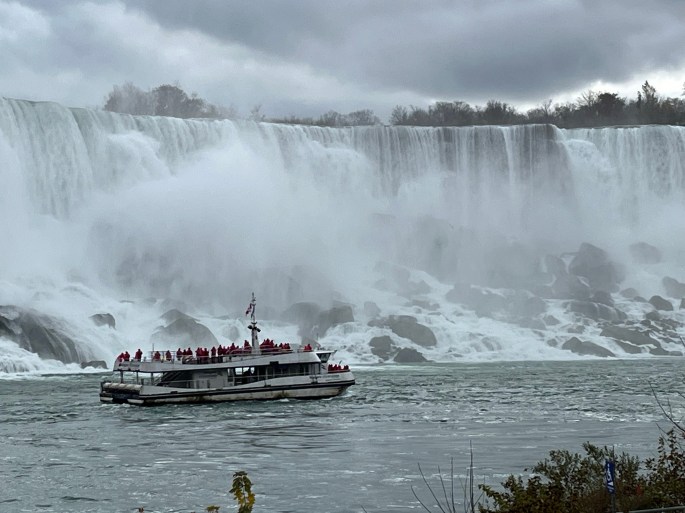
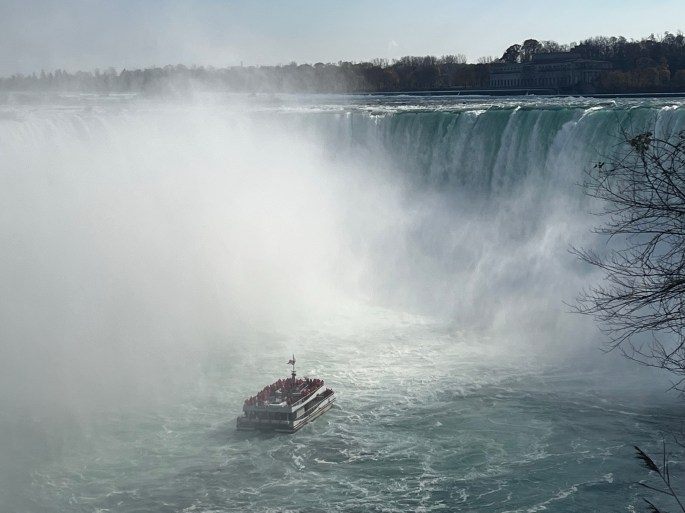
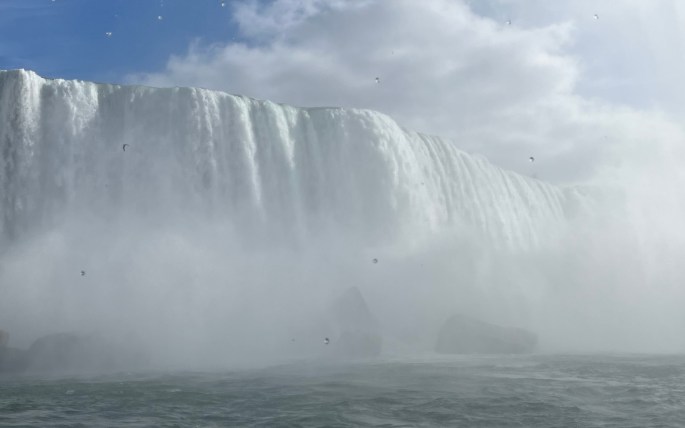
The boat heads toward the Canadian Falls.
And just seems to keep going and going and going.
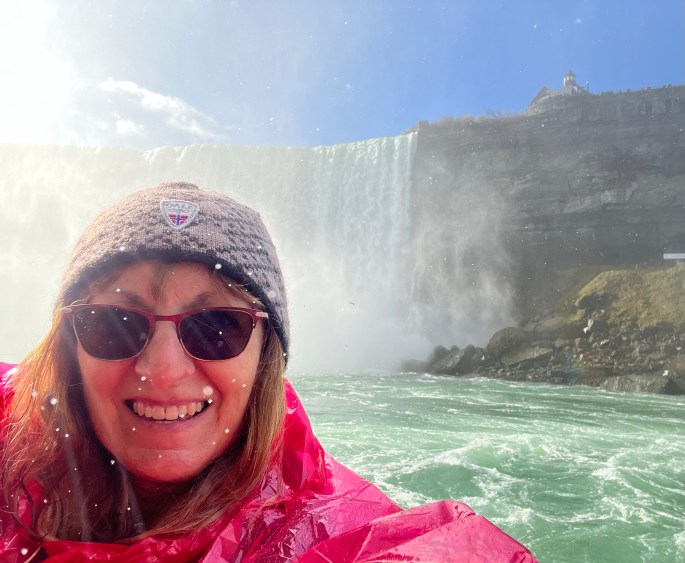
What does it feel like? Let’s just say that several times we ducked into the glassed-in portion to get out of the worst of it!
But it also gave us a chance to capture some great shots. The sun peeked out from the clouds during our cruise.
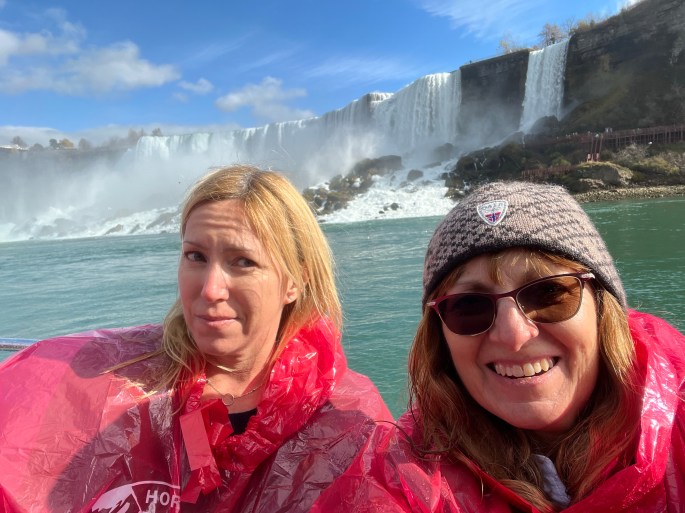
We headed back to the dock but got a few last photos during the cruise. Adrienne has been a good sport with my shots so far.
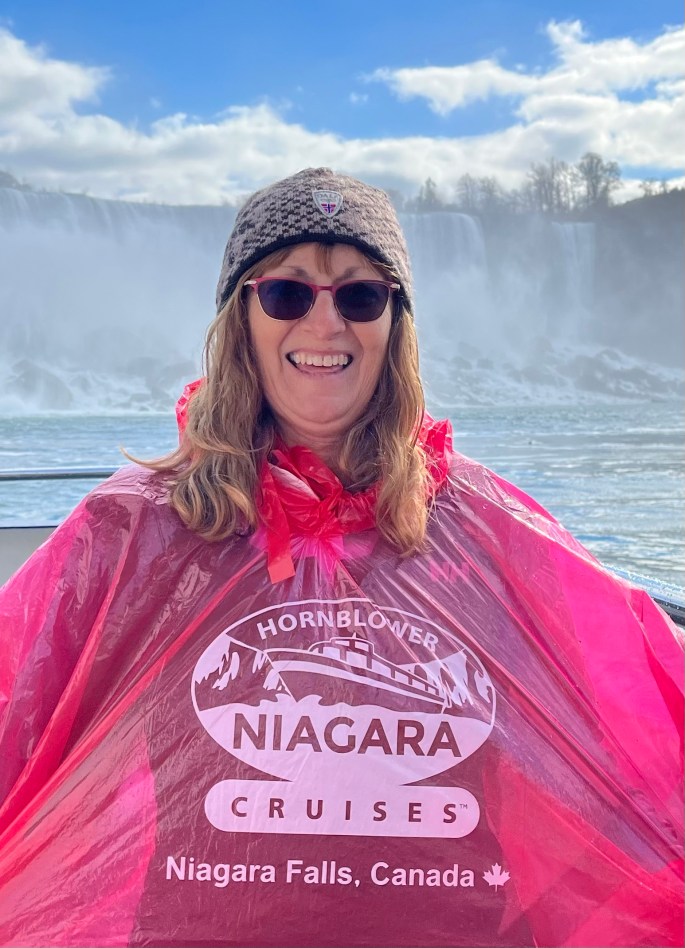
Such fashionable ponchos! Good news……all have been recyclable.
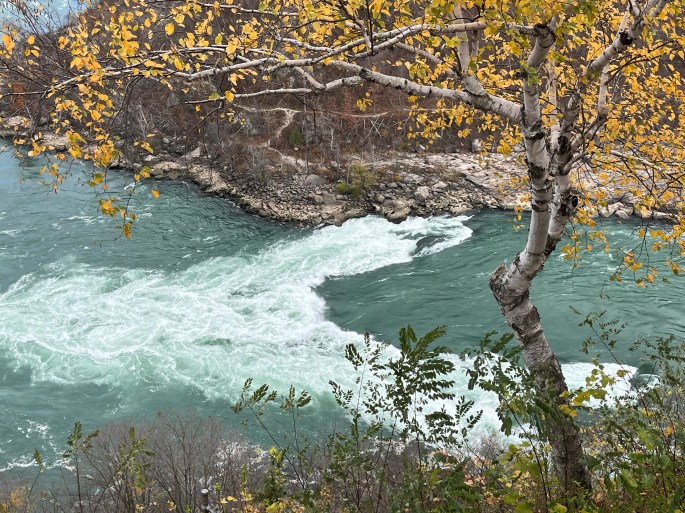
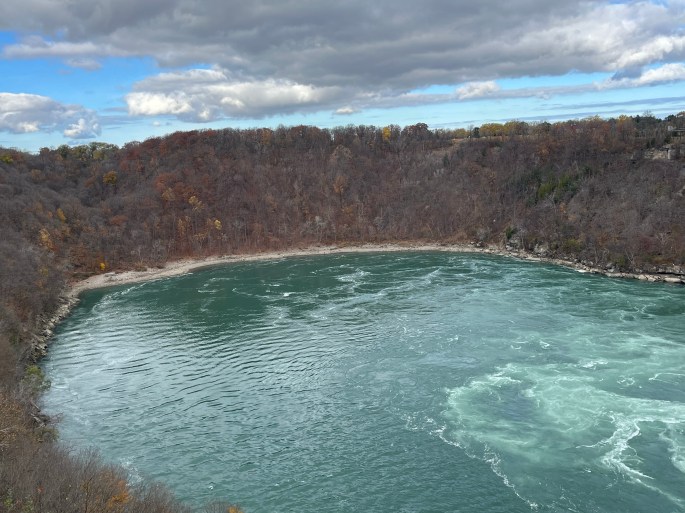
One more stop. The Niagara River travels a short distance and turns into a counter-clockwise whirlpool. Interesting fact, at night water flow is decreased into nearby power plants and the whirlpool tends to reverse itself during that time.
It has a depth of 125 ft and was formed approximately 4200 years ago and then the water continues into Lake Ontario.
It was a great tour with a ‘solid’ local tour guide. Just realized, didn’t get a photo with her. She was born and raised in Niagara Falls-Canada side. Time to head for Toronto!
I didn’t want to eat in the hotel’s restaurant if possible, so did my research before we arrived. Funny thing – we saw IHOP (International House of Pancakes) seemingly everywhere but almost all the workers said don’t go there – waaaaaay too expensive. It wasn’t my plan anyway, but good to know.
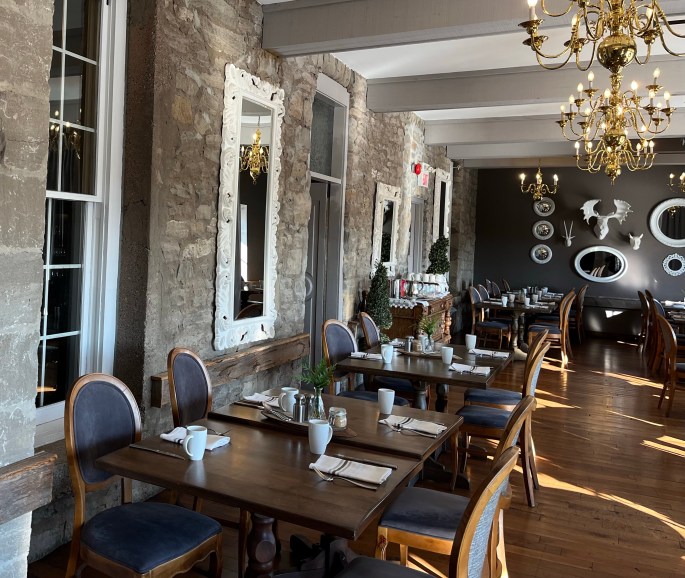
I found a breakfast place in a boutique hotel, The Stone Inn. It was a walkable distance, so we headed out. Their restaurant was called……….
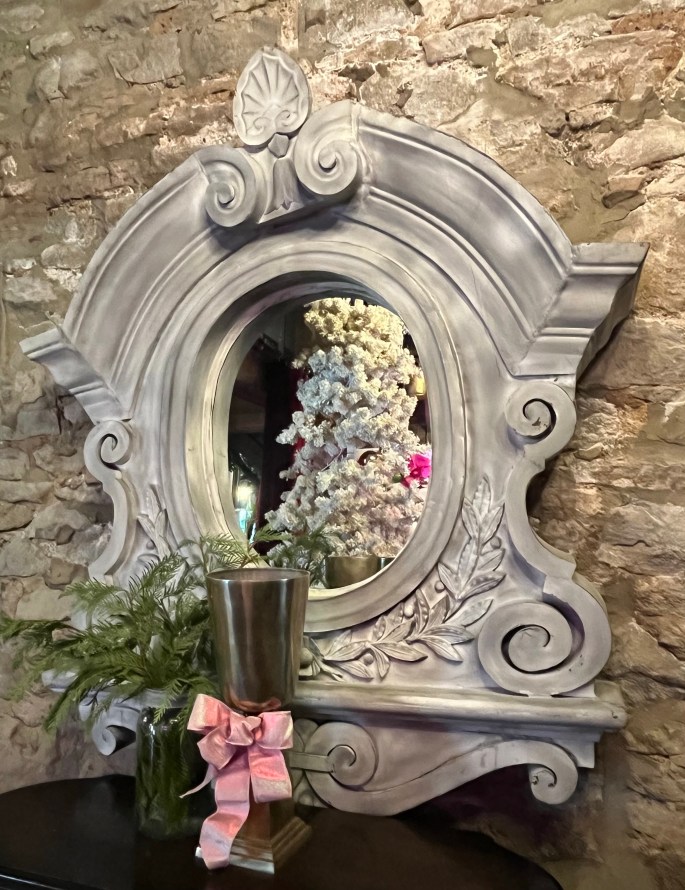
Very charming place, lots of stone and they had decorated for Christmas with small details tucked in like this pink bow & greenery in a silver chalice.
Breakfast was along their porch seating. Not very busy the morning we were there.
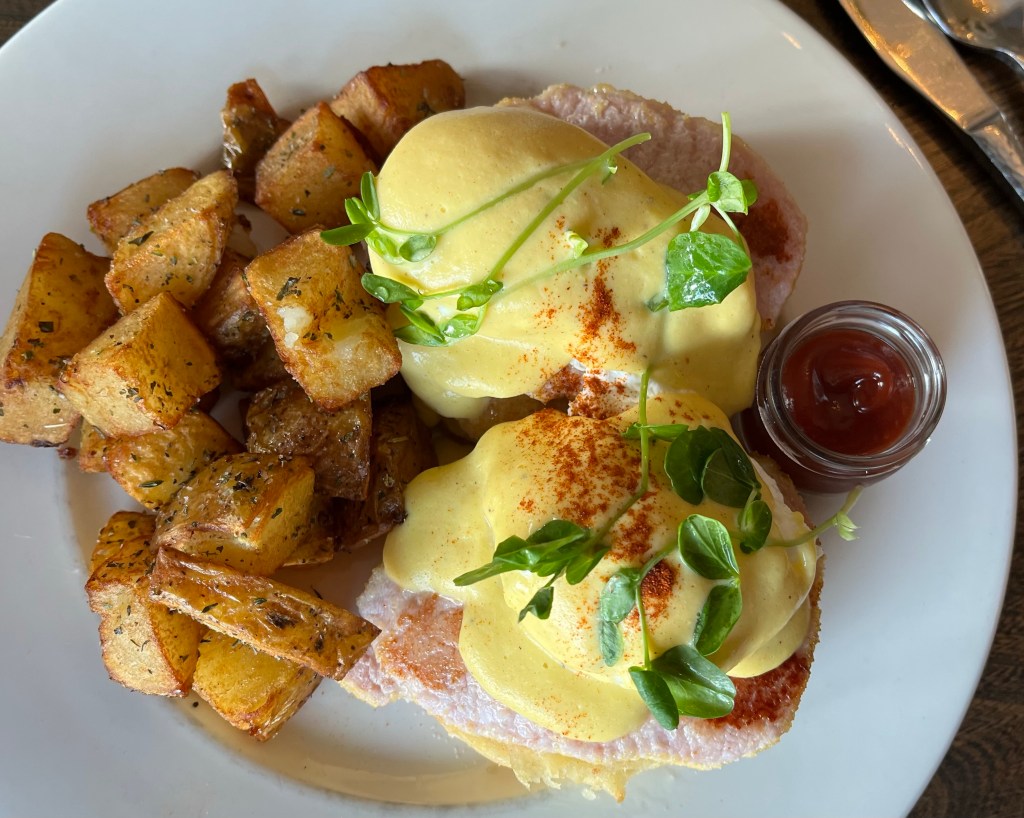
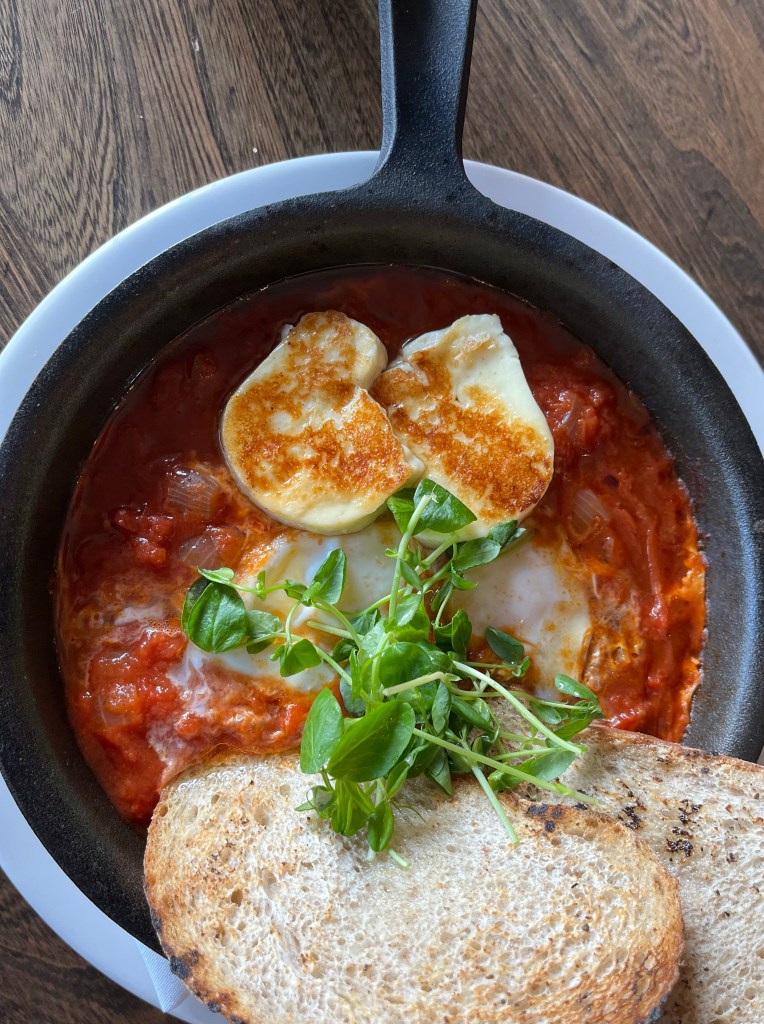
Eggs benedict (me) and Shashuka (Adrienne) were our choices.
Coffee arrived via a French press – loved it. Good decision for breakfast.
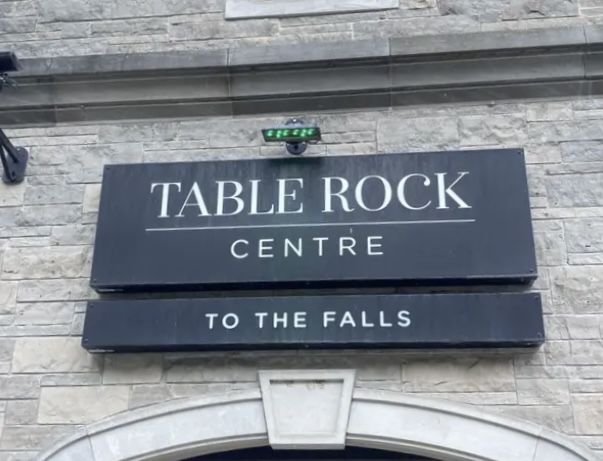
Lunch was inside the……..
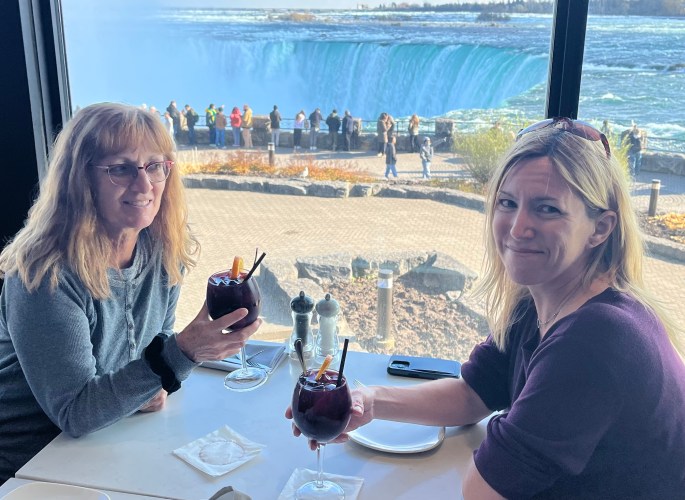
it was advertised as ‘views as close as it gets’ and they were right.
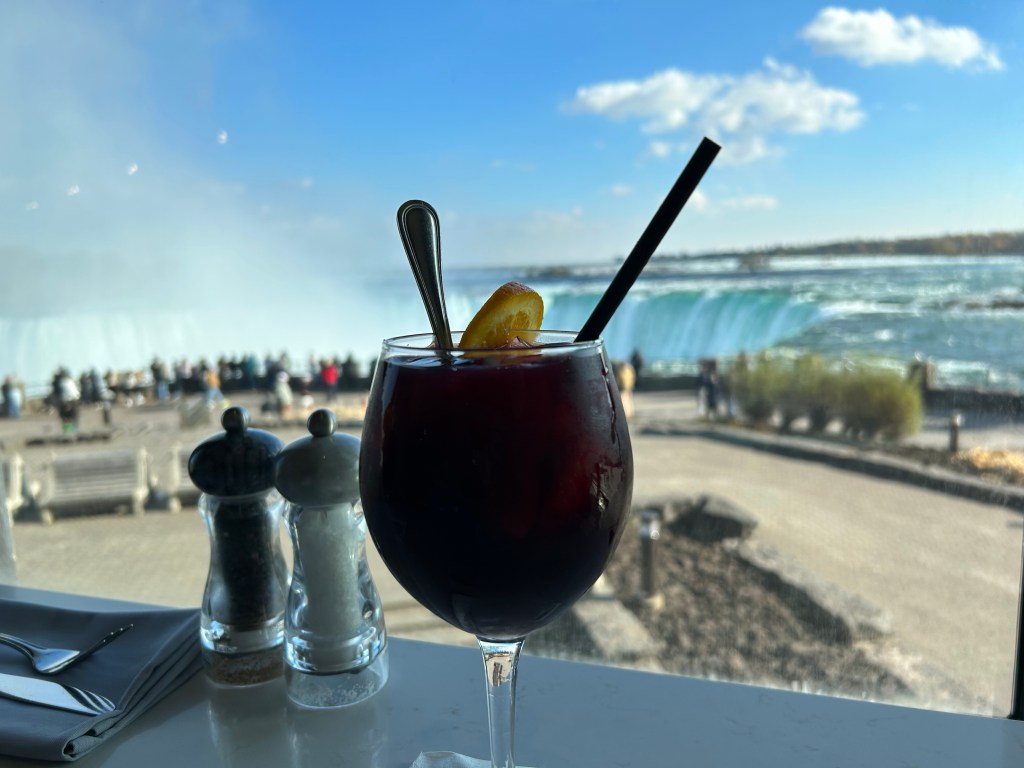
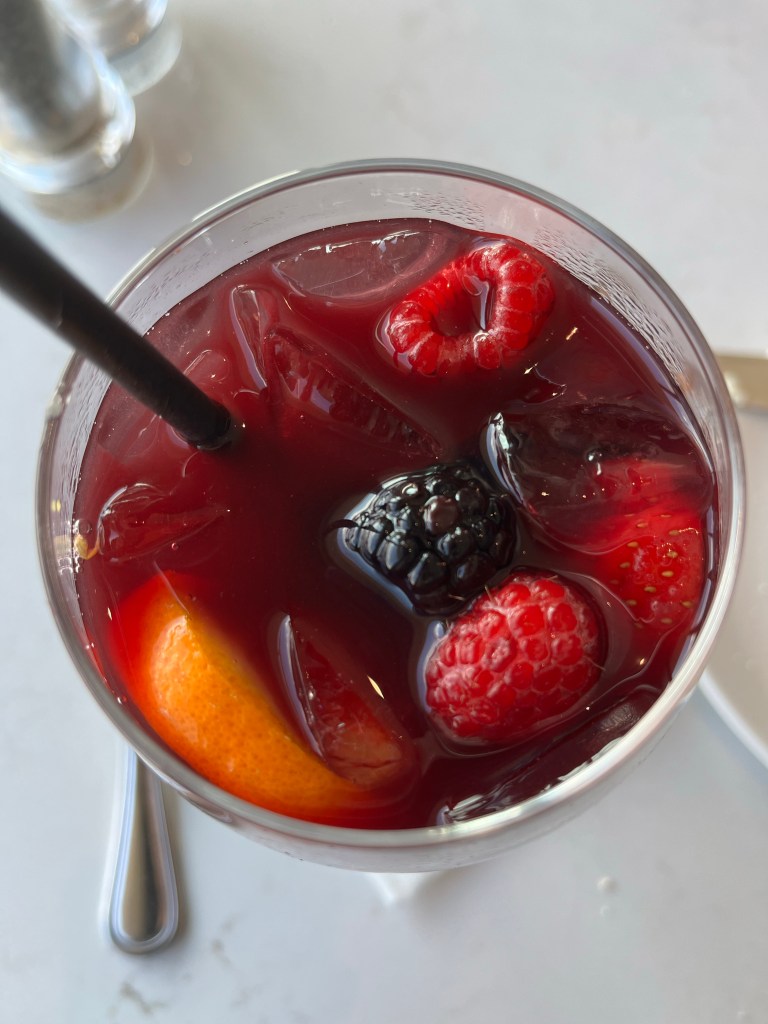
We read their Sangria was some of the best in town – naturally we had to try it. It was pretty darn good – lots of fruit.
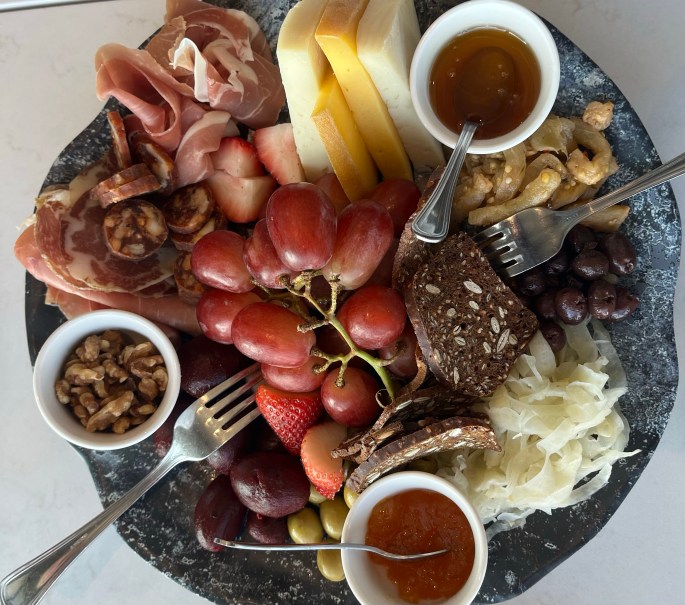
A charcuterie board was our choice – lots of meat, great-tasting fruit with local honey and marmalade and a few pickled vegetables.
So how close were we? Close! Here’s a shot from the Falls walkway.
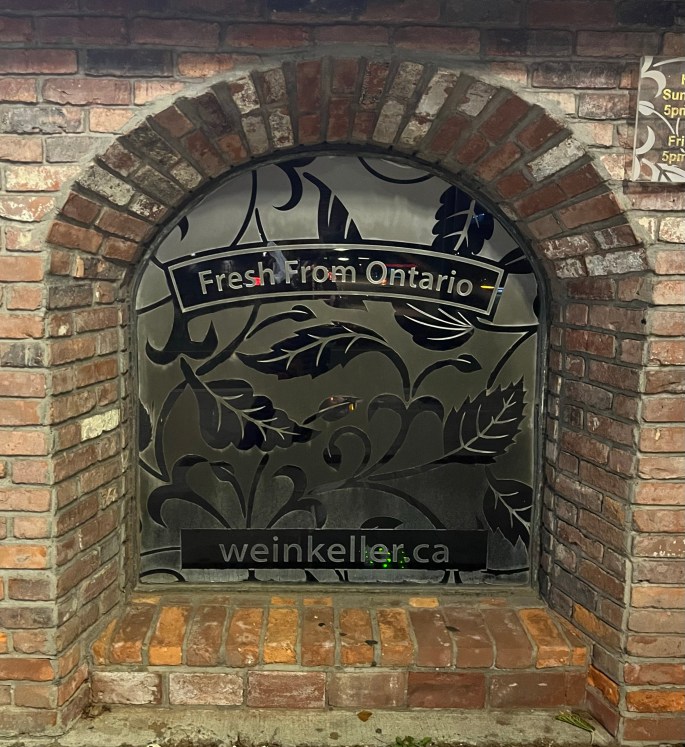
And a little later, it was time for dinner at…….Weinkeller.
They have an interesting concept. For a pre-fix price, you’re able to choose 5 items. It could be 1 appetizer, 1 glass of wine, 1 soup, 1 entre’ and then 1 dessert. Or mix it up however you like. You could make some creative choices – no judging (much).
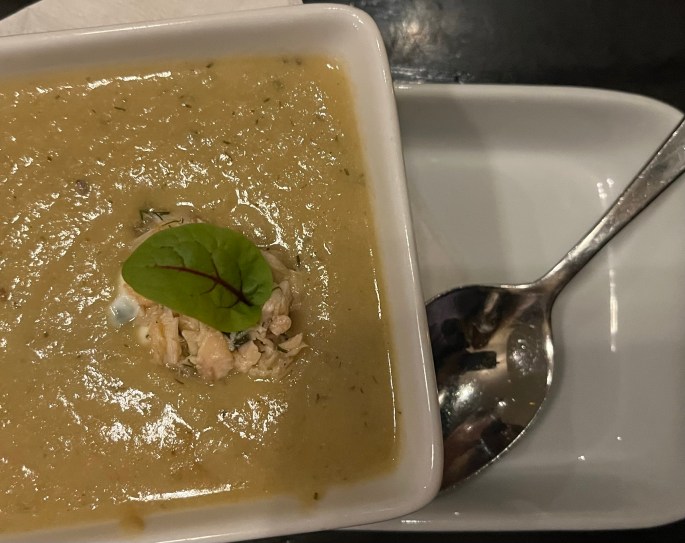
We were fairly traditional, starting with a soup: wild mushroom & salmon chowder.
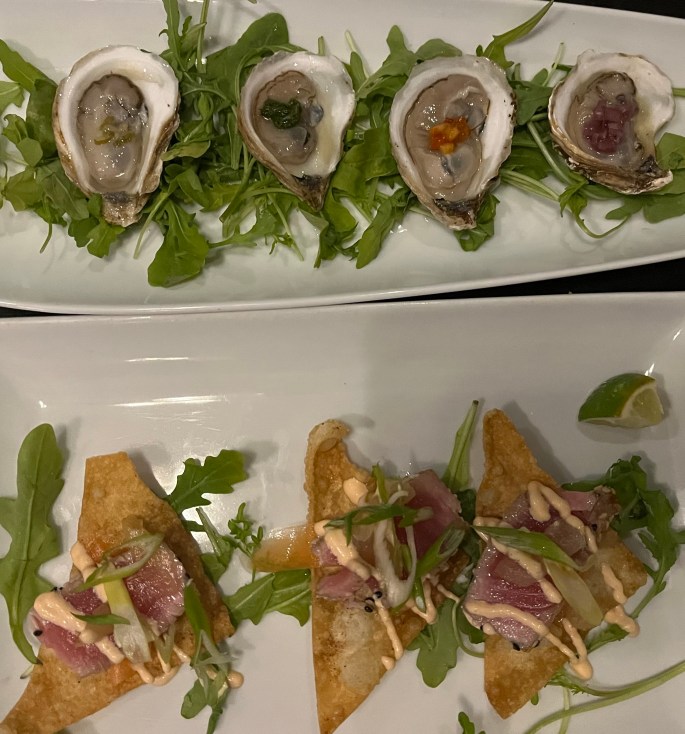
LOVED our choice of appetizers – oysters and tuna crisps.
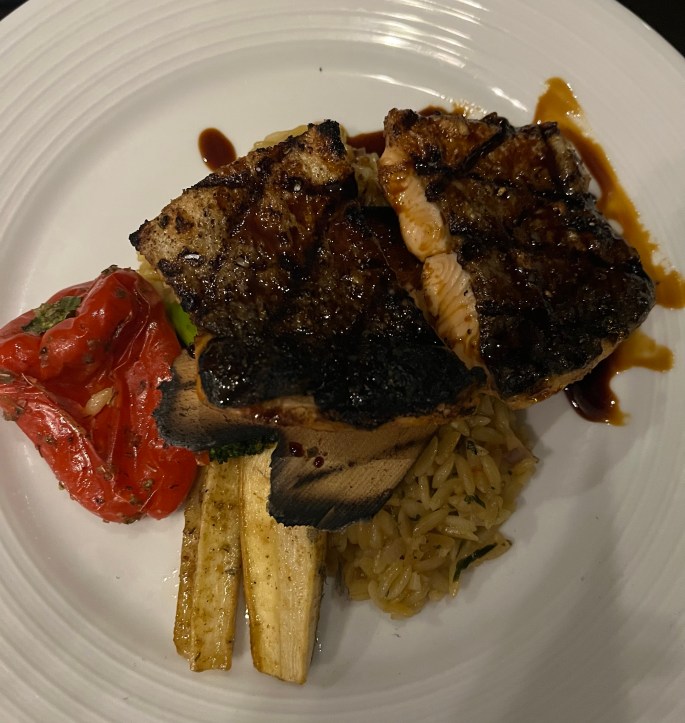
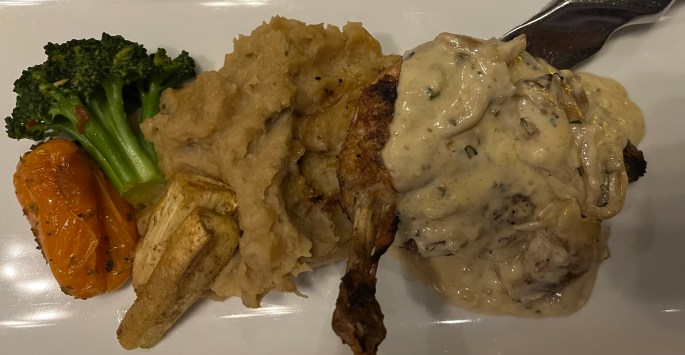
Main courses were salmon (Adrienne) and Ontario chicken (me) with a wild mushroom gravy.
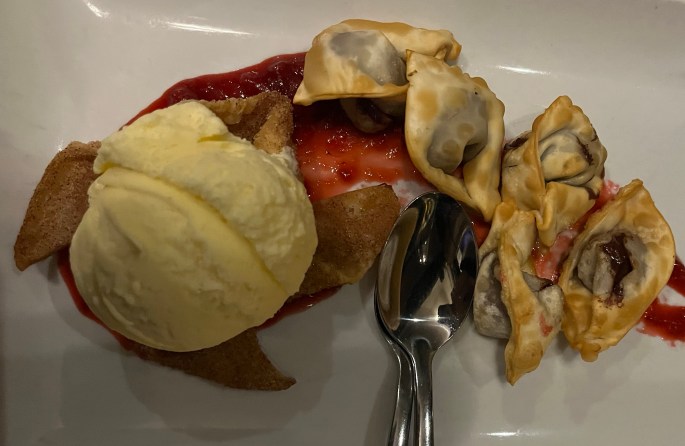
Ended with a shared dessert – chocolate wontons with a berry sauce and scoop of vanilla ice cream. Tasty.
Are you kidding me? In Canada in the ‘shoulder’ Winter season. Yep. 2019 Adrienne and I went ziplining in Iceland, we can do this. I had done my research ahead of time and read some reviews. People expected to literally zip over the Falls. Really?
Since we were so close to the Falls, we could walk to the jumping off place. It was a nice walk. Temps were definitely warmer today.
Loved seeing more of the Fall color.
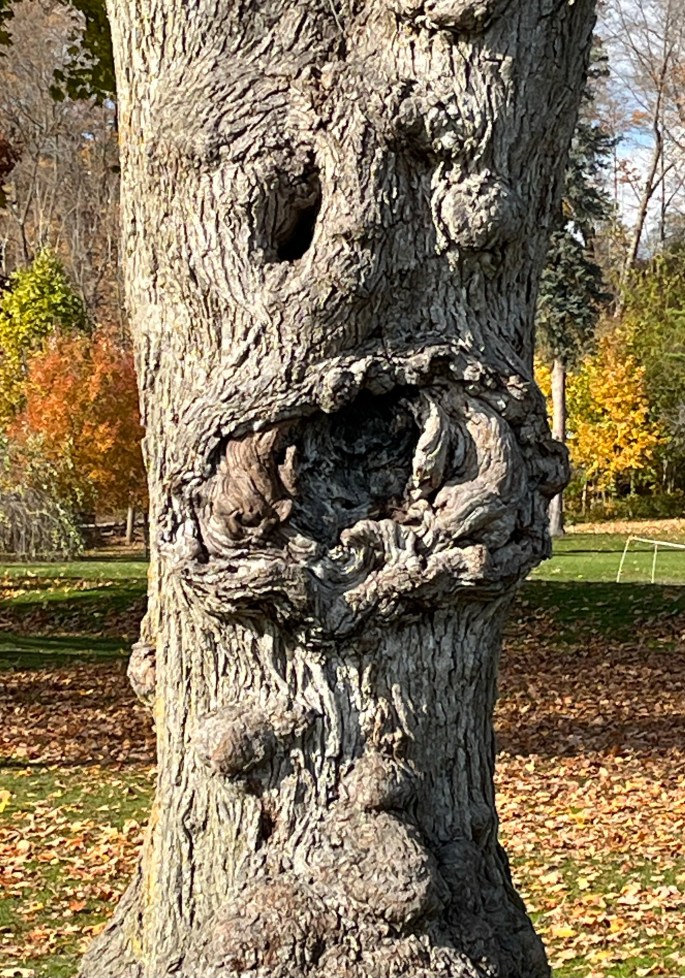
Found this interesting tree trunk.
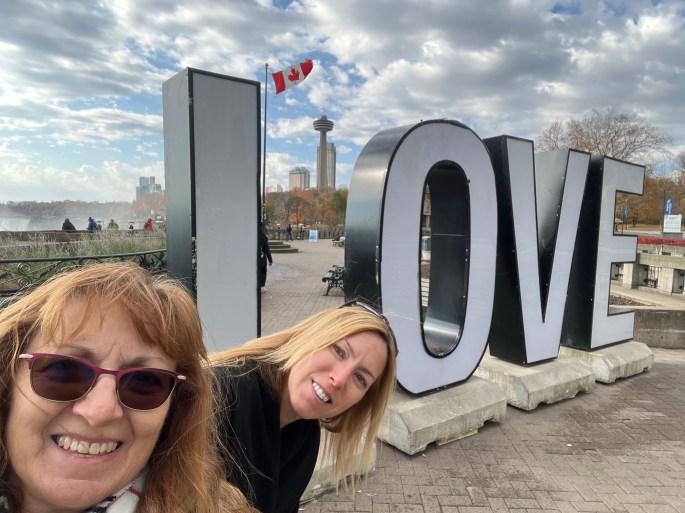
Also found this photo spot as we walked to the zipline. Totally planned for the Canadian flag to be in the photo – just saying.
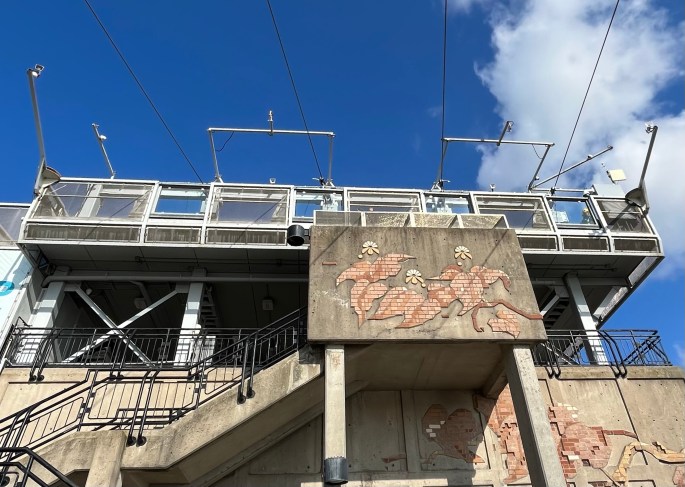
Before suiting up, had a chance to see the zips.
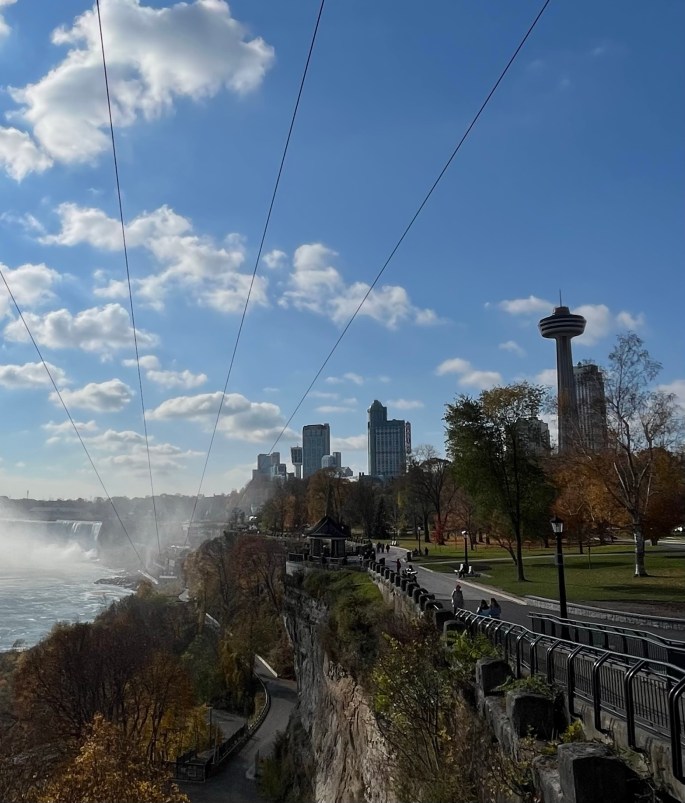
Here are a few shots of the lines.
The landing zone.
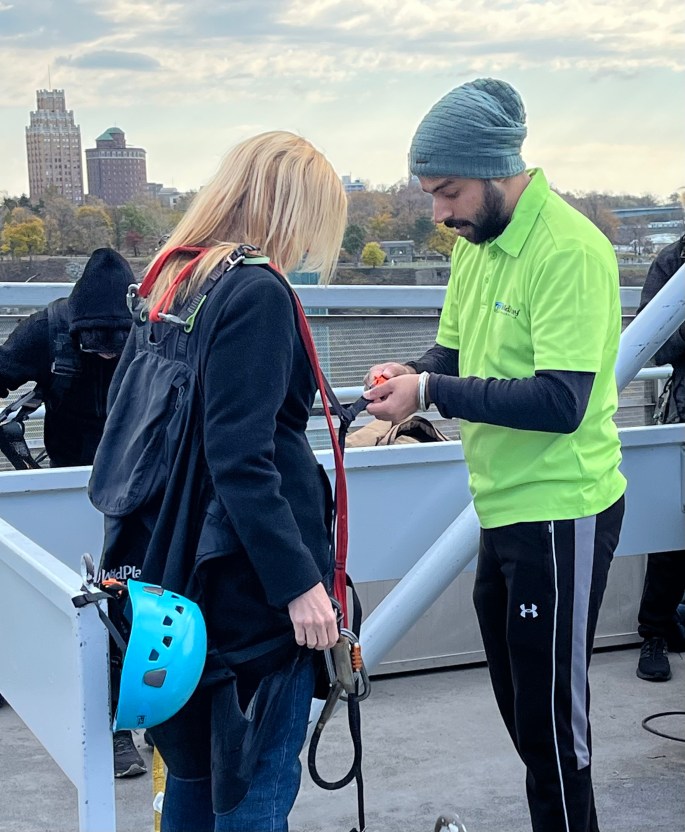
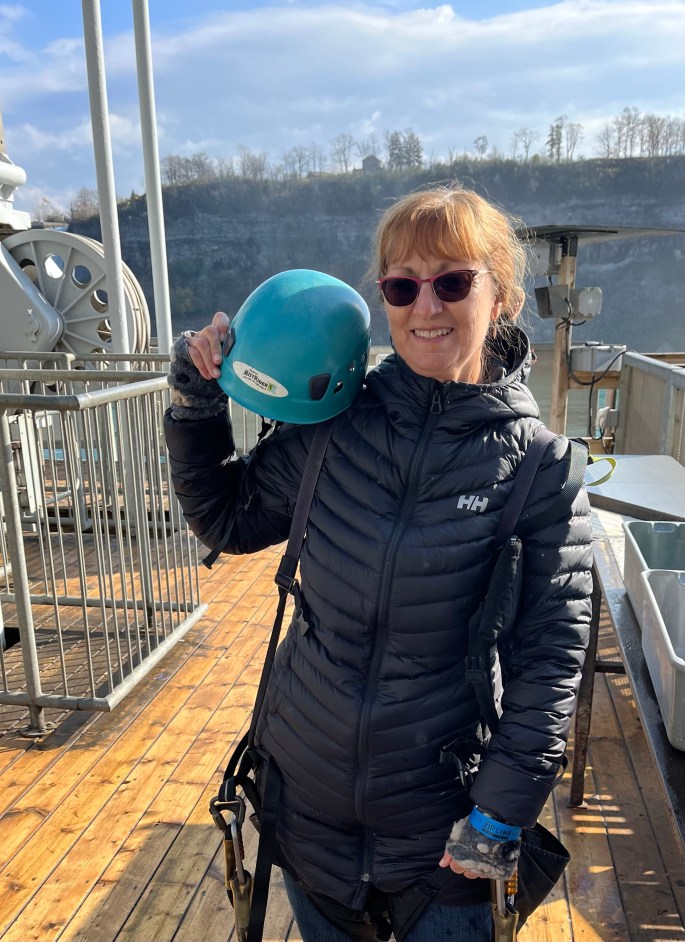
Time to do it! Got a shot of Adrienne suiting up.
Right before being released on the zip, words of wisdom were shared. ‘Spread like a starfish’. Huh? It was going to slow you down, give you a chance to enjoy the zip along with the Falls and scenery. I like that. No photos while on the zip but a few photos at the end.
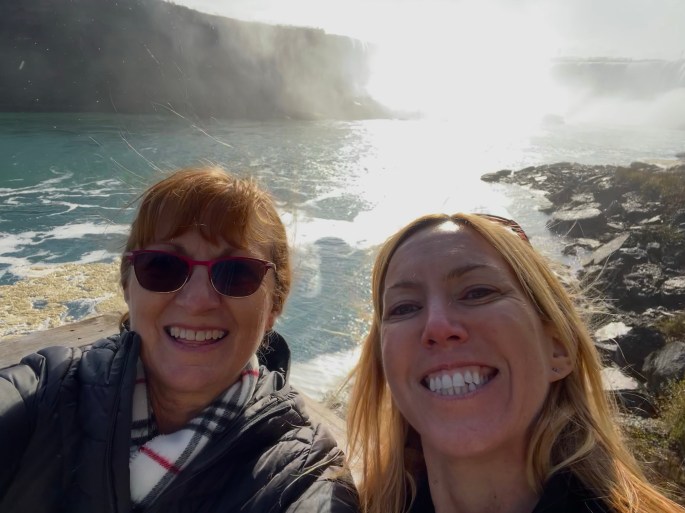
Below you have the Canadian Falls in the background.
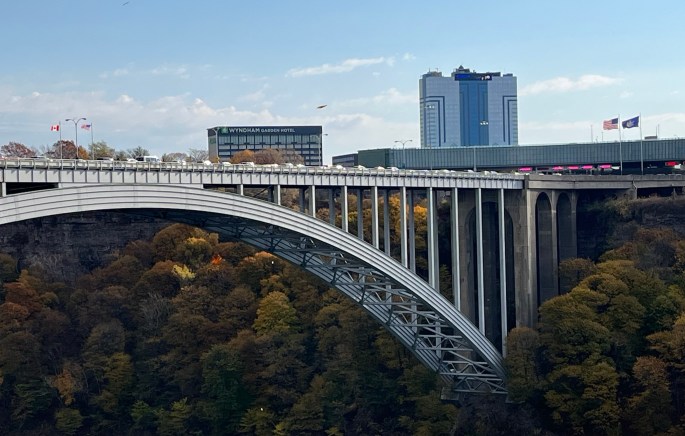
A few other sights during the morning. Here’s shot for those going back to the US border. We were told do everything possible to avoid this particular bridge (no plans anyway). Sometimes the wait could be 3 hours. There are other bridges to cross over.
There was a ride to shuttle us back to the top – thank you! Had a chance to grab this photo of the American Falls.
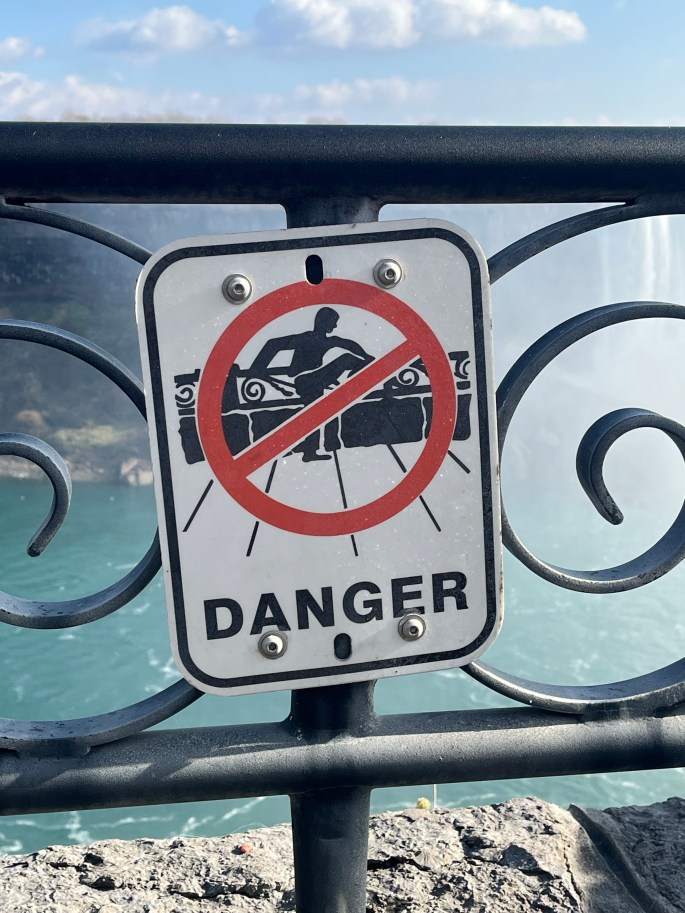
There was a walkway along the Falls to get back to our hotel. Sad these signs are needed. Stay off the railing people!
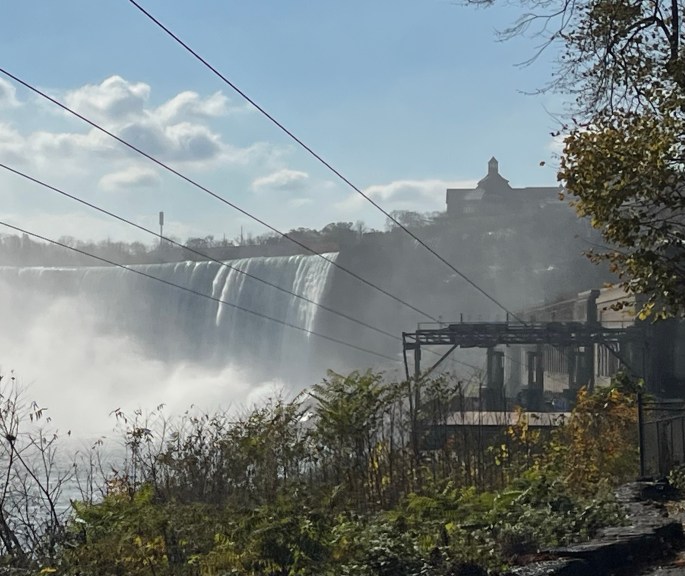
Here’s one last shot of the Falls and a hint for one of our last experiences in Niagara Falls.
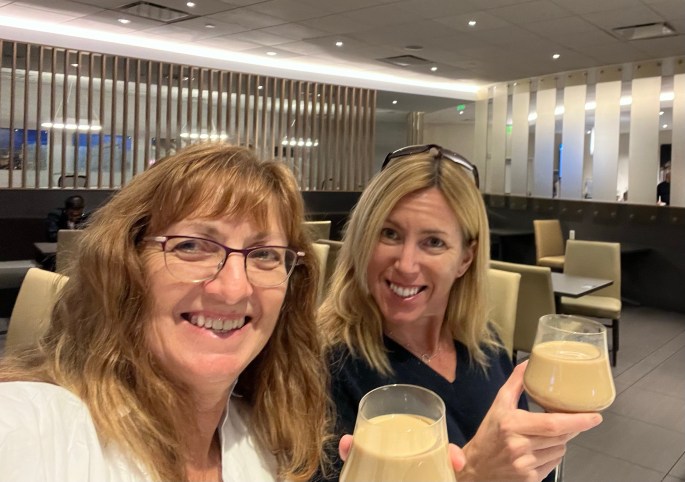
Yes, even though I love sunny, warm Florida, I’m headed up north with a friend across the border. Crazy – I know. First stop after getting through TSA and the people-mover to my gate…….maybe taking an extra ride to the wrong gate. 😦 ……….was the Club MCO. First time I had an Irish coffee in a wineglass. BTW – had to get another coffee to weaken it.
Something on my bucket list was Niagara Falls, Canada. While Eric was going deer hunting, Adrienne and I went North. Yeah! I’m traveling again. Maybe just a bit excited.
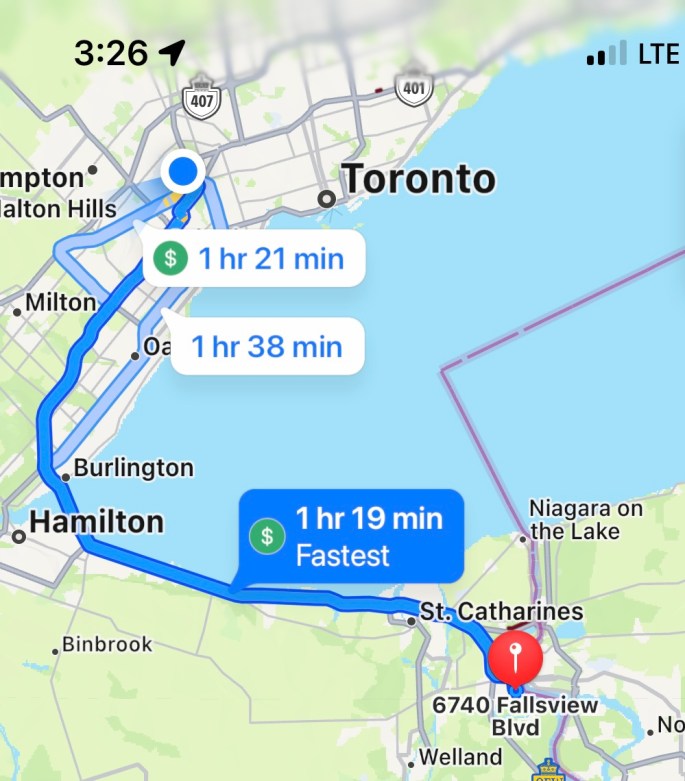
We flew into Toronto, picked up our rental car and plugged in the route for Niagara Falls, Canada. Something very simple I’ve never done before………walked around the car taking a video. Don’t want any surprised when we return it. Right hon? Also came in handy when we got to the hotel. They wanted the make, model and license plate. Said ‘I have it right here’ and showed her my video. Very handy I must say.
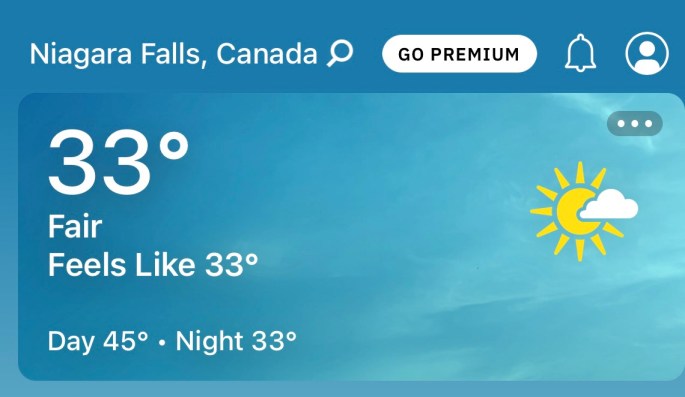
So how cold was it? Took a quick screenshot. Yep, that’s cold for Floridians.
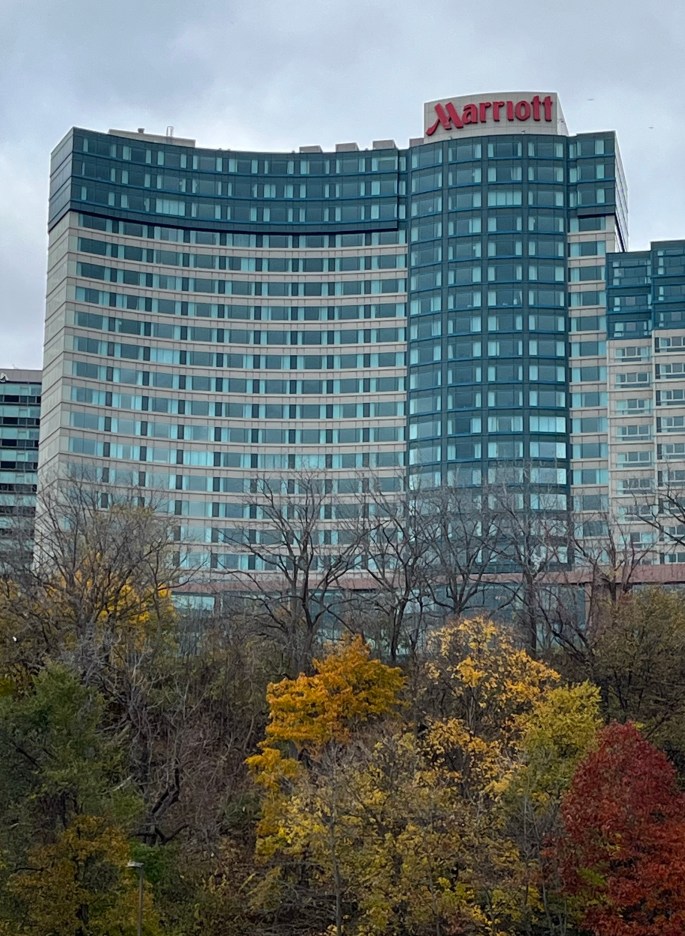
My travel agent – code for husband – booked us a room at the Mariott Fallsview Resort – excellent location and easy to find. As you can see below, we got to see a bit of the Fall color since a few trees had not dropped all of their leaves yet.
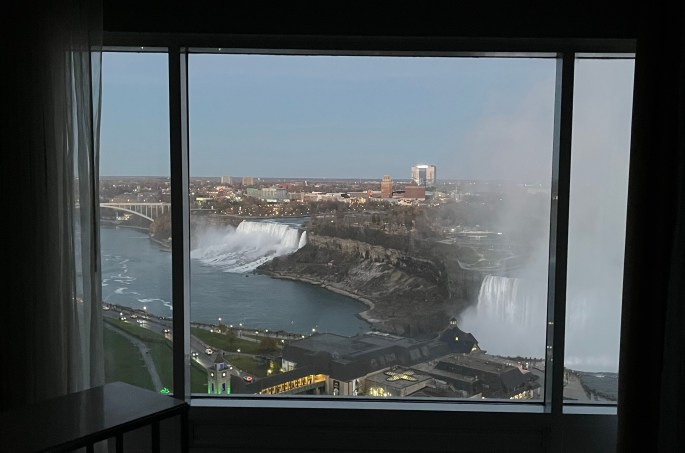
We walked into our room and WOW! Just WOW! We walked straight to the window.
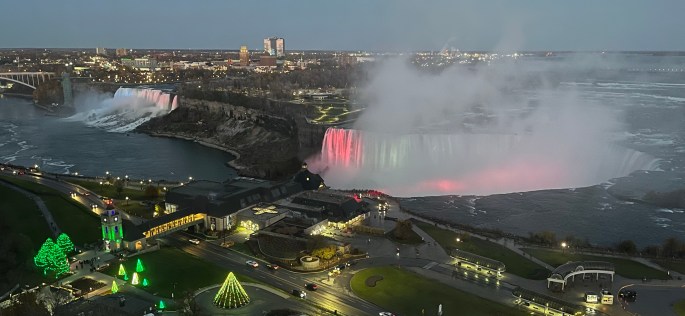
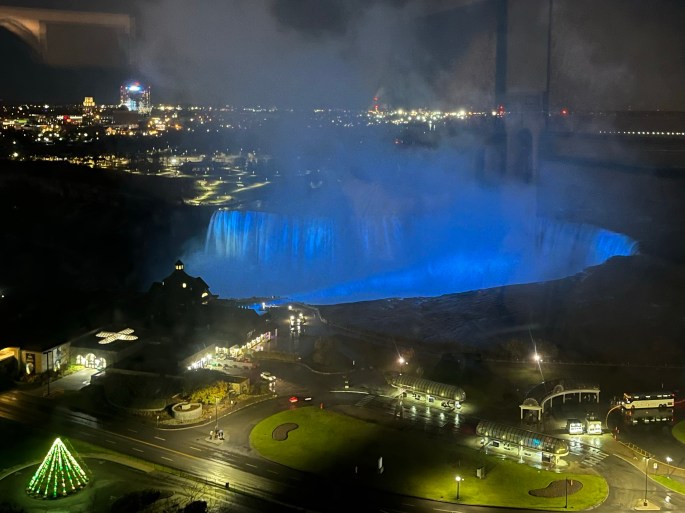
My first glimpse of Niagara Falls. It didn’t take long until they were lit up. The far left is the American Falls with the Canadian ‘horseshoe’ Falls closest to us.
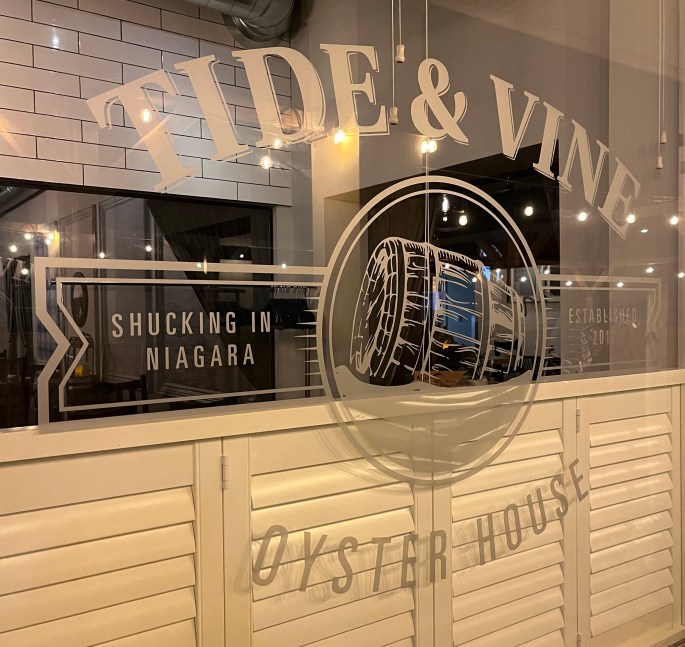
The only way to cap this off was a great meal – which we got at Tide & Vine Oyster House.
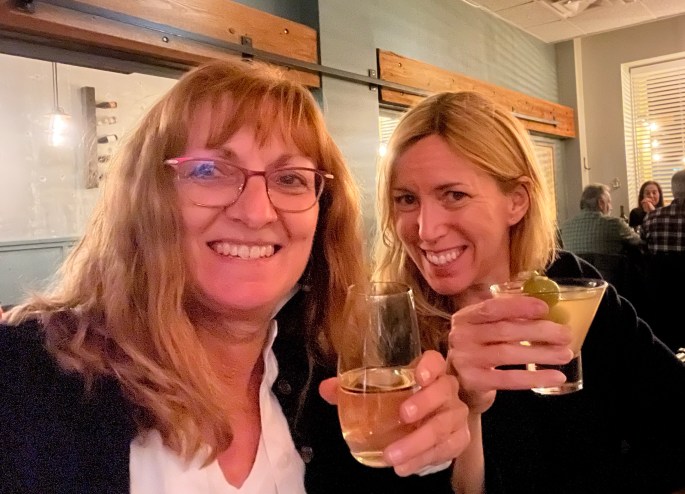
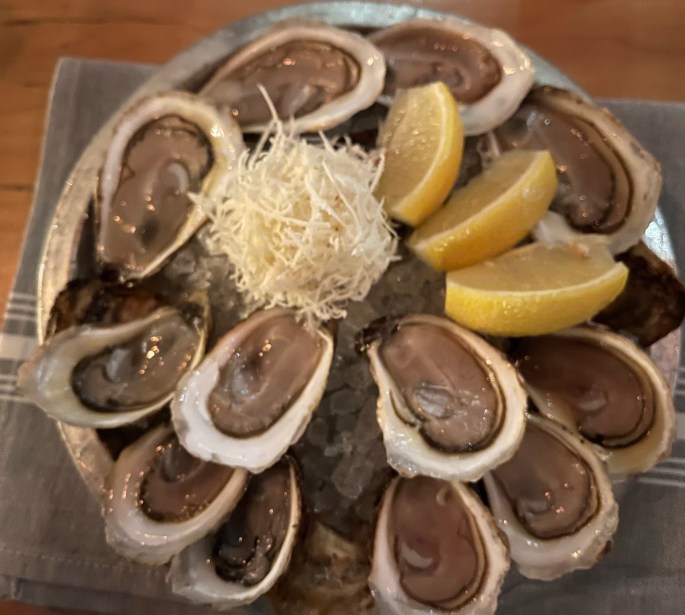
What did we start with? Libations and a dozen oysters. I figured I would eat 3-4 and Adrienne could have the rest.
A little freshly grated horseradish and a squeeze of lemon. They also had other sauces you could top them off with.
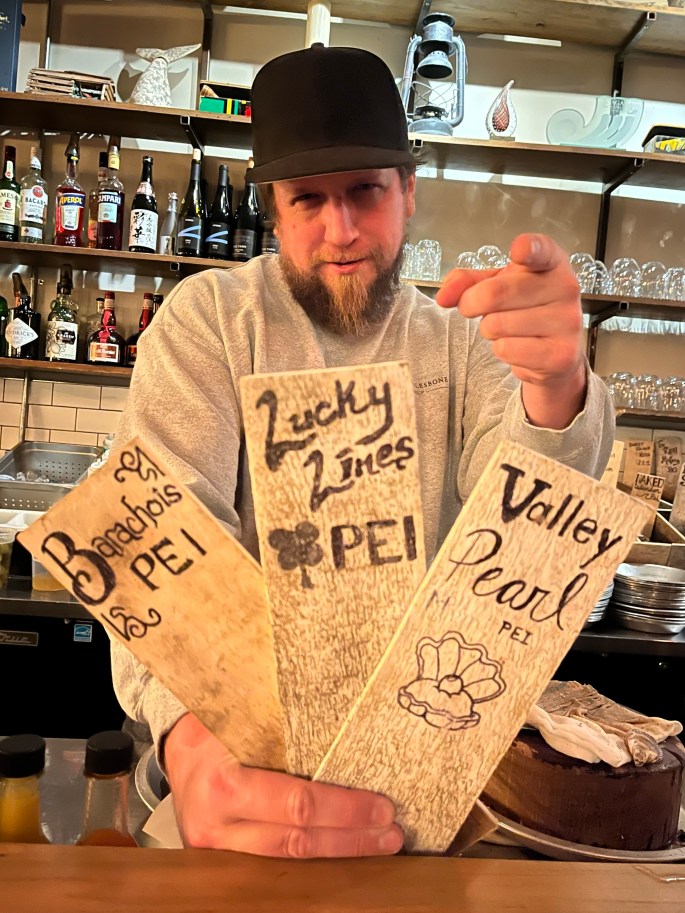
There were a variety of local types. We sat at the bar and the ‘shucker’ was quite a character. Duncan was his name. When asked what the types were on our plate, he pulled the signs out of the oyster bins and posed for my photo.
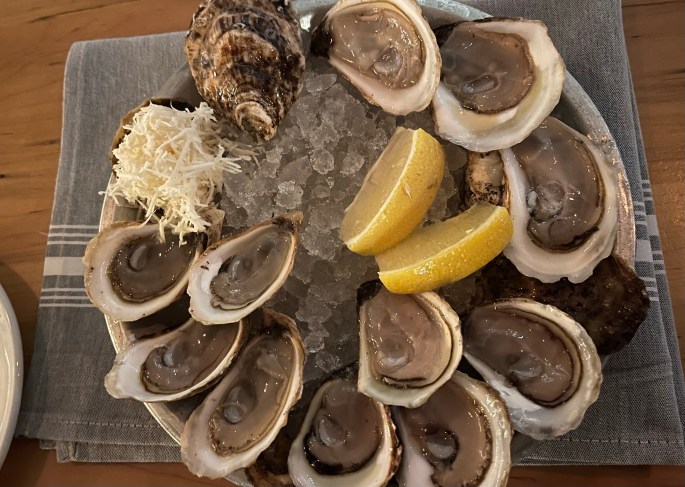
Before you know it we had another dozen oysters. He said ‘On the house’. He took an order for a dozen but mixed it up and duplicated our original oyster mix – which was not the ticket. And how many oysters did I eat???? Adrienne lost out. I had a dozen total – they were ‘Ginny-sized’. Small, tasty bivalves with a hint of Canadian salty brine.
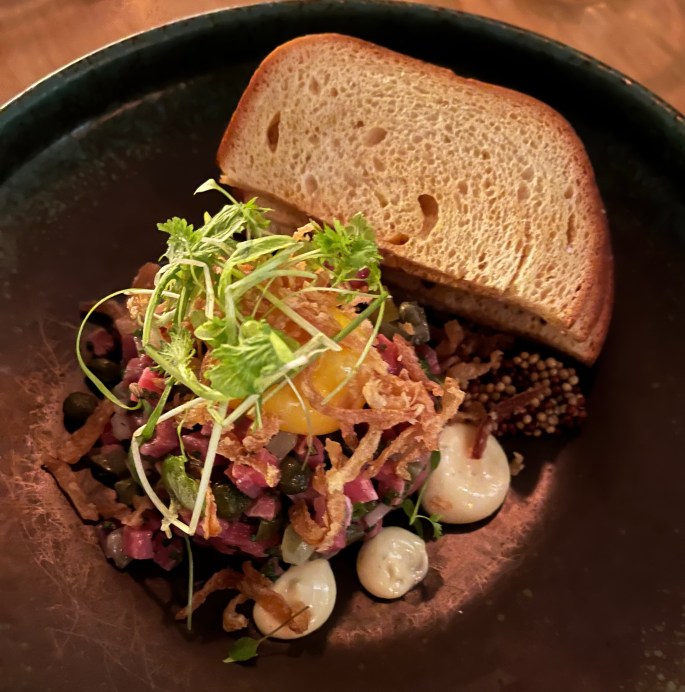
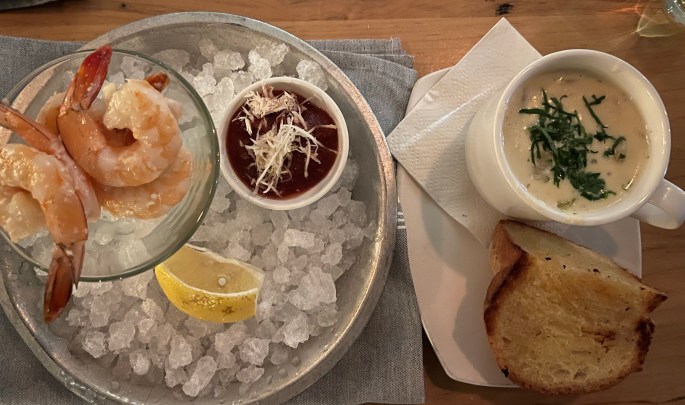
Oysters could not sustain us until the following day. Adrienne ordered the beef tartare and I got clam chowder and shrimp.
My shrimp were absoluteluy delicious – some of the best I’ve eaten at a restaurant. The clam chowder (not a typical choice for me) was also mighty tasty.
One last glimpse of the (Canadian) Falls before nodding off.
The last two restaurants included a new spot and a favorite from the past. Let’s start with the ‘new’ one. This was a place that was high on Eric’s list and he finally got a reservation.
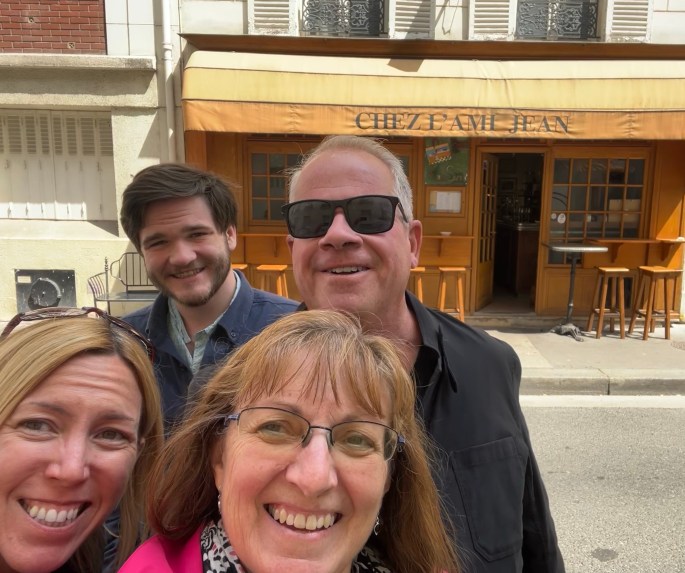
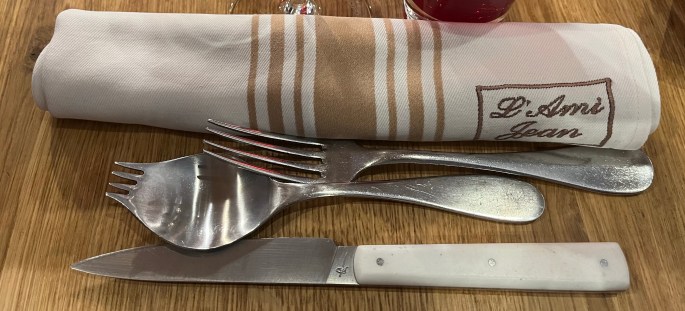
Chez L ‘Ami Jean
This is considered an iconic restaurant that serves some of the city’s best wild-game dishes (in season) and Basque inspired cuisine at this tiny restaurant. Little has changed since the site opened as a Basque pub in the 1030s. The current Chef-Proprietor, Stephane Jego, furthers the commitment to Gallic culinary heritage, but adds a twist of something more modern along with a commitment to sourcing the very best ingredients. Enough about history, let’s talk food.
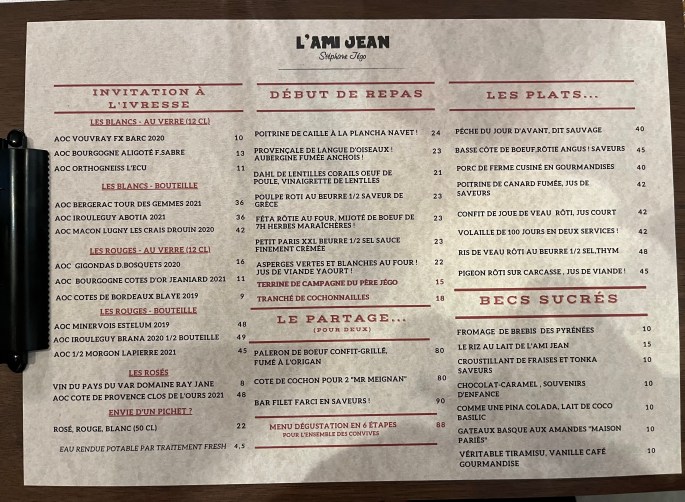
Here is shot of their menu. Yep, need to understand a bit of French to read it. But after spending almost two weeks in France, we were getting fairly good and more comfortable.
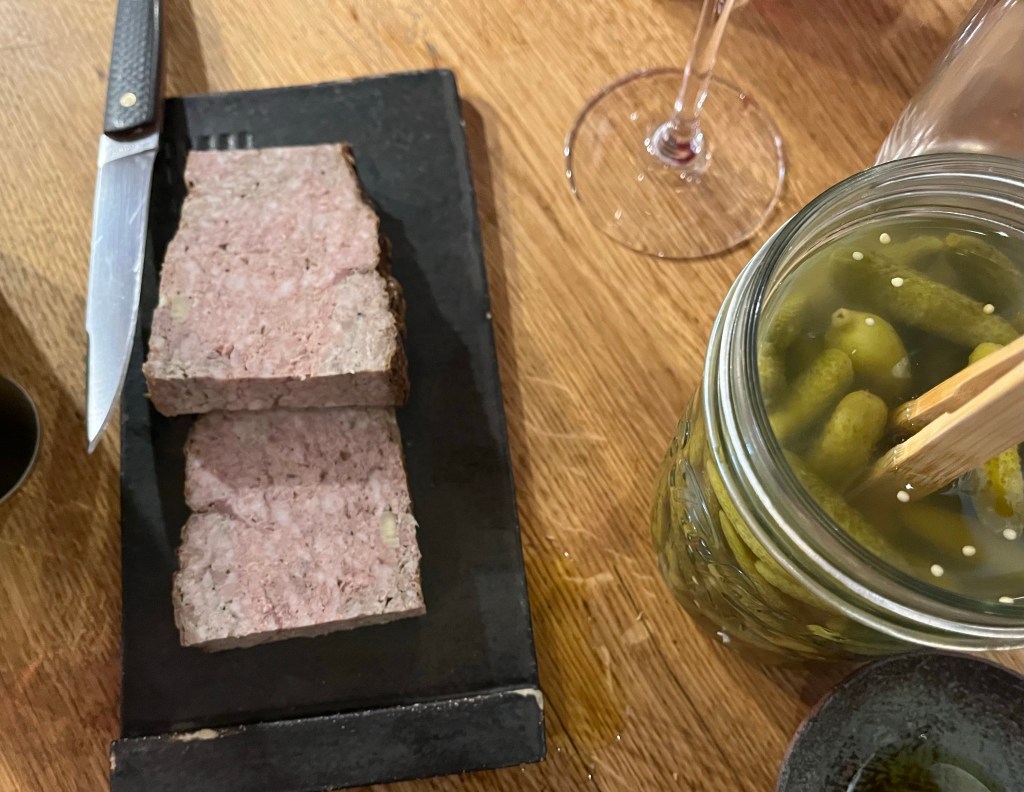
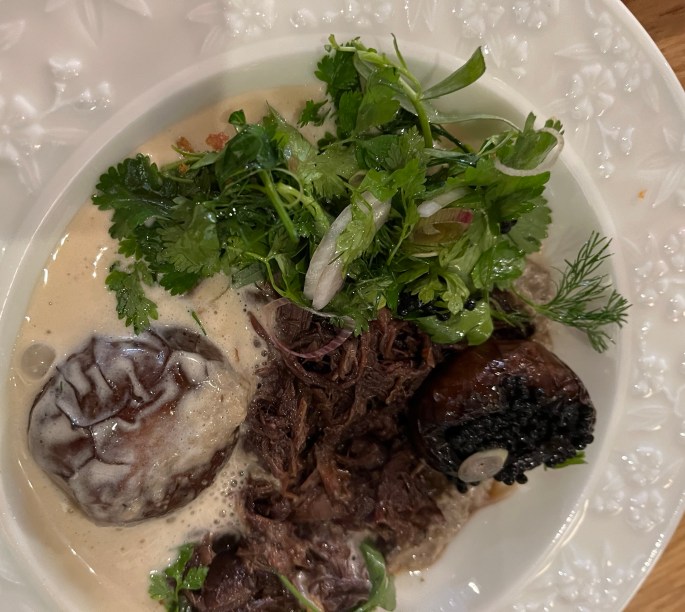
We kicked things off with a few shareables: (L) house pate’ w/ cornichons & (R) Braised duck.
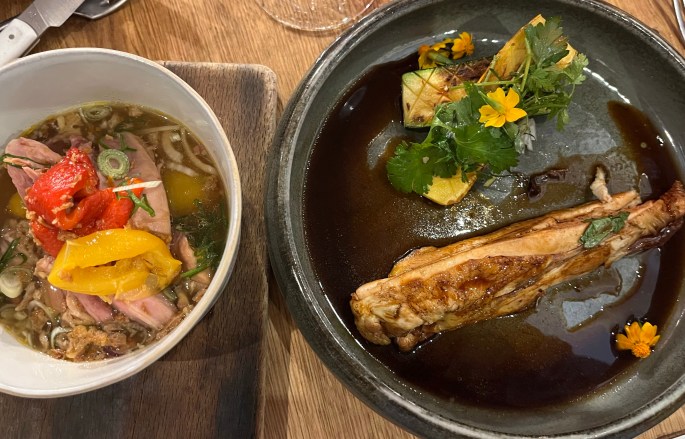
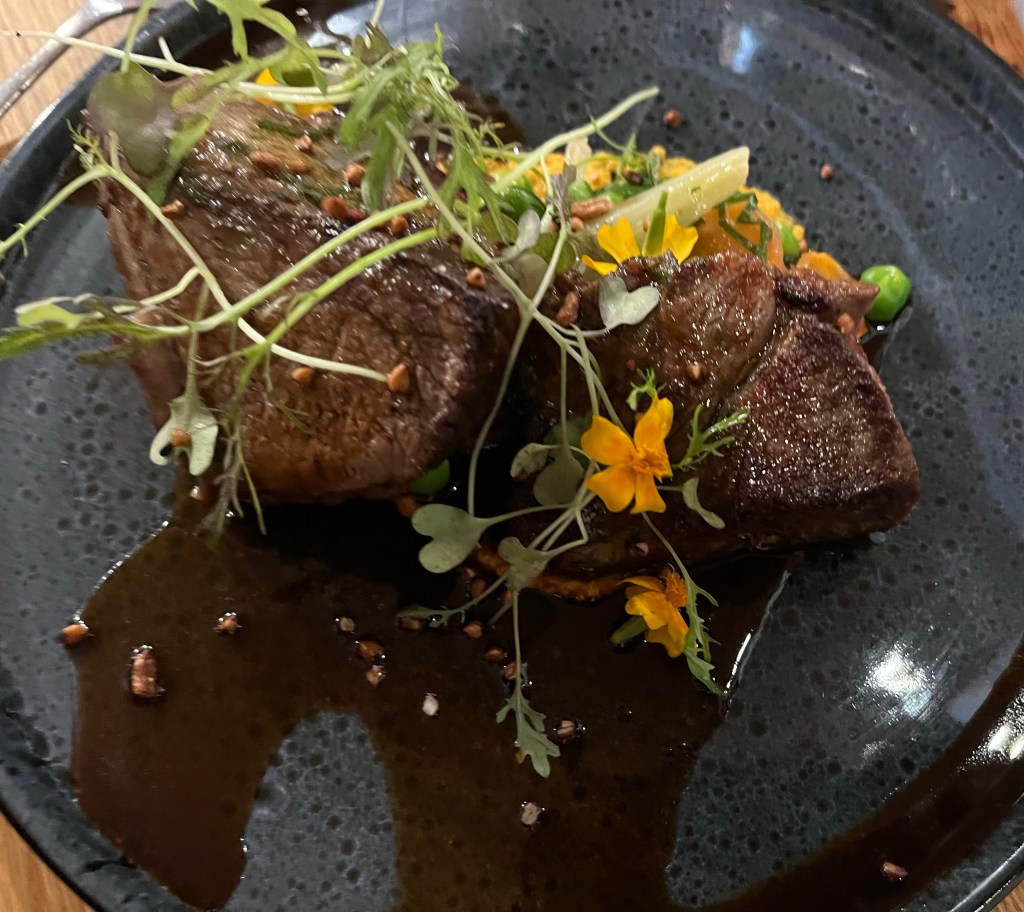
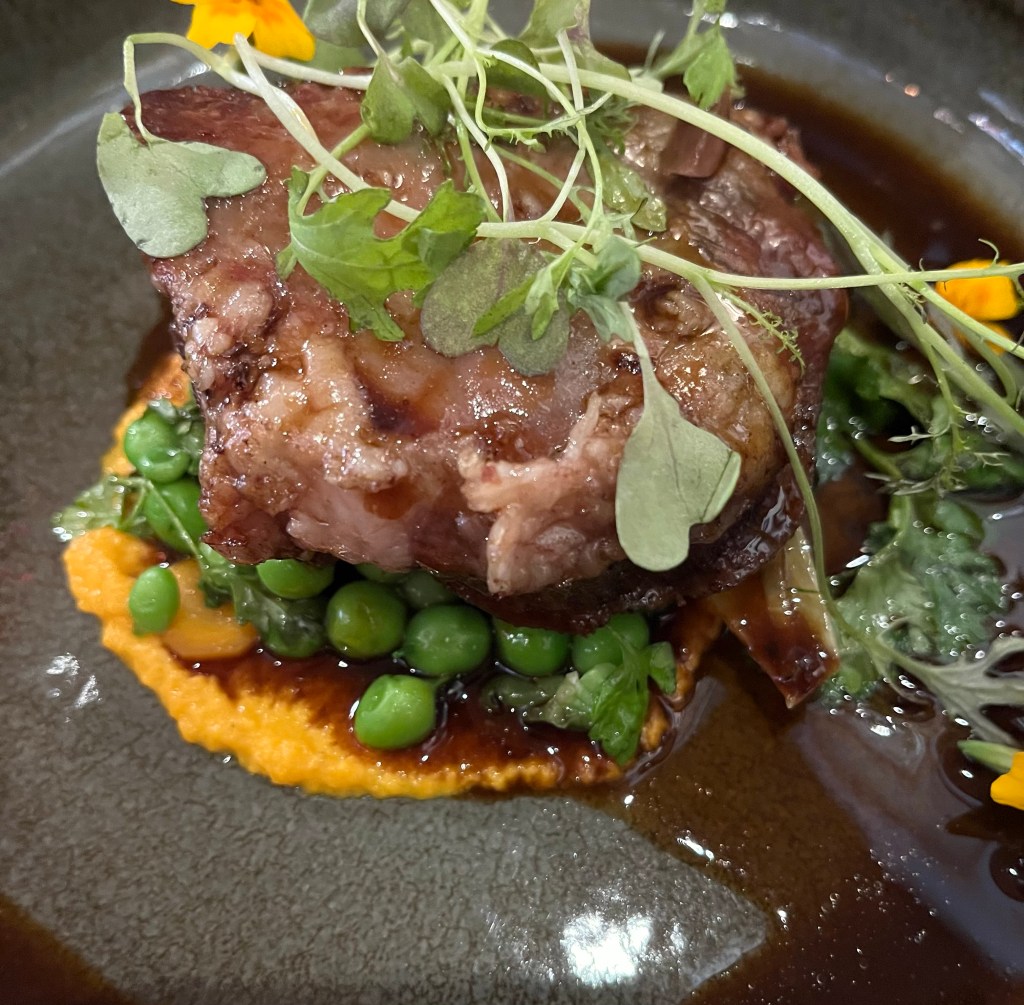
And then our entrees’ arrived – everyone was happy with their choices. OMG – my chicken (L) selection was fabulous. First the black plate arrived and I thought, huh, that’s it? When they continued to bring our dishes to the table, the white bowl to the right of the black plate appeared, which had the rest of my chicken – OMG, every piece was a detectible morsel. (R) braised Angus beef.
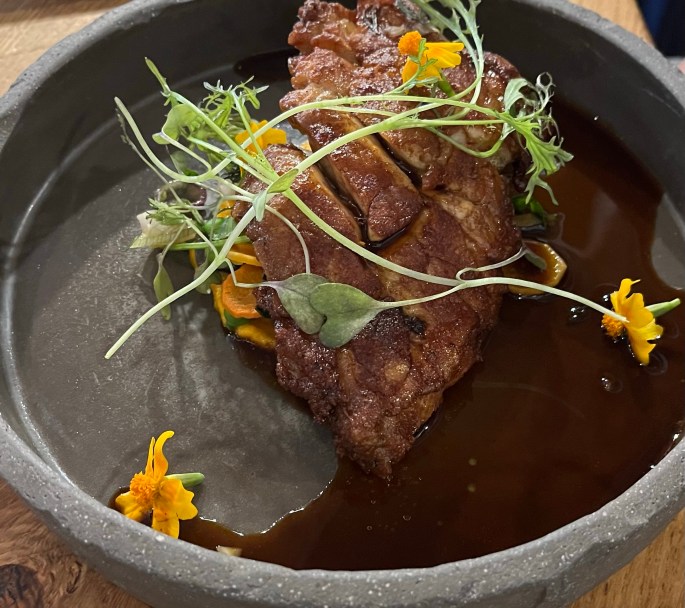
(L) veal sweetbread (R) smoked duck breast
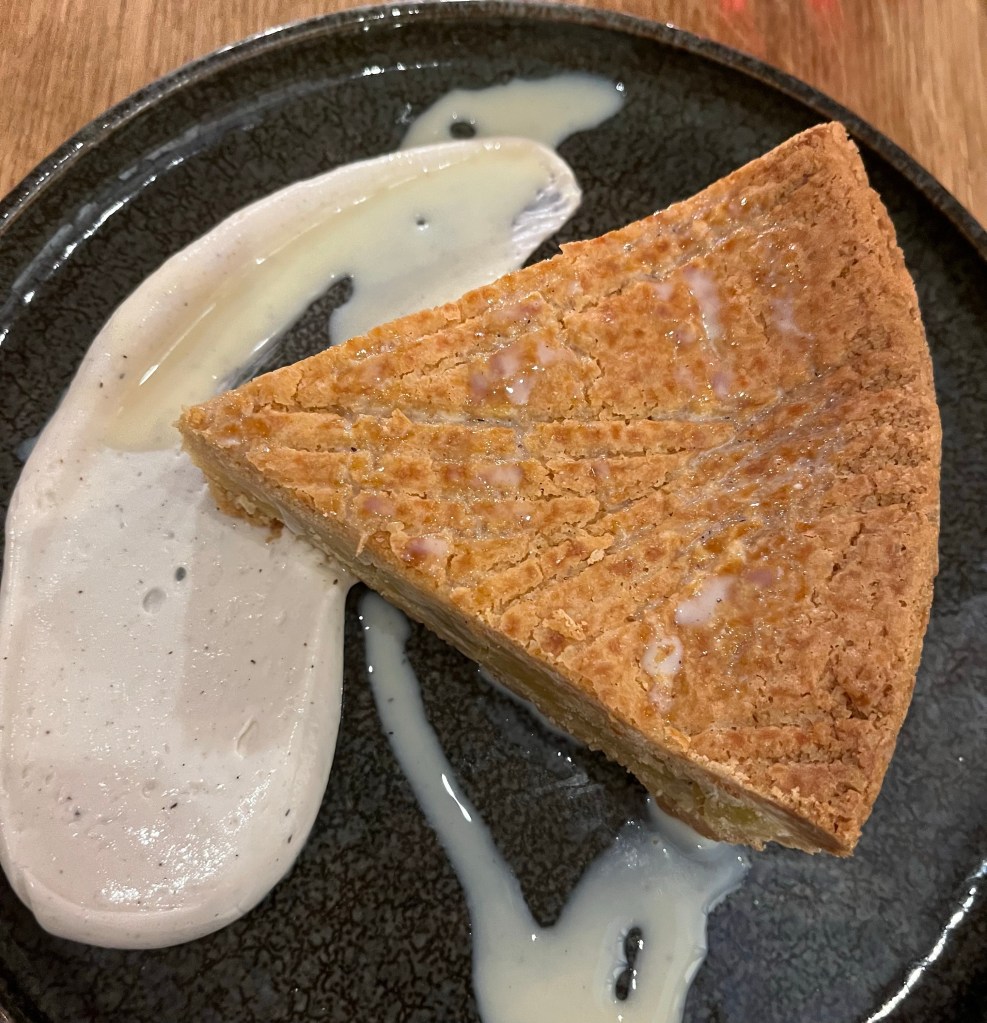
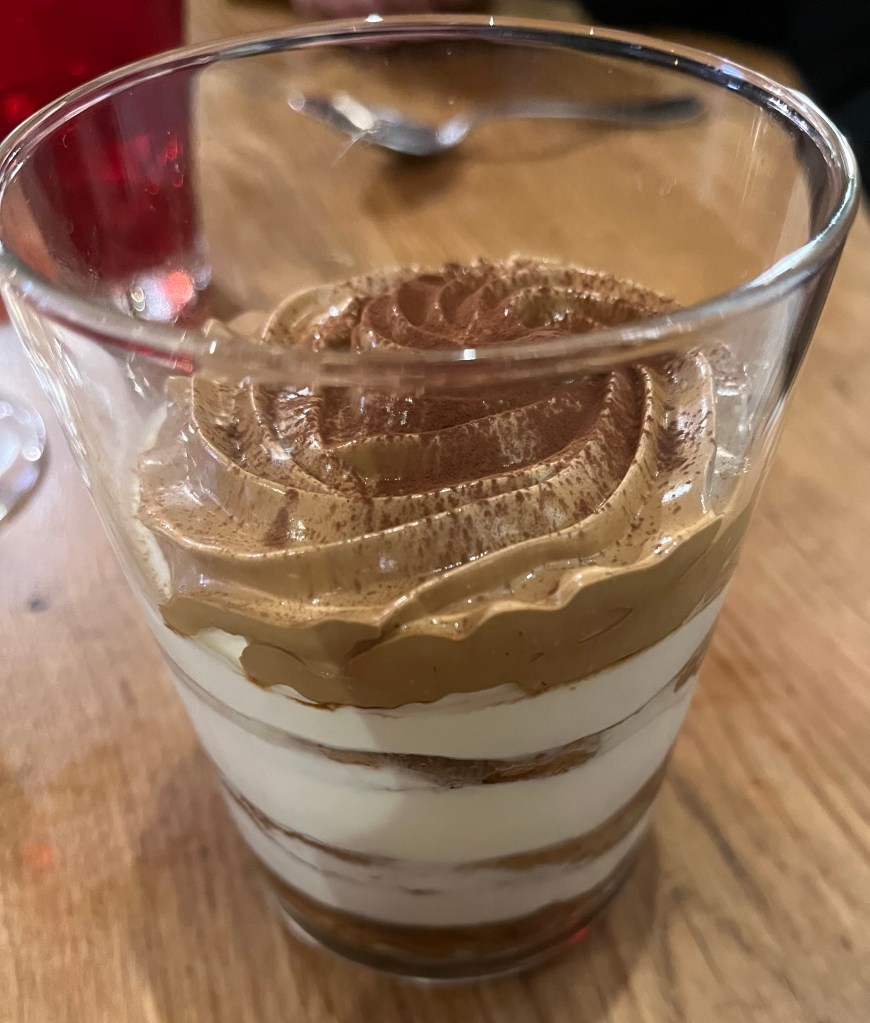
Naturally had to end the meal with desserts: apple tart (L) and tiramisu (R).
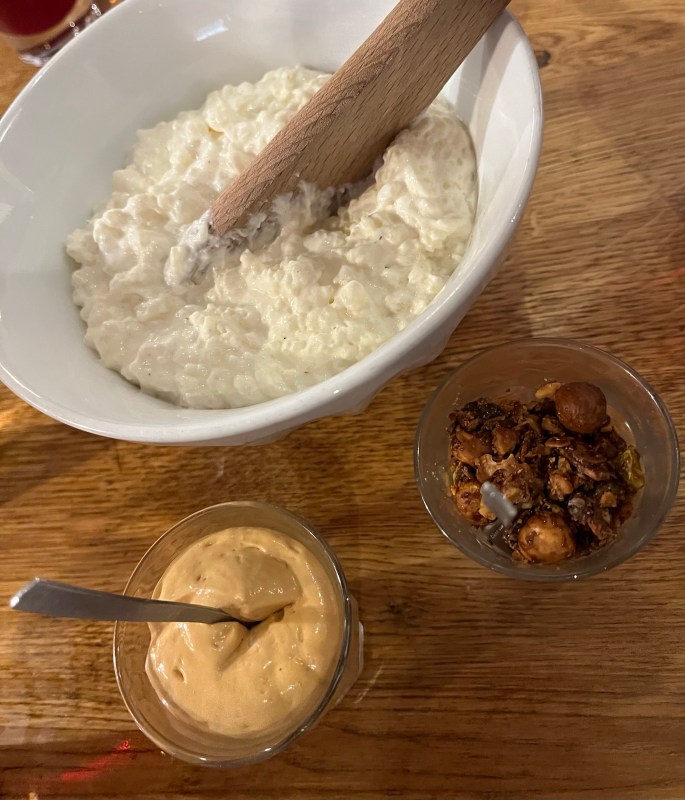
But the dessert they are known for…………rice pudding. Not really my thing, but Adrienne and Eric continue to rave about it, even once we got back to the states. There was a large bowl of the pudding, then add-ins could be spooned on top for individual taste.
Definitely was one of my top meals and experiences during our time in Paris.
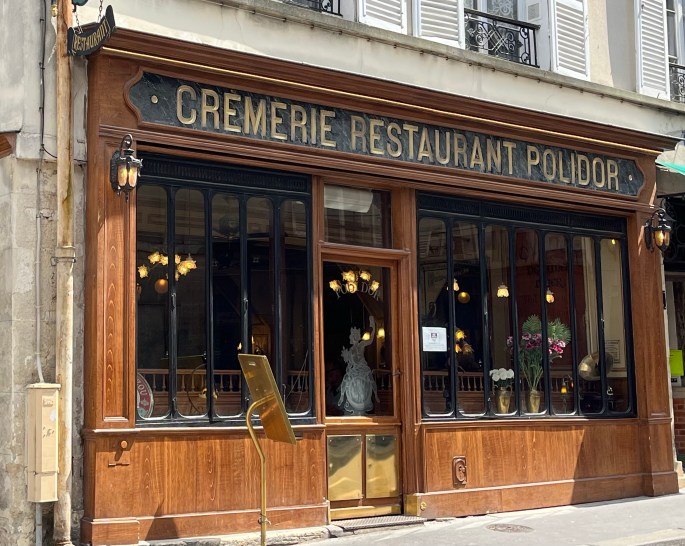
Le Polidor
We originally found this restaurant while I was reading a book by Rick Steves and traveling in France and Paris. Since that first visit, we’ve tried to make a stop at the restaurant each time we are staying in Paris.
Polidor opened as a cheese store and restaurant in 1845. By 1890 the restaurant was the only business the owners focused on, closing the store. Polidor quickly became a popular rendezvous for artists, students, intellectuals and politicians from the surrounding neighborhoods. Le Polidor provided simple good French cuisine, both homey and affordable. It is one of the oldest bistros in Paris. History lesson over, let’s see the food!
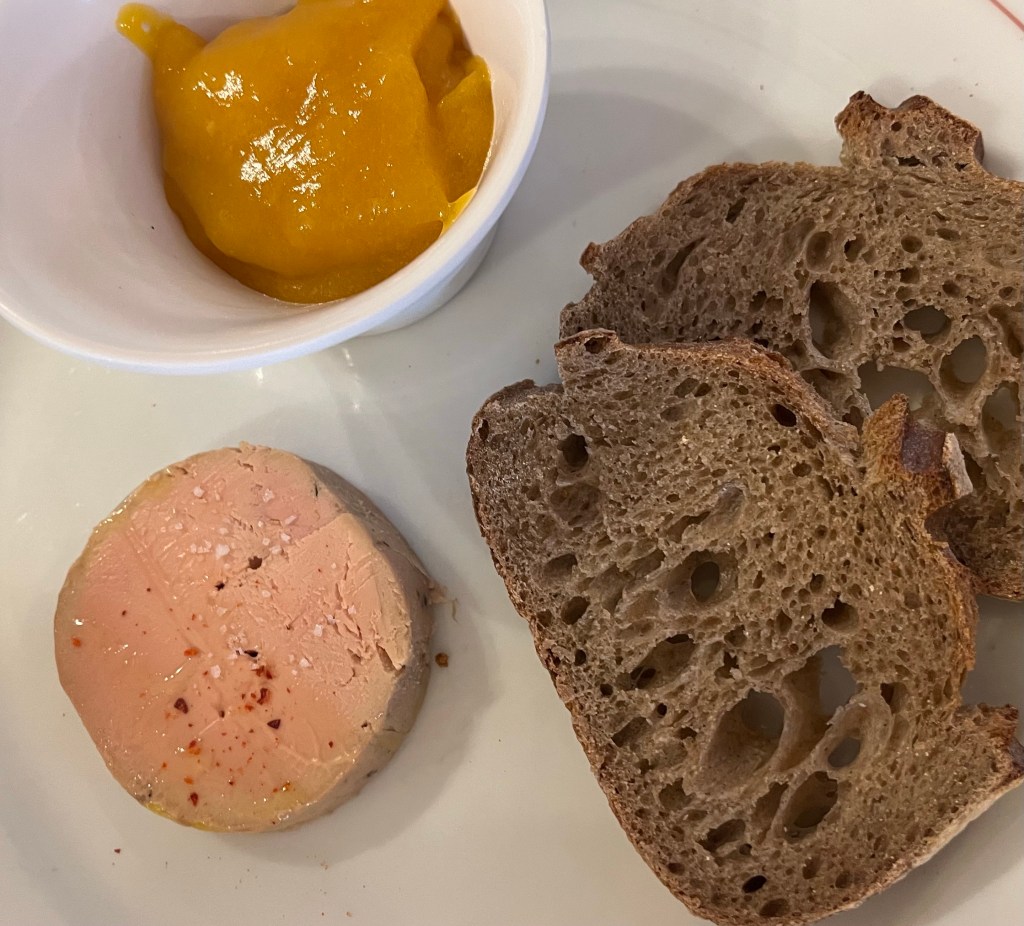
Shared starters were escargot and pate’.
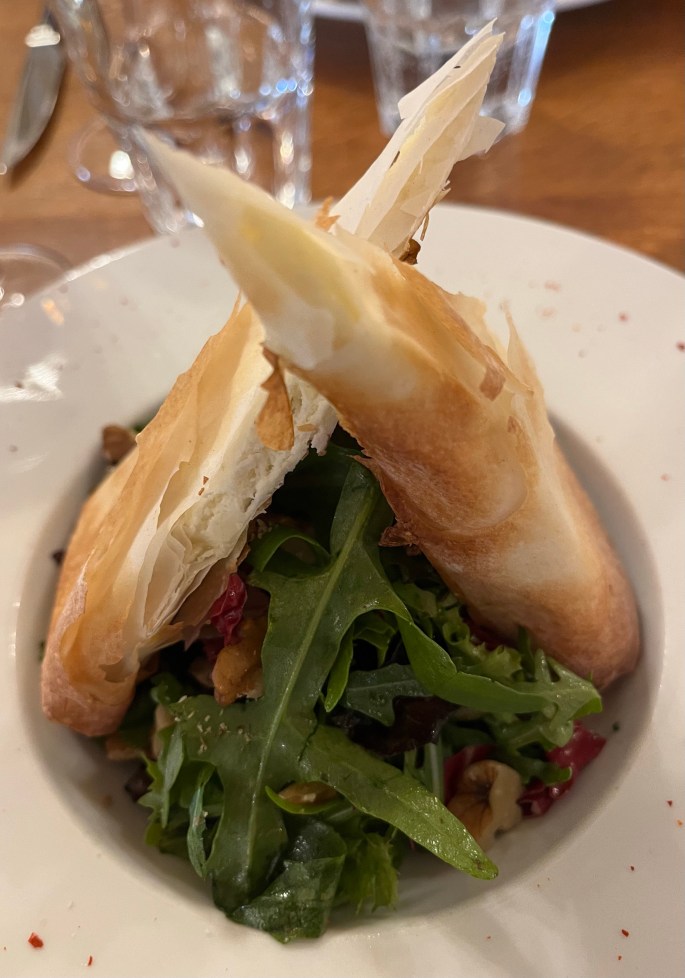
Salad – sometimes you need greens. 🙂
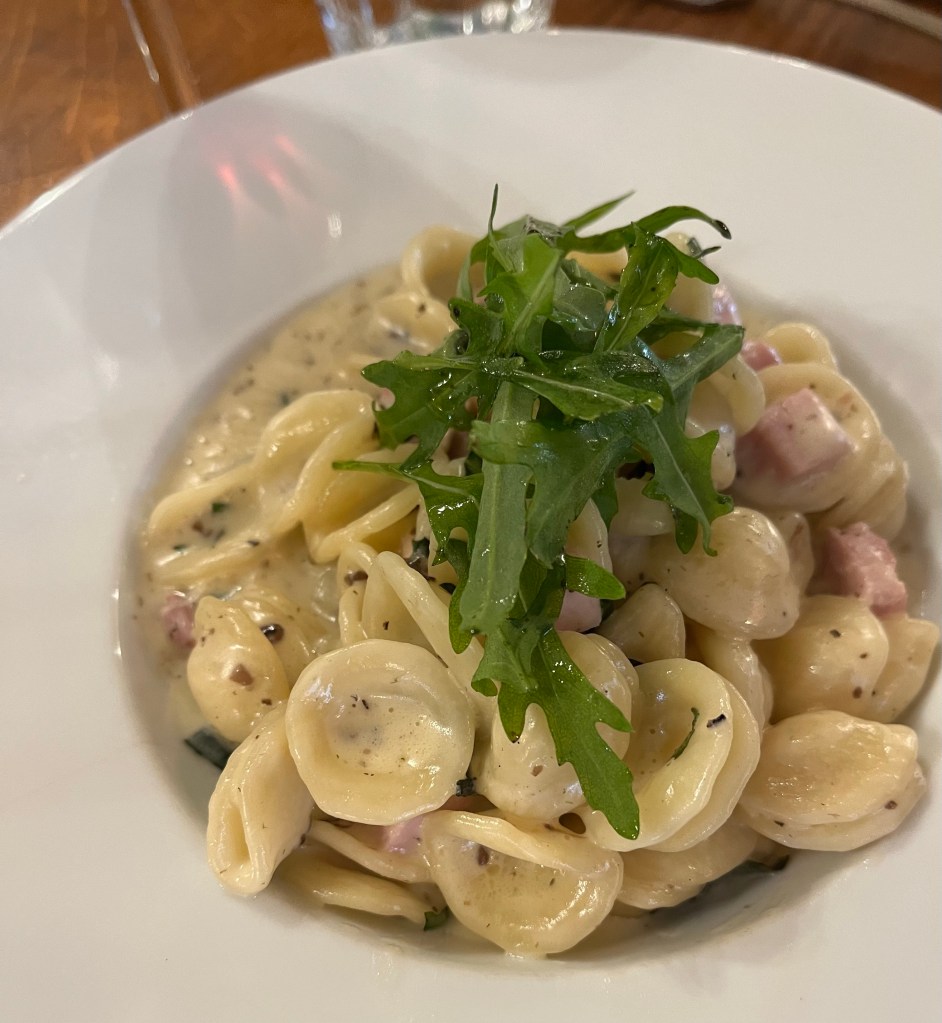
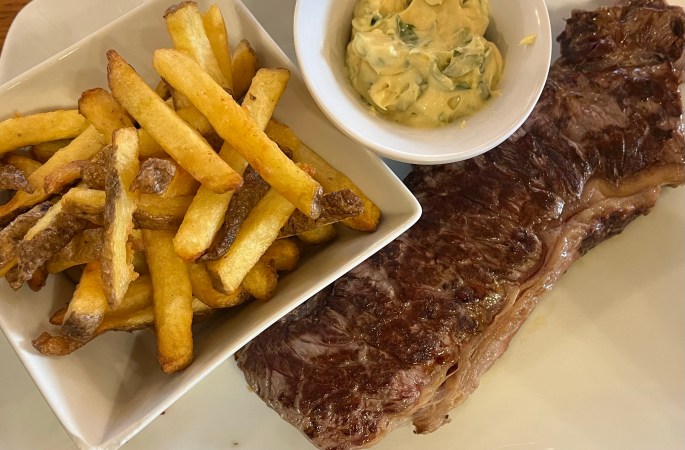
Entres’ were pasta w/bacon, chicken and beef w/frites.
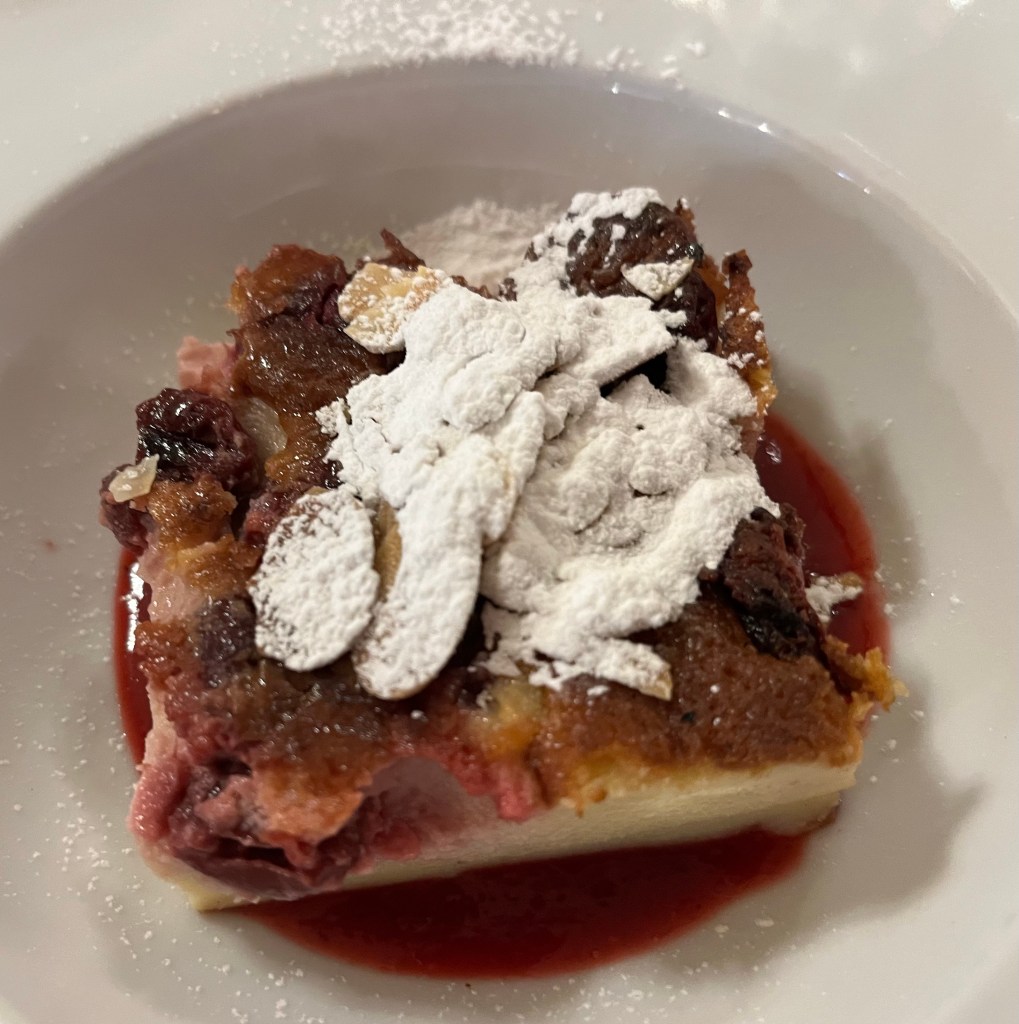
Two desserts were shared, one with apples and the other with cherries.
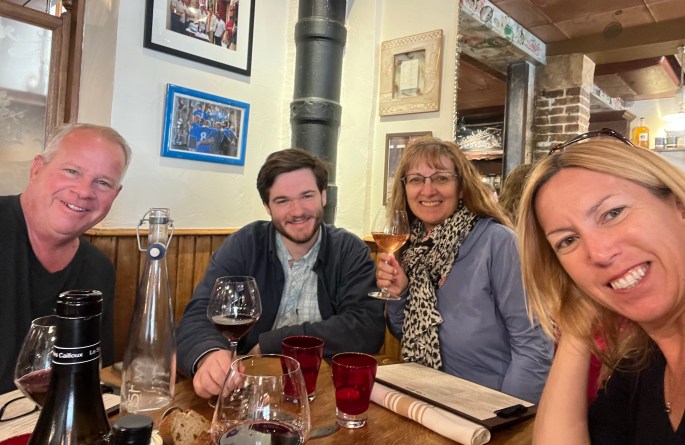
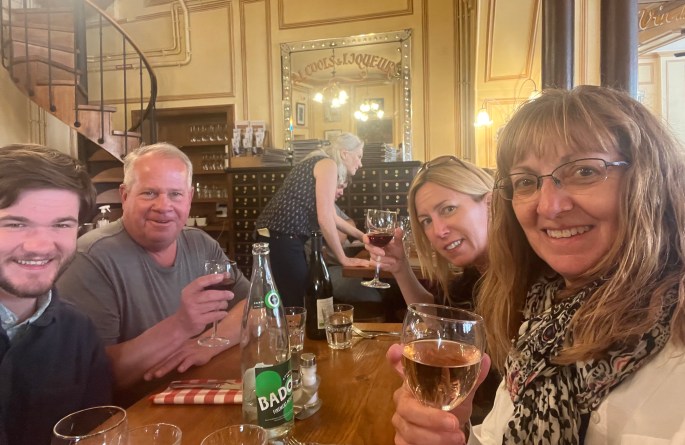
Enjoyed our meal, enjoyed the atmosphere, enjoyed the company and glad I got to visit another time.
It’s taken me waaaaaaay too long to finally finish the posts from our French trip. But it’s done now. Starting to think and plan for next year’s European trip. Ciao!
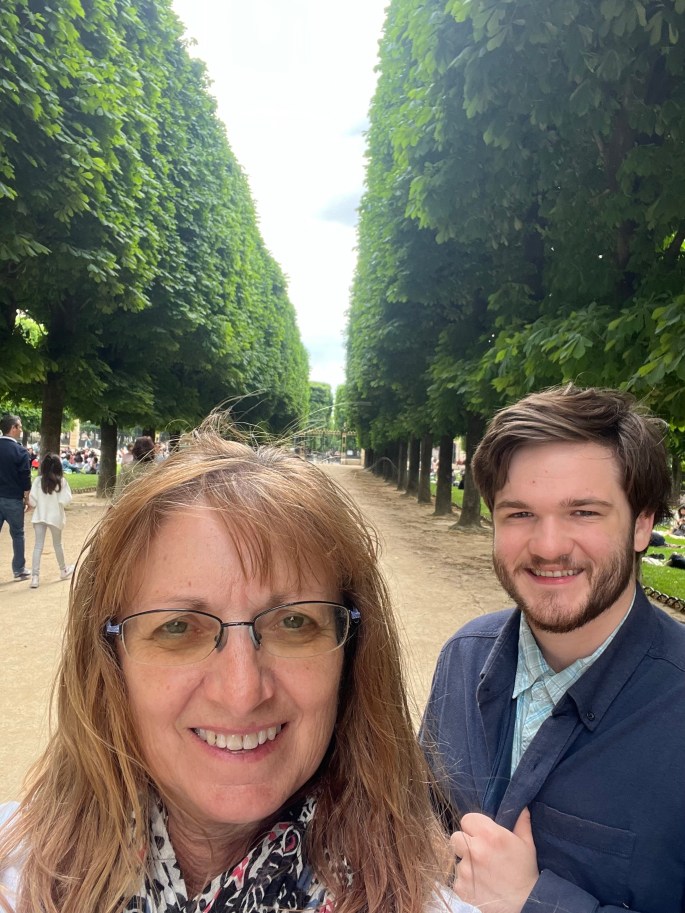
One of our last days in Paris, Connor and I were on our own. We started at the seine River, stopping at the green boxes along the Seine River, the bouquinestes of Paris.
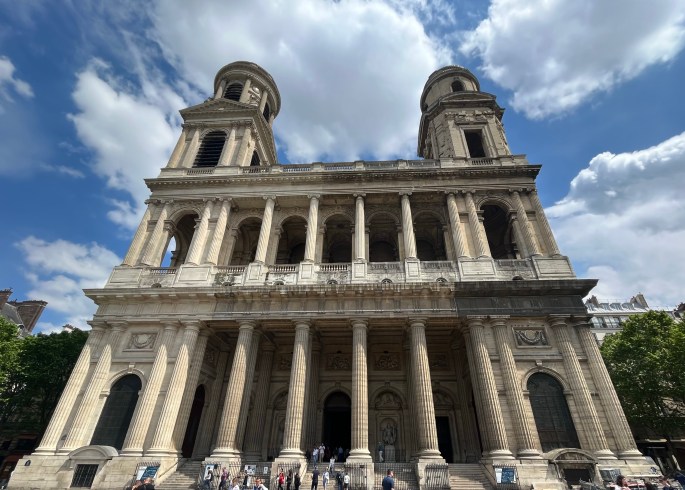
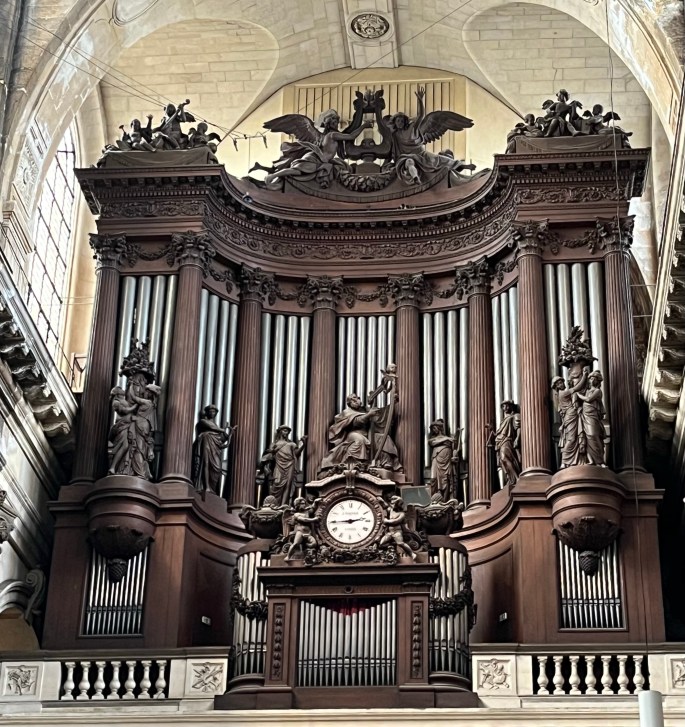
Walking away from the river, we came across this Roman Catholic church – Eglise Saint-Sulpice
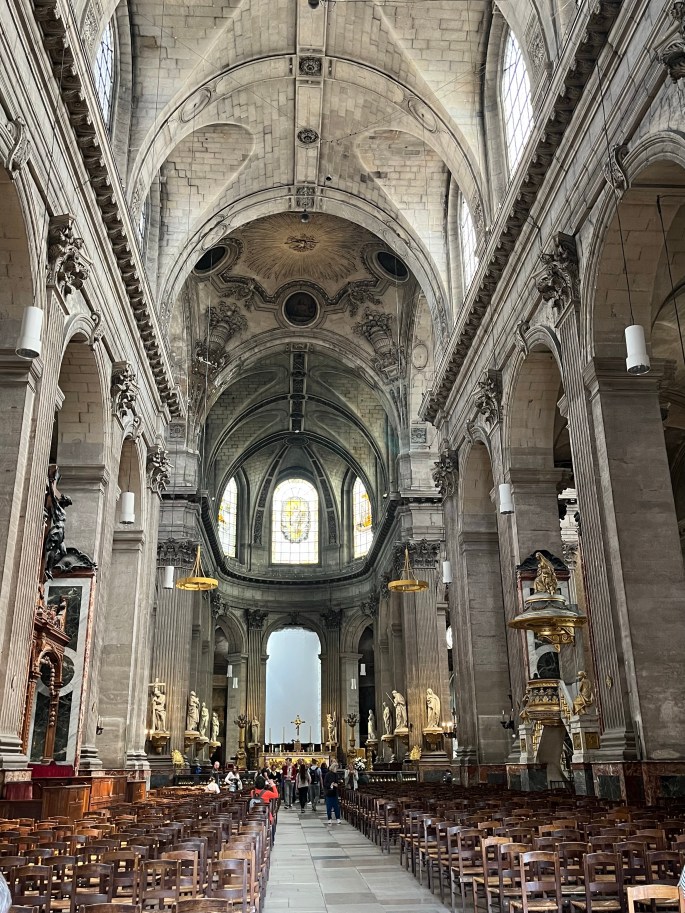
This Roman Catholic church is the third largest in the city and the current building is the second on this site. The original Romanesque building was constructed in the 13th century.
The 2003 novel The Da Vinci code was an international bestseller that brought large crowds of tourists to Saint-Sulpice. Permission was requested in 2005 to film inside for the film of the same name………the archdiocese of Paris refused.
The church has a longstanding history of talented organists which helped to preserve and maintain to preserve this instrument in its original state.
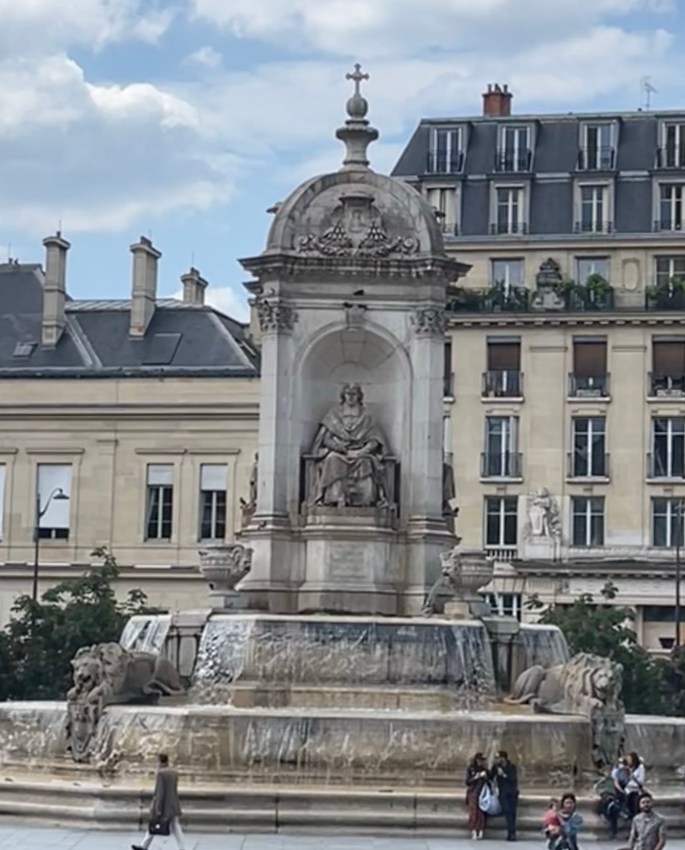
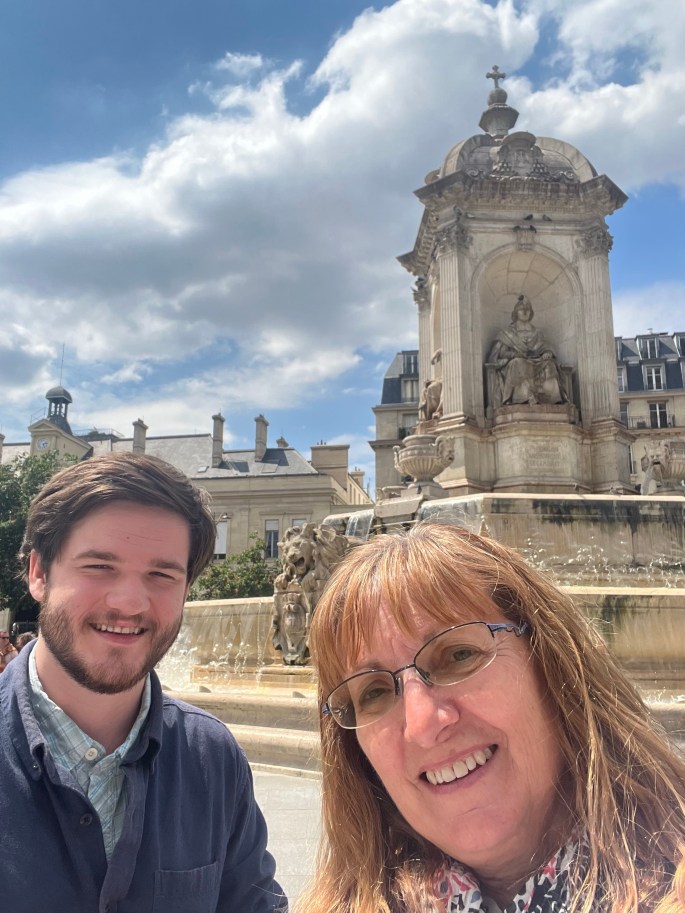
Outside its doors is the Fontaine Saint-Sulpice constructed between 1843-1848.
It was originally criticized as being too big and hid the entrance to the church. Regardless, it’s a meeting place for those in the surrounding area.
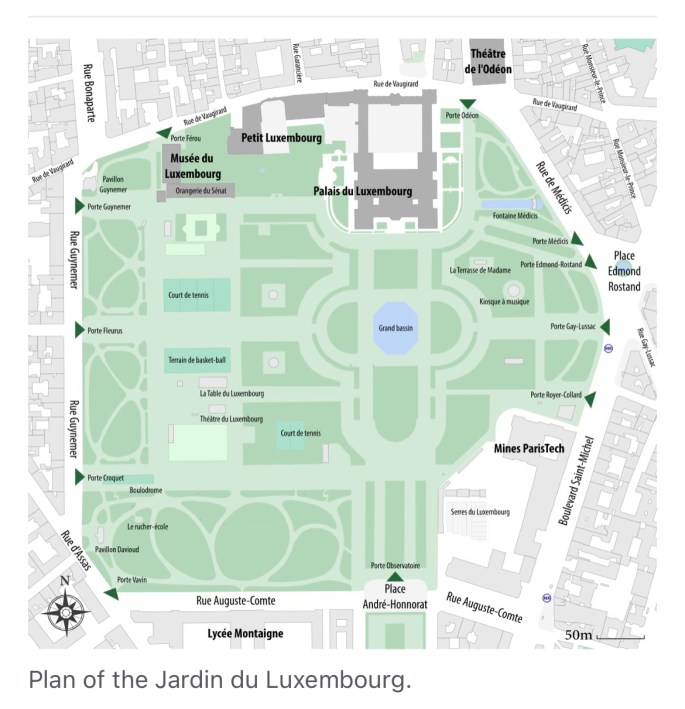
But truly, we had a destination in mind and only stumbled upon Saint-Sulpice. Our goal was Jardin du Luxembourg.
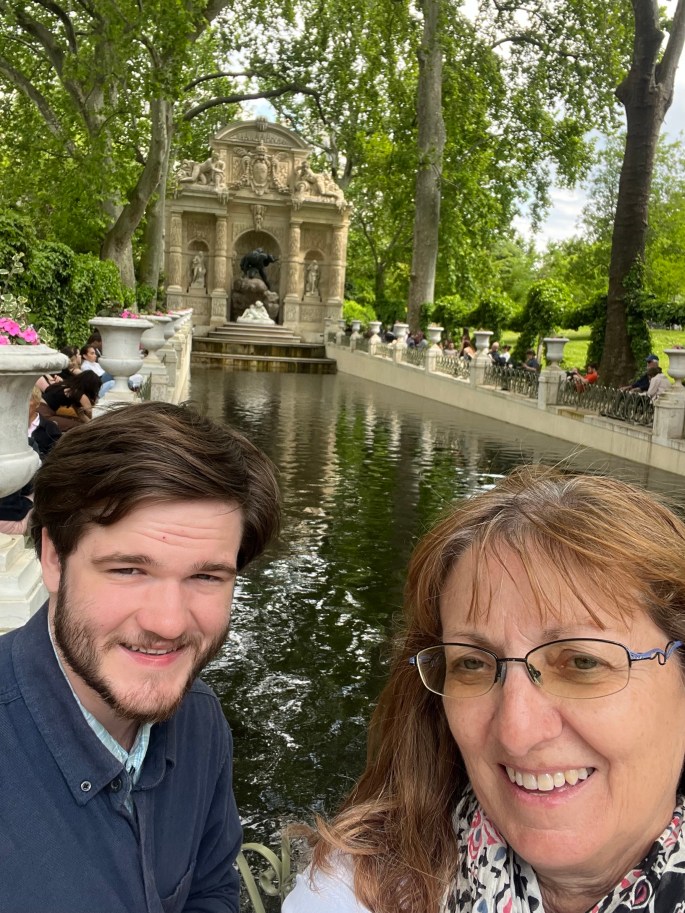
In 1611, Marie de Medici decided to build a palace and park in the style she grew up with in her native Florence.
In 1620 the Medici Fountain was built and was neglected by later monarchs for a period of time. During the reconstruction time of Louis Boneparte in 1865 the fountain was restored and moved to its present location with the long basin added at that time.
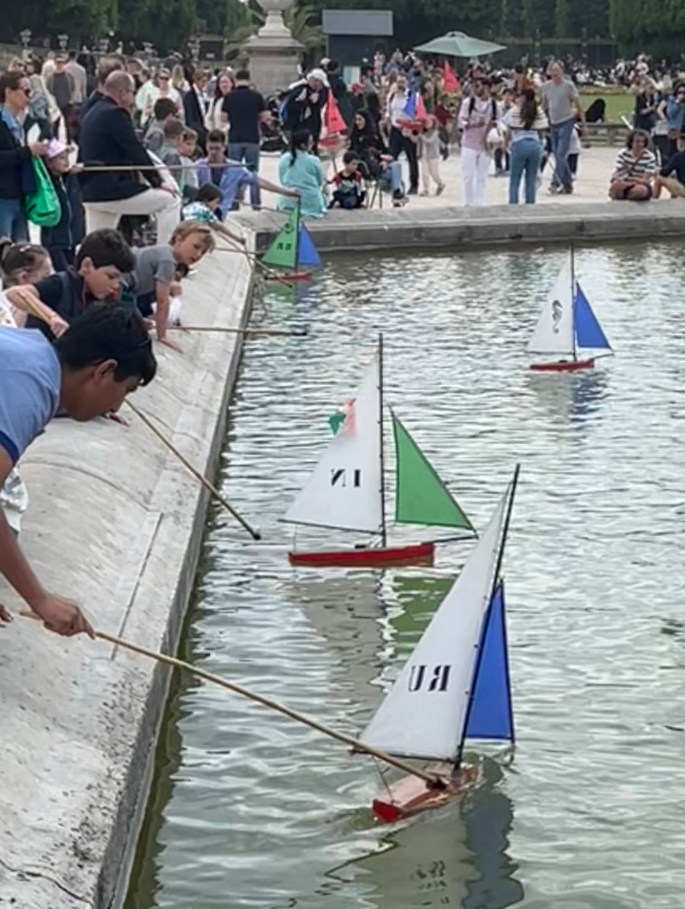
But undoubtedly the hive of activity centers around the Grand Bassin.
For a mere 6 euro, the kids have a fun activity, and the parents can watch them.
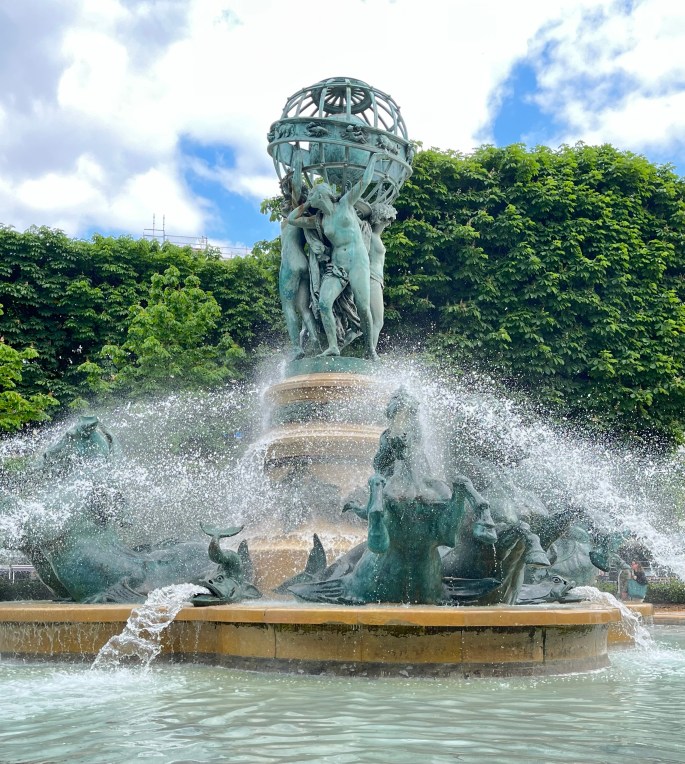
Leaving the garden, we came upon the Fountain de L’Observatoire. The four women holding the sphere are representative of the four parts of the world: Europe, Asia, Africa and America.
It was nice seeing parts of Paris that had not previously been visited – thanks Connor.
Looking back on vacations, there are many memories that are made. Let me tell you………Darden memories usually center around food. Here are two more restaurants that we visited during our time in Paris.
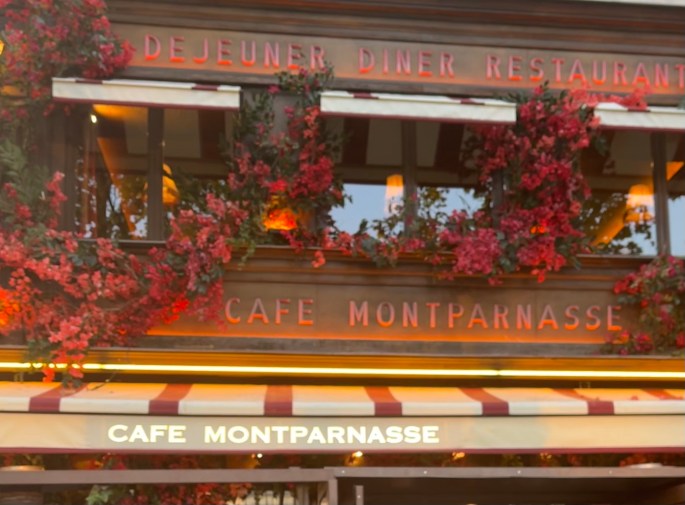
Cafe Montparnasse
Beautiful Parisian brasserie in the heart of the Montparnasse district. They feature seasonal cuisine and a rigorous curated wine selection.
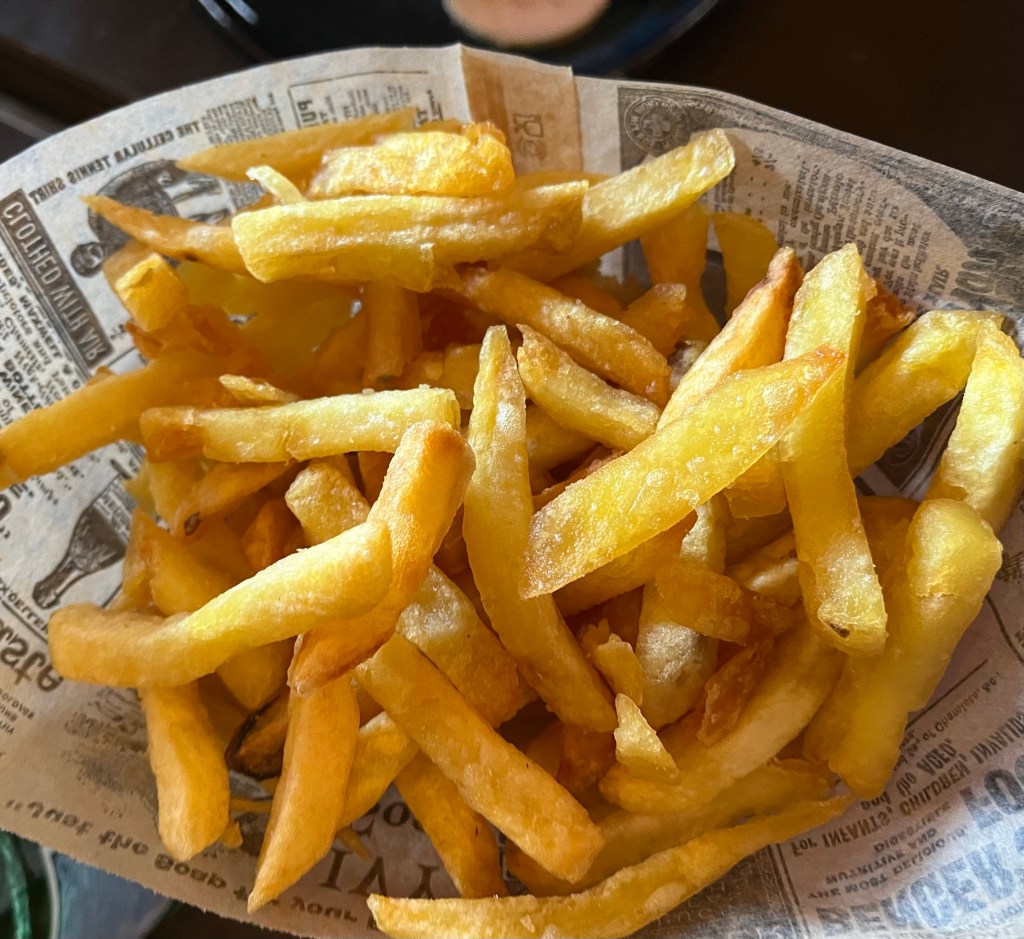
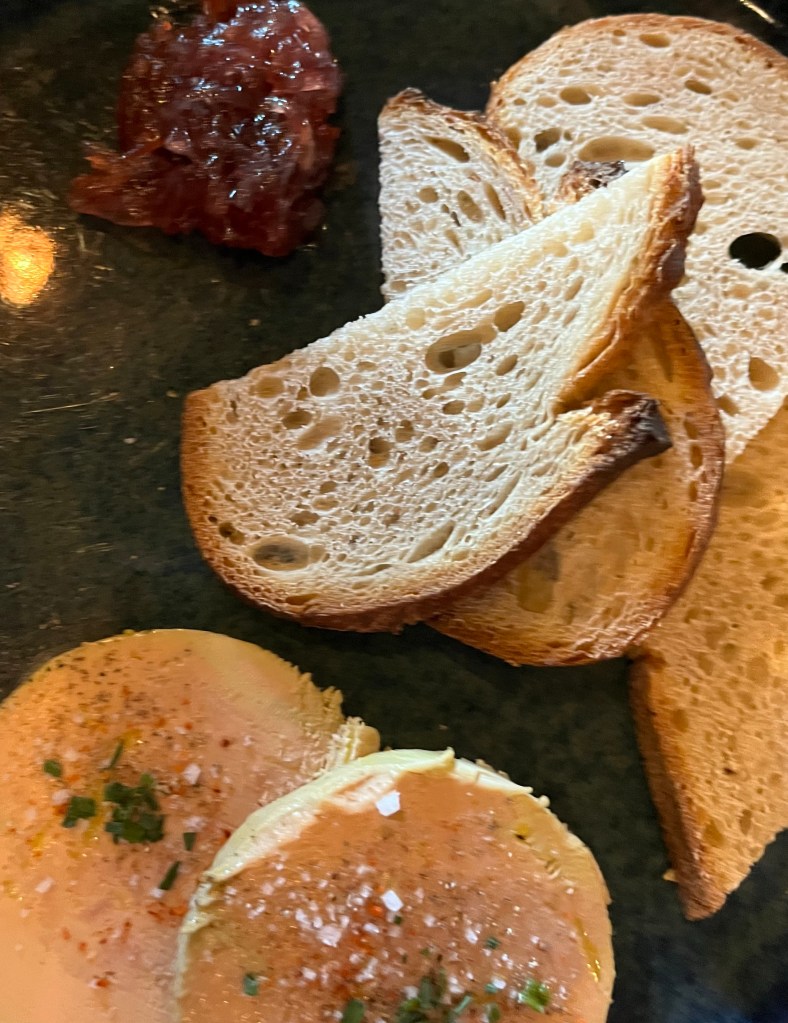
We had walked past this food stop several times, but one evening it was our destination. We had two appetizers – frites and foie gras. Most of my attention was directed towards the frites.
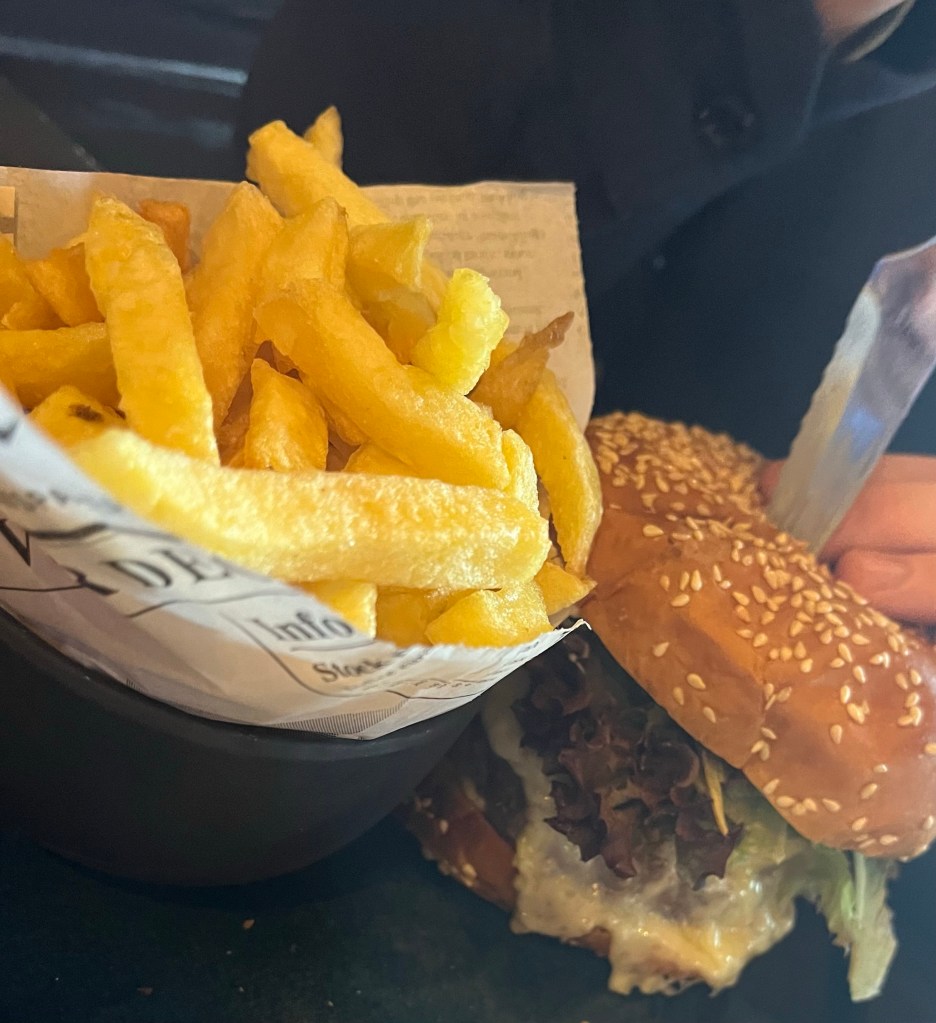
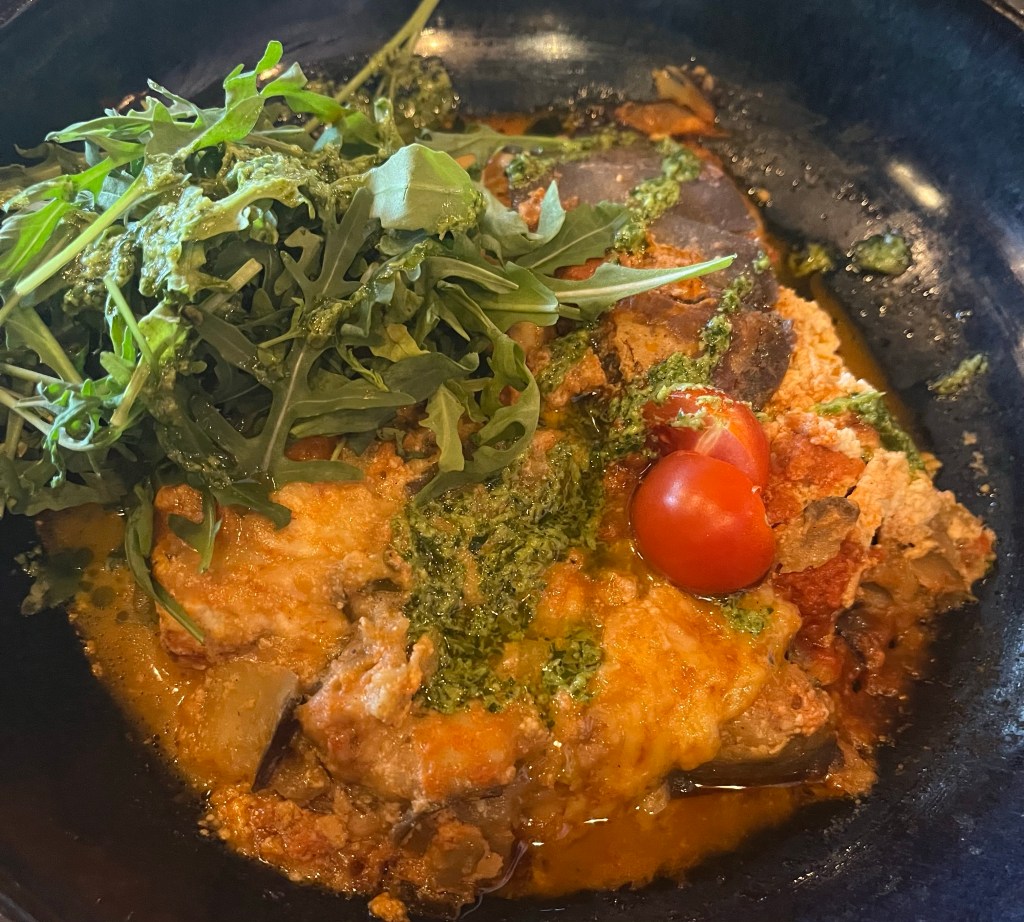
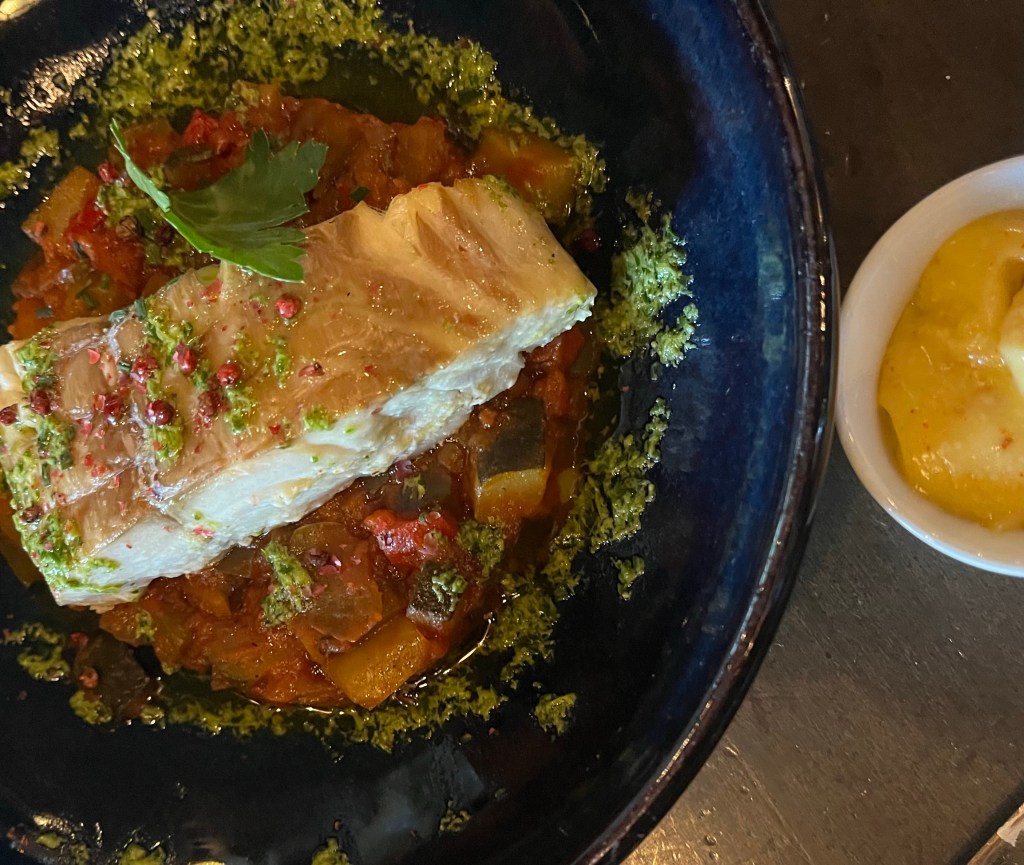
Our selections were varied: burger & frites (mine!)& vegetable lasagna.
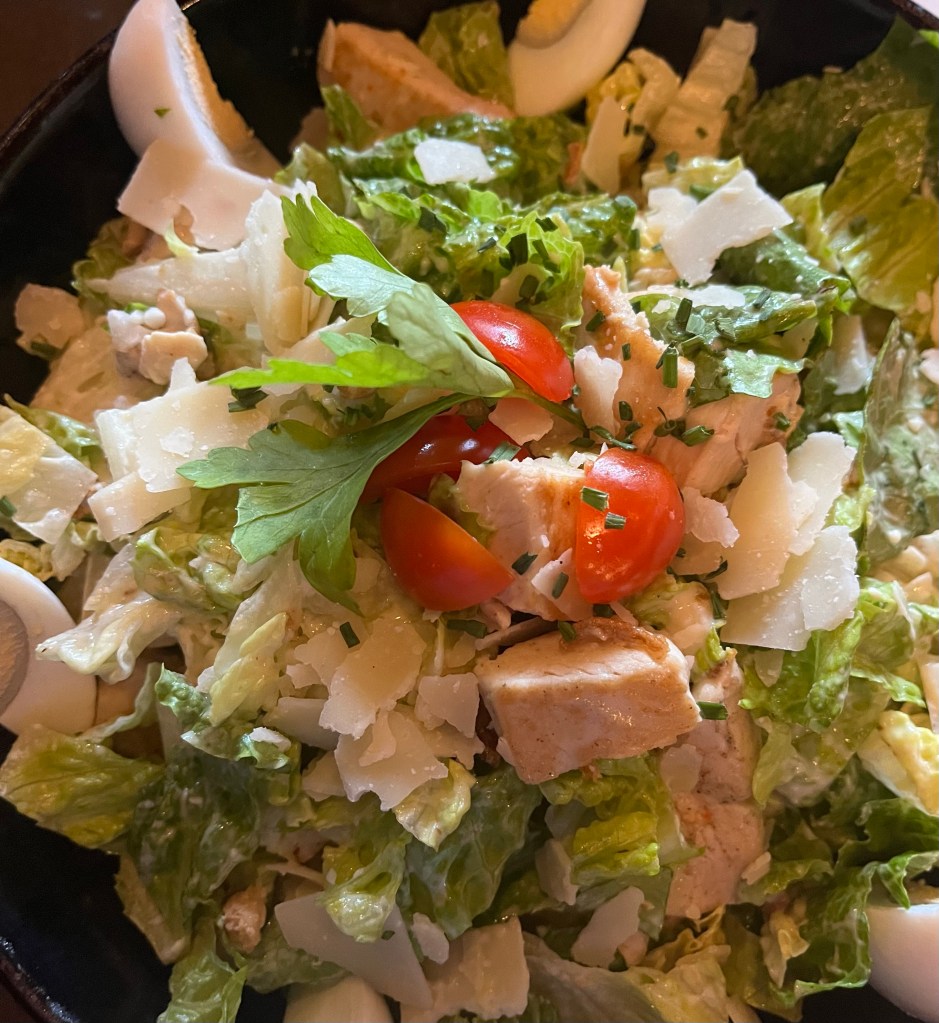
Local seafood & Cesear salad w/ chicken
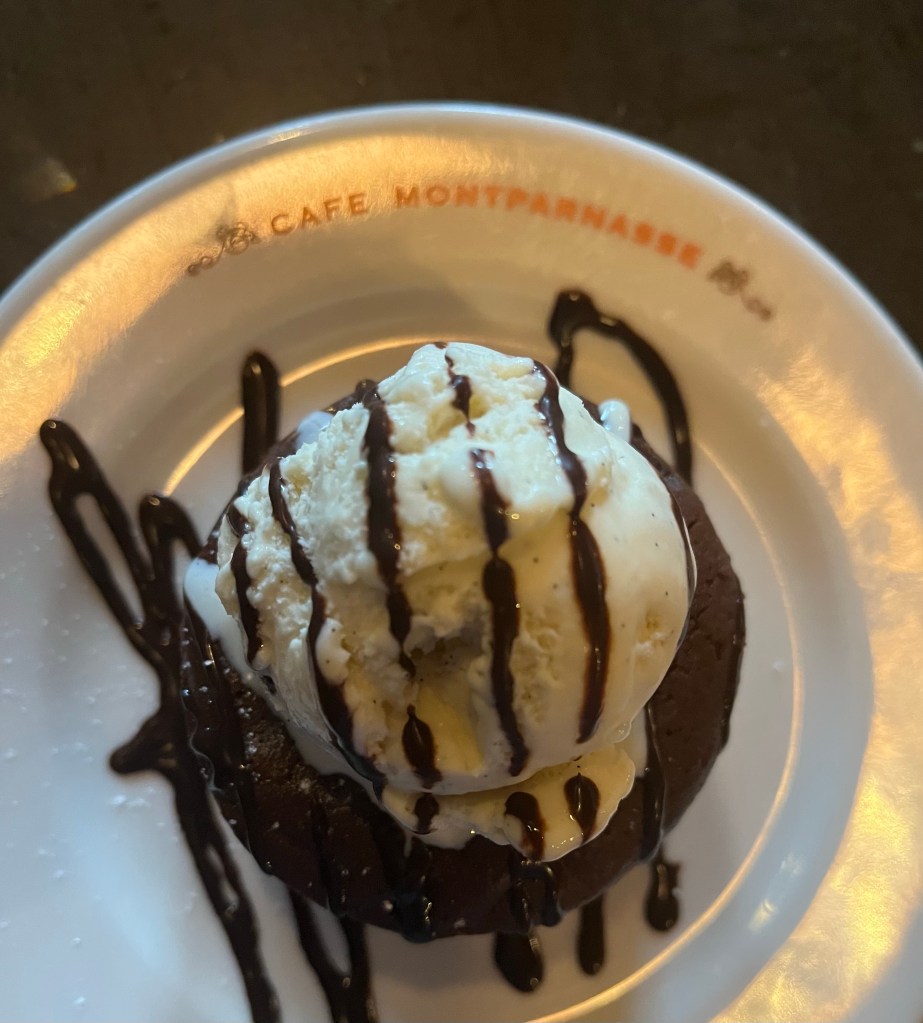
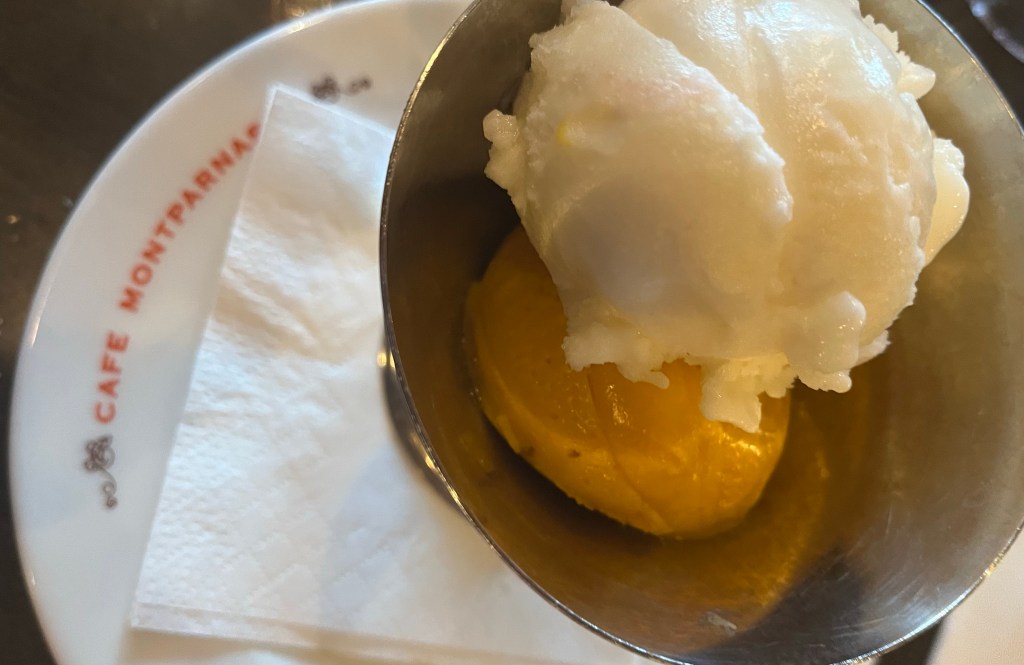
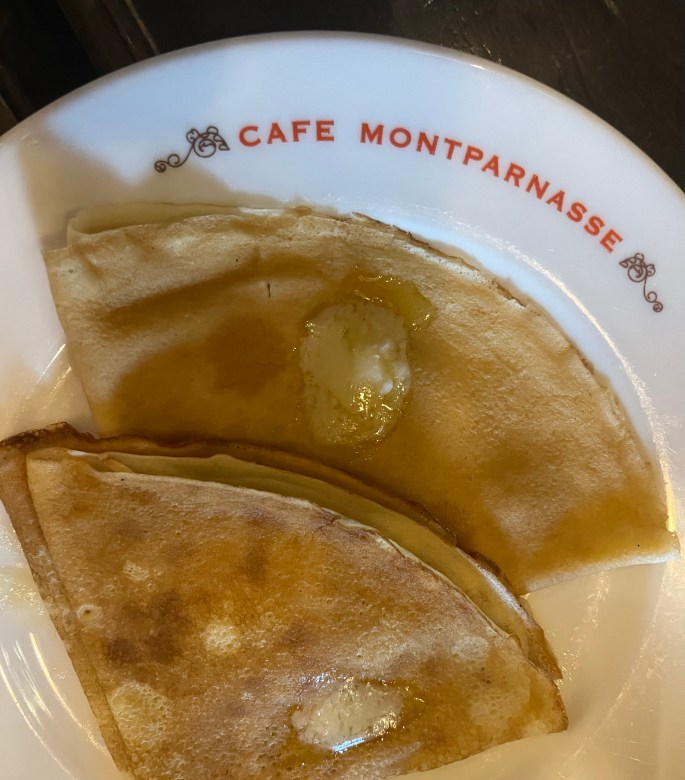
Aways remember to finish the meal with desserts – usually shared. 🙂
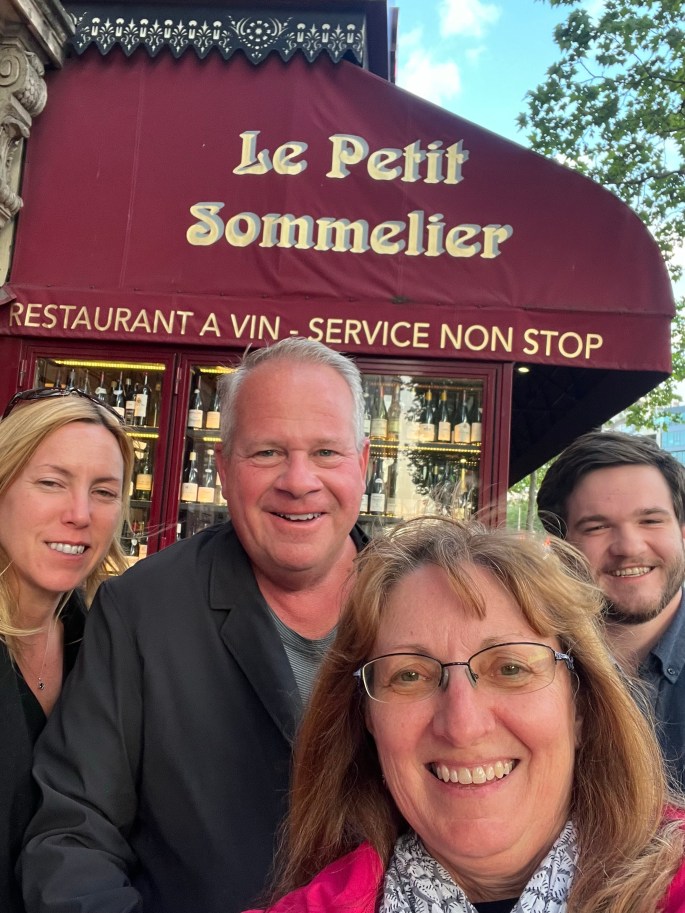
Le Petit Sommelier
Described as a place that is the alliance of a traditional Paris bistro and a restaurant that lives in the zeitgeist. Huh?
Zeitgeist = spirit of the time.
It is a family French bistro with a real sense of hospitality, fast service, table runners and white tablecloths. Their wine list displays 750 labels.
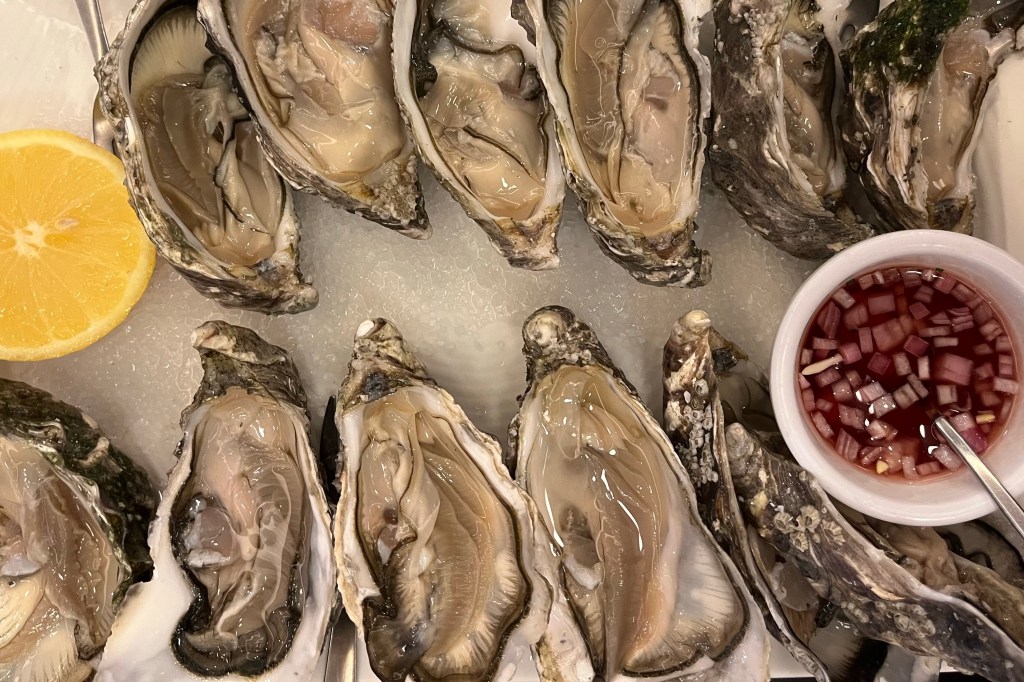
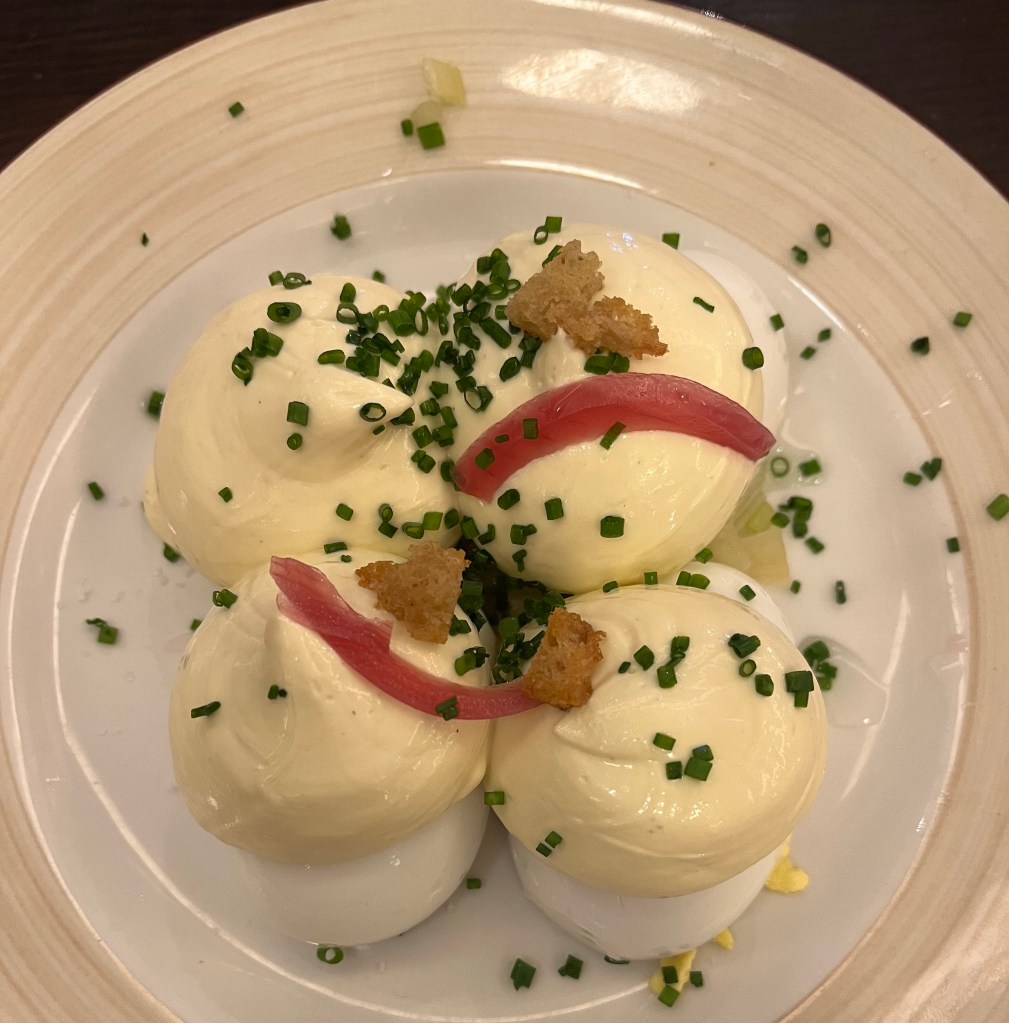
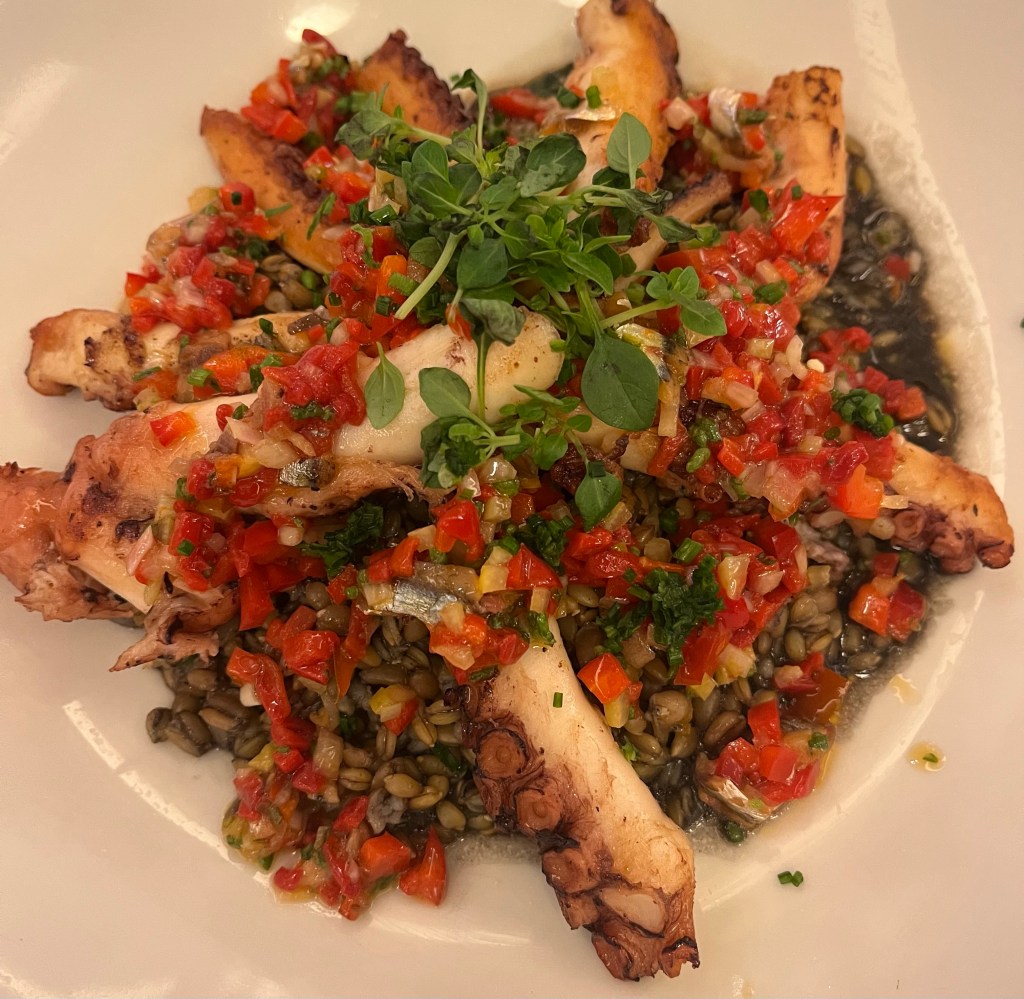
Lots of sharing plates in the beginning: No. 3 oysters, county pate’, eggs mayonnaise and grilled octopus a la plancha.
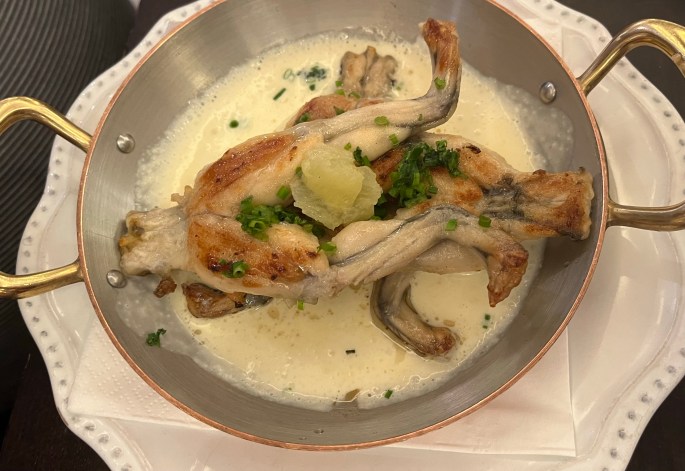
Oh yea, can’t forget the frog legs fricassea…….
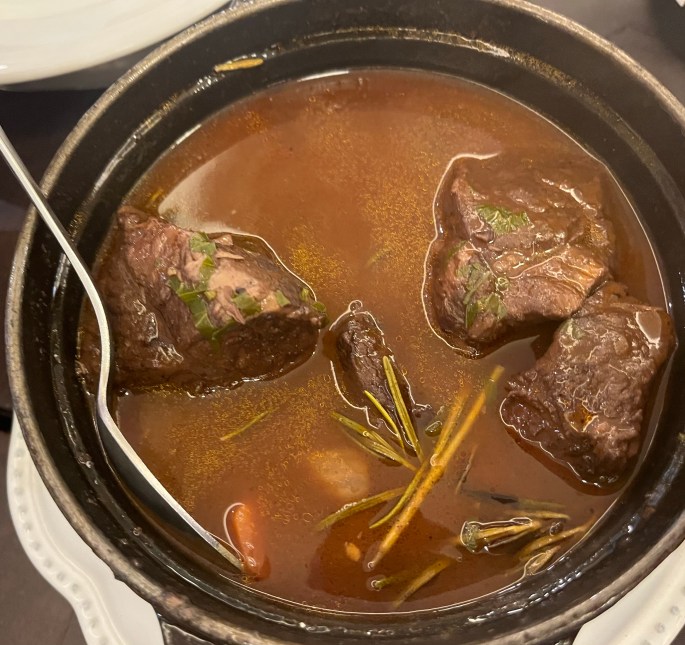
Their specialty was Boeuf Bourguignon which had a strong presence at our table. Marinated 24 hours in red wine, onion and bacon. It was delicious!
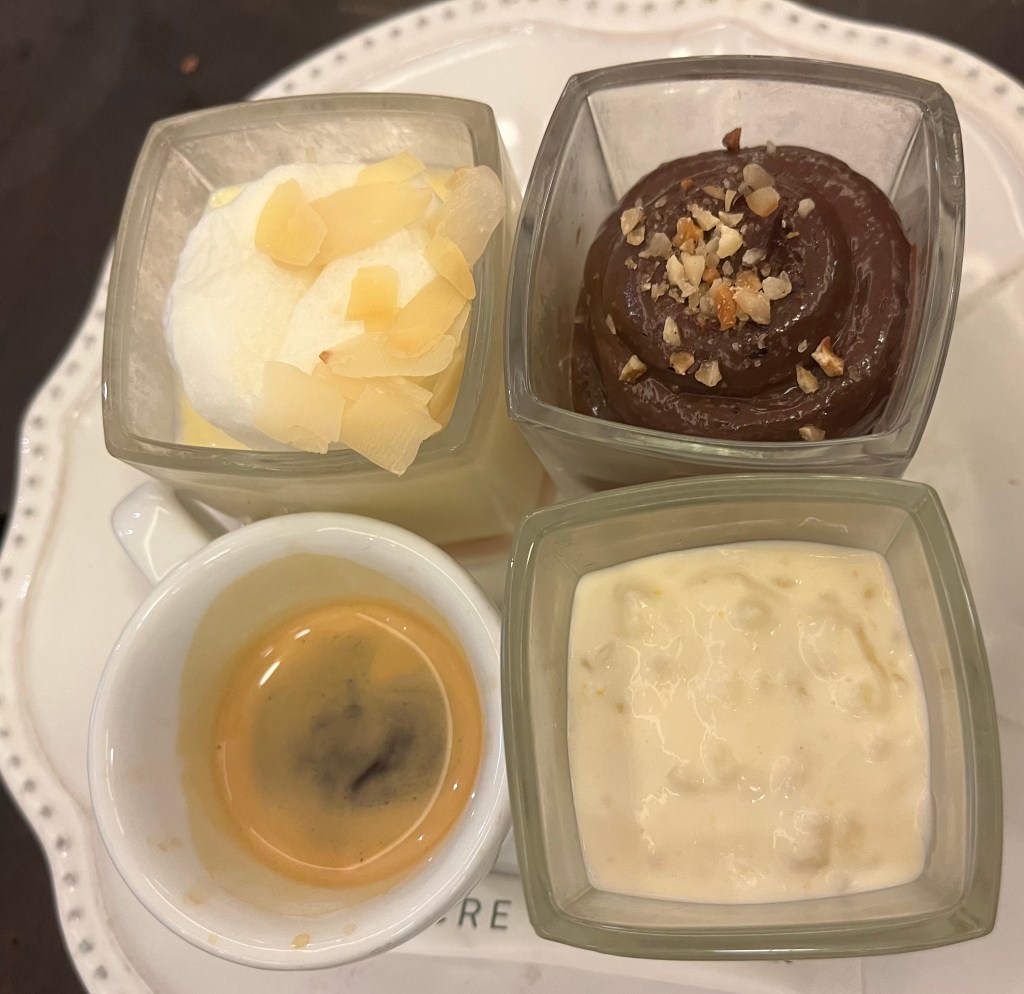
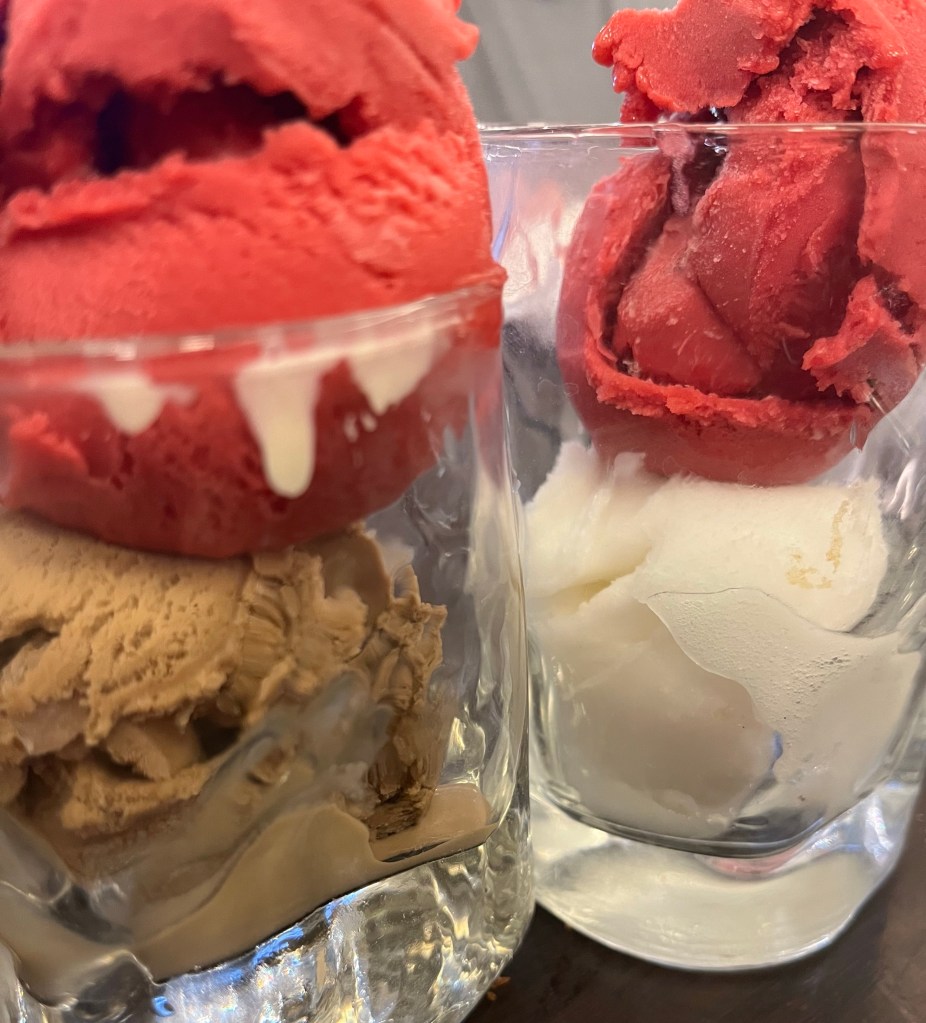
And yes……………..we had to finish the meal with desserts.
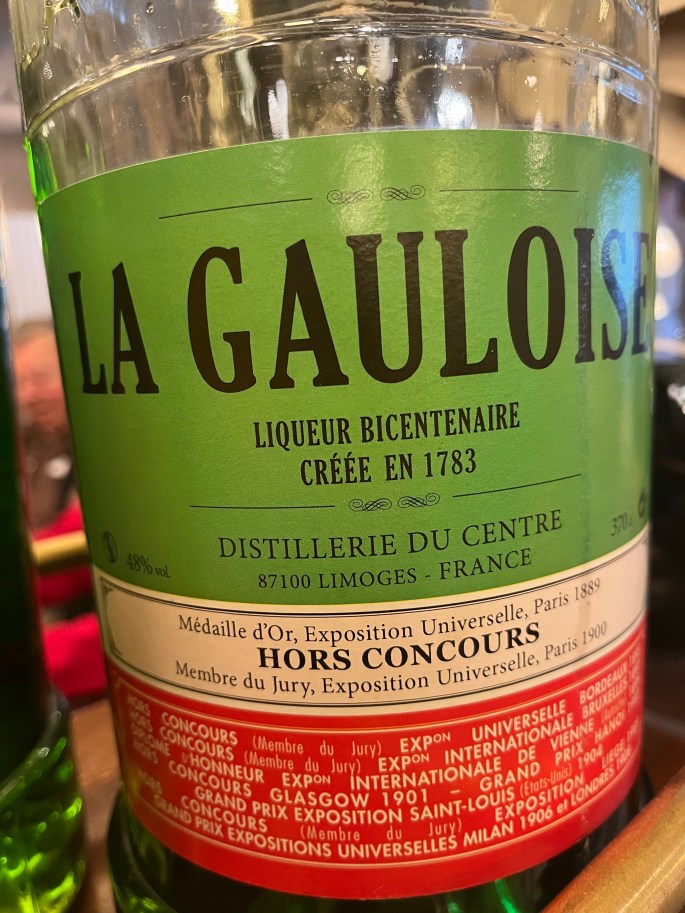
Except for Eric. He finished his meal with a digestive. The large bottles seemed to be part of the decor so Eric inquired. Nope, it was available. Not my way to end a meal – just saying.
Time to get my remaining posts completed! Okay, so it’s waaaay past time to get them posted. Work just keeps geings in the way. But I digress…………..
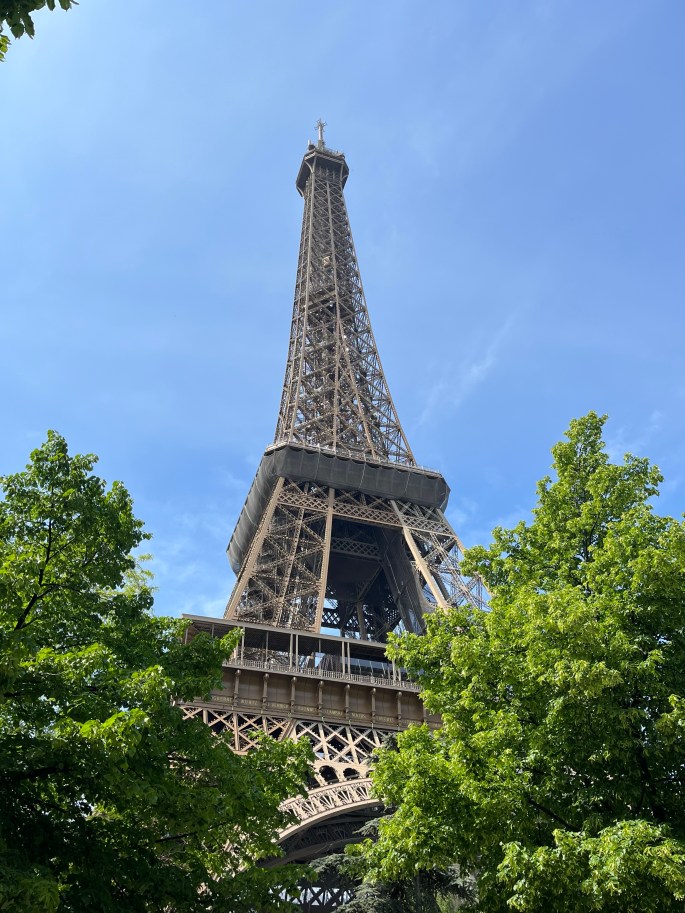
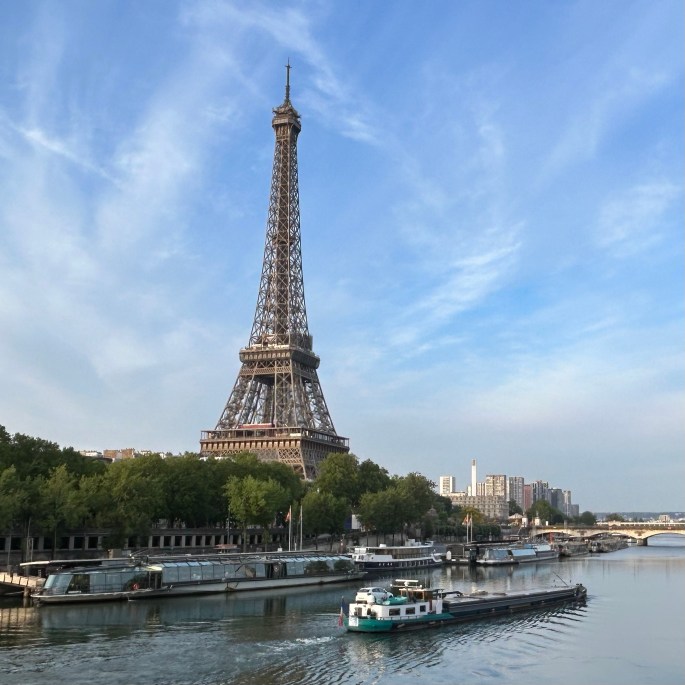
The Eiffel Tower
Built by Gustave Eiffel for the 1889 Exposition Universelle to celebrate the 100th anniversary of the French Revolution.
Two years, two months and five days and the construction was complete – considered a veritable technical and architectural achievement.
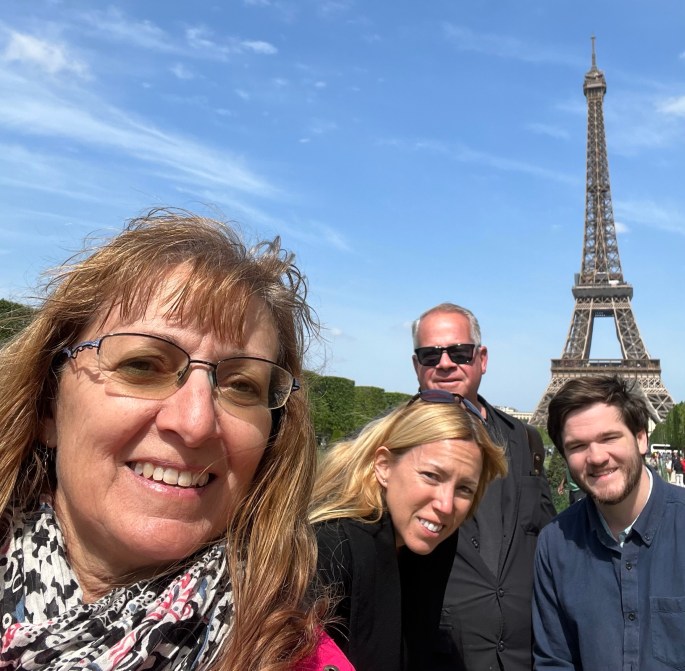
As France’s symbol and the showcase of Paris it welcomes almost 7million visitors a year, making it the most visited monument you have to pay for in the world. There were four less visitors to Paris that did not pay, but of course we walked near and around it for a few photos.
Only intended to last 20 years, Eiffel encouraged experiments an example being radio transmissions which was followed by telecommunications.
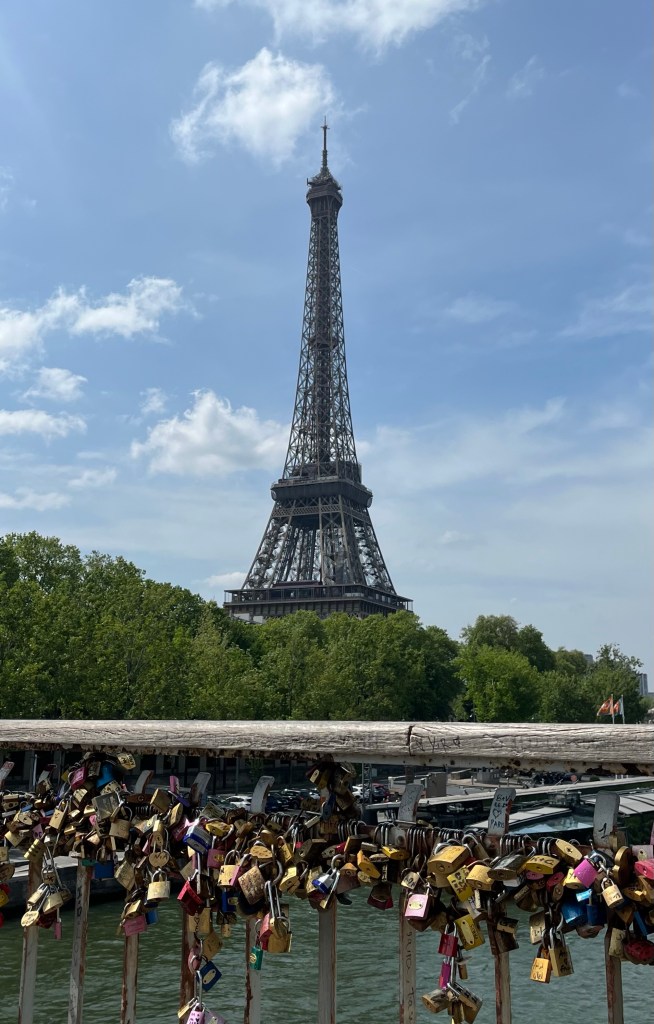
Yep, we found locks. No longer on the Pont des Art bridge, tourists have found other places and there were plenty of vendors looking to sell people locks. The tradition or ritual goes like this…………….couples inscribe their names or initials on the padlock, lock it on the bridge and throw the keys into the river. The ritual symbolizes love locked forever.
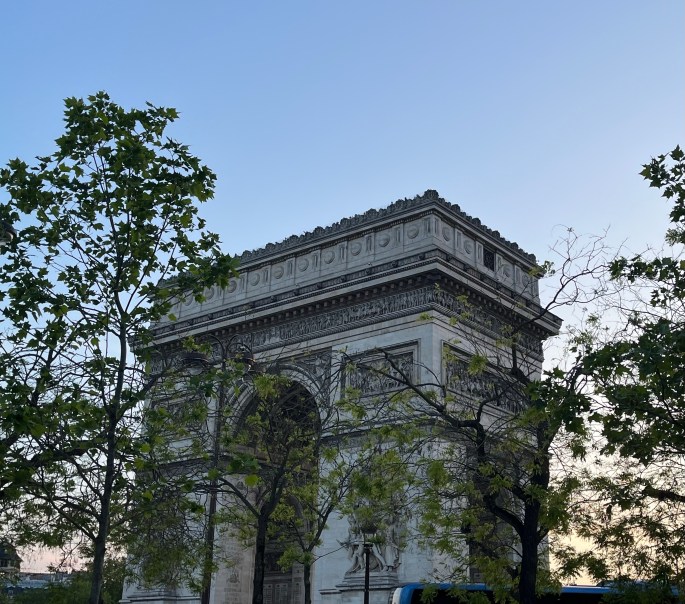
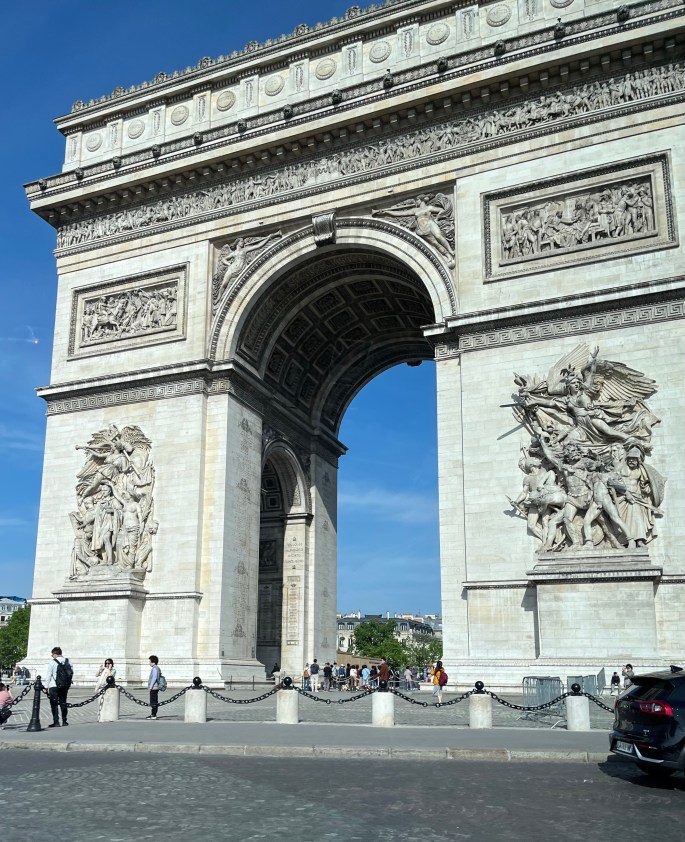
Arc de Triomphe
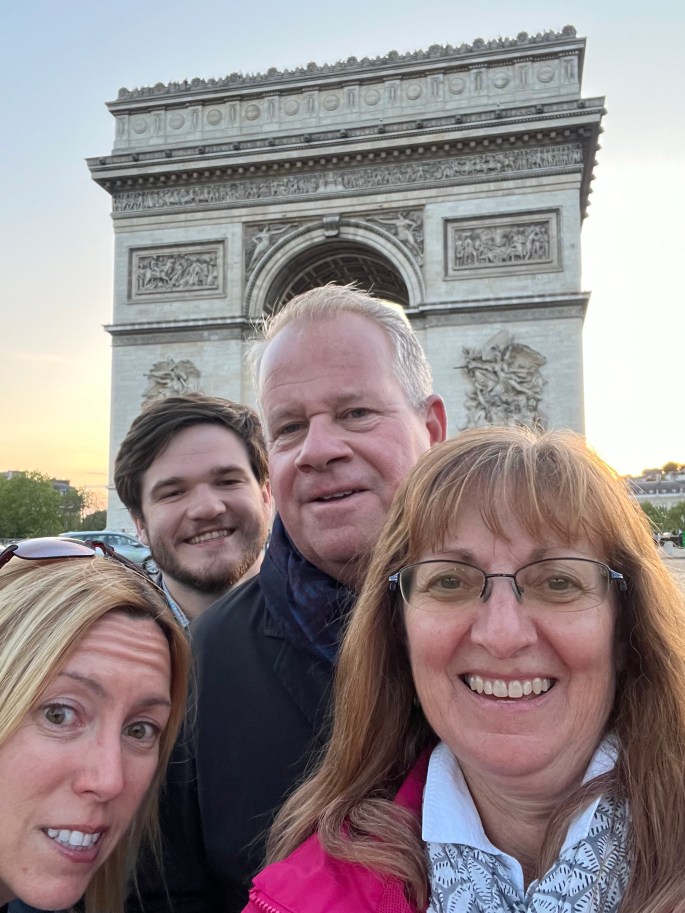
It was commissioned in 1806 after the victory at Austerlitz by Emperor Napoleon at the peak of his fortunes and favors Roman structures. Construction was halted and started several times before its completion 30 years later.
The Arc de Triomphe became the rallying point of the French troops after completing successful military campaigns. It was the largest arch until 1922 when another Arch de Triumph was built in North Korea.
The Arc de Triomphe sits at the center of a ‘star’ due to the meeting point of twelve straight streets.
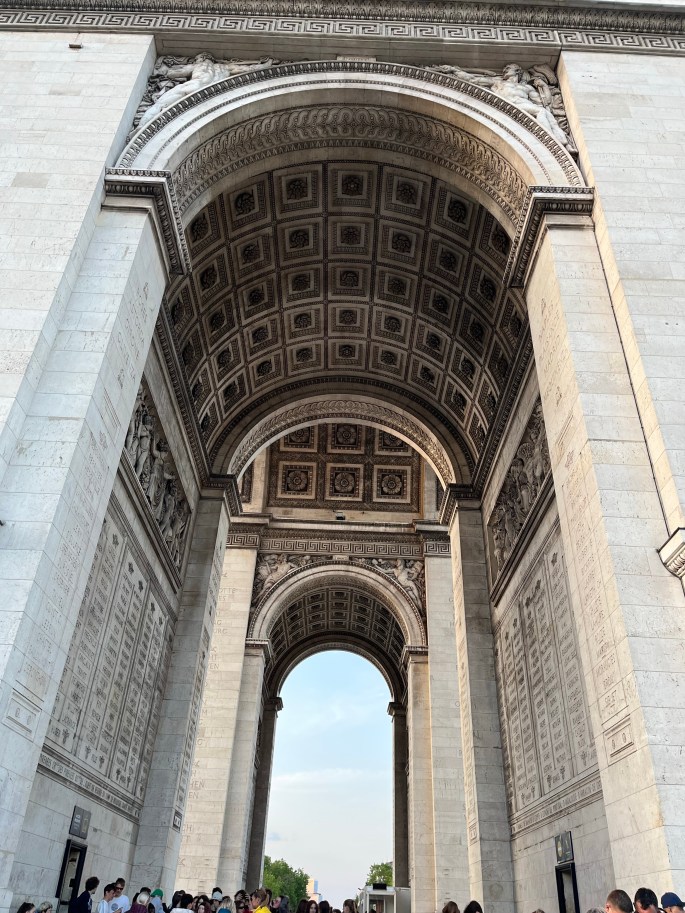
Each pillar represents important French battles and victories. 660 names are inscribed on the Arc de Trioumph.
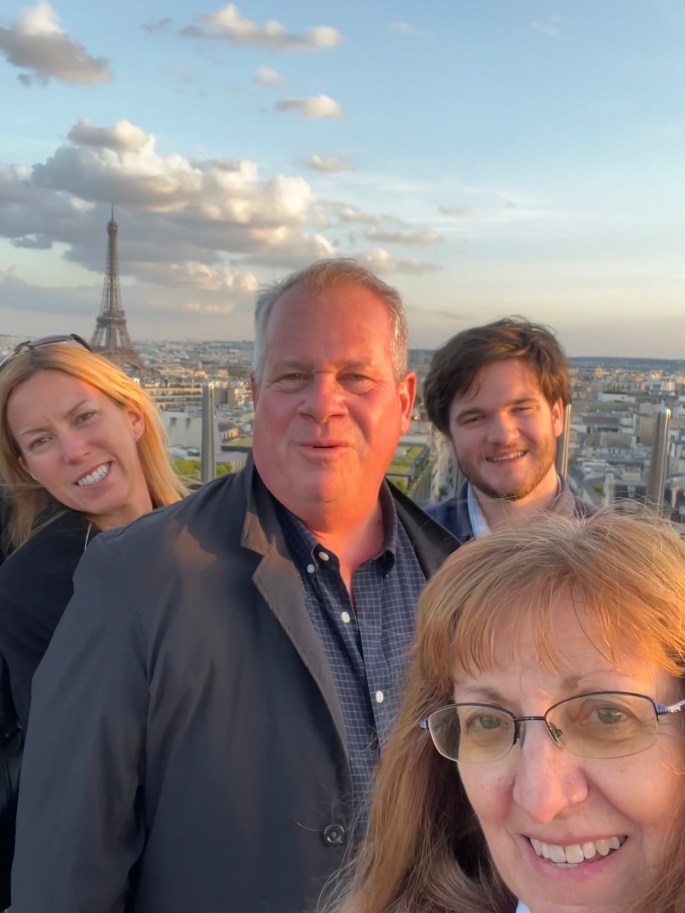
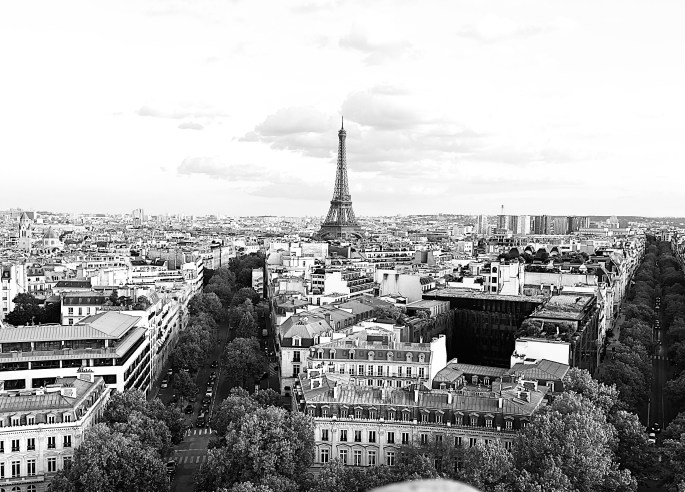
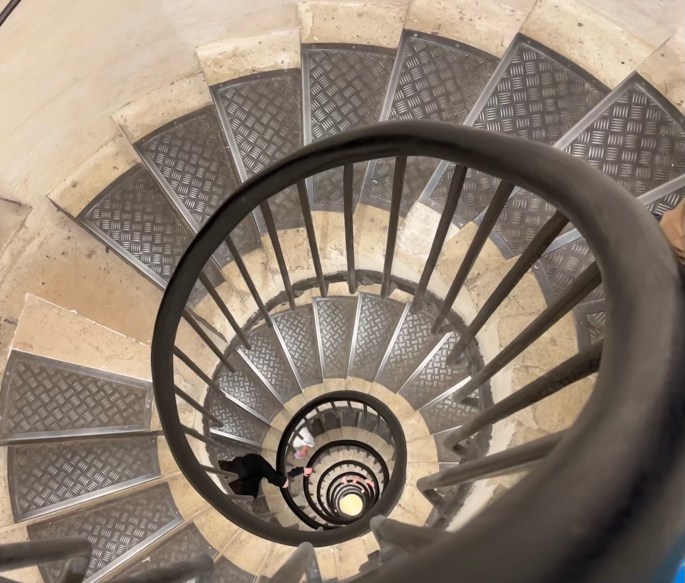
284 stairs leads you to the top of the Arc and some wonderful views of Paris and yes, another view of the Eiffel Tower.
My attempt at a more ‘artistic’ black & white photo.
The opposite view gives you a view of another monument…….. Grande Arch de la Defense, designed in 1982 and completed in 1989. A much more modern square arch, built as a monument to humanity and humanitarian ideas.
Going up also means you must go down, another 284 steps.
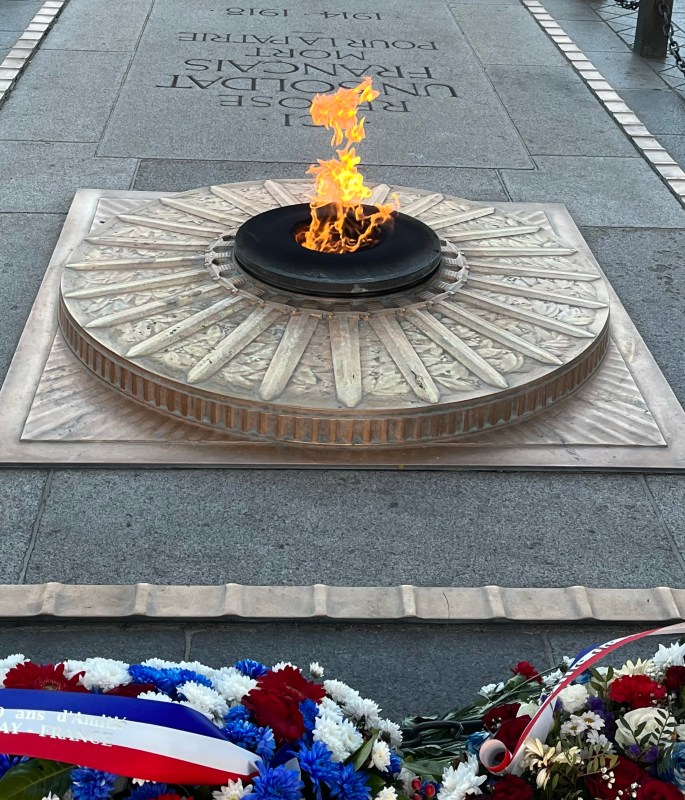
At the bottom lies the tomb of the Unknown Soldier from WWI interred on Armistice Day in 1920. An internal flame burns in front of the tomb to symbolize France’s undying appreciation for him and the French troops that lost their lives. The flame is rekindled daily at 6:30pm.
One last photo before the next Paris icon.
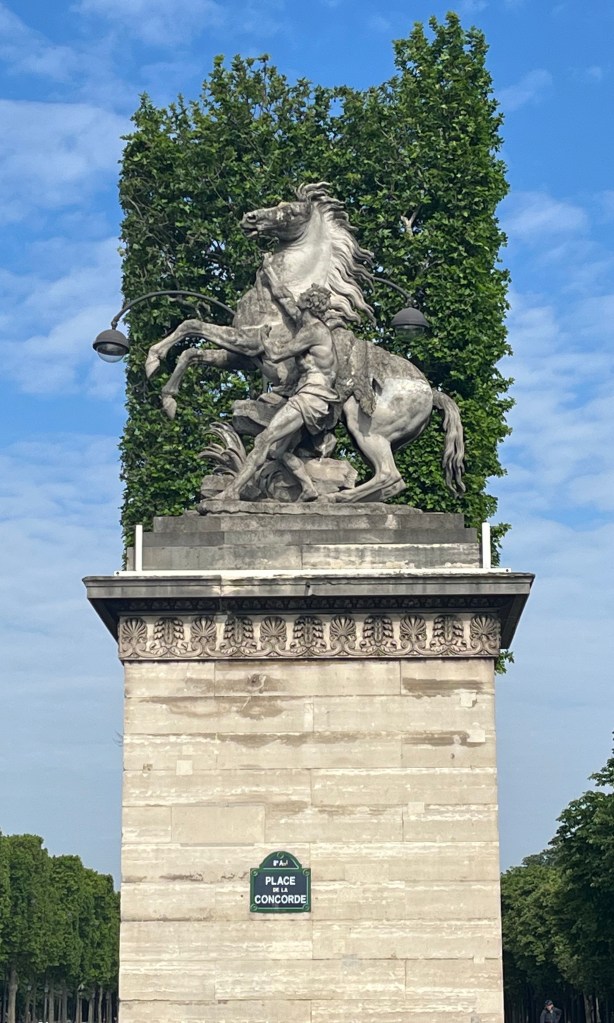
Place de la Concorde
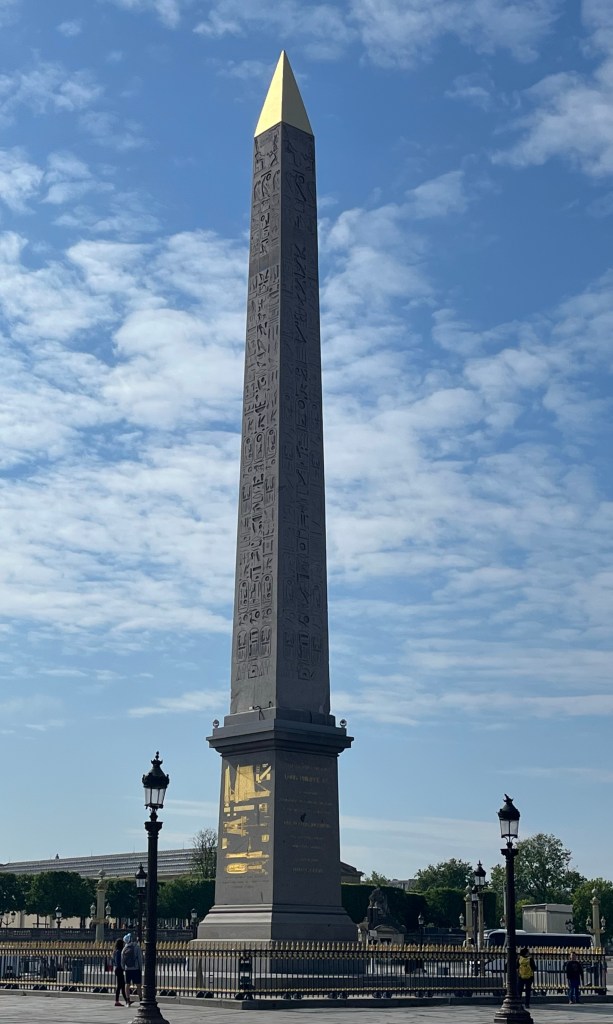
It is one of the major public squares Paris and the largest in the French capital. It was the site of many notable executions. At the center is the Luxur Obelisk, a gift from the Egyptian government in the 19th century.
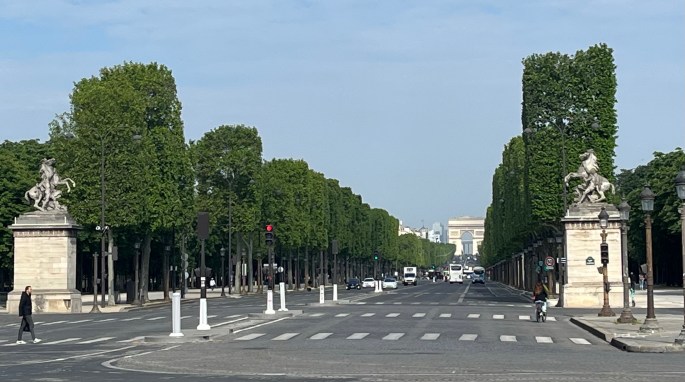
Turn around 180 degrees and you can see another view of the Arc de Triomphe.
Turn around 180 degrees again and now you’re at the Tuileries Gardin gate.
Jardin des Tuileries
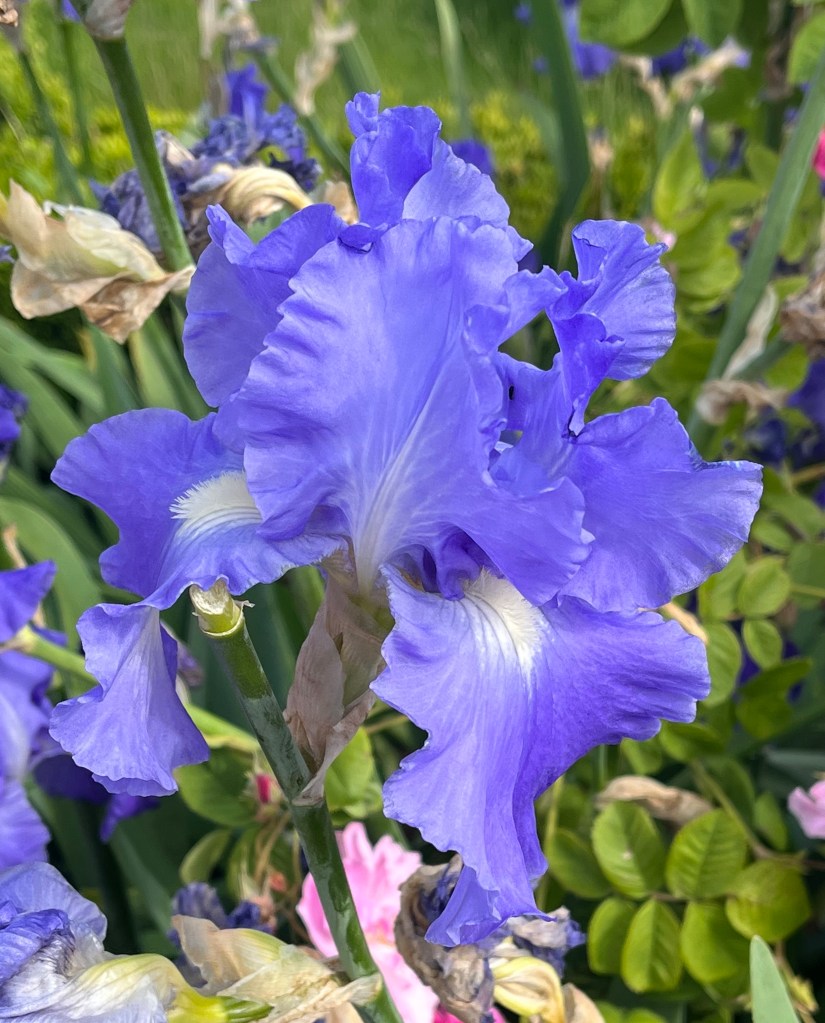
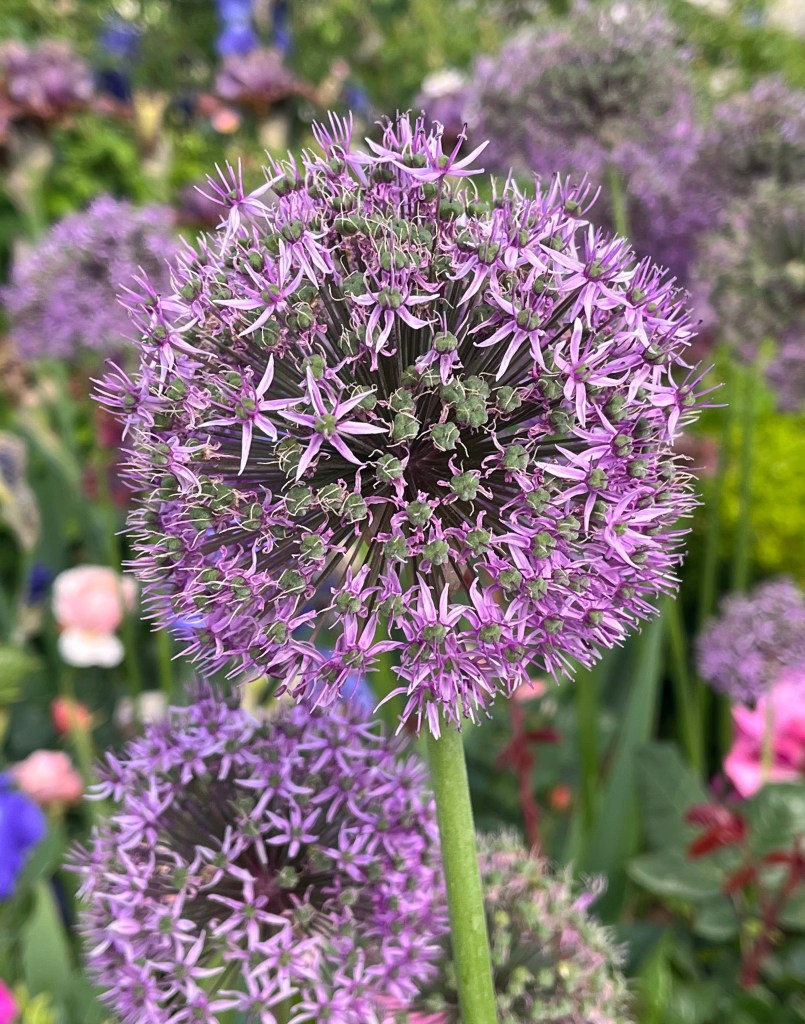
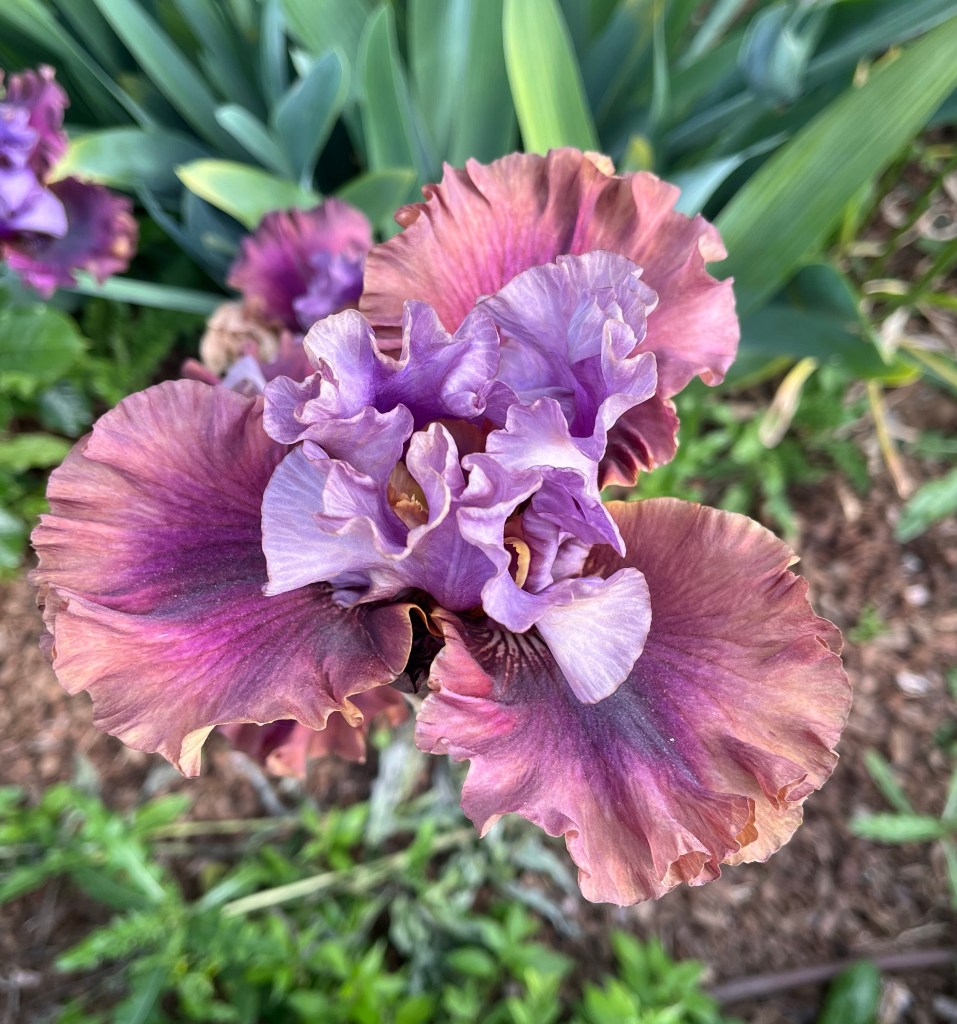
Opened to the public in 1667 it became a public park after the French Revolution. It has been a place where Parisians celebrate, meet, stroll and relax. The gardens were blooming with iris (and other flowers) during our visit.
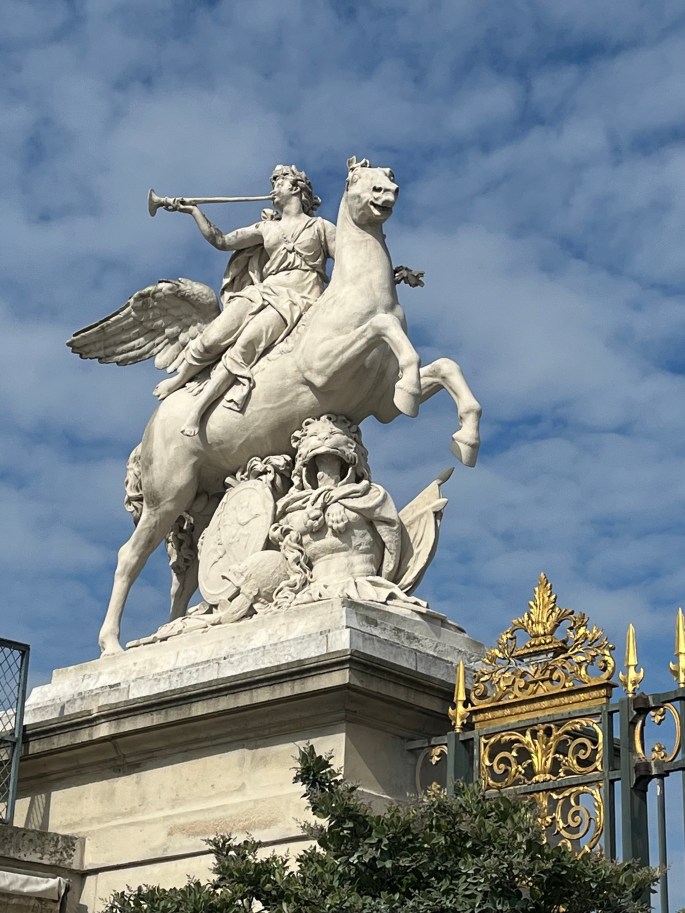
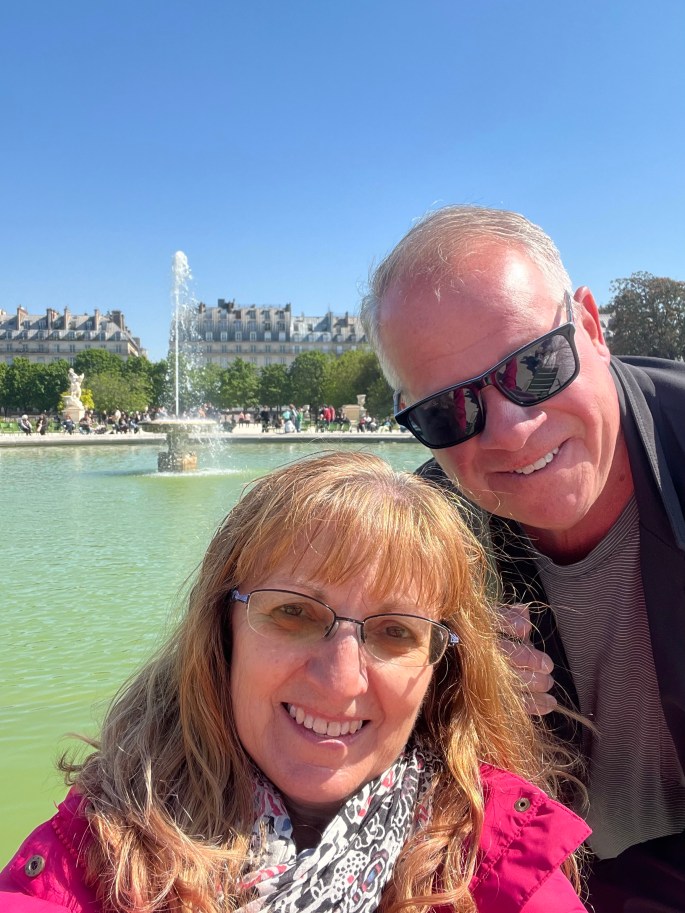
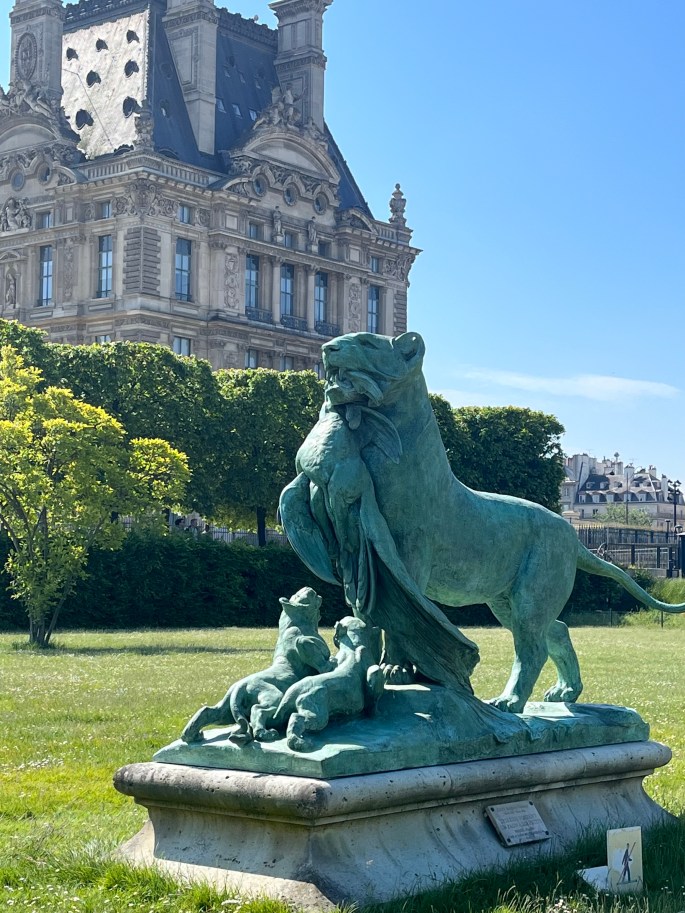
Water basins and statues add to the charm of the gardens.
Adjacent to Tuileries Garden is the Louvre.
The Louvre
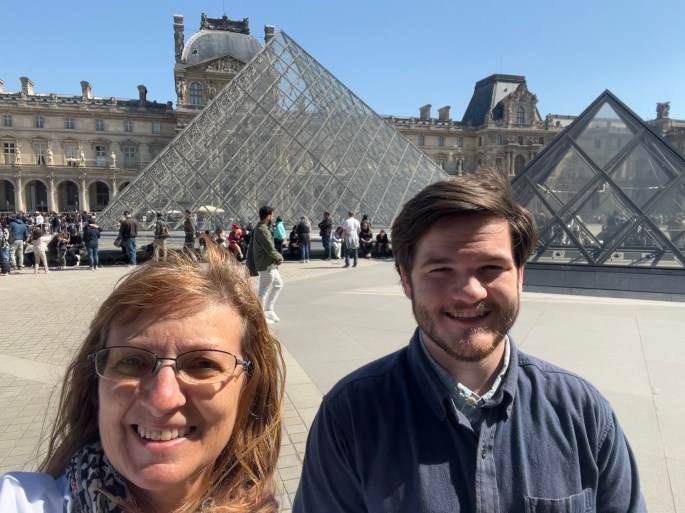
Okay, let’s be honest……………………….this is the closest we got – a photo of the pyramid.
A few quick shots before continuing on our Paris adventures.
Maybe, just maybe some day we will visit the museum.
There’s a few more posts before we leave the European continent that I still need to write. I’ll leave you with a shot that Adrienne captured during one of her early morning runs.
Twelves miles west of Paris, lies one of the most popular tourist attractions in the world with 15M+ visitors annually. In 1623, Louis XIII, King of France, built a hunting lodge on a hill in a favorite hunting ground. His son, Louis XIV transformed and extended the buildings when he installed the Court and Government in 1682. A succession of Kings continued to embellish the Palace up until the French Revolution. Today, the Palace contains over 2300+ rooms. There will be a few more historical nuggets further along in this post, but let’s get there!
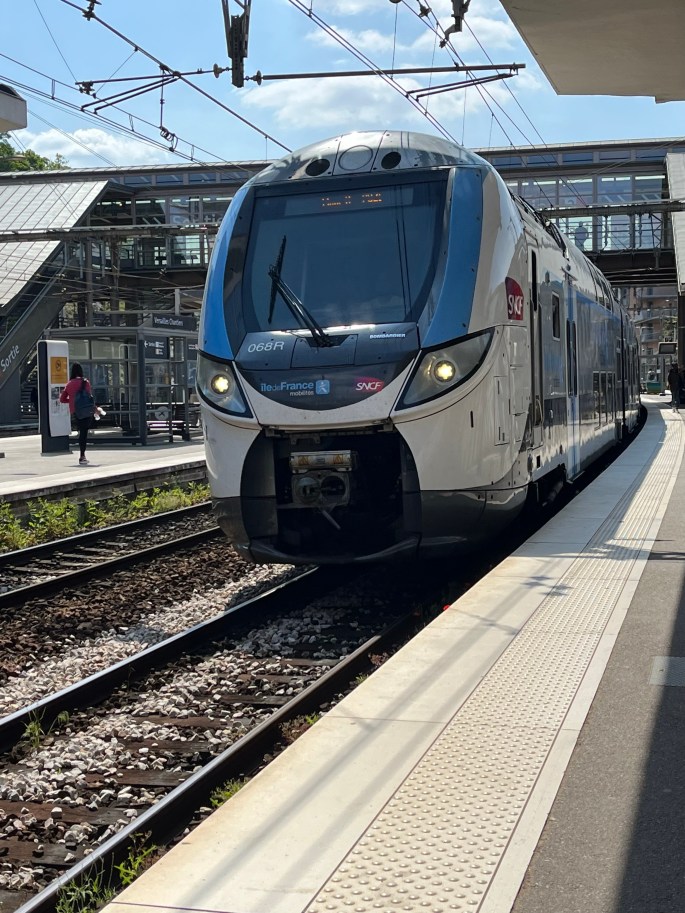
It’s not just a stop on the Metro, but requires getting a separate train ticket to the city of Versailles.
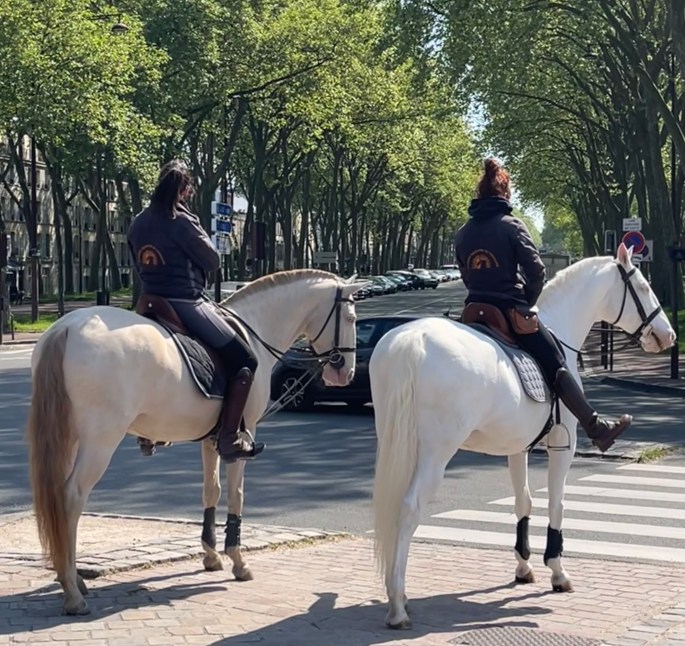
Before going inside the Versailles gates, we had one business to attend to – breakfast! Just past the Palace, we found a small bistro that fit our needs, but…………….not before walking past this. Ironically, my photo always catches the back part of an animal.
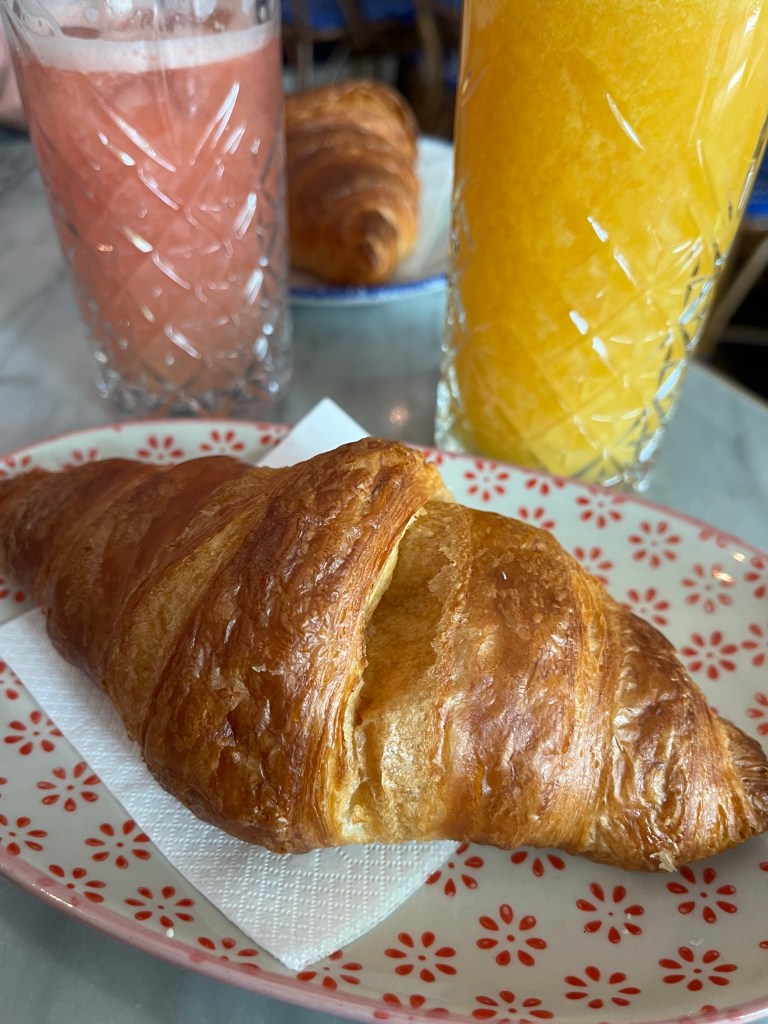
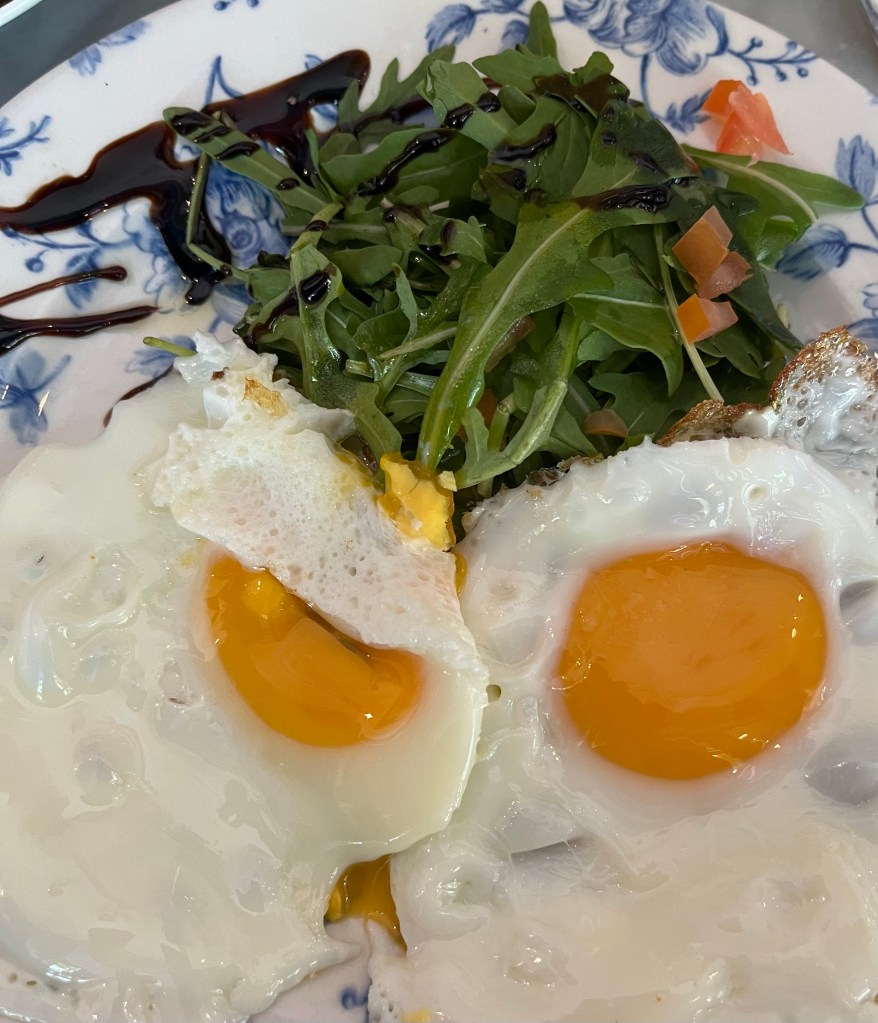
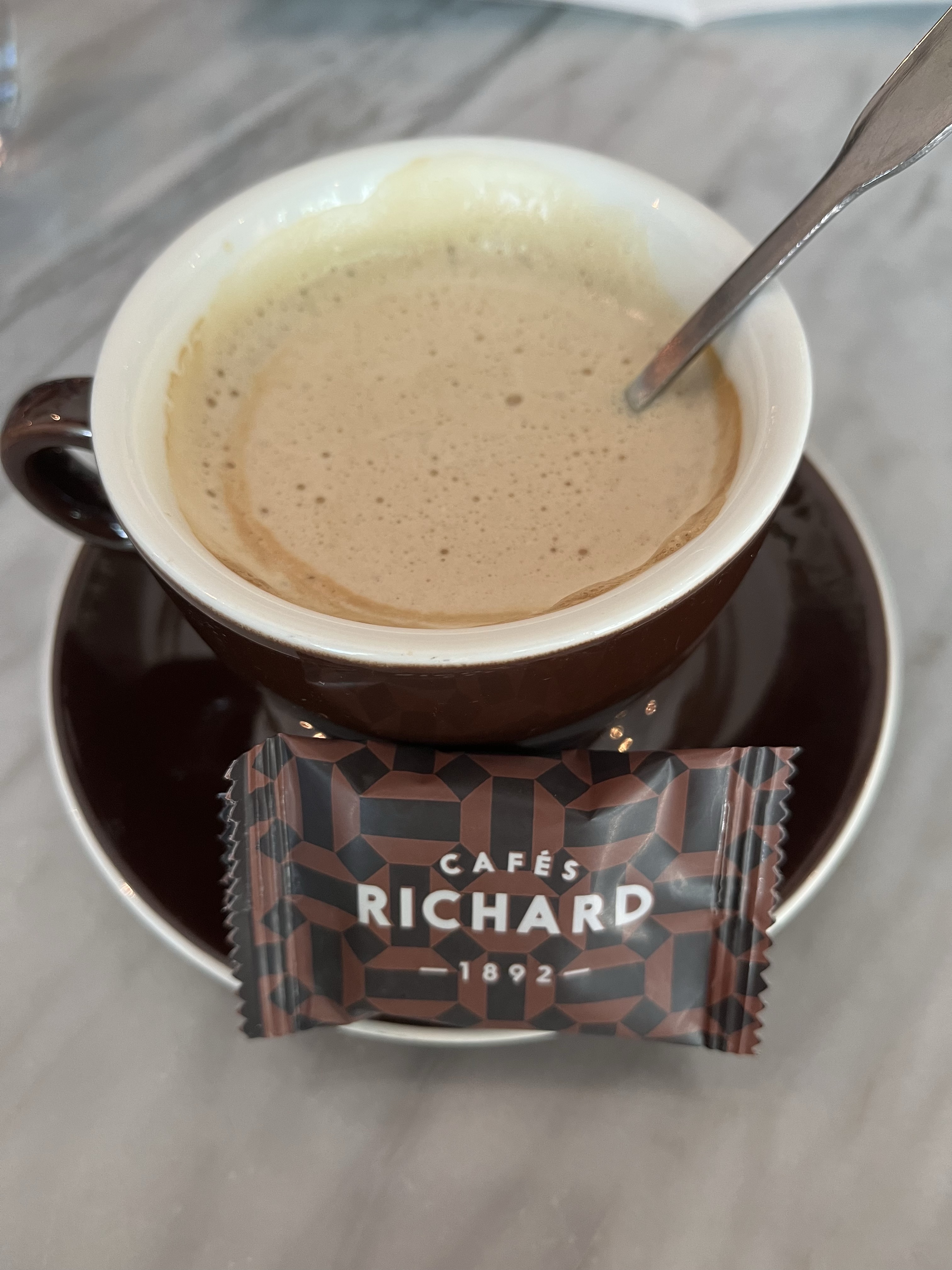
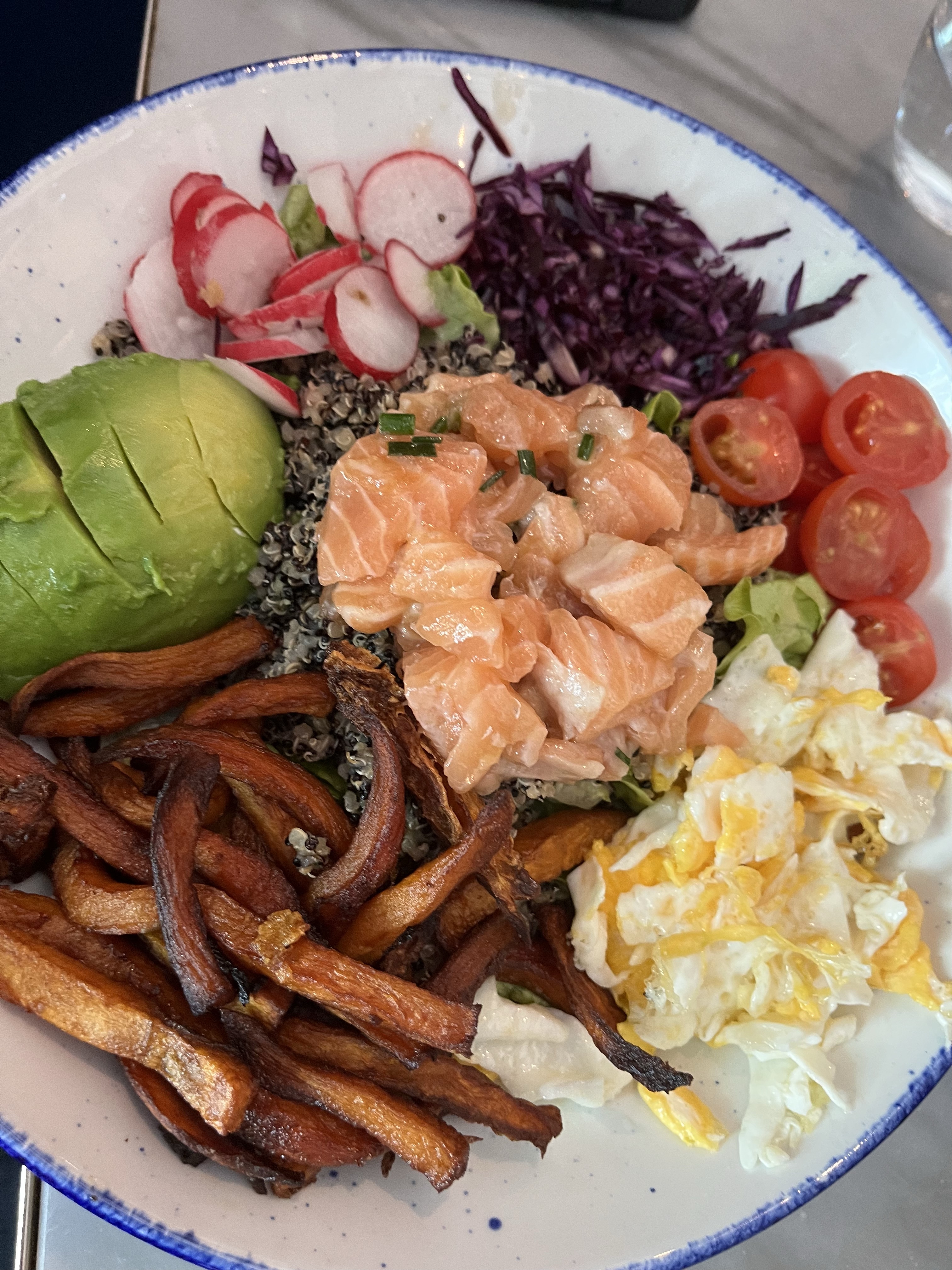
Regardless, we found our spot and grabbed a variety of breakfast options between all of us. Adrienne loved her salmon salad.
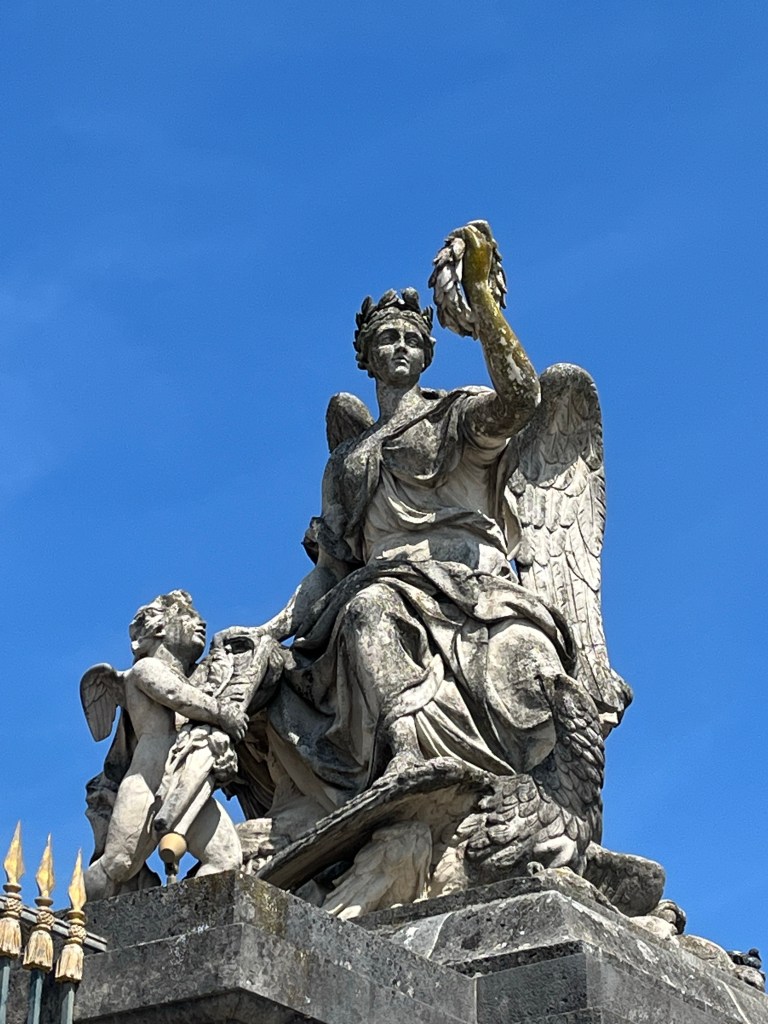
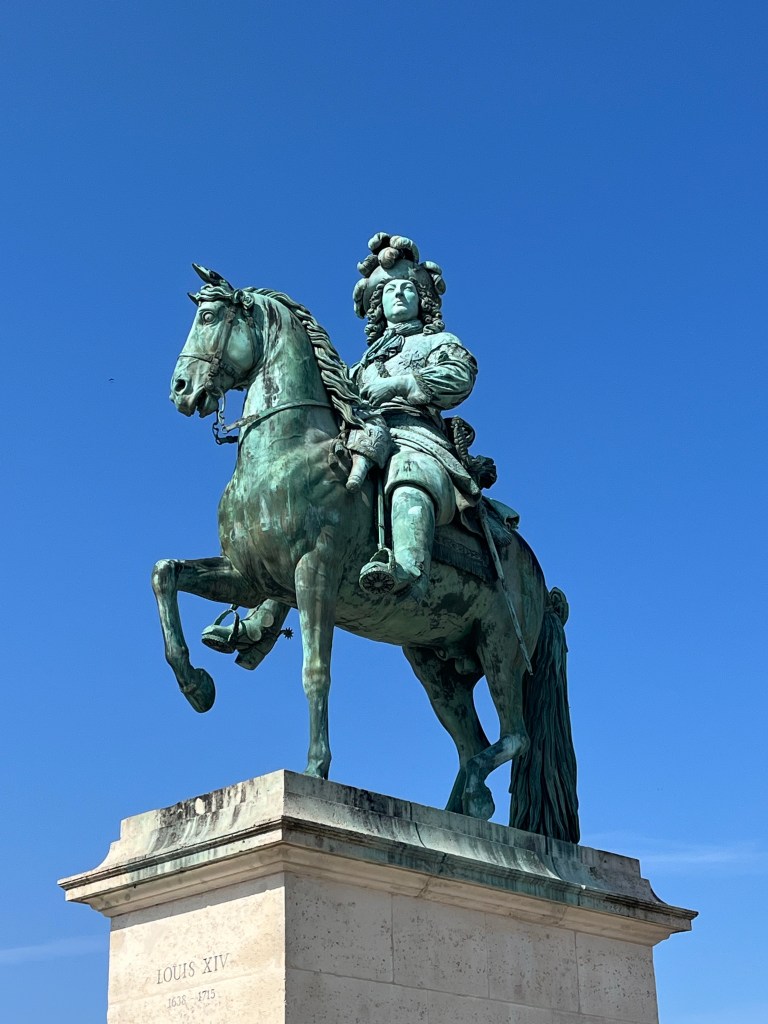
Two statues are at the gates of Versailles, one of which is Louis XIV (on the right).
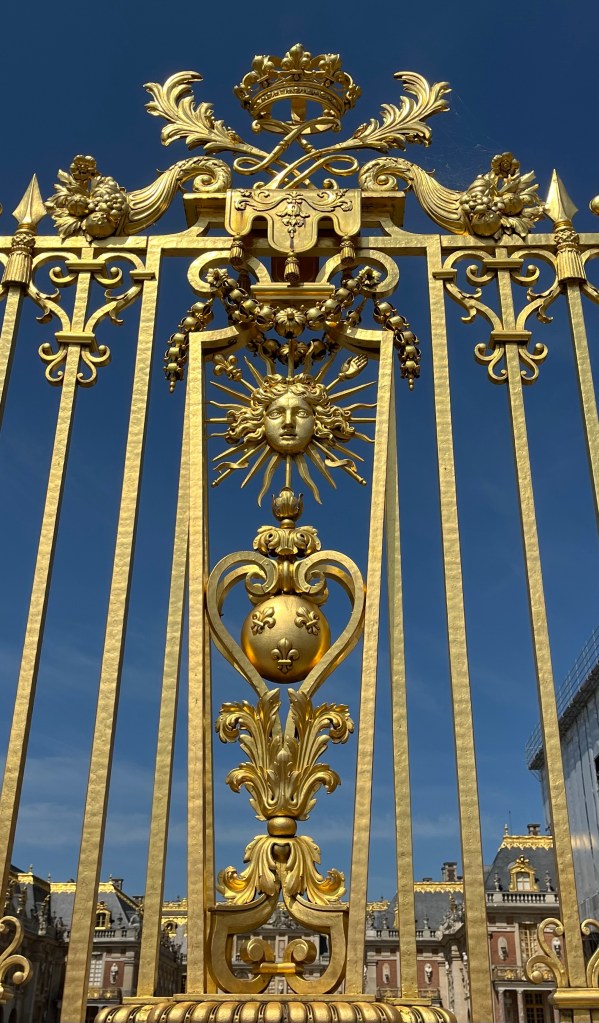
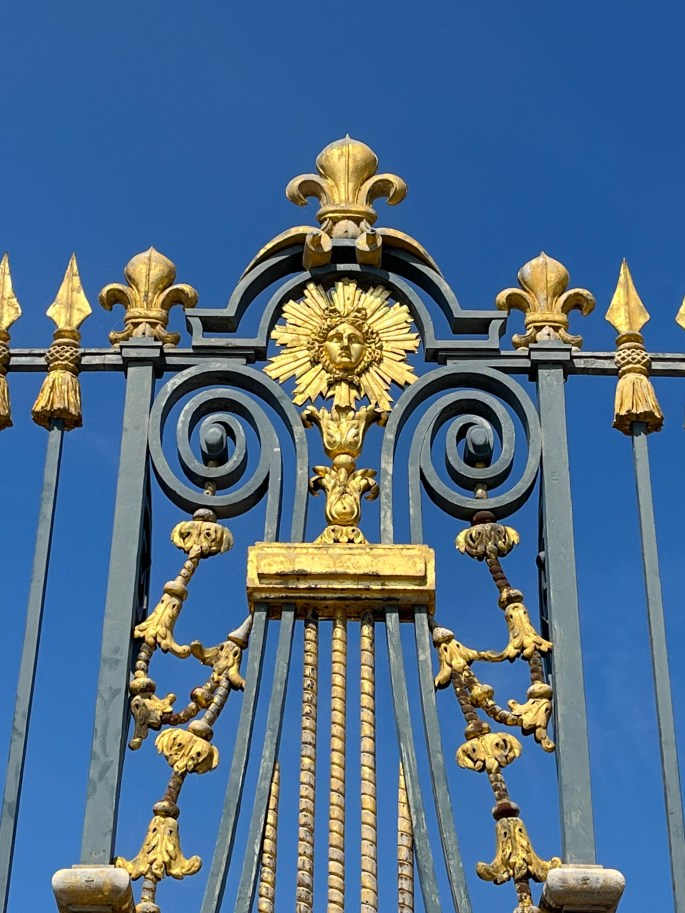
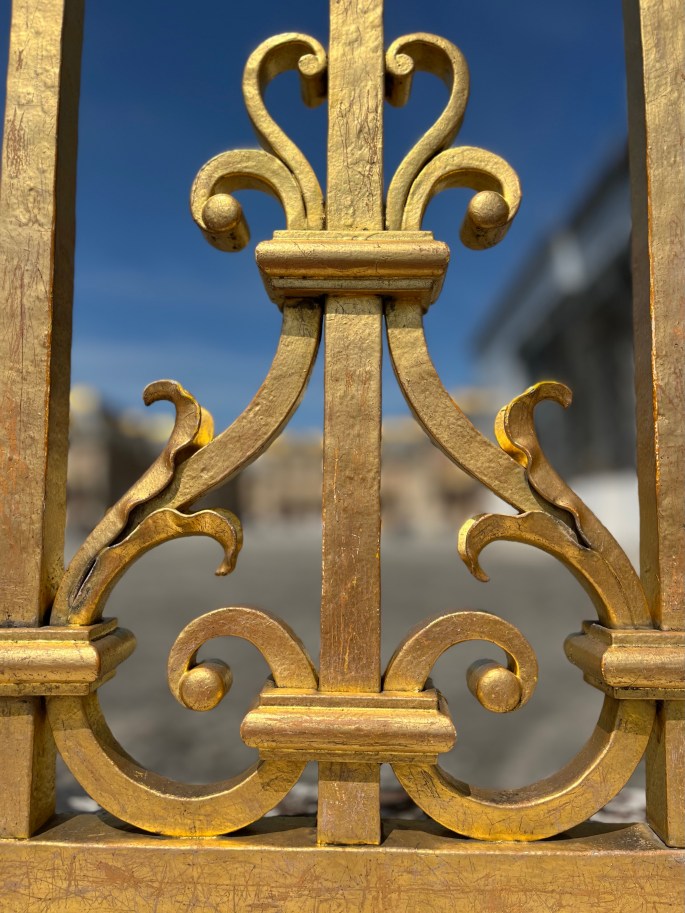
The gates are golden in honor of Louis XIV, the Sun King.
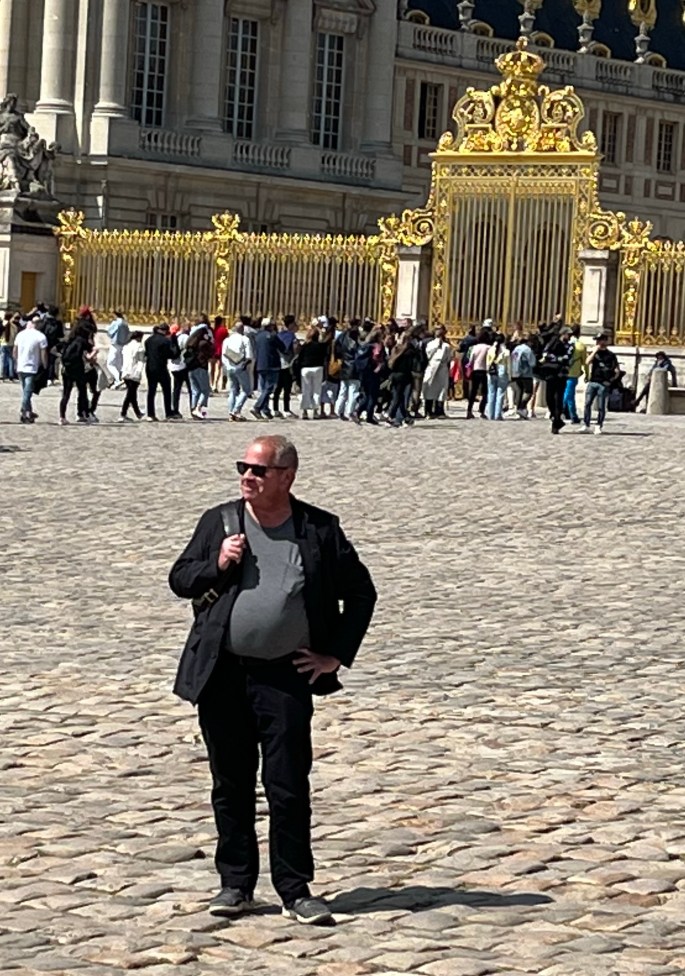
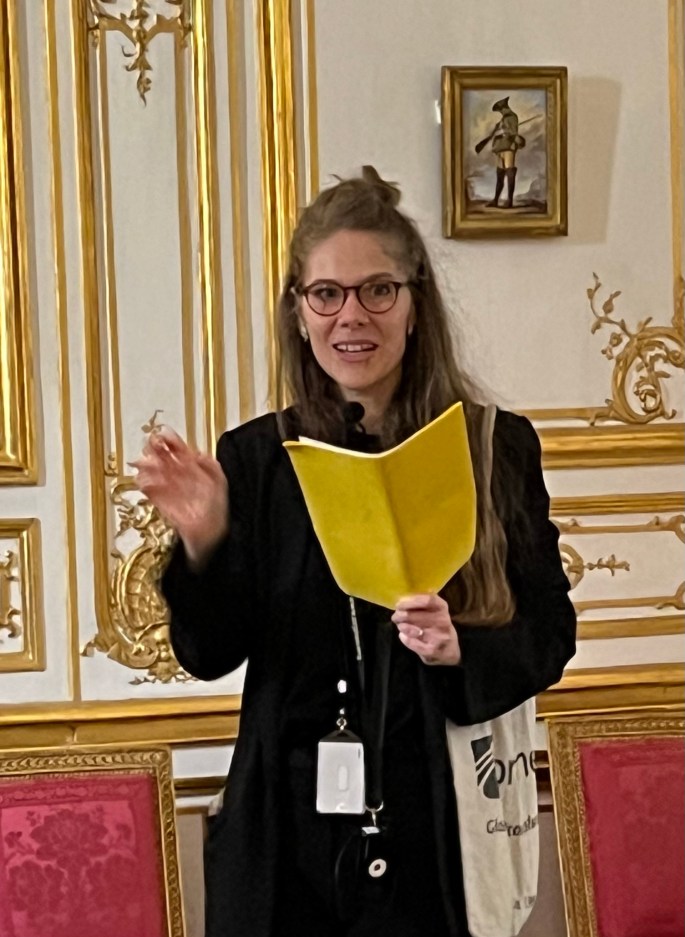
Connor and I were able to grab a shot while the other two were wandering around.
We eventually all connected up in time for our tour.
Tour? Did I mention we booked a tour? Why, yes. A number of years ago was when we first found out about an English-speaking tour – which allowed you to skip the long line – we jumped at the chance. For an additional 10 euro, after you purchased an entrance ticket, you skipped the (loooooong) entrance line, went through another security checkpoint (BTW – they stopped school groups and let us go first) AND got access to parts of Versailles that was not available, except with a tour guide. Sign us up! Which we did prior to arriving. 🙂
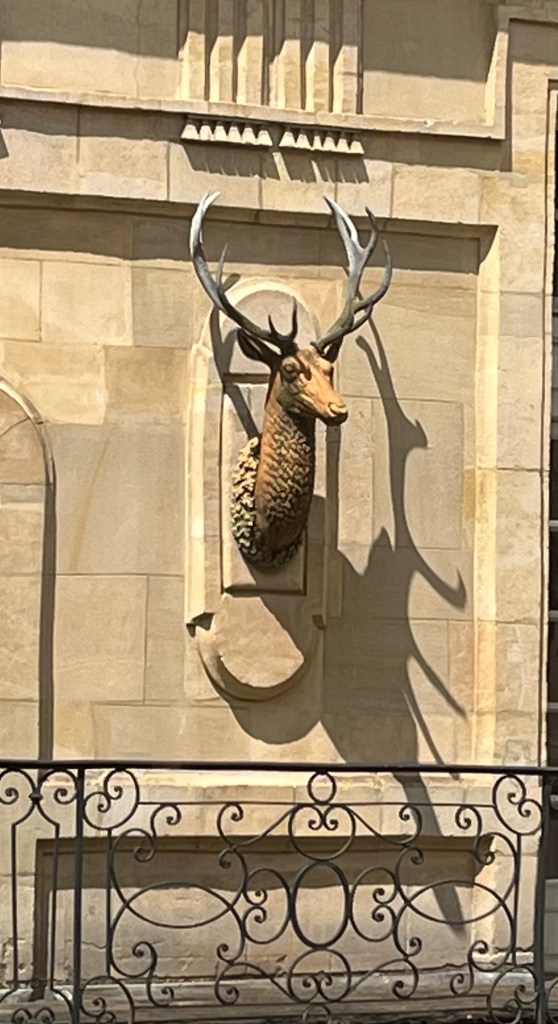
One of the first ‘special’ things we saw was this last remnant of this being a hunting lodge. It’s located within an inner courtyard.
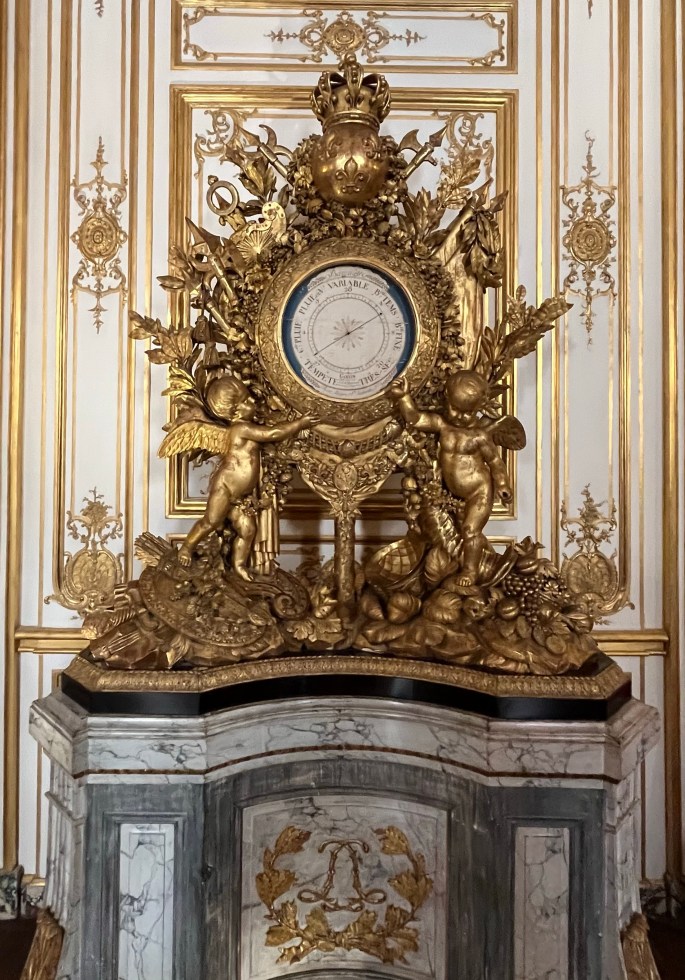
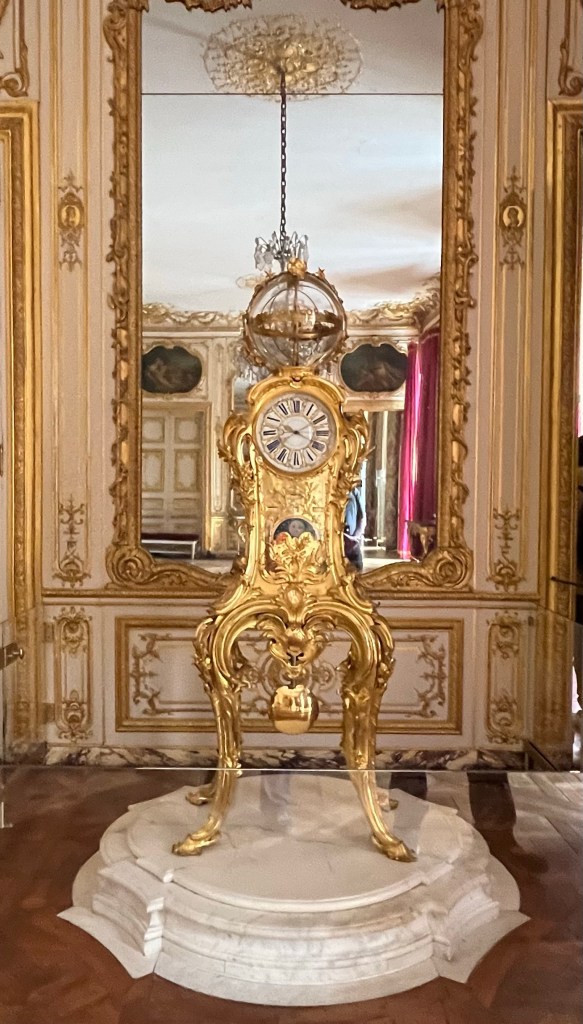
The elegance, the details and the opulence of everything we saw was almost beyond comprehension.
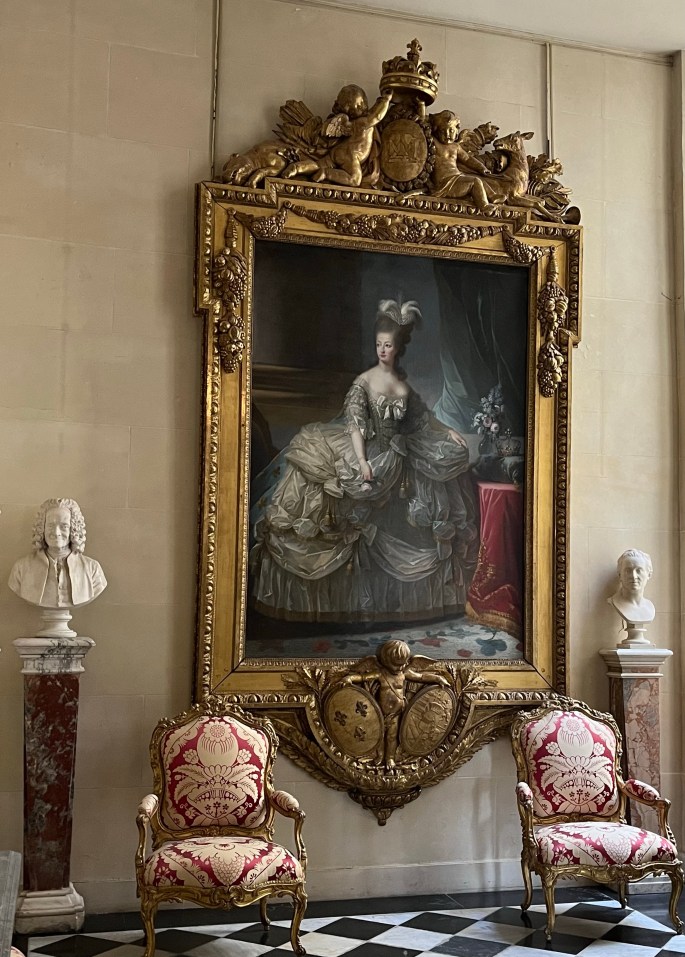
And then you come across a multitude of paintings.
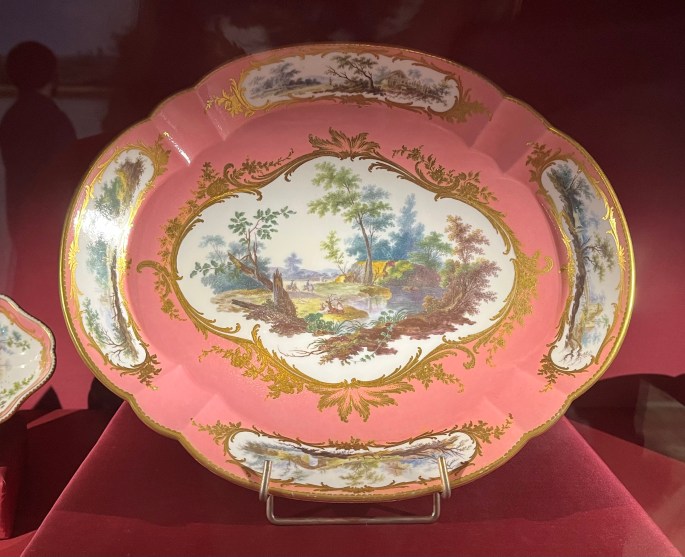
One of the rooms held porcelain pieces from the various centuries and various Kings.
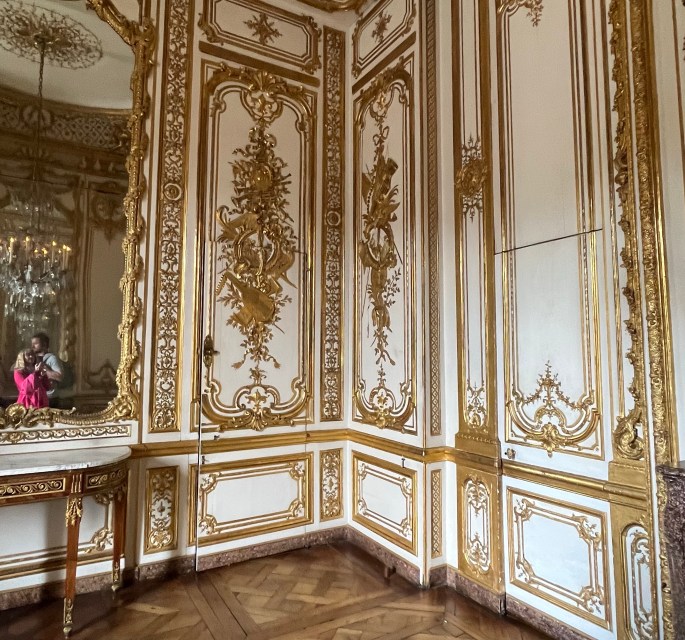
While I’ve seen this a number of other places, always love the doors that are hidden and part of the wall. We had come through the doorway on the left.
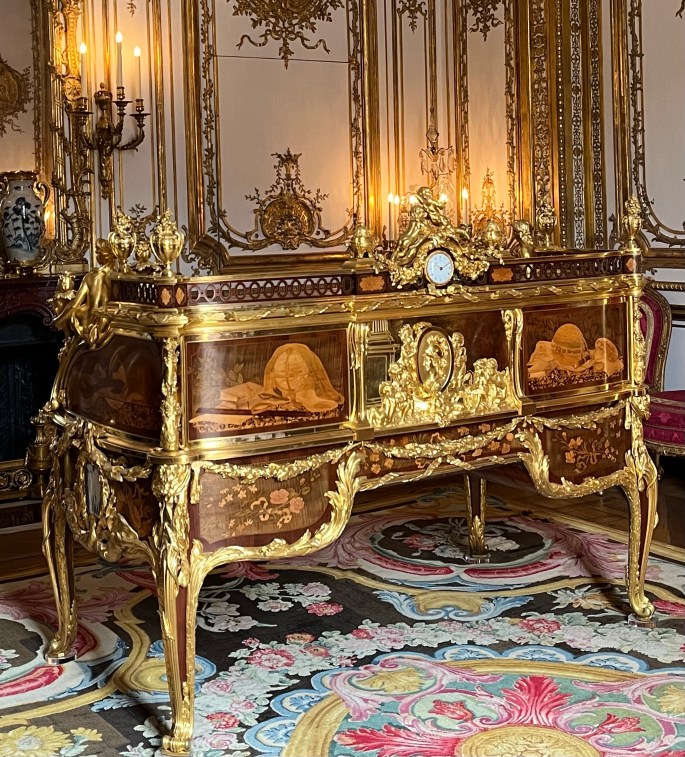
A lot of the furniture and furnishings were auctioned off, destroyed, carted away and no doubt sitting in private homes after the French Revolution. The foundation have actively sought out original furnishings, spending a great deal of euros to bring it back. Below was a desk used by Louis XIV.
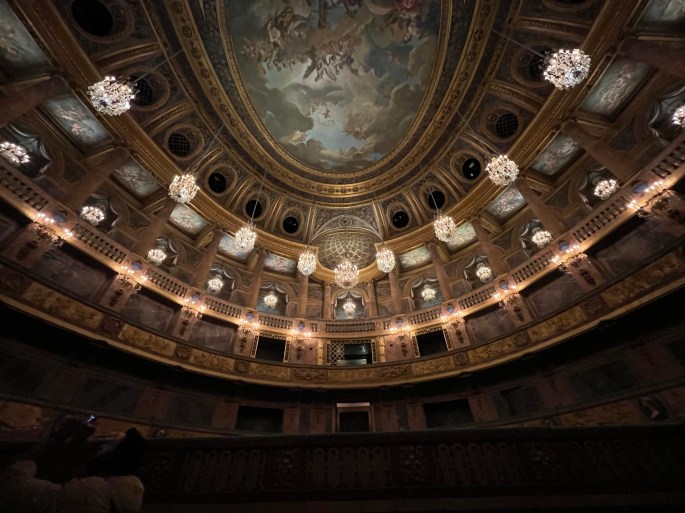
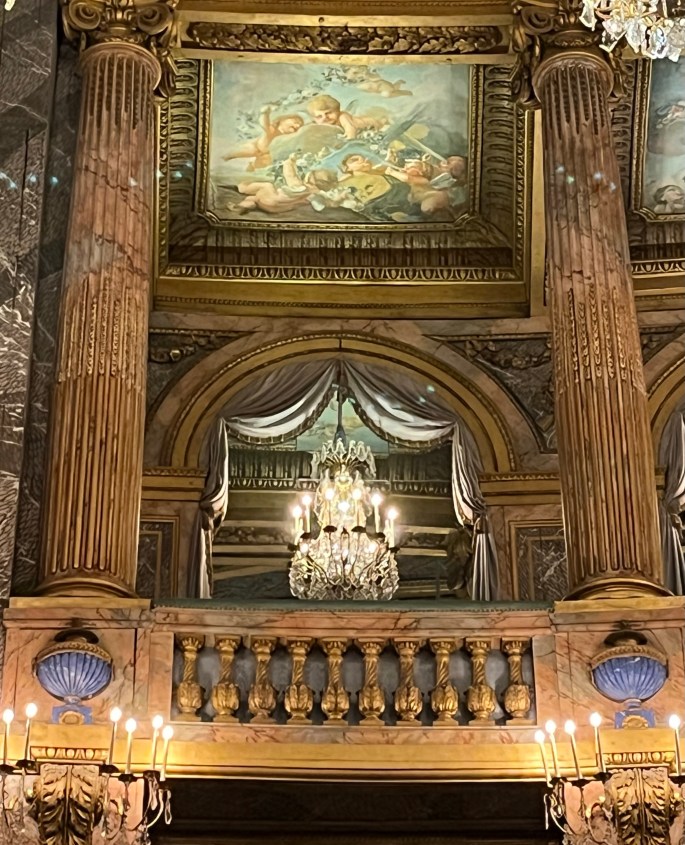
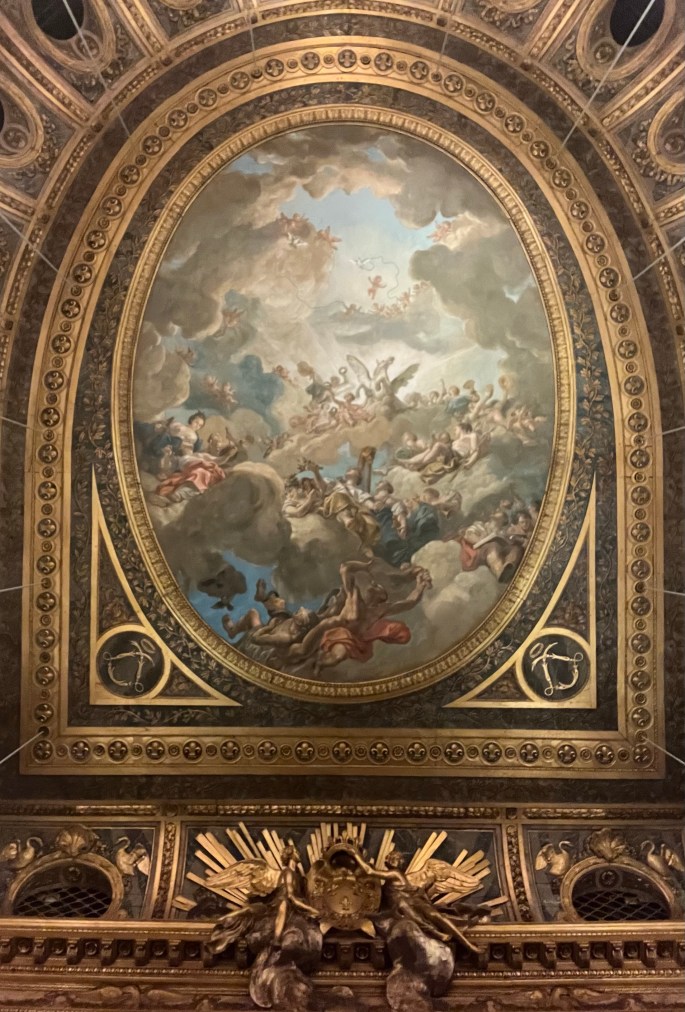
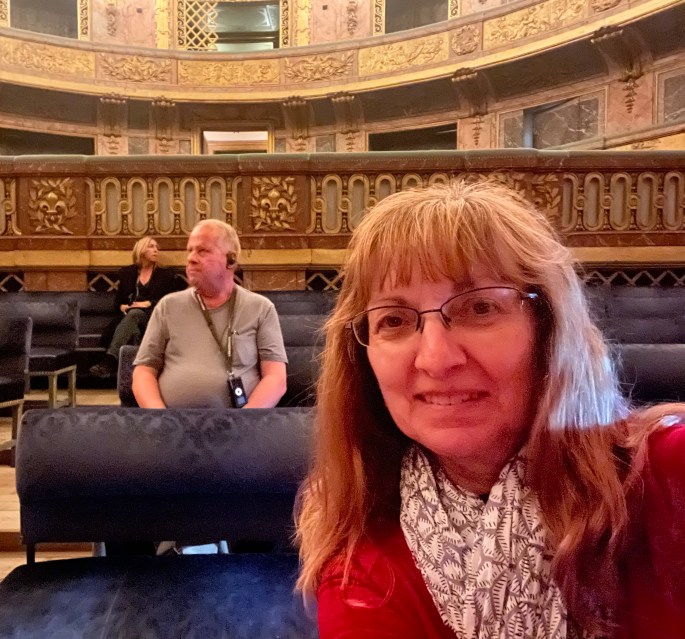
One amazing thing we saw was the recently refurbished Opera House. This was definitely one of those ‘wow’ moments when you walked into the room.
Inaugurated in 1770 during the reign of Louis XV, it was at the time the largest concert hall in Europe. It hosted celebrations, shows and parliamentary debates.
It was an amazing room. Although it survived the French Revolutions (however, everything was stripped), it was nearly in ruins at the end of the Second World War.
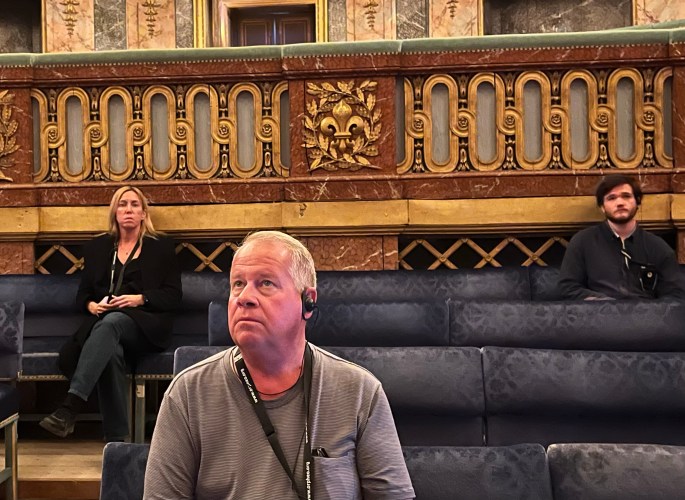
I tried to get us all in one photo, but alas, it was impossible.
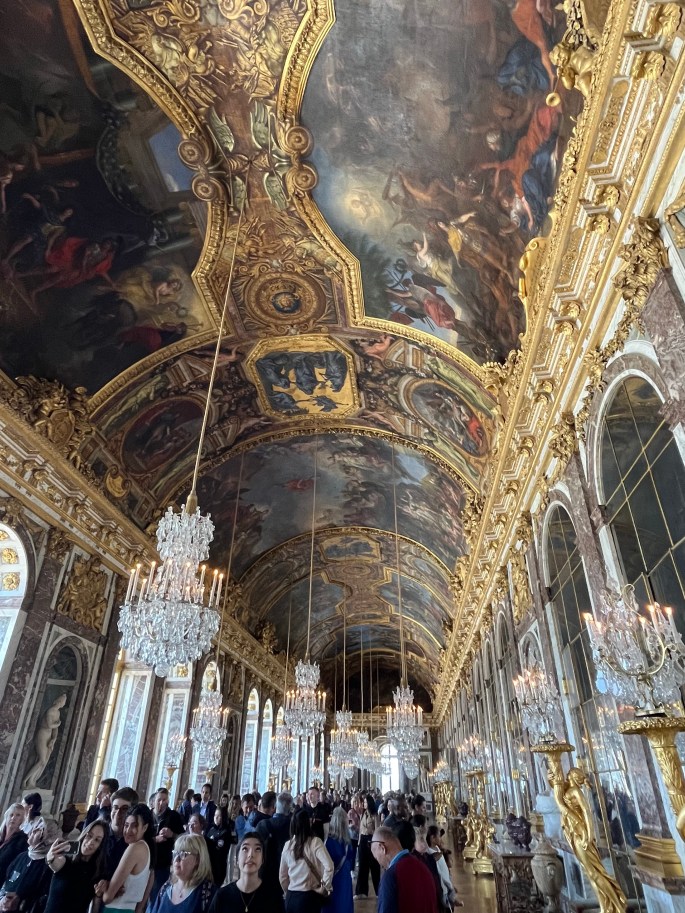
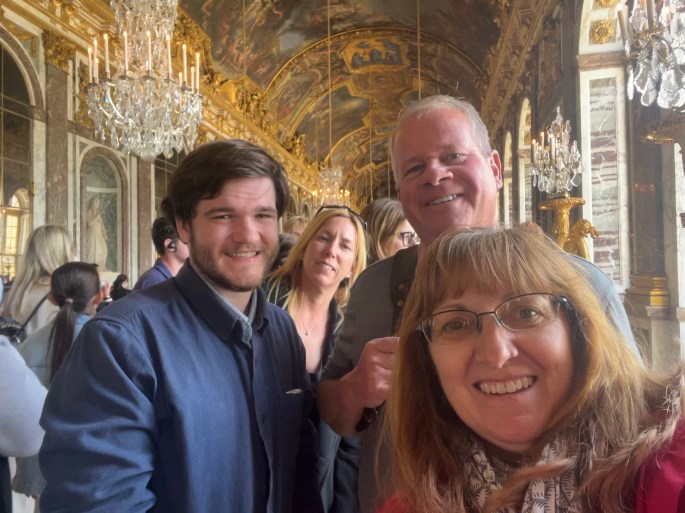
It was at this point we left the tour and joined the masses as they walked through the reminder of Versailles. Our last destination…….the Hall of Mirrors, the most famous room in the Palace.
The length of the Hall of Mirrors pays tribute to the political, economic and artistic success of France. 357 mirrors bedeck the 17 arches opposite the windows, demonstrating the French could rival the Venetian monopoly on mirror manufacturing.
It was here the Treaty of Versailles was signed on June 28, 1919 ending the First World. We finished the tour and headed back to Paris.
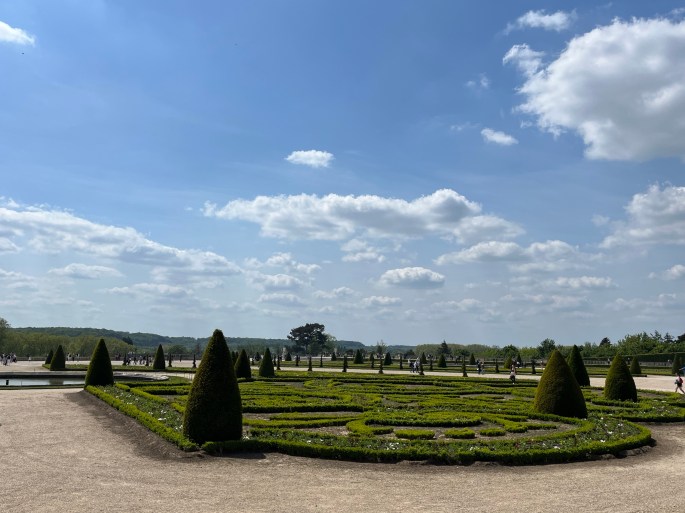
But wait – what about the gardens and fountains? Here’s a quick photo.
I’ll let you pick the reason we didn’t walk through them.
~we were ready to head back to Paris.
~we had already put in a number of steps and didn’t want more.
~our pre-purchased tickets didn’t include the gardens.
If I’m entirely truthful, it’s a little bit of all of those, but mostly the last one. 😦




















 Darden Travels