
Strasbourg Cathedral commands attention. Let’s start with a bit of history…….
A Roman settlement existed on this site since about 12 BC. It became a major trading center for wine, grain, and later for textiles and luxury products. The first cathedral was built on the present site about 550–575. The current structure was built between 1180 and 1439.
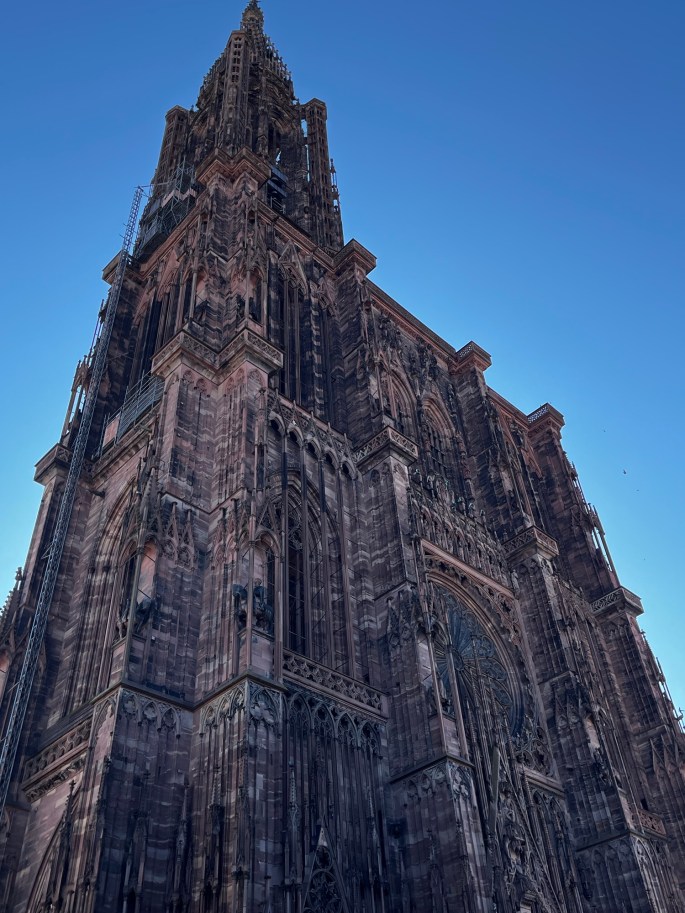
The original design had two spires, but the second was never built.

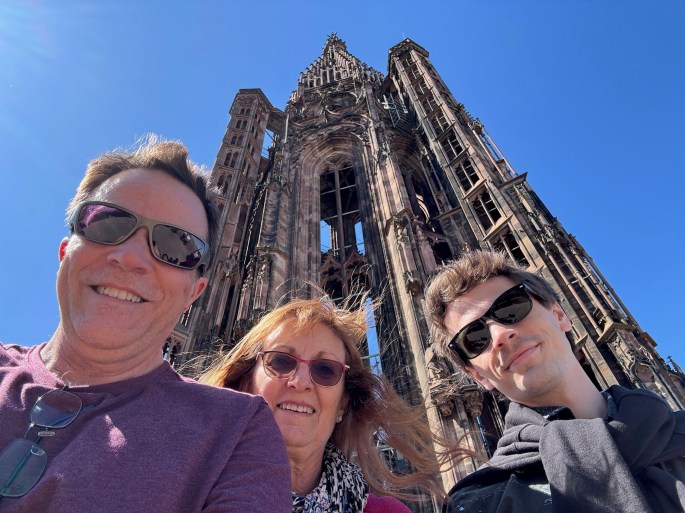
It is a blend of different styles of mediaeval architecture. Building started with the late Romanesque choir and transept, superseded by French and German Gothic from the 13th century onwards. The western front, with its bold design and stone lacework, is an outstanding example of the skills of the Cathedral masons.

The tower showcases the excellence of mediaeval engineering and remained the highest building in Europe until the 19th century standing at 466′. Today it is the 6th tallest church in the world and the tallest structure built entirely in the Middle Ages.
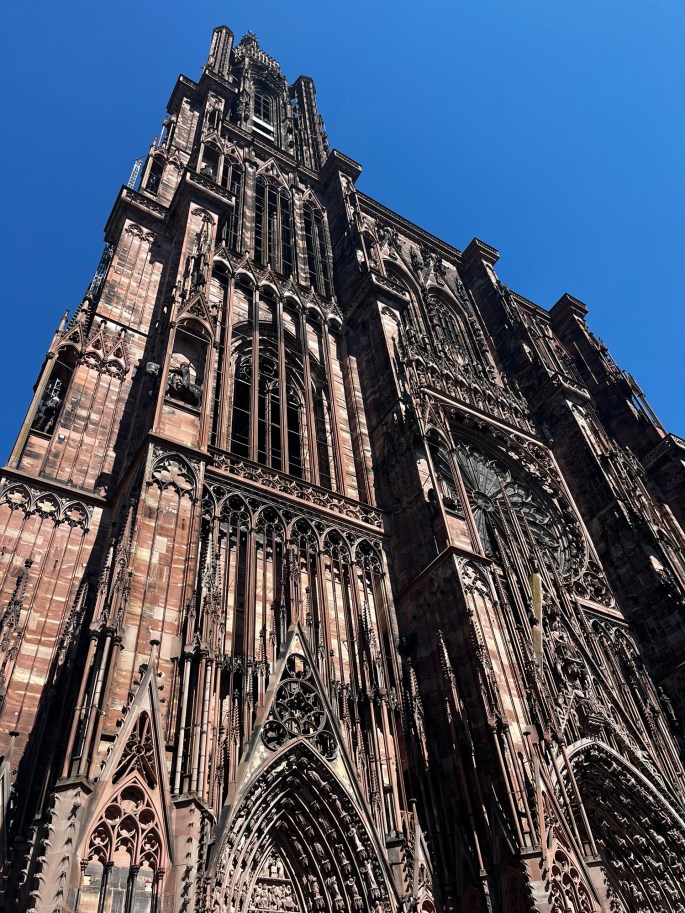
Wooden roof beams were prone to fire and were part of the construction. The church was repaired after each fire but at times work was interrupted by wars and political causes.
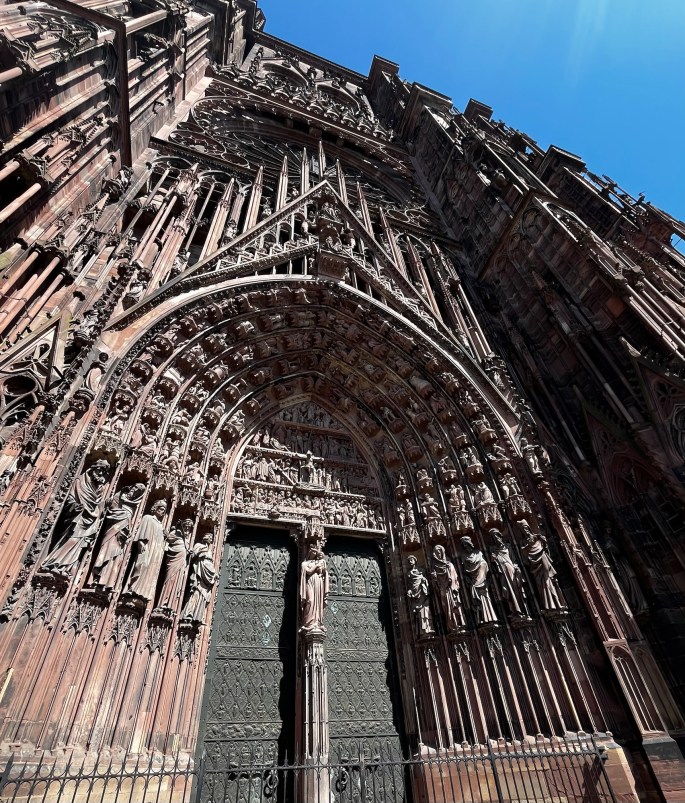
As with most cathedrals, stories were told a variety of ways. The stained glass windows were a key part of the storytelling. The various colors of glass used added to the grandeur seen inside the building. During WWII the stained glass from this cathedral was removed in 74 cases and stored in a German salt mine.

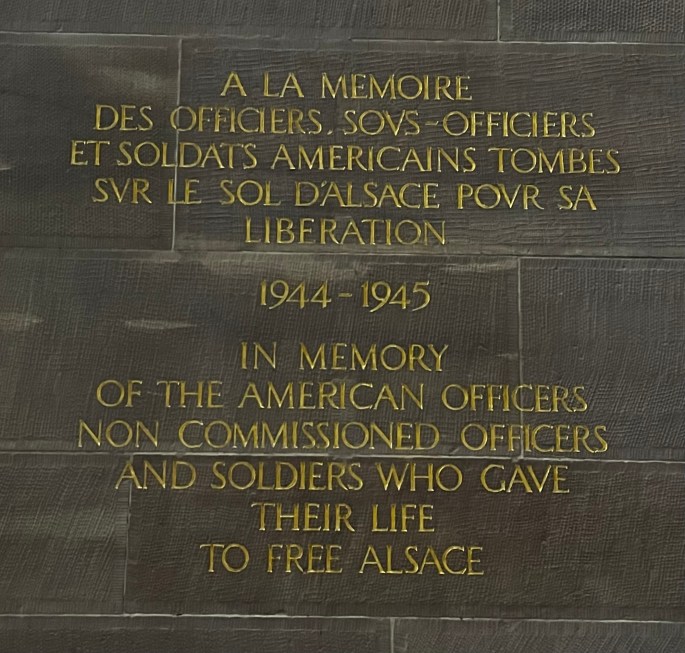
After the war the cases of stained glass were returned by the U.S. military. BTW – the cathedral was hit by British and American bombs in 1944 with repairs completed in the early 1990s.
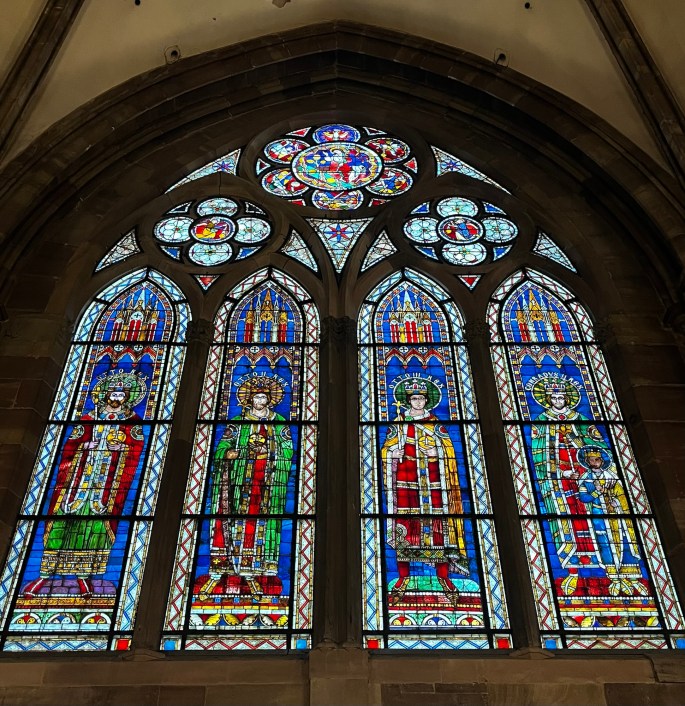
The five lower bays on the north side contain some of the oldest stained glass of the cathedral, installed in the old Romanesque cathedral in about 1180. The windows are devoted to nine Emperors of the Holy Roman Empire. Each holds a scepter in his right hand and an orb in the left hand, symbols of their responsibility as both sovereigns and religious figures. In the 13th century some rebuilding occurred and the windows were reinstalled in random locations. In 1877 an architect placed the windows back in their original arrangement.
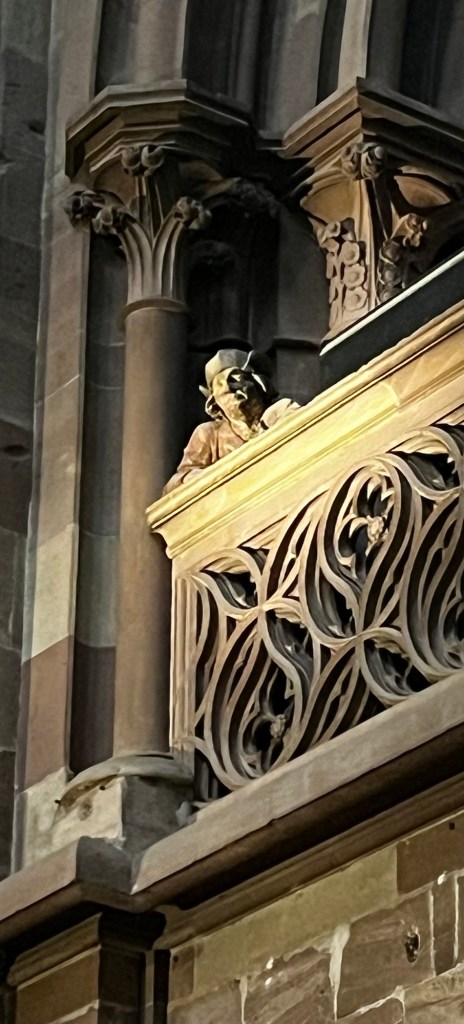
I couldn’t resist this shot. This ‘individual’ was looking down on those inside the church – watching them.
I noticed a few tourists looking at the railing to a pulpit. There was a famed preacher with the cathedral who died 1510. A sculpture of his dog was placed on the steps of the pulpit where he once preached, mourning the loss of his master.

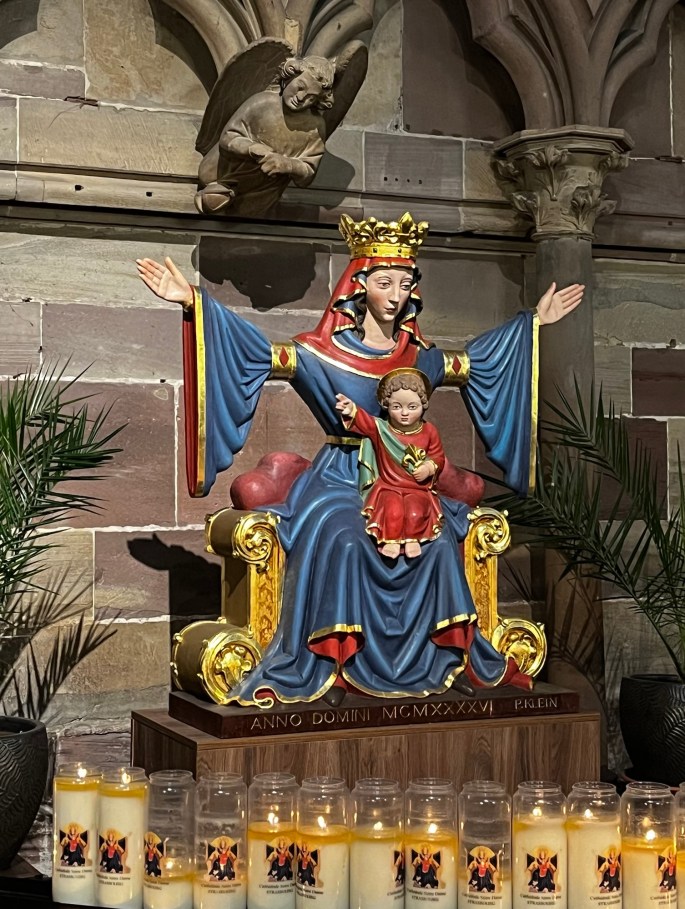
One note l discovered while researching talked about the sculptures for this cathedral. The Strasbourg sculptures clearly show emotions – prophets look severe, the Virgins serene and the Virtues look noble.
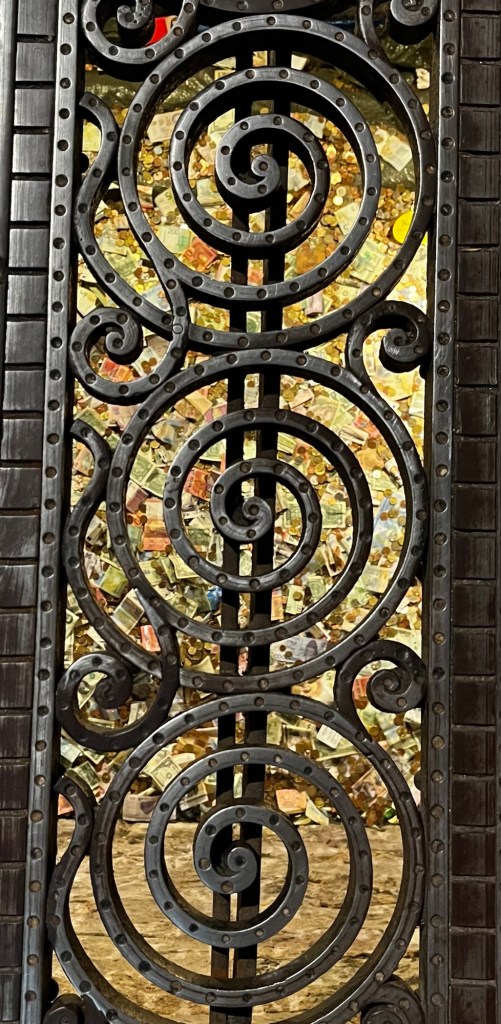
There was grating on the floor and I saw someone dropping something. Upon closer inspection, individuals were dropping coins or bills through the grate. My photo only shows a small portion – probably a 10th of the full size.
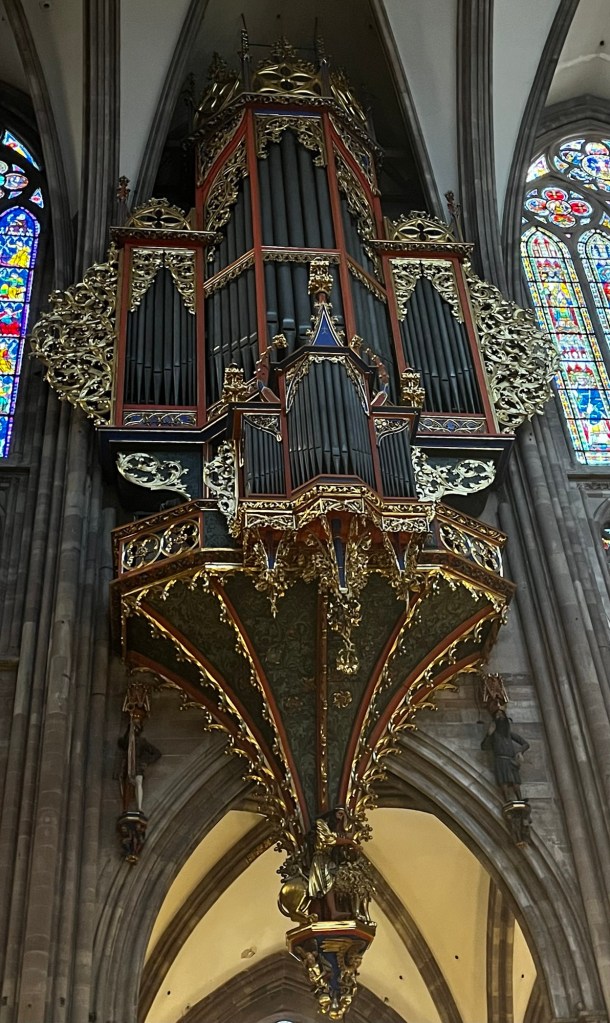
Existence of the organ was recorded beginning in 1260. It was hoisted to its current position in 1327. While very difficult to see in my photo, the bottom of the organ contains a figure of Samson opening the jaws of a lion. The figure has moving parts. I could find nothing else about ‘how’ or ‘when’ said parts moved. A mystery to me.
The current astronomical clock is one of the most famous features of the cathedral and the third one. The first clock was installed 1352. When it stopped working the entire structure was dismantled in 1572. A second clock was completed in 1574 and was remarkable both for its complexity as an astronomical device and for the range and richness of its decorations and accessories. This second clock stopped working around 1788 and stood still until 1838.
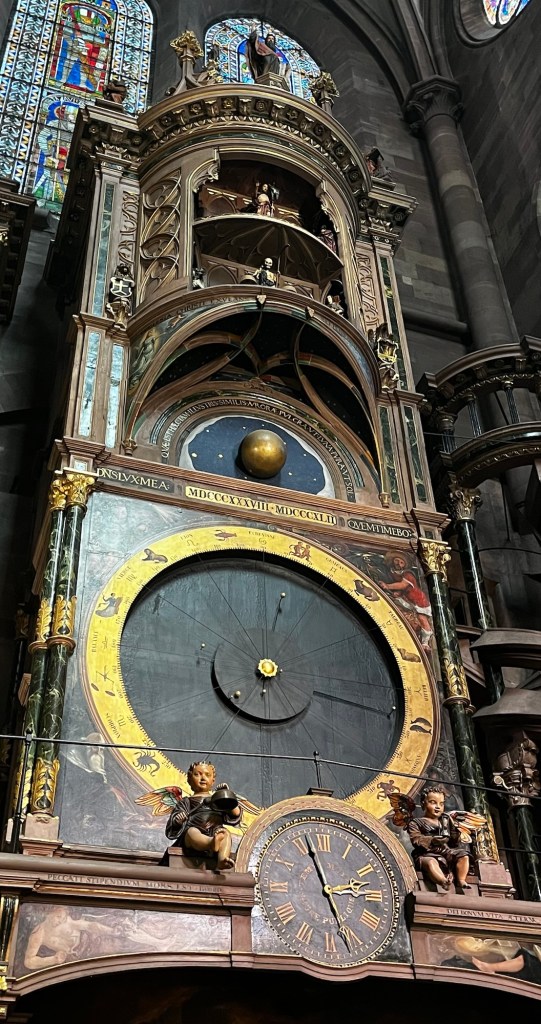
The current clock is approximately 59′ tall and shows much more than the official time; it also indicates solar time, the day of the week (each represented by a god of mythology), the month, the year, the sign of the zodiac, the phase of the moon and the position of several planets. A crowd was gathered and seemed to be waiting for ‘something’ to happen. It did. At the very top of my video, you can see the moving parts.
330 – what does that mean? That’s the number of steps until you reach the observation desk. Naturally, we (some) go that distance. Here we go.
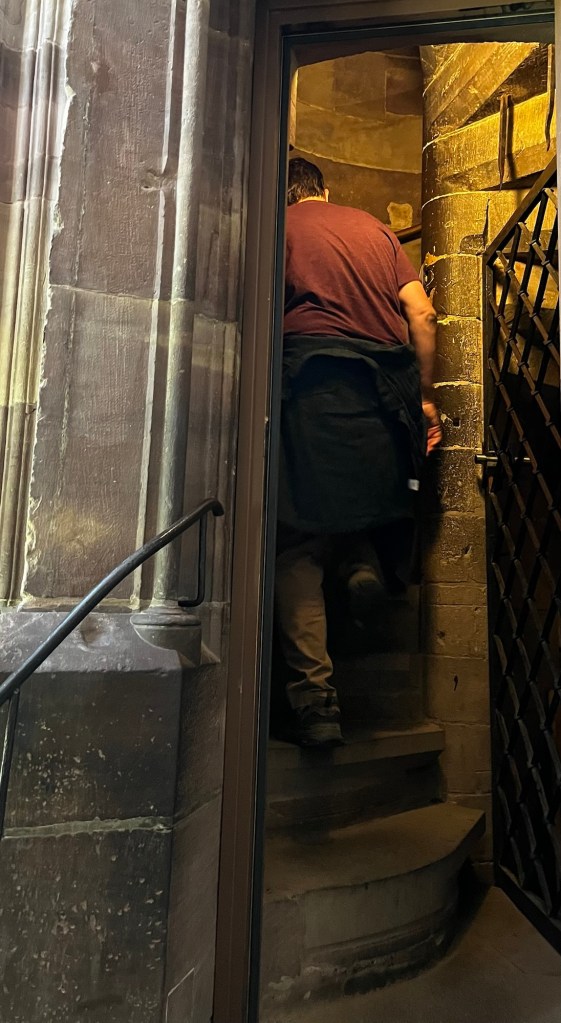
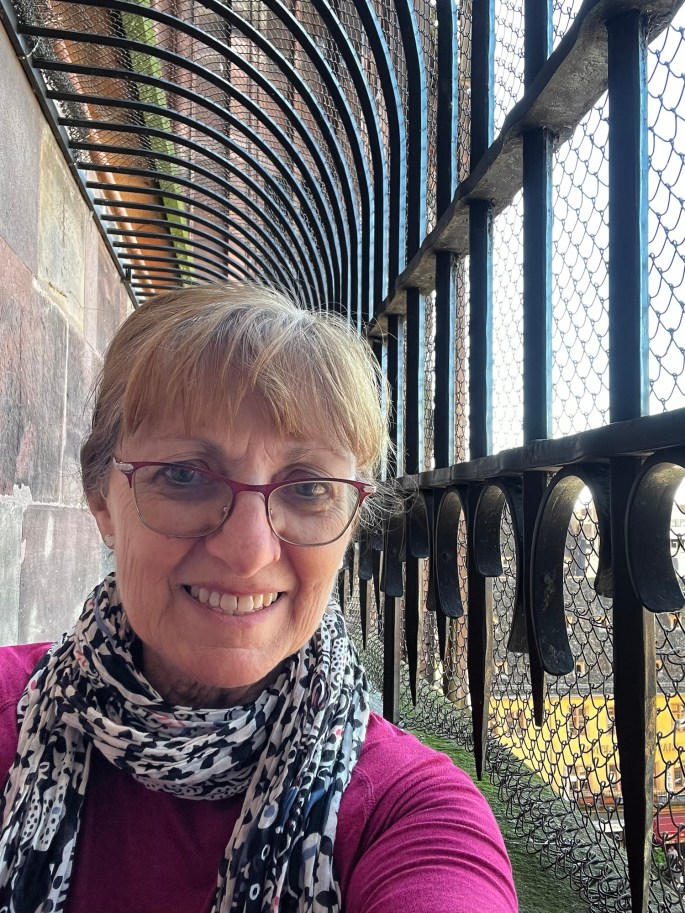
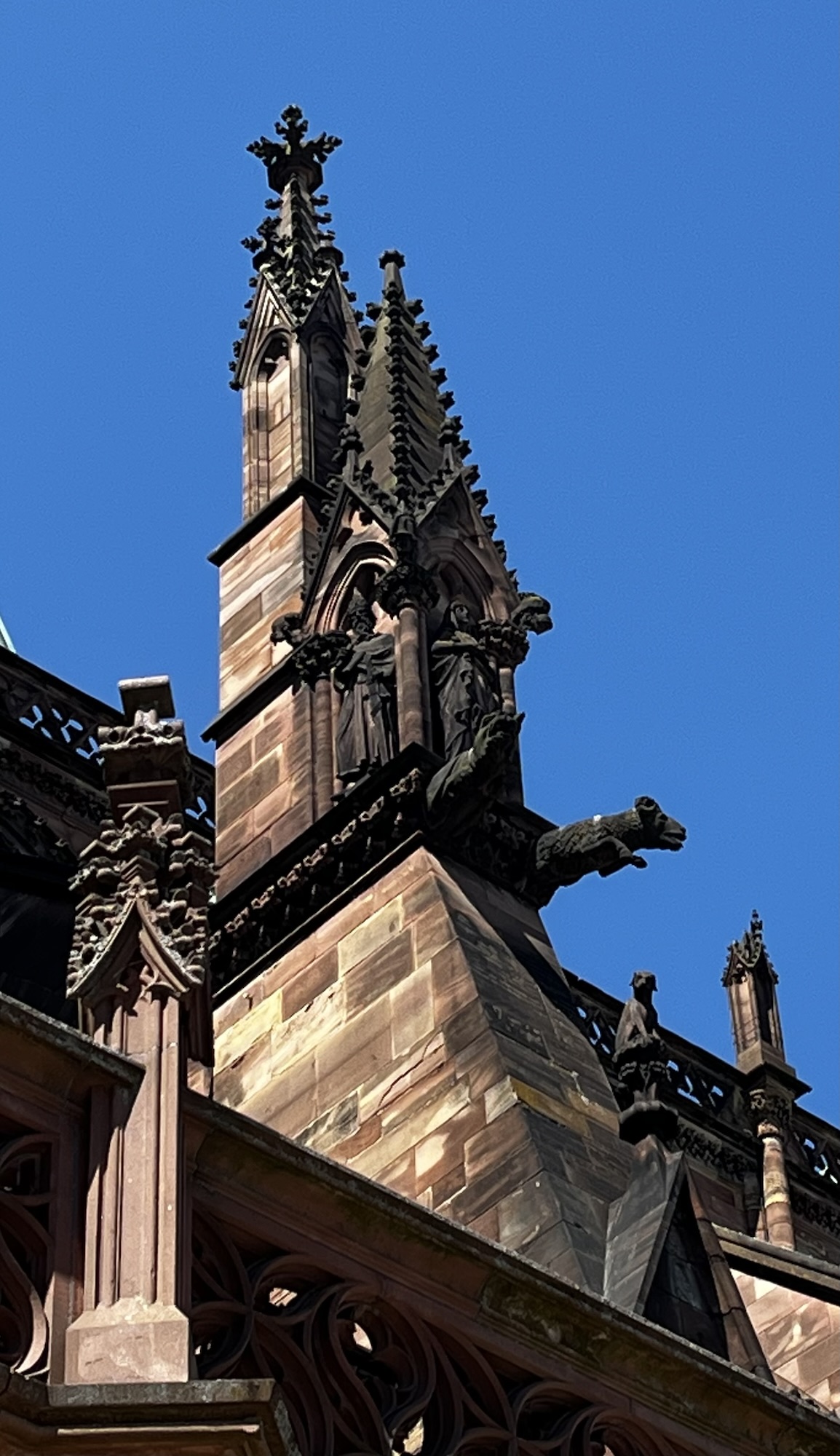
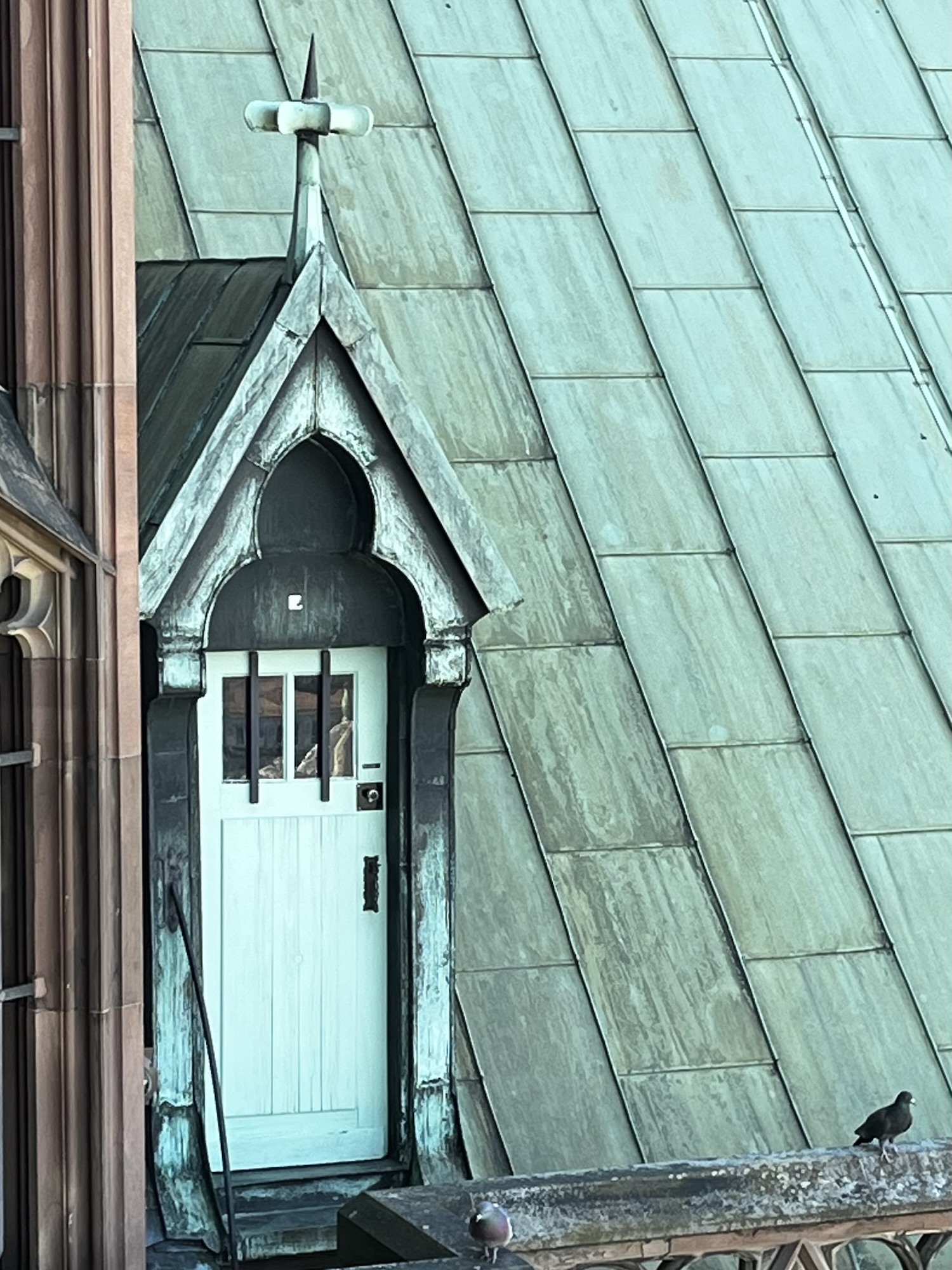
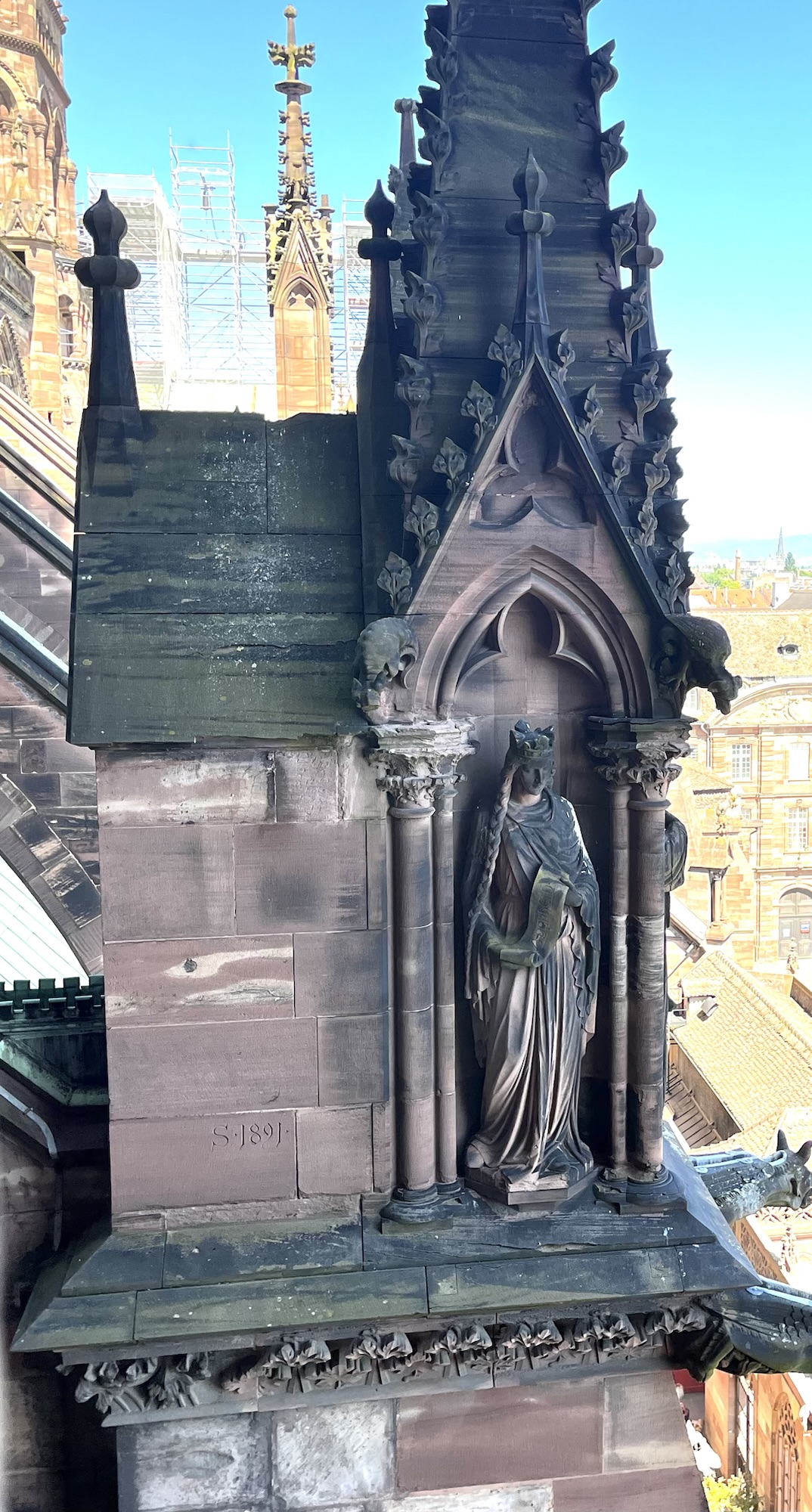
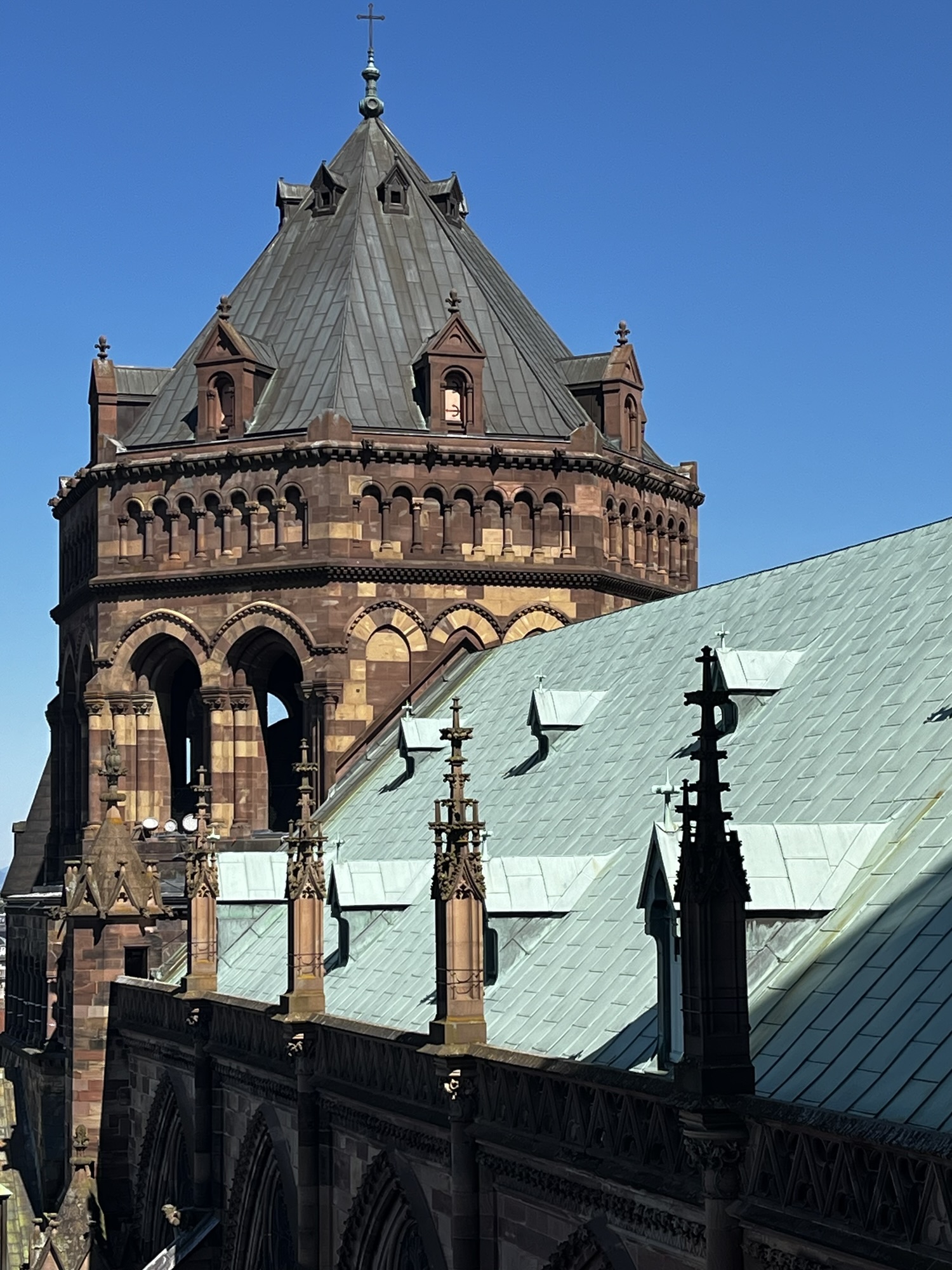
Got some interesting photos along the way.
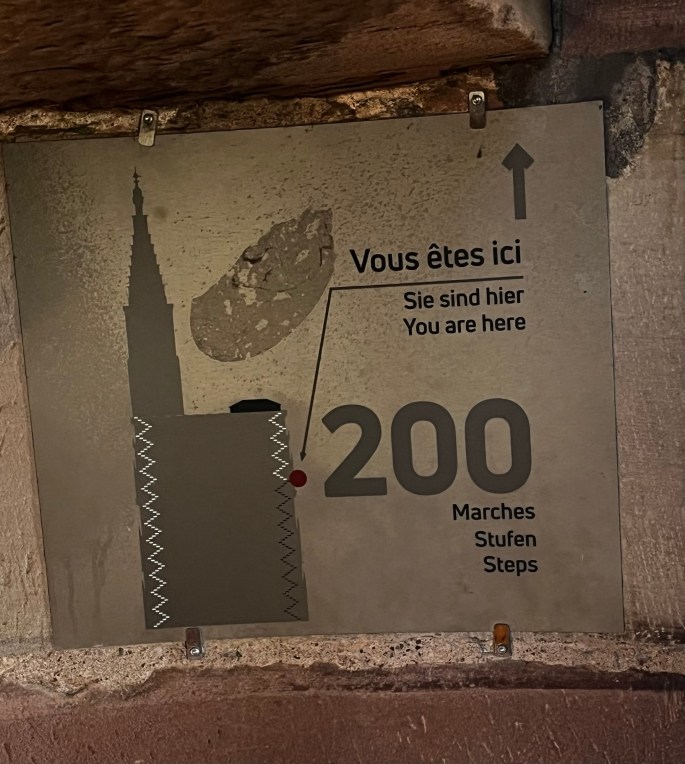
Wasn’t sure if this sign was good news or not, ha!
Made it!!!! Yep, only three of us.
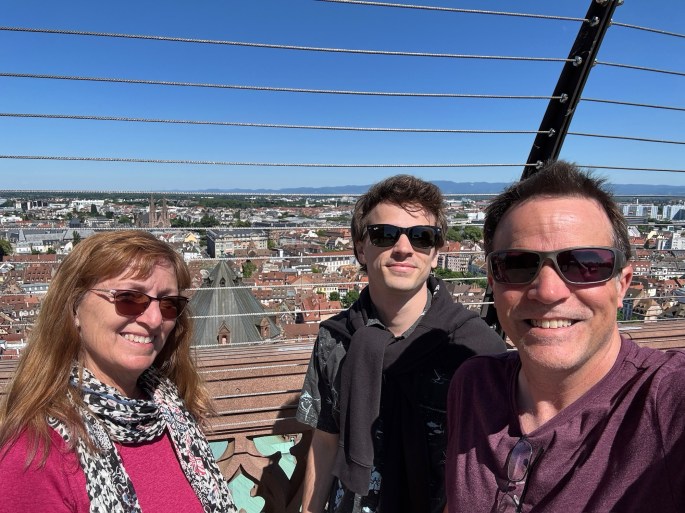
You can see 30 kilometers from the observation desk. Yikes!
And now the journey begins downward.
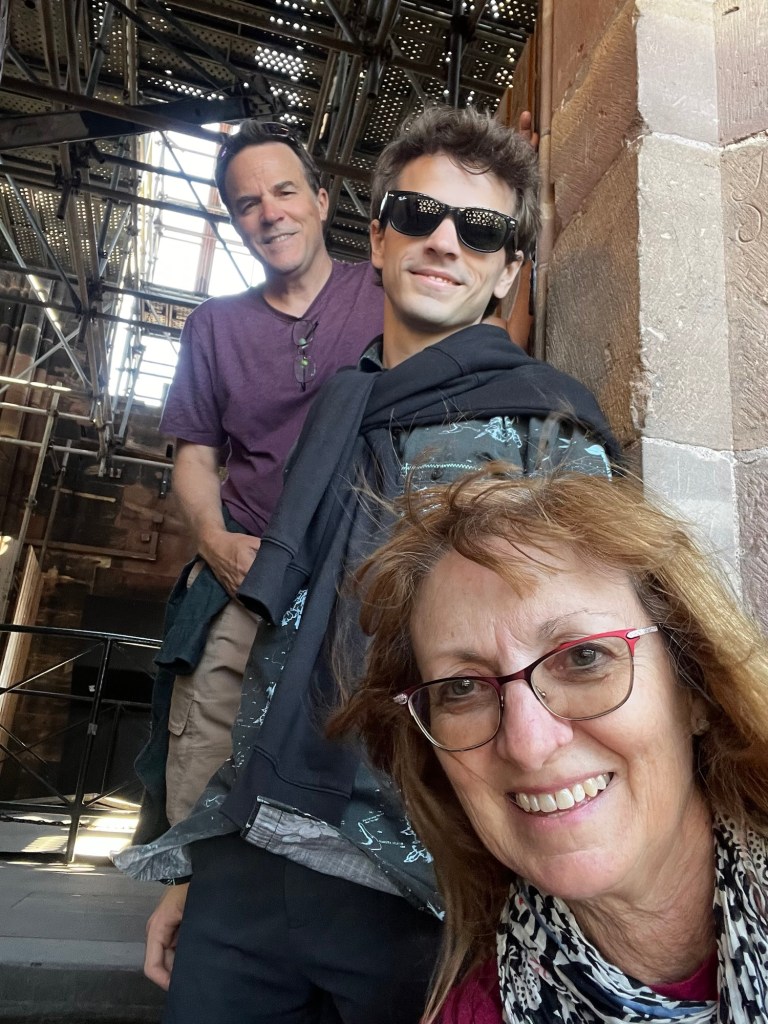
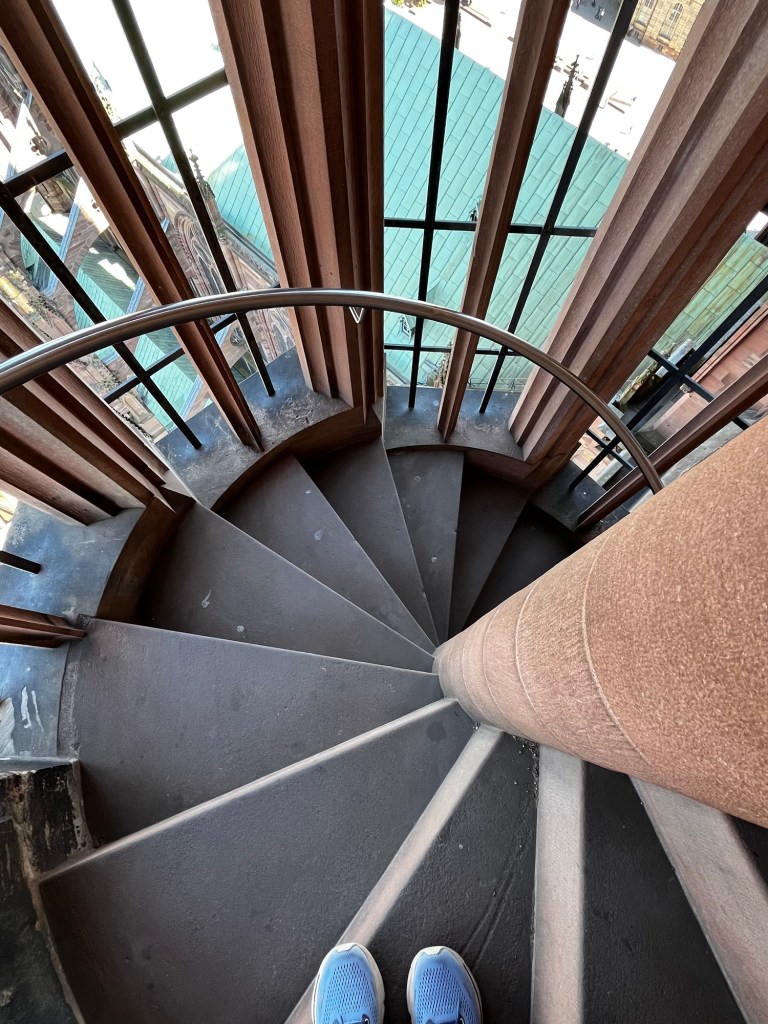
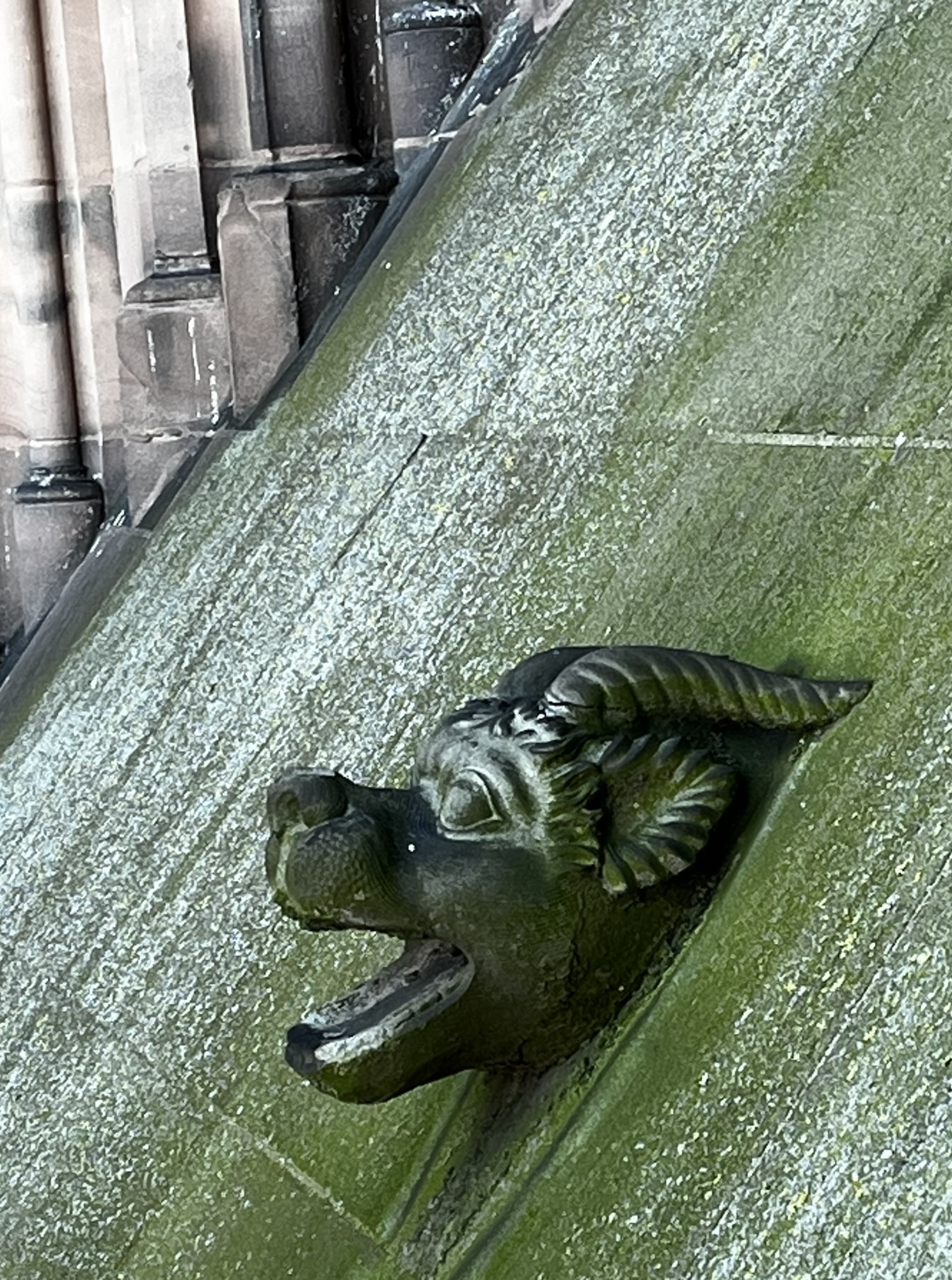
Also, a chance for more interesting shots.

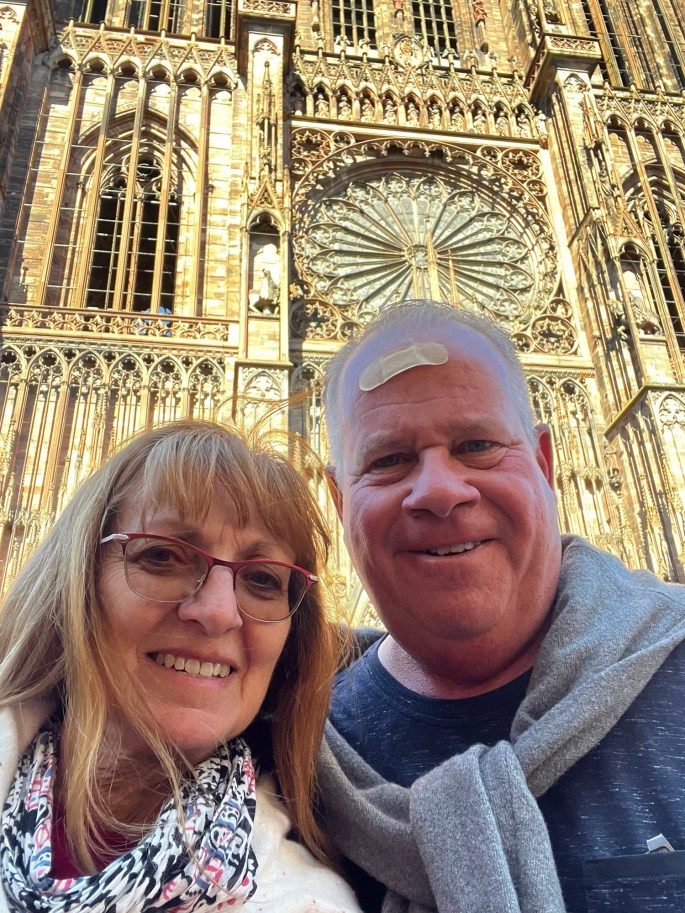
Reunited with the missing member of the group. 🙂
 Darden Travels