
We finally made it to Oviedo. But why this city?
It is the capital city of the Principality of Asturias. The Kingdom of Asturias began in 720 after a revolt against the Muslims that had taken control over most of this peninsula. Economically, Oviedo was a poor region and largely ignored by the Muslims. Two monks in 761 founded the city to construct a small church. In the late 780s the Kings started settling in Oviedo and thus began to shape the city architecturally. Wars, uprisings and fires occurred which continued to plague further development. In the 12th – 16th centuries, Oviedo saw true development of the medieval city of which the outlines are still preserved today. Whew! That’s enough history. Let’s talk our experience.
Eric found a nice AirBNB in the heart of the city, easy walking to see the sites and it came with a parking garage & designated parking spot.
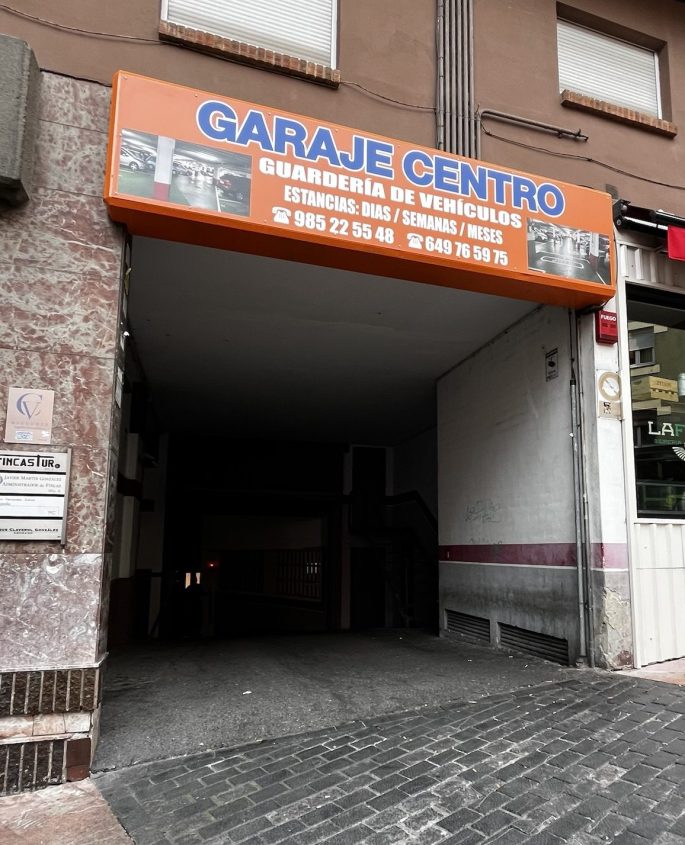
Our problem? Understanding the host’s (very detailed) directions. She sent me a PDF file, which I read, but didn’t connect all of the details and photos. Her file was 100% accurate, we just had trouble understanding it. Full honesty……………if I had gone onto the AirBNB site and looked at her photos, our frustration would have been much lower. Let’s just say this lady has the patience of a Saint. I ended up calling her and she stayed on the phone with me all the way through the process until we could park the car. She walked me down to the garage via her apartment, walked to the designated parking spot, then walked me out of the garage entrance (virtually). It was a bear. Thrown in a garage fob that had sketchy connection, and it made the job a bit harder. Had to be 30+ minutes (which Eric and Adrienne swears it was an hour) that I was on the phone with her.
This photo I found on the AirBNB site – after we got home. We couldn’t even get to this point, which led us to the upstairs apartment, which had a key box, to get inside the apartment, to get the keys we needed for the garage to park the car.

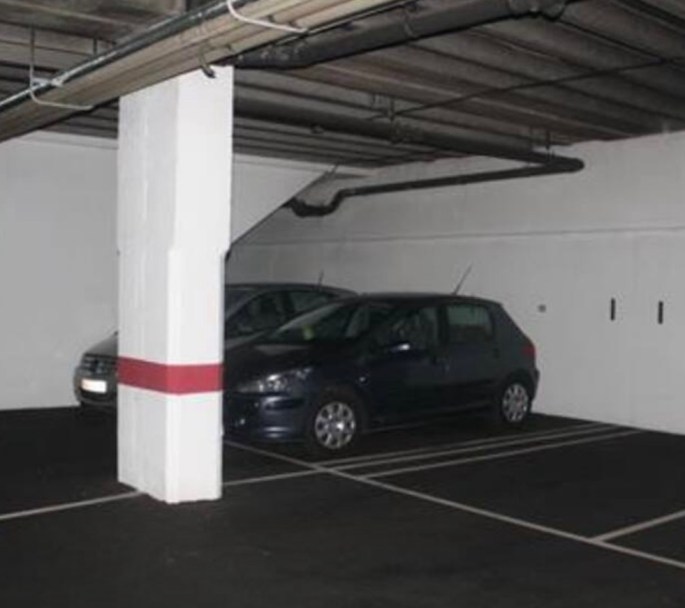
The parking spot was a bonus, a little tight for Eric and our rental car, but doable with Adrienne and myself giving guidance.
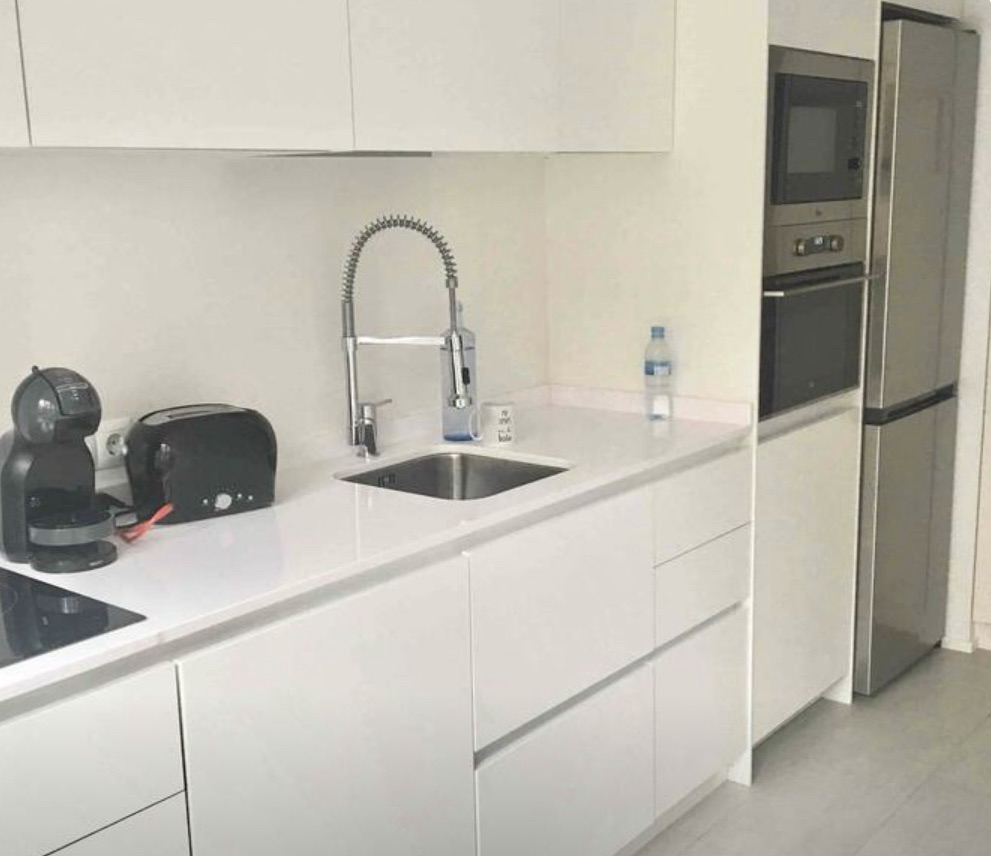
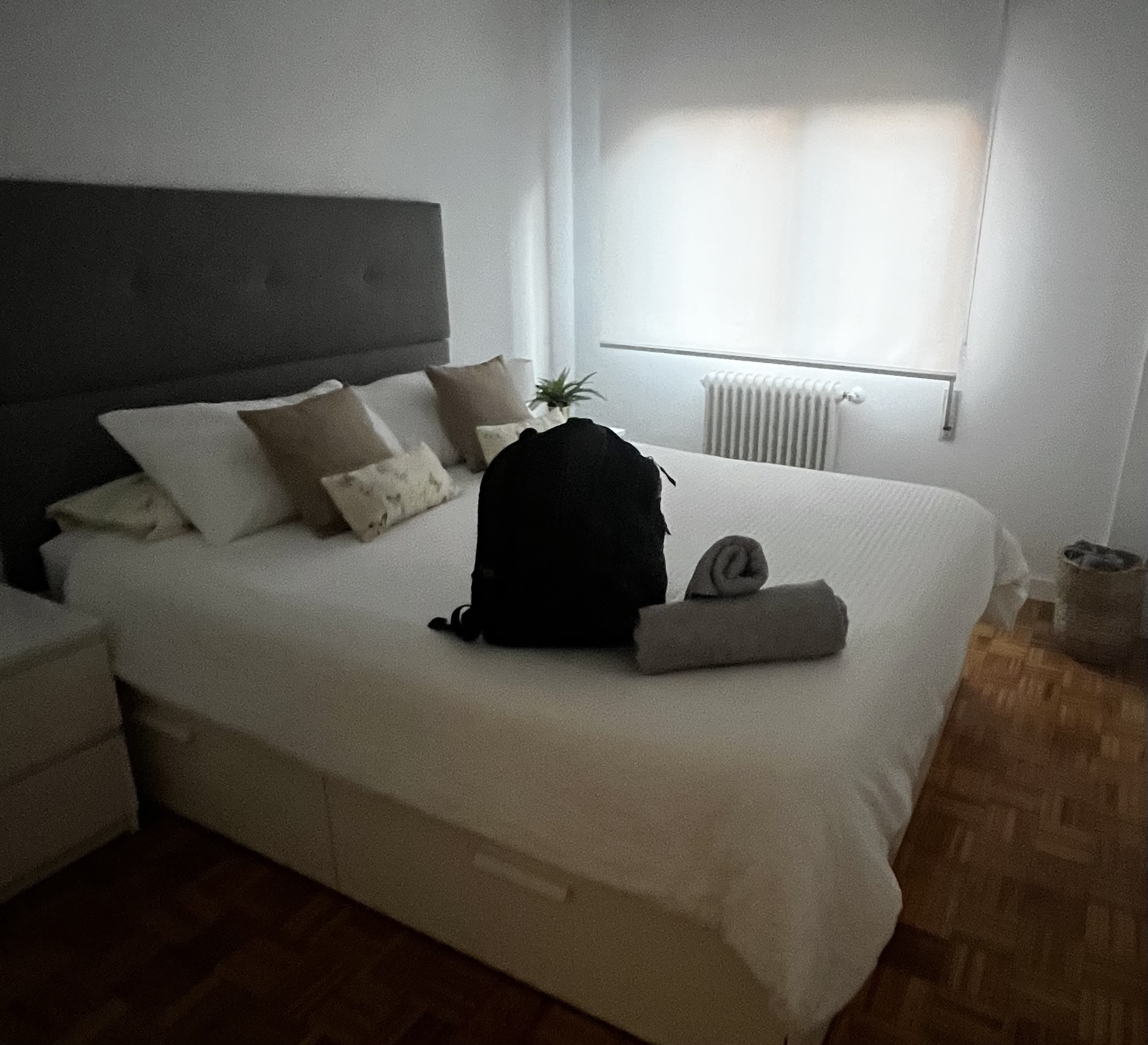
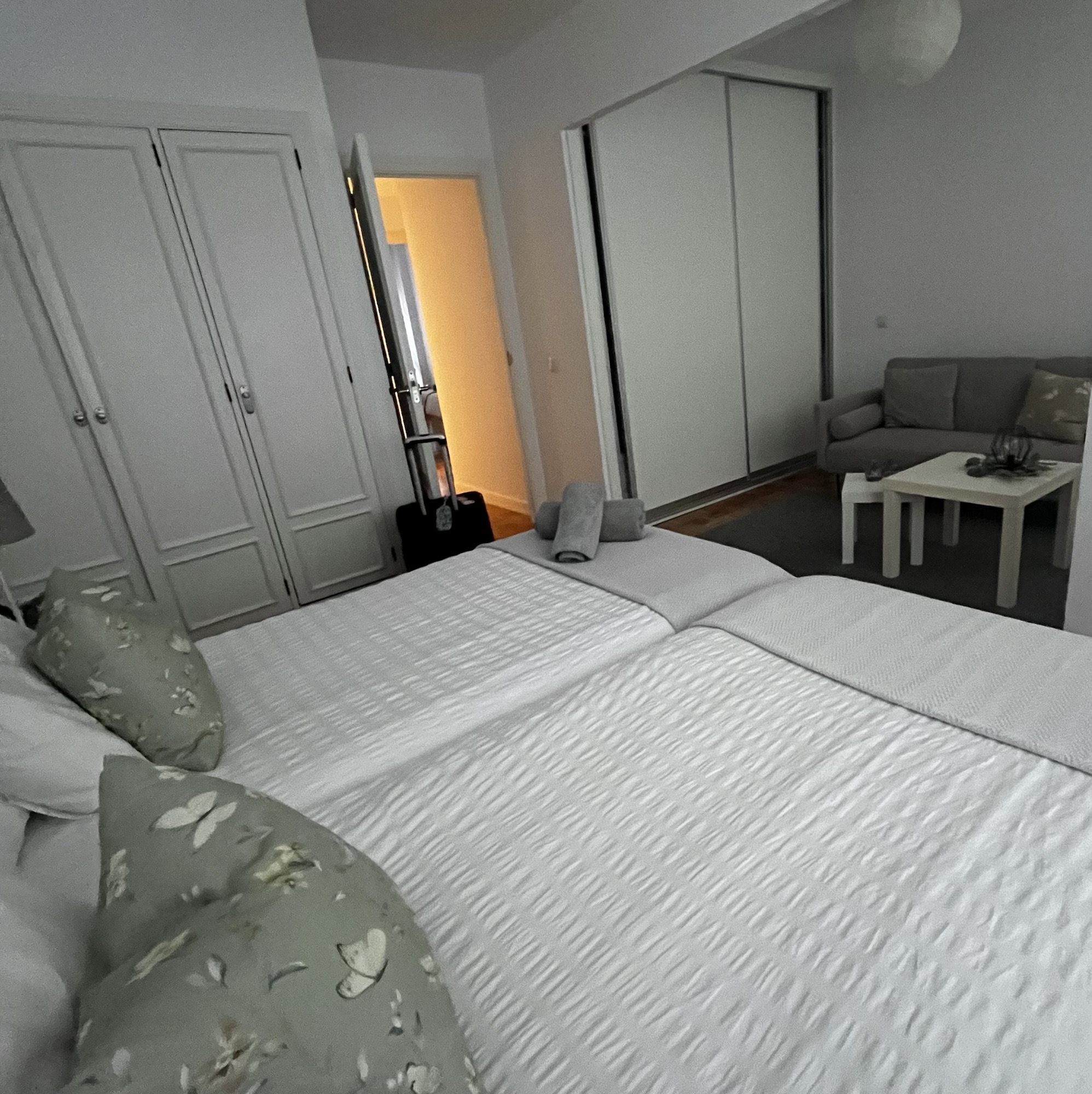
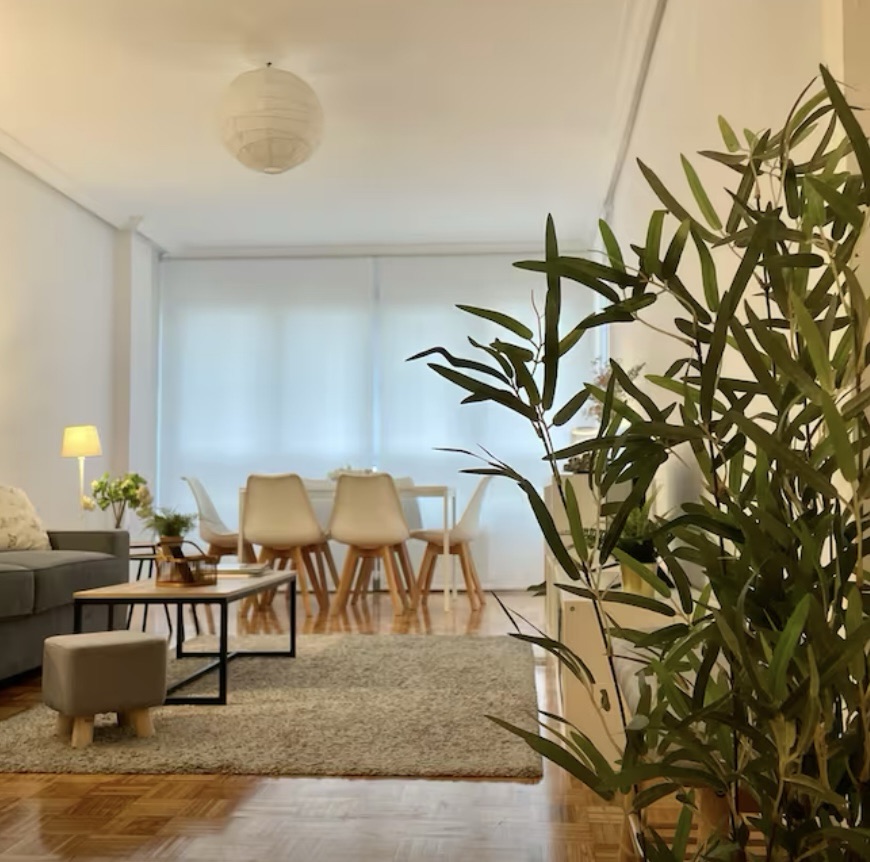
Here’s a few shots inside the apartment.
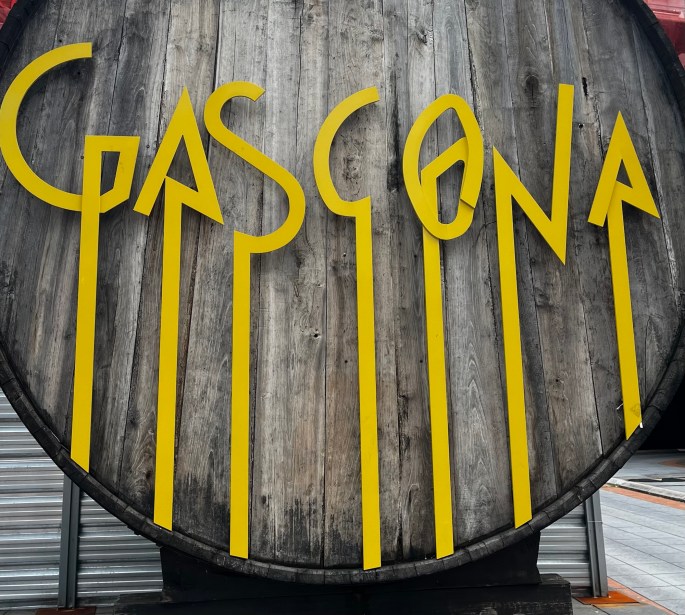
Cider is king here and Eric was excitedly looking forward to it. We had tried some earlier in the trip and there is not one bit of sweetness to the drink, very, very dry. Not going to be something that I indulged.
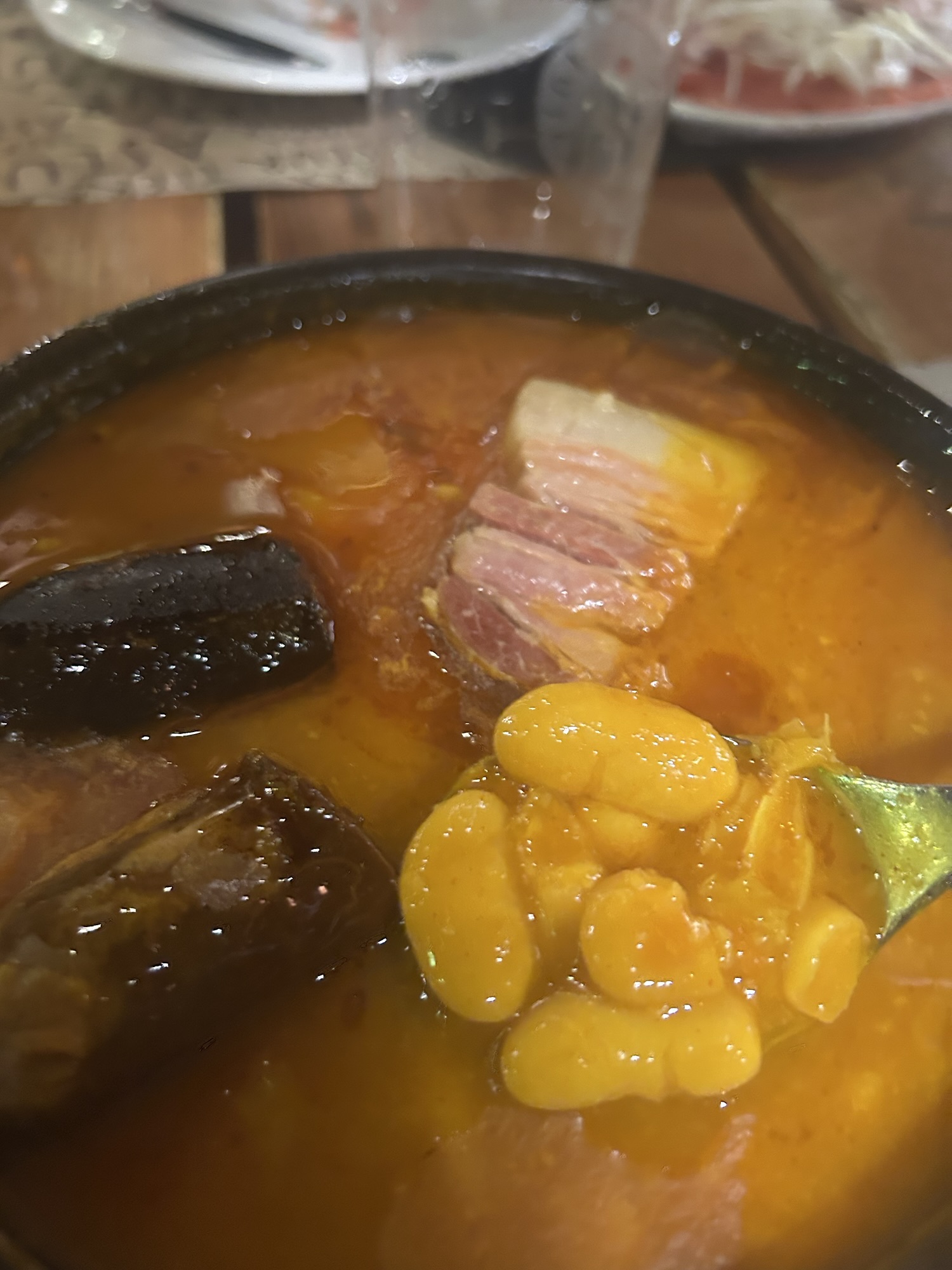
Even though we had that a.w.e.s.o.m.e meal for lunch, we still need some calories before going to bed. A number of restaurants were available 50 feet from the garage and we picked one. Eric tried their hearty bean dish, Adrienne wanted a tomato salad and I went with fish and frites. We were all satisfied with our selections.
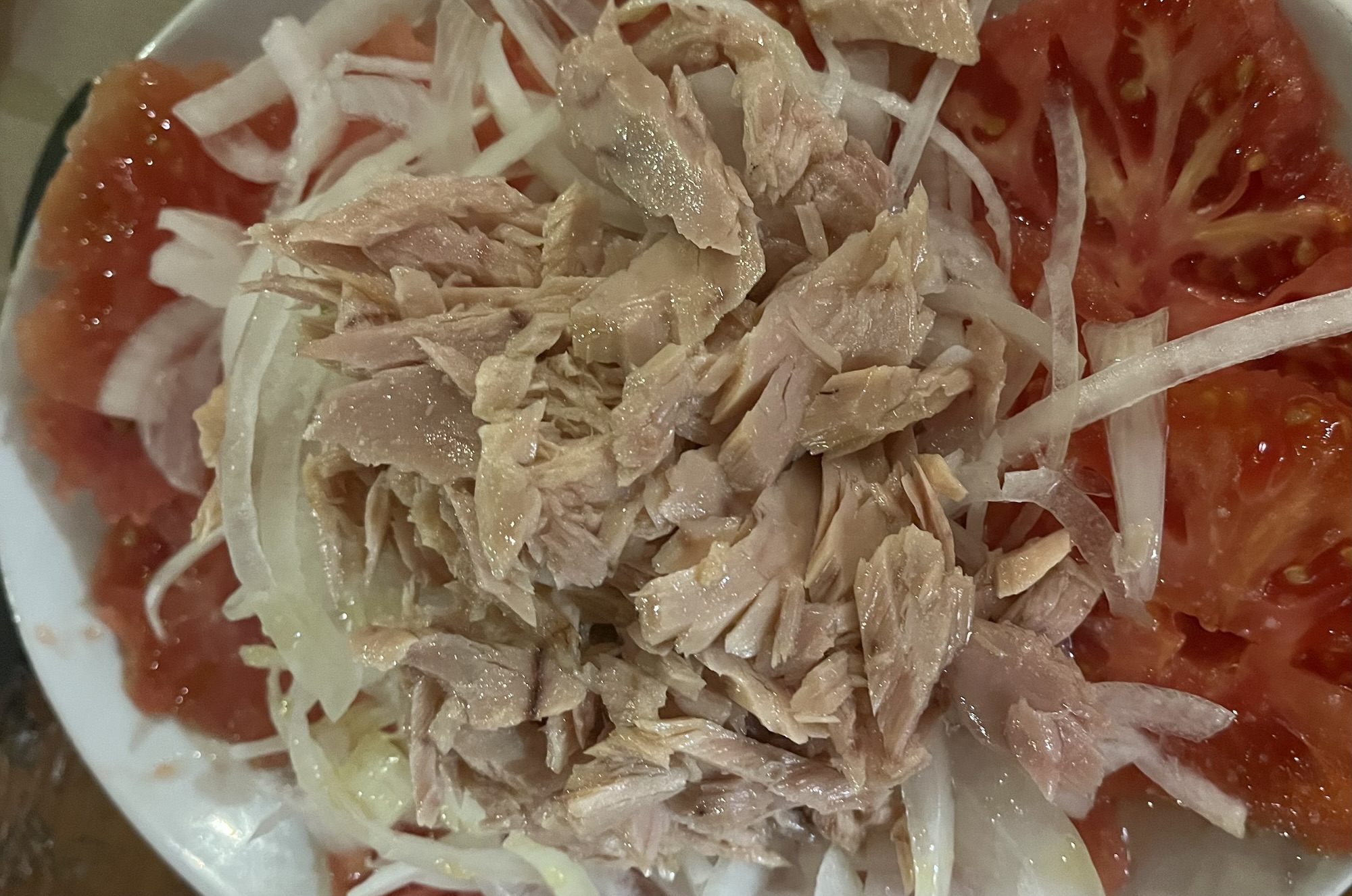
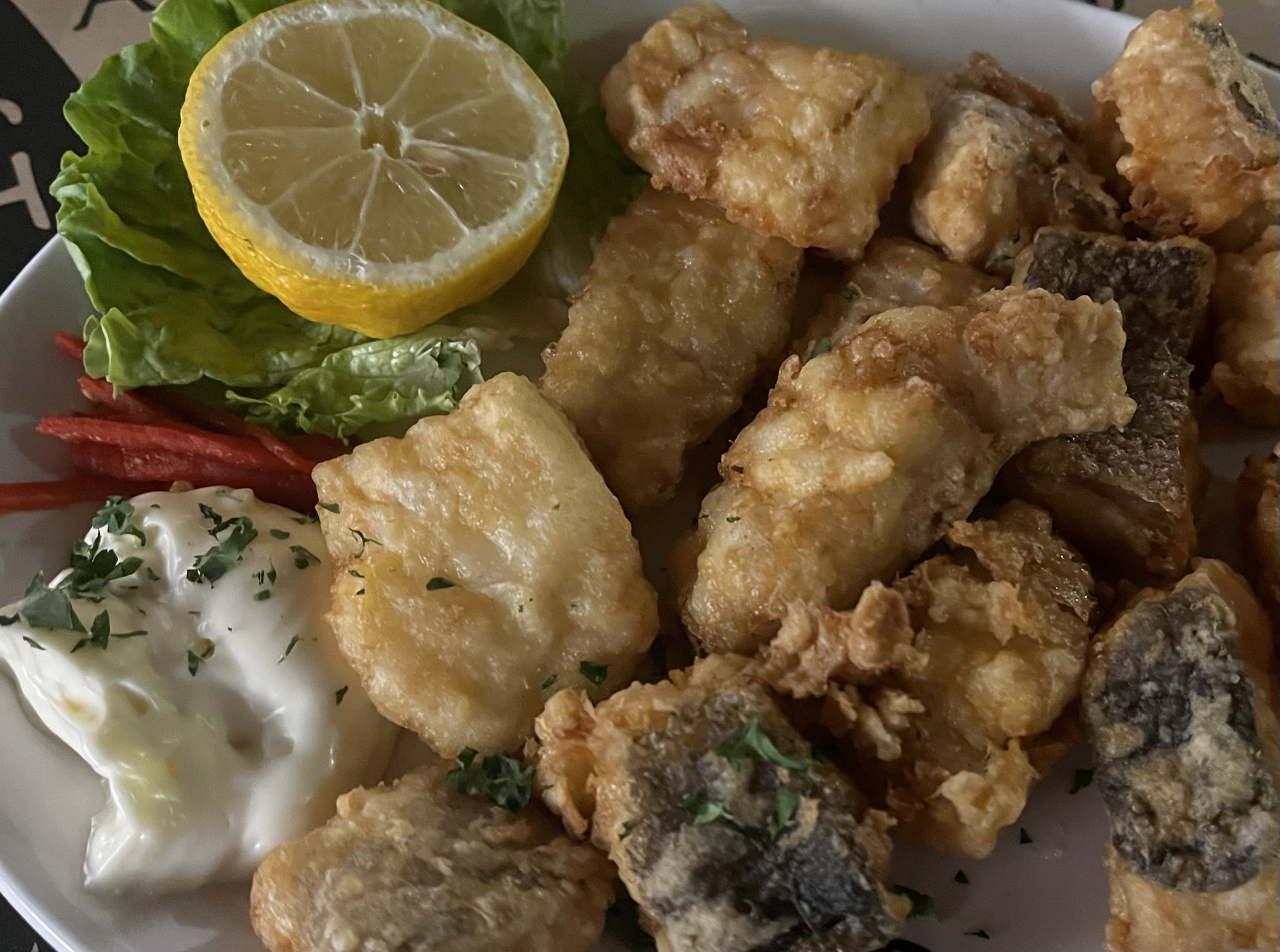
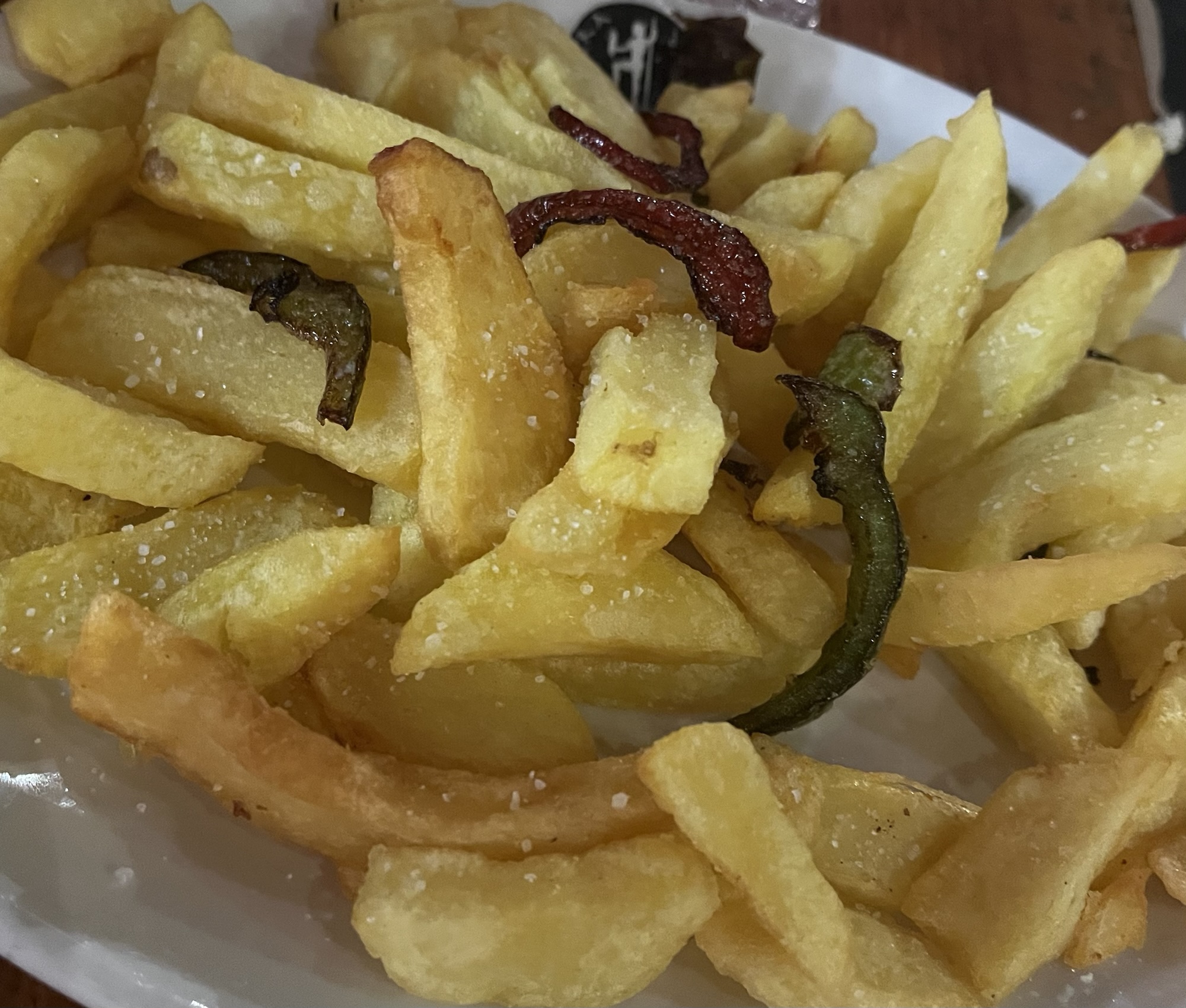
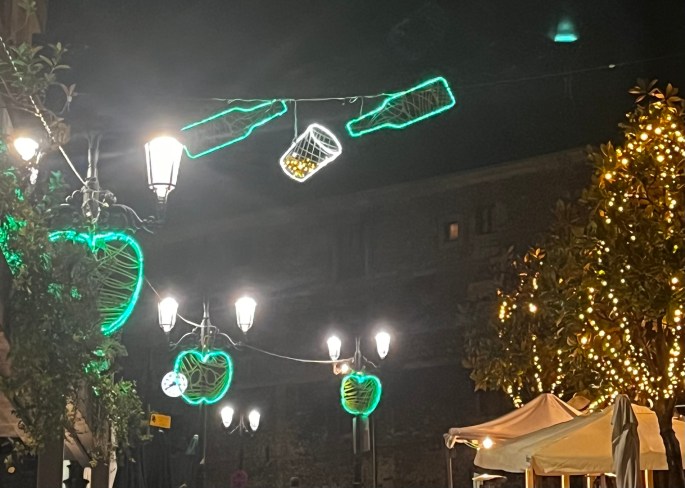
It was dark when we left the restaurant to walk the long trek to our apartment (not) but it gave us a chance to see the pedestrian street in its glory.
What to do when in a historic city center after eating some breakfast? Visit their church: the Cathedral of San Salvador of Oviedo. It was founded in 781 A.D. by the King of Asturias
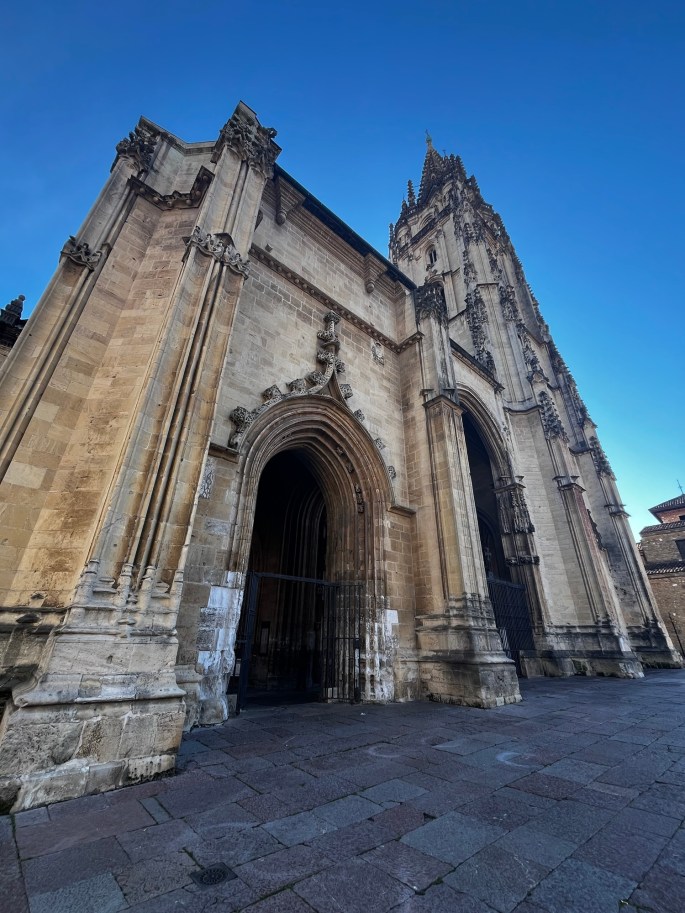
Originally there was plans to build twin towers, but the ended up with only one. It was not lack of funding that made this decision, but in the 1500s it was a popular solution.
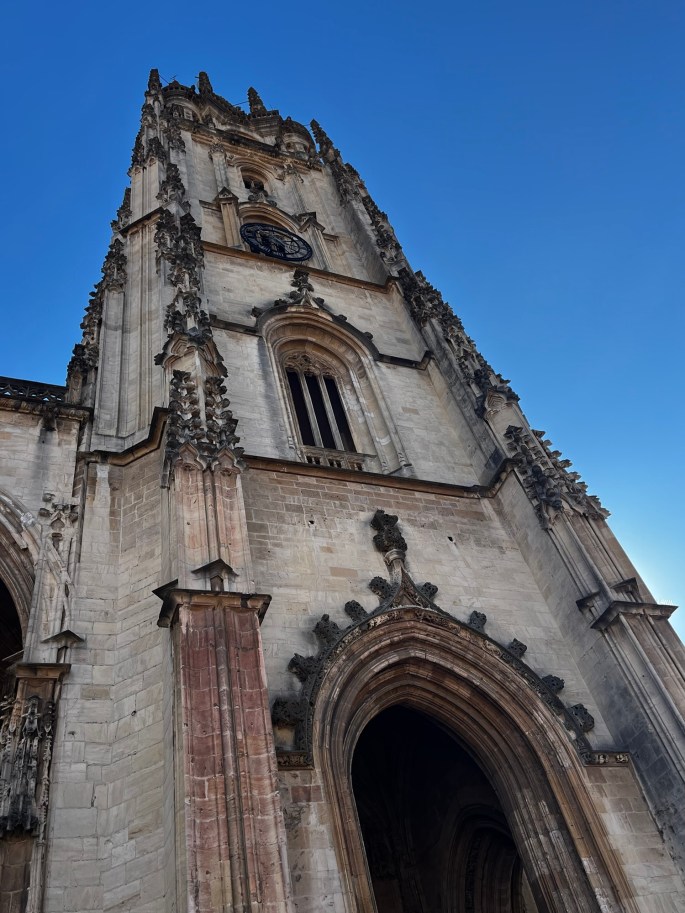
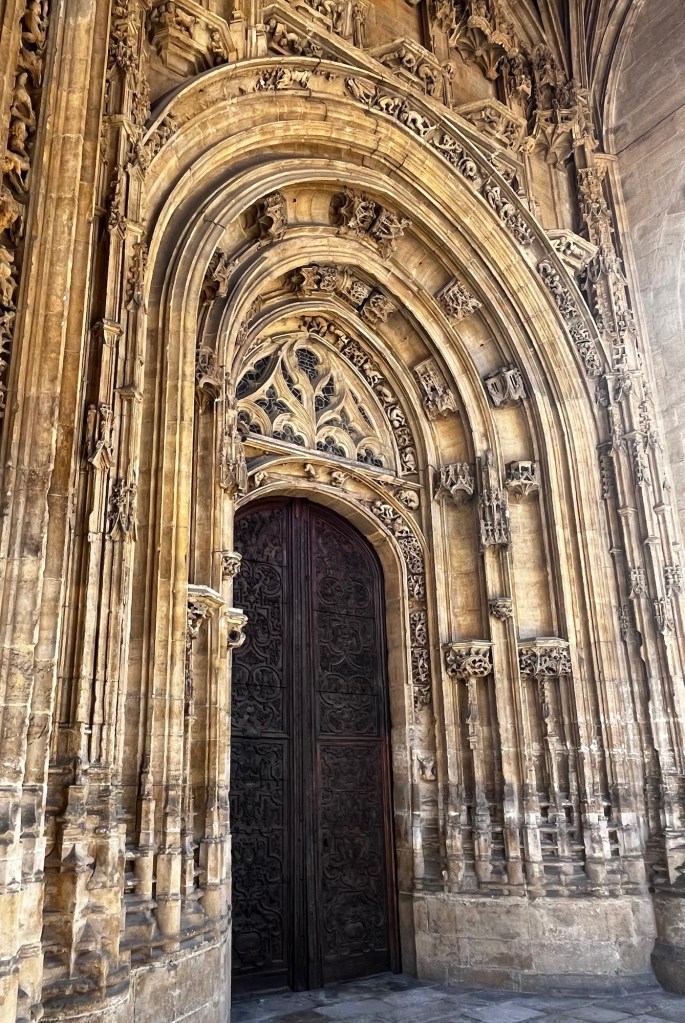
The entry is imposing, as it’s meant to be.
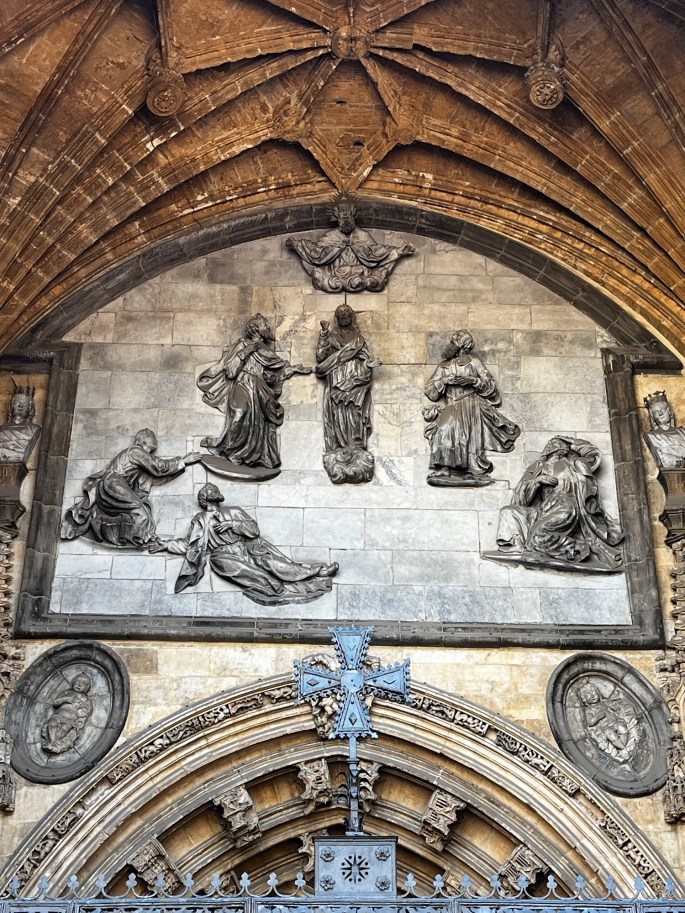
Topped by this scene.
Let’s go inside. It was somewhat surprising there was an entrance fee of 10 euro. Most churches are free. They have a great brochure, numbered with specific stops and after scanning the QR code info was shared in a concise and informative manner – not long winded. We agreed afterwards, it was worth the 10 euro.
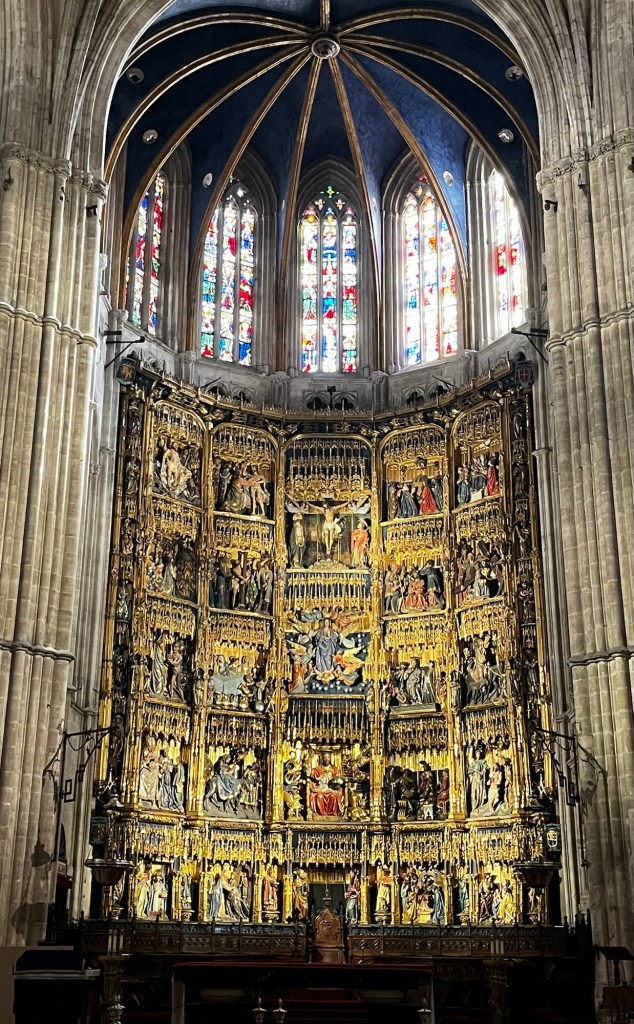
Those golden panels…were created in the 1500s by a Flemish artist. The facade is made of chestnut but the sculptures within are walnut, that has been gilded. They tell the story of Jesus and Mary in 23 scenes, starting at the bottom left. The central panel is dedicated to Christ the Savior.
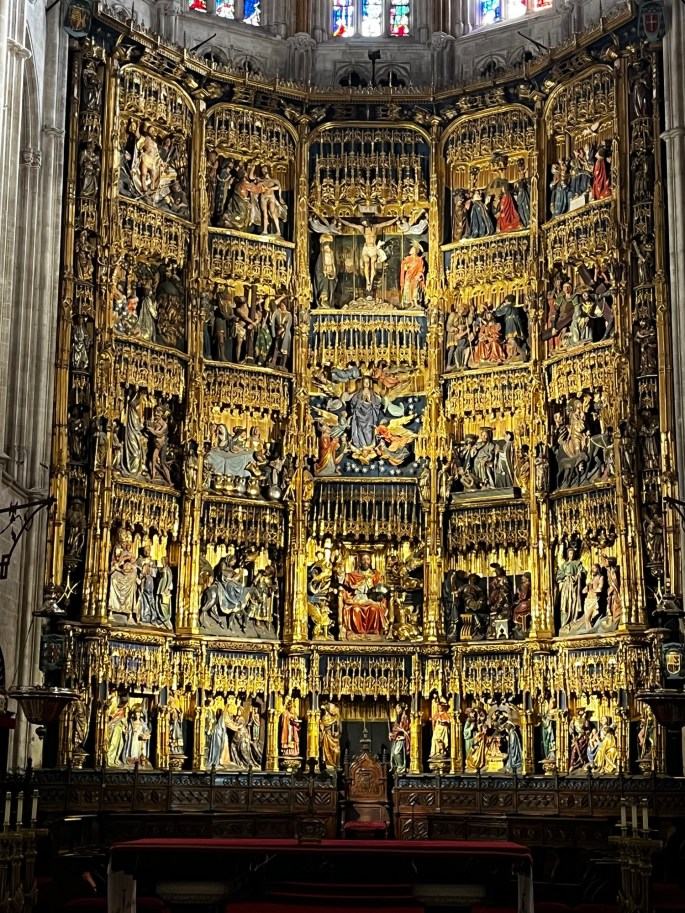
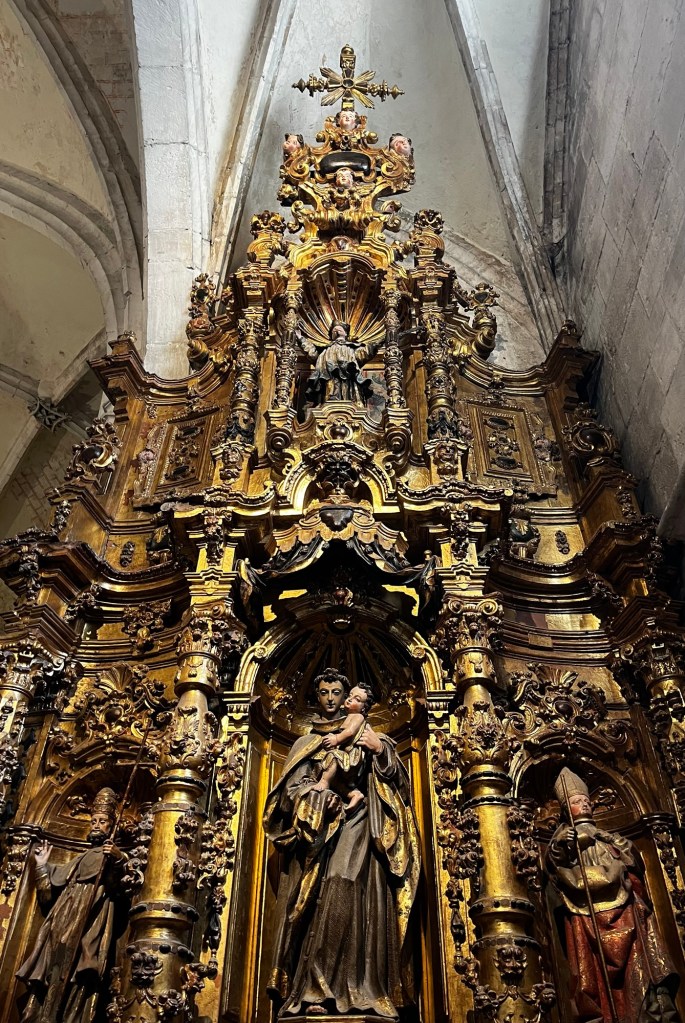
There are a number of side chapels, but this one had some unusual artwork as part of the alter.
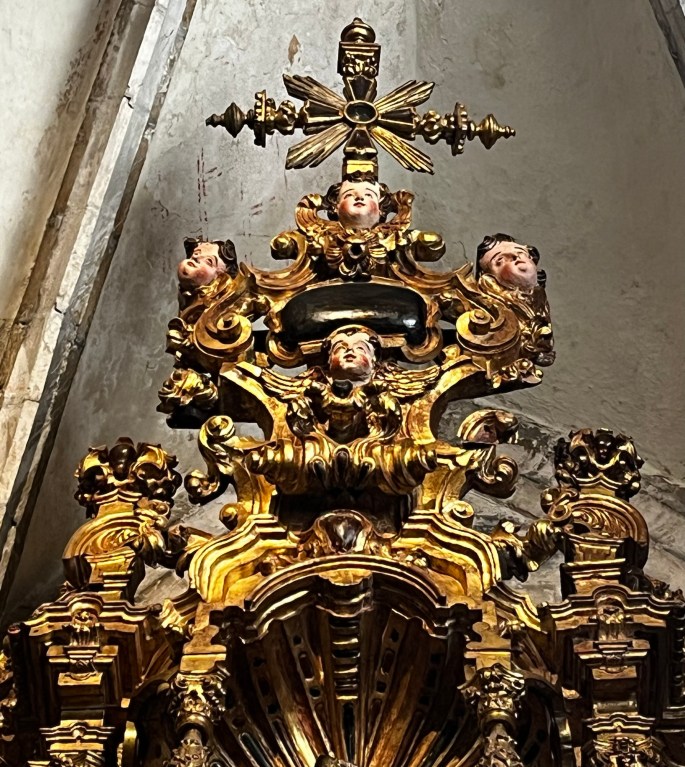
I’m sure these faces are there for an important message, but………a tad bit creepy.
Next we were directed upstairs to the most holy chamber. It is considered the most important surviving structure and the only thing remaining of the original medieval structure. It was built during the 9th century as a palace chapel for King Alfonso II of Asturias and the church of San Salvador of Oviedo. Apart from acting as royal chapel, the Holy Chamber was built to house the jewels and relics of the cathedral of San Salvador in Oviedo, a function it continues to have 1200 years later. The photo below is the entrance for the two rooms.

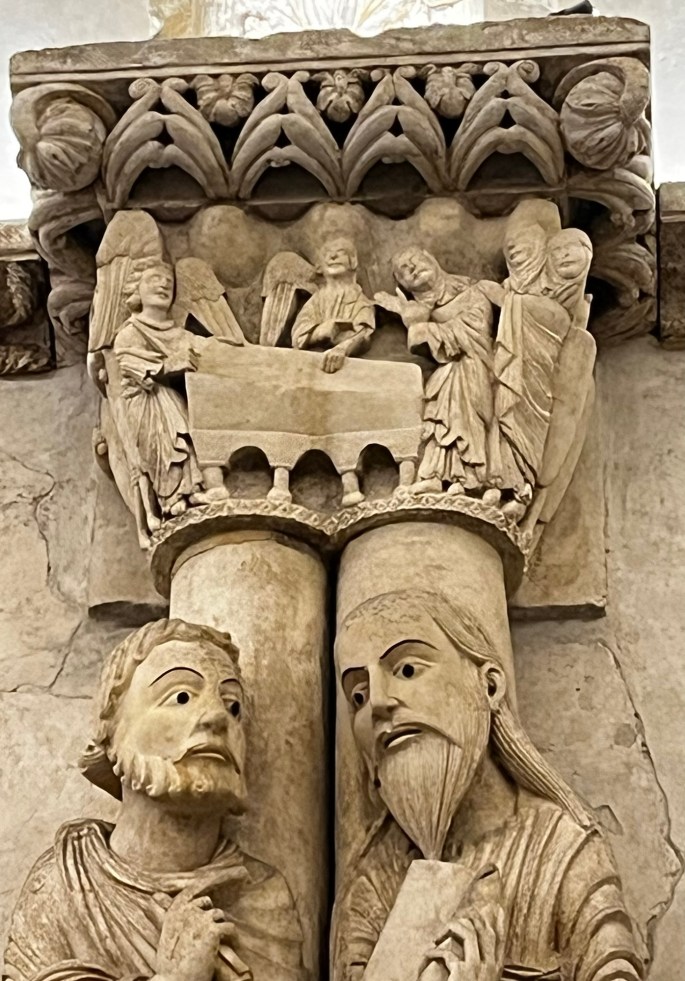
The first room has four columns with well-preserved sculptures. Each column has two apostles positioned to talk with each other.
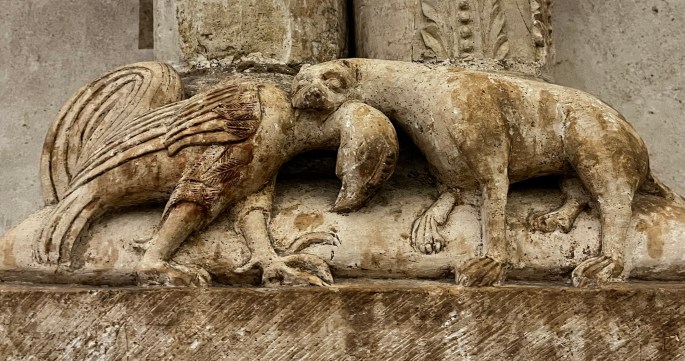
There are a number of interesting details at the bottom, all of which are different. Here’s an example.
It was built as a relics’ room to keep the different treasures brought from Jerusalem to Africa, and finally deposited at Oviedo.
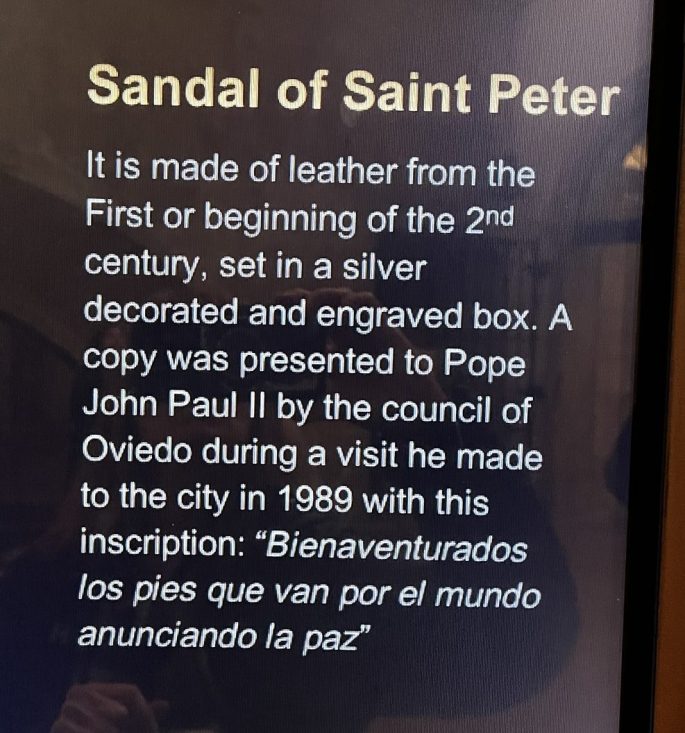
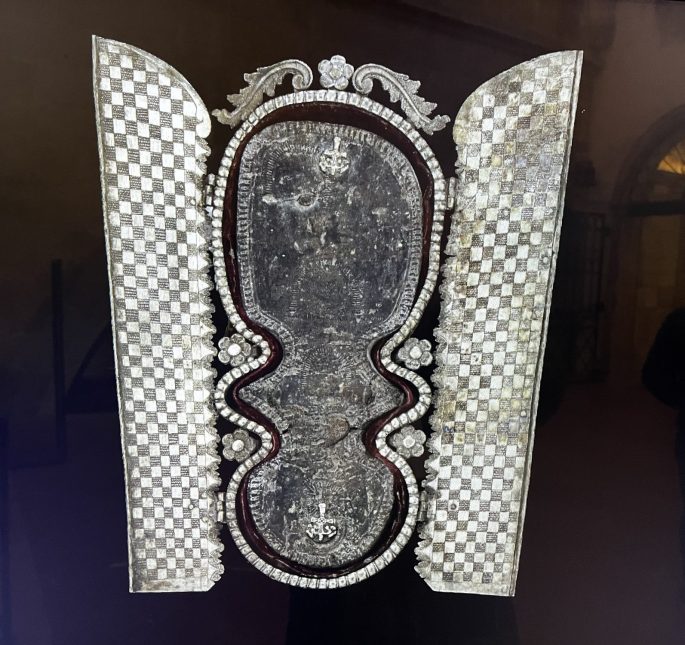
The Shroud of Oviedo is the most notable relic of Christ’s passion kept in the Arca Santa reliquary. The bloodstained cloth or sudarium (Latin for sweat cloth) is reputed to be the cloth wrapped around the head of Jesus Christ after he died and left in the tomb folded to the side at his resurrection.
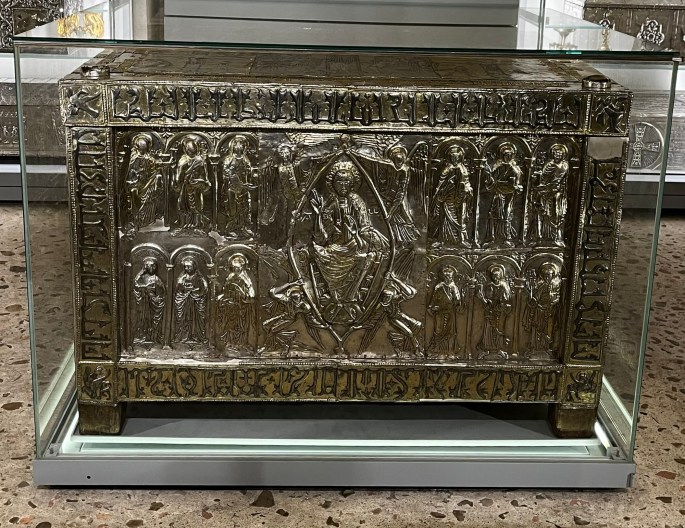
Additional internet research also indicated the following items are inside: a piece of the True Cross, pieces from the Crown of Thorns and the Holy Sepulchre and some bread from the Last Supper to name just a few.
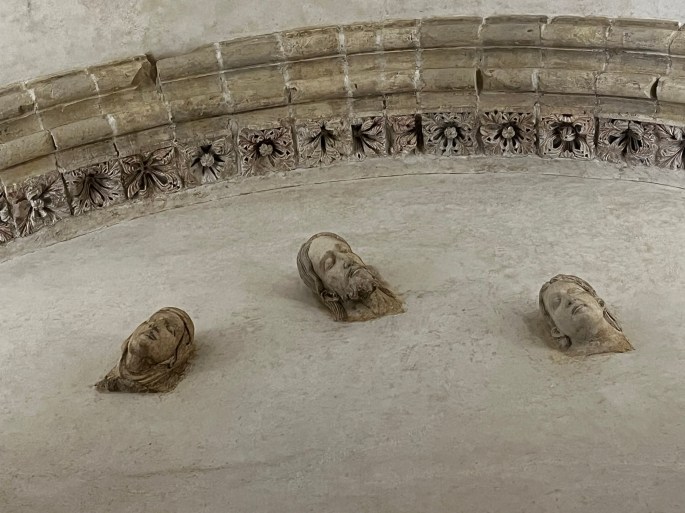
Exciting the Holy Chamber, I noticed these sculptures on the wall above the doorway. They were part of a painting on the wall that was richly colored. Their faces are the only thing that remains.
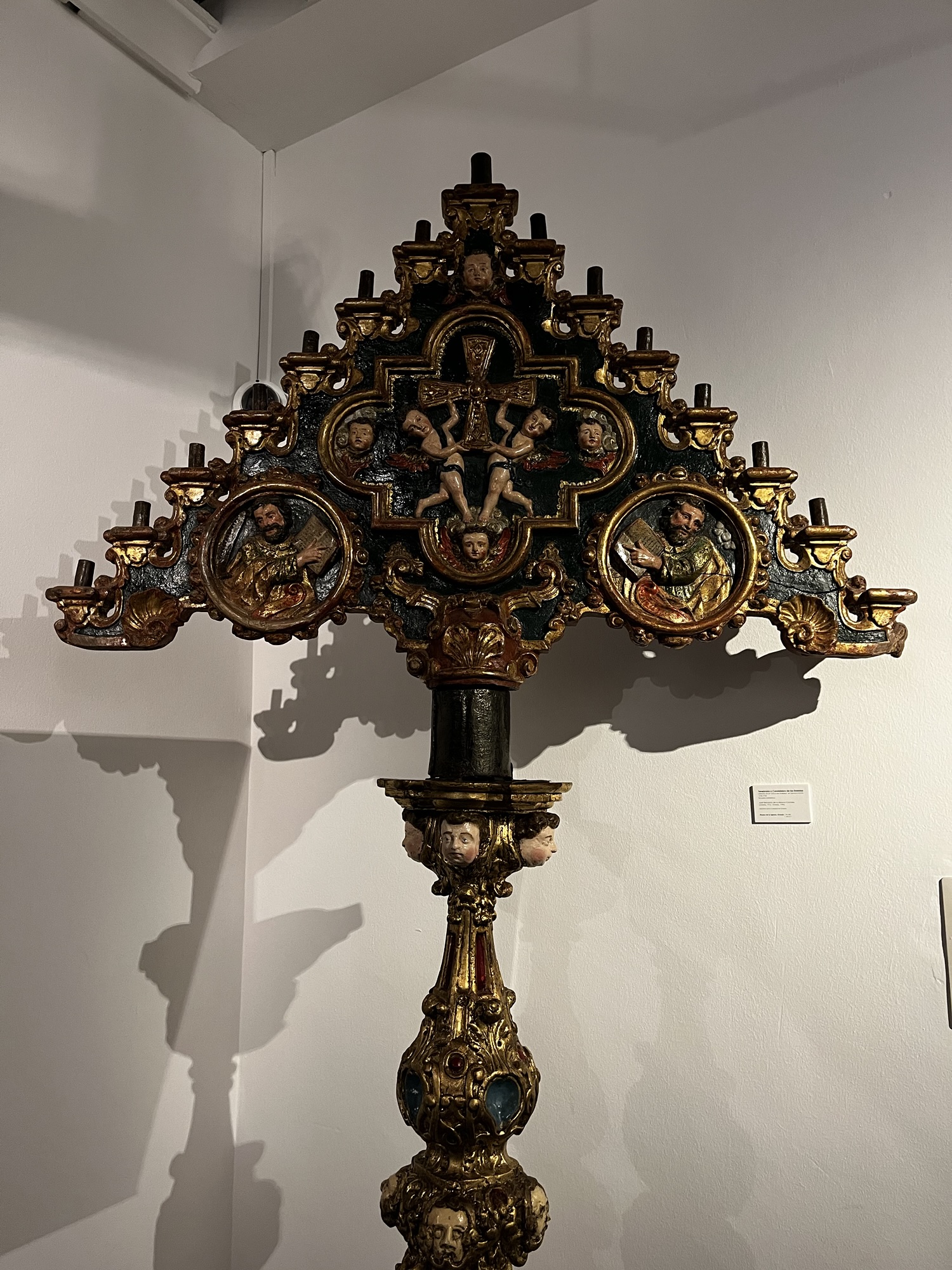
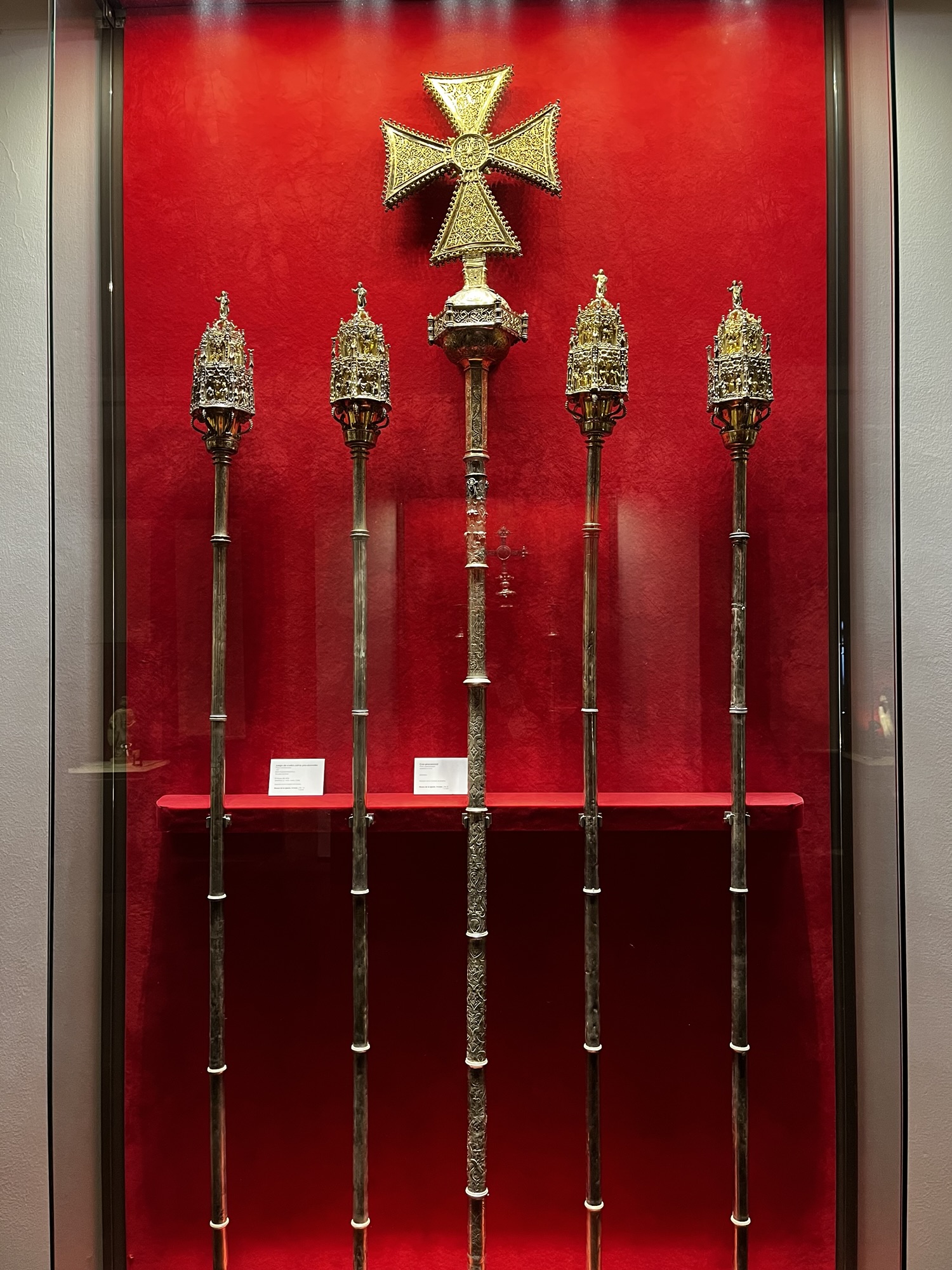
Following the tour route it took us another flight of stairs where there were five rooms for a museum. These articles have been curated, collected, donated and purchased for historical value. Here are a few things seen.

Going back downstairs, we discovered this courtyard. There was an ancient olive tree that had stood the test of time.

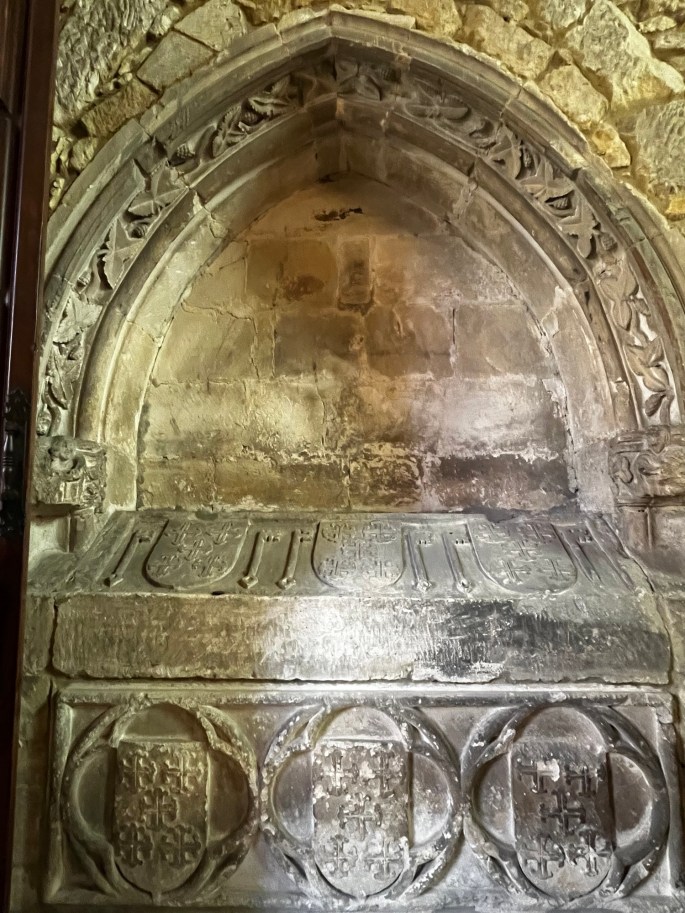
A burial crypt was also seen in this courtyard.
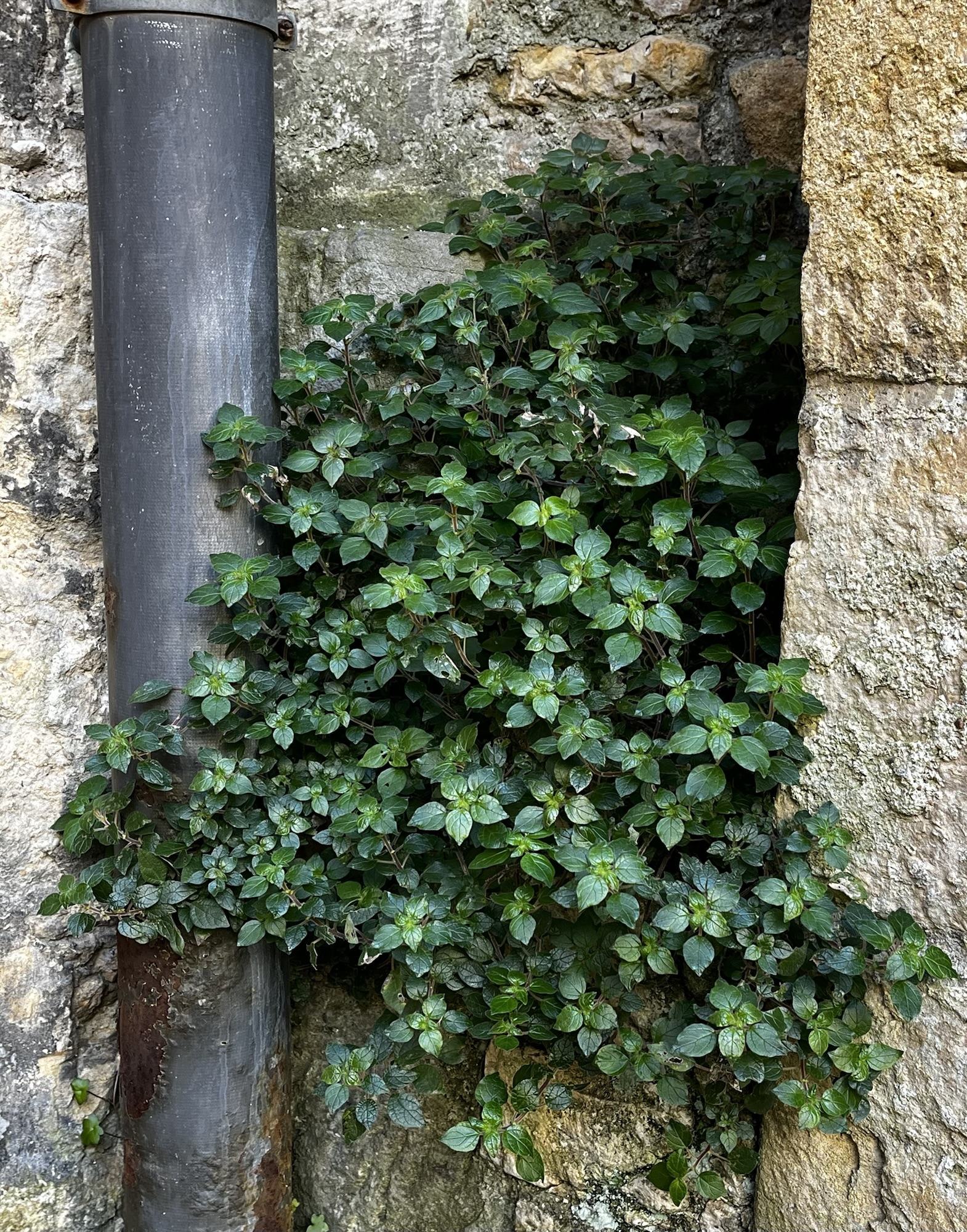
A cloister existed for meditation.
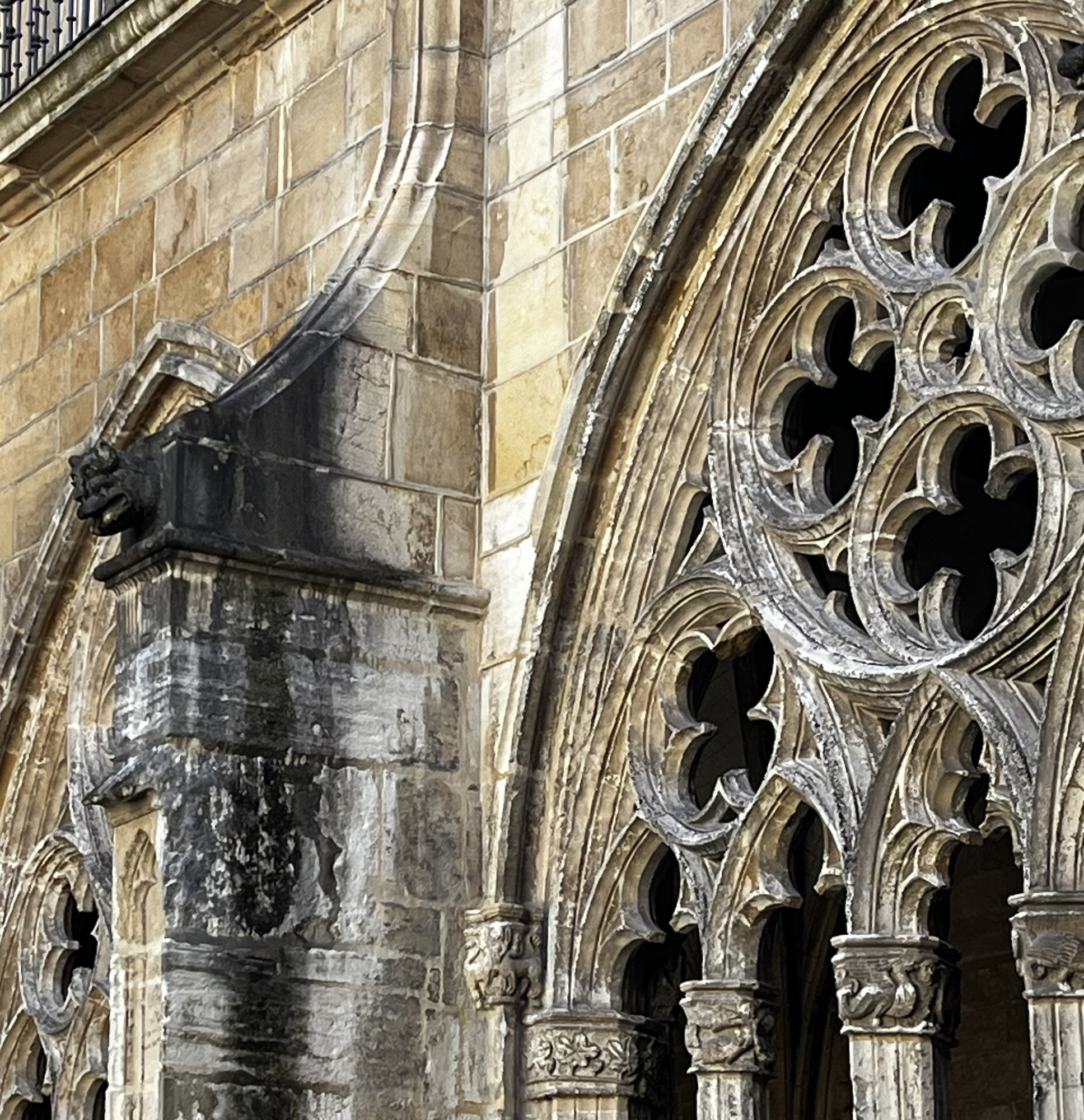
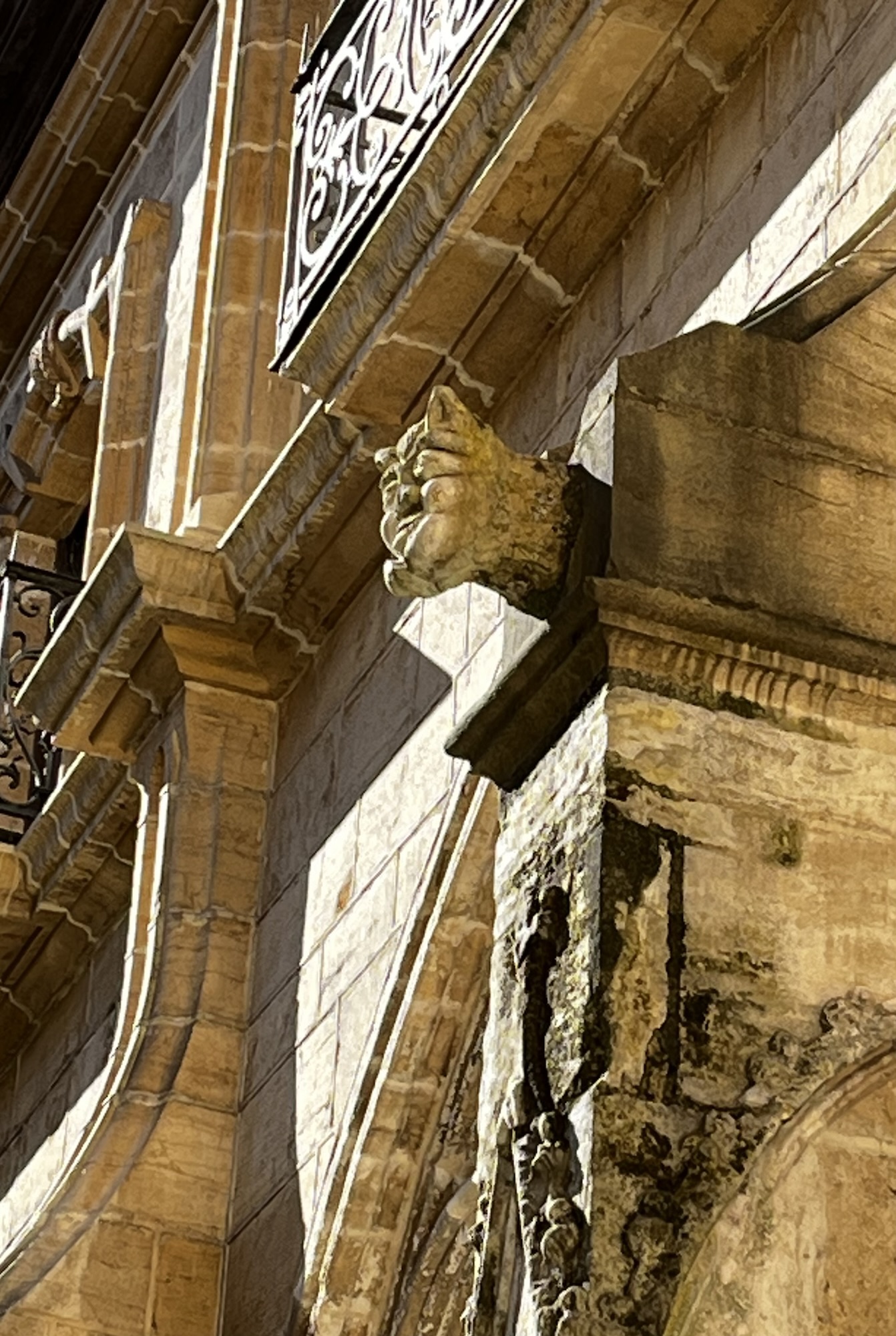
Along with some of the oldest crypts.
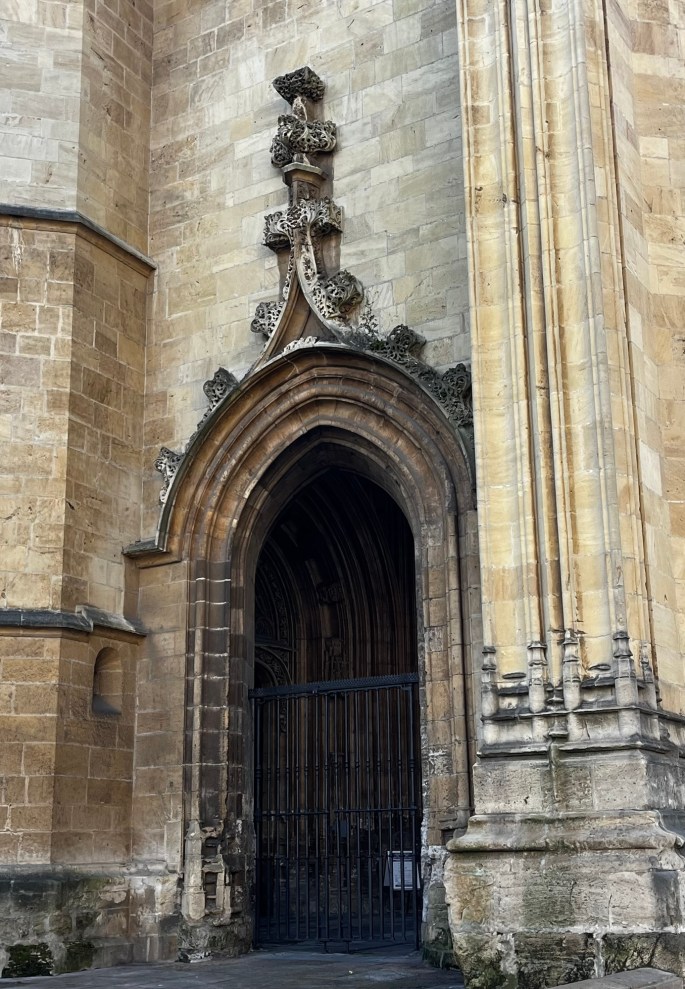
Upon exiting the cathedral this archway is placed on an angle for a specific reason. It led pilgrims to the Hospital of St. John, which no longer exists.
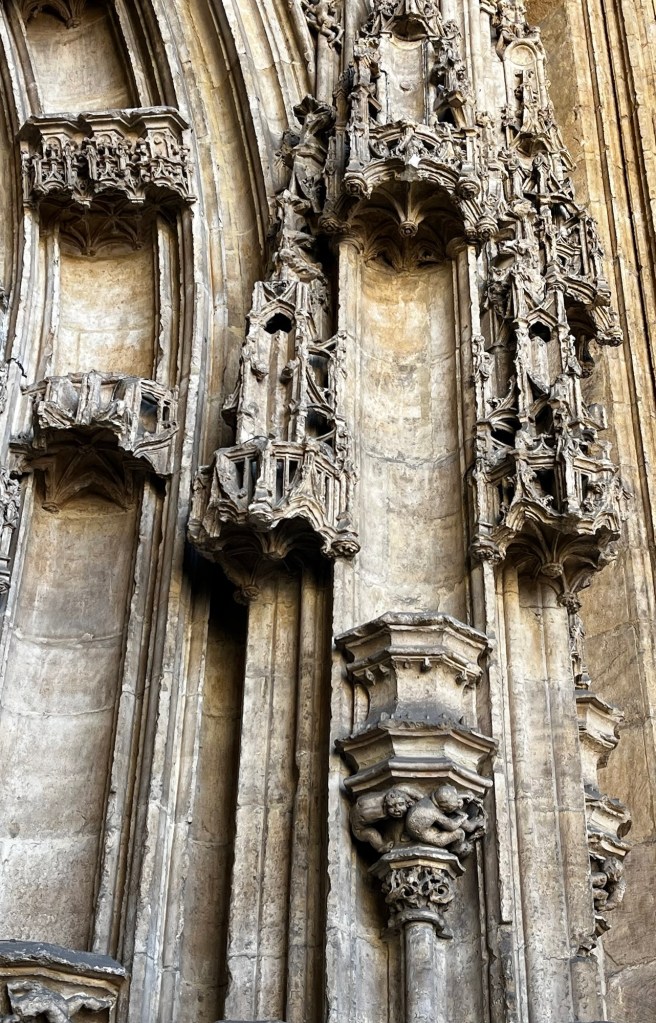
These alcoves on the outside were deliberately left empty. These are to be a reflection of the spaces that we ourselves must fill up with our life’s work.
One last photo of the cathedral. The tower has a bell made in 1219 and is the oldest bell still actively used in Europe.
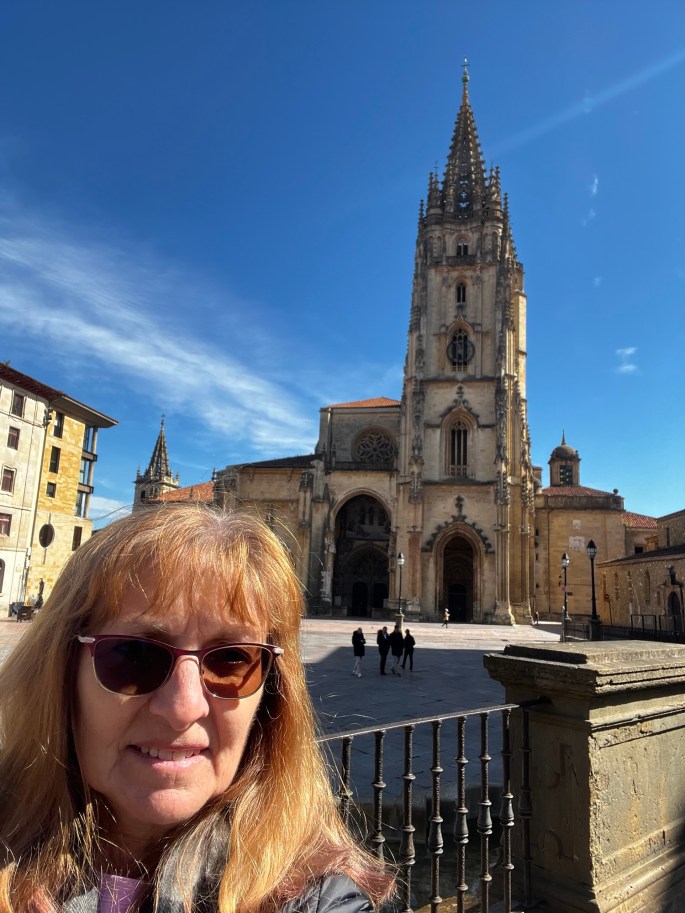
It’s time for a break in writing and a break from our church tours. This cathedral was the majority of our morning, so very interesting, so very old and so very well presented.
 Darden Travels