
We did some historic sites while in Madrid. One such site was the Royal Palace of Madrid.

It is the official royal residence of the Spanish royal family, although now only used for state ceremonies. The palace has 1,450,000 sq foot of floor space and contains 3418 rooms, making it the largest royal palace in Europe. Versailles is bigger, if you count the gardens.
If the Spanish king is in the building, a second flag would be flown.
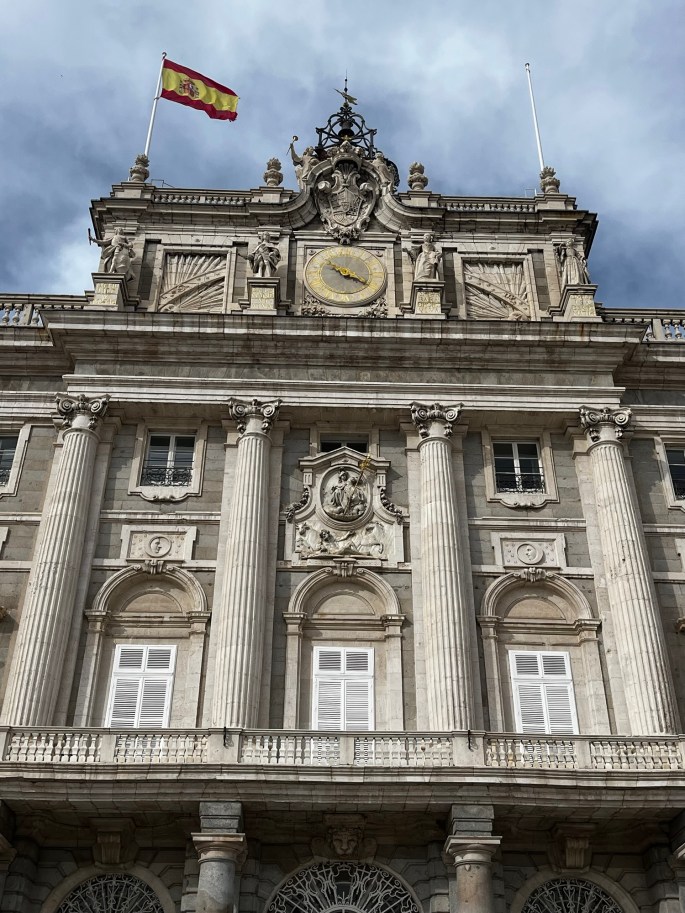
The palace is on the site of a by-gone Muslin era fortress constructed in the 9th century. While there had been a number of expansions and alterations through the years, the palace burned down in 1734. A new palace was built from scratch on the same site beginning in 1738.
The grand staircase is composed of a single piece of San Augustin marble and upon reaching tyhe top stair, turning around you are greeted with this imposing site.

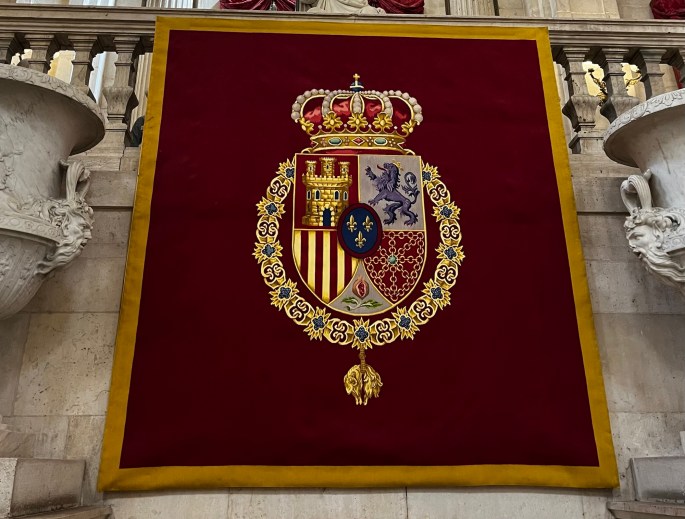
A close-up of their coat of arms…..
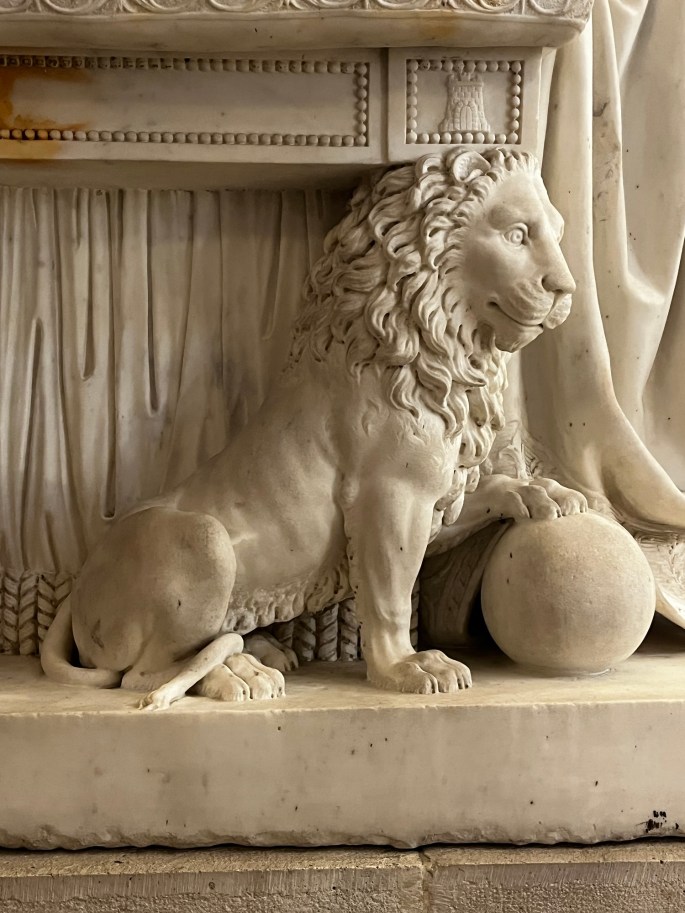
Carved lions guard the statue on both sides.
The frescos on the wall above the grand staircase depicts Religion protected by Spain. Everyone room had fantastic murals on the ceilings. It really was almost too much to take in. One could not absorb the beauty of the palace.

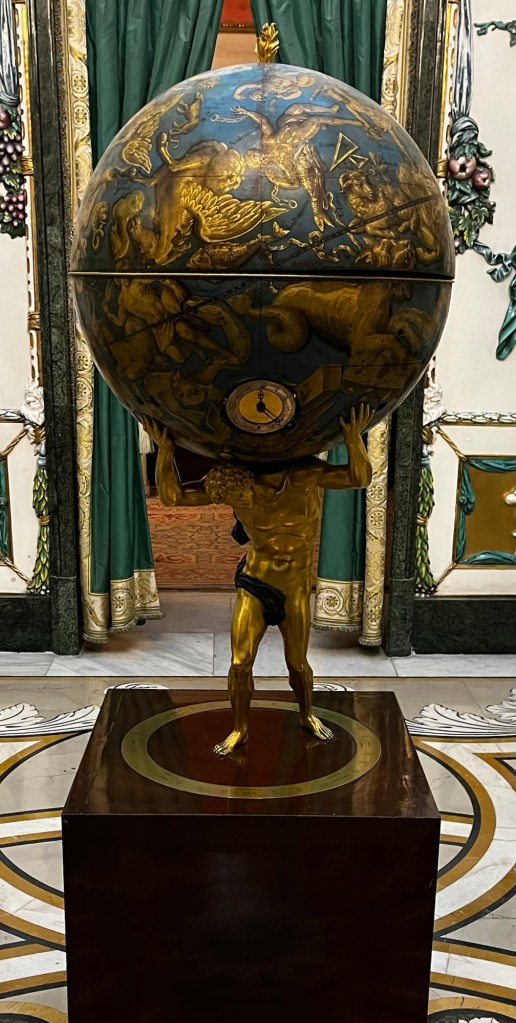
There is so much opulence that after a while the only difference is the overriding color in each room. We saw the King’s chambers, then the queen’s chambers. Clocks were a thing to be collected so I included a gallery of (some) of the numerous clocks we encountered.
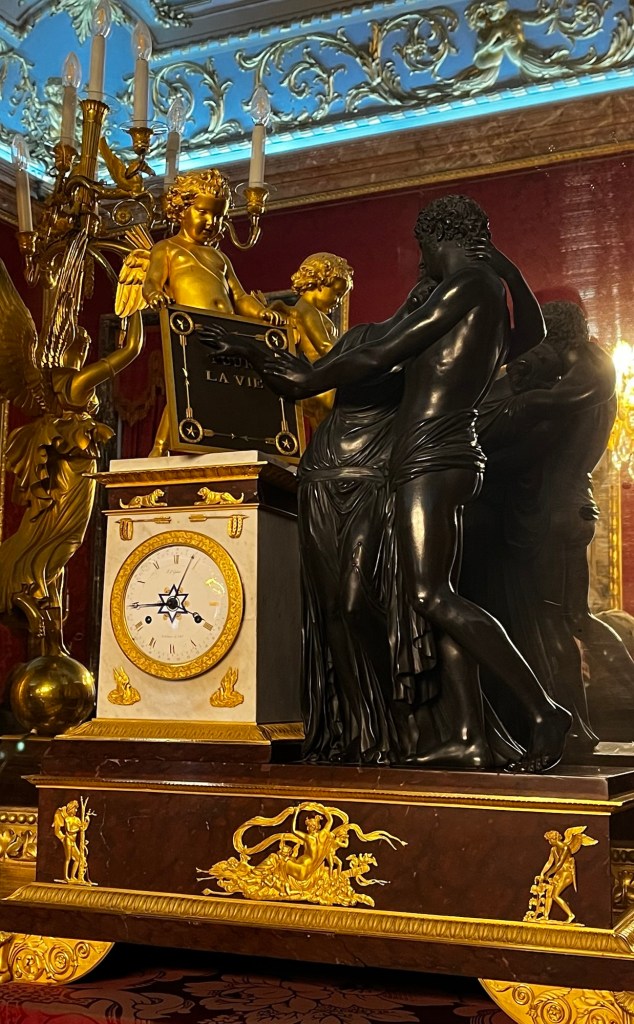

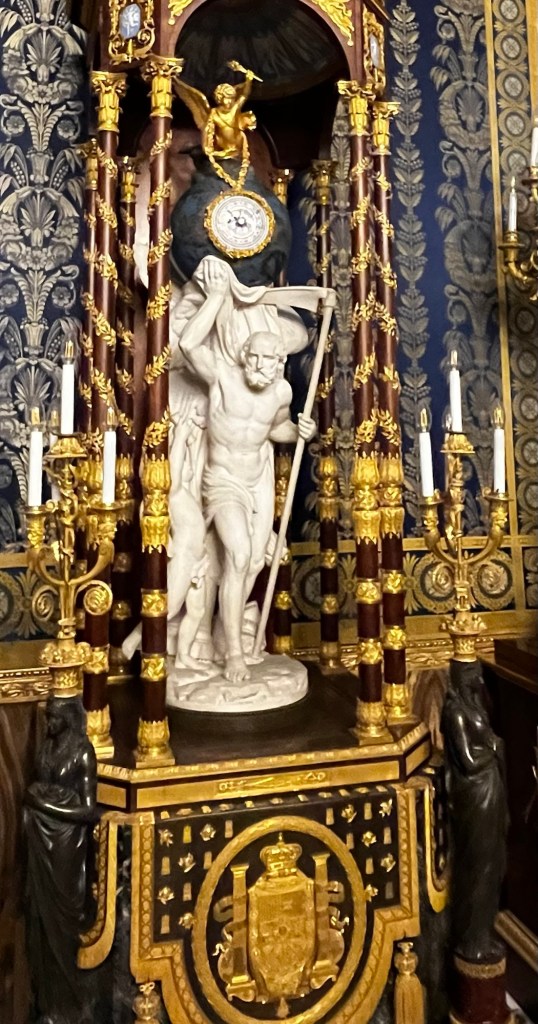
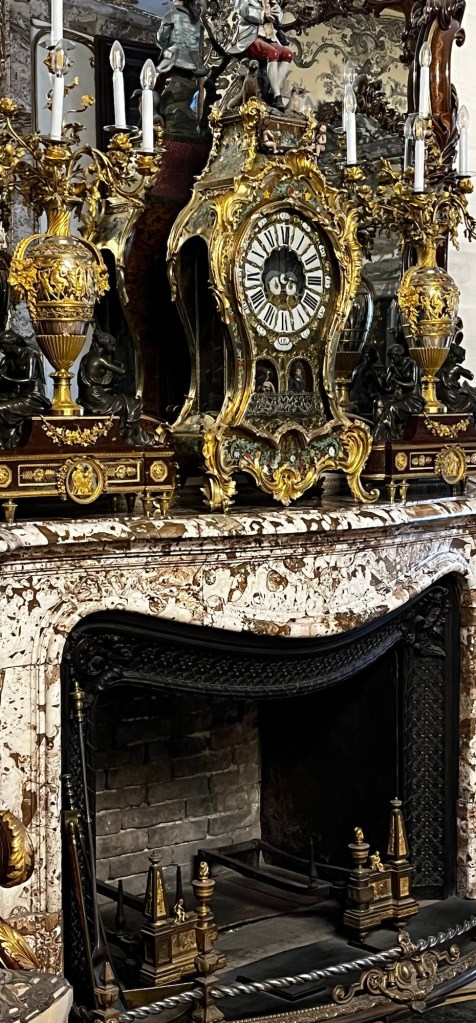
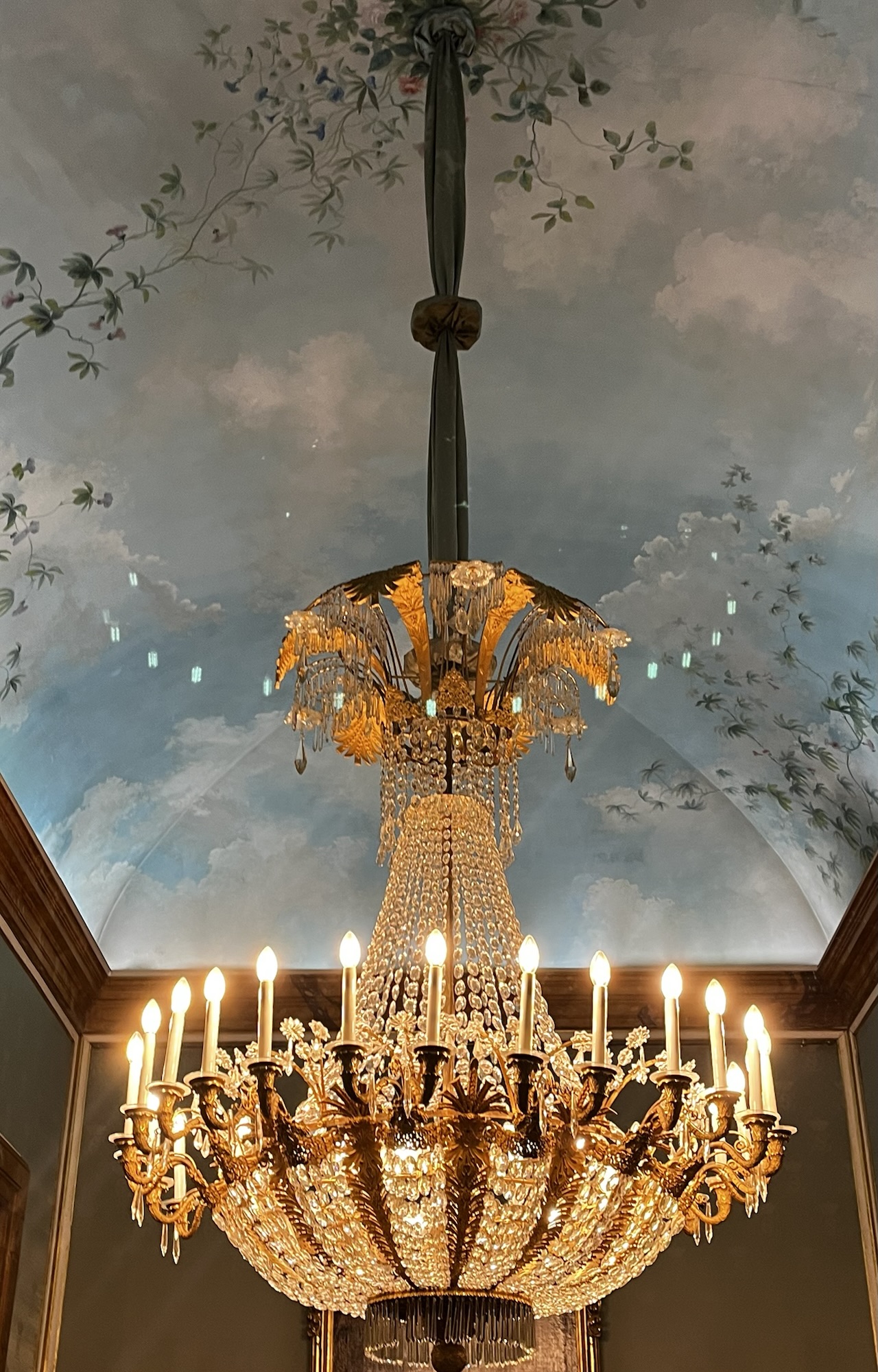
The chandeliers were amazing, some rooms having more than one. Here’s a small gallery.


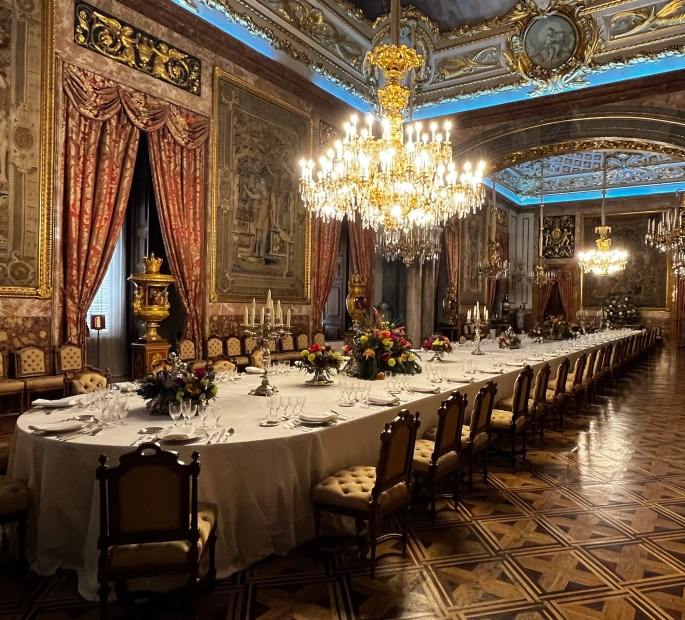
The banquet room was also imposing.
Which led us to their ‘pantry’ highlighting some of their porcelain and silver serving pieces.


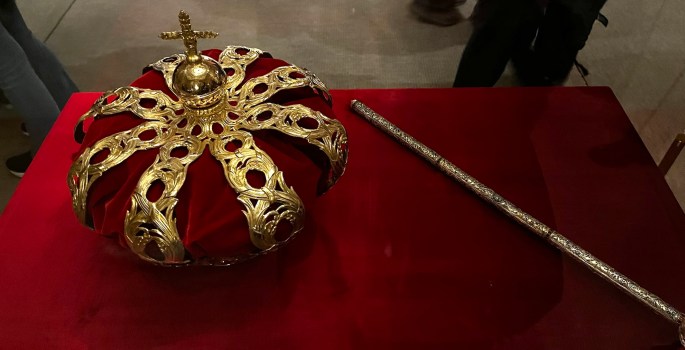
The throne room and jewel room were equally imposing.

We enjoyed the tour, especially the part where we got to ‘skip’ the line with our tour guide.
Next door is the Almudena Cathedral, I mean, literally right next door from the Royal Palace. It is the Catholic cathedral in Madrid and the seat of the archdiocese of Madrid. It seems to have been built on the site of a medieval mosque that was destroyed in 1083. The statue is a moument to Pope John Paul II.
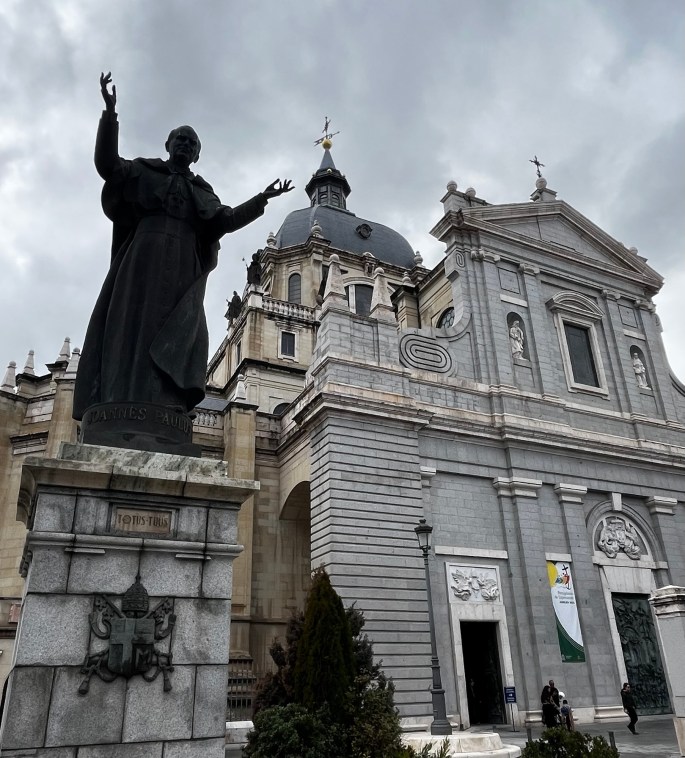
These doors were extremely tall. Hard to see that in my photo, but maybe you can guess the scale from the photo above.

It was started in 1883 but not completed until 1993 so it is a ‘newer’ church, with some modern touches. This was evident in the stained glass windows.
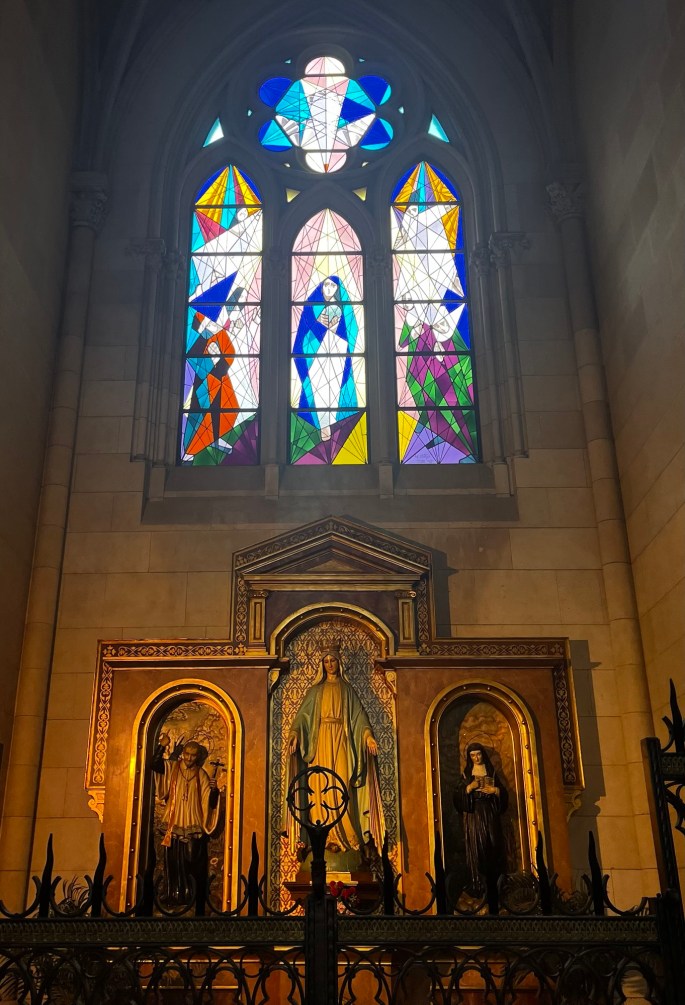
While no service was occurring, there was someone playing their organ. The organ was installed in 1999 after being made in Barcelona.

Since that doesn’t happen very often, I included a short video – which also gives a wider perspective of this modern church.
I totally loved the ceilings, they were so colorful and unexpected but inspired by Moorish designs. Here is the nave and the area above the pulpit.
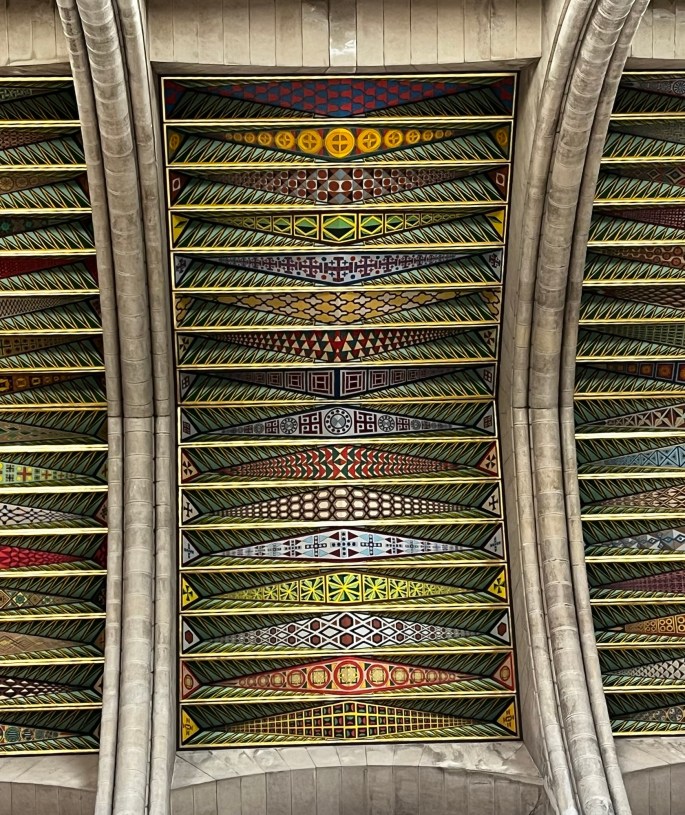
Such amazing colors.
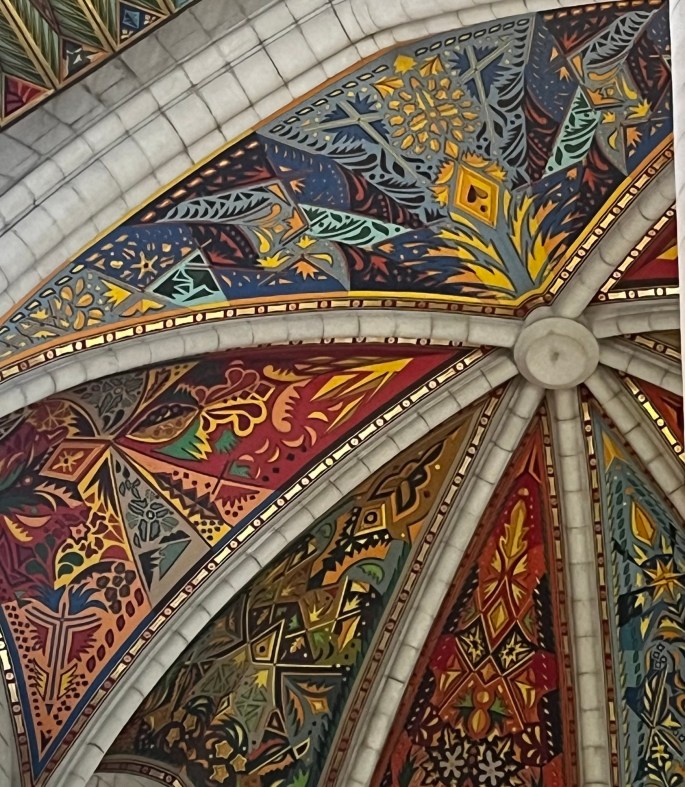
The Cathedral Crypt can be accessed via the Cathedral or a door along the side of the building, which is how we entered.
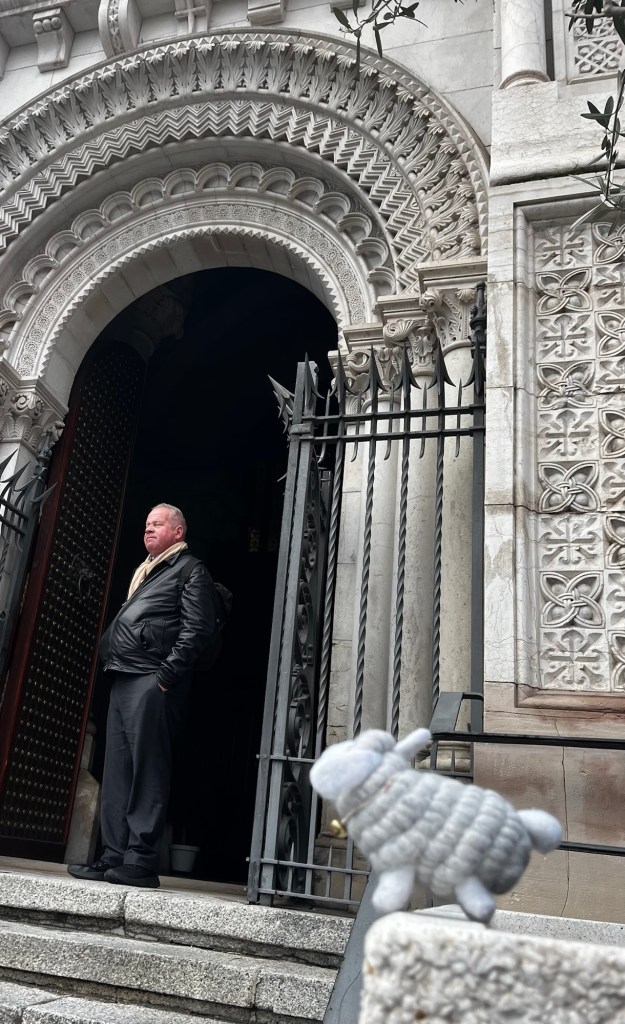
It is the largest crypt in Spain and completed in 1911. The chapels inside contain the tombs of important 19th century families.
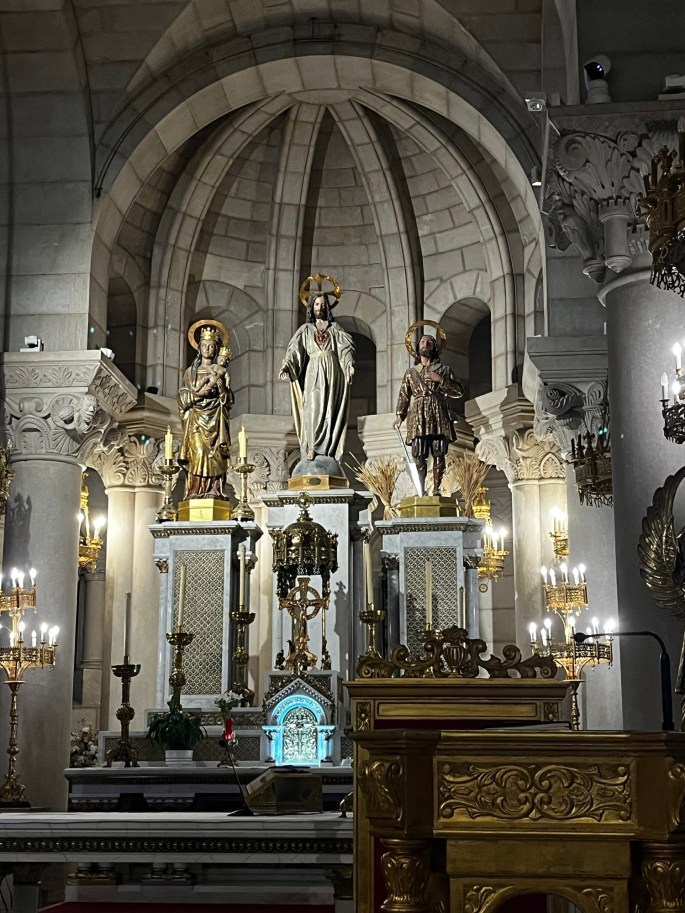
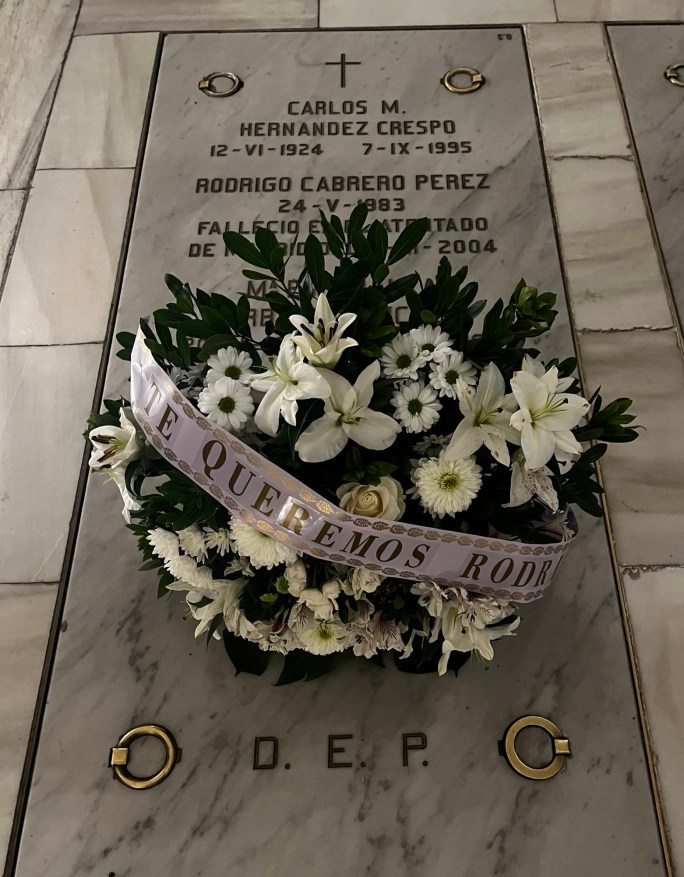
This was the first time we have seen flowers on the crypts. Once you look at the dates, then you truly realize this was much younger than most other crypts we have visited in Europe. For those, no family members are around to place flowers.

Some visitors feel the crypt is more beautiful than the cathedral and in some respects more well decorated. There are five naves and 20 chapels. The number of columns with trees, plants and flowers was amazing.
Typically, I enjoy the really old churches, cathedrals and basilicas more than the modern ones, but exploring both of these buildings was a nice juxtaposition of architedture.
We need more food!
 Darden Travels