
Michelangelo di Lodovico Buonarroti Simoni was an Italian sculptor, painter, architect, and poet of the High Renaissance. Born in the Republic of Florence, his work was inspired by models from classical antiquity and had a lasting influence on Western art. Michelangelo’s creative abilities and mastery in a range of artistic arenas define him as an archetypal Renaissance man. Michelangelo achieved fame early with the statue of David being one of his best-known works, sculpted before the age of thirty.
Booking this tour was one of the expected highights of our time in Florence. Going into the Galleria dell-Accademia The Rape of the Sabine Women was the first thing seen. Our guide walked around the statue to show the different perspectives.
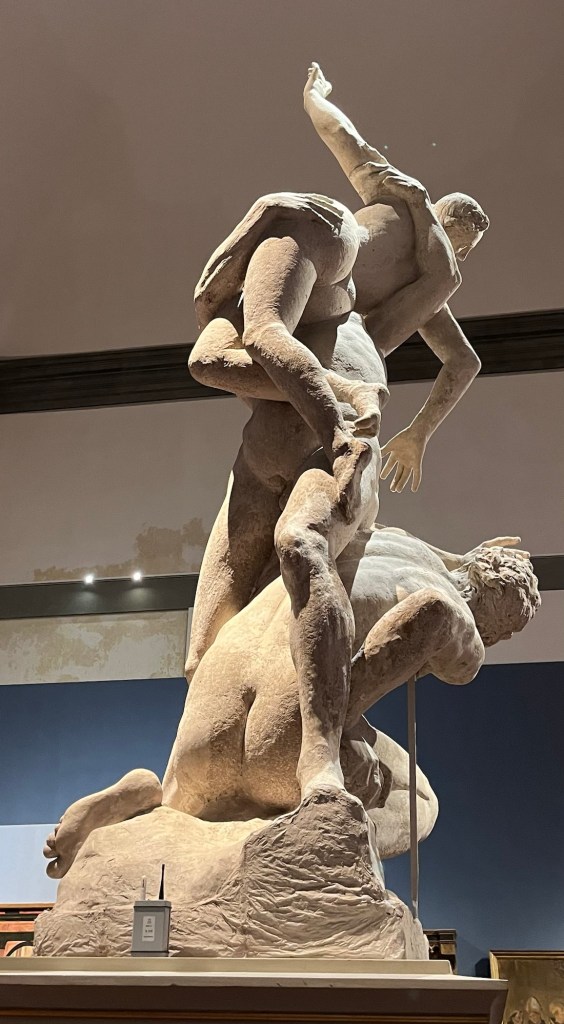
The story goes the abduction of Sabine women occurred in the early history of Rome shortly after its founding in the mid-8th century BC and was perpetrated by Romulus and his predominantly male followers. With Rome growing at such a steady rate in comparison to its neighbors, Romulus became concerned with maintaining the city’s strength. His main concern was that with few women inhabitants there would be no chance of sustaining the city’s population, without which Rome might not last longer than a generation.
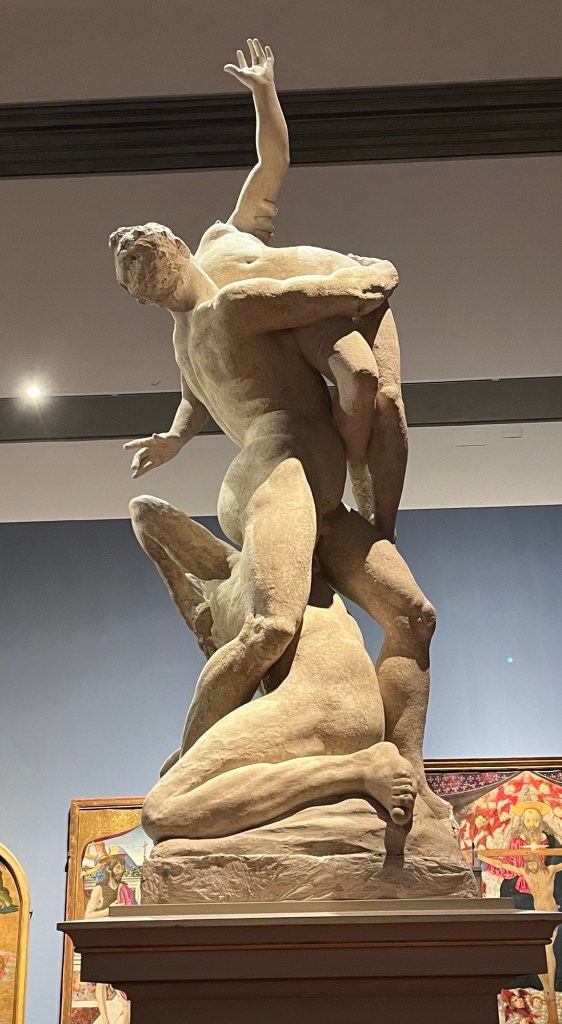
The Romans then set out into the surrounding regions in search of wives to establish families with but were unsuccessful. The Sabines feared the emergence of a rival society and refused to allow their women to marry the Romans. Consequently, the Romans devised a plan to abduct the Sabine women during an upcoming festival.
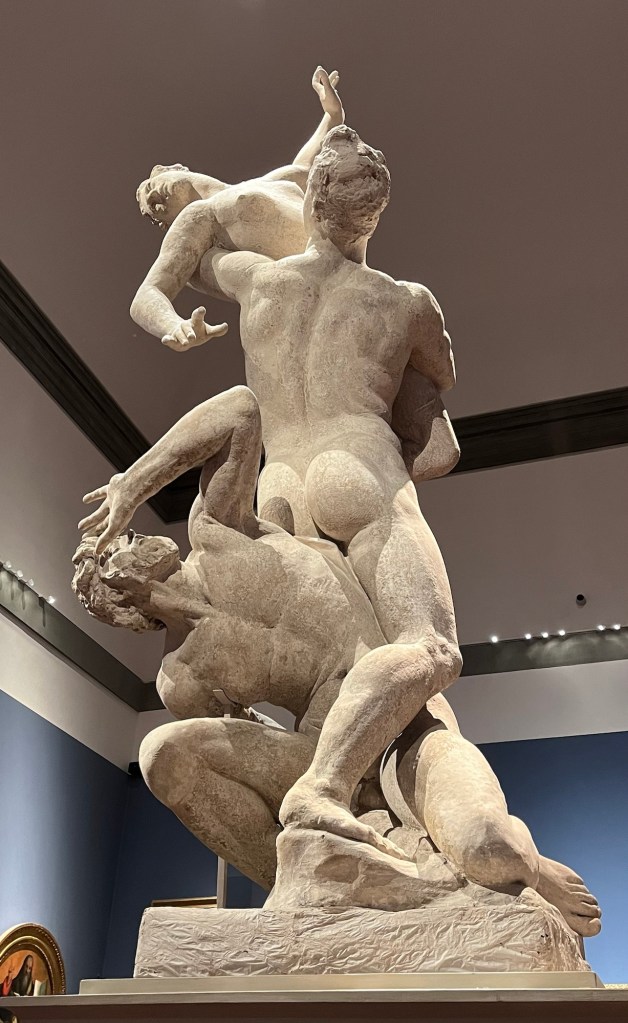
The story was part of the founding mythology of Rome and historically disputed.
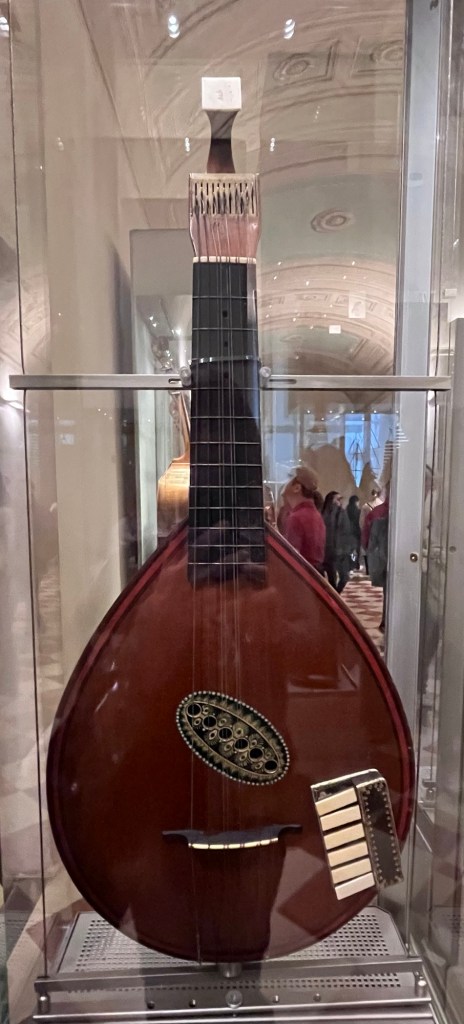
The next room was dedicated to some musical instruments from the collection of the Medici family. Their medallion seen under the strings indicates this was made for the Medicis.
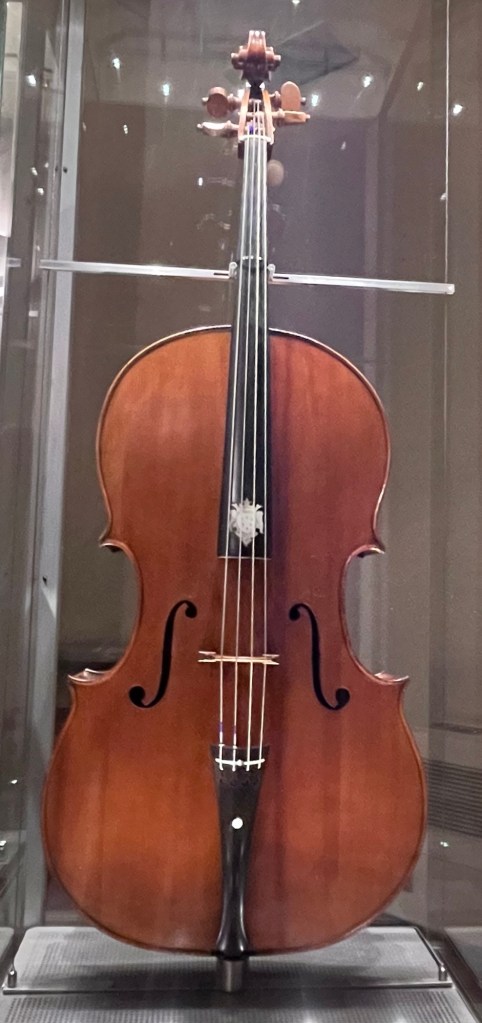
There was one display with musical instruments that no longer exist. Interesting. Hmmm I wonder why……
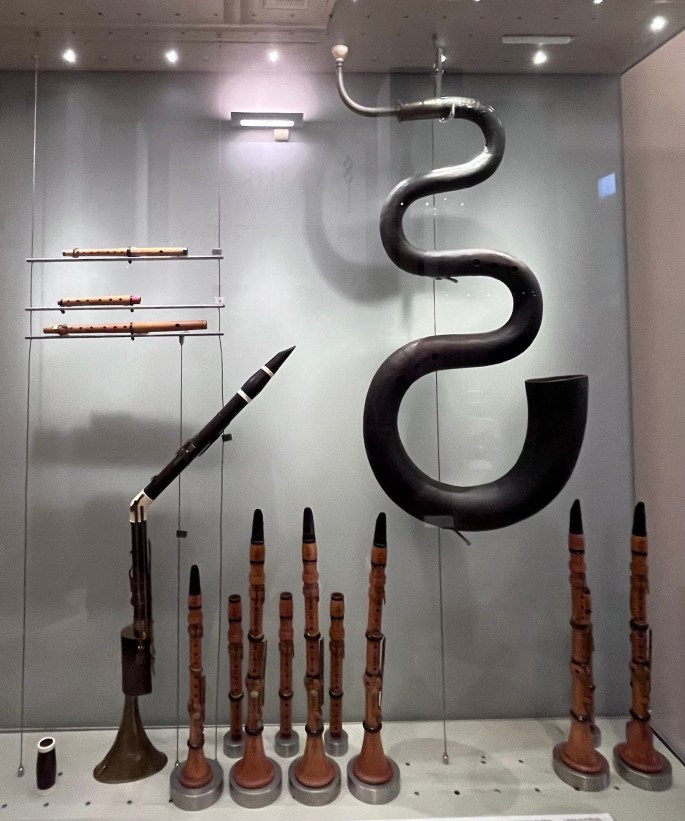
Here they tried to combine two instruments together – notice the piano keys? This was another idea that didn’t take off.
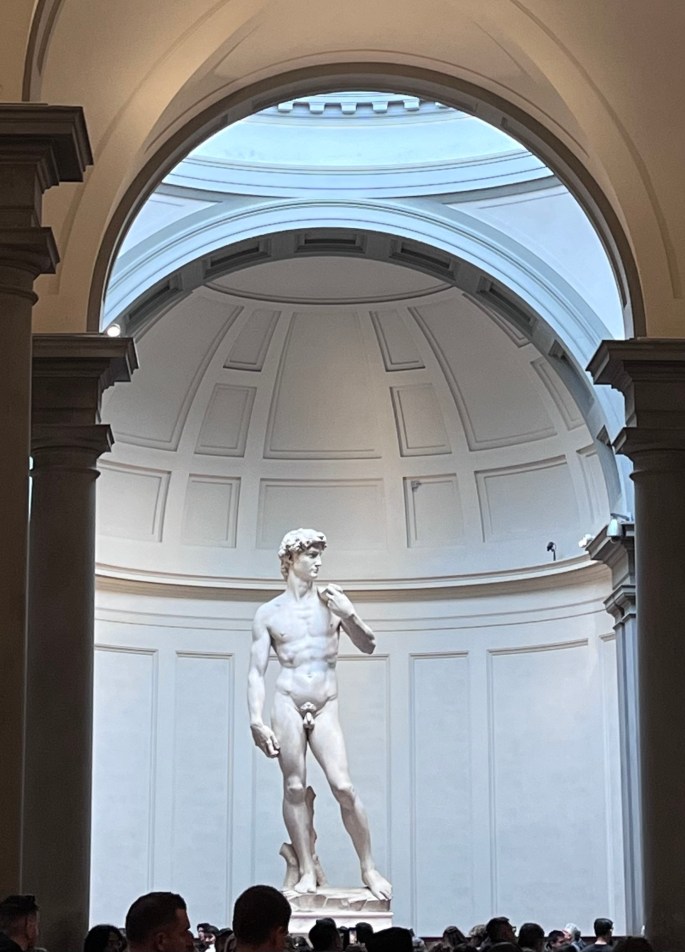
We walked through a few more rooms before walking into the main reason for booking the ‘skip the line’ tour. With a height of 17 ft, the David was the first colossal marble statue made in the early modern period following classical antiquity, a precedent for the 16th century and beyond.
Michelangelo developed his love of marble when his family returned to Florence. At the death of his mother when he was six years old, he lived with a nanny and her husband, a stonecutter, in the town of Settignano, where his father owned a marble quarry and a small farm.
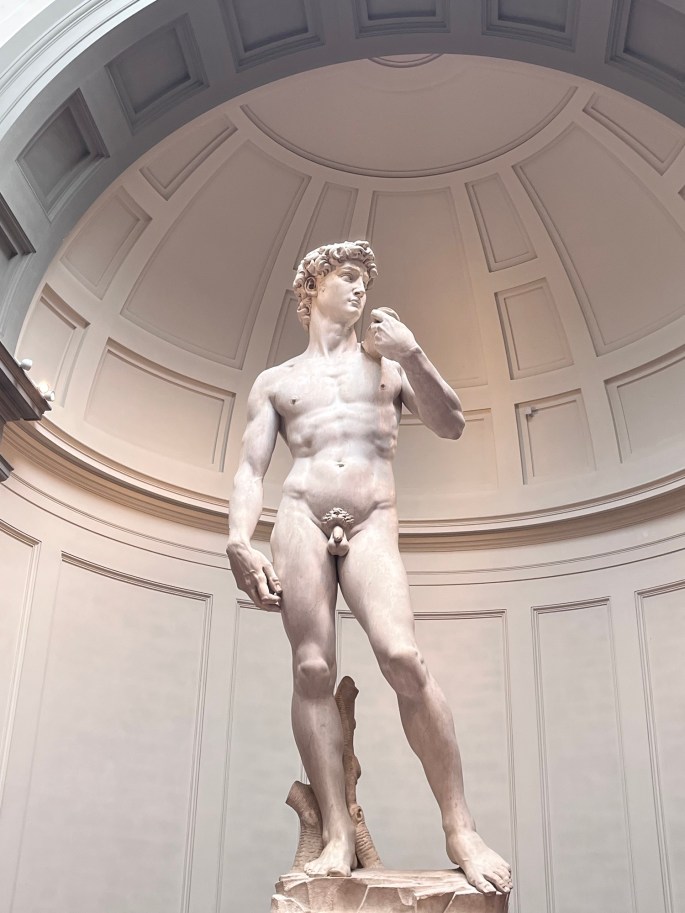
The pose of Michelangelo’s David is unlike that of earlier Renaissance depictions of David. David is depicted before his battle with Goliath. Rather than being shown victorious over a foe much larger than he, David looks wary as he sizes up the giant Goliath before the battle has actually taken place. His brow is drawn, his neck tense, and the veins bulge out of his lowered right hand.
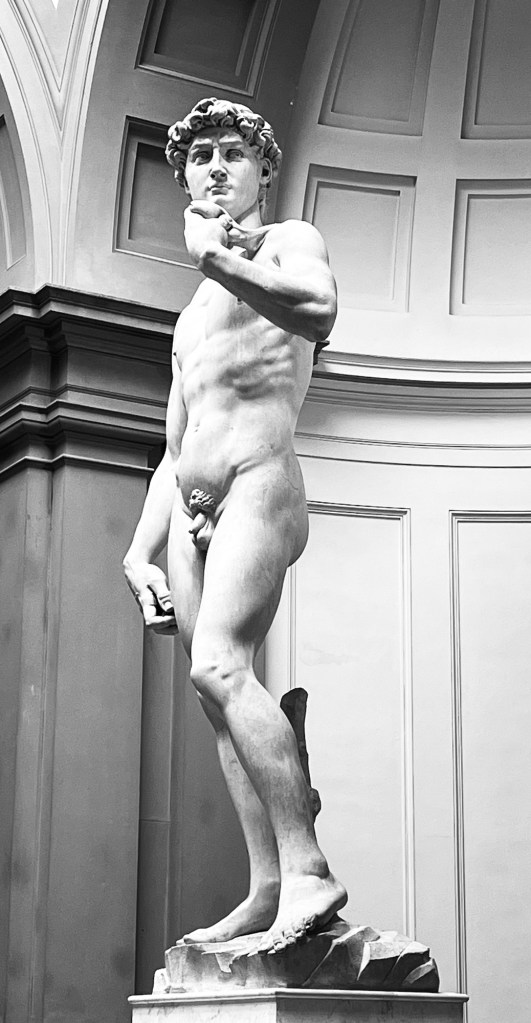
Visitors can walk around the statue but not sure most take a photo from this angle.
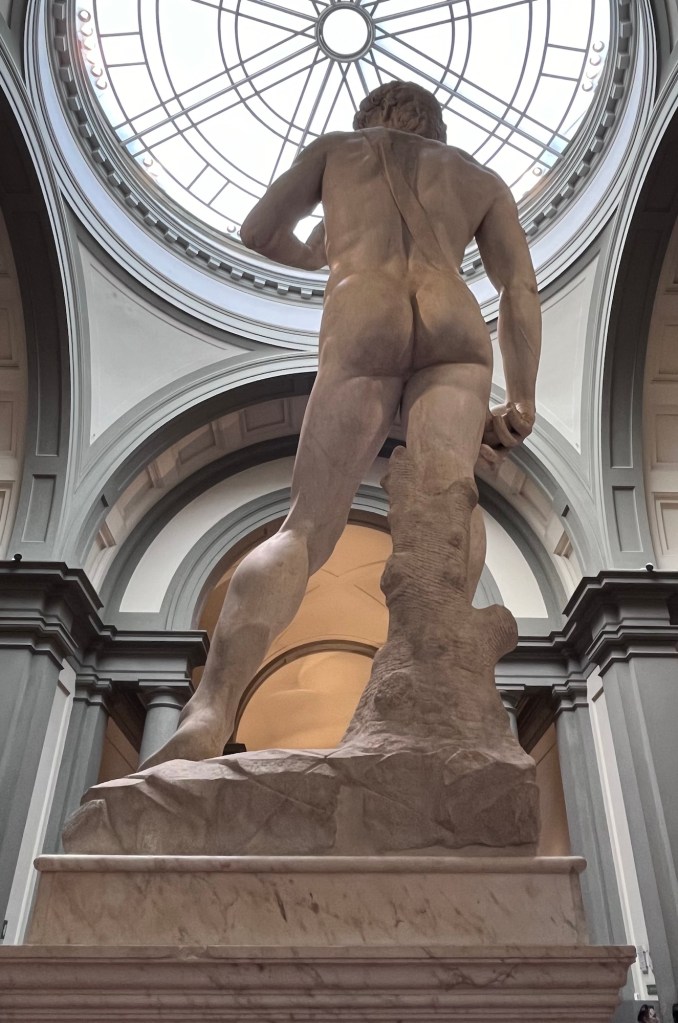
The massive block of white marble that was to become the David, was of bianco ordinario grade stone, rather than the superior statuario. It came from the old Roman Fantiscritti quarry at the centre of the Carrara marble basins. He was not the first sculptor to attempt this project but the third. In August 1501, Michelangelo was given the official contract to undertake this task.

But we didn’t stop with Michelangelo’s David. Another afternoon we met the same tour guide from earlier in the week, Guido, and learned much, much more about the Medecis than expected. He had a great passion for art which encouraged us to book this particular tour. He called the Medeci Chapel a ‘hidden gem’. He was right.
The Sagrestia Nuova or New Sacristy, also known simply as the Medici Chapel, was intended as a mausoleum or mortuary chapel for members of the Medici family. Constructed in 1520 it was designed by Michaelangelo.
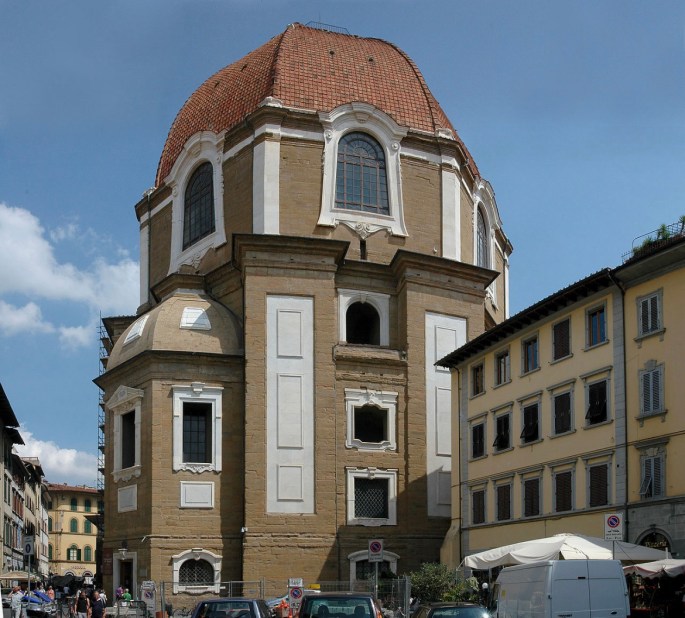
After a fairly extensive explanation of the Medici family tree, we went upstairs and was instantly WOWed!

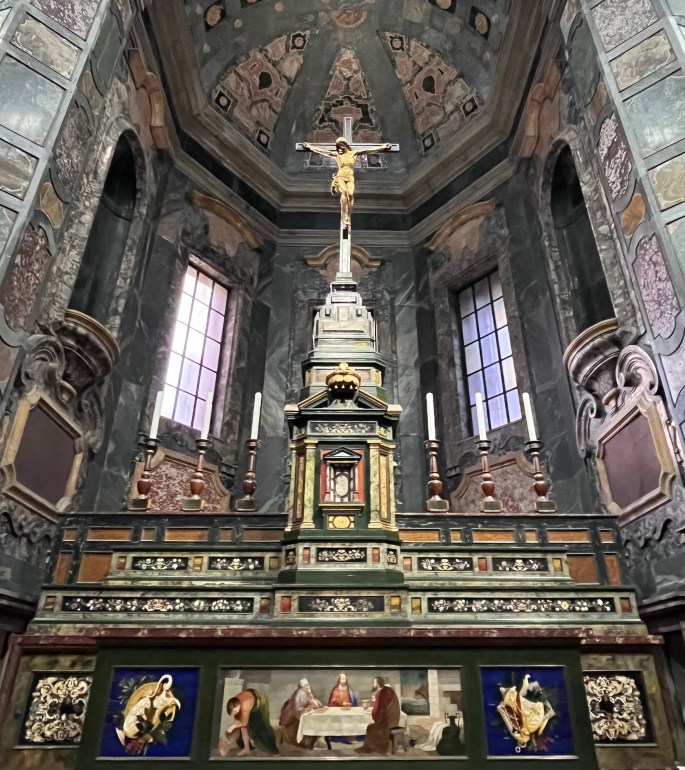
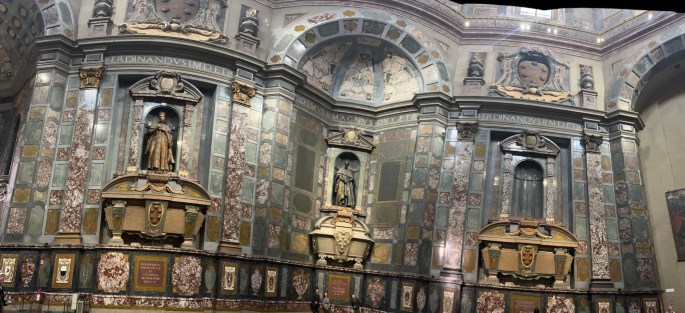
You might notice the empty spaces where statues were originally intended? Money was available for the two statues, then ran out. Let’s not forget the dome.
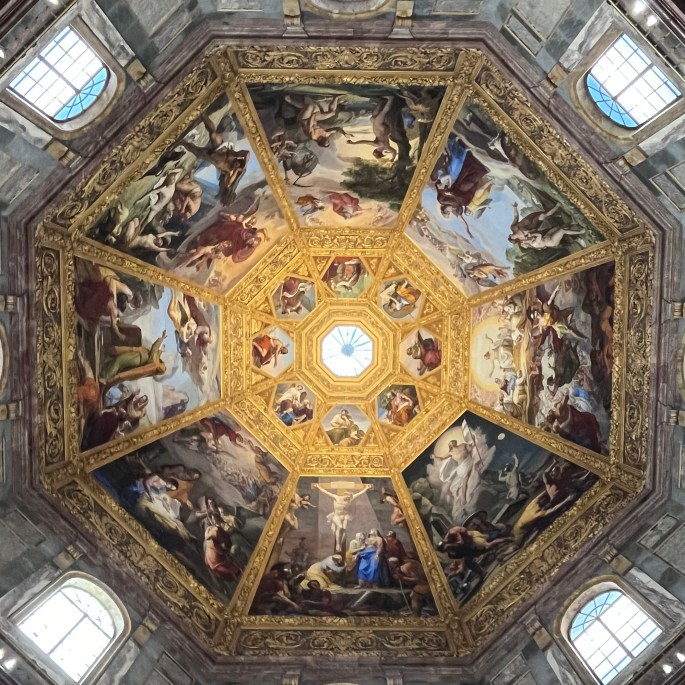
While this was truly awe-inspiring, a short passageway led to an enclave of more statues by Michaelangelo.
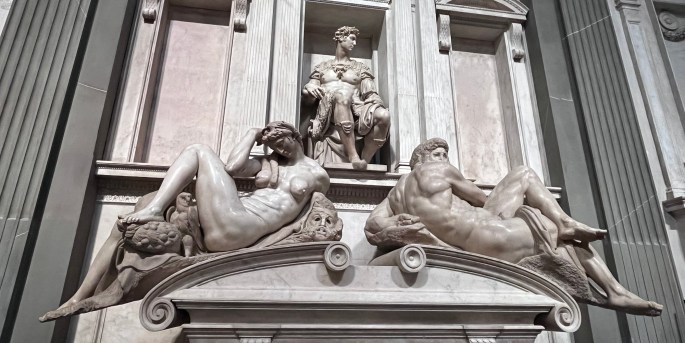
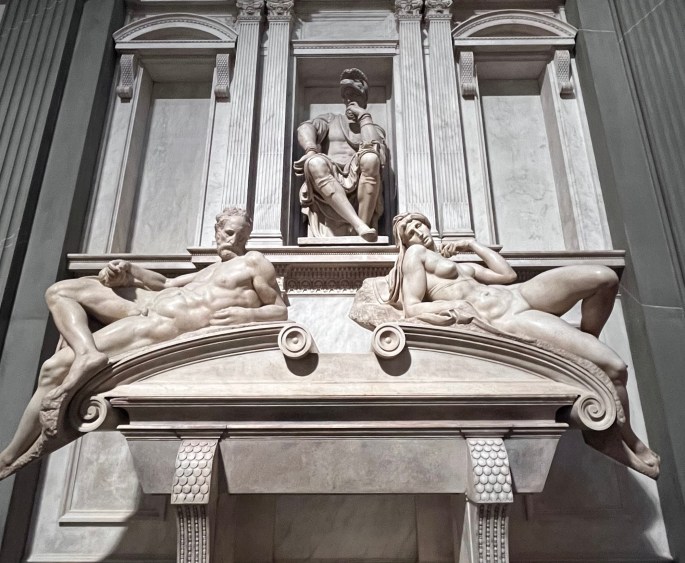
The center sculpture is called ‘Madonna and the child’ and completed by Michelangelo with the other two completed by those that worked with him.
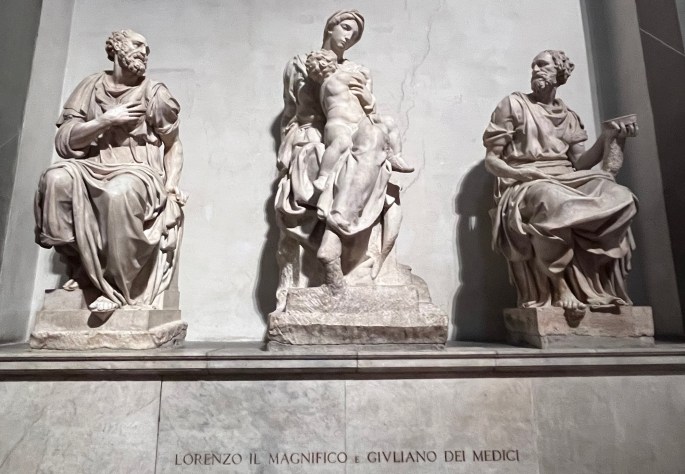
This definitely was one of Florence’s Hidden Gems and glad that we stopped in.
 Darden Travels