
Piazza Navona – a public open space in Rome. It was one of several that popped up when researching our trip. Later this day we had a tour booked for The Vatican, so we had free time to wander the historic streets, grab a cappuccino & croissant and soak in the ambience of Rome.
The space was initially used in the 1st century as the Stadium of Domitians. Ancient Romans came here to watch games. Following the Fall of Western Rome, the stadium fell into ruins and was quarried for building material. Little to nothing remains of that. It was re-energized in the 15th century when the city market was transferred here.
The primary reason on this day and time to visit was for the (3) fountains. We turned the corner and this was the first thing we saw – fountain was drained and work being done.
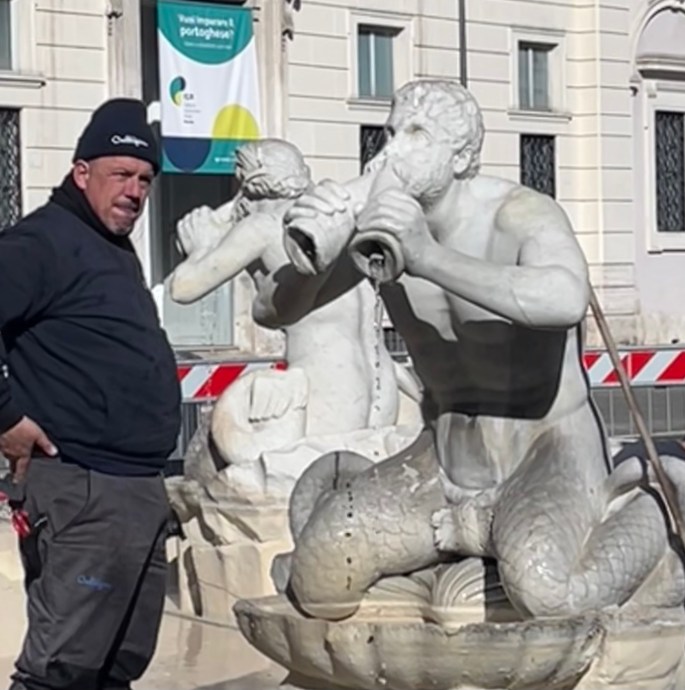
Bummer – this was going to be a wasted trip.
Nope – only one of the three fountains was not working. This was the centerpiece of the piazza.
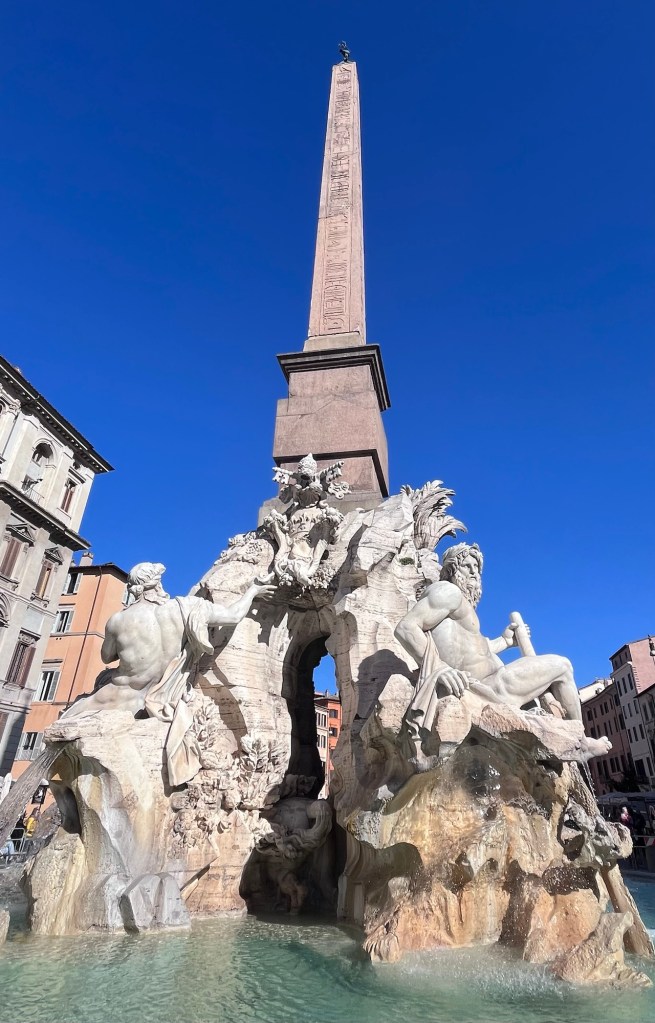
Called the Fountain of Four Rivers and designed in 1651 to be representative of the spread of papal authority. There was so many details wrapped up in this fountain. You could keep circling and find more things during each circumference.
The four rivers represented the Nile (Africa), the Danube (Europe), the Ganges (Asia) and the Rio de la Plata (Americas).
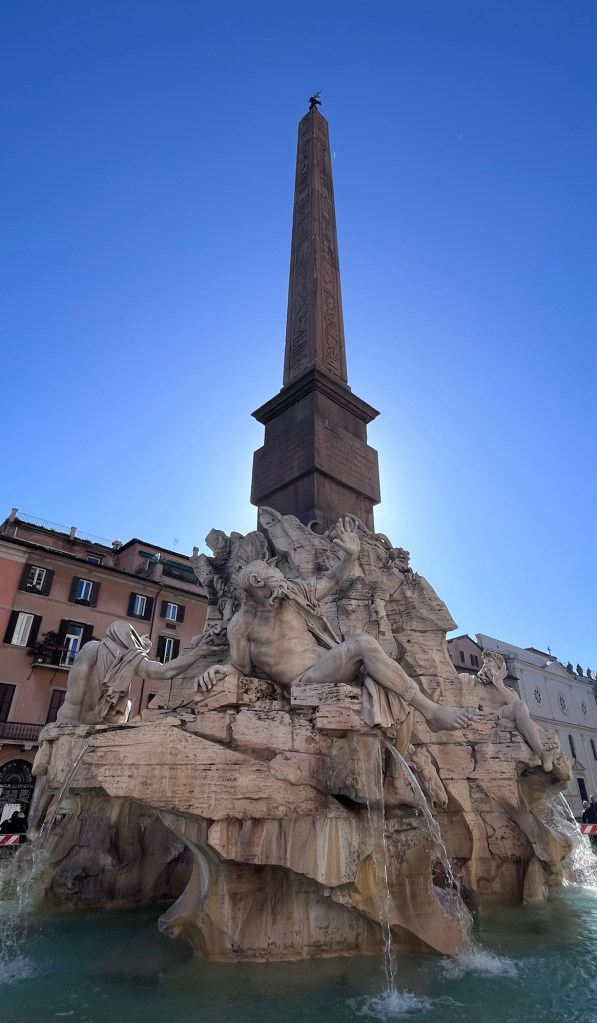
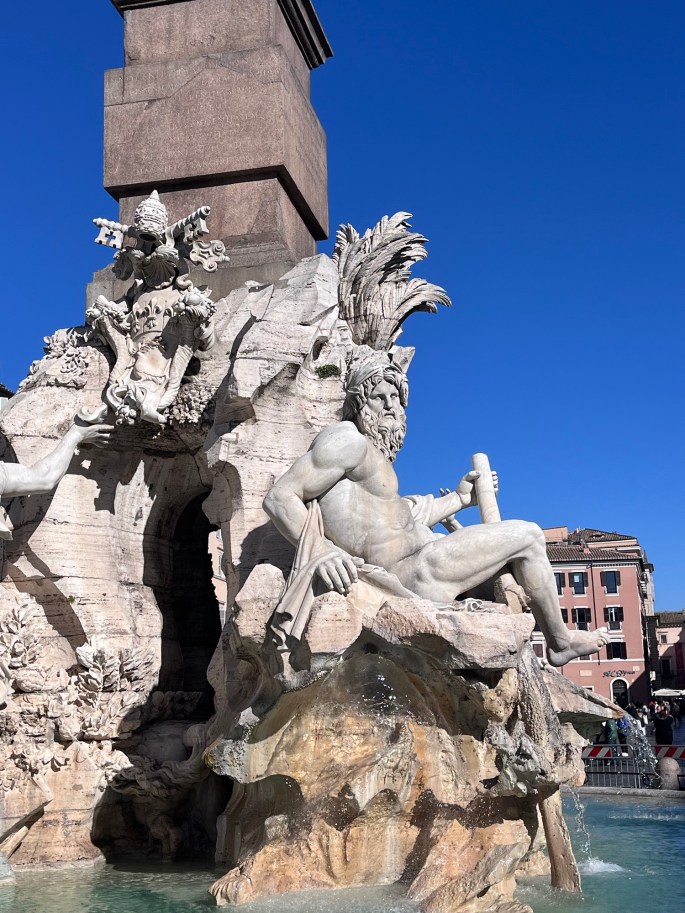
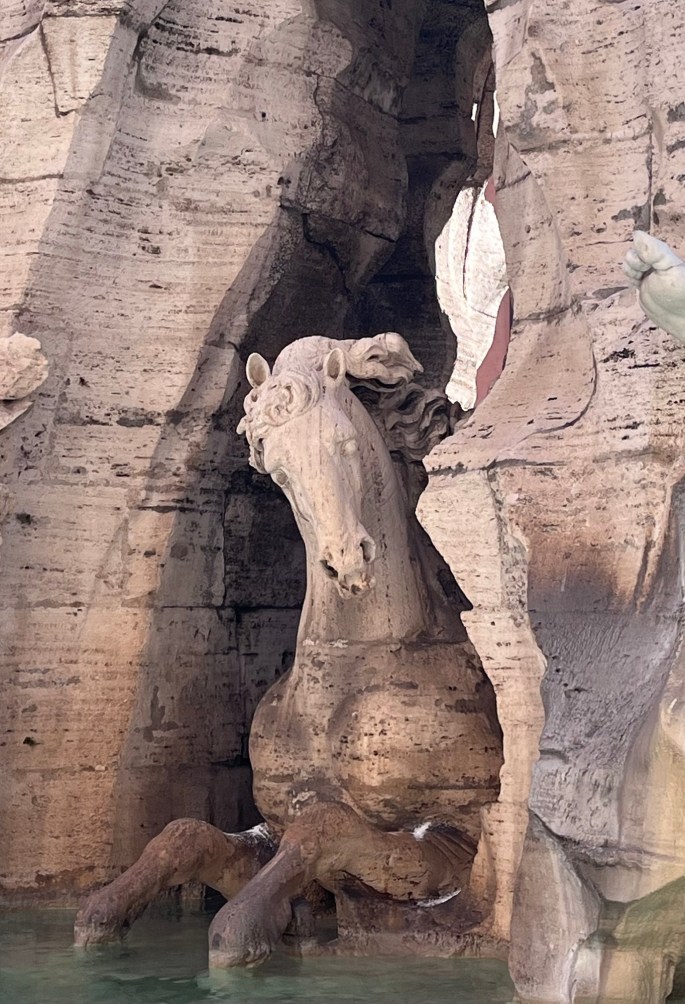
Loved the horse peeking out through the portal.
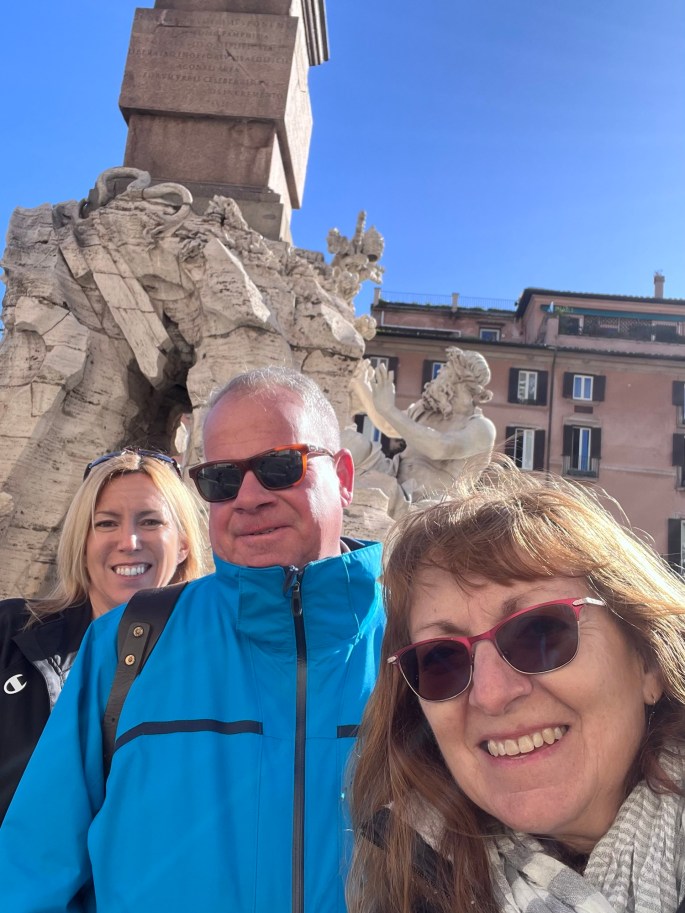
The group LOVES when I take photos – not. They’re good sports, most of the time.
The third fountain was in the north part of the piazza, the Fountain of Neptune.
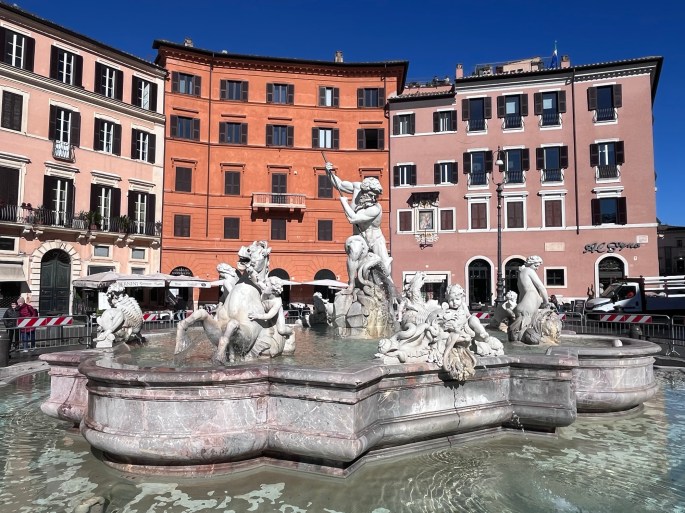
Yes, we did some people watching while eating our croissants and cappuccino. Neptune fighting the octopus was in front of us. Hard life – people-watching, enjoying a pastry, listening to the fountain’s water and soaking in the Italian sun. I could do this for months on end.
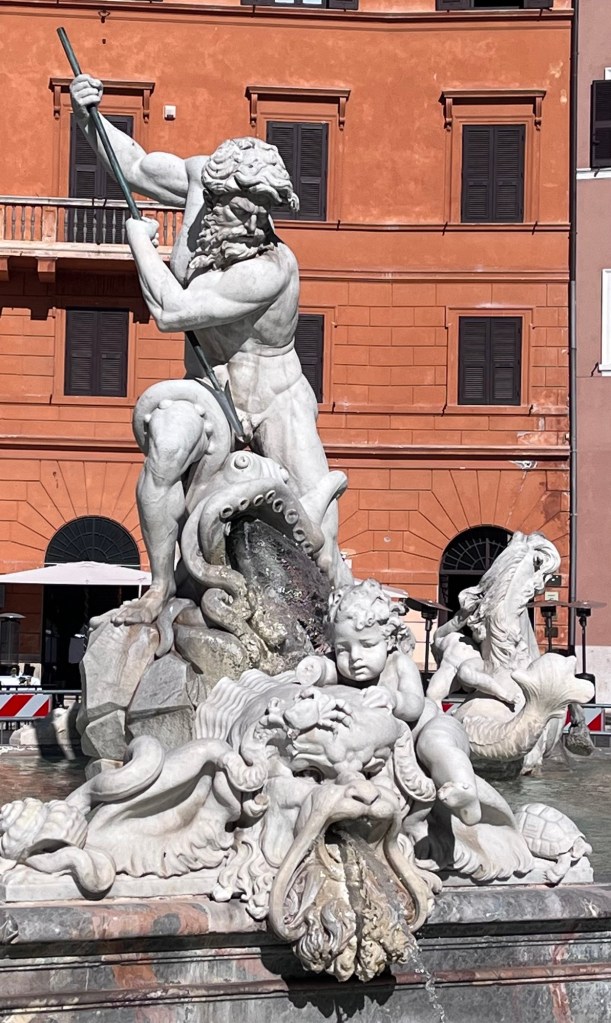
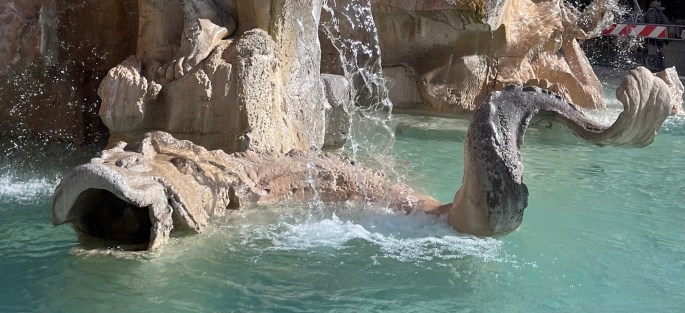
So many things going on with these fountains. You could literally do one post on each fountain and all of the symbolism. It was hard to capture the many different components, but I did like this sea creature.
There was a building in the middle of the piazza that individuals kept going into and thus we did our own exploring. Many people come just for the three fountains and miss this worthy, hidden gem in Rome. It was fascinating reading about it. The little bit of info below only scratch the surface of its stories.
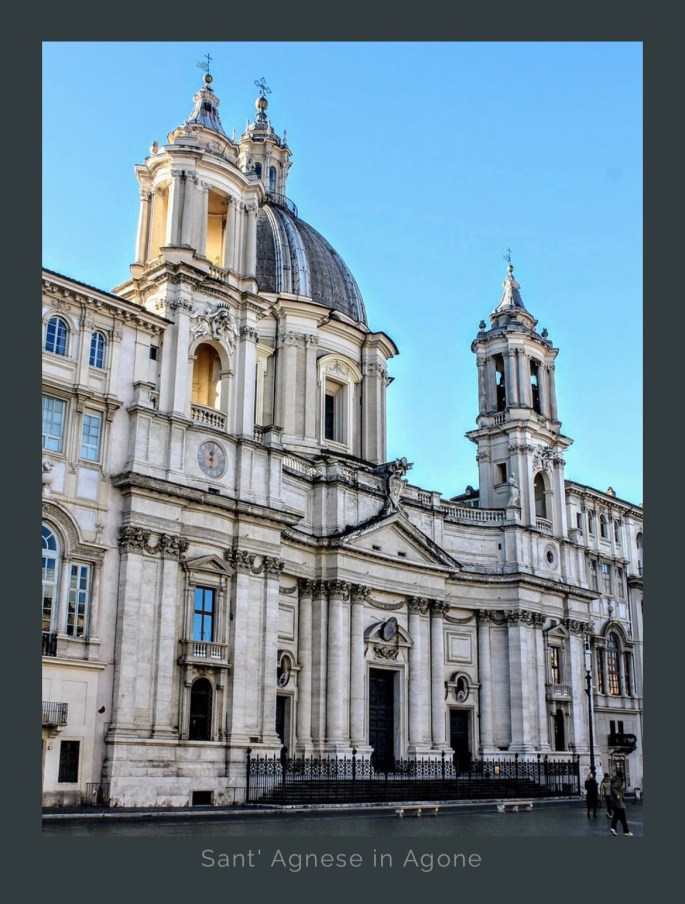
This was a 17th century Baroque church, built on the site of a much older church dedicated to St. Agnes with research indicating this was the location she was martyred.
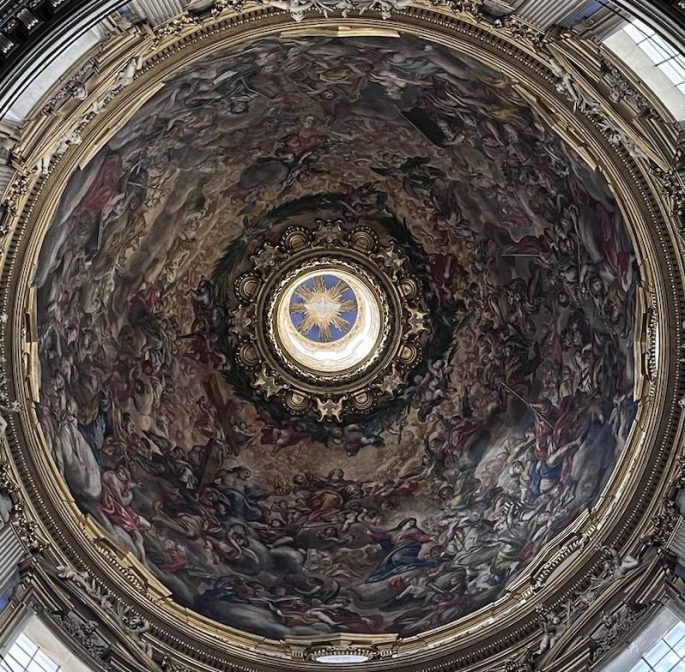
There are so many things to look at once you enter, but your eyes move upward towards the dome in the sanctuary.
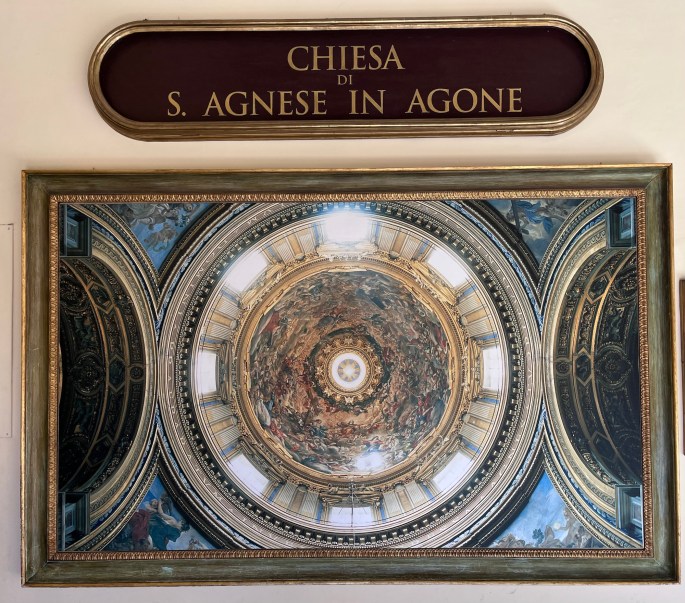
The dome was designed for individuals to look up to heaven. The fresco in the cupola depicts the Apotheosis of st. Agnes and the four cardinal virtues: prudence, justice, fortitude, and temperance. They form a virtue theory of ethics. All other virtues fall under them and hinge upon them.
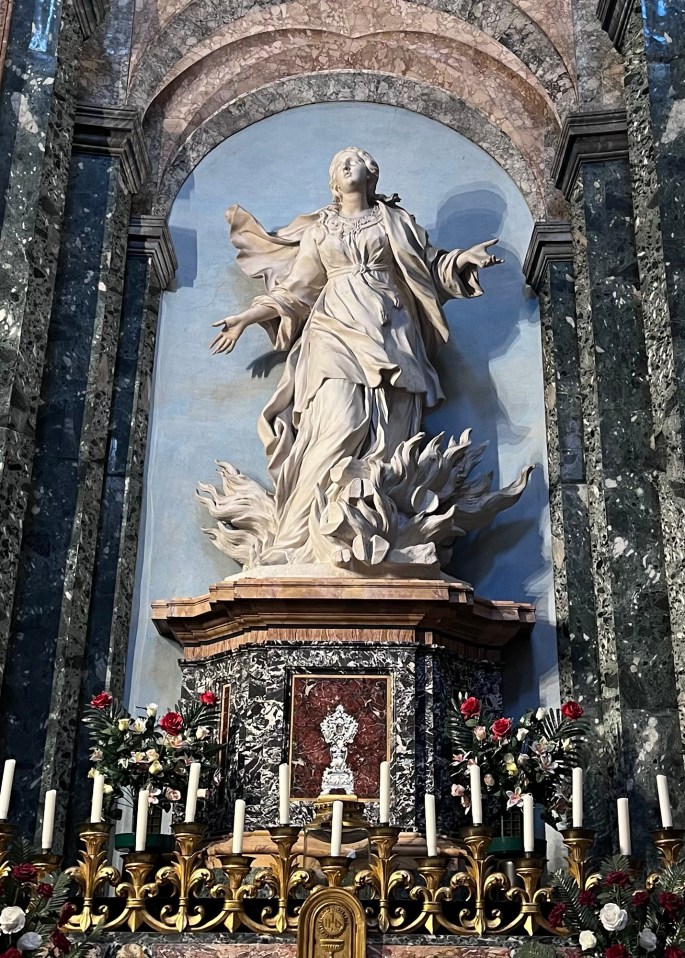
The alterpieces all take the form of bas-reliefs or statues rather than paintings. Below is the statue of St. Agnes when she extinguishes the flames at her feet with prayers.
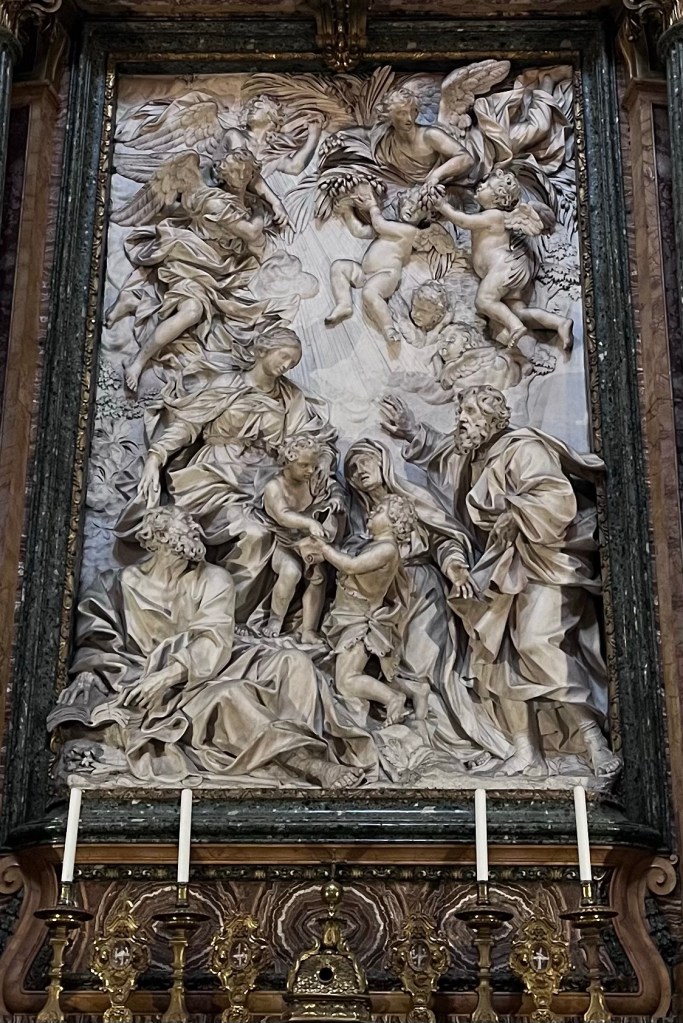
This altarpiece represents the Holy Family with little St. John the Baptist, Joseph & Mary and baby Jesus. There is a lot more to this, but it started getting complicated.
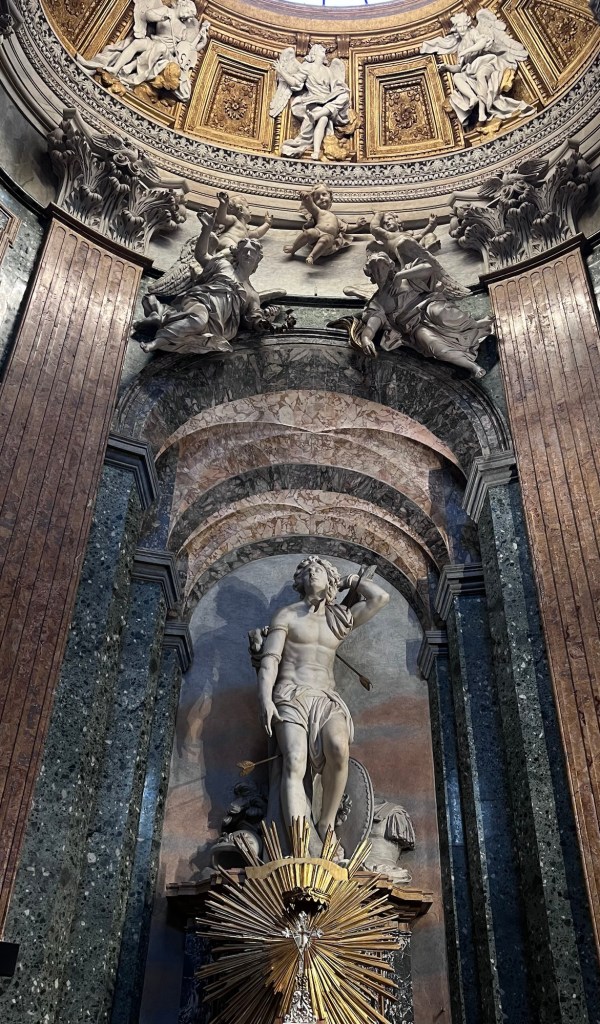
The inside of the church was surrounded by marble sculptural Baroque masterpieces, dedicated to individual martyred saints. Below was one of the seven immortalized in statue.
There was a shrine inside of the church for Saint Agnes, containing her skull and a marble relief. She was martyred at 13 when she refused to marry a pagan. She was condemned to death. You can see her skull in the marble box below her statue. No lie, it was kind of creepy.

While the stories being told inside this church was gruesome, it was a beautiful church. My photos do not do justice for the beauty contained within.
I want to leave you with this small ‘fountain’ located within this piazza. I assumed it was for pets to drink and stay hydrated.
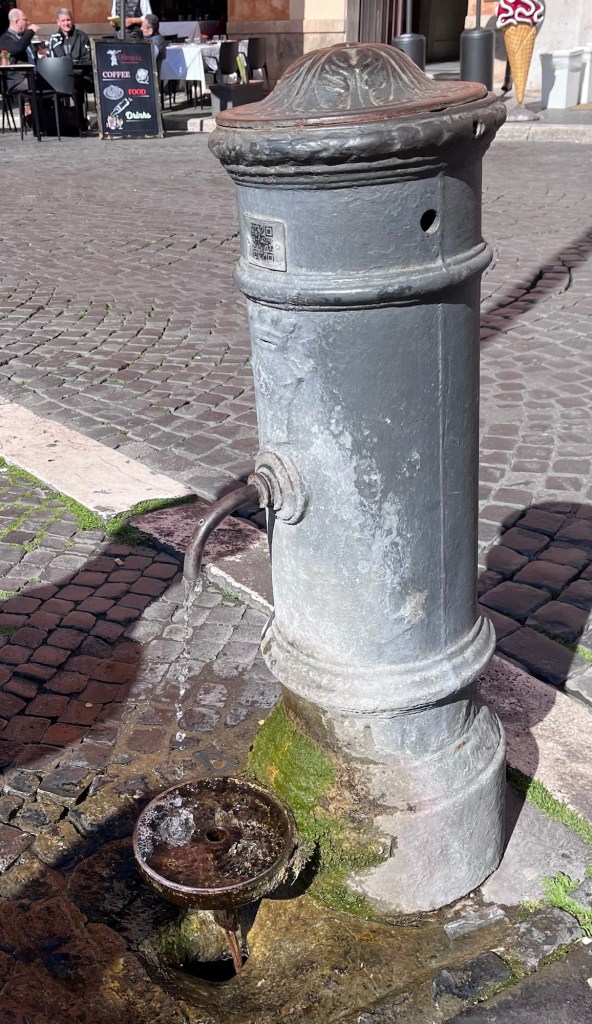
That is until you stop the downward flow and this happens……..
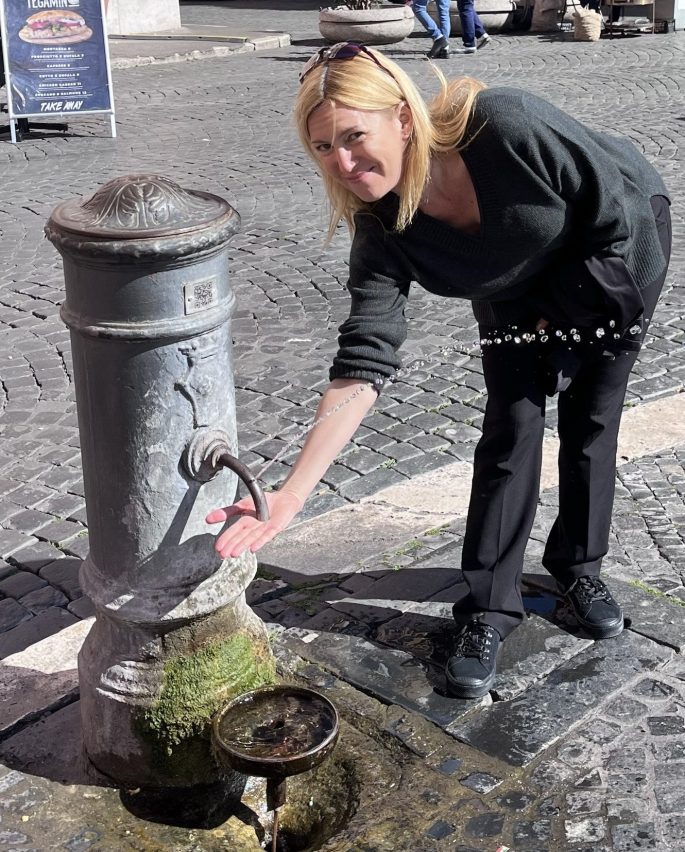
Nice!
 Darden Travels