
I need to get my steps in. How – the Spanish steps of course……..135 to be exact.
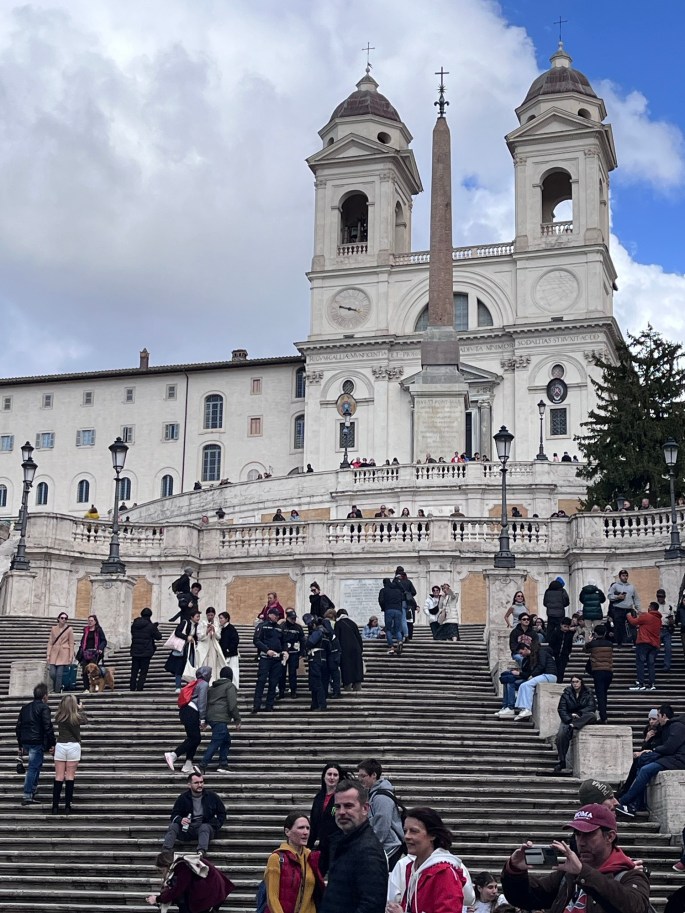
The steps were built to navigate a steep slope between the Piazza di Spagna at the base and Piazza Trinità dei Monti church, at the top.
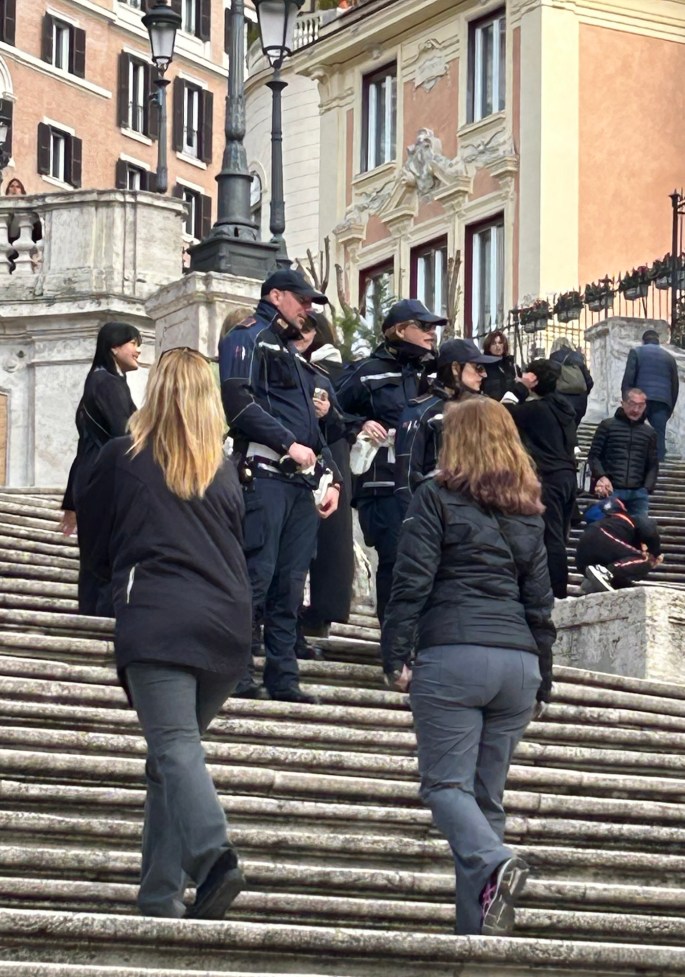
Maybe you noticed the polizia in the photo above? There were fines for those sitting down (250 euros) and heavier fines for damaging or dirtying the steps (400 euros).
There was a competition for design in 1717 and completed in 1725. They have been restored and renovated a number of times. Travertine stone, brick, marble and plaster make up the steps.

Notice who is missing? Glad he brought along the blue jacket – he’s easier to spot.
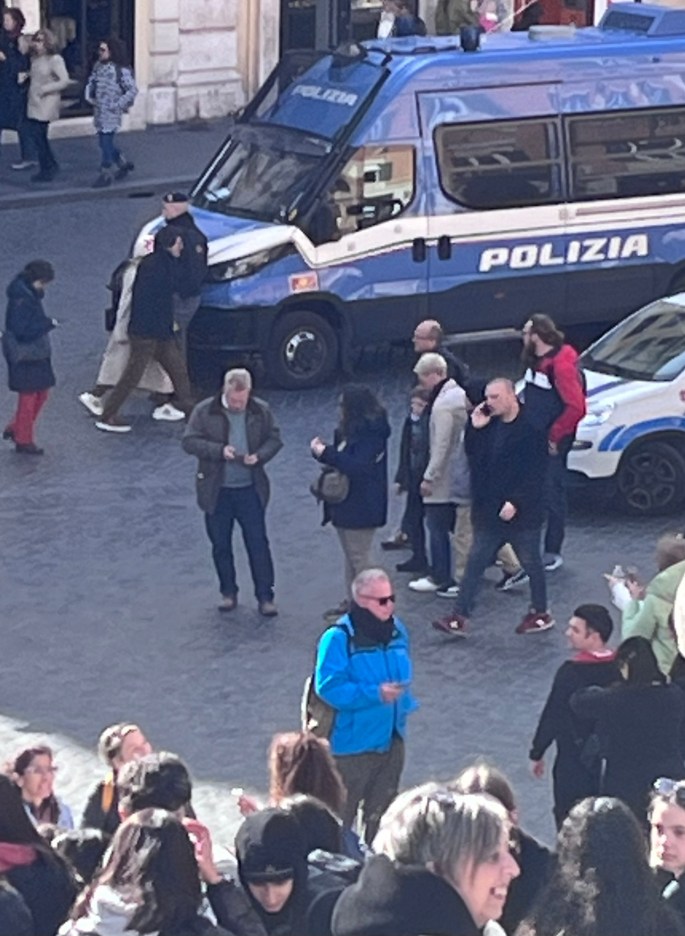
Why the ‘spanish’ steps? At the bottom was the Spanish Embassy. I read that at certain times of the year, planned decorations line the steps. Around Christmas-time a 19th century manger is displayed on the first landing. In the spring-time, pots of azaleas can been seen. Not quite spring – yet. Dang.
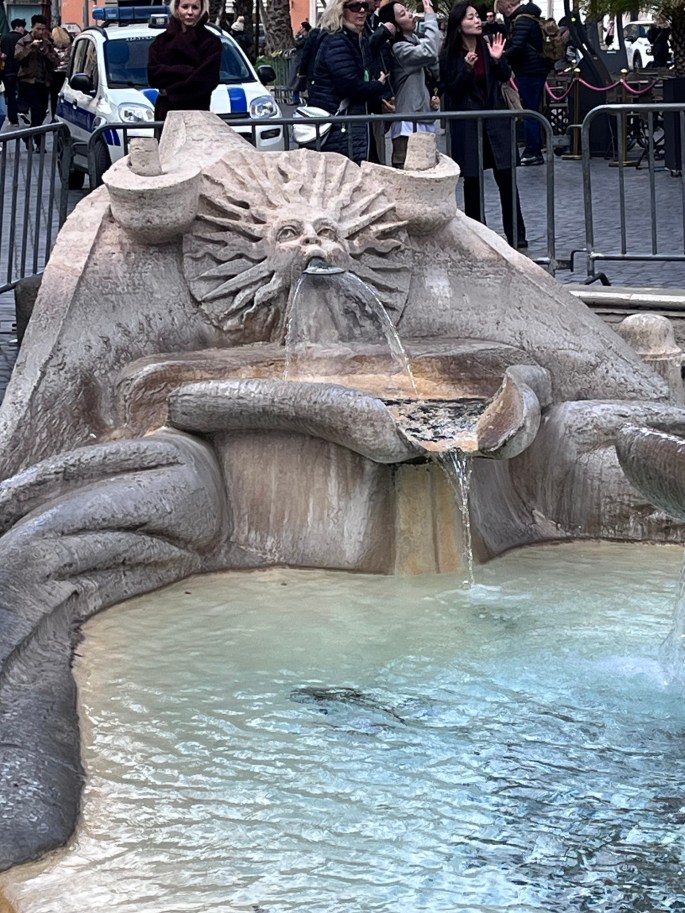
Another fountain was found at the bottom. The pope commissioned Pietro Bernini in 1623 to build the fountain as part of a prior Papal project to erect a fountain in every major piazza in Rome. The fountain was completed between 1627 and 1629.
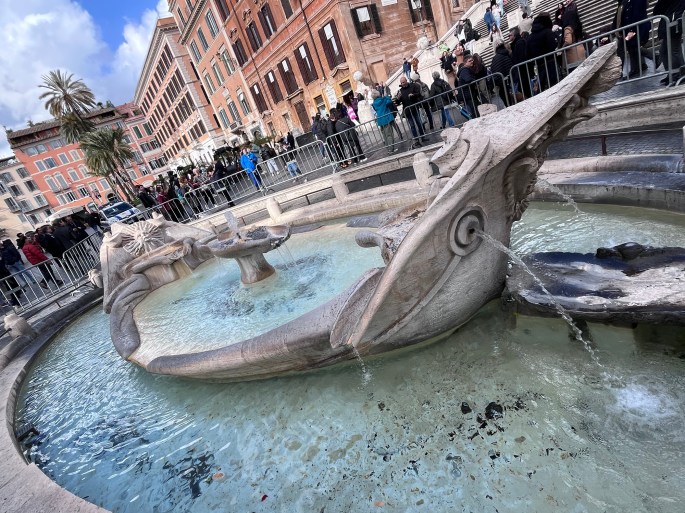
According to legend, as the River Tiber flooded in 1598, water carried a small boat into the Piazza di Spagna. When the water receded, a boat was deposited in the center of the square, and it was this event that inspired Bernini’s creation.
Can anyone come to Rome without seeing the Coliseum? I think not.
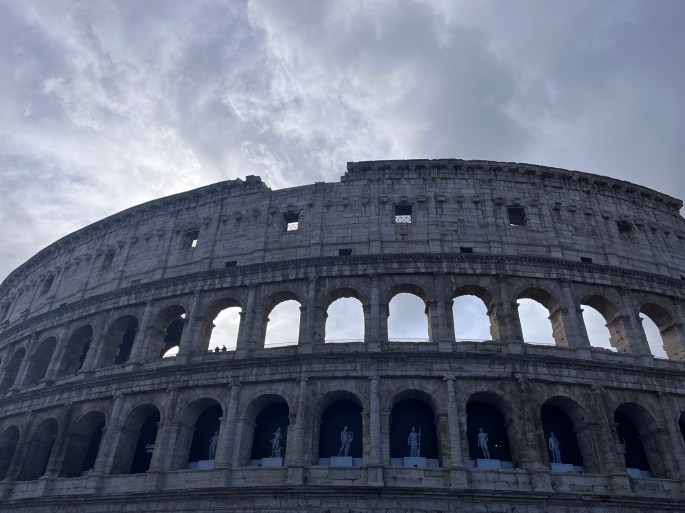
It is the largest ancient amphitheater ever built and is still the largest standing Amphitheatre in the world, despite its age. Contruction begin in 72 AD and was completed in 80 AD. It could hold anywhere between 50K – 80K spectators at various points of history.
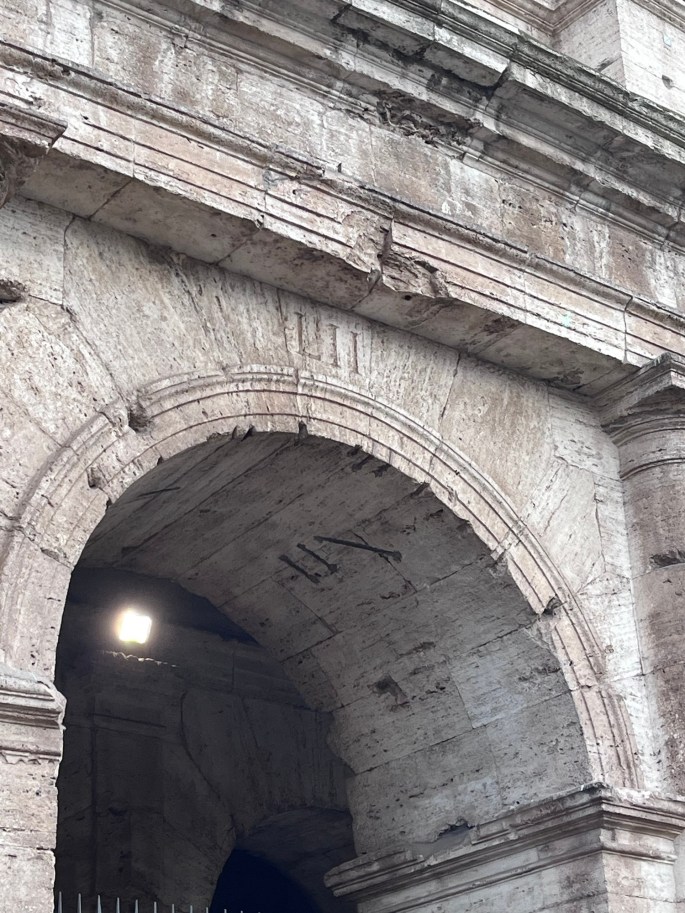
Entrance portals were numbered in the archway as seen below.
Yes, we were one of ‘those’ tourists, following our tour guide with a flag.

Part of our small-group tour include the underground of the coliseum. We saw a short film in an underground alcove, and it truly put you in the mindset of the gladiator’s journey coming into the coliseum. While some were fighting for sport, others were fighting for their life and freedom.
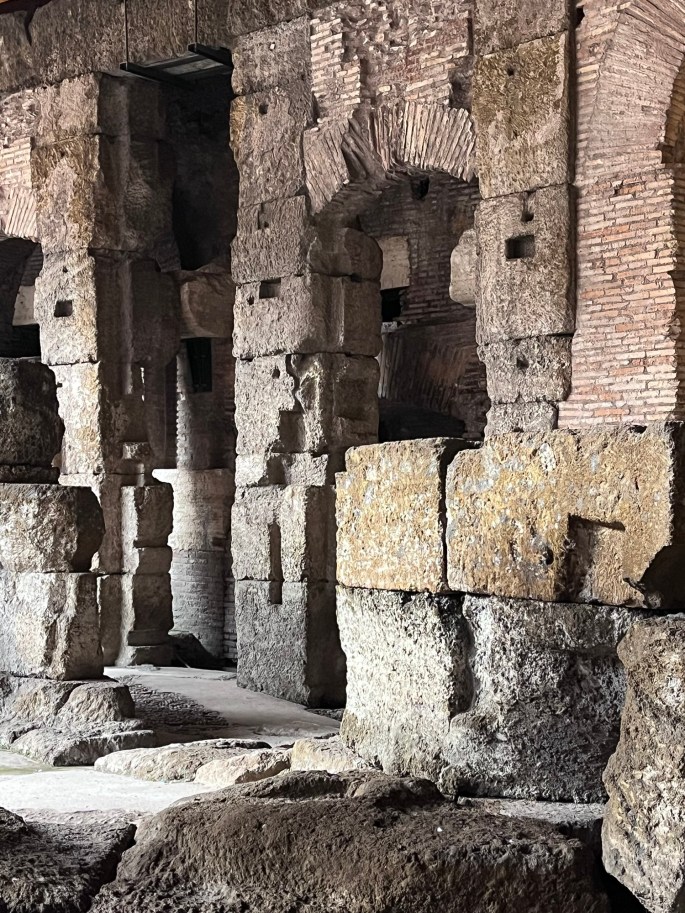
The Colosseum was built of travertine limestone, tuff (volcanic rock), and brick-faced concrete. It was used for gladiatorial contests and public spectacles including animal hunts, executions, re-enactments of famous battles, and dramas based on Roman mythology, and briefly mock sea battles.

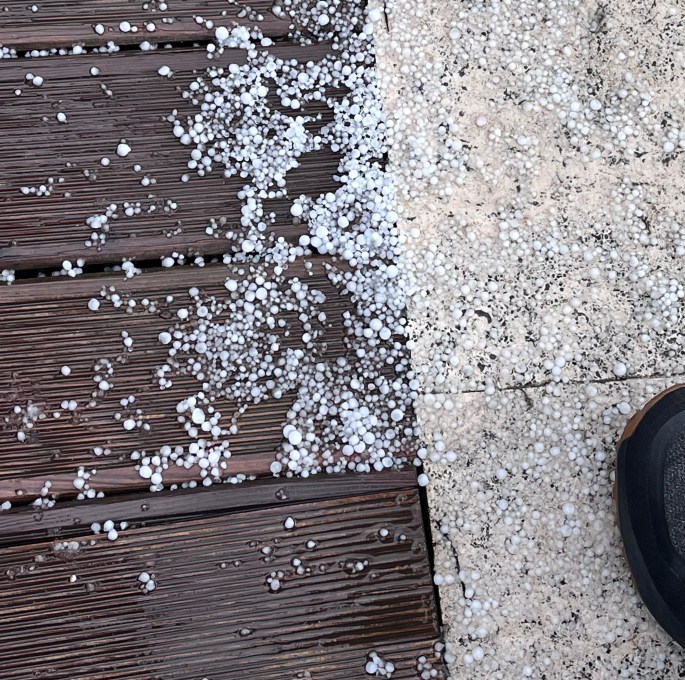
We had a bit of our own excitement during our tour. Notice the bouncing drops?
That’s right – hail. Below are some of the pellets that collected along our walkway. We were very lucky that when it started, we were heading underground.
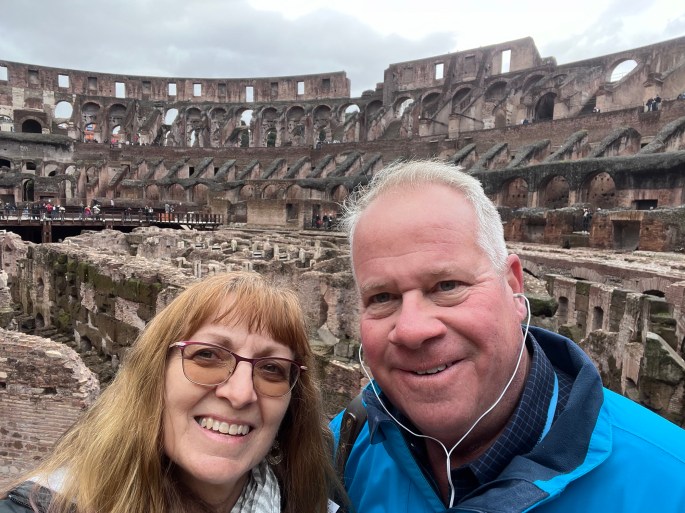
Although substantially ruined by earthquakes and stone robbers, the Colosseum is still a renowned symbol of Imperial Rome.
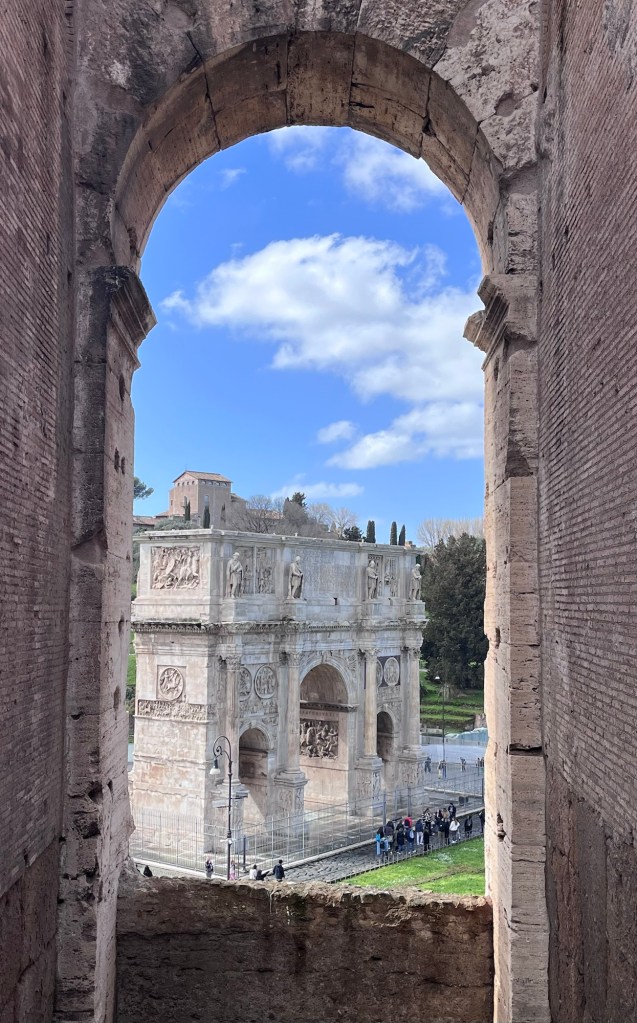
Before exiting the coliseum, our tour guide brought us to another part of the building promising us a good photo spot. Here was one of the remaining gates into the city with the Palatine Hill behind it.
Last stop for this post………Trevi Fountain ‘Taming of the Waters’
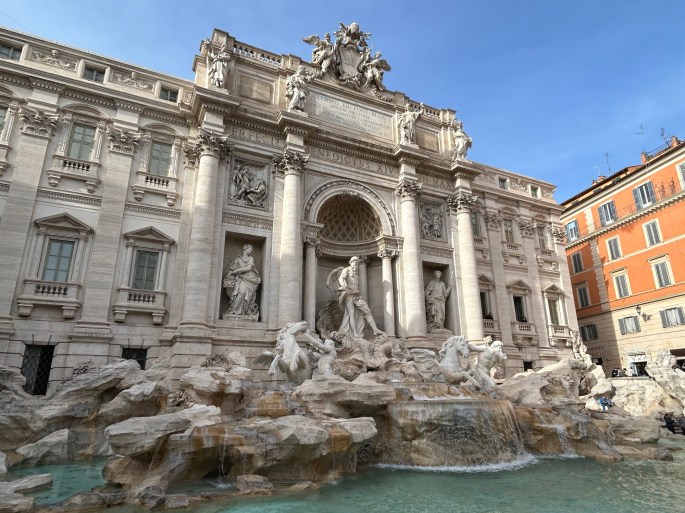
At 86 feet high and 161 feet wide, it is the largest Baroque fountain in the city and one of the most famous. It is located at the junction of three roads and marks the terminal point of one of the aqueducts that supplied water to Rome for 400+ years.
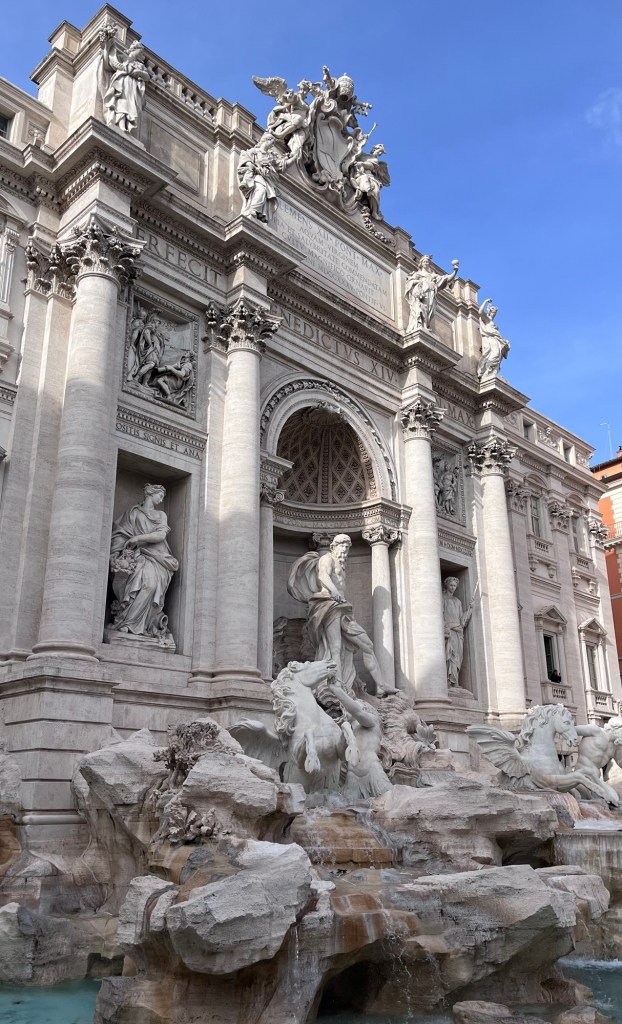
As was common in Baroque times, a competition was held. Originally a Floratine won but public outcry gave the commission to a Roman, Nicola Salvi, who died before it was finished.
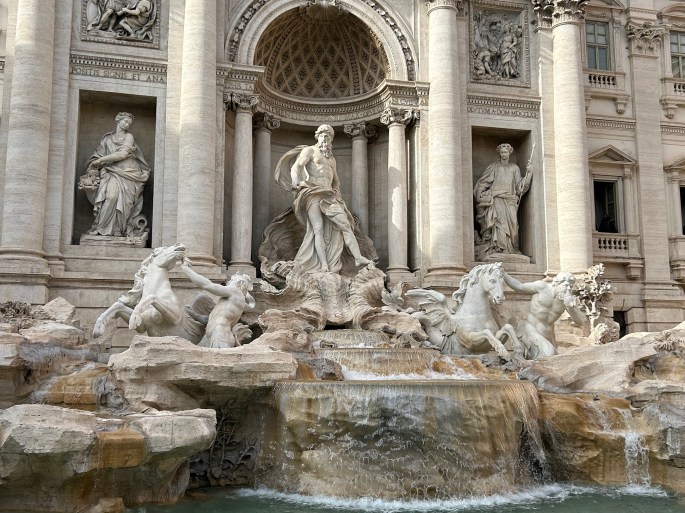
The work begun in 1732 and was finished in 1762. Four different sculptors were hired to complete the fountain and the majority was made from Travertine quarried near Tivoli, 22 miles east of Rome.

Behind the fountain is the Palazzo Poli, a palace in Rome, altered in the 18th century to form the backdrop. There continues a tradition of coin tossing, using your right hand over the left shoulder. Estimates are 3000 euros are thrown daily into the fountain. The money is used to subsidize a supermarket for Rome’s poor.
A few more posts are coming before we head to Florence.
 Darden Travels