
Staying in the city center had so many advantages. Walking to historic sites was the main one. Soooooo much history in this city and you never knew when you turned a corner if you were going to find more Roman ruins – we did, a lot.
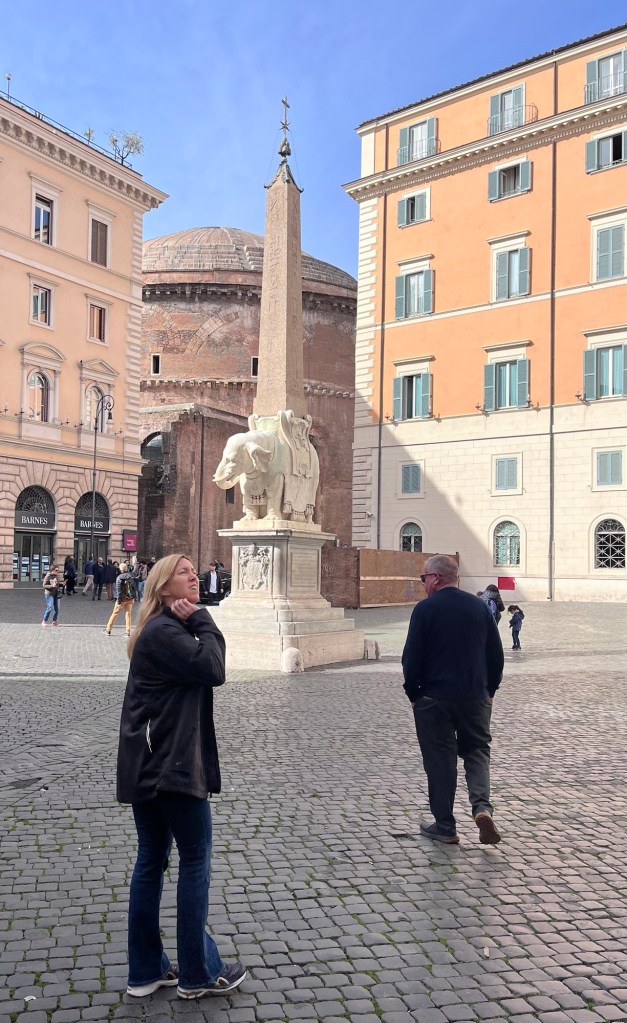
We were headed towards the Panthenon and came across this church.
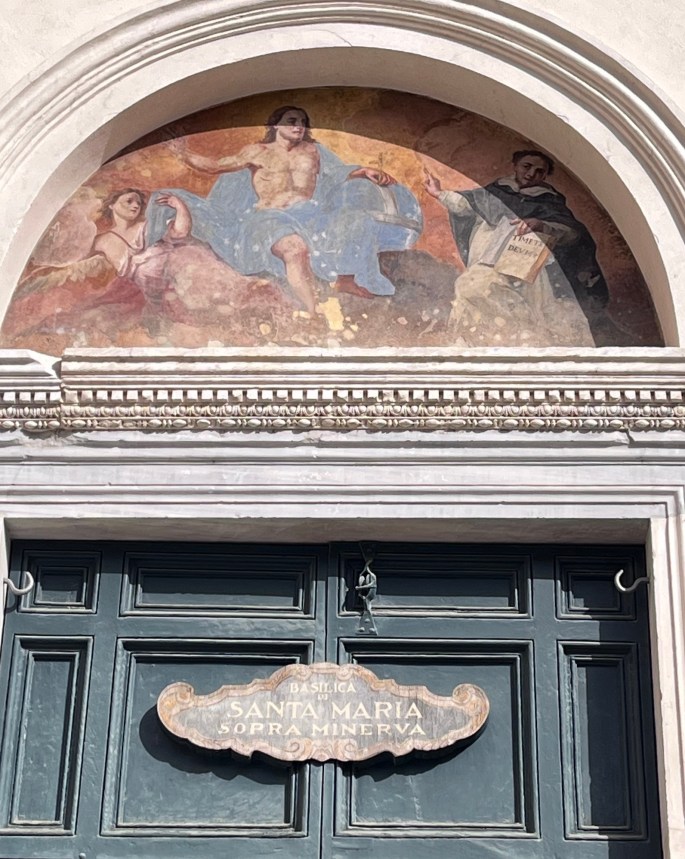
In the 8th century there was an oratory on this spot, but it wasn’t until the Dominicans took final possession of the property that a church was built in 1280. It was one of the very few examples of Gothic architecture in Rome. It was in the convent adjacent to this that in 1633 Galileo adjured his scientific thesis to save his life from the condemnation of the Holy Inquisition.
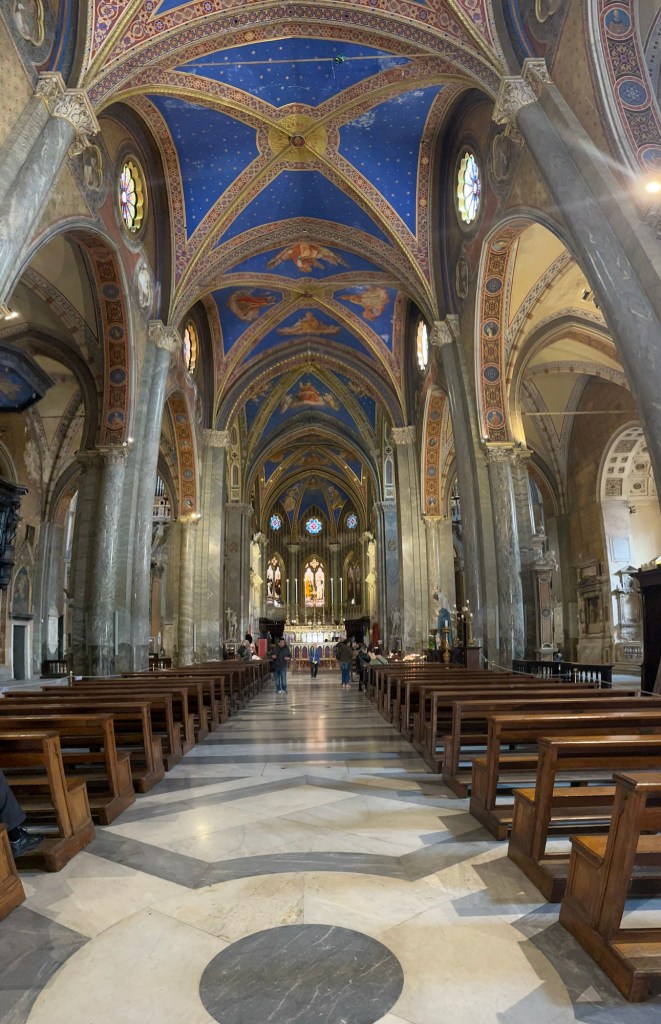
It was quietly beautiful inside. Since this is considered a minor basilica, there were no hordes of tourists.
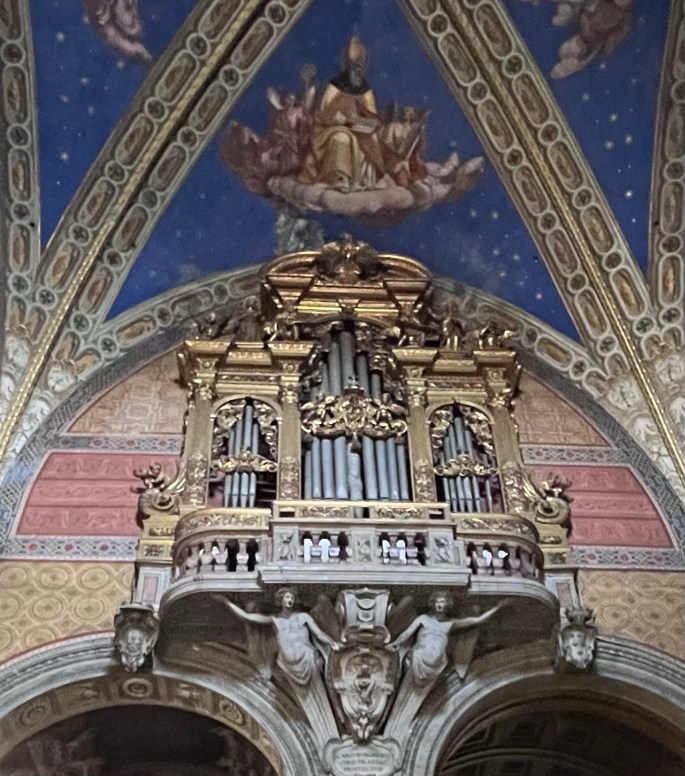
In 1628 two almost identical organs were placed above the choirs. The one in my photo was looted then set on fire. The other organ was removed and used in a basilica elsewhere in Italy. Eventually both organs were replaced in the 1900s.
Below the table on the high altar is a 15th century sarcophagus of St. Catherine of Siena, minus her skull and a finger found in a basilica in Siena. Eric is in the foreground.

Notice the statue to the left of Eric above? It caught Eric’s attention with the amount of detail.
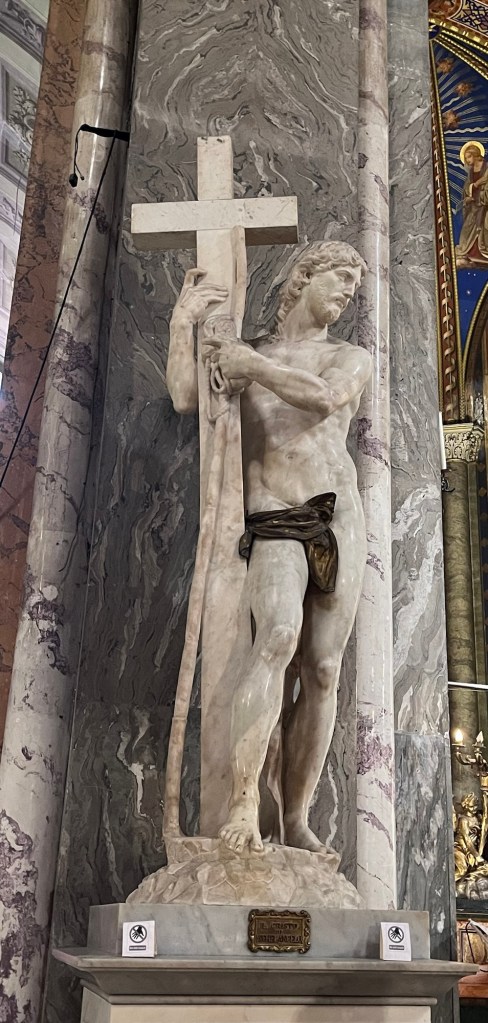
Totally was not expecting this. There was a bit of rope stanchioning this off, but truly we were within a few feet of the statue.
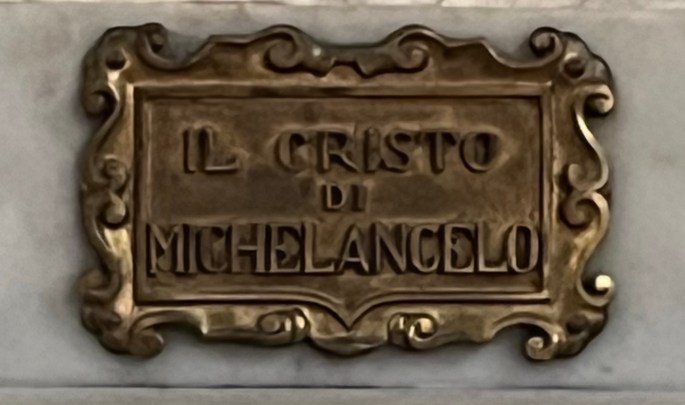
This ‘find’ was so unexpected, it was a highlight of our time in Rome.
Leaving the church, we were presented with the back side of our next find.
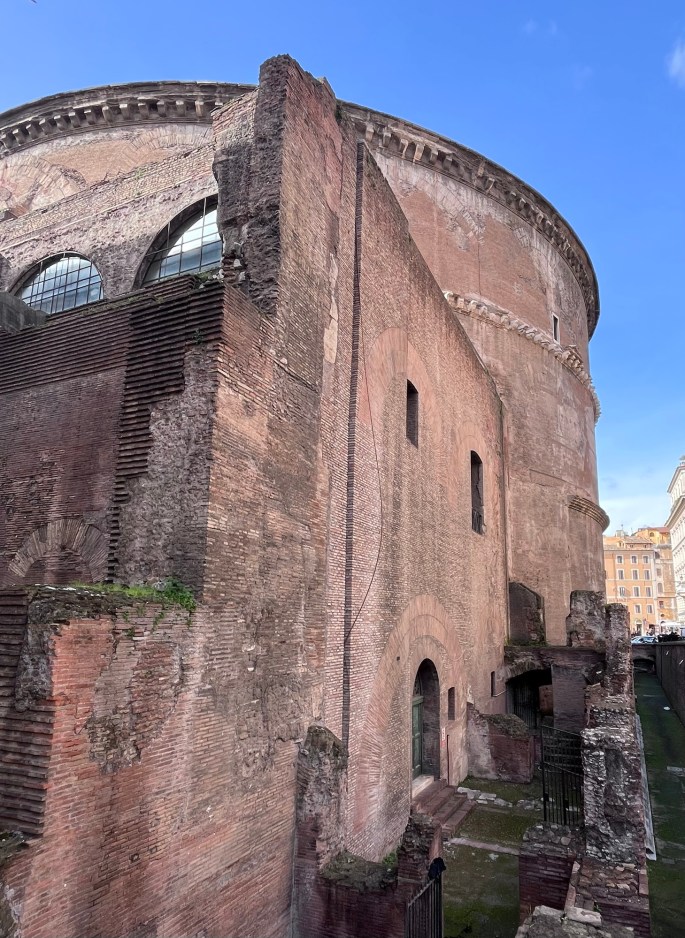
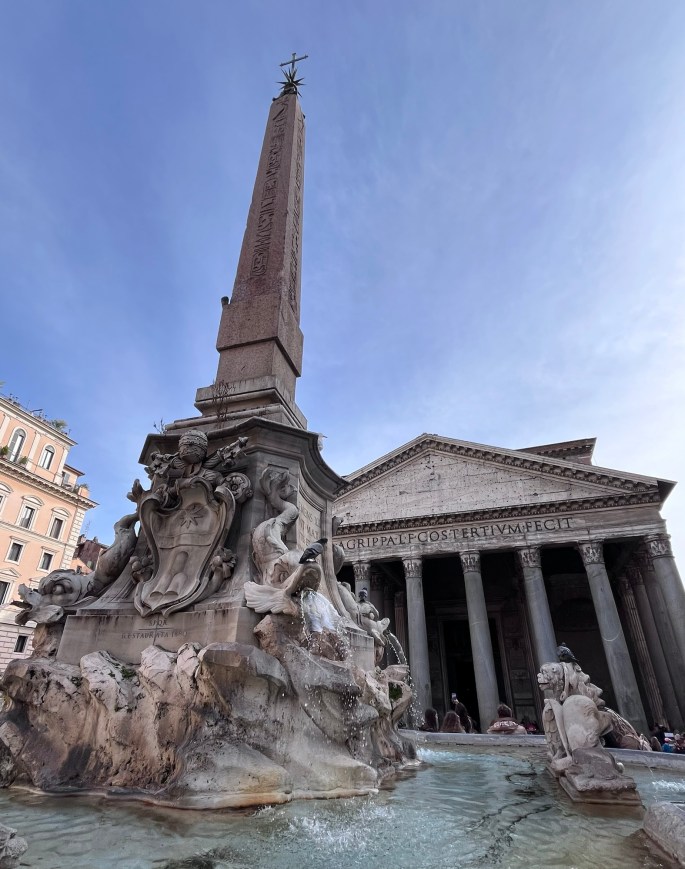
The Pantheon

The date of construction is uncertain and debated. It was built on an earlier temple on private land, fire burnt it down (several times) and the present-day building was ordered by emperor Hadrian 126 AD. In 609 AD it became a Catholic church.
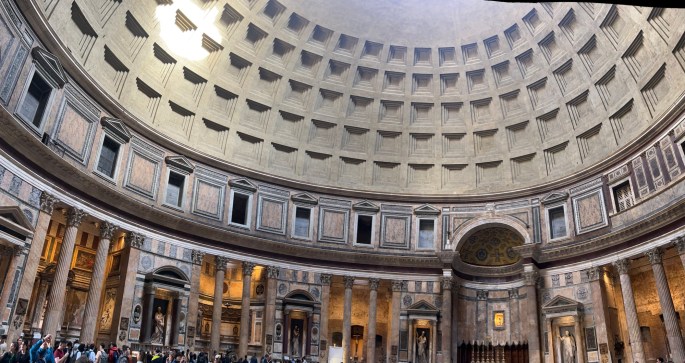
It is one of the best preserved Ancient Roman buildings in large part due to continuous use throughout history. That’s not to say pieces and parts weren’t removed for other purposes or metalwork melted down for armory.
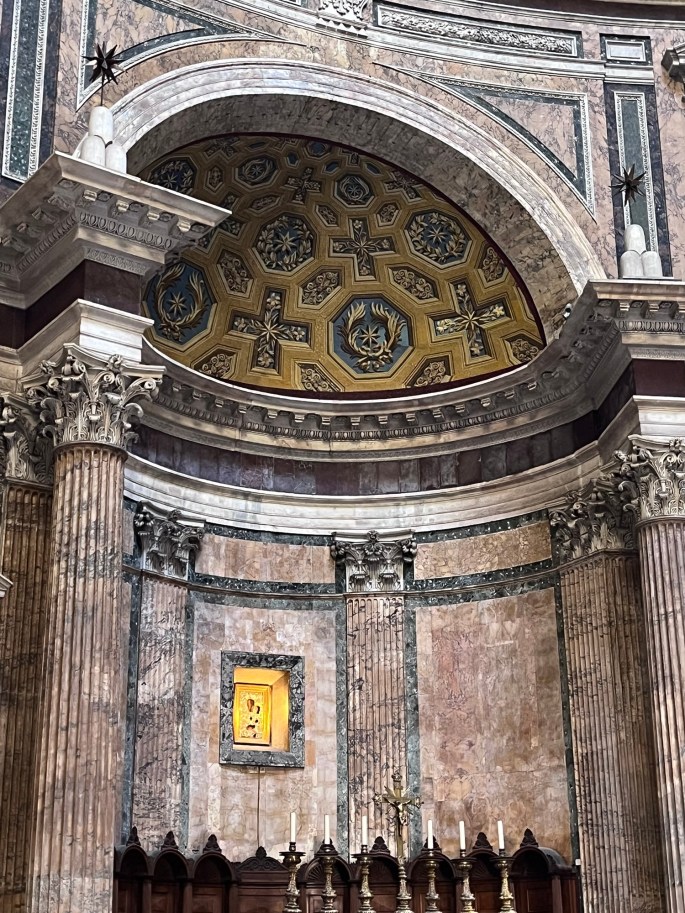
Since the Renaissance it became a fashionable burial place for painters, composers and even two kings.
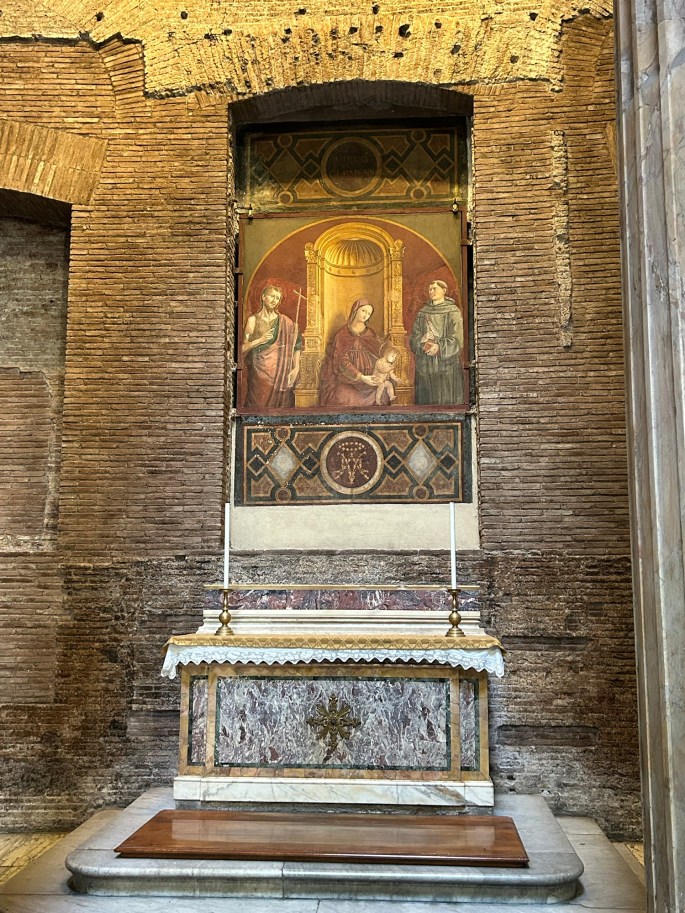
The dome of course is one of most amazing feats. After 2000 years it is still the largest un-reinforced concrete dome in the world, at 142 feet in height and 142 feet in diameter. The thickness varies from 21 feet at the base to less than four feet around the oculus. Various materials were used as aggregate and could be travertine, terracotta tiles and pumice or tufa (volcanic rock) at the top.

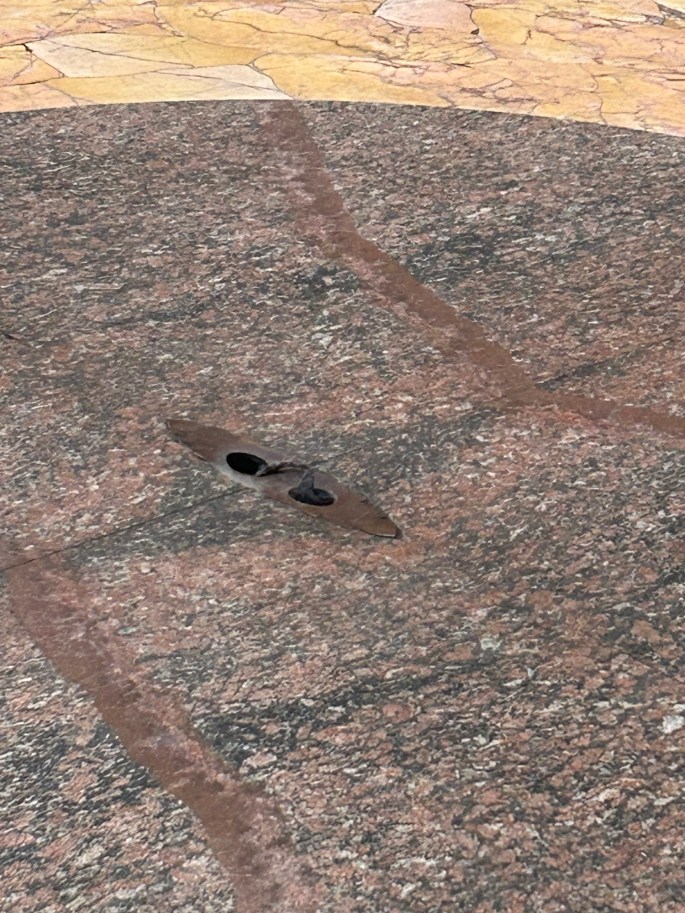
The top of the oculus has never been covered allowing rainfall through the ceiling onto the floor going into floor drains to promote runoff.
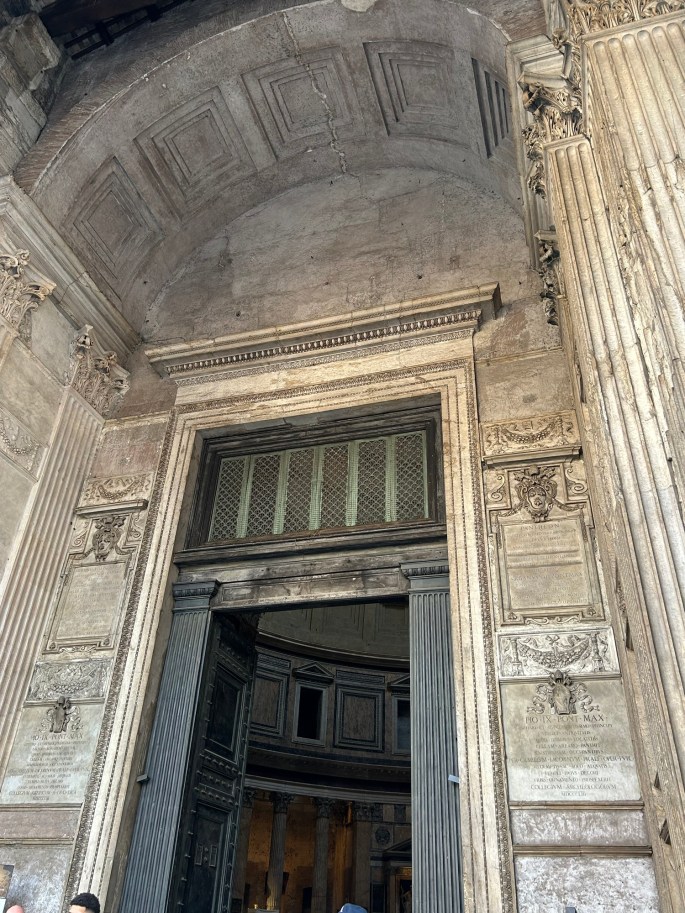
The oculus and entry door are the only natural sources of light.
The history of the building pulled me in and I spent way too much time on the web going through links to find more info.
Occasionally you needed a break from history, and we found some great spots to do just that, as you’ll see in my next post.
 Darden Travels