
The Vimy ridge provided a natural unobstructed view for tens of kilometers in all directions.
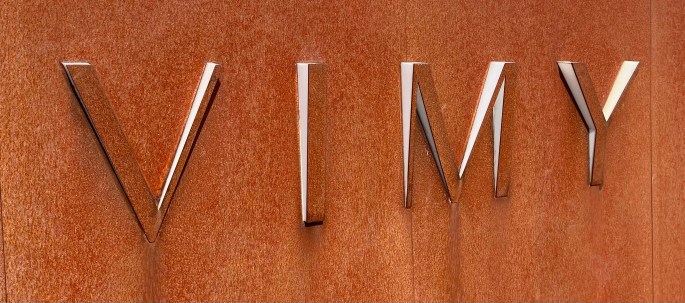

It changed hands several times in 1914 before the Germans had a solid stronghold on the ridge. The Germans had taken advantage of the relative calm to build an extensive network of tunnels and deep mines. Some of these had been preserved to allow today’s visitors to understand trench warfare.
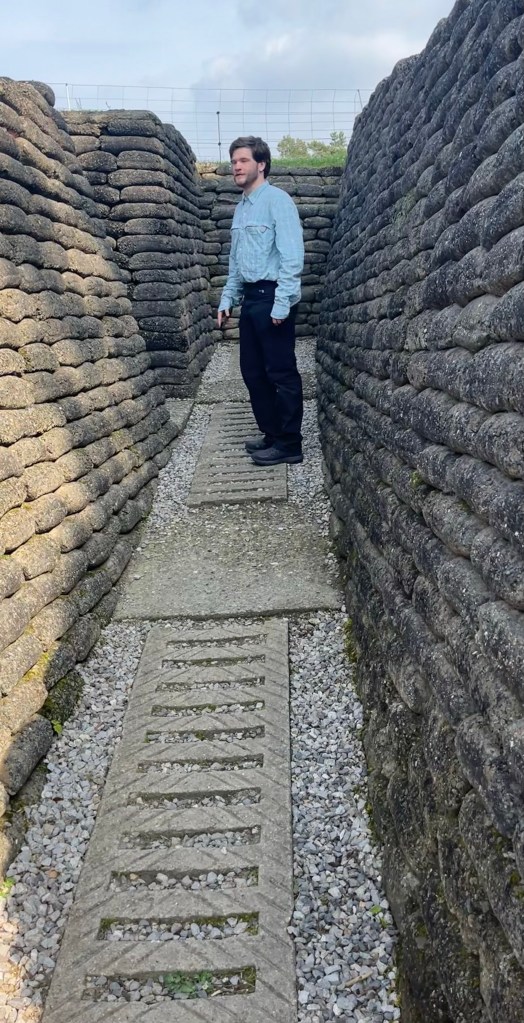
Living in the trenches was no piece of cake.

Prior to the Battle of Vimy Ridge, British tunneling companies secretly laid 13 mines under German positions to destroy fortifications before the assault.

The main combatants were four divisions of Canadian Corps against three divisions of the German army. The battle took place in April 1917. The Canadian Corps captured most of the ridge the first day. The final objective was achieved on April 12, falling to the Canadians. Historians attribute the success of the Canadian Corps to technical and tactical innovation, meticulous planning, powerful artillery support and extensive training.
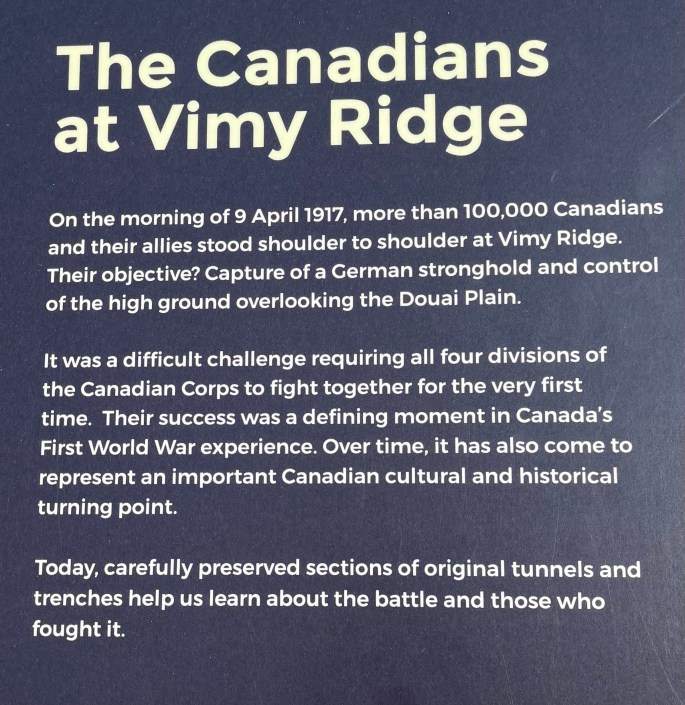
It is a symbol of Canadian national achievement and sacrifice.
Nearby is the Canadian National Vimy Memorial. It is startling white and impactful. The Vimy Memorial is one of only two National historic sites of Canada located outside of the country. The other was my prior post.
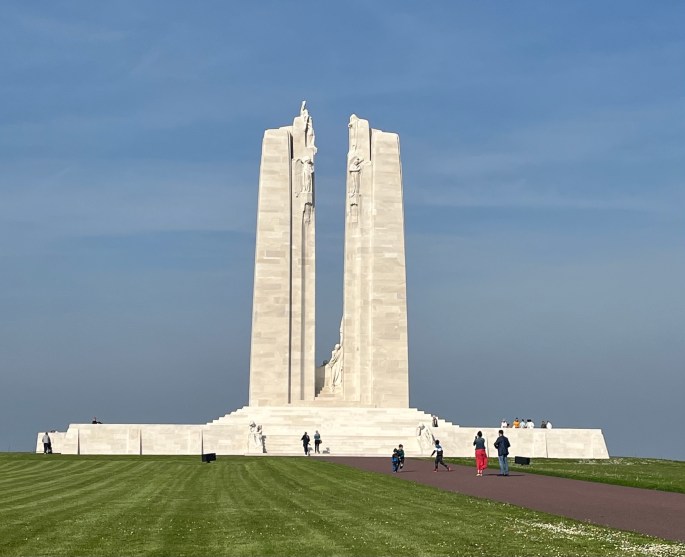
The memorial is the centerpiece of 250 acres of preserved battlefields. Wartime tunnels, trenches, craters and unexploded munitions still honeycomb the grounds of the site. Canadian identify and nationhood were born out of the battle. Below, Eric and Connor were approaching the memorial. Notice one sculpture at the very top.
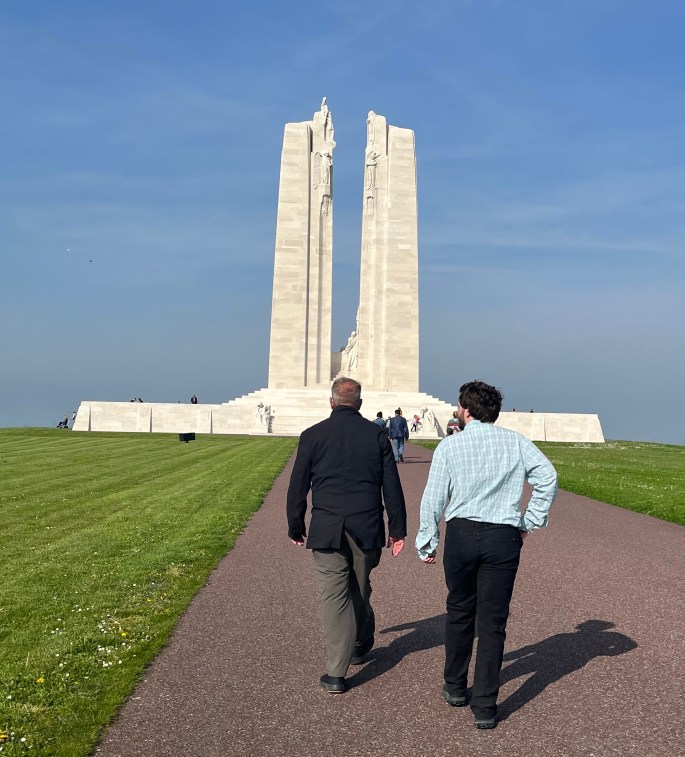
The stone came from an ancient Roman quarry in Croatia. The twin pylons are engraved with two emblems: one bears a maple leaf for Canada and the other a fleur-de-lis for France, symbolizing their unity and sacrifice of the two countries. BTW – that is Adrienne in my photo below.
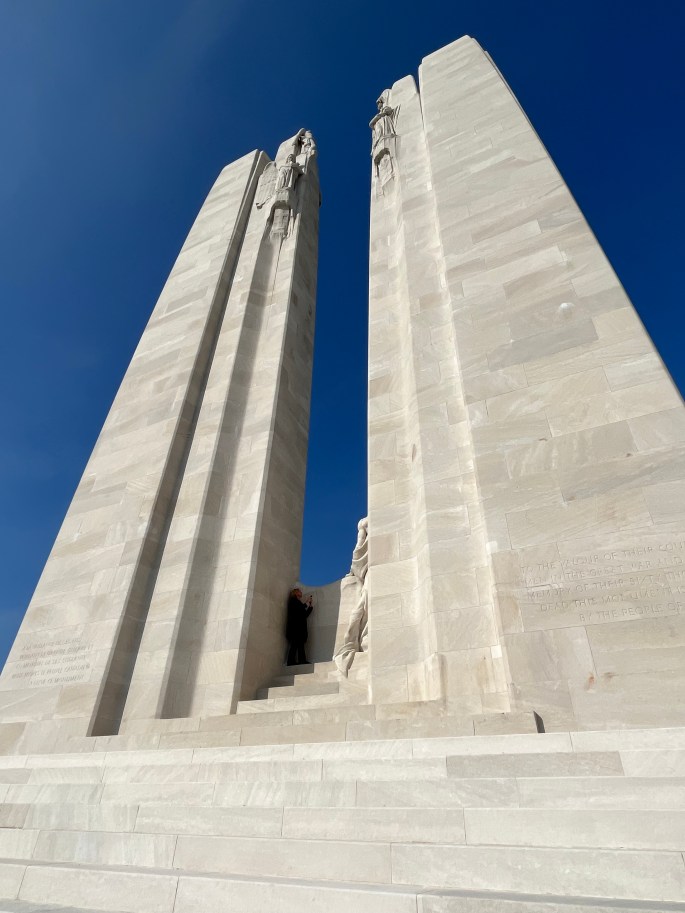
Sculptors carved ~20 double life-sized human figures on site from large blocks of stone.
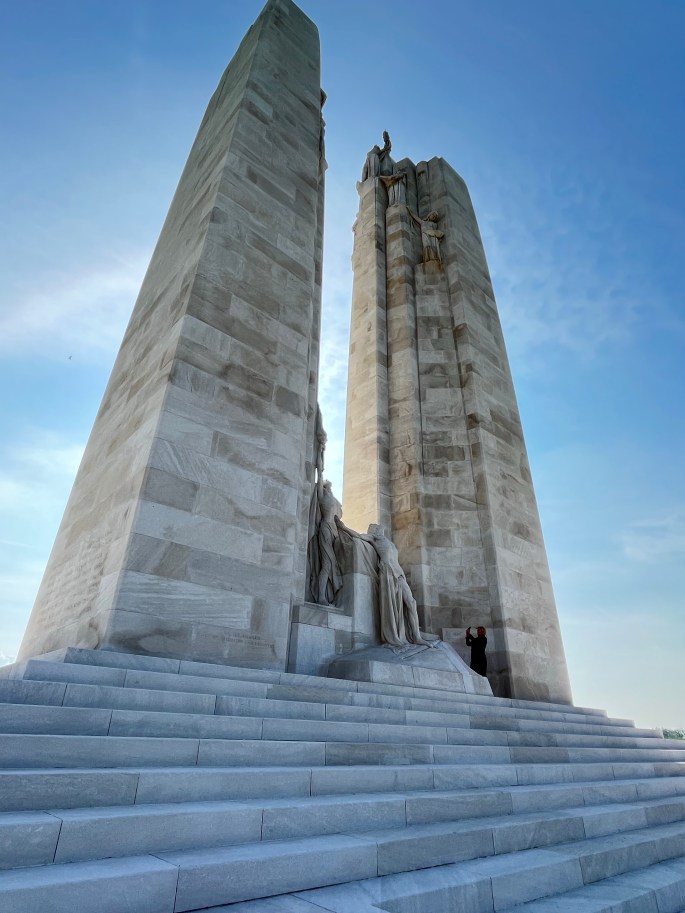
The top most statue is called Peace, with figures below representing Justice, Truth, Knowledge, Gallantry and Sympathy.

This particular statue was striking and is the largest figure. It is called Canada Bereft. Head bowed in sorrow, she provides a powerful representation of Canada, a young nature grieving her dead. She gazes down at a symbolic tomb draped in laurel branches (sorry – no photo).

Carved on the wall are the names of 11285 Canadian soldiers who died in France and whose final resting place is unknown. At the base of the monument these words appear in French and English:

This monument is a tribute to all Canadians who served during the First World War. It was built to inspire all to work towards lasting peace, for which those commemorated here gave their lives.
 Darden Travels